Guitar Town, an annual festival that spotlights virtuosic guitar pickers, will return to The Village at Copper in Copper Mountain, Colorado, August 9-11.
This year’s festival is curated by John Jorgenson and features Jerry Douglas Band, Coco Montoya, Tony Joe White, John Jorgenson, Jake Shimabukuro, Bill Kirchen, Pete Huttlinger, Mark Selby Band, Rory Hoffman, Carl Verheyen, Daniel Donato, Josh Nordlund, and L.A.-based fingerstylist Scott Goldman, who will once again emcee the weekend’s performances in addition to his festival-opening set.
A free-admission event, Guitar Town includes a kick-off performance by Pete Huttlinger and Sean Della Croce and a fingerstyle workshop by Jim Deeming, as well as main-stage acoustic performances and electric performances.
Each morning includes workshops where fans gain insight on techniques and develop a connection with the musicians. Music themed activities are also available for kids each day. Each day concludes with an all-star jam that encapsulates the day’s lineup.
The MXR Super Badass Distortion has a new all-analog circuit design with true-bypass switching and specially-tuned EQ section designed to offer a more-personalized distortion sound. Its Distortion control helps it produce, the company says, everything from early-’70s low-gain overdrive to modern high-gain saturation and every shade between. The Bass, Mid, and Treble controls allow the user to fine-tune their sound. Read more at www.JimDunlop.com.
Mitch Seidman is a jazz player of impeccable taste and tone. His last record, Triangulation, used the same trio as here: Jamie McDonald on acoustic bass and Claire Arenius on drums. The three operate as one, and the liner notes indicate these eight songs were all cut in a single day, more evidence of the empathy between the trio.
Seidman’s playing is tasty, but it also can burn with intensity. His solo on “Movin’ On” is bluesy with a touch of bop. While he tinkers with the melody throughout the solo, the rhythm section is cooking. Like pretty much every song on the record, McDonald also is given ample room to solo and does a fine job. Seidman’s comping behind his solos is perfect. He keeps the rhythm and harmonic structure of the song going while staying unobtrusive.
The title cut opens dramatically with the guitarist supplying some guitar work over a walking line. Seidman moves the song into a dreamy vibe and when he starts to solo, you get to see what a great player he is. He’s imaginative and never repeats himself. On the only song not written by the band, the classic “Darn That Dream,” he gets to show off his ballad chops with a lovely chordal intro before the rest of the band joins in.
If there’s one thing that can be said for both Seidman and the rest of his trio, it’s that they are patient. On the original tunes, they let things build in a way that keeps them interesting. Many times you hear records that can be a journey in and of themselves, and that’s especially true with this fine guitarist.
This article originally appeared inVG‘s Feb. ’13 issue. All copyrights are by the author and Vintage Guitar magazine. Unauthorized replication or use is strictly prohibited.
Singer/songwriter/multi-instrumentalist Tom Keifer (VG, January ’13) will appear as musical guest on “Late Show with David Letterman” tomorrow (Tuesday, June 18). Keifer’s debut solo album, The Way Life Goes, was recently released. Recorded in Nashville, the disc was produced by Keifer along with his wife, Savannah, and Chuck Turner. Keifer is in the midst of his first solo tour. For more, check www.tomkeifer.com.
The cool thing about the vinyl revolution is that strange and wonderful albums are being reissued by the score. Take Thin Lizzy’s 1971 debut, back when they were a power trio and five years before “The Boys Are Back In Town” became an international anthem.
The LP kicks off with “The Friendly Ranger At Clontarf Castle,” a mellow, post-Hendrix jam with singer/bassist Phil Lynott’s raw Celtic poetry already starting to take form. “Honesty Is No Excuse” is a sweet ballad featuring drummer Brian Downey’s expert fills and lead guitarist Eric Bell’s simple, plaintive fuzz melodies. While Lizzy was later known for its hard-rock riffery, in the early days you could still hear Van Morrison’s influence on Lynott’s vocals.
The seven-minute “Diddy Levine” shows the band’s Irish style beginning to gel, starting as a ballad but building into a gripping song and then soaring off into a hard-rock jam. At this early point, Thin Lizzy was open to any sound and style and, if they could fit them all into one song, they certainly would. “Look What The Wind Blew In” shows the trio finally bursting into cohesive heavy rock, with Bell’s fierce, multi-tracked guitar riffs and Hendrix-y harmonies and leads. “Return Of The Farmer’s Son” continues the proto-metal with Bell’s tough Beck- and Page-fueled leads over a pummeling 6/8 rhythm that is clearly Irish in origin.
While Thin Lizzy’s debut isn’t for everyone, if you have a penchant for Irish rock and roll or want to hear a nascent band starting to pull together some fascinating, if still rough, ideas, then grab this 180-gram vinyl reissue. It’s epically cool.
This article originally appeared in VG‘s Feb. ’13 issue. All copyrights are by the author and Vintage Guitar magazine. Unauthorized replication or use is strictly prohibited.
Guitarist Johnny Smith died of natural causes at his home in Colorado Springs on June 11. He was 90.
Many regard Smith as one of the most important musicians of the 20th century.
He was the recipient of the Smithsonian Institution’s James Smithson Bicentennial Medal presented, “in grateful recognition for your contribution to American music.” In 1999, his admirers organized a tribute at Hunter College in New York to celebrate his career. Virtually every major jazz guitarist from Martino to Mottola attended. Barney Kessel and Chet Atkins, both too sick to attend, sent statements of praise and admiration.
Smith’s prolific recording career yielded dozens of albums, many of which are still available. His hit recording of “Moonlight in Vermont” in 1952 became Downbeat Magazine’s number two jazz record of the year.
As staff guitarist at NBC in the 1940s and ’50s, he appeared on more than 35 programs a week. In addition, Smith recorded with the New York Philharmonic conducted by Dmitri Mitropoulos including Schoenberg’s “Serenade” honoring the composer’s 75th birthday. The guitarist also appeared with Eugene Ormandy and the Philadelphia Symphony.
Smith, a pilot and outdoorsman, was unhappy in New York and told me that perhaps the most beautiful thing he ever saw was “New York City in my rear view mirror.”
“My life in New York was stifling. I had no time.” His wife at the time had died and he was left with young children to raise. But a serendipitous occurrence with Chet Atkins and the popular group the Ventures helped Smith realize a move to Colorado Springs. After hearing Atkins’ version of Smith’s composition, “Walk, Don’t Run” the group’s 1959 release of the instrumental reached number two on the charts. Then in 1964, their rerecorded release reached number eight. The proceeds allowed Smith to move and open a music store in Colorado Springs.
Yet he had to endure another tragedy. While adjusting the seat of his airplane he lost the tip of his ring finger. He said, “When the accident happened I was out for a year. The store wasn’t established so without the Ventures I don’t know if I could have survived.” He joked, “The Ventures came to Colorado Springs and I had them over for hamburgers. My son was really impressed but they weren’t too impressed with me. But I think the hamburgers came out all right.”
Johnny Smith’s influence on the guitar community is incalculable. – Jim Carlton
Colorado-based ToneVille amplifiers are built using 1/8″-thick aluminum chassis and cabinets of walnut and maple with dovetail joints.The company’s four amps – Rio Grande, Sunset Strip, Beale Street, and Broadway – all use NOS tubes and a circuit with a push/pull Master control, the ability to remove its EQ section from the circuit, a negative-feedback control, and the choice of a Jensen P12Q or Celestion G12H30 speaker. Output ranges from five to 15 watts, with the Rio Grande offering built-in reverb. The company’s outboard reverb unit is built to match its amps, and using the same construction materials and technique. Learn more at www.tonevilleamps.com.
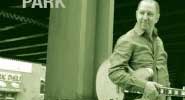
The only thing traditional about the organ trio featuring guitarist Greg Skaff, organist Pat Bianchi, and drummer Ralph Peterson Jr. is that there are three of them in the band. From there, they expand greatly on the classic combo to form what might be termed a “modern” organ trio. While some may think of funky blues as the basis for this kind of band, Skaff and company hit on many different touchstones from throughout the long and varied history of jazz.
116th & Park is a mixture of originals and songs from some of the music’s standard bearers that haven’t become overplayed over the years. The title cut, a composition by the guitarist, is a swinger that finds Skaff darting in and around the changes in a way that showcases his soulful side while also displaying his virtuosity on the instrument. While Bianchi solos on organ, Skaff comps beautifully underneath – like he does on pretty much the entire record.
For two of his other compositions, Skaff dons a nylon-string acoustic, an instrument one would not associate with your traditional organ trio. “Lapis” starts with mysterious chord changes and by the time the band joins, it takes on an almost flamenco feel. On “Tropicalia,” Skaff again pulls out the acoustic in a song with interesting changes and a Brazilian feel.
A Latin vibe also highlights his “Serenade To A Surdo.” While the Latin drive seems an odd path for an organ trio to take, it works perfectly, and when Skaff solos his imaginative playing brings it all home.
The covers start with Harold Mabern’s “Beehive,” which gets a manic bop treatment with Skaff and Bianchi doubling the head. It’s frenetic, but Skaff’s blistering solo swings hard and he has that fine, slightly distorted tone that many players in the genre used to their advantage in its early years. Like many of the cuts on the record, the Mabern tune shows off a player who is as self-assured and confident as any jazzer on the scene today.
Skaff also pays homage to a couple of the great composers. His take on Monk’s “Bye-Ya” has the interesting changes we’ve come to love from the composer’s music and is a nice mix of blues and swing. Skaff’s solo captures the inherent swing, prodded along by Peterson’s fine drumming. His take on Ellington’s “Come Sunday” lets us in on his talents as a ballad player. He opens it alone on guitar, and his gorgeous and melodic soloing, once the band joins in, is a treat for the ears.
While the New York-based guitarist has flown under the radar for a few years, this latest release, along with his other Zoho releases, 2004’s Ellington Boulevard and 2009’s East Harlem Skyline, along with the wonderful Blues for Mr. T (Khaeon) from 2003, show him to be one of the best of his class.
This article originally appeared in VG‘s Feb. ’13 issue. All copyrights are by the author and Vintage Guitar magazine. Unauthorized replication or use is strictly prohibited.
Buddy Guy’s next studio album, Rhythm & Blues, launches July 30. A double disc heavy on collaborations, it’s Rhythm set includes a take on Junior Wells’ 1960 hit “Messin’ With The Kid” with Kid Rock, “One Day Away” with Keith Urban, and “What You’re Gonna Do About Me” with Beth Hart. Guy rounds it out with “Best In Town,” “Whiskey Ghost,” Guitar Slim’s “Well I Done Got Over It,” and more. On the Blues disc, he works up “Meet Me In Chicago,” “I Could Die Happy,” “Never Gonna Change” and “All That Makes Me Happy Is The Blues,” then collaborates with Aerosmith’s Steven Tyler, Joe Perry, and Brad Whitford on “Evil Twin,” and Gary Clark, Jr. “Blues Don’t Care.”
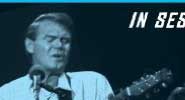
It’s no surprise, given Glen Campbell’s 2011 Alzheimer’s diagnosis and his lengthy Farewell Tour, that music and video from the past are emerging, like this 1983 Canadian TV show he did with songwriter Jimmy Webb. He met Campbell in the late 1960s after the singer recorded his hit version of Webb’s “By The Time I Get To Phoenix.” Webb accounted for some of Campbell’s most successful ’70s country-pop hits: “Wichita Lineman,” “Galveston,” “Where’s The Playground Susie,” and “Honey Come Back.” Over the years, they worked collaboratively in various studio and stage settings.
In Session, taped in Ontario, was part of a Canadian series pairing different artists, and the package includes both an audio CD and the complete show on DVD. With Webb playing piano and only occasional rhythm section presence, Campbell, using an Ovation Adamas, rolls through nine Webb originals, all the tunes previously mentioned except “Phoenix,” plus “The Moon Is A Harsh Mistress,” “Sunshower” (recorded by Thelma Houston), “Still Within The Sound Of My Voice,” and “MacArthur Park,” the odd, complex Webb ballad that became a 1968 hit for the late actor Richard Harris.
Vocally, Campbell sang flawlessly, having freed himself from a treacherous drug and alcohol dependency a couple years earlier. Even those who feel Webb’s ballads are often awash in artifice and pretense can’t deny the pair had a special creative chemistry. Campbell’s acoustic picking and soloing are sparkling and polished. For “MacArthur,” he can be seen split-screen on the DVD, dubbing in a rapid-fire amplified solo on his solidbody. Both CD and DVD include Webb’s reflections on each song and the liner notes add his more recent reflections on Campbell’s illness. What makes this collection meaningful is the obvious musical and personal synergy they had from the start.
This article originally appeared in VG‘s Feb. ’13 issue. All copyrights are by the author and Vintage Guitar magazine. Unauthorized replication or use is strictly prohibited.

 Guitar Town, an annual festival that spotlights virtuosic guitar pickers, will return to The Village at Copper in Copper Mountain, Colorado, August 9-11.
 Each morning includes workshops where fans gain insight on techniques and develop a connection with the musicians. Music themed activities are also available for kids each day. Each day concludes with an all-star jam that encapsulates the day’s lineup.
 The MXR Super Badass Distortion has a new all-analog circuit design with true-bypass switching and specially-tuned EQ section designed to offer a more-personalized distortion sound. Its Distortion control helps it produce, the company says, everything from early-’70s low-gain overdrive to modern high-gain saturation and every shade between. The Bass, Mid, and Treble controls allow the user to fine-tune their sound. Read more at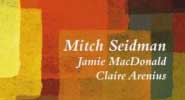

 Singer/songwriter/multi-instrumentalist Tom Keifer (VG, January ’13) will appear as musical guest on “Late Show with David Letterman” tomorrow (Tuesday, June 18). Keifer’s debut solo album, The Way Life Goes, was recently released. Recorded in Nashville, the disc was produced by Keifer along with his wife, Savannah, and Chuck Turner. Keifer is in the midst of his first solo tour. For more, check

 Guitarist Johnny Smith died of natural causes at his home in Colorado Springs on June 11. He was 90.
 Colorado-based ToneVille amplifiers are built using 1/8″-thick aluminum chassis and cabinets of walnut and maple with dovetail joints.The company’s four amps – Rio Grande, Sunset Strip, Beale Street, and Broadway – all use NOS tubes and a circuit with a push/pull Master control, the ability to remove its EQ section from the circuit, a negative-feedback control, and the choice of a Jensen P12Q or Celestion G12H30 speaker. Output ranges from five to 15 watts, with the Rio Grande offering built-in reverb. The company’s outboard reverb unit is built to match its amps, and using the same construction materials and technique. Learn more at www.tonevilleamps.com.