Month: June 2011

  • Les Copeland

    Les Copeland

    Les Copeland
    Les Copeland

    A new wrinkle on the proverbial “overnight sensation after 20 years on the road,” Les Copeland’s “debut” comes after eight albums released on his own and sold-out bandstands over the course of 16 years. But even the clout of an indie blues label will help introduce this British Columbian to an international audience. And bravo to that.

    The opening original, “That Needing Time,” is reminiscent of Blind Willie Johnson, with two tracks of overdubbed guitar – one shadowing Copeland’s passionate vocal. The catchy, melodic instrumental that follows is titled “Ry Cooder” and played, naturally, on slide.

    The 51-year-old is far from a purist in terms of inf luences or equipment. He shifts gears to the swing instrumental “Ginseng Girl” and shows his folk side on the eerie “Silently” – the former played on an Aria Pro 2 Herb Ellis Model, the latter on a small-bodied Godin through a ’70s Twin Reverb.

    It’s refreshing to find a “blues” artist who lists his half-dozen chief inf luences (chronological ly) as Johnny Winter, Mississippi Fred McDowell, Django Reinhardt, Carlos Montoya, Mississippi John Hurt, Joe Pass, and Honeyboy Edwards (yes, that’s seven, but who’s counting?). The 95-year-old Edwards, whom he credits as “the greatest inf luence on my playing, even though he and I did not meet until I was 36,” duets on two tunes, and although they’re considerably “looser” than Copeland’s solo tracks, they add plenty of charm.

    Label head Michael Frank, who blows some fine acoustic harmonica on the haunting title cut, is to be commended for exposing a worldclass singer, songwriter, and guitarist to those of us who haven’t been fortunate enough to previously cross paths with him.


    This article originally appeared in VG‘s Dec. ’10 issue. All copyrights are by the author and Vintage Guitar magazine. Unauthorized replication or use is strictly prohibited.

  • Radial Engineering Intros TankDriver

    Radial TankDriver

    Radial Engineering’s TankDriver 500-series module enables the user to input the spring reverb in a guitar amplifier to an API rackmount recording system. Features include a Wet/Dry mix to balance signal, Shimmer and Boom controls, and a Drive switch to increase output to compensate for or older/less sensitive reverbs. See more at radialeng.com.

  • The Brian Setzer Orchestra

    The Brian Setzer Orchestra


    Brian Setzer
    Brian Setzer

    Brian Setzer has, more than once, found a musical niche that allows him to play great guitar, use his vocal talents to their fullest, and lets him make a good living. None of that is easy in today’s music industry.

    This new live record is the perfect way for Setzer to show off his sizable talents. A doubledisc set, it features him with his big-band group and in a trio. Recorded during his tour of Japan in 2009, it includes music that spans his career.

    A few cuts remind us that, on guitar, Setzer is as good as it gets. “Good Rockin’ Daddy” is a straight boogie where he moves through jazzy changes while mixing blues, rock, country, and everything in-between. “Honey Man” is based on “Flight of the Bumblebee,” and he takes time to play solo, displaying mind-blowing chops. “Fishnet Stockings” has a rockabilly opening with altered chords that make it very jazzy – sort of Carl Perkins on steroids; by the time he’s done soloing, he has covered the history of guitar, winding it up with the solo from “Rock Around the Clock.”

    Historically speaking, Setzer uses the live set to deliver Stray Cat classics like “Rock this Town,” “Stray Cat Strut” (injected with a bit of “The Pink Panther Theme”), “Runaway Boys,” and “Rumble In Brighton.” His big band days are represented in numerous cuts, and some are hybrids of the styles, like the swinging “Dirty Boogie.” Arrangements are clever and always seem to have a surprise element. Setzer’s guitar cuts through the horns beautifully, and his underrated voice soars.

    While the entire set highlights his talents, his cover of “Sleepwalk” is a tour de force, with a unique perspective on the melody, volume swells emulating pedal-steel licks, and his out-of-this world chops.


    This article originally appeared in VG‘s Dec. ’10 issue. All copyrights are by the author and Vintage Guitar magazine. Unauthorized replication or use is strictly prohibited.

  • Martin Announces Trademark of Headstock

    C.F. Martin & Co. has announced the trademark of the distinctive headstock configuration it has been using on its guitars for more than 161 years.  This is part of its ongoing commitment to protect its intellectual property, including the many innovations in design, manufacture, and production of its instruments.

    “The clean, simple, iconic shape of the Martin guitar headstock has long been recognized by consumers as one of the primary identifying brand and design elements of our guitars,” said  Gregory Paul, Martin VP of Corporate Operations . “Use of this shape by others can only be intended to create confusion in the marketplace.” Learn more at martinguitar.com.


  • Thin Lizzy Sets Fall Tour Dates

    Thin Lizzy will tour North America as the opening act for Judas Priest on its farewell tour. Comprised of a lineup featuring guitarist Scott Gorham, drummer Brian Downey, and keyboardist Darren Wharton, as well as guitarist Richard Fortus, singer/guitarist Ricky Warwick, and bassist Marco Mendoza, Lizzy is looking forward to teaming with Priest and Black Label Society this fall.

    “One of the big perks of being a member of Thin Lizzy is that sometimes we get to share the stage with other bands that have helped to shape the music we hear today,” explains Warwick. “Judas Priest helped define a genre and I am really looking forward to seeing them on tour.”

    Thin Lizzy became one of rock’s top bands during the 1970s, on the strength of the hits “Jailbreak,” “The Boys Are Back In Town,” “Dancing in the Moonlight,” and “Waiting for an Alibi,” Lynott’s poetic-yet-tough lyrics, and the influential dual-guitar attack of Gorham and whichever second guitarist he was paired up with at the time (Brian Robertson, the late Gary Moore, Snowy White, or John Sykes). Lizzy split up in 1983, before Lynott passed away in 1986.

    Gorham is looking forward to Lizzy’s triumphant return to the States. “We love playing in the USA and it will be great to show the rest of the States what we are made of,” he said. “We are all fired and ready to kick some ass!”

    For tour dates and more, go to thinlizzyband.com.

  • Black Sabbath

    Black Sabbath

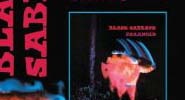
    Black SabbathReleased in the fall of 1970, Black Sabbath’s Paranoid was the shot heard ’round the world. As Sabbath bassist Geezer Butler ref lects, it’s been 40 years since the LP’s release, and metal is still an enormously popular rock genre, partially thanks to this epic album.

    Every member of the original Sabbath is interviewed in this video, along with engineer Tom Allom (Sabbath, Judas Priest), alt-rocker Henry Rollins, and a variety of journalists. Once the interviewees start dissecting the album, it’s hard to resist the charisma and power of Paranoid. From Tony Iommi’s skull-crushing guitar riffs on “War Pigs,” “Iron Man,” and the title cut, to Geezer’s dark lyrics about the Vietnam war, depression, and creepy sci-fi monsters, the picture of metal mastery depicted here is simply staggering. In a few sections, the album’s heavier tracks are laid against grim combat footage from Vietnam, which is devastatingly effective. Then, in a heartbeat, we switch to the brooding ballad “Planet Caravan,” featuring melodic, jazz-tinged guitar solos inspired by, surprisingly enough, Django Reinhardt. Indeed, there’s more to Black Sabbath than meets the eye.

    Perks include ’70s footage of Sabbath in concert, as well as newer scenes of engineer Allom pulling up individual tracks from the album on a studio mixer, allowing us to hear each instrument or vocal just as they were recorded four decades ago. Even more riveting is the fact that this metal masterpiece was recorded in just five days. And you have to appreciate the fact that the four members of Sabbath – Iommi, Butler, frontman Ozzy Osbourne and drummer Bill Ward – are all very respectful of each other and speak in a very honest, heartfelt manner about this famed album. While the argument about who invented metal won’t get solved in this DVD – was it Led Zeppelin, Deep Purple, or Sabbath? – the 97-minute documentary makes a good case for Paranoid at least being the greatest heavy metal album of all time.


    This article originally appeared in VG‘s Nov. ’11 issue. All copyrights are by the author and Vintage Guitar magazine. Unauthorized replication or use is strictly prohibited.


  • Jackson Browne

    Jackson Browne

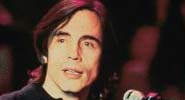
    Jackson BrownePart documentary, part performance (then-current and archival), this reissue of the 1999 portrait of the singer/songwriter reveals his sense of humor, commitment to social causes, and, most of all, talent.

    There is no narrator, and no interviewer is ever shown or heard – just Jackson (or such longtime associates as Bonnie Raitt, Don Henley, David Crosby, and Graham Nash) speaking into the camera. His ’70 partner, David Lindley, explains to Browne that Salt Lake City is the mother lode of polyester, but also talks about capturing the initial, subconscious inspiration – always better than the conscious, he nods.

    Browne’s band at the time included bassist Kevin McCormick, tone master Mark Goldenberg on Tele, and multiinstrumentalist/ producer Scott Thurston, in his pre-Heartbreakers days. Lindley joins them on Weissenborn (“Farther On”), bouzouki (“Lives In The Balance,” with Crosby and Nash providing harmonies), oud (“Too Many Angels”), and fiddle (“Before The Deluge,” with Goldenberg playing an impressive Ebow solo).

    In one rehearsal scene, guitarists Rick Vito and Danny Kortchmar, along with bassist Bob Glaub, marvel over Browne’s trio of ugly duckling six-strings (a habit he picked up from Lindley) – an Eko, a Teisco, and an Ovation Breadwinner. In another scene, of Browne wandering through a warehouse of “stuff ” stored during a recent move, a ’30s Gibson Roy Smeck Stage De Luxe leans against the back of an easy chair. It was around this time that Browne commissioned luthier Roy McAlister to build an updated version, dubbed the “Smeck-Alister.”

    Three songs from 1979’s No Nukes benefit are included, and some remarkable editing is used on “Doctor My Eyes,” segueing from the current lineup to the Vito-era band to older footage with Lindley (smoking on lap steel) without missing a beat.

    Rare insight into a career spanning 30 years – which has added another 10 since.


    This article originally appeared in VG‘s Nov. ’10 issue. All copyrights are by the author and Vintage Guitar magazine. Unauthorized replication or use is strictly prohibited.

  • Eric Johnson Slates Summer Tour

    Eric JohnsonEric Johnson will soon launch a summer tour in support of his latest album, Up Close.

    Johnson will tour the U.S, from July 7 through August 20, highlighted by stops with Steve Miller for shows in Clark County, Washington (July 17) and Clarkston, Michigan (August 7). He’ll also join Buddy Guy, July 21 in Omaha.
    Up Close was recently issued on 180-gram vinyl in a special double-LP gatefold package. The album has an impressive list of special guests, including Sonny Landreth, Miller, Jimmie Vaughan, and Jonny Lang.
    For more, visit ericjohnson.com.
  • The Sandro Albert Quartet

    The Sandro Albert Quartet

    Sandro Albert QuartetPlayed well, guitars and f lutes make an excellent combination. Such is the case in Sandro Albert’s quartet.

    Albert is a gifted guitarist whose soloing swings, and his knowledge of the harmonic structure of the guitar is evident as soon as f lutist Rodrigo Ursaia starts to solo. While the two set the stage in every song by stating the melody together before soloing, bassist Michael O’Brien and drummer Richie Barshay propel the tunes, giving the two perfect support.

    Albert deftly solos around clever changes on “Some Days,” and his comping behind the flute solo is masterful. His rhythm playing is up-front and you get the full effect of what he’s doing. He also proves proficient at different jazz styles, and there are obvious tips of the cap to Latin feels on “JW’s Baiao” and “Obrigado Villa.” His playing on the ballads “Where I Belong” and the moody “Waiting for Victoria” offers more chances to show his beautiful chord work. He’s not afraid to make things a little hectic, either on the title cut, with its odd pace and timing give him a chance to show off a bit with a series of arpeggios leading to a solo that displays his skills abundantly, and also shows the rapport between he and Ursaia.

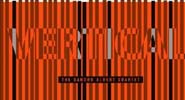
    Albert’s skill as a player is unquestionable, and on Vertical he shows and obvious ability to mesh styles into a coherent package.


    This article originally appeared in VG‘s Nov. ’11 issue. All copyrights are by the author and Vintage Guitar magazine. Unauthorized replication or use is strictly prohibited.


  • John Mellencamp

    John Mellencamp

    John MellencampBox sets are too often an excuse to release material that wasn’t deemed good enough in the first place, or they’re a means to repackage an artist’s hits.

    On the Rural Route 7609 is neither. Rather, it’s a batch of music assembled to showcase John Mellencamp’s growth as a songwriter and artist. When a familiar song appears, it’s usually in a different form, i.e. a demo, as with “Cherry Bomb” or the three songs that gave rise to “Jack and Diane.” Heavy on songs from the past two albums (where Mellencamp believes he’s done his best stuff), it’s tough to argue when you hear the strength and bravery in songs like “Longest Days” and “The County Fair.” Does he occasionally get preachy? Yes – he’s not afraid to let his political side show. The beauty is seeing the growth in the way the ideas are written. You’ll discover songs you didn’t know or had passed you by but now sound great.

    The set spans more than 30 years, and several guitarists. Mellencamp proves a fine accompanist on the latter-day folk tunes that feature just him and his guitar. The early days of his band shows a lean guitar attack from Larry Crane and Mike Wanchic that helped form that band’s trademark garage-rock sound. That sound became more involved and a bit more muscular when David Grissom and Andy York became lead players. This set also offers up a new version of a song Mellencamp wrote for the Blasters, “Colored Lights.” He kept Dave Alvin’s punchy guitar and added his vocal. The rest of the band is always solid, and when Kenny Aronoff played drums, it was a powerhouse.

    The set is well-conceived, and includes a nice essay by Anthony DeCurtis and Mellencamp’s reflections on the songs on the four discs. This isn’t the set for you if you’re looking for a greatest hits and best known songs. What you get is a songwriter that, as Tom Petty said about Mellencamp, “Grew up before our eyes.”


    This article originally appeared in VG‘s Jul. ’08 issue. All copyrights are by the author and Vintage Guitar magazine. Unauthorized replication or use is strictly prohibited.