Month: December 2010

  • Babicz Octave Blue Flame

    Babicz Octave Blue Flame

    Babicz Octave Blue Flame
    Babicz Octave Blue Flame

    When a vintage-minded guitarist recollects cracking open the case of a big ol’ hollowbody and catching a glimpse of flame, minds wander to dreams of Gibson ES-5 or Kay Jimmy Reed Thin-Twin axes.

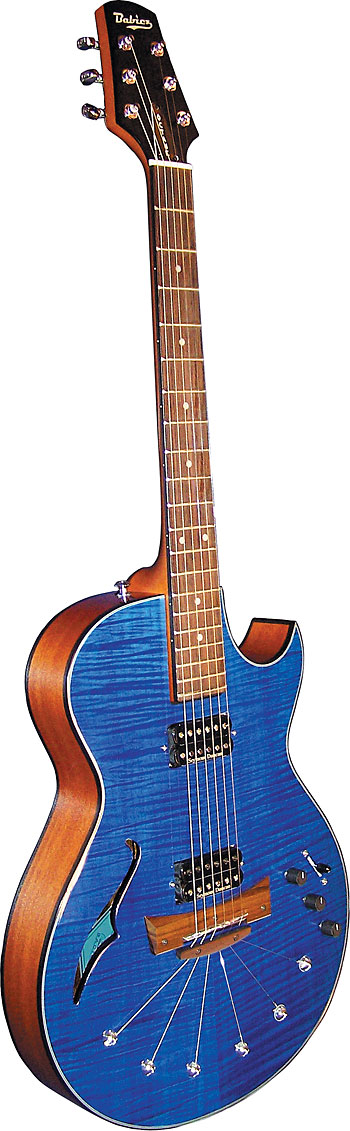
    As one unboxes the Babicz Octane, many of the same emotions are stirred, given the classic look of the hollowbody beauty’s flame-maple top and solid-mahogany back and sides.

    The Octane is marketed as a rock guitar, with Seymour Duncan humbuckers (a Pearly Gates and a George Lynch Screamin’ Demon), radiused solid-mahogany back, and bookmatched wood. But it’s much more.

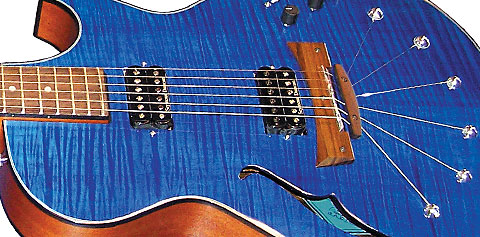
    The Octane’s patented bridge, string retainer, and fanned-out string anchor design makes it (and the other guitars in the Babicz Identity line) distinctive in look and tone. With a soundhole and construction that leaves much of the top free to vibrate, this guitar is an organic being. Add the optional LR Baggs piezo with the proprietary blender, and you have an instrument of rare versatility.

    After a little time playing at home, we recently took an Octane to a solo instrumental gig. Strung with nickel-wound D’Addario .010s (the aluminum saddle is compensated for an unwound third) and plugged into a warm-sounding Ultrasound AG-50D acoustic amp, we were immediately taken with the gradations of jazz-appropriate tones available by blending the pickups, adjusting the tone control, and bleeding varying degrees of the Baggs saddle pickup into the mix. A suggestion of the transparent Bartolini/L-5 Tuck Andress sound or the mic’d amp/ES-175 Joe Pass Virtuoso voice only heightened our disappointment in failing to play with such finesse. Rolling off the tone control never lessened the articulate sound, and the piezo blender served as an alternative tone control, adding sparkle to the Duncans.

    After re-stringing with a set of .011-.052s, we played the Octane amplified through the house PA system for a vocal/guitar solo gig. The most convincing acoustic tone was achieved with a bit of magnetic pickup and the tone control slightly rolled off to attenuate the piezo’s high-end reponse. The variety of sounds possible with the intuitive wiring and easy-operation control layout brought a new edge to blues solo passages and a warm approach on ballads. Plenty of bass response kept the low-end rolling throughout the evening. The Pearly Gates supplied the fat blues tones, and the Screamin’ Demon produced a convincing country cut and rockabilly flair.

    Did we mention how lovely the flametop is? A continual distraction… and the mahogany back is striking, too.

    We dropped the plug into a late-’50s Ampeg Jet with a reissue Jensen C12N and cranked it up. The compressed sustain inherent in the Babicz design produced big single-note resonance that got even bigger when we strummed chords, and both parlayed well-defined clarity. You know that sound when B.B. King hits the tonic in octaves up the neck and holds it, with soul-drenched fat sustain? Uh huh. Got it right here.

    The piezo tended to feed back in full rock and roll blast; using a signal splitter to rout clean acoustic settings to an appropriate amp or PA might be the way to get the best out of all the possibilities of the optional advanced electronics.

    The wiring is easily accessible through a rear-mounted panel cut from the same piece of wood as the back. A look at the tidy electronics and clean internal construction reinforce the sense of a tenacious attention to detail.

    An attractive snake-head headstock with streamlined silkscreened logo is faced with a veneer and backed with a volute for stability and strength. The rosewood fingerboard, with its 253/4” scale and 111/16” nut width, is neatly fretted with 20 polished medium-jumbo frets. Some guitarists might wish the satin-finished, D-shaped neck were attached at the 16th (as opposed to 14th) fret, for greater high-end access.

    The factory setup was low and easy, but who cares when the action is readily adjustable with a quick twist of the headstock-mounted hex wrench; remove the wrench from its holder, slip it into the hole on the back, and adjust the neck for subtle low-action chord melody or full-roar slide. There’s no perceptible change in tuning during this procedure.

    A moveable rosewood bridge held in place by countersunk hex-head fasteners allows for easy intonation correction, accomplished in less than five minutes after re-stringing. The string anchor system lends the strings extra flexibility and sets the top in motion to produce the distinctive Octane sound. Performing guitarists want to look slick; strap on the Octane, with its striking hardware, glossy finish, and prime lumber, and you’ll look like a contender even on a bad hair day.

    That lumber, combined with high standards of craftsmanship and first-class parts and electronics, combine with the Babicz-trademarked “continually adjustable neck” and lateral compression soundboard to produce a rock monster of great individuality and versatility. But, hey, you can also use it to channel a little Johnny Smith or Jimmy Reed. And when you need to take a break, just step back and look at that sweet flame top.

    Babicz Octave Blue Flame

    Price: $2,149

    Contact:  Babicz Guitars, 1 Civic Center Plaza, Suite 301, Poughkeepsie, NY 12601; phone (845) 790-5250; www.babiczguitars.com


    This article originally appeared in VG April 2007 issue. All copyrights are by the author and Vintage Guitar magazine. Unauthorized replication or use is strictly prohibited.
  • Awesome Musical Products Pickguards

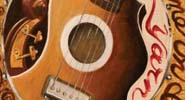
    AweSome Musical Instruments Stratocaster pickguards have the company’s Pickup Tone Multiplier (PTM) switching system. Using six switches, they produce 30 additional pickup tones. They are offered in four colors and made to fit a standard American right-hand Stratocaster. They accept three user-provided single-coil pickups and install with no soldering needed. Learn more at AweSome-Guitars.com.

  • Yarn

    Yarn

    On its third album, this Brooklynbased country/roots band pushes further into the darker side of Americana.

    Guitarist/lead vocalist Blake Christiana guides the band, with Trevor MacArthur on guitar and vocals, Andrew Hendryx on mandolin and harmonica, Rick Bugel on bass, and Jay Frederick on drums and percussion. Cameos by Jeremy Garrett on fiddle and Skip Krevens on pedal-steel add a dash of spice to the proceedings. Stylistically, the music on Come On In is similar to the band’s previous work, though the lyrical content isn’t quite as dark. Alcohol still features prominently as subject matter on “These Bars Don’t Look Too Friendly,” which lends a more ambivalent view of booze, while “Schenectaday” is a bittersweet ditty about the upstate New York town.

    The most pitiful song is “I Wanted to Get High,” which focuses on that existential moment when only one thing matters.

    If you like your country roots music unvarnished and raw, give a listen to Yarn.


    This article originally appeared in VG’s Oct. ’09 issue.  All copyrights are by the author and Vintage Guitar

    magazine.  Unauthorized replication or use is strictly prohibited.


  • The Freddie Steady 5

    The Freddie Steady 5

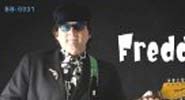
    Freddie Steady 5You might say Austin’s Freddie Krc wears a lot of hats. He has drummed with Jerry Jeff Walker, B.W. Stevenson, Carole King, and Ronnie Lane – not to mention anchoring that chair in the power-pop pioneering Explosives, who were Roky Erickson’s backup band for years. He also plays guitar and sings county in Freddie Steady’s Wild Country, folk-rock with the Shakin’ Apostles, and ’60s-style garage rock with the Freddie Steady 5. He’s also an in-demand producer and head of his own SteadyBoy label.

    Houston’s SugarHill Studios is where the Big Bopper cut “Chantilly Lace,” where the Sir Douglas Quintet recorded “She’s About A Mover,” and boasts a list of clients encompassing Freddy Fender, Johnny Winter, Lightnin’ Hopkins, Roy Head, George Jones, Willie Nelson, the Rolling Stones, B.J. Thomas, Todd Rundgren, Selena, Janis Joplin, 13th Floor Elevators, Asleep At The Wheel, and even Beyonce.

    Band and studio came together when Krc was asked to participate in SugarHill’s live-in-the-studio series, which was so successful they came back for a second session – the results of which are presented here as they went down.

    Other than well-chosen covers of P.J. Proby’s “Niki Hoeky,” Bo Diddley’s “Who Do You Love,” and the Beatles’ “No Reply,” the rest of the 17 songs were penned by Krc, often in tandem with Cam King, lead guitarist with the 5, the Explosives,

    and other Freddie associations. Whether writing alone, with King, or with teen rocker Jenny Wolfe (the Farfisa-laden “I Will Wait For You”), Krc has a knack for paying homage to bands, periods, and styles without lapsing into caricature – his remake of the Explosives’ “A Girl Like You” being a perfect example.

    Throughout, King is both an on-the-money parts player and snarling soloist, as on “Austin, Texas Blues” and the Doug Sahm-inspired “What’s So Hard About Love.”


    This article originally appeared in VG’s Oct. ’09 issue.  All copyrights are by the author and Vintage Guitar magazine.  Unauthorized replication or use is strictly prohibited.


  • Petra van Nuis & Andy Brown

    Petra van Nuis & Andy Brown

    Petra van Nuis & Andy BrownThere’s not a lot of precedent for albums featuring nothing but a female voice and a jazz guitar, but those that come to mind set a high bar. There was Al Viola with Julie London, Joe Pass with Ella Fitzgerald, and more recently, Martin Taylor with Alison Burns. Fast company, to say the least.

    Brown and van Nuis met at the Cincinnati School for the Creative and Performing Arts. It was there that Brown, initially a blues buff, apprenticed under jazz guitarists Cal Collins and Denny Poole. He later studied with the legendary Ted Greene. Not surprisingly, van Nuis, possessor of a soft, “little girl” voice, was influenced by pianist/singer Blossom Dearie. Like Dearie, she has a respect for melody over gymnastics (refreshing these days), citing Chet Baker and Peggy Lee as two more beacons.

    Her light, thin voice is counterbalanced by the dark, thick tone Brown gets from his single-pickup ’57 Gibson ES-175, which he plays through a ’66 Fender Vibrolux. When called on, he provides comping chords and walking bass simultaneously (check out their uptempo arrangement of Cole Porter’s “From This Moment On”) or surging rhythm (as on Duke Ellington’s “Caravan”). On the ballad “Far Away Places,” Brown keeps his solo simple – as in simply beautiful – and he goes it alone on a compact rendition of “Bim Bom,” strutting his stuff over Jobim’s spirited bossa nova standard.

    The choice of material is especially rewarding. There are a few well-worn standards, like those mentioned above, but overdue attention is paid to such gems as the title tune (a hit for Bing Crosby), “Destination Moon” (associated with Nat Cole), and Rodgers & Hart’s oft-overlooked “With A Song In My Heart.” So who needs a band? Certainly not Andy and Petra.


    This article originally appeared in VG’s Sept. ’10 issue.  All copyrights are by the author and Vintage Guitar magazine.  Unauthorized replication or use is strictly prohibited.


  • The Stryker/Slagle Band

    The Stryker/Slagle Band

    Stryker Slagle BandThe Stryker/Slagle Band has been producing near-perfect quartet records for some time, and Keeper will not snap the string.

    While Dave Stryker (on guitar) and Steve Slagle (sax) supply memorable melodies and soulful solos, the backbone of the band’s sound is provided by Jay Anderson (bass) and Victor Lewis (drums). Except for a take on Thelonius Monk’s “Ruby My Dear,” the two soloists composed the tunes and they’re all – as the title implies – keepers.

    The title cut starts with a frenetic bluesy intro with nice changes and a repeating rhythm figure under Slagle’s sax. Stryker darts around the changes with considerable chops for a “jazz guitarist” who boasts as much feel as technical ability. Most cuts demonstrate the interplay between the soloists and the rhythm section.“Bailout” (a timely title given today’s political machinations) has an opening double line from Stryker and Slagle while the rhythm section cooks. Both serve up dazzling

    solos, with Stryker’s octave-line out tipping the hat to old-school players like Wes Montgomery. The interplay makes full use of the feel they have for each other’s playing. “Convergence” is a bop tune, while the Stryker composition “Came To Believe” is a melodic swinger with imaginative soloing. “Gold Dust” features him on nylonstring acoustic, beautifully navigating the Latin feel. There’s more fine ballad work on “Bryce’s Peace,” with its fine chordal work under his partner’s solos.

    Through the years, Stryker has put in a lot of time with Brother Jack McDuff, Stanley Turrentine, and Eliane Elias. But with this band (and Slagle), he has hit his stride as a player and composer, and now sits in the upper echelon of this generation’s jazz guitarists.


    This article originally appeared in VG’s Oct. ’09 issue.  All copyrights are by the author and Vintage Guitar magazine.  Unauthorized replication or use is strictly prohibited.


  • Elvin Bishop

    Elvin Bishop

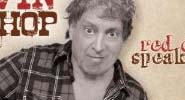
    Elvin BishopBishop’s 2008 album, The Blues Roll On, was a landmark of sorts, as he surrounded himself with elder statesmen like B.B. King and James Cotton, as well as young guns like Derek Trucks and the Homemade Jamz Blues Band. His follow-up marks 45 years since his appearance on the self-titled debut of the Paul Butterfield Blues Band – an album that turned countless listeners onto the blues. 

    As the title implies, he lets his 1959 stereo Gibson ES-345, nicknamed “Red Dog,” do much of the talking, in more ways than one. The opening title track is a talking blues in the tradition of “Drunk Again” (from Butter’s In My Own Dream) and “Sweet Potato” (from Bishop’s ’69 solo debut), but with less comedy and more autobiography. And when he prompts it to, “Speak, Red Dog,” it howls – thanks to Bishop’s slide.

    Elsewhere, Bishop splits vocal duties with John Nemeth (on “Neighbor, Neighbor,” “Get Your Hand Out Of My Pocket,” and a beautiful reading, vocally and by Bishop’s slide, of Jimmy Cliff’s “Many Rivers To Cross”), while sharing chores with guitarists Tommy Castro, Kid Andersen, Roy Gaines, and Ronnie Baker Brooks, not to mention veteran instrumentalists Terry Hanck (sax) and Buckwheat Zydeco (accordion).

    The set features three instrumentals: the distorted (and aptly titled) “Barbecue Boogie,” a doo-wop medley of “In The Still Of The Night” and “Maybe,” and the hundred-year-old gospel classic “His Eye Is On The Sparrow” – the latter two, beautiful slide showcases.

    Bishop calls his singing voice “limited,” but he delivers a fine, expressive rendition of Leroy Carr’s “Midnight Hour Blues.” And with his guitar the sole backing on the spoken/sung “Clean Livin’,” he makes a strong case (as he did on Blues Rolls On’s “Oklahoma”) for an entirely solo release.


    This article originally appeared in VG’s Sept. ’10 issue.  All copyrights are by the author and Vintage Guitar magazine.  Unauthorized replication or use is strictly prohibited.

  • Peter Ostroushko

    Peter Ostroushko

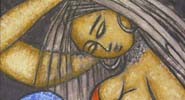
    Peter OstroushkePeter Ostroushko channels a mixture of Stephen Foster, Carter Stanley, and Doc Boggs to create unique music that sounds much older than it is. Here, he further expands his library of heartbreakingly beautiful songs performed with understated grace.

    Wistfulness and a sense of longing permeate most of the tunes on When the Last Morning Glory Blooms. Some of the melodies echo like something from deep in your dreams. “Down Where the River Bends” has a strong cinematic quality – the way the orchestration builds and slowly unfolds from stark gothic minimalism into a multi-part composition. Near its end, the song reverts to an etude that sounds like it came from a turnof- the-century piano method book. Ostroushko makes powerful music from the depths of the American soul.


    This article originally appeared in VG’s Oct. ’09 issue.  All copyrights are by the author and Vintage Guitar magazine.  Unauthorized replication or use is strictly prohibited.


  • Hamilton De Holanda Quintet

    Hamilton De Holanda Quintet

    Hamilton De Holanda QuintetBrazilian jazz, when played by a native group such as Hamilton De Holanda’s quintet, is far more interesting than what usually passes for Brazilian jazz. Holanda combines his native Choro music with foreign styles such as Bossa Nova and fusion without losing its essential Brazilian nature.

    Holanda’s quintet has an unusual assemblage of instruments; 10-string

    mandolin, guitar, harmonica, bass and drums. But they deliver as rich and full a set of musical parts as any horn band. Holanda wrote all the music on Brasilianos. And while the styles and time signatures vary, each composition has powerful rhythmic underpinnings mated with a contrapuntal melody line using layered harmonies. It forms some of the most cohesive and textured music you’ll hear.

    The sound quality on this album is top-notch. A less-than-pristine recording could easily have obscured the subtle interplay between the harmonica and the mandolin. But recording engineer Daniel Musy and mastering engineer Marcos Saboia captured every nuance of Holanda’s quintet’s playing.

    Naturally, Holanda’s music is grouped with Brazilian jazz. But, his music isn’t so much Brazilian jazz as it is acoustic jazz performed by a Brazilian band. And these guys can play.


    This article originally appeared in VG’s Sept. ’10 issue.  All copyrights are by the author and Vintage Guitar magazine.  Unauthorized replication or use is strictly prohibited.

  • Dierks Bentley

    Dierks Bentley

    Dierks BentleyFrom the outside, one could easily judge Dierks Bentley’s music too slick, his status as merely a phenom on country radio. But Up On The Ridge might slap you up-side the head.

    Recorded with a collection of hot young pickers and bluegrass icons, this may be the best acoustic album of the year; Chris Thile’s backing band, the Punch Brothers (with Noam Pikelny on banjo and Chris Eldridge on guitar) form the core on several cuts. Other players included Bryan Sutton (guitar), Rob Ickes (resonator) and Ronnie McCoury (mandolin). Del McCoury, Vince Gill, Kris Kristofferson, and Alison Krauss also add their inimitable vocal talents to the project.

    Bentley ranges far and wide in terms of song choice. Covers of Kris Kristofferson’s “Bottle to The Bottom,” Julie and Buddy Miller’s “Love Grows Wild,” Shawn Camp’s “Fallin’ For You,” U2’s “Pride (In The Name of Love),” and Bob Dylan’s “Senor,” join five songs co-written by Bentley. Jon Randall Stewart, who served as producer, was Bentley’s co-writer on three. Their “Draw Me a Map,” a pop/country confection, especially benefits from the acoustic arrangement.

    No doubt Bentley has a fine lead voice, but what makes this album more than another “so and so and…” album is the level of interaction by the other musicians. Instead of mixing and arranging tunes to put Bentley up front, he’s positioned as a band member… albeit the one who sings all the leads. The result comes across as a labor of love.


    This article originally appeared in VG’s Sept. ’10 issue.  All copyrights are by the author and Vintage Guitar magazine.  Unauthorized replication or use is strictly prohibited.