Month: April 2010

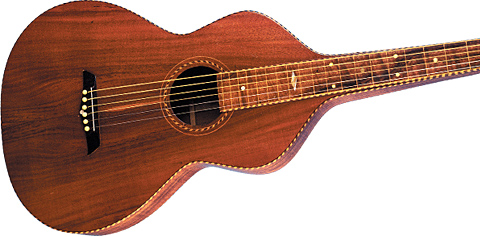
  • Weissenborn Style#4

    Weissenborn Style#4

    Weissenborn Style #4
    Photo by Walter Carter, courtesy Gruhn Guitars.
    The acoustic Hawaiian guitar of Hermann Weissenborn is one of the most specialized instrument designs of the 20th century. Weissenborns were made for guitarists who played the newest craze of the late 1910s and 1920s – Hawaiian music – and with their koa-wood construction and square, fully hollow necks, they were unsuitable for virtually any other style of music, even the Hawaiian music of later eras.

    Hawaiian guitarists introduced their style, with the instrument held flat in the lap and played with a steel bar in the left hand, to the mainland around the turn of the 20th century, but they represented only one of many genres of popular music until 1915, when performances by Hawaiian musicians at the Panama-Pacific Exposition in San Francisco set off a national craze. At the time, a “Hawaiian guitar” was simply a standard steel-string guitar with a high nut to raise the strings off the fingerboard.

    In response to this new style of guitar playing, a new instrument design appeared from two instrument makers in the Los Angeles area – Chris Knutsen and Hermann Weissenborn. Knutsen is better known for his harp guitars, which had a large hollow arm for the sub-bass strings. Born in 1856, he was based in the Seattle area and by the end of the 19th century was making harp guitars; he relocated to Los Angeles in 1916. Weissenborn, born in 1863, took up instrument making in his native Germany, then moved to New York in around 1900; he relocated to Los Angeles in 1910.

    Neither maker dated his instruments, and their design was similar enough that they had to have been familiar with each other’s work. Knutsen’s hollow-armed harp guitar design would appear to have provided the inspiration for the hollow neck of both makers’ Hawaiian guitars. The tops of Knutsen’s guitars are typically ladder-braced, while Weissenborn’s are X-braced. The earliest Weissenborn in the collection of author Jonathan Kellerman (VG, October ’05) is ladder-braced, which suggests that Knutsen influenced Weissenborn, who then refined the design. Regardless of who influenced whom, Weissenborn emerged as the more successful maker and the one whose guitars define the “acoustic Hawaiian” style today.

    By the mid 1920s, Weissenborn’s basic model featured a shallow (3″ deep), elongated body with shoulders curving into the neck. The neck was square and hollow all the way from the body to the nut. Top, back, sides, neck, and fingerboard were of Hawaiian koa wood (spruce top was optional). The fingerboard had flush, inlaid fret lines of white holly.

    The model was available in four ornamental variations, distinguished by the degree of rope-pattern inlay or binding:
    • Style 1 was plain, with a retail price (in 1930) of $40.
    • Style 2 featured the rope around the soundhole only. Retail $56.
    • Style 3 added rope around the top band fingerboard. Retail $67.50.
    • Style 4 featured rope around the soundhole, top, back, fingerboard and headstock, plus fancier fretboard inlay. Also, as the style numbers increased, so did the figuration of the koa wood. Style 4 retailed at $79.

    Weissenborn guitars, along with the Kona-brand models made by Weissenborn for L.A. teacher C.S. Delano, were the most popular Hawaiian instruments of the mid 1920s. The music was more closely related to the jazzy pop music of the 1920s – with syncopation and hot licks – than to the lush, dreamy, electric-Hawaiian style of the 1930s that would become the quintessential Hawaiian style. The shallow koa body and the metal saddle produced a tone that was rich and pleasing, but with enough cutting power to be heard in a typical Hawaiian duo or trio. A group could outfit themselves entirely with Weissenborns, as the company also offered koa Spanish-style models with the same ornamentation levels as the Hawaiians (but with model numbers A, B, C, and D). Weissenborns were available virtually anywhere in the U.S. thanks to a distribution agreement with Chicago-based wholesaler Tonk Brothers.

    By the late 1920s, the guitar was beginning to supplant the tenor banjo on its way to becoming the dominant fretted instrument. Part of its rising popularity was a result of changes in popular music, and with more interest from musicians and fans focused on the guitar, innovative instrument makers also turned their focus to the guitar. The result was a flurry of innovation that included more powerful acoustic guitars and culminated in the early 1930s with the introduction of the modern electric guitar. Unfortunately, through these changes in guitar design, which went hand-in-hand with changes in popular music, the Weissenborn acoustic Hawaiian guitar did not change. In the Hawaiian arena, another Los Angeles company, National, came up with a new “resonator” guitar, built around a trio of aluminum cones. Presumably because one of National’s founders, George Beauchamp, was a former vaudeville Hawaiian guitarist, the first Nationals were Hawaiian models. Although the bodies were metal, they had the same square, fully hollow neck design as the Weissenborns.

    It was a matter of personal taste whether or not the gleaming “German silver” (nickel alloy) body of a National tri-cone was more attractive than the highly figured koa wood of a Weissenborn, or whether the lilting, bell-like voice of a National was as pleasing as the rich, woody tone of a Weissenborn. But one thing was undeniable: the National was louder than the Weissenborn. The National was quite a bit more expensive – the cheapest, plainest National tri-cone cost $125, more than half again what the most expensive Weissenborn cost – but it was no contest. Hawaiian musicians were willing to pay the price to get the extra volume, and within a couple of years Nationals blew Weissenborns off the map. Weissenborns were all but forgotten by the time Herman Weissenborn died in 1937. It’s not known if he held any animosity toward National, but he did live long enough to see National’s acoustic Hawaiians suffer a similar demise at the hands of the new electric Hawaiian guitars.

    The aesthetic appeal of a Weissenborn Style 4 is as strong today as it was in the 1920s, with its smooth body-to-neck lines outlined by rope-pattern trim and complemented by the highly figured koa wood. And with today’s amplification technology, the Weissenborn-style Hawaiian guitar – whether an original or a modern replica – is once again a unique and vital voice in the world of the acoustic guitar.


    This article originally appeared in VG‘s February 2008 issue. All copyrights are by the author and Vintage Guitar magazine. Unauthorized replication or use is strictly prohibited.


  • Steve Earle – Townes

    Of his mentor, Townes Van Zandt, Steve Earle has said he was “a real good teacher and a real bad role model.” Seems Earle got a good dose of both. With his new album, Townes, Earle pays homage to each side of the singer/songwriter, and the man.

    It should come as no surprise that while returning to his own roots, Earle has also cut one of his rootsiest discs ever. But his growl and lowdown arrangements still catch you unaware. You can almost hear the dust on his boots.

    Earle has collected a phenomenal backing band of guest musicians with Dobro, mandolin, fiddle, electric guitars, drums, and much more. Yet the band never overpowers the core beauty of the tunes. This is country music riding a deep groove.

    Earle himself adds guitar, mandola, harmonica, harmonium, and percussion. And he sings these songs like he means every word. Earle’s son, musician Justin Townes Earle (catch that middle name), also appears alongside his father.

    There’s no one more apt to record a tribute album to Van Zandt, and this one is a stunner.


    This article originally appeared in VG‘s Sept. ’09 issue. All copyrights are by the author and Vintage Guitar magazine. Unauthorized replication or use is strictly prohibited.

  • Ovation GS2-R “Ripley”

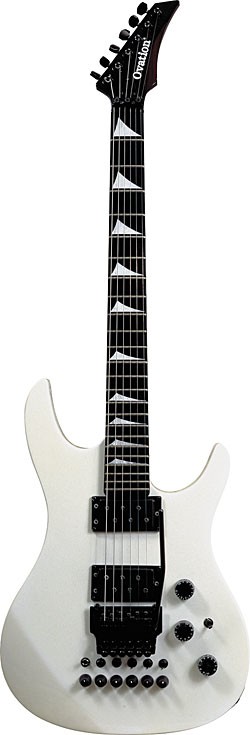
    1986 Ovation GS2-R

    1986 Ovation GS2-R “Ripley”,

    For a guitar detective, there’s nothing like a good mystery. What’s the story on this guitar? Where was it made? Who made it? If you’re lucky, you might even get to ask, “Who designed it?” and find an answer! Through the years, it’s been our pleasure to solve a lot of these mysteries, but here’s one that has us stumped. That is, we know a lot about this guitar, but getting to the “truth”… that’s another matter. For your consideration; a 1986 Ovation GS2-R guitar with Ripley electronics.

    The Ovation part, at least at first, is pretty easy. We know Ovation was founded circa 1965 by Charlie Kaman, an engineer and guitar player who’d left Sikorski helicopters to form his own manufacturing company. As the story goes, he had his Martin guitars hanging on the wall in his Connecticut office so they’d be close when he felt like playing. The problem was that with season changes, the wood tended to expand and shrink, and at least one guitar developed a split. Kaman took it to Martin for repair. Looking around, he saw work with high tolerances and skilled craftsmen that echoed his own business. He offered to buy Martin, but the Martins were not interested. Kaman then made an offer to buy Kay, but that was rejected, as well. The more he thought about his own use of spruce and composite materials for helicopter blades, the more he thought it could apply to guitars. So he started a guitar company, and production commenced in 1966.

    Kaman put his engineers to work developing a spruce and fiberglass (Lyracord) guitar and finally came up with an adequate solution. Kaman took an early model to Charlie Byrd, who loved the guitar and said it deserved an “ovation.” The name was born. Ovation acoustics made their way into the hands of Glen Campbell, who scored a network TV show in 1969 while playing one. It was Campbell who spurred the company to develop its piezo-electric pickups systems. The brand was on its way!

    Ovation experimented with hollowbody electric guitars as early as 1968 with its Electric Storm series, with thinline bodies made in Germany, Ovation necks, and Schaller hardware. These were less than successful. Ovation moved on to solidbodies with the introduction of the battle-axe shaped Breadwinner in 1971, followed by its upmarket brother, the Deacon, in ’72. A number of Ovation electrics debuted in the ’70s, all meeting with limited acceptance and ending with Viper guitars and Magnum basses circa 1983.

    Ovation didn’t give up on the idea of marketing solidbodies, however, and in ’85 introduced its Hard Bodies line, made in Korea and assembled in the U.S. These were not especially successful, either ,and lasted only about a year. In ’86, Ovation brought in 100 mystery guitars made in Japan… no details available (hold that thought). Other efforts followed, but Ovation finally solved its solidbody electric problem by purchasing the Hamer company in ’88. Finally, success!

    Steve Ripley is also a known quantity – a talented guitar player with an interest in electronics who, in the early ’80s, came up with a novel system that featured stereo output and the ability to fade the pickup signal from each string to one channel or another (“fading” meaning to determine how much of a signal goes to each). The possibilities of such a system are truly psychedelic! The details remain to be discovered, but in ’84 Ripley hooked up with the rapidly growing Kramer guitar company, resulting in the heavily promoted Kramer RSG Ripley Stereo model, which was endorsed by Edward Van Halen. It’s not known how much, if any, influence Eddy may have had in the relationship. Kramer Ripleys came with one or two Bartolini-made pickups. It’s also unknown how many of these guitars were actually made, even though they were actively promoted for a couple years, they may well have been more prominent in advertising than in reality!

    Which brings us to this Ovation GS2-R. According to Bill Kaman Jr., this guitar was part of an experiment in marketing the Ripley idea explored by Ovation in ’86. The guitar was made in Japan, the body is probably mahogany, and the bolt-on neck is pretty interesting, consisting of a multi-laminate maple neck with approximately 1/16″ reverse-grain strips glued together for strength (based on a concept by German guitar builder Framus). The neck is capped with a synthetic Ebonol fingerboard (ironically, an early Kramer innovation) with faux-pearl flag inlays. Each string can be turned on or off with a separate mini-toggle. There’s a fader pot for each string. Each pickup has its own volume and tone control. The vibrato system is licensed Floyd Rose and operates exactly like the Kramer. It plays and sounds great.

    This “experiment” basically went nowhere. According to Bill Kaman, only about 20 to 30 were ever produced.

    Which brings us to the crux of the mystery. Ripley doesn’t recall ever working with Kaman/Ovation. This is something most guitar designers would remember. Not the least of all from a check or two. Nada. The electronics on this guitar are either genuine Ripley or an exact copy. The GS2-R model designation suggests “guitar solid two-pickup Ripley.” Presumably, there may have been a one-pickup version.

    There is any number of explanations for this memory discrepancy – disingenuousness is not one of them. Ovation clearly thought it was using Ripley’s ideas. Further speculation would be just that…

    So, we come back to the reality that the Ovation GS2-R exists. Look at the picture! We know who made it (well, someone in Japan), when, and more or less why. We know who designed the electronics… But did he? It’s a fascinating conundrum, what you might call an “axe whodunit!”


    This article originally appeared in VG‘s August 2008 issue. All copyrights are by the author and Vintage Guitar magazine. Unauthorized replication or use is strictly prohibited.

  • Collings I-35

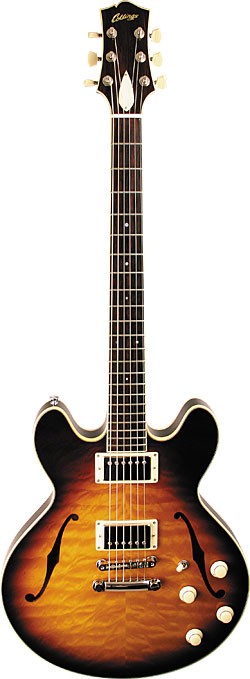
    2006 Collings I-35

    2006 Collings I-35.

    Occasionally, in the world of guitars, events influence the market. The introduction of a new guitar can send ripples through the industry. Not so long ago, Paul Reed Smith redefined quality workmanship and set a new standard.

    Bill Collings has been building highly regarded acoustic guitars for decades. He created an organization that produces boutique-quality instruments in a factory setting, and he recently charged this organization with creating electric guitars on the same level, both functionally and aesthetically. The result is the I-35.

    Named for Austin’s infamous traffic artery, the I-35 is aesthetically reminiscent of a Gibson ES-335. But it’s by no means a thinly veiled copy. The body is pared down slightly at 15″ wide, and it has a slightly more angular shape that comparatively reduces its size and weight. In terms of appointments, the guitar is pure Collings, with ivoroid all around and perfection in its detail.

    Construction of the I-35’s body is quite different from the standard semi-hollow electric. In contrast to the traditional method of using pressed plywood and bent sides, Collings carves the back and sides from a single slab of mahogany. A solid top is then carved from bookmatched maple. The body is heavily chambered to duplicate the density of the traditional style. This technique is cleverly used to yield a sonic advantage, but preserves the aesthetic under the f-holes. The neck joint illustrates the attention to detail and proper execution of superior design. The back actually extends over the heel (like a violin), eliminating the ledge typically seen between the top of the back and the back of the heel. To execute this look, the heel is actually bound in matching ivoroid and carved to match. The result is a no-compromise neck joint, functionally and aesthetically.

    Mahogany used to build the body and neck is superior quality, as is the maple top. The headstock and fingerboard are unbelievable cool Brazilian Rosewood, an upgrade bordering on extinction in most circles. Every visible plastic part is from the same batch of traditional ivoroid-colored nitrate plastic. The truss-rod cover, pickup mounting rings, and knobs are all manufactured in-house to ensure that is the case. Even the handles of the Sperzel tuners are ivoroid!

    Hardware continues the theme; pickups are a custom set built by Jason Lollar and are among the best PAF-style. They’re faithful copies with a full, medium-output sound that exhibits the true texture and requency response of a good PAF. The pickups are not bright, and their treble response can be tailored by adjusting the pickup’s saturation. As they’re pushed, they react with a smooth compression without becoming excessively bright. And they allow for a smooth, darker tone when distanced from the string, but when adjusted closer have just enough aggression to cut through.

    The bridge and tailpiece are a nickel-plated TonePros locking tailpiece and ABR-1-style set. This is a solid setup that tightens the guitar’s attack. Because the saddle adjustment screws are held firmly in place by snap rings, the characteristic tendency to crackle is eliminated, and notes have a cleaner attack. A properly cut bone nut, in conjunction with properly leveled and polished frets, complete the system.

    Physically, this guitar has no weaknesses. It sounds great unplugged (as all guitars should). The feel is very comfortable with a medium C-shaped neck and a 111/16″ nut width. The edges of the fingerboard are slightly rounded, giving it a broken-in feel, and the setup was well-done from the factory and is easily adjustable after unlocking the set screws that secure the bridge.

  • Slash

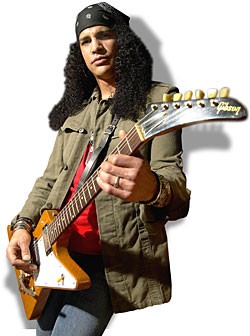
    Slash with a1958 Gibson Explorer (Refinished).

    There once was a time when pointy headstocks, locking vibratos, and refrigerator-sized effects racks were the norm. Fast players with flashy gadgets ruled the world – until, that is, an unassuming young rocker appeared on the scene to shake things upside down and bring back the basics.

    That player was Slash – lead guitarist with a band called Guns N’ Roses. Armed with a simple setup that included a Les Paul Standard and 100-watt Marshall, he made his mark by showing players that all you need to achieve greatness are a true sense of melody, good tone, driving ambition, and an attitude that separates you from the masses.

    Once Guns hit, players began to follow suit by taking the minimalist approach favored by Slash. They also started buying Les Pauls, which had become the hard-sell instruments of the era, and returning to a basic guitar/amp setup. Both Gibson and Marshall recognized Slash’s influence and honored him with signature models.

    Fast forward. After spending most of the ’90s in low-profile style, in 2003, Slash returned with a new band called Velvet Revolver, which arrived just in time to rescue radio from an overflow of bands with no substance and soul, and bringing back the true spirit of American rock and roll.

    Vintage Guitar was recently invited to indulge its voyeuristic fetishes with a visit inside Slash’s guitar vault, a collection assembled over years and including some of the finest examples of Gibson and various other cool instruments. Slash proudly showed us his personal favorites, then discussed Velvet Revolver and how its first album came together.

    Vintage Guitar: You have an amazing guitar collection. Do you have any favorites?
    Slash: I’m really attached to my guitars. Everything I have in some way, shape, or form is a favorite. I’m partial to Les Pauls, of course. A couple of them are replicas, and one is very dear to me because it’s the guitar that really cut the ties between me and any other sort of guitars. It was built by Kris Derrig, and I got it through Guns N’ Roses’ management when we were doing basic tracks for Appetite For Destruction. I was experimenting with guitars, but didn’t have any money so I couldn’t just go pick up anything I wanted. Being in the studio for the first time, I realized that I had to get a guitar that really sounded good. I’d been using Les Pauls, but they’d get stolen or I’d hock them. So Alan Niven, the band’s original manager, gave me this hand-made ’59 Les Paul Standard replica. I took it in the studio with a rented Marshall, and it sounded great! And I’ve never really used another. It has zebra-striped Seymour Duncan Alnico II pickups.

    The very first electric guitar I ever had was a Memphis Les Paul copy. I didn’t know much about guitars, or that different guitars sounded like. But I was drawn to Les Pauls. As I got older, the Memphis gave up the ghost. From there, I ended up with a B.C. Rich Mockingbird. I worked in a music store, so I had a chance to get a Strat, then I went through a couple of other Les Paul copies. When Guns N’ Roses started, I was getting a better idea of what different guitar players sounded like and what they used. I picked up one of Steve Hunter’s Les Pauls at one point, and later hocked it. I also hocked my Mockingbird during the more chemical-dependent days of my youth. Then I went through various Jacksons and would try anything Albert at Guitars R Us would loan me.

    I ended up in the studio with the Les Paul replica, and that was my main guitar through the beginning of the first Guns N’ Roses tour. I later got another replica made by someone named Max. I had those two on the road for the first year. Then, when Gibson gave me a deal on two Les Paul Standards, I put the away replicas because I’d banged the crap out of them. And I pretty much used the Gibsons throughout Guns N’ Roses, Snakepit, and Slash’s Blues Ball bands. Now they’re very roadworn, so I put them away, because they’re really good guitars. After that, I started to use newer ones, including my signature models.

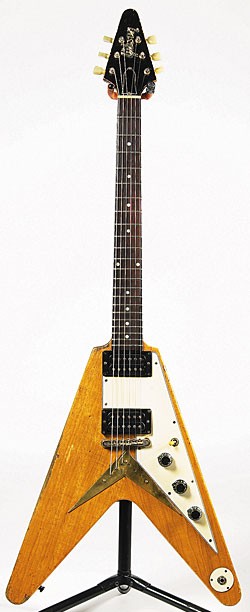
    Over the years I’ve picked up instruments that I’d pay huge sums of money for and are very special to me; the original Les Paul Standards from ’59 and ’58; the goldtops – a ’58, a ’57, and a ’56 with P-90s; the doubleneck is a ’67 EDS-1275 that I found at Guitars R Us. It was already refinished in black, but I got it when I was buying guitars for particular songs. That one was the “Knocking On Heaven’s Door” guitar, and I had it on the road just for that one song on the Use Your Illusion tours in the ’90s. Then there’s the ’58 Flying V and ’59 Explorer, which were just things I had to have. The Explorer and the V were never taken on the road, but the goldtops influenced me to get a reissue from the Gibson Custom Shop – a 1960 Classic that sounded amazing. It was stolen from me. I got another once since, but it’s a different model. I like Les Paul Juniors, too, and have a few of them. I’ll write a certain song, and know when that’s the kind of guitar sound I need, so I want to have one close by.

    I’ve never taken any of the real old guitars on the road because I’m reckless when I play. You won’t see me toss a really good guitar or do something real dramatic, but I’ve broken a lot of stuff onstage, so I need something that doesn’t have much sentimental value. I do get attached to a new guitar if I’ve learned how to make it do what I need. Then I’ll keep it out for as long as I can, then if it really becomes my baby, I’ll put it away and get another one for the next tour.

    But I haven’t been buying old guitars for a long time. I break them out when I’m doing sessions.
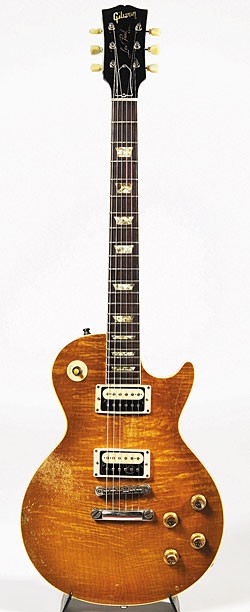
    Les Paul Standard replica built by Chris Deering.

    Les Paul replica built by Kris Derrig.

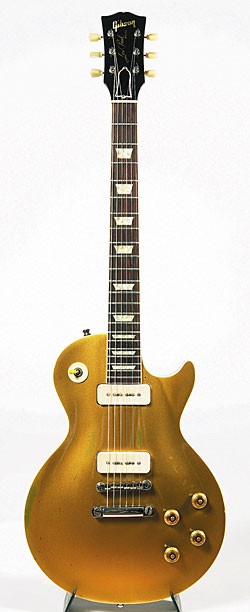
    1956 Gibson Les Paul (goldtop).

    ’56 Les Paul

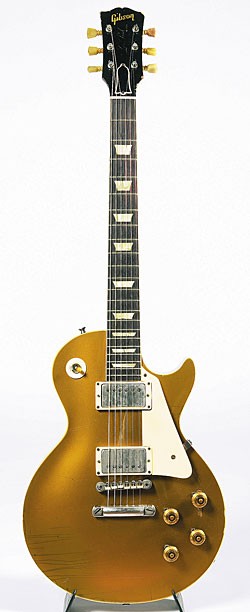
    1958 Gibson Les Paul goldtop.

    ’58 Les Paul

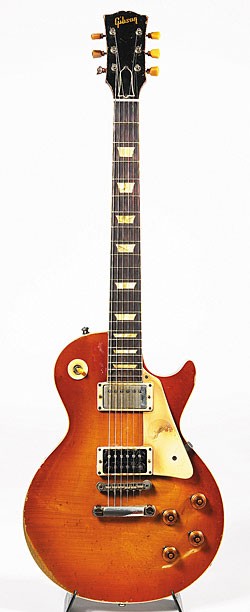
    1958 Gibson Les Paul Standard.

    ’58 Les Paul Standard

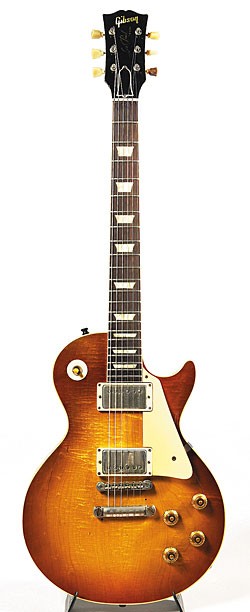
    1959 Gibson Les Paul Standard.

    ’59 Les Paul Standard

    Do you recall the story behind your Firebird?
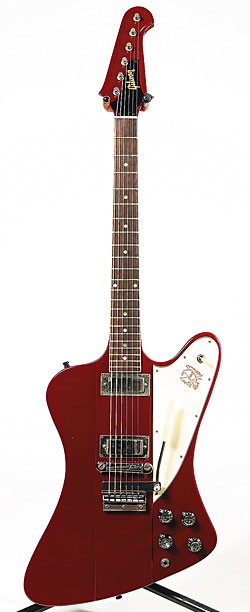
    I picked up the Firebird from Guitars R Us, which was my main guitar source for a long time. I went down to do a video for something in a guitar store, and saw it on the wall. I’ve always loved Firebirds. They’re great, but I’ve never been able to find something to apply it to, except in Slash’s Blues Ball. Still, I had to get it! I just love the way they look, and they’re great for slide and for a Johnny Winter kind of sound – that sort of nasally pseudo-Strat tone.

    You also have some older acoustics.
    They’re two old Martins and a Ramirez classical that I picked up. I’m partial to acoustic guitars. Since I was a kid, I wanted to graduate to a Martin. So when I got a chance to pick up a couple, I did. Same with the Ramirez.

    Have they been used on any recordings?
    Yes. I’ve used a lot of acoustics. I used the Martins the most during the Use Your Illusion recordings. There’s a song called “Double Talkin’ Jive,” with an outro that fades into the electric part of the song, and it’s all a Flamenco-style thing. That’s what I bought the Ramirez for. I figured if I was going to have a nylon-string, I was going to have a great one. I really haven’t bought any since because that one is so perfect. I’m not sure how old it is. I also used it on a sort of “pseudo hit” that is all instrumental Spanish guitar. If you listen to adult contemporary radio, right next to Kenny G, there I am, and you’d never know! It’s called “Obsession Confession,” and it was for a soundtrack for a Quentin Tarantino-produced movie called Curdled. I hear it all the time in malls. What scared me is that my mom called me one day and said that she was sitting in the bathtub – already too much information (laughs) and heard this music, and that at the end the DJ said it was Slash. She told me what it was, and it’s been sort of a standard on adult contemporary radio ever since.

    Was it odd to hear your music back-to-back with Kenny G!
    I actually did a gig at UCLA – some jazz festival – and Kenny G played, as well. It was a strange kind of surroundings for me! But over the years, I’ve managed to fit into all kinds of niches. I think it’s a good thing to do because it keeps you humble and keeps your chops up, and if it’s something that you actually like and don’t play all the time, it’s good to test your skills. The very first guitar I ever had was a beat-up old Spanish guitar my grandmother gave me. It had one string on it, and I learned about half the cover songs I know today on that one string! I was learning to play Deep Purple and Led Zeppelin on a Spanish guitar! I finally graduated to six strings, on a guitar I carried around for a year. So I’ve have a thing for Spanish guitar, even if I do use a pick. I just like the feel of it.

    With different types of guitars, do you notice any change in your style or approach to playing?
    Yes. One of the reasons the Les Paul is such a mainstay for me is because once I got that sound and feel down, it gave me license to do what I wanted. But if I pick up a Strat, I play completely different. I actually think that the Strat – hands down – is probably the best rock and roll guitar, but they’re really not for me because they’re just too unpredictable and too light. I will use one every so often if I want something that just really screams, but I have to go through a dozen to find the right one. I’m not as “chameleon-like” on any guitar – like if Jeff Beck were to pick something up and play, regardless of what kind of guitar it is, he sounds like Beck. But if you give me the wrong guitar to play a certain kind of song, it’s not going to work.

    Does playing with different musicians also affect your approach to the instrument?
    Definitely! That’s a big factor because I play a lot. Again, it’s very humbling to play with musicians outside of your usual genre, because you have to listen, and get away from what’s familiar, and then be open-minded enough to understand where they’re coming from. But the more you do that and the broader the span of musical styles you can adapt to, the more you grow as a musician and learn to play with other people by picking up on those nuances. It’s not something you can easily drink in. Playing with Ray Charles was one of the major events for me, where I had to play with a master, and pick it up right away.

    Are you ever intimidated in those situations?
    I’m always intimidated! In a way, I’m pretty shy about that kind of stuff. That’s probably why I make myself just get into it, put the blinders on, and go for it. It does intimidate me, but not to the point where I can’t perform.

    When you’re playing with a “legend,” live or in the studio, do you feel more pressure?
    It’s easier in the studio because you have more time. A good example is the Ray Charles thing. We did some stuff for the movie about him, and I was given chord charts… but I don’t read music! I’ve sat in with Les Paul and Blue Lou enough times, and I watch Lou’s fingerings and how he moves up and down the neck, but it’s something I’ve just never really been able to grasp.

    Going into the studio with Ray was one of those things where the beats and chords changes were pretty rapid. I asked to go home and sit with the music for a bit, sat up all night and learned it, then came back and recorded it the next day. It was pretty hard. But it would have been twice as hard to spontaneously do it live. A lot of times, when you jam live, there is no rehearsal. So I’d still say being able to adapt at the moment, to get up there and play something like that, is more stressful than having a chance to have one, two, or three takes in the studio.
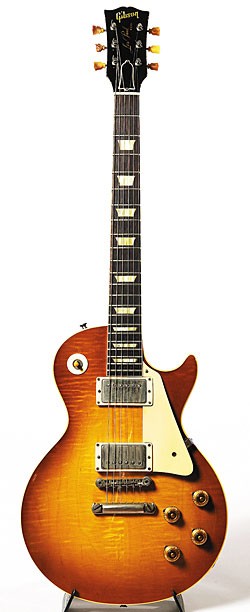
    1959 Gibson Les Paul Standard.

    ’59 Les Paul Standard

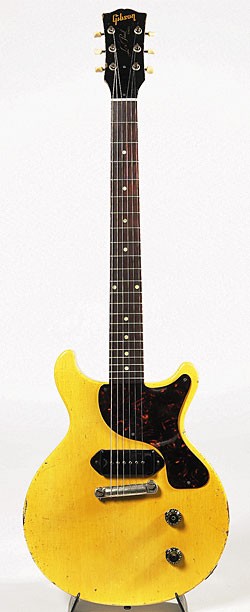
    1958 Gibson TV Junior.

    ’58 TV Junior

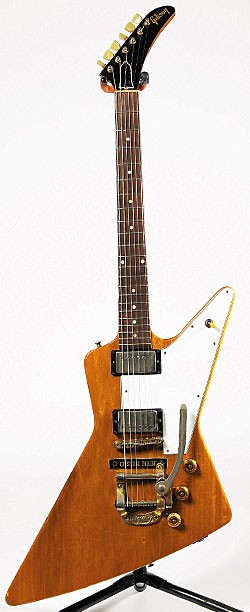
    1958 Gibson Explorer (Refinished).

    ’58 Explorer

    1964 Gibson Firebird V.

    ’64 Firebird V

    1959 Gibson Flying V.

    ’59 Flying V

    Several members of Velvet Revolver were also in Guns N’ Roses. How do things compare?
    I hadn’t played with [Guns bassist] Duff [McKagan] in about seven years. We got together on some of [former Guns N’ Roses guitarist] Izzy’s [Stradlin] stuff here and there, but hadn’t really played together in a long time. During those years, I’d been playing and really had been through a lot. I’d grown as a person, but probably even more as a musician. Duff was doing what he was doing, and [drummer] Matt [Sorum] was always playing previously-recorded material. He recorded the Use Your Illusion records with us, but we had already written the songs before he joined. So this was the first time I’d written material with him. It was also the first time in seven years that Duff and I played together on new songs.

    So it was new for all of us because of all that had gone on in that seven-year period. It was exciting. Then Dave Kushner brought a kind of technophonic guitar style to the table, which I wasn’t too familiar with. I’d heard it, but he has a very original way of doing it that just fit well with my old-school rock playing, so that was great. Then [vocalist] Scott [Weiland] came in and gave it a voice which just turned everything into something really interesting. We auditioned so many singers before Scott came around, and I’d heard songs go in a lot of directions. Scott gave it a life that fit perfectly.

    We went into the studio and made a record of some of the stuff that we’d written before Scott joined, as well as some of the stuff we’d written with Scott. We threw it all together, banged it out, and we were on the road before the album even came out! We’re still touring, and I’m working on material for the next one. I keep a little digital recorder with me, and record stuff in hotel rooms and during breaks. I put ideas down as they come to mind. After the next leg is over, we’re going to start pre-production.

    Was there a lot of material that didn’t make it onto this first Velvet Revolver record?
    We wrote lots of music, and we recorded everything. Then we gave bits and pieces of it to Scott. Most of the first stuff, he just went for. We also wrote a lot of new material with Scott. Then, out of 60-some songs we’d come up with, we picked 12. It was easy because we pretty much used the first stuff Scott went for. “Slither” was one of those songs. “Fall To Pieces” was something written before Duff, Matt, and I started. I was in the process of putting together another pseudo solo thing when this band popped up. So I had material that I’d recently written, and “Fall To Pieces” was one of those songs. All the stuff that didn’t get used could be for the next record. But at the same time, I hate going backward, and everybody’s writing new stuff. So we’ll see what happens.

    You’ve always favored the Les Paul/Marshall combination, but have you added anything to the mix?
    Marshall built me an amp (Marshall’s first-ever signature model) based on the Jubilee series that I’d always used. And I’ve been using that pretty much all the time. But doing the Velvet Revolver record, I expanded a little bit. I started using some old Fender combos like a tweed Champ and silverface Twin. I used different Marshall heads, too – anything that was around the studio – and tried to do things differently every so often because I didn’t want everything to sound the same. I experimented to see what kinds of applications there were for different amps, doing things like mixing a Marshall with a reissue Vox AC30 I picked up at Guitar Center. But there was nothing really out of left field, except a few different amps and some really old funky pedals.

    What were some of those old pedals?
    I have no idea! I borrowed alot of different things. I had some old harmonizers and octave dividers that had a little distortion in them because they were so messed up. There was an old distortion/wah pedal from around 1971 that one of the engineers had, and it sounded amazing. Sometimes I’d pick up something that just sounded really cool and try to find something to apply it to. So I’m not as stuck in a one-dimensional kind of thing as I embark on this next leg of my career.

    When you started recording, were you using your standard setup or did you randomly plug things in as you discovered different gear?
    Well, it started out pretty standard, with everything set up the way I normally do it. From there, I started experimenting. I would take the first song we’d record, and it would probably be the most simple song and need the least amount of scrutiny, and then used my imagination. So I’m looking forward to going into the studio and doing this next record because I’m going to get a chance to experiment with the ideas that have been brewing in my head for while we’ve been on the road over the last 15 months.

    Did you use a variety of guitars for different sounds?
    Yes. A good example is the first song on the record, “Sucker Train Blues.” I used a six-string bass, a Telecaster, and a Strat, which is pretty much unheard of, for me. I don’t know where that came from, but it worked out great. And there’s a song recorded for The Fantastic Four soundtrack, and I used a Fender Mustang as well as a Les Paul. It was a real quick recording – one night for the whole song. That was something that I’d heard in my head first. If there’s a musical idea or a riff of some sort, I already know in my head how I want it to sound, so I’ll grab whatever guitar I think is going to get that sound, and if it doesn’t work I’ll try something else and start the process of elimination until I find it.

    Was there one particular guitar that you favored throughout the recording?
    I follow the old adage, “If it isn’t broke, don’t fix it.” So when I go into the studio, the Les Paul replica I used on Appetite For Destruction has always been my main guitar. It will always be there. I got another one recently made by Kris Derrig that sounds great, and it comes with, too. Then I start breaking out whatever I need, based on the ideas I have. But when I go in to do pre-production, I’ll just take one guitar – the first ’59 Les Paul replica by Kris. I record all the basic tracks with that guitar, then go back and re-do some parts, trying different stuff.
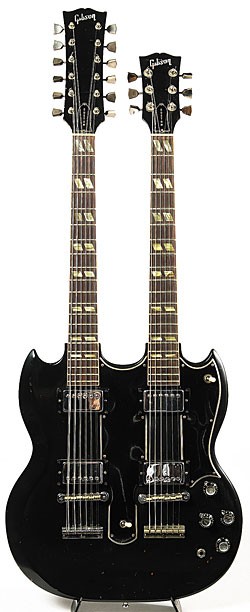
    1967 Gibson EDS-1275 (Refinished).

    ’67 EDS-1275

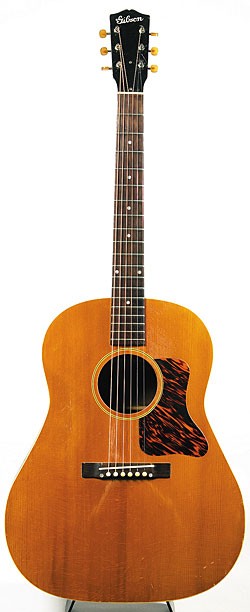
    1940 Gibson J-35.

    1940 J-35

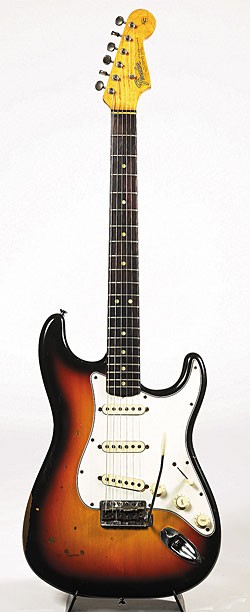
    1965 Fender Stratocaster.

    ’65 Stratocaster

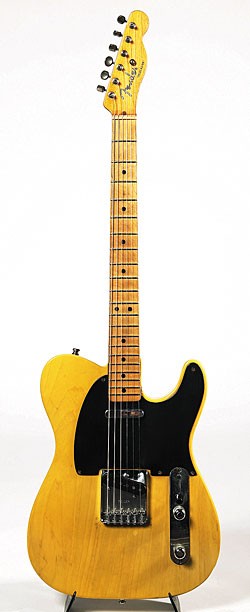
    1952 Fender Telecaster.

    ’52 Telecaster

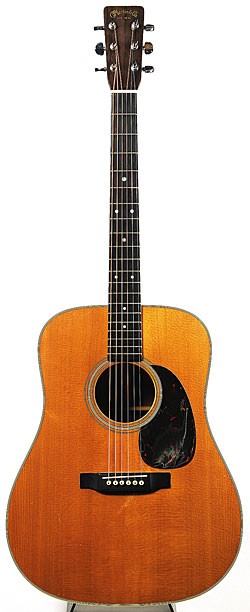
    1964 Martin D-28.

    ’64 Martin D-28

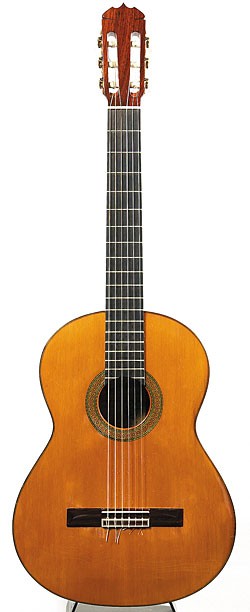
    Jose Ramirez classical.

    Jose Ramirez classical

    Why do your vintage guitars often take a back seat to the newer ones?
    I’ve found that I can usually make a guitar work, no matter when it was made. I use so many new Gibsons and other instruments, and I’ve just learned to adapt to them. You just have to break them in. The thing about vintage guitars is I’m not a collector for a collector’s sake, although I think guitars are probably some of the sexiest things in the world and I love having one close by. The vintage ones obviously have a certain kind of allure to them. But my whole reason for getting into vintage guitars was that I would hear them and they would have a certain kind of feel and tone, especially with the old PAFs. That’s why I’ve only collected so many, and they all have a certain tone and personality. You can draw on that when you want to hear something for a particular song. I truly love and respect old guitars, but I need to use what works best in each situation, and it really doesn’t matter whether it’s old or new.

    Are your vintage instruments stock, or at least the same way you purchased them?
    Yes. I haven’t messed with any because I don’t take them on the road. There’s no reason to screw them up. You fix certain things, like yesterday I broke a tuning peg on the ’58 Les Paul Standard, and I’m going to have to fix it. I have huge appreciation for old stuff, but if I can’t use it, I don’t need it around, and I don’t use the stuff often enough as it is. I only use it in the studio, for its personality. Plus, it’s such a liability these days, and I would never leave the old stuff in my house again. I keep everything pretty secure. If I saw a guitar I wanted, and it was worth it and sounded amazing, I might consider it. I borrowed a ’59 Les Paul Standard from Dave Wiederman a few weeks ago that had Les Paul’s signature on the body. I wanted so much to keep it because I haven’t bought any old guitars in such a long time. But once it was out of sight, it was out of mind. When you’ve got a bunch of guitars like that, there’s a feeling of not wanting anything to happen to them, so you treat them like pieces of porcelain. But at the same time all I have to do is hear something that sounds right and, like I said, it doesn’t matter whether it’s old or new. But there’s nothing like the look of a good-condition ’59!

    Do you have a favorite guitar for writing?
    I’ve got one on the road I write with, and I carry it on the bus. It’s a Les Paul Standard, a 2000-something model. I have another Standard from the ’90s that I write with at home. You can’t go wrong with Standards. Then I’ve got a newer small-bodied Gibson acoustic I use around the house. I recently got a Gibson jumbo acoustic with a maple body that I use to write with on the road.

    Which guitars are with you onstage?
    I think there are about 16. I’ve got a backup for every guitar. I have a few different Les Pauls – my regular Standard, a goldtop, and a black Standard with a Bigsby. I also have a couple of B.C. Rich Mockingbirds and a B.C. Rich Bich 10 that I use as a six-string. There are a pair of Guild doublenecks I designed with Guild a while back. It’s acoustic on the top and electric on the bottom, and a red Gibson EDS-1275. Everything is fairly new. I think the red Mockingbird is the oldest one I take out. I bought that from some guy on the street – literally on the sidewalk. I was at a club and he told me about it, and I bought it from him. I use it is primarily for the vibrato because I won’t take a Strat on the road. The tremolo on the Mockingbird is a Floyd Rose. All things considered, me and the Mockingbird go back and forth, but I use it for “Sucker Train Blues.” I use the Bich for Stone Temple Pilots songs.

    How are your guitars set up?
    I use an .011-.048 custom Ernie Ball set for the electrics, and for the acoustics, a .013 set. The action isn’t too high or too low, and I like a lot of tension. I play really hard and intonation is a big deal with me. But if I’m not careful, I’ll bend the strings too far, so I like everything to be very tight. I also use 1.14 mm Dunlop Tortex picks.

    Describe your live rig.
    I use four Slash signature model Marshalls, two for my dirty sound and two for my clean sound, with one cabinet for each head. I haven’t really expanded it for years. I use a Boss EQ to kick solos up a notch, a Dunlop Crybaby wah, and a Boss octave pedal, which I sometimes use with the wah pedal. I’ve also got a Dean Markley voice box, Yamaha SPX90 for chorus, the same Boss digital delay pedal I’ve had for years, and a Nady wireless.

    The only thing I’m waiting on is a new Crybaby wah pedal that Dunlop made me that I’d used in the studio. It’s candy apple red with adjustable distortion and adjustable wah. It sounds amazing! It’s going to be a signature pedal and will be added to my live rig. There might be other stuff after the next record, but I’m still really a straight-up Les Paul/Marshall kind of guy. The Slash model Les Pauls have piezo saddles, though lately I’ve been using the Guild doubleneck for acoustic sounds. I just switch to the clean rig for the acoustic tones, and we put the guitar through a DI, as well.

    What do you listen to for inspiration and enjoyment?
    Well, I’m always looking around. My tastes haven’t changed much over the years, but they’ve grown a bit. I’ve started to like stuff that I might not have liked a few years back. It could be anything from pop songs that have a nice hook. But there’s nothing in particular. I don’t own any records – I just hear songs on the radio. I like some old-school hip-hop stuff that my wife has turned me on to, but I don’t like any of the commercial crap that’s out now. From the mid ’90s until now, I haven’t heard anything I’m really into. I still prefer the stuff I’ve listened to since I was a kid and started playing guitar – when I made rock and roll my own, as opposed to what my parents listened to. It’s the combination of all that music, like the Stones and Otis Redding, to the Who, Aerosmith, Bob Dylan, and Phoebe Snow. I was raised on the Who, Zeppelin, the Beatles, the Kinks, Yardbirds, Moody Blues – that was like my dad’s trip.

    On the flipside of my family, I was raised on Marvin Gaye, the Pointer Sisters, Sly & the Family Stone, and this other blues and R&B stuff. I hated Elvis until I was about 30 years old, then I started to appreciate him.

    So I’ve always listened to a lot of old stuff, but in the ’90s there was that a short period where a lot of great bands came out, and I still think those are some great records – Rage Against The Machine, Soundgarden, Nirvana, Stone Temple Pilots, Faith No More. Since then, there are very few records I really enjoy. The Foo Fighters are really good and the new record is very cool. I listen to a lot of stuff, but find myself getting bored. I’ve satellite radio in my car, and a lot of times I find myself switching between it and FM, trying to find something cool. Every so often, I’ll pick up a new CD. I picked up Joe Perry’s new CD the other day. It’s different than what I’d expect, but there’s some great playing on it. There’s a lot of music that I like, but I’m still looking for stuff that punches you in the stomach and is actually musical – and has some soul. It’s kind of hard to find.

    I think a lot of people who share your feelings about music are picking up on Velvet Revolver and finding this record refreshing.
    I can’t wait to get the new record out! The first one was the tip of the iceberg, and we managed to get some cool stuff on there with interesting ideas and great sounds. But it was really just like that first stab at making something exciting happen. We’ve done so much since then, and we’ve grown so much over the last 15 months as a band. We haven’t even tapped the surface, so I’m really excited about the next album!
    This interview is dedicated to the memory of Marshmallow.


    All Photos: Rick Gould

    This article originally appeared in VG‘s Nov. ’05 issue. All copyrights are by the author and Vintage Guitar magazine. Unauthorized replication or use is strictly prohibited.

  • Jim Fox – Natural Blonde

    Talk about a guitar feast! Fox, a fixture in L.A.’s jazz and studio scenes, goes toe to toe with two giants of those same circles, a generation his senior (John Pisano and Bob Bain), and the result is a feather in each of their impressive caps.

    Bain ranks as one of the most-heard guitarists in history, for his two decades with the “Tonight Show” orchestra and sessions ranging from Billie Holiday to every Rat Pack member to Henry Mancini (that’s him on the Peter Gunn theme). Here, the 85-year-old leaves no doubt that he can still stir up plenty of dust.

    At merely 78, Pisano’s resume extends from his ’50s collaborations with the legendary Billy Bean and a stint with Chico Hamilton to his dozen albums backing Joe Pass and six years hosting the weekly Guitar Night at Spazio’s in L.A.

    Fox, a veritable pup at 54, is fast building his own resume, which already runs the gamut from Bette Midler to symphony orchestras, from Rod Stewart to Big Bad Voodoo Daddy.

    As if the guitar threesome weren’t enough, the fourth member of the quartet is A-list upright bassist Chuck Berghofer, and tweaking the faders is Al Schmitt, the 17-time Grammy winning engineer behind such classics as Aja and Breezin’.

    “Fascinating Rhythm” proves a perfect, energetic opener, with the three guitarists harmonizing the theme, then trading solos, displaying very different approaches to the Gershwin standard – Pisano’s bounciness, Bain a little greasier (with some funky double-stop bends), and Fox more cerebral. Each sports a very different tone, but all strike a welcome balance between warm lows and round, defined highs – with Schmitt ensuring an intimate, in-the-room feel.

    The 10 cuts are split evenly between quartet arrangements and impressive solo showcases for Fox. Either way, jazz guitar at its best.


    This article originally appeared in VG‘s Sept. ’09 issue. All copyrights are by the author and Vintage Guitar magazine. Unauthorized replication or use is strictly prohibited.

  • Carl Verheyen

    Carl Verheyen

    Photo courtesy Carl Verheyen.

    Carl Verheyen says it all came to him when he heard the Eagles’ album called The Long Run.

    At that point, he was heavily into jazz, and practicing eight hours a day to master it.

    “I was about 27 when I heard that amazing Joe Walsh solo on ‘Those Shoes,’ and it just blew me away as to how far the state of rock and roll guitar had come. So I realized that I dig so many kinds of music that I just can’t call myself a jazz player or a rock player or a blues player or a country player. I wanted to learn everything. So I really got into learning and understanding all the different styles and ornamentation of the different styles.”

    That philosophy and dedication to detail led Verheyen to become an in-demand studio player in Los Angeles. He spent much of the 1980s playing on records of all styles. While the work was enjoyable, in ’88 he made a fateful decision.

    “Playing in the studios was a big detour in terms of my solo career,” he said. “It’s alluring to work 9-to-5 and stay home. It’s a great career and a lot of fun, but after a while I just felt I had too much music of my own in me to constantly be a side man.” Verheyen made the first of his solo records that year. And he has since recorded a string of them showcasing his playing and composing skills, including his latest Take One Step, which features chops that would make anyone envious. And Verheyen still stays busy with the studio. “Studio work will always be there. When I get back in town, there’ll be guys calling me. For instance, on Wednesday I played with a 104-piece orchestra for a new Pixar movie. Then, two nights later I was onstage with my band.”

    Besides fronting his own band, Verheyen also is a member of Supertramp, a gig he started in the ’80s. That one, he says, happens once or twice a decade, so it gives him plenty of time for his other musical endeavors.

    That time in the studios helped Verheyen in another way, too. As jobs popped up that required certain guitars, he went out and found them. “I’m lucky to be the guy who just started buying stuff because I liked it and needed it early on. I feel sorry for players that save their entire life for just one of those things. I’ve had to buy instruments I needed for work and because I love the sound.”

    Examples he cites include a 1960 Fender Telecaster Custom with rosewood neck and binding that he says, “sounds just amazing.” There’s also his ’59 Gretsch 6120. “It’s not my main guitar or anything, but I just wanted to get that Chet Atkins thing going and I found one that sounded so good. I got lucky.”

    A recent DVD release, Rumor Mill, has a special treat that features his guitars. The bonus material shows Verheyen playing and talking about the instruments. The segment is heaven for anyone with any interest at all in the six-string. Verheyen credits the concept to Robert Rodriguez, director of the film Once Upon a Time in Mexico.

    “One of the bonus features on the DVD is Rodriguez giving a tour of his studio, and he just talks about his various tools and what really got me was how into his tools and craft he was. It was inspiring, and I just wanted to show people how much I enjoy my job and the tools.”

    Verheyen says his latest CD was an effort on his part to show how far the state of the guitar has moved beyond shredding and amazing chops. Despite the presence of some dazzling playing on the disc, Verheyen says, “I wanted it to be more about sounds and layering and feel and tone. I’d hit on the chops, too, but the orchestration of guitars was really important on each one of the songs.”

    And that, he says, means picking the correct guitar for the job. “I know in advance which guitar is going to be the Frank Sinatra. Think of the old Capitol Records recordings by Frank. They had this huge orchestra or big band, and that would be a glorious sound, but his voice was always on top and the best sounding instrument. So I make sure no matter how many layers of acoustics, 12-strings, and clean and gritty guitars there are, I make sure the solo will be the star of the show.”

    His main live axe is a Seafoam Green Fender Stratocaster with a rosewood neck. He also has a ’58 sunburst Strat. “I feel really comfortable on the Stratocaster. More so than any other instrument. I can do more on that guitar than anything else.” That said, the “Frank Sinatra” in the studio can be pretty much any guitar, and Verheyen finds himself recording many solos with a Gibson. He uses a 335, a Les Paul, and at times, a Flying V.

    When the subject turns to amps, Verheyen is a Fender guy. “I’ve got three ’64 Princetons, a ’64 Twin, and a ’63 Tremolux. And I keep a couple of new Twins in Europe.” He also has several old Marshalls, including a ’66 JTM 45. Not surprisingly, since he lists George Harrison as one of his first strong influences, he also loves Vox AC30s.

    “I’ve found recently a Twin and an AC30 together makes one of the best clean sounds. The Twins give you all that wonderful midrange and the Vox gives you that high-end sparkle.”

    Looking to the future, Verheyen wants to keep building his band. They hope to play more shows around the U.S., and he cites the internet as a godsend for artists like him. “For an independent artist, it’s great. You can sell your music to people all over the world.”

    “I realized that I dig so many kinds of music that I just can’t call myself a jazz player or a rock player or a blues player or a country player. I wanted to learn everything.”


    This article originally appeared in VG‘s May 2007 issue. All copyrights are by the author and Vintage Guitar magazine. Unauthorized replication or use is strictly prohibited.


  • Kustom’s ’36 Coupe

    Kustom '36 Coupe

    Kustom ’36 Coupe

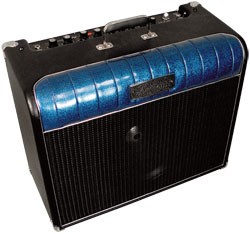
    In the mid 1960s, Kustom amps were popular for their cool tuck-and-roll vinyl covering, and their solid tones.

    Today, most of the company’s new amplifiers are solidstate and devoid of tuck and roll covering. The exception is its line of tube combos, the ’36 Coupe and the ’72 Coupe, with all-tube circuits and a bit of that cool tuck-and-roll vibe in red, blue, or charcoal sparkle, combined with black tolex, retro-look chrome, and steel handles.

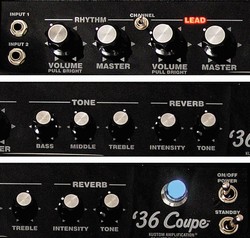
    Each amp uses two (’36) or four (’72) 6L6 power tubes, four 12AX7 preamp tubes, spring reverb, top-mounted controls, custom Eminence speakers, and two channels with a shared three-band EQ and individual Bright switches. And each channel has Master Volume and Gain controls, allowing the user to set each for overdrive or clean. Channels are switched via mini-toggle or the three-button footswitch, and the Rhythm/Lead channel indicators are backlit, so you can tell at a glance which is active. The Lead channel is higher-gain, while the Rhythm channel is better for a crunchy overdrive or clean tones. There’s also an adjustable Boost circuit accessed via the footswitch.

    Build quality on our review ’36 is very good. Its cabinet uses heavy-duty 3?4″ Baltic birch, a steel chassis, double-sided printed circuitboards, and a perforated steel cage to house the power tubes. On the back of the amp is an XLR recording output with cabinet emulation, Level control, and ground-lift switch, as well as dual 1?4″ effects loop jacks and a speaker-out jack with impedance selector.

    Kustom '36 Coupe panel

    We tested the ’36 Coupe using a PRS McCarty with Seymour Duncan 59 pickups and a Fender Muddy Waters Tele with Texas Specials. Plugging in revealed that the Tone controls on the ’36 are passive – their frequencies will overlap if driven too hard. We found they worked best – and sounded most natural – set just past halfway (1 o’clock). The High control is also capable of creating over-the-top trebles, and when taken past 2 o’clock it essentially buries the mids. The Mid and Low controls don’t overlap as noticeably and can be pushed harder to compensate between humbuckers and single-coils. To our ears, the amp was friendlier to humbuckers, with their subdued highs and boosted mids, which blended very well with the amp’s inherent tones. And regardless of pickups, the pull-up Bright switch adds plenty of sparkling high-end if you want more sizzle.

    Overall, the ’36 sounds darker than you might expect, with a pronounced midrange bite, but still offers plenty of ’60s jangle – but not like a 6L6-powered Fender. When its tone controls are dialed in, the amp sounds very nice and requires little adjustment between the rhythm and lead tones. The spring reverb sounds good, and its Tone control lets you tailor reverb sounds from sparkly, in-your-face surf to laid-back “ambiance.” The XLR line-out sounds decent and saves you the hassle of mic’ing the cab.

    The ’36 Coupe has an enjoyable, ballsy midrange overdrive sound and respectable fat rhythm/clean tone. It offers a nice change from the myriad of major-builder clones. It’s nice to see Kustom back in the tube-amp business – and back doing tuck-and-roll!


    Kustom ’36 Coupe
    Features Dual 6L6 power tubes, 12AX7 preamp tubes, 12″ Eminence KEI12 Turbo speaker, two channels, adjustable boost circuit, long-tank spring reverb, effects loop, three-button footswitch.
    Price $899 (retail).
    Contact Kustom Incorporated, 4940 Delhi Pike, Cincinnati, OH 45238; kustom.com.


    This article originally appeared in VG‘s Dec. ’05 issue. All copyrights are by the author and Vintage Guitar magazine. Unauthorized replication or use is strictly prohibited.
  • 1934 Martin D-28

    Martin front

    1934 Martin D-28 photo courtesy Daniel Salvo.

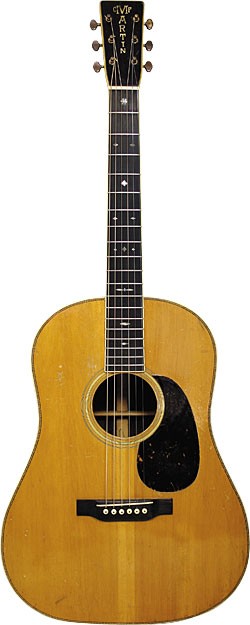
    The Martin D-28 was first issued in 1931. And all dreadnought Martins made from 1931 through ’33 featured a 12-fret (a reference to the point at which the neck meets the body) slotted-head neck and extended-length body, rather than the more familiar squared upper bout and shorter body of modern-style dreadnoughts. Martin’s first 14-fret-neck model was the OM-28 issued in ’29. By ’32, 14-fret necks were issued on the 0- and 00-size style 17 and by ’34 the 14-fret neck became standard on most steel-string Martin guitars with the exception of styles 21 upward in the 0 and 00 sizes.

    Unlike Gibson’s approach, which was simply to keep the same body style and shape, but move the bridge position when shifting from 12-fret to 14-fret necks, Martin approached the issue by keeping the bridge in essentially the same position, but shortening the upper bout to accommodate a 14-fret neck. Therefore, 12-fret Martin guitars have a longer body and larger air chamber than equivalent 14-fret models. This results in a somewhat different sound. In the opinion of many, 12-fret extended-body Martins have a smoother, mellower sound with better balance and more sustain than 14-fret models.

    Twelve-fret Martin D-28s are extremely scarce. Company records indicate a total production of one in 1931, four in ’32, and 12 in ’33. Records also show the D-2, which has essentially the same specs as the 12-fret D-28, with four made in 1931, two in ’32, none in ’33, and one in ’34. Four 12-fret D-28s were made in 1934, along with 65 14-frets.

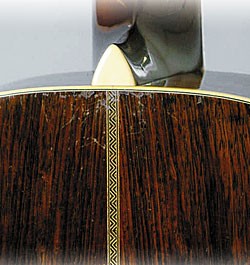
    Although Martin serial number records do not indicate this guitar has custom features, it is indeed an unusual custom-order instrument. Not only is it a 12-fret instrument issued at a transitional time (the 14-fret model had already been issued), but it features a solid (rather than slotted) peghead, the typical 17/8″ nut width seen on 12-fret slot head guitars, and style 45 neck ornamentation with triple-bound peghead, single-bound fingerboard, vertical C.F. Martin peghead logo inlay, and the typical style 45 snowflake fingerboard inlays. The body is the same as a 1933 12-fret D-28 with the extended-length Adirondack spruce top with scalloped bracing and herringbone trim, Brazilian rosewood back and sides, typical style 28 “zipper” back stripe and ivroid body binding. The open-back Grover tuners are the earliest Grover design for a solid peghead, and are gold-plated, rather than nickel-plated, as was typical on style 28 Martins.

    Martin Detail

    The “zipper” back stripe of the 12-fret D-28, typical of the model. Photo: Kelsey Vaughn, courtesy Gruhn Guitars.

    As is typical of 12-fret pre-World War II Martin dreadnoughts, this is a fantastic-sounding instrument with great power, balance, and sustain, but a less percussive sound than the 14-fret dreadnoughts. It’s about as good as any flat-top. And while some players might prefer a narrower neck, this one is quite comfortable.

    The history of this instrument has been traced to circa 1940, when it was bought used by the father of the people who brought it to Gruhn Guitars. It looked the same in their very early family photos as it does today. Although Martin’s records make no indication it was a custom order, they do indicate the serial number was entered in their records March 8, 1934, and that this was the only D-28 in the work order batch. There is no evidence that the neck or the ornamentation is anything but original. Had it been sent back to the factory to have style 45 neck ornamentation added (which the factory did offer to some performers such as Gene Autry, who had two 12-fret slothead guitars, a 0-42 and a 00-42, converted with more fancy neck ornamentation and his name on the fingerboard) the work would have been done to whatever specifications were available at the time, including modern fret wire after late ’34. Since this guitar has the earliest Grover tuners and bar frets, which were discontinued in late ’34, it almost certainly left the factory in its present configuration rather than having been altered at a later date.

    This is an exceedingly rare instrument. Martin’s records show a notation of only one earlier 12-fret D-28, dated February 19, 1934, with style 45 neck trim, solid peghead, gold-plated tuners, and sunburst-finish top. Martin historian, the late Mike Longworth, apparently saw this guitar during his tenure, but we have been unable to trace its whereabouts.


    This article originally appeared in VG‘s July ’05 issue. All copyrights are by the author and Vintage Guitar magazine. Unauthorized replication or use is strictly prohibited.
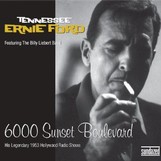
  • Tennesee Ernie Ford – 6000 Sunset Boulevard

    As if his comedic talents weren’t enough (from his early days as a disc-jockey to hosting his own TV show to guesting on “I Love Lucy”), Tennessee Ernie Ford was one of the most versatile singers in country music. In fact, pigeonholing him as merely country (despite his popularity in that arena) shows how limitless his reach was.

    Ford’s booming baritone could, indeed, wrap itself around a country song – the best evidence being his #1 cover of Merle Travis’ “Sixteen Tons” in 1955. But his first foray into gospel music yielded the genre’s first gold record, and his boogie numbers rocked and rolled as hard as any songs of that yet-to-be-named style.

    And this batch of buried radio treasure, from 1953’s syndicated Tennessee Ernie Ford Show, illustrates his ease with the Great American Songbook as well as contemporary country covers, turn-of-the-century obscurities, and just about anything else. And as pointed out in the liner notes, he and his swinging quintet sometimes cranked out a dozen shows in a day – as many as 50 songs. All told, in a three-month span, they cut 1,300 songs with nary a repeat nor a rehearsal! Needless to say, to pull off such a feat, Ern’s band needed to be as versatile as he.

    Led by pianist/accordionist Billy Liebert, the combo included guitarist Billy Strange and Speedy West on steel. Strange would later record with everyone from Frank Sinatra to Jan & Dean, in addition to writing the Chubby Checker hit “Limbo Rock,” but here confines himself to strumming strong rhythm; West, on the other hand, really goes to town – or, more accurately, to outer space.

    The loose, on-the-spot, jam atmosphere gives West free rein to combine musicality and wildness as only he could (dig his mind-boggling take on “Lover”), while demonstrating early on the steel guitar’s potential as a jazz instrument.

    Hopefully, more volumes will follow.


    This article originally appeared in VG‘s Jun. ’09 issue. All copyrights are by the author and Vintage Guitar magazine. Unauthorized replication or use is strictly prohibited.