
Month: November 2009

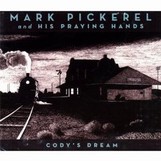
  • Mark Pickerel – Cody’s Dream

    This is the second solo album by the former Screaming Trees drummer turned singer/songwriter/front man, who went on to record with Neko Case, Jim Carroll, and Nirvana.

    There’s a cinematic vibe to the collection of originals, with Pickerel’s seductive singing sitting amid mostly stark production (courtesy Steve Fisk, who previously helmed Nirvana, Screaming Trees, and Wedding Present) that befits the desolate feel of the lyrics and deadpan-but-expressive vocal delivery, especially on the set’s sole cover, Dylan’s “One More Cup Of Coffee.”

    Comparisons to Lee Hazelwood are apt, and make sense, seeing as he was part of Mark’s parents’ record collection. The influence of Bowie’s rootsier, “Jean Genie” side rears its head on the opening title track and “Cody’s Last Ride,” which brings the song cycle full circle.

    Johnny Sangster (whose own production credits include Mudhoney, the F***ing Eagles, and the Briefs) provides an array of cool guitar tones, from tremolo twang to Tex-Mex double-stops to reverby rockabilly on “Leaving With The Swamptones.” Ian Moore joins him, supplying steel, the “raunch-hand” guitar on the title track, and the appropriately repetitive, brittle solo on “She Calls.”

    The Northwest all-star ensemble is rounded out by bassist Jim Sangster (Young Fresh Fellows), drummer Michael Musburger (Supersuckers, Fastbacks, Posies), and the haunting cello of Barb Hunter (Afghan Whigs, Twilight Singers).

    There’s a decided country element here, but it’s as though Leonard Cohen were fronting the Flying Burrito Brothers. Not a bad idea, come to think of it.

    This article originally appeared in VG‘s Jun. ’08 issue. All copyrights are by the author and Vintage Guitar magazine. Unauthorized replication or use is strictly prohibited.

  • Jo Buddy – Whole Lotta Things

    Finnish guitarist/vocalist Jussi “Jo’ Buddy” Raulamo has garnered praise from such kindred blues spirits as Junior Watson, Kim Wilson, Doug McLeod, and Rick Holmstrom, and it’s easy to see why. His blues is so raw, heartfelt, and lowdown, the effect is hypnotic.

    Though he is also known for his group outings with Groovy Eyes, Tiny Tones, and others, this is his second CD with percussionist Down Home King III. This two-man band – just guitar and drums, recorded live in the studio with only occasional harmony vocal overdubs – proves they don’t need any additional window dressing; they’ve got everything they need.

    From the Hooker-esque opener, “Howlin’ These Blues,” to the soul-strutting “Everybody’s Got The Right” and the dead-on Jimmy Reed sounds of “Have Yourself A Ball,” Raulamo hits the nail on the head time and again on this set of originals. “Thank You Mr. Lockwood Jr.” reveals one of his influences, but Louis Myers, Muddy Waters, Guitar Junior, and Jimmy Rogers are also in evidence, along with Hound Dog Taylor slide on “Way Back Rag.”

    The “low” in “lowdown” comes, in part, from Jo’ Buddy’s 1959 German Klira electric arch-top, which he tunes two steps down from standard – a low C for the sixth string. The other components of his killer tone are a 1953 Finnish Salora tube radio (three watts) fed through a new Epiphone Valve Junior slave amp (five watts), with a reissue Fender Reverb tank and Schaller tremolo pedal as his only effects. Vocals go through a Finnish Cream Sound guitar amp, because, as he explains, “I want my vocal and guitar tone to be the same without being too loud.”

    He may be from Finland and sing in English, but Jo’ Buddy’s first language is the blues.

    This article originally appeared in VG‘s Jul. ’08 issue. All copyrights are by the author and Vintage Guitar magazine. Unauthorized replication or use is strictly prohibited.

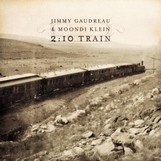
  • Moondi & Gaudreau – 2:10 Train

    Jimmy Gaudreau and Moondi Klein have been playing together for more than 10 years. They first met when T. Michael Coleman, Mike Auldridge, and Klein asked Gaudreau to join them in Chesapeake. When the group disbanded in the late ’90s, Gaudreau and Klein got together occasionally to play concerts in D.C., where they both live. 2:10 Train is an outgrowth of this collaboration.

    Stylistically, 2:10 Train is a throwback to the old-time string-band duets of the 1930s and ’40s. The lead vocals are combinations of solo and harmony singing with a strong emphasis on the tenor parts. Gaudreau and Klein’s voices meld together as well as any true brother act. Their similar vocal timbres and seemingly innate sense of each other’s vocal rhythms and phrasing sound as if they’ve played together all their lives. This uncanny simpatico extends into their instrumental work. Their rendition of the old chestnut “Arkansas Traveler” sounds as spontaneous as if it was freshly penned. Most of the material is covers, though Gaudreau and Klein’s unadorned style hones it to its purest essence.

    Recorded by Stuart Martin at Stonebridge Studios in Leesberg, Virgina, and mastered by David Glasser at Airshow Mastering in Boulder, Colorado, this disk sounds as natural as the proverbial cool mountain stream and relaxed as a well-worn baseball cap. The recording captures all the subtleties of Guadreau’s hybrid mandolin style and Klien’s smooth flatpicking. One guitar and one mandolin and two voices; do you really need anything more to make great music? Nope.

    This article originally appeared in VG‘s Jul. ’08 issue. All copyrights are by the author and Vintage Guitar magazine. Unauthorized replication or use is strictly prohibited.
  • Eiiza Gilkyson – Beautiful World

    Few folksingers, even those from the original folk revival, have been able to combine social consciousness with musicality as well as Eliza Gilkyson. She merges strong songwriting talent with commanding vocals to create music that has immediate appeal as well as lasting intellectual impact.

    Beautiful World is Gilkyson’s first studio release since 2005’s Paradise Hotel. The songs were written starting in ’07, when she began co-hosting a discussion group in Austin. This tune begins with a reference to the Greek mystic Diogenes and draws parallels between ancient times and current politics. In lesser hands this song could degenerate into a didactic rant that would have listeners’ fingers inching for the “skip” button, but Gilkyson’s musical artistry avoids this pitfall. The melody reassures while the words provide more questions than answers.

    The best song here is “Dream Lover,” which tells the story of an adult performer from a first-person point of view. Again, the lyrics pose questions instead of presenting conclusions. Gilkyson’s vocals take on a guileless quality that gives her character an extra degree of believability. The song’s upbeat, pile-driving rhythm is reminiscent of some of Warren Zevon’s best tunes.

    Produced, engineered, and mastered by longtime collaborator and producer Mark Hallman, Beautiful World employs some of Texas’ best players including David Grissom on electric guitar, Cindy Cashdollar on pedal steel, and Elana James on fiddle. The production is more pop than folk, with a sonic landscape populated by synthesizers and multi-layered instruments. Orchestrations serve to heighten each song’s dramatic impact while not distracting from the tune’s narrative purpose.

    While calling this album a masterpiece might seem a bit enthusiastic, there may not be a more accurate description.


    This article originally appeared in VG‘s Aug. ’08 issue. All copyrights are by the author and Vintage Guitar magazine. Unauthorized replication or use is strictly prohibited.

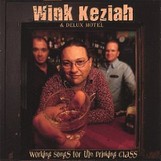
  • Wink Keziah & Delux Motel – Working Songs

    Like Blue Ribbon and Texas Red, some music is best enjoyed in the neon blue of a honky-tonk. Unfortunately, it doesn’t always travel well beyond the barroom. That’s not the case for Wink Keziah & Delux Motel on Working Songs for the Drinking Class.

    A self-described “urban hillbilly” from what he calls Charlotte, North Carolina’s “redneck ghetto,” Keziah’s life story contains enough Southern Gothic weirdness to give Flannery O’Connor the vapors. That’s not telling tales. Wink makes no secret of the bumps on the road that led him to become a singing, songwriting son of a gun. If by the fact of his chosen profession he didn’t keep to the straight and narrow, he at least avoided following in some of his family’s muddier footsteps.

    No Telecaster-slinging honky-tonker would be worth their salt if they didn’t acknowledge Buck Owens. Wink proudly does just that with his affectionate, spot-on vocal tweak of Buck in the declarative opener “I Can’t Stop.” Delux Motel bring so much fun that when they get to serious matters and mellower tempos in “As Long As It Ain’t Here” and “When Your World Comes Tumbling Down” – two of Working Songs‘ highlights – everyone in earshot is ready and willing to pay attention.

    Wink and Mark Stuart of the Bastard Sons of Johnny Cash produced this all-original collection and engineer Mark Williams gets credit for a superbly balanced, ear pleasing mix. Dennis Davis’ all-Tele leads and guest Robin Rogers’ quicksilver harmonica snake around and through Keziah’s vocals at just the right distance with wide-awake support from drummer Phillip Barry and bass player Jim Bolt. This is his first release on Great South and it’s a great place to start catching up with Wink and band. And you don’t even have to wait for Saturday night.

    This article originally appeared in VG‘s Jun. ’08 issue. All copyrights are by the author and Vintage Guitar magazine. Unauthorized replication or use is strictly prohibited.
  • Gonzalo Bergara – Portena Soledad

    For years, friends and fans have begged Gonzalo Bergara to record. Finally, he has a debut CD – and it’s been worth the wait.

    Bergara hails from Argentina but is based in California. Both locales infuse his music; a nostalgic melancholy weaves through, a lasting impression of Buenos Aires and a rainy-day tango in the district of Palermo, perhaps. At the same time, there’s a wide-open sense of possibilities – the other side of the coin, thanks to the wonders of California.

    Bergara has honed his chops as John Jorgenson’s rhythm guitarist of choice over the past several years. And Jorgenson lends clarinet to one track here. But still, Bergara’s music is all his own.

    There are no covers of Django tunes, no overplayed American jazz or Gypsy jazz classics. Instead, these are all originals – and they are the better and more intriguing for that.

    The album kicks off with the rollicking swing of “B-612,” displaying Bergara’s hot licks, just in case you had any doubts. With his playing established, he then moves off to explore other avenues. “Elena’s Bossa” rides a stylish Latin rhythm while “Charcos” is an introspective, bluesy ballad. Throughout, the emphasis is on musicality. His playing is virtuosic, sure. But there’s so much more.

    The album ends on a sentimental note with the title track, which recalls nuevo tanguero Astor Piazzolla’s Verano Porte

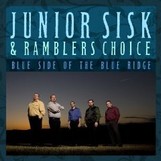
  • Junior Sisk – Blue Side of the Blueridge

    Being a top-echelon professional bluegrass musician is similar to being a member in an exclusive underground club. The members all know each other from their not-so-secret handshake, which is the ability to play bluegrass right. All the personnel on this disc are clearly in this select company.

    As the world continues to shrink, the concept of a “regional sound” has become increasingly rare and archaic. But Ramblers Choice tries to retain what they refer to as southeast Virginia bluegrass. Their sound relies less on breakneck rhythms and more on loping tight/loose arrangements that have a comfortable and well-worn feel. Sometimes, the lead singer leads the pace, other times (even within the same song) Sisk will hang behind the beat in the Lefty Frizell/saloon-singer tradition. Their ability to play with the beat and pace of a song gives Ramblers Choice an older and less polished edge that is refreshing, especially when compared to some of the ultra-slick bluegrass bands such as Rhonda Vincent’s The Rage or Ricky Skaggs’ Kentucky Thunder.

    Produced by veteran bluegrass producer and singer Ronnie Bowman, production never distracts from the music. Ramblers Choice delivers great bluegrass without showbiz glitz, which is what bluegrass is all about.

    This article originally appeared in VG‘s Oct. ’08 issue. All copyrights are by the author and Vintage Guitar magazine. Unauthorized replication or use is strictly prohibited.
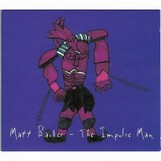
  • Matt Backer – Impulse Man

    Backer is New Orleans native who lives in London and has sung and played guitar with the likes of Elton John, Sinead O’Connor, and Alice Cooper. His new solo record assembles an amazing array of influences and proves him to be an agile guitarist and a songwriter of note.

    His cleverness is obvious from the first cut, “Cold War.” With a lyric that longingly looks back in time, with fat chords, churning pop style, and a host of lyrical and musical cultural references. While other cuts show a strong Beatles influence, this one sounds straight out of their catalog. Backer’s mastery of hooks makes all 11 cuts here instantly hummable. “Falling In Love With Myself” is exactly what the title says. A love song to him. Not boastful, the track is just funny and the music is power-pop heaven with a slinky Fender solo in the middle, a nasty rock solo on the fade, and a melody and hook that you won’t be able to get out of your head.

    All of those things are evident in Backer’s music. The lovely changes, melodic guitar solo, and great lyrics drive songs like “Right Girl, Wrong Time.” When called for Backer also can turn it up and get a bit grungy, like on the garage rock of “I.” There’s enough rocking electric guitar there to drive a full album by most of today’s rock bands. Throughout this record, Backer proves as agile a writer as he is singer and player.

    This article originally appeared in VG‘s Oct. ’08 issue. All copyrights are by the author and Vintage Guitar magazine. Unauthorized replication or use is strictly prohibited.
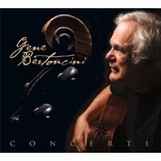
  • Gene Bertoncini – Concerti

    Bertoncini hits the jackpot; the nylon-string guitar whiz is joined by a
    string quartet for a set of music that is both challenging and exquisite to hear.

    Familiar tunes like “East of the Sun” and “You’d Be So Nice to Come Home
    To” feature fine technical elements where Bertoncini and the strings trade
    off through seamless transitions as he mixes sophisticated chordal work with single-note loveliness. Most important, it swings like a mother.

    One of the best tracks is a unique, quirky take on “Eleanor Rigby.” You
    hear the melody, then the strings enter, and finally it turns into a wonderful jam on a minor key. The chordal work and dynamics are suitably dramatic, and before Bertoncini is done, he hits on composers as varied as Jobim and Chick Corea.

    Especially impressive is how Bertoncini weaves all of this into a package
    that’s not only coherent, but makes these varied songs sound like they
    should be together. He also dips into his own catalog for one cut, the lovely “For Chet,” where changes mix with the perfectly placed strings on the tribute to Chet Baker.

    Some might think this is some kind of experiment, but the arrangements
    and Bertoncini’s mastery of his instrument make it seem more like an inspired delivery of tunes that were in need of a new way to look at them.

    This article originally appeared in VG‘s Nov. ’08 issue. All copyrights are by the author and Vintage Guitar magazine. Unauthorized replication or use is strictly prohibited.

  • The Brakes – Tale of Two Cities

    The Brakes are a Philadelphia rock/pop band that recorded live dates in both New York and Philly. From those shows, they got the 12 cuts here. The positive side of all this is that it works; the music shifts between Beatlesque pop and rock to spacey excursions that mix country, soul, rock, and pop in equal amounts.

    Guitars are a huge part of the sound of this five-member band. Subtle bends, punchy rhythm guitars, and a massive solo over the grinding rhythm guitars propel “Supermarket.” “Big Money” starts with a slightly wahed guitar figure moving into a harmony guitar solo and a fine vocal before ending in a rocking blues. The solos, by various members of the band, frequently lean toward the melodic. Cuts like “State of the Union” employ great bends and double-stops on the solos, while slide guitar floats beautifully above everything. Pedal-steel-style licks dominate some tunes, especially the country/rock of “Boat Trip.” Just when you get used to that part of the song, an amazing Beatles-style harmonized solo takes over in the middle. Repeating guitar figures dominate the spacey ballad “Who Am I to Be,” while the whimsical “Cigarette in the Rain” is driven by jangly rhythm guitars and a fine vocal.

    While pushing a bunch of songs on a live record may not seem like the way for a rock band to start a career, it seems to work for the Brakes. It might seem like an odd thing to say, but it’ll be fun to see if they can be as clever and creative in the studio as they are on this record. –

    This article originally appeared in VG‘s Aug. ’08 issue. All copyrights are by the author and Vintage Guitar magazine. Unauthorized replication or use is strictly prohibited.