Month: August 2008

  • Surfin’ Djangos – Go Man Go!

    It’s doubtful Django Reinhardt ever caught a wave to sit on top of the world. But as these two new CDs prove, Django’s music proves ideal for a surfing safari.

    Both collections of Gypsy jazz-inspired surf music take Django in different directions. And both are way cool.

    Neil Andersson is one of the founders of Pearl Django, the Seattle-area Gypsy jazz band that is one of the godfathers of the American renaissance of Django’s music. Joining forces with Peter Pendras, the duo return to their own roots playing good ol’ American surf.

    Malibu Manouche is “The Girl from Ipanema” meets the Beach Boys. Some tunes, such as the title track, are acoustic surf jazz as Jobim might have imagined it. Riding a mellow curve, it’s stylish and airy.

    When Andersson and Pendras go electric, they retain that same sunshine-infused sound. Covers of classics like “Pipeline,” “Walk, Don’t Run,” and even Brian Wilson and Mike Love’s “Surfer Girl” ode all come alive in a West Coast jazz groove.

    The Surfin’ Djangos, on the other hand, go for pure Dick Dale. In fact, the CD’s back-cover photo features Django with The Beast – Dale’s sparkle-gold lefty Stratocaster – superimposed in his hands. And somehow it looks just right.

    Go Man GO! is glorious reverb and twang. And as the band advises, “Play it loud!”

    Bandleader/lead guitarist Archtop Eddy is a confirmed Djangologist, but he’s not afraid to have fun. This “All-American Salute to the Music of Django Reinhardt” is one of the most unique discs of Gypsy jazz anywhere.

    And Django’s music hits the surfing curl just right. The band recasts a score of the master’s music, and the results are perfect. Django’s “Swing 42” becomes “Surf 42,” speeded up, soaked in reverb, backed by drums and bass, and it could have been a highlight of the Ventures’ songlist. The Surfin’ Djangos do the same with “Troublant Boléro” as “Troublant Camaro” and “Manoir de mes r
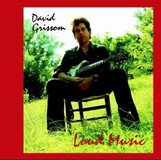
  • David Grissom – Loud Music

    When you’ve made your living and reputation as a hired gun, and finally decide to cut a solo album, what do you do? In the case of David Grissom, the question is particularly interesting because his sideman and session work has covered such a wide gamut.

    In addition to stints with Joe Ely, John Mellencamp, and the Dixie Chicks, and five years as a member of Storyville,

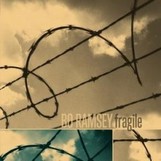
  • Bo Ramsey – Fragile

    New records from Bo Ramsey are always a treat. Best known as the guitarist for folk singer Greg Brown and his work with Lucinda Williams, his solo stuff shows a strong independent streak and a unique guitar/vocal style and sense of taste.

    Ramsey’s playing, while quiet and laid back, is also full of fire and soul. “Can’t Sleep” is a good illustration. Like many of the songs here, it’s an atmospheric ballad. But it’s set apart with slinky slide guitar and a doubled solo that sounds gorgeous and otherworldly. “Burn It Down” has a spooky feel with an essentially spoken vocal and quiet guitar parts that are beautifully interwoven.

    Ramsey’s touchstones are country music and the blues, but it’s impossible to classify his music (or playing) as straightforward examples of either style. And while he’s not a great singer in the technical sense, his is a great voice; nobody else could sing his songs, especially with his feel. Lyrically, things get very mysterious at times, but the feel of the song tells you what Bo is thinking. The closer, “I Don’t Know,” may the perfect summation of his technique as player, singer, and writer. A solid song, about the state of affairs in the world and pop culture, and even a lovely testament to his own artistry – it’s set to a ballad feel with perfectly understated slide guitar.


    This article originally appeared in VG‘s May ’08 issue. All copyrights are by the author and Vintage Guitar magazine. Unauthorized replication or use is strictly prohibited.


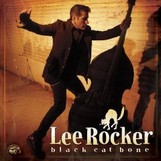
  • Lee Rocker – Black Cat Bone

    On his second record for Alligator, former Stray Cats bassist Lee Rocker continues to show just how vital he was to that band’s sound, and that he can write and interpret songs as well as anyone in the genre.

    Cuts like “Gone,” the title track, and “Rebel” prove he’s still sharp with the pen, and he even gets a little political with the swampy “Sold Us Down the River.” Bob Dylan’s “One More Night” becomes a ’50s-style country/pop tune, and a stompin’ “Lost Highway” is one of the finest cuts on the record.

    Rocker’s bass playing is, to nobody’s surprise, excellent throughout. He propels the manic boogie of “The Wall of Death” and takes a 90-second solo during the closer, “Free Bass.” Guitar-wise, the record is chock full of great playing. Buzz Campbell and Brophy Dale trade licks throughout and a quick listen to cuts like “Crazy When She Drinks” lets you know they’re more than up to the task. Punchy double stops mix with lightening-quick runs all through the song. Dale’s slide guitar is featured on several cuts including “Sold Down the River.” Tasty and melodic solos help to reinforce the ballad feel of songs like “What I Don’t Know.” And, the atmospheric guitars on the title cut turn it into a spooky jazz piece that matches its title.

    While not a whole lot of new ground is broken here, if you want solid roots rock and roll, you can’t beat this.


    This article originally appeared in VG‘s Jan ’08 issue. All copyrights are by the author and Vintage Guitar magazine. Unauthorized replication or use is strictly prohibited.


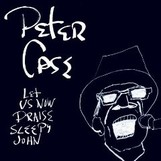
  • Peter Case – Leet Us Now Praise Sleepy John

    Peter Case has typically been thought of as a folksinger, and this record showcases that side of his talents. Except for a few songs, it’s Case and a guitar. But some of these songs work well in a rock context, too.

    The emphasis here is on Case’s excellent guitar playing, killer vocals, and lyrics that are sometimes grating – but always interesting. His vocals could come from a rock and roll singer, and while they work here, it’d be great to seem him fronting a top-notch band (again!). He’s joined by friends on a couple of cuts; it’s tough to beat the pairing of Case and Richard Thompson on “Every 24 Hours,” where acoustic guitars intermingle incredibly well. The solos are killer, and the accompanying rhythm playing is excellent.

    Lyrically, most of these cuts are excellent. But in some cases the class warfare thing goes too far. Yes, it is a folk record, but the attitude that anyone with money is a bastard and anyone without it is a saint is unrealistic, and it sometimes gets in the way. Fortunately, the rest of the writing, playing, and performance overpower the feeling, and all in all, this is a fine addition to Case’s body of work.


    This article originally appeared in VG‘s Jan ’08 issue. All copyrights are by the author and Vintage Guitar magazine. Unauthorized replication or use is strictly prohibited.


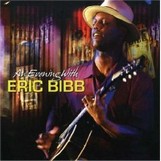
  • Eric Bibb – An Evening with Eric Bibb

    Eric Bibb plays blues and folk with his own touch, and is one of t he most underrated acoustic artists making the rounds.

    On this disc, an appreciative audience hears 14 songs delivered by Bibb, his guitar, and bassist Dave Bronze. The format allows Eric to show off his picking skills that we don’t always get to hear on his studio efforts. Cuts like “Needed Time” see him propel the song with a solo. The instrumental “Sebastian’s Tune” has a ragtime feel that showcases his playing. “Right On Time” is an original jump blues with a fingerpicked section in the chorus. Same goes for the stomping “I Heard the Angels Sing,” and the changes and jazzy feel of “Panama Hat” perfectly match the whimsical lyric.

    Bronze is also allowed free rein – and comes up strong – on cuts like “For You,” a soulful tune with a fine solo.

    Bibb is one of those guys we need to help keep acoustic blues alive. His performance and the reaction it draws from the crowd give hope that this music will stick around.


    This article originally appeared in VG‘s Dec ’07 issue. All copyrights are by the author and Vintage Guitar magazine. Unauthorized replication or use is strictly prohibited.


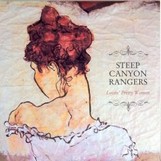
  • Steep Canyon Rangers – Lovin’ Pretty Women

    The Steep Canyon Rangers are part of a new wave of young bluegrass bands that turn the energy past hot to fricassee. In 2006, they won the International Bluegrass Musician’s Association’s “Emerging Artist” award based primarily on their incendiary stage show.

    Even though Lovin’ Pretty Women is a studio album, it captures much of the band’s live fire. Their take on the Dead’s “Don’t Ease Me In” moves the song closer to Western swing than the original, and their version of Shawn Camp’s “Ain’t No Way of Knowin’” remains much closer to the original’s pace with only a bit more sideways swing. Although they can play as fast and hard as any band, the Steep Canyon Rangers don’t do everything with balls-to-the-wall speed. The Mike Guggino original “Kuykendall” could have been performed much faster, but the pace gives the song room to shimmy.

    Some bluegrass bands, such as Doyle Lawson’s band Quicksilver, are great vocalists who also happen to be good pickers, while others like The Grascals are hot players who can sing. The Steep Canyon Rangers sit smack in the middle. Graham Sharp and Woody Platt are strong lead singers and fine harmony vocalists. On the instrumental side, Sharp’s banjo, Mike Guggino’s mandolin and Nicky Sander’s fiddle solos all contribute to the band’s volatile performances. Sanders’ boyish good looks and onstage theatrics match his virtuosic double-stop fiddle work. But despite stiff competition, Graham Sharp emerges the most fascinating member of the band. His stage presence has the intensity of a smoldering hunk of coal about to burst into flame.


    This article originally appeared in VG‘s Oct ’07 issue. All copyrights are by the author and Vintage Guitar magazine. Unauthorized replication or use is strictly prohibited.


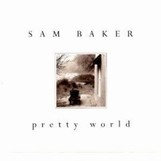
  • Sam Baker – Pretty World

    It’s hard to classify Austin’s Sam Baker as a singer/songwriter. Not because his songs are well-written – they’re often brilliant, invariably memorable. But Baker’s raspy, barking delivery barely qualifies as singing. It may be unconventional, but, like the songs themselves, it makes an impression.

    In 1986, Baker was on a train, traveling through Peru, when a terrorist bomb blew up the car he was in, killing several passengers. Baker was injured and temporarily deafened, but spared. During and since his recovery, he has devoted himself to the art of storytelling, first in short stories, then songs.

    Baker interpolates familiar standards into three songs – “Jacob’s Ladder” into “Slots,” “Swing Low Sweet Chariot” into “Orphan,” and Chris Baker-Davies singing Stephen Foster’s “Hard Times Come Again No More” as an intro to “Odessa” (which reveals the influence of Guy Clark), its soaring melody and her expressive upper register in sharp contrast to Baker’s short, almost monotonic bursts.

    The stark instrumentation is impressive without being showy – the core band featuring Rick Plant on guitar, co-producer Walt Wilkins on acoustic, and Mike Daly on slide and steel augmented by accordionist Joel Guzman and guitarist Gurf Morlix (on “Juarez”) and Lloyd Maines’ Dobro (on “Slots”).

    After half a dozen mostly acoustic tunes, the choppy, punkish rhythm of “Psychic” (provided by Tim Lorsch’s layered mandolins), power chords, and whining steel come out of nowhere, but then morph into an beautifully orchestrated section of violins and cello.

    Of the various compliments to be paid to Baker, the highest is that his music is truly different and succeeds on its own terms. In an increasingly homogenized music world, something this original is a rare treat.


    This article originally appeared in VG‘s Oct ’07 issue. All copyrights are by the author and Vintage Guitar magazine. Unauthorized replication or use is strictly prohibited.


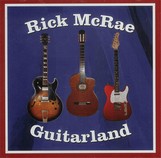
  • Rick McRae- Guitarland

    The retitled version of Johnny Gimble’s “Fiddlin’ Around” (“Pickin’ Around”) is a clue, but just going by the repertoire here – encompassing Jobim, Bonfa, Villa Lobos, Cole Porter, and Charlie Parker – one would never suspect that the guitarist/leader’s main gig has been backing country star George Strait for 24 years. That is, unless you live in Austin and have seen McRae’s dazzling fretwork up close in various settings.

    “Consummate” would not be an overstatement in describing McRae’s skill and versatility. It’s also a testament to Strait’s own high standards, as well as the professionalism it takes to land and keep a gig like that for so long.

    That philosophy carries over to Rick’s choice of musicians for his first solo outing – such Austin mainstays as pianist Floyd Domino, drummer Art Kidd, bassist Terry Hale, and percussionist James Fenner. John Steinman provides acoustic rhythm on several tracks and solos on “Limehouse Blues.”

    McRae reaches for his ES-175 for a darker tone on a burning rendition of “Crazy Rhythm,” but gets a rounder tone via his Telecaster (as on Porter’s “You’d Be So Nice To Come Home To”) when he’s not playing his Takamine electric classical model. Jimmie Dale Gilmore’s “Tonight I Think I’m Gonna Go Downtown” gets a fascinating gut-string/steel-string duet makeover.

    McRae is also featured on The Real Deal (Catfish Jazz) by another Austinite who deftly straddles jazz and Western swing, vocalist Maryann Price. On this fine self-produced session, she reprises “I’m An Old Cowhand,” her ’70s hit with Dan Hicks & His Hot Licks, and duets with Ray Benson on a rendition of “Mr. Bassman” that’s a riot, but also extremely hip.

    McRae shares solo space with sax/flute man Harry Kleintank and displays superb, sensitive comping throughout.


    This article originally appeared in VG‘s Oct ’07 issue. All copyrights are by the author and Vintage Guitar magazine. Unauthorized replication or use is strictly prohibited.

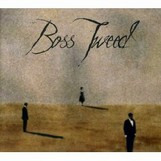
  • Boss Tweed – EP

    Boss Tweed has taken rockabilly to the big city. The New York power trio was formed in 2004 with all the requisites: minimalistic drum kit, thumping bass, and a fire-engine-red Gretsch archtop.

    But this ain’t your grandpappy’s rockabilly. As the band states, their influences are as diverse as the cities they were born in – Nawlins, Chicago, and a town with no traffic light somewhere in New Jersey. Boss Tweed tweaks their rockabilly, adding jazz, blues, lounge, and soul.

    The band is led by guitarman and singer Gerard Egan with drummer Eric Reed providing a wide-ranging array of percussion and rhythm styles. Yet it’s bassist and lead singer Carolyn Sills that’s the front voice of the band. Added together, Boss Tweed reverberates through your heart like the Johnny Burnette Rock and Roll Trio fronted by Billie Holiday.

    When the band’s eponymous debut CD arrived in 2005, we raved about the band’s loungey rockabilly. Now, they’re back with a vinyl EP featuring two stellar tunes.

    The band’s original “Buzz Like Houseflies” is a romp, pure and simple. This is rollicking rockabilly with plenty of reverb and twang. And yet Sills’ soulful vocals injects a twist that makes it all new.

    The flipside is a cover of “Perhaps…” The ballad becomes a séance set to melody, conjuring up a misty past of dim juke joints and neon-lit roadhouses from the end of time. The effect is mesmerizing.

    This isn’t Wanda Jackson, or even the Reverend Horton Heat. Instead, Boss Tweed rules on its own terms.


    This article originally appeared in VG‘s Mar ’08 issue. All copyrights are by the author and Vintage Guitar magazine. Unauthorized replication or use is strictly prohibited.