Month: December 2011

  • Tim Mahoney

    Tim Mahoney

    Tim Mahoney
    Tim Mahoney
    Tim Mahoney’s latest work combines elements of heavy-metal power pop with ethereal folk ballads, and his mix of guitar raunch and lyricism makes for an addictive musical cocktail.

    Musically, Mahoney is something of a chameleon. Songs like “Greatest Life” are riff-driven roots-rock anthems with soaring guitar leads. “Lay Down Low” is a jam-bandish groove tune that alludes to white soul bands like the Rascals and country-rock pioneers America. A big clue about Mahoney’s musical heart comes from his live version of Marvin Gaye’s “Sexual Healing.” Two minutes in, he owns the song. Stein Malvey’s guitar tone is crunchy, yet clear, and perfectly fits the texture of the tune. Kudos to Chad Whittaker’s pile-driver bass, which works in lockstep with Tait Cameron’s thunderous kick-drum.

    Though conceived as a bon-bon for hardcore fans, Live From The Sky makes an ideal first album for anyone who wants to explore Tim Mahoney’s musical universe.

    This article originally appeared in VG‘s April ’11 issue. All copyrights are by the author and Vintage Guitar magazine. Unauthorized replication or use is strictly prohibited.

  • Stéphane Grappelli

    Stéphane Grappelli

    Stephane Grappelli
    Stephane Grappelli
    Monsieur Grappelli had a knack for being in the right place at the right time in terms of finding the perfect guitarist foils. This two-CD collection showcases the best of those duets.

    It began with Django Reinhardt, of course, as their Quintette du Hot Club de France set the mold for Gypsy jazz and string swing. Happily, this collection includes not the overplayed classics, but a handful of rarities that unveil new aspects of Grappelli and Django’s combined art.

    The bulk of the set focuses on Grappelli’s later ensembles – recordings that are not merely hard to find, but too often overlooked and even unknown to most string-swing fans.

    There are an assortment of cuts here from Grappelli’s stay in London during World War II. After a breakup of the Hot Club forced by the Nazi occupation of Paris, Grappelli put together several groups that included English guitarmen such as Chappie d’Amato and Jack Llewellyn – as well as newcomer pianist George Shearing.

    Back in Paris, post-war and post-Hot- Club, Grappelli started on a stunning second career. These recordings fill the second CD, pairing the violinist with guitarists Joseph Reinhardt, Roger Chaput, and (especially) Henri Crolla. Reinhardt proves a stylish player, set free from his elder brother’s confines and unreeling swinging jazz lines.

    But it’s the nine tracks that combine Crolla and Grappelli that make this set worth every penny; the band plays ferocious swing on covers of Django’s “Swing 39,” “Belleville,” “Swing 42,” and more, as well as the Crolla/Grappelli originals “Alembert’s” and “Marno.” Crolla’s dazzling melodic lines and stunning chord-melody solos prove him a master. Essential stuff.

    This article originally appeared in VG‘s April ’11 issue. All copyrights are by the author and Vintage Guitar magazine. Unauthorized replication or use is strictly prohibited.
  • Fere’s Hot Strings

    Fere’s Hot Strings

    Fere's Hot Strings
    Fere's Hot Strings
    With the passing of decades, Fere Scheidegger has become one of the venerable masters of Gypsy jazz. His Hot Strings group has released a score of albums over the past 20 years, and along the way have played with many Manouche and Gitan legends.

    The band’s latest CD offers more of a good thing. Fere’s guitarwork is backed by Rainer Hagmann on violin and baritone violin, rhythm guitarist Dani Solimine, bassist Thomas Duerst, and several guest musicians.

    The album kicks off with the rousing “Hot Club Dance” that swings with intensity – one of Fere’s trademarks. The group adds few classic jazz covers to their songlist here, but both “Night and Day” and “Whispering” are worthy.

    In keeping with the album’s title concept and Fere’s own interest in ’70s rock, the band turns to both “Little Wing” and “Black Magic Woman,” transporting them into the Gypsy jazz lexicon. Thanks to Fere’s musicianship, these not only work, but seem naturals.

    Fere long ago proved himself on guitar, but his playing has continued to grow on this outing. He seemingly can’t help but swing. And yet it’s the simple and beautiful melodiousness of his solos that make them such gems.

    This article originally appeared in VG‘s April ’11 issue. All copyrights are by the author and Vintage Guitar magazine. Unauthorized replication or use is strictly prohibited.

  • Jinx Jones

    Jinx Jones

    Jinx jones
    Jinx jones
    Jinx Jones long ago proved himself a fine player, and his latest disc reinforces that he is a major talent in the rockabilly, jazz, and country field. On occasion, a strong Brian Setzer influence weighs in, but never overtakes his own personality.

    “On Parole & Out of Control” highlights Jones’ mastery of roots rock, its hyper-speed guitar romping along at breakneck speed; the lyric shows a playful side. Speaking of, it’s tough not to laugh out loud at “Doghouse,” with its tale of love gone bad and a chickin’-pickin’ solo that perfectly fits the country feel. The tour de force, though, is “How High the Moon.” His gorgeous chord opening turns quickly into plain-old swing that features the familiar melody before Jones displays his harmonic skills while playing chords and chops that takes the listener through chorus after chorus of soloing without becoming monotonous or boring.

    Jones, bassist Joe Kyle, Jr., and drummer Jimmy Sage form the trio, and get some help from pianist Caroline Dahl and steel guitarist David Phillips. The band cooks and the empathy between the players is obvious. With Rip and Run, Jones moves up a rung on the ladder.

    This article originally appeared in VG‘s April ’11 issue. All copyrights are by the author and Vintage Guitar magazine. Unauthorized replication or use is strictly prohibited.
  • Dave Stryker Organ Quartet

    Dave Stryker Organ Quartet

    Dave Stryker
    Dave Stryker
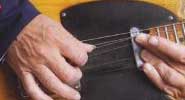
    Stryker stretches out while putting his skills as a soloist on full display, especially on the title cut – a highflying swing tune where he solos with originality and soul on chorus after chorus.

    A take on Lennon and McCartney’s “Can’t Buy Me Love” finds him zipping through a lengthy solo using everything at his disposal to make his point; single notes mix with chords and octaves as it builds to a gorgeous, harmonic chord solo.

    Stryker’s original tunes cover ground from frenetic bop (“First Strike”) to light, bluesy swing (“The Rose (For Mike Rosinksy)”) to the unique melody and otherworldly feel of “Sentinelese.” Other covers include the classic “Tenderly,” given an after-hours feel with bluesy soloing, and the gorgeous ballad “Lady Sings the Blues.”

    Stryker is accompanied by Jared Gold (on Hammond B3), Quincy Davis (drums), and Stephen Riley (sax), whose breathy tone is the perfect complement to Stryker’s playing – and all know how to build solos and keep them moving. All but two tracks are at least eight minutes long, and the group’s take on “Watch What Happens” clocks in at almost 13 minutes.

    This article originally appeared in VG‘s April ’11 issue. All copyrights are by the author and Vintage Guitar magazine. Unauthorized replication or use is strictly prohibited.

  • Veterans Music Camp Reveals War Stories in New Light

    LifeQuest Military Transitions, a 501(c)(3) nonprofit organization that provides ill and wounded veterans with physical rehabilitation and training, adventure activities, and life-skills development, is inviting former service personnel to tell their stories at the second Songwriting Camp for Veterans. A component of transition programs designed for military members and their families, the camp will be held January 19-23 in Colorado Springs, Colorado.

    The camp gathers a team of professional singer/songwriters to work with servicemen and women. This year, it will be directed by Austin-based musician Darden Smith. Veterans’ costs for the camp are covered, including travel, accommodations, and camp activities. Songs written at last year’s camp were performed at the Faces of Freedom concert, held September 11 at the World Arena in Colorado Springs.

    “There is no program out there quite like ours because we’re built on the direct needs from active duty military units,” says LifeQuest Founder C.W. Conner. “Many nonprofits are reactive, but we are proactive – before they fall into harm’s way.” For more, visit mylq.org.

  • Tomas Janzon

    Tomas Janzon

    Tomas Janzon
    Tomas Janzon
    Tomas Janzon is a traditional-jazz guitarist influenced by Wes Montgomery, with hints of Metheny and Scofield. It’s also obvious he has one of the best jazz-guitar tones you’ll hear.

    Most of the songs here are old warhorses that could easily be cliché, but with the imaginative playing of Janzon, keyboardist Art Hillery, bassist Jeff Littleton, and drummer Albert “Tootie” Heath, they are spared the indignity.

    Janzon’s fat jazz sound is apparent on the opener, “Here’s That Rainy Day.” His first solo messes playfully with the melody, while the solo out mixes Wes-like octaves and chords. A hard-swinging version of “Billie’s Bounce” hits the solo hard with notes flying everywhere. “Moanin’” captures the inherent funkiness of the Bobby Timmons classic, and the solo is funky and original, but keeps jazz in the mix. “Float” is a Janzon original with a spooky, off-kilter feel where his bop solo fits perfectly. The other original, “Blue Bee,” has an airy feel that makes it stand out from the blues and funk. The record closes with a beautiful solo piece, “En Dejlig Rosa,” which showcases everything about Janzon’s playing that make this one of the best jazz guitar records from the past year.

    This article originally appeared in VG‘s April ’11 issue. All copyrights are by the author and Vintage Guitar magazine. Unauthorized replication or use is strictly prohibited.
  • Devi

    Devi

    Devi
    Devi
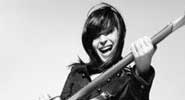
    Devi is a rock trio led by singer/ guitarist Debra, and the band shows an affinity for good songs with strong, melodic hooks. The mix includes pop, rock, folk, psychedelica, and everything in-between.

    The band’s strengths are on display on “When It Comes Down,” a song with a melancholy feel, great hooks, and a soaring guitar solo that fits perfectly. Debra’s playing is big, melodic, and bold. “C21H23NO3” covers a lot of ground, and demonstrates perfectly what this band is about; starting with a pop/folk feel with descending bass lines and chords catchy as hell, it moves into an almost metal feel with a nasty solo. Debra wraps it up with a frenetic Hendrix-style jam. The Hendrix vibe shows up again on the title cut – a simmering rock ballad with nice changes and a soaring solo. The haunting “Welcome to the Boneyard” has a gorgeous melody highlighted by a lovely slide solo and Debra’s stunning vocal. The record wraps with a take on Neil Young’s “The Needle and the Damage Done.” It starts with the familiar acoustic guitar before Debra adds atmospheric slide and finally a solo that recognizes the rock and roll that’s always been inherent in the quiet song’s lyric.

    While Debra is clearly the focus of this band, Dan Grennes on bass (who has since left the band) and John Hummel on drums are more than up to the task as a rhythm section.

    This article originally appeared in VG‘s April ’11 issue. All copyrights are by the author and Vintage Guitar magazine. Unauthorized replication or use is strictly prohibited.

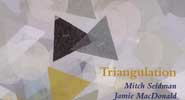
  • Mitch Seidman, Jamie MacDonald, Claire Arenius

    Mitch Seidman, Jamie MacDonald, Claire Arenius

    Mitch Seidman
    Mitch Seidman
    The set, recorded live at the Open Music Collective, in Vermont, perfectly captures the workings of this trio and the inherent quirkiness in the playing of Mitch Seidman, who surprises on pretty much every cut. Jamie MacDonald (bass) and Claire Arenius (drums) make every cut an enjoyable adventure.

    Three songs here were written by the band – two by Seidman, one by Arenius; the latter’s contribution, “When Worlds Touch You,” is a moody ballad with quiet chording and a contemplative bass solo from MacDonald. Seidman’s “White Pearl” is a light, flowing piece where the rhythm section percolates under his clever and interesting solos. His “Zokomotion” has a bop feel.

    Seidman really shines on the covers. His take on Attila Zoller’s “Struwelpeter” is a blues swinger and an example of how Seidman slips perfect little “ear worms” inside solos that stick with you. His solo on “Bag’s Groove” makes you forget the almost automatic connection between the song and Wes Montgomery. He mines Zoller’s catalog again for “Seascape,” a frantic tune that, on first listen, sounds disjointed… but listen to it more closely and you discover it’s disjointed in the best way!

    The obvious respect the players in this trio have for each other shows in every cut. And at every turn, Seidman proves a very distinctive voice in jazz guitar.

    This article originally appeared in VG‘s April ’11 issue. All copyrights are by the author and Vintage Guitar magazine. Unauthorized replication or use is strictly prohibited.
  • Drive-By Truckers

    Drive-By Truckers

    Secret to a Happy Ending
    Secret to a Happy Ending

    Go-Go Boots
    Go-Go Boots
    It’s been less than a year since the Drive-By Truckers released The Big To-Do, but the songs on Go-Go Boots don’t suffer from the quick turnaround. An album considerably quieter than other DBT efforts, while its musical roots remain, it relies on a greater mix of styles focused on rock, country, and Southern soul.

    Guitars on DBT records have traditionally been up-front in the mix. But here, the individual playing of Patterson Hood, Mike Cooley, and John Neff floats more gracefully in, out, and around that of the others.

    The songs on Go-Go Boots written by Hood tend to relate darker stories; “Ray’s Automatic Weapon” tells of a gun and a guy on the edge. “Used to Be a Cop” is a creepy tale of a fellow for whom things didn’t quite work, where atmospheric slide interacts with a constant one-note guitar fill. As the song ends, a cacophony of guitars backs its chaotic lyric. “The Fireplace Poker” is eight minutes of bad guys, murder, and a preacher joining his wife in death.

    Cooley’s contributions are straight country songs. They tell stories too; “Pulaski” tells the tale of a girl who leaves her Tennessee home town, looking for the good life. Cooley’s husky voice is the perfect delivery vehicle.

    Bassist Shonna Tucker’s songs are tight pop music highlighted by her soaring voice and a pop/soul feel. “Where’s Eddie” has a great hook and big vocal. The Secret to a Happy Ending documentary DVD is a perfect introduction to the band. Interviews with band members highlight how it has come to its current lineup (and why guitarist/writer/singer Jason Isbell is not), while others (including a college professor) try to explain why the Drive- By Truckers are one of the best rock bands of any era.

    This article originally appeared in VG‘s April ’11 issue. All copyrights are by the author and Vintage Guitar magazine. Unauthorized replication or use is strictly prohibited.