Month: March 2011

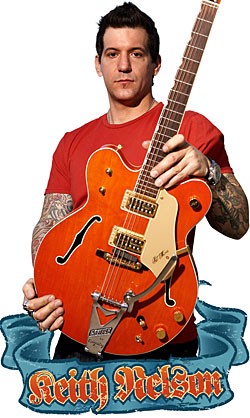
  • Keith Nelson

    Nelson Header


    Since launching its self-titled debut album in 1999, the SoCal hard-rock band Buckcherry has stood as a unit swimming against a tide of acts that look too much alike, sound too much alike, and bring little to the table in terms of potential staying power. The fivesome – fueled creatively since its inception by guitarist Keith Nelson and vocalist Josh Todd – staves off much of the modern rock ethos in creating albums that follow traditional rhythmic, hook-based paths cut by the Rolling Stones, Zeppelin, Guns ‘N Roses, and their cohorts and adherents.

    Buckcherry’s latest album, 15 (a reference to the number of days the band took to record it) is at once reflective of the grunt-and-grind attitude of its creators and holds up as cohesive and listenable, front to back. Even more impressive is the fact the band did 15 – for better or worse – with no U.S.-label backing; their label dissolved within a year of releasing the band’s second album, 2001’s Time Bomb. Then, between August of ’01 and January ’02, three of the band’s original members bailed for various reasons. The nasty twists of fate left Nelson and Todd frustrated to the point of packing Buckcherry into a road case stenciled “Done” and moving on. After wrapping up the Time Bomb tour, the two hooked up with Guns ‘N Roses members Slash, Duff McKagan, and Matt Sorum to play a benefit show that led to them being part of a precursor to the band Velvet Revolver (Nelson has co-writing credit on VR’s first album). Ultimately, it didn’t pan out, so Nelson moved on to work in a recording studio, producing independent bands while Todd released a solo album, then worked in carpentry.

    For three years, Nelson and Todd barely spoke to each other, until the unfortunate passing of Nelson’s father provided an opportunity. The conversation eventually turned to gathering a few friends, guitars, and some amps. By early ’05, a re-formed Buckcherry had written 30 new songs and was set to make a demo. Universal’s subsidiary in Japan bit on a record deal, and the band used the advance to buy time in a California studio. Forced to mostly record together in the same room at the same time, they emerged with the tracks that would become one of the biggest albums of 2006, propelled by an independently produced video for the hook-heavy, lyrically nasty “Crazy Bitch,” the hit single “Everything,” and a rep for a killer new live show.

    Playing a major role in the band’s sound are – you guessed it – a truckload of vintage guitars and amplifiers driven by Nelson, who recently spoke with VG as he prepped for a cross-country Harley ride and nursed more than a touch of the flu.

    How were you first drawn to music?
    There was always music at my house. My father had a mix of Motown records, ’50s do-wop, and country music. We lived in rural Western Pennsylvania, and he had very eclectic taste in music.

    I started by playing the drums, then one day went from wanting to be Peter Criss to wanting to write great songs, like Tom Petty and Bruce Springsteen and John Mellencamp. And when being a scholar of music and songwriting became important to me, I gravitated toward the guitar, obviously.

    How old were you?
    It was right when I graduated from high school.

    So your aspirations were in music then and there?
    I came out of an area where people really didn’t really encourage you to pursue that kind of stuff – that was for people who went to Hollywood and made their dreams come true. But you couldn’t do that in rural Pennsylvania! That was the mentality. It wasn’t cultivated. And even after I’d moved to Los Angeles, everyone was asking me when I was coming back. It was like, “How long are you going for?” And my response was “As long as it takes.” I was pretty naive and had a lot to learn, but certainly the desire to make it happen was there.
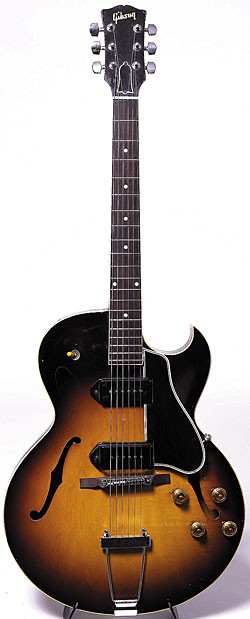
    57 Gibson ES-225.

    ’57 Gibson ES-225. Photos: Rick Gould.
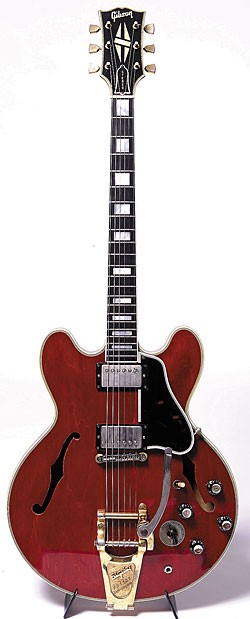
    62 Gibson ES-355

    ’62 Gibson ES-355.

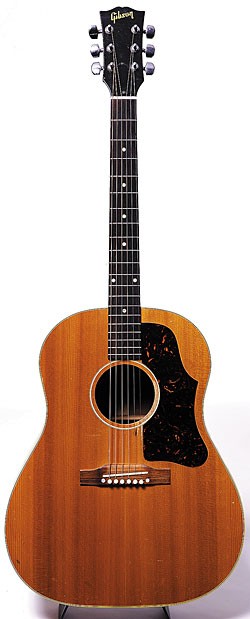
    57 Gibson J-50

    ’57 Gibson J-50.

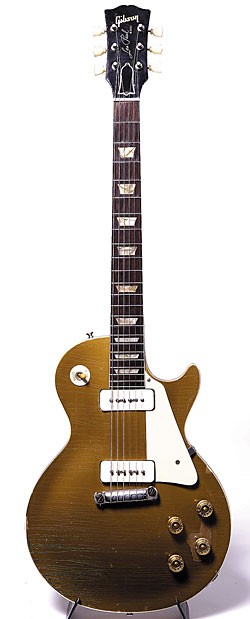
    54 Gibson Les Paul model

    ’54 Gibson Les Paul model.

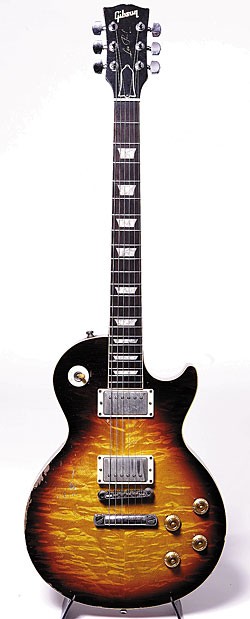
    97 Gibson Custom Shop 58

    This ’97 Gibson Custom Shop ’58 Les Paul reissue was refinished by RS Guitarworks and is Keith Nelson’s primary touring Les Paul. Finish inspired by Duane Allman and Paul Kossoff!
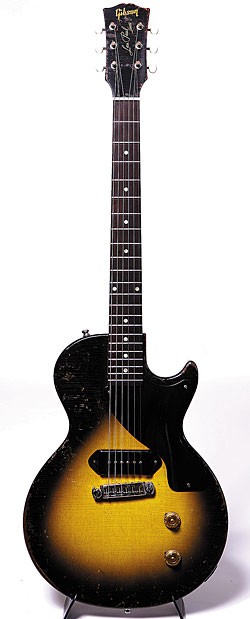
    56 Gibson Les Paul Junior

    ’56 Gibson Les Paul Junior.

    What do you remember most about your earliest efforts at making music?
    Well, I was 17 and because I was a drummer, all the kids would jam at my house because it was easier to move guitar amps than it was to move the drum kit! We’d leave everything set up in my garage or my basement, and then Monday through Friday, when we weren’t jamming, I had the band’s gear at my disposal to fool around on. So I just picked it up and started doin’ it.

    What sort of music were you playing?
    The earliest stuff I was into was the Rolling Stones. I’ve always loved them. And just learning songs from stuff like Tom Petty records, Mellencamp. A couple guys I jammed with loved the guitar on those records. And Springsteen stuff I liked because it was about the song. There was this moment I had when I saw John Hammond, Jr. on “Austin City Limits.” I couldn’t believe what I was seeing and hearing – this guy playing the dobro and harmonica. I was like, “What’s this blues thing about?” I had no idea because until then I was exposed to whatever was on classic rock radio and some country stations. It just hit me like a bolt out of the blue. Shortly thereafter, I sold my electric guitar and bought an acoustic. I was obsessed with learning more about guys like Muddy Waters and Howling Wolf and T-Bone Walker and Elmore James – this whole world I didn’t know anything about. And that was fun for awhile, but then I missed being in a band and rockin’ out.

    When I was 19 or 20 and had been playing two or three years, suddenly the Stones, Jimmy Page, Jeff Beck – all my favorite guitar players – started to make sense. It was like, “Oh, this is a really loud version of the stuff that was coming out of Chicago.”

    Looking back, I discovered the blues in a really innocent way. Hair bands were the biggest thing going at the time, and all the metalheads and musicians I was hanging around would break my balls for thinking I was an old black dude (laughs)! But I loved it. There was something about the music in me, and I wanted to make that music.

    Do you remember the first song you wrote?
    I don’t, but the first time I picked up the guitar I was thinking, “Oh! That’s a little bit of a song, isn’t it?” I’ve always loved playing the guitar for the sake of playing it – it’s a vehicle for me to create a great song.

    Does a song come to you first in the form of a melody?
    It comes from all different kinds of ways. Sometimes the secret of songwriting is as simple as not playing through a loud amp for a few days. Or I’ll take a break, then come into the rehearsal room and plug in one of my favorite guitars, and the amp will be loud and something will come out that just sounds cool.

    You hear that all the time how certain guitars and tones can inspire a person.
    And that has happened on more than one occasion – I pick up the guitar and something comes out, and it’s like, “Whoa!”

    So, how old were you when you moved to L.A.?
    I was 22 or 23.

    What did the naive kid from the East Coast find there?
    Well, I really thought that everyone in L.A. would be a phenomenal musician, and that it wouldn’t take long to hook up with someone. When I got there, someone told me about the Music Connection, a local magazine where musicians advertise when they’re looking for a gig. So I started calling people, and two or three years later I was still trying to find a band where everyone would show up and actually play shows, and musicians were good. Or I wasn’t accomplished enough to join some of the other bands that were holding auditions. So at one point, I was thinking I might move back home when a friend – a tattoo artist – suggested I meet this guy named Josh, who was a singer…
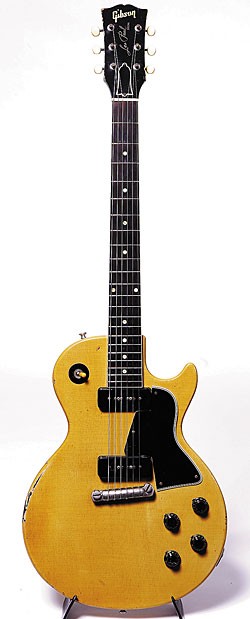
    57 Gibson Les Paul Special

    ’57 Gibson Les Paul Special. Photos: Rick Gould.
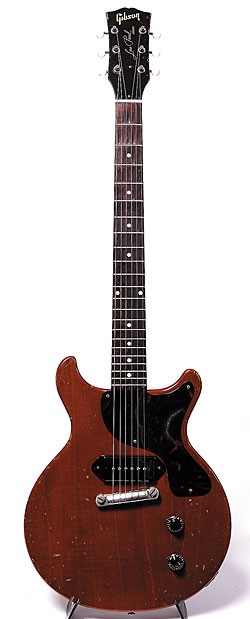
    59 LP Junior

    ’59 Gibson Les Paul Junior.

    '63 Gibson SG

    ’63 Gibson SG.

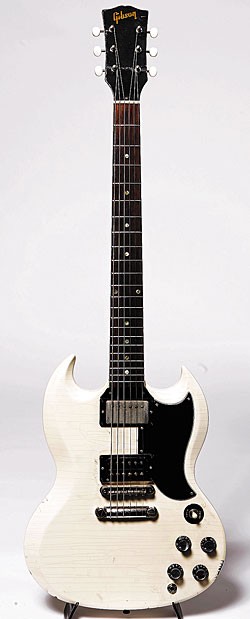
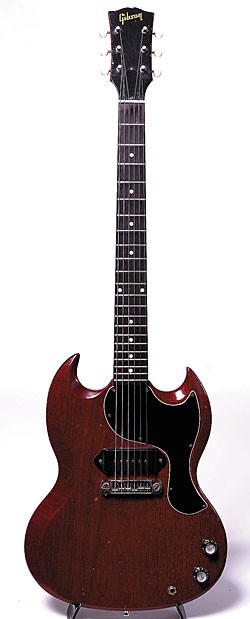
    61 Gibson SG Junior

    ’61 Gibson SG Junior.

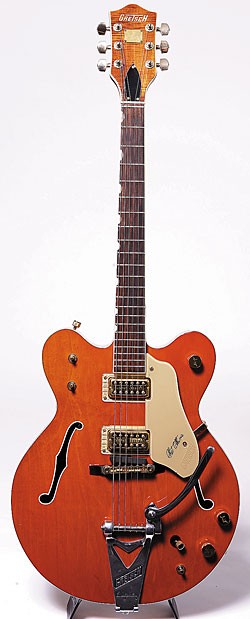
    67 Gretsch 6120

    ’67 Gretsch 6120.

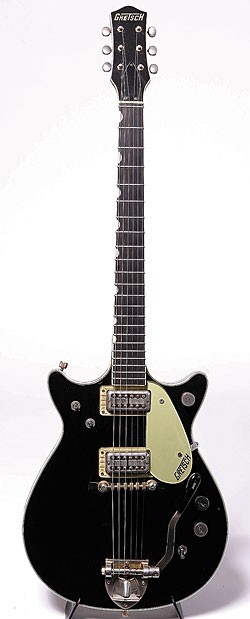
    '64 Gretsch Duo Jet.

    ’64 Gretsch Duo Jet.

    Another client of his, by chance?
    Another client, exactly… So that’s how I met Josh (Todd), our singer, and we started writing songs on a cassette four-track at his house after work every day. After three or four songs, something clicked and we started coming up with this cool stuff. I come from this background of classic rock and he’s an Orange County punk kid. I don’t think he ever sang, actually, until we had the band together – he mostly screamed! So on our very first songs, I was like, “Why don’t we just scream in the chorus and sing in the verse (laughs)!” The longer we’re together, the heavier my playing gets. And the more he sings, the better singer he becomes. It’s been a really awesome transition from point A to whatever letter we’re on now.

    It’s fun to go back and listen to our old stuff. I just go “Wow!” because you can tell the spirit was always there, but we were working at it and getting more comfortable with who we are.

    What do you remember most about making the first Buckcherry album?
    We were finally making money (laughs)! We made 15 for maybe a fifth of what we spent on the first record, just because we didn’t know the game and didn’t realize at that point that everyone was making money except us. We were very, very naive – everything was new and exciting, and we thought we were making our version of our favorite modern records. It was a lot of fun.

    Was the songwriting on the first album a team effort?
    We always opened up the songwriting to everyone in the band. I really believe in the band mentality, through and through. Even in the face of getting screwed over by former associates or attempted rip-offs or financial sodomy, I still like the team mentality more than, “Josh and I are going to go write these songs and we’ll see you guys in a few months when we’re done.” I’m not into that kind of thing. I love the collaborative aspect and I’m lucky now because I’m in a band with four other guys who are best friends – we’re tight and we look out for each other. We have a common interest – making great music; nobody cares where an idea comes from, and it’s a lot of fun to be in that environment.

    What do you see as the secret to Buckcherry’s success?
    I think the band is successful because we’re the real deal. We’re not fakin’ it at all. I think we make good records, but one of the things that cements us is our live show. You can have downloads and web pages and all that stuff, but you can’t replicate the live performance. We’ve had some rough years with band members abandoning ship, then breaking up and not being able to get a record deal, then self-funding the last album – doing it on our own and not taking “No” for an answer. And I think people realize that if we were just in it for the money or just wanted to be famous, we’d be doing something else. I think that comes across. I put 100 percent into everything; I’m a workaholic and love what I do, to the complete disregard of my health and social relationships.

    What was your first “real” guitar?
    My first “real” guitar was a bastardized ’70s Fender Tele Custom with a humbucker in the neck. I bought it off of this kid who had chiseled it out and painted it Van Halen colors. All I could think was, “For a hundred dollars, here’s a Tele Custom just like Keith Richards’.” So I bought it.

    At some point you went from having a few guitars to having a lot of guitars. Do you buy a guitar now because you want to get a certain sound, or have you bought guitars just because they’re vintage?
    Well, as a general rule anything I buy has to sound good. If it’s a dog, I don’t want it… not interested. So I generally buy stuff I’ve picked up and played and think is incredible.
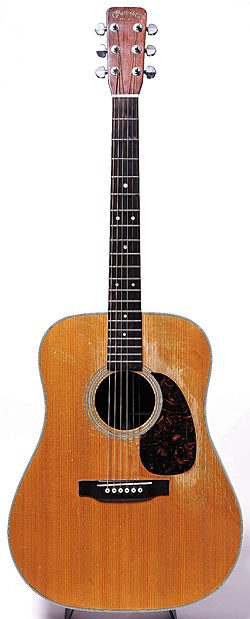
    Martin D-28

    ’64 Martin D-28. Photos: Rick Gould.

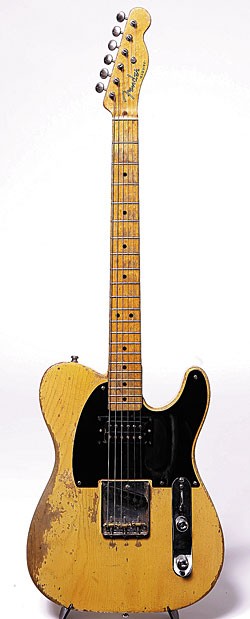
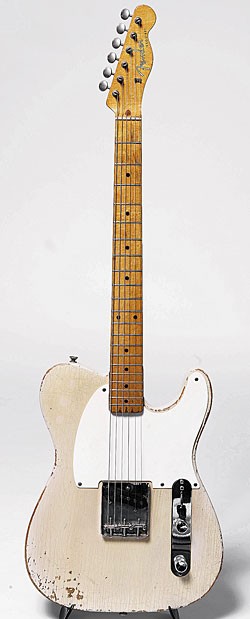
    51 Fender Esquire

    ’51 Fender Esquire.

    57 Fender Esquire

    ’57 Fender Esquire.

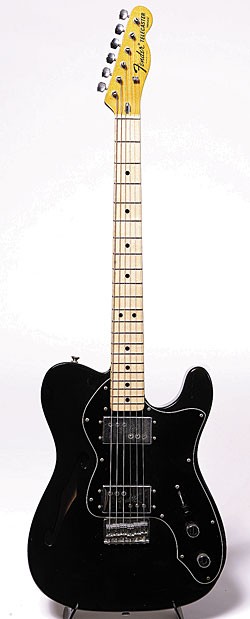
    72 Fender Telecaster Thinline

    ’72 Fender Telecaster Thinline.

    05 Zemaitis 50th Anniversary model

    ’05 Zemaitis 50th Anniversary model.

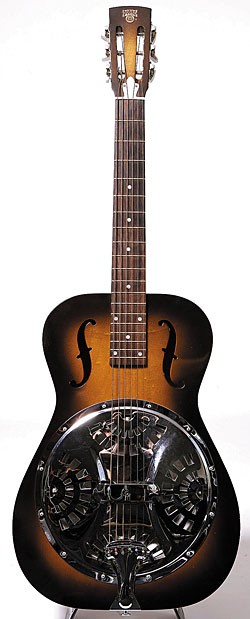
    Dobro Resonator

    Dobro Resonator.

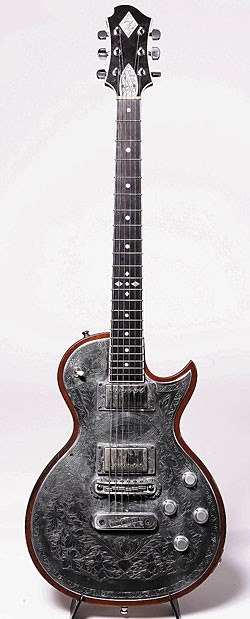
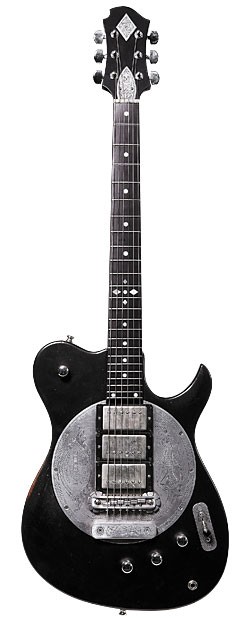
    2006 Zemaitis

    This 2006 Zemaitis disc-front was custom-made for Nelson and is one of his primary touring guitars. “I visited their custom shop in Osaka, where they make them one at a time, and I ordered this one. They took the dimensions from my ’56 Les Paul Junior neck, and I asked if there was a way I could get Danny O’Brien, who did Tony (Zemaitis’) engraving, to do a dragon on it. Nine months later, the guitar showed up, and it’s just phenomenal.”

    Which ones stand out?
    Well, that ’51 (Fender) Esquire is a good one. The (’54 Gibson Les Paul) goldtop is incredible. It’s hard to pick, you know? I just got a 3×10 tweed Fender Bandmaster that’s just ungodly sounding!

    Nice. Where did you get it?
    From the good folks at Guitar Center in Hollywood. Mike Catterino is a guy that I’ve dealt with for a long, long time. He knows what I like and he finds me stuff all the time. I’ve known Drew Berlin and Dave Belzer from Guitar Center since before the band was formed.

    Where did the white-guard Esquire come from?
    I don’t remember… I’ve had it for so long. The black-guard Esquire came from my good friend Oliver Lieber, producer, songwriter, guitarist, multi-instrumentalist extraordinaire, and a great friend. That was one of those late-night trades where we were sitting around the studio with a bunch of guitars. I call it getting “guitarded” (laughs). And I am often guitarded!

    Why does it have a humbucker in the neck?
    There’s a couple of things that aren’t right – the control plate, the rout, and the pickguard. It had a really bad rout under the pickguard. And of course I traded accordingly for it. I knew what I was getting myself into, and I just figured since it was already hammered, I was gonna make it as usable as possible. So I found an old PAF and put it in the neck – a double-black with the sticker. It’s nice.

    Do you adopt the same philosophy toward buying amps – if you’re gonna buy it, you’re gonna play it, you’re gonna record with it?
    Yes…

    Is the 3×10 Bandmaster something you figured you’d use right away?
    Oh, yeah. It’s a sound I didn’t have in my arsenal, and I’d been looking for one for a while. I had the word out, and I just stumbled on it. You know, it’s always like, “Oh, s**t! Now what (laughs)?!” Careful what you wish for! I have a really good relationship with Dave Hinson at Killer Vintage in St. Louis, and every time I’m in town we’ll go out to lunch and we’ll kick tires and I’ll end up buying something off of him. He’s the kind of guy, last time I walked in the shop I said, “You know, if you ever come across an original Matchless DC30…” and he said, “Oh, like that one right there?” I’m like, “Oh maaaan!” (laughs). He takes care of me. He’s a good guy.

    When you’re recording songs, at what point do you hear which guitar and amp you’re going to use on a track? Or do you plug into something and build a riff around it?
    Usually, I kinda have an idea in my head how it’s all supposed to sound. And the madness is in chasing it and getting it to come out of the speakers. I know how everything I have sounds, so I kinda know what to reach for. Which is almost like painting, in a way; you know how the colors are going to mix. It’s always a happy surprise, and I certainly don’t know everything. But part of the fun is “Hey, let’s plug that in and see what happens.”

    Reviewing some of Buckcherry’s most popular songs, do you remember which guitars and amps you used on “Lit Up” and “Check Your Head” from the first album?
    Almost the entire record was a 1966 45-watt Park head, which is like a JTM 45. Steve Jones, who was co-producer on that record, had a modified early-’70s 100-watt (Marshall) Super Lead, and I don’t know what was up with the modification, but it sounded incredible. So those two amps, basically, did the whole record. And a lot of times for the clean sound I just rolled down the guitar’s volume knob.
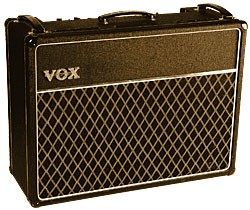
    66 Vox AC30

    ’66 Vox AC30. Photos: Rick Gould.

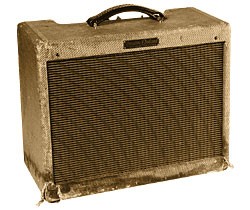
    1960 Fender Deluxe

    1960 Fender Deluxe.

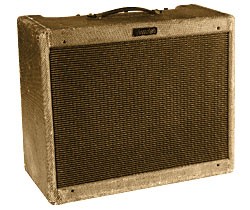
    55 Fender Super

    ’55 Fender Super.

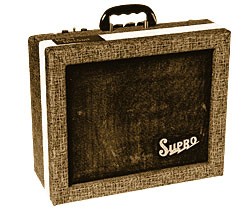
    60s Supro 1x12

    60s Supro 1×12.

    Which guitar were you playing?
    A lot of my sunburst Les Paul Junior. That, and at the time I had a ’71 reissue (Gibson Les Paul) goldtop with the wraparound (tailpiece). Back then, I didn’t have a lot of guitars. Another was a ’97 Gibson Custom Shop ’58 Les Paul reissue that I later had refinished in a Duane Allman-style tobacco sunburst. That was my other primary guitar when I wasn’t using P-90s, and it’s my main Les Paul on the road. When I bought it, it was yellow, and I wasn’t knocked out by the color. But it had this gorgeous quilted top. It was cool, but I found myself wanting this dark-sunburst guitar and I couldn’t find one, so I sent it to the guys at RS Guitarworks, in Kentucky, and they gave it the once-over. I loved the guitar before, but I love it even more now.

    Many guitar collectors can relate to wanting something strictly for its color…
    I saw these old pictures of Paul Kossoff with this dark-sunburst Les Paul with ridiculous flame… he was just a kid! I wonder if he even knew? Free is one of my all-time favorite rock and roll bands – lightning in a bottle!

    Which guitars and amps do we hear most on 15?
    You hear a lot of my Gretsch 6120, especially on rhythm tracks. And now with the Bandmaster, I can get the Pete Townsend thing going (laughs)! You also hear a lot of that 50-watt small-box Marshall plexi, which is used on the first two records, as well. The black-guard Esquire would be the next, through the AC30. Most of the leads are cut with the Super Lead 100 – in the room with a cabinet, just gettin’ all the good love, blowing up headphones left and right (laughs)! The Les Paul is all over the record. And then, of course, the tobacco-sunburst Junior. I didn’t have any of the Zemaitis guitars when we did it.

    In a way, I like to bring them all in, but at the same time I don’t want to have too many other options – a couple good P-90 guitars, a good Tele, a nice Strat, and a few Gretsches. That was enough to keep me confused for days!

    Is there any guitar and amp combinations on 15 that we might find surprising?
    You know what? A lot of my guitar solos were a Strat.

    Really?
    Yes. A lot of the melody lines that I overdubbed, and things like that, was a Strat. I went through a little Strat kick there. I don’t have any old ones, because I’m not a Strat guy. But I have a couple of phenomenal copies by Bill Nash. He makes a fine, fine guitar.

    How did you get into the new Zemaitis guitars?
    I was always a fan, and I tried to have Tony (Zemaitis, the late British luthier) make me one before he died. Some of the people I was working with reached out to them in England and I think he had just had a heart attack and wasn’t sure if he was going to retire, or he was already in semi-retirement. Shortly thereafter, unfortunately, he passed away.

    A few years later, we were in Japan – we had just released 15 – and I was looking through one of the Japanese guitar mags and saw an ad for Zemaitis. So I got hold of the company and we went down to their showroom, and we started a relationship. I just started playing their guitars, and fell in love with them. As we became more and more successful, especially over there, they asked my opinion on more guitars, so I began to acquire a few.

    Tony’s guitars were such a work of art, such a handmade tradition, and these are a little bit more “finished.” And on the road, they’re so reliable and consistent and never really have issues, no quirkiness as far as tuning and fretting and all that stuff, it’s just a really well-made guitar. They’ve been a really great company to work with. And I don’t need anything for free – I have enough guitars. I play them because they’re great.
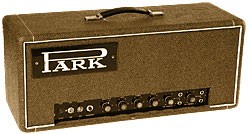
    66 Park

    ’66 Park; this 45-watt amp has been employed heavily on Buckcherry recording sessions. Photos: Rick Gould.
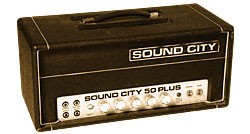
    70s Sound City 50 Plus

    ’70s Sound City 50 Plus.

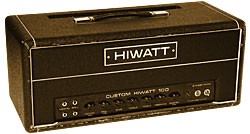
    72 HiWatt Custom 100

    ’72 HiWatt Custom 100.

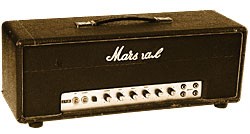
    67 Marshall JTM (50-watt)

    ’67 Marshall JTM (50-watt).

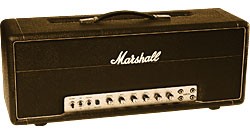
    73 Marshall Super Lead

    ’73 Marshall Super Lead.

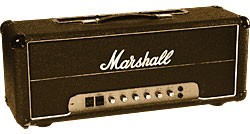
    78 Marshall Mk II

    ’78 Marshall Mk II.

    Are you on the hunt for any particular vintage pieces right now?
    (Groans)… I’m always looking. I still don’t have the right black Tele Custom. And a great Watkins Dominator (amp). But outside of a ‘Burst, I don’t know if there’s anything else on my wish list right now… But if you give me a minute (laughs), there’s always something!

    Do you customize your newer guitars?
    Yeah, usually one of the first things that happens is I’ll get one of the upgrade kits from RS Guitar Works. They are really great parts. And with most of the newer guitars, I throw in WCR pickups. Jim Wagner has captured something with them… there’s just a little more output than a standard PAF-style, but it’s still open and you still hear the guitar, you still hear the amps. They’re incredible, I can’t say enough.

    You keep your tech pretty busy!
    I work on my own stuff. I make my own cables, I wire my own pickups, and I set up my own guitars, everything short of re-finishing and refretting. I’m not afraid to get in there and twist a truss rod. On the newer stuff, everything usually gets an upgrade, the old stuff I don’t really believe in changing. If it doesn’t sound good, or if it needs new pickups or something, I’m not going to own the guitar.

    You’re getting set to work on the followup to 15. Are you far enough along to know when it might be released?
    Not really. But we work quickly, and I do like to make demos because I want to hear everything. We did 15 in two weeks, and I’m hoping we’ll really be extravagant with the next one and do it in three (laughs)! We’ll take our time.

    Working quickly works well for you, so why mess with it?
    Yeah, if it ain’t broke, ya’ know. But this is our thing and we’re really proud of it. As long as the five of us are getting off on it, man, that’s all that matters. The fact we’ve sold more than a million records in the U.S. is a happy accident. And the fact it sold the way it has and we’ve toured the way we have is sweet revenge (laughs). And I say that tongue-in-cheek; it’s not about revenge, it’s just about us enjoying ourselves and having fun and gettin’ off on the music.

    Do you get the feeling most bands these days don’t care about making “whole” albums?
    Well, I think to achieve a certain level of mass consumption, you’ve gotta get the suits excited – and the suits don’t get excited about your 11-song/45-minute masterpiece. They want something that’s gonna be downloaded a couple million times and have a great-looking video. But there are artists out there… I think we’re trying to do both, ya’ know? I want to make great f***in’ records that you listen to and want to hear again. And I also want to be a ring tone and have a nice house and all that other stuff. But at the end of the day, we’re not willing to do it on anyone’s terms but our own.


    This article originally appeared in VG‘s March 2008 issue. All copyrights are by the author and Vintage Guitar magazine. Unauthorized replication or use is strictly prohibited.


    Buckcherry Rescue Me
  • Jol Dantzig

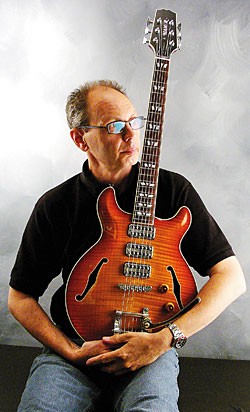
    Jol Dantzig with a Hamer Monaco III.

    Jol Dantzig with a Hamer Monaco III. Photos courtesy Jol Dantzig.

    When the Hamer Standard first appeared in an unassuming black-and-white ad in a guitar magazine in the mid 1970s, most readers weren’t sure what to make of it. Shaped like a Gibson Explorer and finished like a late-’50s Les Paul Standard, the Hamer was unlike anything guitarheads had ever seen.

    It’s difficult to argue the point that the Illinois-based Hamer company, which started as a vintage guitar shop, was at the forefront of what Jol Dantzig’s present-day design company calls the “creation of the ‘Modern Vintage’ boutique guitar niche market.” Along with partner Frank Untermeyer, Dantzig created and marketed innovative and eyecatching instruments that epitomized the term “retro-vibe.”

    “We were dealing with the top players,” Dantzig recently told VG. “And prices had climbed to where we thought it would be too insane to take a museum-piece guitar out on the road, where it could be broken or stolen. So our idea was to create a vintage guitar alternative – something a pro could play that would have the look, feel, romance, build quality, and sound of a vintage guitar.”

    Other cutting-edge Hamer designs over the years included the first electric/acoustic hybrid (the Duo-Tone), and the first 12-string bass. But Dantzig is most proud of the concept of what Hamer guitars represented in the marketplace.

    “When we came out with the Standard, it was half the price of a vintage guitar, but almost twice the price of the most expensive new Les Paul. So in one fell swoop, we not only created the ‘custom shop’ or ’boutique’ concept, we also threw ourselves into a more exclusive [market] than brand new mass-produced guitars.”

    Hamer was sold to the Kaman Music company, owners of Ovation and other brands, in 1988. Dantzig and Untermeyer stayed on, and the Hamer factory in Arlington Heights, Illinois, remained open. In the early ’90s, Dantzig moved to northern California and served as a consultant to Kaman and other musical instrument companies.

    “I got involved in websites and internet content,” he detailed. “It was a full-blown graphic design company. We did newsletters, instruction manuals for companies like Nady, Modulus-Graphite, Chandler, EMG… Mesa Boogie was a big client. We worked outside the musical instrument field, as well, with electronics and publishing companies. Of course, my love is guitars and motor sports, so those are my two primary areas of function; I get involved in those on a wider level.”

    In the late ’90s, Dantzig relocated his design company to Connecticut, home state of Kaman, in order to strengthen his relationship with Hamer.

    Jol Dantzig

    Dantzig spending some QT with a few more of his favorite things.

    “Frank had been running Hamer in Chicago, and Kaman promoted him to general manager at Ovation in Connecticut. So he was commuting. It was then decided that all of the operations would be consolidated in Connecticut, and we had space at the Ovation ‘campus.’ Hamer moved into that space, and Frank called and asked if I would help tidy things up.”

    Dantzig noted that Hamer had increased in size by the time he moved to California, and that the company was all over the map concerning instrument styles.

    “We weren’t as focused as in the beginning, and certainly not as focused as we are now. When we moved to Connecticut, we reduced the size of our shop by two-thirds and kept only the top 10 people. We moved into a smaller shop, which makes it much more like the beginning – only better.”

    Asked about any favorite models that have been designed and marketed since his reaffliation, Dantzig said, “The guitar I’m really proud of now is the Monaco III, and the new Monaco Bass. I also love the Newport, which we introduced in ’99 – our first proper semi-hollow. And there’s the Improv archtop. We wanted to build the Improv from the very beginning, but felt it necessary to take certain steps leading up to it. The public thought of Hamer as a hard-rock/heavy metal guitar builder, and rather than jump full-blown into a jazz guitar, we took baby steps. That’s why we started with the Newport and all of its variations.”

    These days, Dantzig also conducts seminars at Hamer dealerships, which he calls the “Guru Tour.”

    “It’s one part guitar-building clinic, one part history lesson,” he detailed. “We felt that there are a lot of people who are interested in guitar construction and the history of how it developed. It kind of grew out of our open house; once a year we’d let the fan club in, and I’d give a presentation. Last year, Tom Wheeler was our special guest. He helped explain how the guitar business got to where it is now, and it dovetailed nicely with the history of Hamer. I realized a lot of people didn’t know that story, so we thought it would be fun to go out and visit dealers, and support the people who are supporting us. It gives people who haven’t been exposed to Hamer a look at where Hamer came from, but it’s also an overview and celebration of guitar history; it’s not 100 percent about Hamer.”

    The Hamer facility today maintains a custom shop vibe, and Dantzig notes the size of Hamer’s production area is still smaller than the custom shops of many major manufacturers, much less said manufacturers’ mass-production facilities. In his mind, Hamer has flown under the radar for decades, and is still working to design and create innovative professional-grade instruments in today’s market, just as he was doing in the 1970s.


    This article originally appeared in VG‘s November 2005 issue. All copyrights are by the author and Vintage Guitar magazine. Unauthorized replication or use is strictly prohibited.

  • June 2011

    June 2011


    b>June 2011 VOL. 25 NO. 08

    Features
    A Sunburst mystery
    what really happened to mike bloomfield’s missing guitar?
    In the pantheon of guitars and guitar music, certain names bear an unmistakable weight. Michael Bloomfield is a prime example, and popular mythology has created many stories on the whereabouts of his ’59 Les Paul Standard – the renowned “Bloomfield ’Burst.” This one might be the most plausible. By John Picard

    Most Valuable Amplifiers
    We continue VG’s 25th Anniversary celebration with a list of the 25 most valuable amplifiers – those that helped create the tones made famous by virtually every genre of pop music! By Dave Hunter

    Zakk Wylde
    Untamed By Time
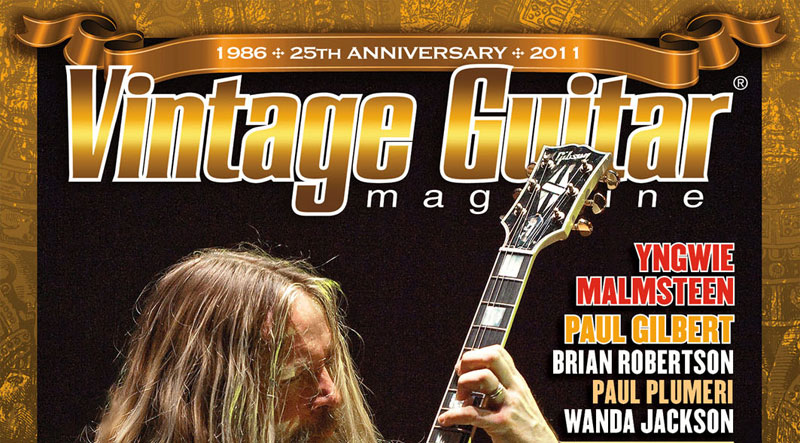
    In the six years since last we spoke with him, the stellar rock guitarist has continued to guide Black Label Society, developed several unique guitars with Gibson, parted with longtime musical collaborator Ozzy Osbourne… and that ain’t all! We recently spoke as he was rounding up gear for a world tour. By Ward Meeker

    The S.S. Stewart “Dramatic News” Presentation Banjo
    In the late 1800s, the S.S. Stewart company helped change the image of the five-string banjo to serious classical instrument. This one was a contest prize that illustrates the level of promotion – as well as quality of craftsmanship and design – that made Stewart a leader in the era. By George Gruhn and Walter Carter

    The Aria Pro Ii Rev-Sound Rs-750
    A near case-study of late ’70s/early ’80s guitar construction, this trendy example has an organic shape, non-traditional woods, a natural finish, sophisticated electronics, and novel neck construction. By Michael Wright

    Peavey’s Impact Series Basses
    As a group, Peavey’s mid-’80s basses – the Foundation, Patriot, and Fury – did a fine job forging a path as the company headed into its second decade producing working-class instruments. By Willie G. Moseley

    The 1963-’67 Fender Twin Reverb
    The standard for big, clean twang, it’s the ultimate country amp – and much more! Crank it on a big stage and it issues an ungodly sweet, trenchant, singing lead tone that has seduced more than a few great blues and rock soloists. By Dave Hunter


    First Fret
    Reader Mail

    News and Notes
    Fender Center to Host Blues Camp for Kids, Frampton Slates Tour, Dad’s Day Photo Call; In Memoriam; Stolen Gear, More!

    Paul Gilbert
    The Return of Mr. Big

    Wanda Jackson
    Sweet Lady, “Nasty” Voice

    Ask Zac

    Todd Clouser
    Let ’Em PLay!

    VG On Facebook 

    Nick Bennett
    Family Matters

    Yngwie Malmsteen
    The King of Shred Returns

    Brian Robertson
    Thin Lizzy Hero

    Paul Plumeri
    Tight Trenton Blues


    Departments
    Vintage Guitar Price Guide

    Builder Profile

    Drew & Sebastian Guitars

    Upcoming Events

    Dealer Showcase

    Vintage Guitar Classified Ads

    Dealer Directory

    Readers Gallery


    Columns
    The (Way) Back Beat
    Epi-Phonic Echoes By Peter S. Kohman

    Acousticville
    No-Flare Photo Share, Part 2 By Steven Stone

    Fretprints
    Kenny Wayne Shepherd By Wolf Marshall

    Guitars With guts
    A 1929 Interview with Santos Hernandez By R.E. Bruné

    Tech
    Talkin’ Amps with…
    Sergio Hamernik: Don’t Blow That Tranny!, Part 2 By David Jung

    Shop of Hard Knocks
    Applying Tint to a Neck By Will Kelly


    Reviews
    The VG Hit List
    CD Reviews: Thin Lizzy, Robbie Robertson, Los Fabulocos with Kid Ramos, Jim Hall, Bob Marley, Nick Lowe, more!

    Vintage Guitar Gear Reviews
    Jon Kammerer Leo, Line6 POD HD500, Metal Pedals Bomb Shell, Pigtronix Aria Disnortion, Earthquake Devices Sea Machine, Fuzzhugger(fx) A-B Synth, Catalinbread Stereo Semaphore Tremolo

    Gearin’ Up!
    The latest cool new stuff!

  • Clapton Guitars Bring $2.5 million at Bonham’s

    Collectors, fans and musicians gathered at Bonhams New York yesterday for a sale of 75 guitars and 55 amps from the collection of Eric Clapton. The items were auctioned to benefit The Crossroads Centre in Antigua. With 100 percent of the lots sold, the final auction total more than tripled pre-sale expectations, with proceeds going to the drug and alcohol rehabilitation centre founded by Clapton in 1998.

    Bidders from all four corners of the globe battled throughout the 4 ½ hour auction and included clients from the U.S., Asia, Australasia, UK, Europe, and the Caribbean. Notably, a private Russian Eric Clapton fan and collector showed keen interest in the room and Asian participants included those from Japan, Korea and Hong Kong.

    “It has been a privilege and an honour working on this exceptional sale and being associated with one of the most iconic living musicians, Eric Clapton,” said Jon Baddeley, Worldwide Head of Collectables at Bonhams. “Arguably the greatest guitarist of all time, Eric Clapton inspires an ever-expanding fan base, many of whom made the journey to Bonhams in New York over the past few days and joined us for this remarkable auction. We were delighted to play our part in raising funds for The Crossroads Centre, a charity with a noble mission and a cause that remains very close to Eric’s heart.”

    Guitar highlights included a 1948 Gibson L-5P that sold for $82,960 and a 2005 Zemaitis S22BP 3S that sold for $75,640. The top amp of the sale was a pair of 1997 Fender Twin Amps that sold for $42,700.
  • Godlyke Providence DLY-4 Chrono Delay

    Godlyke’s Providence DLY-4 Chrono Delay provides tap-to-delay settings and can memorize two delay times and toggle between them. The direct signal stays in the analog domain from input to output, passing through the acclaimed Providence Vitalizer switching circuit so that no signal degradation occurs. A high-performance analog mixer circuit recombines direct signal with delayed signal.

    After the delay signal is converted back to analog format, it is processed via analog Echo Hardness, Feedback, and Mix controls for a blend with the direct signal. The result is a high-resolution delay effect. The Chrono Delay features a simple interface that allows fast, intuitive user control. Learn more at godlyke.com.

    Providence DLY-4
    Providence DLY-4
  • Journey to Release Album, Tour

    Journey is set to release its latest album of new material, Eclipse. The album will be released in the U.S. and Canada on May 24 exclusively at Walmart and beginning June 3 in Europe on Frontiers Records. To follow the release of Eclipse, Journey will launch the Eclipse Tour with Foreigner, and special guest Night Ranger, beginning July 21 at Rio Tinto Stadium in Salt Lake City, UT. Fans can expect to hear new songs from Eclipse as well as classics such as “Don’t Stop Believin’,” “Any Way You Want It,” “Faithfully,” “Lights,” “Separate Ways,” Wheel In The Sky,” and many more. The Eclipse Tour dates are listed below.

    “I’m in love with this record, which I haven’t said about one of our albums for a long time,” says founding member and lead guitarist, Neal Schon. “It’s a rock record and it sounds amazing.” Commenting on the upcoming tour, Schon continued, “We’ve got a lot of hits to play and there’s plenty of time to do some new stuff too, so we’re gonna mix it up. We haven’t toured with Foreigner for over 10 years, so we’re really looking forward to this run.”

    Tickets for the tour go on sale March 11.  Check journeymusic.com for more.


  • Tab Benoit releases To Release Medicine April 19

    Tab Benoit will release a new album tiled Medicine, his seventh solo release on Telarc International, April 19. The disc is an 11-track recording with seven new Benoit originals co-written with Anders Osborne, and includes Osborne on guitar, Brady Blade on drums, Ivan Neville on keyboards, and Michael Doucet of BeauSoleil on fiddle.


  • Steely Dan “Shuffle Diplomacy Twenty Eleven” Tour

    Steely Dan
    Steely Dan

    Rock & Roll Hall of Famers Steely Dan dazzled the public and critics alike in 2009 with their classic-albums-in-full “Rent PartyTour.” Now the band is responding to overwhelming popular demand andreturning to give fans more Steely Dan action with a new summer tour, Shuffle Diplomacy Twenty Eleven.  This year’s tour, which kicks off in Seattle on July 2 and concludes in Boston on September 28, will showcase greatest hits and deep cuts alike; plus select cities will feature performances of complete albums plus fan voting online to determine a night’s set.  Steely Dan masterminds Walter Becker and Donald Fagen have announced this year’s program will also include special guests, and an idealistic strategy for World Peace.  Acclaimed jazz artist Sam Yahel is on board as the tour’s main support act.

    For Shuffle Diplomacy Twenty Eleven, Donald Fagen and Walter Becker are back with their awesome group of players, now dubbed the Miles High Big Band, and their saucy backup trio, the Embassy Brats. The Band and the Brats include Keith Carlock (drums); Jon Herington (guitar); Freddie Washington (bass); Jim Beard (keys); Michael Leonhart, Walt Weiskopf, Roger Rosenberg and Jim Pugh (horns); plus background singers Carolyn Leonhart, Cindy Mizelle, and Catherine Russell.

    For more, visit www.steelydan.com.

    STEELY DAN 2011 U.S./CANADA TOUR DATES


    Sat. July 2 – Seattle, WA – WaMu Theater

    Sun. July 3 – Portland, OR – Arlene Schnitzer Concert Hall

    Tues. July 5  – Saratoga, CA –  The Mountain Winery

    Wed. July 6 – Santa Barbara, CA – Santa Barbara Bowl

    Fri. July 8 – Los Angeles, CA –  Greek Theatre

    Sat. July 9 –  Los Angeles, CA –  Greek Theatre

    Tues. July 12 – Tulsa, OK – Brady Theater

    Wed. July 13 – Thackerville, OK – Winstar Casino

    Fri. July 15 –  Indianapolis, IN – Murat Theatre

    Sat. July 16 – Detroit, MI –  Fox Theatre

    Tues. July 19 –  Cincinnati, OH – PNC Pavilion

    Wed. July 20 –  Toledo, OH – Toledo Zoo

    Fri. July 22 –  Toronto, ON –  Molson Amphitheater

    Sat. July 23 – Canandaigua, NY – Constellation Brands

    Mon. July 25 – Danbury, CT – Ives Center

    Tues. July 26 –  Lenox, MA – Tanglewood

    Fri. July 29 – Mashantucket, CT – MGM Grand at Foxwoods

    Sat. July 30 – Atlantic City, NJ – Borgata Event Center

    Tues. August 2 – Columbia, MD –  Merriweather Post Pavilion

    Thurs. August 4 – Durham, NC – Durham Performing Arts Center

    Sat. August 6 – Atlanta, GA –  Chastain Park

    Sun. August 7 – Atlanta, GA – Chastain Park

    Wed. August 10 – Bethlehem, PA – Musikfest

    Fri. August 12 – Highland Park, IL – Ravinia Festival

    Sat. August 13 – Highland Park, IL –  Ravinia Festival

    Mon. August 15 – Interlochen, MI –  Kresge Auditorium

    Wed. August 17 – Louisville, KY – Palace Theater

    Fri. August 19 –  Nashville, TN – The Woods at Fontanel

    Sat. August 20 – Tuscaloosa, AL – Tuscaloosa Amphitheater

    Sun. August 21 – Orange Beach, AL –  Snowden Grove Amphitheatre

    Wed. August 24 – St. Louis, MO – Fox Theatre

    Thurs. August 25 – Kansas City, MO –  Starlight Theatre

    Sat. August 27 – Milwaukee, WI – Riverside Theater

    Sun. August 28 –  Milwaukee, WI – Riverside Theater

    Tues. August 30 – Minneapolis, MN – MN State Fair

    Wed. August 31 – Omaha, NE – Orpheum Theater

    Sat.  September 3 – Aspen, CO  – Jazz Aspen

    Fri.  September 9  – Upper Darby, PA –  Tower Theatre

    Sat. September 10 – Upper Darby, PA – Tower Theatre

    Tues. September 13 – New York, NY – Beacon Theatre

    Wed. September 14 – New York, NY – Beacon Theatre

    Fri. September 16  – New York, NY – Beacon Theatre

    Sat. September 17 – New York, NY – Beacon Theatre

    Tues. September 27 – Boston, MA – Wang Theatre

    Wed. September 28  – Boston, MA  – Wang Theatre


  • May 2011

    April 2011


    This month in VG

    We feature the 25 greatest guitar songs of the ’70s, as chosen via a poll at VintageGuitar.com. We also review the greatest guitar tracks of Gary Moore, along with previously unpublished interview with the Irish guitar hero who passed away February 6. We also tell you about an amazing exhibit of stringed instruments at New York’s Metropolitan Museum of Art, which is highlighted by three particular archtop guitars. George Gruhn and Walter Carter detail how the Epiphone Soloist Emperor was created in a time when its builder was in a heated battle with Gibson to determine who made the biggest and best archtop. Then, Michael Wright talks about the unconsciously-retro Espana EL-31, Willie Moseley extolls the virtues of the Harmony H44 Stratotone, and Dave Hunter gives us an up-close and personal look at a 1982 Dumble OD Special played by Robben Ford.

    We also remember famed lap-steel master Buddy Charleton, and then talk about new music with Kevin Eubanks, Gurf Morlix, Claude Hay, Frank Tanton, and
    Robbie Calvo. Wolf Marshall breaks down three of the coolest licks ever recorded by Joe Perry, and we tell you who jammed with who at this year’s Deke’s Guitar Geek Festival.

    If it’s time to upgrade your gear, take a look at our reviews of the Reverend Rick Vito, the Bluesman Vintage 3-Speed Coupe, K&K Meridian Pro, the Naylor Heads-Up Strap, MTD Kingston CRB/Saratoga basses, and the TC Electronic BH500.

    All this and much more are in the May issue of VG.

    FEATURES

    The 25 Most Valuable Guitars
    There are few collectibles in modern pop culture that are as cool as guitars. They’re functional, tactile art that inspires players and music fans alike. But beyond fond memories, for some, guitars serve as investments. Here’s a look at 25 guitars that, thanks to certain players, songs, and the laws of supply and demand, have become exceedingly valuable.

    Pretty in Pink
    Jay Jay French Aligns Industry Giants for a Cause
    In 1999, guitarist Jay Jay French was forced to examine his priorities when his six-year-old daughter, Samantha, was diagnosed with uveitis. And he came up with a very cool way to raise awareness of the condition. By Ward Meeker

    Lee Dickson
    Three Decades with Clapton
    For more than 30 years, he served as guitar tech and assistant to Eric Clapton. Directly responsible for the care and feeding of some of the most iconic guitars in rock music, his wards bore names like Blackie and Brownie, the Crashocaster, and others! By Will Kelly

    Three Larsons
    At first glance, these guitars appear to be a different sizes of the same model. However, when it comes to guitars built by the Larson Brothers, nothing is that simple. By George Gruhn and Walter Carter

    The Veillette-Citron Shark
    It’s not often a guitar is said to have been inspired by a TV show, but that is the case with this one… in a pretty roundabout way! By Michael Wright

    One Fudged 335
    Vinnie Martell’s ‘63 Gibson
    When it entered the market in the spring of ’58, Gibson’s ES-335TD was designed to get “bite” while having a lighter weight. This one is special because Vinnie Martell used it to record Vanilla Fudge’s “You Keep Me Hangin’ On” and other tracks. By Willie G. Moseley

    The Orange GRO100
    Orange Amplifiers were born soon after Marshall and made a name for themselves with a hip image that was impossible to miss. The Graphic Overdrive, or GRO100, is one of the company’s classics. By Dave Hunter

    DEPARTMENTS

    The Great VG 25th Anniversary Giveaway
    Win a b3 Metal-XS guitar and Two-Rock Studio Pro amp valued at $5,594, from Premier Builder’s Guild!

    Vintage Guitar Price Guide

    Builder Profile
    Strobel Guitars

    Upcoming Events

    Dealer Showcase

    Vintage Guitar Classified Ads

    Dealer Directory

    Readers Gallery

    FIRST FRET

    Reader Mail

    News and Notes
    Fretware Turns 40, Archtop Builders Exhibit, Mississippi Honors Wilder, Saint Blues Suspends Imports; In Memoriam, More!

    Mark Sganga
    Brazilian Trip
    By John Heidt

    John Cipollina on DVD
    Quicksilver’s Stylish Animal
    By Dan Forte

    The Mike Eldred Trio
    Ecletic Virtuoso
    By Michael Dregni

    Ask Zac
    By Zac Childs

    Steve Wariner
    Hooked on Instrumentals?
    By Willie G. Moseley

    VG on Facebook

    Jeff Berlin
    The Father of Fast
    By Willie G. Moseley

    Dave Flett
    By Pete Prown

    NAMM 2011
    Amped in Anaheim
    By Preston Gratiot

    COLUMNS

    The (Way) Back Beat
    Vintage Electric Adventures
    Magnatone Moments, Part 3
    By Peter S. Kohman

    Q&A With George Gruhn

    Acousticville
    Instrument Marketing
    By Steven Stone

    Fretprints
    Steely Dan
    By Wolf Marshall

    TECH

    Shop of Hard Knocks
    Shield Yourself!
    By Will Kelly

    REVIEWS

    The VG Hit List
    CD and DVD Reviews: Drive-By Truckers, Jinx Jones, The Grascals, The Doors with Albert King, Star Guitars, more!

    Check This Action
    Supercalguitarilistic
    By Dan Forte

    Vintage Guitar Gear Reviews
    Epiphone SG, D. Allen pickups, Hoyer ERN Prestige, Leprechaun pedalboards, Seymour Duncan Mag Mic, Whirlwind effects

    Gearin’ Up!
    The latest cool new stuff!

  • April 2011

    FEATURES

    The 25 Most Valuable Guitars
    There are few collectibles in modern pop culture that are as cool as guitars. They’re functional, tactile art that inspires players and music fans alike. But beyond fond memories, for some, guitars serve as investments. Here’s a look at 25 guitars that, thanks to certain players, songs, and the laws of supply and demand, have become exceedingly valuable.

    Pretty in Pink
    Jay Jay French Aligns Industry Giants for a Cause
    In 1999, guitarist Jay Jay French was forced to examine his priorities when his six-year-old daughter, Samantha, was diagnosed with uveitis. And he came up with a very cool way to raise awareness of the condition. By Ward Meeker

    Lee Dickson
    Three Decades with Clapton
    For more than 30 years, he served as guitar tech and assistant to Eric Clapton. Directly responsible for the care and feeding of some of the most iconic guitars in rock music, his wards bore names like Blackie and Brownie, the Crashocaster, and others! By Will Kelly

    Three Larsons
    At first glance, these guitars appear to be a different sizes of the same model. However, when it comes to guitars built by the Larson Brothers, nothing is that simple. By George Gruhn and Walter Carter

    The Veillette-Citron Shark
    It’s not often a guitar is said to have been inspired by a TV show, but that is the case with this one… in a pretty roundabout way! By Michael Wright

    One Fudged 335
    Vinnie Martell’s ‘63 Gibson
    When it entered the market in the spring of ’58, Gibson’s ES-335TD was designed to get “bite” while having a lighter weight. This one is special because Vinnie Martell used it to record Vanilla Fudge’s “You Keep Me Hangin’ On” and other tracks. By Willie G. Moseley

    The Orange GRO100
    Orange Amplifiers were born soon after Marshall and made a name for themselves with a hip image that was impossible to miss. The Graphic Overdrive, or GRO100, is one of the company’s classics. By Dave Hunter

    DEPARTMENTS

    The Great VG 25th Anniversary Giveaway
    Win a b3 Metal-XS guitar and Two-Rock Studio Pro amp valued at $5,594, from Premier Builder’s Guild!

    Vintage Guitar Price Guide

    Builder Profile
    Strobel Guitars

    Upcoming Events

    Dealer Showcase

    Vintage Guitar Classified Ads

    Dealer Directory

    Readers Gallery

    FIRST FRET

    Reader Mail

    News and Notes
    Fretware Turns 40, Archtop Builders Exhibit, Mississippi Honors Wilder, Saint Blues Suspends Imports; In Memoriam, More!

    Mark Sganga
    Brazilian Trip
    By John Heidt

    John Cipollina on DVD
    Quicksilver’s Stylish Animal
    By Dan Forte

    The Mike Eldred Trio
    Ecletic Virtuoso
    By Michael Dregni

    Ask Zac
    By Zac Childs

    Steve Wariner
    Hooked on Instrumentals?
    By Willie G. Moseley

    VG on Facebook

    Jeff Berlin
    The Father of Fast
    By Willie G. Moseley

    Dave Flett
    By Pete Prown

    NAMM 2011
    Amped in Anaheim
    By Preston Gratiot

    COLUMNS

    The (Way) Back Beat
    Vintage Electric Adventures
    Magnatone Moments, Part 3
    By Peter S. Kohman

    Q&A With George Gruhn

    Acousticville
    Instrument Marketing
    By Steven Stone

    Fretprints
    Steely Dan
    By Wolf Marshall

    TECH

    Shop of Hard Knocks
    Shield Yourself!
    By Will Kelly

    REVIEWS

    The VG Hit List
    CD and DVD Reviews: Drive-By Truckers, Jinx Jones, The Grascals, The Doors with Albert King, Star Guitars, more!

    Check This Action
    Supercalguitarilistic
    By Dan Forte

    Vintage Guitar Gear Reviews
    Epiphone SG, D. Allen pickups, Hoyer ERN Prestige, Leprechaun pedalboards, Seymour Duncan Mag Mic, Whirlwind effects

    Gearin’ Up!
    The latest cool new stuff!