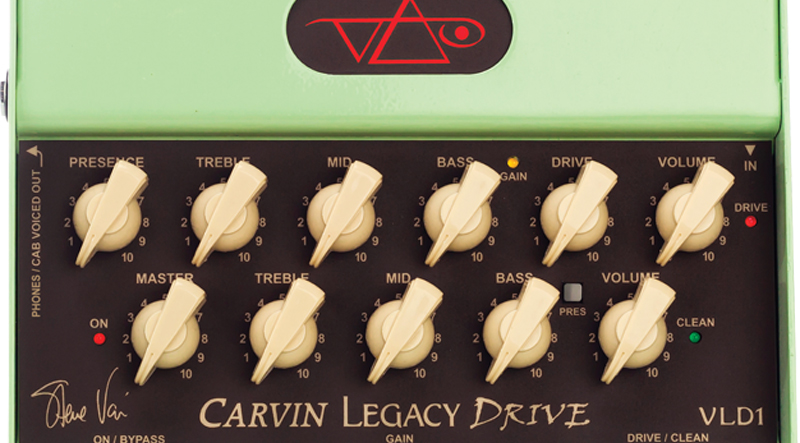
When Steve Vai needed a portable preamp to take on the road to emulate his signature amp tones, Carvin Audio obliged. Their VLD1 Legacy Drive is Vai’s Legacy amplifier in a box – and it travels a whole lot easier than a half stack.
Using 12AX7 tubes and circuitry found in Vai’s signature amps, the VLD1 unleashes thick lead tones and ballsy cleans. It’s housed in a solid metal enclosure with two-channels like the Legacy 1. With a clean and dirty channel, it also has the second gain stage of the Legacy 3, allowing you to add even more overdrive to your leads. A separate Cabinet Voiced output emulates the frequency response of a guitar speaker so you can send tones to headphones or a PA. It also has a true hard-wire Bypass and footswitch jacks for nifty remote switching.
You can run the VLD1 in front of an amp like a dirt box, connect it to a power amp, or run it direct into your digital workstation. The clean side offers chicken-head knobs for Master, Treble, Mid, Bass, and Volume, and comes with a Presence switch for added clarity. The gain side offers the same with the addition of Drive and Presence. A glowing Vai hieroglyph indicates the modes: green is Clean, red is Drive, and amber-yellow is for Gain in Drive mode.
The Carvin VLD1 Legacy Drive emits beaucoup sounds that extend beyond Vai’s sonic footprint. Easier to carry than a half stack (though too bulky for a pedalboard), the VLD1 has a dark but malleable mid-voiced character. Its vibrant upscale countenance and rich clarity make playing inspiring for the heavy rocker who loves crunch and lick-friendly saturation.
This article originally appeared in VG August 2017 issue. All copyrights are by the author and Vintage Guitar magazine. Unauthorized replication or use is strictly prohibited.
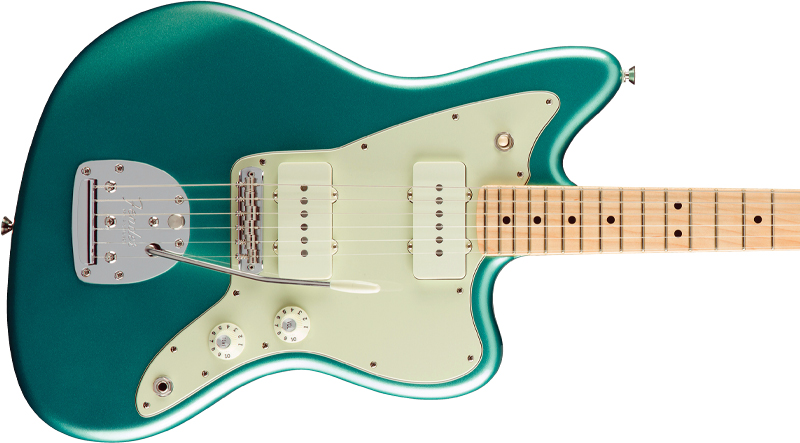
From the get-go, Fender’s Jazzmaster was the black sheep of the family – that wild-at-heart uncle your ma warned you about. Happily, it’s happily back in the lineup with the American Professional model, part reissue, part refined modern guitar.
The original Jazzmaster was unveiled at NAMM in 1958 as Fender’s flagship – the upmarket big brother to the Stratocaster. Its offset waist, “soapbar” single-coils, floating vibrato, and the Rhythm Circuit slider control all set the Jazzmaster apart.
Originally aimed at sophisticated jazz players, it was never really embraced – until rebellious surf guitarists the late ’50s and early ’60s found that sound within the guitar. More recently, the Jazzmaster has garnered fans among the hip and the underground, from Tom Verlaine and Elvis Costello to J Mascis, Nels Cline, and Sonic Youth’s Thurston Moore and Lee Ranaldo.
American-made Jazzmasters have been only sporadically available since 1980. Fender has offered good Japanese reissues, Mexican versions, signature models, and more, but it’s great to welcome back the American-made version, alongside Fender’s American Vintage ’65 Jazzmaster – and with two new colors that are just right and will be tough to choose between.
The new Jazzmaster sings through Michael Frank-designed single-coil V-Mod pickups that are overwound for a hotter tone while retaining a vintage warmth. They’re controlled by a treble-bleed circuit via a Master Volume that holds onto the high end when lowering volume to reduce gain, thus keeping the tone no matter where the Volume knob is set. And that Rhythm Circuit slider is now a thing of the past.
That famous floating tremolo/bridge has been refined to be more stable while still allowing you to rock the whammy all you want. You can dial in the arm tension better than ever before. And gone are the old problematic bridge saddles; in their place are brass Mustang saddles – exactly what almost every Jazzmaster master swapped in anyway.
The neck is a new modern “deep C” shape that Fender says is designed for comfort and speed. It’s topped by a bone nut and 22 narrow-tall frets that are supposed to make for easier bending of strings.
Color choices? You can pick classic three-color Sunburst or Olympic White, both with rosewood fretboards. Or select from one of the two new hues, which seem made just for a Jazzmaster – Sonic Gray or the sure to be a hands-down fave, Mystic Seafoam. Both are accentuated by maple fingerboards. The pickguard is three-ply Mint Green with the exception of three-ply black for the white guitar.
The new Jazzmaster was plugged into a Vibro-King and dialed up a dash of reverb.
The first noticeable thing about this guitar is its fit and finish: brand new and straight from the case, it feels great and ready to go. The neck is silky smooth, the fretboard an ease to play.
The tone of the V-Mod pickups is instant surf. They have a wonderful treble bite that is at the same time jangling and sonorous while not being thin or tinny. The Master Volume treble-bleed can accentuate this when the guitar is played with the volume down. Either way, it gives added control.
The bridge pickup is hot: it’s got a vintage voice that truly speaks. The neck pickup has a bit more punch than some may remember from an original ’59. Combined, they’re good and loud and full sounding.
Fender provides the guitar with easy-to-bend .009-.042 strings, but you’ll want to swap on heavier-gauge strings, or best yet, heavier flatwounds, to really accentuate all the glorious tone of this beautiful new Jazzmaster.
This article originally appeared in VG August 2017 issue. All copyrights are by the author and Vintage Guitar magazine. Unauthorized replication or use is strictly prohibited.
There are some nifty analog effects pedals coming out of São Paulo, Brazil, nowadays, and among them, Fire Custom Shop should be on your radar. Fire Custom’s small but efficient staff allows them to maintain maximum quality control over their top-notch products while offering a variety of effects pedals and accessories. It’s no fluke that heavy hitters in the celebrity guitar world have given them well-earned props. Take this pair of overdrives.
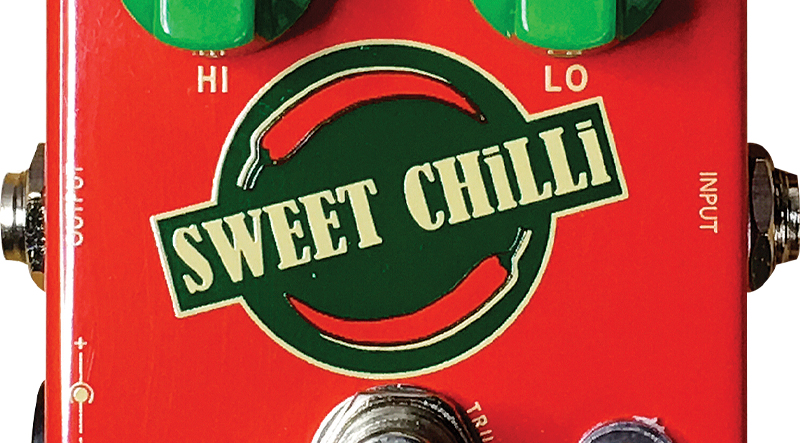
Fire Custom’s Sweet Chilli Overdrive delivers smooth and clean boost, or P.O.’d overdrive. With its Volume knob, Chilli knob (a.k.a. drive), and Hi and Lo knobs for EQ and added gain and volume, it’s a sensitive pedal that requires creative adjustments to fully exploit its superpowers. Running through a clean blackface combo or a British half-stack, the Sweet Chilli can yield warm mellifluous tones or searing harmonics. With humbuckers or single-coils, the EQ knobs are the key to dialing in more sizzle on the top-end or beefy lows, and it accepts a 9- or 18-volt adapter. Punchy clean boost, chunky rhythm sounds, or spicy lead tones – the Sweet Chilli was able to dish out southwestern flavors that will perform splendidly in a ZZ Top environment.
The Carpe Diem is Fire Custom’s crowning achievement: a two-sided pedal reminiscent of a Marshall plexi. Like a plexi, it enables the user to blend the high treble and normal channels with tone knobs instead of with an instrument cable. The Carpe Diem’s toggle allows you to choose between Classic (Marshall JTM45) and Hot Rod (think JCM800 on steroids). The cascading Bass gain knob and a Treble gain knob work in tandem to sculpt delicious crunch. Master Presence and Master volume controls work the top-end frequency and the output level. One switch turns the pedal on while a second adds gain and a bump to the volume level. Sporting serious bottom-end, the Carpe Diem is dynamic, compression-free, and full of plexi attitude.
Fire Custom Shop’s stated mission is to build quality true-bypass pedals that inspire players and withstand arduous touring. This has resulted in some seductive effects that will push an amp without sacrificing its inherent personality. Best of all they clean up beautifully with a guitar’s Volume control. From light overdrive to nosebleed intensity, the Sweet Chilli and Carpe Diem will allow you to express a multitude of emotions using your guitar as a conduit.
This article originally appeared in VG August 2017 issue. All copyrights are by the author and Vintage Guitar magazine. Unauthorized replication or use is strictly prohibited.
Guitarists are often trying to get more convincing tube tones on their home and studio recordings, but finding authentic valve textures can be elusive without pricey mics and preamps. The Fryette Valvulator GP/DI aims to solve that problem by using real tubes combined with a direct-out circuit and cabinet simulator. It’s also a genuine 1-watt tube amp, ready to drive a small cab for low-volume applications.
In fact, the Valvulator contains no digital circuitry at all, unlike many simulators on the market. Instead, it works like a traditional amp, with three 12AX7 tubes and one 12DW7 (used in Fryette’s proprietary output stage), transformers, and plenty of analog guts. This is significant – as far as digital boxes go, they often lack the depth and organic feel that tubes provide.
On the front, the Valvulator offers a Gain section with Voicing and Saturation controls to determine the amount of overdrive in each stage. A mini switch on the left chooses between Fryette’s amplifier line of clean, Deliverance (old-school British), and Pittbull (saturated crunch). The More switch provides either less overdrive or way more for a hotter tone. A passive three-band EQ is followed by a Master output knob for the 1-watt amp and a Dynamics control to evoke that classic tube “sag” or natural compression (an LED light adjusts its sensitivity to your picking attack). A Deep/Tight switch lets you tweak the low-end frequency of the power amp.
Finally, there’s the Cab+Mic section: the analog direct circuit. An In/Out switch activates the circuit, while Contour and Emphasis (with an Air/Bite switch) give the ability to respectively adjust the cab and mic simulations. The Output section has a knob to control volume heading out to the mixer or digital interface. In the back, look for an 8/16-ohm speaker switch and 1/4″ outputs (speaker and line-level), plus the Direct Out 1 and 2 sections with both 1/4″ and XLR jacks. If your head is spinning by now, don’t worry – the Valvulator can be as simple or complex as you want.
Tested in a home studio, this Fryette performed incredibly well. In short order, guitar sounds ranging from dead clean to wailing overdrive were laid down to several GarageBand tracks on a Mac, and the results were far thicker and richer than your average digital “amp sim.” Beyond its meaty, convincing recording tone, the Valvulator has several other uses, including as a guitar preamp for gigging. Send the output to a mixer and PA and the audience will be surprised you’re getting such a mighty tone from a small tabletop box.
You can also use it to “re-amp” studio guitar parts – that is, taking an already-recorded track and sending the output through a separate amplifier for better tone. If you’re recording direct, but don’t want any amp distortion, run your guitar through the Valvulator for its superior tube circuit. As countless producers and engineers will tell you, a good tube preamp makes just about everything sound better in the studio.
The Fryette Valvulator GP/DI is a formidable tool for both recording and concert use. Sure, it’s not inexpensive, but with a host of uses, bulletproof construction, and genuine tube tone, there’s serious value here. Best of all, like the best tube heads, this small wonder is full of organic sounds that react to whatever you’re playing. Play lighter and the tone cleans up; dig in and it gets good ’n’ nasty. Fryette has distilled decades of tube-amp building into one killer little recording amp.
This article originally appeared in VG August 2017 issue. All copyrights are by the author and Vintage Guitar magazine. Unauthorized replication or use is strictly prohibited.
Today’s guitarists looking to create those sounds they imagine in their heads have it easier than ever before. Electro-Harmonix can be partially thanked for this. EHX is notorious for creating state-of-the-art effects pedals at reasonable prices, and their Canyon Delay & Looper and Blurst Modulated Filter are two of their latest offerings in a long line that has left an indelible mark in the guitar galaxy.
Small though it may be, the Canyon is packed with a plethora of time-based goodness – essentially a three-second-delay pedal with additional effects; echo, modulation delay, pitch delay, reverse delay, multi-tap delay, tape and Memory Man delays, reverb, octave delay, shimmer, and a 62-second looper.
FX LVL, Delay, and Feedback knobs, along with an effects selector put the player in command of goo-gobs of ambient possibilities. These controls edit the repeats and effects, and holding down the Tap Divide button accesses a secondary function for extra control over delay effects. When the Canyon is in the looper mode, the footswitch controls Start, Stop, and Overdub functions while FX LVL controls the volume of the loop and Feedback controls how much the previous loop degrades when you record a new loop. Detailed adjustments require patience, but it’s hard to beat this pedal for size, functionality, and affable sounds.
Ominous yet warm, the Blurst is a modulated filter heard in synthesizers. It alters your sound like an envelope filter, but has an internal oscillator and an analog low-pass filter that kills frequencies above a cutoff point but not below it; those lower frequencies pass through while filtering out highs and in the process creating wicked sounds.
The Blurst has controls for Volume, Blend, Resonance, Rate, and Range (the latter for frequency sweeps) along with mini toggles for Expression Mode (for its expression-pedal input), Tap Divide (subdivide the rate for different rhythmic effects) and three modulating waveform shapes. It plays well with other pedals, works great to fatten distorted lines, adds colorful keyboard textures to arpeggiated chords… or will simply freak out your neighbors.
EHX’s Canyon and Blurst provide dozens of user-friendly sounds for stage or studio. All you’ll need is a little creativity to send you on your way.
This article originally appeared in VG August 2017 issue. All copyrights are by the author and Vintage Guitar magazine. Unauthorized replication or use is strictly prohibited.
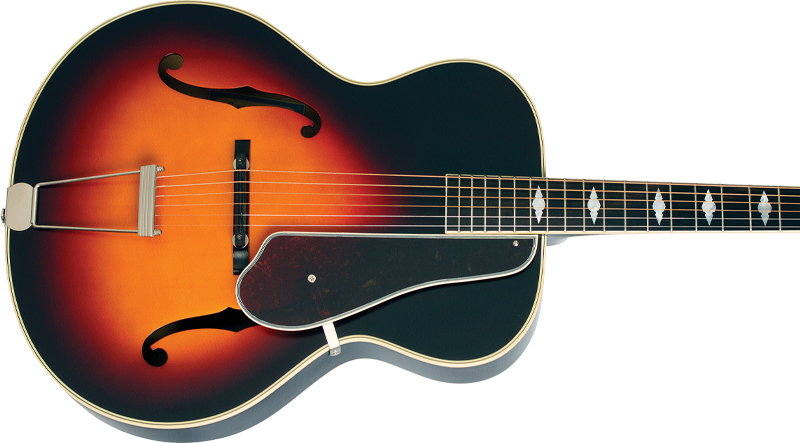
Most vintage aficionados admire the grand old acoustic archtops of the 1920s and ’30s, but admire them from afar. They’re beautifully built and boast lovely tone, but they have limitations as to when, where, and how they are played. Epiphone, one of the grandest of the old archtop makers, gets all this and has launched its new Masterbilt Century collection to appeal to everyone.
The concept is simple: take the best of the original archtops and refine them with modern ideas to make them playable for a new generation – in other words, a 21st-century archtop.
The Masterbilt Century Deluxe Classic is the pinnacle of the line. Think of the Epi that Freddie Green employed to swing those luscious four-on-the-floor rhythm lines behind Count Basie in the ’30s – but now updated as an acoustic-electric guitar designed to be played and amplified as a true acoustic instrument.
Back in the day, bigger was better: unamplified guitarists fought to be heard through the sound and fury of bands. Now, Epi can build for tone as well as comfort. So, the laminated-maple body is modeled after Epi’s earliest generation of archtops, with a 12.6″ upper bout, 10.25″ waist, 17″ lower bout, and a 21″ body length. The body is bound in three-layer ivory and black.
The longitudinal bracing follows tradition, topped by a solid-spruce arched soundboard. The guitar is available in either Vintage Natural or Vintage Sunburst, both lovely aged gloss finishes. A tortoiseshell-style pickguard comes unattached, and a ’30s-era replica label is visible through the double-bound f-shaped sound holes.
The five-piece neck is made of hard maple and mahogany with a full C profile and topped by a 20-fret, 25.5″-scale ebony fretboard with a single ivory binding. The pearloid “notched diamond” inlays are modeled after original Masterbilts.
And then there’s that headstock, arguably one of the most beautiful and ornate ever made. A bone nut and 18:1-ratio historic-look tuners finish it off in style.
It’s what you can’t see, however, that makes this archtop truly special. Hidden under the bridge is a Shadow NanoFlex HD pickup with an eSonic high-definition preamp system. The pickup features Master Volume and Master EQ controls carefully tucked away but easy to access just inside the lower sound hole. A standard 9-volt battery powers it and is located near the tail’s 1/4″ output jack.
Unamplified, the guitar is an easy-playing modern archtop. The tone is warm and woody, and should only improve with age. With the neck dovetailed and glued into the body, the guitar resonates with a full, clear voice.
The stock strings are 12s, providing lovely acoustic tone and creating rich chordal textures, but they’re not ideal for fingerpicking or bends. But that’s not what this guitar was originally designed for. Instead, it has that special percussive cut, an attack that makes it an ideal rhythm instrument. Yet this modern archtop also seems to resonate more fully and longer than vintage models, a welcome trait to rounding out its voice and uses.
Epiphone advertises that “no archtop player has ever heard an acoustic guitar more accurately represented through a sound system before.” So we plugged the guitar into a modern Epiphone Electar “1939” Century amp, and the electronics accurately amplified the acoustic tone – there was next to no distortion or even change to the natural sound. The Master EQ allows the player to adjust the bass or treble boost to shape or emphasize aspects of the sound. Impressive.
If you ever yearned for a vintage archtop but were held back by its utility, times have just changed. Epi’s Masterbilt Century Deluxe Classic combines old and new to create an ideal all-round guitar with flair.
This article originally appeared in VG August 2017 issue. All copyrights are by the author and Vintage Guitar magazine. Unauthorized replication or use is strictly prohibited.
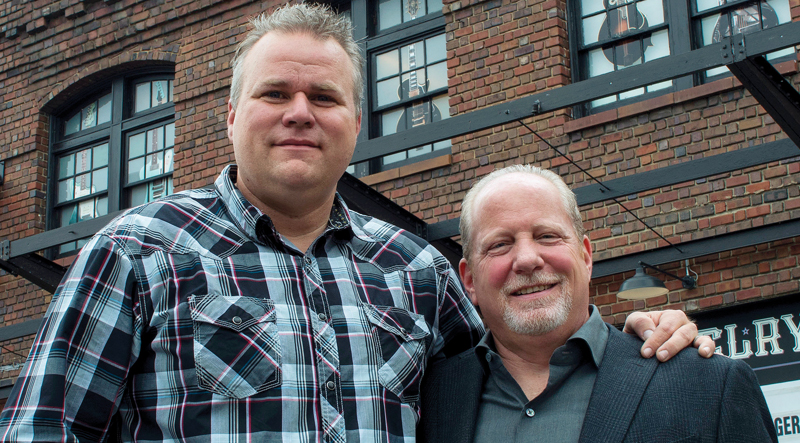
All photos by Damien Rogers, courtesy of Songbirds Guitar Museum. Songbirds President Johnny Smith (left) and CEO/Curator David Davidson.
Ask anyone who geeks out on vintage guitars, from the well-heeled collector to the dreamer whose prized possession is a relic’d reissue, and you’ll hear the stories… First sighting of a real ’Burst. That trip to the famous shop to get that photo beside the ’59 Flying V. Knowing someone who knows a guy who got to check out Jimmy Bryant’s ’54 Strat or Don Rich’s gold-sparkle Tele. Or, sure, you’ve seen an original Firebird… couple of ’em, maybe.
Now imagine 7,500 square feet filled with all the above and much more. More than 30 Les Paul Standards from the ’50s. Lloyd Loar pieces in mint condition. Ten ’54 Strats. Flat-tops and jazz boxes from the great eras. The wildest historic offerings from Gretsch and others, along with prototypes and one-offs, ultra-rare banjos, and period-correct accessories and memorabilia. This fantasy land exists in the form of Songbirds Guitar Museum.
Songbirds ambassador Vince Gill (left) and Davidson admire a Fender Broadcaster prototype.Fender Broadcaster prototype.
Located on the southern edge of a booming downtown Chattanooga, Tennessee, Songbirds occupies the rennovated, historic Chattanooga Choo Choo train station. The museum draws from a collection of roughly 1,800 pieces; 531 instruments make up the opening layout. Many of the general admission and Vault displays are intended to be essentially permanent, with the occasional exchange or addition of individual pieces. Curators plan to change the Green Room displays at intervals of four to five months.
Songbirds is the brainchild of a small group headed by Curator and CEO David Davidson, founder of We Buy Guitars, along with Johnny Smith, a local entrepreneur and drummer who serves as President of the organization. Davidson built his collection during decades in the vintage retail business, along the way developing a network of customer/collectors who were engaged as contributors.
“There are people I’ve known and dealt with for decades, and they’ve acquired these great pieces, and loved them all this time,” he said. “None of us is getting any younger, and many of the instruments are really valuable. But, there’s something more important; I tell collectors, ‘When you’re gone, these wonderful pieces of history could end up being sold to someone you don’t know, someone who may not appreciate them for what they really are.’
“These guitars represent a different time. Without question, there are still great guitars being made by major manufacturers, but there’s something different about guitars from previous eras, and a lot of it has to do with how people approached their work back then, how they thought about it. Dollar-value aside, you pick up most vintage pieces and you can just tell there’s a whole different thing put into them. These things need to be saved – and seen. In a curated context, grouped and presented in specific ways, they tell a story. You get a sense of that other America. Whenever you look at a great, valuable guitar, you think, ‘Wow, that’s a cool ’62 Strat!’ But, look at a wall of Strats made from ’60 to ’65 and it’s a whole different deal – a bigger picture.
Beyond the tangible elements of the guitar, Davidson points to how it abetted the evolution of popular music.
Gibson Firebirds and Fender Strats in the Songbirds “World of Color” exhibit. Dobros and other lap-steels.
“It changed everything,” he said. “There were horn bands, big bands, orchestras – that was pop music. Then along comes the electric guitar, and bang! Whole different kind of society. You walk through this place and a sense of that jumps out at you. All the goodies are there, the case candy and accessories, and photos, sounds, video… When you get to, say, the British Invasion exhibit, you see and hear and feel the instruments and people who created all that out of thin air. We put this together so you’re surrounded with all of it.”
As the museum shifted from dream to bricks and mortar, the team’s initial challenge was simply to find space to house the collection as imagined. Much of the heavy lifting fell to Smith.
“It’s the world’s biggest candy store for guitar geeks… presented in a way that’s really informative…” – Vince Gill
“I’m a drummer by trade, but I just love guitars, and I love the sense of Americana that vintage instruments give us,” he said. “I’m also a pretty big Chattanooga booster, and it’s a great location between the music centers of Nashville and Atlanta. Plus, it has its own history that’s interesting and important.
“We caught a break with the train station, which is a truly historic location,” he said. “There were a lot of ideas floated and several ways to re-purpose it, especially since our downtown renaissance several years ago. But the timing was right, and it has worked out to be a perfect fit.”
Several cases are dedicated to basses by Fender and other builders.Jimmy Bryant’s ’54 Stratocaster.
Great care was taken in designing not only the museum’s layout, but the presentation of different styles, eras, manufacturers, and musical trends. The permanent collection includes an exhibit devoted to pre-war Martins (exploring construction techniques and featuring a 1941 D-45), a presentation on Leo Fender and his company’s evolution (including a complete collection of custom-color Stratocasters, Telecasters, Esquires, Jazzmasters, and Jaguars, along with the ’54 Strat Leo made for George Fullerton), a group of custom-color Gibsons that sports one of the most complete sets of Firebirds anywhere, and a golden-era Gretsch collection, hollow and solid, highlighted by a Sparkle Jet group anchored by a ’62 in Champagne. Some areas of the museum are devoted to rotating exhibits, like the initial Surf Music, British Invasion, and special Bluegrass presentations. And then there are the ’Bursts forming a veritable time line of vintage guitar’s Holy Grail.
“It’s become cliché to call something ‘an experience,’” said Smith. “But every exhibit you walk into here really is. You see the instruments, the accessories, and related items from the period, you start reading about all of it, you see videos and animation on the LED screens, and you hear the music invented on these pieces. In some sections, you’re actually surrounded by those elements. We also have concerts – Dick Dale was first – and we’ll have bands playing music from a particular period at one exhibit or another, using correct instruments for that exhibit. And, there’s an educational component. It’s amazing how guitars draw young people – those born long after it made its mark. It fascinates them, and gives them a completely different perspective. It helps them understand the development behind the music of their generation.”
Before opening, the museum enlisted country star/superpicker (and vintage junkie) Vince Gill as its ambassador. Davidson and Smith traveled to Nashville to discuss the association, and they took serious bait.
“We put guitars in his hands that really twisted him up,” Davidson recalls. “When I handed him the Don Rich Tele, he got misty-eyed. We’re thrilled to have him onboard. The guy is the whole package – so talented, and he has an amazing collection. Plus, he’s just such a gentleman.”
Vince Gill at a display he curated.Don Rich’s gold-sparkle Telecaster.
Gill sees the same threads of Americana woven into the Songbirds fabric.
“First off, you really can’t imagine the size and scope of this thing until you actually see it. It’s just ridiculous, like the world’s biggest candy store for guitar geeks. But they’re presented in a way that’s really informative, and David’s right – it gives you a sense of a time where people maybe looked at what they did for a living in a different way.
“I’m sure a lot of people will find at least one guitar that means something special to them; Don Rich’s gold-sparkle Tele is that way for me. Seeing that thing on TV when I was a kid is something I’ll never forget.
“I was honored when they asked if I wanted to be associated with the museum,” Gill added. “They did this right, and they went big. I don’t think there’s anything even close to it anywhere.”
Gill curated a special exhibit of pieces that are personal touchstones for him. He made the two-hour drive for the grand opening in mid March with Nashville repair guru Joe Glaser, who sees the collection’s historical value in technical terms.
“I’ve seen a lot of vintage guitars,” he said. “Not as many as George Gruhn or Walter Carter, but a lot. But seeing them here provoked a lot of new thoughts for me – the sheer number of pieces, the kinds of instruments, the way they were collected, and how they’re presented. There’s a good number of instruments built for trade shows or as custom pieces, and having an aggregate shows what those companies could do. They took different paths you can’t even imagine until you see it all together. One example is a ’57 Fender P Bass – blue sparkle over a contrasting blue metallic over gray primer. Now, it’s common knowledge that in the ’60s, Fender occasionally sent things to car shops for custom colors, and I thought those were the only instruments painted over gray primer. Years ago, I bought a ’57 P-Bass that had some sort of orange-gold sparkle over green-gold metallic over gray primer – very James Brown. I always assumed it was a refin, but suddenly, here’s a sister bass painted in the same manner. Now, I’m thinking the ’57 may have its factory finish after all. You see just one of those in 40 years, it raises questions. You see more than one, and you may be on the way to an answer. If Fender did it, howmany did they do that way? Are there 50? Are there 12?
“There’s another group from the museum that comes to mind. In ’68 or ’69, Fender took a Banana-yellow Thinline Tele to a London trade show with 12 other one-off-finish Thinlines. One guy bought the whole lot, and now it’s in the museum. You see one of those, and you think, ‘Wow… a yellow Thinline Tele, some custom order. But you see 13 of them, and it gives insight.
“So, I see Songbirds as a resource. You can find answers – or raise questions – with an academic approach. The way it’s presented could be a great benefit to the knowledge base for vintage instruments.”
Gill is like a kid in a candy story when he visits the Songbirds Guitar Museum. Here, he peers into the display he helped curate and includes a sunburst ’38 Gibson SJ-200, a ’66 J-200 in Cherry Sunburst, a ’55 Martin D-18, and a ’47 D-28.
While celebrity ownership is not the museum’s focus, the collection does include guitars played by Roy Orbison, Chuck Berry, B.B. King, Buddy Holly, and Al Caiola, among others. The design includes a Green Room, where private tours and other functions can be held, and The Vault, which houses some of the rarest and most valuable instruments. Songbirds will schedule events and presentations; among the first is “Les Paul, From Start To Finish,” which includes several of the guitar wizard’s early inventions and lectures about his life by close associates.
“The collection is big enough and varied enough that we can arrange it in almost unlimited ways,” said Smith. “The displays are actually built with that in mind, and I don’t think we’ll run out of interesting ways to present things or different areas of focus. It’s exciting to think about all we can do on the educational front – part of the mission is to increase awareness of this part of American history.”
Davidson also touts the versatility of the space.
“We can rotate things in and out, like in the Green Room. Right now we have an exhibit called “The World Of Color.” It’s the most insane assortment of custom-color Fender and Gibson guitars you can imagine. The situation is just really satisfying. Folks from Gibson came down and brought Joe Bonamassa. He stood there for a minute with his mouth open, seeing things he never knew existed. And now he knows why he hasn’t been able to buy a custom-color Firebird – they’re all here!”
Information on tours, tickets, exhibits, and more is available at songbirdsguitars.com.
This article originally appeared in VG August 2017 issue. All copyrights are by the author and Vintage Guitar magazine. Unauthorized replication or use is strictly prohibited.
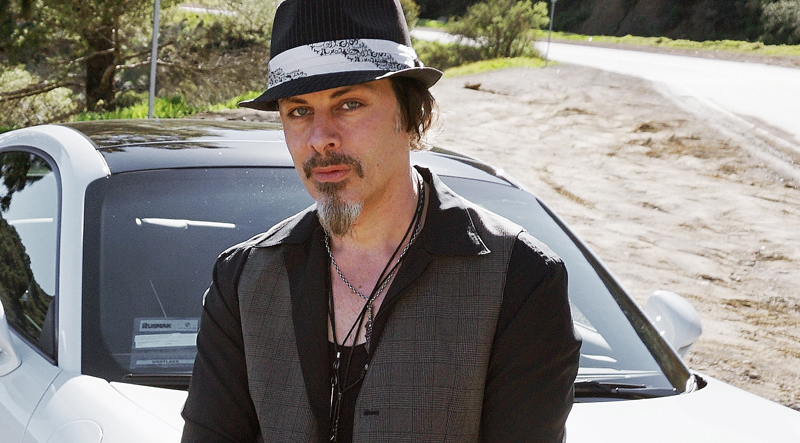
Richie Kotzen: Julia Lage. Kotzen with his Porsche 911 Carrera and signature Tele.
Richie Kotzen was one of those kids – always entertaining the family with song and dance, usually in a crazy costume. “I wanted long hair like a rocker, so I went to mom’s closet and pulled out wigs so I could pretend I was in Kiss, and she had these go-go boots that to my eye looked like what Paul and Gene wore. So I’d put on a show,” he recalled. Finally, someone thought, ‘Hey, maybe we should get him piano lessons’ – we had a piano in the house – but at five I didn’t take to it.”
A year and a half later, his family was browsing a yard sale when they spotted a guitar. “I realized, ‘That is what the guys in Kiss are holding’ and I really connected with it,” he said. “I spent a lot of time figuring out how to play things and started taking lessons. Before I knew it, I was putting together a band.”
Influenced mostly by popular hard-rock bands of the late ’70s/early ’80s, he also got into his parents’ collection with its Stevie Wonder, Spinners, and soul music.
By 18, Kotzen had caught the ear of Mike Varney at Shrapnel Records, who signed him to a deal and turned him loose on his first album, a self-titled rock/shredder set. Through it and the six albums that followed, Kotzen showed consistent growth. Today, his style reflects the influence of jazz and fusion (he has backed bassist Stanley Clark and drummer Lenny White) with hints of Hendrix, Vaughan, Van Halen, and Holdsworth. A decade ago, he quit using a pick.
In 2013, bassist Billy Sheehan and drummer Mike Portnoy invited Kotzen to jump aboard their new power trio. Dubbed The Winery Dogs, the band found an audience and has released two albums supported by extensive tours. Following its 100-show stint that ended in June of ’16, Kotzen took time to decompress then began gathering material for his 21st solo album, Salting Earth. Essentially a DIY project (except for bassist/singer Julia Lage’s background vocals on “Make It Easy”), Kotzen says when it comes time to give his ideas tangible form, old habits die hard.
“It’s really not deliberate when a I finish a record and realize I’m the only performer on it,” he said “It just comes out of my process. In the late ’80s, I realized that to get the music out of my head to where I could listen to it, I had to do it alone.”
Highlights on the disc include the first single, “End of Earth,” the edgy, anthemic “Thunder,” the funk-jazz swing of “This Is Life,” and the revealing acoustic closer, “Grammy.” All showcase not only guitar, but vocals that would serve well fronting nearly any rock band. We spoke with Kotzen as he prepped to tour behind Salting Earth, beginning with a closer look at his personal story.
Richie Kotzen: Julia Lage.
What was that yard-sale guitar?
I don’t know, but I remember my teacher seeing it and telling me, “I can’t teach you on this. You need a proper instrument.” So, my parents and I went to the music store and bought a Gibson Marauder.
Straight off the 1976 Gibson promo poster with Kiss!
Yeah, that was my guitar.
What sort of guy was your teacher?
He was a 20-something biker, backwoods guy. His name was Larry, and I’ll never forget when I saw him the first time – very tall, long red hair, long red beard. I was terrified. But within the first couple months I realized he was really cool. I remember being psyched because he was teaching me how to read music. He was trying to get me play in time when he pulled something out of his pocket and was holding it like a switchblade. Then he pressed a button and it hit the sheet music – it was pointer. But I was terrified for a few seconds, nearly dropped my guitar.
Eventually, we became friends and I studied with him for years. At first I was so little I couldn’t carry my guitar up his stairs – my mom had to carry it.
The “Horror Guitar” shown with Kotzen on the cover of Fever Dream has a fan base all its own – Kotzen says he has been offered $20,000 for it.
Did he ever show you Kiss licks or how to play something off the radio?
No. Oh my God, this is classic! I’d been taking lessons for two years, learning scales, modes, chord progressions, improvisation; he’d strum and I’d noodle around on a pentatonic scale, whatever. But I never learned a specific song. He never said, “Here’s how you play ‘Purple Haze.’” One day, my father said. “I know you’re learning, but you can’t play a song. Tell Larry to teach you a rock song.” He was thinking Beatles or something.
So, I go to a lesson and say, “My dad said you need to teach me a rock song so I can play it for him.” And I kid you not, Larry said, “No problem…” He grabbed a piece of paper, made lines across it and wrote, “Two measures in G, two in B, and a measure at A.” Then he drew a repeat symbol and wrote “Rock Song” across the top. He said, “Play that for your dad.” That was his attitude.
I don’t think I studied with him long after that, but I had another teacher who taught me a lot. Learning the solo from “Hello” by Lionel Ritchie was like a big accomplishment.
Kotzen scored this ’72 Tele Thinline in a trade for an Ibanez seven-string prototype. “I had enough trouble with six strings and my buddy had this great Tele, so we did a clean trade,” he said.
What influenced you most from that point?
I spent a lot of time experimenting on my own. I remember wanting to write songs, but I’d get frustrated not knowing how to write lyrics. I remember going out on the porch once and telling my mom, “You got to help me write lyrics.”
There also was a time where I’d put my finger on the record player to slow it down and hear it better. Then, by 13, 14, 15, I was obsessed with learning difficult stuff. I had my band play “La Villa Strangiato” and “YYZ” by Rush along with other progressive-rock stuff. My drummer was a very prog-rock guy – I wasn’t the only one (laughs)!
When I was like 15, I got into Allan Holdsworth, Eddie Van Halen, Steve Morse, the Dixie Dregs, and I remember thinking it was a major accomplishment learning to play “Bloodsucker.” I also learned Steve Vai’s “The Attitude Song”; certain parts I just got the gist of instead of learning note for note. A lot of guys can play “Eruption” just like Eddie. I’d listen, but get bored; “Okay I know what he’s doing there… I can do this.” I’d never really learn it, which in a way was a blessing because I came up with my own way of doing things.
So, instead of having a “guitar hero,” you absorbed influences more broadly?
I think so. I remember hearing Brad Gillis on Ozzy’s Speak of the Devil and being very impressed. I heard of him before Eddie Van Halen – first time I heard Eddie was when Michael Jackson’s “Beat It” was on the radio. Then I started listening to Van Halen.
What forged your individual style?
When I was 17-18, I wrote and recorded an album that came out in ’89, and in that period in my life I didn’t know who I was, artistically. I had a lot of agility, a lot of ability to do things, but I didn’t feel defined artistically. I had a sound, but it was based on my technique, not my personality. It’s like that with a lot of players – their sound is a result of what they practiced as opposed to personality. Eddie Van Halen was special because there was so much personality in his playing.
This Starfield was built by Mike Lipe in the Ibanez Custom Shop in 1990. “It’s a stunning instrument with birdseye maple neck and maple top,” said Kotzen. “It’s one of a kind.”
That first album was instrumental, right?
Yes, and after that I started to figure out who I was and why I was playing. By the time I was 20, I didn’t have much interest in making instrumental records. I didn’t grow up listening to that kind of music in Birdsboro, Pennsylvania. I was just thrilled to be on Shrapnel Records with so many great players. So, on the second record, I sang. I wasn’t going to – I was writing vocal songs and planned to hire a singer, then the label convinced me to sing. Writing those songs, singing for the first time, then later having my contract bought by a major label really helped me focus on my voice. At that point, I picked up a guitar only to write. I became whatever it is I became as an artist.
If I look at my first couple records – the debut, then Fever Dream – I can’t count Electric Joy because it was done out of obligation after my contract was bought by Interscope… the record I released in ’94, Mother Head’s Family Reunion is, in a way, my first real record because it represents me, vocally, instrumentally, and as a writer. The whole thing came together. When I look at my catalog, in a weird way I can’t identify with that first record. It’s cool because it’s a snapshot, but I don’t connect with it as being me.
Which guitars did you play on those albums?
After the Marauder, my parents went to get me a Les Paul as a Christmas present, but the guy at the music store convinced them the Yamaha SVG2000 – like Carlos Santana was playing – was a much better guitar. I’m shown with it on the back of my first record. Then I had a Kramer with a locking vibrato, and an Ibanez. After that, Ibanez signed me and the second record was that guitar and the Yamaha on a few things.
Did you make any changes to them? Pots or pickups, maybe.
I don’t remember… probably pickups. I built a wireless into one, and it worked really well. And I used to bolt straps right into the guitars. I was quite the showman – guitar flying in the air and spinning around my back. I blame Cinderella for that – they were very popular locally when I was growing up, and always did crazy tricks.
Little bit of Vai?
Yeah, Steve did it too, but that whole thing really came out of Philly – Cinderella and Britny Fox were the first guys I ever saw do that. I’m sure there were others, but Tom Keifer was the master of crazy guitar tricks.
How about amps you’ve used through the years.
Well, in the very beginning I played Peavey amps because they were stocked at every music store and they were cheap. After the Peaveys, I got obsessed with Mesa/Boogie, then later got turned on to Marshalls. I had an endorsement with Laney and I made them crazy. They designed two amps for me – one had this huge capacitor in it – I don’t know what I was trying to achieve, but when I turned it off, it’d stay on for 45 seconds as the capacitor drained.
For a while, I had a signature amp from Cornford, a British company that’s out of business, then I developed a new amp with Victory, and that’s what I’m using on tour. I have a signature amp, signature Telecasters, and a signature version of Tech 21’s Fly Rig that’s pretty cool.
What sort of amp is your signature Victory?
It’s a 50-watt that uses EL34s or 6L6s, and it has an amazing gain stage – you do not need an overdrive pedal with this amp. And it has a boost switch so you can set the amp to have a nice rhythm tone, then step right to your overdrive. It has tremolo, reverb, and one Tone knob. Looking at the face, you see a Master Volume, Gain, and Tone – very, very simple. I don’t like to have to do math equations to figure out how to run an amp. So many of these amps are marketed to a lot of people. I’m trying to create something that’s really easy to use and can do a lot of things. I just got the prototype 1×12 combo with an extension cabinet, but eventually there’ll be a 100-watt head. They also make a travel-size head that’s very cool. I’m really excited about it.
Which guitars and amps do we hear on the new album?
I’m not sure, because it’s been recorded at various times, but you’ll hear Fender amps, my Cornford, Marshalls including a little Hand-Wired head. I record so randomly and it’s crazy how these things come together. For example, “Make It Easy” was recorded more than 10 years ago. It never had vocals before this album, and the guitar solo is probably the Cornford MT50 I was using back then. “End of Earth” is probably the 18-watt Marshall plugged into a 2×12 cab. The solo on that song is the Tech 21 Fly Rig.
Have you used the Fly Rig without an amp?
Yeah, I did that on the Winery Dogs record. There’s part of a guitar solo where I plugged it right into the console.
This guitar uses the body of a signature Telecaster hand-painted by Kotzen.
Which bass did you use for the new record?
A Fender Jazz.
Did you use an amp?
Sometimes, otherwise it was direct. Sometimes I added a keyboard sub-bass to double it. I’m kind of obsessed with bass; there’s a lot of it on the record.
When you amplify bass, what do you use?
The main signal is always direct, but on secondary tracks I had a Marshall 4×12 cab with a plexi, or a tweed Deluxe.
How does songwriting work for you? Do you capture ideas for melodies, then rush to record it?
Every single time, it comes to me in a different way. For example, the last song on the new album, “Grammy”; I woke up at 3:30 in the morning and the melody and lyrics to the chorus were just there. I was singing it. So I went to the studio and messed around, and by 7:30 I’d recorded what you hear on the record. “This is Life” started on drums. I went in the studio with a concept – it was rhythmic and harmonic. I went in, sat behind the drums without a click track – as you can tell – and imagined the band playing along. Then, I added a rhythm guitar, then bass, and I sang made-up lyrics – not even real words. That sat on my hard drive for months, and when I came home from a tour in Japan, I listened to it and thought, “That could be interesting.” So, I developed it, did some editing, went in once I had lyrics, and the piano tied it all together.
There’s all kinds of ways to write a song. And it’s easy for me, as one guy, to do what I’m doing, I keep my studio live – drums are miked and plugged into the APIs, my amps are never unplugged and the signal chain is never touched. At any given time, I can change things, add to them, this or that.
As a singer, who do you count as vocal inspiration?
Well, I have to say Paul Rodgers, early Rod Stewart, and Terence Trent D’Arby was probably the biggest.
Wow, really?
Yeah. I get compared to all these different guys, but nobody ever makes the connection to Terence because I’m in the rock world and people sometimes look at things with tunnel vision. But I was really into him; when Introducing the Hard Line came out, I tried to do what he was doing. In 1991, “Dream of a New Day” was put on the soundtrack for Bill and Ted’s Bogus Journey – I originally recorded it for Fever Dream, but I re-sang it for the film because my voice had evolved. I was at the height of my Terence obsession, and you can hear it. Many years later, a friend was playing guitar with him and I got to meet Terence. It was pretty cool to talk with someone who had such influence on me.
Who else… Definitely there’s some David Coverdale. I loved when David and Glenn Hughes sang together on Stormbringer, which is a really cool rock record. I love their voices together. Also, Sam Moore, Sam Cooke – soul singers – Levi Stubbs in the Four Tops.
Have you heard comparisons that didn’t make as much sense?
It’s interesting… I get compared to Chris Cornell a lot. He was fantastic, but it’s weird because I’ve sounded the way I sound for so long, way before I knew about him. It’s a compliment, but sometimes it feels undermining because there are elements of my voice that are similar, but I think my phrasing is really different. He was probably the best out there – but it frustrates me that people can’t hear the differences. There’s a similarity, tonally, when I’m screaming over a power chord. But when I made Fever Dream, Soundgarden wasn’t a household name. Back then I was being compared to David Coverdale. Another time, I was compared to Ronnie James Dio.
Hey, when you’re compared to somebody great, it’s a nice thing. Whatever. I live inside myself, I don’t live on the outside, so in a way it doesn’t really matter.
This article originally appeared in VG August 2017 issue. All copyrights are by the author and Vintage Guitar magazine. Unauthorized replication or use is strictly prohibited.
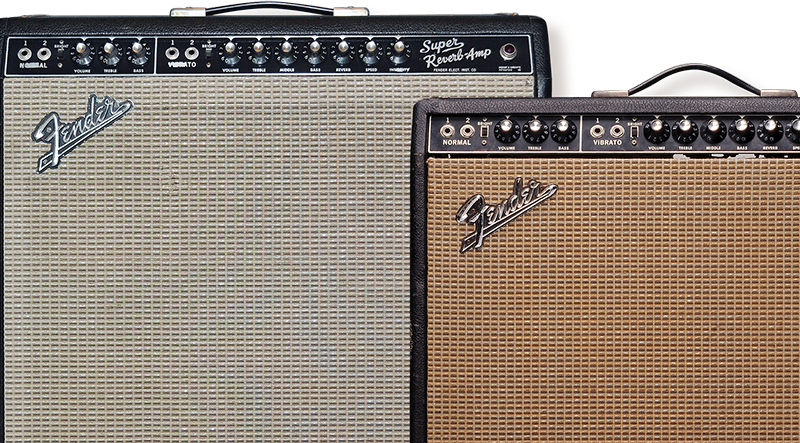
Fender Super Reverbs from 1963 (left) and ’68. Fender Super Reverb • Preamp tubes: three 7025 (12AX7 equivalent), one 12AX7, two 12AT7 • Output tubes: two 6L6GC • Rectifier: GZ34 • Controls: Normal channel: Volume, Treble, Bass. Vibrato channel: Volume, Treble, Middle, Bass, Reverb, Speed, Intensity; Bright switches on both channels. • Speakers: 1963: four Jensen C10R. 1968: four Oxford 10L6-1 • Output: approximately 45 watts RMS.
Among the many distinct eras of vintage-amp production, Fender’s so-called “blackface” models are legendary. Made from late 1963 until ’67, they’re loved for the elegant black control panel and their toothsome, versatile tone.
Any blackface Fender in good original condition is a thing of beauty, but it’s even more fun to examine one of the first and what might be the last example of one of the most storied models – the Super Reverb. We’re taking liberties calling these “first and last” as there could be a few that pre- and post-date them, but you’re unlikely to see two such early and late examples of a major blackface model featured together, so please allow a little poetic license!
While an extremely early example of any hallowed vintage amp generally gets collectors’ blood pumping, let’s first take a look at our supposed “last blackface,” since it’s extremely unusual. Those who have already noted the 1968 date of this amp juxtaposed against the “late 1963 until ’67” in the intro might think we misstated something, but what we have here does indeed seem to be a genuine stock blackface Fender completed in late ’68 – nearly a year into the rein of the silverface models.
Back of the ’63.
The amp is owned by blues guitarist Paul Gabriel, who has recorded with Duke Robillard, Harry Chapin, and Rory Block, and was himself featured in the December ’13 issue of VG. By his own estimation, Gabriel has owned 20 to 25 Super Reverbs, and declares this one of his favorites. Though you might expect a thorough probe to reveal at least a little smudging of features, its serial number and component and chassis date codes point to final assembly in the 48th week of 1968. The front and back control plates have been inspected by several parties and deemed genuine, while the cab itself corresponds to blackface dimensions.
“When I first picked it up, I thought it was a typical ’67 Super Reverb,” Gabriel said. “But, my tech confirmed the AB763 circuitry (Ed. Note: second iteration of the blackface spec), and said it was the latest blackface amp he had ever seen. The one thing that is undeniable is it’s a great amplifier, probably constructed from parts leftover at the factory, maybe to just get rid of them.”
Our ’63 is owned by Steve Hosa, who bought it from the original owner in 2005.
Back of the ’68.
“Being from a beach community, in 1963 I started a ‘surf music’ garage band playing a Kay guitar through a Fender Princeton,” he said. “The older kids who played at the high school rec center were using the latest Fenders, and the coolest setup was a sunburst Strat through a Super Reverb. You never quite forget your first encounter with that big four-speaker thump and that super-wet reverb.”
The “MK” stamp on the amp’s tube chart denotes November ’63 assembly and tells us it’s a rare “Production 1” example from the first run.
When the chance arose years later to acquire a Super Reverb from his heyday, Hosa thought he was purchasing a ’64, as that’s when the original owner had bought it. “But, the tube chart indicated ‘MK’ for November 1963 and ‘Production 1.’ Another giveaway was that its faceplate was missing the outline around the bright switches – a detail absent from the introduction of the models in late ’63. During this period, the faceplate had only a black silk-screen applied over the bare aluminum, which reads as black with silver lettering and perimeter outlines.”
Among its other quirks is a power transformer with a 1961 date code, but which appears to be factory stock.
All component codes – even this note scrawled inside the chassis indicating completion on the 48th week of ’68 – add up to an unusually late blackface amp.
From a distance, the two look similar. If anything, the ’68 might look a little older due to its more-yellowed grillecloth. Get closer, however, and details like the early control plate quickly differentiate them, as does a swing ’round back, where you’ll find four Jensen C10R speakers in the ’63 compared with four Oxford 10L6-1 drivers in the ’68. The chassis add further separation, most notably the blue Mallory “molded” signal capacitors in all but one circuit position in the ’63, whereas the ’68 has a greater number of later brown “chocolate drop” caps, along with a few blue Mallories. Though the silverface-era (brown) coupling caps are sometimes disparaged, the preponderance of chocolate does not seem to harm the tone of Gabriel’s amp.
“It’s clean, bright, fat, and warm, with an unmistakable midrange that any guitar seems to love,” he reports.
Hosa is similarly over the moon for his ’63.
“As a player, collector, and amp tech for more than 25 years, I’ve owned mostly Fender amps, and several from each period – tweed, brownface, blond, blackface, silverface. This Super Reverb is a little mellower and sweeter-sounding than my ’65 Pro Reverb, and has a bit more midrange presence and less top-end than most later blackface reverb amps I’ve played. It has a warm airiness while still being touch-sensitive on attack to produce that memorable Fender thump on the bass notes.”
Ultimately, few blackface fans or tonehounds would turn up their noses at either of these beauties individually. Side-by-side, though, they’re simply spectacular.
Though their chassis look extremely similar, the ’63 (top) used a greater number of blue Mallory “molded” signal capacitors.
This article originally appeared in VG August 2017 issue. All copyrights are by the author and Vintage Guitar magazine. Unauthorized replication or use is strictly prohibited.
In Nashville today, there are enough professional luthiers to meet the need for guitar repairs, modifications, and custom builds. In the 1950s, though, musicians typically returned broken instruments to the manufacturer and often waited months or years for them to be returned, sometimes with sub-par results.
That was especially true with instruments made prior to World War II because by the ’50s, the workers who’d built those older instruments were often no longer employed at the factory. The situation was worsened by the lack of original/catalog-correct replacement parts.
In 1955, James Wilson “Jay” Gower (b. 1921) boldly stepped into the void. A native of Robertson County, Tennessee, and a World War II veteran, Gower moved to Nashville circa 1951 seeking work as a bass player. He found employment with singer/songwriter Zeke Clements on WSM-TV, and later at radio station WLAC. Legend has it he became interested in building guitars after overhearing someone describe the process of carving a violin. With little to guide him, in 1955 he built a guitar in a garage behind his home. Shortly after, he was met with requests from fellow musicians to repair their instruments, and his career as a builder was launched.
When income from playing music and repairing instruments proved insufficient to support his growing family, Gower took a job at the E.L. Bruce Company, a flooring business with its main office in Memphis. The job had the side benefit of providing excellent wood for his repair and custom builds. Gower was known for keeping a first-rate stock of hardwood and was willing to sell to others.
Photos: William Ritter. Instrument courtesy of George Gruhn. The figured-maple back of the Vanderpool guitar built by Jay Gower.
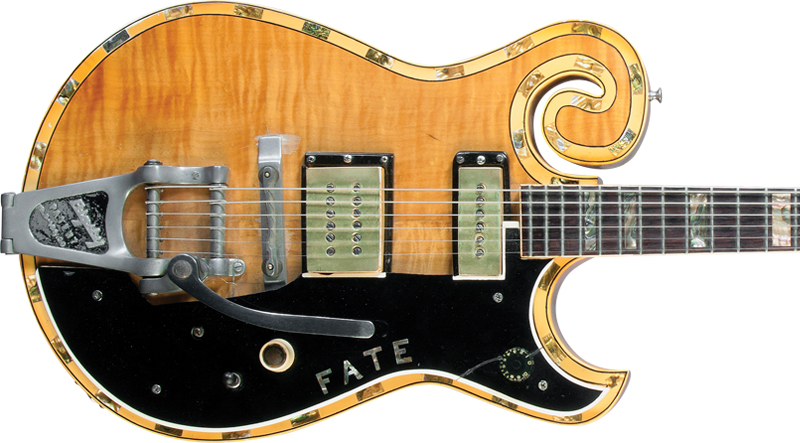
In ’56, fellow country musician Fate Vanderpool visited Gower’s workshop and saw several custom guitars, acoustic and electric. Vanderpool had been living in Nashville since ’52, working alongside guitar greats like Grady Martin, Hank Garland, Billy Byrd, Spider Wilson, and Chet Atkins. He immediately placed an order. By the time the guitar was completed on March 7, 1958, Vanderpool was in the military, so he allowed Hank Garland to hold it until he was to be discharged. Garland had worked with Gower to wind the pickups in Vanderpool’s guitar using an old sewing machine modified for the purpose. The pickups were of a double-coil design and Vanderpool felt they may have had an influence on Gibson. However, since the humbucker designed by Seth Lover was being used in Gibson guitars by mid ’57, that seems unlikely. Regardless, Vanderpool used the Gower on many early Nashville recording sessions, including the second one ever in RCA Studio B, and in Harold Bradley’s Quonset Hut Studio.
The Vanderpool has a semi-hollow single-cutaway Florentine body, figured maple top, back, and sides, Bigsby vibrato, beveled-edge multi-ply plastic pickguard/control plate with mother-of-pearl inlay that reads “Fate,” double-coil lead pickup and single-coil rhythm pickup (both with handmade unplated sheet brass covers), height-adjustable compensated aluminum bridge, three white TV-style knobs (two of which were later replaced), one-piece figured-maple neck with ebony heel cap, a stylized peghead shape that vaguely resembles that of a Gibson F-style mandolin, three-piece (walnut/black plastic/walnut) peghead overlay with etched logo, abalone truss-rod cover, metal nut, Brazilian rosewood fingerboard with abalone rectangular inlays and single-ply white binding, multi-ply binding on body top and back edges, and abalone trim along the top edge.
Also in 1958, Gower built a replacement banjo neck for Grand Ole Opry star Earl Scruggs. For years afterward, the Gibson “bowtie” fingerboard from Scruggs’ original hung on the wall of the Gower shop.
Circa 1960, Gower moved to near the corner of Nolensville Pike and Thompson Lane. The business was still in the garage, but by then he employed several family members as well as guitar legend Leon Rhodes, who did final assembly and quality control. He remained active as a musician, operating his nearby recording studio with Travis Moore and moonlighting as recording engineer in Faron Young’s studio on Division Street.
In ’65, Gower was approached by guitarist Billy Grammer with the idea of opening a guitar factory. After some discussion, Gower, Grammer, Clyde Reed, and Fred Hedges started the Grammer Guitar Company, with Grammer owning 51 percent interest. Gower designed instruments while Hedges built jigs and fixtures. Before production had begun, though, Gower learned Grammer intended to use his name only on the peghead, prompting Gower to depart.
In ’67, Gower started Nashville Musical Instrument Company. In a newspaper article from the time he said, “It seems like everybody is taking up the guitar. There has never been a time when the demand was so great.”
Once again, he employed family members in production, but the company was out of business by ’69. The following year, Gower moved his family to Franklin, where his son opened a printing business. He continued to build guitars into the ’70s before selling most of his remaining machinery to Tut Taylor late in the decade. In an interesting coincidence, when Grammer Guitars went out of business in ’71 (having been owned by Ampeg after ’68), Taylor bought the remaining stock and machinery, using the latter to run his Tennessee Banjo Company.
After Jay Gower’s passing on February 26, 1992, some of his incomplete guitars and parts were sold off, then later assembled by others. Anyone considering the purchase of one today being offered as a true Gower build should be aware of this and conduct the necessary research.
This article originally appeared in VG August 2017 issue. All copyrights are by the author and Vintage Guitar magazine. Unauthorized replication or use is strictly prohibited.





 The Carpe Diem is Fire Custom’s crowning achievement: a two-sided pedal reminiscent of a Marshall plexi. Like a plexi, it enables the user to blend the high treble and normal channels with tone knobs instead of with an instrument cable. The Carpe Diem’s toggle allows you to choose between Classic (Marshall JTM45) and Hot Rod (think JCM800 on steroids). The cascading Bass gain knob and a Treble gain knob work in tandem to sculpt delicious crunch. Master Presence and Master volume controls work the top-end frequency and the output level. One switch turns the pedal on while a second adds gain and a bump to the volume level. Sporting serious bottom-end, the Carpe Diem is dynamic, compression-free, and full of plexi attitude.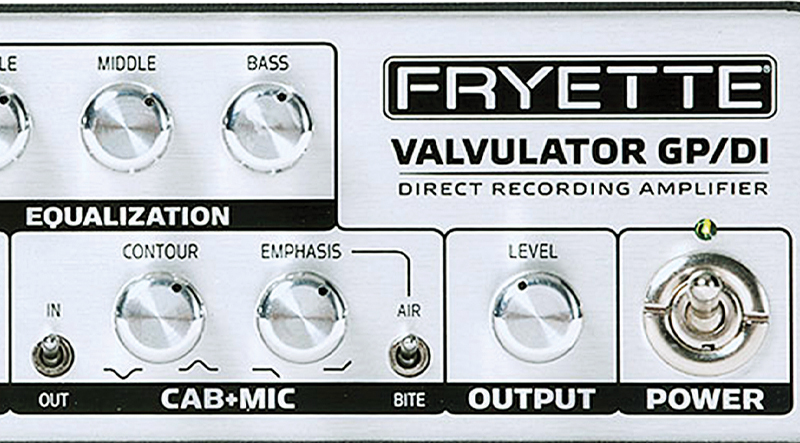

 Tested in a home studio, this Fryette performed incredibly well. In short order, guitar sounds ranging from dead clean to wailing overdrive were laid down to several GarageBand tracks on a Mac, and the results were far thicker and richer than your average digital “amp sim.” Beyond its meaty, convincing recording tone, the Valvulator has several other uses, including as a guitar preamp for gigging. Send the output to a mixer and PA and the audience will be surprised you’re getting such a mighty tone from a small tabletop box.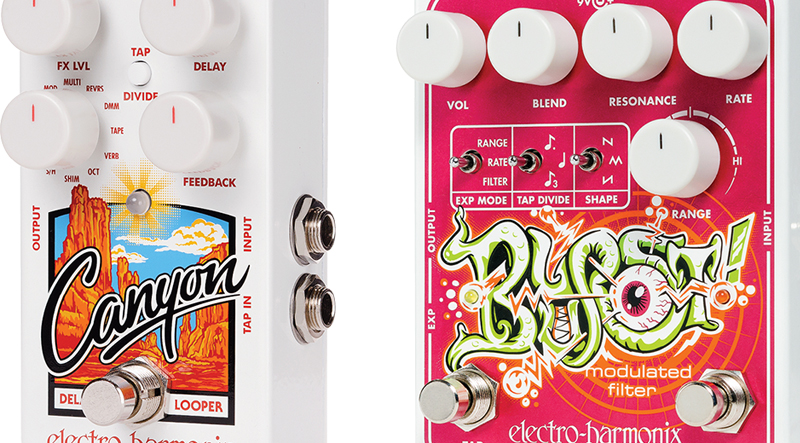

 Most vintage aficionados admire the grand old acoustic archtops of the 1920s and ’30s, but admire them from afar. They’re beautifully built and boast lovely tone, but they have limitations as to when, where, and how they are played. Epiphone, one of the grandest of the old archtop makers, gets all this and has launched its new Masterbilt Century collection to appeal to everyone.






 In Nashville today, there are enough professional luthiers to meet the need for guitar repairs, modifications, and custom builds. In the 1950s, though, musicians typically returned broken instruments to the manufacturer and often waited months or years for them to be returned, sometimes with sub-par results.
 In ’65, Gower was approached by guitarist Billy Grammer with the idea of opening a guitar factory. After some discussion, Gower, Grammer, Clyde Reed, and Fred Hedges started the Grammer Guitar Company, with Grammer owning 51 percent interest. Gower designed instruments while Hedges built jigs and fixtures. Before production had begun, though, Gower learned Grammer intended to use his name only on the peghead, prompting Gower to depart.