Guitar fanatics find inspiration from different players. And if Woody swapping licks and practicing “the ancient art of weaving” with Keef while playing his famous pearl-topped, single-cut Zemaitis gets your juices flowing, one look at Teye’s Master Series Knights Templar just might send a shiver up your spine.
Prices: $37,500, Master Series (as tested); $12,950, Emperor Series Info: www.teye.com
When discussing this guitar built by Texas-based luthier/musician Teye, it’s impossible to put aside the remarkable story of the Knights Templar, given the degree and nature of its ornamentation. The mosaic of white mother-of-pearl that covers the top is quartered by synthetic coral in the shape of a red Templar cross. Teye’s incredible engravings on the aluminum metalwork, front and back, refer to the legendary warrior-monks with symbols, Latin inscriptions, and a vision of hard-charging knights, bannered lances aimed at the enemy. Every piece of pearl is figured, and every detail from the headpiece, with its custom tuner buttons, to the ornate pickup bezels rings like steel on steel.
The wasp-waisted body and set neck are carved of korina, a legendary lightweight and resonant solid-body tonewood. The guitar’s proprietary Shipwreck finish is applied and rubbed out by hand, creating a warm contrast to the bright white pearl. The neck also features Teye’s trademark trompe l’oeil “tiger-neck” finish.
Vital statistics include a lightly arched bound ebony fingerboard with a 25.5″ scale and Bedouin pearl inlay at every fret. The bone nut is 1.75″ wide, and the body is fitted with a Teye SuperSustain bridge and tailpiece. Acoustically, the guitar has a distinctive ring and long sustain, the sonic impact of korina with overlaid pearl and machined aluminum.
The electronics are a new development for Teye, the all-analog Master Mojo wiring with controls serving varying functions. The five-way selector in position 5 (up), selects neck pickup only, 4 selects neck and bridge out of phase, middle is neck and bridge in phase, 2 selects bridge and coil-tapped, and 1 (down) is bridge pickup only. That’s a thoughtful double humbucker wiring, but it only scratches the surface of possibilities.
Teye has liberated a variety of tones by using potentiometers instead of mini-switches. As per Teye’s suggestion, the Templar was plugged through a single-channel tube amp.
Teye’s suggested presets provided a good starting point for experimentation. The Mojo wiring accessed a spectrum of useable sounds, rhythm and lead, through manipulation of the proprietary potentiometers with end detents that allow the player to bypass the Mojo wiring and click into the Templar’s “natural tone.” With or without the Mojo circuit, the Lollar humbuckers spoke authoritatively when a strong solo voice was called for – inventive wiring, resonant timbers, extraordinary metalwork, and pearl top all conspiring to deliver classic rock lead sounds. Just a suggestion of finger vibrato made for terrific sustain with any voice.
Finding the right place in a band mix can be a challenge, especially with multiple electrics in full roar, but the Mojo circuit summoned funky and fat rhythm sounds with full-bore humbucking voices or snarly, slinky single-coil tones. Stomping in both gain stages of a Seymour Duncan Palladium overdrive pedal made the Templar practically dance by itself.
The Teye Templar is deceptively lightweight despite the décor, and it sits comfortably in the lap and on the strap. General playability is tuneful and silly-easy on the sizeable, comfortably carved neck. Just holding the Templar is an experience, because the concept and execution are awesome. If it didn’t sound and play so well, it’d be the most amazing display piece ever. As it is, it’s simply amazing.
This article originally appeared in VG September 2017 issue. All copyrights are by the author and Vintage Guitar magazine. Unauthorized replication or use is strictly prohibited.
Jensen has been in the speaker game for a very long time and its wares are some of the most sought-after vintage drivers. The company’s new 12″ Tornado Stealth series stands as proof it remains aware of the fact guitar players want not only to create sounds they’ve heard on their favorite songs since the ’60s, but also want to invent unique sounds of their own.
We had a go with all three versions – 65-, 85-, and 100-watt – using a Strat plugged into a modern 20-watt “lunchbox” amp.
The 65-watt version offered beautifully rounded lows that were punchy and quick to respond to transient changes. The mids were airy and sweet, and the highs had a warm, slightly rolled-off attack characteristic. With a bit of overdrive, it sounded gutsy and warm, with a low-mid grunt that gave the highs room to breathe and expand, with a kiss of compression to top it off.
In comparison, the 80-watt had more air and brightness in the high mids, with tighter, more-controlled lows. The mids were punchy and present with a softer attack transient. With overdrive added, it took on a bright, Champ-like feel… if Leo had made the Champ a 1×12 combo. Of the three speakers, the 80-watt offered the most cut, with a healthy amount of compression to help it stand out in the mix.
Finally, the 100-watt felt rotund and laid-back in the lows, with ever-so-slightly scooped mids. The highs were punchy and warm – the character of the speaker was not unlike the distant cousin of a Bassman –big and relaxed transients that slosh around beautifully while sticking to the playing dynamics. With overdrive, pick and playing attack were more accentuated, with harder picking belching out striking and bold tone.
Note, too, that Jensen designed the Tornado Stealth with neodymium magnets, which are incredibly light, so you’ll find it surprising easy to lug a cab up a flight of stairs when it’s loaded with these.
The Tornado Stealth is truly a pleasant surprise from one of the old masters of speaker design. While maintaining the same base tone, it offers different flavors, each with unique strengths that sound and feel incredible to play. If you are in the market for new guitar speakers, the Tornado Stealth gets high recommendations.
This article originally appeared in VG September 2017 issue. All copyrights are by the author and Vintage Guitar magazine. Unauthorized replication or use is strictly prohibited.
National’s new Pioneer RP1 is that devilish creation. No one’s built a guitar quite like this before.
The Pioneer boasts the steel body of a 1930s Duolian straight from a Delta juke joint. But it’s built in a thin style, with a shape and size akin to a Les Paul. Finish choices include National’s Chipped Ivory or Black Rust. The hardware has a fittingly cool rubbed-steel visage, from the Gotoh machine heads to that distinctive National tailpiece of yore.
The centerpiece of the body is, of course, the resonator cone, set safely not behind an old-style “hubcap,” but a full metal cover plate. And the real sign of this guitar’s singularity? You can play the Pioneer acoustically, you can go electric, or you can opt for a blend of both – which is where the magic lies.
The RP1 features two pickups: one you can see, one you can’t. The obvious neck pickup is a Lollar P-90, a great choice for this guitar’s vibe. It captures the strings’ sound, of course – and snarls like a junkyard dog hit by lightning, offering a growl ideal for deep blues or primal rock and roll.
Hidden away beneath the bridge is a Highlander piezo that picks up the unique voice of the resonator. Select just the piezo with the three-way toggle and you can play acoustic-electric, as if you were miking the cone itself. The sound is an accurate amplification, suitably raspy and soulful.
But, blend the two pickups with the aid of the Pioneer’s onboard active electronics and you get the whole deal – P-90 raucousness and that unique National resonator razor-edged voice.
The neck is maple with an ebony fretboard and a 25″ scale. And with its slim, comfortable profile, it’s as playable as a Les Paul, too.
And that’s a good thing, because the Pioneer inspires you to do more than just slide. You can get Elmore James’ sound, certainly, and that smooth fretboard is lovely to play bottleneck on. But the neck and the pickup options will also push you to use the RP1 in ways you might not have expected.
With the P-90 active, you can dive into blues or rock riffs with a solid bottom-end grind. Tweak the Tone control, and you can go from bass-y to a cutting treble. In fact, the neck’s so nice, you can shred on this guitar – not something you can say about most 1930s Nationals.
Switching over mid-song or within a solo to the blend of P-90 with resonator piezo is the coolest thing. That electrified resonator combo sound is unique and wondrous, and it makes you question what we’ve been missing all these years.
Kudos to National for its farsightedness in voicing the Pioneer. They didn’t just go for the obvious blues tone, but instead created a guitar with a flexibility that will inspire you to play it more and more, harder and harder.
Our only suggestions might be to alter the orientation of the pickup-selector switch to be up/down for more ease in quickly swapping between options while playing. And we’d replace the stock strings with a heavier gauge or flatwounds – ideally, both. This would further enhance the Pioneer’s unique natural tone and broaden its sonic range. But those are both obvious minor things that can be changed easily.
National has created something new and special in its aptly named Pioneer. And you don’t need to sell your soul to own one.
This article originally appeared in VG September 2017 issue. All copyrights are by the author and Vintage Guitar magazine. Unauthorized replication or use is strictly prohibited.
To use a slightly skewed metaphor, John Brown builds guitars to the beat of a different drummer. After all, who wants a custom builder without vision, churning out yet another version of a Strat or Les Paul?
Brown heads Brown’s Guitar Factory in suburban Minneapolis-St. Paul. He’s a third-generation instrument builder and repairer, and his atelier has been a going concern since 1982. There, he makes a range of no-nonsense electric basses, guitars, and lap steels that you won’t confuse with anyone else’s wares.
Witness the BGF chambered electric. It’s built with a padauk-wood chambered body core topped by stylish book-matched lacewood and highlighted by Brown’s unique signature f-shaped sound holes. Other exotic woods are readily available.
The neck is crafted from quarter-sawn two-piece Honduras mahogany with a fingerboard of Madagascar ebony and a headstock crowned by a lacewood faceplate and cherry medallion. The body is finished in a clear acrylic urethane while the neck is hand-rubbed with a modified oil, making for a fast, liquid action. In short, you needn’t worry that another shredder will show up with anything similar.
So, the guitar is supermodel gorgeous. But how does it sound?
It sounds uniquely itself. And for a variety of good reasons. The two BGF special-formulated Alnico II humbuckers are easy to spot, but not so the individual piezo pickup saddles hidden within the TonePros tune-o-matic bridge.
Controlling this array of pickups are push/pull Volume knobs providing series or parallel arrangements. Or use the Tone control and three-way toggle to opt between the magnetic pickups. Alternately, there are an Acousti-Phonic volume pot and Mid Boost switch to choose from. Finally, a Quick Switch “mini” can blend the magnetic and Ghost signal. Should you so desire, a Ghost Hexpander mod offers synth/MIDI capabilities.
Going full open with all pickups blaring, the BGF is pure beast. It can do crunch and grind, but with a sharp edge to cut through even the loudest, proudest rhythm section. Or you can go for a warm, rich voice, then switch over to sheer shriek for a solo. The sounds this guitar can make – as you may expect from the pickup array and that cool chambered body – are near endless, from lullaby sweet to wake-the-neighbors rocking.
Should you want something a little more special, Brown offers guitars in six- or seven-string versions as well as his “Fretted/Less” and fretless editions.
This article originally appeared in VG September 2017 issue. All copyrights are by the author and Vintage Guitar magazine. Unauthorized replication or use is strictly prohibited.
Subjective as it is, the term “mojo” usually refers to gear that’s been played-in over the years. Eastwood tries to counter that perception with their cool reissues, two recent examples being the SD-40 Hound Dog and the Classic AC.
The former is Eastwood’s take on the Kawais/Teiscos/Kingstons of the 1960s, those infamous Japanese imports with their numerous pickup configurations. Eastwood has culled some of the best features of those guitars in creating the four-pickup Hound Dog, a tribute to the guitar played by the late rowdy blues ace Hound Dog Taylor.
The SD-40’s specs include a basswood body with tortoiseshell pickguard and four single-coil pickups, each with an on/off switch (mounted on a chrome plate) and Volume knob, as well as a master Tone control. The bolt-on maple neck features 20 frets and a rosewood fingerboard decorated with Tylenol-shaped inlays, all in a 25.5″ scale. The neck is more deeply C-shaped than most Eastwoods, but comfortable. The Hound Dog’s standalone bridge and spring-action roller tremolo are of clear Jaguar/Jazzmaster ancestry.
Plugged in, the SD-40 is a blast as you combine the pickups in any sequence. Given that these are four single-coils, expect some 60-cycle hum depending on the pickup combination. However, this is the normal tradeoff for genuine vintage tone and, honestly, the combination of the first (bridge) and third pickups was twang heaven. Using a Vox-style amp and overdrive pedal, the SD-40 produced about as good a roots/blues/country tone as you’ll hear – deeply fat, woody, and resonant, with the perfect amount of bolt-on clank.
Granted, the SD-40 Hound Dog plays like a typical mid-price solidbody and its intonation requires tweaking. But compared to the original, it’s a far superior animal. Killer vintage tone like this doesn’t come along every day – the SD-40 has mojo up the wazoo.
In contrast to the button-crazy Hound Dog, Eastwood’s Classic AC is a basic rock-and-roll machine, based on the 1963 Gretsch Jet Firebird of AC/DC’s cofounder and ex-rhythm ace Malcolm Young. Like Young’s sanded-down axe (the original finish was red), the Classic AC has a natural, figured maple top on a chambered mahogany body. It sports a 24.75″-scale mahogany set neck with 22 frets on a rosewood board. And check out those shark’s-tooth inlays. Electronics include two humbuckers, a three-way toggle, master Tone control, and a Volume knob for each pickup. The neck knob’s location on the lower cutaway may seem like an oddity, but if you’re creating staccato volume on/off effects or smooth swells, it’s actually pretty handy.
Cranked up, the Classic AC exhibits its rockin’ heritage at any volume. Given Mr. Young’s reputation as one of the greatest rhythm guitarists, you might think this axe is primarily a rhythm machine. No question, power chords sound huge, clean, and noise-free, but the AC is also a fine lead instrument, particularly when using the neck pickup for fat creamy leads, à la Clapton and Santana.
Overall, the Classic AC is a solid piece of workmanship and a fine value. If you just wanna rock, this feisty Eastwood plank will serve you ably.
This article originally appeared in VG September 2017 issue. All copyrights are by the author and Vintage Guitar magazine. Unauthorized replication or use is strictly prohibited.
For Andy Summers, it would be easy to compose Police-like music – reggae rhythms, clean/chorus guitar tones, etc. But fans learned to expect the unexpected beginning with his 1982 collaboration with Robert Fripp, I Advance Masked, along with his soundtrack work on the 1986 hit film Down and Out in Beverly Hills, his 1991 jazz-fusion solo effort World Gone Strange, or the 2007 guitar duet with Ben Verdey, First You Build a Cloud.
He continues the approach with his latest solo effort, Triboluminescence. Its title, he said, “means creating light from dark, which I believe is a great metaphor for any creative act and, especially music,” and it shows how one of the most influential guitarists of the late ’70s/early ’80s is still trying new approaches.
How does Triboluminescence compare to your 2015 solo album, Metal Dog?
In a way, I think it’s an extension. It’s interesting, because I haven’t made a solo record like Metal Dog for a while; obviously, I had time on the road with the Police [in ’07-’08], I made a record in Brazil, and I put out a rock-band record. So I feel like I’m just getting back to it, and it started again with Metal Dog, which actually started as a project for a dance company in New York that didn’t quite work out. So, I re-molded those tracks into what became Metal Dog. Between discovering new areas and new sounds, trying to make everything sound fresh and new, the record went really well. It was well-reviewed, which got me fired up again. So, Triboluminescence is extending that idea, going deeper into it.
“We made Reggatta in 10 days and at that point we had a musical identity; we were full of fire and couldn’t wait to prove it.”
You describe the music as “new exotic.”
When you put out a term like that, the media goes, “Oh, we haven’t heard that one before.” So, it gets picked up. But I think it’s a fair enough description because it’s not exactly a jazz record, it’s not a jazz-fusion record, it’s not an instrumental-rock record. It goes to other interesting areas where I’m creating sounds with weird alternate tunings. On guitar, I’ve played with chopsticks and drumsticks and looped different percussion instruments, trying to create interesting, fresh guitar tones that don’t sound like any old-style stuff. I try to bend it and create a new genre with it. And I think it is exotic – it certainly has influenced my life, which has involved a phenomenal amount of travel around the world, particularly these days in China and Southeast Asia.
So, I take all these things playing into it, and that’s the way it comes out. You can dream of this, aesthetically, but you’ve got to have the ability to create it.
(LEFT) Fender Esquire. (RIGHT) Summers bought this ’61 Strat during an early Police tour of the U.S.
So it’s like you’re a sponge, soaking up what is around you as you travel?
Well, “sponge” sounds too passive. When I travel, it’s a much more active participation. I do a lot of photography, so a lot of my travel is fairly obsessive because I go with a camera and I’m observing and taking part in the culture in a very interested way. I’m not a tourist – I go into a very different mode. I think my sensibilities are informed in a different way than the average tourist, and photography gets me into it. But, music is part of it. One of my great experiences of the past couple of years was in West China, photographing this amazing orchestra that played old Chinese instruments – incredible 11th-century music that sounds sort of 21st-century avant-garde. So that’s more my participation.
Do you get noticed when you visit out-of-the-way places?
Not so much “You’re the guy from the Police!” It’s more like “You’re a white guy with blonde hair. What the hell are you doing here?” But I get it occasionally. The world, as we know, is shrinking. They have internet even in far parts of Western China. There isn’t much they haven’t seen.
(LEFT) An L-plate Fender Jaguar. (RIGHT) National Glenwood
What gear did you use on Triboluminescence?
I have a sort of magic paint box for a studio, where I have many guitars, many effects pedals, a couple sets of electronic drums, and a bunch of loopers including a Roland 505. My standard working guitar is an old Strat – I always start with that to make the tracks, then later see if I want to change it to a Les Paul, 335, a Gretsch, or whatever. Generally, when I have the overall picture of a track, I’ll get specific about the guitar, the tones, and just see if the solos are really where I want them to be. In terms of gear, most of the last two albums started from a sound – a slight quality created by whatever pedals I marry to get something interesting and idiosyncratic. I’ll find something like that and record 16, 32, or 48 bars, then play against it and see if it creates a spark. That’s basically what I do.
Summers ’79: Richard Galbraith. Summers onstage in 1979 with his fameed Telecaster Custom; here’s how it looks today (RIGHT).
Tell us a bit about the Telecaster you used in the Police.
I bought it off a kid in Los Angeles prior to the Police for like, 200 bucks. He wanted the money and I needed a guitar. I was very fortunate; I realized later that night, “This is a really great guitar. It’s magical.” And I offered to give it back, but he didn’t want it. For me, it was a life-changing instrument. I still have it, obviously – I can’t get rid of a guitar that changed everything for me and I used to record almost every single Police track. It’s a hybrid instrument, whoever had it put a Gibson humbucker in the front and an overdrive switch powered by a nine-volt battery. There was an out-of-phase switch on it, as well. So, somebody really played around, and it was an absolutely kick-ass guitar. I barely play it anymore, though.
What year is it?
I think it’s a ’61.
And what about your red Strat?
I acquired that very early on in the Police, when we were touring the States; it’s a great guitar with fantastic tone and a beautiful neck. I ended up using it more than the Telecaster. Fender remade the Telecaster (the Custom Shop Andy Summers Tribute Tele) and copies of the Strat, which I thinik is a ’63. They’re both very significant guitars for me. The reissue of the red Strat is what I play every day. It’s a wonderful guitar.
You also have an ES-5 Switchmaster…
…Because I grew up listening to great American jazz players. For some reason, I associate that guitar with Tal Farlow, who was not one of my greatest influences – he was too fast for me, and not quite as lyrical as some of the other players I preferred. But it’s very much that ’50s/overbuilt jazz guitar. It’s wonderful – large, with three pickups. I don’t even remember where I got it, but it was many years ago.
(LEFT) Summers’ Gibson Johnny Smith. (RIGHT) Gibson ES-150.
You also have a Panormo classical.
I was lucky to get that. That guitar belonged to the first guitar teacher I ever had, when I was about 12 years old. He was an old guy and he died, and many years later I went back to the hometown and found his brother. I asked, “Whatever happened to all of his instruments?” and I bought them off his brother – a beautiful 1920s English banjo and the Panormo.
Louis Panormo was one of the very early classical guitar makers. I think he was Italian, but worked in London in the 1840s. He’s fairly well-documented – his guitars are in museums.
The only thing about the Panormo, it sounded very sweet – it’s a very quiet little guitar – but of that period, my teacher carved his initials in the neck! Years later, I hooked up with this great luthier in Los Angeles who rebuilt the neck – basically restored it. So, the guitar looks really beautiful now. It’s not one I take out and play, but I connect it with that teacher so I’ve never let go of it.
I bought that at a guitar shop in Sydney, Australia. I can’t remember the name of the shop or whether I was on tour with the Police or on my own when I heard about this shop with all these beautiful vintage guitars. The first time I went, I got all these guitars – $5,000-$6,000 each. They were high-priced, but they were genuine vintage instruments. When I went back many years later, they had Strats and Teles that were $70,000 and $80,000! Everything had changed – I was gasping at the prices. I’m trying to be anonymous and friendly, chatting and saying, “These prices are insane.” And a sales person pulled a guitar from under the desk – a beat-up old case with a Martin that was beat to s**t. So, I started playing it, and I thought to myself, “Hmmm, this is the greatest guitar I’ve ever played!” I figured, “It looks like crap, he probably doesn’t want anything for it. I’ll maybe offer up to $20,000.” I looked up, trying to act uninterested, and said, “This is kinda nice. How much?” He says, “$200,000” (laughs) I said, “What?!” He goes, “It’s a D-28 from 1945.” Obviously, I didn’t buy it, and I was kind of pissed – I really wanted that guitar.
I was involved with Martin at the time, and spoke with a person there when we got back to the States. I told him, “Man, I saw this D-28…” and he said, “We just made 10 reissues of those in our Authentic series, where we go back to the original way certain models were made including using animal glue, which makes all the difference.” Long story short, I did get a Martin D-28 Authentic.
Which amps did you use in the Police?
I started with a Twin Reverb, and eventually graduated to Marshalls. I used old Marshalls back then.
Andy Summers: Dennis Smith.
Your clean/chorus guitar sound became a trademark and was often copied by other guitarists at the time.
I created it sort of out of necessity; my mission was “We’re going to play for two hours each night as a trio,” so I wanted to have this fantastic, colored guitar sound that was different for every song. So, I used the Echoplex, then a chorus, and a few other pedals… envelope filters. As we went on, I acquired more stuff and got a Pete Cornish board. But what was driving it was to invade and push the edge of what the guitar was supposed to sound like, and make it really interesting over a show. So, it wasn’t just one straight sound all the time. I could move it around. And it was appreciated by many millions of people (laughs). Of course, it’s very tired and a bit “retro” now; I’m not very keen on it anymore. But in those days it was new, fresh, and exciting.
Is it true that your guitar part on “Every Breath You Take” was added at the last minute?
On the surface, it seemed like a simple, straightforward song – I, IV, V, backward and forward, with an interesting section where it goes to the flat 5th from A to F in the middle. But there just was no agreement on how. These were the days when things were getting a little tough, personally, and in the interaction between members of the band. We couldn’t agree on how the song was going until we had lunch one day and Sting said, “Go in there, make it your own.” And of course, I had this whole “Police guitar thing” down because we hadn’t stopped playing for years on end. So I kind of knew what to do with it; I put the arpeggios down and they all stood in the control room and looked out the window as I went in, pretty much played it in one take, and everybody applauded. That was it – “the guitar riff heard ’round the world,” and it became our first #1 in the U.S.
(LEFT) This Panormo, made in 1843, belonged to Summers’ first guitar teacher and was aquired from the teacher’s family years after his passing. (RIGHT) Summers found this Martin O-21 at a shop in Australia.
Which Police album is your favorite?
Maybe Reggatta de Blanc. Because the first album (Outlandos d’Amour) was great, but by the second one we were starting to take off. We made Reggatta in 10 days and at that point we had a musical identity; we were full of fire and couldn’t wait to prove it. It’s the one with “Message in a Bottle.” We were flying. Everything was going so well.
Is it true that much of the material for the third album, Zenyatta Mondatta was thrown together quickly?
Well, but we were supposed to have a month to make it, and we went to Holland to record. Then, in the middle of it we were told, “You’ve got to go to England now for a week, to do this giant gig at Milton Keynes Festival. It’s a big deal.” So, in the middle of the album, we stopped and went to London for a few days, did this big show, then came back to finish. But when we listened to it, we didn’t like the mixes. So, we remixed the whole album in one night, then left for tour the next morning! And that’s the album that broke us in the States.
Would you consider performing again with Sting and Stewart?
Well, I’d have to have the most money… and they’d have to beg.
This article originally appeared in VG September 2017 issue. All copyrights are by the author and Vintage Guitar magazine. Unauthorized replication or use is strictly prohibited.
Digging through the Gov’t Mule catalog recalls a legacy of great music. More than just another jam band, the group spent the last 22 years not only mining the Southern-blues-based rock they adore, but pushing boundaries and taking risks. Guitarist Warren Haynes continues to be the band’s guiding light. For many, his top-tier finesse and fluent fretboard vocabulary would be enough to pack venues around the world. But dig deeper and you’ll hear a crafty songsmith and passionate vocalist conversant in America’s diverse musical tapestry.
Prolific, humble, and hard-working, Grammy winner and guitar/gear aficionado Haynes creates meaningful music, applying himself as an open vessel. Case in point is the band’s latest album, Revolution Come… Revolution Go. With an array of influences at his disposal and a skilled ensemble behind him, Haynes creates colorful-yet-sincere sonic portraits. Its 12 songs reflect the world around him, bearing witness to a contentious political and social climate.
On the new album, you worked with producers Don Was and Gordie Johnson. Did that result in a different approach?
Gordie and I had worked together a lot – this was the third Mule record we co-produced, along with one of my solo records. We know each other’s work habits very well, including our strengths and weaknesses. I’ve known Don for three or four years and we’ve played a lot onstage, but this is the first time we worked in the studio. It was great. He co-produced two songs with me – “Pressure Under Fire” and “Dreams & Songs.” He’s a wonderful presence in the studio and we’ve become friends.
Both guys are great at helping steer everything in the right direction. It was a pleasure all the way around.
The press release says there was a change of course while it was being recorded. What happened?
We’d been writing and rehearsing and had five days of pre-production with Gordie prior to going in the studio. We had 22 songs and were scheduled to start recording November 8, which was Election Day. We loaded in, set up mics, started getting sounds and all the tedious stuff you do the first day, and every time we’d take a break, somebody would glance at the news on TV. Nobody thought Trump could win – we figured all the talk was the normal media blowing everything out of proportion. And once we started recording, we immersed ourselves in the music. When we came out at of the end of the night, Trump was president.
It changed the tone for everything. We’d written a few political songs, but wound up, day by day, finding our way, vibe-wise. In some ways, it had a reverse affect – it made us focus on some of the positive-message stuff. There are a lot of songs that talk about everybody working together, getting out of the place we’re in now, which is the biggest divide I’ve seen in this country in my lifetime.
Were you concerned about alienating some fans via politics?
We didn’t take a hard stance; most fans know where we stand. The Allman Brothers and The Grateful Dead raised over $1 million for Obama’s campaign. We look at songs like “Stone Cold Rage” as simple observations of what’s going on. The takeaway is that no matter who wins an election, approximately half the people in this country are going to be pissed off about it because that’s where we are. I’m just observing what’s going on, and songs like “Revolution Come… Revolution Go” and, for that matter, “Stone Cold Rage,” are a bit tongue-in-cheek – a humorous look at it. It’s not intended to be visceral, but it is analyzing a pretty vitriolic situation. There are more of the songs talking about everybody coming together.
Warren Haynes: Danny Clinch.
If fans were opposed to your politics, they probably wouldn’t be fans.
It’s a little odd because there’s this faction of people who don’t want celebrities to speak out about their political views. But I’d ask those people, “If somebody asked you about your political views, wouldn’t you answer the question?” I think they would.
Many music fans simply want to tune out the world and hear you sing and play guitar. They want an escape from conflict and politics.
I understand that, and I think the record is good for that, as well. It’s music first and foremost. Whatever political connotations exist are miniscule compared to the overall feeling you get while listening. Political connotations have been on every record we’ve ever done – it’s nothing new. If someone is spooked by the title, they should first listen to the music, then form an opinion.
“Sara Surrender” has a ’70s soul vibe. What went into that track?
“Sara Surrender” was the last song written for the album. I wrote it after we finished recording in Austin and had this sense that, “Maybe this is the missing piece to the puzzle.” We went to a studio in New York City and recorded it in one day. It was brand new, so we were finding our way. I played the jazzy stuff on a ’58 Gretsch jazz body that was gifted to me recently and has a really unique sound.
I love the way the drums have an Al Green feel. Danny Louis’ organ is prevalent in the mix and the bass line drives the tune, so there are times when the guitar is not even present, but it weaves in and out in a cool way. It reminds me of Curtis Mayfield, Hi Records, and some of that era of soul music.
Which guitar did you use on “Stone Cold Rage?”
I actually played a Tele for the first time on a Gov’t Mule record – a Whitfill Custom T Style. The solos are live – I really prefer to have a performance that includes playing the solo live – but I overdubbed a little piece at the end. I also played the Whitfill for the first half of “Drawn That Way,” which was cut in two pieces; the first is that Tele and the second is my ’59 Les Paul, which made an appearance on quite a few songs on the record.
“Political connotations have been on every record we’ve ever done.If someone is spooked by the title, they should first listen to the music, then form an opinion”
Is that Les Paul new to your collection?
I’ve had it about three years, and it was well broken-in before I got it (laughs). I’ve played it a lot and it just sounds beautiful.
Is that your main guitar right now?
My signature Les Paul is probably what I play more than anything. I bounce back and forth mostly between Les Pauls, Firebirds, and 335s. I did play an SG on a couple tracks. On “Revolution Come… Revolution Go” it’s the SG tuned down a whole step, which was very bizarre. It had a huge sound doing that.
When Gordie and I went into rehearsals, we were talking about options. I think when we were writing on the bus, I had an SG tuned down, and it carried over from that. I hadn’t played SGs like that on previous records, so it was nice to get a bunch of different sounds, but I did use a lot of guitars.
What’s unique about your signature Les Paul?
It’s based on a ’59 body with a ’58 neck, with Burstbucker 1 and Burstbucker 2 pickups. It has a TonePros bridge, but the main difference between it and a normal Les Paul is the circuitry designed by Peter Miller and John Cutler, who did a lot of work for The Grateful Dead. Basically, when you engage the switch, the tone doesn’t change as you turn the volume down. On a regular Les Paul, when you turn the volume down it gets duller and duller, which is great – I get a lot of great sounds that way. But if you want all the high-end to come back, the switch gives you a lot more tone options. That’s the most obvious distinction.
What are your 335s?
I have a ’61 dot-neck I play a lot, and I have a Custom Shop natural-finish; for a new guitar, it really records well. The ones I take in the studio are the ’61 and a ’58 B.B. Special I used to play solos on High & Mighty.
There are plenty of other Gibsons in your road cases.
A lot of the stuff I’m using onstage is not only for different sounds, but different tunings. I’m doing some capo stuff these days because Gov’t Mule, over the course of a tour, will do 150 songs. Those guitars are out there for different tunings, some are capoed. It’s nice to recapture the sound of what you originally achieved. I also have a 12-string Les Paul that goes out.
Why don’t you have more Teles in your arsenal?
It’s never been my voice in the past, but I use it on three songs on the new record, so I’m going to be carrying one or two on the road. Maybe it’ll spark some experimentation. That’s always the fun part – to be inspired by a sound that’s not in your wheelhouse. Every guitar and every sound inspires you to play differently. We do three-hour shows, so while I’ll sometimes keep the same Les Paul for a long time, it really depends on the set list.
What amps are you using onstage?
Mostly my Soldano SLO-100, which has been drastically modified by Mike Soldano. I’m also using the Homestead 100-watt Red Head that’s become the replacement for my old Diaz CD-100. Peter McMahon, who makes the Homestead, is a continuation of Caesar Diaz’ stuff, so I’ve been using a lot of his stuff. Between those two amps I can get a lot of different sounds. One is kind of Fendery and one’s kind of Marshally. It’s between those and whatever guitars I’m using, and effects if the song calls for it. In the studio, I may have them working together, but live it’s either/or, never at the same time.
My effects work out of a Bob Bradshaw switching system. I can use up to three amps. In the studio, I always include a small one – in the case of the new record, an Alessandro made its way into every sound. I really like the sound of blending big amps and small amps.
Do you ever use pedals to get volume boost or gain?
Most of the distortion sounds are coming straight from the amp, and most of that is me changing pickups and turning the Volume knobs up and down. I’m constantly messing with both. I have a few things, like a Klon Centaur I take on the road, as well. I go through phases where I have a few distortion pedals I’ll try here and there, but I’m a creature of habit, too. Sometimes I’ll stay with what works. In my live rig, I have a Hughes & Kettner Rotosphere, an old Boss OC-2 Octave, a wah, and a couple different delays and tremolos.
I have a signature wah that really works good. It’s called a Wowee-Wah, and the really s is you can flip a switch so when you take your foot off, it turns off. When you put your foot on it, it turns on. You don’t have to click it. It’s great because when I’m using wah while singing, I can’t really pay attention to whether it’s on or off.
How does playing with someone like John Scofield affect the way you approach the guitar?
The first time John and I played together was in the late ’90s, when we recorded the live Sco-Mule record when Allen Woody was still alive. We rehearsed for one day, played two shows and recorded them. We wanted to put it out forever, but Woody passed away shortly after and things went another direction. We finally put out that record a couple of years ago and toured behind it.
Sco is one of my favorites. It’s inspiring to listen to all the stuff he does that’s uniquely him. One of the things that I found from the first time we played together was it caused me to play a little jazzier and him to play a little blusier, just because we’re listening to each other. I really love playing with John and I’d do it anytime I could get a chance. He’s one of the greats.
There’s a strong chemistry between the two of you.
For us, there has to be enough common ground and enough contrast to make it work. If you’re too similar, it won’t work, and if you’re too different, it won’t work. From the first time we played together, I had a blast.
Anything else Gov’t Mule fans can look forward to?
We’ll be playing festivals, staying extremely busy. It’ll be a solid year of promoting this record.
This article originally appeared in VG September 2017 issue. All copyrights are by the author and Vintage Guitar magazine. Unauthorized replication or use is strictly prohibited.
In any conversation about the dawn of hard rock and metal, several bands rise up –Led Zeppelin, Black Sabbath, Mountain, Grand Funk Railroad, and Uriah Heep. But you simply must celebrate the mammoth contributions of Deep Purple and its notorious guitarist-in-chief, Ritchie Blackmore.
The band’s 1972 album, Machine Head, put Purp at the top of the hard-rock heap and was a global smash thanks to the hit single “Smoke on the Water” and its monster riff. About 20 years ago, Blackmore stepped away from rock and began exploring the sounds of acoustic music from the Renaissance era, but he surprised fans by putting together a new lineup of Rainbow and releasing Live in Birmingham 2016.
With Blackmore once again on the prowl and Machine Head turning 45, we asked him to divulge whatever secrets remain from the sessions.
Fender’s Ritchie Blackmore Signature Strat.
Hidden Roots
Before the metallic crunch of Machine Head, psychedelia and blues-rock were evolving. In the latter half of the ’60s, the Yardbirds, Rolling Stones, Cream, Jeff Beck Group, Jimi Hendrix Experience, Vanilla Fudge, and Led Zep began pushing the envelope of heaviness – 1970 was watershed, with Deep Purple’s In Rock, Mountain’s “Mississippi Queen,” and Sabbath’s Paranoid.
By this point, Blackmore had converted from a Gibson ES-335 to a Fender Stratocaster – a gift from Eric Clapton (we can see Ritchie with a Strat in photos from the Fireball sessions, September 1970). The guitarist’s blooming style traces from Les Paul to the electrifying achievements of Clapton, Beck, Greenie, Page, and (considering Blackmore’s razor-sharp triplets) perhaps, Alvin Lee of Ten Years After.
If you tally these players with the classic Strat and Marshall stack, you’ll begin to see Blackmore morph into the young guitarist who stepped up to record Machine Head. Even Queen guitarist Brian May concurs, as he noted in The Ritchie Blackmore Story documentary.
“Ritchie was already a source of mystery and wonder – nobody could play like that in those days,” May said. “It’s not just the speed – there were other people who can play fast… but they aren’t Ritchie Blackmore.”
We asked Blackmore to fill in the gaps about the many guitarists who helped shape his early style.
“Les Paul was a hero of mine,” he said. “But there were lots of country players back then that were incredible and incredibly fast – Jimmy Bryant, Chet Atkins, Cliff Gallup, Scotty Moore, Glen Campbell, Buck Owens & The Buckeroos, and others whose names I didn’t even know – I’d see them on television shows. Their style was country, mine was more rock and classical. I would improvise mostly in minor keys, whereas country music was in majors. When our management wanted us to go to America to play, I thought, ‘Why? They have so many brilliant guitar players.’ I was kind of reluctant.”
This mix of country and classical is a critical part of the Blackmore attack, but certainly there is lots of blues in there.
“I liked Peter Green with John Mayall, and saw B.B. King live, and thought he was great, even though his selection of notes was pretty limited. Johnny Winter was a brilliant player and of course, I would often play Hendrix stuff, but I always thought of Jimi not as a technician but more of a brilliant singer that could emote amazing stuff on the guitar. He would come up with riffs that nobody else would, like ‘Manic Depression,’ ‘Stone Free,’ and ‘Burning of the Midnight Lamp.’
“One of my main inspirations in blues was Shuggie Otis, the son of [R&B artist and impresario] Johnny Otis – I thought he was great, and he was only 15 years old at the time. I loved Mike Bloomfield in the Paul Butterfield Blues band, and Mick Taylor is a fine blues player. I was also influenced by English rock and roll players like Tony Harvey and Joe Moretti.”
Blackmore discussed one of his biggest influences with H.P. Newquist, of the National Guitar Museum.
“Jeff Beck is my idol. The guy gets notes from nowhere, you know? Sometimes he finds notes I just do not have on my guitar. When ‘Shapes Of Things’ came out, everybody went, ‘Oh my God! Who is that… and why is he playing this Indian stuff? It shouldn’t be allowed.’ It was just too good.”
Some Stupid with a Flare Gun
With this myriad of guitar creativity instilled in young Blackmore, he was ready to take on the world in the early ’70s. The recording of Machine Head commenced in Switzerland during December of 1971. The plan was to cut the album at the Montreux Casino, a popular concert venue. But it was not to be: a fan at a Frank Zappa & the Mothers show fired a flare gun during the show, igniting the ceiling material and causing a devastating fire. Miraculously, no one died, but the casino was heavily damaged and Purple bereft of a studio.
Using the Rolling Stones’ Mobile Studio (a.k.a. RSM, a then state-of-the-art Helios console and the outboard gear of a full recording studio housed in a commercial van), the band relocated first to a local theater, Le Pavillon, and cut the basic track for “Smoke on the Water,” but were evicted by police for playing too loudly. Finally, they found the empty Grand Hotel and set up shop.
Blackmore in ’74: Fin Costello/Redferns. Blackmore backstage in early 1974 with several recent Strats.
We ended up at the Grand Hotel
It was empty, cold and bare But with the Rolling truck Stones thing just outside Making our music there With a few red lights, a few old beds We made a place to sweat…
They ran long cables from the van and used bed mattresses to deaden the sound space. Much of the recording took place in hotel rooms and corridors – hardly a glamorous recording studio – but with now-legendary engineer Martin Birch (Jeff Beck Group, Fleetwood Mac), they made it work, and the tapes speak for themselves. The resulting music had the loose, cranked-up vibe of a concert, minus the screaming fans.
“We were recording in the corridors, and the amps were put in the rooms off the corridor for separation purposes,” Blackmore recalls with characteristic brevity.
That Magical Mystery Tone
There’s a world of myth and mystery about Blackmore’s guitar tone on Machine Head. Just how did he get that woody, airy Strat sound with a perfect amount of sustain and overdrive – but not overt distortion? His lead tone on the album is sweet, midrangey, and profoundly Fenderesque, evoking Holy Grail connotations. Let’s get to the facts.
First, the crunch heard throughout Machine Head is the critical mass of Blackmore’s guitar, Roger Glover’s Rickenbacker and Fender basses, and – crucially – Jon Lord’s massively distorted Hammond organ, which he pumped through Marshall stacks (his rig was known as The Beast for good reason), and he achieved a sound not unlike a guitar’s power chord. The combined efforts created that monster Deep Purple thud so clearly heard on “Highway Star,” “Space Truckin’,” and “Smoke on the Water.” Lord’s intro to “Lazy” is emblematic of his savagely distorted Hammond.
Solidbodies on Machine Head were CBS-era with big headstocks, maple fingerboards, three-way switches, and presumably four-bolt necks. In the subsequent Rainbow years, he converted to scalloped-rosewood fingerboards and three-bolt necks. He only used the neck and bridge single-coil pickups – the middle unit screwed as low as possible so it wouldn’t interfere with his picking; he avoided the in-between second and fourth positions.
When trying to decipher his tone, one key error is to confuse Blackmore’s live rig with the studio setup. On tour, he was plugging his Strat into a 200-watt Marshall Major head and two cabinets (with another stack as a backup). The Marshalls had been modded at the factory with an added output stage, increasing the volume, and the EQs were specially voiced. Yet we also know that Blackmore was fond of Vox AC30 amps for their warm, natural, and dirty tone. In some interviews he alludes to using Vox guts hidden in a Marshall housing then slaving it to the big Marshall head, in effect using a AC30 to preamp the Major. But again, this was the stage rig. Also keep in mind that tales of Blackmore’s famed Aiwa reel-to-reel tape recorder – which he used as a preamp – appear to date from ’74 forward, long after the Grand Hotel sessions. Same with scalloped fingerboards.
Blackmore 2016: Fabrice Demessence. Onstage with Rainbow in 2016.
We asked VG amp guru Dave Hunter about these perceptions.
“We remember those riffs from Machine Head as being huge, and convince ourselves they were recorded via some massive Marshall stack. Largely, though, it’s just that they sounded so big compared to much of what else was being recorded at the time, and because of the attitude put into them. Listening back today, they really don’t sound stack-like at all.”
After 45 years of debate and controversy, Blackmore himself helped clear the air.
“I was using a 100-watt Marshall with four 12″ speakers in the cabinet. I probably would’ve also been using the Vox at that time. They would’ve been my primary amps.”
So, he had a Vox at the Grand Hotel. Next, we put forth another million-dollar question: Did you use a treble booster?
“Yes, I used the Hornby Skewes treble booster,” he said. “It was a [tabletop] box, not a pedal.”
The Hornby Skewes used a germanium transistor in its circuit to add overdrive boost to a signal, kicking the preamp with coloration.
We posed a final guitar-tone scenario to Blackmore by asking whether he used less “distortion” than many players think.
“Yes, that’s exactly right,” he said. “In those days there was no overdrive in the Marshall amps.”
At last, we can visualize Blackmore’s rig in December, 1971, as he stood in the corridors of the empty Grand Hotel. He had at least two CBS-era Strats, Marshall and Vox amps, and a Hornby Skewes treble booster. At long last, we understand how he got those glorious Machine Head tones (see sidebar).
Finally, don’t underestimate the studio gear. Purple had the Rolling Stones Mobile Studio and an array of microphones, preamps, compressors, mixer, and 2″ analog tape to capture the music. Guitarists often play mental hopscotch over recording gear, but these elements had a powerful impact.
For a bit of final studio trivia, Deep Purple hired the RSM in a gap between two other projects – Led Zeppelin’s fourth LP (IV/Zoso) and the Stones’ own Exile on Main Street. Think about that for a second.
Critical Tracks
Machine Head cooks from end to end, but guitarists remain in awe of “Highway Star” for it’s terrifically fast tempo, Bach-inspired arpeggios, and Blackmore’s proto-shred chops. This is high-speed metal and sports the double-knockout of Jon Lord’s virtuoso organ solo and a raging guitar solo. For this break, Ritchie worked out the parts in advance, overdubbing the Baroque arpeggios for brilliant technical effect. In the Blackmore documentary, Joe Satriani says, “‘Highway Star’… makes everyone who thinks he’s a guitar player need to pick up the guitar and say… “Can I really do that?’”
“Smoke on the Water,” a U.S. hit in the summer of ’73, is a feast for fans of tone and taste. The essential riff – itself reminiscent of a 1966 bossa-nova standard called “Maria Quiet” – features Blackmore plucking double-stop fourths with his fingers, not a pick. Cut at Le Pavillon, his Marshall’s tone is also ambient, telling us the cabinet was room-miked (the microphone placed away from the cab), not close-miked, to pick up reflections of the space. That gave his Strat huge sonic girth. Considering the big tone of the riff, the cavernous interior of Le Pavillon makes better sonic sense as a location than does the Grand Hotel.
Blackmore’s solo, cut later at the hotel, is a masterpiece of bluesy understatement, echo, and chunky neck-pickup voicing (a variation on Clapton’s famed “woman tone”). You have to admire the guitarist’s restraint; instead of deploying his serious picking chops, Ritchie laid back and played one of rock’s most emotive solos, a nod to his ’60s British-blues heroes. For even more fun, check out Blackmore’s isolated guitar tracks online.
“Space Truckin’” is a great example of the Blackmore/Lord/Glover triumvirate, with Ian Paice pile-driving the beat underneath. Much of the song’s tritone riff is dominated by Jon Lord’s crunchy lines on the Hammond, but you can hear Blackmore’s isolated parts online. One thing you’ll notice is Blackmore’s super-solid rhythm – his timing and groove are metronome-perfect. His solo was short, but you can hear the country influence in the quick chicken-pickin’ lines. The tone remains overdriven Strat heaven.
After the organ intro for “Lazy,” Blackmore delivered sweet blues licks and slippery runs that pay more homage to the British blues of John Mayall’s Bluesbreakers, Fleetwood Mac, and Ten Years After. Note his overall volume and gain are lowered for a cleaner, airier tone. He cranks it up, but not until well after the five-minute mark and, even then the Fender’s quack is clear as a bell.
“Pictures of Home” has another fiery solo, this one featuring whammy-bar jiggles and serious string bends. As a rare treat, we also get a short bass solo from Roger Glover, adding fast upward chromatics on what sounds like his Rickenbacker 4001 Stereo. It’s rum stuff.
Ritchie Blackmore: Michael Keel. In his work with Blackmore’s Night – this year marking its 20th anniversary – he uses instruments like this Fylde mandala.
Still Truckin’ Forward
It’s great to realize that, even 45 years after Machine Head, the 72-year-old Blackmore is still rocking the universe with his Stratocaster and Engl amps. We asked what’s on his schedule the rest of the year.
“We will be doing four electric shows with the Rainbow lineup, then straight afterwards I’ll tour with Blackmore’s Night for our 20th anniversary tour. That’s a Renaissance folk-rock band with my wife Candace and quite a change from Rainbow. When I play electric guitar, I have to have short fingernails on my right hand. Then, after a month off, I have to grow them back to play fingerstyle; sometimes I resort to acrylics to make them stronger for playing. We’ll be putting out various recordings of the Rainbow and Blackmore’s Night lineups.”
No question, Blackmore is busier than ever. Welcome back, sir.
Thanks to HP Newquist, Tom Guerra, Dave Hunter, Tom Mulhern, and Don Arney for their input. Lyrics to “Smoke On The Water” are copyrighted by Sony/ATV Music.
Purple Tone!
By Pete Prown
Using conventional gear, a team of VG tone-ologists tried to replicate Ritchie Blackmore’s Machine Head tone. Among the tools were Fender Stratocasters made in the U.S. and Mexico, a Squier Classic Vibe ’50s Strat, and a Music Man Cutlass all fed into a basic overdrive pedal and a British-styled tube combo from Musicvox. After extensive experimentation, we achieved something very close to Blackmore’s woody, powerhouse Strat tone.
First, you should use a tube amp with signifcant output and preferably no Master Volume control; if yours has one, don’t turn the Gain past 1 o’clock. This creates more power-amp overdrive than modern “saturated” preamp distortion. Like Jimmy Page or Stevie Ray Vaughan, Blackmore used far less crunch than you might think, which is a good lesson for us all. You should also back off the Treble on your amp or guitar so it’s not too bright – Blackmore reputedly liked to deploy the midrange as his upper-frequency control and leave the treble off.
Of course, you’ll need a Stratocaster or one of the countless Strat-style solidbodies on the market, as long as it has single-coil pickups (a purist would prefer passive, but David Gilmour uses actives and his Strat tone is legendary in its own right). Single-coil-sized humbuckers, however, are not recommended.
Ultimately, the magic Machine Head formula is a combination of a classic Strat or something similar, an old-school tube amp with a good bit of volume on it, and an overdrive/booster stompbox in front. For that “Smoke on the Water” lead tone, add tape echo or thick analog delay. Again, don’t overdo the gain or distortion, but do flip between neck and bridge pickups frequently. In our tests, we got even better results by backing down the guitar’s Volume to the sweet spot. You’ll need to experiment with your own rig, but suffice to say, less is more.
Bottom line? You’ll know you’re on the right track if your Strat still quacks like a Strat when you crank it up loud. Just like the Man in Black.
This article originally appeared in VG September 2017 issue. All copyrights are by the author and Vintage Guitar magazine. Unauthorized replication or use is strictly prohibited.
Gallup early ’60s: Connie Gallup Creef/Joe Carducci/Gretsch. Gallup in the early ’60s with his ’54 Gretsch 6128 Duo-Jet and its homemade fretboard.
There was a custom at Owen Bradley Film & Recording Studios in Nashville; artists cut vocal tracks with backing from Bradley’s crack team of session musicians including guitarists Grady Martin, Hank Garland, and Harold Bradley. The artist’s bandmates stayed home or watched from the sidelines.
The A-team was in place on May 4, 1956, when Capitol Records producer Ken Nelson came to the studio with his new signing, a kid named Gene Vincent. After hearing a dub of Vincent and his band playing an original song called “Be-Bop-A-Lula” during a performance at WCMS radio, he’d decided to break from the norm and let them do the session as a group. As Vincent’s group tore through “Race With The Devil,” Nelson and engineer Mort Thomasson heard the guitar work of Clifton Elwood Gallup – fleet-fingered intro, dazzling backing riffs, and virtuosic solo – they reportedly told the A-team, “Go on home…” With his Gretsch Duo Jet, Gallup had suitably hot-rodded Vincent’s sound.
That June, Capitol released “Woman Love” as a single by Gene Vincent and His Blue Caps, backed by “Be-Bop-A-Lula.” But it was that B-side that became an instant hit – and gave the label its answer to RCA’s Elvis Presley.
Cliff Gallup wails on his ’54 Gretsch Duo-Jet with Gene Vincent and band in the studio.The modern Gretsch model 6128 Cliff Gallup signature model.
Blue Cap Beginnings
He was born June 17, 1930 in Norfolk, and began playing guitar when he was eight years old. He later worked as a maintenance man for the Norfolk County school system, then by night played in bands – Ricky and the Dixie Serenaders, the Phelps Brothers, and WCMS house band The Virginians. A fan of both Chet Atkins and Les Paul’s country and jazz playing, he brought their influences to rock and roll.
In perhaps the only interview Gallup ever granted, to Dan Forte in 1983, he talked of his early inspirations.
“I started on electric when I was 12 or 14,” he said. “That’s been so many years ago, I don’t even remember what brand my first [guitar] was. I think I got it from Sears & Roebuck…
“There were a few guys that showed me a few chords or a lick, so to speak. Like most musicians, you listen to a lot of people – pick up a lick here, a lick there. Pretty soon you originate some kind of a style. I kind of thought Les Paul was the going thing in my younger years, and I used to listen to a lot of Atkins stuff when he first started.”
When WCMS manager “Sheriff” Tex Davis first heard Vincent – still known then by his original name, Eugene Vincent Craddock – for the station’s talent show, he heard a star in the making. Davis organized the Virginians with Gallup on guitar to play behind him, then cut the dub of “Be-Bop-A-Lula” that set things rolling with Capitol.
Gallup told Forte about his early meeting with Vincent: “He was living a couple of miles from me, out in the country. I had met him over at the radio station a few times where I staffed. I guess that’s how I came to know him. It was primarily country music, and everyone would meet at the radio station and play on Sunday afternoons. Then we cut a dub at the station. Presley had come out on Sun Records and Carl Perkins had ‘Blue Suede Shoes,’ and Capitol didn’t have a rock artist. So we sent this dub to Capitol, and it got picked out of a thousand-some tapes. That’s how it all began.”
With the success of “Be-Bop-A-Lula,” Nelson called Davis’ fledgling star and his band back to the studio. From June 24 through 27, the Blue Caps cut another 17 masters. Combined with the May 4 session, Capitol culled the tracks to fill out Vincent’s first LP, Bluejean Bop!
Gallup with Four C’s: Connie Gallup Creef/Joe Carducci/Gretsch. (CLOCKWISE TOP LEFT) Gallup and The Four C’s in December, 1957, preparing for an appearance on WVEC-TV. Gallup performed with his local band until his death in 1988. The Four C’s’ early-’60s album. The Blue Caps onstage; Gallup, Vincent, and drummer Dickie Harrell.
Duo-Jet Maestro
Bradley Film & Recording Studios was in a two-story house at 804 6th Avenue South in Nashville and the first studio on what became Music Row (Bradley’s famous Quonset Hut was later erected behind the house).
Rockabilly historian Deke Dickerson explains the studio was built in the basement, with the first floor’s flooring removed to increase space. A utility room was converted to an echo/reverb chamber.
Bradley primarily recorded country acts, but had cut a few other rockabillys including Johnny Carroll, Roy Hall, and Bobby Helms. When Johnny Horton recorded there in January ’56, he followed Bradley’s protocol in using the A-team, resulting in Grady Martin’s legendary guitar work on his sides.
For the Vincent sessions, Gallup played his ’54 Gretsch 6128 Duo Jet with DeArmond DynaSonic single-coils. The guitar had an optional fixed-arm Bigsby B3 plus a compensated aluminum bridge instead of the Melita used with the standard tailpiece.
Gallup bought the 6128, serial number 15654, from South Norfolk’s Music Center on November 8. The sales agreement listed its cost at $274.50; after trade-in and finance charges, Gallup paid 15 monthly installments of $15.20 each, and it’s important to stress that it was indeed a 1954 model. Many have speculated it was a ’55 or ’56, but Gallup’s receipt, the serial number, and the guitar’s details (location of the logo on the pickguard, the big block fretboard inlays, and more) all point to its actual vintage.
In the studio, Gallup recalls using Grady Martin’s amp for at least one unspecified session, which at the time was likely a Standel 25L15 – a 25-watter with a 15″ Lansing. However, there are photos showing Gallup plugged into a tweed TV-front Fender Pro. Otherwise, it remains unclear which amp he used on which sessions or which days, but he does recall playing dry and direct, with no effects; the sumptuous echo on the final recordings were thanks to engineer Thomasson in the control room using Bradley’s Ampex tape recorders – likely a combo of Models 300, 350, or 351.
As he explained to Forte, Gallup played using a combination of a straight pick held between his thumb and index finger and two fingerpicks on his middle and ring fingers.
“Most people don’t do that,” he said. “In fact, I don’t think I’ve ever seen anybody do that… And I use the [vibrato] bar with my little finger.”
Hanging Up His Blue Cap
With “Be-Bop-A-Lula” climbing the charts, Vincent and the Blue Caps set off on a six-week tour with Johnny Burnette and the Rock and Roll Trio and the newly crowned “Queen of Rock and Roll,” Lillian Briggs. Vincent’s debut LP landed in August, followed by a single of “Race With The Devil” released in October.
“Most of [the songs] were worked out on the road,” Gallup told Forte. “A couple of songs I wrote with Gene. They were written one night and recorded the next day.” And for live gigs, he played that Duo Jet through a tweed Fender.
Gallup quit his day job but found life on the road “pretty tough.” At 26, he was five years older than the rest of band. Plus, he was married and his wife, Doris, had a baby on the way (Vincent was newly married, as well, to 15-year-old Ruth Ann Hand – a fact kept hidden from the public). In the autumn of ’56, Gallup resigned from the Blue Caps. His daughter, Bonnie, was born in the new year. “I’m the reason Daddy left the Blue Caps,” she told VG.
At the same time, Vincent’s star kept rising. He and the band had a cameo in the proto-rock-and-roll film The Girl Can’t Help It, starring Jayne Mansfield and including Fats Domino, Little Richard, and Eddie Cochran. In Gallup’s place, Russell Williford donned a blue cap and picked his ’52 blackguard Esquire.
For the band’s next session at Bradley’s, October 15-18, 1956, Davis lured Gallup back to play lead; Williford said Davis wanted to retain the sound from the first LP, so Williford didn’t play on the album, but continued to tour (and would later buy a ’50s Duo Jet of his own, in emulation of Gallup). The group cut another 15 masters that were whittled down to shape Vincent’s second LP, Gene Vincent and His Blue Caps, released in March ’57.
At the Blue Caps’ next session that June, at the Capitol Tower in L.A., he was replaced by Johnny Meeks.
Gallup receipt: Connie Gallup Creef/Joe Carducci/Gretsch. Gallup’s loan agreement for purchase of his Duo-Jet, dated November 8, 1954, from The Music Center in South Norfolk, Virginia.Gallup Country Gent: DPI Digital Content, courtesy of the Rock & Roll Hall of Fame. Gallup bought this Gretsch Country Gentleman for hometown gigs in his days after the Blue Caps. Today, it’s in the Rock and Roll Hall of Fame.
Straight Down the Middle
Legend has it that Capitol’s Ken Nelson offered Gallup a contract of his own, but he politely turned it down. By the end of ’56, he was home in Norfolk doing maintenance work for his local school system, a job he would hold for the next three decades. But he never stopped playing guitar; he played local gigs with his band, The Four C’s, and served as house musician for a local radio station.
“Daddy was a cool, mild-mannered man,” Bonnie remembers. He was never interested in the spotlight and was shy about fame or attention connected to his songs with Vincent.
Gallup continued to use his Duo Jet for a time. He was an accomplished woodworker and electrician – he even built his own cruiser-style boat and made a new fretboard for the 6128, inlaid with his name.
In the early ’60s, Gallup sold his original 6128 to fund a double-cut Gretsch Country Gentleman. He played the Gent on the Four C’s sole album, Straight Down the Middle, released on the local Pussy Cat label. The band played a funky instrumental version of “Be-Bop-A-Lula,” covered “Girl From Ipanema,” and two Gallup originals.
Gallup was 58 when he died of a heart attack on October 9, 1988. He had played a gig that evening.
In the decades after her father’s death, Bonnie Gallup loaned his Country Gentleman to the Rock and Roll Hall of Fame, where it’s on show today. She remembers he built a homemade tape echo unit, likely in the late ’50s; not thinking it would ever be worth anything, she later sold it at a yard sale. The price? $1.
The Lost Gretsch
When Gretsch began researching its G6128T-CLFG Cliff Gallup Signature model introduced in 2017, Joe Carducci led the detective work.
“We found photos of Cliff during the early 4C’s period posed with his Duo Jet, name on the fretboard appearing somewhat homemade with the letters positioned between frets to simplify fabrication. As we found only the one receipt for a Duo Jet, it’s my theory Cliff owned only one guitar. Its last known location was in the Nashville area, with a childhood friend named Lowell who told us he bought the guitar from Gallup for $200 in the early ’60s and confirmed it did not have a name inlaid. My theory is Cliff removed the original fretboard and replaced it with one made in his wood shop. Eventually looking to sell the guitar, he must have figured he’d have better luck without his name on it.
“For years, the guitar was stored in a hall closet at Lowell’s home. One day, he returned from work to find a drum kit in the living room. When he confronted his son, who was living with him and didn’t have a job, the son replied he had traded ‘that old guitar’ in the closet plus a little money. Lowell kicked him out of the house and hasn’t spoken to him since.”
Gallup’s playing on Vincent’s first two LPs ensured rock-and-roll guitar would never be the same. Combining the fire and brimstone of Chuck Berry with the musical smarts of Les Paul, its influence still echoes today – even if his famous Duo Jet has disappeared for now.
Thanks to Bonnie Creef, Joe Carducci, Morgan Brunner, Adam Bowden-Smith, along with Russell and Rusty Williforde.
This article originally appeared in VG September 2017 issue. All copyrights are by the author and Vintage Guitar magazine. Unauthorized replication or use is strictly prohibited.
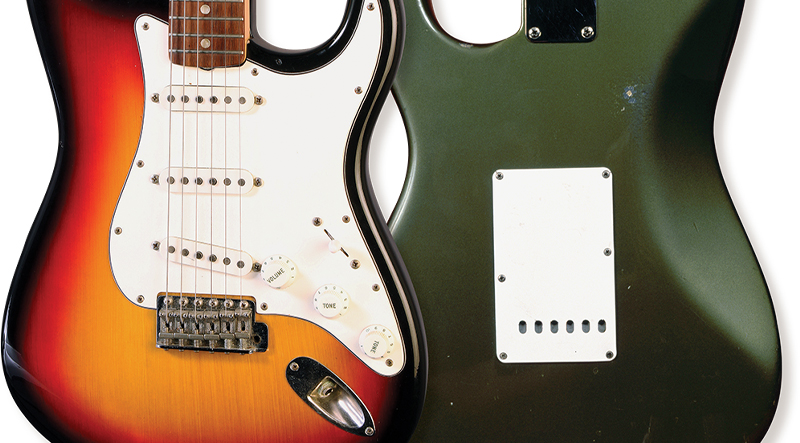
(LEFT)The “three-tone” sunburst on a 1970 Strat. (RIGHT)The four-bolt neck plate on a ’63.
Believing the long-term survival of his company hinged on creating the world’s best electric guitar, in 1953, Leo Fender set out to improve on his own Telecaster before Gibson or Epiphone could take their shots at supplanting it atop the solidbody market. And from the moment it was introduced in ’54 – two cutaways, body carves, three pickups, and cutting-edge vibrato in place – his Stratocaster hit the mark.
A key piece of the Strat’s sound involves the height of its pickup polepieces. Leo Fender adjusted them in an effort to match to the output of each string, as seen on a 1955 model (TOP). For a time after CBS aquired Fender, it used the design (MIDDLE) before giving them a more-uniform height (BOTTOM).Note the enlarged headstock’s “transition logo” paired with original Stratocaster typeface on this ’66 model.
Retaining certain elements of the Tele while jettisoning others, Leo’s second six-string Spanish guitar incorporated upgrades devised with input from those who really used an electric guitar – customers or staff, weekend warriors or touring pros. Among the changes were comfort-enhancing contours suggested by local player/part-time Fender employee Bill Carson, a body shape borrowed from the well-received Precision Bass developed by Leo and George Fullerton in 1951, and a vibrato Leo designed (and refined with a heavy push from Carson) to be part of the instrument, in contrast to the clumsy bolt-on Bigsby used by competitors.
Beyond the mechanical elements, two common complaints about the Tele centered on how its low E string often sounded louder than the others, and the pickups would feed back when the guitar was played at high volume, especially when the player was close to their amp. With these things in mind, he tested several new pickup designs that included coils of varying heights, widths, and impedance. He also tested polepieces with different lengths and diameters, and ultimately decided the new pickups would additionally forgo metal covers and elevator plates. And while he claimed the guitar was given three pickups simply because he had a surplus of three-position selector switches, others point to the fact Gibson had been using three on its popular ES-5 since 1949. Beyond that, though, each of Leo’s new pickups did a fine job rendering the tones he preferred – a clear ringing that, when used with the vibrato, sounded like a steel guitar. He had no way of knowing players would discover how placing the selector= between pickup positions (neck with middle, bridge with middle) would help the Strat produce sounds that would largely define electric-guitar tone, or how the Strat would impact the sound of popular music.
The infamous three-bolt neck plate with access hole for Micro-Tilt neck adjuster.
When Leo sold Fender to broadcasting giant CBS in early 1965, the company began to shift construction with an eye infamously more to the bottom line than to quality materials, fit, and finish.
The changes came slowly but immediately, starting in ’65 with white plastic three-ply pickguards replacing the “mint green” guards. That December saw the debut of larger pegheads. In late ’67, “F-stamped” tuners replaced the Kluson Deluxe units, and the “block” peghead logo came along in mid ’68 – the same year cloth-covered lead wires were replaced by those with plastic coating. In 1970, it was given capacitors with different values.
Finishes were changing, as well. In ’68, CBS discontinued thin nitrocellulose lacquer undercoats that had been used since the company’s inception and replaced them with polyester because it dried faster and harder. Nitrocellulose remained in use for color coats and top coats, but because as many as 10 to 15 polyester undercoats were applied, the result was a finish now known as “thick-skin.” This had the unintended effect of giving the neck pocket an extremely tight fit and eventually resulted in an enlarged pocket.
This plate recessed in the neck pocket gave access for adjusting neck angle, while the “bullet” truss rod (BOTTOM) tweaked its bow.
Among the most easily recognized features of a ’70s Strat is the Micro-Tilt system, which allowed neck angle to be adjusted in small increments using an Allen wrench through a hole in the neck plate; early Strats were adjusted using shims and a large dose of trial-and-error experimentation.
Brainchild of Leo himself, the Micro-Tilt was first used in ’71 – six years after he left the company but in accord with an agreement that required him to work in a consulting role through 1970. But it necessitated other changes, including installation of a metal disc recessed in the neck heel, creating a hard surface to work against the Allen screw. Unfortunately, the disc occupied some of the space necessary for the operation of the truss adjustment. Leo solved this by moving the adjuster to the peghead and placing a bullet-shaped chrome nut on the end.
For the Micro-Tilt to work properly, the neck joint had to move – a problem Leo solved by reducing the number of attachment bolts from four to three. Problem was, though, the new attachment (combined with the enlarged neck pocket) created a joint that was easily shifted with even slight pressure; players discovered the simple act of lifting the guitar from the case could cause the neck to shift, leaving either the first or sixth string hanging off the edge of the fretboard.
The Strat’s saddles and bridge have gone largely unchanged throughout its run.1970 Stratocaster
Many feel the Micro-Tilt was an excellent idea poorly executed in the mass-production environment; applications in later G&L and Fender guitars function very well thanks to better machined parts and closer woodworking tolerances.
In ’71, a second rectangular “butterfly” string tree was added to the peghead to create tension on the third and fourth strings. To accomplish this, the position of the original tree (on the first and second strings) was shifted slightly toward the end of the peghead. The change in tension on the first four strings gave the guitar a different playing feel. Prior to 1970, the vibrato had a separate bridge plate and inertia block. That year, though, Fender produced a single die-cast Mazac part to replace the two individual steel parts. At the same time, the original steel saddles were replaced with Mazacs. These changes affected the manner in which string vibration was transferred to the body, producing a Strat that sounded different, as well.
The Strat’s original headstock shape and “spaghetti” logo are bona fide classics.
The ’70s also saw significant changes in pickup construction. By late ’74, CBS replaced the staggered-height polepieces with smaller, flush poles that reacted differently – in some ways like earlier, more-primitive pickups. Also, the company’s cessation of wax-potting and changes in wire gauge and coatingmade the pickups more microphonic and subject to feedback.Again, these were steps backward.
In an effort to embolden the model name for the sake of visibility/recognizability, CBS incorporated this logo in 1969. It survived until the early 1980s.
Not all the electronics changes were bad. In ’77, a five-way pickup selector became standard, allowing players to combine the bridge and middle pickup or the bridge and neck pickup to re-create the “out of phase” sounds made popular by Eric Clapton. Prior to this innovation, it was necessary to balance the selector switch arm at what were called “in-between” positions to achieve this effect. Many players had older Strats retrofitted with five-position switches, relegating the original to the case pocket, where many are still found today.
In 1967, Fender replaced the Strat’s Kluson Deluxe tuners with the “F-stamped” type, which are generally considered inferior.
One aesthetic change some players found pleasing was a black plastic pickguard introduced in ’75, at first only with guitars given the Mocha Brown finish and usually combined with white knobs, pickup covers, and vibrato-bar tips. Guitars made in the later ’70s sometimes have all-black plastic parts, and the decade also saw a change in body contours – generally rounder, with less-dramatic curves and variations in the back contour.
It’s generally agreed the quality of most American-made fretted instruments from the ’70s is not as good as earlier eras; in terms of collectibility, Strats from the era typically command a third to a quarter of the value of earlier examples. This scenario contributed greatly to the rise of vintage-instrument stores in the last decades of the 20th century. In that light, the quality of a Strat from the ’70s is no different from any Martin or Gibson of the era. However, every generation has its nostalgia, so while Strats made in the late ’60s to mid ’70s are not of pre-CBS quality, they were in fact used to create great music (see this month’s feature on Ritchie Blackmore and the making of Deep Purple’s Machine Head) and have a degree of appeal among Gen X’ers and Millennials.
This article originally appeared in VG September 2017 issue. All copyrights are by the author and Vintage Guitar magazine. Unauthorized replication or use is strictly prohibited.

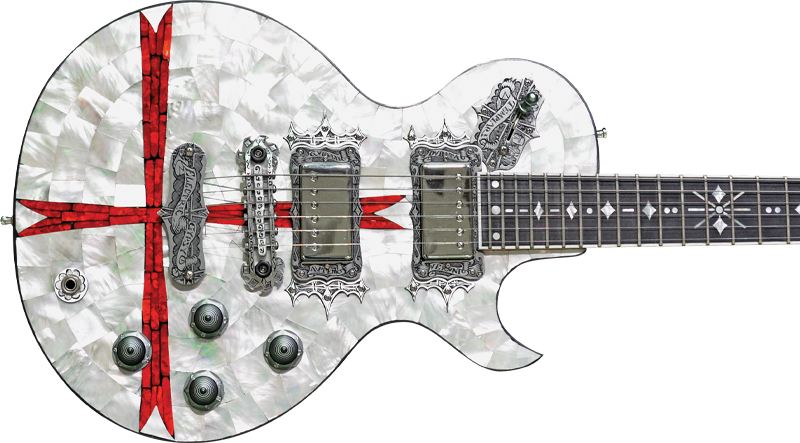
 Guitar fanatics find inspiration from different players. And if Woody swapping licks and practicing “the ancient art of weaving” with Keef while playing his famous pearl-topped, single-cut Zemaitis gets your juices flowing, one look at Teye’s Master Series Knights Templar just might send a shiver up your spine.
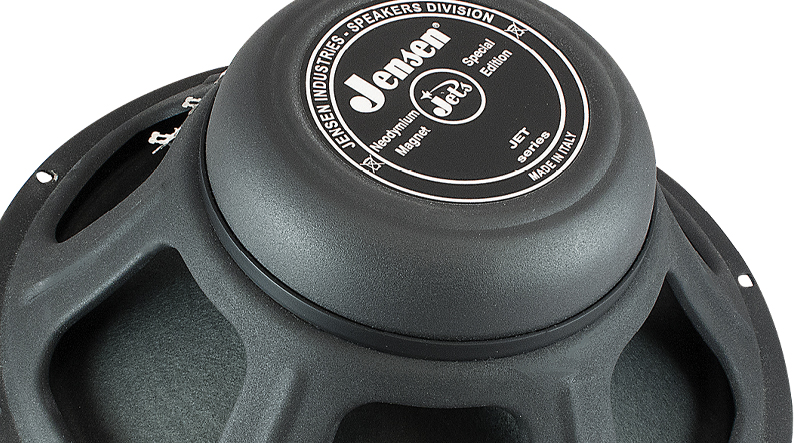

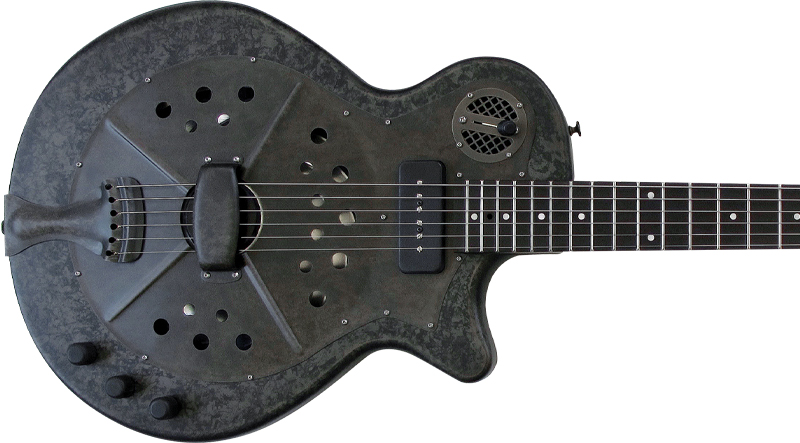
 What do you get when you cross a National Duolian with a solidbody electric? Answer: a guitar that Elmore James would have sold his soul for.
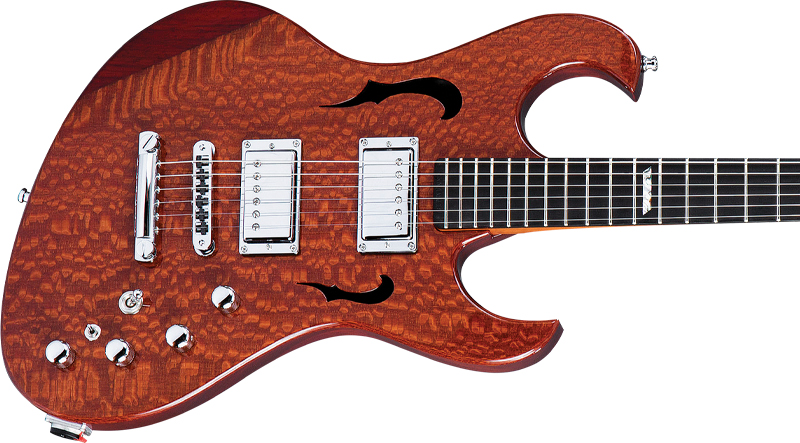
 To use a slightly skewed metaphor, John Brown builds guitars to the beat of a different drummer. After all, who wants a custom builder without vision, churning out yet another version of a Strat or Les Paul?
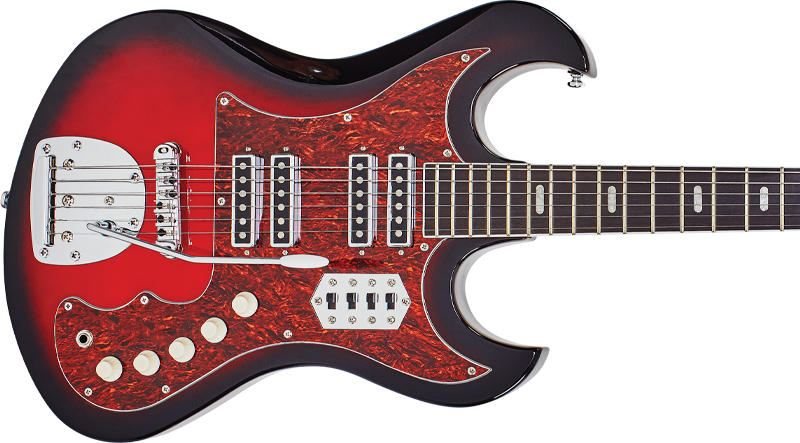
 Subjective as it is, the term “mojo” usually refers to gear that’s been played-in over the years. Eastwood tries to counter that perception with their cool reissues, two recent examples being the SD-40 Hound Dog and the Classic AC.


 Tell us a bit about the Telecaster you used in the Police.


 Is it true that much of the material for the third album, Zenyatta Mondatta was thrown together quickly?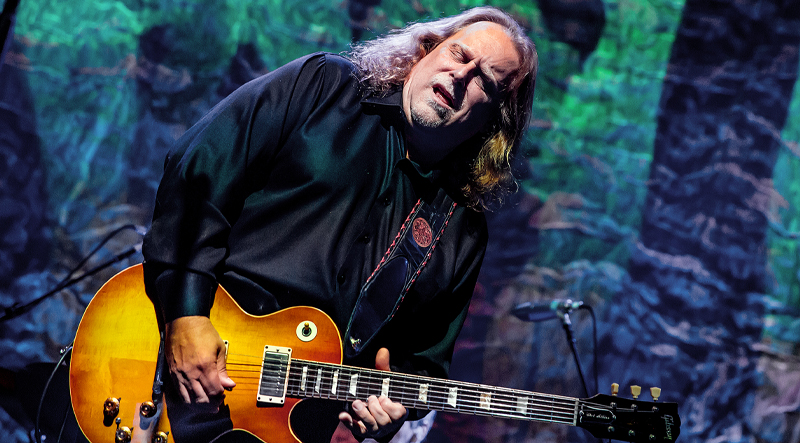


 What amps are you using onstage?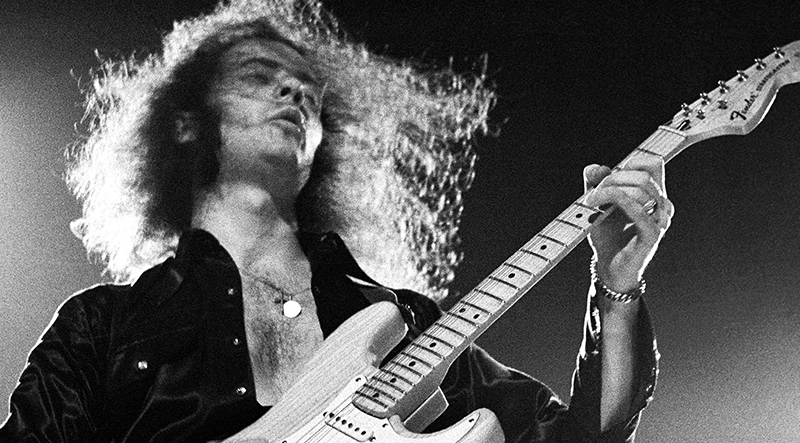


 Purple Tone!