Tag: features

  • Mick Jones

    Mick Jones

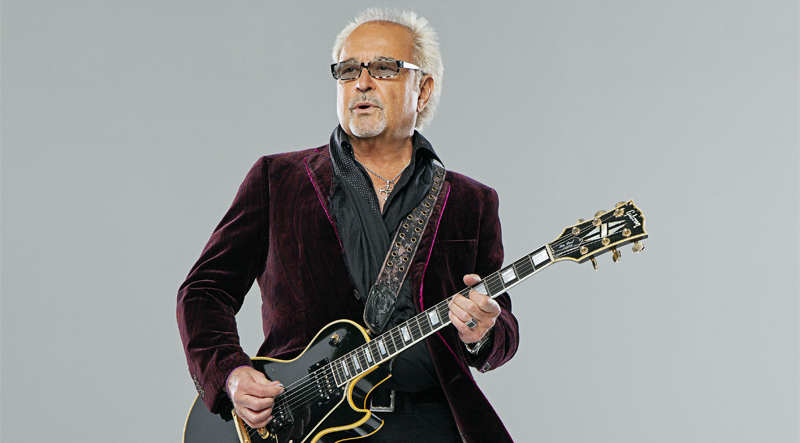
    Somewhere in the world right now, a Foreigner song is playing on the radio. Literally. Thanks to nearly 20 mega-hit singles, 75 million units sold, and legions of fans, the band has earned a solid place in pop-music history.

    Founder, guitarist, keyboardist, vocalist, songwriter, and producer Mick Jones guided the group to dizzying heights from the late 1970s through the late ’80s as it created some of the most popular songs of the era – “Feels Like the First Time,” “Cold as Ice,” “Long, Long Way from Home,” “Hot Blooded,” “Double Vision,” “Blue Morning, Blue Day,” “Dirty White Boy,” “Head Games,” “Urgent,” “Waiting for a Girl Like You,” “Juke Box Hero,” “Break it Up,” “I Want to Know What Love Is,” “That Was Yesterday,” “Say You Will” and “I Don’t Want to Live Without You.”

    In 2017, Foreigner marked the 40th anniversary of its self-titled debut album with a tour, the two-disc compilation 40, and Jones’ autobiography, A Foreigner’s Tale.

    Despite Foreigner’s rapid rise, Jones was hardly an overnight success. The Brit spent years making his bones in bands like Nero and the Gladiators before backing Johnny Hallyday (the “French Elvis”), then joined Spooky Tooth in ’73/’74. For a quick few months in ’76, he was a member of the Leslie West Band before being left nearly broke in New York.

    “Everything somehow came together in my life,” he recalled. “I’d been floundering around in New York and had to make a living. I was thinking of going back to England, when suddenly I started writing a bunch of songs. I thought, ‘What am I going to do with these? Oh, of course. Form a band!’ That was really the start of it and it just started growing from there. The excitement started to ferment.”

    Manager Bud Prager found rehearsal space for Jones to audition members of a new band, and among those to show up was vocalist Lou Gramm. A lineup quickly solidified and the group eventually signed with Atlantic Records.

    “I’d gotten used to the life around the excitement of stage, studio, and producing. So I had an arsenal to dig from,” said Jones.

    Foreigner’s blend of riffs, power chords, hypnotizing hooks, and melodies appealed to rockers and pop fans alike. Its style evident from the beginning, success was almost instantaneous as Foreigner shot up the charts and saturated airwaves.

    Looking back, Jones recalls feeling that the album was a solid collection of songs, and he was cautiously optimistic a hit single could emerge.

    This Les Paul and Les Paul Custom and have long been among Jones’ preferred stage guitars. Jones’ ’59 Strat embodies the influence of Buddy Holly on his playing.

    “I didn’t so much think of monster hits. I thought they were really good album tracks and there might be a shot at a single, but there were no high expectations. We were prepared to slog it out and try to build a reputation.”

    He had no idea.

    “Everything that happened was crazy,” he added. “It gradually came together. There were problems finding the right makeup of the band, but we overcame them. And we were lucky to find a champion at the record company in John Kalodner.”

    Radio was crucial in breaking the band. Atlantic’s staff loved Foreigner, but since the band was a new signing, it hadn’t attracted much attention from founder Ahmet Ertegun, who was focused on his superstar acts, not using his power and influence to open doors. But Foreigner would soon become a priority.

    “We didn’t get special treatment from Ahmet at that time,” said Jones, who’s now 72. “He was busy with the Rolling Stones and Led Zeppelin. We had to earn our association with him, and it had a lot do with staff being very into the album. They loved it.

    “When I look back on ‘Feels Like the First Time,’ it was a very pivotal start. It was the first song that I’d written by myself for several years. As corny as it sounds, it did feel like the first time! I couldn’t believe it, really. We’d hear all of these incredible stats about sales and airplay, but it was so far beyond our expectations. It was a nice surprise, I have to say! Those were very giddy times.”

    Hitting the road near the release of Foreigner rapidly built the fan base.

    “We did some club dates and a few bits of tours here and there with Ted Nugent and Uriah Heep. The first break, really, was getting to tour with the Doobie Brothers. That gave us great exposure. They were a very hot band at the time and something to compete with. Everything went great. They were very kind, and helped nurture us a bit.”

    Foreigner enjoyed triumphs with Double Vision, Head Games, 4, Agent Provocateur, and Inside Information, all of which sold millions.

    The public embrace practically guaranteed an unkindly response from music critics. Jones isn’t exactly sure why they ripped Foreigner.

    “There was a feeling they didn’t have any part in discovering the band, due to the nature of the way we formed,” he said. “But I’ve been able to talk with many that were closet Foreigner fans. Like [Rolling Stone and Creem critic] Lester Bangs, whose forté at the parties was playing air guitar to ‘Hot Blooded.’

    Jones onstage in the ’80s with his sunburst Les Paul, and (below) Les Paul Custom.

    “It was the same with [Sex Pistols vocalist] Johnny Rotten at one point!” he laughed. “The number of musicians and younger bands these days that quote my name as an big influence is very gratifying. We were never the critics’ darlings. I think with 4 they started to pay more attention because we did stretch out a bit, but you have remember that we came out of the dawn of punk and new wave – even disco was huge! We had a lot to combat.”

    In fact, Foreigner took critical darlings like the Ramones and the Cars on tour with them.

    “I was interested in a lot of contemporary music… always have been,” said Jones. “I keep my ear to the ground. I listen to what my children are getting into.”

    Wearing so many creative hats can be exhausting, but Jones thinks of himself primarily as a guitarist and songwriter. He fused the two roles to create a signature style.

    “I’ve always figured it’s halfway between rhythm and lead. Pete Townshend was a big influence on me, on back to Chuck Berry; he was probably the best combination of lead-guitar and incredible rhythm. That motivated me to go for the feel. Foreigner is a guitar-driven band, really. Much more these days than it probably was at the beginning.”

    Speaking of guitars, Jones has used just a handful over the years. His first decent electric was a Burns, a popular brand in England in the ’60s. Early in his professional career, he moved to a Gibson SG, then an ES-345.

    “The 345 was almost identical to the one Chuck Berry played. It was a rich orange-red color – my favorite guitar. It was a real classic and had a lot of history. Unfortunately, it was stolen. Instead of getting another, I bought my first Les Paul in the mid ’70s.”

    His arsenal during the Foreigner years included two single-cut Les Pauls. He also has an appreciation for Teles and Strats. When he tracked guitar parts on Foreigner records, he enhanced the tone of the Les Paul by layering on a Tele to give it sparkle. His attraction to the Strat is the influence of his early idol, Buddy Holly. Jones also owns a handful of Precision basses and Gibson J-200s.

    “I own probably about 30 guitars,” he said. “I never was an avid collector. I just occasionally bought one if I’d see something interesting. There were a few choice stores on the tour circuit. We’d arrive a day early and have a look around.”

    Jones co-produced all of Foreigner’s albums with heavy hitters like Keith Olsen, Roy Thomas Baker and Robert John “Mutt” Lange. Spending time in the studio may have been a necessary evil, but he wasn’t glued to a console.

    “We took time doing the albums and spent a bit more than we needed to, sometimes, but it paid off pretty well.

    “Now, I get claustrophobic spending too much time in the studio. After 4, actually, I started feeling like the studio was leading the pack.”

    Contributing to his growing restlessness at the time was work as producer on Van Halen’s 5150 along with Billy Joel’s Storm Front.  In the wake of their success, he turned down other producing opportunities.

    “That’s when I really started to feel trapped. Doing the Van Halen album was intense in what was a very small control room. They were highly excitable boys! Working with them was great and I got to understand just how gifted Eddie was. It was a learning experience. A big one.”

    Through the late ’80s, Jones kept a grip on Foreigner though his creative partnership with Gramm was splintering. In ’87, they released the troubled Inside Information and in ’89 Jones issued his star-studded solo album with appearances by Joel, Ian Hunter, Carly Simon, Hugh McCracken, Joe Lynn Turner, Simon Kirke, Steve Ferrone, and others. Gramm, who was launching a solo career, left Foreigner and was replaced by Johnny Edwards for 1991’s Unusual Heat. Gramm was back in the fold by ’92 and Foreigner soldiered on until dissolving in 2002, when he departed once again.

    In ’05, Jones revived Foreigner with vocalist Kelly Hansen, former Dokken and Dio bassist Jeff Pilson, and saxophonist/guitarist/keyboardist Tom Gimbel. Their first album was 2009’s Can’t Slow Down and Jones said the four of them work well together.

    “They’re really into it. The dedication is intense; Kelly gives 200 percent every night and there’s a really good vibe – no sour grapes, no baggage. Just great musicianship. It shows with the crowds. Through some problems I’ve had the past few years, health-wise, they’ve carried the flag. I owe them a lot and I’m so appreciative they’ve stuck with me through thick and thin.

    “The longevity has proved itself. We’ve strived for the last 12 years to invent a new Foreigner legacy, and it seems to be paying off. We never did a lot of video or photo sessions, so a lot of people didn’t really remember the band. They remembered the songs. But I think we’ve regained stature and have a lot of kids coming to shows, plus there’s the more-mature audience, as well. The atmosphere is as strong as it’s ever been for me, with crowd participation and excitement.”

    Fans at certain shows in the summer and fall were treated to guest appearances by alumni; Gramm, drummer Dennis Elliott, keyboardist Al Greenwood, guitarist/keyboardist/saxophonist Ian McDonald and bass guitarist Rick Wills all participated (original bass guitarist Ed Gagliardi died in 2014). Wills appeared June 11 in Marbella, Spain. Gramm, Greenwood, and McDonald sat in July 20 Wantagh, New York. Elliott played August 2 in Tampa, Florida. The biggest news was Elliott, Gramm, Greenwood, McDonald, and Wills all performing on October 6 and 7 in Mount Pleasant, Michigan; both nights were filmed and recorded for a forthcoming television special/DVD/album.

    New music from Foreigner is forthcoming.

    “I’m working with a fantastic cellist named Dave Eggar,” Jones said. “It’s been so exciting working with him – he’s innovative and fresh and powerful.”

    Though his career has been loaded with highlights including a Grammy nomination for Best New Artist in ’77, being inducted with Gramm into the Songwriters Hall of Fame, having saxophonist Junior Walker cut the solo for “Urgent,” topping the Billboard album chart with 4 and the singles chart with “I Want to Know What Love Is,” there’s one particularly vivid memory for Jones.

    “The first time we played Madison Square Garden was huge because I live in New York. Everybody was there from the label, and I had my parents there from England. I remember thinking, ‘Wow, it doesn’t get much better than this!’ But it did.”


    This article originally appeared in VG January 2018 issue. All copyrights are by the author and Vintage Guitar magazine. Unauthorized replication or use is strictly prohibited.
  • Have Guitar Will Travel – 008 Featuring Jared James Nichols

    Have Guitar Will Travel – 008 Featuring Jared James Nichols

    James Patrick Regan talks to blues-rocker Jared James Nichols

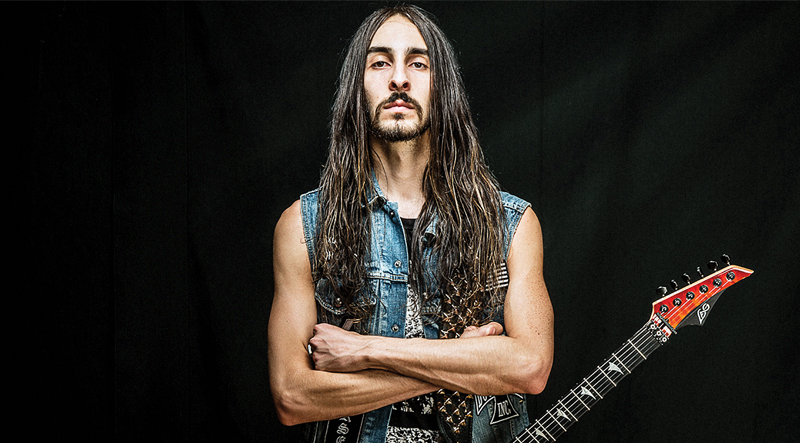
    In this episode of “Have Guitar Will Travel,” host James Patrick Regan talks to blues-rocker Jared James Nichols. Known for his high-energy performances and “pickless” technique, he exudes the influence of Lesley West, Tommy Bolin, Joe Walsh, and other imaginative ‘70s players. Jared and his band recently opened for John 5.

    Each episode is available on Apple Podcast, Stitcher, iheartradioTune In, Google Play Music, and Spotify!


    Have Guitar Will Travel, hosted by James Patrick Regan, otherwise known as Jimmy from the Deadlies, is presented by Vintage Guitar magazine, the destination for guitar enthusiasts. Podcast episodes feature guitar players, builders, dealers and more – all with great experiences to share! Find all podcasts at www.vintageguitar.com/category/podcasts.

  • Remembering Tom Petty

    Remembering Tom Petty

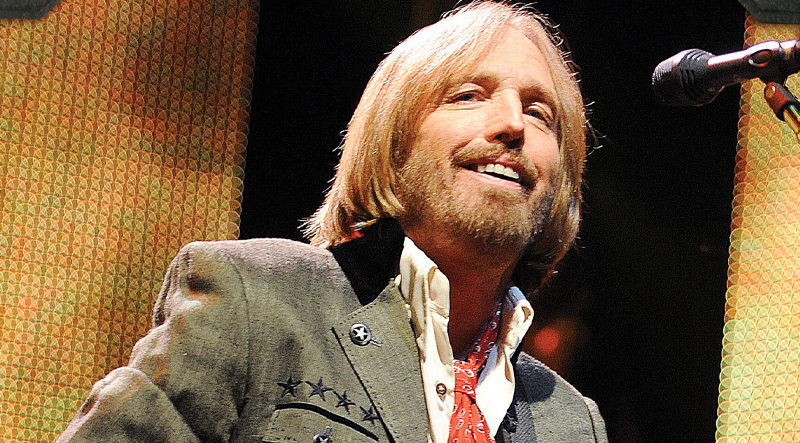
    Tom Petty: Jason Moore/Zuma Wire.

    In the colossal wake of the Beatles, Tom Petty – more than most – was that kid the Byrds spoke to in “So You Want to Be a Rock and Roll Star.”

    In fact, Petty’s 1985 cover with The Heartbreakers on Pack Up the Plantation could well have been a prologue to his biography; his career mirrored every line, from the hopeful “Just get an electric guitar, then take some time and learn how to play…” to the foreboding “Sell your soul to the company, who are waiting there to sell plastic ware…”

    Petty’s career gained inertia through a hyperactive early-’70s music scene in Gainesville, Florida, and his history is well-known, from an infamous fight with MCA Records to selling more 50 million records, winning four Grammy awards (16 nominations), nearly 30 hit singles, and an embarrassment of industry accolades.

    Amongst fans, he was a hero who entertained through parts of five decades, he and the band famously using vintage instruments to conjure magic in recording studios and on stages the world over.

    The music world was truly shocked by Petty’s passing October 2. He had just finished a tour and those who caught a performance saw a guy who, despite having given so much, was obviously not out of energy or ideas.

    In the days that followed, we heard from players and contributors, expressing their grief and sharing memories.

    Petty and the Heartbreakers in ’77.

    “In the ’80s, The Cars and Tom Petty and the Heartbreakers shared a management office, so I would bump into Tom and the band. He was a great guy, and like myself, a true ’60s kid, so we had a lot in common, from music to cool guitars and clothes, pop culture, etc. There was nothing particularly unique about that in and of itself, the difference being that Tom somehow made the leap from fandom to actually working with our heroes. Imagine a guy from our generation, turned on by the British Invasion, getting to play in a band and have friendships with George Harrison, Bob Dylan, and Roy Orbison! He was a one-off and always brought his A-game when he hit the stage. Tom was the real deal and will be terribly missed by his family, friends, and the millions touched by his music.” – Elliot Easton

    “Like Tom Petty, I grew up in Central Florida playing in garage bands working the teen-center circuit and U of Florida frathouse parties. Petty played with the Epics and Sundowners and I, along with Gram Parsons and Jim Stafford, was with the Legends. Our music-store hangout in Gainesville was Lipham Music, where Tommy Petty took lessons from Don Felder. But the first catalyst for his musical ambitions were stoked by meeting Elvis Presley in the summer of ’61, during filming of Follow That Dream, in Ocala. Petty’s uncle, Earl Jernigan, was propmaster and arranged for 11-year-old Tommy to meet the star. He later said, ‘Elvis stepped out as radiant as an angel. He seemed to glow and walk above the ground.’ So there, along Silver Springs Boulevard, Tom’s rock-and-roll dream was born.

    “My favorite Tom story was when he was visiting Roger McGuinn about 10 years ago. Roger lives in Orlando and suggested an improptu visit to Walt Disney World. Tom said, “Roger… there’s just no way. I would be mobbed.” – Jim Carlton

    “I never met Tom, but I’ve loved and admired his music, his songwriting style, his principles, the way he made records, the way his influences took on a new, improved hybrid persona as he channeled them. My wife always puts on Petty playlists and cranks up the volume whenever we have friends over, and everybody sings along.

    “I always loved his choices of instruments – the beautiful vintage guitars, his straight-from-the-heart lyrics. No matter who he’s had as producer, he delivered new and improved sides of himself as a writer/player/singer/recording artist. We were all damn lucky to have him in this life and I miss the hell out of him.” – Tommy Shaw

    “Tom’s songs have become the soundtrack to life in the U.S. They shine a light on our hopes, dreams, and fears, our outrage, and our collective yearning. I loved his humor, his swagger, and his heart. He will live on as a true icon of rock and roll.” – Joe Satriani

    “I was lucky to hear Tom and the Heartbreakers at their height many years ago, and became a fan that day. Tom, along with his influences like the Beatles and the Byrds, taught me to love the airy, jangly sound of the electric 12-string. He will be missed by all – family and friends, bandmates who can never make beautiful music with him again, and millions of fans including my wife and two daughters. It’s sad for us all.” – Dan Erlewine

    “I’ve heard Tom referred to as ‘the three-chord Picasso,’ but sometimes he only needed two. He was integral to my formative years and has remained that to this day – a quarter of my Mt. Rushmore of American singer/songwriters along with Seeger, Springsteen, and Mellencamp.

    “I saw his next-to-last show at the Hollywood Bowl a week before he passed. The band was in fine form and Tom was in great spirits. An hour and a half in, my fiancé turned to me and said, ‘Wow, I can’t believe I know every song. How many hits does he have?’ The repertoire is unmatched, the edge and swagger were present. He and Mike Campbell put on a guitar-collector’s dream display the entire evening. You know who the influences are, and you’ve heard those guitars and amps before, but nobody put it all together like Tom and his band. Fantastic stories beautifully watercolored on a perfectly imperfect sonic canvas that pushed and pulled like a real rock-and-roll band should. It was living and breathing.

    “Tom’s voice and the band were beacons from beyond, so much so that when I heard them on FM radio in my little nowhere town in Pennsylvania, I knew what I wanted to do with my life – play guitar, write songs, be in a band, make records, and hit the road. He made it look so simple, attainable. The truly great ones make their magic look so effortless and pedestrian that you believe you can do it, too. That is, until you actually pick up a guitar and try. Then you realize the true magic in those songs.

    “We were lucky to have him and his music, his badass attitude, and his heartfelt tenderness. My heart goes out to his family, loved ones, and his band. Thank you for the magic, Tom, and the opportunity to dream. I’m still learning to fly… Rest in peace.” – Keith Nelson

    “My first high-school band played mostly Yardbirds and Kinks stuff – we were out of time already. But when I heard ‘American Girl’ we picked it up right away – the only modern song we’d play. That was the power of a great song. As Barry Gibb said, it’s the writers that last, and I think for all Tom’s other contributions that’s the heart of it; decades of to-the-point songs. I can’t think of another rock-and-roll songwriter who so consistently spanned the eras without drying up or blanding out.” – Peter Kohman

    “I first met Tom and the Heartbreakers on the Dogs With Wings Tour in the summer of ’95. I had just joined Pete Droge’s band and we were their opener for a two-month trek across the U.S. A fan since day one, I’d seen them a few times, so I was excited. After our set, we’d often stay to watch theirs. It was like going to school. Their energy, the pacing, the extended jams on songs like ‘It’s Good To Be King.’ Production and sound were always stellar, Tom’s interaction with the audience was warm and sincere, his gestures grand.

    “Tom was always cordial, developing a mentor/friendship with Pete. He’d occasionally poke his head in our dressing room and make us feel right at home. During our set Mike Campbell and his tech, Steve Winstead, would sometimes hand me one of his guitars to play. That was quite a charge! One of the top experiences of my life.

    “Tom had it all. From rock-and-roll rebellion to King of Cool to speaking to your deepest emotions. And The Heartbreakers are the role model of a real band. Their music takes you to a unique place. Tom will be missed, and I will miss Heartbreaker shows.” – Peter Stroud

    “For those of us who grew up in the late ’70s and ’80s, Tom represented a one-man resurgence in great, straightforward rock-and-roll songcraft. ‘Don’t bore us, get to the chorus’ was his North Star, guiding his music over the trends for 40 years, rendering it timeless.

    “One of my favorite Tom memories was being backstage with Mike Campbell before a show, and hearing Tom warming up in the next room. To this day, the thought brings a smile to my face, just as Tom’s songs brought joy to millions.” – Tom Guerra

    “Tom made us all believe we could play rock and roll. His songs were the staple of almost every band I played with in the ’80s and ’90s. They were easy enough to play, catchy as hell, and immediately recognizable. Never before or since has an artist created so much with so little.

    “On that little radio in our heads, Tom will forever sling a cool vintage guitar, sound like no one else, and rock out.” – Will Kelly

    “When Tom passed, fans immediately remembered the Heartbreakers’ classic albums or a concert, but I recalled his battles with record-company officials regarding album prices and artist rights instead of Damn the Torpedoes, etc. (“I Won’t Back Down” indeed).

    “His first albums were released during the dark days of disco. Any artist or band that could claw its way to prominence during those times obviously deserved respect. His dynamic performance at Live Aid was one of the better presentations of the day.

    “The first song I recalled was ‘Handle with Care’ by the Traveling Wilburys; being in that group validated and underlined his status. He created unique sounds using unique songwriting, unique guitars, and a commendable work ethic. He will be missed.” – Willie G. Moseley

    “My favorite Tom story was related to me by former Creem photographer Robert Matheu, and perfectly captures the wit and humanity that came through in Tom’s songwriting.

    “In 1989, the Replacements had an infamous run of opening dates for Petty and the Heartbreakers. One night, they had taken the stage after the contrarian rockers had finished a ramshackle warm-up set, even by their standards. Robert recalled how Tom, in his classic nasal drawl, said, ‘I’d like to dedicate the next song to the opening act. Let’s have a big hand for the Replacements!’ Then they launched into ‘Even the Losers.’’’ – Dennis Pernu

    “I really admire that Tom kept the Heartbreakers together for over 40 years, retaining several original members. At any time, he could have become a solo artist with top-notch studio players, but Tom grew up with the Beatles, Byrds, and Stones, and knew the power of a great rock-and-roll band. With Tom’s witty lyrics and edgy voice out front – along with Mike Campbell’s economical guitar licks and a churning beat in the back – these musicians delivered Petty’s music better than anyone else could have. I’m grateful that Tom understood this critical aesthetic and, for four decades, kept the Heartbreakers runnin’ down a dream.” – Pete Prown

    “The Tom Petty bug first bit me with Damn the Torpedoes. Rock and roll was fading a bit at that point and it stuck out like a sore thumb. He leaves an astounding catalog that can be taken for granted until you go back and really listen. He had the coolest look, coolest tunes, covered the coolest songs in concert, and he and Mike Campbell had the coolest guitars. Rock and roll has a huge void at this point.” – John Heidt

    “The first time I heard Tom and the Heartbreakers was on Damn The Torpedoes – the sound immediately embodied pure, raw American rock and roll for me. I was continually impressed by how he maintained not only the quality of songwriting throughout the years, but the edge and vitality, too. One of the biggest thrills of my career occurred when I was interviewing Mike Campbell in a London hotel room; there was an unexpected knock on the door and in walked Tom. Even his speaking voice could send chills up your spine.” – David Hunter 


    This article originally appeared in VG January 2018 issue. All copyrights are by the author and Vintage Guitar magazine. Unauthorized replication or use is strictly prohibited.
  • Lloyd Loar

    Lloyd Loar

    The Master Model instruments created at Gibson in the early 1920s are famous for their sound and build. Credit for their design is often laid at the feet of “acoustic engineer” Lloyd A. Loar, but recent study calls into question the role he played – and may even position him as a mere tool of the company’s marketing.

    Lewis Williams with a K-4 mando-cello. Photos of Williams are rare, and no other evidence has surfaced to prove he was actually a musician.

    In its first 20 years, the Gibson company made numerous refinements to Orville Gibson’s original designs from the late 19th century. These included the violin-style arched back, smaller bodies with a slimmer profile, improved neck angle, and the elevated pickguard. By the time of the 1908 Fretted Instrument Guild of America convention in Washington, D.C., the instruments had seized popular imagination and catapulted the small company onto the world stage. In 1920, Gibson debuted the adjustable truss rod and adjustable-height bridge – ideas from factory superintendent Ted McHugh. Loar was hired in 1919, and in 1922/’23, the Master Model F-5 and L-5 debuted, both exhibiting further application of violin-building technique and design.

    Though Loar is often credited with introducing f-shaped sound holes, parallel tone-bar bracing, and tuned air chambers, none of those ideas were new. In fact, several employees who pre-dated Loar’s tenure were hired because they had experience carving violin tops, and any of them could have suggested further application of violin construction. Loar was also strongly influenced by the Virzi Brothers – builders of violins, violas, bass viols, and the infamous Virzi Tone Producers; he encouraged the use of Tone Producers in Gibson instruments beginning in 1922. Additionally, the September ’24 issue of Music Trades Review contains a Gibson ad indicating the company was a distributor for Virzi violins.

    Gibson Master Model F-5

    Loar’s early training as a violinist certainly provided opportunity for outside influence. Furthermore, his renowned status may well have been a contrivance of Gibson’s flamboyant general manager, Lewis A. Williams, an original partner in the Gibson company. Williams (1878-1951) started with the company in 1902 as sales manager, and became general manager in ’17, following the death of Sylvo Reams. He was a gifted marketer who created the dense, flowery prose in early catalogs. One example in the 1921 catalog references the superiority of the harp-guitar over the regular guitar: “By the consent of all, he was fit to discriminate if he had not discriminated. The mighty Bach and his contemporaries could not be persuaded to leave the harpsichord with its inferior capacity and power of expression for the piano, yet where is the harpsichord today? Death alone saved Bach from ridicule of the then rising generation, for time and the piano proved Bach’s satisfaction and joys were but cheats that held him within narrow limits and belittled his gratifications by hedging his musical aspiration and inspiration with an instrument of but dwarfed compensation. Then, it was harpsichord versus piano; now it is guitar versus harp-guitar! Bach’s antiquated instrument is today but a museum curiosity and would remain such even if the mighty Bach himself were here to play it.”

    Williams, a self-proclaimed “go-getter,” was responsible in large part for Gibson’s success in its first two decades of existence. A 1921 inventory shows his office contained many books, among them, Scientific Office Management, How to be Personally Efficient, and Reading Character at Sight. But even more telling are two other volumes – Violin Making, by Elias Howe and Violin Making, by Walter H. Mayson.

    Gibson promoted the violin-like construction of its instruments even after the departure of Lewis Williams and Lloyd Loar. This 1927 catalog announces “The Principle of Stradivarius Arching and Graduation Applied to Fretted Instruments.”

    Loar’s connection to Gibson originated in 1906 when he purchased an F-3 mandolin for personal use. By 1911, he was a Gibson endorser, and by ’14 was occasionally performing as a member of The Gibsonians. His friendship with Williams likely dated to this period.

    Following his return from Red Cross service in France during World War I, Loar was hired by Williams as the “acoustic engineer,” a title never before bestowed on a musical-instrument company employee – and one for which there was no credible scientific training at the time. In many ways, Loar was the perfect prop – a known performer and educator with an excellent reputation as an intellectual in the fretted-instrument community. After a grooming period, Loar was brought to further prominence through a series of academically-toned essays he authored for the company’s Sounding Board Salesman publication and public lectures around the country. 

    Though known as the“acoustic engineer,” the function did not consume much of his time. Factory documents reveal Williams had to find other jobs to keep Loar busy, including working at various times as credit manager, purchasing agent, repair manager, and production manager. As further evidence that Williams viewed Loar as a marketing tool, he was allowed to be absent from the factory during July and August each year, in order that he might tour. Also, an “experimental lab” was created for him in the northwest corner of the second floor of the factory. The ’21 inventory shows that it contained ordinary office furniture and hand tools. Loar also had time to dream up his 10-string mando-viola, an unusual instrument Gibson evidently declined to place into production. Even the signing and dating of the famous Master Model labels (another brilliant marketing idea) was done in quantity then installed as needed, as evidenced by the fact they appear in an out-of-date-order sequence compared to serial numbers, as well as the fact only 34 signing dates appear on the labels covering the 300 total Master Model instruments.

    In this December ’23 photo of Gibson office staff, a disgruntled-looking Lloyd Loar sits at the far right of the front row. Supporter and friend Lewis Williams had been released a few months earlier and the firing of Harry Ferris (front row, fourth from left) was only months away.
    Lloyd Loar in 1917.

    Loar’s obituary in Fretted Instrument News magazine provides insight to the way he was viewed by contemporaries. It describes him as a quiet man, classically trained musician, concert artist, and educator. His tenure at Gibson is briefly mentioned but without reference to the Master Model instruments. His accomplishments as a violinist are included, but there’s no reference to the mandolin. To date, no known recordings have surfaced with Loar as performer, and the obit indicates he was simply a well-liked and capable classical musician. Many of his published writings from the ’20s are a strange mix of science and conjecture. In fact, during Loar’s active career, the technology to scientifically describe and study acoustics was still decades in the future.

    Master Model L-5

    The obituary is also a clue to the disastrous original response to the Master Models. First was the F-5 mandolin, which was not well-received because the popularity of mandolin music had evaporated several years earlier, and by standards of the day it was incredibly expensive – originally $200, then quickly $250. The H-5 mandola and K-5 mando-cello failed for the same reason. The original L-5 guitar design, introduced in ’23, did not find much market acceptance, either, likely because the music for which it was most suited was still some years in the future. While the original is an instrument of superb quality, today, most musicians prefer an L-5 made after 1935, with the larger (17″) body, flashier inlays, and binding.

    Many Master Model instruments were sent to teacher-agents on speculation and returned years later after having not been sold; Gibson was still shipping new-old-stock Loar-era instruments with his “signature label” as late as 1926. The failure of the Master Models to recoup development and production costs was likely an important factor in the 1923 dismissal of Williams, who had proven unable to see the end of public interest in the mandolin, and perhaps unwilling to change course.

    A great deal of speculation surrounds Lloyd’s departure from Gibson in December, 1924. There is nothing in the minutes from meetings of the board of directors to indicate strong disagreement. In fact, over his five years with the company, Loar is hardly mentioned. Evidence suggests he left quietly, and nobody really cared.

    Williams’ departure was followed by the hiring of Harry Ferris as general manager in 1923. He was fired in ’24. At the time, the company was dedicating more resources to banjo production, so the value of Loar’s presence ended with Williams. Loar’s attitude may have soured or he simply saw no reason to remain with Gibson.

    Loar went on to a successful academic career, registered 20 patents, experimented with electric pickups and, in 1933 formed the ill-fated Vivi-Tone Company with Williams. But, for a man believed to have reached such great heights of creative genius in 1922, he was never able to replicate the process. His designs at Vivi-Tone were unusual, but proved an evolutionary dead-end, and it’s difficult to reconcile those instruments with the wonderfully conceived and executed Master Models. Indeed, based on design and workmanship, it’s almost impossible to believe the same man was responsible for both. Design credit is difficult to prove; though often included in patent applications, it is sparse in Gibson records.


    This article originally appeared in VG January 2018 issue. All copyrights are by the author and Vintage Guitar magazine. Unauthorized replication or use is strictly prohibited.

  • 1968 Fender Vibrolux Reverb

    1968 Fender Vibrolux Reverb

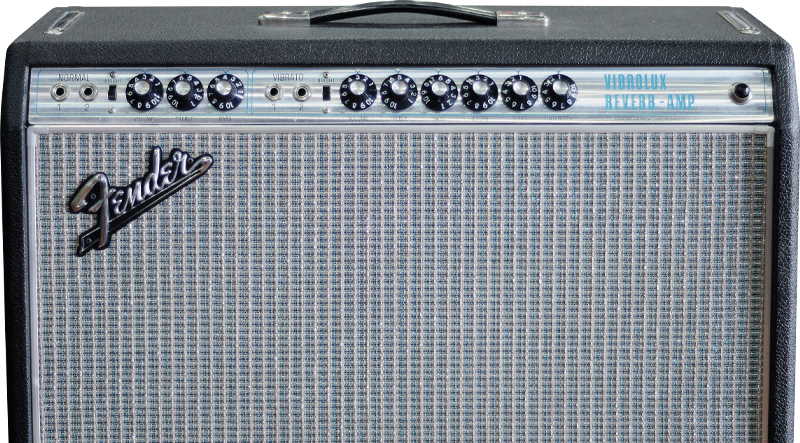
    Photos by Eric Martin. 1968 Fender Vibrolux Reverb
    • Preamp tubes: three 7025 (12AX7 equivalent), one 12AX7, two 12AT7
    • Output tubes: two 6L6GC
    • Rectifier: GZ34
    • Controls: Normal channel: Volume, Treble, Bass; Vibrato channel: Volume, Treble, Bass, Reverb, Speed, Intensity; Bright switches on both channels
    • Speakers: Two 10″ Oxford 10L5
    • Output: approximately 35 watts RMS

    Amplifier collectors swarm to models with descriptors like “first year” and “golden age,” but other types can be far more interesting; a transitional model or amp from a short-lived evolutionary crossroads – especially in “mint” condition – is enough to send goosebumps up the flesh. Such is the case with this one.

    Other than a smudge at the bottom of the front edge of its cabinet, this amp is nearly as clean as it was the day a Fender rep walked it through a dealer’s door to replace the outgoing “blackface” line. So clean, in fact, that when Hal Hawkins saw it in his local music store, Martin Music Guitar, Memphis, he assumed it was the late-model reissue Fender calls the ’68 Custom Vibrolux Reverb. 

    “But when I saw the speakers, I knew it was not a reissue,” Hawkins said. “The store owner told me it had just been brought in by a guy from Arizona who got it from his next-door neighbor. It had been in a closet, with no cover, since he bought it new in ’68.”

    The amp’s immaculate state carries through to the inside of the chassis, where it’s distinguished by a remarkable absence of dust bunnies, cobwebs, spider carcasses, or even mild pitting/corrosion (thanks, dry climate!). 

    Of course, any rabid excitement over this amp is justified by far more than its unsullied condition. The Vibrolux Reverb, whether blackface or silverface, has long been regarded as one of Fender’s greatest utility amps, and many players hail it as the best and most versatile grab-and-go combo ever produced. Several factors support this argument, and certainly given the ratio of portability to features – with an addendum to note the difficulty of getting many of Fender’s bigger combos to behave adequately on today’s quieter stages – the Vibrolux Reverb is definitely a contender for the crown. 

    In addition to the stock Oxford speakers, an envelope in the cabinet carries “Your Fender Instruction Manual, Guarantee, and Schematic Diagram.”

    Among those desirable features are:

    • A pair of Oxford 10L5 speakers, attaining the magical articulation of Fender amps of this era when translated through 10″ speakers

    • A beefy, robust-sounding dual-6L6GC output stage, tempered by…

    • A smaller output transformer than that of the Super Reverb, for example, yielding just 35 watts and an earlier onset of distortion

    • Lush-sounding built-in tube reverb and tremolo

    • A GZ34 tube rectifier for a stout immediacy, yet appealing dynamics, in the playing feel.

    With all of these attributes, the Vibrolux Reverb still weighs only an extremely manageable 40 pounds, just three pounds more than a stock Deluxe Reverb of the same era, even though it carries a lot more firepower. Rein in the volume and the combo exudes what many guitarists, whether Fender fans or otherwise, would agree is one of music’s archetypal clean-with-character electric guitar tones, yet it will do so with enough volume to compete with most reasonable drummers. Push it a little harder, and it eases into rich, dynamic, somewhat glassy overdrive that could be characterized as “mini-SRV” – a more containable rendition of Stevie Ray Vaughan’s delectably scooped, wiry, stinging Fender-on-Fender tone. Add a Tube Screamer or other midrange-enhancing/medium-gain overdrive pedal, and it’s rock and roll incarnate at aurally acceptable volumes. 

    As for this particular ’68, well, its owner’s thoughts on tone and performance tend to echo the consensus with some adjustment for the relatively unplayed condition.

    “I have a ’66 Deluxe Reverb that has always been home base for me,” Hawkins said. “I like to say, ‘If you can’t get a good tone out of an old Deluxe, you need to take up the violin.’ I would say the Vibrolux has a similar sound, but it can stay clean at a louder volume. That’s obvious, of course, but very true. And this one just sounds tight and focused no matter what guitar I play through it. I really don’t think it had been played for more than a few hours before I got it.”

    The Vibrolux Reverb model came into being in mid 1964 as part of the second wave of blackface models, et al, the first wave of which had arrived in late ’63 and early ’64. As with many of the new reverb-equipped Fenders, it replaced the short-lived reverb-less blackface 1×12″ combo version of late ’63/early ’64 (if any ’64s actually exist), but the speaker complement was really more like a junior-sized 4×10″ Super Reverb. Like most mid-sized Fenders of the era, the Vibrolux Reverb had two channels with just Volume, Treble, and Bass on the Normal channel and the same on the Vibrato channel, plus controls for Reverb, and tremolo Speed and Intensity.

    Other than some replaced filter caps and a three-wire AC cord, the amp remains original inside the chassis, as well, including the brown chocolate-drop axial signal caps, the mustard-colored ceramic disc caps, and the brightly colored (and seemingly unaged) wiring that were all standard for ’68.

    The model evolved through minor circuit changes until the far more obvious change-up of ’68, when post-CBS Fender introduced its flashy silver control panel. For just about one year of production, this new styling was accompanied by a gussied-up speaker grille rimmed with a silver metal strip – the “drip-edge” that was gone early in 1969. A simple feature, and likely one determined by CBS-owned Fender to be an unnecessary expense, this ridged “frame” around the grille denotes the first and most desirable issue of silverface amps. Also desirable is the fact that many drip-edge models were given few, if any, of the circuit changes seen in later silverface amps, and carried circuits that were blessedly close to their hallowed blackface predecessors.

    This amp does, however, display a mixture of latter blackface and early silverface circuit topologies, including 2,000-pF disc capacitors on the grids of the 6L6 tubes, large 150-ohm resistors tied between the 6L6s’ cathodes and ground, and the bias-balance circuit that replaced the earlier bias adjustment. These can easily be changed to full blackface specs, though plenty of players enjoy the slightly firmer, tighter performance that silverface specs often induce. But for the full “good as new” experience with this uncommonly shiny ’68, hell… just plug in and play the thing!


    This article originally appeared in VG January 2018 issue. All copyrights are by the author and Vintage Guitar magazine. Unauthorized replication or use is strictly prohibited.

  • Walter Trout

    Walter Trout

    Walter Trout: Austin Hargave.

    After having his life saved by a liver transplant and releasing Battle Scars, an album that chronicled his health struggles, Walter Trout is back. To celebrate, he gathered friends including Joe Bonamassa, Warren Haynes, and Kenny Wayne Shepherd to record We’re All in This Together.

    How did the guest list develop for the album?

    Battle Scars was a concept album about my brush with death, the eight-month stay in a hospital, and fight to recover. It was very heavy, and pretty graphic. After that, I thought, “I’ve recovered. I feel great. I’m filled with energy and creativity, and I feel young again. Instead of doing some other deep, emotional, confessional record, how about we have some fun?”

    It started when I did Carnegie Hall with Kenny Wayne and Edgar Winter, and we were sitting in the dressing room and I said, “Why don’t we record together?” Later, I had dinner with Warren and Robben Ford, and we were sitting, telling stories. I said, “I’d love to record with you guys.” So, it kept transpiring until I had this group of friends who were ready. I wanted something fun and radically different.

    Did you get to spend time in the studio with any of them, or were their parts sent digitally?

    Those who came in to record with us were Joe Bonamassa on the title track – which by the way, was one take, spontaneous… we didn’t even rehearse it – Edgar Winter on “She Steals My Heart Away,” and my son, Jon, on “Do You Still See Me at All?” The rest were mapped out and planned in advance in regard to who was going to play what and who was going to sing where. We did the basic tracks and we sent them out to the guys.

    What were some of your favorite moments in the process?

    I have to say there are a lot of blues jams, which I love. But as far as songwriting, I really like the cut with Mike Zito, “She Listens to The Blackbird Sing,” and I like the cut with Edgar, because they’re different than the rest of the stuff on there. I also like the cut I did with John Mayall, “Blues for Jimmy T.” Mayall came to the studio, too.

    Which guitars, amps, and effects did you use?

    I basically used my road rig, which is this mutt Stratocaster. The body was built for me by Scott Lentz. About 12 years ago, my shoulder went out because my old ’73 Strat weighs more than a Les Paul – it’s the one on the cover of all my records. And it pulled my shoulder out to where I couldn’t even control my left arm, I got a lot of physical therapy and a lot of acupuncture. The arm came back, but I had to retire the guitar. So Scott, who’s a good friend, built me a body that is incredibly light – I’ve got the lightest Strat on the face of the earth! I don’t know what wood he used. I had a couple of Strats laying around, and there was one neck that I really liked, so I put that neck on it. The pickups were made for me by my close friend, Seymour Duncan. And I’m just playing through a Mesa Boogie Mark V with a 4×12 open-back cabinet – the kind they don’t make anymore with the black-metal grille.

    I’m not using any pedals or any effects – I go straight into the amp. But I am on the third channel, with the gain turned all the way up. If I want to play clean, I just turn the guitar down. I do all of it with the Volume knob on the guitar. I came up in the ’60s and early ’70s, playing in a lot of bar bands, and the only thing that was miked was the vocals. So, you had to control the balance with your instrument and learn how to play rhythm parts with the guitar turned way down. When it was time for a solo, you cranked the guitar up. It’s an old-school way of approaching it.

    How is your health?

    I feel great. I’m filled with energy and creativity. I feel like I could sit down today and write you an album if I felt like it. I’m kind of reborn.


    This article originally appeared in VG January 2018 issue. All copyrights are by the author and Vintage Guitar magazine. Unauthorized replication or use is strictly prohibited.

  • Charlie Ballantine

    Charlie Ballantine

    Befitting a guitarist from America’s heartland, Charlie Ballantine’s mixes jazz, folk-rock, surf/instro, blues, pop, and country into a simmering pot of guitar sound and style. His instrumental work is beautiful and complex, ranging from melodic journeys to raging heavier sounds. Charlie’s latest CD is Where is My Mind?, a strong album that marks him as a young player to watch.

    You move between styles so fluidly. Where did that come from?

    I think it comes from a combination of being open to all styles of music and listening to guitar players who can’t be categorized by genre, such as Danny Gatton, John Scofield, and Julian Lage. I also spent a lot of time in Nashville when I was younger. It was always amazing to see musicians playing country music on Broadway during the day, then the same cats jamming on jazz and blues at night in the clubs.

    Your eclectic list of influences include Bill Frisell, John Scofield, Roy Buchanan, Wes Montgomery, and Jimi Hendrix.

    Frisell and Scofield were really important in my development as a guitarist because I heard them at a time when I was trying to be a serious bebop player. Both have such a unique take on jazz, and hearing them definitely helped me to search after my own voice. Being from Indianapolis, I grew up listening to Wes Montgomery, and his style, technique, and sound are what set me on a path to learn more about jazz. And as far as Jimi goes, I’m still hearing things on the Band of Gypsys record that make me take my pedals out and try to emulate a cool effect he was getting. He was truly a master of sounds.

    Your jazz roots are evident on “Hallways.”

    I like to think that the jazz language comes out in everything I do, but I wouldn’t necessarily say I’m a jazz guitarist. I’ve found that sometimes if I commit to a genre in my head, I’ll be missing a big part of my playing, so I love the idea of throwing country licks into jazz songs or jazz lines into rock songs. I try to just place the right sound in the right spot, and it’s not always within the lines of the genre I’m playing.

    Did you have a full academic training?

    I did go to school for jazz at the Jacobs School of Music at Indiana University, and was lucky enough to study with the late David Baker, as well as guitarist Cory Christiansen. “Real Things” and “Where is My Mind” have a lyrical folk-rock vibe. Did your Midwest roots contribute to this approach?

    I think it’s probably a combination of the Midwest influence, and also a love for ’60s rock and folk music. Even before I played guitar, I remember my dad listening to The Band, Bob Dylan, The Beatles, and The Beach Boys. I have always had a very deep love for strong melodies and beautifully written songs.

    Does your main guitar have a humbucker in the neck slot?

    Yes, there’s a Bill Lawrence mini humbucker in the neck and a Joe Barden in the bridge. I mainly stay in the neck position, though. The guitar was built by Kevin Heffernan.

    What were your other guitars, effects, and amps on Where is My Mind?

    I played primarily through my Fender ’65 Deluxe Reverb reissue. I had several pedals – MXR Carbon Copy delay, TC Electronic Flashback delay, Hall of Fame reverb, Ditto looper, Hotone Harmonic pitch shifter, Boss tremolo, and Rat distortion. Also, to get a different texture on some of the layered tracks, I used a ’58 Strat which definitely had a different vibe – very old-school rock sound.

    Describe your picking technique. Do you use a thumbpick and fingers?

    I have a pretty weird right-hand technique, actually. I use a flatpick, but also pick with my middle and third finger, sort of in the same style as Danny Gatton. It comes from growing up learning Chet Atkins and Merle Travis songs, then being thrown amongst Charlie Parker bebop-heads in college. I had to figure out how to use a pick and play fast 16th notes.

    What’s next for you?

    We’re on tour with Where Is My Mind? I’m always thinking of the next project, but also trying to enjoy where we are in the moment. My band sounds amazing, so the only thing I keep thinking about on the horizon is a live album. Musically, we’re in a really good place.


    This article originally appeared in VG January 2018 issue. All copyrights are by the author and Vintage Guitar magazine. Unauthorized replication or use is strictly prohibited.

  • John McLaughlin

    John McLaughlin

    John McLaughlin: Pepe Gomes.

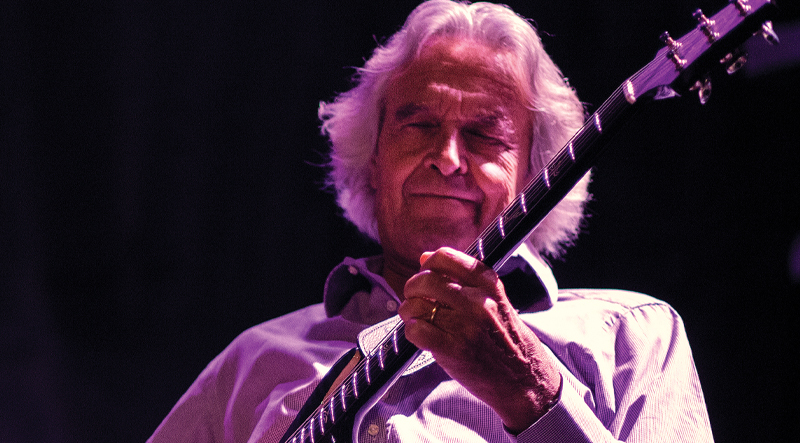
    The name John McLaughlin is synonymous with jazz-rock fusion, the genre he helped invent and sustain for the past 50 years. At the end of 2017, the guitarist will be performing a final American tour, this time with co-guitarist Jimmy Herring and John’s incredible band, the 4th Dimension. We recently checked in with the virtuoso on his rig, the tour, and fiery new album, Live at Ronnie Scott’s.

    You first played at Ronnie Scott’s Jazz Club in 1968, when you were about 26 years old. What do you remember about it?

    It was the Mike Carr Trio, with Mike on Hammond organ, Jackie Denton on drums, and me – a classic organ trio. It was a big deal because playing Ronnie Scott’s back then was to make it in Great Britain. Ronnie himself was a genial person and great tenor-sax player, and helped young jazz musicians in so many ways. He was instrumental in helping me with my visa for America in 1968 – I owe him so much.

    What was it like to play there again in 2017, with the 4th Dimension?

    My band always has great energy, but to play again in Ronnie’s brought back so many memories, personally, and there were probably people in the audience who’d seen me there in the ’60s. The two shows we played were very meaningful. In a way, it’s my personal thank-you to Ronnie.

    On the record, you’re reinterpreting the music of Mahavishnu Orchestra. Did you let the band determine the arrangements?

    The musicians in 4th Dimension are the best around, so once I give them the chart, all I have to do is make a suggestion here and there. If, for example, you listen to “Miles Beyond” from the 1971 recording, and compare it to the new live album, you’ll hear its integrity like the original, but the playing is most definitely of today.

    Tell us about your PRS guitar.

    Paul’s guitars are the greatest, and he is as crazy about making guitars as I am about making music. The feel of the necks, the pickups, and sound are all great, plus they’re the most beautiful guitars made today. I got my first PRS from Paul about 15 years ago, and it’s a killer.

    What amps and effects are you using?

    At home, I have the PRS MDT 1×12 combo, and will use one for the U.S. tour with Jimmy. In addition, I’m using one of three different tube preamps depending on my mood; the Mesa-Boogie V-Twin or the Seymour Duncan Twin Classic, and I always carry a ZenDrive 2 preamp in case of a breakdown. The new live album was cut with the Mesa-Boogie, and I also use an MXR delay and chorus. I’m working constantly on my tone – it’s a never-ending journey.

    You’re 75 years old, but your guitar chops are as fast as ever. Do you do anything to keep your hands in good playing condition?

    It’s probably a lot to do with genes; my mom was a violinist, but a happy mind is definitely part of the situation. Some of this is down to many years of inner reflection and meditation, and a healthy lifestyle. I’m swimming almost every day, and hike and bike in the mountains. Of course, I can’t keep my hands off my guitar – I have to play every day, not to practice, but just for the deep pleasure I get from playing. There’s nothing like it.

    When you were a session guitarist in the ’60s, you gave lessons to Jimmy Page.

    We would often meet during pop sessions in one of the London studios; I must have been 19 when I met Jimmy, who is younger than me. I would never consider myself to have been his teacher, but I showed him some of the things I was doing with the guitar. Another one of his colleagues, John Paul Jones, was in an R&B soul band with me and I helped him with his harmony studies. Guitarist Big Jim Sullivan was the star on the session scene, but a sweet guy and great guitarist.

    Fans are thrilled that you have co-guitarist Jimmy Herring on the upcoming “Meeting of the Spirits” tour.

    I heard Jimmy some years ago, and was immediately impressed with his playing – he’s got something truly special. Then someone sent me his recording of one of my tunes, and he played a solo that killed me. This tied in with my desire to bring back some of those Mahavishnu tunes for the U.S. tour, and it was just a matter of time before we would get together. I know we’re gonna have some magical nights on the road.


    This article originally appeared in VG January 2018 issue. All copyrights are by the author and Vintage Guitar magazine. Unauthorized replication or use is strictly prohibited.

  • David Catching

    David Catching

    David Catching: Scott Witter.

    Producer and owner of the enigmatic Rancho de la Luna studio in the California desert, guitarist David Catching has been touring with Eagles of Death Metal since 2004. In November of 2015, the band was performing at the Bataclan Theater, in Paris, when three gunmen burst in, killing 90 concert goers and injuring more than 200.

    In February ’16, the Eagles of Death Metal returned to Paris to reboot their performance. The event was recorded and filmed for the double album and DVD, I Love You All the Time: Live at the Olympia Paris, released earlier this year.

    “I don’t think I’ll ever play a show quite as heavy as that,” David Catching said. “That was definitely the hardest live show I’ve ever played. A lot of folks that were at the Bataclan gig were hanging out with us that night, so it was fun, but there were a lot of people that were still scared, including ourselves. It was a lot to deal with and it took us a minute to get into it because it was just so strange and surreal, but it turned out really good and it was good for us to do it.”

    With Eagles of Death Metal, Catching uses just a few guitars.

    “My main one is an Echopark Albert Flying V. My friend Gabriel Currie made it for me and I think he makes the best guitars out there today. The neck was broken during the attack in Paris, so Gabriel put a new one on it and that’s my main guitar. My other main guitar is a mid-’80s Les Paul Black Beauty. I love that guitar, but it’s so heavy I can’t use it on every song. I also still take my late-’70s Flying V; I was looking for a pedal in different closets at my studio one day and there was this V in there that was missing a pickup, tuning gears, and a bridge. I found out a couple years later that someone had left it here, and that was my main guitar for the first nine or 10 years with Eagles prior to the Echopark.”

    The band tours with Orange amps.

    “I use an OR50s. The amps sound so great and they’re workhorses. I have a really cool Zinky Mofo and a Supro head I use as backups, and sometimes we switch up the sound with one or two amps, or use two or three.”

    He prefers a 2×12 cab.

    “I like smaller amps behind me because I don’t want stacks blowing my head off. Though I’ve been thinking maybe it’s time for us to use giant stacks; that would look pretty cool.”

    Catching uses a handful of pedals.

    “I keep one pedalboard for all the bands, but with Eagles, I don’t use a ton of stuff. I’ve got the Dunlop Wah and Rotovibe, a TC Electronic tuner, and the Spark, which is probably my favorite overdrive. It’s a great pedal for leads because it doesn’t really color, it just boosts signal. I also have a Creepy Fingers Buzzaround, which is a model of a Burns Buzzaround that’s like an octave-y kind of thing that sounds amazing. I also use an Earthquaker Dispatch Master reverb and delay, and it’s another favorite. I started using a Dunlop Echoplex for slap-back stuff, and on a couple songs we have long delays, so I ramp it up for that. Jesse (Hughes, EODM frontman) goes straight into his amp, and I use the coloring tools.”

    For other projects, Catching draws upon his hearty guitar collection. “When I play with Mojave Lords, Earthlings?, and Masters of Reality, I get to play my number one of five Les Paul that was customized into a double-cut in the early ’70s, my ’72 Tele, a ’61 Melody Maker, a black ’84 Flying V, a ’57 Supro three-pickup, my ’57 Strat, and an early-’60s Teisco Spectrum 5.”

    When not touring with EODM, Catching keeps busy with Rancho de la Luna.

    “I don’t ever have a break. I just produced the new Earthless record; they’re amazing and it’s a serious guitar record. I’m working on some new Earthlings? recordings, I’m recording and producing Jakob Nowell’s band, LAW, producing a band called Battery Electric, and Chris Goss and I are doing an album with Gene Trautmann of Queens of the Stone Age on drums.”


    This article originally appeared in VG January 2018 issue. All copyrights are by the author and Vintage Guitar magazine. Unauthorized replication or use is strictly prohibited.

  • Dario Lorina

    Dario Lorina

    Dario Lorina: Dustin Jack.

    Best known as Zakk Wylde’s right-hand man in Black Label Society, Dario Lorina is an accomplished shredder in his own right, as evidenced by his second solo/instrumental album, Death Grip Tribulation.

    Who are some of your influences?

    When I was younger, Eddie Van Halen was my number one guy. Riding in the car with my dad, I’d pull the tape out of the glove box. Then it was, “I want to play guitar and I want to sound like that.” Later on, Paul Gilbert and George Lynch became two of my favorites. But I love all kinds of different players – Johnny Winter to John Sykes – and different kinds of music. Right now, I’m hooked on this trip-hop play list. I’ll listen to that and to Motown, Beatles, Led Zeppelin, Tool. I take influence from everywhere.

    What are some of your favorite solos on Death Grip Tribulations, and what were some of the most challenging?

    “Echoes of A Stone Heart” is up there, which has this modern-but-throwback dance vibe to it, with a Van Halen vibe, too, and strong chorus melody I think worked really well. A lot of the album is challenging; I push myself. The solo section of “Fire Sign” grew on me; it’s really melodic and I dig how the drums and the rhythm really compliments everything. “Waves of Nostalgia” is really cool – off the beaten path for rock/metal instrumental stuff. Jeff Fabb played drums on that, from Black Label. The rest of the album is my good friend, Dan Conway.

    You haven’t played on any BLS albums yet, right?

    I came in just after the last one, Catacombs of the Black Vatican. But Zakk and I have done a lot of stuff live together – acoustic tours where it’s just him and I. We do a lot of harmonies, shredding back and forth where we’ll switch off solos.

    What gear did you use on the album?

    I’ve been playing LAG Guitars for years, all with Seymour Duncan pickups. I doubled a lot of the rhythms with my Les Paul, which has been in my family for years. We think it’s from the ’60s. Everything else was done with my LAG signature model, the Arkanator. It combines two of their models, the Imperator and the Arkane, and is kind of like a Strat meets a Les Paul. But for every solo, I used the LAG Arkane with Seymour Duncan TB Custom Custom in the bridge and a ’59 Custom hybrid in the neck.

    For leads, the entire album was done with my JCM800 except for “Echoes of A Stone Heart,” which was with a EVH 5150 III for the lead, and then for rhythms a Marshall 800. In front of the 800, I have a Seymour Duncan 805 Overdrive, and that’s also what I have in front of the EVH 5150 III, so that’s a mainstay. I think the engineer mixed-in some other amps – a Bogner on a couple songs.


    This article originally appeared in VG January 2018 issue. All copyrights are by the author and Vintage Guitar magazine. Unauthorized replication or use is strictly prohibited.