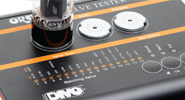
Many a Vintage Guitar reader has a stash of tubes lying about their music room/workshop or in a box in a closet. The problem is knowing which are trash and which are treasure. Orange Amps’ VT1000 valve tester promises to answer that question.
The VT1000 is designed to run an array of tests that tell whether a tube should be used or tossed. It has tube sockets for eight-pin octal power tubes, nine-pin EL84-style tubes, and standard nine-pin 12AX7 preamp style sockets. The unit has three buttons and an included power supply.
The VT1000 was tested on a variety of brand-new, NOS, and crusty old ’60s-era tubes found in a Heathkit amp dug up from a coworker’s closet. The unit proved easy to use – just plug in the tube, set the selector to the correct tube type, and the VT1000 is off and running. It tests for everything from open circuits to short circuits, leakage to amplification power, arc detection to gas ionization. Then its algorithms spit out a rating of “Good,” “Worn,” or “Fail.” Good or Worn tubes receive an additional/numerical rating between 1 and 15 (1 being the lowest); 12AX7 types even get separate rating for the two sides of the tubes – the first side is shown as a solid LED, the second as a flashing one. If the twin sides are perfectly matched on a preamp tube, it will get a single lit LED. Matched sides to a preamp tube are not necessary, but it can certainly be advantageous, especially when deciding which tube to use as a phase inverter.
A pair of Groove Tube 6L6s with marked ratings of 5 each were given Good ratings and a matching ranking of 7. Plugging in the crusty tubes from the non-working museum pieces quickly produced a Fail report on one EL84 and Worn on a second, and Good with an 8 rating for two old big-bottle GE 6L6 tubes. Note that the tubes do get warm in the tester, so use a rag or glove when handling them.
The Orange VT1000 is an excellent tool for repair shops, music stores, or tube amp users to have on hand. The ability to quickly give tubes pass or fail marks, not to mention the additional rankings, are great helps when troubleshooting an ailing tube amp, deciding which tubes to put in that gigging vintage treasure, or just filtering through a stash of old glass.
This article originally appeared in VG November 2013 issue. All copyrights are by the author and Vintage Guitar magazine. Unauthorized replication or use is strictly prohibited.
Before he became a leader of the Southern Rock movement, Charlie Daniels was part of a new breed of Nashville studio musicians who came to prominence in the late ’60s. In that role, he played guitar on Bob Dylan’s groundbreaking 1969 country-rock album Nashville Skyline. Daniels’ respect for Dylan’s compositional genius motivated this tribute, framing his gravelly, assertive voice with rocking, superbly executed acoustic arrangements.
Except for 1975’s “Tangled Up In Blue” and “Gotta Serve Somebody” from 1979, Daniels’ focus is quintessential ’60s Dylan. The straightforward treatments of “The Times They Are A-Changin’” and “I Shall Be Released” contrast with an appropriately dark interpretation of “A Hard Rain’s A-Gonna Fall.” He re-imagines “Mr. Tambourine Man” with a full-bodied country treatment.
Two Skyline selections – a rocking, bluegrass-flavored “I’ll Be Your Baby Tonight” and a rousing “Country Pie” – acknowledge the original arrangements, enhanced by Bruce Brown’s flowing, well-articulated Dobro. Brown also adds first-rate mandolin to “Just Like A Woman.”
“Quinn The Eskimo,” recast as a Cajun-flavored sing-along, allows Daniels to unleash his fiddle.
Dedicated to Skyline producer Bob Johnston, a longtime Daniels friend, Off The Grid succeeds as both homage and a superbly executed, unpretentious stand-alone effort.
This article originally appeared in VG‘s August’14 issue. All copyrights are by the author and Vintage Guitar magazine. Unauthorized replication or use is strictly prohibited.
Devo’s Bob Mothersbaugh. Bob Mothersbaugh: LivePict.com.
Devo is far from the only band that was years ahead of its time. The difference is that 40 years after its formation, the group’s music and videos are still ahead of their time, and any attempts to pigeonhole the band (mainly by association) fall short. Devo is a genre unto itself.
This 70-minute DVD includes 20 song videos (many pre-dating MTV), along with footage of early gigs and commentary by members Mark Mothersbaugh and Gerald Casale. That latter “bonus feature” of DVDs is typically a snoozer, but offers fascinating insight here, and also shows that the band was involved in the production of the DVD – as opposed to the unauthorized “critical review” DVDs of rock artists that seem to come out weekly.
Devo started as a video concept before it became a working band. The lineup fluctuated, with personnel and instrument swapping, and when they made the videos for “Secret Agent Man” and “Jocko Homo” in ’76, they had no record label and didn’t exist as a band – the manifesto being that they were a self-contained unit where visuals, theatrics, and staging were as important as the music. Embracing surrealism and Dadaism, nonsense and irrationality played as big a part, or bigger, than logic.
Devo were performance artists playing the part of rock stars – nerds, and proud of it. The irony is that they became a successful band, because they were talented and, more important, inventive. Still, fans and critics weren’t always sure what was a joke (invariably dark humor) and what, if anything, was serious.
Their guitar anti-hero stance was perfectly on display when they took the Stones’ orgasmic “Satisfaction” beat and chopped it up into something utterly undanceable. But, of course, their bona fide hit single, “Whip It,” was inescapably catchy – played by five guys in turtlenecks, shorts, and red plastic planters for hats.
Mothersbaugh and his brother Bob, as well as Casale and his brother Bob all played keyboards, bass, and guitars, and the group went through more drummers than Spinal Tap. Bob Mothersbaugh earns props for playing a La Baye 2×4, an infamous ’60s flop produced in Green Bay, Wisconsin, as well as his mis-shapened custom Ibanez “spud” guitar. Mark meanwhile often played a Tele with various stomp boxes duct-taped right onto its face. They never resorted to pyrotechnics, but were masters of hooks, in songs like “Freedom Of Choice,” “Through Being Cool,” and the power-chording “Gates Of Steel” – the latter included here in a live performance from 1980.
Technically, Devo should be spoken of in present tense, although they’ve split up and reformed several times. Three-fourths of the current edition are original members, and, though they never won a Grammy, one can imagine them relishing the irony of the Daft Punk “robots” accepting five statuettes at this year’s ceremony. Maybe one day, the music industry will catch up with Devo as well.
This article originally appeared in VG‘s August ’14 issue. All copyrights are by the author and Vintage Guitar magazine. Unauthorized replication or use is strictly prohibited.
DigiTech’s new Drop is a polyphonic drop-tune pedal that lets guitar and bass players lower their tuning from one semitone to a full octave. It uses algorithms drawn from the company’s Whammy DT and offers a choice of eight drop tune and pitch-shifting intervals, plus an Octave+Dry mode that blends original signal with a note one octave down. Its Momentary/Latching switch creates hammer-on and pull-off effects. Wired for true-bypass operation, it has a metal chassis, red LED indicator, and operates via its 9-volt input or included power supply. For more, visit www.digitech.com.
Dynamo Amplification has added the GTS-C to its Grand Tour Series of high-gain/two-channel amps, which are built with audiophile-grade components and toroidal transformers. The C-series amps offer optional standard-grade component options and are available in a 1×12 combo, head, or 19″ rackmount version with 20 watts output (using two 6V6 output tubes), 50 watts (from two EL34/6L6 tubes), or 100 watts (from two KT90). Visit www.dynamoamplification.com.
The Zephyr De Luxe Regent was Epiphone’s second-from-the-top electric guitar produced from the late 1940s through the mid ’50s. The instrument went through several name changes, from Zephyr De Luxe Cutaway, in 1948, to Zephyr De Luxe Regent, in 1950, to the DeLuxe Electric, by 1954. In Epiphone nomenclature, the word “Zephyr” indicated “electric” and the word “Regent” indicated “cutaway.” For the sake of clarity the term Zephyr De Luxe Regent will be used in this article to refer to all incarnations of the instrument.
The Zephyr De Luxe Regent had cosmetic appointments generally similar to the Epiphone De Luxe Regent, which was its acoustic cousin. However, the Zephyr De Luxe Regent did not share the same construction techniques with the carved top acoustic De Luxe Regent; the electric variation had a laminated (plywood) body. Epiphone utilized laminates in an effort to reduce troublesome feedback. The outer ply on the rims and the back of the 17 1/8” body often featured flamed or birdseye maple and the top was faced with spruce.
The curly maple neck of the Zephyr De Luxe Regent was fitted with a rosewood figerboard inlaid with a pearl and abalone “split V-block” design. Prior to 1951, truss rod adjustment was at the body end of the neck and subsequently on the headstock, with a white plastic truss rod cover. The headstock was inlaid with the Epiphone name and a vine pattern often referred to as the “tree of life” and was equipped with Epiphone’s exclusive “16 to 1 ratio enclosed tuners.” These tuning machines had plastic pearloid buttons and the enclosed backs were stamped with the Epiphone “E” logo. Other features included multi-ply binding on the body and headstock. The neck was bound with single-ply binding and featured parallel white stripes inlaid approximately 1/8” from either edge of the fingerboard. The f-shaped sound holes were not bound. The tortoise shell celluloid pickguard with multiple bindings was secured to the body with a bent metal support and a small metal cleat which was attached to the side of the neck. The Frequensator tailpiece secured the strings which then passed over a rosewood bridge. All metal parts were plated with gold. The instrument was available either in a natural blond finish or in a golden brown sunburst.
Like the name of the instrument, there were minor cosmetic changes over the years, but they were not always consistent. The period between 1953 and ’56 (approximately) saw the Zephyr De Luxe Regent sometimes featuring a maple-faced to and sometimes spruce. Likewise, the fingerboard inlay was sometimes the split V-block and sometimes pearl “clouds” (which was the inlay pattern on the acoustic version), and the headstock sometimes had the tree of life and sometimes had a large flower (used on the ’50s Broadway acoustic and some ’50s De Luxe acoustics). These variations have been seen in all combinations and there seems to be no logical pattern to them.
The Zephyr De Luxe Regent was equipped with two pickups, though there were some single-pickup cutaway instruments produced. The 1948 literature introduced the new “Tone Spectrum” pickup, which was a single-coil model with adjustable polepieces, approximately 1 ½” by 3 ¼”, encased in cream-colored plastic. The pickups were controlled by a single Volume and “Mastervoicer” Tone controls mounted on round aluminum plates perpendicular to the strings in the lower treble bout. Pickup select was accomplished with a three-way slider switch mounted on a gold-plated metal base. In 1949, the Tone Spectrum pickup was enclosed in a metal case with a cream-colored plastic surround. This pickup was approximately the size of a humbucker.
In 1950, the Mastervoicer mounting plates were discontinued and the contols were installed in a line parallel to the strings. Control knobs were the familiar octagonal pointer knobs in white plastic. The other important change of this year was the redesign of the Tone Spectrum pickup, which then measured 1 1/8”, by 3 ½”. This is commonly referred to as the “New York” pickup, though that term was never used in company literature. By 1951, the Volume and Tone controls were angled away from the strings. Some Epiphones were equipped with DeArmond pickups between 1954 and ’56, though the Tone Spectrum pickup was specified for the Zephyr De Luxe Regent in all company literature.
This is a very collectible guitar – a full-body cutaway electric with aesthetically pleasing ornamentation. However, as a “performance guitar,” certain features leave a bit to be desired. The most commonly Zephyr De Luxe Regents are from the ’50s, and equipped with the smaller Tone Spectrum (New York) pickups. These pickups can vary in tonal quality; many produce a rather thin sound and are subject to feedback when amplified much beyond that comfortable in a small room. It often takes a great deal of experimentation with the controls on an amplifier to get an acceptable sound. The pre-1950 models with the larger pickups tend to have a fuller range of response, with plenty of bass and a much more pleasing sound, though feedback can still be a problem. The most noted modern player of the Zephyr De Luxe Regent, Duke Robillard, had Gibson mini-humbucking pickups installed in his, with wonderful results, though such a modification cannot be recommended due to the negative result in vintage value of the instrument.
Circa 1953, the neck coutour of the Zephyr De Luxe Regent, as on most Epiphone instruments, changed somewhat to a fuller, rounder shape. Prior, the shape was a slight V and not as full.
The Zephyr De Luxe Regent is a wonderful example of the meticulous craftsmanship and beauty produced by the Epiphone employees. Given an understanding of the shortcomings of its pickups, this can be a fabulous addition to any vintage instrument collection.
The matching Zephyr amplifier was housed in a maple-faced plywood cabinet. A single-channel amp, it had three inputs, optional vibrato, a 12” speaker, and produced 20 watts of output.
You can receive more great articles like this in our twice-monthly e-mail newsletter, Vintage Guitar Overdrive, FREE from your friends at Vintage Guitar magazine. VG Overdrive also keeps you up-to-date on VG’s exclusive product giveaways! CLICK HERE to receive the FREE Vintage Guitar Overdrive.
This article originally appeared in VG Classics #02 issue. All copyrights are by the author and Vintage Guitar magazine. Unauthorized replication or use is strictly prohibited.
From automobiles to kitchen appliances to, of course, electric guitars, designers have gotten a lot of mileage out of retro style in the past decade or so. When these designs truly succeed, however, is when they combine the stylish panache of days gone by with modern functionality, thereby providing the end user with an object that not only looks good, but performs well. The G&L Fallout could be a case study in this form follows function dictum.
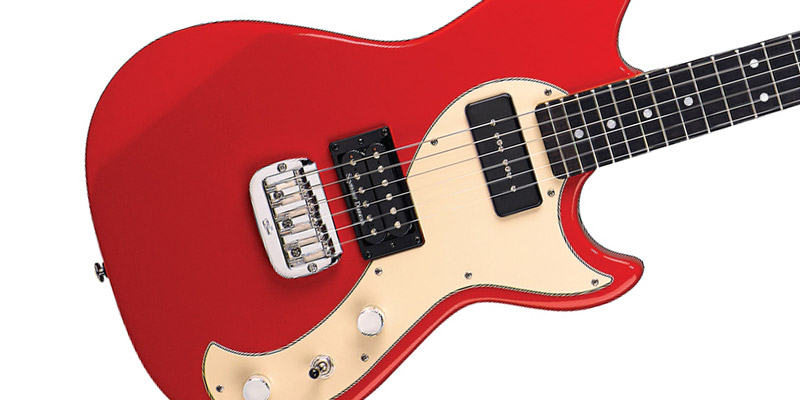
The Fallout is an updated, higher-octane version of the SC-2 solidbody, G&L’s early-1980s classic. The Fallout offers a slightly harder edge and a thicker sound than the SC-2, with its hotter pickups and hardtail bridge. Aesthetically, the Fallout has a lot of ’60s vibe, including a cream or pearloid pickguard, barrel knobs, and a gun oil-tinted “aged” neck finish. It shares the small, lightweight alder body and 25.5″-scale bolt-on neck with the SC-2, but trades the latter’s MFD single-coils in favor of a meatier Seymour Duncan JB humbucker (with push/pull coil splitter) in the bridge position and a custom neck-position G&L P-90 designed by former Fender pickup guru Paul Gagon. Controls follow the SC-2’s straightforward layout with a single three-way pickup toggle alongside Volume and Tone controls. Gone, too, is the G&L tremolo bridge, replaced by a G&L Saddle Lock hardtail, which features not only six individual heavy chrome-plated brass saddles that can be locked into place with a recessed Allen set screw, but also a lot of mass that does an excellent job of pinning string energy directly to the body for excellent acoustic sustain.
The review Fallout was fitted with G&L’s #1 neck, featuring a comfortable modern C profile, a 12″-radius rosewood fretboard with dot inlays, and jumbo fret wire. The jumbo frets combine with the flatter 12″ radius to provide a low action with super-easy bending. The Fallout’s light alder body, with its slightly stubbier shape compared to the traditional double cutaway body, is comfortable to play both sitting and standing. Access to the upper frets is good and the volume control is nicely placed, not getting in the way while also offering easy access for volume swells. The pickup selector is easily accessible, too, yet tucked away enough so as not to not get bumped by accident.
The reviewed Fallout was plugged into an Orange Dual Terror head with a matching Celestion-loaded 2-12 cabinet as well as into a Fender ’65 reissue Twin Reverb 2-12 combo. The Saddle Lock bridge, tight neck joint, resonant alder body, and Duncan bridge humbucker conspired to give the Fallout a thick and tight overdrive tone with excellent note separation through the overdrive channel of the Orange amp. Even with the overdrive piled on, the bridge humbucker produced a crunchy tone that stayed articulate and didn’t wash out. The Gagon-designed P-90 in the neck position produced a hot and fat single-coil tone that easily kept up with the bridge humbucker for a nice balance. It also fared well with the overdrive piled on, providing a thick, dark tone without an overwhelming amount of the expected single-coil noise and hum.
Even though the Fallout is built for music with a slightly harder edge, there is no escaping its Leo Fender lineage. This guitar is capable of producing a broad palette of country twang and old-school blues tones through the Twin Reverb. The Seymour Duncan JB’s focused tone produces a clean sound in full humbucker mode and a foot-stompin’ twang in split single-coil mode, while the neck pickup’s thick-and-throaty tone is clear and round – great for blues. The balanced tone of the selector’s middle position produces a goodly amount of jangle with very round and punchy mids and punchy highs. Engaging the bridge humbucker’s coil splitter while in the middle position pushes the Fallout’s sound straight into Tele territory, with super-snappy highs and lush jangle. Unlike some guitars equipped with a single tone control, the Fallout’s master tone is well-tapered, allowing the player to gradually soften the highs of both pickups without turning them mushy or dull. Very useful.
The Fallout sports a ton of alternative retro vibe. More importantly, it offers the high build quality that is by now expected from the crew at G&L and a surprising variety of both modern and old-school tones.
This article originally appeared in VG November 2013 issue. All copyrights are by the author and Vintage Guitar magazine. Unauthorized replication or use is strictly prohibited.
Walker Electric Guitars’ Solace model has a tempered basswood body with Formica top and back in matte-black finish, maple neck with extended tenon attached with a single bolt on the nodal point and reinforced with two carbon beams, 24” scale, a custom-wound blade-style “cigar tube” pickup, Volume and Tone controls, and a custom paper-in-oil capacitor. Learn more at www.scottwalkerguitars.com.
Big rock crooner/bassist Glenn Hughes has seen it all. From Trapeze and Deep Purple to Black Sabbath, his life is a compelling rock escapade filled with good drugs, great music, and over-the-top excesses. Rebounding from the split with Black Country Communion, Hughes and drummer Jason Bonham have joined forces with 23-year-old guitarist Andrew Watt to form California Breed.
Produced by Dave Cobb (Rival Sons), the band’s debut has all the earmarks one would expect from a Hughes project. It’s a buffet of ’70s rock tropes, soaring choruses, and triple-thick guitar tones. Some of the highlights include the catchy “Midnight Oil,” which gets the Rolling Stones’ “Gimme Shelter” background-singer treatment. “Chemical Rain” is reminiscent of the epic stomp of Led Zeppelin and “All Falls Down” is a bombastic power ballad.
Watt plays with old-school zeal and maturity beyond his years. He’s perfectly cast to fill the chasm between Hughes’ rumbling bass and Bonham’s thunderous heavy foot. He’s carved out a niche blending Jimi Hendrix, Mick Ronson, and Jimmy Page with his own voice.
California Breed successfully mixes psychedelia, soul, and heavy rock into a tasty brew.
This article originally appeared in VG‘s August ’14 issue. All copyrights are by the author and Vintage Guitar magazine. Unauthorized replication or use is strictly prohibited.
In 2010, music retailer Fretted Americana joined forces with amp wizard John Kasha to “reimagine” the tonal qualities of a vintage Magnatone Tonemaster Troubador 214 coveted by guitarist (and FA employee) Phil Xendis, an industry vet with a ton of studio sessions to his credit and a semi-regular fill-in gig with Bon Jovi. The resultant line of amps has been branded Evil Robot, and their newewst offering is the EVR-C30.
The Magnatone has long been known for its smooth Class A tone and harmonics, and the PCB-constructed EVR-C30 attempts to mirror those qualities while maintaining the sonic palette of rock-and-rollers of the late ’50s, but with its own twist.
Weighing in at just 28 pounds and sporting four 6V6 power tubes and a preamp section with three 12AX7s, one 12AU7, and one 6AV6, the EVR-C30 is compact and handsome. Its owner’s manual shows how to swap tubes for added personalization – no rebiasing required.
With a single custom 12″ speaker, tube-buffered effects loop, and two channels, the EVR-C30 offers very cool tonal opportunities. And the Class A-powered amp has two footswitchable channels with independent volume controls listed as Loudness A and Loudness B. A small slider switch allows the user to adjust the amp from Mellow to Normal to Bright. There’s also the option of a High Gain or Low Gain input.
The EVR-C30 has a cooling fan and a ’50s-style footswitchable vibrato with Intensity and Speed controls, both with chicken-head knobs. It has a speaker-out, impedance selector for 8 or 16 ohms, and, in keeping with the old-school style of the Magnatone, the controls are placed on the back.
Switching between a Les Paul and a Stratocaster, the EVR-C30 offered a dark, dry, no-nonsense bark and grittiness – perfect for the player who appreciates dirty-amp breakup and likes to sculpt that sound with their guitar’s Volume knob. Supro-like sounds from the first Led Zeppelin album come to mind, as does the urge to play the riffs from “I Just Want to Celebrate” by Rare Earth, and Joe Walsh’s “Funk #49.”
Though it lacks the lush charisma of its higher-priced older sister, the 214, the EVR-C30 conjures rockin’ good fun. The footswitch sends the amp from Loudness B’s classic cleaner sound to Loudness A’s modern drive with snarl. The vibrato is sweet, offering the kind of adjustable dreamy intensity that can conjure ethereal hippy dancing or a surfin’ safari. The EVR-C30 wasn’t created to be an ultra-clean jazz or funk amp, but experimenting with the Low Gain input, lowering the Loudness control, and cranking the Master volume gets close, as long as one’s string attack isn’t too aggressive (and the cability to switch from 30 to 18 watts is helpful).
The EVR-C30 is great for the expressive hands-on player who likes to coax a variety of sounds using only their digits. It truly mirrors the player’s touch and attack, and the guitar’s volume level. Though not a luxurious-sounding amp, it can be used to create some ballsy rock tones. The Mellow setting is bassy and warm, with a slight volume drop, similar to turning down the guitar’s Tone control. The Normal setting lightens things up, with a tad more volume, and Bright adds more punch and top-end.
The EVR-C30 is also very pedal-friendly, finding instant compatibility with a plethora of time-based, pitch-shifting, and OD/distortion effects. On the cleanest settings, the amp sounds like a tonal blank slate, allowing the player to dial in pedals and really hear what’s going on without colorization. Further, it’s very portable and roadworthy for rockin’ blues or classic rock. Plus, there’s the option to swap out tubes for more crunch or clean.
The Evil Robot EVR-C30 has a classic mojo that allows the user to plug in and quickly acquire some righteous Class A amp tones at an affordable price.
This article originally appeared in VG November 2013 issue. All copyrights are by the author and Vintage Guitar magazine. Unauthorized replication or use is strictly prohibited.







 DigiTech’s new Drop is a polyphonic drop-tune pedal that lets guitar and bass players lower their tuning from one semitone to a full octave. It uses algorithms drawn from the company’s Whammy DT and offers a choice of eight drop tune and pitch-shifting intervals, plus an Octave+Dry mode that blends original signal with a note one octave down. Its Momentary/Latching switch creates hammer-on and pull-off effects. Wired for true-bypass operation, it has a metal chassis, red LED indicator, and operates via its 9-volt input or included power supply. For more, visit www.digitech.com.
 Dynamo Amplification has added the GTS-C to its Grand Tour Series of high-gain/two-channel amps, which are built with audiophile-grade components and toroidal transformers. The C-series amps offer optional standard-grade component options and are available in a 1×12 combo, head, or 19″ rackmount version with 20 watts output (using two 6V6 output tubes), 50 watts (from two EL34/6L6 tubes), or 100 watts (from two KT90). Visit www.dynamoamplification.com.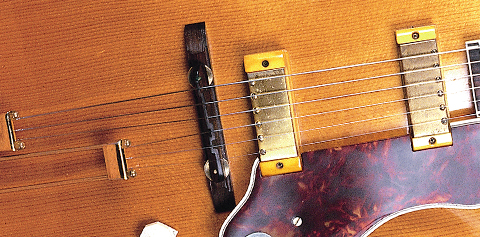



 Walker Electric Guitars’ Solace model has a tempered basswood body with Formica top and back in matte-black finish, maple neck with extended tenon attached with a single bolt on the nodal point and reinforced with two carbon beams, 24” scale, a custom-wound blade-style “cigar tube” pickup, Volume and Tone controls, and a custom paper-in-oil capacitor. Learn more at www.scottwalkerguitars.com.