 Xotic is now offering its own brand of guitar and bass strings. The guitar strings use a steel hex core and nickel-plated steel, while the bass strings are offered in nickel-plated stainless steel. Learn more at www.xotic.us/strings.

Xotic is now offering its own brand of guitar and bass strings. The guitar strings use a steel hex core and nickel-plated steel, while the bass strings are offered in nickel-plated stainless steel. Learn more at www.xotic.us/strings.

Louis Electric Amplifiers’ Black Line combo amps are designed to emulate the sounds of pre-CBS/blackface Fenders. The line includes the Princetone (18 watts output, 1×12), the Deltone (30 watts 1×12), and the Vibrotone (35 watt, 2×10). In the Deltone and Vibrotone, the tremolo circuit was modified from the opto-coupled of the vintage amps to a bias-modulated circuit. The reverb circuit has also been altered to provide a more-pleasing sound, and each has a Middle control for additional tone shaping. Learn more at louiselectricamps.com.

Guitar great Dick Wagner passed away July 30 after being hospitalized for respiratory failure. He had undergone a cardiac procedure two weeks prior. Wagner was 71.
Wagner emerged in the Michigan rock scene of the ’60s, making a name for himself with his bands, the Bossmen and the Frosts, before becoming one of producer Bob Ezrin’s main session guitarists, and one of the most sought-after session players around.
During his career, Wagner performed with and recorded tracks for numerous artists including Lou Reed, Meatloaf, Kiss, Aerosmith, Rod Stewart, Hall and Oates, and Peter Gabriel, among many others. On several occasions, he was brought in as a “secret weapon” and his session work was uncredited, as the artists did not want to reveal that other musicians had recorded tracks on their albums. A detailed discography is listed on Wagner’s website.
Some of Wagner’s best-known work is with Lou Reed (including the intro riff to “Sweet Jane”) and Alice Cooper. After previous session work with Cooper on School’s Out, Billion Dollar Babies, and Muscle of Love, Wagner went on to co-write and record tracks for Cooper’s landmark 1975 release, Welcome to My Nightmare, including the mega hit “Only Women Bleed.” It was a fruitful partnership.
“There was just a magic in the way we wrote together,” Cooper wrote in a statement to The Detroit Free Press. “He was always able to find exactly the right chord to match perfectly with what I was doing. I think that we always think our friends will be around as long as we are, so to hear of Dick’s passing comes as a sudden shock and an enormous loss for me, rock and roll, and to his family.”
Wagner had first worked with guitarist Steve Hunter on Lou Reed’s 1973 rock opera, Berlin. The duo then backed Reed on the subsequent tours, which were captured for Reed’s Rock ’n’ Roll Animal and Lou Reed Live.
Hunter wrote in a tweet, “Dick and I were lucky enough to play on some pretty cool records. The stuff we did together back in the ’70s was truly magical.”
Wagner suffered a heart attack in 2007 and spent several years recovering. He finally returned to the stage in 2011. The following year he released Not Only Women Bleed: Vignettes From the Heart of a Rock Musician, a memoir that contained stories from throughout his career. – Lisa Sharken
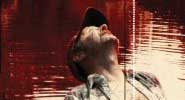

If you condensed Southern Culture on the Skids down to a one-man band, it would sound something like Scott Biram. Comparisons to C.C. Adcock, Rev. Freakchild, and Cub Koda’s rootsy solo albums also come to mind.
Biram was born in Lockhart, Texas (barbecue capital of the world), and calls nearby Austin home. On Nothin’ But Blood, he straddles God and the devil, as if Jerry Lee Lewis and Jimmy Swaggart were Siamese twins rather than cousins. He delivers an X-rated version of Mance Lipscomb’s “Alcohol Blues” and a rendition of “Backdoor Man” possibly more lascivious than Howlin’ Wolf’s, along with the Beefheart-meets-Hooker original “Church Point Girls.” He then closes the set with three rousing gospel cuts. The surprise gem, though, is the quiet, personal ballad “Never Comin’ Home,” featuring some beautiful bluegrass flatpicking.
This article originally appeared in VG‘s September ’14 issue. All copyrights are by the author and Vintage Guitar magazine. Unauthorized replication or use is strictly prohibited.
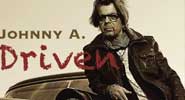

As the liner notes state, Johnny A.’s musical mantra is “melody is king.” And oh, how he proves it here – even when he dusts off his EBow for a side trip into psychedelia on “Out Of Nowhere.”
That melodic perspective is extremely important for an instrumental artist. When his technique grabs your attention, as with his legato licks on his cover of the Bee Gees’ “To Love Somebody,” he doesn’t take you out of the song. It’s one thing to impress other guitar players with hot-shot licks. It’s another to have non-pickers humming your tunes and, subsequently, buying your records. In songwriting and playing it’s also important to know the difference between what’s natural and organic and what is just easy; a main strength of two of Johnny A.’s main influences, the Beatles and Jimi Hendrix.
Instrumental artists must also make their songs complete songs, not just scaffolding for grandstanding. “The Night I Said Goodbye,” “It Must Have Been You,” and “Backbone Slip” carry wordless stories no less effectively told than they would be with lyrics. All in all, the whole album is almost inspiring by its simple celebratory joy of playing the guitar.
This article originally appeared in VG‘s September ’14 issue. All copyrights are by the author and Vintage Guitar magazine. Unauthorized replication or use is strictly prohibited.
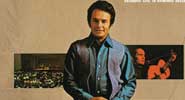
 Merle Haggard’s 1969 anti-hippie anthem “Okie From Muskogee” was part provocation, part spoof. It became such a hit that Capitol Records hustled in October of that year to record an entire live album in Muskogee, Oklahoma, the bucolic town that inspired the song. That LP is now back, remastered, in a two-CD package combined with Haggard’s live The Fightin’ Side of Me album.
Onstage in Muskogee was the classic version of the Strangers, including Tele legend Roy Nichols and gifted pedal steel player Norm Hamlet (still with Haggard today). The concert blended Haggard hits and a few covers. Nichols is never less than remarkable, whether adding a tremolo drenched break on “Silver Wings,” reprising James Burton’s solo on the studio version of “Workin’ Man Blues” or churning it up on the instrumental “Blue Rock” in tandem with Merle’s acoustic guitar.
The bonus live album, Fightin’ Side, is named for the follow-up hit to “Okie,” a more combative 1970 slam at antiwar protesters. The concert was recorded in Philadelphia with the same band plus rhythm guitarist Bobby Wayne. Again, Haggard mixes some originals with covers, including a medley of impersonations (Marty Robbins, Johnny Cash, and Buck Owens). The band got their own showcase on the instrumental “Stealin’ Corn.”
For both shows, Haggard and the Strangers were at the top of their game, demonstrating a power no less dazzling more than four decades later.
This article originally appeared in VG‘s July ’14 issue. All copyrights are by the author and Vintage Guitar magazine. Unauthorized replication or use is strictly prohibited.
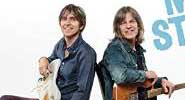

Two iconic players joining forces can soar or falter depending on material, the players’ adaptability, the number of guest performers, and many other factors. Eric Johnson and Mike Stern certainly arrived at the table with their ducks in line, toting a blend of originals and covers that inspired the title.
With a rhythm section of bassist Chris Maresh and percussionist Anton Fig, Johnson and Stern tackle original tunes such as Johnson’s swirling, modal “Remember.” He honors longtime heroes on “Benny Man’s Blues” (Benny Goodman and Charlie Christian) and “Tidal” (Wes Montgomery). “Dry Ice” goes back 30 years to Johnson’s days with the Austin-based Electromagnets.
They play superbly off one another on Stern’s “Roll With It,” with vocal by Malford Milligan. Johnson roars through the hard-driving “Hullabaloo,” punctuated by a horn section.
The ethereal “Wishing Well” features Stern singing, aided by vocalist Christopher Cross of “Ride Like The Wind” fame. Wife Leni Stern lends vocal and instrumental assistance on “Bigfoot” and the haunting “Wherever You Go.”
The album concludes with an explosive take on Jimi Hendrix’s venerable “Red House,” with the duo swapping vocals and choruses.
It’s true that “summit meetings” sometimes fall victim to unrealistic expectations. This one certainly doesn’t.
This article originally appeared in VG‘s February ’15 issue. All copyrights are by the author and Vintage Guitar magazine. Unauthorized replication or use is strictly prohibited.
 This album’s chock full of solid musicianship, including stylish guitar from co-producer Chris Bruce. Yet the story here, as it is on all Holmes Brothers records, is the vocals and the songs. Sherman and Wendell Holmes, plus Popsy Dixon, fill everything they do with soul and make it irresistible.
Check out the angelic singing on their cover of the Ted Hawkins chestnut “I Gave Up All I Had.” It’s just vocals, acoustic guitar, and keyboards. Yet in their hands, it’s a masterpiece.
It’s hard to play favorites on a record with 14 great cuts. You could choose the revival feel and relatable lyrics of “Stayed At The Party.” Or if funk is your thing, “Passing Through” and “Lickety Split” with Bruce’s popping guitar, easily pass that test. “My Word Is My Bond” is a blues tour de force, with Bruce matching the brothers vocals note for nasty note. A reworked “Amazing Grace” finishes off the album with a perfect touch.
Certain records just seem to reek of authenticity, and Brotherhood is one.
This article originally appeared in VG‘s July ’14 issue. All copyrights are by the author and Vintage Guitar magazine. Unauthorized replication or use is strictly prohibited.
 Okay, Zep police, sound the alarm and prepare to loose the hounds – we are finally about to lift the lid on the Jimmy Page amp. Well, maybe not the Jimmy Page amp, but almost certainly a Jimmy Page amp, and even this claim should be enough to get the keys clacking and the internet forums buzzing with the vitriolic denials of naysayers and Page obsessives who have already put their money on other Supros occasionally believed to have been the source of that sweet, addictive crunch on Led Zeppelin I and elsewhere. Sorry, but if the scant evidence points anywhere, it points here – given J.P.’s difficult-to-trace yet widely accepted past statements that it was a “small, blue Supro” and a “1×12 combo” – and we say that with the firm convictions of claim-stakers who understand deep down that there really is no knowing, and that we could be just as wrong as we hope we are right. Which is to say, totally.
So much for the furor, because ultimately it doesn’t matter anyway. Even if no name artist ever played through a sweet little mid-’60s Supro Model 24 like this one (even though he did), it’s still one of the hippest looking and coolest sounding 45-year-old tube combos on the planet. Right through the years of Fender’s seeming dominance of amp design in the U.S., Valco designed and manufactured a broad range of amps for re-branders such as Supro, Oahu, Gretsch, and Airline that totally disregarded the Fender standard. They all did their own thing, and did it very well. Components were largely of a slightly lesser standard, and cabinetry (which varied from brand to brand) was occasionally thinner and lighter-weight than that used by Fender and Gibson, but the circuit designs themselves are difficult to fault, and often took clever, original twists that today yield several truly stunning vintage-vibed voices that are quite different from the norm.
A look inside the chassis of the Model 24 reveals what, at first glance, looks like a rat’s nest of wiring strung out along a series of terminal strips. Look a little closer, though, and you’ll see fairly tidy workmanship, and a neat logic to the design. Valco managed to fit a simple yet extremely effective circuit into a confined space, and string together a series of stages out of the tube-design handbooks of the day that work together to pump out exemplary guitar tones.

1965 Supro Model 24. Photo: Michael Wright.
Preamp tubes: three GE 12AX7.
Output tubes: two GE 6973, cathode-bias, no negative feedback.
Rectifier: 5Y3
Controls: Volume and Tone on each of two channels, tremolo Speed and Intensity.
Speaker: Jensen Special Design C12Q.
Output: approximately 18 watts RMS.
One of the surprises in here is the extensive use of ceramic disk coupling caps where you’d normally see larger, more robust axial (tubular) coupling caps in amps wearing more prominent brand names. The relatively low voltages found in several stages of the amp, however, allow such caps to thrive, while also giving the amp’s tone a thick, chocolatey, slightly gritty character you don’t hear elsewhere. At lower volumes this adds some body to the stew, and cranked up to crunch gives the Supro’s voice a meaty bite.
Another of what today’s marketing men might call the “unique selling points” of this amp is its pair of 6973 output tubes. We addressed these briefly while featuring a Valco-made 1963 Gretsch 6156 Playboy combo (February ’09 issue), but they’re worth revisiting here. This tube’s nine-pin layout and tall, narrow bottle leads plenty of people to make the assumption it “sounds like an EL84,” but that’s a long way from accurate. Even on paper – physical appearances aside – the 6973 is a very different tube, with maximum plate voltage ratings of around 440 volts DC compared to the EL84’s 350 volts, a different pin-out, and different bias requirements. The robustness of this tube implies you can get a little more juice out of it if you try, and that’s certainly the case. These tubes were favored by jukebox manufacturers of the ’50s and ’60s for their firm, bold response, although few (if any) guitar amps tapped them for all they were worth. In our Supro, they put out about 18 watts from well under 350 volts at the plates, and sound round, chunky, and, if slightly dark – crisply and pleasantly so. And how’s this for a 6973 vs. EL84 A/B test?
Curious about this tube after digging that little Gretsch 6156 a while back, we decided to try something funky; having just completed a home-brewed amp designed along the lines of a modified/slightly hot-rodded AC15 – a project that was sounding stellar just as it stood with its pair of EL84s – we decided to take a leap of faith and rewire and re-bias the output stage for 6973s. The result? The amp was instantly louder, chunkier, and just bigger-sounding, with firmer lows and a meaty, if not overcooked, midrange. Different tubes, different sound.
The Supro Model 24 is likewise capable of pumping out a surprising amount of volume for its size; anyone with a recently acquired original example that seems wimpy or anemic in that department should look to the tubes, filter caps, and/or speaker, and expect the amp, in good condition, to have a bolder voice than the average tweed Deluxe, for example, and its thin 5/8″ pine cab makes it extremely lively and resonant along with it.
Where some smaller Valcos carrying similar circuitry have scaled-back tremolos, governed by a “speed” knob only, and an extremely deep, choppy effect as a result, the Model 24 has both speed and intensity, and can be made to sound superb at a wide range of settings, from gentle pulse to swampy throb. Each of two similar channels carries an independent tone knob (the usual simple treble-bleed circuit, but effective), along with inputs marked “Treble” and “Bass.” Counterintuitive though it might seem, the Bass input sounds better for most guitar applications, tapping the full voice of the amp, while the Treble option is a bit thin and anemic.
And lest we ignore one superficial but significant factor… man, what a looker! Our featured example, courtesy of Elderly Instruments’ repair tech Steve Olson, is resplendent in Calypso Blue vinyl (which matched the finish on many Supro Super Seven guitars and other models). It was also available in red and, at other times, the more familiar gray. The single Jensen C12Q sounds just right with this amp, or you can Brit it up some and add a little volume and low end in the process with something like a Celestion G12H-30 or an Austin Speaker Works KTS-70 (be sure to box up the original for safe-keeping). Come to think of it, we wish Jimmy Page hadn’t played this amp. Then there would probably be more of them around, for less money, for the rest of us to snatch up.
Dave Hunter is an American musician and journalist who has worked in both Britain and the U.S. He’s a former editor of The Guitar Magazine (UK).
This article originally appeared in VG July 2010 issue. All copyrights are by the author and Vintage Guitar magazine. Unauthorized replication or use is strictly prohibited.

When Eric Johnson came to prominence, he sounded like nothing anyone had ever heard before. He made a Strat sound like a violin, and transformed the Fuzz Face into an instrument of highbrow elegance. The press conjured images of a Texas guitarslinger weaned on Jimi Hendrix, Jeff Beck, and Chet Akins, but hearing him was a whole other thing. The introspective and mild-mannered guitarist’s influences fostered individuality, depth, and musicality. Today, his impact can be heard in the work of Eric Gales, Joe Bonamassa, and an entire generation of guitarists.
Beginning with the album Tones in ’86, Johnson continued to release one inspiring album after the next, turning traditional virtuoso guitar techniques into magic. He’s adept at playing blues, covering Simon and Garfunkel’s “April Come She Will,” Wes Montgomery, or juxtaposing Jerry Reed with Lenny Breau.
Europe Live is the culmination of an enviable body of work. Johnson displays growth and maturity, and the album glows with a sense of jazz. It was recorded at appearances in Amsterdam’s Melkweg, Die Kantine and Bochum Zeche in Germany, and New Morning in Paris. With no plans for the recording to be released (at the time), the band performs with ease and confidence.
“Intro” begins the set with its New York City fusion atmosphere and sumptuous guitar tones. Then it’s off to “Zenland” as Johnson serves up a taste of Austin, effortlessly switching from dirty blues, twang, and his miraculous ability to switch from crystal clean blackface Fender sounds to dirty Marshall and fuzz without a hitch. Velvet tones soar with warm richness, guiding us to the set’s first vocal performance.
The crashing chords of the semi-autobiographical “Austin” support strong idiosyncratic vocals supported by inspired arranging and transcendent groove. Bassist Chris Maresh and drummer Wayne Salzmann are a perfect blend of cohesive backup and space. The band shines on John Coltrane’s “Mr. PC” as the opportunity to stretch out spotlights the soloists in a jazz-rock environment.
Intimate and cozy, Johnson’s live tone has never sounded better. Old favorites “Manhattan,” “Zap,” and “Cliffs Of Dover” are performed with perfection and spontaneity. “Song For Life” displays exemplary acoustic fingerpicking prowess, but never at the expense of the song. The call and response of “Last House On The Block” benefit from hypnotic riffing, Johnson’s emotional vocal delivery, and supreme soloing. Dynamics and mercurial shifts in techniques are what mind-blowing extended jams are all about.
Europe Live is a perfect introduction for the uninitiated, and a must listen for fans. Along with the new composition “Evinrude Fever” and the re-imagined “Sun Reprise,” this collection documents sublime artistry, passion, and life-affirming joy. It’s a live masterpiece chronicling a brilliant guitarist sharing ebullient music.
This article originally appeared in VG‘s September ’14 issue. All copyrights are by the author and Vintage Guitar magazine. Unauthorized replication or use is strictly prohibited.