
 MBS Effects’ Stonecutter is a modern-voiced high-gain distortion with active three-band EQ. The Bass control is designed to not compromise the attack, while the Mid control has 25-db cut/boost capability. Constructed using top-quality components and true-bypass switching, it has a stage-ready status LED and can be operated on 9 or 18 volts. Visit www.mbsffects.com.
Month: April 2014
-
MBS Effects Releases Stonecutter High-Gain Distortion
-
João Erbetta & Adam Levy and Panamericans!

 A glimpse at João Erbetta’s résumé brings to mind Harry Belafonte’s tongue-in-cheek introduction of Carlos Santana at the 2013 Kennedy Center Honors, begging for immigration reform because the Mexican native had squelched his hopes for a calypso revival. Since ’06, when he moved to the States from Brazil (where he was a member of the hard-rocking Los Pirata), Erbetta has cranked out solo and group CDs. And while he hasn’t been honored at the Kennedy Center (yet), he’s performed there as well as at the White House.
His latest one-two punch consists of a second offering from L.A.’s Panamericans! and a guitar-duo set with Adam Levy. This time around, the Panamericans! are drummer Pete Curry (bassist with Los Straitjackets, lead guitarist with the Halibuts), bassist Rob Douglas (Chuck Profitt, Mike Stinson), and guest saxophonist Ron Dziubla (now a full-timer), with guitarist Eddie Angel sitting this one out. Levy’s guitar solos will be familiar to anyone who’s heard Tracy Chapman’s “Give Me One Reason” or Norah Jones’ “Come Away with Me” – in other words, every person on Earth. He has also recorded with Amos Lee and Ani DiFranco, among others.
Erbetta’s style somehow juxtaposes and blends jazz, Latin, surf, spaghetti Western, and easy listening – like a contemporary Al Caiola. His and Levy’s different backgrounds help rather than hinder their interplay, both as self-contained duo and co-writers. The main thing they have in common is respect for melody. So originals like the uncategorizable, old-is-new-again “Sad Texan” sit comfortably alongside a slowed-down rendition of mambo king Perez Prado’s 1958 chart-topper “Patricia.”
Meanwhile, the Panamericans!dip further into the Crescent City, albeit with a surf-combo edge to instrumental arrangements of Allen Toussaint’s and Earl King’s R&B and Sidney Bechet’s and King Oliver’s early jazz. If Erbetta is prolific, his compadres are equally versatile. It’s mind boggling to realize that the multi-instrumentalist (and engineer) playing drums à la Sam Butera & the Witnesses got his start with the Chocolate Watchband.
Erbetta mainly opts for a more trebly tone here (though he handles multiple guitar parts and personalities), with Dziubla’s raunchy tenor (already given Duane Eddy’s stamp of approval) the perfect counterpart. Jazz goes surfing or surfers after dark – take your pick; it’s all good.
This article originally appeared in VG‘s May ’14 issue. All copyrights are by the author and Vintage Guitar magazine. Unauthorized replication or use is strictly prohibited.
-
Keeley Ships Neutrino Envelope Filter
 The new Keeley Electronics Neutrino Envelope Filter employs a compact circuit based on an opto-coupler and has controls for input Gain, resonance Peak, Filter selector, tone Range, and Drive direction. Hand-built in the U.S. and housed in a powdercoated enclosure, it has true-bypass switching and its side-mounted/recessed Drive switch and internal output Volume keep the look clean. Visit www.rkfx.com.
 -
Fender to Close New Hartford Facility, Cease U.S. Production of Ovation
Fender Musical Instruments Corporation (FMIC) announced today that it will close its New Hartford, Connecticut, manufacturing facility in June, citing current market conditions and insufficient volume levels as the cause. U.S. production of Fender acoustic and Guild instruments will transition to other facilities at a later date, while domestic production of U.S.-made Ovation instruments will cease. The move affects 46 employees in New Hartford, who, the company says, will be offered severance packages, outplacement services, and other related assistance.
“We are committed to providing the same high-quality musical instruments our artists, consumers, and customers expect and demand, and will continue to support the brands currently being produced in New Hartford,” said Richard McDonald, senior vice president.
-
Son House, Willie Trice, Sam Chatmon, and others
 “Treasure trove” is a label as overused as “genius,” “virtuoso,” and “Holy Grail.” But, how else can one describe 115 minutes of footage, containing 33 performances by blues legends Rev. Gary Davis, Big Bill Broonzy, Bukka White, and others (all long since dead, save Buddy Guy, in an amazing 1968 duet with Son House)?
Collectors used to speak in hushed tones of snippets of film unearthed after hunts that were nearmythical themselves, but now you can watch greats like Skip James, Mance Lipscomb, and Sam Chatmon up-close with, for the most part, excellent definition and audio. The chance to see what – let’s face it – are considered museum pieces come to life can’t be overstated, and neither can the sheer enjoyment.
There’s a TV appearance by Charlie Burse and Will Shade, both of the Memphis Jug Band, doing “Kansas City Blues,” with some nice close-ups of Burse’s National steel-bodied tenor guitar (Shade is on washtub bass). Another jug-band alum, Chatmon of the Mississippi Sheiks, is featured singing four songs in later footage (he died in 1983 at age 86).
Broonzy died in ’58, barely too soon to reap the benefits of the Folk Boom, but he’d already toured and settled in Europe, where he was a major star and influence on guitarists from Eric Clapton to Martin Taylor. His two excellent tunes were filmed for Italian television. House’s sage discourse on the blues precedes a number filmed behind the scenes at Newport’s 1966 Folk Festival, but not included in the Devil Got My Woman DVD containing similar footage.
Three songs are included by the relatively obscure Piedmont-style guitarist Ralph Willis, filmed on the street in Philadelphia, along with a 3:30 interview with him and partner Washboard Pete Sanders. It’s fascinating but frustrating, since Willis died in ’57; so when he mentions knowing Robert Johnson and Blind Boy Fuller, you want to grab a time machine, snatch the mic from the interviewer’s hand, and ask him a zillion questions.
Harold Becker’s fantastic Blind Gary Davis film is included in its 11-minute entirety, albeit a rather grainy and dark generation. Closing with the spine-chilling “Death Don’t Have No Mercy,” merged with images of people on Harlem streets, it’s worth the price of admission. But so too are White’s and James’ festival performances at the aforementioned Newport.
A major flaw here is that there’s neither narration nor a booklet to give dates, locales, or bios. We see Willie Trice playing great ragtime and spirituals, obviously in the early ’70s, because by then he’d lost both legs to diabetes – something few would know, since Trice is obscure to begin with. Likewise, little is known about Henry “Rufe” Johnson, the lone electric player, except that he died in 1974, age 65, documented late in life with one album and a great tune here. That extra info would transform great footage into an invaluable blues course.
This article originally appeared in VG‘s June ’14 issue. All copyrights are by the author and Vintage Guitar magazine. Unauthorized replication or use is strictly prohibited.
-
MOD Kits DIY Introduces The Contortionist
 MOD Kits DIY’s The Contortionist is an all-analog fuzz box that produces fuzz with layered octave overtones similar to those produced by an e-bow. Its frequency multiplier circuit creates harmonics that swell and recede depending on gain setting, pick attack, position on the neck, and pickup. It operates on a 9-volt battery or AC adapter. MOD Kits include instructions and use point-to-point wiring. All have a pre-drilled enclosure and include all necessary parts. Visit www.modkitsdiy.com.
 -
Dunlop Offers Super Bright Bass Strings
 Dunlop Super Bright Bass Strings are designed to produce clear, defined highs supported by a balanced low-end response that keeps a player’s sound full and round. The company says their lighter tension provides superior response to playing nuances along with reduced hand fatigue, and the smooth feel of each string provides superior playing comfort. They are available in stainless steel and nickel-plated steel. For more, visit www.jimdunlop.com.
 -
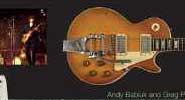
Andy Babiuk and Greg Prevost
 The rest of the world may be titillated by what the Stones smoked, shot, snorted, or ingested. But some of us have our priorities straight; we’re more concerned with what the band strummed and drummed.
Noted guitar historian Andy Babiuk is hip to all this. Babiuk is, of course, the author of the phenomenal Beatles Gear plus the glorious Paul Bigsby history. With Rolling Stones Gear, he has done it again. And he’s done it against all odds. Babiuk had help here from music writer Greg Prevost, who is a bandmate of Babiuk in the Chesterfield Kings. The creation of this book was a Herculean task on every front, from documenting the 50 years of music and instruments to getting access to the Stones’ original gear. Kudos all around.
Babiuk says he thought the Beatles were a tough camp to break into. But the Stones were exponentially worse. And there were many more decades of the band and its instruments to cover.
The result is this 672-page, seven-pound tome chock full of hundreds and hundreds of photos. The authors document every tour and studio session of the Stones from 1962 to present. Fittingly, the fracas at Altamont is covered in just a couple paragraphs, whereas Ron Wood’s arsenal of Zemaitis guitars gets pages and pages of history, interviews, and wonderful twopage-spreads of photos.
In many cases, the authors have been able to shoot the band’s original gear, even equipment from the earliest years. In other instances, they’ve been forced to fall back on photographing similar, non-Stones vintage gear, but this is usually only for the rarest of the rare instruments.
They tell the story of that gear – both the development and commercial history of a guitar model as well as that particular guitar’s story in a Stones’ hands: What changes were made and why, what broke and where, how it was repaired or modded to achieve a certain sound. From stompboxes to kick drums, basses to keyboards, it’s all here.
The studio photography of the guitars is glorious. The book kicks off with Brian Jones’ circa-1962 Harmony Stratotone H46 Mars, the first true electric guitar he used with the band, and continues through his famous custombuilt Vox Mk III Teardrop. There are even shots of the dulcimer he played on “Lady Jane” – yes, both the original acoustic dulcimer and an electrified Vox Bijou model built just for him to play the song live.
Keith Richards’ gear makes up the bulk of the guitars covered – Micawber, Malcolm, Sonny, George, Gloria, 999 – and those are just some of his Teles and Esquires. There’s many more from Gibson, Rickenbacker, Dan Armstrong, Travis Bean, Jesselli, Sadowsky, on and on. And don’t forget the Vox and Selmer amps, Maestro stompboxes, etc.
The gear of Mick Taylor, Ron Wood, and Bill Wyman is all well-documented, as are the instruments of everyone from Mick Jagger and Charlie Watts to Ian “Stu” Stewart, Bobby Keys, and other sidemen.
A sole complaint is that for such a phenomenal book at such a price, the paper stock is disappointingly thin. But that’s minor.
Rolling Stones Gear is big, heavy, lavish, and beautiful.
This article originally appeared in VG‘s June ’14 issue. All copyrights are by the author and Vintage Guitar magazine. Unauthorized replication or use is strictly prohibited.
-
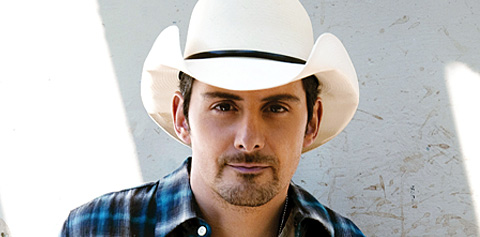
Brad Paisley

Photos by Rusty Russell. Brad Paisley’s 2011 book, Diary of a Player: How My Musical Heroes Made a Guitar Man Out of Me, is essentially an autobiography. But really, it’s not so much about him.
Anyone who has ever spoken with Paisley will tell you the “aw shucks” humbleness he exhibits on awards shows, in concert, and in the book, is not a front. So it’s no surprise that when Paisley sat to write a biography, he took the opportunity to focus on the other people who have been most important in his life… and a few guitars!
In the prologue, Paisley describes Christmas day, 1980, when, as an eight-year-old fan of the Star Wars films, he really wanted a toy – maybe a Millennium Falcon model or a light saber. Without at least one of them, he recalls thinking in the hyperbole of a child, “I would have no reason to go on.” But, he writes…“Sitting beneath a pile of presents under my grandparents’ tree was the answer to almost every question that life would throw at me, the map I needed to guide me through every twist and turn, a shield that would defend me from heartache, and a battle-axe that would lead me to victory. And one of the best friends I would ever have.”
That answer was a Silvertone model 1448 amp-in-case rig, a gift from Paisley’s grandfather, Warren Jarvis (in the book, he’s called “Pawpaw”).
“I was drawn to the guitar because it was inescapable,” he chuckled. “My grandfather so loved music and guitars, in particular, and that rubbed off on me because he made sure it did! I showed some interest in it, but like my kids… I play all the time in the house, and they show interest because I can play ‘Batman’ or the theme from the ‘Beverly Hillbillies’ when they ask me to. But I only wanted to play guitar because he wanted me to.”
Paisley describes his Pawpaw as a fairly typical guitar guy who had a few playable instruments, but nothing extravagant.
“He wasn’t wealthy, so he bought what he could to get by; he had several Yamaha acoustics, including an OM copy. He would play every day; he worked for the railroad, so he’d leave the house around four in the afternoon and get home around midnight. He also kept a guitar at work – a Yamaha copy of a Gibson Dove that he used to sit and play. It has a huge arm-wear blemish. He also had a Sekova 335 copy, which is a good guitar. I still have it. In fact, I have every guitar I’ve ever had except for a Hondo Strat copy I sold to a kid a long time ago.”
Beyond the importance of his grandfather’s passing along a passion for music – especially instrumental stuff by the likes of Buck Owens, Roy Clark, Chet Atkins, Merle Haggard, and Johnny Cash, the man made sure the young Paisley had the proper gear as he progressed.
“One day when I was 10 or 11, I had a gig at a church picnic with Hank Goddard, and we put together a little band. As I was getting ready, Pawpaw marched up the alley behind our house carrying a Deluxe Reverb in one hand and the Sekova in the other. He told my mom and dad, ‘He’s playing with Hank today, so he needs a real guitar and a real amp.’ He gave me the guitar and amp, and never did ask for them back. He knew I was headed for actual gigs. I remember him being really worried about my hearing with the Deluxe Reverb. ‘Now, this thing is loud,’ he’d say (laughs)!
“I was lucky in that a few things he gave me were amazing; my first amp wasn’t a Gorilla – it was that 1970 Deluxe Reverb!”

Brad Paisley’s new biography is called Diary of a Player: How My Musical Heroes Made a Guitar Man Out of Me, and was co-written with David Wild. Through the years, a few other guitars have played essential roles in his life – most notably the ’68 Fender Telecaster in Paisley Red finish that accompanied him on his ascent to stardom. But more recently, a guitar entered his realm that speaks to the fact that his, at times, is indeed a charmed life.
When floods struck Nashville in May of 2010, dozens of notable performers lost millions of dollars worth of guitars, amps, and other gear stored at one of the city’s primary cartage/rehearsal facilities. Paisley was no exception; after the water receded, nearly every guitar and amplifier he was planning to use on a tour slated to begin in mere days was covered in river mud, as were the band’s drums, risers, keyboards, mandolins, P.A. speakers, and his custom-made effects rack.
After the flood, Paisley fulfilled a lifelong dream when he bought a pre-war Martin dreadnought – something he had previously deemed an unjustifiable extravagance.
Though he was familiar with the famed second-floor acoustic room at Gruhn Guitars, “I didn’t go up there much, because I could never even begin to afford anything on that floor until I had hits,” he said. “But the flood changed me profoundly as a gearhead, because until then, I was pretty cheap about stuff. Plus, by the time I could afford the type of instruments I’d always wanted, I was mostly being given them through endorsement,” he noted. “So I didn’t have to go digging for vintage guitars much. And when I did go to stores I frequent, like TrueTone in Santa Monica, my main obsession was amps, especially old Voxes, Marshalls, or Fenders. And it was always about sound. It had nothing to do with collectibility, really.”
But, acoustic guitars have played a major role in Paisley’s music, and he has known some good pieces.
“Early in my career, I had a cool old Gibson or two – some J-45s – and friends would allow me to use theirs. I used a J-185 on my first record, which is an amazing guitar. I had access. So I just wasn’t looking for something that would cost five figures! Instead, I’d think about how I could buy 10 Gibsons for the price of one pre-war Martin.
“And then the flood happened. And it’s a funny thing… I had a lot of gear that I loved get destroyed. But I also had some gear that was in storage for a reason (laughs), like, I had a bad ’70s Les Paul and some other things that were worth thousands of dollars. And I’m very fortunate that I was fully insured. So when that insurance check showed up for some of these instruments that I didn’t really love… and I’m looking at the amount on that check, thinking about how I could buy something I’ve always wanted… and I’m gonna get taxed if I don’t spend it, which is a great way to justify (laughs) spending that kind of money! It’s like, ‘Hey, if I don’t spend this, then I’m gonna give Uncle Sam this much.’ I have justified a lot of stuff that way!
“You can imagine what the flood was like – it was so heartbreaking to see a Dr. Z prototype Z Wreck that Mike Zaite made me, dripping with water – nasty water. So, I thought, ‘Well I’m going to make the best of this,’ and over the course of months I started to think about what I needed – some things I needed right away and we started to buy. Then I thought, ‘Well, what’s on my wish list?’ And I’ve always thought how I’d love a pre-war herringbone, but some of them can sound like a 1970 D-28 while others are worth $150,000.

(LEFT) The ’37 Martin herringbone D-28 Paisley acquired after the 2010 flood in Nashville. (RIGHT) Paisley’s Silvertone 1448 “amp-in-case.” “So I walk up to the second floor of Gruhn’s; I’m lucky in that where I live is one of the few places in the world where you can play 10 pre-war D-28s at any given time. And I just start picking ’em up and strumming them, going down the line. Some are like, ‘That’s good, I get it.’ But they weren’t enough for me to part with that kind of money. I get down to the end and I pick up this one, and the heavens part, the angels sing! I mean it’s just that good. You hear it on the first chord of my new album (the intro to the title track of This Is Country Music), and what you hear there is what it sounds like. Every time we’ve recorded with it, when they set the mics, my engineer would run into the control room, expecting to run back out and move them a little to get rid of this or get rid of that. But he never did that with this guitar. It’s got an amazing edge to the way it feels, sounds, and plays. It’s the most ridiculous thing.
“Anyway, George [Gruhn] walked up to the room while I was strumming it and I said, ‘You got any that sound like this that aren’t on this floor?’ (laughs) And you know George, he’s got his arms folded, and he’s looking at me, saying (impersonates Gruhn), ‘That may be one of the best guitars we’ve ever had in the store. I don’t think you’re going to find something else like it.’
“So I left. And I called my wife and said, ‘I just played something…’ She said, ‘Well, you should get it.’ And I said, ‘Are you kidding? It costs as much as a new car! Honey, I can’t spend that, that’s just dumb.’ She said, ‘Why’s that dumb? That’s what you do for a living.’ So I quit thinking so much and called (Nashville guitar builder/tech) Joe Glaser, and I said, ‘You gotta go up there with me.’ So he goes to Gruhn’s with me, and I pick it up and strum it and he says, ‘You need to buy that!’ He said, ‘Guitars like this belong with you and Vince [Gill] and Keith [Urban] and Brent [Mason] and guys in our town. It shouldn’t be in a vault.’”
In Diary, Paisley writes, “So as I was wrapping my head around actually owning this gem, the Gruhn’s staff brought out a framed account of the guitar’s history written by the daughter of the man who had owned it for most of its long life.” He then tells the story of how Gruhn’s acquired the guitar from a family in San Diego whose father had left it to them upon his passing in 1994. Turns out, the man was originally from Paisley’s home state of West Virginia, and even better, he, like Paisley’s grandfather, worked as a telegrapher – just one station down the B&O Railroad line – in the years after World War II. Paisley deduces that the two men likely knew each other, communicated regularly via telegraph, and both probably spent many hours strumming guitars at their posts.
“When [Gruhn’s staff] showed me this framed thing that tells how the guitar comes from where I come from, and it belonged to a man who may have interacted with my grandfather… I was astonished. It’s a West Virginia herringbone! And there’s not a lot of West Virginia herringbones left (laughs)!
“So I drove away again, called my wife again, and said, ‘I don’t know how I can’t do it.’”
So it was, folklore may tell the tale, about how fate and a terrible flood teamed up to put one very special 1937 Martin D-28 with herringbone trim in the hands of a certain country-music superstar.
Special thanks to Kendal Marcy.
This article originally appeared in VG’s January 2012 issue. All copyrights are by the author and Vintage Guitar magazine. Unauthorized replication or use is strictly prohibited.
-
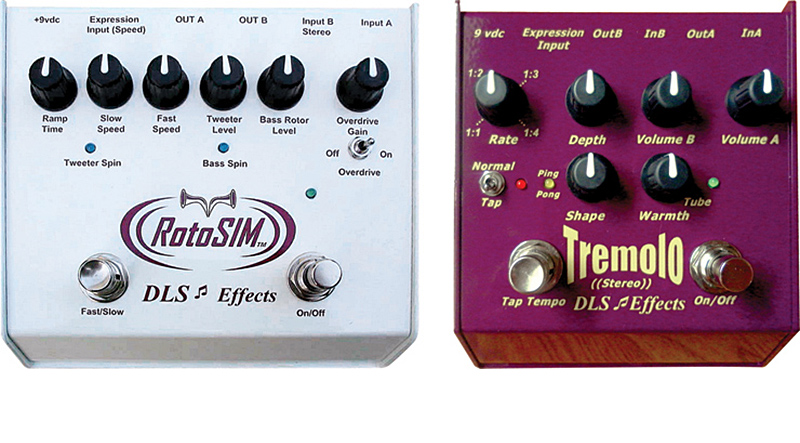
DLS TR1 Tremolo and RotoSim

Price: $299 (RotoSim), $249 (TR1)
Info: www.dlseffects.comIf you’ve ever played guitar through a Leslie rotating-speaker cabinet, you’re aware of its lush 3D sound. Many guitarists would love to be able to use that sound – and would, were it not for the fact a Leslie cab can test not only one’s lumbar region, but their wallet!
Through the years, a host of effects companies have offered simulations of rotary-speaker. But, capturing the complex characteristics of a rotary speaker is not an easy task – especially when players want it to fit on a pedalboard!
The same can be said of tube-driven tremolo; while tremolo pedals are common and relatively inexpensive, capturing the warm, musical sound from a vintage amp is not all that easy to replicate in a pedal.
Enter DLS’ RotoSim and TR1. Both housed in heavy steel enclosures with powder-coated finishes, they’re built using chassis-mounted pots, switches, and jacks, true-bypass footswitches, stereo In and Out jacks, expression-pedal jacks, and 9-volt DC power supplies (they’ll also run off most pedalboard power supplies).
DLS recently asked whether we were interested in giving both boxes a run. Because we’re almost always agreeable to such queries, we grabbed a Fender American Vintage ’65 Strat and a Fender Blues Deluxe 1×12 to help us along.
The TR1 Tremolo has an extensive control setup – Tap-Tempo, Normal/Tap mode, and a Rate knob that controls the speed of the tremolo. There’s also a Multiply/Ratio control, Depth, individual Volume controls for A and B outputs, Shape (selects wave shape and cycle), and Warmth, which adjusts the bias of the pedal’s two analog optical circuits (in conjunction with Shape), allowing the player to dial in specific tremolo sounds from thick and warm to choppy and aggressive. The Warmth control does a great job softening the wave and adding a subtle low-fi analog/tube flavor. The individual Volume controls allow the user to balance the effect between the two outputs, and make up for any volume lost with the effect engaged. Tap Tempo doubles to engage a “pan” mode, creating a spacious pulse effect, in stereo. The TR1’s Expression input allows for control of the speed via standard TRS expression pedal. It can create an intense tremolo effect and syncopation to the beat.
The RotoSim utilizes a hybrid analog/digital circuit to simulate the swampy, organ-like characteristic of a Leslie rotary-speaker cabinet, an effect popular in the late ’60s/’70s and “revived” by blues guitarists, most notably Stevie Ray Vaughan. Using this circuit, the RotoSim further creates the sound of a separate high-frequency horn tweeter and low-frequency driver while maintaining a warm analog sound. Like the TR1, the RotoSim offers a boat-load of control over its sounds, and its smaller footprint (53/4″ x 5″) is more pedalboard friendly and takes up less real estate than most rotary-speaker simulators.
Set for slower speeds, it produces a thick, chorus-like effect; at faster speeds, that familiar Leslie swirl. But the real magic occurs during the speed shifts from slow to fast or fast to slow, where it can render a super-lush sound with tons of musical pitch-shifting and frequency separation. With a real Leslie, the player can independently control the speed of the bass rotor and the high-frequency tweeter. The RotoSim offers much the same, visually represented with the individual high- and low-speed LEDs. In a stereo setup, the RotoSim produced an accurate rotary-speaker simulation with a wide, spacious sound.
The pedal’s overdrive circuit is subtle, but adds a touch of analog dirt, allowing it to cut through the mix and thicken overall sound. DLS designed the two outputs to sound slightly different. Output A is more true/transparent, while Output B is “fattened” ever so slightly, allowing for a bigger, more-realistic sound when in stereo. It also better matches the output of a particular amp. In our test, Output B sounded better with a Fender amp, while Output A sounded better with a Vox. A Roland expression pedal plugged into the RotoSim bypasses the Fast/Slow footswitch, allowing blending between slow and fast speeds on the fly, similar to an old-school Uni-Vibe.
In extensive tests in various environments, the TR1 and RotoSim offered easy-to-dial-in sounds. Both produced fat, warm analog sounds that were musical and lush.
This article originally appeared in VG January 2013 issue. All copyrights are by the author and Vintage Guitar magazine. Unauthorized replication or use is strictly prohibited.


