
Month: April 2008

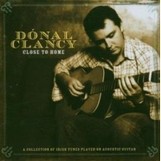
  • Donal Clancy – Close to Home

    Donal Clancy continues the tradition of the Clancy Brothers, demonstrating that contemporary Celtic music is as vibrant as any musical genre.
    Clancy grew up surrounded by traditional Irish music, and all 12 cuts here come from the treasure trove of reels, hornpipes, jigs, and mazurkas that form the backbone of the Irish musical heritage. But instead of sounding like moldy old figs longing for the compost heap, every tune has the vibrancy of a freshly penned melody. Much of the excitement comes from Donal’s performance. He is one heck of a flatpicker, whose technique and tone rivals anyone who’s ever held a guitar. From the first tune (“Tommy Coen’s Memories”), you’ll marvel at his ability to play fast and clean while doing complicated Irish rhythms.

    “Lord Inchiquin” was composed for harp, but Clancy uses it to show he’s equally adept at fingerstyle.

    Close To Home truly is a solo album. Most cuts have one guitar part – no overdubbing, no multitracking, just one pair of hands and one instrument. And the recording is well-proportioned, with just the right balance of direct and reflected sound, to create a realistic image of a guitar played in a good-sounding room. Some cuts have the faintest background noise, but it only adds to the reality of the recording. If you enjoy well-played solo acoustic guitar, Close To Home will keep drawing you in.


    This article originally appeared in VG‘s Apr. ’07 issue. All copyrights are by the author and Vintage Guitar magazine. Unauthorized replication or use is strictly prohibited.
  • Mavis Staples – We’ll Never Turn Back

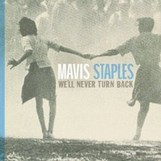
    Billed as her most personal statement, this may well be Mavis Staples’ finest solo effort to date. In 2004, the powerhouse lead singer of the famed Staple Singers released the rootsy Have A Little Faith on Alligator. Here, producer/guitarist Ry Cooder places the reigning queen of gospel’s voice in an even more intimate setting, paring the instrumentation down to the bare essentials.

    But it’s the repertoire that makes the album so personal, not to mention riveting. She goes not just back to the church but back to the type of “freedom songs” that made the Staple Singers an inextricable part of the Civil Rights Movement of the ’60s – as Rep. John Lewis writes in the liner notes, “the soul of that revolution.”

    Just as her family band had something to say then – with songs like “Why Am I Treated So Bad,” “Long Walk To D.C.,” and the hit “Respect Yourself” – Ms. Staples mixes traditional gospel tunes and originals to comment on the state of things in 2007.

    The program opens with the biting social commentary of unsung blues poet J.B. Lenoir’s “Down In Mississippi,” with Ladysmith Black Mambazo providing vocal backing to Cooder’s guitar and mandolin and the heavy backbeat of his constant collaborator, Jim Keltner. Mike Elizondo, who played on Cooder’s Chavez Ravine, is back on bass and keyboards, with Ry’s son, Joachim, who provided percussion on the acclaimed Buena Vista Social Club.

    Cooder’s big-toned slide leads off a version of “Eyes On The Prize” that will make the hair stand up on the back your neck. But the autobiographical “My Own Eyes” – recalling her father, Roebuck, and Martin Luther King (singing, “If he can preach it, we can sing it”) – is perhaps Mavis’s finest hour.

    Sure to be on numerous Top 10 lists for 2007.


    This article originally appeared in VG‘s Aug ’07 issue. All copyrights are by the author and Vintage Guitar magazine. Unauthorized replication or use is strictly prohibited.


    e

  • Bradley Walker – Highway of Dreams

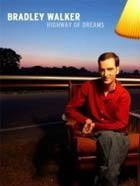
    Once in a great while an artist’s voice grabs you after just a couple of seconds. Bradley Walker just may have the finest male bluegrass voice, ever.

    Born with muscular dystrophy and wheelchair-bound since birth, disability hasn’t slowed down Walker one jot. Since his first brush with the concert stage, singing with the Oak Ridge boys at the ripe old age of three, it was clear that music would be his life’s avocation. Early in his career, Walker sang in country bands, but upon hearing J.D. Crowe and the New South, he began to focus on bluegrass. Soon he was attending festivals and singing with bluegrass heavyweights, many of whom contributed to this debut release. Background singers on Highway of Dreams include Vince Gill, Alecia Nugent, Jerry Salley, Rhonda Vincent and IIIrd Tyme Out’s Russell Moore. The album’s instrumentalists are equally impressive and include Ron Block (banjo), Aubrey Haynie and Jim Van Cleve (fiddle), Clay Hess (guitar), Rob Ickes and Randy Kohrs (dobro), and Adam Steffey (mandolin). Produced by Carl Jackson (who also contributed four of the 12 songs,) Highway of Dreams ranks as one of the best debut releases from any young singer in bluegrass, country, or pop.

    What makes Walker so special? First, his baritone has just the right tone – not too dark, not too light. And his phrasing sounds so natural. If you’ve ever sang, you know that every phrase can be delivered in a number of ways. Walker manages to choose the way that works for maximum impact and musicality. Take the Larry Cordle classic “When I’m Hurtin’.” Walker captures the swing and sentiment of the song so perfectly that we may never again be completely happy with anyone else’s version!

    I could continue, but I’ll spare you. If you’re into bluegrass, this disc will slay you completely. It’s simply a must-have.


    This article originally appeared in VG‘s Mar. ’07 issue. All copyrights are by the author and Vintage Guitar magazine. Unauthorized replication or use is strictly prohibited.

  • Various Artists – Ruf Records 12 Year Anthology

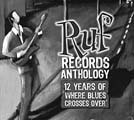
    Ruf Records’ mix of blues, soul, and rock can be a welcome addition to any record collection, and this CD/DVD expands its reach. The CD features 13 cuts from the likes of Aynsley Lister, Canned Heat, Luther and Bernard Allison, Omar and the Howlers, and plenty more. There are plenty of highlights, but the surprise of the batch is Larry Garner’s “Where the Blues Turn Black,” a soul-blues that showcases his B.B. King-influenced playing with some of the sweetest bends you’ll ever hear, and a fine vocal.

    The DVD is a great representation of what Ruf has been producing recently, with great performances from the likes of Bob Brozman, Robin Trower, and Blues Caravan. There’s also an incendiary “Work No More” from Walter Trout. Another nice surprise here is Ana Popovic’s “Don’t Bear Down On Me.” She definitely brings the heat, and the funk in more than one way. Fans of Sue Foley will also appreciate her performance on “Absolution.” The minor blues turns into a smoldering tune in the middle that lets Foley highlight a soulful, slightly jazzy side we don’t usually get to see or hear. There’s also a treat; a previously unreleased music video for Luther Allison’s “Bad Love.” It’s fun, and reminds us how much the world misses Luther.

    This is a must for fans of modern blues. Not only does it contain music by some of the finest players and singers, the DVD alone is worth the price of admission.


    This article originally appeared in VG‘s Apr ’07 issue. All copyrights are by the author and Vintage Guitar magazine. Unauthorized replication or use is strictly prohibited.
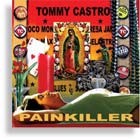
  • Tommy Castro – Painkiller

    Painkiller

    Tommy Castro’s pure Fender tone, whiskey-and-cigarette voice, and knack for writing a great tune are about as good as it gets on the blues circuit these days. On this new disc, Castro shows an affinity for old-style soul on cuts like “Big Sister’s Radio” that sounds as natural and up-to-date as anything on the R&B charts. The funky march of songs like “Love Don’t Care” reeks of soul, and for good measure, the Bay Area stalwart isn’t afraid to pull out a shuffle and let it ride. His duet with Coco Montoya on the Albert Collins tune “A Good Fool is Hard to Find” is a chance for both guys to let ‘er rip. Tommy can also write a great hook. His “Err On the Side of Love” is impossible to get out of your head. Castro has obviously absorbed a lot of lessons from the masters of soul music, as you hear on cuts like “Goin’ Down South.” The rollicking piano, mixed with Castro’s rock sensibilities, gives the song a fine New Orleans feel guaranteed to get body parts moving.

    Castro’s guitar playing is as no-frills as it gets, and his biting Strat tone draws immediate attention. He’ll slip in surprises on occasion, too. The fine rocker, “I’m Not Broken” has a very cool chord solo that gives way to a tasty rock solo.

    With this and 2005’s Soul Shaker, it’s pretty easy to root for Castro and his soulful guitar, great singing, and fine tunes.


    This article originally appeared in VG‘s Apr. ’07 issue. All copyrights are by the author and Vintage Guitar magazine. Unauthorized replication or use is strictly prohibited.

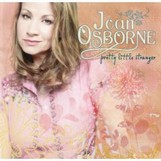
  • Joan Osborne – Pretty Little Stranger

    “Versatile” doesn’t quite do justice to Joan Osborne’s uncanny range. One minute she’s guesting with the Chieftains, the next she’s touring with the Dead. Then she utterly steals the show in the Funk Brothers documentary, Standing In The Shadows Of Motown with her stunning rendition of “What Becomes Of The Broken Hearted.” Simply put, she’s as good as any female vocalist out there.

    The latest addition to her impressive solo catalog – the standout of which, 1995’s Relish introduced the instant classics “St. Teresa,” “Spider Web,” and the Top 10 hit “One Of Us” – finds the Kentucky native in Nashville. The result – produced by Steve Buckingham – isn’t really a country album, but has a spare, acoustic texture.

    The title track, penned by Osborne, opens the program with a bit of a Rosanne Cash feel, while Kris Kristofferson’s “Please Don’t Tell Me How The Story Ends,” the set’s deepest country track, is reminiscent of early Ronstadt. The original “Who Divided,” on the other hand, has a funky, Tony Joe White feel.

    Several usual Nashville subjects are onboard, including drummer Eddie Bayers, bassist Michael Rhodes, acoustic guitarist Bryan Sutton, and steel guitarists Paul Franklin and Dan Dugmore – all able to match the singer in the versatility department. Formidable vocalists Vince Gill, Alison Krauss, and Dan Tyminski lend harmonies, and Osborne herself supplies otherworldly countermelodies on Patty Griffin’s “What You Are.”

    Osborne wrote half the CD’s solid repertoire, which also includes tunes by Beth Nielsen Chapman and Harlan Howard, and the Grateful Dead’s Garcia-Hunter collaboration “Brokedown Palace” – given a gospel-tinged cast, reinforced by John Hobbs’ Hammond organ.

    The album closes with Rodney Crowell harmonizing on “When The Blue Hour Comes,” which he co-wrote with Will Jennings and Roy Orbison. Like every other voice and instrument, his backing is subtle and, like Osborne’s on-the-mark performance, in the service of the song.

    What Ms. Osborne will tackle next is anybody’s guess, but you can bet she’ll nail it.


    This article originally appeared in VG’s Jan. ’07 issue. All copyrights are by the author and Vintage Guitar magazine. Unauthorized replication or use is strictly prohibited.

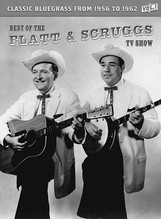
  • Flatt & Scruggs – Best of The Flatt and Scruggs TV Show

    Before “Hullabaloo” or “Hootenany” there was the Grand Ole Opry, America’s first national country music show broadcast on the radio.

    Of course the Opry garnered a slew of imitators, and when television came along, folks attempted to graft the format to this new media. One of these first attempts was “The Flatt and Scruggs Grand Ole Opry TV Show.” With only one advertiser – the Martha White Flour Company – Flatt and Scruggs had plenty of time to play music while pitching biscuits, cakes, and pies made with Martha White’s special “Hot Rize” ingredient. Almost 50 years later, these shows still deliver a boatload of tasty surprises.

    Broadcast from 1955 until ’69, copies of the Flatt and Scruggs Grand Ole Opry shows had all but disappeared until 1989, when 24 episodes were found by advertising executive Bill Graham and donated to the Country Hall of Fame Museum. Twelve more episodes were later unearthed and also given to the museum.

    Each of these two DVD volumes features two shows. Volume 1 has August, 1961, and February, 1962, while Volume 2 has July and August ’61. The museum has plans to issue two more volumes in late 2007.

    Both discs have simple menus that give the option of playing the entire disc or choosing which program you want to watch. Each show has its own sub menu that allows the viewer to choose a particular song (or commercial) or watch the entire program from beginning to end. Neither disc has any additional features. All the shows have a similar format; an introduction by radio announcer T. Tommy Cutrer, several songs, a Martha White “demonstration” segment, more songs, another demonstration, then another song or two before the final credits. Each show has several “spotlight” segments. Earl Scruggs plays fingerpicked guitar for at least one song, dobro virtuoso Josh Graves gets one solo number, fiddler Paul Warren does a fiddle tune, the entire band performs a gospel vocal quartet, and bass player E.P. “Cousin Jake” Tullock and “Uncle” Josh Graves do their comedy section consisting of a bad old joke.

    Picture quality on these discs is pretty decent. The original black and white shows were done on early 2″ videotape that was transferred to film for distribution. Although you’ll see an occasional glitch or stutter, by and large, the tapes survived in excellent shape. These film copies also have surprisingly good monophonic sound (although at times slightly out of synch with the picture) with only moderate roll-off on the top and bottom ends of the frequency spectrum. You can hear some tape hiss, but it never gets distracting. The studio had two cameras and most of the camera work and editing consists of cutting between the two. One camera supplies medium length shots while the other delivers nice close-ups of the players’ fingers. Although the resolution isn’t good enough to pick up actual notes and licks, you do get a reasonable view of Earl Scruggs’ and Josh Graves’ right-hand techniques.

    Vintage-instrument aficionados will appreciate the opportunity to see Scruggs’ five-string Gibson banjo and Lester Flatt’s Martin dreadnought in action. Mandolin players will notice that Curley Seckler played a Gibson F-4 oval-hole mandolin instead of an f-hole F-5 like Bill Monroe. He also takes no mandolin solos. The most interesting instrument on the show is undoubtedly the guitar used by Scruggs for fingerpicking; this Martin dreadnought featured a pickguard that covered two-thirds of its face, shielding everything in front of the bridge in protective tortoiseshell plastic. But the oddest thing is the truss rod cover on the headstock. Martin guitars of this vintage didn’t have adjustable truss rods, so this guitar certainly didn’t need a cover on the headstock to protect a nonexistent adjustment screw! Gibson envy, perhaps?

    Any bluegrass fan with more than a passing interest in vintage performances will want these DVDs. While not quite as satisfying as a trip in a time machine back to the WSM TV studios, these discs deliver a clear picture of Flatt and Scruggs during their most musically influential period.


    This article originally appeared in VG‘s Jun. ’07 issue. All copyrights are by the author and Vintage Guitar magazine. Unauthorized replication or use is strictly prohibited.

  • Tomo Fujita – Right Place, Right Time

    Fujita is a professor at Berklee College of Music, and the music here flies in the face of the old adage, “Those who can’t do, teach.”

    Fujita proves himself a true player’s player; his mastery is obvious, his tone and sound are as good as it gets, and his soulfulness is unquestionable. The music is mostly a mix of funk and jazz that on occasion steps outside. Cuts like “Catty Woman” are a perfect example – a bluesy, funky, jazz piece, it takes a route not normally driven with a tone and feel that are liquid and warm. Tomo travels to James Brown-land with a funky 9th-chord fusillade that rolls into a jazzy shuffle on “Confidence Cat II.” The cut shows how easily (and skillfully) he can build a guitar solo. That funk shows up again on the chunky-and-funky “Funky Thang,” where he lays the foundation with “popcorn-guitar” single notes while the solo uses single lines, double-stops, and chords. “Orange Juice and Vodka” has a greasy groove with clean jazz-rock guitar gliding in and out of several key modulations before winding up with a J.B. sendup that sounds like James will be dancing out of your stereo any minute.


    This article originally appeared in VG‘s Aug ’07 issue. All copyrights are by the author and Vintage Guitar magazine. Unauthorized replication or use is strictly prohibited.


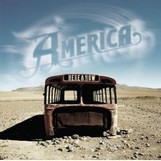
  • America – Here & Now

    The folk-pop songs of America have, for many, long been one of life’s guilty pleasures. And for every “Horse With No Name” there was a brilliant song like “Only In Your Heart,” “Tin Man,” “Daisy Jane,” “Old Man Took,” “Three Roses,” and dozens more.

    This release is a batch of wonderful new songs assembled with help from longtime fans. Produced by Adam Schlesinger (from Fountains of Wayne) and James Iha (Smashing Pumpkins), with contributors including Ryan Adams, Ben Kweller, and members of My Morning Jacket, the sound here is pop perfection.

    “Chasing the Rainbow” is one of those Gerry Beckley gifts from harmony heaven. “Indian Summer,” though written by Mark Rosso, is quintessential Dewey Bunnell. Few people in pop have a voice so distinctive. “Ride On” is another haunting Bunnell tune, with great guitar from Adams. Beckley fans will love that his voice is all over the record, as well, on songs like “One Chance” and “Look at Me Now.” Throughout the record, the guitars are beautifully layered and assembled like a pop puzzle. Beckley, Iha, and Bunnell are all in the right spot, driving each song.

    A bonus concert disc recorded for XM Radio delivers the hits, performed with the expected skill and grace.


    This article originally appeared in VG‘s Jun. ’07 issue. All copyrights are by the author and Vintage Guitar magazine. Unauthorized replication or use is strictly prohibited.


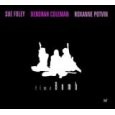
  • Foley, Coleman, Potvin – Time Bomb

    From the first notes of the title-track opener, this trio of guitarists leaves no doubt that this album is going to rock and roll.

    Sue Foley and Deborah Coleman need no introduction to anyone hip to modern blues guitar. They’re established veterans with a score of fine albums to their names.

    Canadian Roxanne Potvin, however, is less known. She has two CDs to her credit, most recently The Way It Feels (Ruf Records), also out this month.

    The release of Time Bomb is timed with the third Blues Caravan Tour, which Foley organizes to promote female blues guitarists. And onstage, the trio will mix it up, reviving the album.

    This collaboration is a stunner. All three play Teles, and all three can punch out the blues. The sound here is warm and clear, and the songs hot. Now if only the liner notes specified who was playing lead on which track or through which channel.


    This article originally appeared in VG‘s Sep ’07 issue. All copyrights are by the author and Vintage Guitar magazine. Unauthorized replication or use is strictly prohibited.