
Month: May 2009

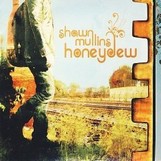
  • Shawn Mullins – Honeydew

    Shawn Mullins hit the big time in the ’90s with the sleepy folk tune “Lullaby.” Since then he has jumped around a bit and now finds himself recording for Vanguard, which has a long history in folk and blues. Mullins hasn’t changed up his recipe for songwriting to fit in, and the 12 cuts here are an eclectic mix of rock, folk, and R&B, with Mullins’ vocals sounding a bit like the late, great Steve Goodman.

    While Mullins can definitely write a lyric, the band helps. Sheryl Crow band veteran Peter Stroud supplies most of the guitars with same tasteful support he gives to all of his other work. Whenever you hear a Stroud lick, it has a feel that blends perfectly while adding a distinct touch to a song. But Mullins is the star here, and his writing and singing dominate. “The Ballad of Kathryn Johnston” is a tale of a proud woman living where things have grown a bit rough. It’s wonderfully written with the minor-key feel and Stroud’s slide guitar lends a rowdy, menacing feel. Other tracks need only Mullins and his acoustic. “Home” works beautifully in that mode, “Homeless Joe” is an effective tale of an old blues man, “See That Train” is sung through a bullhorn and fits the lyric perfectly, as does a nasty slide guitar solo. On many of the vocals, Mullins voice takes on an earnestness much like Goodman’s. Many times we saw a wink behind Steve’s vocals, and we don’t always get that here. Mullins lyrics tend to stay a little more on the serious side of the street.

    Mullins’ chart success probably surprised him as much as it did anybody. His intimate lyrics and folksinger attitude don’t mix well with Britney and company. But here he has found a niche that will serve him well. – JH


    This article originally appeared in VG‘s Jun. ’08 issue. All copyrights are by the author and Vintage Guitar magazine. Unauthorized replication or use is strictly prohibited.
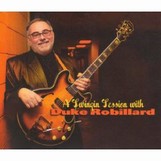
  • Duke Robillard – A Swing Lesson with Duke Robillard

    Duke continues his impressive output with a nod to his swing roots. Among guitarists, Robillard is known as a do-all, as he can be at home in almost any musical style, not only mimicking lines and copping phrases from the best of the genre, but adding deft touches to the finished product.

    His knowledge of musical history is deep, and here he touches on music from such disparate sources as Irving Berlin and Ray Charles while delivering a stew of swing-era tunes that snap and pop and still have room for solo improvisation.

    This disc is listenable for two big reasons; the supporting cast has been playing with Robillard for years and is made up of capable, fine performers in their own right. Many lead their own bands. Second, everyone is having fun, and it’s palpable in the recording. The horns are pushed up front and they zing, while the keyboards are floating and soaring.

    Duke gives the other musicians their space, allowing them ample solo time and keeping his own lead lines brisk and tight. He’s playing a Gibson Tal Farlow on most of the tracks, and an old Gibson L-7 with floating pickup on the others. The sound is smooth and mellow, which can be said for many of the cuts, though there are also a couple with Duke’s patented jump-swing approach. While most of these are covers, Duke’s originals stand with the best of what’s here, which is part of what makes his music so unique. – Eric C. Shoaf


    This article originally appeared in VG‘s Aug. ’08 issue. All copyrights are by the author and Vintage Guitar magazine. Unauthorized replication or use is strictly prohibited.
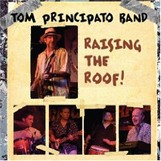
  • Tom Principato – Raising the Roof!

    Principato has long been known as a fine guitar player, but here production and vocals take him to a new level. There’s plenty of the stuff you expect from Principato, including funky New Orleans-style rock like “Lock and Key,” with horns, organ and precise chording; Fender heaven on the solos. “Too Damn Funky” is exactly that, with a nasty solo and cool chordal work on the outro. “Mi Solea” is an emotional instrumental that gives Principato a chance to show his stuff. His soloing is as clever and on-the-money as you want. The same goes for his workout on Jimmy Smith’s “8 Counts For Rita.” Its old fashioned greasy, funky soul feel lets Principato show off nice changes and great lead licks. And the closer, “They Called For Stormy Monday (But ‘Mustang Sally’ is Just As Bad!)” will definitely find a sympathetic ear in every working musician. Recorded live and with a perfect rendition of the Bobby “Blue” Bland/Allman Brothers versions of “Stormy Monday,” its lyrics have been adapted to include every song, and in some cases every band any musician over the age of 30 is sick of playing.

    The good news is, with releases like this one, Tom’s bringing new and varied music to that realm. – JH


    This article originally appeared in VG‘s Jun. ’08 issue. All copyrights are by the author and Vintage Guitar magazine. Unauthorized replication or use is strictly prohibited.

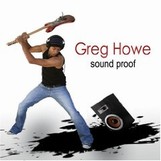
  • Greg Howe – Sound Proof

    Greg Howe’s incredible chops often override the musical aspect of songs. At least that’s the common wisdom. But that doesn’t happen on this collection of songs that show off his rock, jazz, and funk sides without the playing overpowering the songs.

    Tracks like “Emergency Exit” combine loud, abrasive rock chops with Howe’s jazz leanings. The rhythm section (Jon Reshard, bass, Gianluca Palmieri, drums, and David Cook, keyboards) is fabulous and lends perfect complement to Howe’s writing. And that writing covers a lot of ground, with songs having a Latin jazz feel (“Reunion”), demonstrating old-fashioned fusion (“Child’s Play”), wild funk (“Sound Proof”), or a lovely acoustic ballad (“Sunset In El Paso”), Howe’s writing and playing shine. The one cover hints at the breadth and scope of Howe’s playing, as the band takes on Stevie Wonder’s “Tell Me Something Good.” The inherent funk gets a heavy workout, as Howe breaks out the wah to help out on a strong, fast, and funky solo. The song is the perfect vehicle to highlight what Howe does best.


    This article originally appeared in VG‘s Oct. ’08 issue. All copyrights are by the author and Vintage Guitar magazine. Unauthorized replication or use is strictly prohibited.

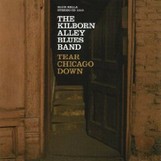
  • Kilborn Alley – Tear Chicago Down

    There may not have been a blues bandleader since at least the mid ’60s who has not turned to his rhythm section and asked, accusingly; “Do you guys even know how to play a shuffle?” It’s a safe bet that question has never been asked of Kilborn Alley’s Chris Breen (bass) and Ed O’Hara (drums) – among the best at holding the reins since Jerome Arnold and Sam Lay did it for the early Butterfield Band. The two help fire the Kilborn’s music with the verve that marked the newly electrified blues pumped from the big beautiful Seeburg jukeboxes in the clubs of post-WWII Chicago’s South and West Sides. Authentic, soulful, expertly skilled, this band is madly exciting.

    There’s no mistaking the guiding spirit of John Lee Hooker behind the album – and in singer/guitarist Andrew Duncan’s playing, in particular. Duncanson’s enthusiastic John Fogerty-throated vocals (“I’m Spent,” “She Don’t Know”), guitarist Josh Stimmel’s Robert Jr. Lockwood turns (“Fire With Fire”) and Joe Asselin, an absolute banshee on the harp, factor in the excitement. But what puts Tear Chicago Down above the average contemporary blues release is first-rate songwriting. Any bunch of good players can wrap snappy licks around a traditional progression, but how long has it been since a blues lyric broke your heart? The B.B. King/Charlie Foxx style plea for America’s troops to “Come Home Soon” comes close. And only the truly hard-hearted wouldn’t feel for the poor sap, duped unawares into crime, who must spend “Christmas In County.” “Crazier Things” is a direct “adaptation” of Muddy Waters but light-fingered though they may be, this band operates with style. And respect. Much of blues’ traditional changes and melodies are almost de rigueur anyway. If another “Smokestack Lightning” is to be written, the Kilborns, taking collective composing credit here, could be the ones to do it.

    Putting the cherries on top, producer Nick Moss adds deft guitar, soloing on “Come Home Soon” and the multi-talented/ridiculously versatile Gerry Hundt, who engineered, plays organ on most of the disc and adds unique blues mandolin to “Crazier Things.”


    This article originally appeared in VG‘s Jun. ’08 issue. All copyrights are by the author and Vintage Guitar magazine. Unauthorized replication or use is strictly prohibited.

  • May 2009

    FEATURES

    GIBSON ES-175 SPECIAL WURLITZER
    Through the 1960s, Gibson made many custom instruments that mixed and matched specifications from various models. Few have been as intriguing as this custom thinline from 1955, made for musician Andy Nelson. By George Gruhn and Walter Carter

    SINGING COWBOYS, FANCY ACOUSTICS
    Autry Museum Highlights Early Guitar Heroes
    The fruition of a singing cowboy’s dream to “exhibit and interpret the heritage of the West and show how it influenced America and the world,” this amazing facility cares for several incredible guitars. By Frank Lucido

    THE DR. Z CARMEN GHIA
    Before the “dawn” of the boutique amp movement, a drummer started building amps that avoided being mere clones, used simple circuits, and kept prices realistic. No design embodies these credos more than this model. By Dave Hunter

    STEVE HUNTER
    The Deacon Sets It Straight
    The creator and executor of some of rock and roll guitar’s most memorable moments, he invented legendary licks for Lou Reed, Alice Cooper, Aerosmith, and Peter Gabriel. Today, he stays active in other high-profile gigs. By Rick Allen

    THE HAGSTROM EDP46 DELUXE
    The post-WWII global economy created everything from computers to plastics. And in America, the resulting “baby boom” eventually created demand for guitars like this one – a candidate for first electric guitar imported for the U.S. market. By Michael Wright

    JOE LONG’S “STACK-KNOB” FENDER JAZZ
    Any early-’60s Fender Jazz Bass catches the eye of the aficionado. But “lefty” versions are especially intriguing, given their rarity, and this one belonging to former Four Seasons bassist Joe Long recorded several hits. By Willie G. MoseleyAutr

    DEPARTMENTS

    Vintage Guitar Price Guide

    Builder Profile
    Intime Design

    Upcoming Events

    Vintage Guitar Classified Ads

    Dealer Directory

    Readers Gallery

    FIRST FRET

    Reader Mail

    News and Notes
    Deke’s Geekfest ’09, Keeley Bounces Back, PRS/VG Donate Guitar, Leo Fender Receives Grammy, In Memoriam, more!

    Sonny Burgess
    Sun Survior
    By Wallace Marx Jr

    Brian Tarquin
    Six-String Focus
    By John Heidt

    Ask Zac
    By Zac Childs

    Alex Machacek
    Fiery Fusion Upstart
    By Pete Prown

    Winter NAMM ’09
    By Preston Gratiot

    Allen Hinds
    Ace Sideman, Killer Solo Disc
    By Pete Prown

    Roger Filgate
    Beyond Wishbone
    By Willie G. Moseley

    Jason Isbell
    Group Effort
    By John Heidt

    COLUMNS

    The (Way) Back Beat
    The Burns Story, Vol. 4: Shadows and Light
    By Peter S. Kohman

    Q&A With George Gruhn

    Acousticville
    Humidity and Humility
    By Steven Stone

    Fretprints
    The ’60s Stones
    By Wolf Marshall

    “401K” Guitars
    1960s Supro Amps
    By Gil Hembree

    TECH

    Talkin’ Amps With…
    Orin Portnoy: Today’s Jensen Speakers
    By David Jung

    Shop of Hard Knocks
    Top 10 $10 Tricks, Part One
    By Will Kelly

    REVIEWS

    The VG Hit List
    CD, DVD, and Book Reviews: Willie & The Wheel, John Black, Chris Duarte, Seth Walker, Joe Ely, Super Swede: Hagstrom Guitars, more!

    Check This Action
    Still Making Waves
    By Dan Forte

    Vintage Guitar Gear Reviews
    Reason SM25, KSM 358, Hard Truckers Psychedelic Liberator, Flaxwood Liekki, Luna Paz Lenchantin bass, MXR ’76 Dyna Comp, Way Huge pedals, CP Thornton Fusion guitars, Godin Richmond Belmont, WCR BetSet pickups

    Gearin’ Up!
    The latest cool new stuff!