Month: October 2007

  • Spanic Boys – Sunshine

    Sunshine

    Celebrating their 20th anniversary as a band (and 38th as father and son), the Spanic Boys serve up a dozen originals on Sunshine, their eighth album, on their own Cinaps label, with plenty of tasty guitar from father Tom and son Ian.

    “What Will You Do,” with guitar-through-Leslie fills, has a Byrds/Burritos feel, while “Secret” recalls Steve Earle, and the title track’s riff and groove sound vaguely like a country version of George Harrison’s “Wah Wah” – that is, if country songs featured backward guitar solos. “Didn’t Love You Anyway” also has a raucous British Invasion feel.

    But as rootsy as their sound is, the Spanics are nothing if not original and contemporary. The one formula they wisely don’t deviate from is their tandem lead vocals (dig “I Hear You Talking”) – more proof of those unbeatable genetic harmonies.

    This article originally appeared in VG‘s Apr. ’07 issue. All copyrights are by the author and Vintage Guitar magazine. Unauthorized replication or use is strictly prohibited.

  • Southern Culture On the Skids – Countrypolitan Favorites

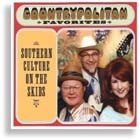
    Countrypolitan Favorites

    Once again, Southern Culture On The Skids proves itself the ultimate party band with the ultimate party record. In other hands, the concept behind Countrypolitan Favorites (Yep Roc) might come off as sheer novelty or gimmick, but the kitschy SCOTS makes the genre-bending collection of covers work on its own terms. There’s humor, to be sure, in contemplating T-Rex’s “Life’s A Gas” as a George Jones/Tammy Wynette duet, but at this point SCOTS can pull off pretty much anything it puts its collective mind to.

    This article originally appeared in VG‘s Apr. ’07 issue. All copyrights are by the author and Vintage Guitar magazine. Unauthorized replication or use is strictly prohibited.
  • Twang Dragons – Love Junkie

    Love Junkie

    Twang Dragons
    Love Junkie
    Self-distributed
    It’s hard not to love a record that starts with guitars twangin’ and slidin’ and the line, “I’ve got an ass pocket full of whiskey.” Not only that, the second verse of “Get In (Or Get Out of the Way)” starts with, “We got Jerry Reed on the 8-track.”

    Tommy Dixon, who wrote those lines, also plays guitar and proves adept at various styles of country. He’s obviously a Tele guy, as “Drinkin’ About You” readily displays with country boogie full of killer bends, double-stops, and the kind of behind-the-nut magic that screams Telecaster. Dixon and the band, which features Lisa Hannon on vocals, get to show their skills at other forms of Americana music, too. “Quiver” is the kind of pop-country that’s about as radio friendly as can be, with Dixon’s fine leads and guest pedal steel from Mike Soffa. “Cliché” is a honky-tonk killer with a very funny lyrical jab at those who stereotype people who play country music. “Pennies” supplies more twangin’ – so much that Dixon makes note before the song hits stride, announcing, “I never play the chords in this song!” And he’s right. But he plays everything else with fills and solos pushing the song along. This is country the way it should be played.

    This article originally appeared in VG‘s Apr. ’07 issue. All copyrights are by the author and Vintage Guitar magazine. Unauthorized replication or use is strictly prohibited.

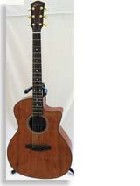
  • LBenito Alerce-topped Grand Auditorium

    Hot Stuff from Chile

    How much more vintage can you get? If you’re talking about guitar tone woods, not much more vintage than the tops on guitars by LBenito.

    Built in Chile, using alerce trees that date back 3,000 to 4,000 years, the wood that makes up the top of LBenito’s guitars was 1,000 years old when Pythagoras (d. 500 B.C.) was devising his string theory!

    Old-growth alerce trees were aggressively harvested in Chile prior to 1976, before many endangered varieties became protected under the international CITES agreement. The wood, which is highly moisture-resistant, became popular as a building material. LBenito has secured all available stock of aged alerce and makes a variety of models with traditional and innovative features.

    We recently sampled two top-of-the-line Grand Auditorium cutaway models. This is a typical body size for a steel-string guitar, but is unusual for a nylon-string model.

    Introduced to the U.S. at last month’s NAMM show, the alerce tops on our review guitars were complemented by Indian rosewood back and sides. Other similarities between the steel-string and nylong-string models include the tapered 4

  • Lucy Kaplansky – Over the Hills

    Over the Hills

    Most new pop music falls into one of two sound categories – super-human slick or slacker sloppy. In this sonically schizophrenic environment, it’s refreshing to hear a release that chooses the middle ground. Lucy Kaplansky’s latest release combines solid songwriting with euphonic production values, and reminds us that there’s no substitute for well-crafted and sympathetically arranged music.

    Kaplansky’s career started in the early ’80s when she migrated to New York City and immediately found a place in the burgeoning music scene, singing with the likes of John Gorka, Suzanne Vega, and Cliff Eberhardt. She even formed a duo with Shawn Colvin, but left music to pursue a career in psychology. After earning a PhD, Kaplansky worked in a NYC hospital. Although she occasionally did background-vocal gigs, she did not pursue a musical career path. In 1994, Kapalnsky released her first solo album, largely at the urging of Colvin, who wanted to be her producer. The Tide jump-started her performing career to the point that she soon had to close her psychology practice.

    Over The Hills combines five original tunes co-written by Kaplansky and her husband, Richard Litvin, with classics written by Bryan Ferry, June Carter, Loudon Wainwright III, Julie Miller, and Ian Tyson. The Bryan Ferry song “More Than This” is the most surprising choice. Originally released on Roxy Music’s Avalon choc-a-block with synthesizers and atmospheric effects, Kaplansky’s version strips the gothic artifice to reveal good bones. Her rendition of the Johnny Cash classic “Ring of Fire” brings the song back to a female perspective that’s closer to June Carter’s original concept than Johnny’s macho stance. The strongest original song on the album is “Amelia” which paints a heartbreakingly beautiful picture of a woman’s regrets and hope.

    Produced by veteran acoustic and folk specialist Ben Wittman, Over The Hills never sounds overblown or thick. The arrangements allow the veteran band that includes Larry Campbell (electric guitar, mandolin, dobro, pedal steel), Duke Levine (electric guitar), Stephan Crump (electric bass), and Ben Wittman (drums and percussion) to do what they do best; play with taste and control. Guest vocalists include Buddy Miller, Eliza Gilkyson, Richard Shindell, and Jonatha Brooke. The overall sound serves the songs, so during every selection you think, “What a wonderful song!” not, “What great sound!” or “What a super solo!” Yes, this is a songwriter’s album.

    If you appreciate superior songs delivered with feeling, Over The Hills will hit all the right spots in your musical pleasure centers.

    This article originally appeared in VG‘s Jun. ’07 issue. All copyrights are by the author and Vintage Guitar magazine. Unauthorized replication or use is strictly prohibited.

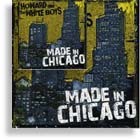
  • Howard and the White Boys – Made In Chicago

    Made In Chicago

    The Howard who hangs here with the White Boys is Howard McCullum, bassist and vocalist extraordinaire. The White Boys are a fine bunch of players that include Rocco Calipari and Pete Galanis on guitars. Both play lead and rhythm, and their combined talents create a feast for guitar lovers.

    This record is mostly a collection of covers. The opener is a cover of the ZZ Top classic “She Loves My Automobile” with the perfect bar-band shuffle, great vocals, and solos that feature everything from fat, slightly distorted sounds to biting, nasty Fender sounds. “Good Booty and BBQ” gives the boys a chance to funk it up with heavy ninth-chord riffing and lots of wah. By the time the solos kick in at the end, the boys are trading fours before melding into two guitars playing together seamlessly.

    Their funk chops pop up again on “Black Cat Bone,” a track that yes, has been done to death, but here gets a hard funk. Job well done. “Walking to My Baby” has a great New Orleans feel with a solo that includes fine chicken pickin’. Their cover of Robert Cray’s “Phone Booth” smartly features the tunes basic outline, but with a solo that doesn’t cop Cray’s sound, instead employing a fluid, Allmanesque feel.

    The only slow blues on the disc, “Cold, Cold Feeling,” gives both guitarists a chance to show their soulful chops and great tone. And as with every track, it features a great vocal from McCullum. They wrap things up with one of the two originals, Calipari’s “Coming Home,” an instrumental rocker where both guitarists wrap themselves around the tune.

    This article originally appeared in VG‘s Jun. ’07 issue. All copyrights are by the author and Vintage Guitar magazine. Unauthorized replication or use is strictly prohibited.

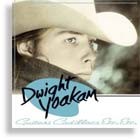
  • Dwight Yoakam – Guitars, Cadillacs, Etc.Etc.: Deluxe Edition

    Guitars, Cadillacs, Etc.Etc.: Deluxe Edition

    When this album was released in 1986, country music had become stale. But its no-holds-barred step back to the great Bakersfield sound, wonderfully original songs, killer covers, and Yoakam’s wholly original style had huge, immediate impact. Not to mention the amazing guitar work courtesy of producer Pete Anderson.

    On this Deluxe Edition, Rhino’s included Yoakam’s 1981 demos, including several songs that would later become huge hits for him. The players include Jerry McGee on guitar and Jay Dee Maness on pedal steel, and they sound fine.

    On songs like “I’ll Be Gone,” “Guitars, Cadillacs…” and “Honky Tonk Man” Pete Anderson pretty much rewrote the book. If you’re a fan of Anderson and the band, you’ll really like Disc 2 – a concert at the Roxy recorded just after the first single hit the airwaves. The band is hot, and Anderson’s playing is inspired. The concert, most of which has never been issued before, bears out both. Any fan should have this, and those who didn’t get in on it the first time around would do well to start here.

    This article originally appeared in VG‘s Feb. ’07 issue. All copyrights are by the author and Vintage Guitar magazine. Unauthorized replication or use is strictly prohibited.

  • John Mellencamp – Freedom’s Road

    Freedom's Road

    This release was surrounded by a scary amount of hype. And the Chevy commercials on TV that forced “Our Country” down our throats seemed a harbinger of bad things.

    Mellencamp, of course, can be a bit caustic, but he is too good a songwriter for that to interfere. Is this a political record? Yes. But it’s more about social and personal issues. There’s no bashing of the Bush administration except on the wonderful hidden track, “Rodeo Clowns.” Instead, Mellencamp writes about the changing landscape on songs like “Ghost Towns Along the Highway.” The atmospheric music perfectly matches the melancholy of the lyric. “The Americans” was tough to figure out. Sung from the point of view of a fellow who believes himself to be the perfect citizen, he is tolerant and helps wherever he can. At first, it might may seem sarcastic. But really, it’s an idealized version of what Mellencamp would like us all, including himself, to be. “Our Country” actually fares much better in the context of the album, with all verses intact, than it does on the Chevy ads. Longtime fans will love “My Aeroplane,” which, plain and simple, sounds like a John Mellencamp song. “Rural Route” is spooky, while “Heaven is a Lonely Place” offers a great garage-band feel and fine vocal. It also features the intertwining guitars of Mike Wanchic and Andy York. As on much of the record, the guitar tones are drenched in reverb and are always there, but never in your face, and on every listen, you hear something new going on with the guitars. It’s subtle, but the arrangements quickly get under your skin.

    This kind of stuff is no longer in vogue with radio or record buyers. But here’s hoping Mellencamp will find a wide audience, not because of the message, but because of the art attached to that message.

    This article originally appeared in VG‘s May. ’07 issue. All copyrights are by the author and Vintage Guitar magazine. Unauthorized replication or use is strictly prohibited.

  • Dave Alvin – West of the West

    West of the West

    Dave Alvin is one of America’s best songwriters, and as such runs the risk of alienating casual fans when he does an album of covers. But then again, maybe not…

    The idea with his newest disc, West of the West,, is to pay tribute to songwriters from the West Coast, where Alvin grew up. That means is you get stuff like “California Bloodlines” from John Stewart, with its gorgeous changes and nice, melodic lead guitar from producer/string-wizard Greg Leisz blending nicely with Alvin’s acoustic. A bluesy, and very menacing version of Jackson Browne’s “Redneck Friend” features a fine vocal and stinging leads from Alvin. “Down On the Riverbed,” by his buddies in Los Lobos, gets a folk turn with fine banjo.

    Alvin pulls out a wah pedal to highlight Tom Waits’ “Blind Love,” and grand treatments are applied to tunes by Jerry Garcia and Robert Hunter, John Fogerty, Merle Haggard, Richard Berry. And the surprise highlight is a stunning version of Brian Wilson’s “Surfer Girl.” It’s laid back and sparse, with marvelous harmony vocals from the Calvanes.

    The record does on occasion sound like someone treading water to his next effort, but the effort nonetheless is valiant, and Alvin never fails to sound soulful.

    The Great American Music Galaxy is a CD that Alvin originally sold at concerts. Alvin and his band deliver live on great cuts ranging from old Blasters standards to new stuff. Dave and Chris Miller handle the guitar work, and when they stretch out, it’s a joy to hear.

    These two records show Alvin at the top of the heap amongst those who record what he once referred to in song as “American Music.”

    This article originally appeared in VG‘s Oct. ’06 issue. All copyrights are by the author and Vintage Guitar magazine. Unauthorized replication or use is strictly prohibited.

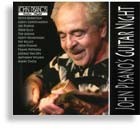
  • John Pisano – Guitar Night

    John Pisano's Guitar Night

    This is two discs full of jazz-guitar blowing at its finest, as straightforward as it gets; 16 cuts of John Pisano and various six-string friends playing standards for appreciative crowds.

    This project started in the ’70s, when Pisano and Joe Pass started playing at Donte’s, in Hollywood. Partners have come and gone, but Pisano is the constant that holds things together.

    The cuts here are from the ’90s, and start with jazz-guitar pioneer George Van Eps doing “I’ll Never Be the Same” and continuing through a Who’s Who of players; Herb Ellis, master of bluesy swing, rolls through “The Blues” and “I Want to Be Happy” with Pisano backing him wonderfully. Although Pisano is known as an accompanist and a rhythm player, his soloing on these cuts (and the rest of the record) take a back seat to no one, proving over and over again that he is a fine soloist.

    Many younger members of the traditional jazz-guitar scene show up, and shine. Anthony Wilson uses four cuts to prove why some think he’s the finest of the group. Peter Bernstein plays several cuts and joins Wilson for an amazing version of “Whisper Not” where the two play like they’re joined at the hip. We also hear from Corey Christiansen, Joe Diorio, Pat Kelley, Barry Zweig, and Frank Potenza, all of whom shine. One of the most pleasant surprises is a solo rendering of “When Sunny Gets Blue” by the late, great Ted Greene; it’s a rare treat to hear him in this setting.

    Most of the players here are of the traditional bent, but Scott Henderson does a fine take on Wayne Shorter’s “Footprints,” with Pisano handling rhythm.

    Hopefully, there is a lot more tape like this in a vault somewhere. It’s a rare treat to hear masters of the instrument in this setting.

    This article originally appeared in VG‘s Aug. ’07 issue. All copyrights are by the author and Vintage Guitar magazine. Unauthorized replication or use is strictly prohibited.