Month: May 2007

  • The Lucky Tomblin Band – In a Honky-Tonk Mood

    In a Honky-Tonk Mood

    Sometimes, a record is just meant to be fun. Nothing more, nothing less. Welcome to In a Honky-Tonk Mood. Of course, it’s easy to have fun with the likes of this band.

    There are few guitarists around right now from whom I steal more licks than Redd Volkaert. He’s so original and fun as a player that you can’t help yourself. And In a Honky-Tonk Mood kicks off with “I Done It,” a three-chord bluesy honky-tonk – nothing more, nothing less. By Volkaert’s solo, strange things start to happen. He kicks it off with a major-7th lick that appears to have no business being there, but sounds incredibly cool. After a short bluesy run, he walks the blues back down to the one with a mixture of double-stops and chords. A solo that most would turn into a cliché has become a minor work of art. There’s a lot of that here.

    Another thing I really like about this is the cover of the Hank Thompson song “Squaws Along the Yukon.” As kids, my brother and I would replace the words in the chorus with whatever popped into our heads. We took particular glee in using San Diego Charger kicker Rolf Benirschke’s name (“Rolf Benirshke, nershke, means that I love you”). And we did that into our 30s! No, I don’t know why. Anyway, there’s a terrific version of this now-very-politically-incorrect song here, with Volkaert singing and playing wonderful guitar. You gotta love it.

    This plain and simple, is a fun record. Its back-panel artwork shows a line of jukeboxes, and that’s what this will remind you of as the band zips through 15 songs that’ll keep you smiling. Ignore at your own risk.


    This article originally appeared in VG‘s Jan. ’06 issue. All copyrights are by the author and Vintage Guitar magazine. Unauthorized replication or use is strictly prohibited.


  • Sonic Youth – Goo (Deluxe Edition)

    Goo (Deluxe Edition)

    As we get older, reminders of the fact come fast and furious. The reissue of classic albums from our youth perhaps hits the hardest, as with this newly remastered deluxe edition of Sonic Youth’s landmark 1990 alt rock masterpiece, Goo. Seems like only yesterday…

    Goo was the record that made Sonic Youth. The band’s eighth album, it was the first to break through the white noise of pop music. It was Sonic Youth’s first to receive major label distribution, and then its first to find a place on Billboard magazine’s Top 100 Albums chart. True-blue fans may not have cared, but it did bring the music to the attention of the rest of the world.

    This two-CD set expands on the original album, re-releasing Goo’s 11 tracks in digitally remastered form. But that’s just for starters. The set’s gems are the 20 additional tracks – outtakes, B-sides, rehearsals, 8-track demos, and a tongue-in-cheek promo-only interview.

    If you were a fan, you’ll want this disc – never mind the reminder of how much time has passed.


    This article originally appeared in VG‘s Jan. ’06 issue. All copyrights are by the author and Vintage Guitar magazine. Unauthorized replication or use is strictly prohibited.

  • Kate Rusby – The Girl Who Couldn’t Fly

    The Girl Who Couldn't Fly

    When you listen to Kate Rusby, you hear the very essence of Celtic music. Her voice soars over the top of a song without the gross limitations of a human form. Kate Rusby can fly anytime she wants.

    The Girl Who Couldn’t Fly is Rusby’s sixth release on Compass. How does it differ from ’03’s Underneath the Stars? Not by much. She continues to drink deeply from the well of traditional music, combining her new compositions with older works. Unlike many folk artists of the ’60s whose “updated” renditions of traditional material merely turned them into pop ditties, Rusby’s music has a genuine feeling that defies fad and fleeting fashion.

    Produced by her husband and longtime collaborator, John McCusker, The Girl Who Couldn’t Fly features sympathetic accompaniment by a fine core of traditional musicians. Ian Carr, John Doyle, Kris Drever on guitar and tenor guitar, Ewen Vernal and Andy Seward on double bass and many others join McCusker’s tenor guitar, cittern, whistles, piano, and fiddle. Keeping with the family feeling, the album is engineered by brother Joe Rusby on one cut. The sound is sumptuous and seductive, as befits the music. Even when a full house of musicians is brought to bear, the mix never feels too thick or busy, but preserves a sense of air and space.

    Perhaps somewhere there are musicians capable of creating more compelling and authentic traditionally-flavored pop music, but I doubt you’ll find them on this side of the mortal coil. After six albums and 10 years, Kate Rusby deserves the title of Queen of Celtic music.


    This article originally appeared in VG‘s Jan. ’06 issue. All copyrights are by the author and Vintage Guitar magazine. Unauthorized replication or use is strictly prohibited.

  • 1912-’16 Manuel Ramírez Model 26

    Manuel Ramírez was one of the most important makers of the Madrid school at the turn of the 20th century. His well-organized shop was staffed by talented makers such as Santos Hernandez, Domingo Esteso, Antonio Emilio Pascual Viudes, and Modesto Borreguero (Enrique Garcia having previously left for Barcelona, and Julian Gómez Ramírez having left for Paris).

    Many collectors are familiar with his most famous instrument, the wonderful example from 1912 played for so many years by Andrés Segovia, and now residing in the Metropolitan Museum of Art in New York City. This instrument was actually built by Santos Hernandez, who later restored the instrument in 1922, inserting his own restoration label below the Ramirez label. This instrument, which was originally made as an 11-string guitar for Antonio Gimenez Manjon, was one of Manuel’s finest models, the kind of ne plus ultra guitar most collectors today tend to favor, often to the detriment of the more common examples.

    However, these expensive deluxe models were hardly the bread and butter guitars of the Ramírez shop, as customers who could afford the expensive models were few and far between. In fact, according to a Manuel Ramírez catalog issued circa 1912, he offered no less than 48 models ranging in price from 10 to 1,000 Pesetas. By contrast, the violins Manuel made personally ranged in price from 200 to 1,000 Pesetas for the finest violin cello. To put those prices in perspective, 1,000 Pesetas represented the average annual salary of a skilled tradesman. So it shouldn’t surprise us that most of the instruments he sold were modestly priced examples.

    Our featured instrument this month is a Model 26 guitar made for export to the firm of Romero Agromayor and Company in South America, one of the leading importers of fine Spanish guitars in Buenos Aires, Argentina. At the beginning of the 20th century, the Uruguayan cities of Buenos Aires and Montevideo were home to millions of Spanish expatriates who had fled the civil war of 1868-1875. Many started over in South America, often earning small fortunes with the golden opportunities offered by the New World. Longing for a piece of the homeland, though, they would order fine guitars from Spanish makers, and Romero Agromayor made a small fortune importing these instruments to fill demand. In fact, so important was this trade that most makers of the era including Manuel Ramírez had special labels printed, as we see in this instrument.

    Curiously, according to the catalog description, this guitar is one of “Special construction for playing popular airs (flamenco).” This is one of the earliest written references I’ve seen to date in which guitars are indicated to be specifically for “flamenco” as opposed to general usage or the concert stage. Later in the catalog, Manuel mentions guitars for “orchestra” of large model, and finally, the guitars for the concert stage, which in today’s lexicon would presumably mean “classical” guitars, although they are never referred to as such. Though possibly intended as a flamenco guitar in Spain, in South America there would have been little demand or awareness of flamenco, as few flamencos (a.k.a. gypsies) had ventured outside of Spain in those days to visit South America. It’s interesting to note that this guitar never had any golpeadores (tapping plates) installed, an essential feature of any working flamenco guitar.
    The catalog description of this Model 26 is quite interesting, as it is a cypress guitar with a “top of spruce (pino abete) with a soundhole inlaid with fine black and white lines, full fan strutting, neck of cedar, fingerboard of rosewood with medium-sized frets, top and back domed and inlaid with bandings, a bridge of rosewood with rosettes of mother of pearl and veneer of ivory, wooden pegs of rosewood.”

    Indeed, this exactly describes our instrument here, including the sizes stated. The catalog indicates it sold new for 50 Pesetas, and the tuning machines (which the catalog lists as an upgrade), cost an additional 5 Pesetas. Rarely did they export guitars with wooden friction pegs to the Rio de la Plata area, as the generally high humidity there made their usage very difficult. The machines appear to be American made, of the type used by Lyon & Healy during the same period. Manuel may have been ordering these tuning machines from Chicago. His better models were equipped with deluxe German-made tuning machines. The “domed” top and back is in keeping with the popular flamenco tastes of that time that favored this so-called “tablao” guitar for flamenco usage. These were very domed (arched) instruments that originally evolved in Sevilla with Manuel Soto y Solares, and migrated north to Madrid with flamenco players. In Madrid, Francisco Gonzalez and José Ramírez (older brother of Manuel) were the most prominent advocates of this style of construction, which died out by 1920, replaced with the full-blown, flatter Torres model favored by Manuel in his more expensive concert models.

    Through comparative studies, I have determined this instrument was most likely made by Modesto Borreguero, as the heel is very characteristic of his work, along with several other distinctive features, such as the shape of the internal foot, the brace profiles, and the purfling and head work. Borreguero often made his neck and head of one sawn piece, rather than grafting the head to the neck, as was the more traditional Spanish custom. This instrument has an ungrafted head. It is my observation that Santos (and Antonio Emilio Pascual Viudes before him) made the most deluxe models, Esteso made the next level, and Borreguero covered the more mundane models, as was fitting to their abilities. Manuel rarely made guitars personally, although at least one example is known, dedicated to P. Gonzalez Campos on the label. Manuel, for the most part, directed the shop and when orders warranted, made some very fine violins.

    Modesto Borreguero stayed on at the Ramírez shop after Manuel died in 1916 (after which the guitars were labeled, “Viuda de Manuel Ramírez”). During the Spanish Civil war (1936-’39) he lost his shop and his wife, and floundered until he was able to share shop space with Hernandez and Aguado, who learned to make guitars from Borreguero before going on to surpass Borreguero in fame and esteem. Later, he also taught Vicente Pérez Camacho to make guitars while working for the Casa Garrido. His last guitars date to around 1963, making him one of the last surviving members of the original Manuel Ramírez workshop to work in Madrid, the other being Antonio Emilio Pascual Viudes, who had emigrated to Buenos Aires in 1909 and died there circa ’61.

    At first glance, this appears to be a rather indifferent instrument, with the top looking for all the world like it had been salvaged from an orange crate, the fingerboard (with original frets still intact) showing the tear out from the hand plane Borreguero never bothered to scrape clean, and the purfling work, which meanders seriously around the border, not to mention enough glue runs inside to make a second guitar. But place this in the hands of a skilled player, and watch their eyes pop out. Surely if ever there was a poster child for the adage that the wood alone does not make a fine instrument, it is this guitar. Clearly, the design is what’s important, not the quality of the wood. In this department, Borreguero got all the important talking points nailed down, from neck angle to bracing to bridge design and beyond. Despite its nearly century of age and several heavy-handed repairs, this instrument still trembles in your hand and explodes with sound. It certainly puts to rest the ridiculous notion that guitars have a limited life span, and will “go dead” if played too much or too aggressively. As you can see from the playing wear, this guitar has clearly experienced both to extremes and yet despite the zilch-grade wood, it is still at the top of its game. Just goes to show, you can’t judge a book by its cover.


    Photo: R.E. Bruné

    This article originally appeared in VG‘s July ’06 issue. All copyrights are by the author and Vintage Guitar magazine. Unauthorized replication or use is strictly prohibited.

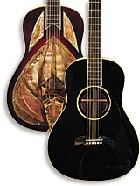
  • Tony Nobles 006 Acoustic and Exhibition Resonator

    The Luthier's Art, Defined

    Austin-area guitar builder/repairman Tony Nobles was, like everyone else in in high school wood shop class, needing an idea for something to build. Unimpressed with classmates’ ideas to construct various napkin holders, gun racks, and pipes, he ordered an acoustic guitar kit. And in the Martin D-18 copy he built that semester, Nobles found his calling. After high school, he studied Industrial Technology, and in the summer after his Junior year, he went to work for Austin luthier Mark Erlewine. After finishing his Bachelor’s degree, he stayed on at Erlewine’s shop, doing warranty work for Martin, Fender, Gibson, and Guild, and building custom guitars for the likes of Billy Gibbons, Johnny Winter, and others.

    In 1993, Nobles opened his own shop, Precision Guitar Works, where he repairs and builds guitars of all varieties, including Kendrick solidbodies for fellow VG contributor Gerald Weber. These days, however, Nobles’ efforts are focused on building what he calls “heirloom-quality” acoustics that are exemplary works of the luthier’s art. Wanting to see if his efforts were up to snuff, we recently asked Tony if we could take a look.

    In terms of size and design, the Nobles 006 model is reminiscent of a vintage Gibson L-00, but with a bit more slope in the shoulders. Its 251/2″-scale mahogany neck meets the body at the 12th fret (the guitar has 18 frets total, all flawless in fit and finish). The ebony fretboard, headstock, and top are dressed with multi-ply binding highlighted by natural-finished maple that nicely complements the curly maple heal cap. The slotted headstock is capped with ebony, with a striking abalone torch inlay. Engraved open-back Waverly tuning machines with ivory buttons, combined with its gloss black finish, give the guitar a notable vintage vibe. A black pickguard completes the aesthetic.

    The guitar’s V-profile neck is very comfortable, with a wide neck that measures 17/8″ at the nut, succintly dressed up by abalone side markers. It uses a dual-action truss rod hidden under a discrete cover. The nut, bridge saddle, and bridge pins are all cut from high-quality, unbleached bone, while the banner bridge is made of ebony, and the body topped with solid Adirondack spruce – the same material used for the bracing. Peeking inside further reveals Nobles’ flawless craftsmanship; Nobles uses an X-brace pattern shifted slightly toward the soundhole.

    Sound-wise, this guitar has very full low-end with no boominess, and crystal-clear highs along with an abundance of vintage midrange punch. Tonal balance is perfect; the 006 sounds broken-in. This is one of the best-sounding acoustic guitars we’ve reviewed.

    The Nobles Exhibition is a single-cone resonator with body and neck dimensions very similar to the 006, using the same maple binding, torch inlay, ebony headstock faceplate, and bone nut.
    The Exhibition also gets a curly maple neck topped with an ebony fretboard. Frets are flawlessly installed and highly polished, and on this one, the Waverly tuners sport ebony keys.

    The key differences between this guitar and the 006 include a body of solid curly maple, flawlessly finished in a light tobaccoburst lacquer, and the visually arresting cathedral-motif coverplate, tailpiece, and soundholes are made of antiqued brass with a metal mesh covering. It makes for a beautiful look.

    The Excaliber’s sound is produced in part by a spun-aluminum Quartermane biscuit-style cone with a maple saddle topped with ebony. And as with the 006, the level of craftsmanship is especially noteworthy. The Excaliber uses graphite to reinforce the neck, as there is no adjustable truss rod. The neck on ours was very straight and even.

    We tuned the Excaliber to open G and grabbed a slide. The guitar, with its oh-so-warm-sounding wood body, quickly revealed a unique tone we heard as a cross between a Dobro and a National. It’s not quite as loud as a metal-body, but it’s got sustain to rival one. And this is a very musical-sounding resonator with a pleasant tone, not tinny or trashy.

    The Nobles 006 and Exhibition are crafted with obvious care – Tony is a stickler for tone, and both guitars offer plenty of it.


    Tony Nobles 006
    Features Solid Mahogany back and sides, Adirondack spruce top, maple neck, ebony fretboard, maple triple-binding, adjustable dual-action truss rod, graphite-reinforced neck, engraved Waverly open-back tuners, black lacquer finish
    Price $4,750.

    Tony Nobles Exhibition
    Features Adirondack Spruce tops and bracing, ebony fingerboards, slotted headstock, engraved open-back Waverly tuners, TKL hard case, Quarterman biscuit cone.
    Price $6,500.
    Contact Hill Country Guitars, 11 Old Kyle Road, Suite 200, Wimberley, TX 78676; phone (512) 847-8677; hillcountry
    guitars.com.


    This article originally appeared in VG‘s Sep. ’05 issue. All copyrights are by the author and Vintage Guitar magazine. Unauthorized replication or use is strictly prohibited.
  • Höfner Verythin Classic

    Box For Any Occasion

    When most vintage instrument players and enthusiasts think of Höfner, visions spring to mind of the legendary Beatle bass, or maybe some stuffy jazz box.

    And indeed, Höfner today is something of a throwback – the kind of company you might expect to build a stuffy jazz box. Though housed in a modern, state-of-the-art factory in Baiersdorf, Germany, Höfner crafters use many of the same old-world construction techniques they’ve used on violins since the company’s inception in 1887, employing scrapers instead of sandpaper, applying labor-intensive “French polish” finishes, and eschewing computer-guided cutting or shaping machinery. Each instrument is cut by hand, neck joints are fit by hand, frets are individually installed and finished, and neck profiles are hand-shaped.

    Intrigued? We were, too. So we welcomed the chance to take a spin on the company’s new Verythin Classic model.

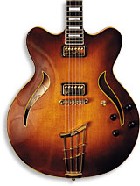
    Höfner’s entry in the semi-hollowbody/thinline (think ES-335) market, the Verythin is even thinner than your typical semi-hollow, measuring about 1″ deep at the edge, and tips the scale at a mere 6.5 pounds. Its overall shape and proportion, along with the graceful lines of its soundholes, lack of pickguard, and Dark Violin finish, all make for considerable visual appeal, and give the guitar an old-world, highly-crafted look. Even the narrow-profile pickup rings, with their hidden height-adjust screws, add to the guitars uncluttered look.

    The Verythin boasts a laminated, arched top made of German Spruce, with binding, laminated flame-maple back and sides, spruce center block, and a set 251/2″-scale flame-maple neck with bound ebony fretboard. It’s all finished in a rich French polish that gives the guitar an unmistakable vintage vibe. That finish is, by nature, prone to imperfections and, compared to your typical poly or nitro finish, will scratch more readily. But far more important for the sake of tone, the French polish also allows the guitar to resonate more freely, plus it simply feels fantastic! Sit down to play the Verythin, and you feel it resonate noticeably in your lap, while proffering very nice acoustic clarity.

    Hardware on the Classic includes a gold-plated brass Höfner trapeze tailpiece, gold Schaller tune-o-matic-style bridge, gold Schaller tuners with tulip buttons and gold Schaller straplock buttons. The guitar is comfortable to play; its 111/16″-wide neck fits the hand nicely, and the double-cutaway body allows for easy access to the entire fretboard. The 251/2″ scale length gives the guitar a tight, responsive feel, and the bone nut on ours was cut neatly, with the correct radius and nice string height, adding to the guitars’ superb playability. Inlay and binding work is meticulously executed, from the real mother-of-pearl block inlays, the body’s bound top, back, and soundholes, to the vine inlay on the headstock. Electronics include two Höfner mini-humbuckers with embossed gold covers, each with Volume and Clear Contour tone controls, and a three-way pickup selector.

    We tested the Verythin’s electric tone through an all-tube Carvin combo and a solidstate Lab Series L5, and were immediately impressed with its Clear Contour tone control, which adds an amazing amount of versatility to the guitar’s tone. With the control turned up, the pickups act as single-coils, with a definite Fender flavor. Roll it off just a couple notches, and the pickups became ultra-smooth humbuckers with silky, complex mids. Roll it off a bit more, and controls act as (and sound like) typical passive tone controls. We found the transformation from twang “bucket” to jazz box to be seamless in all three positions, giving us everything from a punchy Tele bridge sound to a solid SRV-style neck-position Strat tone to a dead-on fat, to a round Beatles “Day Tripper” bridge tone through the Carvin, to that silky sweet George Benson-like neck-pickup sound through the L-5. The longer scale adds to the Verythin’s punchy, twangy sound (especially in single-coil mode) but did not destroy the round, jazzy tones with the pickups in humbucker mode and the tone control rolled back a bit. We spent a good bit of time simply exploring the tonal versatility of the Verythin’s combination of pickups and “clear contour” tone control settings, all of which produced a high-quality tone that sounded unique and natural.

    And it’s a rare instance when a guitar’s case is worthy of mention, but the Höfner’s is first rate. It boats all-plywood construction with arched top and back, high-quality cream-tweed tolex, heavy-duty chrome latches, rubber seal, plush, padded liner cut to hold securely, and built-in humidistat and humidifier. It is certainly one of the most attractive and well-designed OEM cases we’ve ever seen.

    The Verythin Classic is an amazingly versatile guitar that plays effortlessly and will cover rock, blues, country, and jazz, all with equal aplomb. And its hand-built vintage vibe beckons a player from across the room, “See me, feel me, pick me, strum me!”


    Höfner’s Verythin Classic
    Contact: Classic Musical Instruments, phone (888) 942-2642; www.hofner.com.


    This article originally appeared in VG‘s March ’06 issue. All copyrights are by the author and Vintage Guitar magazine. Unauthorized replication or use is strictly prohibited.
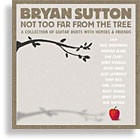
  • Bryan Sutton – Not Too Far From The Tree

    Not Too Far From The Tree

    Imagine creating an album where you play duets with all of your guitar heroes. On Not Too Far From The Tree, Bryan Sutton does exactly that. Now, if you or I tried this we probably wouldn’t get much further than the first measure before it became quite obvious that we were musically outclassed. But Sutton happens to be one of the best acoustic guitarists in Nashville and, judging by this effort, he has no trouble keeping up with the best of the best.

    This project began late in 2004, when Sutton compiled a list of guitarists who most influenced his playing, and began to make recordings with them. In every case, he counted them as friends and professional cohorts, so arranging the sessions wasn’t all that difficult. But instead of booking a studio, Sutton recorded them on location, in their own environments. He put together a high-end (but minimalist) portable recording rig that used only three channels with three microphones recorded directly onto an Alesis ADAT-XT. All sessions were done with no overdubbing, but with some editing from multiple takes. Sutton’s goal was “to capture as much interplay between the guitars as possible,” he told VG. And unlike studio recordings, which are mixed so the solo is in the foreground and rhythm is in the background, on Not Too Far From The Tree, both instruments were given equal sonic weight.

    The list of Bryan’s duet partners on Not Too Far From The Tree reads like a who’s who of contemporary bluegrass, including Dan Crary, Norman Blake, George Shuffler, Tony Rice, Jerry Sutton (Bryan’s father), Jack Lawrence, David Grier, Russ Barenburg, Doc Watson, Jerry Douglas, Earl Scruggs, and Ricky Skaggs. And the list of instruments is equally impressive; you’ll hear Bryan’s 1940 Martin D-28 as well as a 1935 D-28, ’40 D-28, ’39 Martin D-18, ’54 D-18, ’56 D-18, and ’45 Gibson J-45. Naturally, Doc Watson plays his signature Gallagher.

    Most of the material consists of bluegrass and fiddle-tune standards. All pop up regularly in jams, but as you might guess, seldom do they sound like this. From the first few measures of “Forked Deer” to the final chord in “Ragtime Annie” you’ll hear enough variations to keep you woodshedding for a couple of years. Every time I play this disc for a guitarist, after a few minutes all they can do is shake their head.

    Each of the guest players has a unique style and sound. Sutton’s is harder to pin down; his technique allows him to alter his style to fit with his partner. When he plays with David Grier or Tony Rice, it can be very difficult to determine who exactly it is you’re hearing in a particular channel or on a particular lead. Often, I could tell only by the sound of each guitar, not by the notes each musician chose. And just to make it more difficult, Sutton isn’t always on the left side, nor is he always the second solo. Fortunately, the sonics on Not Too Far From The Tree are so good that in all cases each guitar does sound different. Even when Jack Lawrence and Sutton both play their 1940 Martin D-28s, the two sound sufficiently distinct.

    Compared with other acoustic duet projects such as David Grisman’s Tone Poems or Tone Poets, Not Too Far From The Tree has a more relaxed, less academic feel. Recording in the artists’ environments, combined with the personal relationships, likely has much to do with the album’s musically intimate perspective. It’s a simple concept – two players playing old standards they’ve done thousands of times. But when the players are this good, the result is an album as essential as Will The Circle Be Unbroken. As a guitarist or fan of guitar music, do you need this album? You bet your axe.


    This article originally appeared in VG‘s July ’06 issue. All copyrights are by the author and Vintage Guitar magazine. Unauthorized replication or use is strictly prohibited.
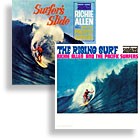
  • Richie Allen And The Pacific Surfers – The Rising Surf and Surfer’s Slide

    The Rising Surf and Surfer's Slide

    Of all the bandwagons to infiltrate rock and roll, surf music would have to rank as one of the shortest lived but most widespread. I’m not talking about Dick Dale, the Belairs, the Surfaris, and the Chantays; they were the real deal.

    But, since it was fairly simple guitar instrumental music, blues man Freddy King’s Let’s Hide Away And Dance Away, from 1961, was repackaged as Freddy King Goes Surfin’ two years later; instrumental pioneers like Duane Eddy and the Ventures, who had set the stage for surf, released surf-themed albums; even Bo Diddley, the bulk of whose material was vocal, put out the all-instrumental Surfin’ With Bo Diddley (which bore no resemblance to the genre and only featured Bo on about half the tracks); studio guitarists like Jerry Cole, Al Casey, and Richie Podolor cranked out low-budget instrumental albums that were western one minute, surf the next, then drag music, then go-go; and Phil Spector’s genius arranger turned a simple melody into an orchestrated epic and titled it “The Lonely Surfer.”

    Podolor had been drummer Sandy Nelson’s guitarist. That’s him on “Teen Beat” and “Casbah,” the latter of which he also wrote. He’d eventually produce and/or engineer everyone from Steppenwolf to Iron Butterfly to the Electric Prunes to Alice Cooper to the Monkees to Three Dog Night to Black Oak Arkansas. But in the early ’60s, under the name Richie Allen, he recorded three instrumental guitar albums, two of which have been reissued by Sundazed.

    Allen’s first LP, in 1963, was Stranger From Durango, which he describes in the liner notes to the Rising Surf reissue as “just a legitimate guitar record” – as opposed to anything surf-oriented. But jumping onto that bandwagon, Imperial Records got him back into the studio and, as Richie Allen And The Pacific Surfers, cut The Rising Surf – which, bandwagon or not, has some killer stuff, like the evocative title cut – not to mention killer session players like Nelson on drums, Rene Hall on rhythm guitar, Ray Pohlman on bass, and Plas Johnson and Steve Douglas on saxophones! One minute Richie could double-pick like Dick Dale (“Surfer’s Delight”), the next he could strum menacing tremolo chords a la Link Wray (“Undercurrent”), then twang a la Duane Eddy (“Foot Stomp U.S.A.”).

    The label then re-titled three of Durango‘s tracks, recycled two from Rising (bothering to re-title only one), and cobbled together Surfer’s Slide, which doesn’t really measure up to the former effort (although “Ridin’ The Woodie” deserves mention for having perhaps the most unwittingly funny title of any surf song in history). This means that only seven of Slide‘s songs were unique to that album, which doesn’t measure up to Rising Surf‘s authenticity. It’s amazing to think that Imperial thought they could get away with such short-changing, but more amazing that they succeeded. But most amazing of all is that Sundazed decided to release these albums, each 27 minutes, individually, whereas if the duplications were omitted, they (and I’m guessing Durango too) would have fit on a single CD with room to spare!

    Thankfully, each is budget-priced, but listeners (and, it would seem, Sundazed) would get more bang for their buck from a “Complete 1963 Recordings” explaining the whole story (or at least that prolific year) of the great, unsung guitarist Richie Allen.


    This article originally appeared in VG‘s July ’06 issue. All copyrights are by the author and Vintage Guitar magazine. Unauthorized replication or use is strictly prohibited.
  • Tommy Castro

    A Penchant for the Blues

    Tommy Castro is known as a hard-working musician with a penchant for the blues. The rep is well-deserved. “One year we had 350 gigs,” Castro notes. But his attitude took awhile to develop.

    “I’ve been playing since I was 10, but it never dawned on me I could make a living doing this.” With a laugh he adds, “But music kept getting in the way of my day job.”

    The trip that led from casual player to the his new Blind Pig release, Soul Shaker, has taken several roads. While growing up in San Jose, California, Castro was influenced by a sibling.

    “My older brother showed me a few things because I kept sneakin’ his guitar when he wasn’t around. He’d say, ‘Let me show you this, then you go wash my car.’” It wasn’t long before Castro’s ear was drawn to the music his brother listened to and played, like Mike Bloomfield and Johnny Winter, and early British players like Eric Clapton and Keith Richards.

    “But the thing that changed my life was when I got turned on to B.B. King,” he noted, and it then became natural to dip further into the blues – Muddy Waters, Buddy Guy, Albert King, Freddie King, T-Bone Walker, and a lot of others. “It was just one of those things you get into or you don’t. Other kids were into folk or psychedelic, and the heavy metal thing was starting to happen. But I gravitated to the soulful stuff.”

    Castro’s break came when he decided to make music his job. He moved to San Francisco and met guitarist Johnny Nitro. “I was always welcomed at Johnny’s blues parties. He’s a great mentor, and as far as vintage guitars go, he had so many great ones.”
    Castro spent a couple years in the soul band the Dynatones, then formed his own band.

    “I thought I’d have to know how to starve,” he said of the move. “So, I had a plan. I got a battery-powered amp, so I could sing and play on the street in case I couldn’t get enough gigs!

    “I was absolutely no good at it,” he adds, chuckling. “I made very little money and got chased off a lot of corners”

    Luckily for Castro and his band, there was a healthy blues scene in the Bay Area, and they were good, so work wasn’t hard to find. And after putting in the aforementioned 350 gigs, they signed with Blind Pig, hit the road, and haven’t looked back.

    Castro uses the word “soul” as much as he does “blues.” His influences include a lot of soul singers – Wilson Pickett, James Brown, Ray Charles, and Otis Redding, to name just a few.

    “I get a lot of flack about trying to sound like a black guy, but I don’t let it enter my consciousness. I was probably na

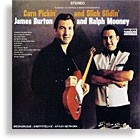
  • James Burton and Ralph Mooney – Corn Pickin’ And Slick Slidin’

    Corn Pickin' And Slick Slidin'

    The first domestic CD release of this pickin’ fest from 1968 is cause for celebration. This all-instrumental outing featuring two of country’s greatest stylists – Tele maestro James Burton in his post-Ricky Nelson/pre-Elvis days, and pedal-steeler Ralph Mooney in his post-Buck Owens/pre-Waylon period – resulted in a dozen varied tunes showing the pair’s individuality and versatility.

    Heads and solos are split up pretty evenly. For instance, Mooney takes the melody on “Spanish Eyes” with Burton adding a gut-string solo, and the steeler stands in for Merle Haggard’s vocal on “Lonesome Fugitive” so James throws in his famous solo from the hit recording. On “It’s Such A Pretty World Today,” Burton breaks out some of the wackiest wah-wah ever and swaps Dobro licks with Mooney’s steel on “Sneaky Strings.”

    Originally produced for Capitol by Ken Nelson (Owens, Haggard, Kay Starr, Merle Travis, the Louvin Brothers, and many more), the session featured a superb backup band, with Al Casey and Don Owens on rhythm guitar, James Stewart on piano, Burton’s old partner in Ricky Nelson’s band, Joe Osborn, on bass, and future Domino (and co-composer of “Layla”) Jim Gordon on drums. The results sound spontaneous, but are no mere jam session; the emphasis is on the tunes.

    We’re so conditioned to a CDs 80-minute capacity that it’s a little disconcerting to realize this (a straight reissue with no bonus tracks) is less than a half-hour in length. The trade-off is Sundazed’s price of $9.98 – an absolute steal.


    This article originally appeared in VG‘s Aug. ’06 issue. All copyrights are by the author and Vintage Guitar magazine. Unauthorized replication or use is strictly prohibited.