Month: April 2007

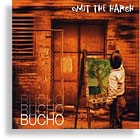
  • Bucho – Omit the Harsh

    Omit the Harsh

    Bucho is a pretty amazing little band. They mix different music into what one would have to call “modern soul.” If you like funk, you’ll find lots of it here. If you like jazz, there’s plenty of that, too. There’s also a lot of old-school soul, with vocalist Gerald Pease being an exceptional singer. Mix in a little Afro-Cuban feel, and you’ve completed the blend that makes Bucho so interesting. The band reminds me of a lot of the Bay-area bands of the ’70s, and in fact, Cold Blood vocalist Lydia Pense makes a guest appearance.

    There’s not a lot of high-profile guitar work here. Most of it serves as background, and Pease plays most of the guitars. You’ll find a nice, soulful solo on “The Touch” as it fades. “It’s Too Late” is an acoustic song that relies on guitar to set the table. “The Time It Takes/What a Day” is a mix of Latin and soul with fine acoustic to kick things off and chimy rhythm guitars once things get going. And “Medicine” features a great lyric and big-time funky wah. The string hero of this band is bassist Josh Lippi, whose bass drives much of the music. But the real heroes here are the songs. Everything’s well-written, musically and lyrically, arranged in interesting fashion, and performed with soul and grace.


    This article originally appeared in VG‘s Nov. ’05 issue. All copyrights are by the author and Vintage Guitar magazine. Unauthorized replication or use is strictly prohibited.

  • Ronnie Bowman – It’s Getting Better All The Time

    It's Getting Better All The Time

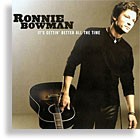
    On the cover, Bowman holds his new Gibson AJ in a decidedly non luthier-approved manner – by the soundhole. This pose typifies his relaxed and informal approach to bluegrass. He’s so comfortable and well versed in bluegrass’ essence that he doesn’t have to try to sound bluegrass; Bowman just is bluegrass.

    Ronnie Bowman joined his first band in 1988. He later became a member of the Lonesome River Band, where he stayed for 11 years. During this time he played on other Lonesome River band members’ solo efforts as well as issuing his own first solo release, Cold Virginia Night, in 1994. It won IBMA album of the year, male vocalist of the year, and song of the year honors. In ’98 Bowman’s The Man I’m Trying to Be won for male vocalist of the year, song of the year, and gospel recorded performance of the year.

    In ’02, Bowman’s third solo album, Starting Over, was released shortly after he left the Lonesome River. It, too, garnered critical praise.

    All but three of the songs on It’s Getting Better All The Time are Bowman originals. These three give you a taste of Bowman’s wide tastes and influences. The ballad “Old Flames” by Hugh Moffat glides along at a slow waltz time while “Four Wheel Drive” by Larry Rice and “Walkin’ the Dog” by E.M and W.C. Grimsley crackle with high-octane bluegrass energy. Bowman’s original songs span a gamut of emotions and styles, from the giddy “Build a Little Playhouse” to the pensive “On My Way Back Home.” My personal favorite is the title cut, which has all the attributes to be a top contender for IBMA’s song of the year in ’06.

    It’s Getting Better All The Time cements Bowman’s place as one of the finest songwriters and most distinctive voices in bluegrass.


    This article originally appeared in VG‘s Aug. ’06 issue. All copyrights are by the author and Vintage Guitar magazine. Unauthorized replication or use is strictly prohibited.
  • Gibson Nick Lucas

    It’s a rare occasion when a star performer hooks up with a guitar company to create a classic signature instrument. Gibson’s Les Paul model comes to mind, as does Gretsch’s Chet Atkins 6120.

    But the most important of all may well be Gibson’s Nick Lucas model. Granted, Les Paul was the world’s most famous guitarist when he and Gibson teamed up in 1952, and Chet Atkins was already influential by ’54, when his first Gretsch debuted. But Nick Lucas was more than a famous guitarist in 1928. He was a pop music superstar. And while Les and Chet played pivotal roles in popularizing the electric guitar, Lucas played a pivotal role in popularizing the guitar, period. And as this 1936 Gibson Nick Lucas model proves, Lucas’ signature model was every bit as great an instrument as Les’ or Chet’s.

    The Lucas was Gibson’s first good flat-top guitar. The earlier GY (Army-Navy) of 1918 was sold only at military post exchanges and was so cheap that Gibson practically disowned it, saying it was not a Gibson. Officially, the first Gibson flat-tops were the L-1 and L-0 of 1926. Both were 131?2″ wide with simple lateral or H-pattern bracing. The very existence of a model that rated a zero as its style number illustrated Gibson’s lowly view of the flat-top guitar. The earliest examples didn’t even rate a truss rod in the neck, making them the only non-wartime Gibsons since the introduction of the adjustable truss rod in 1922 to have been built without one.

    Compared to the Martins of 1926, the L-1 and L-0 surely were an embarrassment to Gibson. Until that time, the least expensive Gibson models had been made with the same materials and designs as the most expensive; only the ornamentation was different. Clearly, if Gibson were to maintain its identity as a maker of high quality instruments and to survive in the changing musical instrument market of the late 1920s, it needed a decent flat-top. To undo all of Gibson’s earlier criticisms of flat-top guitars, Gibson did something it had never done before – created an artist signature model.

    Lucas (born Dominic Nicholas Anthony Lucanese) would hold an important place in popular music had he never sung a note, thanks to his 1922 solo guitar recordings “Pickin’ the Guitar” and “Teasin’ the Frets,” which were later noted as a major influence by no less than Merle Travis! He also laid the groundwork for the guitar as an accompaniment instrument on a 1922 recording when he put down his tenor banjo in favor of the smoother-sounding, easier-to-record guitar. In ’24, Lucas began recording as a vocalist, and by the time he joined with Gibson in 1928, he was “The Singing Troubadour,” one of the most popular “crooners” of the day.

    The first version of the Nick Lucas model (a.k.a. “Gibson Special”) was built with the same body outline as the L-1, but the depth was increased to over 4″. The deeper body made a huge difference in tone, and Gibson maintained it throughout the Lucas model’s many design changes. Why no other Gibson models adopted the deep-body design (except the short-lived Jumbo dreadnought of 1934-’35) is a mystery. Maybe the deep body was Lucas’ idea and was to be exclusive to his model. Whatever the reason, it made the Lucas unique.

    The 1928 version had mahogany back and sides and a rosewood fingerboard with the same varied pattern inlay as Gibson’s TB-5 “trap door-style” banjo. The rosewood bridge had a slight belly with an extra bridge pin inserted. The neck had 12 frets clear of the body. Like all subsequent versions, it sported a large round paper label with a picture of The Singing Troubadour playing his signature model.

    At a list price of $125, the Lucas was easily the top model in the flat-top line; the L-1 was $50 and the L-0 was only $35. And by the end of 1928, it became a bit more ostentatious in its second version, with a different, larger inlay pattern and a pearl fleur-de-lis on the peghead.

    In ’29, Lucas starred in the Warner-Vitaphone film Gold Diggers of Broadway, strumming his Gibson as he crooned “Tip-Toe Through the Tulips.” The recorded version eventually sold over two million copies. Gibson’s timing couldn’t have been better. Although the Depression put the Lucas guitar beyond the reach of most buyers, Gibson’s flat-top line grew and prospered.

    For the third version of the Lucas, Gibson abandoned the circular lower bout for a larger (143?4″) body, and the bridge went to a simple rectangular design with no belly. The fourth version had rosewood back and sides, a neck with 13 frets clear of the body, and (possibly as a reflection of the rising popularity of Gibson’s archtops) archtop-style fittings, a height-adjustable bridge, trapeze tailpiece, and elevated pickguard (some had the pickguard glued to the top). The fifth version had rosewood back and sides, 14-fret neck, pin bridge, and glued pickguard.

    The sixth and final version was the same, but with maple back and sides. Our featured guitar, with a serial number dating to 1936, is one of those.

    Exactly when these changes occurred is impossible to pinpoint. Serial numbers on the labels of the first four versions typically indicate 1929. The numbers are not close enough for all of the labels to have been numbered at the same time, and some seem to deviate from the chronology of the changes. Catalogs only confuse matters more. The ’32 catalog shows a supposedly Brazilian rosewood, 12-fret guitar with “The Gibson” headstock logo and a pin bridge (although it notes that archtop fittings were optional). Curiously, the sides appear to have sunburst-type highlights, and they show no wood grain. The ’34 catalog shows the exact same photo, but with back and sides described as maple.

    If we use the more popular Gibson models as a guideline, we’d date the change to the larger body (third version) to 1931 and the change to 14-fret neck (fifth version) to ’32. The logo change from “The Gibson” to “Gibson” occurred on practically all Gibson models by ’32, but the Lucas lagged behind. The typical rosewood-body, 14-fret versions still have “The Gibson.”

    By the time this example was made, crooners had been supplanted on the pop charts by big-band singers, Lucas was no longer a star (although he would remain active until his death in 1982), and dreadnoughts had overshadowed small-body guitars. Gibson dropped the Nick Lucas Model from the catalog in ’38, and the last stragglers were shipped in ’41.

    The small body width of the Lucas models, along with the archtop setup on most of the rosewood examples, has left them underappreciated by musicians. One noteworthy exception is Bob Dylan, who played a re-topped Lucas in the 1960s. Gibson’s Acoustic division in Montana revived the Lucas in 1993 (with a longer 251?2″ scale) but seemed almost as undecided as Gibson had in the original era as to whether the model should be maple or rosewood. Most players preferred rosewood back and sides to maple (as with the originals), but the rosewood models were only made in limited quantities. Why Gibson insisted on the maple version is inexplicable – unless someone at Gibson played this particular maple-body guitar.


    Photo: Kelsey Vaughan. Instrument courtesy George Gruhn.

    This article originally appeared in VG‘s July ’06 issue. All copyrights are by the author and Vintage Guitar magazine. Unauthorized replication or use is strictly prohibited.

  • John Bullard

    Banjo Baroque

    Almost every instrument used in pop music has classical roots – with the exception of the banjo. Even the dobro or resonator guitar began as a device to make a regular guitar louder. But the first banjos to arrive in North America and Europe came clutched in the hands of slaves from Africa. Even the Italian composer Vivaldi, who wrote solo concertos for every instrument known to the European orchestra, never wrote anything specifically for a banjo.

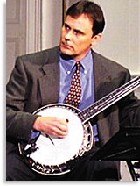
    Given the dearth of classical material created for the banjo, you would think it rather foolhardy for a classical musician to choose it as his principal instrument. But that is exactly what John Bullard has done. Rather than spell disaster for his musical career, Bullard has proved the banjo is quite adept with classical material, especially on Baroque compositions.

    Bullard’s path toward becoming a classical banjo virtuoso began with Earl Scruggs. At age 11, he heard Scruggs perform “The Ballad of Jed Clampett” on “The Beverly Hillbillies.”

    “I was hooked,” he said. “The sound of the banjo was really different, and it just appealed to me.”

    So he began taking lessons, and soon he was playing bluegrass music with his dad on guitar. Although he continued to play banjo, Bullard didn’t play with a band until college in 1977, and then it was on electric guitar. Just before graduating in 1981, Bullard returned to banjo, playing in a newgrass/acoustic fusion-style band with a mandolin, guitar, and bass. “We played mostly R&B or rock tunes with acoustic instruments.”

    Soon after college, in 1982, Bullard began playing with more traditional bluegrass bands on weekends while working various “day” jobs. In 1985 Bullard decided to go back to college to major in classical music. Since banjo wasn’t offered at Virginia Commonwealth University, Bullard majored in guitar. Yet his teachers suggested he try using it for classical music. At first he had trouble finding material that would work, but in 1986 while at the Galax fiddler’s convention, he heard banjo player Fred Boyce playing Bach. “That was a pivotal point. It floored me, and I decided right then and there that I was going to do classical music.”

    Boyce soon moved to nearby Charlottesville, Virginia, and Bullard began visiting him on regular basis and exchanging ideas. In 1987, after several semesters on guitar, his primary teachers suggested that Bullard try using his banjo. They even developed a course curriculum entitled “selected plucked strings” but the rest of the music department wasn’t receptive to the idea. Bullard left school soon after and did not complete his musical degree at that time. Instead he began to play classical music concerts up and down the East Coast. By 1989 Bullard’s principal guitar teacher at Virginia Commonwealth University, John Patykula, had joined him to form a duo on guitar and banjo. They have been touring and playing together ever since.

    In 2002, Bullard “was bitten by the academic bug” and wanted to go back and finish his degree in music. He discussed his options with Patykula, who was now the vice-chairman of Virginia Commonwealth University’s music department. Patykula arranged for Bullard to continue his studies as a performance major on banjo. Bullard is scheduled to graduate in December 2005 as the first person to get a Bachelor’s degree on the banjo from the university.

    Classical Banjo Music
    Since no older classical music was ever written for the banjo (a few contemporary pieces exist), Bullard must find and transcribe material.

    “The hardest part of using a banjo for classical music is its limited tonal range,” he said. “Many classical pieces have counterpoint working along in the bass line. That represents a transcription problem. The most successful transcriptions have been Bach solo pieces for cello and violin. The cello, in particular, although it is lower pitched than a banjo, has a similar pitch range, so cello music played up two octaves fits well.”

    For his live guitar/banjo duo concert performances with Patykula, Bullard performs quite a bit of transcribed keyboard music. “I usually take the right hand and the guitar takes the left hand.” On transcribed lute pieces the banjo again takes the higher part and the guitar the lower part. “We also do some modern classical music including Bartok’s Romanian Folk Dances. There’s a lot of music we want to do, we’re in the early stages of working on some of Grieg’s folk music pieces.”

    On Bullard’s two CDs, The Classical Banjo (Dargason Music DMCD-115) and Five-String Banjo (Albany Records TROY 255) most of the musical compositions are by Bach, but Scarlatti, Handel, Telemann, Albenez, Vivaldi, and Dowland also make an appearance. While a few solo pieces are included, most of the selections have other instruments including guitar, mandolin, violin, viola, cello, harpsichord, harp guitar, and vibraphone.

    The Well-Tempered Banjo
    Listening to Bullard’s two CDs, one is impressed by his rich banjo tone. Robin Smith, who build’s Scott Vestal’s special “Stealth” banjo design, re-built Bullard’s ’93 Gibson RB-3.

    “Many of Scott’s innovations have been incorporated into my RB-3 including a brass tube under the fingerboard so that the fifth string’s tuner can be placed on the headstock instead of at the fifth fret as on traditional five-string banjos.” The fingerboard on Bullard’s banjo has been radiused with the same curve as a Telecaster. It also has a shorter scale length than a traditional five-sting. Its scale matches that of a standard six-string guitar.

    The neck on Bullard’s banjo is also slightly wider than a traditional five-string.

    “Mine has more mass on the neck because of the wider, thicker neck profile. I think this gives it a deeper, fuller tone, which is better for classical music. I really try to get away from that harsh, klangy sound, toward a more mellow tone.”

    The Future of Classical Banjo
    Bullard has a full schedule of projects in the planning stages. “I wrote a book for Mel Bay with transcriptions of Bach pieces for the banjo, but I want to do another book with easier classical pieces for players who want to begin to get their feet wet in classical repertoire. I also plan to do some more recording in the near future, in addition to more extensive touring. With my music and graduate degree, I’m also interested in teaching at a higher academic level.”

    Given Bullard’s talent and passion for classical music, I have little doubt that he will continue to expand the banjo’s scope and presence in the concert hall, academia, and on recordings.


    Photo: Mike Frontiero/Virginia Commonwealth University.

    This article originally appeared in VG‘s June ’05 issue. All copyrights are by the author and Vintage Guitar magazine. Unauthorized replication or use is strictly prohibited.

  • Herb Ellis – Ellis In Wonderland

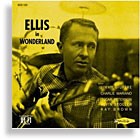
    Ellis In Wonderland

    For his 1956 debut as a leader, jazz guitarist Herb Ellis enlisted pianist Oscar Peterson, bassist Ray Brown, drummer Alvin Stoller, trumpeter Sweets Edison, and saxophonists Jimmy Giuffre and Charlie Mariano. Too bad he couldn’t get any good players… like God!

    At the time, Ellis was a fixture in the Oscar Peterson Trio, having replaced Barney Kessel in 1953. And like Kessel, he hailed from the South (Farmesville, Texas, whereas Kessel was born in Muskogee, Oklahoma) and was a devotee of Charlie Christian, with a healthy dose of the blues and a touch of country twang.

    Whether jamming on the uptempo opener, “Sweetheart Blues,” or providing lush chords and arpeggios for the ballad “It Could Happen To You,” Ellis shows he’s more than up to moving into the role of leader, no matter how formidable his “side men” are (even if one of them is his boss).

    Like Ellis, Giuffre came out of North Texas State’s excellent jazz program, but this was their first recording session together. With Giuffre supplying clarinet and tenor and baritone saxes, and Basie alumnus Edison’s trumpet flying over the top, sparks fly, although Peterson contents himself with taking a backseat (providing solid accompaniment) for the most part.

    The addition of Mariano’s alto on half of the disc’s eight tracks provides a more fleshed out “section” sound to Ellis’s ballad “Detour Ahead,” from his previous outfit, the Soft Winds, and his “Ellis In Wonderland” features several mood changes, like the book it borrows its title from.

    Unlike Verve’s By Request and Master Edition series, which feature updated liner notes and bonus tracks, this is a straight reissue of the original album. But the tradeoff is the bargain list price: a steal at $11.98.


    This article originally appeared in VG‘s July ’06 issue. All copyrights are by the author and Vintage Guitar magazine. Unauthorized replication or use is strictly prohibited.

  • The Explosives – Ka-Boom!

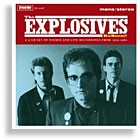
    Ka-Boom!

    The Explosives were possibly the best of the punk/new wave bands that sprang up in Austin (centered around haunts like Club Foot, Raul’s, and the Continental Club), on the heels of the city’s progressive country movement and a few years behind punk pioneers like the Ramones and Sex Pistols. Formed in 1978, they were history by ’83. During their brief existence they also served as backup band for Texas legend Roky Erickson, leaving behind one vinyl LP and a few of EPs and singles – which quickly became collectors items.

    At long last, the group’s 7″ output, along with demos that sound just as pristine, has been released on CD, with a second disc of never-issued live recordings, including a complete set from a 1980 Continental show. The trio of guitarist Cam King, bassist Sonny Collie, and drummer Freddie Krc (pronounced kirch) featured all three on lead vocals and, more important, writing nearly 100 percent of the group’s material (there’s one cover – Paul Revere & the Raiders’ “Steppin’ Out” – among this package’s 49 songs). They officially list ’60s stars like the Beatles, Stones, Kinks, Who, and fellow Texans the Sir Douglas Quintet and Bobby Fuller Four as influences, but recycled through their skinny ties and multi-colored hair, the result often resembles the “power pop” end of the early-’80s spectrum – roots-aware acts like Rockpile and Marshall Crenshaw – although they sometimes cop more of a Ramones or early Costello attitude. “Sellin’ Out” recalls early Joe Jackson, while “Headhunter” is a Ventures-like instrumental, albeit a tad more aggressive.

    What’s amazing is that the three singer/songwriters meld into one cohesive group identity, regardless of a particular song’s singer or composer, and that identity holds its own today with pretty much anyone you can name from that era. The studio disc sounds like a collection of hook-filled greatest hits that somehow escaped notice, while the live show reveals one hell of a tight band.

    Krc has acquired legendary status in Austin for wearing numerous hats, often simultaneously – leader, band member, hired gun; singer, songwriter, drummer, guitarist, producer; pop, country, garage rock, psychedelic, Tex-Mex, and much more. Thankfully, he and King have reformed the Explosives and played several shows recently (including a short set backing Erickson at SXSW), sounding as good as ever. If you missed them the first time around, don’t let them slip by again; as its title warns, this release is a blast.


    This article originally appeared in VG‘s July ’05 issue. All copyrights are by the author and Vintage Guitar magazine. Unauthorized replication or use is strictly prohibited.

  • Van Duren – Open Secret

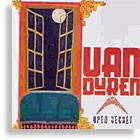
    Open Secret

    Van Duren was an exponent of “power pop” way back in the mid 1970s. He did some recording in Memphis, but things didn’t get far. But here he reaffirms his love of the style and shows you’re never too old to make it.

    My first reaction to this stemmed from the great songwriting. I love when rockers have a gift for melody, and Duren certainly has it. I defy you to listen to “All These Lovely Things” and not have the melody stay with you. Guitars play a huge part in the songs on this disc, with “jangly” being the operative adjective, and cuts like “All These Lovely Things” and “Valentine” are exemplary. “Cryin’ Town” has a country feel with arpeggios flying off chord changes. “Oh, Kay” not only has a lovable title, but exudes an affinity for Joe Walsh guitar sounds.

    Duren plays numerous instruments, including guitar. On some cuts he plays everything but drums, which are handled by Rob Crockett. Duren’s voice tips more than his cap to Paul McCartney, and fits the songs wonderfully. And while his vocals recall McCartney, his own personality remains. It’s easy to love this record.


    This article originally appeared in VG‘s Aug. ’06 issue. All copyrights are by the author and Vintage Guitar magazine. Unauthorized replication or use is strictly prohibited.

  • John Davis – John Davis

    John Davis

    John Davis was a member of Superdrag, which gained some notoriety in its 10-year run. They were a mix of influences including punk, early British rock and roll, and pop. Davis left the group after a religious conversion, and that’s where he picks up with this album.

    Davis has an obvious love of Brian Wilson’s music. Two cuts here (“I Hear Your Voice” and “Stained Glass Window”) sound like long-lost Wilson songs. An angelic vocal and beautiful piano-and-guitar backing, and lyrics that speak to Davis’ state of mind. That said, there’s much more to this album. Most of the lyrics do deal with his conversion, while the music runs the gamut of influences. “Have Mercy” is a rompin’ rocker with lots of loud guitars. The solo is a perfect mix of two-and-three-string bends before several guitars meet in perfect harmony. The gospel-pop of “Jesus Gonna Build Me a Home” lets Davis shine on piano before he plays a clean, simple, and extremely heartfelt guitar solo. “Nothing Gets Me Down” has guitar that melds Chuck Berry with melodic rock soloing. It’s not an easy task, but Davis pulls it off. “Me and My Girl” features folky acoustics and jangly electrics along with a great vocal. It’s pop music as it’s meant to sound. Check out the layered guitars on the fills.

    Plain-and-simple, I love this record. Davis has a real feel for the music. The mix of Wilson, the Beatles, Dylan, and gospel is truly seamless. Davis is never preachy, and writes about as well as one can.


    This article originally appeared in VG‘s April ’05 issue. All copyrights are by the author and Vintage Guitar magazine. Unauthorized replication or use is strictly prohibited.

  • April 2007

    FEATURES

    VG HALL OF FAME
    SRV, a Gibson, a Fender, and John D’Angelico
    An elite group of inductees enters VG’s Hall of Fame, led by the legendary Texan Stevie Ray Vaughan, as well as America’s most lauded archtop builder and two great axes!By Dan Forte, George Gruhn, VG staff

    TOM PETERSSON
    Lower-End Innovator
    From early bands like the Bol Weevils, Grim Reaper, and Fuse, through fame and fortune with Cheap Trick, the “inventor” of the 12-string bass has always loved his low-end instruments. By Willie G. Moseley

    MR. SMITH GOES TO RUDY’S
    “Upstairs” at the Famed N.Y.C. Guitar Boutique
    If your heart starts palpitating at the mention of carved wood and PAFs, it’s hard to beat Rudy’s Music Stop. We go upstairs, and with the help of G.E. Smith, peruse some of Rudy’s greatest funkified treasures. By John Peden

    AMP-O-RAMA
    The Gretsch 6169 Electromatic Twin Western
    In the mid 1950s, Gretsch was one of the hottest names in electric guitars. But it didn’t have an amp line. So it turned to OEM supplier Valco, which made spiffy-looking amps like this one. By Dave Hunter

    THE GIBSON ES-5
    When production of guitars resumed after World War II, Gibson set out to prove that it recognized the importance of the electric guitar and was fully committed to it. The result was the be-all, end-all of electric guitar design. By George Gruhn and Walter Carter

    KEN FISCHER 1945-2006
    Though by most estimates he produced fewer than 100 Trainwreck amps, he will be remembered as one of the most authoritative and intuitive tube-amp gurus ever to have touched soldering iron to circuit. Plus, excerpts from a 2005 interview with the man himself. By Dave Hunter

    FENDER CORONADO XII WILDWOOD
    Straight out of the Summer of Love, there’s no real evidence that the Roger Rossmeisl-designed Fender Coronado XII Wildwood was ever associated with sex or rock and roll. But drugs? Well, we know it was injected with something! By Michael Wright

    BASS SPACE
    The Ibanez Destroyer
    From the glory days of the “copy era,” this Fuji-Gen creation mimicked the Gibson Explorer (seven years before Gibson made an Explorer bass) and used “P/J” pickups 10 years before Fender used them! By Willie G. Moseley

    THE DIFFERENT STRUMMER
    Happy Trails To You!
    After 15 years spent mining the histories of companies other than Fender and Gibson, TDS bids adieu with a look back at some of the greatest memories created along the way. Can you say “Temple of Doom?” By Michael Wright

    DEPARTMENTS

    Vintage Guitar Price Guide

    Builder Profile
    Electric Gypsy Guitars

    Upcoming Events

    Vintage Guitar Classified Ads

    Dealer Directory

    Readers Gallery

    FIRST FRET

    Reader Mail

    News and Notes
    VG 20th Anniverary Contest Winners, Marshall Jams with Burrell, vintage Dokken CD/DVD, Cream City Guitars’ new digs, In Memoriam, more!

    Kenny Wayne Shepherd I Blues From the Backroads
    By Michael Dredgni

    Rick Stockton
    Sounds Abound
    By John Heidt

    Better Days In NOLA
    New Orleans Guitar Renaissance
    By Chip Wilson

    Ask Zac
    By Zac Childs

    Coco Montoya
    Skins to Strings
    By John Heidt

    Bob Devos
    Update on the Organ Trio
    By John Heidt

    Stéphane Wrembel
    Roll Over, Django
    By Michael Dregni

    John Sebastian
    Lost Treasures From the Early ’70s
    By Dan Forte

    COLUMNS

    Q&A With George Gruhn

    Acousticville
    Repairs, Needed vs. Not
    By Steven Stone

    “401K” Guitars
    Solutions For Selling
    By Gil Hembree

    Fretprints
    Elmore James
    By Wolf Marshall

    TECH

    Guitar Shop
    Precious Metal
    By Tony Nobles

    Dan’s Guitar Rx
    Time Changes Everything
    By Dan Erlewine

    Talkin’ Amps With…
    Bill Yates: Vintage Amps Under $1,000, Part Two: Ampeg
    By David Jung

    REVIEWS

    The VG Hit List
    David Gilmour, Tommy Castro, Holmes Brothers, John McLaughlin, Twang Dragons, The Unreleased Beatles, more!

    Check This Action
    The Real Deal
    By Dan Forte

    Vintage Guitar Gear Reviews
    Ampeg Dan Armstrong Plexi, Babicz Blue Flame Octane, Koch Twintone, Clark Gainster!

    Gearin’ Up!
    The latest cool new stuff!