Month: October 2005

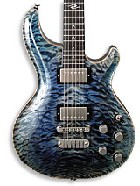
  • Dean HardTail Collector’s Edition

    Grace and Nuance

    If you were part of the scene in the late 1970s, you may recall how two companies – Hamer and Dean – at the time carried the torch for players looking for high-quality solidbody electric guitars.

    Dean Zelinsky got into building guitars by first fixing on ’em in the early ’70s. While still in high school, and while most of his buddies were working menial jobs, Zelinksy was fixing guitars and making pretty good money doing it. After graduating, he knew he wanted to be around guitars, though he wasn’t necessarily interested in being “just” a repairman. So he tooled up a factory, and before long his V and Z models, along with his original-design ML model, were garnering major attention. Not bad for a 19-year-old.

    Within a few years, though, the locking trem/”Superstrat” craze was huge. Largely driven by low-end/low-cost instruments, the atmosphere wasn’t right for Zelinsky’s hand-made axes. In an effort to survive, he began importing guitars to meet the trendy demand. By the early ’90s, however, no longer enjoying what he was doing or seeing, he decided to bow out.

    But in 2000, after nine years away from the business, he was reeled back in by the prospect of helping Elliot Rubinson, the current CEO of Dean Guitars, market the line in a planned rebirth. It wasn’t long before Zelinsky had an idea for a new model – his first in more than a decade.

    Ta Dah!
    Three years in the making, the HardTail is a U.S./hand-made, set-neck guitar available in the Dean USA line and featuring a mahogany body, flamed maple top, one-piece mahogany neck, ebony fingerboard, Seymour Duncan pickups, Tone Pros bridge, Grover tuners, abalone fretboard inlays (with Sterling Silver at the 12th fret), and abalone headstock inlay. The upscale Collector’s Edition adds Sterling silver fingerboard inlays at every standard position, “champagne pearl-finished” hardware, a deluxe leather-appointed case, and Zelinsky’s signature and hand-numbering on the headstock. A real nice spiff is the embossed HardTail leather jacket.

    HardTail, Easy Play
    Fondling the HardTail Collector’s Edition instantly reveals an amazingly smooth, easy-playing feel; the fingerboard and frets are flawless. The neck has a medium thickness we found very comfortable, and it doesn’t take long to warm up to its unique (as in “Dean only”) V shape.

    We tested the HardTail through our Alessandro Working Dog Boxer amp and Exotic AC booster pedal.

    Set for clean tones, the Duncan ’59 neck pickup was full and sparkly, with nice note separation. The hotter-wound Duncan JB in the bridge was darker, but still very nice and full – the set is a very good match. In the middle position, the pickup selector runs the pickups out of phase, and does the sound well.

    To test the guitar’s crunchy tones, we turned on the Exotic AC booster. The result was big, fat, full tones from both pickups, with the neck position retaining its notable sparkle. The bridge pickup was very fat and round, with incredible sustain.

    Rock players, the HardTail may be your new champion!

    Given the quality of every facet of this guitar – hand-built construction, set-neck design, great woods, beee-yuu-tiful maple top, sleek hardware, fantastic playing feel, etc., etc., etcetera, it’s not surprising that the Dean HardTail Collector’s Edition retails at $4,224. But it’s about the finer things, sometimes, isn’t it?

    Dean HardTail
    Features Mahogany body, flamed maple top maple, mahogany neck, ebony fingerboard, Seymour Duncan JB bridge pickup, Duncan ’59 neck pickup, Tone Pros bridge, Grover tuners, graphite nut, polished jumbo frets, abalone shell headstock inlay. Collector’s Edition adds “champagne pearl-finished” hardware, Sterling silver fretboard inlays, deluxe leather-appointed case, headstock signed and numbered by Dean Zelinsky.
    Price $3,334 (retail).
    Collector’s Edition $4,224 (retail).
    Contact Dean Guitars, 15251 Roosevelt Boulevard, Clearwater, FL 33760, phone (727) 519-9669, deanguitars.com


    Dean HardTail
    Features Mahogany body, flamed maple top maple, mahogany neck, ebony fingerboard, Seymour Duncan JB bridge pickup, Duncan ’59 neck pickup, Tone Pros bridge, Grover tuners, graphite nut, polished jumbo frets, abalone shell headstock inlay. Collector’s Edition adds “champagne pearl-finished” hardware, Sterling silver fretboard inlays, deluxe leather-appointed case, headstock signed and numbered by Dean Zelinsky.
    Price $3,334 (retail), Collector’s Edition $4,224 (retail)..
    Contact Dean Guitars, 15251 Roosevelt Boulevard, Clearwater, FL 33760, phone (727) 519-9669, deanguitars.com


    This article originally appeared in VG‘s Nov. ’04 issue. All copyrights are by the author and Vintage Guitar magazine. Unauthorized replication or use is strictly prohibited.

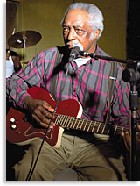
  • R.L. Burnside

    North Mississippi Blues Legend

    R.L. Burnside is a truly original blues artist and an American treasure.

    He hails from the hill country of North Mississippi. And in the hills, they play a different style of blues – pulsating, hip-thrusting, single-chord, groove blues. No eight and 12-bar I-IV-V progressions with a turnaround here. It’s all about the groove. Hill-country blues are designed, for the most part, to keep hordes of hill folk packed into juke joints, dancing and partying until the corn whiskey runs out.

    Yes, the North Mississippi hill country style of blues absolutely rocks. And R.L. Burnside is the master.

    Born in Lafayette County, Mississippi, in 1926, Burnside’s sharecropping family moved north to Marshall County soon after he was born. As a young boy, Burnside’s first introduction to the blues was at the feet of his neighbor, Mississippi Fred McDowell.

    At 16, Burnside began playing guitar. He learned by watching and listening to McDowell. At 21, he began performing at juke joints and house parties with McDowell and another mentor, Ranie Burnette.

    Burnside’s first recordings belied his juke joint roots. George Mitchell recorded him on solo acoustic guitar in 1967 for the folk/blues label Arhoolie. Mississippi Delta Blues, Volume II featured Burnside on one side and Joe Callicott on the other (these have recently been re-released by Fat Possum). The album garnered Burnside recognition with the folk/blues crowd, and he was booked in the U.S., Canada, and Europe as a solo hill-country blues artist.

    The ’70s killed the careers of many blues men, including Burnside. He toured occasionally in Europe, but returned to Mississippi, and sharecropping, to support his wife, Alice Mae, and his 14 children. Burnside continued to play his music in the juke joints surrounding his home in Marshall County. In the late ’70s, he put together the Sound Machine Groove with his sons, Joseph and Daniel, and his son-in-law, Calvin Jackson. The band featured a more traditional juke joint format – electric bass, electric guitar, drums.

    The Sound Machine Groove gained notoriety in North Mississippi, but not beyond. Recorded evidence of this band can be found on R.L. Burnside and the Sound Machine Groove – Raw Electric 1979-1980 and No Monkeys on this Train(reviewed in VG, June ’03).

    The blues revival of the ’80s, sparked by Stevie Ray Vaughan, revitalized and electrified Burnside’s career. He began touring the U.S. and Europe a couple of months each year. He played electric guitar, accompanied by harpist Jon Morris, and occasionally, Calvin Jackson on drums. These tours are documented on Burnside’s CDs Well… Well… Well and Acoustic Stories.

    In 1991, at the ripe old age of 64, Burnside got his big break. Blues historian Robert Palmer, author of Deep Blues, rediscovered Burnside and included him in the documentary (by Robert Mugge) of the same name. The film is a modern-day romp through the Mississippi hills and delta, spotlighting the heroes of the living blues. It features Burnside performing on the front porch of his home in Holly Springs, Mississippi, surrounded by his family. Dave Stewart of the Eurhythmics accompanies on guitar.

    The film led to recording sessions at Junior Kimbrough’s Juke Joint, produced by Palmer, and a new contract with the fledgling Fat Possum Records. With Palmer at the wheel and Burnside, Calvin Jackson (drums), and adopted son Kenny Brown (guitar) manning the guns, the result was Too Bad Jim, a blues album like no other, and featuring bone-crushing grooves, wailing/moaning guitars, and the incredible vocal styling of Burnside.

    After Too Bad Jim, the word was out. Burnside and the gang were soon the opening act for the Jon Spencer Blues Explosion on a tour that ended with a recording session. A few gallons of beer, a couple of jugs of whiskey, and four hours later A Ass Pocket of Whiskey was in the can. The tour and album opened a new fan base for Burnside – young, white, indie rockers. A Ass Pocket of Whiskey features wildly distorted guitar tones, tripped out slide licks by Kenny Brown, Jon Spencer’s gut-wrenching primordial screams, and Burnside’s droning guitar and powerful vocals. Just to spice things up, a dollop of Theremin was added to a few tracks.

    Mr. Wizard followed …Whiskey and is a compilation album comprised of tracks excluded from previous releases and some cool live stuff recorded at Burnside’s own juke joint, Burnside Palace. The tracks, “You Gotta Move” written by Mississippi Fred McDowell, and Burnside’s own “Over the Hill,” recorded at the Burnside Palace, are the gems of the CD. The solo cuts feature Burnside playing some down home (you can almost smell the cotton) slide and preacher-like Son House vocals.

    Burnside’s appearance in Deep Blues also brought him to the attention of Tom Rothrock, another unlikely collaborator. Rothrock, known for producing Beck and Elliot Smith, brilliantly melded Burnside’s North Mississippi juke blues with modern hip hop and techno. The result of this match made in hell is the critically acclaimed ’98 offering, Come On In, the most successful album to date for Burnside and the Fat Possum label. The album features Kenny Brown’s killer slide and introduces Cedric Burnside (Burnside’s grandson) on drums. The crossover success of Come On In led to tours of Europe and Australia, a warmup gig with the Beastie Boys, inclusion on “The Sopranos” soundtrack, and background for a Nissan television commercial.

    The success of Come On In generated another hip hop/techno effort, complete with DJ scratching, titled Wish I Was In Heaven Sitting Down. Burnside does not play guitar on this album but his tremendous vocal work (check out “Bad Luck City”) more than make up for it. Kenny Brown provides the filthy Mississippi slide on the title track.

    Burnside’s latest effort is the 2003 Grammy nominated and 2002 W.C. Handy award winner, Burnside on Burnside. The album features live performances recorded entirely in the Northeast and partially on Burnside Street in Portland, Oregon. The album provides an accurate representation of a Burnside live performance. You get it all on this one: in-your-face grooves (driven by Cedric), mean Mississippi slide (courtesy of Kenny Brown), and Burnside’s field vocals, mesmerizing guitar style, and endearing sense of humor.

    Burnside has recently been sidelined with severe health problems. He suffered a heart attack in November, 2002, which resulted in quadruple bypass surgery. His touring days are over, but his spirit and voice are as strong as ever. He has recently been in the studio recording numbers for a Muddy Waters tribute album on Fat Possum. The record is due for release in June. VG caught up with Burnside taking it easy at his home in Holly Springs, Mississippi.

    Vintage Guitar: When and where did you first hear the blues?
    R.L. Burnside: I first heard the blues from Mississippi Fred McDowell. I was seven or eight then. We lived by him, pretty close to him for about 10 or 12 years. Ranie Burnette, he was the next one, ’cause he was married to my Auntie, and he played guitar, you know.

    I went along, nobody teach me nothin’, I would just sit and watch them peoples and learn.

    Did you learn from listening to records?
    Yeah, I listened to records. My grandmother and my mother liked them. They have about all the records every time they come out with one. Yeah, they had one of them old wind-up gram-a-nolas, you know.

    Where did you get your first guitar?
    Well, Ranie Burnette give it to me. It was a old Q-six (acoustic) guitar. I forget the name of it or who made it, but it was an old Q-six.

    Did you ever jam with the fife and drum bands, Sid Hemphill, Napoleon Strickland, and Othar Turner?
    Yeah, I played with them guys. We played at picnics and house parties. I’d be playing at a house party, get something going, and those guys be there and we’d start playing.

    When did you start playing electric guitar, and what kind was it?
    Well, in the ’50s I started playing electric. I don’t remember what kind it was.

    Do you remember what kind of amps you had?
    Well I had a Peavey one time. Made in Mississippi, you know!

    How would you describe the blues you play?
    Mississippi blues. Well, they call them Chicago blues, but 90 percent of the people playin’ blues got their home in Mississippi. They had to leave when those guys got those cotton pickin’ machines. There weren’t no jobs, they had to go somewhere. I was in Chicago for a while, trying to make a living. I was working at Howard’s Foundry, and I worked at Minnifield Glass for about two years.

    Were you playing guitar back then?
    No, I wasn’t playing guitar back then. When I moved up there, I had heard Muddy Waters’ records but I didn’t know he was married to a first cousin of mine, Anna Mae. I got up there and I would go to his house every night and watch him play. I learned a lot from watchin’.

    Your first recording session in the ’60s was with Arhoolie records. How did that session come about?
    Well, George Mitchell (A&R man for Aroohlie) came around looking for some blues players, saw me sittin’ out there, and recorded me on a little tape. That was in ’67, and he called back in ’68, asked if he could make an album. He had me, Jessie Mae (Hemphill), Joe Callicutt, Ranie Burnette, and all of us on there. And in ’69 I had my first tour to Montreal, Canada. I was playing solo then.

    How long did you play solo?
    For four or five years. Then I got my sons out of school and they got where they was playing, and then I just take them with me and made a band. We called ourself the Sound Machine Groove.

    Do you remember what kind of electric guitar you were playing with the Sound Machine Groove?
    (laughs) No, I don’t remember. I think it was a Fender (laughs).

    Do you have a guitar and amp in your house right now?
    No, I don’t have one. You know, my house burnt down and it burned up my guitars and my amp. I gotta get me another guitar and some amps.

    You used to have your own juke joint, Burnside Palace,
    Well, one time. But even in Holly Springs, it got so rough, dope started around, you know. And they was shootin’ and killin’ people at those jukes, so they closed a lot of them down. There’re one or two around here in the country where I’m at and two or three in Holly Springs. That’s all there is.

    How did you and Kenny Brown hook up?
    Well, he lived across the road from Joe Callicutt, and Joe was teaching him how to play. Joe died, and he come over to ask me if I would teach him. I said, “Yeah,” and we started in. We been together ever since.

    The late Robert Palmer was a big fan of yours, and he really jump-started your career. How did you meet him?
    He was going around looking for different people to make a movie with, you know, and I saw him outside the Baptist church. I wasn’t goin’ to church, I was goin’ some other place, you know, and we met him and he told me he’d be back tomorrow. Junior (Kimbrough) was runnin’ a club back then, and we could meet him at Junior’s club. We went down to Junior’s club – me, Othar Turner, Jessie Mae, and Junior. We did some playing there and then went back to my house. Got me playing on the front porch, you know.

    How did you meet Jon Spencer?
    Well, he heard one of the CDs we had out and he called Fat Possum and asked them if we could open for them, you know. And he told them, “Yeah.”

    I’d heard of him, but never had been around him. And we went out to open for them, and I’d be sittin’ back in the dressing room talkin’ and drinkin’, I’d be tellin’ him old stories (laughs) and he liked ’em, and he said we need to do an album about that. I said, “Man, I can’t do that onstage, that’s too dirty.” And he said, “Naw, people like that, man!”

    We stayed out there a couple weeks that time, and I didn’t do the album. I come home and he called and said, “If you ever decide to do that album, R.L., just call me.” I said, “Okay.” And one day, about two weeks after I was home, me and some of my friends was sittin’ out in the yard drinking beer, and Jon Spencer called me and said, “Hey, R.L., are you ready to do the album?” And I said, “Yeah, come on down. If it don’t help me, it can’t hurt me none!”

    And in about two days, he was down here and he went out to Holly Springs and rented one of them hunting clubs, and we did the album in about four hours. We must of drank about a gallon of somethin’, you know, he kept the club a couple of days, you know, but we did the album in four hours.
    Did you and Junior Kimbrough ever play together?
    Yeah, I’d go to his club. One time, we lived next side of his club. We played there a bunch of times. Some of my kids played bass or drums with him. Gary played with him, and Calvin Jackson. And my grandson, Cedric, who plays with me now, played with him.

    How old were you when you started making a living playing the blues?
    Well, I was about 40. But when I started making money, I was about 30. And I been doin’ it for a bunch of years.

    Where were you playing?
    In all the places I went, and overseas, people looked like they enjoyed it. And I went all around over there, you know. New Zealand, Australia, Norway, Sweden, Denmark, Germany, France, Italy. All around over there and they looked like they liked the music. A guy was takin’ us around, you know, and I heard them hollerin’ and I asked him how it was they liked the music when they can’t speak English. They liked the rhythm… man, they liked the rhythm!

    Who are some of your favorite blues guitar players or singers?
    Well, I like Fred McDowell, Muddy Waters, Lightnin’ Hopkins, John Lee Hooker, B.B. King.

    I know you’ve played with Fred McDowell. Have you ever played with any of the other guys you mentioned?
    Well, the first time I was on tour, that was in ’69, I never met Lightnin’ or John Lee. We was late – me and Robert Pete Williams – gettin’ to Montreal, and we had to catch the subway to go over there. And I got lost. They was callin’ me by my name when I got there, “R.L. Burnside from Coldwater, Mississippi…” And I was just goin’ up. I didn’t get a chance to go in the dressing room.

    I just went up on the stage, you know, and I saw Robert Pete Williams sittin’ over there beside the stage. He done played, you know, and man I was nervous, cause ’bout a six-piece band just, like, got off the stage, and I was playing solo.

    I got up and about halfway through one song, the people started hollerin’ and man that made me feel a whole lot better!

    But I’m playin’ some Hooker stuff like “Boogie Chillen” and “When My First Wife Left Me.” I’m playin’ some stuff behind Lightnin’, too. After I got through, they was pattin’ their hands and I got down to talk to Robert Pete Williams, and he said “R.L. you done got better. You started gettin’ better all the time.” I said, “Yeah…” He said, “Yeah man, that’s good. But I tell you what – you gotta whuppin.” I said, “What you mean?” He said, “John Lee Hooker and Lightnin’ Hopkins in there, sittin’ in the dressin’ room.”

    Man, I could’ve been bought for a penny (laughs)! We went on in, and Hooker said, “Man, I don’t mind nobody playin’ my music when they play it good. When they mess it up, I don’t like it. But you played it good” (laughs).

    That made me feel better, man.

    Your son, Duwayne, is playing guitar with the North Mississippi Allstars now. Did you teach him how to play?
    Well, he just watchin’ me, you know, and when I first knowd he was playing, I’d be workin’ in the field, pickin’ cotton, and I’d come in the house and he’d have my guitar, you know (laughs). And he broke all them strings (laughs). I’d fix it up, and then one day I came in and he was playin’. I listened to him and I said, “Oh My,” and I went and got him a guitar. He wanted to do it bad, man.

    He doesn’t sound anything like you. He sounds like Buddy Guy or Otis Rush – definitely urban. Now, Luther Dickinson (lead guitar and front man for the All-Stars), he sounds more like you. Did you show him anything on the guitar?
    Well, he watch me a lot of times, you know, and learnt some off me. They’re doing some of my songs. When he started to playin’ ’em, he came to me and said, “Hey, Mr. R.L.! You don’t care if I do your numbers, do you?” I said, “No, it’s okay with me.”

    You know, they do them numbers pretty good!

    Like Mississippi Fred and Ranie Burnette before him, R.L. Burnside has turned schoolmaster, and his subject is hill-country blues. Although his health prohibits Professor Burnside from touring, his lesson plans are available. Check out the blues bin of your favorite record shop… and be prepared to get schooled by the headmaster.


    Danelectro photo:David Raccuglia.

    This article originally appeared in VG‘s Dec. ’04 issue. All copyrights are by the author and Vintage Guitar magazine. Unauthorized replication or use is strictly prohibited.
  • Lakland Jerry Scheff Signature Model

    Veteran bassist Jerry Scheff is best known for holding down the bottom-end in Elvis Presley’s fabled TCB Band.

    But he has also been a fixture in the national recording scene for decades, and is heard on many recordings. He has always emphasized doing things his way, and the attitude has paid off in a long and admirable career.

    Scheff is still active, and in a recent dialogue, the bassist recalled some of the more memorable occasions (musical and otherwise) he has experienced.

    He grew up in Vallejo, California. His musical career began on tuba and bass violin, and we asked why he gravitated toward bass.

    “I was an attention junkie,” Scheff said. “I looked at the tuba at eight years old, and bigger was better, bigger was louder – in my mind – and I just thought that big, shiny, brass thing was the coolest thing I ever saw.”

    The budding musician played in his school orchestra and the Vallejo Junior Symphony, as well as the local municpal band. A move to Sacramento in his early teens didn’t affect his passion for jazz and R&B, and Scheff began making regular trips to the Bay Area in the late 1950s to perform at jazz clubs.

    “I started going to San Francisco when I was 15,” he recounted. “I was influenced by the older musicians I met; they were the people that the Beat literary people were copying, for the most part. As far as I knew, the musicians I hung out with didn’t have much contact with the literary people, who wore berets, and recited poetry to bongo drummers. The musicians I knew, like vibes player Dave Pike and pianist Flip Nunez, were more into East Coast Jazz and hard bop.

    “I played for a little at an after-hours club called Jimbo’s Bop City in San Francisco,” Scheff continued. “A very imposing black woman dressed like a longshoreman came in once about 3 a.m. She stomped a tempo, and dust flew up. She sang her ass off. Flip introduced her as Big Mama Thornton; I always remembered her because she was so big, and the first great blues singer I heard.”

    Willie Mae “Big Mama” Thornton had a “race record” hit version of “Hound Dog” (by Jerry Lieber and Mike Stoller) that was recorded in 1953. Three years later, Presley would “appropriate” the song, and over a decade after Thornton sat in with Scheff’s band at Jimbo’s Bop City, the bassist would begin playing “Hound Dog” on a regular basis with Presley.

    Performing as an underage musician generated unique memories for Scheff, and the older musicians with whom he gigged in such an environment sought to protect him from the seedier aspects of the lifestyle.

    “Drugs; none of the older guys would give me any. Sex; I was teased a lot by older women, but I was a skinny little pimple-faced white kid. I think they thought of me as a mascot who could play jazz bass. Violence; a woman got her throat cut in an alley behind a jazz club called Streets of Paris. We heard her scream, and I ran toward the back door with the rest of the crowd, but I couldn’t see anything. The band started playing before the police got there.”

    Scheff also played bass and studied music during his stint in the U.S. Navy, and he has some fond recollections.

    “The Navy School of Music was in Washington D.C. at that time,” the veteran bassist said. “When I arrived in ’58, it was men only. If you were in the Navy, you auditioned and were automatically sent there for nine months. If you were in one of the other services, you had to be exceptional to get sent there. The school was divided between concert band and jazz; mainly big-band jazz. We had an African-American big-band instructor, and he knew Count Basie; he used to bring in new arrangements. There was a faculty jazz band with all the best players from the faculty. My bass violin instructor was a mostly-classical player, and he was supposed to play in the faculty Jazz band, but he had been drafted into the Army from one of the major American symphonies, and had nothing to prove, so he recommended me for the job.

    “I had a Theory teacher named Ron Ferry,” Scheff said. “He was a great piano player who had grown up with Bill Evans, the jazz pianist. He took me to a Washington jazz club to see and hear Miles Davis with Evans, Paul Chambers, Cannonball Adderly, John Coltrane… Blew me away! I played in small clubs around Washington until I was sent to Coronado, California, where I did the same thing… and I laid on the beach a lot.”

    Following his discharge from the Navy, Scheff began attending San Diego State College and playing at local clubs. It was around this time that he began learning to play electric fretted bass, although he’d already been made aware of the instrument some years earlier.

    “I first saw an electric bass when I was still in high school; I think it was in 1958,” he recalled. “I went to see Lionel Hampton’s band, and Monk Montgomery, Wes’ brother, was playing bass. I wasn’t moved to get one. I bought my first Fender P-Bass in about 1961. Ironically, I bought it to play at a club gig in San Diego, where I was playing touch bass with my left hand, and drums with my right hand and both feet. I had the snare and high-hat close together, so I could play the high-hat with the tip of the stick and backbeats or Bossa Nova rhythms with the blunt end, on the snare head or rim. I was using a Fender Bassman amp. We were a trio, and sang Four Freshmen songs and harmonies; it was actually pretty good. Alas, we got a great-paying gig in Palm Springs, and my P-Bass and drums were lost in a fire.”

    Scheff still prefers Fender or Fender-style electric basses, and noted: “The oldest bass I have now is my black ’62 P-Bass that I used a lot with Elvis. I bought it from a security guard at the Hilton in Las Vegas for $150. I had a ’59 P-Bass I gave to (TCB Band drummer) Ronnie Tutt. I bought it in 1966 from some hippies who were squatting in an empty mansion in the Hollywood hills. When I went to pick it up, they were stoned, and were sitting around a fire built on a marble floor in the dining room. The ceiling was black, and I remember hearing them cough as I slipped five twenties to one of them and he handed me the bass.”

    For all of his decades of experience with Fender basses, Scheff still has specific allegiances, however.

    “I liked all of the electric basses just fine. I preferred – and still prefer – string-bass for jazz.”

    As for amps, Scheff told us, “I bought my Ampeg B-15, which I still use, in 1964,” Scheff said. “When I went to work for Elvis, I had a big Sunn. I used it through ’73, and gave it to a kid on Salt Spring Island in British Columbia (where Scheff was residing at the time). About five years ago, my son, Jason, who plays bass and sings with Chicago, received an e-mail from a guy in the Midwest who had bought the amp. He said he would sell it back to us for what he had paid for it, a few hundred dollars. That blew us away, so Jason suggested we send him a vintage P-Bass he had. We both signed it, and Jason has the amp in his studio.”

    “In ’75, I went back to work for Presley, and used twin Music Man amps from that era,” Scheff continued. “Now, I have my little B-15, and that’s it. I request certain amps when I play live, so I don’t need to bother with owning them, even if they are given to me. Usually, I ask for a vintage Ampeg tube amp with eight 10″ speakers.”

    Following the aforementioned Palm Springs fire in which his P-Bass and drums were destroyed, Scheff moved to Los Angeles, and began gigging in that area, and attempted to get into the studio scene. His big break came when he played bass on the Association’s 1966 debut album, And Then… Along Comes the Association, which included the hits “Along Comes Mary” and “Cherish.” While Scheff pronounced the Association to be “hippies… the oddest people I had ever seen,” he also admits that the hit version of “Along Comes Mary” has a “…big, fat, bass mistake in the middle of it. But they liked the take.”
    Among the legendary musicians Scheff worked with in that era were guitarists Barney Kessel, Tommy Tedesco, and James Burton, drummers Hal Blaine, Jim Gordon, and Earl Palmer, keyboard player Larry Knechtel, and sax player Jim Horn.
    “I didn’t meet Carol Kaye until about three years ago. Jason and I went to her house and had lunch; wonderful woman,” Scheff said when asked about other legendary L.A. session bassists. “I met Joe Osborn a few times over the years. We got along great.”

    And, recalling some of the more intriguing sessions he did, Scheff noted, “Some of the most fun recordings were done with ethnic artists. I did an album with Spanish Flamenco guitar great Carlos Montoya. They put plywood on the floor and mic’ed it. When we recorded, two or three sultry Spanish women danced on the plywood right in front of us, sweat streaming off of them; very erotic. I also did an East-meets-West project with sarod player Ananda Shankar.”

    Scheff’s favorite recording from that time in which he participated? “The Doors’ L.A. Woman.” The worst?

    “Many tasteless sessions where I was bored to death.”

    His selection of L.A. Woman is intriguing, since he has asserted that he was approached about joining the Doors following the completion of that album, but singer Jim Morrison’s death cancelled the plan. Nevertheless, he continued his association with at least one ex-Door.

    “I did an album with Ray (Manzarek) called Golden Scarab,” he said. “I had a hard time on that album; in fact, I have never heard it. Mostly drummer problems; Ray had hired Tony Williams, but his jazz grooves – which I like, by the way – were not right for some of the material. They had to get another drummer to play the grooves, and then Tony could stretch out on top. I think Ray and Robby Krieger are wonderfully talented people, but sometimes people right in the middle of things miss the point of what they’ve done in the past.”

    In all of his decades of experience, Scheff has some favorite guitarists – most of whom he worked with. But there is one with whom Scheff never gigged.

    “My favorite guitar player of all time was Jimi Hendrix in his prime,” he said. “I never played with him, but always thought I would’ve been a perfect match. Of the guitar players I’ve actually played with, I like the more inventive players like Richard Thompson and Mark Rebot. I worked quite a bit with (Tommy) Tedesco, and his genius was being able to adapt to whatever kind of music was being recorded. And I worked with Barney Kessel for two years in the mid ’60s, and he was great! To have someone who backed Billie Holiday and played with the great Ray Brown like my playing really boosted my confidence.”

    Around the time of the L.A. Woman sessions, however, Scheff was gearing up for an extended association with Elvis’ acclaimed TCB Band, having been tapped for the bass position by James Burton.
    Curiously, a term that Scheff has used himself is utilized by acclaimed musicologist Peter Guralnick in his book Careless Love: The Unmaking of Elvis Presley (Little-Brown), which is the second part of a definitive two-volume Presley biography. Guralnick proclaims Scheff “…a red-headed ‘hippie’ with alternative ideas and a taste for the alternative lifestyle” who committed to the TCB Band after experiencing Presley’s commitment to music at the audition. Scheff’s recollections confirm such.

    “I have no idea why James thought of me,” he said. “We came from completely different musical and cultural backgrounds, and I hadn’t worked with him that much. We all got along extremely well. I was the only Yankee in the bunch at first, so I had to adjust to some things, but I learned fast. I never felt like anyone was a best friend, and I was sort of a loner, but everyone, including Elvis, treated me well, and with respect.”

    Scheff also detailed how the TCB Band would collaborate with Presley during rehearsals.

    “To work up a song, someone would play a demo,” he noted. “Then the band and Elvis would make it work; we’d listen to how Elvis sang, and craft the arrangement around him.

    “Sometimes they’d play a song from an album we didn’t play on. But we were free to change parts, tempos, and anything else. I don’t remember Elvis ever telling someone to ‘Play this’ or ‘Play that.’ Once in a very great while, he might ask someone not to play something… never me, though!” Scheff said with a laugh.

    “After the arrangement was made, Elvis would bring in the vocalists, and they would add their parts. Then someone would write string and horn parts; many times it was our pianist, Glen D. Hardin. (Conductor) Joe Guercio would call the orchestra, and we’d put it all together. Joe’s main job was to keep the horns and strings with Elvis and our band.”

    “The Elvis job was only about 25 to 30 percent of my livelihood,” Scheff clarified. “I recorded in L.A., toured with Delaney and Bonnie & Friends, Johnny Rivers, and other people. I worked, and I was happy.”

    After Scheff left the Elvis assignment following the fabled “Aloha from Hawaii” performance, he returned to Los Angeles and the TCB Band. He would again work with the Presley aggregation until the King’s death in August of ’77.

    The subsequent years saw Scheff remain just as active. He toured with Bob Dylan, recorded albums with John Denver (with erstwhile TCB Band cohorts Burton and Hardin), Elvis Costello, Thompson, and others. He also participated in the acclaimed “Roy Orbison: Black and White Night” 1987 concert.

    In 1997, members of the TCB Band and other musicians and singers who had toured with Elvis Presley reunited for a unique presentation and tour titled “Elvis – the Concert,” in which concert videos of Presley were projected on a screen, but all music and vocals, except for Presley’s voice, were eliminated. Elvis’ singing was instead accompanied by live music purveyed by many of the same musicians and singers. The first concerts were presented in March,1998, and tours have been undertaken every year since (as of this writing, none are scheduled for ’04).

    And Scheff had a personal ace up his sleeve when he released a CD in ’01 titled Fire Down Below, consisting primarily of a 1976 and new version of the title track (vocal and singalong versions), plus two other tracks and a monologue from Scheff. Therein, he proclaims that the ’76 version of “Fire Down Below” “…had been buried like an archeological artifact for 25 years.” Scheff wrote the tune for Elvis, and Presley was supposed to record it, but Elvis never got the chance to record the vocal parts. Moreover, his liner notes admit he accidentally erased Burton’s guitar part on “Fire Down Below 1976,” and the new guitar track was added by Albert Lee. Fire Down Below is an intriguing bit of aural Elvis trivia, and the music, as well as Scheff’s reminiscence, make for interesting listening.

    Another recent development is the design and marketing of a Jerry Scheff signature bass, made by the Lakland company, Chicago.

    Scheff has been involved in other recent projects besides “Elvis – the Concert,” and plans to stay busy. The Lakland signature model is an indication of his dedication to his craft, and perhaps he summed it up best when he transmogrified his comment about his earlier work with Elvis, Delaney and Bonnie, and Johnny Rivers to an up-to-date observation.

    “I still work,” he said. “And I am happier still. Who could ask for more?”


    Lakland Jerry Scheff Signature Model
    Like its namesake, the Lakland Jerry Scheff signature model bass has unique aspects.

    Immediately noticeable are the two low-output Kent Armstrong Split-Tube pickups, located quite a distance from each other in an effort to cover a wide sonic range. The pickup system includes a preamp, and has controls for cut and boost for treble, midrange and bass, as well as a pan control and master volume.

    The neck is quarter-sawn maple, fretboards are available in birdseye maple, rosewood, or ebony. The body is swamp ash (Deluxe and Standard models) or alder (Classic model), and the model comes in four- and five-string variations, as well as an imported Skyline version.


    This article originally appeared in VG‘s Sep. ’04 issue. All copyrights are by the author and Vintage Guitar magazine. Unauthorized replication or use is strictly prohibited.
  • Sean Costello – Sean Costello

    Sean Costello

    This is Sean’s first work for Tone Cool/Artemis, and while his past work was very good, he has matured to become one of the major young talents in R&B.
    Sean’s past work also hinted at expanding beyond blues. And here we’ve got slices of soul that rank with the best of that genre’s history. Fans expecting large blasts of blues guitar and shuffles may be disappointed, but if you like to see how an artist can grow, step up.
    Sean wrote a great number of the tunes, and his writing, playing, and vocals are at the top of his game. Check out the opener, “No Half-steppin’.” It’s got a hook big enough to drive a truck through. The Leslied guitar doubles a great horn line, and his solo is just right. Vocally, there’s great stuff on pretty much every cut; you’ll be amazed at the soul and sounds he manages to invest in each of these songs. Sean has always been a fine singer, but here he has taken it up a notch.
    “I Get A Feeling” is the type of soul ballad that’s rarely heard anymore. Between the incredible solo and the vocal, it leaves you speechless. There’s an exquisite version of Bob Dylan’s “Simple Twist of Fate” with beautiful slide and a great feel. “She Changed My Mind” is the kind of soul heaven that would be on the radio if radio still had any sense. Sean’s perfect two-note guitar figure propels the song. The middle features a very nice stop-time segment with soulful bends. Top it off with the vocal, and you’re set.

    This article originally appeared in VG‘s June ’05 issue. All copyrights are by the author and Vintage Guitar magazine. Unauthorized replication or use is strictly prohibited.

  • October 2005

    FEATURES

    IN DETAIL
    Gibson’s 1953-’65 Firebird
    A direct shot at Fender’s Jazzmaster and Jaguar rock guitars, it was an unexepectedly funky offering from the staid, traditional Gibson. And though it was unique in so many ways, it didn’t set the world afire. By Ward Meeker

    BASS SPACE
    Whooooo Wal You?
    Wal started as a collaboration between two English gentlemen. Its output has always been small, and its client list has always included notable musicians. This one belonged to a rock legend. By Willie G. Moseley

    JUDAS PRIEST
    Return of the Metal Gods
    After a 15-year hiatus, Rob Halford has re-teamed with the incomparable guitar tandem of Glenn Tipton and K.K. Downing. Together, they continue to yield a magical metal brew. By Lisa Sharken

    GIBSON STYLE U HARP GUITAR
    Its design may seem unique today, but it was not a new concept when it sat atop the Gibson lineup in the early 1900s, where it represented the highest level of expectation for a new and innovative instrument. By George Gruhn

    ANDY SUMMERS
    The Next Phase
    Best known for his innovative playing in the Police, the English guitarist was into many genres of music before he flexed his versatility in the heyday of the innovative band. By Willie G. Moseley

    TRAVIS BEAN TB500
    Though often viewed with disdain amongst guitarheads, the ’70s was a decade of innovation. This guitar is the byproduct of the furtive mind of a motorcycle racer who, looking to make a more stable guitar neck, grabbed a slab of Reynolds T6061 aluminum. By Michael Wright

    GREAT COLLECTIONS
    The Collection of Jonathan Kellerman
    A guitar player for 46 years, for the best-selling novelist, the instrument is not only a device for release and inspiration, but a true passion. And his collection reflects it, rating as one of the finest in the world. By George Gruhn

    THE DIFFERENT STRUMMER
    Larson Jumbos and Dreadnoughts
    Recounted by many as two of the finest American makers of acoustic flat-tops in the early 1900s, the Larson brothers’ success among professional musicians stands as testament to their abilities. By Michael Wright

    DEPARTMENTS

    Vintage Guitar Price Guide

    Builder Profile
    Randy Wood Guitars

    Upcoming Events

    Vintage Guitar Classified Ads

    Dealer Directory

    The Great VG Giveaway
    Vote, and you could win a Phantom/Bad Cat/George L’s prize package worth $2,000!

    Readers Gallery

    FIRST FRET

    Reader Mail

    News and Notes
    DiPinto, Valley Arts build for Live 8, James Burton, Steve Mugalian benefit, Del Casher, Stolen Gear, more!

    Steve Hackett
    No Pigeonholes, Please!
    By Willie G. Moseley

    Higher Than the Moon
    New Les Paul Bio Goes Deep into Archives
    By Eric C. Shoaf

    Charlie Baty
    By John Heidt

    Paul Gilbert
    “How Pat Travers Saved My Soul!”
    By Oscar Jordan

    Ask Zac
    By Zac Childs

    Glenn Hughes
    Of Loud Funk and Profound Prolificity
    By Willie G. Moseley

    Popa Chubby
    By John Heidt

    Sean Costello
    Taking a Chance on Soul
    By John Heidt

    COLUMNS

    Q&A With George Gruhn

    Acousticville
    The Rivera Sodona Lite
    By Steven Stone

    FretPrints
    Joe Maphis
    By Wolf Marshall

    Gigmeister
    The Roland ME-30
    By Riley Wilson

    Guitars With Guts
    1875 Antonio de Torres
    By R.E. Bruné

    TECH

    Dan’s Guitar Rx
    Acoustic Crack-Up Fix Up
    By Dan Erlewine

    Guitar Shop
    Perfection In Simplicity
    By Tony Nobles

    Amps
    ow To Buy a Vintage Amp
    By Gerald Weber

    Ask Gerald
    By Gerald Weber

    REVIEWS

    The VG Hit List
    Music, Book and Video Reviews: Marty Stuart, The Morells, Richard Thompson, Frank Vignola, Ana Popovic, Rock Around The Clock, more!

    Check This Action
    Not Quite All That Jazz
    Dan Forte

    Vintage Guitar Gear Reviews
    Mesa-Boogie Lonestar Special, B.C. Rich Eagle/Bich 10 Supreme, Chicago Blues Box Kingston, Epi Valve amps, Roland GR-20.

    Gearin’ Up!
    The latest cool new stuff!