Month: September 2005

  • Scott Holt – Angels in Exile

    Angels in Exile

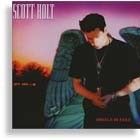
    Scott Holt isn’t exactly a newcomer to the music buzz. He served in Buddy Guy’s band for 10 years and, not surprisingly, calls it a “…trip to the university.” That schooling has definitely paid off with Angels in Exile. Scott covers a lot of territory musically on the record, but it’s always rooted in the blues.
    There’s traditional stuff. “I’ll Make Love to You Anytime” features nasty, bluesy, guitar work and enough lyrical bravado to fill an entire blues album. And “Too Far Gone” is a big-ass Texas shuffle with a big Strat sound and absolutely kills. And for slow blues, Scott shows he’s more than capable on the wonderful “I’ve Got a Mind to Give Up Living.” Soulful, heartfelt playing with some nasty vibrato complement the song lyric perfectly. But there’s lots more here. The title cut is a country-rocker that recalls the Stones of the early ’70s. “Dress You Up” is a very cool mix of modern rock and Hendrix-influenced Strat work.
    Covers? Check these out; a funky version of the Little Feat classic “Spanish Moon” cooks on every level. Feat members Billy Payne and Paul Barrere guest on it and a killer cover of Bob Dylan’s “Blind Willie McTell.”
    Scott’s playing is fine – he’s equally at home in the blues, rock, or country-based rock. His vocals, while not great, fit the songs wonderfully. His voice has a very nice lived-in rasp that gets the point across. Great album.

    This article originally appeared in VG‘s Sept. ’01 issue. All copyrights are by the author and Vintage Guitar magazine. Unauthorized replication or use is strictly prohibited.

  • Guy Forsyth – Steak

    Steak

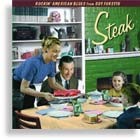
    This healthy serving of steak is pretty meaty. Bo Diddley’s rock and roll, dirge-like blues (and I mean that in a good way), acoustic country blues, jump blues, and blues-based rock mix to make an excellent album.
    Guy plays all the slide, and there’s some great work – a rockin’ cover of Muddy’s “Louisiana Blues” features an extended jam that lets Guy show off those licks. The Tom Waits-esque “Mad” has great distorted, primitive guitar that propels the song beautifully. The lazy shuffle of “Cadillac” features a great solo that matches the very funny lyric. And, just to prove his versatility, the country rave-up “Lovin’ Dangerously” twangs along with excellent axe work.
    Guy’s vocals and harp work are also stellar. “Makin’ Money” is as fun as it gets when you’re playing the blues.
    This is a fine album. If you can’t find it, check out guyforsyth.com.

    This article originally appeared in VG‘s Aug. ’01 issue. All copyrights are by the author and Vintage Guitar magazine. Unauthorized replication or use is strictly prohibited.

  • Graham Central Station – Anthology

    Anthology

    It is extremely rare for a band to have one true
    innovator. Sly & The Family Stone had two.
    There was the vision of Sly Stone, and the
    thumb of Larry Graham. His revolutionary electric bass style – popping, pulling, thumping, plucking, and snapping the strings with his thumb, as opposed to the standard overhand fingerstyle method – became the foundation of the ’70s “funk” sound. As Bootsy Collins acknowledged, “It was Larry Graham. Definitely Larry Graham.”
    What grew out of necessity – compensating for a departed drummer while playing in his mother’s trio – blossomed into full flower on Sly’s “Thank You Falletinme Be Mice Elf Agin.” James Jamerson’s bass figures had been an important factor in countless Motown hits; Brian Wilson and Paul McCartney had freed up more harmonic possibilities; and Jack Bruce had gone toe-to-toe, soloing alongside Eric Clapton in Cream; but here the full weight of the song’s melody is shouldered by Graham’s bass and its radical, fresh approach.
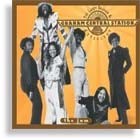
    When the Family Stone crumbled in ’72, Larry formed Graham Central Station, which remained one of the Bay Area’s top live acts and the R&B chart’s biggest hitmakers for the rest of the decade. This two-CD set covers the band’s six ’70s albums, Graham’s subsequent solo efforts, and GCS’s eventual ’90s comeback. Like the Stone, GCS was a multi-voiced, self-contained collective whose songs often offered social commentary over eclectic grooves. Their 18 R&B Top 40 singles are all included here.
    Not surprisingly, the bandleader’s bass is right in the forefront (check out the opening of “Hair”), and Graham’s gospel roots are reflected strongly – especially on “Ghetto” and “People.” The latter features the sweet hollowbody tone Larry’s former bandmate, guitarist Freddie Stone, who co-wrote the song with Graham (and who displays strong songwriting throughout). Elsewhere, GCS’s David “Dynamite” Vega proves he’s one of the great unsung guitarists of ’70s soul. He’s more than up to the rhythmic tasks that the idiom required, but also steps up for some tasty wah-wah bends on “Can You Handle It.” He switches to a screaming fuzz tone for the baroque gospel-blues of “Today,” and gets more extroverted on “The Jam,” “Entro,” and the distorted “Earthquake.” Everyone gets a turn on these latter band features, and Graham essentially solos like a guitarist. But on “Feel the Need” he shows that he’s equally capable in a more traditional Jamerson-like role, and on “Your Love” he lays down a swaying triplet groove.
    “Is It Love?” features some flanged bends by Vega’s replacement, Gemi “Chunk” Taylor, and on the live ’92 version of Sly’s “I Want To Take You Higher,” which appropriately closes the anthology with George Johnson of the Brothers Johnson on guitar.
    But the star of the show, for once, is the bass player: the often imitated, but never duplicated Larry Graham.

    This article originally appeared in VG‘s Jan. ’02 issue. All copyrights are by the author and Vintage Guitar magazine. Unauthorized replication or use is strictly prohibited.

  • Merle Travis Bigsby Electric Guitar

    The Merle Travis Bigsby Electric Guitar

    Longtime vintage guitar enthusiasts are probably familiar with one of the icons of solidbody electric guitars – the late 1940s Bigsby instrument built for legendary picker Merle Travis. The guitar now sits on permanent display (alongside Les Paul’s “log,” another icon) in the Country Music Hall of Fame in Nashville. The Bigsby’s single-cutaway body and “pre-Fender, Stratocaster-like” headstock are easily recognized facets of this historical fretted electric instrument.
    But that’s not how the guitar originally look-ed.
    Longtime California luthier (and Merle Travis fan) R.C. Allen was interviewed by Vintage Guitar in l994, and his friendship with Travis, as well as Mr. Allen’s own Bigsby guitar (the second one made) were cited in our conversation. When comparing his 1948 Bigsby electric guitar (which he purchased used in ’52) to the original Travis Bigsby, Allen noted his own instrument was actually the first to have the scrolled headstock that wound up in a similar configuration on the Fender Stratocaster more than half a decade later.
    “It belonged to a player named George Grohs,” Allen said. “He’d built Paul Bigsby’s shop in exchange for the guitar. Grohs designed the peghead of this guitar. Originally, Merle’s peghead was different; the scroll on it went the other way. He got Bigsby to change it like this one, which was the second one made; Merle’s was the first. Neither guitar had a cutaway originally, either.”
    And here’s how the Merle Travis Bigsby looked in its original configuration. Mr. Allen recently presented Vintage Guitar with this photo of Merle Travis and Ginny Cushman, a member of his band. According to Allen, the original photo was found on the wall of a pizza parlor in Santa Barbara, California, which is owned by Cushman and her husband. Allen noted the only other time this photo has been seen in print was in a small Merle Travis fanzine.
    Close inspection of this grainy photograph (which, according to Allen, was taken in late ’47 or early ’48) reveals the guitar is indeed a non-cutaway instrument with an extra portion of scrolled wood trim where the cutaway would ultimately appear. The shadow from Travis’ left hand causes a shadow that looks sort of cutaway-ish here, but don’t let that fool you.
    Even tho-ugh the end of the headstock isn’t in the photo, it obviously doesn’t have a scroll (a la the Stratocaster), even though other parts of the headstock exhibit “pre-Fender” influences. Curiously, the guitar only has two knobs instead of the three now found on the Travis Bigsby, nor does it have a toggle switch (which would end up being installed near the inlay of Travis’ first name on the wood scratchplate).
    Allen believes Merle Travis had his guitar modified with a “Fender-ish” headstock (and, most likely, the cutaway) soon after Travis saw the Grohs Bigsby, which was completed in August of ’48. When Allen acquired the Grohs Bigsby, he returned it to the builder for its own modifications. In his ’94 interview, Allen recounted: “After I bought George Grohs’ Bigsby in 1952, I took it to Paul Bigsby to make it just like Merle’s, which meant my Bigsby got a cutaway, an armrest, a pickup ring, and a bridge like Merle’s instrument.”
    Note, Allen doesn’t mention the headstock style in his list of modifications.
    The Grohs/Allen Bigsby’s headstock is also shown here; the entire instrument can usually be seen at the Vintage Guitar booth during Los Angeles-area vintage guitar shows, courtesy of Mr. Allen.
    A recent addition to VG’s exhibit has been the Standel amplifier hand-built for Merle Travis by Standel founder Bob Crooks, and the most recent show (in September, 1997, at the Orange County Fairgrounds) included a display of an R.C. Allen guitar the luthier built in the ’60s for Roy Lanham (of the Sons of the Pioneers), and recently restored by Allen.
    So apparently, a relatively-unknown player and builder named George Grohs may deserve more credit and/or notoriety for a certain facet of the legendary Bigsby-Fender solidbody guitar controversy. Merle Travis’ guitar may have been the first Bigsby Spanish electric guitar ever built, but the second one appears to have been the first to feature the headstock silhouette that is probably a large part of discussions concerning the earliest California-made solidbody electric guitars.
    And as an intriguing coda, note the two templates used by Paul Bigsby in his work on headstocks and armrest trim (not surprisingly, they are also owned by Mr. Allen). As for the seventh hole in the headstock template, Allen reports the only reason it’s there is so Mr. Bigsby could hang the template on a nail on the wall of his shop!

    Willie G. Moseley’s fourth book, Guitar People, is scheduled to be released in 1997.


    Above Photo: R.C. Allen

    This article originally appeared in VG‘s Dec. ’97 issue. All copyrights are by the author and Vintage Guitar magazine. Unauthorized replication or use is strictly prohibited.

  • Tim Scheerhorn Dobro

    The list of folks who use Tim Scheerhorn’s guitars reads like a who’s who of resonator and slide guitarists. Jerry Douglas, Mike Auldridge, Sally VanMeter, Rob Ickes, Ben Harper, Phil Leadbetter, and Jimmy Stewart all rely on their Scheerhorns. What is it that causes these artist to faithfully flock to these unique axes? VG talked with Tim Scheerhorn by phone from his workshop in Michigan.

    Vintage Guitar: The first question is of all the instruments in the world to build, why square-neck resonator guitars?

    TS: I’m a player and I wanted to build something I couldn’t buy. I was fortunate enough to show my first guitar to Mike Auldridge in 1989. That instrument was built in April of ’89, and I was scared to death. I was in awe of the man and asked if he had a few minutes after one of his shows. He opened the case, his eyes popped, and he sat on the fender of his car for an hour and a half, playing it.
    Two weeks later I got a wonderful letter: “It was a pleasure to look over your guitar. It was honestly the most beautiful guitar of its type I have ever seen. More importantly, it sounds wonderful. It is very difficult to tell what a guitar will sound like over a sound system or a recording studio when you play it live. I would love to have the opportunity to test drive one of your guitars in one of these environments. I feel pretty sure it would pass the test with ease…”
    Anyway, he’s totally responsible for me building more.

    VG: How many do you build a year?

    TS: About 40; that’s a good number. They are all built to order and I have 50 on backorder. [There is] a 14-month wait, and a tremendous number of people want to know if I have any scratch-and-dents. I don’t.

    VG: How do your guitars differ from the traditional dobro?

    TS: They look like a Dobro and have Dobro parts – the cone, the spider, the assembly using a quarterman cone. But I do things different inside. I realized what we have here is a speaker cabinet. I studied bass reflex principles and realized there is air in there that has to do something to complement what’s going on. Consequently I don’t have the traditional soundwell construction. My whole motive was to build an acoustic guitar and let the wood work acoustically, as well as the mechanics of the resonator.

    VG: Your guitars are made of solid wood, as opposed to the traditional Dobro, which is a laminate.

    TS: Right. Solid wood from day one. Occasionally, Dobro would build a wooden instrument. It’s rare to see one in the pre-war days but in the OMI days they made special-order solid-wood instruments. The problem with them was that they had a sound well, which meant they tied the back to the top and locked all the resonant qualities of the top and the back.

    VG: What’s a sound well?

    TS: A sound well is a ring of wood with holes drilled in it. It sits underneath the cone, and the top and assembly are glued to it. Dobro tried to sell this as a great idea because it made the guitar indestructible. I’ve seen photos with guitar bodies stacked up with a guy standing on top of them. I’m building a musical instrument, not a piece of furniture. I’m sure I couldn’t stand on mine.

    VG: Some people have complained that your instruments don’t sound like a traditional dobro in that they are louder and less metallic in tone.

    TS: I certainly don’t represent my guitar as traditional-sounding. It’s very contemporary. My whole motive initially was to build a resonator that could go to a jam session and be heard. I didn’t want to build an old pre-war-sounding instrument. If you want that sound, there’s a ton of them out there.

    VG: Have you ever built anything besides square-neck resonator instruments?

    TS: Round-necks, banjos, and resonator banjos. I’ve built eight or nine round-neck resonators and I also make Weisenborn-type lap guitars on a limited basis. There’s a big interest in the Wisenborn style. I am certainly not building a ton of them, but I built about 15 and have eight or nine on backorder. On Restless on the Farm, Jerry Douglas is playing a lot of the Weisenborn I made. He’s holding it on the inside cover photo.

    VG: You destroyed a number of early instruments because they weren’t up to par. What’s the earliest instrument in the field?

    TS: Sally VanMeter has number three, and she’ll never give it back because I’ll destroy it. I have repaired it. It’s popped its buttons because some of the structural integrity was lacking. It has survived 10 trips around the world and a tumble out of the back of a Bronco going 60 MPH. On guitar number six – Jerry Douglas’ first one – I decided that if I’m going to make these guitars to survive, I’m going to have to make some changes.

    VG: Have the guitars evolved aside from the structural changes?

    TS: The body shape of the standard L-bodies (L for large) has stayed the same. Material selection, shape, and bracing have been identical. Small things like neck width and subtle dimensional changes have occurred. I felt more comfortable adding more material on the neck width, those are things nobody but me is aware of. At a certain point, and I am trying to remember when, I did an experimental guitar for myself with a radius back that is arched from the neck to the tailpiece, it’s not like a radius back on an acoustic guitar that’s arched in two directions. All of my guitars are tapered, the tail piece is thicker than at the neck. There is a slight taper. I was building flat back guitars for a quite a few years, after I did this experimental one I decided that the radius was giving me a little more depth of tone, and at a certain point I made a running change and put on the radius back instead of the flat back.

    VG: Is there more than one way to set up a resonator guitar? I know that for regular guitars there’s a myriad of ways.

    TS: I strongly believe in ebony-capped maple bridges. Ebony is harder, denser, and much more consistent than maple. My experience is that the old guitars all sounded different. You could pick up 20 pre-war guitars and all will have a different quality to their tone. Part of that I attribute to the bridge insert. Some were birch, some beech, and some maple. The string slots were also all done differently. Consequently if you have a lot of variety or variation of that wood, by introducing the ebony caps on top of that bridge insert, it gives it a clearer note with more sustain yet the maple bottom provides the woodiness. This design is sort of a derivative from the banjo bridge. Banjo bridges have been that way for years. People who want a more contemporary-sounding guitar seem to prefer it.


    Above Photo: Tim Scheerhorn

    This article originally appeared in VG‘s June. ’99 issue. All copyrights are by the author and Vintage Guitar magazine. Unauthorized replication or use is strictly prohibited.

  • Florence Dore – Perfect City

    Perfect City

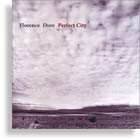
    Like her stablemates, the Star Room Boys, Florence Dore creates songs with a visceral organic link to traditional American music. Perfect City, Dore’s first release, displays the sort of literary verve you might expect from a professor of American Literature. Teaching posts at both NYU and Kent State University should keep Ms. Dore more than fully employed, but she still had time to write all 10 songs on Perfect City. Her vocal delivery reminds me of both Gillian Welch and Lucinda Williams, but with a slightly more urban and worldly manner.
    Produced by Steve Earle’s guitarist, Eric “Roscoe” Ambel, Perfect City features Florence Dore’s regular Manhattan-based band made up of Chris Erikson on lead guitar and background vocals, Dennis Diken on drums, Scott Yoder on bass and background vocals. Jim Duffy on organ, and the Eric Ambel on dulcitar, piano, acoustic and electric guitars complete the album personnel. Orchestration throughout the album is Spartan with just enough layers to fill it out. The opening song leads off with a rustic electric guitar riff followed by the lines “Getting hammered with Maury, looking for the light. Making plans for the future, late on a Tuesday night. Spending all of my money, on white and three dollar stamps, rolling rock bands on nothing, on a credit card advance. Is too late? Have they chosen another girl? Is it too late?” Guitar-driven roots rock full of evocative images and catchy hooks and bridges makes this disc easy to enjoy and hard to take off your CD player.


    This article originally appeared in VG‘s Aug. ’02 issue. All copyrights are by the author and Vintage Guitar magazine. Unauthorized replication or use is strictly prohibited.

  • September 2005

    FEATURES

    GRETSCH GUITARS
    The Artful Icon
    Gretsch guitars reached their prominence in a time when guitars were made for the average man to play his average tune. Yet, they have become an icon. Who do we thank? Plus, Brian Setzer! By Billy Murphy

    BASS SPACE
    1960s Gibson Melody Maker
    A caught-in-the-middle ’60s rarity that was around for only three years, the Melody Maker bass was squeezed between Gibson’s student and mainline instruments. By Willie G. Moseley

    THE MARTIN C-3
    Martin’s archtops were the up-and-coming stars amongst orchestra instruments when they were introduced in the late 1920s. Today, they’re “sleepers” among collectible guitars, priced far less than equivalent Martin flat-tops. By George Gruhn

    IN DETAIL
    Gretsch’s 6120
    In production for just six years, the single-cutaway hollowbody instantly became not only the archetypal rockabilly guitar, but also the most easily recognized Gretsch. By R.J. Klimpert

    GEORGE LYNCH
    One of the premier guitarists in the ’80s heyday of power ballads and blitzkrieg solos fesses up to his role in the “more notes, bigger hair” craze, then gets serious about his collection of vintage guitars and amps, as well as his latest work with Randall Amplifiers. By Ward Meeker

    1957 HARMONY NEWPORT H-42/1
    Whether or not the ’50s really were “Happy Days,” they certainly were an age of great industrial design aided by moldable materials. The Harmony Stratotone Newport is a prime example; with its colorful presentation, it was a sign of the times. By Michael Wright

    BILLY ZOOM
    Silver Guitars, Punk Style
    One of the best guitarists to emerge from the nascent ’70s punk scene, he sported a blond pompadour and bemused smile while putting his Gretsch Silver Jet through its considerable paces. By Willie G. Moseley

    ANDY FRASER
    Finally Free
    A prodigous musician in a stellar lineup, he experienced the ups and downs of being in a world-class rock and roll band, and wrote songs performed by pop music heavyweights. By Tom Guerra

    THE DIFFERENT STRUMMER
    Slaves, Circuses…
    When the Beatles played Ed Sullivan in dapper matching suits, they probably had no idea they were participating in a tradition that went back more than 150 years. By Michael Wright

    DEPARTMENTS

    Vintage Guitar Price Guide

    Builder Profile
    Custom Guitars

    Upcoming Events

    Vintage Guitar Classified Ads

    Dealer Directory

    The Great VG Giveaway
    Win a Eastwood Guitars/Gator Cases package worth $2,000!

    Readers Gallery

    FIRST FRET

    Reader Mail

    News and Notes
    Paisley, Burton record instro, B.B. King Museum, Mark Knopfler, Roky Erickson, Stolen Gear, In Memoriam, more!

    Ian Hunter
    Guitar Prognosticator
    By Willie G. Moseley

    Domenic Troiano 1946-2005
    Hometown Hero Rocked the World
    By Danny Marks

    Falcon
    Twisted Metal Influences
    By Ken Johnson

    Catchin’ Up With Johnny A.
    By Ann Wickstrom

    Ask Zac
    By Zac Childs

    Tom Bukovac
    Gibson Guy in a Tele Town
    By Zac Childs

    Rainbow Quest
    Pete Seeger’s Seldom-Seen ’60s Landmark
    By Dan Forte

    “ACL” on DVD
    Complete, Unedited Episodes From the Vault
    By Dan Forte

    COLUMNS

    Q&A With George Gruhn

    Acousticville
    The Stanley V-5 mandolin
    By Steven Stone

    FretPrints
    Jim Hall
    By Wolf Marshall

    Gigmeister
    Who’s On First?
    By Riley Wilson

    The Sourcerer
    Redd Volkaert
    By David Hamburger

    TECH

    Dan’s Guitar Rx
    Dissecting a Silvertone
    By Dan Erlewine

    Guitar Shop
    Boning Up!
    By Tony Nobles

    Amps
    Ten Tips For Great Tone
    By Gerald Weber

    Ask Gerald
    By Gerald Weber

    REVIEWS

    The VG Hit List
    Music, Book and Video Reviews: Popa Chubby, Martin Taylor, Tinsley Ellis, Les Dudek, 50 Years of Gretsch Electrics, more!

    Check This Action
    Due South
    Dan Forte

    Vintage Guitar Gear Reviews
    Tony Nobles 006 and Exhibition, Peavey HP Signature guitar/amp, Benedetto Bravo, Vox AC30CC!

    Gearin’ Up!
    The latest cool new stuff!