Month: July 2005

  • Tony Joe White – Snakey

    Snakey

    The title track that opens the Swamp Fox’s latest offering sounds almost like a variation on his bluesy “As A Crow Flies,” from 1972’s The Train I’m On. Hallelujah!

    At this point in his career, White’s songwriting has earned him a comfortable enough living to allow him the luxury of doing what he damn well pleases, free from labels and producers trying to knead him into the latest trend. As a result, Tony Joe has released a string of the kind of albums his loyal fans have yearned for since the days of “Polk Salad Annie” and “Rainy Night in Georgia.”

    With spare but solid backing of drums, bass, and keyboards (the latter played by either Carson Whitsett or White himself), this is pure Tony Joe – backing his soulful baritone with harmonica and a variety of guitar tones (from gnarly Slim Harpo squall to Mexican-tinged gut-string). The set of 10 originals covers a range of themes and grooves that only White could pull off – from love realized and love lost (“Nothing I Would Not Do” and “All Those Tomorrows,” respectively) to novelty (“The Organic Shuffle”) to social commentary (“Rico (14) Field Worker”) to eery tales of the swamp (“Bayou Bleus”).

    I don’t know if that’s his “whomper stomper” or “swamp box” he’s plugged into on the infectious riff of “Living Off The Land,” but the result is one of the coolest wah/fuzz tones committed to disc in years – with a good old-fashioned wah-wah solo to boot. And there’s another helping of screaming, sustainy fuzz on “Taste Like Chicken” – another mini classic from the pen of this one-of-a-kind stylist.


    This article originally appeared in VG‘s Aug ’05 issue. All copyrights are by the author and Vintage Guitar magazine. Unauthorized replication or use is strictly prohibited.

  • Ernie Ball Steve Morse Model & Silhouette Special

    High-Octane Solidbodies

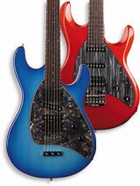
    The guitars of the Ernie Ball/Music Man Company generally cater to “guitarist’s guitarists,” that is, those fretboard virtuosos we all stand in awe of. Over the years, players who’ve lent their names at one time or another to Music Man axes include Steve Morse, Eddie Van Halen (now with Peavey), Steve Lukather, Albert Lee, and John Petrucci, all of whom are musicians with chops to burn. The guitarmaker recently sent a Steve Morse Model and Silhouette Special for us to check out. Let’s have a look at their “awe” factor.

    At first glance, the Silhouette Special looks very similar to a Fender guitar (Leo Fender was closely affiliated with Music Man in the ’70s), but the similarities are limited. Yes, both axes have a 251/2″-scale neck and, like some Strats, alder bodies, but this Music Man handles like more of a sleek, modern Lamborghini to Fender’s retro ’58 T-Bird. A spin around the block on the Silhouette makes you want to play all day long – this guitar is setup perfectly, with low action, 22 perfect frets on a rosewood board, a comfortable 10″ radius, and crisp, well-intonated tremolo bridge (alas, it dives only – a holdover from Van Halen’s old trem preference). Part of its great tuning stability also comes from a set of Schaller M6-IND locking tuners.

    Aside from its superb craftsmanship and finish, the Silhouette Special packs a lot of goodies under the hood. For pickups you get custom DiMarzios (either H/S/S or S/S/S configurations)with Silent Circuit gadgetry, which they claim reduces hum and noise while retaining a single-coil tone. Much of this is subjective, of course, but I did like the tones of the neck pickup. It had a nice spank and quack. Again, use your own ears here.

    I particularly appreciated the piezo pickup system, which dials in acoustic-like tones via the bottom knob. Blending in even a little piezo on top of your magnetic-pickup tones adds a dramatic new dimension – a subtle, but brilliant sheen of high-end brilliance. Or crank the piezo volume up all the way and play both of Pete Townshend’s electric and acoustic parts in “Behind Blue Eyes.” I admit, I have a fetish for hybrid guitars – I mean, who wouldn’t want two guitars in one? – and here at least, Music Man integrates it flawlessly into the Silhouette Special.

    My only quibbles are the aforementioned dive-only tremolo (certainly a matter of taste) and its rather heavy alder body, again my own taste. Other than that, the Silhouette Special is a killer axe that anyone should be thrilled to own and play.

    I’ve always wanted to get my hands on a Steve Morse model, first because I’m an admirer, but second to figure why he needs all those pickups! There are no less than four DiMarzios on the guitar; from the neck they are a DP-205 Morse Signature humbucker, DP-108 Vintage single-coil, a custom-wound single-coil, and a DP-200 Morse Signature humbucker. (Not to mention three pickup selectors. Yeesh!)

    After fiddling around for a while on my own (no pickup-selector diagram was included with the guitar – I finally found it on Morse’s website), I finally understood the mindset behind this guitar’s elaborate electronics scheme. If you’ve ever seen Morse in concert, you were probably impressed how much he works his guitar’s controls during a given song, tweaking the volume and tone knobs and switching pickups constantly. The setup on his Music Man axe facilitates this perfectly, accommodating 11 different pickup combinations. Some of the combos were a little subtle for my ears, but there are a few that have that supercharged Telecaster sound which harkens back to the vintage Dixie Dregs era – picture a Tele pickup’s twang combined with the kick of a bridge humbucker. I also like the combination of the bridge and neck humbuckers, so you get the bite of the former and the fat warmth of the latter. Again, these are classic Steve Morse tones that you can still hear today in his work with Deep Purple and his solo projects.

    There are more aspects to this fine axe than just the fancy wiring, however. It plays like a daredevil, with the kind of fast setup Music Man axes are famous for. With 24 frets, a super-flat 12″ radius, and rounded bolt-on neck joint, you can chop wood on the Steve Morse all the way from the bottom E string to the highest-bent E note, four octaves up. Also of note is its sexy, satin-finished neck made of birds-eye maple.

    Hardware includes locking tuners, a tune-o-matic-type bridge and probably the simplest tailpiece I’ve even seen – just a block of chrome-plated brass, bolted to the body with string holes in it. Hey, it works for Steve. Another asset is the perfectly placed volume knob – it’s right where you need it for subtle volume swells. To me, every guitar should have this. It’s such a no-brainer.

    Of course, the Steve Morse Model sounds great, too. It’s definitely a rocker’s guitar, made to produce everything from twangy Tele squeals to fat Les Paul-ish tones. Discernibly lighter than the Silhouette Special reviewed above, the popular body on this guitar is also kind on one’s shoulder.

    Again, don’t be intimidated by the Nigel Tufnel-esque pickup configuration. The Steve Morse Model is another brilliant Music Man guitar and, after jamming on it for a while, the versatility of this pickup setup really makes sense. Great tone, supple playability… big thumb’s up.


    Ernie Ball/Music Man Silhouette Special
    Type of Guitar Electric solidbody.
    Features Alder body, high-gloss polyester finish, maple neck with maplor or rosewood fretboard, five-way pickup select.
    Price $1,665 for standard pickup config-uration; $1,965 with piezo pickup.

    Ernie Ball/Music Man Steve Morse Model
    Type of Guitar Electric solidbody.
    Features Poplar body, high-gloss polyester finish, individual saddles, chrome plated brass tail block, three-way lever/two toggles with 11 pickup selections.
    Price $1,765 with stop tailpiece; $1,950 with Floyd Rose tremolo
    Contact Ernie Ball/Music Man, 151 Suburban Road, San Luis Obispo, CA 94301, phone 800-543-2255, www.ernieball.com.


    This article originally appeared in VG‘s May ’04 issue. All copyrights are by the author and Vintage Guitar magazine. Unauthorized replication or use is strictly prohibited.

  • Joe Satriani

    Finding Love in Space

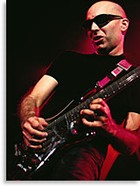
    As one of the best-known instrumental rock artists to break through to the mainstream, Joe Satriani achieved guitar hero status in the mid 1980s, after the release of his self-titled EP in ’84 and his acclaimed Not Of This Earth in 1986. Recognized for his melodic style and flawless technique, Satriani secured several high-profile side gigs backing up artists like Greg Kihn and Mick Jagger, as well as filling in after Ritchie Blackmore left Deep Purple. Though Satch was offered the gig, he turned it down in favor of a solo career.

    The success of some of his former students, like Steve Vai, Kirk Hammett of Metallica, Larry LaLonde of Primus, and Charlie Hunter, also helped to draw attention to Satch.

    We recently conversed with Satriani, shortly after he completed his ninth studio album, Is There Love In Space?

    Vintage Guitar: What was the most challenging aspect of making this album?
    Joe Satriani: Well, having vocals on the record presented an “old friend” kind of challenge, and that was just my shyness of singing. And the difficulty of coming up with a production angle that made these vocals fit. I tend to think of myself as a musician who can vocalize, but not as a singer.

    Do you typically begin by recording basic tracks as a live band?
    In the very beginning it was just me alone in the studio with my engineer, slowly doing the bass, keyboards, rhythm, melody, solo, and then adding the drums last. Half of The Extremist was done that way. The rest was recorded by me and John Cuniberti [engineer/producer] a year and a half earlier, in a slightly different mode. So some albums, like The Extremist, wind up being a combination of all these different things.

    In the last five or six years, Pro Tools has eliminated location and time as a factor in recording, where before, location and time was everything. You had to show up at a certain space and certain time, then turn on your juice. Now that has changed, because for this record, as with Strange Beautiful Music, so much of my guitar was recorded in my home studio, and then I came to the studio with hard drives, and other musicians came in and improvised or played around tracks that had already been laid down.

    How many guitar parts do you average for most songs?
    We went from just one guitar, like on “Searching,” and they started to step up. “Tumble,” which is an iTunes exclusive, got three parts, and “The Souls Of Distortion” has just three most of the time, and when the chorus comes, I think there are two additional ones. Then there are about a dozen on “Hands In The Air.” It varies based on what the song needs.

    Which wah pedal was used on “The Souls Of Distortion”?
    It’s either a Dunlop Crybaby 535 or a Real McCoy. I had this thought in my mind about the souls of distortion, like they were a tangible thing – these souls that inhabit distortion. So I realized that the new melody has to be distorted. But how do I make it distorted, yet clean enough where you could listen to it? I used one of those wahs and went into an amp that was completely distorted, and I turned the volume control on my guitar down just enough so that the notes weren’t really taking off, but I could still get some chimey harmonics off of the harmony. Then rather than double- or triple-tracking, I played the harmonies with one guitar. That sort of increases the amount of distortion and helps add some interesting phrasing.

    Do your solos tend to be rehearsed or improvised?
    Oh, they’re all improvised. There’s quite a lot of first-take stuff on this album, like “Searching” – the recording sounds like a jam. I wrote a sketch of a piece and didn’t play it for the guys until they came to the studio one night. I said, “Here are the chords, here’s the melody, and we’re going to jam after we play the first chorus.” We had never done anything like that before in the studio. But there was a cool thing going on between Matt [Bissonette, bassist], Jeff [Campitelli, drummer] and myself, and we had never really captured it on record.

    The song “Just Look Up” – the long solo at the end was take number five, but it was the only take where I actually did a solo because I’d get to the end of the melody, then just say, “Let’s do another take.”

    “If I Could Fly” came together after months of trying to figure out an angle. “Up In Flames” has a complete first-take solo. In fact, that’s one take from the beginning to the end.

    The solo for the title track took a lot of scratching my head. After building this track with these harmonies and three rhythm guitars, the question came up, “What kind of a solo?” I recorded a very bluesy, retro-sounding solo that I thought was great. But as I was listening back to it, my inner conscience was saying, “That sucks! It’s too respectable! There’s nothing weird about it!” At the time, I remember having a problem with trying to remove this boingy sound from one of my guitars. In a moment of contrary bliss, I thought I should use the thing that’s annoying me! So I plugged the guitar in and did a solo using the byproduct of this vibrato bar that had just been pissing me off. I remember thinking that solo was really cool, but it just comes on so overt. It either was the perfect solo for this song or it just showed really bad taste, but I couldn’t decide.

    Eventually, I decided on the one I thought was in bad taste because it kind of fit with the theme of the song. And when we were mixing the record and doing some other work on it, I played both solos for the guys because I figured maybe my friends will help me out on this one – and they all chose the crazy one, as well.

    The song “Gnaaahh” was what I call a “setup.” I wasn’t quite sure what I was going to do. Because of the nature of the song, as it builds the chorus is just these high notes and there isn’t much melody to it. It’s got a lot of contrast because the first melody is kind of melancholy, and the introduction is kind of harsh. So I had this song with an arrangement built on these hard left turns, and every time you got to a new section, you’d be surprised at where the song was going. When the solo section came, I thought I should set it up so I could play any note or scale, and maybe there shouldn’t be any chords or bass. So I got to this point and plugged in an amp I thought would give me the least amount of resistance – I thought I could play any note anywhere on the guitar and it would sound pretty much the same. Then I went about improvising a barrage of notes, and wound up with something really cool. It didn’t take much work, it just took alot of setup.

    Do you work on songs individually or develop random ideas and later fit them into particular songs?
    Most of the time I keep meticulous notes, both on manuscript and paper, as well as in Pro Tools, about all the possibilities of a particular song – all the riffs and stuff. Maybe once an album I’ll realize I’ve written a part for one song that really belongs in another.
    But to answer your question more directly, the figures that open “Bamboo” were actually another piece of music that was never finished – something I’d written called “Dawn.” I was trying to capture the feeling of being awake at 4:30, waiting for the sun to rise. I’d never been able to incorporate it into a song. Then I had this other piece that I’d been working on since 1988 that also never turned into a song. I had these parts, but they needed more structure and a melody. It was difficult because it’s not rhythmic and it’s not melodic – it’s somewhere in between. Fifteen years later, I was preparing music for this album, and I thought about using this little one-string, two-handed thing that’s got sort of a melancholy feel to it, and put some cool drums behind it.

    Describe your studio rig.
    My home studio has a variety of vintage and new boutique amps. Added late in the project were the prototypes of the Peavey JSX amp, which wound up on a few songs. I’ve got a ’64 blackface Fender Bassman, a Marshall 100-watt from 1969, my Wells amp by Matt Wells, and a new Soldano 100-watt head that Mike [Soldano] made for me with an effects loop switch. He also put in a Warren Haynes mod, which adds a resonance control to make it a bit deeper-sounding, like a modern amp.

    I also used my two Cornford amps, 50- and 100-watt heads that Mr. Cornford made for me a couple of years ago, a Boogie Dual Rectifier, and a newer Vox AC30. I may have also used a new Marshall 50-watt reissue head.

    I use a Palmer speaker simulator and move the speaker cables around to different amps. I do a track for the right channel, then decide what to use to compose an interesting menu of guitar sounds for the left and middle that can coexist. My other stuff goes into a Universal Audio LA2A tube compressor/limiter and an 1176 limiter, and all of them eventually go into the Millennia Origin STT-1, which has a mic preamp with EQ and compression on it. I’m pretty light with it. Then I go into Pro Tools. Halfway through the project I upgraded to Pro Tools HD, so it was done at a higher sample rate and has great presence.

    In the other studio we used real speakers and microphones. We used a Peavey Triple XXX 4×12″ cabinet with 30-watt Peavey speakers. The others had my vintage Marshall cabinet with 25-watt Celestion greenbacks. We used those two cabinets almost exclusively.

    For guitars, generally, the melodies and solos are done on my Ibanez guitars – either the JS1000 or the seven-string prototype. I also have what I call my Ibanez Telecaster, which is my favorite “Tele,” actually. For a while, Ibanez, Gary Brawer, and myself were trying to come up with the ultimate new-age Tele-style guitar. You can hear it on “Lifestyle.” It’s basically a piece of swamp ash carved by Dan Ransom. Gary did all the setup, and the pickups are DiMarzios. I [added] the neck from an Ibanez JS6, and this guitar just came alive.

    I’ve also got original ’58, ’56, and ’63 Esquires and Teles, and they all have their qualities. A Telecaster was my main guitar during my formative years, so I’ve always had this affinity for the shape, sound, and the way it functions.

    I used other guitars, too. Acoustics [were] usually three or four guitars. I have a 1950 Martin D-28 and a ’48 000-28. I also have a ’67 Gibson Hummingbird that goes really well with the Martins, and I have a new Ibanez 12-string. On “If I Could Fly,” it’s the Ibanez 12-string, the Martins, and the Gibson all together. They make a great sound.

    There’s also a lot of electric 12-string, which I got from Mike Pierce, a guitar dealer friend who I’ve known for many years. Every once in a while, I’ll tell Mike I need something, and a couple weeks later he shows up with it. Last year, I wanted a Fender Electric XII. Three weeks later he turned up with a beautiful ’66 in Candy Apple Red. I fell in love with it and put it on the record. Most of the time it’s doubled with my ’99 Rickenbacker. There’s also an appearance of a Stratocaster here and there. I’ve got a Fender Custom Shop Strat and a guitar I built with parts from ESP and Boogie. It’s a maple body and a vintage Strat-style V-neck with an ebony fingerboard. It’s had so many pickups and seven different pickguards with the weirdest configuration. That guitar has done something on every record I’ve ever put out. It definitely has a sharper sound and a very tight low-end.

    When I needed a humbucking sound, I’d use that guitar with the humbucking pickguard. Then, when it was time to do a Strat thing, I’d put in a different pickguard. That’s the way I got around not owning a lot of guitars.

    Other than wahs and the whammy, which stompboxes were used?
    My old Boss DM-2 Analog Delay. I brought it out for “Searching,” just regenerating the repeats and getting those great screaming tones. I also used my Fulltone Ultimate Octave and a Fulltone Deja ‘Vibe, an Expandora, and a Dunlop Rotovibe. I did a couple of things where I would record the effects coming out of the speaker.

    It’s kind of ironic because we had the most robust Pro Tools system ever, and it was the first time we used it as little as possible. So when I thought, “Wouldn’t this Strat sound nice if it had this rotating speaker sound coming out of it?” I plugged it into the front of the amp, and that’s the way we recorded it. Every time I pushed up the fader, there was the Rotovibe guitar. No plug-ins necessary.

    We did a lot of that, and it made recording much more exciting. And of course it cuts down on mix time. All you have to deal with is levels.

    Talk about the development of the Peavey JSX amp.
    I wanted an amp like Peavey’s Classic 50 as my clean and middle channels. And as my lead channel I wanted something between the Classic 50 and the Triple XXX head, with different elements. I wanted it more punchy and have a different EQ curve. We’ve put fat switches on the middle and lead channels, and added high- and low-gain input jacks. But the great thing is I don’t need any solidstate pedal distortion. It’s all tubes and it gives me a more singing, emotive tone. The thing sounds great! It uses EL34s, but you can use 6L6s, switch the bias, and you get a tighter, focused modern-sounding head.

    How did the DiMarzio PAF Joe pickup come about?
    I’ve always liked doing melody and solo with the neck pickup. Since I spent so many years playing a Telecaster, I got really attached to that tone. When I moved to Les Paul-style electronics I realized that in the low-end, you can get that sort of tubular tone with vintage-style replacement pickups when playing on the higher registers, but in the lower registers it would just fart out. You’d have to dial out low-end on your amp, but when you switched to your bridge pickup, suddenly there would be nothing. There were a couple of songs I play on tour where it would always be a problem.

    Recording Crystal Planet, I used my amp and blended it with a SansAmp and a Zoom to scoop out the low-end. But duplicating it live was hard.

    So I asked Steve Blucher at DiMarzio if they’d be willing to take the PAF Pro and do a little work on it. I wanted just a slight gain reduction and to take out some of the low-end. I wanted to keep the extended high-end, but make sure the low-end all blends better. It didn’t take Steve long to come up with the solution. I used that pickup on the G3 tour, then in the studio, as well. It was exactly what I was looking for. It’s really nice to play up and down on the neck pickup and still have the low-end stay tight.

    Can you offer advice to other guitarists on developing their own sound and style?
    It’s conflicting advice: don’t listen to anybody else, and listen to everybody. Don’t try to be like other players. If you’re a guitarist trying to make a living, for the most part you do so because you can play like everybody else. But at some point, when that spotlight shines on you, they’re going to ask you to be totally original. It’s a bit of a dilemma that every up-and-coming player is faced with. You just have to continually work at trying to be original, and I think that means exploring your own personality and developing strong opinions about every chord, scale, progression, tempo, temperament, and guitar tone. Eventually, the music we write and how we play reflects our roots, our influences, and our opinions about music.


    Photo courtesy Ken Settle.

    This article originally appeared in VG‘s Oct. ’04 issue. All copyrights are by the author and Vintage Guitar magazine. Unauthorized replication or use is strictly prohibited.

  • AC/DC – Family Jewels DVD

    Family Jewels DVD

    Like AC/DC? As in, a whole lotta AC/DC? If so, check out this massive 40-track/2-DVD set. Hardcore Angus-philes will dig that the first disc is devoted to the Bon Scott era, ca. 1975-’80 (Scott was the band’s original vocalist and died after a drinking binge in 1980). Disc two, meanwhile, is devoted to singer Brian Johnson’s platinum-studded reign, from the Back in Black onward.

    The early material is fascinating. For starters, guitar god Angus Young had his schoolboy schtick down cold from the beginning, spastic duck walk and all. Back in ’75, his chops were pretty ferocious, too, but he and his underappreciated brother, Malcolm, hadn’t yet the developed the massive wall-of-Marshall tone for which they’d become famous. Key tracks on the Bon Scott disc are “It’s a Long Way To The Top (If You Wanna Rock and Roll)” from 1976, taped on the back of a flatbed truck driving through downtown Melbourne, Australia (with bagpipers, to boot!), and the classic “Whole Lotta Rosie” from a 1978 BBC program. If you’ve never seen Scott in action, it’s a revelation – the man was an incredibly charismatic front man, perhaps even more than Johnson.

    Nevertheless, you also get all the famed AC/DC anthems from both eras in promo-clip form: “Hell’s Bells,” “You Shook Me All Night Long,” and one of the great concert tracks of all time, “For Those About To Rock” (replete with cannons). The only track I missed was the barnburner, “Shoot To Thrill.”

    Other than that, Family Jewels contains enough SGs, Gretsches, and walls of Marshalls to satisfy your shameless gear lust. Whether you need 40 full-length video clips to quench your AC/DC fever is between you and your eardrums, but no other band in pop history has been able to stretch three simple chords into so many timeless rock and roll classics. Rock on, Angus!


    This article originally appeared in VG‘s June ’05 issue. All copyrights are by the author and Vintage Guitar magazine. Unauthorized replication or use is strictly prohibited.

  • Red Simpson – Truckers’ Christmas

    Truckers' Christmas

    It’s the time of year when you may be looking to make a few additions to your collection of Christmas records. The theme this year is “Eclectic.”

    For oddball fun, check out Red Simpson’s Truckers’ Christmas. First released in ’73, it contains stuff like “Santa’s Comin’ In a Big Ol’ Truck,” “Truckin’ Trees for Christmas,” and “the Old Christmas Truck.” Red’s vocals always hit the nail on the head, and twangy guitar dominates the proceedings.


    This article originally appeared in VG‘s Feb. ’05 issue. All copyrights are by the author and Vintage Guitar magazine. Unauthorized replication or use is strictly prohibited.

  • Johnny Hiland – Johnny Hiland

    Johnny Hiland

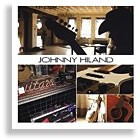
    A friend of mine asked what I knew about Johnny Hiland. I repeated things I’d read about Hiland. You know, the blind guitarist from Nashville who looks like he plays in your hometown country-western bar, but deals as much in Van Halen as he does in Don Rich. Now, I can actually speak about his playing with the release of his first solo album on Favored Nations.

    Some of that description is accurate. He does have that look. And, his playing sounds to me like he owes as much to Danny Gatton as he does the aforementioned guitarists. This record helps that reputation expand a bit with its types of songs and the players. Billy Sheehan plays the bass, Pat Torpy the drums, and Bill Holloman the keys and sax. As far as the music, there are hints of country, but it really plays more like an homage to the Hellecasters, Gatton, and progressive rock.

    “G Wiz” kicks off with a nice banjo roll and then bounces off several walls in a cartoon-like fashion. In fact, it wraps up with a cartoon theme. “In Your Face” is one of those Telecaster free-for-alls that are always fun, if the player is up to it, and Johnny definitely is. “Truth Hurts” is a soaring, majestic rocker, the kind you don’t find many guys in cowboy hats messing with. “Swinging the Strings” is exactly what it says. It’s a swinging blues that features chordal work that will have you running to the instrument to try and cop.

    “Run With It” has squeaks and honks that might bring the aforementioned Mr. Van Halen to mind. “Opus D’ Funk” is pretty much just what the title says. Talk about your flying fingers. “Celtic Country” also matches the title. It’s the perfect blend of the Celtic sound and American country. And, finally, how can you go wrong when a player like this ends his CD with “Orange Blossom Special.” It’s got a bit of different feel than you might be used to, but the melody is recognizable, and the playing is hot.

    I think it would be safe to say Johnny is at the forefront of young guitar players. It’s also obvious he doesn’t want to, and doesn’t feel he has to, be pinned down to a certain style of music. That, along with his natural talent as a player, is very refreshing. Here’s hoping this is the first in a line of fine records by a guitarist who will continue to grow in lots of directions.


    This article originally appeared in VG‘s Nov. ’04 issue. All copyrights are by the author and Vintage Guitar magazine. Unauthorized replication or use is strictly prohibited.

  • Jimmy Page and Robert Plant – No Quarter: Unledded

    No Quarter: Unledded

    The 1980s were not kind to Jimmy Page’s reputation. The death of John Bonham, the dissolution of Led Zeppelin; Page’s efforts with the Firm; and his poor showings with the survivors of Zeppelin at various high profile gigs all helped to tarnish his guitar hero credentials.

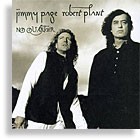
    All was redeemed on October 12, 1994, when MTV debuted Unledded, reuniting Page with Robert Plant, his sparring partner and vocalist in Zeppelin. Both men were in fine form, and Page sailed effortlessly through the gig, perhaps because many of Unledded’s songs were Zeppelin-era efforts reworked.

    Inspired by the massive sales of last year’s Led Zeppelin DVD, Warner has finally released Unledded on DVD, under the unwieldy title of No Quarter: Unledded.

    Flash has always been a key element of Page’s visual style, which helps explain the battery of guitars he used in Unledded: an Ovation 6/12 doubleneck; a custom-made acoustic tripleneck, which adds a mandolin to the mix; and several conventional six string acoustics. Page plays three Les Pauls as well: his classic 1959 sunburst (Number One) on several songs, and his B-Bender-equipped axe on “Thank You.”

    For the climax of Unledded – an orchestral reworking of “Kashmir” – Page deployed an early-’90s Gibson Les Paul goldtop with the TransPerformance self-tuning system, allowing him to switch from DADGAD for the body of the song to standard tuning for the hard-rocking outro.

    Viewers with five-channel surround systems will be in for a treat: engineer Kevin Shirley used a much more expansive mix than last year’s Led Zeppelin DVD. Not surprisingly for a recording with a Page co-production credit, on the outro of “What Is And What Should Never Be,” he sends Page’s power chords swirling around the front and rear speakers. Throughout the DVD, percussion and strings frequently appear out of the rear channels, enveloping the viewer into the sound.

    The bonus materials include an MTV interview on a London street that aired concurrently with the show’s debut; a wild version of “Black Dog” that combines Australian didgeridoos along with Page roaring away with some sort of harmonizer on his guitar; and the “Most High” video from 1998’s Walking into Clarksdale followup CD. There’s also a stunning version of “The Rain Song,” seen originally only on the laser disc version of Unledded.

    If you enjoyed last year’s Zeppelin DVD, you’ll enjoy Unledded. Now if only Page and Plant could remember John Paul Jones’ phone number and get the mighty Zeppelin airborne again!


    This article originally appeared in VG‘s Jan. ’05 issue. All copyrights are by the author and Vintage Guitar magazine. Unauthorized replication or use is strictly prohibited.

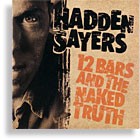
  • Hadden Sayers Band – 12 Bars and the Naked Truth

    12 Bars and the Naked Truth

    There’s no question what you’re going to get when you hear one of Hadden Sayers’ records. It’s rock and roll, plain and simple. No pretense, he just plugs in and plays, and brings with him a batch of good songs every time. His lyrics are usually direct and to the point, and his melodic hooks match that philosophy.

    “Extraordinary Girl” is a big, ballsy rocker with crunchy guitars that call to mind the Smithereens at their best. “Sunday Afternoon” is the type of song that, if radio had it’s stuff together, would be a hit. Anyone remember when good rock-pop songs were on the radio? “Hate Yourself Tomorrow” is a funky rocker with lots of 9th chords and slinky single-note sounds. “RockNRoll Star” has a great feel with a nice message for aspiring musicians. It’s all fueled by crunchy chords, a great chorus, a solo heavy on the wah, and a finish that would do the Who proud. “Up to You” is one of those rockers with a tinge of jazz. The solo work is wonderful. Wrapping up the record is “Absolutely Free,” where Sayers plays his nastiest solo. Great stuff.

    Again, there’s nothin’ fancy here. But there is rock-solid music, well-written and well-played. That in itself has become an art form in this day and age. Check it out, for a nice kick in the rear.


    This article originally appeared in VG‘s Jan. ’05 issue. All copyrights are by the author and Vintage Guitar magazine. Unauthorized replication or use is strictly prohibited.

  • Janis Ian – Billie’s Bones

    Billie's Bones

    My fondness for Janis Ian comes as no surprise to longtime VG readers. My monthly column is named after one of her songs, and I have followed her career since I bought my first LP, which was also her first LP. Billie’s Bones marks another installment in her musical saga, and like most of her work, lets us into her rich interior world.

    Close on the heels of her live double CD release, Billie’s Bones features all new material recorded in a studio environment. Songwriting is not just an art, but also a craft, and the craft of songwriting takes years to perfect. Here, on Ian’s 18th studio album, you can’t help but be impressed by her mastery of this craft. On the title track she combines haunting melody with multi-leveled lyrics to create an arresting sonic landscape. Other songs take you from Paris to Amsterdam and back to her adopted home of Nashville. The uniting force is Ian’s sharp wit, musical soul, poetic heart, and crusading will.

    Produced by Jeff Balding and Marc Mareau with her longtime front of house engineer Phillip Clark serving as the associate producer, Billie’s Bones has the polish and finesse of a major label production. The musicians roster includes Jim Brock on percussion and drums, Richard Davis on upright and arco bass, Dan Dugmore on dobro, lap and pedal steel, electric guitars, banjo, and nylon string guitar, with Harry Stinson and Dolly Parton on harmony vocal joining Janis’ acoustic guitars, keyboards, and lead vocals. More fully fleshed out than her last studio release, God and the FBI, which was done on a Mac in a rented house, the arrangements on Billie’s Bones remain understated so Janis’ voice remains in the forefront. The songs are the stars here.

    In an age where most pop stars’ careers are over before they’re old enough to get a driver’s license, it’s heartening to see that an adult artist cannot only survive, but continue to expand artistically. Janis Ian is my hero. She proves that modern musical art is not the exclusive province of the young, and that given half a chance, a contemporary musical artist can grow and prosper.


    This article originally appeared in VG‘s May ’04 issue. All copyrights are by the author and Vintage Guitar magazine. Unauthorized replication or use is strictly prohibited.

  • Hard-rockin’ blues

    Hard-rockin' blues

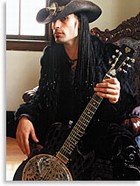
    By integrating traditional blues with heavier, more flamboyant rock styles, Eric Sardinas has carved a raw, fiery sound, favoring electric and acoustic resonator guitars to deliver the appropriate vibe.

    Growing up, Sardinas was exposed to everything from early Delta blues to Chicago blues to R&B, soul, and rock artists like Creedence Clearwater Revival, Chuck Berry, Led Zeppelin, and Jimi Hendrix.

    “Basically, my influences come from anybody,” he said.

    VG recently talked with Sardina s to discuss the making of his third disc, Black Pearls (Favored Nations), which was tracked live to analog tape and produced by the legendary Eddie Kramer.

    Vintage Guitar: Who were your main influences, early on?
    Eric Sardinas: I started playing when I was five or six, and was exposed to a lot of R&B, soul, and Motown music. I grew up listening to blues albums and buying blues records on my own, just out of the interest that I developed in blues.

    I grew up playing those things and I just wanted to push it into a different genre. As far as being influenced, I think everybody you hear and listen to influences you. It’s a big well of music that shapes and molds the spirit of where you draw from and what you feel when you’re connecting with your instrument.

    Had you started out playing slide?
    Well, no. I didn’t start out playing slide. I started out with a nylon string acoustic guitar. I started playing slide in my early teens, probably at around 13. I bought my first resonator guitar in a pawn shop. It was about two-hundred dollars. I was a teenager and it seemed like a million dollars to me.

    Which players were most inspirational as you began to shape your tone?
    My tone is just my own thing. I drilled pickups into my guitar, and that’s my tone. I didn’t derive it from anything except a screwdriver and putting electronics into my guitar, which was a Dobro. I found an old lipstick-tube pickup and I just basically just cut a hole in the guitar where I thought the pickup would go, and put it in there.

    Tell us about the material on Black Pearls. How did the songs come together?
    The record came together by collecting what I was thinking, and putting lyrical ideas together with musical ideas I compiled.

    I completed writing while working with Eddie Kramer, to see how we wanted to deliver the music. We agreed that the key is capturing the energy and magic, so that’s what we went for.

    How did you hook up with Eddie?
    I had him in mind because I heard my songs capturing the sort of energy you hear in the stuff he’s done with the Stones, the Beatles, and Zeppelin. It’s always got this really organic power to it and I really wanted the songs to breathe and be real. So I sent him the songs and we got in touch. He loved the music, and so we just started from there.

    How did working with Eddie make this experience different from your previous recording work?
    I really felt there was a mutual goal – to capture magic and let things be real – nothing else except creative. That allows you to do your best. We were on the same page, so it was nice.

    What was your setup for the recording?
    I used my custom Rivera amps and some vintage 4x12s, but most of it was through my custom-built Rivera head and Rivera 4x12s. I also had combinations with some ’60s Marshalls and stuff like that. I used my resonator guitars – my main two and a couple of steel-body guitars. I brought in a bunch just to have them around in case the spirit moved me for something else.

    What do you use live?
    It’s basically the same setup – the custom Riveras with a Rivera 4×12 and sub-bass cab. For guitars, I play the Washburn ES Cutaway and one of my older Dobros from [the early ’70s]. For effects, I have a wah and a Uni-Vibe.

    I do have the vintage stuff, but onstage I’ve been using the Dunlop wah and Uni-Vibe, and the Dunlop Preaching Pipe – my signature slide, which is brass. I use .013-.058 Gibson phosphor bronze acoustic strings on all of my guitars, and I use Dunlop thumb picks.

    Tell us about your signature model Washburns.
    I’ve had my own guitars forever, just because I did them myself. And I’ve had other companies design outlines for what I want. I’ve been using alot of those guitars forever, but Washburn wanted to work with me [to] build a guitar. So we worked on the design. [I wanted it] to function in an electric format and in acoustic formats, so there are acoustic and electric versions. They’re two different body shapes and body styles, so the acoustics are different. But both have resonators, and they revolve around the same woods. One has a different barrel because of the shape of the body and its cutaway.

    There are other aspects of the design that are different because there are certain things I thought were necessary for the electric; things like a reflective surface on the back of the resonator cone that helps project the sound out of the barrel. Plus, the cuts on the sound barrel of the electric are angled to project a little more, for greater contact with the pickup, as opposed to the more basic, straight-ahead acoustic.

    Which of your personal guitars were they modeled after?
    I created my own resonator, and I’ve got about 25 of them. So it stemmed from what I like in the shape of the body, the tones, and the woods. I prefer ebonies, and really basic ply bodies. I have tons of guitars that are so beautiful, but [looks are] unnecessary for tone. The cheaper it is, the better it sounds. I’m all about the runt of the litter when it comes to guitars.

    Do you have a collection of vintage instruments?
    I have many, and I really don’t delve into them as often as I’d like… unless I’m recording or writing. You can have 10 guitars that are exactly the same, from the same year, made one right after another, and none of them will sound exactly alike. They all have personalities, whether they’re steel bodies, or walnut, or flamed maple, or just traditional wood-body guitars. They’re all different and have great sounds.

    So I love everything from my ’30s National tri-cones to the guitars I play onstage.

    What advice can you offer to other guitarists on developing their style and tone?
    If you love playing guitar, play it for yourself and /I>be yourself. Write music and forge your own way, because you can do anything you want with it.

    What advice can you offer on becoming a better songwriter?
    I’m always growing and I’ve got a long way to go. I think it’s a real gift to be able to communicate an idea or a thought or a feeling, and transpose it into a song. There are a lot of elements that go into that.

    Just keep those channels open, always write down your ideas, and try to write songs, no matter how bad they may be. You never know what might come out of it.


    Photo courtesy Favored Nations.

    This article originally appeared in VG‘s Nov. ’04 issue. All copyrights are by the author and Vintage Guitar magazine. Unauthorized replication or use is strictly prohibited.