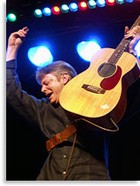
Experiencing a Tommy Emmanuel performance is one of those “You-shoulda-been-there” musical epiphanies. Emmanuel strides onstage with his acoustic guitar, display

Experiencing a Tommy Emmanuel performance is one of those “You-shoulda-been-there” musical epiphanies. Emmanuel strides onstage with his acoustic guitar, display
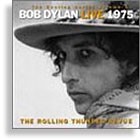
Bob Dylan. Easily the most influential single musician of the second half of the 20th century, his name conjures a melange of images. Dylan has never confined himself to one kind of music. At various times he has appeared as a fingerpicking folk purist, protest-song singer, rock innovator, roots spelunker, and country crooner.
Throughout his career, Dylan has sometimes worn his mantle of inscrutability with a single-mindedness that bordered on curmudgeondom. His ability to change from one thing to another often left his fans wondering which Bob they were going to get – the “good” or the “bad” one. Depending on their tastes, one person’s good Bob is another person’s bad Bob. On The Bootleg Series Vol. 5 we get a little bit of all the Bobs. Lucky us.
In 1975, Dylan came up with the idea of putting together a touring group, not just a band, but an entire musical revue. Instead of a headliner supported by a couple of opening acts as was the norm, Dylan wanted a troupe of musicians, a changing cast of characters, capable of entertaining an audience for an entire evening.
In retrospect, his recruiting methods were not all that strange – assemble a group of musicians and see if they could make music together. But at the time, this seemed like madness, picking musicians seemingly at random.
After a few false starts, the final result produced a remarkable band named The Rolling Thunder Review. Personnel included Joan Baez on vocal and guitar, Bobby Neuwirth on vocal and guitar, Scarlet Rivera on violin, T. Bone Burnet on guitar, Roger McGuinn on vocal and guitar, Steve Soles on vocal and guitar, Mick Ronson on guitar, David Mansfield on steel guitar, mandolin, violin, and dobro, Rob Stoner on bass, Howie Wyeth on piano and drums, Luthar Rix on drums, percussion and congas, and Ronee Blakely on vocals. Besides the musicians the revue included Alan Ginsburg and Peter Orlovsky, sound and lighting technicians, fifteen members of a film crew (their footage became “Renaldo and Clara”), and assorted friends and guests. The entire entourage added up to 70 people. Imagine a very hip, very wigged-out Grand Ol’ Opry.
Of the 22 different songs on the two CDs, not a single selection lets you down. From early material like “A Hard Rain is Going To Fall” and “Lonesome Death of Hattie Carroll” right up through “Isis” and “Tangled up in Blue,” the performances and arrangements are still fresh and exciting. My personal favorites are “Just Like a Woman” and “The Water Is Wide” which feature Joan Baez’ soaring soprano harmonies.
Although many fans taped the shows surreptitiously, and bootlegs have been circulating for years, Legacy chose to use only material recorded by the official sound truck, which taped the revue’s shows in Worcester, Cambridge, and Boston, Massachusetts, and Montreal, Canada. While some cognoscenti will argue that these are not the best performances from the tour, they are the only recordings where the audio quality is at least equal to the level of the performances. Producers Jeff Rosen and Steve Berkowitz did a fine job with song selection and the seamless flow of the songs.
With the sheer number of Bob Dylan albums available, any new release must offer something special and compelling to warrant its purchase. It’s gotten to the point that Bob Dylan is competing against himself. Even with the stiff competition, The Bootleg Series Vol. 5 demands to be heard and owned. It certainly equals any previously released live Dylan album in the quality of the sound and the performances. For those who consider themselves a Dylan fan, this CD is a must-have.
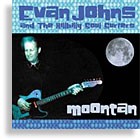
Roots rock wild man Evan Johns returns with a taut but tasty trick bag that should fire the faithful, and make a few new friends, too. The sensibility that infused “Ugly Man” is proudly evident on the slide guitar-greased title track, and the hilarious take on staying sober amid temptation, “Dear Doc.”
Anyone who got acquainted with Johns during his tenure with Danny Gatton, his numerous H-Bomb lineups, or later ’80s solo work already knows of him as a distinctive songwriting voice; that’s not a problem. Smart playing and arranging brighten full-throttle stompers like “Rantin’ ‘N Ravin’,” and “Ever So Desperate.” Johns’ lyrics mostly explore affairs of the heart, which is fine: someone who’s writing snappy three-minute songs could care less about fashion, and that’s only to the good.
But there are plenty of twists, too. The stripped-down acoustic country “All Your Cheatin’” dishes out equal opportunity stick to both sexes for straying from home; the million-dollar question “What is with this other man?” yields to “What is with this other girl?” The biggest surprises are “Love Thing” and “Tradin’ Lullabies” – two sparse country ballads that show Johns in his most heartfelt vocal guise.
Of course, no Evan Johns album could pass without some pyrotechnic guitar comment. He deals out plenty on the appropriately titled “Surf Don’t Crawl” and “Acid Daze.” “Shootin’ The Merle” is naturally a more country-oriented instrumental affair, while “El Rey De Roto Corazon” comes at the headphones from a midtempo Latin angle.
Like their vocal counterparts, however, the instrumentals stay pithy and on point: Johns makes his statement and switches to the next one, which shows the mark of a mature player. “Dancin’ Till The End Of Time” closes the album in rousing fashion, and makes a good credo for Johns’s approach. Welcome to Evan’s world: you won’t be disappointed.
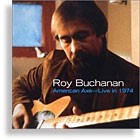
It’s not too far of a stretch to say Roy Buchanan was one of the most unique guitar players in the past 40 years. This recording, done at two shows in 1974, does nothing to dispel that.
Very few rock guitarists were delving into the world of chromatics like he does on “Too Many Drivers.” His volume swells on the slow-blues version of “C.C. Rider” are an amazing thing to hear. Yes, plenty of folks do it now, but then, it certainly was not something you heard every day. The same song has a long solo that has two-and-three note bends that are truly a treat to hear. There’s a version of “Johnny B. Goode” here that has the goofiest, but most fun intro you’ll ever hear to that song.
Numerous songs here, including a wonderful version of “The Messiah Will Come Again,” have Roy’s trademark pick harmonic chirps. His very quick right hand makes him unique among his peers and helped him play unique licks and solos that developed in a way nobody else could. There are 11 songs here, and no boring guitar solos.
That’s the good news. The bad news is some of the problems that have always plagued Roy’s recordings show up here. The vocals, at best, are listenable. At their worst, well… It’s a pleasure when nobody is singing and Roy’s soloing.
The recordings are not bad, but not as clean as some may like. I personally loved the feel and sound. It felt like you were there, right down to the nasty buzz of Roy’s amp on some cuts.
This project was put together by Tom Principato, a pretty darn good player in his own right, and he did a nice job of assembling what a Roy concert might have sounded like.
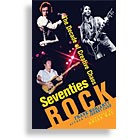
It’s the music many of us grew up on.
But it was different from the ’60s. The Beatles were over, Jimi and Janis were dead, and the feel-good ethos of Woodstock had given way to the dark mood of Altamont. Rock music was splintering into a myriad of categories and subcategories, defined as much for the record buyers as by and for radio formats.
New superstars were about to emerge. Each former Beatle became a successful solo performer, rock and roll became glam rock, progressive rock, hard rock, soft rock, country rock, punk rock, Southern rock, even disco-rock, and listeners were introduced to Bruce Springsteen, the Eagles, Peter Frampton, and the Allman Brothers Band.
This new book explores that time and chronicles the changes year by year, cramming into each chapter a full recounting of both the superstars and the also-rans.
Sure, there’s Clapton, Led Zeppelin, the Stones, all the big names you would expect. But there’s also Jo Jo Gunne, The Motors, Mountain, Motorhead, and a raft of punk rockers we’ve probably forgotten about.
The fact that author Moriarty is one of us, a mid-40s guitar player, means that in addition to “being there,” he knows enough about the equipment to describe instruments and amplifiers as well as playing styles and chord progressions. He is also handy with a camera, and the book includes a couple dozen photos shot by Moriarty himself. It’s quite a collection.
If there are any quibbles, it’s that there is just so much information packed into each chapter that you have to read slowly to catch it all!
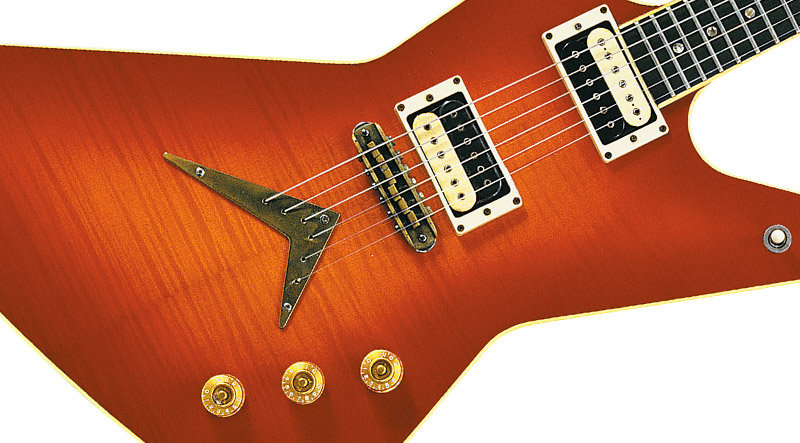

At the least, quality control was less than perfect, leading Japanese manufactures to capitalize with excellent “copies.” But imports weren’t the only to take advantage of poor quality – real or perceived. Several Chicago-area guitar enthusiasts had become enamored of vintage American guitars and conceived of creating upscale guitars inspired by these classics, with top-grade timbers and excellent workmanship. These included Dean Zelinsky, namesake of Dean guitars, whose 1978 Dean Z is shown here.
Zelinsky had always preferred Gibson’s exotic designs and decided to wed those with high-end appointments. In late 1976 he set up a small factory in his hometown of Evanston, Illinois, and at the beginning of ’77 began producing the Dean Z (based on the Explorer), which was followed shortly thereafter by the V (Flying V) and ML (a hybrid of the two designs), all pretty similar except for the shape.
This 1978 Dean Z is typical of early Deans. It has a solid mahogany body with bound, highly flamed maple cap. These were flat, not carved. The mahogany neck was glued-in with a unique, large winged V headstock. Fingerboards were bound ebony with abalone dots. As with other early Deans, this Z sports a pair of early DiMarzio Super Distortion humbuckers, one of the earliest uses of DiMarzios on production guitars. Electronics (and hardware) were modeled on the Gibson Les Paul, with a three-way and two volumes and two tones. The strings load through the body to increase the sustain. This example is finished up in one of Zelinsky’s favorite finishes, a robust cherry sunburst.
These guitars are easily dated: the stamped serial number includes the date in the first two digits.
There’s not much to say about this guitar that isn’t praise. It plays like butter with a perfect balance, the pickups roar to life, and if you have anything bad to say about the killer flamed-maple top, we’ll have to step outside! About the only weak point is the headstock. Many got into arguments with mic stands, and required repair.
The Dean concept was very well received by pros and became very popular at the end of the ’70s. The line proliferated with more downscale models, as well as new shapes, and a line of smaller Dean Babies. In the early ’80s Dean was a big player in the emerging metal sweeps, adopting vibratos early on, and with the Bel Aire, a candidate for producing one of the first Superstrats.
Success led to increasing reliance on offshore sources. Alas, it also led to the demise of Dean’s original idea. The last original American-made Deans rolled out in 1984, and by ’85, all were imports.
Dean eventually went into hybernation, only to be revived in recent years. But it’s these early up-market Evanston Deans that mark one of the high points of American guitarmaking from a time of turmoil.
This article originally appeared in VG‘s April ’04 issue. All copyrights are by the author and Vintage Guitar magazine. Unauthorized replication or use is strictly prohibited.
Northern California’s A Brown Soun has been repairing speakers for nearly 30 years.
Founded in 1974 by John Harrison, the company was named after the way Harrison “sees” sounds – as colors. And his favorite sound is a ’59 Gibson Les Paul played through a dimed Marshall stack. That tone, in his eyes/ears, is a “brown sound.” As for the “d” being dropped from “sound,” well, blame it on the ’70s.
Anyway, Harrison built a successful business as one of just a few Bay Area speaker repair guys. And it was good. But after re-coning speakers for more than 25 years, in the Spring of 2001 Harrison saw a niche in the market and started building his own brand of speakers, dubbed Tone Tubby, based on the famed Celestion-built Vox Bulldog.
Then one day, lightning struck.
“It was a real obvious thing,” Harrison said. “I couldn’t believe nobody had tried before! I was thinking about the Constitution and how it had been written on hemp paper, and it has lasted 300 years! I wondered what it’d be like if I used it to make as a speaker.”
Before long, he’d found a manufacturer that could produce a cone made primarily of hemp. The first one was delivered in July of that year, and within an hour after its arrival, Harrison had already put it in a speaker, wired it, and had it in an amp. To his delight, it worked beautifully.
“It was lighter, stronger, and more responsive,” he said. “It just screamed!”
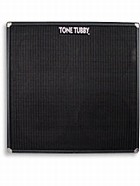
We recently glommed a semi-open-back Tone Tubby 4×12″ speaker cabinet with four of Harrison’s TT12-01 alnico 12″ speakers with (of course) hempcone drivers.
Aesthetically, the Tone Tubby looks much like most extension cabinets, measures a sporty 26″ x 26″ x 12″ with a straight baffle and 7″ x 14″ opening in the back, and is covered in black tolex, with black grillecloth, metal corners, and large, recessed bar handles. Tone Tubby will dress up any of its cabs (2×12, 4×10, 4×12) in red, green, brown, or blond tolex and dress it up with gold, silver, oxblood, or wheat grillecloth. The 2×12 is available in either vertical or horizontal arrangement. And if you’re inclined, they’ll make your cab (regardless of variety) look very Vox-like!
How’d it Soun?
We checked out the cab using a 100-watt Reeves head, an all-tube Peavey, and a Marshall. Our test guitars were a Fender ’62 reissue Stratocaster and a Gibson Les Paul Classic.
We kicked things off with the Peavey, and at our customary settings we noticed a drop-off in the upper end of the frequency response compared to what we typicallyrun it through. But with a slight bump in the highs, we were able to get more of the tone we knew so well.
Thus was revealed one aspect of the Tone Tubby cab; in general its tone is a little darker than you might be accustomed to, smoothing the peaks and valleys in the frequency response that you find with most closed 4x12s, while maintaing the solid, thumpy low-end that made the configuration famous. And it proffered the midrange airiness that appeals to fans of the open-back cab. In the “gravy” department, despite being pushed hard, these little hemp monsters didn’t go into that beyond-the-limits farting out that tends to plague low-watt alnico speakers.
Overall, our run with the Tone Tubby was very pleasing. Whether we plugged in the Strat or Les Paul and used power courtesy of Peavey, Marshall, or Reeves, it highlighted the inherent tone of our guitars and amps.
John Harrison’s hemp cones may indeed be a daydream come true.
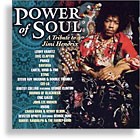
Only the second tribute album officially sanctioned by the Hendrix Estate, this joins 1993’s Stone Free as a fundraiser for the United Negro College Fund scholarship that bears the guitar legend’s name. Of its 16 cuts, only two have been previously released, and the CD was co-produced by Earth, Wind & Fire alumnus Sheldon Reynolds and Jimi’s half-sister, Janie Hendrix (who is also Reynolds’ wife), along with John McDermott.
In a press release accompanying the album, Janie states, “A lot of the tribute albums that have come out have concentrated on Jimi’s rock side. This emphasizes more of the soul and R&B aspects of his music.”
The definition of what is or isn’t soul and R&B is pretty loose, with Jimi’s psychedelic rock well represented in songs like “Burning Of The Midnight Lamp,” “Third Stone From The Sun,” and “Purple Haze.” It’s both interesting and refreshing that so many contemporary R&B artists were involved in the project, because in the three and a half years between the 1967 release of Are You Experienced? and his death in 1970, Jimi Hendrix’s audience was roughly the same racial mix as the throng at Woodstock – maybe one percent. It was a different story, of course, with other musicians, who almost universally lauded him.
Musiq gets things started, bearing an uncanny resemblance to Jimi vocally on “Are You Experienced?” The most novel thing about this arrangement is that it features keyboards, turntables, bass, and drums, but no guitar.
Guitarists seem to fall into two categories here: those who imitate Hendrix’s style (sometimes almost slavishly) and those who retain their own approach but maybe throw in a bit of Jimi’s attitude. Those who fall into the former category include co-producer Reynolds, who shows up on four cuts, backing Cee-Lo (“Foxey Lady”), EW&F (“Voodoo Child”), and Sounds Of Blackness (“Castles Made Of Sand”), and teaming with keyboardists George Duke and Larry Dunn as Devoted Spirits, for a mostly instrumental version of Band Of Gypsys’ “Who Knows.”
Players who fall into the latter group include Eric Clapton (delivering a heartfelt vocal and strong, overdriven solo on “Burning Of The Midnight Lamp”) and Robert Randolph (adapting “Purple Haze” for steel guitar). In Carlos Santana’s case, this is possibly the closest the world’s most instantly recognizable guitarist has ever come to not sounding like himself – in a way, the ultimate tribute. An all-star Santana lineup of Carlos, bassist Stanley Clarke, and the late Tony Williams on drums fuels Corey Glover’s vocal on “Spanish Castle Magic.”
Lenny Kravitz takes an appropriately understated route to “Have You Ever Been (To Electric Ladyland),” with a sparse wah-wah solo and sensitive vocal (with Tawatha Agee). Eric Gales follows a similar path on “May This Be Love,” singing and playing all instruments.
Kid Rock’s Kenny Olson provides the guitar work behind Chaka Khan’s impassioned vocal on “Little Wing”; Bootsy Collins is joined by his Parliament/Funkadelic leader, George Clinton (and about a dozen other singers and players) on an updated, multi-layered treatment of the CD’s title song; and Prince serves up a nice banshee solo on “Red House,” re-titled (of course) “Purple House.”
The collection’s only stiffs are, ironically, the two previously issued tracks: Sting’s version of “Wind Cries Mary” (which is oddly subdued despite John McLaughlin’s notey solo) and John Lee Hooker’s attempt at “Red House,” from his Don’t Look Back album. The late blues singer was never one to strictly abide by the 12-bar chord changes, but toward the end of his career he strayed so far from the form’s call-and-response phrasing, it became call-call-call, in a continuous narrative. The universal rule in blues is that you follow the singer, wherever and whenever he or she goes, but here the backup band can be forgiven for just sticking to the changes regardless of John Lee, who finishes talk-singing the entire first verse before they’ve even gotten to the turnaround.
At the opposite end of the spectrum, Stevie Ray Vaughan and Double Trouble’s 12:28 instrumental medley of “Little Wing” and “Third Stone From The Sun” is clearly the CD’s worth-the-price-of-admission standout. Recorded live in Philadelphia in 1983, this “King Biscuit” recording has been booted innumerable times but, surprisingly, never legitimately released.
In one of his most astounding performances, Stevie carves out a third category of Hendrix devotee. He’s really the only guitarist who gets inside of Jimi’s style and messes with it, pushing it further (and further), much as Hendrix would do live. Without this track, the collection would be a nice tribute that you probably wouldn’t listen to years from now (not if you own Hendrix’s original version of the songs, certainly). With it, this is a must-have CD, for Stevie Ray and Jimi fans alike.
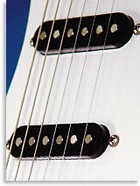
Wolfetone pickups are relatively new to the market, but go right to the heart of what vintage tone freaks seek.
In an increasingly competitive aftermarket pickup environment, Wolfetone’s units offer all the amenities shared by the best pickups out there, like hand-wound coils, 42-gauge (in this case, Elektrisola) wire, and Alnico magnets.
We recently gave a test run to a range of Wolfetones, including a set of three single-coils, P-90s, a set of Grey Wolf Alnico II-equpped/PAF-spec humbuckers, and Wolftone’s creme de la creme PAF V-Mag humbucker, which employs a magnet from a genuine ’59 Gibson PAF.
We installed the single-coils in an ’80s Squire Strat and ran it through a ’70s Fender Twin Reverb set to clean.
Immediately noticeable was the pickups’ balance; switching from one to the next required virtually no volume adjustment (output readings were 5.96k, 6.49K, and 6.71K, neck to bridge). Also, volume balance from string to string was pretty good, especially considering the poles are not staggered. The tone wasn’t qute as bright as the ’62 reissue pickups our guitar started with, making them less harsh/brittle. Basically, what we got was a nice vintage Strat tone without the brittle edge.
Next, we dropped the P-90s into a Hamer Special and ran it through an all-tube Peavey Butcher head set to overdrive through a 2×12 cab.
Tone-wise, the Wolfetones offered less midrange than standard P-90s and had a very sweet top-end; a Strat-like tone, but with P-90 thickness. Pushed to overdrive, they were very fat and round. And again, very well-balanced, attributable to their output – 8.75K neck, 9.23K bridge.
Next, we dropped the PAF set into a ’79 Ibanez Artist and ran it through the same rig, again set to overdrive. Though one can always attempt to quantify a pickup’s response as you roll off the highs, or roll off the volume, etc., the sound of these humbuckers can be summed up by saying this is what PAFs should sound like – fat and full, with that firespittin’ high-end that made PAFs famous.
These units also use Alnico II magnets, which certainly aided in giving them their incredible blues sound with great note separation.
Last but not least, we installed the limited-production V-Mag in the bridge position of the Artist. This is the unit that uses the real ’59 PAF magnet (which Wolfe says he gets from PAFs that have been damaged beyond repair).
We compared the V-Mag (output reading 8.76K) to a ’60s “patent number” pickup, and found it sounded almost identical, but with more growl and low-end response. It also seemed to offer up a bit more sustain – in all, very satsifying.
We had a good bit of fun swapping and testing the Wolfetones, all of which did a superlative job of capturing true vintage tones.
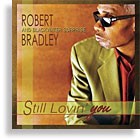
I hate to sound like an old guy, but this band really makes me nostalgic for the old days. Every album by them is solid. Just really good musicians making good music. No annoying studio tricks and gimmicky dance sounds. Just good music in the pop/rock vein. And, on their latest release, they’ve taken a step in the soul direction. That should be no surprise given the singing of Robert Bradley.
The opening cut is a dead giveaway where they’re going. “All I Wanna Do” features great chord changes, wonderful vocals by Bradley, and guitar work that helps drive the tune along. Not sure who plays what, but guitarists Matthew Ruffino and Russ Epker work together very well. The cut has great single-note and chordal fills that are pure soul heaven. They pop along and really contribute to the groove. Then, a very melodic solo rips through the great changes with a biting tone that really grabs you. It’s an amazing opening cut and really shines a light on what’s to come.
The title cut covers a lot of the same ground. Soul music updated for the early part of the 21st century, but still harkening back. Again, the guitar shines, not just on the solo, but through the entire song. One nice aspect about this playing is how it helps the song. It never dominates, just fills it out. Not unlike guitar work in soul classics from the ’70s. There’s other great stuff, too. Check out the killer groove on the cover of the Sam and Dave chestnut, “I Thank You.” Or the longing and loneliness of “Anna.” And, the record wraps up with “Hollywood,” a tale of tinsel town that is both funny and sad, with a great soul feel.
There’s a lot to recommend here. Bradley’s vocals are great throughout. The band supplies perfect support, and the guitar work is as understated and tasteful as you’re about to find this year. That sort of playing is an art form that appears to be losing favor, but not here. Also, and again, this is a pet subject for me, the CD clocks in at a perfect time, under 40 minutes. Ten excellent songs that don’t waste your time. I’m tellin’ ya, most CDs in this day and age are too long with too much filler. Definitely not a problem here. One of my favorite releases of 2003.