Month: June 2003

  • Gibson Les Paul Acoustic

    Variation On A Theme

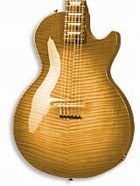
    Sure, we’ve all seen numerous variations of the legendary Les Paul model electric guitar. Now here’s one variation that’s really unique – Gibson’s new Les Paul Acoustic. Designed for electric players by Gibson’s Custom Shop, the Les Paul Acoustic is shaped like a traditional single-cutaway Les Paul and constructed from the same basic woods.

    Like many Les Pauls, the Acoustic model starts with a mahogany body with a figured maple top and mahogany neck. The sample we received was finished in a translucent black, but it’s also available in tangerine- burst and translucent blue. The neck has 22 frets, a rosewood fingerboard, pearloid trapezoid inlays and vintage-style Gibson Deluxe tuners.

    What’s most unusual about the Les Paul Acoustic is the construction of the top (though the profile is pretty cool, too). The bridge is actually hand-carved into the maple top, and the saddle sits directly in the body. The six bridge pins are fitted into the body, just behind the bridge. This design results in optimum sustain, because the bridge is essentially a part of the top, and the strings go right through.

    From the factory, the guitar is strung with bronze-wound acoustic strings, but still has the typical Les Paul feel (though the strings are heavier than most would use on a Les Paul). In terms of feel, the neck, frets, and body are just like playing an electric guitar.

    The body is definitely lighter than a typical electric guitar. It has hollowed chambers that allow for a reverberant tone with more natural acoustic qualities, even when the guitar is unamplified – unlike the solidbody Gibson Chet Atkins SST, which does not project its sound acoustically.

    The Acoustic model is fitted with the Gibson SST electronic system and L.R. Baggs piezo pickup, with rim-mount volume and tone controls. The tone dial has a center detent, which is the midpoint of the high and low mix. The battery compartment for the piezo system is located directly behind the bridge and houses a single 9-volt battery. All electronics (including the input jack) are in the same place as a typical Les Paul.

    With a better idea of the feel, we set about appraising the guitar’s tone using three different amp rigs with all tone controls set flat and volume set for a clean tone. First, we tested the Les Paul Acoustic through a Gibson Super Goldtone GA-30RV combo amp (VG, February ’02), then through our 100-watt Marshall stack. Last, we tested the guitar using a Countryman direct box plugged into a small PA.

    With all setups, we kept the system’s tone controls set flat and the volume adjusted for clean tones. To get the best sound, we found it best to keep the guitar’s volume rolled back a bit to soften the attack of the pick or finger on the strings. We also preferred having the guitar’s tone control adjusted for slightly boosted low-end. Tonal response varies depending on where one hits the strings. With a bit of noodlin’ around, it’s easy to find the best picking-hand positions for strumming, single notes, and fingerpicking. Intonation was good across the fingerboard, even when using open tunings.

    As expected, we achieved the best range and fattest clean acoustic tones when using the direct box and PA. The Super Goldtone fared pretty well for an electric guitar amp, producing a workable tonal range, while the Marshall was the most limiting. But as long as it was set clean, the sound was good enough to use it at a gig if you only had one amp to play through.
    For Les Paul enthusiasts who want an acoustic/electric, this is the ultimate axe.

    Because the Les Paul Acoustic is a Custom Shop model, production is limited and it’s likely these guitars won’t hang on the rack long, despite the fact that they’re a bit pricey. And unless you’re playing with guys like Rick Nielsen and Joe Perry – who recently snatched up their own – if you’ve got a Les Paul Acoustic, you probably won’t ever show up to a jam session and find yourself armed with the same guitar as any of the other guys.

    If you strive for something distinctive, check one out.


    Gibson Les Paul Acoustic
    Type Of Guitar: Piezo electric/acoustic.
    Features: Mahogany body with figured maple top, mahogany neck, 22-fret rosewood fingerboard, pearloid trapezoid inlays, vintage-style Gibson Deluxe tuners, Gibson SST electronics system and L.R. Baggs piezo pickup, rim mount volume and tone controls.
    Price: $5,680 (with hardcase)
    Contact: Gibson, 657 Massman Drive, Nashville, TN 37210, (615) 871-9585, gibsoncustom.com.


    This article originally appeared in VG‘s May ’02 issue. All copyrights are by the author and Vintage Guitar magazine. Unauthorized replication or use is strictly prohibited.

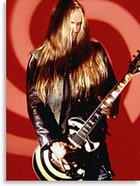
  • Zakk Wylde

    Wylde's Kingdom

    As a teenager, Zakk Wylde gained notoriety as one of the hottest young guitarists playing the New Jersey Shore bar circuit. He got his big break in ’87, when he was asked to audition for Ozzy Osbourne. In addition to his technical ability as a player, Wylde’s energy, image, and his love for Black Sabbath and Ozzy music made him a natural for the gig.

    During his 10 years with Osbourne, Wylde honed his chops and songwriting skills. He co-wrote and recorded No Rest For The Wicked (’88), Just Say Ozzy (’90), No More Tears (’91), Live And Loud (’93), and Ozzmosis (’97), all of which achieved multi-platinum success. And Live And Loud won a Grammy for Best Live Performance.

    Stepping away from the metal scene, Wylde broke out on his own to front Pride & Glory, a blues-influenced power trio. Next, he released Book Of Shadows (’96), an acoustic album that showcased his songwriting. Sonic Brew, his latest offering, marks a return to his heavier rock roots, but still incorporates the familiar elements of his blues and acoustic influence. His new band is called Black Label Society. In addition to handling all guitars and vocals on the new disc, Wylde played bass, piano, and co-production work. The only other musician involved in making the record was drummer Phil Ondich, who doubles as Wylde’s drinking partner. On tour, Black Label Society will include Nick Catheanese on guitar and John DeServio on bass.

    Pull up a barstool and grab a cold one while we spend happy hour with the Wylde Man, discussing his new life as a member of the Black Label Society.

    Vintage Guitar: How has your style and technique changed over the years?
    Zakk Wylde: I constantly try to get better. I listen to other players and check out other styles. With almost every player, the way you end up evolving is through writing. If you constantly write tunes, that’s the best way to evolve and to develop your own style.

    Who influenced your playing early on?
    I had a guitar teacher named Leroy Wright. I used to play football all the time, until I saw him play guitar. I couldn’t believe someone could actually move their hands like that. He was playing all types of stuff, like Hendrix and Sabbath. I was about 15 at the time, and he was 10 years older. He turned me onto stuff like Frank Marino and Mahogany Rush, Hendrix, John McLaughlin, and Al DiMeola.

    Was guitar your first instrument?
    I actually started off playing piano for – literally – two weeks. I couldn’t stand it because the lessons were things like “Mary Had A Little Lamb.” I didn’t want to stick to it, so that’s when I started playing guitar. Leroy showed me how to play songs I wanted to play. I learned some Sabbath stuff, and the big breakthrough was when I could play the “Back In Black” lick. I felt like God. The bottom line is that you’ve still got to do the scales and exercises to develop the dexterity in your fingers so you can play, but when you’re hanging with your friends, you want to be able to play something cool. If you can sit around and play songs from your favorite band, that’s what keeps you interested.

    Who influenced your vibrato technique and all the harmonics you use?
    It’s hard to say. I don’t think vibrato is something you can’t really teach someone. I think you can show someone how to do it, but it’s sort of like a running back in football, you either have good vision or you don’t, either you’re fast or you’re not. I think it’s the same way with vibrato. That’s one of the greatest things about guitar technique and it’s the closest thing to singing. Any singer will have their own vibrato style, which gives them their own identity. Listen to Angus Young’s vibrato and then listen to Robin Trower’s. They’re two completely different players with totally different styles. They can both play the exact same thing on the same guitar and it will sound completely different. When I started trying to develop a vibrato, I just tried to shake the strings as much as I could.

    Which singers influenced your vocal style?
    I listened to Ozzy before I played with him. I used to play in cover bands and do Ozzy tunes at keg parties, and songs by Sabbath, Cream, Hendrix, and Marino. Later on, I got into Ronnie Van Zandt, Gregg Allman, and Ray Charles.

    What was the most important thing you learned working with Ozzy?
    To be myself, and he told me that from the get-go.

    Who influenced your songwriting?
    I was definitely a huge Sabbath fan. In fact, the first album I bought was We Sold Our Souls For Rock ‘N’ Roll. Tony Iommi definitely influenced my heavier playing. As far as songwriting goes, my biggest influences were Sabbath, Hendrix, and Led Zeppelin.

    What’s your typical process for writing songs?
    Right now, for Sonic Brew and with Black Label Society, the majority of the songs start with riffs. Pretty much all of the songs on that record are riff songs, and it’s pretty much just riff music. The riffs come first, then the lyrics, then the melodies. I could never write a melody without hearing the music behind it first. The music always inspires me to sing something over it.

    Do you do much home recording to make demos of your new songs?

    No, I think demos are pretty much a big waste of time and money. The process of making a demo sucks the life out of any song. Through the years with Ozzy, we’d demo stuff then we’d get into the studio to cut the record, I’d feel like a dog chasing his tail. Ozzy would say, “We did it one way on the demo, but it doesn’t sound the same on the final track.” Well, that’s because the performance was probably better back when it was a fresh song and we were inspired to record it.

    The problem with the demo is that usually the performance is good, but the sound quality is bad, so you’ve got to redo it. That never made sense to me because I would always approach making the demo like we were doing it for real, then when we’d go into the studio I wasn’t always as inspired.

    If you don’t make demos, how do you document the new music you’re working on? How do you present new songs to the band?
    I don’t have any major recording setup, I just have a boombox in my room. I stick a cassette in there, press record, and then just play the riffs. That’s it. When we recorded the Sonic Brew album, everything was very casual. I picked Phil up at the airport, we grabbed a couple cases of beer, then went to the studio. Phil hadn’t heard any of the songs before, so I just showed him all of the parts. We’d play through it two or three times and then just go and track it.

    What kind of guitars, amps, and effects did you use for the recording?
    The same old stuff I always use, which is pretty much the same stuff I’ve used since I played with Ozzy. You know what they say – if it ain’t broke, don’t fix it.

    I used 100-watt Marshall JCM800 heads, model 2203, with straight Marshall 4 X 12 cabinets loaded with 200-watt EVs. I used to have Celestions in my cabinets when I played with Ozzy and Pride & Glory. They were 70-watters and they were really loud, then I hooked up these EVs and I couldn’t believe how clean they sounded. It’s just pure guitar, and for the music I’m doing you need a lot of attack, and if you have the vintage-style speakers they really break up. They sound very warm, but when you get down to the low strings you want more meat. The EVs just sound so much better because I tune to 440 Hz and I’ll often drop my low E down to a B or an A. I use a custom set of GHS Boomers, .010 to .058, so it doesn’t get too floppy.

    Aside from the stacks, I also used a little Epiphone practice amp for some parts, like some of the solos, and I used a Marshall Bluesbreaker for some overdubs, like some of the clean parts and slide parts.

    For guitars, I used my Les Pauls and a Gibson SG. The Les Paul with the bullseye is an ’81. I used the SG when we did the Ozzmosis sessions, I think that’s a ’95. I also have a Les Paul Classic that has a Fernandes Sustainer pickup in the neck and I used that for some of the solos and intros on some of the songs, like “The Rose Petalled Garden.” Then I have an old Danelectro I use to overdub some clean parts. I bought that in New York City on 48th Street. I think I paid around $800 for it, although it probably only cost $20 to make. But there’s nothing that sounds like it.

    For my acoustics, I have a Gibson Dove I used on Book Of Shadows, but I used an Alvarez on Sonic Brew, for “Taz,” because that’s a pretty fast song and the Alvarez guitars play like Les Pauls.

    For effects, I used the Dunlop Rotovibe, the Jimi Hendrix wah, the Jimi Hendrix Octave Fuzz, which I used on “The Rose Petalled Garden” [for] that “Purple Haze” sound. I also use a Boss Super Overdrive, Boss Stereo Chorus, and a Boss Octaver. My rig is pretty basic. I plug straight into the amp and use the same stompboxes I had when I was 17.

    What kind of tubes do you use in your amps?
    I use 6550s, they get a bigger and tighter sound than the EL34s.

    Do you track with effects or add them afterward?
    I step on them while I’m tracking, whichever ones I want to use, as if it was a live gig.

    How many guitar tracks do you typically record for each song?
    Just two. I usually do one track with my Les Paul on the left and then double it with my SG or another Les Paul on the right. That’s for the rhythms. Then I’ll usually put on another track with any overdubs I want to do.

    Do you play in the control room or in the same room with your amp when you’re tracking?
    When we’re getting a drum track, I’ll play bass or guitar and I’ll have the amp set up in an isolation booth, but I’ll have the heads right next to me. I’ll stand right in front of Phil’s drums and we’ll just start tracking. Then once we get Phil sorted out, I’ll move all of the Marshalls into the control room and I’ll sit behind the desk and we’ll just work on guitar tones, which doesn’t take long – we’ll A/B a few mics with other guitar tracks I like or other productions, as far as the fidelity goes, to make sure it sounds big.

    What are your typical amp settings?
    I keep the volume and gain set between 6 and 8, but I usually keep the presence down a bit. I have the treble and bass set pretty high and keep the mids somewhere around the middle. I never roll the mids all the way off, that’s a completely different sound altogether. I definitely keep some mids in there because I like the crunch they give it.

    Do you use the same rig onstage and in the studio?
    Yes, it’s the same rig. It’s such a childproof system. If my rig ever goes down, it’s either because the power cord got pulled out or somebody unplugged the head, or maybe the fuse blew. It was never because the head fried or anything like that. Those Marshalls can take a beating. I run two heads, but I bring four out on the road.

    How are your guitars set up?
    I set the tailpiece all the way down, close to the body, and I wrap the strings around the other way, like a wraparound bridge. It seems like that puts less stress on the strings and I never end up breaking any strings when I play live. I got hooked on doing it that way when I first joined Ozzy. I also prefer high frets and I always shave the back of the necks down to the bare wood, so there’s no lacquer on it. I set the action pretty low, but not too low, because when I grab the neck, I want to feel like there’s something there. [And] I like frets with some height.

    As for the pickups, I set them as close to the strings as I can get them. The louder, the better. I use EMG 81s and 85s, which are active, so I don’t have to worry about string pull.

    How does your approach to playing differ between playing live and in the studio?
    I never understood why people think there’s that much of a difference. When I joined Ozzy, people would say they knew I could play live, but they wondered if I could play in the studio and if I had any studio chops. What the hell does that mean? If you can play, you can play. The only difference is that in the studio, if you mess up, you can fix it, whereas when you’re playing live, if you hit a clam you just keep going.

    Do you prefer either?
    I dig ’em both. But when you’re playing live, if you’re going to stand there like a mannequin and make sure you don’t make any mistakes, that’s pretty boring. It’s got to have some energy and that’s more important than getting all the notes perfect. If I’m going to see a live band, I want to hear the energy, otherwise I could sit and listen to the record if I wanted to hear it all played exactly the same. I’d much rather hear someone hit some clams than hear something that sounds sterile, where everyone’s just sitting there and there’s no energy. When we play live, I try to keep the solos sounding as close as I can to what I did on the record, but I don’t always play the parts exactly the same. But on the outro solos, then it’s a free-for-all and I just go off. I really dig that, too. I love improvising.

    What do you consider your best recorded solos?
    On the new album, I dig a track called “The Beginning…At Last,” and from the Pride & Glory stuff, I really dig the solo for the song called “Sweet Jesus.” It’s a piano song, but it’s cool. I really like the solo on “Time After Time” on No More Tears.

    What are your favorite solos by other players?
    My favorite is definitely the “Hotel California” solo. That one was amazing, you can sing the whole thing. Then anything from the Frank Marino and Mahogany Rush album. Just pick anything from that album. Even his unaccompanied solos are amazing. I’ve never heard anybody play pentatonic scales like that before. As far as rock goes, Jimmy Page is way up there. He played so many classic solos, like the ones on “Whole Lotta Love” and “Stairway To Heaven.” I think that the “Stairway To Heaven” solo is a great lesson in how to piece together a solo within a song.

    What do you think are the most important elements to creating a good solo?
    You’ve kind of got two schools. There are guys like Al DiMeola. I’ll listen to his solos and he’s got certain phrases that he uses and then goes off from there. But then you’ve got someone like Jimmy Page whose riffs are more memorable, where you can sing every line from one of his solos. I guess it just depends on what mood you’re in and what you’re into.

    What kind of things do you work on when you practice?
    It depends. I just come up with different things that I want to do on my own or I’ll sit down with a metronome and play through some pentatonic scales. I get off on that stuff. Or else I may go out and get videos from certain players that I dig, like Al Di Meola, Alvin Lee, or Joe Pass, and I’ll just learn different things from different players. If I get bored or stuck in a rut, I just break out some of my old records, like Frank Marino and Mahogany Rush, and I’ll just start jamming with them and improvise over the records.

    What do you do to warm up before a gig?
    I drink a lot of beer, then I do scale patterns on the guitar to get my hands warmed up.

    What are your goals for the future?
    I’d like to own my own microbrewery and I’d like to just continue doing what I’m doing with Black Label Society, playing the kind of music I love.

    What advice do you have for other players on becoming better musicians?
    Play the music you love and play it to death. Don’t let anybody tell you it’s not what you should be playing or you’ll never make it in the music business.

    The Wylde Man and his Black Label Society are touring the U.S., Japan, and Canada throughout the summer.


    Photo courtesy of Kayos Productions.

    This article originally appeared in VG‘s Oct ’99 issue. All copyrights are by the author and Vintage Guitar magazine. Unauthorized replication or use is strictly prohibited.
  • Albert Glinksy – Theremin: Ether Music and Espionage

    Albert Glinksy

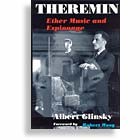
    The theremin holds the distinction of being the only instrument that is played without being touched. Using a human body’s natural capacitance to manipulate radio waves, the theremin was also the first electronic instrument and created a sensation upon its launch by Soviet scientist Leon Theremin in the 1920s. It was the stuff of myriad sci-fi B-movie soundtracks as well as the Beach Boys’ “Good Vibrations,” and modern theremins are still advertised in the pages of this magazine. But that’s only the beginning of the story.

    Leon Theremin’s life was an amazing odyssey. Not only did he create his eponymous musical instrument, but also early motion detection security systems and the first Russian television – all of which was put to use in Lenin and Stalin’s U.S.S.R. to spy on not only the West, but the country’s own citizens, as well.

    The theremin also became an espionage tool but in a different manner. Leon Theremin traveled throughout Europe and the U.S. with his instrument as a passport, giving concerts that were propaganda showcases for the brilliance of Communism. But during his journeys, he also served as a Soviet spy, passing back data on Western industrial technology to the Russian apparat.

    Leon Theremin became the toast of New York society in the ’30s, then disappeared mysteriously at the hands of Soviet agents. Spirited back to the U.S.S.R., he was exiled to a Siberian labor camp in the midst of the country’s paranoia. There he worked for almost three decades designing further spy tools and bugging devices, including the famous “bugs” in the U.S. embassy in Moscow.

    This biography of the man and his bizarre musical instrument is part electronic saga, part spy thriller. It’s a great read, telling the story of a man caught at the crucible between Communism, Capitalism, and the Cold War.


    This article originally appeared in VG‘s Feb. ’01 issue. All copyrights are by the author and Vintage Guitar magazine. Unauthorized replication or use is strictly prohibited.
  • Gene Clark – This Byrd Has Flown

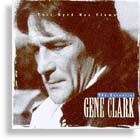
    This Byrd Has Flown

    Gene Clark was one of the Byrds’ original members, and the first to quit back in 1966. He died in 1991, right after the Byrds entered the Rock and Roll Hall of Fame. This CD represents some of his last recordings through the ’80s. There are some missteps, but overall it’s a fine CD. He re-recorded some old Byrd classics and also some of his favorite tunes. Those were mixed with good new tunes he wrote, like “Rodeo Rider,” “Rain Song,” and “Made for Love.”

    The playing is always nice on the record, especially the lead guitar of Greg Douglas. There’s some nice guests too, like Albert Lee, Sneaky Pete Klienow, and Bud Shank. As far as swan songs go, this is a nice one. I think Clark would appreciate the care with which his legacy has been handled.


    This article originally appeared in VG‘s June ’97 issue. All copyrights are by the author and Vintage Guitar magazine. Unauthorized replication or use is strictly prohibited.
  • Taj Mahal – Sénor Blues

    Sénor Blues

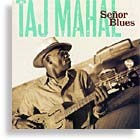
    Taj Mahal is one of those guys you never think about until you hear another great album by him. Listen to this one and you’ll think about him a lot.

    The album is a sort of notebook that takes you through the history of American music of this century. There’s killer blues shuffles. There’s uptown blues,

  • Tom Principato – Not One Word

    Not One Word

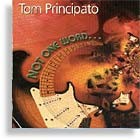
    Tom’s put out some stuff on record before, and it’s been pretty good. This one’s a little bit different. As the title says, there’s not one word. It’s all instrumental, and Tom does a great job of letting his Strat do his talking for him.

    The thing you notice on first listen is the killer tones, great guitar sounds, and wonderful sense of melody highlighted throughout. From the tour de force opener, “One Night In Hindustan,” with the singing tone and solo chrodal work and harmonics to the Beck-esque “Another Place, Another Time,” Tom plays great.

    The minor-key “Santana Clause” (what a great title) has some nasty chops and (as you might expect from a song with that title) big, fat tone. The ending of “’67/’68” is so cool. It’s like the mid-to-late Beatles have taken over the sound for a few minutes. Guaranteed to bring a smile. There’s lots here to like. “Blue Groove” is a shuffle with a relaxed feel that cooks. Sounds like an oxymoron, but it’s not. Check out the nice mix of chords, single-line work, and octaves. Very, very nice!

    I’d definitely recommend this one to fans of instumental guitar albums. Powerhouse Records, PO Box 2213, Falls Church, VA 22042, www.tomprincipato.com


    This article originally appeared in VG‘s April ’01 issue. All copyrights are by the author and Vintage Guitar magazine. Unauthorized replication or use is strictly prohibited.
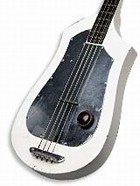
  • Audiovox Electronic Bass

    While there have been lively debates raging in the rare instrument community for many years about any number of puzzling early guitars – not to mention the perennial issue of just who exactly was responsible for “inventing” the electric guitar – it seems little energetic dialog has surrounded the bass.

    Until now it has been accepted common knowledge the electric bass guitar was invented by Leo Fender in Fullerton California around 1951. Indeed, Fender’s Precision bass – a model literally named to emphasize the exacting intonation a player could achieve with its “uniquely” fretted neck – quickly became the industry standard for solidbody basses. However, with the recent discovery of a surviving example of an ultra-rare electric bass guitar dating back to the mid ’30s, this “history” must be reexamined.

    Even with new information emerging, one notion certain to remain is that the existence of the electrified bass can be credited with impacting modern music at least as much as its cousin, the electric guitar. Indeed, besides adding a more powerful low-end throb to many forms of music, some knowledgeable folks have gone so far as to proclaim the electric bass was intrinsically responsible for the rise of new genres of music.

    For example, it’s difficult to imagine reggae existing at all without the electric bass guitar, and that booming instrument’s role is certainly a defining aspect of funk. Pre-dating those genres, R&B music made its defining leap from the early-’50s jazz fringe due to the sonic boost of the electric bass. And during that same decade, rock and roll advanced with the substitution of solidbody electrics over upright acoustic basses.

    But the upright bass is precisely where this story begins, and just as the guitar has a deep history, so too does the big ol’ “double bass.” Essentially, the bass is the largest and lowest-tuned instrument in the violin family – hence one of its common nicknames: the “bull fiddle.” European precursors, such as the bass lute, reportedly trace back to the 1500s and over the following two centuries its use became established in typical symphony orchestras. Larger by far, obviously, than violins or even cellos, basses were never lacking in volume when played in string ensembles. But the roaring ’20s jazz age suddenly found them competing with banjos, brass and reed horn sections, pianos, and drums.

    If simply being audible was difficult, lugging around a bass was even more of a challenge. Indeed, it has always been a hassle for bass players to travel because of their instrument’s behemoth size. Even their insider nickname amongst musicians – the “doghouse” bass – suggests the instrument’s bulk. The biggest hassle was that bassists occasionally had to travel solo with their bass filling the rest of their own automobile. It was lonely, expensive, and probably led to weary bassists getting separated from their bandmates on road trips. What was needed was a more compact bass – one that would fit alongside the other instruments in truck/van.

    So, by the mid ’30s, several established musical instrument firms – Lyon & Healy, Vega, Dobro, Gibson, Rickenbacker, and Regal – began marketing rather experimental electric basses that were remarkably less bulky than a standard double bass. But they were still all very tall, unfretted, upright instruments held in the standard vertical position. The radical design breakthrough that would impact the world of music was the marketing of an electric bass guitar – a compact, fretted instrument one could hold and play horizontally. And that was apparently achieved first not by the Fender company, but by a musician/instructor/basement tinkerer named Paul H. Tutmarc, a pioneer in electric pickup design who marketed a line of electric lap steel guitars under the Audiovox brand out of the unlikely town of Seattle.

    My interest in tracking down this story began 20-some years ago when I overheard a few stray comments from fellow players flatly declaring that the electric guitar had been “invented” in Seattle.
    Oh, really!?

    As a student of local history, I was intrigued by the rumors but wrote them off as nothing more than hearsay because nobody seemed to have any facts to support them. For a long time it all seemed just another urban legend – albeit an exciting one. But it didn’t seem feasible something as significant as the electric guitar could have gotten its start in Seattle, or that all that history had (as it seemed) been utterly lost.

    And, if the story was true, one of the region’s history or heritage museums would have proudly featured a permanent exhibit. And surely, at least one of the fine guitar history books would have documented the story. You’d think the city’s chamber of commerce would have pushed historic-site bus tours, the parks department would have erected a bronze statue in a park somewhere, the mayor might even have proclaimed a city-wide holiday, and the local music community/industry would throw a major annual guitar festival to mark the event. You’d think…

    But there was no festival. No statue. No tour. No holiday. And understandably so, given that there also seemed to be no solid evidence to verify any single thread of this improbably tall tale. Thus for years this was all nothing more than an interesting rumor to me. That is until around ’83, when I lucked into my first specific clue: a musician friend stated that about 15 years prior he owned an old Seattle-made amplifier, but that his mother had tossed it out after he left home. You’re kidding! You mean there was an early local amp company, too? Did he recall any other details – like the brand name? Yes. It was an Audiovox.

    This breakthrough offered a place to begin researching in earnest. As it turned out, Audiovox was the fabled Seattle firm that had also made early electric guitars, and my quest over the next dozen years resulted in a collection of Audiovox sales catalogs, promo photos, and over 20 instruments and amps. Along the way, I was also able to piece together the story of Paul Tutmarc and his greatest invention: the world’s first electric bass guitar.

    Further research uncovered it was actually the February 17, 1935, issue of the Seattle Post-Intelligencer newspaper that broke the story of the beginnings of Tutmarc’s quest to create a new instrument with an article headlined, “Pity Him No More – New Type Bull Fiddle Devised.” In text accompanying a photograph of Tutmarc and an electrified cello-like instrument, the PI noted that, “People have always pitied the poor bass-fiddler…who has to lug his big bull-fiddle home through the dark streets after the theatre closes. But he doesn’t have to do it any more. Because Paul Tutmarc, Seattle music teacher and KOMO radio artist, has invented an electric bull-fiddle. One you can carry under your arm. And it doesn’t even need a bow, either. You pluck a string – and out of the electric amplifier comes a rich, deep tone, sustained as if five or six bass violinists were bowing five or six bass-violins with masterly artistry. The tone is sustained as long as you want it, too, without a bow.”

    In the photo, a dapper Tutmarc demonstrates his bass to a young woman. The bass had been hand-carved out of white pine (the PI: “It’s just a block of wood strung with bass-viol strings… For the sake of tradition, he carved the block into a violin shape. But it could be any old shape, without making any difference.”) and was equipped with an electromagnetic pickup that proved that the desired low notes were not only audible, but enhanced. The PI also noted that, “The first electric bass-viol is only four feet tall, instead of six. It could be made a lot smaller, but Tutmarc didn’t want to be too revolutionary right off the bat. Bass violinists are a conservative race, and have to be accustomed gradually to the idea, he says.”

    Tutmarc’s one-off “block of wood” upright electric bass was a truly groundbreaking experiment, but it was really still too large to be practical. After continuing experiments into ’36, Tutmarc’s Audiovox Manufacturing began marketing his radical new #736 Electronic Bass, which he began advertising in the Spring of ’37. The bass featured a version of the pioneering electromagnetic pickup Tutmarc and his pal, Arthur J. Stimson, had begun devising in (according to Tutmarc) ’31. Interestingly, between ’32 and April ’33, while Tutmarc was trying to get patent registration, Stimson apparently ran off to Hollywood and peddled the design ideas to the Dobro firm, who rushed their All-Electric guitar (which featured a Tutmarc/Stimson-like pickup) to the marketplace and more importantly, eventually won the patent race.

    Even with this intrigue muddying things, the upshot of the story was that a few years later the Audiovox #736 would pioneer the future of the modern bass configuration – in effect creating the world’s first solidbody electric bass guitar.

    One of the first people to perform with the new bass was a member of the Tutmarc family band – his wife, Lorraine. Others were sold to various gospel, Hawaiian, and country players. At the time the #736 was sold for a whopping $65, and the matching model #936 amp paired with that thumpin’ four-stringer would set you back another $75. Though Audiovox reportedly sold a number of sets to local acts before the firm folded around 1950, they never took off, commercially, and Tutmarc’s Electronic Bass was forgotten over time.

    Want another interesting wrinkle? Around 1947, Tutmarc’s son, Bud, began marketing a similar bass under the Serenader brand name. And thus, while it is easy to understand why nearly everyone (including Leo Fender’s team) could have easily missed out on knowing about the obscure Audiovox instrument, it’s harder to believe no one in the burgeoning electric instrument industry would have taken notice of the Serenader model after it was prominently advertised in the nationally-distributed L.D. Heater Co. wholesale jobber catalog of ’48. Or then again, perhaps they did…

    Despite the instrument’s uniqueness and usefulness, few were sold and thus basically seem to simply have fallen through the cracks of history. I first became aware of the instrument’s possible existence after seeing it in a rare mid-’30s Audiovox catalog. A decade-long, low-key search uncovered one at a suburban swap meet near Seattle, where the seller – yes, a proverbial “little old lady” – figured it was “…some sort of lap steel guitar.”

    Today that lone known surviving Audiovox specimen is one of the crown jewels in the awesome collection of early electric rarities in Seattle’s new (slated to open in 2000) music museum, the Experience Music Project (EMP).

    In final analysis, while the Audiovox lap steels ultimately merit mention as merely one of the very first electric guitar lines to reach the marketplace (a future essay will detail the firm’s entire saga) it seems clear that Paul Tutmarc’s solidbody Electronic Bass guitar has no rival and now demands belated acknowledgment as a revolutionary, if overlooked, invention of keen historical significance.


    Audiovox #736 Electronic Bass Guitar. Photo courtesy of EMP.

    This article originally appeared in VG‘s Mrch ’99 issue. All copyrights are by the author and Vintage Guitar magazine. Unauthorized replication or use is strictly prohibited.
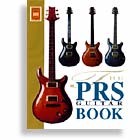
  • Dave Burrluck – The PRS Book

    Dave Burrluck

    Unless you have been living in a cave for the last decade, you know that PRS is Paul Reed Smith, one of the most innovative and successful of the “new” electric guitar man-ufacturers. Smith is the only manufacturer so far to successfully blend the design characteristics of the Les Paul and Stratocaster guitars into a wholly new and different model that borrows from both, but copies neither.

    This large-format book showcases the stunning designs, technical innovations, and craftsmanship and portrays every facet of this cutting-edge comp-any’s evolution. Beginning with the early handmade instruments of the ’70s, through the standardization of design in the ’80s and the new products of the ’90s, the story is told with a minimum of words and a focus on the instruments.

    Large color photos and a number of fold-out pages reveal why the “10 top with birds,” dragon inlay, and clear maple binding have become hallmarks of Paul Reed Smith and have even inspired their own copies. There are over 300 full-color photos, quotes from artist endorsers, and many never-before-seen prototypes.

    The book concludes with an absorbing photo essay detailing the making of a new PRS guitar, from wood selection to final finishing and setup. Also included is a model key to help players and collectors identify and date PRS instruments. Limited to 6,000 copies (individually serial numbered), this new book is hardbound with dust jacket and comes in a custom slipcase. It’s a fitting tribute to a company which has, in a short time, come to symbolize a quality alternative to the “big two” American electric guitar manufacturers.


    San Francisco: Miller Freeman Books 1999, Hardbound in slipcase 125 pages, ISBN 0-87930-593-2, $75.

    This article originally appeared in VG‘s Feb. ’00 issue. All copyrights are by the author and Vintage Guitar magazine. Unauthorized replication or use is strictly prohibited.
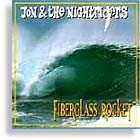
  • Jon and the Nightriders – Fiberglass Rocket

    Fiberglass Rocket

    If you haven’t noticed, there’s a Surfin’ comeback goin’ on. We get tons of CDs from bands that play it; some good, some not-so-good, and some in-between. Here is an excellent one.

    Jon and the Nightriders are led by surf historian John Blair and they know surf music when they hear it. From cut one, they burn. “Depth Charge” kicks off the proceedings with balls-to-the-wall guitar and drums. Things stay at that level throughout.

    If you have an interest in surf music, check this out. You won’t be disappointed.


    This article originally appeared in VG‘s Jan. ’97 issue. All copyrights are by the author and Vintage Guitar magazine. Unauthorized replication or use is strictly prohibited.
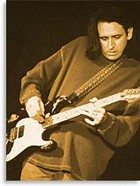
  • Michael Landau

    Raging Honkie

    “Michael Landau is an undiscovered gem… one of God’s guitar players,” were the quiet words of praise by noted producer/guitarist Steve Lukather. “Hell, I grew up playing with him, and he’s really inspired me. Michael is absolutely one of my favorite guitar players in the world.”

    Meeting a famous studio guitarist face-to-face can be a challenge for any interviewer – wondering which sessions to talk about, what road stories to coax out of him, how much to dwell on his equipment. But Michael is an unusual guy, and none of the above applies. A veteran of the competitive Los Angeles music scene, he has built an impressive discography, recording with such greats as Joni Mitchell, James Taylor, and Miles Davis. Despite his mastery of the guitar and breadth of technique displayed on other people’s records, the real Michael is a dedicated rocker whose solo career breathes fire with every guitar line he plays. His albums are diamonds in the rough, with a precise focus on the blues-based rock and roll he was raised on. His forays into the slower, more lyrical vein of guitar are passionate and innovative, reminiscent of the early brilliance of Jimi Hendrix.

    From the guitar work on Michael’s solo albums to his performances with Burning Water (a monster band featuring brother Teddy on bass and Carlos Vega on drums), and his current band, The Raging Honkies (a bluesy trio that showcases not only his fretwork, but his singing), Landau has built a formidable body of work that is intense and moving. His studio arsenal of effects is cast aside for the live playing, so there is no monster rack to speak of, and when it comes to self-promotion and sleazy road stories, Michael’s just a nice guy who loves music more than anything, and pretty much lets the music speak for him. We met in VG‘s West Coast offices one cool March evening, and the following interview took place.

    Vintage Guitar: You’ve been doing studio work here in L.A. since you were a teenager, working with Pink Floyd, Jon Anderson, and Roger Daltrey. How did all that come about?
    Michael Landau: I was born in 1958, right here in Los Angeles. Actually, in Van Nuys. My guitar playing began when I was 11 years old. During the swing era, my grandfather was an alto sax player in Benny Goodman’s band. He was also an arranger, and spent most of his life doing music. He’s still alive and playing, at 84 years old! He survived a massive heart attack recently and just took up where he left off. My uncle played music, and my mom played piano. My uncle let me use his guitar until I got my first cheap nylon-string. I didn’t get an electric until a couple years later, when Hendrix and the Beatles hit. I just missed seeing Hendrix on tour…

    Jimi Hendrix was on tour the same time as The Who, in the ’60s, and I saw The Who on a Friday night in Baltimore and Jimi the next night in Washington at a small ballroom. Pete Townshend was standing next to me, jumping up and down like a little kid. He was more excited than I was!
    Yeah, I’m really sorry I missed those tours. They didn’t have great PAs then, did they? The sound just washed out. But I’ll bet the guitars were loud.

    So the guitar bug bit you pretty early?
    I was pretty intense about guitar from that point on. I didn’t play in my first band until junior high school, and I did stop for a bit to play hockey. But the music and playing guitar for me was a strong desire I couldn’t put down. My first guitar was a Harmony, actually a good guitar I wish I still had. The first Fender guitar I got was a Telecaster, from the mid ’60s. I remember it squealed badly when I turned it up or got too close to the amp…and I didn’t know how to fix it.

    Probably something that could’ve been fixed by vacuum-potting the pickups?
    Right! My friend Seymour Duncan is a genius at that stuff, but back then I didn’t know what to do. I had Fender amps, a blond Bassman, and Pro Reverb. I spent a lot of time practicing, playing high school proms and other events. That’s when I was playing in a band with Steve Lukather, and I was thinking, “I want to do this for a living.” My family was extremely supportive, especially my mom. I didn’t intentionally go into studio work, but things just steered me in that direction. I had an easy segue, because Steve was phasing out his session work and forming Toto, and I just slid right in. Right now, it’s really hard to get studio work.

    What was your first experience on the road?
    I did some touring with Boz Scaggs when I was 19, and that was a lot of fun (laughs). Plus it led to more work! This was right after the Silk Degrees album, and Boz was really popular then. We would play to full arenas – a great experience for me. The band itself was terrific, and we had a good time together. There was a bit of separation at that time between the road band and the recording band; I didn’t record with Boz until two albums later.

    You’ve had an amazing career so far, dipping into blues, jazz, and rock. Any favorites?
    Some of the recording that was, for me, the most memorable was my work with Joni Mitchell. I did three albums with Joni, and they were some of the best times I ever had. We toured together in 1983, just Joni, with me on guitar, Russ Ferrante on keyboards, Vinnie Colaiuta on drums, and her husband, Larry Klein, on bass. There were some great times on the road. She was very inspiring.

    Did some of the audiences intimidate Joni? I heard that in the early days, her stage fright was so out of control she had to be literally pushed onstage.
    Nah…she had rough nights like anybody, but she had learned how to handle the crowd. She wasn’t at all shy when I played with her…she was downright assertive at times! And musically, she’s really in her own league. It was a particularly good gig for me; I could get inventive and we’d play around with the arrangements. Some of my favorite material she’d done was the stuff with Jaco, and I liked the creativity. And I guess she picked up on that.

    You’ve played in the past with a wonderful bassist, Mr. Jimmy Johnson, doing your own material plus some work with songwriter Michael Ruff. How was it, working with Jimmy in James Taylor’s band?
    They were some special people in that band, and I enjoyed making those albums. Now there was a group that was the same touring as on the record, and we really worked well together. I love playing with Jimmy Johnson, he’s such a soulful guy. A lot of the tunes for Copper Line were worked up on the road, and we did track live, which is what gave the material that nice feel. James is a helluva guitar player, and he left me room for some sweet guitar parts. That was a long tour, actually about six months, and we cut the live album in about three weeks. All small colleges we played, mainly on the East Coast.

    What was it like being onstage with JT and that incredible band, knowing you’re about to make history and record the first live James Taylor album. Any nervousness?
    Not for me, not consciously anyway. Sometimes in the bigger cities our nerves would act up, but taping live wasn’t so much of a strain. It was mostly wondering, “How is this going to turn out?” The band had played together for so long by that time that it was more a question of how well would we play together that night.

    You’ve sat in for some pretty heavy guitar cats in your day. One of them was Snuffy Walden (Texas blues monster, former guitarist for The Nazz, Michael Ruff’s rotating supergroup, and craftsman of the music for “Thirtysomething” and “The Wonder Years”). Any comments?
    Snuffy is a really good guy, and an incredible blues player. I don’t hear him much these days He’s locked up in his studio most of the time now, doing his television work. He should make some Snuffy records…

    Any other high points for you?
    I worked for a bit with Rod Stewart, during the Camoflauge/Out of Order time, and that was a trip. This was before Jeff Golub was working with Rod. A good learning experience for me. And of course I met Jeff Beck recently – he’s a real hero of mine – when he was working with Lukather.

    Let’s talk for a bit about your personal music. Tales From the Bulge is pretty impressive.
    My recordings have gone through lots of phases…the instrumental album was the first one I did on my own, in 1989. It was mostly recorded at my place, using friends like Vinnie Colaiutta and Jimmy Johnson on bass. And out of that came the band Burning Water. That was a real band, with a lead singer, and everybody pitching in. Carlos Vega was on drums, and my brother Teddy played bass. It really grew out of just jamming together a couple times a week. Slowly, some songs started to form out of that, and the band came together. This one you don’t need to have (he grabs playfully at a red CD labeled Live and Lit). It was done live to DAT to fulfill a contractual obligation…a handheld mic in a club…it’s like a super-bootleg (the seven-song CD demonstrates power rock at its finest, with slashing guitar lines, terrific, artful arrangements, and a virtuosity seldom seen on the guitar, least of all recorded live. And he’s ashamed of this?).

    Burning Water lasted awhile, maybe four to five years. We played a lot in L.A. and also toured in Texas, where we had some distribution. We also did a week or so in Japan, where I have a bit of a following, mostly from working with other people. When we played the clubs they were pretty packed.

    Burning Water had a distinctive sound, with some superb material. The Burning Water album and Mood Elevator rock really hard, used odd meters, unpredictable changes, and kicked some major butt. What else was going on then, musically, and where did your new group, Raging Honkies, come from?
    Burning Water began around 1990, when the alternative stuff was getting big. I guess we were blues/alternative. I poured everything I had into that group. I continued to do studio work, but less since we were really trying to make a go of it. I like all the records I’ve done, but the newer stuff with the Raging Honkies was done in different studios around town, not at my place, and it’s better, in a way. At the point the Raging Honkies began, Teddy and I wanted to try doing a trio, and everyone else’s schedules were a problem. Carlos ended up touring a lot with James [Taylor], which took him out of the picture. The singer had a day job he couldn’t give up…so I started singing. Abe Laboriel holds down drums.

    It can be a scary thing for a guitarist to become a singer.
    Yeah! If you’ve heard the new album, then you know my style (Michael’s vocal excursions, much like his searing guitar work, are focused and resonant, sounding a bit like Procol Harum’s Gary Brooker).

    Can we talk about your philosophy of guitar…what it’s like to go into the studio and be the number one session man on guitar, and then do your own stuff, which is so intense, so different? You modulate unexpectedly, change keys, and the music is verging on aggressive…
    You’ve hit it! With the studio stuff, I know going in what they want, and what I’m going to play. There’s not a whole lot of stretching out, at least on the sessions I’ve been doing. I hate to put it this way, but it’s a definite style and a definite job that they want you to do. There’s not a whole lot of improvising going on. For me, this work with the Raging Honkies is more like the music I grew up playing. It’s natural to me.

    Is there a big change in your gear when you go from the studio to your own band?
    Yeah, reality strikes! The rack in the studio is a bit heavy. I usually bring amps and some effects, but with the band it is completely different. I use a very basic amp setup.

    You know, I’ve gotten quite a bit of communication from our readers about secrets some players have to get their special guitar tone – effects boxes that may not be well-known, or Clapton’s old trick of having an old Fender on the side of the stage that was mic’ed, and all those Marshalls just for show. Do you have a secret weapon you use to get your sound?
    (Michael snorts, then asks, in his best Arte Johnson imitation…) Why would I tell you? Then there would be no secrets!

    I used to play through my old Fender Pro Reverb, amp switching to a 100-watt Plexi Marshall. The problem was, a lot of times we’d play these small clubs that would have three or four bands a night, and we’d have five minutes to set up. There was just no way! We had to scale our stuff down. I’m currently using a Custom Audio amp by Bob Bradshaw, similar to a 100-watt Marshall, with channel switching, through a half-stack 4 X 12 speaker box. The pedals are also real basic: a tube screamer, one of Roger Meyer’s Voodoo pedals, a Univibe, a Wah-Wah. Everything is strung with D’Addarios, .009 through .49.

    I know that besides the custom Tylers you use, you’re a big Strat fan. Any noise problems onstage with using the single-coils?
    For this band, I’m using a Strat with the Seymour Duncan Stacked humbuckers, really very quiet. He knows what he’s doing, ’cause the classic Strat sound is there without any of the noise. I do bring along my vintage Strat, which I’d sometimes rather play, but sometimes it just doesn’t work out. I can’t find the right spot onstage.

    I recently saw you onstage at Billboard Live, with The Raging Honkies, when Fender celebrated their new CD release. Delaney Bramlett, Richie Sambora, and a ton of other talented people were there. Your playing was pretty phenomenal that night. What was that like for you?
    What was cool was that they gave us our own little set. We had a good time, but we were literally thrown onstage, so there was no way to check if the sound was working. I love playing with these guys, and we did have some fun.

    Any guitarists you’re particularly fond of?
    I love Jimmy Vaughan, Alan Holdsworth, Jeff Beck. It may sound funny, but I love the way Kurt Cobain played guitar. He was so intense about it…

    And the future will bring?
    I’m about to begin another instrumental record, some psychedelic stuff. That should be done in six months or so. I’m doing it in my spare time, so there’s no real hurry. And I’m looking forward to touring in Europe with The Raging Honkies.

    Talked out?
    For now…(Michael yawns, and we head for the door).

    Michael Landau is dedicated – 100 percent, seven days a week, 24 hours a day – to his music, and he lets the music speak for itself. He has a refreshing attitude toward the commercial aspect of the music business. The session work, no matter how lucrative, is a tool that lets him pour his soul and prodigious chops into his own brand of incendiary rock and roll. We hope Michael and his Raging Honkies keep that flame lit for a long time.

    Michael Landau’s guitarwork can be heard on Burning Water, Mood Elevator, Tales from the Bulge, and The Raging Honkies – We Are the Best Band. His newest is The Raging Honkies – Boner, produced by Chris Lord-Alge and the Honkies, and there may be a few copies left of his least favorite, the red hot Live and Lit album. All are available through record stores and LCM, 12826 Martha St, North Hollywood, CA 91607.


    Michael in a passionate moment with his beloved Tyler electric guitar. Photo courtesy of Michael Landau.

    This article originally appeared in VG‘s Oct ’97 issue. All copyrights are by the author and Vintage Guitar magazine. Unauthorized replication or use is strictly prohibited.