Month: May 2001

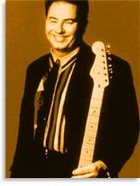
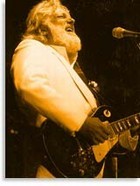
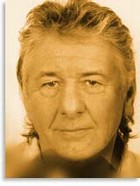
  • Mick Ralphs

    The Rock 'N' Roll Fantasy Countinues

    The legendary Bad Company was born in 1973, when Mick Ralphs left Mott The Hoople and teamed up with ex-Free vocalist Paul Rodgers. Soon after, Free drummer Simon Kirke and King Crimson bassist Boz Burrell came aboard to complete the lineup. The group’s name was inspired by the ’72 film of the same name, directed by Robert Benton.

    Bad Company released its self-titled debut on Led Zeppelin’s Swan Song label in ’74. It included the colossal hit, “Can’t Get Enough,” and established the R&B-based rock sound that made Bad Company one of the most popular bands of the ’70s and ’80s.

    The original lineup recently reunited to assemble tracks for The Original Bad Co. Anthology (Elektra), a compilation and history of the group’s music. This new two-CD set includes previously unreleased material, rare alternate takes of several hits, and four new cuts; “Tracking Down A Runaway,” and “Hammer Of Love,” written by Rodgers, and Ralphs’ “Ain’t It Good” and “Hey Hey.”

    The sessions for these new tracks marked the first time the original members had played together since 1981. And in honor of its latest release, the reunited Bad Company toured this summer. Ralphs spoke with VG about the making of Anthology and his hopes for the future of Bad Company.

    Vintage Guitar: What inspired the Anthology album and reunion?

    Mick Ralphs: The idea initially came up to do the anthology because we already have a compilation (10 From 6), and rather than put out another sort of best-of collection, we thought it would be a good idea to release a history of the band without having it be anything beyond that. The record company thought it was a great idea and asked if we had any material that hadn’t been released. I found reams of lists of songs that had silly titles like “Blues Jam, Part 1.” Going through them would have involved hours and hours of listening to tapes that may or may not even be usable. Paul or I suggested it would be easier to just record new songs and bring the whole thing up-to-date. That would give us the chance to play together and give the record company something they hadn’t heard.

    Where did the older unreleased material come from?

    There are some unreleased things from the past. Some is different mixes that were released. There’s a song called “Smoking 45,” which was never released. We recorded that one around the time of the Burning Sky album. There’s a track called “Whiskey Bottle” which was a B-side, but it was a different mix. “Superstar Woman” was never released.

    How was the new material selected?

    Paul sent me some of his stuff and I sent him some of my stuff, then we ended up picking four songs.

    How long was it from the time the idea came up to record new material to when the band actually got together?

    There was a lot of back and forth with the record company and it took a while to come up with a compilation that was going to please everyone. It was about nine months before we got to the point of doing the new songs. We hadn’t actually played together for 20 years or so, but the new songs were recorded pretty quickly. I kind of like the rough edge they have.

    What were your feelings when the band began playing together after so long?

    We were laughing and joking because we were a bit nervous. But once we started, we knew it was going to be okay. Paul came in and put a guitar on, and then once we started playing, this big grin came over his face and that sort of broke down any tension. It was just that so much time had passed and caused everyone to be more cautious.

    What was the first song you played when the band finally reunited?

    We played “Tracking Down A Runaway.” Paul plugged the guitar in and just started playing the riff, and we all joined in.

    Was there too much pressure to do an old song at that point?

    Maybe just a bit, because we were nervous. Then one day Paul suddenly said, “Let’s do ‘Can’t Get Enough,’” which I usually play on an open-tuned guitar, but I didn’t have one there. We did it anyway, and it sounded really rocking. That really psyched everybody up.

    How were the new songs developed?

    I have been writing for the last few years, since I got off the road. I write a lot of different songs, like jazz or pop songs, but not for any specific purpose other than just to keep writing.

    Did you write the new songs with Bad Company in mind?

    No, I wrote them as rock songs, for anyone, really.

    When you’re writing, do you still prefer open tunings, as you did in the ’70s?

    Yes. “Hey Hey” was an open tuning. It’s basically a G tuning – G, G, D, G, B, D. I’ve used that for a long time. I liked the idea of having open G because it gives you different sounds and for rock ‘n’ roll songs it restricts you from going too posh. When we did “Can’t Get Enough” and “Movin’ On,” Paul liked the songs, but he wanted me to change the key. So we ended up doing them in the key of C. I used a Strat or a Tele and I had to put really light strings on it and tune it up to the key of C – C, C, G, C, E, C. That’s quite high, but it gives a very unique sound. It never really sounds right in standard tuning. It needs the open C to have that ring, but it makes the tension on the strings feel really tight. I play the solo in the end in the open tuning, but Paul’s guitar is tuned in standard tuning. It’s really hard for me to bend when I get to the end of that solo, but I’ve gotten used to it. I just have to remember not to hit the guitar too hard or I might break the strings if I’m not careful.

    Who influenced you to play open tunings?

    I think I’ve always wanted to write songs like Chuck Berry, things that just chug along. I think Keith Richards has always tried to do the same. Like me, he was always trying to write a Chuck Berry song. To me, he wrote the definitive rock ‘n’ roll lyrics – about cars, girls and jukeboxes, all the stuff that we tried to put in songs. Although his songs were all basic blues songs, he was playing country rock with a blues background. It had a great groove to it. It’s hard to do, really. A lot of rock bands try to do it, but they sound square. If you listen to the old Chuck Berry records, he’s playing in 4/4, but the other guys are playing a shuffle. The two rhythms together make a great sort of groove. I think that was the secret of those records. I like to try things like that.

    When you went to record the new material, did you approach things in the same way as the old days?

    Yes. Paul or I would come up with the songs and then we’d send tapes to Boz and Simon…which they’d never listen to! Then when we would go into the studio, they’d ask how the songs go and what happens after each part. When we record, I just play real simple rhythm guitar with Simon to get the groove going, and Boz lays down a bass part on top. I never really have any fixed ideas on the guitar parts. I just want to get it rolling and take the song where it should go. I’ll play whatever is going to work, whether it’s chugging chords or little riffs, and we just work together and see what fits best.

    When you’re working with other guys, it’s generally best to see what they want to do with your song. I just write things as a pencil sketch and chuck it at them. You can always embellish it – home demos are home demos. You need the other people to part a spark in it.

    Did you record any other new tracks, besides these four songs?

    No, we didn’t have enough time, really. It would be nice to do more. I’ve got lots of songs I’d like to try, and I’m sure Paul has some, too. It would be nice to think there will be more than this, but for the moment we’re just taking it one step at a time. We don’t want to feel we’re tied to each other because that would produce a counterproductive vibe.

    Were the basic tracks recorded live in the studio?

    Yes, we just hacked them out. As long as I’ve known Simon, he’ll play a song three times and then he’s done. He plays it like it’s his last gig on Earth. I always say that I’ll redo the rhythm tracks and I never do.

    How many guitar tracks do you record?

    I usually record one basic track and one with a lead bit or slide bit. Paul played guitar on a couple of tracks, too. He played on “Tracking Down A Runaway” and “Hammer Of Love.”

    What kind of guitars, amps, and effects did you use on the new tracks?

    For my rhythm tracks on all of the songs, I used either a Japanese ’50s reissue Strat or a blond Custom Shop ’54 reissue Strat. I used the Custom Shop Strat for all the slide parts. Both have maple necks and fingerboards. I played through a 100-watt Marshall 900 series head, the High Gain Dual Reverb with an old straight 4 X 12 bottom cabinet. I don’t like the way the slanted ones sound. The cabinet was one of the old ones Marshall made for Bad Company in the ’70s. My cabinets were also modded – the backs were sealed, so the speakers load from the front.

    In the ’70s I played through two 100-watt heads and two 4 X 12 cabinets. After Bad Company stopped working together, I realized how loud they actually were. If you play in a club, it’s like you could just shred everybody’s hair and nobody else could be heard. Then I got some of the new Marshall heads because I needed the master volume control to keep the volume down. I had gotten rid of most of my old Marshalls over the years. For a long time, they were in storage and when I got them out, they weren’t in the best condition. Most of them needed servicing and it seemed much easier to just get new ones, but I don’t think the new ones sound as good.

    I don’t usually record with any effects, so any of the effects on the new tracks were added to fatten up the mix. We recorded in England and roughly mixed them, then Paul redid some vocals and remixed everything in Canada, so I’m not exactly sure what he did to them in the final mixes. In the past, on the road I had a T.C. Electronics rackmount unit that would give me either a bit of chorus or a bit of echo. All of the other gadgets back then were too noisy, but the T.C. gave me a nice, creamy chorus without any “whooshing.” I don’t really like using effects. Certain songs will need it, but I like to have the sound guy control it.

    Do you ever play Les Pauls anymore?

    Lately I’ve been totally Fender Strat mad and I play nothing but Strats, although I could never get on with the Strat before. When I’m at home, one of my hobbies is taking guitars apart and rebuilding them. I’ve redone almost every guitar I’ve got. I have three or four reissue Strats I’ve redone and I think those sound and play about as good as many of the old ones. It’s about getting the right body. I can tell right away – I don’t even have to plug them in. I like them a little lighter in weight, but not too light. I think the lighter bodies sometimes have a smoother sound.

    But since we’re back on the road, I’m starting to need that Gibson stuff again. I like them both. They’re totally different animals. The Strat makes you work hard. It’s harder to play and you have to fight with the damn thing to get it to sound good. The Gibsons are more luxurious-sounding and I used them for some of the old stuff. I think of the Gibson as driving a Cadillac, while the Fender is like driving a big pickup truck. You get there in the end, it’s just how you go about it.

    What kind of sound do you try to get from the amp?

    I like my sound to have plenty of bottom and a little bit of edge on top, but I don’t like middle and I don’t like it to sound shrill. I want my sound to be smooth and creamy.

    When you record, do you stand in the same room as the amp?

    Yes. I have the amp separated with a screen to cut down on the spillage, but we don’t really consider that a problem. I like to feel the amp moving the air and when you play in the control room, you can’t feel that. When I play a solo, I like to be close to the amp, where it’s all noisy and I can feel the bottom-end thundering away. I also stand pretty close to Simon because I like to see him and so I can feel the bass drum.

    Do you wear ear plugs when you play live?

    No. When I’m on a big stage, I find myself going back to the amp for a bit of that oomph. In a club, you’re right on top of it and it’s right there in the back of your head. But when you’re on a big stage, when you walk to the edge of the stage, you can hardly hear the sound coming out of your amp. You can have it coming through the monitors, but it always sound like a chainsaw, so I find myself gravitating back to the amp to get that sound I like. Onstage, I just get a sound that makes me feel good and play good, then I let the sound guy do his thing. If you get a good sound guy, he’ll give you some direction, too.

    How are your Stratocasters set up?

    I have the tremolos blocked off – I don’t use the wang bar at all. It’s too trendy. In fact, I don’t even screw in the bars.

    What kind of strings and picks do you use?

    Ernie Ball Regular Slinkys, .010-.036, and Herco gold picks. I like that rough grip they have. When I play, I turn them around and use the round side so I can get harmonics. I grip so there’s only a little bit of plastic showing, and use the rough edge to scrape the strings.

    Do you still have a large guitar collection?

    I had to sell many of my vintage guitars and old amps. I’ve always collected guitars, but over the years you get divorced or something and something has to go. But that’s okay, because then you can enjoy finding them again. I go to vintage guitars shows and I get obsessed by old catalogs and parts, although I’m amazed at the asking prices. But there’s always room for more guitars and you can never have enough great stuff! I just like looking at guitars and I can’t bear to have them kept in cases. I can’t stand people who keep them in cases and never clean them up. I have to have them out. Every one of my guitars is gleaming.

    I’ve got an old Fender ’57 Esquire I used to play all the time, then I stopped playing it and I had it hanging around. When I started playing it again I realized it’s a really great guitar. I have a pink Japanese ’50s reissue Strat and Tele – they were a pair. I made the Tele into an Esquire and have repainted the Strat several times now. It’s been nearly every color, but it sounds great no matter what you do to it. It’s black and I’m thinking of taking it on the road. I’ve got a couple of other reissue Strats and some homemade Esquires, too, and an old ’59 Les Paul Standard, which is a great player, although it doesn’t look that great, and an ES-335 reissue. I’ve also got two cheap Epiphone solidbodies, one is like a Les Paul Junior and the other is an LP100, which is like a plain Les Paul Standard with a thin body and a bolt-on neck. It sounds great.

    How do the newer reissues compare to the original vintage instruments?

    Sometimes a new cheapie can be really cool and just sound right. It’s never going to be exactly like a vintage guitar because you can’t recreate the aging. But some of my reissue Teles and Strats can rock with the best of the old ones.

    What kind of music do you listen to?

    Jazz, classical, and blues most of the time. I don’t really listen to any current stuff. I usually have the radio tuned to a classical or jazz station. It’s therapeutic – music that makes me feel good. I find rock music very annoying. It makes me want to turn it down all the time. When I do put on an album, I’ll put on something like Mozart or Robben Ford.

    Do you ever listen to your own records?

    I like to leave it alone once I’ve done it, although I did listen to the stuff we did recently quite a bit, but I can’t play it anymore. My girlfriend plays it all the time, so I hear it around the house, but it would be really cool to hear it on the radio.

    Any chance the band will record a new Bad Company album in the future?

    That would be great. If everybody enjoys this, we’ll talk about it. Everybody kind of wants to leave it so there’s no pressure. We’re taking things casually, and if it all pans out, there’ll be more. It would be cool.


    Photos courtesy of Elektra.

    This interview originally appeared in VG‘s Nov ’99 issue.
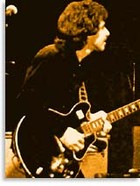
  • Johnny Rivers

    A conversation with..

    There are perhaps a handful of guitar riffs so distinctive they become indelibly associated with an artist. For Johnny Rivers, the opening of “Secret Agent Man,” which he wrote with P.F. Sloan, insured his place among the greats of the guitar. Yet, it was just one of a string of ’60s hits in a decade in which he sold more than 20 million records, formed his own label/publishing house, won two Grammy awards for his production work, and discovered some of the greatest talent in the industry. Despite his incredible success, Rivers continued a heavy tour and recording schedule. To date, he’s barely slowed his pace. When Vintage Guitar spoke with him recently, he had just released his new CD, Last Train To Memphis, and launched his own website.

    Vintage Guitar:Your music has always reflected your southern roots. What was it like, musically, growing up in Baton Rouge, Louisiana?

    Johnny Rivers: It was a real interesting time because of the transition from rhythm and blues to rock and roll, with artists like Fats Domino. I got to see all these incredible blues players, like Jimmy Reed. One of the guys I started jamming with was Jimmy Clanton, who was a very good guitar player and a singer who had a couple of hit records in the ’50s. He had a song called “Just A Dream,” which was a big hit. The country guys were really popular – guys like Chet Atkins and Merle Travis. I like that fingerpicking style. Actually, my dad played a guitar, too, which made it kind of interesting. He had a gut-string guitar. My first really good guitar was a Gibson J-45.

    How did you learn to play the guitar?

    Mainly watching my dad play. I learned some chords and I started watching anybody I could, once I really got into it. Anybody who played a guitar, I’d sit there and watch them and get them to show me something, like how to make a certain chord.

    What kind of music did your dad play?

    He played a lot of Italian folk songs and some classical kind of stuff, but no blues or rock and roll.

    Your musical education included stints in New York and Nashville, and you’ve said those experiences taught you the importance of a good song.

    The first time I went to New York, I met Alan Freed. I had just started writing some songs. I hadn’t written that many, but I had been playing around Baton Rouge with my band. I think this was probably 1957. Alan’s publishing company was in the Brill Building, and of course, the Brill Building was where all the songwriters hung out because that’s where all the publishers were. Guys like Otis Blackwell and Bobby Darin, and all the guys who were writing songs for Elvis at the time, just hanging around, writing songs, talking about music.

    That’s when I really learned the importance of a song. Everybody knows about Nashville and music and songs, especially. So I got quite an education there, as well. But I always loved songs with great lyrics. Even the early Hank Williams stuff. His lyrics were so powerful.

    How did you get to Nashville?

    The first time I went to Nashville I met Audrey Williams, Hank Williams’ widow, and she saw me playing at a club in Birmingham, Alabama, with a comedian named Brother Dave Gardner. She knew him and had gone there to see him. She invited me to Nashville, so I went and spent a little time. That’s when I met Phil Everly and Roger Miller, who was still working for Tree Publishing Company and just starting to write some songs. I went back and forth from Baton Rouge to Nashville several times.

    Wasn’t James Burton instrumental in your move to California?

    I met James at the Louisiana Hayride in 1958, when I was collecting Ricky Nelson records mainly because of the guitar work on them. I had written a song called “I’ll Make Believe,” and everyone I played it for said it sounded like a Ricky Nelson song. So I told James, “I wrote this song everyone seems to think is a good song for Ricky.” He said, “Well, here’s my address. I’m going to be here about another week and a half, then I’m going back to Hollywood.”

    He was not only recording with Ricky, but he was doing those appearances on the “Ozzie and Harriet Show.” I sent him the tape with my address and phone number. I never thought I’d hear anything back on it. About a month later the phone rang at home and my mother says, “Johnny, somebody says he’s calling you from Hollywood.” I went, “Yeah, sure.” I thought it was one of the guys from my band playing a joke. I get on the phone and it’s James Burton.

    “Yeah, you know that song you sent me? I played it for Ricky and he really likes it,” he said. “He’s going to record it,” I went, “You’re kidding.”

    I got his phone number in L.A. and his address and everything, and I started thinking about it. I started saving my money and I booked as many gigs as I could get down there, then I bought a plane ticket. That was the end of ’58. I hung out around here almost a month, then I got the California bug. I knew I would come back some day.

    I went back and played around Baton Rouge with my band, went back to school, and then went to Nashville for awhile. Then, in ’61 or ’62, I came back out here and pretty much stayed. I was rooming with Jimmy Bowen at the time, doing some gigs, then I went back to New Orleans and played there in ’62. I met Louis Prima down there. He got me a gig at the Sahara Hotel in Lake Tahoe playing in the lounge, so I went up there for awhile. And then, I just kind of hung around L.A., working with Jimmy.

    How did the gig at the Whisky A Go-Go come about?

    At the end of ’63, I remember I was playing there when John Kennedy got assassinated, I was working at a place called Gazari’s. It was just a small restaurant and had a little jazz band and a small dance floor. We had built up a big local following. It was a trio – Eddie Rubin was playing drums, Joe Osborn on bass. And that’s when we got approached on the idea of the Whisky A Go-Go. I went to Bill Gazari to tell him I really needed a raise ’cause this place was packed and we were the hottest thing in town and he gave me this big story about, “There’s a lot of people, but they weren’t spending any money.”

    I called Elmer Valentine – he’s the one who approached me – and I said, “You know that idea you’ve got about that place, the Whisky A Go-Go?” I said. “I think that’s a good idea. I’ll do it.”

    I signed a yearlong contract with them. On January 15 of ’64, we opened the Whisky and it was a smash from opening night. I just brought my following up from the other place. About two months into the Whisky, I borrowed some money and rented a remote recording truck. It was three tracks at the time – that’s all they had, three-track recorders. I cut everything we did for two nights and that’s where that first album, Live At The Whisky, came from, with “Memphis” and all that stuff on it. By June of ’64, “Memphis” was at the top of the charts and the album was like number one in L.A., and heading up the national charts.

    You were 21 years old and playing to the hippest crowd in L.A. – Steve McQueen, Ann Margret, Lana Turner. What was it like to be Johnny Rivers then?

    Well, it was pretty exciting. It was all like a fast-moving dream. I was just into the music. I loved playing and I was actually working two jobs. I was working at this club in downtown L.A. from four to eight at night, just Eddie Rubin, the drummer, and I. We didn’t even have a bass player down there. Then we’d pack up, get on the freeway, drive up to L.A., go to the Whisky, set up, grab some food, and play from 10 p.m. to 2 a.m. It was pretty rough work, but it was fun and we were into it. We knew we had something going and there was a big buzz. It was pretty exciting. And all I was doing was playing all those funky blues tunes and rock and roll songs I’d played with my band back in Baton Rouge in the ’50s. No one was doing that around here. In L.A., the Beach Boys were just getting started and it was sort of that Jan and Dean/Beach Boys kind of surf music, real light kind of stuff. No one was playing get-down-funky blues or stuff like “Memphis.”

    Were you playing “Memphis” in your Baton Rouge days?

    No. Actually, when I was hanging out with Elvis out here in the early ’60s, just before I opened Gazari’s, I actually jammed on that song with Elvis up at his house in Bel Air. That was one of my favorite Chuck Berry songs. That, and I used do a song called “Hi- Heel Sneakers,” so what I did was actually adopted that feel from “Hi-Heel Sneakers” to Chuck Berry’s “Memphis” song. That’s where we really emphasized that lick.

    What guitar were you using then?

    In early ’57, I bought a Fender Telecaster. I had it for about six or eight months, then the store I used to hang out at in Baton Rouge got a Stratocaster, so I traded. Back then, we didn’t know any better, instead of keeping them. It was almost like a car – you couldn’t afford to keep just one guitar and go buy another one besides. I traded my Telecaster in on the new Stratocaster. And those Stratocasters became the most collectible guitars around. Some of those guitars you could buy back then for $170 became worth $45,000 or $50,000 in the last few years.

    Did you keep your Stratocaster?

    Nope (laughs). I traded it in 1962, in New Orleans. I was playing the Dream Room, on Bourbon Street. I had a sort of a twist blues band. I remember we had two girls dancing. I went to Werleins Music Store on Canal Street and I saw this beautiful red Gibson 335. I was playing a lot of rhythm guitar. I had the Stratocaster, which I liked, but it didn’t have a really great rhythm sound. It was more of a lead guitar whereas the 335 has a hollow body, so it gets a little more of an acoustic rhythm sound. It’s also a great lead guitar, but for the kind of slap rhythm I was playing, the 335 really had a nice resonance and a nice sound. Not knowing any better, instead of working out something and keeping both, I traded my Strat on the red 335, which is the guitar I wound up using on all those hits. It became my sound and it’s the one I used on “Memphis,” “Seventh Son,” “Secret Agent Man,” and all of that stuff. That was that red Gibson 335.

    And you still use that guitar today?

    I still have it. I don’t use it. The original one’s put away. It’s sort of in the archives. I have one like it that’s a ’65, actually a very great-sounding guitar. It sounds pretty close to the original, but I didn’t want to take the original on the road. In 1965, Gibson made the red one I use now, and a black one, which was the first black 335 they ever made. Now they’re mass-producing them. Up to that point they made blond, sunburst, and cherry red.

    Didn’t they make an acoustic guitar for you?

    They made an acoustic 12-string for me in the ’60s, after I had a lot of record success. They made one for me at the custom shop. So I’ve got four 335s, and I have a Les Paul that I like. It’s just a little heavy for me to carry around on the road. The 335’s much lighter. Gibson made me a 335 electric 12-string I actually traded, which I shouldn’t have done. I didn’t need to. This guy I knew who had a music store talked me into trading it in for that Les Paul. I should have kept that one. That’s a really nice sound.

    What kind of amps do you use?

    The first amp I had back in the ’50s was a small Fender. The second was a Gibson Les Paul GA-40, which I still have. That’s the one I used on all the recordings, all that stuff at the Whisky. Les Paul wrote on it in gold. I did this special with him at the House of The Blues a couple of years ago. Everybody got up and did a song or two with him. So I brought it down there and he signed it to me in gold. It’s really funny, by the knobs it says “Les Paul,” with his signature, and on front he wrote with a big gold pen, and it’s exactly the same, so it looks cool! That had just one 12″ speaker in it.

    In ’65, I got a couple Gibson recording amps. They didn’t catch on, but I managed to get two or three of them that I kept, and they sound really good. They are all-tube.

    I’ve got a Fender Concert amp from the ’60s, the one Joe Osborn used. He played his bass through it. I got a Fender Princeton amp, and I got a couple little Fender Champ amps, which sound really good in the studio. And also I’ve got the reissue of the Fender Vibroverb. And on the road, I usually use two Fender Twin Reverbs, or two Fender Deluxes. I like the Deluxes in the smaller rooms.

    You’ve got quite a few.

    For all seasons, and sounds, and styles!

    How did the song “Secret Agent Man” come about?

    There was a television show called “Danger Man,” starring Patrick McGoohan. We were in London and my producer, Lou Adler, met the producers of that show. At that time it was a big show in Europe and they were getting ready to bring it over to the States, but they only had an instrumental theme to it.

    One thing led to another and they asked if we would consider trying to come up with a theme song. I was really hot at the time. I was working with P.F. Sloan and Steve Barri, a writing team that worked with Trousdale Music. So we came back and we told them the concept. You know, it’s a spy kind of thing; Danger Man. They came up with this song, “Secret Agent Man.” We worked out that guitar riff, which is a play off the James Bond theme, submitted it, and they really liked it. We only had one verse and one chorus. They wanted to use it to open the television show and so we worked out that deal. The show was an instant success here and people started calling radio stations to see if it was a record. Then the radio stations started calling the record company. We said, “It’s not a song, it’s only a verse and a chorus.” They said, “You ought to finish it and make it longer.”

    We decided to record it because everybody was calling. Everybody thought it was a hit. So I went back to Sloan and Barri and said, “You’ve got to write some more verses.” They did and we went in and recorded it. I think I cut it live at the Whisky. After that initial success, every chance we got we’d hire that remote recording truck and just record stuff at the Whisky because it was so inexpensive. It was cheaper than going into a recording studio. We cut it at the Whisky and then we took it into the studio and added stuff to it. We redid my lead guitar part, doubled the riff and added hand clapping and all that stuff. And that became the record. We released it and it was a smash.

    Eddie Van Halen has said he learned to play guitar listening to that.

    Yeah, that’s what he said. When he was learning to play guitar he listened to a lot of my early records. A lot of people have told me that, a lot of guitar players I run into. Especially “Secret Agent Man” for some reason. It was a simple riff. And “Memphis.” I think that was one of the things that was so catchy about my early guitar riffs – any amateur could play them. The opening riff to “Mountain Of Love” started out on the bass but we worked it out on the guitar first. Then we decided to have the bass play it. On “Memphis” and “Seventh Son” the guitar riffs were real simple. I did a lot of those in open E, which is a real good, easy key for guitar players ’cause you can play a lot of open strings, which gives it a real funky sound.

    Lou Adler produced all of these hits, didn’t he?

    Yeah. We also started a company called Dunhill Productions, which became Dunhill Records, which premiered the Mamas and the Papas and Barry McGuire and a couple of other groups. The Mamas and the Papas were probably the most successful artists on that label. In ’67, we were approached by the people who do the jazz festival in Monterey on the possibility of performing at the festival. John Phillips and I discussed it and we said, “We really don’t feel that we belong at a jazz festival because we’re not really jazz artists.”

    So one thing led to another and we kept talking to them and someone said something about why don’t we not do a jazz festival this year, let’s do a rock and roll/blues/pop festival. One thing led to another and we did a joint venture. I was on the board of directors. Me and Lou, John Phillips and Paul Simon each put up $10,000 to put it all together.

    What do you remember most about the festival?

    What I really remember is that people camped out everywhere, and the fact everybody expected it might turn into a big nightmare with all sorts of hassles because back in those days everybody was smoking pot and taking acid. Actually, there was not one incident. There wasn’t one arrest and it all went real smoothly. Nobody got hurt or OD’d and there were people everywhere. They really had a nice thing worked out with the police and it was friendly. The whole community got behind it ’cause it was great for all the hotels and motels in Carmel, Monterey, and Pacific Grove. All those little towns benefited.

    Do you remember Jimi Hendrix’s performance?

    I remember Jimi Hendrix, the Who, Janis Joplin with Big Brother and the Holding Company. And Ravi Shankar. That afternoon was the first time I went to Big Sur. It was a rainy sort of drizzly day and everybody was sitting outside. Ravi Shankar played for five hours. He played all afternoon on Saturday. The thing went for three days. It was Friday night, Saturday and Sunday afternoon and evening. I performed the first night, so did Simon and Garfunkel. The Mamas and Papas wound up closing on Sunday night. I think Janis Ian was on it, Laura Nyro, so many groups really broke out of that thing. Otis Redding, I remember him too. He was fantastic! He came out with Booker T. and the MGs and just killed ’em. Everybody was trying to be a hippie with long robes and long hair and beards and here comes Otis Redding in this green suit and tie.

    We didn’t realize how important it was until after it was all over. Then all the articles started hitting, and the news shows. We all just got caught up in it and we thought it was a fun three days. Actually, it was the first festival, and after that, they did Woodstock. Everybody who was a promoter wanted to do a festival. The idea was to do it bigger and better and it really didn’t work. Even Woodstock turned out to be a disaster. Everybody was stuck in the mud and people got sick. It was successful in terms of volume, but as far as really pulling off a smooth show with no incidents or anything, I think Monterey was probably the only one that ever came off really well. We put a lot of time and energy into planning it, working with the community and all the business people in the area and the people from the jazz festival, who had a lot of experience.

    Not long before Monterey you recorded “Poor Side of Town.” As a ballad, it was a real stylistic shift for you. How was that song recorded?

    We recorded that in the studio. I just cut it with the rhythm section. I was working with Hal Blaine and Joe Osborn, and Larry Knechtel was playing keyboards. We recorded it with the rhythm section and after we finished it, it sounded like you could hear the strings on it. We were trying to decide who we were going to get to do the arrangements. We talked about Jimmy Haskell and there was a guy who Phil Spector worked with a lot. We considered him. I said to Lou, “You know, I’ve always loved those Ray Charles records, especially that country and western album Marty Paich did the charts on.” He said, “Well, Marty’s available.” So we reached Marty and he said, “Yeah, why don’t you send me a tape of the song and let me listen to it.” We sent him a copy of me singing it with the rhythm section and he said, “Oh, I think this is great. I think I can do a really nice chart on this.”

    We let him go ahead and write it. I’ll never forget going in there and listening to that. We used part of the L.A. Symphony orchestra and we put the tape up and he was conducting that orchestra and you could hear that sound. We had Buddy Collette, who was a jazz flute player, play flute on it and then we had these gals singing all the background parts and there it was, you could hear it. You went, “Yeah. Wow! A whole new sound.” So that was it. The record company wasn’t sure because it didn’t sound like any of the other things I had done, the up-tempo go-go Seventh Son/Mountain of Love/Secret Agent Man and all of that stuff, and they were kind of reluctant. They went “I don’t know, it sounds great but this is a big departure and we’re really taking a big gamble.” But Lou and I insisted on putting it out and it was a smash. Number one in like three weeks.

    At about the same time you started your own record label and publishing company. You were 24, and had recorded eight albums in two years. What prompted you to become more involved in the business aspects of the industry?

    Well, when my contract expired with Imperial we got into negotiating a new contract. When I came back to California in the early ’60s I was hanging out with Jimmy Bowen, Phil Spector, and I wanted to be a record producer and work with other artists. And I still had that love for that stuff. I just loved working with musicians. I really like working in the studio and creating, so as part of the deal to re-sign with them, I [asked for] my own label. We got them to put up the money and give us offices.

    One of the first groups we signed was the Fifth Dimension. They were called the Versatiles and we decided they needed a new name. I had this vision of them being sort of the black Mamas and Papas. I made them go out and buy all these funky clothes, all dress differently – fringe and all of that stuff – because when we first met them they were sort of doing the Motown thing, dressing real clean in neat suits. And it really worked. They had the sound. As a matter of fact the first chart record was a John Phillips song off of one of the Mamas and Papas’ album called “Go Where You Want To Go.” Then we released “Up, Up and Away.” That was the second song we released. That’s the one we won two Grammys for. It was just so different. In the meantime, I had met Jimmy Webb and signed him and he knew the Fifth Dimension. Somehow, he had met them because he had done some work over at Motown and they had been auditioning over there.

    Even with your broadening interests in publishing and producing, you continued to release an album a year until the late ’70s. Looking back, what is your favorite of this period.

    I think my favorite album was probably Realization. It was actually the first one I produced without Lou Adler. In fact, we’re planning to re-release it on CD.

    Was there ever a time when you stopped performing live?

    Well, yeah. I’d gone through periods where I didn’t work live performances for probably seven or eight months at a time. I always did shows and stuff. I think after 1970 or so, after I sold Soul City, I took off for awhile and didn’t do too many gigs. And when I came back I did the L.A. Reggae album with “Rockin’ Pneumonia” and all that stuff, which did really well. That was on UA because Liberty had been sold to Transamerica which owned United Artists pictures and records. So I wound up on that label. I wasn’t real thrilled with that. I actually fought with them to try to keep the Imperial label because I loved that company so much. It was the label Fats Domino and Ricky Nelson recorded for.

    But they didn’t do it?

    No. They should have. UA didn’t do well at all. It doesn’t even exist anymore as a record company.

    I didn’t realize you sold Soul City.

    Well, I didn’t sell the company. I kept the name and the corporation, but I sold the assets, which was mainly the Fifth Dimension agreements and masters and all that stuff because I was getting behind on my own product.

    In 1991 you came to Memphis and recorded the Memphis Sun Recording. Tell us a little about that project.

    I accepted an offer to do a concert for the reopening of the Mall of Memphis. While I was there the Chamber of Commerce approached me on doing a couple of bars of “Memphis” for their commercial. That night, Gary Hardy, who was running Sun Studio, called and said, “Hey have you been inside Sun Studio? Why don’t you come over.” So we went down there and he took us through the studio and we really liked it and I asked if he was set up to record. He said, “Sure. We cut stuff here all the time.” So, I said, “Well, you know I just got hit on to do this thing for the Chamber of Commerce. If you’re set up to record, why don’t we just do it here.”

    I sent the road guy to get all our instruments and stuff. We went in and we just did it in like one take and he played it back and it sounded like those old Sun records. And we went, “Wow! What a cool sound!” That’s sort of where the idea came about to go back in and do an album, sort of a tribute to the early Sun artists. And we did. We set it up and went back and did it and it came off really good. Carl Perkins joined us. The rest, as they say, is history.

    Lately you’ve been collaborating with Jack Tempchin.

    Right. I’ve known Jack for a while. We wrote some songs together years ago. Jack wrote “Slow Dancing” among other songs. He wrote a lot of great songs for the Eagles. “Peaceful Easy Feeling,” “Already Gone,” and he wrote several of Glen Frey’s hits with him. He had a song on the Eagles’ Hell Freezes Over album called “The Girl From Yesterday.”

    Describe a typical songwriting session.

    I don’t know if there’s a typical one. Jack and I usually get together and sit around in the afternoons and start throwing ideas around. He may have an idea already going or something or we’ll just sit around and play and jam and play some old songs. One thing will lead to another and somebody will come up with a riff or a line or something we build from. And then some days we just get together and nothing happens.

    The song “Last Train To Memphis,” the title song on your newest CD, has a slight echo, reminiscent of the Sun studio records. How did you get that sound?

    Well, we cut that here in L.A. I don’t know. We may have used a little delay or something on it. More than just the echo, I think, it’s pretty much just the instrumentation. I used a couple of acoustics and a slide. The only electric guitar on it is in the bridge of the song and I put that one with a tremolo. I wanted to get sort of that Roy Orbison sound on the bridge. I think more than anything that’s probably why it sounds that way. I tried to make it sound like one of those early Sun recordings, either a Johnny Cash or early Elvis, sort of a modern version of that anyhow.

    The other cuts on the CD run the gamut from blues to rock to ballads. How would you describe this CD?

    Well, it’s very eclectic. A lot of those songs I’ve been sitting on and recorded them over the last two or three years. It’s not a thing where I just said, “Oh, here’s 10 songs, let’s go in and cut them for this album.” It’s evolved. And I hope they sort of fit together.

    Tell us about your web site.

    The web site and the Internet are a whole new ball game. We’ve got audio where I talk about the making of all those hits, and we’ve got even more of the inside scoop on what the band is doing, new music, and memorabilia, my creative endeavors, tour schedules, personal photos, a chat room and ways to win free stuff! Check it out at www.Johnny rivers.com.


    Photo courtesy of Johnny Rivers.

    This interview originally appeared in VG‘s Jun. and Sept ’98 issues.

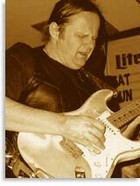
  • Duke Robillard

    Looking Forward to the Past

    A new year, a new label, a new release, and if you look close enough you’ll see a recently-acquired endorsement from Gibson/Epiphone. Has the Duke “arrived?”

    You bet! He’s been arriving for two decades.

    Since the 1976 Rounder Records release of the first Roomful Of Blues effort, the Basie/Rushing-style “big band” he founded in Providence in the mid ’60s, through his most recent effort, Dangerous Place (set for March ’97 release on the Evidence/Pointblank label), he’s most definitely in your town. This “purist at all costs” Kentucky-based 6-stringer has redirected the blues players of the world to the history and depth contained in the periphery of the idiom. Accepted on all musical levels in much the same manner as was the late Danny Gatton, Duke is the quintessential guitarist’s guitarist.

    His multifaceted style is boundless but immediately recognizable, regardless of the time period he is honoring. Regarded as the man who carries the “T-Bone Torch” (by Bone’s widow, no less), as well as the player who filled Jimmy Vaughan’s coveted chair in the Fabulous Thunderbirds, Duke’s list of recorded efforts as both sideman and leader is currently at arms length and growing. Perhaps the only question is whether or not there’s enough of the guitarist to meet the musical demands he has a reputation for undertaking. Some feel Duke is the reason there’s a “big box” on every blues stage in America.

    I was fortunate enough to catch up with him before a gig with Robert Cray here in Dayton last summer. What follows is our conversation about his influences, his mind-numbing recall of (amongst others) the swing era players – horn players as well as guitarists – and the general state of “blues affairs,” in the 1990s.

    Vintage Guitar:This pairing of you and Cray is a blues guitarist’s dream come true, the audience gets the archival and contemporary representations – both sides of the blues coin.

    Duke Robillard:Well, I think it probably had more to do with the fact that we’re both with the same agency. The Rosebud Agency, out of San Francisco.

    Back in ’65 or ’66, I think most readers would agree, Eric Clapton was pretty much responsible for making a lot of kids in the U.S. hip to Freddy King, and from that point, perhaps they might have discovered Jimmy Rogers, and that could have led to their discovery of the Delta masters, in sort of a backward chronological fashion. In much the same way, you have turned a generation of players on to the work of T-Bone Walker, which could lead to an interest in the work of swing blues players like Al Casey, Tiny Grimes and Teddy Bunn.

    Well, that’s a very big part of where I come from, you know. My roots really start with roots rock and roll players like Chuck Berry, Buddy Holly, Duane Eddy. Then I kind of went to blues, then I discovered R&B and from there I got into the swing-era jazz players, the bluesy players like the ones you mentioned; Tiny Grimes, Charlie Christian, and later Kenny Burrell, and of course, T-Bone really bridges the gap and is the father of modern electric blues. I took a great pleasure in discovering it for myself and turning everyone I met onto his music. Hopefully it’s spread a bit (laughs).

    It used to be that, thanks in large part to your work, there were these pockets of interest in this kind of music, a few players here and there – certainly, Hollywood Fats and Junior Watson. It seemed, that all of a sudden there was this interest in Bill Jennings, it’s like a whole aspect of music history, swing history was being unearthed for a new generation of listeners and players.

    Are you still traveling with a three-piece, Pleasure Kings format?

    Four pieces, we have a saxophone with us on this trip, probably before long we’ll be traveling with two horn players, but right now it’s guitar, bass, drums, and saxophone.

    The sax player’s name escapes me right now. Hasn’t he recorded with Providence-area performers Michelle Wilson, and perhaps the Love Dogs?

    Right, Gordon Beadle.

    That’s another thing that’s always amazed me about this swing and blues “craze,” if you will, is the concentration of players from the Boston and Providence areas, you’d expect it from Boston. But Providence?

    Well, Roomful Of Blues started from there. We started playing that music in 1967, and added the three horns in 1970, and at that point there was no one interested in what we were trying to do – recreating the sounds of Louis Jordan, Buddy Johnson, you know, Joe Liggins, Joe Turner, Wynonie Harris – the real sounds of rhythm and blues from the ’40s and ’50s, and after a number of years, a few bands came along who showed an interest in that style of music, I would have to say that we probably influenced them to the point that they listened to it and then wanted to go seek it out, you know?

    Now it seems as though there’s a litany of bands immersed in this style and it will be intriguing to see where this unified interest leads…

    On Dukes Blues, your current release, its obvious, the love and understanding you have for each of the artists you portray, whether it’s Joe Liggins or Roy Milton, whomever. It’s like you almost become those players …

    [laughs] Well I’m channeling…that’s what I’m doing…

    But the catch is that there’s still that identifiable characteristic that comes shining through. It’s still Duke, although you’ve paid perfect respect to the artist you’re portraying, you haven’t taken liberty with the solo, but still, the listener will say “Yep!, that’s Duke…” It’s a special gift that allows you to keep your identity through out all of that “channeling.”

    Well thank you very much, I appreciate that. I consider that one of my best compliments, when someone says that they can recognize me on a record and immediately say “…that’s Duke Robillard,” which I do hear often. Although, like you said, I do cover many styles and I emulate my favorite artists, and try to pretty much pay respect to what they’ve created when I play, for instance, Guitar Slim, T-Bone or B.B. Hopefully there’s some of me that comes out, as well…

    Let’s, if we may, touch on your Temptation release. I think it caught a lot of listeners by surprise in that it took a bit of a foray into the “rock” idiom?

    Well it’s really funny. I’ve been writing and recording, as well as playing live, songs that have a rock and roll bass, since the time of my first solo albums with the Pleasure Kings. I look at it as sort of being all the same. A logical conclusion, those songs being a little more developed in the sense that they are structurally more melodic and less blues, but still coming from a blues place, lyrically. But you know, I can understand the rock thing. A lot of people seemed to view that record that way, as being sort of being a left turn [laughs].

    Probably viewed as just another surprise coming from a player that has that many facets to his style or musical personality, if you will.

    Well, they’re all me…what I’m putting on the table.

    That’s the most important thing. Duke, thanks for taking the time to talk with us.

    Thanks for taking an interest in my music…


    Photo: Larry Bussacca

    This interview originally appeared in VG‘s Feb. ’97 issue.

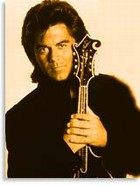
  • Marty Stuart

    Too Country for Country

    Let’s say you’ve been on the country music scene for around 30 years, even though you’re only in your early 40s. And let’s say you’ve served as an instrumentalist for several members of the Country Music Hall of Fame. And let’s say you’ve spent a large part of the late ’80s and ’90s selling millions of records and being one of country’s hottest road acts. What then should you do? For a lot of artists, making a concept album with not a lot of commercial appeal wouldn’t be high on the list. But for Marty Stuart it seemed natural.

    Stuart’s latest effort, The Pilgrim, is a masterpiece that tells the tale of love gone wrong and the tragedy, revenge, and redemption that follows. The guests range from his former bandleader, Johnny Cash, to Emmylou Harris, George Jones, Ralph Stanley, Pam Tillis, Earl Scruggs, and more. And the instruments used are enough to make any collector drool: Hank Williams’ 1939 Martin D-45, Mother Maybelle Carter’s Fender Palomino, Don Rich’s ’64 Tele, Luther Perkins’ ’55 Esquire, Bill Monroe’s ’50 Martin D-28, and of course Stuart’s very own Tele, formerly owned by Clarence White.

    With that backdrop, we started our interview with Stuart talking about buying instruments.

    Vintage Guitar: How are you doin’?

    Marty Stuart: Great! I love your magazine. It costs me lots of money. I try to stay away, but it doesn’t always work. Me and Tom Petty were talking about going to Norman’s Rare Guitars…Tom says it’s like going to a dope dealer when you’re trying to stay off the dope.

    Let’s talk about The Pilgrim a little bit. How did the idea come about, especially given the state of country music radio?

    I’ve been on the road since I was 12, and I figured as the century came to an end – and really it’s the end of country music’s first century – it seemed like a milestone time for me and for country music. It just seemed time to draw down a marker and do something different, rather than just a normal kind of record. Time to close and then open the next door up.

    I really didn’t have this in mind when I started…I just wanted to do something different. I didn’t know what different meant and this thing just kind of evolved into this gorilla it became (laughter).

    How did you label react? Did you get some funny looks?

    Well, I expected to be escorted out of the building by security guards when I brought it up. I presented it in the weirdest way. In North Hollywood there’s a street called Lankershim Boulevard, and that’s where Nudie, the rodeo tailor was, and Manuel was there. There was a guy named Jaime…it was kind of the boulevard of the cowboy tailors. There’s a lady out there named Rose Clemons, who did all the embroidering on the suits. She was a master tailor embroiderer.

    Now Rose is closing in on 80 years old, and I just drew out on three paper towels this little scenario – comedy and tragedy in the middle, all points in heaven on the top and hell on the bottom – and took it to Rose. I said “Rose, do me a tapestry, four feet by five feet, like a greatest hits of all the greatest embroidery…just kind of a love letter to Lankershim boulevard. So, she says (Stuart dons an English accent), “Oh, what a wonderful idea.’

    She did it, and sure enough, it’s like a museum piece. It’s just an incredible work of art you just can’t walk away from. So, Tony Brown from MCA kept leanin’ on me about “…it’s time to do a record, it’s time to do a record, it’s time to do a record.” This goes on for about two and a half or three years. And I’m like, “Tony, I don’t have anything to say right now. Country music sounds like **** to me and I don’t want to be a part of it in its current climate.”

    “Well…” he said. “We need a record.” So, come showdown day I had to go to the record company to tell ’em what I wanted to do, and I took this tapestry. I laid it on the floor and said, “Isn’t that pretty?” Everyone was oooing and aahing and I said, “That’s what I want my record to sound like.” And they all went, “Whaaaa?” Then Tony went, “Cool…I think.”

    And that’s how I sold ’em. I said, “I want my record to be a reflection of country music past, present, and future.”

    The album’s been out a couple of months. Has it been accepted by country radio?

    No. In fact, the first single was “Red, Red Wine and a Cheatin’ Song,” and country radio said it was “too country.” I said, “Thank you very much, I’ve been trying to be ‘too country’ for 25 years.”

    My wife, Connie [Smith, legendary country singer], made an observation the other day when she heard somebody say that. She thought it was strange that we’re the only genre of music that uses that term. I’ve never heard anybody say, “It’s too jazz, it’s too rock, it’s too blues, it’s too gospel.” And here we stand saying, “It’s too country.” How can you be too country?

    Would it be safe to say the current climate of country radio is not where you’re at?

    Well, you know, I’m a contributing factor as to the current state of country. It really seems strange that at the end of this I finally stuck a hat on my head on this album cover and Garth Brooks took his off and grew his hair long. So I guess everything’s gone to hell (laughs).

    A lot of the folks who took part on the album are obviously old friends How’d you get everyone involved?

    Well, when things started to stretch out and it started to seem like a little opera, a little melodrama piece. I thought, “Maybe this calls for some voices to make casual appearances,” almost like angels to fly in and out and then go away. At the same time I needed the voices, like with Scruggs and those guys…I knew the voices I was using were timeless. They go beyond any trend. That was kind of the benchmark.

    Let’s delve a bit into your history. Like you said, you started at a young age, backing some pretty famous folks.

    I started on the circuit at 12, playing mandolin with the Sullivan Family. They were bluegrass/gospel people. We worked mostly Pentecostal church meetings and camp meetings, and bluegrass festivals. I think that summer we even worked a George Wallace campaign rally! It was there I got my feet wet and learned the bluegrass world.

    Roland White became my best friend in the bluegrass field. He had a job playing mandolin with Lester [Flatt], and he kind of told me that maybe if I had a weekend off he’d ask Lester if I could ride along. So, when the summer was over, I had to cut my hair and go back to school and nobody knew who Flatt and Scruggs or Bill Monroe was.

    I wasn’t looking for that kind of life anymore, because I figured out by the end of that summer that if you’re a picker, you can wear your hair weird, wear weird clothes, play music all night long, chase girls, get applause, and get paid for it! So, to forfeit that to go sit in math class just didn’t work for me anymore, so I got kicked out of school. I called Roland and took him up on his offer. Lester heard me and Roland playing in the back of the bus, and he put me on the show that weekend. At the end of the weekend, he offered me a gig.

    You must have been in heaven.

    Oh, man! My world went from black and white to technicolor…

    Were you playing mostly mandolin then?

    Mandolin and guitar, and fiddle. Then, we all heard about this thing from Washington state, and this thing was Mark O’Connor. I met Mark at a bluegrass festival in Hugo, Oklahoma. People were gathered around, and man, he was fiddlin’. It was the most incredible thing I’d ever heard coming out of somebody that age. I walked over to the bus, handed Lester my fiddle, and said “…never again.”

    What happened from there.

    Well, Lester died around 1979. I worked with Vassar [Clements] for a while. Then, Doc and Merle [Watson], and then I went to work with John (Cash) when I was 20 or 21.

    I need to ask about something in Johnny’s autobiography. There’s a story about a guitar of yours (Stuart laughs)…you know the one I mean?

    Yeah. It was an Ovation, and it was the worst guitar in the world. That particular one – not saying anything against Ovation. It was so bad, I nicknamed it “Old Tunin’” ’cause you couldn’t knock it out of tune. I used to take it off [by taking] the back piece of my strap, unhooking it, and letting the guitar hit the floor. It stayed in tune, but it sounded so bad. John would look at me like I was putting my nails on a chalkboard.

    One night I told him, “I’m sick of this guitar, here’s what I want you to do.” When he was doing one of his songs – I think it was “A Boy Named Sue” – he would drop his guitar and take his microphone and strut across the stage – he wears like a size 14 boot – and I told him during that song I’d leave the guitar laying there. I told him to step right in it with those boots and just wear it across the stage. So I expected it. But when he got to it, he never broke stride, man, he just dipped down and grabbed it. He took it up in his hands and held it until the end of the song, when he asked if there were any kids [in the audience]. This little guy stuck his hand up and came up and got it. We all thought, “That’s why you’re Johnny Cash. You’re a whole lot cooler than that.”

    What was it like working with Johnny? He was there for the start of rock and roll and for much of the ’50s and ’60s heyday of country.

    When I was five years old, I got a record player, and the first two records I owned were Flatt and Scruggs Greatest Hits and The Fabulous Johnny Cash. The next week I got Meet the Beatles, which I listened to one time, then gave to my cousin. I kept the two country records. There was something about his voice…he wasn’t just your ordinary hillbilly. He was mysterious, a great storyteller, and so when everybody else was crazy about the Beatles or Elvis, he was my guy. And he still is my guy. He’s the last one I got left. I’ve gotta’ tell ya’, the first night I walked onstage with him, when he said, “Hello, I’m Johnny Cash,” I just hung my head and started bawlin’. I thought, “You certainly are.”

    I love him. He is one of the most important contributions America has to offer as a musician of originality.

    You seem so well-rounded, musically. What do you listen to at home or on the road?

    When I’m by myself, I love Miles Davis. Miles figured into the making of The Pilgrim in a sense, because when you listen to Miles’ recordings, they unfold like paintings. Once they start, they don’t quit until they’re finished. They take you on a little journey.

    I still listen to Johnny Cash. I love the mid-’60s version of Merle Haggard. I still love the Stones. Muddy Waters gets me a lot. Right now, I like Matchbox 20. I think one of this year’s best records is Cher’s Believe. Great record, with beautiful production.

    How about guitar players, or instrumentalists in general? Who do you like and who influenced you?

    Luther Perkins was my original guitar influence. Muddy Waters. After I moved to Nashville and got the job with Lester, Roland had a brother named Clarence (White), who came through and got me set completely on this guitar trail I’m on now. There was a steel player named Ralph Mooney who played on all the Buck Owens, Merle Haggard, and Waylon hits. His playing, combined with Clarence’s guitar playing and Luther’s twangin’ kind of stuff, set me on a trail of trying to figure out something on the electric guitar.

    As far as mandolin players, I really love the soul of Bill Monroe. I loved Earl Scruggs’ playing. Vassar’s fiddle playing meant a lot. The guitar player in my band, Brad Davis, is an incredible flatpicker. I’m split down the middle…I have an electric guitar on, of course I’ve got Clarence’s old pull-string, but you know I’m just a frustrated steel player who can’t play a lick. I’m a big steel guitar freak. On the acoustic side, the choices are obvious.

    Let’s talk a little about the instruments on the album. Some incredible guitars are listed in the notes.

    I’ve always enjoyed collecting guitars. I don’t really care how they look, it’s the sound and the feel of it that sells me on them more than anything. I got in on something back in Nashville when I was young…think back, all those guys who really counted, like Luther Perkins, Ralph Mooney, Lloyd Green played a lot of great steel, Scruggs, Vassar, Roy Nichols, James Burton, Clarence, on and on and on, all of those guys, Don Helms is another – three notes and you knew who was playing because everybody’s tone was kind of their signature.

    Now most players you hear on the radio…it’s such a factory process to make records at the moment, everybody’s so rack-oriented, it takes a search warrant to find out who played what. You have to go to the union to find out (laughs). Tones don’t give anything away because it’s all kind of a factory processed thing. I’m a huge fan of finding the axe that suits ya, find the amp that suits ya, find a tone in it, and let that be your thing. Those guitars you’re talking about, they’re personality guitars. Most of them on the record have played on a lot of hits, and just to have them there to look at is just as pretty as looking at paintings. But to plug them in and be able to play them – and they still sound like a million bucks – makes it that much richer.

    It’s nice to hear someone collects ’em and still plays ’em.

    Well, that’s the rule. That’s the only sense I can make out of the ridiculous prices we’re paying for guitars. I have to put ’em to work in one sense or the other.

    I’m the president of the Country Music Hall of Fame, and one of the things I’ve had fun doing, is like when they did the groundbreaking on the new Hall of Fame, they brought me Jimmy Rogers’ guitar to hold in my hands while I made my speech. And when Bill Monroe’s mandolin was held by the executor of the estate for a year before the family got it back, I used to go and take it out of the case, oil the keys, touch it, and that mandolin was so used to being played it was like you were letting it out of jail. It just screamed, “Play me!”

    Instruments want to be played. I go through the Hall of Fame every now and then and they let me take guitars out of the case and mess around with ’em. Maybelle’s guitar is there, too…that’s all it takes, pick ’em up and play ’em. That’s the way I feel about mine, too.

    That guitar of Clarence’s has a following of its own. When somebody walks up to the edge of the stage, I can tell in their eyes that they’re there to see the guitar. The first thing I usually do is just hand it to ’em and say play it. I had guy come up to me one time, I was still in John’s band, the guy was crying. And he kept pointing at the guitar. He couldn’t talk for a second. His name was Dinky Dawson and he was the guy who ran sound for the Byrds and it was his job to pamper that guitar and Clarence on the road. It’s nice when that happens.

    You still use it onstage?

    It has it’s own Advantage number on American Airlines! It travels in fine style. We went to Japan for the first time five or six years ago, and we were wearing the rhinestone and cowboy suits back then. We were gathered backstage in the press tent, and me and the band, in all our duds, were grinning for the cameras…and they went straight for the instruments!

    Stuart’s last anecdote says as much about him as anything. He’s managed to stay humble and true to the music, and even though country ebbs and flows like any style of music, the fact its past and future lie in the hands of someone as capable as Marty Stuart bodes well for its future.


    Photo: Raeanne Rubenstein, courtesy of MCA.

    This interview originally appeared in VG‘s Jan. ’00 issue.

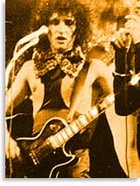
  • Sylvain Sylvain

    Finds his Subway Rhythm

    Subway Rhythm is an apt name for Sylvain Sylvain’s music publishing company.

    The former New York Doll’s train of thought makes all the stops, a tendency he often acknowledges in mid sentence, “I’m trying to hit you with everything, a little bit. Sometimes, I kind of float around, but it’s only a natural thing.”

    Sylvain shows a knack for snappy observation, whether his thoughts turn to New York’s “yo-yo” electronics shops (“…the price went up and down with every customer”), designing clothes with late drummer Billy Murcia (“We were makin’ $5,000 a line, and that was four times a year”), or trading with his fellow Doll, the late guitarist Johnny Thunders, “When I wanted something, man, he got me, and I wanted something, I really got him.”

    Sylvain’s enduring fame lies in the saber-sharp guitar styles he pioneered as one-fifth of the Dolls, who ranked among rock’s ultimate street gangs from 1972 to 1975, casting a cut ‘n thrust blueprint for the likes of Aerosmith, Blondie, The Clash, Guns ‘N Roses, Kiss, and the Sex Pistols.

    If style paid royalties, Thunders’ towering mop of rooster hair and vocalist David Johansen’s rubbery pout would have won tickets to Easy Street. But the Dolls spent much of their brief shelf lives teetering from stardom to extinction.

    Often derided as a cross-dressing circus act, their albums, New York Dolls (1973) and Too Much Too Soon (1974), only ignited a rabid cult of their East Coast and Midwest constituencies – leaving Aerosmith and Kiss to enter the same sports arenas Sylvain and company had once imagined themselves occupying by divine right.

    Where Johansen won success and legitimacy as lounge singer Buster Poindexter, Kane and Sylvain have only seen a smidgen of profits generated by 25 years of compact discs, compilations, and imports of dubious legitimacy – receiving no royalties until after Thunders’ mysterious 1991 death in New Orleans.

    Even by rock’s traditionally scattershot accounting standards, the Dolls’ business aspects remain a murky, tangled affair, the major legacy of a management contract. Sylvain likens the mess to a popular store, with nobody minding the cash register.

    “Everybody else took notes, and [other bands] took it to the bank, but we fell and broke our legs because we were running so damn fast,” he intones. “We were actually inventing it all, not even knowing what the hell we were doing.”

    This proves far from the case on Sleep Baby Doll (Fishhead Records, 1997), Sylvain’s first new recording in a decade. Screaming rockers like “Paper, Pencil & Glue,” “Hungry Girls,” and a quicksilver remake of the Dolls’ “Trash” naturally grab center stage, but Sylvain also showcases his introspective side on a classically-tinged “Frenchette,” from Johansen’s first solo album, and Thunders’ final song, “Your Society Makes Me Sad.”

    The latter song provides a perfect vehicle for Sylvain’s exploitation of ringing open tunings, or what he calls “the [Girl From] Ipanema’ chords” he uses to accent lyrics (“Do I feel guilty about an imperfect life, you ask/Now’s the time to take what is mine“) that showcase a more reflective side not often credited to Thunders. Knowing his partner as he did, Sylvain does not find that quality surprising.

    “He never had a ****in’ American [record] deal, but he had anthems – and he was the best writer.”

    For Dolls fans, the album’s most heartfelt moment is “Sleep Baby Doll,” in which Sylvain salutes the fallen Thunders (“Play guitar/you did fine now“), Murcia (“You were the personality, and the crisis“), and the drummer who succeeded him, Jerry Nolan (“…the little heart of Gene Krupa”).

    The fluttering guitar sounds come courtesy of that ’80s oddity, the Emulator, which musicians had to use before digital sampling became chic.

    “I just did four different chords, on four different notes. I was basically adding in those four chords every time I needed them,” said Sylvain.

    Sleep Baby Doll stands above Sylvain’s ’80s RCA work, which he attributes to fewer inhibitions.

    “I don’t worry about, ‘Okay, go home, come back with our formula intact, and we’ll be satisfied with that,’ because what you come up with is a crap song.”
    Like his music, Sylvain’s life story has followed its own unique trajectory. Born Ronald Mizrahi to a tailoring family in Cairo, Egypt, he caught the rock and roll bug as a preadolescent growing up in Paris.

    “My older brother took me to see Elvis in the movie houses – King Creole – and all the kids would bring their bongos and guitars, and sing along with those songs. That was so damn cool. That was my first take of guitar.”

    Sylvain’s family emigrated once more, in the early ’60s – this time to the New York City borough of Queens, where he encountered a Colombian immigrant who shared his penchant for eye-catching clothes, chords, and catch phrases – Billy Murcia.

    “His older brother, Alfonso, came up to me, ‘Hey, man, my brother wants to kick your ass at three o’clock!,’” laughs Sylvain. “You had to show up, or you were in worse shape. When I showed up, I said, ‘Wait a minute, I know you!’ We became friends.”

    Sylvain started on a $13 Spanish guitar acquired from Macy’s department store. “The biggest way I learned to play guitar was with the Ventures,” he said. “They used to make those albums, Learn How To Play Guitar With The Ventures I, II and III – I’m sure I had Volume I, which taught you ‘Pipeline.’ That was a song I taught Johnny, which he made a career out of!”

    The duo’s first rock and roll venture was The Pox, “…a three-piece American version of Cream, if you will, influenced by the Stooges and the MC5. We used to play [the Stooges’] ‘No Fun’, and **** like that.”

    The Pox even impressed the father of Left Banke keyboardist Mike Brown (of “Just Walk Away, Renee” fame), who wooed them with promises of studio time and a one-single deal in ’68.

    When nothing happened, Murcia and Sylvain routed their energies into producing psychedelic sweaters for Truth & Soul, their own counterculture clothing company. In time, the pair finally sold their designs and split the proceeds on trips to Holland and Britain.

    By now, school had merely become a dull irritation to be elbowed aside. Having been jettisoned from New Town High School, in Queens, Murcia and Sylvain flocked to Quintano’s – an elite school two blocks from Central Park, which groomed its students for performing arts careers. “It was sort of like a school for young professionals. A lot of cool people came out,” recalls Sylvain, including Aerosmith’s Steven Tyler.

    There they met another New Town refugee, John Genzale, whose affectation of British Invasion foppery and obsessive devotion to guitar made him worthy of the “band thing” Murcia and Sylvain were contemplating.

    “That Pox thing was falling apart [but we had] this basement in Queens, in Billy’s mom’s house, and [Genzale] started coming down. At first, he was the bass player. He didn’t wanna go onto guitar ’cause it was a little bit too heavy for him,” said Sylvain.

    Genzale found his calling after handing over the bass to the Murcias’ latest tenant, Arthur Kane – a tall, blond, aspiring guitarist. An early turning point occurred when Sylvain ran down “Frankenstein” (“Who could have spawned all these children, all this time/Could they ever, would they ever, expect such a Frankenstein?“) for his new guitar partner.

    “The first time I played those chords for Johnny, he’s going, ‘Forget it, too many ****in’ chords!’ He didn’t wanna leave that third chord, y’know?” laughs Sylvain. “But then you venture out, and he took [his style] to that weird monster guitar thing he put in there, and it became beautiful.”

    Kane brought along his equally tall blond guitarist friend, George Frederick, who called himself Rick Rivets. Without missing a beat, Genzale became Volume, then Thunders (which he pirated from a comic book character or a Kinks song of the same title, depending on whose memory prevails).

    Thunders soon cast himself as lead vocalist, and began trying his earliest tunes, as captured on Dawn Of The Dolls (1998), a limited-edition CD taken from Rivets’ own oft-bootlegged October 10, 1971, rehearsal tape. The disc reveals a spirited-yet-sloppy crew capable of dishing out a winning effort, such as “That’s Poison,” later revamped as the Dolls’ “Subway Train,” or “I Am Confronted,” which popped up in Thunders’ solo sets as “So Alone.”

    “I taught Johnny how to play those little power chords instead of playing the whole barre chord,” said Sylvain. “When he was bending strings, he would bend ’em a little too much here and there, so one was a little bit out, which gave him his distinct sound. So he always had that, [combined] with those power chords.”

    Sylvain does not appear on the disc, but returned from one of his European trips to find one of his suggested band names locked into place, which had graced a toy repair shop near Bloomingdale’s.

    “The New York Doll Hospital,” he said. “I said to Billy, ‘Man, that would be a great name for a band, the New York Dolls.’”

    After that, everything happened fast. Unsure of the Dolls’ future, Rivets quit in January of ’72, and Johansen became last to join. In June, they began a 17-week sold-out residency at the Mercer Arts Center, and signed a management deal.

    A potentially career-making trip plummeted to disaster on November 7, when Murcia drowned in a bathtub while under the influence of alcohol and downers, an event that moved figures like David Bowie to send condolences. Others in the reigning rock aristocracy had been less moved, such as Rolling Stones lead guitarist Mick Taylor, who pronounced the Dolls “…the worst high school band I ever saw.”

    Then and now, the band’s celebrated inability to show up on time, let alone stay in tune, yielded reams of bemused press – problems that stemmed from more prosaic limitations, Sylvain recalls.

    “Don’t forget, in those days, you really didn’t have tuners – Johansen busted out the A harp, and bam, that’s how we did it.”

    The band returned to gigging in December ’72, powered by drummer Jerry Nolan, whose self-assured simplicity did much to lift their collective spirits. After considerable dithering, Mercury Records, whose biggest acts were The Faces and Bachman Turner Overdrive, signed the Dolls in March of ’73.

    The deal primarily came when A&R man/rock critic Paul Nelson pressed the issue, despite repeated warnings such persistence might cost him a job. When asked why the Dolls faced such hardcore commercial resistance, Sylvain said, “Even the cool guys weren’t cool anymore.”

    To Sylvain and cohorts, big-time ’70s rock had been declawed by a clock-punching order.

    “You knew when everything would happen – when the drummer took the drum solo – then you could to the bathroom, talk to your girlfriend. Whatever the story was, ya’ know? It was all so predictable, so boring. And we came out like ****ing gangbusters.”

    The sonic floodgates burst open on New York Dolls. While some fans found Todd Rundgren’s production nitpicky and inhibiting, it’s hard to imagine a better showcase for Sylvain’s and Thunders’ celebrated lurch. Their interplay, along with Nolan’s rollicking, powers such lustily self-referential rockers as “Personality Crisis” (“…flashin’ on a friend of a friend of a friend“), “Jet Boy,” “Bad Girl,” and “Frankenstein.”

    “Trash” shudders and shivers with the band’s signature impatience (“Please don’t ask me if I love you/I don’t know if I do“), while Johansen and Sylvain “ooh” and “aah” in the best ’60s girl group tradition, Thunders pummels the melody into submission.

    He wreaks similar havoc on “Vietnamese Baby,” the lone stab at political commentary, and “Subway Train,” with stop-and-start tempos aptly fitted to the lyrics’ tetchy indecisiveness (“I can’t understand/Why my life’s been cursed, poisoned, condemned“).

    The first album cover is all-out sensory assault – black lamé stretch pants, blazing lipstick streaks, and mile-high platform shoes – came from seeing “…the big British bands coming over, all ****in’ wearin’ makeup, and they had all these beautiful chicks,” said Sylvain. “So we bartered [makeup] from our girlfriends to get even more girls, y’know what I mean? It wasn’t like the way I describe Kiss doing their makeup – they were like truck drivers who decided to do something for Halloween.”

    Mercury’s two-album deal promised a $25,000 advance, a $200 weekly salary per Doll, and an allowance for new equipment. Sylvain recalls starting with Gibson Les Paul Juniors, which he traded for Thunders’ Les Paul Custom black beauty. Both are visible on the cover of Too Much Too Soon.

    “The thing that really worked in the Gibsons were those Les Paul pickups – they were killers,” said Sylvain. “[Thunders] had an $800 budget, so he bought the black beauty, and we traded. That little Junior kicked ass compared to the black beauty. It was good, but wasn’t quite as razor-sounding. It didn’t blend in as one sound.”

    The Dolls also had an affinity for odd instruments, like the white Vox Teardrop on Too Much Too Soon‘s inner sleeve.

    “Arthur Kane picked it up in a pawnshop in Leeds,” said Sylvain. “He bought it for

  • Walter Trout

    The Reluctant Expatriate

    Guitarist Walter Trout resides in California, but the acclaim for his ferocious, blues-based playing tends to resound from the right side of the North Atlantic. Trout’s albums and tours are so popular in England and Europe one might think he lives “over there.” In a BBC listeners’ poll, he’s even been rated higher than other, more famous players. But it seems the U.S. may finally be catching on to what the veteran guitarist has to offer.

    Trout is originally from New Jersey (just across the river from Philadelphia), and has backed many notable performers. He also spent a half-decade each with Canned Heat and John Mayall. In an extended interview, he discussed his story and instruments as his eighth solo album was pending:

    Vintage Guitar: When we setting this up, you alluded to being a “student” of Roy Buchanan. Like him, your playing is blues-based and can tend to get “frantically expressive,” for lack of a better term.

    Walter Trout: Well, to me, all of that stuff is definition. You could say the same thing about Buddy Guy, who can get as frantic as anyone. But I don’t think anybody would say he’s not playing the blues.

    Then is the “frantically expressive” term a fair description of your playing?

    I think so, but as to whether or not it’s blues, it all depends on who you’re talking to and what their definition of “blues playing” is. If it’s got to be “B.B. King-one-note-played-real-sweetly,” I’m not doing that. I’ve been playing professionally since 1968, and I’ve played with John Lee Hooker, Big Mama Thornton, Percy Mayfield, Canned Heat, and Mayall – a lot of famous, respected blues artists, and I still don’t have any idea what the blues is. I play my music from my heart, and with as much feeling, emotion, and self-expression as I can. But I’m never onstage worried about, “Do I sound like what this guy over here thinks the blues is supposed to be?”

    You didn’t actually take lessons from Buchanan, did you?

    When I was a teenager and an aspiring guitarist, a friend of mine who was going to a college in Washington, D.C., came home and told me about a guy playing down there that I had to come hear. So we drove to the Crossroads Tavern, in Maryland. I was so young I wasn’t allowed to get in, so we sat in the parking lot and I listened to Roy Buchanan through the open doors. I was floored, and when I hit 18, I started going to the clubs where Buchanan played. I would just sit there, in awe of this guy.

    About a year after that, he sort of got “discovered” by the Public Broadcasting System on that show called “The Greatest Unknown Guitarist in the World,” where he played with Mundell Lowe, Johnny Otis, and a bunch of others. Even after he got a record deal and started touring, I’d go see him every chance I got, and I would study his records.

    Later, in the Mayall years, I got very lucky in that we did a couple of tours of Germany together. I got to spend a lot of time with Roy; we’d talk about guitars and trade licks. I remember after the first show we did together, he came up to me and told me he really liked my playing, and that we ought to sit down and trade some licks. I said, “Well, you ain’t gonna learn **** from me, but I’ll be glad to sit down and learn whatever you want to show me” (chuckles). He was a real pleasant, humble, sweet person, and he showed me a lot of stuff.

    You’ve recognized Buchanan’s influence in your decision to play straight into an amp, without devices or stompboxes.

    I would hear all of these amazing, incredible sounds whenever I watched him, and he was just using an old Telecaster and a little Fender amp; no floor pedals, no effects other than some reverb on his amp. I got into that approach, trying to see how much I could get out of just a guitar and an amplifier. I tried to manipulate the guitar to make it sound like a violin, a flute, or a trumpet. I figured out how to make it sound like a five-string banjo. I was trying to see how many sounds I could get, and I still do that.

    Who inspired you earlier, when you were a kid in south Jersey?

    The first guy who really blew my mind was Michael Bloomfield, and I still think he was probably the best all-around white blues player America ever produced. I still love those records he played on, the first Butterfield [Blues Band] album, with “Born in Chicago” on it, Super Session, the live album with Bloomfield and Kooper…even the stuff he did with Dylan. There’s some unbelievable playing on East-West, and on the first Electric Flag album, as well.

    I first heard Bloomfield on A Long Time Comin’ (The Electric Flag’s first album), then I went back and listened to his earlier stuff with Butterfield, etc. Was that the case for you, too?

    I was very lucky in that my older brother was really hip, musically. He was always searching out new sounds, and played those kinds of records for me. When I was about 13, I was listening to the Beatles and the Rolling Stones, but he came home one day and put on the first Butterfield album. I’d never heard anybody play guitar like that, and even today it’s astounding. He’s playing blues, but there’s all this fire and aggression, so I think the blues can be played that way. And with fast phrasing, and it can still be bluesy; you don’t have to be laid back or drunk on Jack Daniels. When I heard that album, I knew at that moment what I wanted to do for the rest of my life.

    What instruments did you use when you were first getting started?

    My brother brought home a nylon-string classical guitar, so I learned some chords on that. Somebody had given it to him, and he had tried to learn to play it, but he couldn’t really figure it out. At the time, it was the “hootenanny” days – the Chad Mitchell Trio; around ’61 or ’62. I played folk music, then decided I wanted to rock when the Beatles came out. My first electric was a $30 guitar that had an amplifier and speaker built into it; all you had to do was turn it on. I don’t even remember the make. Then I got high-tech; I realized I needed something more, so I got a Silvertone with the speaker and amp built into the case. It was the black-sparkle model with one pickup.

    By this time, I was playing harmonica in a blues band, doing Paul Butterfield licks, and I still play harp on my albums. I started playing rhythm guitar, but that Silvertone wasn’t loud enough, so I got a Kent and a little tweed amp. I don’t remember the model, but it was louder, so I could actually be heard. Little by little, I started learning some leads, and I got better than the lead guitar player, so we switched roles. He had a Hagstrom that looked kind of like a Strat, and he would loan me that.

    Around that time, I told my mother I was really serious about this, and that I had to get a real guitar. Bloomfield was playing a Telecaster on the first Butterfield album, so I priced one and told my mom, “I’m gonna quit high school, I’m gonna get a job, I’m gonna save money and get this guitar. When I get it, then I’ll go back to school and finish.”

    She wasn’t too happy about it because she was on the faculty at my school (chuckles). I started working at a department store in Philadelphia, commuting by bus each day.

    But while I was working there, Super Session came out, and Bloomfield had a Les Paul on the cover, so now my whole plan was messed up. I priced a Les Paul, and it was about $75 to $100 more than the Tele. I had to work longer, but I did it. I didn’t know anything about guitars then, and I figured, “If he’s playing it, it’s gotta be good.” So I got one of the first ’68 goldtop reissue Les Pauls with the single-coil pickups.

    By the time you got your first professional-quality guitar, were you already trying to avoid the use of effects?

    I wanted to go straight into an amp even then, but I couldn’t find an amp that had enough overdrive. I got a [Fender] Super Reverb, and most of the time, if I put it on 10, I could get a lot of ****s out of it if I ran the Les Paul through it. But there were times when I would use an Electro-Harmonix LPB-1 power booster; it wasn’t like a fuzz box, it was just an overdrive unit that I plugged into the amp. There were certain clubs we played where running the Super Reverb on 10 was too much, but with the LPB-1, I could run the amp on 3 in smaller clubs and still get some sustain.

    When did you start backing name artists?

    When I lived in Jersey, my first backing gig was with a guy named Louisiana Red, who’s still around; he lives in Europe now. That was my first experience with a “real” blues guy. I was playing in a really good club band called Wilmont Mews; we had a horn line, and played all over the East Coast. We did a mix of cover material and originals, and we worked all the time.

    Were you still using the Les Paul?

    Well, one night I was practicing in my room, and the strap came off the front end, and the guitar fell to the floor. The neck split in half, and I was just devastated; I had set my life back a year to get that guitar, and as promised, gone back to school and finished. But I have to say that I was so young and naive that I did not realize guitars could be fixed; I thought it was gone, so I sold it to a guy who worked at the Martin factory for $75, and he made another neck that looked exactly like the one I broke, inlaid “Gibson” on the top, put my serial number on the new neck, and glued it to the body of my guitar. Then he sold it for something like $600, at which point I realized that if your guitar breaks, it can be fixed.

    Then I got a 335 I used with Wilmont Mews for a while. And right before I moved to California, I went to Philadelphia for a jam session and a guy handed me his Stratocaster, and the way that guitar sounded sold me on Strats right then and there.

    But I have to say that before then, I’d heard a group called Orleans, which had opened for James Cotton. They had a guitarist named John Hall. He was playing a Stratocaster, and I was astounded at its tone, live. I’d seen Hendrix, but he used a lot of fuzz and other effects; you didn’t hear that bell-like, chimey sound.

    Did Hall use any devices?

    I don’t think he did. I went to that jam session and played a Strat myself the following week, and I’ve been using a Strat ever since.

    So did you take both a 335 and a Strat with you to California?

    Well, a little tragedy happened with my first Strat (chuckles). I had a natural-finish one, and I loaned it to a friend who had a guitar shop. He sold acoustic guitars, and wanted to play electric guitar over the weekend, so I let him use my Strat, since I didn’t have a gig.

    But when he brought it back, he said, “I thought you needed some work done on this, so I filed the frets and the magnets on the pickups that were sticking up above the plastic.”

    Basically, he destroyed my guitar. And I didn’t know what to say to him, because he was a friend. So once again, I sold one of my guitars for not much money. When I came out here, all I had was my 335, my old Martin D-28, which I bought in 1965, a mandolin, a trumpet, and my Super Reverb. I put all of that in my VW Bug and drove across the country.

    So you had departed from Wilmont Mews, or the band had broken up.

    I’d sort of taken over Wilmont Mews before I came out here. I got rid of the horn line, and we became a four-piece, strictly-original band and I wrote all the songs. I said to those guys, “We’ve got to go to California; that’s where we can make it.” We started making plans, and one by one, they chickened out. I came out here on my own, and my dream was to have my own band and my own career, but I fell into the sideman thing, and it was real easy – one gig always led to another. If you played on a bill with another band, a lot of times the other band would offer you a job.

    I was playing with J.D. Nicholson, who was a pretty legendary keyboard player from Chicago; he’d moved to Los Angeles, and I was the only white guy in his band and the only guy under 60 years old. I had a great time and I learned a lot.

    One night, we were playing in a jazz club in L.A. and some of the guys from Canned Heat were walking past, heard the music, and came in. They told me Bob Hite had just died, but they were getting back together, and were going to start touring, and would I like to play lead guitar? I said sure, and the next thing I knew, I was out on the road with them. That lasted five years, and while I was with them, John Mayall put together a band with some of his older Bluesbreakers, including Mick Taylor and John McVie. Canned Heat opened a few shows for them, and John heard me play. About a year later, he called me up and said he was tired of dealing with superstar egos, and that he was going to start a new version of the Bluesbreakers with some younger L.A. musicians, and he wanted me to play guitar. That lasted five years, as well.

    I’ve interviewed other guitarists who’ve played with Mayall – and Mayall himself, for that matter – but have you ever heard or talked with Harvey Mandel, Rick Vito, or Buddy Whittington? Mandel was with Canned Heat, as well.

    I know all of those guys very well. Harvey used to sit in with Canned Heat. Buddy’s a real nice guy.

    Mandel was a contemporary of Bloomfield’s in Chicago. Did you ever talk with him about Bloomfield?

    Not really; I’ve never found Harvey to be very talkative.

    When and why did you decide to go solo?

    When I was with Mayall, I got to thinking, “I’m getting into my late 30s and I’m not pursuing my dream.” Then one night in Denmark, John got the flu and said, “I can’t play tonight; you guys go on without me, and then if the people want their money back, they can have it.” So I got to sing a lot more than I ever got to do with him, and I got to play a lot more. After the show, some guys came backstage; one was from a Danish record label, and one was a Danish concert promoter. They told me they wanted me to do my own record, and they’d book a tour and put out the album.

    So basically, I had it placed right in my lap. I told John the gig went great, and I took about a week to mull things over. When I finally decided, it was my 38th birthday, and I was onstage in Göthenburg, Sweden. I thought about having this chance to make my own record and do my own tour of Scandinavia. I said to myself, “If I don’t go for this now, I’m gonna be turning 40, 45, or 50, and I’m still gonna be a sideman, and won’t have pursued my dream.” So that night was when I actually went to John and told him I was quitting the band. That was in 1989, and I’ve been solo ever since.

    How many solo albums have you released?

    The new one, Livin’ Every Day, is number eight.

    Is your current label, Ruf, an American or European record company?

    They’re headquartered in Germany, but they’re an American label, too. They’ve got a lot of artists, and they’re doing well in the States.

    But up to now, the majority of your sales have been in Europe, and there was a radio listeners’ poll over there where you ranked pretty high. Details?

    Well, the BBC in England did a survey in ’93 where people could vote for “The 20 All-Time Greatest Guitar Players.” They announced the winners on a one-hour special, and we were sitting at home, listening. They said they were going to play a cut by each person, and they started with something by Van Halen, so I said, “Okay, they’re going from number one back,” but then the announcer said, “That’s Eddie Van Halen at number 20.”

    We kept listening, and when they got down to number six, one of my songs comes on – it was “Tribute to Muddy Waters,” off my second album. It’s a medley of “Catfish Blues,” “Can’t Be Satisfied,” and other Muddy songs, with a lot of guitar on it, in kind of a Hendrix-y arrangement. So we were jumping up and down, laughing, and freaking out (chuckles)!

    Then they said, “That’s Walter Trout at number six, and out of the 100,000 votes cast, the smallest margin was between number six and number five – a difference of only two votes.” Number five was Jimmy Page and I thought, “Man, if I’d known that, I would have sent in three votes for myself! (laughs)!”

    I’ve read comments by more than one guitarist, in more than one genre, who have stated that European audiences think American music is played better by American musicians, and they’ve said that sometimes, American musicians get more respect in Europe than they might in the U.S. How valid are those statements?

    I hear those a lot, and I think it’s probably true that American music is going to generally be played better by Americans, but I think you need to take players on their individual merit.

    For example, there’s a band in England called the Hamsters; they work hard and are one of the most popular blues/rock bands there. They’re really great live, and they’re good friends of ours. We’ll do double-bills with them sometimes, and Slim, their guitar player, will come up to me say, “Man, you guys have just got this ‘thing’ we can’t get, because you’re Americans.” But we think they sound great. Maybe it has something to do with the American culture that invented this music.

    Some of your recent songs sound a bit personal. Tell me about the instrumental, “Marie’s Mood.”

    It was written while my wife was pregnant with our second son. She had a lot of complications and difficulties; she was forced to lay on her back for six months. We were very close to losing the baby, so it was a real emotional time for us. I was scheduled to make a record, but I stopped it and stayed home to care for my wife. I went into my home studio and came up with that melody, and wanted to write words for it that would comfort my wife, but I couldn’t really come up with the right words, so I let the guitar do the talking.

    What about “Song For A Wanderer?”

    That was written for my brother. He was my best friend when we were growing up, and he exposed me to a lot of incredible music. About nine years ago, we had a major falling-out; we haven’t spoken and I don’t even know where he is. I know he’s a sea captain, so he’s travelling all the time. I tried to write that song to say that whatever’s happened between us, I just want to think about all the good times we had together; I want to look at the positive aspects of our brotherly relationship and not get caught up in the ****.

    I tried to do it in the style of the Philadelphia vocal groups that he and I loved, and my hope would be that if he heard that on the radio, he might realize it’s for him.

    Another thing you’re doing differently concerns the business facet: you and your wife are managing the band yourselves.

    Yes, we are. And that came about as a matter of necessity because we had a succession of managers that stole all our money. One of them booked a tour for my band in northern California, then disappeared with all the money from the tour. His mother told me he had moved to Africa, but I recently found him on the internet. About four or five years into another management deal, my wife got out the books and saw something that was a little weird. She called our agent in London, and asked him for his books, and started comparing. She found out that hundreds of thousands had been stolen. So we decided we’re gonna do it on our own, and that’s been the case since the end of ’94. It’s working out great; we can’t blame anybody for anything now (chuckles), but we’ve got much more of a hands-on approach. My wife really takes the active role; she acts as a liaison with the booking agents and promoters, which makes it real easy for me to concentrate on making the music.

    Your main guitar is a three-bolt hardtail Strat, and it looks like it’s been through a lot.

    When I moved to California, I still had it in my mind that I had to have a Strat, because I was devoted to the Stratocaster, even though that friend of mine had ruined my first one. I bought it when it was brand-new, in 1973. It was pure white then! I wanted one that didn’t have a whammy bar because my old Strat had one, and it would go out of tune, but I have to say I really didn’t know what to do with a whammy bar. And I still don’t. I want to try to make whammy bar sounds without a whammy bar – combining really long bends with a volume swell.

    Hardtail Strats and/or three-bolt Strats have been reputed to have some slight sonic differences from four-bolt models or Strats with vibratos. Have you noticed any difference in the sound or tone?

    When I bought it, I didn’t; I bought it because it felt great. The first time I picked it up, it played like butter. Nowadays, I think it has a little more low-end in the tone. It’s almost like a cross between a regular Strat and a Les Paul.

    Has it been modified?

    Normally, there’s no tone control for the bridge pickup, and I found that sometimes, it sounded piercingly bright, and I wanted to roll some highs off of it, but I couldn’t. So I took the tone control off the neck pickup and connected it to the bridge pickup. It has the original pickups, and a brass nut. I put that on there because sometimes if I did a long bend on the low E string, the nut would break.

    You really like your volume control, don’t you?

    Yeah it’s an extra “voice.”

    One photo shows your pinky finger wrapped around the volume knob.

    It’s there pretty much the whole time!

    I’d better ask about your performance amp, as well.

    I use a Mesa-Boogie Mark IV, and I’ve been using a guitar Leslie. It’s really not like a floor effect; it’s an external speaker that rotates.

    I was watching the video of you performing for the National Association of Record Merchants, and there were times when you pumped your right arm in the-air, flexing it. What’s that all about?

    A lot of times when I’m playing, I have no idea what my body is doing. I aspire to achieve a level where I’m really not aware of my body; I just close my eyes, and I think or hear a sound in my mind that comes out of the guitar, and I don’t even know how I made it.

    Details on the upcoming album?

    Well, I worked with Jim Gaines, a great producer, again. He has worked with Stevie Ray, Luther Allison, and Blues Traveler. It was done in Memphis at Ardent Studios, and I had a great time doing it. But I’m still trying to grow as a songwriter and a performer. The sessions for this album were pretty relaxed, and we were having a lot of fun, and that comes through on the album, as does the growth.

    Tour plans? One might assume the bulk of concerts to support the new album would be in Europe.

    My career in the States is starting to take off. One of my shows at Eureka Springs Blues Festival was their first sellout. I had a couple of hits in St. Louis, and when I play there now, I sell out 1,000-seat clubs. I went to Europe in May, but all of June and July was booked for dates in the States. So right now, I’m more excited about America than Europe; there’s a buzz going on over here.

    And at age 48, I still try to get onstage each night and play something I’ve never played before; that’s my goal when I perform. I like to push myself, which helps me to grow and get better.

    I know VG has a lot of guitar collectors who read it, and I know this three-bolt ’70s Strat is, among collectors, one of those you’re supposed to hate, but I wouldn’t take a million bucks for it.

    And like I said about musicians, when it comes to guitars, you also need to take each on its own merit. I’ve played ’56 Strats that played like ****, and I’ve played some brand new ones that played real good, and some brand new ones that were no good. I think each guitar has its own personality, its own feel, and its own spirit.

    I’ve played my guitar every day for 26 years, and the guy who works my guitar has told me that it’s one of his favorites. He says I’ve played it so much that it sounds as good as any mid-’50s Strat. Whether was a three-bolt or a four-bolt, or regardless of what year it was, it wouldn’t make any difference to me. My spirit is in that guitar.

    Released in the summer of ’99, Trout’s Livin’ Every Day does indeed live up to what most Walter Trout fans – the bulk of whom are still overseas – expect from the fiery guitarist. And if U.S. fans of ferocious-yet-passionate guitar playing check out Trout’s efforts, the buzz should get even louder.

    photo by Barney Roach.

    This interview originally appeared in VG‘s Dec. and Jan. ’99-’00 issues.

  • Dick Wagner and Steve Hunter

    The Great Guitars of

    Even the world’s greatest rock and roll showmen can’t monopolize the affections of the world’s youth without some help. Sorry, Alice Cooper. Sorry, Lou Reed.

    Yeah, they had help. Big time! Especially from Dick Wagner and Steve Hunter! Both Cooper and Reed enlisted hired-gun guitarists Wagner and Hunter to help sustain their creative zenith during the 1970s.

    Indeed, Wagner and Hunter were the session community’s dynamic duo during the era of cocaine and casual wear. When your recording session needed some monster guitar solos, you called Wagner and Hunter first. Period. Just ask Kiss. Or better yet, ask Aerosmith. After the post-Van Halen explosion, however, the need for high-octane blues players like Wagner and Hunter diminished significantly.

    Thankfully, both guitarists are still active in professional music circles. Check out Wagner’s beautiful reworking of songs he penned with Alice Cooper and others on his retrospective release HITStory. If you’re in L.A., check out Hunter’s killer blues outfit, The Blues Counsel. Certainly, we have not heard the last of these two guitar icons.

    Dick Wagner

    Vintage Guitar:You’ve done tons of session work for many of rock’s most notable talents. Let’s start with your tenure in Lou Reed’s band, sharing lead guitar chores with your longtime partner in crime, Steve Hunter.

    Dick Wagner:That band definitely took Lou Reed into a different direction. Reed talks bad about the Rock and Roll Animal and Lou Reed, Live albums we played on, now. He puts that whole era down. Well, in every place we ever played back then, the press was always putting down Lou Reed and talking about the great guitars of Hunter and Wagner. He hated that! He came to us during the tour and made us stop playing to the audience and entertaining them because we were stealing his show. We didn’t mean to, we were just hot! We did a lot of great work together and I’m very proud of it. Playing guitar with Steve Hunter was one of the highlights of my career.

    How did you and Steve meet?

    We were aware of each other in Detroit, when he was playing with Mitch Ryder and I was playing with The Frost (a Michigan band that enjoyed success in the late ’60s), which was real popular in the Midwest. Then, we met in Ft. Lauderdale, where my band, Ursa Major, was playing a club. We talked, and I invited him to come up onstage and play. It sounded fabulous right away! At times, it was hard to tell who played which parts, but it was real distinctive.

    Have you talked to Hunter lately?

    Actually, Steve and I have talked about doing an album together.

    What equipment did you use in Reed’s band?

    I was playing a Les Paul TV Special, which has since been stolen. I used a 100-watt Marshall half-stack. A guy named Red Rhodes did some work on it. I was also playing through an old Echoplex and a MXR phaser.

    Although your tenure with Reed is historically significant, it was your longtime partnership with Alice Cooper that really etched your name in the history books. When did you first meet Alice?

    I knew Alice back in Detroit, when The Frost was really huge. He was just getting started. We were playing this high school gig and Alice came back in the dressing room and introduced himself. He loved The Frost.

    The first time I heard Alice live was at the Toledo Pop Festival, when he was doing the electric chair. I couldn’t believe it! The Frost was a pretty straightforward rock and roll band, and Alice’s band was definitely a little weird! I’ve always loved theatrics in rock, though. It seems most of the records I’ve played on are with pretty theatrical people.

    You were a ghost writer/performer on Cooper’s records before you joined his band, correct?

    Right. Cooper’s School’s Out was the first really big album I played on. They would usually bring me and Steve in when they needed some hot solos or things the other players couldn’t pull off in the right way. The first song (producer) Bob Ezrin, Alice, and I wrote together was “I Love The Dead.” I sold my portion of the song to them because I needed money. So, I wasn’t credited on the album. At that time, Alice and his original band were living in a mansion in Connecticut. It was a bizarre place. They drove around in these old Rolls Royces and I was like, “Okay!”

    You did sessions for several other big artists, like Aerosmith and Kiss, as well.

    Yeah. Kiss, they came out of nowhere. They didn’t have the studio knowledge guys like me had to accomplish that kind of stuff. They did most of their own stuff but once in awhile they needed something special, a style they couldn’t really pull off. Same with Alice’s original band. They were younger players and they couldn’t do what Bob Ezrin and Alice Cooper were envisioning, musically.

    Any advice for up-and-coming session players, particularly for guitar solos?

    When you do a session for anybody, know the song! If you take the song personally, your solos will fit and take off as an extension of the song’s philosophy. When you’re doing a solo, don’t just blaze away and hope for something. You want to ask what the song’s doing melodically and let yourself go from there. Solos are an extension of the songwriting.

    The creativity in the studio must have been intense during your first few years as a session player!

    It was constant flow, and it was electric! Those were great days! Now, it’s a more mellow, wiser kind of creativity. You’ve already been there and you know what your doing. In those days, you’d never been there and you were discovering it all, which was exciting in that sense. I got very excited every time I played a solo. It was a learning process.

    Tell me the circumstances surrounding your entrance into Alice Cooper’s band.

    In 1975, his management asked me to put together a new band. So I asked all the guys who I played with in Lou Reed’s Rock and Roll Animal band – Steve, Prakash John, and Pentti Glan – to become Alice Cooper’s new band. They brought us in to make a change in the development of the Cooper sound – make more complicated, better songs. They wanted a tighter band. This wasn’t just a rock and roll band out there, flailing away. We approached the stage playing the same way we approached the studio: let the parts make sense and let them all work together. The early Alice Cooper band tried hard, but they weren’t as great of players as our band. We were just better at it. It was a fabulous band from the beginning.

    You often used B.C. Rich guitars in Cooper’s band, correct?

    Yes. I was playing a B.C. Rich Eagle through the late-’60s Marshall heads. Mine was one of the first Eagles ever made. B.C. Rich also made me a Seagull, which I used occasionally. The Seagull was stolen at the Boston Airport. DiMarzio was making these super-hot pickups for me. They were wound specially for me and Steve.

    Let’s discuss the classic Alice Cooper albums you played a major role in shaping, beginning with Welcome To My Nightmare.

    Alice and I decided to go to the Bahamas to write this album. The day we arrived, we got caught in the middle of this mini-hurricane. The winds were 70 miles an hour, 24 hours a day. We sat on this lawn with an acoustic guitar and I started playing this riff (hums beginning of Welcome To My Nightmare). Suddenly, Alice goes, “…welcome to my nightmare.” We both started laughing because we were in the middle of this nightmarish weather! At that point, we got the idea of Alice having a nightmare and that became the concept for the record. Musically, we could go anywhere with Alice’s image and the idea of a concept album.

    Probably one of the most influential and covered songs from that album is the ballad “Only Women Bleed.” How did you and Cooper write it?

    I wrote the music for “Only Women Bleed” in 1968, but the lyrics were really sucky. When I first got together with Alice in ’75, I played him this tape with pieces of my music on it. When we got to the song, he said “Wait, let me hear that. I really like that!” I didn’t think he’d like it because it was a ballad. He said, “I’ve got this idea for a title. How ’bout ‘Only Women Bleed.’”

    So we sat down, and in about 25 minutes, we wrote the song at Cooper’s house in the Hollywood Hills. It gave me a great opportunity, as a writer, to explore different melodic structures and rhythms. It was great to do something different from straight ahead Chuck Berry rock.

    The next big Cooper album was Alice Cooper Goes To Hell. Any interesting stories behind that one?

    We spent about a month in Hawaii writing most of the songs on that album. We rented this house right on the ocean. Alice and I would go out every morning and play 18 holes of golf on the most beautiful, lush golf courses you’ve ever seen. Then, we’d come back and have a nice dinner cooked for us. We had steamed clams and sweet corn. We had the instruments out on the porch and we’d wait until nighttime, with the moon over the ocean, to write songs. You wouldn’t think that was conducive to rock and roll, but we managed to write some great rock and roll songs. That album’s popular ballad “I Never Cry” was written there. When we came back, the songs were either totally complete or Bob Ezrin wanted to add or change stuff. Sometimes, the three of us would sit in the same room and write together.

    You, Cooper, and Ezrin wrote “I’m The Coolest,” which is such an atypical song from that album, it fits!

    Maybe so! The three of us wrote “I’m The Coolest” on the piano at Bob’s apartment in New York on a Sunday morning. Bob was in his bathrobe! Originally, it was a song we wanted Henry Winkler to do. Winkler rejected it, he didn’t want anything that would typecast him and perpetuate the Fonz image. He said he was really a Shakespearean actor! Hell, he’s still The Fonz, Alice Cooper is still The Coolest, and Shakespeare’s still Shakespeare!

    The next Cooper album, Lace And Whisky, seemed a departure for you as a songwriter.

    It wasn’t one of those records we wrote on a beach somewhere. That was during our more drug-oriented days, and frankly, it shows in the writing. It’s a strange album because it doesn’t have any continuity. The song “Road Rats” is hot. My guitar in those days had a 71/2 and 15 ips delay, combined. So you’d get a short and long delay. For guitar, it makes it sing!

    So, drugs were a big factor for some members of Cooper’s band at this point?

    We all got off on a bad tangent towards the end. We toured all over the world and there was constant temptation. It was hard work and many hours involved. So, you get tired and you get caught up in stuff. It was drinks, then drinks and drugs. Then, it became primarily drugs. Now, it’s nothing. I was the last guy to do drugs! I was 32 before I ever got high. Once I did, though, I really enjoyed it.

    Now, we’re all healthy and alive and still playing music. I’ve been straight since 1984. The drugs will create a situation of concentration or frustration at times. If you’re working 18 hours a day, cocaine helps keep you going. To say that the drugs created the songs is not true. The talent is inherent.

    Let’s talk about what’s currently happening in your life. I understand there’s quite a buzz about your “Remember The Child” song.

    It’s being used by therapists in their sessions all over the country. I wrote the song in 1984 and it’s about child abuse. I started a foundation to raise money for scholarships, education and counseling for families and abused children.

    A Dick Wagner pro recording studio is in the works, as well.

    Yes, it’s going to be a 48-track digital recording studio, plus it’ll be a video studio so we can make music videos. I’m trying to energize the Michigan music scene and find some talent out of this region. I’m trying to get a production company and an independent label going.

    Do you ever plan on writing with Alice again?

    Alice and I are going to be doing some writing together for his next album. It’s going to be a lot of fun. He called me one day about doing some writing again and I said, “Sure, let’s do it!” We’re possibly going to write a Broadway musical.

    Steve Hunter

    Vintage Guitar: Your first notable gig was with Mitch Ryder, but sharing guitar duties with Dick Wagner in Lou Reed’s band really made you famous. The intro you wrote for Reed’s “Sweet Jane” is still being talked about today. How did it come about?

    Steve Hunter: I had written that in Detroit while I was in Mitch Ryder’s band. I developed it over a couple of years, messin’ around with it in front of the fireplace. I tried using it when I was playing with the Chambers Brothers, but it didn’t really work. Then, during the last couple of days of rehearsal for the Lou Reed tour, Lou’s management came in and said, “We need something to open the show with, so Lou just doesn’t appear on the stage. Can you guys jam on something?”

    That’s when I said to Dick, “I’ve got this little thing I wrote. We can try it and if it doesn’t work we’ll just jam on ‘Sweet Jane’ or something.” I showed everybody the song, and as soon as the band started playing it, it was awesome! It was the first time I’d ever heard it played right. In Europe, we used it to open with “Vicious,” but it wasn’t a good show opener. Lou decided to change the opener to “Sweet Jane” by the time the album Rock and Roll Animal was recorded. It just so happens that “Vicious” is in E minor and “Sweet Jane” is in E major, so it worked because the last chord is the five of the E.

    How did the Lou Reed band come together?

    It was sort of between Dick Wagner and Bob Ezrin. Bob knew the Canadian musicians like Whitey Glenn, from Toronto. Prakash John is also from Toronto. Dick knew the keyboardist, Ray Colcord, from New York.

    Dick Wagner mentioned that your styles often crossed over in those days. This is especially evident if you listen closely to the distribution of the guitar parts in the stereo spectrum on “Sweet Jane.” Can you tell me who’s who?

    In the beginning of the intro to “Sweet Jane,” I’m doing all the soloing. So, wherever I am in the stereo field, that perspective is kept on the whole album. For Lou Reed Live, which was taken from the same night as ….Animal, Dick’s on the left and I’m on the right.

    How were the lead guitar duties divided between you and Wagner?

    We wanted to keep the solos equal so, we’d sit down one night and go through the material so it was totally even. We didn’t want it to look like there was a rhythm guitar player and a lead guitar player, because that’s what we both did. We worked out who played the melody and who played the harmony. For example, Dick played the harmony and I played the melody on “Sweet Jane.”

    Wagner reckons that Lou Reed didn’t like the fact the band was so hot.

    I think Lou Reed still hates the fact that Rock And Roll Animal is one of his most revered albums. I think Lou felt overpowered by us and it wasn’t the way he wanted to project his lyrics. He wanted the focus on the lyrics. I’m kind of bummed out I don’t have my gold record for that album. That one means a lot to me.

    What gear did you use on Rock and Roll Animal?

    I was using a early-’70s, 100-watt Hiwatt Hundred amps. They had a certain kind of edge to them that was different from a Marshall. I had an Echoplex and the MXR Phase 100. My guitar was a ’59 Les Paul TV Special with just a P-90 pickup in the back. I also used a ’60 Strat at the end of Rock And Roll.

    What were you doing in the interim between the Lou Reed and Alice Cooper gigs?

    I went back home to Illinois. Then, Bob Ezrin called me and said Alice’s Welcome To My Nightmare thing was happening.

    What did you contribute, guitar-wise, to Welcome To My Nightmare?

    Let me think. Let’s see, I played slide guitar on “Cold Ethyl,” and I played 12-string guitar on “Only Women Bleed.” I played the guitars solos on “Steven” and also, I played a guitar synth on “The Awakening.”

    Do you remember some of the equipment you used on Cooper efforts like Goes To Hell and Lace and Whiskey?

    The basic tracks for those two albums were essentially recorded at the same time. I was using a B.C. Rich Eagle and a Marshall head. We were using 16-track tape machine with two-inch tape. We had Pultec EQs and tube compressors and limiters. The console were transistors which operate like a vacuum tube, so you can warm ’em up like tubes.

    What guitars did you use in Cooper’s band?

    I used B.C. Rich guitars a lot. I still think Rich’s are the best American guitars made in that era. They built Dick and I Seagulls for the Nightmare tour. For Alice’s Goes To Hell tour, I had a B.C. Rich Eagle. The Alice tour I did with (longtime Elton John guitarist) Davey Johnstone, I used the B.C. Rich doubleneck guitar.

    Any world tours with Reed or Cooper that really stand out?

    The tours I did with Dick are all my favorites. The Lou Reed Rock and Roll Animal tour was one of my favorites because it was the first time I’d ever toured Europe. We had so much fun. We didn’t get paid hardly anything, but playing in front of sold out audiences was wonderful.

    Like Wagner, you ghosted on Cooper albums before you were a member of the band, correct?

    Yeah, I ghosted on Alice Cooper’s Billion Dollar Babies. I didn’t really know Alice all that well. I remember being in the studio and Bob asked me to play on “I Love The Dead.” He said, “I want you to play blues over this song called “I Love The Dead.’” It was really hard to get into it during the first pass, because I’m listening to the lyrics “I love the dead before they’re cold…” and I’m wondering how I’m supposed to play blues over that without cracking up too much!

    After that, it got to be a lot of fun. I think I played on five songs, including “Generation Landslide.” Like a lot of session work, it was one of those 1 a.m. things where the tape was just rolling, so I hardly remember some of the things I did on that album.

    That must have been a great time for you. You were around all of this fame and money.

    Yeah, I was blown away! Here I am in New York, staying in this beautiful hotel. I get in the studio and there’s Alice wearing a pink mink coat! I thought, “This is cool!” It was a great time. It was what I’d always thought the record business was all about.

    Do you make a lot of bread as a session player?

    I never made a $100,000 in a year’s time, but I lived off the dough I made touring with Alice for a year sometimes.

    The best money I ever made was working on the Bette Midler film The Rose. They pay huge dough! At the time, we were recording live, as well as acting, and some of the guys were singing. So, that’s three unions and the minimum on those three is big dough.

    Your longtime association with Ezrin led to session work with David Lee Roth, correct?

    Yeah. I hadn’t worked with Ezrin for 10 years and all of the sudden he calls me and he says, “I’m producing Dave’s album and I got this guitar player who is awesome, but we’d like to have you help him get a handle on some blues things. The guitarist, Jason Becker (who was later diagnosed with Lou Gehrig’s Disease) was a little like, “I don’t really need this.”

    But I showed him some of the licks I knew and some of the Albert King records, and we hit it off. Bob called me a week later and said “Why don’t you get together with Brett Tuggle and see if you guys can write something, because we still need some material.”

    We wrote “Baby’s On Fire,” and he loved it. David called me up and said, “Would you like to come to Vancouver and be on the record?” I co-wrote four of the songs on the record A Little Ain’t Enough, and did some rhythm guitar and slide stuff. I played slide guitars on “Hammerhead Shark.” That happened at a time that I was really hurting for dough. I hadn’t worked in almost a year.

    It’s hard to believe a guitarist of your stature would have hard times.

    Well, the ’80s was a big blow to guys who play like me. Blues-based rock and roll guitar players were simply not in demand. I didn’t foresee that. Then, there’s all these rumors I kept hearing through the grapevine. I heard that I was independently wealthy and made so much money with Alice Cooper and all these people that I’d retired and was livin’ in the mountains. Other rumors were that I got into television and film scoring and I’m making a hundred grand a picture. Another one was that I’m a heroin addict. I haven’t done any drugs in 20 years!

    The real Steve Hunter story is I feel like I’m still paying dues! Sometimes it’s tough to make the rent. I went into Tower Records with $20 in my pocket, I had to buy a CD to work on a couple of songs. The guy at the counter says, “Are you Steve Hunter?” I said, “Yeah.” He starts gushing on me – apparently he was a big fan. That was uplifting, spiritually and emotionally, but at the same time I’d just plopped down my last 20 bucks. It’s important musicians understand that you can have some really rough times.

    Photo courtesy of Richard Wagner

    This interview originally appeared in VG‘s Feb. ’98 issues.

  • Rick Dodge The Convertible

    Zero to Different in 20 seconds!

    We know what you’re thinking: “Ummm… Dodge convertible. If I could have one, I’d take a ’70 Challenger R/T, Hemi, four-speed, Plum Crazy finish!” Ah…yeah. That’d be nice, wouldn’t it? But this is a guitar mag, buddy, and when we talk Dodge Convertible, we’re talking a very purpose-oriented, versatile stringed instrument created and built by Rick Dodge, of Tallahassee, Florida (reserve snide political comment, please!).

    This Dodge Convertible is the latest version of the interchangeable pickup module concept that has been tried to varying degrees of success by a handful of builders and manufacturers. The Dodge is a solidbody guitar, available as a bass or standard six-string in single or double cutaway, featuring mahogany or maple tone woods, with retail prices ranging from $950 to $1,199. The modules run an additional $240 to $395 depending on pickups and electronics.

    What makes the Dodge unique is the modules – and the way they’re applied. Installed, the module makes up the majority of the interior of the body of the guitar, and contains the complete electronics – pickups, switches, and plug jack. The modules (which are made of wood) fit tightly, make solid contact with the body, and pop out of the back of the instrument by loosening a large, knurled thumbscrew on the bottom edge of the guitar, where an output jack might normally be. Bridge grounding is accomplished through a spring-loaded ball bearing in each module that makes contact with a metal bar near the bridge.

    We tested a maple single-cut with a pretty translucent blue finish called Blue Pearl. The guitar has a 91/2″ radius rosewood fingerboard on a very comfortable C-shaped neck. Scale length is a standard 251/2″. The bridge is a Mann-Made hardtail with optional string-through body. The overall weight – 8.5 pounds with module – is pretty average, and it has nice headstock-to-body weight distribution.
    Tone Tool Test

    We ran the Dodge through a ’76 Fender Twin Reverb with master volume and stock speakers, a ’77 Marshall JMP 50-watt half-stack (with modded preamp) with 25-watt Celestion Greenbacks, and a Peavey Ultra Plus head and 412 MS cab with Sheffield speakers.

    We test-ed each module with an approximate counterpart; a 1986 Fender Stratocaster ’62 reissue, a stock ’59 Fender Esquire, a ’68 Gibson SG Standard with DiMarzio PAFs, and a new Peavey Firenza with Peavey’s P-90 copies.

    Our first test module was Dodge’s Full Spectrum (list $275), which features three Harmonic Design Strat-style single-coil pickups, and a five-way switch. The module has the standard one volume/two tone setup. Through the Twin Reverb, we noticed a very punchy sound, with good string balance. The JTM offered much the same, and the modules out-of-phase setting was very authentic – but a little bit dark – compared to the Strat.

    The Jar Bone module ($250) is a Tele-style with Harmonic Design Tele Plus pickups. Compared to the real-deal Esquire, the module’s bridge pickup lacked a little bit of brightness and punch. This could be simply because it is positioned further from the bridge, plus the Esquire’s bridge and pickup are one unit. The HD pickup is also wound hotter, so by nature it produces less high-end. This module’s strong points are the middle and neck positions, which sounded great – and the neck position is particularly impressive!

    The next module, Field of Screams ($290, and winner in the “Clever Name” category, by the way) featured Harmonic Design’s P-90 copies. They offered a very fat (bordering on obese) Tele sound in the bridge position, run through the Twin. Through the Marshall and Peavey amps, it sounded great in all positions – very smooth and dark! It compared favorably to the Peavey Firenza, offering up a more round, dark tonal mix.

    The Critical Mass module ($270) carries active EMG 85 humbucking pickups. Because it’s obviously aimed at the more heavy metal-prone customer, we ran it through the crunchiest amp of the bunch – the Peavey – and it delivered on the promises made by its looks; plenty of low-end thump and loads of sustain! How’d it sound through the Twin? Yeah, right…

    Next up, the Lesspaulmorerick module (read it slowly…), which has two Seymour Duncan ’57 humbuckers with Standard Les Paul control wiring. We ran it up against the ’68 SG and it sounded quite good, but had a bit less note definition (a fact attributable more to pickup winding and body woods). Through the Twin the module delivered a good clean tone, and through all amps, in fact, it delivered fine tones in all positions. Our only knock is the position of the toggle switch; depending on how aggressively one strums, it could be knocked out of the desired position. Given the space on the module, there really isn’t anywhere else it could be placed, so one would simply have to be careful.

    Finally, we tested the most expensive module available – the Continuum ($395). It features a Seymour Duncan Custom in the bridge, a Duncan Little ’59er in the neck, and the Stealth Sustainer (by Sustaniac), also in the neck position. The Stealth Sustainer acts like an onboard E-bow sustainer. If you’ve never monkeyed with one of these, basically it can hold a single note indefinitely, regardless of volume (it’s an electromagnet that induces string vibration). The system uses two push/pull pots; one activates the sustainer, the other sends the sustained note to a higher harmonic or octave note. It’s a fun gadget.

    Impressions

    The Dodge Convertible is a great idea for the player who wants/needs a variety of sounds without having to haul an arsenal of guitars. Also, if you’re the type of player who doesn’t adapt to the feel of a different guitar at the drop of a song, the Dodge allows you to change sounds without changing the feel of the neck shape, fretboard radius, string spacing, scale length, etc.

    Rick Dodge Convertible

    Type Of Guitar: Solidbody electric with interchangeable pickup modules.

    Features: Available as a bass or standard six-string in single or double cutaway, with mahogany or maple bodies. Rosewood fingerboard with 91/2″ radius and scale length of 251/2″. Modules offer a range of pickup configurations and volume/tone knob choices.

    Price: Guitar, $950 to $1,199. Modules, $240 to $395.

    Contact: Rick Dodge Guitars, 2120 Longview Drive, Tallahassee, FL, (850) 562-4331, www.dodgeguitars.com

    This review originally appeared in VG‘s Mar. ’01 issue.

  • Tuki Amp Covers

    Tuki Tough Stuff

    Tuki Covers has been around since 1986, developing ever-better ways to protect various musical equipment from the many hazards that accompany real-word, professional use. The company started with – and is still best-known for – its amplifier covers.

    The current line features custom-made covers with two choices of materials – a heavy vinyl that simulates leather, or the more durable DuPont Cordura. The vinyl version (Tuki calls it Vintage Vinyl) has a soft inner lining that, while it won’t scratch, chip, or otherwise deface any part of the amp, also won’t protect as well as a the 1/2″ foam-padded Cordura.

    Our test mule is a padded Cordura unit from Tuki’s ProSoft line that has spent a few months in active duty playing bodyguard for a Marshall head that sees combat pretty much every weekend. And it has earned its stripes while showing nary a mark!

    While most guitarists treat their amps with better care than, say, PA speakers typically receive, the Tuki does offer considerable piece of mind by eliminating the worry of having the “little things” mysteriously occur – be they torn/gashed tolex or a broken/missing knob and the accompanying dent in the faceplate.

    Apart from the practically indestructible Cordura material (which Dupont says offers three times the durability of polyester, and four times that of polypropylene – a.k.a. the thin plastic “cover” that often accompanies new amps) all seams and stitching are heavy-duty and very neatly finished. Seams are “blind-stiched,” so there is no excess material or threading exposed. A look inside reveals the padding, which is securely bonded to the Cordura. Professional all the way around.

    And the Cordura is also water resistant, thus offering further piece of mind when you have to leave gear unattended in the bar (special bonus – the flat black texture also offers good camouflage compared to the big, bright, white Marshall logo!).

    Perhaps the only piece of the cover that could wear out is the Velcro strap that cinches the cover across the bottom of the amp – but that’s an extremely minor detail.

    New Tuki

    The latest edition to Tuki’s line of headache-reducing stuff is the Cord Folio, which is a simple concept that is well-executed here.

    The Cord Folio is an attaché case-sized soft bag that opens wide to neatly store guitar cords, power cords, mic cables, wall warts, strings, and even stompboxes and tuners.

    Hear ye all players who hate cords! You will especially like the eight Velcro loops inside that help secure all things that might tangle, twist, or otherwise annoy. Very handy, and made of Imperial’s polyester/vinyl blend with soft, scratch-free nylon interior.

    Tuki Covers

    Type: Custom-fit cover for most amplifier styles and sizes.

    Features: Made of heavy-duty vinyl or DuPont Cordura, and available with or without foam pad. Heavy-duty seam stitching.

    Price: Padded, $63 to $135. Standard (non-padded Cordura) and Vinyl, $42 to $86.

    Contact: Tuki Covers, 5060 Coosaw Creek Blvd., North Charleston, SC 29420. Call 1-800-344-8854, or see www.tukicovers.com.

    This review originally appeared in VG‘s Mar. ’01 issue.

  • Foxrox Captain Coconut

    New Pedal, True Vintage Vibe

    Dave Fox’s new electronics company, Foxrox, recently hit the market with its Captain Coconut pedal. While most of the interest in the pedal has been through word of mouth, the buzz has been strong, with an increasing amount of inquiries to check out the pedal. VG was lucky enough to scoop up one of the recently-revised Captain Coconut pedals up for a test drive.

    Dave Fox is no stranger to the musical instrument industry, having spent years working a full-time gig for a well-known manufacturer of audio products. His Foxrox Electronics company was started as a side business, but may eventually become the sole focus of his attention.

    Taking its name from the last track on Hendrix’s Crash Landing album, the Captain Coconut pedal was designed to provide the three most popular Hendrix-type effects – octave, vibe, and fuzz – in one unit. One thing that separates the Captain Coconut from typical multieffects units is that it is totally analog and incorporates faithful reproductions of the original circuits used in vintage effects like the Tycobrahe Octavia, Unicord Univibe, and Dallas-Arbiter FuzzFace, with minor alterations done to improve the performance and cut down on noise. While the Foxrox pedal is strictly analog, many multieffects processors on the market today are digital and strive to emulate the sounds of the original pedals through DSP modelers.

    “I did some fine-tuning to the FuzzFace, Octavia, and Univibe circuits to get the best out of these effects,” explains Fox. “One main goal was to get rid of some of the ‘shortcomings’ inherent to these vintage effects. By putting them all on one circuit board running off of one main power supply, which is super-filtered, noise is brought to an absolute minimum. In addition, using high-quality components throughout the circuitry helps minimize hiss and noise.”

    The Captain Coconut pedal is as simple to use as three separate stompboxes (in fact, the FuzzFoot pedal can be purchased as a separate unit, and the two other effects may soon be available separately). Master In and Out jacks are used for standard operation. However, each pedal also has its own individual input and output jacks so a player can use each effect separately and/or change the order of the routing for use with other effects. Additionally, each pedal has its own true bypass on/off stomp switch and an LED to show operation status (Octave = yellow, Provibe = red, FuzzFoot = green).

    The controls are very straightforward and grouped so its easy to see which operate each effect. The Octave section has Volume and Drive controls. The Provibe, which offers the most control of the three, includes Volume, Width, Center (works with the Width control to adjust the bias of the “off-center” wobble), Speed, and a Chorus/Vibrato switch. Additionally, a separate jack is included to plug in a pedal for external operation of the Speed control (Foxrox recommends using a passive stereo volume pedal like those available from Dunlop or Ernie Ball, but wiring info is also included in the manual for having a pedal custom wired). The FuzzFoot has three controls for Volume, Grit and Drive.

    For a Hendrix/Trower-type demo, we plugged a ’65 Strat into a late-’60s Marshall 100-watt plexi and two 4×12 basketweave cabs. For the Jimmy Page side of things, we switched to a ’59 Reissue Les Paul. The first thing we noticed was the distinct difference in the noise levels between the original pedals and the Captain Coconut, which is considerably quieter.

    As for the sounds, the effects seemed to be voiced very closely to those of the classic boxes, which is most likely because of similar components. The Provibe was our hands-down favorite, producing a very lush and deep effect in the chorus and vibrato settings. The effects can be set for subtle or more saturated sounds and by tweaking the controls, the speed, width, and spread can be very easily adjusted to match the song you’re playing. If it’s made available separately, it will likely outsell the fuzz and octave effects, and may even top sales of any of the other “vibe” effects currently on the market.

    The types of fuzz sounds that each player prefers are subjective, so the FuzzFoot may not be voiced to suit everyone’s personal tastes, which was also the case with the original FuzzFace units, where different people prefer different versions of the pedal (Germanium vs. Silicon transistors – the FuzzFoot uses PNP Germanium transistors). The sounds produced by the FuzzFoot are also dependent on the amp that you’re playing through and it may not match up as well with the inherent characteristics of certain amps.

    In addition to our Marshall stack, we tested it through a smaller 50-watt Marshall combo amp with 1×12 and a late-’70s Fender Twin Reverb. It sounded far better through the 100-watt Marshall and 4x12s because of the treble boost associated with the effect. The combo seemed too confined, while the 4x12s produced a more ambient sound that provided a better pairing in conjunction with the effect. The Fender Twin’s sound needed a bit more EQ, but it sounded better than the Marshall combo. Still, the Marshall stack was the best match.

    The same was true of the Octave pedal. And one very cool thing we noticed when using the FuzzFoot with either of the two guitars was that we were able to turn down the guitar’s volume control to get a clean sound without loss of its tonal quality, then turn it up to achieve the full power of the effect.

    The Octave effect was practically identical to our recollection of the original Octavia pedal. The fuzz sound is very saturated, even at the lower drive settings. As the Drive level is increased, the amount of “sizzle” is also increased, but the octave sounds become less noticeable. The best actual upper-octave tones are achieved when the Drive is set at the minimum.

    Although some may squawk at the $399 price tag, consider the Captain Coconut pedal is essentially three separate units. If you bought each separately, you’d likely pay far more. If you’re into the sounds of the original boxes, or if you like the sounds, but couldn’t get past the noise, then we recommend taking the Captain Coconut pedal for a spin.

    The pedal isn’t yet readily available through local music shops, so contact Foxrox directly for more information on availability. Some artists who have recently purchased their own Captain Coconut pedals are Ronnie Montrose, Tracii Guns of L.A. Guns and A.J. Dunning of the Verve Pipe.

    Foxrox Captain Coconut

    Type Of Effect: Analog Multieffects Pedal

    Features: Octave/fuzz effect with controls for Volume and Drive; Provibe effect with controls for Volume, Width, Center, Speed and a Chorus/Vibrato mode selector switch, speed pedal input jack for optional control pedal; FuzzFoot effect with controls for Volume, Grit and Drive; three individual true bypass on/off stomp switches (one for each effect); LED status-indicator lights; individual inputs and outputs for each effect; operates on AC power only

    Price: $399

    Contact: Foxrox, 14 Morgan Court, Wayne, NJ 07470, phone/fax (973) 872-8951, davefox@foxroxelectronics.com, www.foxroxelectronics.com

    This review originally appeared in VG‘s Feb. ’01 issue.