Photos by William Ritter. Instrument courtesy of George Gruhn.While the most commonly played and collected Martin guitars have a six-string neck, the company has also made a number of historically noteworthy four-strings.
Beginning in the 1920s and carrying into the ’60s, it produced several tenor guitars. In the ’30s, it offered plectrum guitars in an era when tenor banjos and guitars were far more popular. Tenor and plectrum guitars were primarily aimed at banjo players wanting to double on guitar. After the Dixieland music craze died in the late ’20s, musicians seeking to earn a living found far more opportunity by playing rhythm guitar than tenor or plectrum banjo, but many banjo players wanted to switch without learning to play a new instrument. Tenor and plectrum guitars appealed to them, as well as to banjo players seeking alternative sounds.
Tenor guitars were designed to be tuned the same as a tenor banjo – in fifths from low to high C, G, D, A – while plectrum guitars are tuned like a plectrum four-string banjo – C, G, B, D – same as a five-string minstrel banjo. Their four-string necks make tenor and plectrum guitars look very similar, but their scale lengths are notably different. At 27″, Martin plectrum guitars have the same scale as many Vega banjos. Tenor guitars typically had the short scale of a tenor banjo. Martin small-body (size 5) tenor guitars had a 221/2″ scale, whereas the company’s 0 size and larger tenors had a 23″ scale. In addition to making tenor guitars, Gibson made a small number of plectrum guitars with the same 261/4″ scale as a Gibson plectrum banjo.
Martin guitar necks had 12 frets clear of the body until 1930, when the company introduced the Orchestra Model (OM) with its new body shape and 14-fret neck. The OM-18P you see here is built to the same quality standards as the standard six-string OM-18. Typical of OM models, it has a 15″-wide body, Adirondack spruce top with scalloped bracing, and small, nitrocellulose tortoiseshell-grain pickguard. It has Grover banjo tuners of the style typically used on Martin OMs until 1931 (and on all pre-war tenor and plectrum guitars). Typical of a style 18 of this period, it has mahogany neck, back, and sides, ebony fingerboard and bridge, wood body binding, and Brazilian rosewood peghead veneer. Also typical of Martins made prior to late 1931, it has no decal on the front of the peghead, but has the C.F. Martin stamp on the back (standard on Martins until ’35). It’s also branded with the Martin logo on the interior vertical back stripe. The serial number and model number are stamped on the neck block. The company has stamped model designations on neck blocks since 1931.
Factory records indicate that 65 OM-18P guitars were made in 1931. When Martin first offered the model, it listed for $60, but the economy was being battered by the Depression, so, in ’32, the price was lowered to $50. In October of ’33, it settled at $55. Since all 65 examples were made in 1931 and Martin offered them through late ’33, it’s safe to assume it was not a hot seller. Martin commonly offered guitars as “new” even after they’d sat at the factory for several years. As long as it had not been previously sold, an instrument was considered new.
Though a significant number of tenor guitars and a limited number of plectrum guitars were sold, the instruments never replaced the standard six-string. Though both offer more sustain and a notably different sound compared to a tenor or plectrum banjo, they lack the bass response of a six-string. Orchestral rhythm jazz players of the big-band era, who worked without amplification, sought not only great volume and projection, but also wanted powerful bass response and thus, used heavy strings to achieve it. Many relied heavily on chord voicings utilizing the four wound strings more than the two unwound/treble strings, meaning they were effectively using the reverse of the sounds emphasized on a four-string tenor or plectrum guitar.
While not a great commercial success, plectrum guitars sound very good and are especially well-suited for Irish music tuned like a bouzouki or cittern. And this Martin is a fine example, with historical significance and collector’s appeal.
This article originally appeared in VG‘s April 2015 issue. All copyrights are by the author and Vintage Guitar magazine. Unauthorized replication or use is strictly prohibited.
Photos by Neil Zlozower/AtlasIcons.com.Butch Walker readily admits that when it comes to his life as a musician, performer, and producer, he has some decidedly “first-world problems,” like when a guitar he’d like to use on a song (or to photograph for a magazine spread!) happens to be at his Nashville studio instead of his other one, in L.A. He forges on, nonetheless. The Georgia native who began making music professionally when shred-guitar was king and “big hair” was everywhere has spent most of the last three decades carving a unique path.
Like so many other wannabe singers/drummers/guitarists from Everytown U.S.A., in the ’80s, he and a few fellow teens from the small town of Rome woke up the day after graduating high school and made tracks to Tinseltown, stars in their young, naive eyes. Unlike most, however, things worked out pretty well for them.
Through various twists and turns since, Walker has enjoyed a career in bands that had a hit or two (his trendsetting post-grunge band Marvelous 3 scored big in ’99 with “Freak of the Week”), as a soloist with an extensive discography, and as a producer with an even longer list of credits working with some of the highest-profile artists of a generation (Taylor Swift, Keith Urban, Avril Lavigne, Katy Perry, etc., etc., etc…).
As a child, Walker was exposed to music via his mother’s piano playing and his father’s record collection, which included CCR, Grand Funk Railroad, and “lots of Elvis.”
“I would sit and stare at the album covers,” he said. “When you’re that young and seeing the images of this sweaty dude with jet-black hair and sequined jumpsuit striking kung-fu poses… I wanted to know what that was about.”
Those albums and scant music-oriented television programs sent Walker down the path. “I’d see guitars and drums on ‘The Monkees’ or ‘The Muppet Show’ and just lose my little adolescent brain,” he laughed. “Then, when I was taken to my first concert, it was all over. I really lost it.” His watershed moment happened at age eight, when, in a questionable parenting move, Walker’s folks took him to see a Kiss concert.
“Mom and dad hated that s**t, but I begged them. I saw the ad on TV, and of course I was all about it. I thought, ‘What is this, man?’ The face paint, the blood… You weren’t seeing that on public-access television in Cartersville, Georgia, in 1977.
“So, I talked them into taking me, and there, we watched people passing joints and beer getting thrown around, beach balls bouncing all over. It was pretty incredible – like going to the circus.”
After his sensory deflowering, though, “…the circus sucked in comparison.” It was then and there Walker knew he wanted to play music.
A husband and proud father, he’s also a motorcycle enthusiast whose garage hosts a ’54 Harley-DavidsonFLE panhead, ’49 FL panhead, a shovelhead chopper, a ’72 BMW R-75/5, and a few others.
We talked with him as his seventh solo album, Afraid Of Ghosts, was set for release. Produced by singer/songwriter/roots-rocker Ryan Adams at his PAX AM Studios in L.A., the disc offers hints of gritty folk, pop, and rock while telling a bit about the Walker’s journey through life, love, and everything in-between. In short, Walker says, “It represents a culmination of all the stuff that has been my musical diet for years.”
1) ’65 Gibson LG-2. 2) This ’68 Gibson Trini Lopez is one of Walker’s all-time favorites. “It’s on every record I do because I can grab it, and no matter the climate or where I am, it’s always in tune and plays perfect all way up the neck. Plus, it sounds insane – huge, big, bright, full – and it looks bitchin’.” 3) This ’60s Gibson ES-345 is heard on several of Walker’s albums. It belongs to his tech, Todd Stopera.Which instrument did you first learn to play?
I wanted to be a drummer, so I begged my parents for a kit, and for Christmas got a white four-piece Reuther set. It was the most awesome thing I’d ever seen. I practiced and practiced and wasn’t that great, but it was enough to get me into bands around town and hold a beat through an Elvis song, Kiss song, or an REO Speedwagon song. But, I was a musician, and I was playing with guys who were much older than me – married, had kids. The thing was, drums didn’t come natural to me. What did come natural was being a ham, and I started to feel like drums were inhibiting. More and more, I wanted to be out front, so I started on a guitar that was left at my house, where we rehearsed, learning chords and playing Steve Miller songs or whatever. I was hooked.
What was the guitar?
It was a Hondo II or something, with weird pickups and lots of rocker switches. I sounded awful on it, but it didn’t matter, because it was cool to me. Any electric guitar was cool to me at the time. I would learn songs on the low E string, just sliding up and down the neck, picking out notes. My mom saw that and thought, “He can do this.” So, she found a guitar teacher for me – a guy named Jerry King.
I was 13 at the time, so of course I couldn’t drive, but Jerry was so passionate about teaching that he’d pick me up after school on his way from teaching jazz ensembles and classical guitar in Atlanta. He’d drive through my town and we’d go to his studio in Rome, where we’d do an hour-and-a-half lesson, then mom would pick me up after work. We did that for several years and I really advanced. Jerry was into contemporary jazz, so I was learning a lot of Larry Carlton and Joe Pass. I really liked the challenge, and every so often he’d teach me a Journey solo just to shut me up.
Walker paid $900 for this ’62 Gibson Hummingbird and has toured the world with it. His go-to “beater,” it has been his primary guitar since he and his family lost their home in a wildfire in 2007. It has a Dove tailpiece and didn’t have a pickguard when he bought it, forcing him to track down a vintage replacement.Who were your idols in those formative years?
Well, seeing Ace Frehley playing a cherry sunburst Les Paul, I remember thinking, “Look at that thing!” Ace put the rock-and-roll visual in my head. Then, it was Neil Schon – everything from early Santana to Journey; he wrote the most memorable solos ever, and has always had a beautiful playing style. I got into Van Halen after my sister’s boyfriend traded me their first album for my Kiss Alive II, and it freaked me out. From there, I never looked back. And that was when Kramer madness happened – superstrats and stuff like that – and I was way into it. Then, I started listening to Gary Moore, Brian May, Randy Rhoads – all the guys who became my rock icons. I learned to play all those solos.
What guitar were you using at the time?
When I started taking lessons with Jerry, it was a Kramer or Ibanez – I don’t recall exactly. But not long after, I really got into Strats and bought an early-’70s one for $300 or $400.
When I was 16, Jerry suggested I start teaching. So, I started giving lessons to about 15 students, and also started playing in a band with guys who happened to be 10 years older than me, but like me, were into heavy metal. We did lots of Iron Maiden, Judas Priest, Kiss, and Dokken – heavier stuff. We played bars in Atlanta and Rome – five- or six-night stints where we’d do two or three sets each night. One day, the bass player ran off with our van and all of our lights, and sold it all for coke money. We never saw him again. After that, I formed a new band with guys I found mostly through Jerry. We became popular enough in Atlanta and Rome that, even though we had to play covers to make a living, we could sneak in a couple of originals and people would sit through them. It was the Holy Grail for me – a kid in high school, playing in bars, partying with all these older girls.
You were the jailbait (laughs)…
Yeah. We’d go to their cars between sets, and I’d sometimes wake up after three hours of sleep and go to school with some of their makeup smeared on my face (laughs).
4) Walker scored this late-’60s Gibson ES-125 before a gig in London “I picked it up at a shop in Soho. I keep flatwounds on it, and it’s a beautiful guitar – really fun to play. I had a great show that night, and I attribute that to the guitar.” 5) Walker got this ’67 Epiphone Cortez on a tour stop in Toronto. “It’s smaller, but has really big sound that I use on almost every record. It just does something that not a lot of other guitars do.” 6) “This ’67 Martin D-35-12 has been all over a bunch of records,” Walker said. “It’s very ‘Byrds,’ you know? Crosby, Still, Nash, and Young. It’s beautiful.”Did the fact it went so well locally push you to move to L.A.?
Yeah. That and I had two older sisters who spent my dad’s last dime going to college. Plus, I wanted to play my own music and write my own songs, and there was no original-music scene in Atlanta. It sounded lofty, telling my old-fashioned parents, who of course were like, “Good luck with that.” And, a lot of the guys in Atlanta had tried L.A. and came back within a few months. They’d tell me, “There’s a million bands better than you out there.”
I heard all the clichés, but, the day after we finished school, we moved. And immediately, we suffered culture shock. We’d never been out of Georgia, and of course there’s no way to prep for it. We didn’t know anything or anybody, didn’t know how to get a gig. We just had to go. I had $1,000 in my pocket, saved up from teaching lessons, and it lasted about a week.
We had a s****y three-song demo we’d made on a four-track cassette recorder, and played it for some guy at the Whiskey A Go Go – we went there only because we knew that some bands had gotten a start there – and he said, “I’m gonna put you on our jam night next Monday.” I don’t know why he chose us – our personalities, maybe – but it was a big deal, even if we knew we’d be lucky to play in front of 10, 20 people. And of course, it was a pay-to-play thing; the club told us, “You gotta sell $1,500 worth of tickets,” which sucked when nobody knows you. So, we ran around and tried to convince all these hairsprayed groupie girls to buy tickets for a band they’d never heard of – and there were 20 bands doing the same thing.
We sold our tickets, played our six songs, and were written up in a local heavy-metal rag called Rock City News. They called us, “The tightest band on the Sunset Strip,” which was not true, but it got us noticed. We got popular quickly and were headlining clubs within a year – the Whiskey, the Roxy, Gazzari’s, which was the big one at the time. It was fun… and weird.
Was the name SouthGang an ode to Georgia?
Yeah. We were trying to let people know that we were not an L.A. band. We had to be in L.A., just like every other band at the time, but once we got signed, we moved back to Atlanta, where I lived for the next 16 years. I pretty much came up in Atlanta and was in a lot of bands there.
(LEFT) Walker loves “beater” guitars and amps, and this Silvertone Twin Twelve with matching cab fits the bill. “I use the head through different cabs a lot, to get a different sound,” he said. (RIGHT) This blackface Fender Princeton Reverb has been used on many of Walker’s projects.
7) This ’56 National 1155 belongs to Walker’s guitar tech, Todd Stopera. “I put a Trance Audio Amulet pickup system in it and took it on tour,” said Walker. “Todd won’t sell it to me, so I tease him a lot; tell him, ‘It’s mine!’” 8) This ’50s Kay Barney Kessel is heard often on Walker’s new album. 9) ’52 Old Kraftsman Thin Twin.You and SouthGang bassist Jayce Fincher sometimes played Robin instruments in an era of Jackson, Charvel, Ibanez, etc.
Yeah, for a while we were endorsed by Robin Guitars, out of Texas. They were great. They made us all kinds of funky instruments with weird graphics. I had a couple of their Ranger guitars, and a Machete. They were cool. Through the years, though, I always ended up going back to Les Pauls or Strats, for the most part – or Teles – before I went into different styles, musically, where I needed weirder hollowbodies or 12-string electrics.
Talk about your personal and musical transition from SouthGang to Marvelous 3 and your solo work.
At various times, I got into power pop, pop punk, ’70s glam, you name it. And over the years, I’ve worn parachute pants, leather pants, cowboy boots, spandex, hoop earrings, bell-bottom jeans – all that s**t.
Funny, how you equate the different music you made with clothing styles…
Yeah… and you know, the only thing I’ve never regretted, ever, was wearing a pair of jeans and a t-shirt. Those never go out of style, and will always be rock and roll. You see pictures of John Lennon wearing jeans and a t-shirt, Elvis, or whoever down the line all the way to current artists – everyone has worn jeans and a t-shirt. And really, that’s the music I’m making now – jeans and a t-shirt. I don’t classify it. It’s just music.
There was a span where you were making quieter, acoustic-driven music. More singer/songwriter stuff.
For a long time, I was burned out on electric guitars, and I started really enjoying what I was getting from an acoustic and how it was speaking to me as a songwriter. I actually started collecting acoustic guitars, and had a mandolin, a banjolin – instruments like that.
The new record is a bit of that – my Nebraska, or a bit like a Jackson Browne album. It has a very “songwriter” feel, but with guitar work that stands out as each player’s. I played a solo or two, but mostly it’s me singing and playing acoustic. I asked Ryan Adams to produce it because I wanted to not produce myself for a change. Ryan and I are friends and we respect each other’s work. We used his band, had him play lead on some songs, had Bob Mould play a few, and Johnny Depp plays one. I’m playing solos on a couple and [Adams’ guitarist] Mike Viola plays some. It became a true collaborative effort.
It’s kind of like a driving the same car for years, but changing the color and upholstery and wheels as time passes. I love Harleys, and it was like starting with a classic tank-shifter from the World War II era and through the ’40s and the ’50s and the ’60s and ’70s, then going to choppers with flashy paint jobs and crazy wheels, then going back to something more functional, that you can drive across the country. It’s always been a Harley, but we’ve changed the look and the ride a bit.
Walker calls this Bogen Model 20 Challenger PA head, “a weird little amp that looks like it belongs in the principal’s office in Grease.” He’s especially fond of its overtones and natural distortion. Uses 6V6GT tubes.Which of your bikes is equivalent to Afraid of Ghosts?
I’d say it’s back to my ’49 panhead – all stock, no bulls**t, and no matter what, it always rides, always runs.
The album is moody and ethereal, with a great old-school sound. Did you use old amps?
Totally. It was mostly vintage Fender Deluxes or Princetons – a lot of silverface Deluxe.
What guitars are heard most on it?
Most of the gear we used was Ryan’s; he is more a vintage nut than anybody I know and has an insane collection of guitars and amps. So, I didn’t take any of my stuff. He has a Silvertone that I liked, and all these vintage Kays and Gibsons and Martins, and of course his Gibson ES-355, his ’60s Jazzmaster, and a ton of others. But yeah, the album is very classic-sounding.
Are there solos that draw you in more, personally, because they sound a certain way or because of the way they were played?
Well, I’d be lying if I didn’t say that my favorite solo on the record is the one I did (laughs) for “Bed On Fire.” Almost everything was recorded live in one or two takes, and that solo was the first attempt. I played it off the top of my head; it’s weird, piercing, and brittle, almost like when Elvis Costello plays a lead, you know? Real maniacal and shakey, with just enough shred to it. But, it’s also got a dark, weird vibe; I used the vibrato on the Jazzmaster like crazy.
The end of “Father’s Day,” when Bob Mould comes in on guitar, is so signature. It’s always powerful when you have a guy come in and play through an amp he doesn’t normally use and a guitar he doesn’t normally use, but when you hear it, it’s still very much, “Oh, there’s Bob Mould!” So, yeah, I thought that solo came out really well.
The solo at the end of “21 and Over” is Johnny Depp. People give him s**t for being an actor who plays guitar, but the dude is a musician, first and foremost; he shouldn’t be discounted just because he’s known more as actor. He’s awfully good, and I was pretty impressed with his solo, which sounds super-haunting.
Ryan plays a solo over Bob Mould’s rhythm stuff at the end of “Father’s Day,” and it is killer. He’s a great guitar player – also very underrated – and I remember him telling me how frustrated he was when he was making a couple of records with Glynn Johns, how Glynn never let him play guitar, didn’t want him to play solos, didn’t want him to play electric. I was like, “Man, that’s a shame,” because I wanted him to play all over my record. He has a style that comes from a different place that is fat-sounding and beautiful, just like his songs.
Which guitar did Johnny Depp play to do the “21 and Over” solo?
Ryan’s 355. Ryan plays that guitar a lot, live. It’s walnut-colored and beautiful, with block inlays.
From the Protean Series, Walker calls this Fresher Straighter, “…crazy, but I love it. It has built-in fuzz, wah, and phasor, and has made it made it on every record. We tried to leave it off, but somebody will always grab it and go, ‘What the f**k is this?’ It’s heavy as hell, but plays as good as any late-’70s Strat.”Is guitar your primary songwriting tool?
Definitely, always has been. I started playing piano late in the game and have written songs on it, too, but I’m more John Lennon, less John Legend. I play piano with three fingers, know a few chords, and I like piano as a tool, but 90 percent of the time, I reach for a guitar and a capo.
You mentioned your tendency through the years to turn back to classic solidbody guitars. What were a few of your favorites?
I had late-’70s Les Paul Deluxes and Customs that were great. I was always trading guitars, buying and selling whatever, but it was mostly ’70s stuff that had been modified or routed – Frankenstein guitars, scalloped-neck Strats. When I was a teenager, I was into Yngwie, and I ended up with a few Strats. My favorite was a Silver Anniversary model I bought for 500 bucks in mint condition from some bible thumper who brought it to sell in the music store where I gave lessons. At the time, I had long hair, earrings – everything – and at first, he was like, “I’m not selling this guitar to some devil worshiper!” I wish I still had that one.
Have you ever had the opportunity to acquire a ’50s Les Paul Standard?
I never got close back in the day. I was playing Les Pauls I could pick up for 500 bucks before Slash made them popular again. I did come close to buying Peter Green’s ’58 Les Paul that once belonged to Gary Moore, right before Gary died, but I needed to build a house at the time, (laughs), so…
Whenever I’ve bought anything that was so precious or expensive, I’ve always found myself scared to f***in’ play it, man. I’m really hard on instruments, and playing won’t be fun if I’m onstage with some guitar worth a quarter-million dollars, worried that I’ll ruin it if a straplock breaks. I don’t want to be the guy telling people, “Don’t even look at it!” So, most of my guitars are beaters. They have personality, and that has always been more important to me. When I walk into a pawn shop or a guitar shop and find a guitar that speaks to me, I don’t care if the bridge is different or if it’s not stock tuners or whatever. I just want something exciting, something I play better because of that guitar.
About eight years ago, I moved back to California; moved my whole operation – home, studio, 50 vintage guitars, 40-some vintage microphones, vintage drum kits, everything. I had a massive recording studio in Atlanta and moved it all to this house in Malibu that I was renting from Flea, the bass player in Red Hot Chili Peppers, because it was beautiful and had a studio. I loved it. Then, the whole dang thing burned to the ground. Everything. (Ed note: the house was one of more than 1,500 destroyed by wildfires in Southern California in October of 2007.) I was in New York City at the time with my wife, Nora, and son, James. I had an acoustic show, and came back with two just two guitars to my name, including the ’62 Hummingbird that has been my baby and I’ve used to write most of my songs. I lost amazing ’60s Gibsons, hollowbodies, basses – all kinds of stuff. I couldn’t replace all of it, but I’m back up to 20-some guitars – all stuff that I play a lot. After the fire, I told myself, “You’re not gonna get guitars that will sit on a shelf and be a trophy.”
Walker onstage in 2002. Butch Walker live: Scott Gries/Getty Images.Have there been instances where, as a producer, you had greater input in regard to the instruments used on a project?
Well, I’ve gotten lucky enough to produce a lot of different styles of music. I’m currently working on three records; one is two girls out of Nashville who sound like the White Stripes meets En Vogue, some Harry Connick, Jr. stuff for his new album, and I just did this new album for Frank Turner, who is huge in Europe and the U.K.
I try to always, especially on a pop record, to do more organic recording than anybody in that world. Most of the music made in pop is laptop drums and laptop instruments, and there are not a lot of microphones used except for the vocals. I’m more hopelessly old-school; I still have a big, analog console, my 24-track Studer Mark III, and lots of old outboard gear. I run ProTools through my old console.
I do a bit of it all, and there’s guitar on almost all of it. As a guitar player, I can’t just get rid of that. I enjoy working on records where there’s a lot more enthusiasm to play “organic” instruments with mics on them, just going for it.
So, yeah, I’m pretty hands-on. In the studio, nine times out of 10, the project ends up using my guitars, my amps, and my drum kits – and everybody’s happy.
As you see it, is the music more “real” when it’s made that way?
I think that’s probably psychosomatic. I don’t know for a fact that at the end of the day, many people can tell when someone uses instruments from “the box” – a laptop. Much like people can’t tell if something was recorded on tape or in the box. Technology has gotten really convincing. It’s a “mind over matter” thing, maybe. But, using real instruments makes me feel better inside. It might be a different approach in a time when people are so used to hitting a button to correct pitch or timing, which suck the human element out of it – the little cracks, pops, wheezes, and mess-ups that make a record interesting to listen to more than once. Our brains quickly grow tired when listening to synthetic sounds – a perfect sound wave or something played in perfect time. I like to hear the rustling of the pages from the lyrics in the background, or maybe hear someone coughing. That, to me, keeps it interesting.
The kick-drum pedal squeak on “Good Times, Bad Times”…
… is incredible! I love that. Or how you hear the tape bleed in the middle of “Whole Lotta Love.”
This article originally appeared in VG‘s April 2015 issue. All copyrights are by the author and Vintage Guitar magazine. Unauthorized replication or use is strictly prohibited.
The amp’s sole control – for Standby, on/off, and polarity.Since the instrument was introduced, those who play the electric guitar have modified it to create new sounds and interesting effects. In the late 1940s and 1950s, amplifiers followed suit by including tremolo and reverb with controls mounted on the amp (later, on a footswitch).
Stompbox pedals followed in the ’60s, giving easy, portable access to various effects and sounds. The Epiphone Professional guitar and amp set utilized these same ideas, but with controls mounted directly on the guitar – an “innovation” used only on this model.
It’s not surprising that Epiphone was the brand to produce such an unusual model. The company changed hands several times over the years and evolved significantly throughout its history.
Epiphone was founded by Anastasios Stathapoulo – a builder of violins, lutes, and traditional Greek instruments who immigrated to New York City in 1903. After his death in 1915, his sons Epi, Orphie, and Frixo took charge and in ’17 introduced the House of Stathapoulo brand. In the ’20s, its focus shifted to recording banjos, and as a result it changed its name to Epiphone Banjo Corporation. As banjos fell out of fashion in the ’30s, the company was one of the few to successfully transition to the guitar business, and dropped “banjo” from its name in ’35.
The only way to control the set’s effects – via the face of the guitar.Following the death of Orphie and the devastating effects of World War II, the company struggled and in ’57 was sold to Chicago Music Instrument Company (CMI), which also owned Gibson. Production was moved to a facility near Gibson’s factory in Kalamazoo, Michigan. In 1960, production was moved to the newly expanded factory at 225 Parsons Street. In the ’60s, the company extended its offerings to a line of instruments including flat-tops, archtops, electric solidbody and hollowbody guitars, basses, banjos, mandolins, and amplifiers.
Made from 1962 through ’66, the Professional combo was offered with an EA8P 35-watt amplifier with 15″ speaker or an EA7P 15-watt amp with 12″ speaker. Its tube complement included one GZ34 in the rectifier position, two 7591 power tubes, one 12AU7 phase inverter, and three 6EU7 preamp tubes. A multi-pin connector running into the back of the amp and into a side-mounted jack on the guitar connects the guitar to the amp’s effects, but there’s also a standard input on the top of the amp and 1/4″ jack on the top of the guitar that can be used to play without effects. The amp is controlled by the guitar and has only one knob – for standby, on/off, polarity.
The guitar has a semi-hollow body measuring 16″ wide with two rounded cutaways, white binding on the top and back edges, bound Brazilian-rosewood fingerboard with pearloid parallelogram inlays, unbound peghead with pearl Epiphone logo, a mini humbucking pickup, Tune-O-Matic bridge, and Frequensator tailpiece. It was offered in two transparent-stain finishes, Cherry Red or Mahogany. Its effects controls are mounted through the black, beveled-edge, laminated pickguard, and each is labeled upside-down to be readable by the player. On the bass side, the guitar has five Tonexpressor switches similar to the Caiola Custom model (introduced in ’63), an on/off switch for the tremolo, on/off for the reverb, knobs for the frequency and depth knobs of the tremolo, and one knob to control the level of reverb. Master Volume and master Tone knobs are mounted on the treble side of the guard.
Epiphone records indicate that fewer than 400 Professional sets were made (more than twice as many of the EA7P amps were produced than the larger EA8P).
While this is an interesting and rare model, it is not particularly valuable or collectible; vintage instruments are prized for their playability, sound, versatility, association with a well-known performer, and historical significance. Since builders are dependent upon the production and sale of new instruments, they typically make as many as they can sell. Thus, rarity in the vintage market can be an indication the maker found it difficult to sell an instrument when it was new. Prime examples include Gibson’s Flying V and Explorer, which floundered when they were introduced in 1958. Sunburst Gibson Les Paul Standards also weren’t appreciated until years later. As a result of their initial low production numbers, those instruments are very scarce and valuable today. The Professional set is another example. While innovative in its ability to control its effects with switches and knobs on the guitar, it simply never caught on with players.
The public may have showed good judgment in rejecting the Professional, but both guitar and amp are now kitschy, interesting pieces regardless of practicality or value. While the guitar exhibits excellent workmanship and is visually interesting, there is very limited demand for a single-pickup, thin, double-cut hollowbody.
1964 Epiphone Professional guitar and amp. Photos by William Ritter. Instrument courtesy of George Gruhn.
This article originally appeared in VG July 2015 issue. All copyrights are by the author and Vintage Guitar magazine. Unauthorized replication or use is strictly prohibited.
Music Man has a knack for building blazing artist models for the likes of Steve Morse, Albert Lee, and John Petrucci – three artists known for their incendiary guitar styles. The latest Petrucci offering, the JP13, has a deceptively utilitarian appearance, but its neck, body, and electronics are as deep and multifaceted as a Dream Theater instrumental tour de force.
The JP13 starts with the classic double-cut template. A comfortable bevel around the top and a belly cut on the back reduce weight, but more interesting is the structure beneath the striking polyester platinum finish. The JP13 body combines lightweight basswood construction and a mahogany tone block, all capped with maple. It’s a complex creation designed to produce a body capable of projecting the powerful sustain and thick tone more often found on set-neck designs named after a guy who used to call himself Rhubarb Red.
Furthering Music Man’s strategy is a neck made of mahogany with a rosewood fingerboard. Other neck details include Schaller M6 pearl-button locking tuners mounted in Music Man’s characteristic four-over-two style. The Ernie Ball and Music Man logos and a facsimile Petrucci signature adorn the compact headstock.
The 25.5″-scale fingerboard with 17″-radius has custom shield-shaped pearl inlays including a first-fret inlay engraved with the model number 13. Two octaves of stainless-steel medium-jumbo frets adorn a slim C-neck profile with very slight shoulders. A five-bolt neck plate ensures the tightly fitted neck isn’t going anywhere. Truss-rod adjustments can be made at the base of the neck without having to remove it.
Elsewhere, a chrome-plated floating bridge of hardened-steel is equipped with solid-steel saddles fitted with piezo elements. The bridge is set into the body and mounted with two hex-wrench-adjustable screws.
The JP13’s electronics are highly versatile, with a three-way mini-switch to select piezo only, magnetic only, or both technologies (middle position). A three-way selector switch for the magnetic pickups is enhanced with the addition of two push-push pots: the tone pot splits the coils and the volume pot offers a substantial boost. DiMarzio worked with Petrucci to develop the new Illuminator pickups. These humbuckers (coverless on our test model) have ceramic magnets and measure 10.5 ohms for the neck pickup and a slightly more potent 10.56 ohms for the bridge pickup. The bridge pickup is adjusted a little higher than the neck, to balance output with an attention to detail that goes beyond the expected string setup. Individual string balance can be adjusted via the individual polepieces.
The electronics can be further voiced, with fine-tuning adjustments for piezo treble and bass, the magnetic/piezo mix, and the boost function. Stereo and mono jacks are mounted toward the end of the body on a metal plate, and the electronics and the vibrato springs are easily accessed from the back of the guitar.
The JP13’s electronics seem daunting at first, but the system is quite intuitive, and every possible voice is easy to select. The close action, sensitive electronics, and on-the-money intonation make it possible to produce harmonics at practically every fret. String bending is enhanced by the flat fingerboard radius and the slick stainless-steel frets, which were perfectly dressed on our tester, with no issues in setup.
The piezo pickup produced a ringing chime, helpful for brightening up the Illuminator pickups for rhythm work. The humbuckers, in discreet mode, accented the midrange without sacrificing clarity, even in the bass frequencies.
Plugged into a small tube amp, the single coil provided funky rhythms and rootsy lead sounds. The JP13 shone brightest in humbucking mode, however, where our small tube amp leapt into a satisfying overdrive with the boost engaged – power-chord heaven. But even overdriven, each note was distinct, even in chord clusters. Vibrato dive bombs came back into tune without issue, and the terrific sustain that resulted from the neck, body, and electronic details working together made the JP13 into a rock weapon extraordinaire.
The playing style of a single-note soloing monster like Petrucci requires excellent definition from his setup. Thus, fusion, metal, and hard-rock players will be attracted to the JP13, but it’s also a great axe for any electric guitarist looking for an awesome array of tones, fantastic playability, classy looks, and sturdy build characteristics.
This article originally appeared in VG April 2014 issue. All copyrights are by the author and Vintage Guitar magazine. Unauthorized replication or use is strictly prohibited.
Photo courtesy of Matchless.Preamp Tubes: One EF86, three 12AX7s (one for PI)
Output Tubes: Four EL84s in class A, cathode-bias.
Rectifier: GZ34
Controls: Channel 1 – Volume, Bass, Treble: Channel 2 – Volume, Tone: Shared – Cut, Master
Speakers: one Celestion G12M Greenback, one Celestion G12H-30 (modified)
Output: 30 watts RMS
While one-man operations like Dumble and Trainwreck might have kicked off the “boutique amp” phenomenon, Matchless was arguably the first well-established “production boutique” company to succeed at selling significant numbers of point-to-point amps in the post-printed-circuitboard (PCB) era.
Matchless was founded in 1989 by Mark Sampson and Rick Perrotta, and the company’s flagship model was designed soon after, following Perrotta’s desire to “build an AC30 that wouldn’t break,” according to Sampson. As it turns out, the resultant DC-30 is far more than a Vox copy, though it does stem from the Matchless founders’ love of shimmering, saturated British class A tone. And it shares many AC30 touch-points such as a four-EL84 output section in cathode-bias with no negative feedback, GZ34 tube rectification, and other details we’ll examine. Internally, however, it looks nothing at all like a vintage AC30 – and that’s probably one of its top selling points.
As great as vintage Vox AC30s in good condition can sound, they are difficult amps to service, thanks to a complex internal layout. And they can be prone to breakdown on the road. Sampson and Perrotta sought to build an amp that was both roadworthy and sounded outstanding. As the chief designer, Sampson found himself naturally led toward a genuine hand-wired, point-to-point design, and Matchless amps are the epitome of this topology. Many players and marketing departments alike often refer to any hand-wired tube amp as being “point-to-point,” but strictly speaking the term doesn’t apply to amps built with circuit cards or turret boards, such as vintage Fenders, Marshalls, Voxes and others, even though every solder joint and wiring connection is completed by hand. Genuine point-to-point circuitry involves connecting each point in the signal chain and power stage with the components themselves – which is to say capacitors and resistors are usually soldered directly between tube socket contacts, pots and input jacks, and so forth – and that’s exactly how Sampson did it with Matchless, and how the current company still does it.
Accordingly, preamp tubes are mounted close to the inputs and Volume and Tone potentiometers in the front panel, and the internal components within the chassis flow logically toward the output, almost as if the circuit was rendered literally from a schematic diagram. This style of building is very labor-intensive and doesn’t suit every amp maker. But it certainly eliminates excess wire runs within the chassis, generally provides a very robust circuit, and sometimes makes component failure easier to diagnose and correct.
The DC-30 and its brethren TC-30 (2×10″ combo), SC30 (1×12″) and HC-30 head are two-channel amps of the old school, which is to say the channels are not footswitchable, but independent (though many players switch between them or use them in parallel with an A/B/Y pedal). The first channel effectively gives a Vox Top-Boost-style sound, with one 12AX7 for the first gain stage (with its two triodes wired in parallel for a higher signal-to-noise ratio) and another 12AX7 for the cathode-follower tone stack feeding a Bass and Treble control; the second channel is a modified AC15/early AC30 preamp using a high-gain EF86 (6267) pentode preamp, with a six-position “varitone” style Tone switch that routes the signal through different coupling caps to re-voice the channel as desired. The channels share a Cut control and Master Volume; the former reduces highs at the output stage, while the latter provides a much more tone-friendly volume reduction than many such controls used in the 1970s and ’80s – reducing the level after the phase inverter rather than just after the preamps – and can be rendered invisible when fully clockwise.
As used in the DC-30 – and the Vox AC15 (and briefly, the early AC30) that inspired it – an EF86 pentode preamp tube helps to create a sound in the amp’s second channel that is really quite different from the classic Top Boost chime and shimmer most consider the “classic Vox sound.” This tube yields a thick, rich tone with a full and relatively even reproduction of the frequency spectrum (as relates to the electric guitar), without the midrange grit or occasionally harsh highs heard in a 12AX7 used in a high-gain preamp stage. The word probably used most to describe it is “fat,” but it is also very firm and well-defined, and while it has a lot more gain than a 12AX7, it also carries a lot of body along with it. In the DC-30 the EF86 is used in an extremely simple preamp circuit, with a signal path that runs straight from the tube’s output to the Volume control via a single coupling capacitor, whichever of six is selected via the rotary Tone switch. The first channel provides tones that are far more familiar, but equally useful, best summed up as “sparkle with bite” at lower volume settings and “harmonically saturated grind” when cranked up. Between them, they offer an extremely versatile package.
Other aspects of Matchless’ design and construction are equally impressive. They gave the combo a rugged, punchy cab with a mixed pair of Celestion 12″ speakers – a G12M Greenback and a modified G12H-30 – for a broad, complex sound stage; a speaker-phase-reverse switch to ease pairing the DC-30 with another amp; a useful half-power switch, and top-notch touches like shock-mounted tube sockets and star-grounding for low noise.
These points and other little touches, such as one-watt carbon-comp resistors throughout the circuit, rather than the half-watt resistors found in most boutique amps, show to what extent Matchless set out to build the best amp it could possibly build. The DC-30 really is a modern classic on so many levels, and its continued use by a multitude of pros is further testament to the achievements of Sampson and Perrotta.
In 1999, Matchless closed its doors for a time after being hit hard by the crash of the Yen and a confluence of other circumstances, at which point Perrotta and Sampson moved on to work for Bad Cat. About a year later, the Matchless company fired up again, with Phil Jamison – the company’s production manager since 1991 – at the helm, and today he continues to run the company. The cornerstone models are still made by Matchless in Los Angeles, to the same specs and rigorous quality control they were when their designer was still with the company. Sampson has since designed amps for Sonic Machine Factory, and currently offers his own Star Amplifiers line.
This article originally appeared in VG May 2007 issue. All copyrights are by the author and Vintage Guitar magazine. Unauthorized replication or use is strictly prohibited.
He’s a straight-ahead jazz guitarist who wrote a smash-hit pop song that’s still yielding handsome royalties. In addition, he has recorded and toured the globe with artists such as Tony Bennett, Barbra Streisand, Burt Bacharach, Natalie Cole, Peggy Lee (for whom he conducted the Dallas Symphony Orchestra), Diana Krall, Sergio Mendes, Manhattan Transfer, and many others.
Moreover, he appeared in two classic motion pictures, designed and endorsed guitars for leading manufacturers, and has a respected presence in the industry. He was a charter member of Herb Alpert’s Tijuana Brass and the go-to guy for the gifted Joe Pass; their For Django album, a harbinger of many more collaborations together, culminated with Duets in 1991.
Such accomplishments would qualify any player for special peer recognition. So, last year, the L.A. Jazz Society honored John Pisano with its prestigious Lifetime Achievement Award.
Few jazz guitarists can look back on such a varied and productive career. And certainly, no other guitarist has served as the lynchpin and touchstone for the careers of so many important players. He’s the genius loci of Guitar Night, a weekly event at Cody Bryant’s Viva Cantina in Burbank. Now in its 16th year, it has showcased a Who’s Who of guitar talent: George Van Eps, Pat Martino, Ted Greene, Laurence Juber, Jimmy Wyble, Tim May, Joe Diorio, Mitch Holder, Bob Bain, Herb Ellis, Sheryl Bailey, Jim Fox, Barry Zweig, Al Viola, Mike Anthony, Ron Eschete, Anthony Wilson, Jimmy Bruno, and many more. It’s a bestowed honor on major-league players, and, if you’re an invited young player, you’ve arrived.
The gig presents a real reach-out-and-touch immediacy for the price of a drink, not only will you find Pisano hosting one of the world’s finest players, you’ll be rubbing elbows with their peers in the audience. But despite the importance and impact of Guitar Night, it’s a just small part of John Pisano’s story.
Pisano was born in 1931. He studied piano as a youngster but switched to guitar as a teenager.
“I got some of my early licks from listening to Django, which I played for Stan Kenton’s bassist, who happened to live down the street in Staten Island,” he said. “He was impressed, but told me I needed to investigate bebop. This was around 1947, and I found that Chuck Wayne lived nearby. After one lesson, he took me under his wing and we became friends. I think I paid for one lesson, and the rest were free.
“I was so influenced by Chuck, from the design of my D’Angelico, which I had commissioned in 1953, to the size of the pick that he used.”
The post-war draft, however, was still in force and John knew his obligation in the military was looming.
“My dad was a postman who went to work about three in the morning to sort the mail. I was just waiting; and if I received orders, they would be for the Army or Marines, both of which would have put a gun in my hand, which I didn’t want. But one morning, dad called to alert me that I’d gotten my papers; and in those days you’d have to leave the next day. I’d already checked out the Air Force and had friends in various Air Force bands who thought they could get me letters from their warrant officers to request me. So that day, I joined the Air Force and left for a four-year stint, though it took about a year to get to a band. Eventually, I auditioned for the only authorized guitar chair in Washington D.C. It was an automatic staff sergeant rating, so I could afford to live off base. And it was good duty; we did lots of 15-minute radio recruitment spots, traveling, and even played the White House and the Pentagon. Those recruitment spots were my first foray into studio work.”
(LEFT TO RIGHT) This 1940 Epiphone DeLuxe was passed along to Pisano by his father. Pisano’s ’51 Gibson ES-175, modified by John D’Angelico in 1958. ’91 Greg Brandt classical.In D.C., Pisano availed himself of lessons from Byrd, who was studying with Segovia. Later, Pisano, along with Byrd, became one of the foremost exponents of the Bossa Nova and samba movements in the early ’60s.
When Pisano finished military service in 1956, he enrolled in the Manhattan School of Music – one of the few places that would accept guitar study as a minor, meaning he had to choose another instrument for his major. But as soon as he paid tuition, he got a call from drummer Chico Hamilton, who wanted to fly him to L.A. to audition.
Hamilton’s call was worth the gamble. And it was a critcial point in Pisano’s career, because the drummer insisted on using the hippest guitarists he could find – Howard Roberts, Larry Coryell, Dennis Budimir, Jim Hall, Gabor Szabo, and Joe Beck, among others. The jazz was always accessible, but Hamilton was known for his broad and progressive musical latitude. He was informed with a worldliness gleaned from ecumenical associations with Charlie Mingus, Lester Young, Duke Ellington, Billy Eckstine, T-Bone Walker, Count Basie, Billie Holiday, and even the Rolling Stones’ Charlie Watts. So, Pisano, who’d replaced Jim Hall, was about to receive a music education that would eclipse the Manhattan School of Music’s curricula.
“My reading at the time was okay, but Jim Hall wrote some pretty difficult things,” Pisano said. “He’s one hell of a musician, but to play anything that another guitarist created is a little tricky because everybody has his own thing. Chico had kind of a chamber group, so it wasn’t a situation where you could count on someone playing unison with you. You’d have entrances and notes in the middle of other passages. So I woodshedded really hard with records and learned the parts. It was tough.”
Still, he easily dispatched this trial by fire and the gig proved invaluable for developing and realizing his talent. Cutting it with Chico Hamilton’s group would reinforce any player’s self-confidence. John laughs, “I went from Italian weddings to the big leagues.”
Shortly after, in 1957, Pisano was featured in the film The Sweet Smell of Success, starring Burt Lancaster, Tony Curtis and Martin Milner. Milner’s character, a guitar player in a New York City jazz combo, was shown in several scenes riffing with Hamilton’s band; but it’s Pisano’s playing on the soundtrack, and his hands and guitar onscreen.
He was featured again with Hamilton’s group in George Wein’s Zeitgeist documentary, Jazz on a Summer’s Day. The 1958 film, shot at the Newport Jazz Festival, showcased such artists as Thelonius Monk, Anita O’Day, Dinah Washington, Louis Armstrong, Sonny Stitt, Gerry Mulligan, Art Farmer, and more. It’s one of the most important jazz documents of any era.
Pisano continued honing his chops with various members of Hamilton’s band, including alto player Paul Horn and jazz cellist Fred Katz. On his website, Classic Jazz Guitar, Jazz-guitar aficionado Mike Kremer adds, “The Katz recordings always included intricate solos and comping by Pisano. Especially notable were Fred Katz and His Jammers and 4,5,6 Trio. And Pisano’s landmark 1958 releases with guitarist Billy Bean, Take Your Pick and Makin’ It, were indicative of the era’s most progressive jazz guitar.”
“Makin’ It was recorded on a Wollensack tape machine in my mom’s kitchen on October 31, 1957,” Pisano recalled. “String Jazz released it in 2000. I still have the original tapes, which came out well, but I can’t remember what we used for a mic.”
Back then, three leading-edge guitarists – Bean, Pisano, and Dennis Budimir – would jam until the wee hours. Budimir claims that no one has had an effect on him as profound as Bean. But, many think the duet albums with Bean and Pisano demonstrate the latter’s playing was easily as formidable as Bean’s.
“Those Pisano/Bean recordings set a new standard for jazz-guitar duets and immediately achieved cult status,” said Kremer. “Both presented exceptional examples of John Pisano’s single-string solos and his rhythm and comping abilities. One of the best examples, ‘The Song Is You,’ was played at an exceptionally brisk tempo and recorded so both guitarists were always discernible. That track, alone, makes it clear that Pisano was every bit Billy Bean’s equal as a single-string soloist and supporting player.”
Even today, as the sine qua non of Guitar Night, Pisano routinely trades solos with the world’s best players before yielding the stage.
Joe Pass
In the early ’60s, Pisano was gigging with the pianist/vocalist Page Cavanaugh, but needed a sub one night. He called Joe Pass.
“Joe was still at Synanon (a drug rehab facility for musicians), and he invited me down for their jam sessions,” said Pisano. “In fact, (bassist) Charlie Haden was there, too, and played on one of the first albums I recorded with Joe.” John’s ability to comp and solo provided the perfect counterpoint for Pass, who was already a noted and gifted bebop soloist. The impact of Pass and Pisano’s For Django album led to a revered alliance of more than a dozen recordings. Each eagerly-awaited release enhanced a legacy that culminated with Duets in 1991.
By then, Pisano had created a career as one of the most in-demand guitarists, working as a sideman for progressive and avant-garde artists such as alto saxophonist Bud Shank, as well as clarinetists Buddy DeFranco, Jimmy Giuffre, and Benny Goodman. He also enjoyed a long association with singer Peggy Lee.
“Peggy had me conducting the Dallas Symphony with a guitar on my back,” he laughed.
And, he frequently worked as a session player flexing his chops for diverse talents such as Barbra Streisand, Bobby Scott, Lalo Schifrin, Diana Krall, Herb Alpert, Gato Barbieri, Howard Roberts, Sergio Mendez, Phil Spector, and many more.
Pisano also made a number of albums as a leader. Among Friends and Conversation Pieces feature duets with Pass, Phil Upchurch, Dori Caymmi, Ted Greene, Joe Diorio, and Lee Ritenour. Just as he is today, Pisano was always part of what was happening.
“One night, I went in to hear Lee Ritenour, who was 19, and we played some things,” he said. “I still have the review that Leonard Feather wrote. Lee was 20 and I was 40. And Leonard made a big issue that I was twice Lee’s age (laughs).”
Pisano (right) with Tommy Tedesco (left) and Dennis Budimir on a 1992 recording session for Phil Spector. Tedesco/Budimir/Pisano courtesy of J. Pisano.
Crossing Borders: Tijuana and Brazil
Typically, Pisano was hip to new music, and was in-demand when the Brazilian sound emerged. “I always had an affinity for Brazilian music. It went way back to the Disney movies when they’d produce those wonderful Carmen Miranda numbers with the animated parrot Jose Carioca. I was nine or 10 years old, but I loved the groove and feel of the music. Maybe I was Brazilian in another life, because it was so natural to me. I remember when (alto saxophonist) Bud Shank and (guitarist) Laurindo Almeida recorded their Pure Brazil album. It kindled the flame of my early fascination with that harmony and rhythm. I was in the Air Force then and my roommate, drummer Jack Franklin, played a lot of Latin music with those wonderful montunos. I remember wearing out that record.
“When the Bossa Nova became the craze, I quickly learned all the rhythms and the proper techniques for the right hand. And though it was the rage, there weren’t many guitarists who really knew the correct forms. They’d look at the music, see the typical pattern and say, ‘Hey, I’m playing Brazilian (laughs).’” Pisano went on to lend his talent to Sergio Mendes’ Brasil ’66 and recalls, ”When I was in Brazil with Sergio, years ago, I started playing, and people would look at Sergio, point at me and ask, ‘Brasileiro?’ ‘Is he Brazilian?’ I’ve just had a feel for Brazilian music. I can’t put my finger on why, but the feeling’s been there a long time.” His expertise in the genre led Diana Krall to fly John to Paris in 2002 to play her in-concert samba numbers under the baton of famed arranger and conductor Claus Ogerman for her remarkable Live in Paris DVD.
“Once, at a session, Tommy Tedesco was sitting next to me; I was playing a rhythm, and Tommy said, ‘How do you play that stuff, man?’ I showed him and he picked it up right away. Of course, Tommy used a pick, but he got the idea right away. Tommy could do anything. It was so new there weren’t a lot of people who were playing it authentically.
“Tommy would help everyone else, too. I remember once, I was scuffling with a banjo part. He looked at me and said, ‘You don’t have to play all those chords. Just play the top note and move right through it.’ He’d get you out of situations, and do it very nicely. He was very caring.’ But, even when I studied with Charlie Byrd, there was no Brazilian literature with him. It was all classical, as he was studying with Segovia.”
Circa 1966, Herb Alpert, who was looking for a rhythm guitarist, called Pisano – or more accurately, kept calling, because Pisano was always busy.
“Finally, we worked it out so I’d try a couple gigs as a part of his new performing group, which were all friends and fine musicians. We worked for a couple of weekends in Seattle. Herb wanted to keep me in the band and asked if I’d write a tune for his new album, which he needed the next week. I did it so quickly that I didn’t even have a title, so he named it after his maid, ‘Felicia.’ Then, when I got my first royalty check… I thought I was doing well in the studios, but knew it would take three years to make that much money. So after that I just started writing what I called ‘silly songs’ and had tunes on each of his albums.”
So, What’s New?
When TV-record-hop host Lloyd Thaxton made Pisano’s tune “So What’s New?” his theme song, Pisano had struck gold. “I wrote it in my head at a traffic light at Santa Monica and Vine, right where Gold Star Studios used to be – where Spector and the Beach Boys used to record. Anyway, I raced home and recorded a demo. The Thaxton show was syndicated all over the world so it was a great shot for me.
“My favorite recording of it is by Joe Pass,” he added. “Joe was doing a live recording at the Vine Street Bar and Grill, and I walked in with Jeanne (Pisano’s wife, and an outstanding vocalist). He saw me and began playing, ‘So What’s New?’ Later, his producer called to ask what the title was, because it was going on the album. Now, there are at least 50 covers.”
Lenny Breau
“The first time I heard Lenny Breau was in 1969, at Shelly’s Manne-Hole,” Pisano said. “He’d recorded his live album and we met around that time (The Velvet Touch of Lenny Breau was recorded April 28-30, 1969). During that month, I got a call to work Donte’s for a weekend, but couldn’t take it. I thought Lenny was still in town and recommend him, which was his first gig there. So, we got together and hung out for several months, became very good friends, and played a great deal. He was so giving, and eager to show everyone what he was doing, as opposed to some guys who cover their hands with a towel (laughs).”
One night, Pisano took a tape recorder to Donte’s and recorded Breau. The result was released as Lenny Breau, Live at Donte’s, and Pisano plays on “Georgia on My Mind.”
“I offered it to String Jazz, and they released it in 2000. I remember the first person I called was George Van Eps, who was sitting at the table when I recorded it. But all the guitar players were coming in to hear Lenny.”
Wes Montgomery
“I remember the first time I’d heard about Wes Montgomery, I was in San Francisco with Chico,” Pisano said. “We were working opposite Wes’ brothers, the Mastersounds. It was the first time I’d heard a Fender bass, and looked at it in amazement wondering if it could ever be accepted into the jazz world. One night, in the dressing room, one of the guys asked if I’d heard his brother play – he played with his thumb. Well, I thought anyone who played with his thumb would have to be a cowboy or something. But, about two years later, the three of them were working here, on Washington Boulevard, and I went in and said, ‘Hey, you guys weren’t kidding.’
“Once, (guitar great) Thumbs Carlisle was sitting in a booth in front of the bandstand where I was working, and Wes walks in and plops down beside him. Obviously, they knew each other. So, at the end of the set, I said, ‘I have to announce the presence of two great guitar players, however incorrectly they play.’” (laughs)
(LEFT TO RIGHT) The Eastman John Pisano signature guitar. Eastman Pisano signature model images courtesy of Eastman Guitars. A prototytpe of the Eastman Pisano signature model. Pisano’s Gibson L-12.
Guitar Arsenal
Pisano’s music room and studio would be nirvana for most jazz-guitar fans.
“I played an ES-175 a good portion of my life,” he said. “I bought it in the late ’50s and still have it. But when I was in the service in ’53, I had John D’Angelico build a guitar. I paid less than $400 for it and used it on Jazz On A Summer’s Day. Around that time, I acquired a ’51 Gibson ES-175 and asked John if he’d put an ebony fingerboard on it. He said, ‘What do you want this piece of crap for, anyway?’ But he acquiesced and did it (laughs).
“It was my dad who originally took me to John’s shop, and I still have my dad’s guitar – a great old 1940 Epiphone DeLuxe I used for years on lots of big-band stuff and any kind of rhythm things. (Composer/Arranger) Johnny Mandel really likes my rhythm playing, so whenever I work on a Streisand session or with Manhattan Transfer, I’ll use it. I also used it on several things with the late Bobby Scott, (composer of “A Taste of Honey”and “He Ain’t Heavy”). I’ve played several of them, but this one really holds up. I don’t have a pickup on it, either. I thought my Gibson L-5 sounded louder, but musicians who were listening told me that even though the Epi sounded softer, it projected more.
“I ended up selling the D’Angelico to an actor, Vincent Gallo. I received a call from some young Italian guy who said he’d love to see the guitar because he remembered it from The Sweet Smell of Success, so I invited him over. He was amazing because he had such knowledge of its details, like the knobs I’d had on it, which were from a ’40s Epiphone Zephyr. They were octagon-shaped, white, and flat. I didn’t have them on the guitar at the time, but he remembered them from the movie. And when I had it built, I had D’Angelico build a pickguard with an extension because I didn’t want to use a DeArmond. Instead, I got a Ted McCarty pickup from Gibson. I mounted it so it looked really nice. In fact, when D’Angelico saw it, he asked, ‘Who did this?’ I said, ‘I did.’ He said, ‘John, that looks pretty good.’
“Gallo is an interesting guy – actor, director, musician. We made a deal and I’m glad the guitar is in good hands. And, I have Joe’s Borys (from luthier Roger Borys). Roger would like to get his hands on it. I also have Joe’s thinline ES-175 and I’ve never seen another like it.”
Eastman Guitars
Pisano has enjoyed several product endorsements, but today uses Acoustic Image amps and Eastman Guitars. For several years, he has worked with Eastman as an advisor and product designer.
“I first found out about them when they approached Bob Benedetto, who was working for Guild and coming to California every month. He told Eastman that he’d like to help, but was under contract to Fender (which owned Guild). So, he gave them his video on building guitars, [and] that’s how their first guitars happened. You can look at the headstock and see how similar they were. At first, their guitars really weren’t happening; on some, they’d used the wrong woods, and there were some other things. They were on the right track, but needed refinement. But that was 12 years ago. Now, you get a guitar from them and they’re amazing right off the rack.
“I worked on the new [signature model], making a few little changes. The guitars are very good, but I’m a perfectionist and if my name’s on it, I want it to be right. I called guitar makers whom I respect, like Roger Borys and John Monteleone. Monteleone is the ultimate craftsman, and his guitars are magnificent. I’d see him every year at shows, and called him with some hesitancy because I was with another company, but wanted to pick his brain. We talked about laminate, glue, wood – everything.
“Roger and Monteleone were so helpful. Borys told me that his tailpiece was suggested by an idea from (jazz great) Barry Galbraith. If you look at one of his tailpieces, there’s a little curve inward that makes the third and fourth string a little longer between the bridge and the tailpiece, because Barry could hear the difference when he played rhythm.
“I did so much research on woods and construction, and spent lots of time with Monteleone and Ted Mayer, a brilliant engineer and artist who helped design my guitar. I kept hearing about Ted through my guitar buddies. He’s a wonderful player… practices more than I do (laughs)!
“And, sometimes, when working with China, information can get misconstrued. So, Ted, in an effort to get everything ready for NAMM, created full-sized blueprints that covered every dimension in millimeters. If it hadn’t been for him getting those blueprints to Eastman, it never would have been finished in time for the NAMM show.
(CLOCKWISE FROM TOP LEFT) Pisano playing his Eastman signature model. Pisano in 1998. Pisano with a Guild built by Bob Benedetto. Pisano in 1990, playing the ES-175 modified by John D’Angelico. John Pisano: Bob Barryand courtesy of J. Pisano.“You can make the measurements exactly the same and even if you make two guitars from the same tree, one of them might be outstanding and the other could be okay. It’s like cooking – you throw stuff in and measure, but you have to have the touch. There’s really no such thing as a formula. It doesn’t seem to work that way. A good percentage of Monteleone’s guitars are marvelous, but how the hell does he know? Perhaps it’s the aged wood.
“Still, nothing sounds as good as my old Gibson L-12. Perhaps it’s the age or that it’s been played a lot. I’m learning a great deal about the standard of building and such things as the angle of the neck and the distance of the strings from the bridge to the tailpiece. It can really change the way the instrument feels. Epiphone used to have the Frequensator tailpiece, and Gibson’s L-5 could be adjusted to create more tension.
“When we designed the Pisano guitar, we examined all those experiments. Where the tailpiece screws into the bottom of the guitar, we elongated the holes so a player could push it up or down a quarter inch, for different tension against the bridge, which makes a lot of difference. Because I played an ES-175 for so many years, the shorter scale just felt better, and we went with that on the Pisano model.”
The Flying Pisanos
Pisano and his wife, Jeanne (a gifted singer who was once christened “not just a singer, but a musician” by the great George Van Eps) perform as the The Flying Pisanos. They routinely augment their duo act with L.A. heavies such as bassists Chuck Berghofer or Ken Wild, guitarists Jim Fox, Barry Zweig, or any number of jazz greats.
Pisano recalls their early courtship. “I loved everything about her, and I knew she was a singer but I’d never heard her sing. If she turned out to be terrible, how would I explain that to my friends (laughs)? But one day in the kitchen while we were cooking, I played a couple things and she started singing along to a line I was playing. I said, ‘Hey, you’re right on pitch.’
“Jeanne has the ability to hear and sing very complicated things. She’s a quick study and has written lyrics for Cleo Lane, Dianne Reeves, and Johnny Mathis.”
Pisano recalls how a few years ago, Tony Carpio, a Hong-Kong-based guitarist and composer, was in L.A. to produce a CD for which he’d hired A-list players. “One day, he heard us here at the house, and asked if we’d like to play in Hong Kong,” Pisano said. “That was our first gig. Tony booked us there for two weeks, which was before our first steady L.A. gig at Papashon.”
The Pisanos went on to perform at the North Wales Guitar Festival, toured the East Coast earlier this year, and have returned to Hong Kong several times for the holidays. Speaking of which, their annual Christmas show will this year feature bassists Chuck Berghofer and John Leftwich, guitarists Bruce Foreman, Pat Kelley, Dan Sawyer, Jim Fox, and several musical members of their respective families.
The guitar community has much to thank John Pisano for. He provides gigs for great players, forwards his vast knowledge by teaching, designs excellent instruments, and is virtually ubiquitous on the guitar scene. No doubt, many of his peers believe he is one of the best friends the guitar ever had.
This article originally appeared in VG August 2014 issue. All copyrights are by the author and Vintage Guitar magazine. Unauthorized replication or use is strictly prohibited.
Magnatone earned a cult of admirers in the mid 20th century. Buddy Holly and Lonnie Mack used the company’s amps, and Neil Young still has a 280 Stereo model in his live rig. The company went out of business in the ’70s, but the beloved name was recently revived by industry veteran Ted Kornblum, of Ampeg and St. Louis Music fame.
Unlike complex three-channel tube heads with innumerable knobs and switches, the Varsity has three knobs and one tone-altering switch – that’s it. It’s wired with 15 watts of push/pull Class A circuitry (which, in a nutshell, means it has old-school tone, like a vintage one-channel amp). It has two 12AX7 preamp tubes, a pair of EL84 power tubes, and a GZ34 rectifier tube that converts wall-socket AC power to the DC power that fuels the preamp and power-amp sections.
Other Varsity goodies include the aforementioned Volume control, along with Treble and Bass knobs, two input jacks (High and Low sensitivity), a Line Out, and another jack for an 8-ohm extension cabinet. The speaker is a Magnatone Custom 12″ ceramic-magnet, with a Celestion Blue Alnico as an option. There’s also an negative-feedback (NFB) switch that is essentially an 8-dB boost/cut that helps the amp render bigger, punchier tones or a cleaner sound with fewer artifacts.
The Varsity’s cabinet is solid pine with black or burgundy faux crocodile covering. There are also options for TV-, arch-, or cathedral-style grille frames. Our tester was burgundy with the cathedral front, and with its gold-anodized control plate, vintage fonts, and chicken-head knobs, it was a sweet retro looker.
Using a PRS Starla and a Fender Classic Series ’70s Stratocaster, neither of which has particular high-output pickups, the first obvious trait we gleaned from the amp was its rich, fat bottom end. This is a key factor for discerning good combo amps from bad, and often an important variable in 1×12 cabinets. The Varsity’s tone benefits from its wider cabinet, which allows for a beefier bass spectrum and absence of the boxy tone common with smaller 1x12s. The amp displays a lot of the colors that guitarists prefer in a tube amp – big bass, a glassy (but not screechy) top end, a bit of natural compression, and notes that have that sense of tubular responsiveness and “sag.” It’s a vibrant sound, rich with flavors and possibilities. The NFB switch re-wires the amp’s output and, in the boost (+) position, delivers bigger, more-open rock sounds like AC/DC or the Texas blues/roots band of your choice. To our ears, it even sounded like a second layer of guitar tone, as if you are overdubbing in real time. With NFB in the cut (-) position, the Varsity heads more in a Jimmie Vaughan or Ronnie Earl direction – still beefy, but without getting into hard-rock territory. Players will also be surprised how loud the Varsity is; it’s a loud 15 watts. The amp is ripe for adding an overdrive pedal to the front end for a more powerful overdrive. And, without a reverb circuit, it seems ideal for players with favorite stompboxes to integrate with their rig.
Aside from great tone and super-sexy looks, one of the best features of the Magnatone Varsity is its weight – a mere 33 pounds, thanks to a smaller transformer. In an era when 50- or even 75-pound tube amps are not uncommon, this is a highly attractive feature for the gigging guitarist.
At the end of our tests, it was clear that the Varsity is a terrific tone machine for the home guitarist, studio cat, or club veteran, and lives up to the Magnatone “less is more” reputation with flying colors.
This article originally appeared in VG March 2015 issue. All copyrights are by the author and Vintage Guitar magazine. Unauthorized replication or use is strictly prohibited.
Photo by Danny Clinch.“Ben likes to joke that this album had a lifetime of pre-production,” Ellen Harper says of Childhood Home, her collaboration with her Grammy-winning son. A spare rhythm section, Ben’s Weissenborn slide, guitar, dulcimer, and Autoharp, and Ellen’s acoustic guitar and banjo provide the subtle bed for the beautiful mother/son harmonies on 10 unapologetically folkie originals.
Stints playing bass in a conjunto group or gigging with a country band aside, Ellen Harper has been surrounded by folk music her whole life. After moving from New England to Southern California, her parents, Charles and Dorothy Chase, opened Claremont, California’s Folk Music Center in 1958. “Boston had a very active folk music scene, which was very tied into political movements of the time,” she recounts. “My mother, who played banjo and guitar, got involved with the Lomax family. As long as I can remember, she played and taught.”
Her father, a schoolteacher, lost everything when he was blacklisted in the Red Scare of the McCarthy era. Moving the family to California, Charles happened to go to graduate school in Claremont, and within months Dorothy formed the Claremont Folk Song Society.
The Folk Music Center started in “just one tiny room,” but it grew so quickly it relocated twice before settling at its 220 Yale Avenue location in ’71. Early customers included David Lindley, Ry Cooder, and Taj Mahal.
Ellen’s grandfather, Albert Udin, also moved from Massachusetts to work at the shop. “From junior high on, my job was to go there after school every day to relieve him,” says Ellen. “It was irresistible to me; there were so many interesting people coming through and music happening. By 14, I was playing guitar as much as working there. After college and having kids, I went back to work at the shop and did repair work – the same way Ben later did. I think that’s why we love the instruments so much.”
In 1961, Harper’s parents also opened the Golden Ring coffee house to feature live music – meaning that Ellen would come downstairs in the morning and icons like Sonny Terry and Brownie McGhee might be sitting at the breakfast table, or, after school, Doc Watson might be in the living room getting ready for his gig that night. During its five-year existence, other future legends such as Rev. Gary Davis, Hedy West, John Fahey, the New Lost City Ramblers, and Guy Carawan also played there.
The sheer excitement of the Folk Boom of the late ’50s and early ’60s is invariably, and unfairly, overlooked. “That whole movement has been marginalized and given no credibility. It was the folk movement that brought all those blues artists like Lightnin’ Hopkins up to folk festivals.”
The Martin 000-45 that Ben is pictured playing on the January ’14 VG cover was Ellen’s. “When I was about 16, I was playing out at places like the Cat’s Pajamas in Pasadena. I would just use whatever guitar caught my fancy, so I was playing that 000-45. Then one day it disappeared, because my father sold it. About eight years ago, a fellow who had run the Cat’s Pajamas came in and said, ‘I was going to leave this to you in my will, but I wanted to give it to you now.’ I opened the case and said, ‘You don’t want to donate this; it’s worth a lot of money.’ He said, ‘No, I want you to have it. I remember you playing it. I came into the store one day, and your father said he was tired of his daughter dragging this around and was afraid she’d ruin it. He sold it to me, but I felt bad for so long, I wanted to give it to you.’ He said, ‘The only caveat is, I want you to keep it in the family.’ Ben said, ‘Well, that shouldn’t be a problem.’”
Ellen achieves a surprisingly authentic banjo sound on the old-timey “Farmer’s Daughter,” one of four tunes she wrote for the CD. “I’m playing clawhammer on a shorter-scale Goodtime banjo [by Deering], and I tucked a thick violin-type foam pad between the post and the bridge,” she explains. “It gives it that leather-head sort of sound. I have a Mystic, a Lady Stewart, a Luscomb – these beautiful banjos – but I like to leave them original. Which means it’s a pain in the neck to tune them, and I don’t want to change out the tuners. So I try to make a new banjo sound like an old one.”
In 1976, FMC’s museum (with hundreds of rare and antique instruments) was incorporated as a non-profit educational, cultural corporation. Its services to the community include a musical instrument loan program to schools and support for instrument making at high school and college levels.
In order to keep the Folk Music Center in the family and alive for the generations to come, Ben Harper purchased the store from his grandparents. Today, Ellen is its manager.
This article originally appeared in VG‘s April 2015 issue. All copyrights are by the author and Vintage Guitar magazine. Unauthorized replication or use is strictly prohibited.
No apologies: Minneapolis-based amp designer Kristopher Johnson’s Hanwell 50 boutique amp is built to rock.
The amp was inspired by the four-input, 50-watt Marshall JMP MKII Master Volume amps of the mid ’70s, but Johnson hot-rodded this, modded that, and made his own monster
His goal is to build amps that he wants to play. While on tour with his band and doing a soundcheck at New York City’s Mercury Lounge, the soundperson kept telling him to turn down his Marshall. Johnson says he already had the amp dialed back to 1, and it sounded lousy, but he wanted to play for the team. After the set, he sat down at the bar and began drawing on a coaster his own circuit for an amp that would be more flexible – sounding warm in the studio or on stage, whether it was twisted to 1 or 11.
Johnson built his first amp in 2006, spending some two years dialing it in to get the exact sound he wanted it. He then let a friend try it out – and that friend bought it on the spot. KJ Audio was born.
Johnson builds his amps one at a time, hand-wired to custom order. He offers just two circuits, but in a variety of output wattages. Talk about focus.
The Hanwell is designed as thick-voiced high-gain amp with a cascade-style master volume. VG demoed the 50-peak-watt version, which features a single channel via a GZ34 tube rectifier, three 12AX7 preamp tubes, and two EL34 output tubes with selectable 4-, 8-, or 16-ohm output.
It’s a classic preamp master-volume-style amp, but Johnson says the chief goal of his better creation was to have more useable gain that’s not “fizzy,” as with many standard master-volume amps.
So, we plugged in both a ’56 Strat and a modern humbucker-equipped Les Paul Classic 1960. The amp head ran into Johnson’s half-stack cab stocked with four Celestion G12H Heritage speakers.
The amp indeed sounds warm at lower settings, while the Master Volume and Presence give the ability to add delicious grind and crunch. And the controls are wonderfully responsive and articulate, providing a wide spectrum of combos.
Johnson’s tone stack is designed with a broad sweep in the midrange, letting you scoop out most of the mids, or dial them in wholesale.
It all gets better as it gets louder. Dialing back the Master Volume and letting the amp’s natural overdrive do its thing, the sound is tight and in-your-face whether you’re grinding out rhythm chops, blasting power chords, or wailing on a single-note solo. This amp likes to be played loud.
The Hanwell’s sound has no flab to it. The tone is pure muscle, lean and sinewy. And that power grows as you twist the Volume knob west.
The build quality reeks of understated excellence. The Hanwell is a sleek Tesla, not a flashy Dodge Charger plastered in racing strips and stickers. It’s got style and tone that will have aficionados in your audience craning their necks to decipher the nameplate.
You can also pick up and carry the amp and cab yourself, giving your roadies the night off. When could you say that about a JCM800 with a 4×12?
Still, it’s built to last. Componentry is top-drawer and the speakers want to rock. KJ Audio offers the Hanwell circuit in 15-, 30-, 50-, and 100-watt versions. Johnson also builds 1×12, 2×12, and 4×12 cabinets for guitar.
Johnson’s other circuit design is the Dartford, a cleaner, chimier amp with a post/phase inverter master volume. He builds it in 50- and 100-watt models. He also makes a 200-watt bass amp with a 4×12 cab.
No apologies – and none needed.
This article originally appeared in VG March 2015 issue. All copyrights are by the author and Vintage Guitar magazine. Unauthorized replication or use is strictly prohibited.
It’s an elite class – rock guitarists who crossed the Atlantic to achieve their rock-star dreams. Somewhere between the mid-’60s sojourn of Jimi Hendrix and that of Brian Setzer in the late ’70s came Pat Travers, who in 1975 left his home in Ottawa to find fame abroad.
Born of emigres – his mother British, father Irish – music began to form Travers’ life early on.
“Mom really liked classical music. Dad did, too, but he also listened to pop,” he said. “We had the Sing Along With Mitch Miller album, and during family gatherings, everybody would sing while my uncle played guitar.”
Travers develop a deep appreciation for music, his tastes ultimately defined by the guitar, which has been the tool of his trade for 40 years. Still…
“One of my guilty pleasures is putting on Abba’s greatest hits when I’m driving down the road,” he said. “It’s just such good pop, and it’s done so well.”
In ’78, Travers returned to the U.S. after recording three albums in London (his self-titled debut, along with Makin’ Magic and Putting It Straight) and securing a spot opening a U.S. tour for Rush. As it wrapped, Travers’ manager asked, “Where do you want to live?”
His response came without pause.
“I grabbed my copy of Eric Clapton’s 461 Ocean Boulevard and said, ‘There! I want a house like that.’ So we rented a big house about a mile from the beach, and Coconut Grove became home by default because I ended up with most of my stuff there. I was young, had long hair and a BMW… it was fun!
On April 12, Travers entered his second year as a 60-something just one month after releasing a new album, Retro Rocket, which offers a bevy of tones and tunes sure to please longtime fans while reminding the world of the virtues of blues-based rock and roll. We sat with him to discuss his career, gear, and the album.
What was your first guitar?
I got the first one from my uncle, Hank, who owned a music store called the Blue Note, in Ottawa. I would go there on Saturdays to run errands and work around the shop, then grab a guitar and a teaching book and head to the basement. When I turned 12, he gave me a Stella acoustic, which is funny because I’ve read so many biographies of guitar players whose first guitar was a Stella. He predicted it would be gathering dust in two weeks, but I stuck with it. Later, my mom bought me a Yamaha acoustic, which was okay, but I wanted to play electric. So, when I turned 15, I got her to co-sign a loan for a ’68 Les Paul goldtop with P-90s.
Not a bad way to start.
Yeah. Unfortunately, it was stolen a year afterward. I was in a band that played this nightclub in Quebec six nights a week. We’d finish about 2:30 in the morning, and one night I went out to the car thinking everyone was following. Not having the keys, I leaned the case against the car and ran back in. Two minutes later, I came back and it was gone. I was pretty devastated. So, I got my mom to sign for another loan so I could get an SG with P-90s – because Pete Townshend had one.
We were playing one night at this other club, getting really raucous, and I dropped my pick. So I started strumming the strings, hard – more slamming on them, really – when all of a sudden, the neck snapped off the guitar. Not at the top, at the body (laughs). I threw it in the trash, which was stupid because I probably could’ve salvaged something from it.
I was then making payments on two frickin’ guitars I didn’t have, when a guy offered me another SG – this time with humbuckers. I had it maybe two weeks before the police knocked on my door. Sure enough, it had been stolen. So, there I was, 16 years old and paying on three guitars I didn’t have.
You mentioned Pete Townshend. Were there other strong guitar inspirations?
There was. I was 12 years old in 1966, when I started to play. Shortly after that, we began hearing Jimi Hendrix, Eric Clapton, Jeff Beck, Carlos Santana, Johnny Winter, B.B. King… I was inspired by them all.
And you saw Hendrix play live, right?
I did. I was lucky enough to see him when I was 13, in Ottawa, at the Capital Theater. It was on March 19, 1968. I was sitting in the 12th row, aisle seat.
You recall the exact day and your seat?
It was a pretty memorable event.
Yeah, but most people just remember certain parts of a show…
Well, the funny thing is, my memory of the show itself is pretty vague because it was so overwhelming. I had never seen one Marshall amp, let alone three stacks, and he was just so frickin’ cool. I had never had seen or heard anything like it.
As Clapton and Hendrix impacted your playing, you had a similar effect on guys who followed you; Paul Gilbert has mentioned you as an influence.
Yeah, Paul is great, and the one I love most is Dimebag Darrell, who always came to our shows. He was huge fan and a great guy.
Are there places where you recognize your influence on other artists or their music?
Ahhh, there’s a couple of things I think I notice, but it’s hard to tell. There’s one or two little Van Halen things in the early days that I thought were really close to what we were doing, but it never really mattered to me.
Did learning to play come naturally?
It came pretty easy, but over the years I’ve definitely had to find time to practice. Initially, I winged a lot of stuff; I don’t know exactly how I did that, but eventually I sat down and really learned how to play the guitar – learned about music and communicating ideas to other musicians.
After putting in time with those bands in Ottawa and Toronto, you ended up backing Ronnie Hawkins.
Yeah, that was a good education – rockabilly and rock and roll. When he first asked me to play, I was 19. He gave me a stack of 45s and said, “Kid, listen to this and learn how to play like it. And don’t try to change the guitar sound.” I wasn’t all that keen on these ’60s/late-’50s guitar tones, but I went and got a Telecaster Custom and I did my best to learn exactly the way those guys played. I discovered that I really didn’t know anything about old rock and roll; you listen to Bo Diddley, and the way he plays rhythm is insane – so simple, yet so filled with nuance. Had I not played with Ronnie, I don’t think I would’ve spent the time trying to learn that stuff. But they have a totally different rhythmic approach because the heavy-gauge strings forced them to play in different positions. It’s a nuance – just a little different here and there – but it makes all the difference when you’re trying to pull it off.
I played with Ronnie for almost a year, and when it looked like there wasn’t gonna be a record deal or world tour – he was staying in Toronto – I went back to Ottawa. But, I wasn’t there very long before I decided to go to London.
What gave you such confidence when you were 21 years old?
Well, my mom being English and dad Irish, I felt pretty comfortable being there; it was an Anglo sort of thing, I guess. And, honestly, I was intimidated by New York and Los Angeles. The cool thing about London is that it’s actually a pretty small town. I mean, it’s a huge place, but where musicians and other artists congregated was a small area at the time. You got to rub shoulders with quite a few people.
When things started happening for me, it happened pretty quickly.
Yeah, within a few months, you recorded a demo that led to a deal with Polydor…
I actually was signed to another label first; we tried to record a single with Mutt Lange as producer – he’d just arrived in London from South Africa. We spent 23 hours in the studio and came out with nothing.
I had a publishing deal with Warner/Chappell and they let me use their demo studio. My manager got the tape to Freddy Haayen, the director of Polydor, and he loved it – the roughness, the edginess. As a matter of fact, some of the tracks ended up on the first album, which we recorded on a four-track machine in the basement of Warner/Chappell. I wasn’t thrilled about that, but I was happy to be in the music business.
Do you remember which songs were on it?
Well…. I covered [Chuck Berry’s] “Maybellene,” but beyond that, I don’t remember. Most of it, we re-recorded at their 16-track studio on the second floor.
Within a year or so, you had two albums.
At that time, if you were a new artist, record companies would give you three albums to get your s**t together, and the shelf life of each album was maybe three months. If nothing happened in the first three months, it wasn’t gonna happen. So, we’d immediately start on another record; that’s what we did with Makin’ Magic. They gave me a larger budget, nicer studio, and more time, and left me alone to be creative and come up with something unique. Makin’ Magic was a pretty good album, and was the first time I had a full 24-track studio to work in, and the time to experiment with different sounds. I was lucky.
Which amps were you using at the time?
I had 50- and 100-watt Marshalls. I got pretty good distortion out of the 50-watt and set the 100 at 1, just to give some distinctive bottom-end. I had a Leslie, too, but didn’t really start using it until later.
Which guitars did you use on the early albums?
I had my Telecaster, and I picked up a Melody Maker that I put two humbuckers in.
Where did you get the humbuckers?
I bought them in London, at Rose Morris. They were in the display case.
Were they PAFs, or did they have patent-number stickers?
No, they were just Gibson replacement humbuckers. At the time, I thought a pickup was a pickup – a magnet with wire wrapped around it. All the rest was just a lot of hooey! We all played so damn loud, anyway. Now that I’m a little more discerning, I know old humbuckers sound good because their magnets have gotten a little weaker, so they don’t sound as bright. I have a PRS with humbuckers made after Paul Smith bought the original pickup winder from the Gibson factory, and he gave me pickups for some of my guitars. They both sound amazing – very loud, and I think over time they will get a little warmer-sounding.
Did you have more than one Melody Maker back in the day?
I had two, I broke one and I sold the other in 1998 or ’99. It’s now in a house in Long Island, on a wall next to Jack Bruce’s EB-3. It’s a good pairing.
The one that broke was a backup. It looked really cool – I had it sprayed black and had the pickguard replaced with a red mirror. One night, I threw it to my tech, but I had my foot on the cable (laughs), so it went about five feet, then landed with a “blump,” and that was the end of that. They’re not very sturdy.
It’s not a Telecaster in that regard…
Yeah, in hand-to-hand combat, you definitely want a Strat or a Tele.
What are some recollections of your first band, with Nicko McBrain on drums and Peter “Mars” Cowling on bass?
Well, Nicko was so much fun. He joined us for Makin’ Magic after Roy Dyke played with us initially. Roy was great, but I needed somebody a little more fiery. Nicko was with [another band] that was playing its last show. We actually went to watch the guitar player, but when I saw Nicko play, and I went, “Wow, this guy has chops and energy.” So we met him, went to the pub and had a great time, and he was in the band. He’s an amazing player.
Meeting Mars was a funny story, too. Before I had a band, I’d met a guy who managed bands and was helping me put one together. He said, “We need to try some bass players, and I know a guy that’s pretty good.” So, we went to this wine bar to meet Mars. Of course, we drank a bunch of wine, got a little silly, and we hit it off. When we got together to play, I asked my manager, “When are the other bass players showing up?” and he said, “Oh, there are none. This is it.” (laughs) So yeah, he was in. He had been playing in an English jazz band, and believe me, there’s nothing worse than English jazz! It’s really strange stuff. I had to teach him how to hammer out eighth notes, but he had that energetic, pulsating kind of thing, and would come up with these counterpoint parts where there’s a whole other song going on underneath some of the stuff he plays. It’s amazing.
Travers’ current guitar gaggle includes a Fender Custom Shop ’50 Nocaster made by John Cruz with pickups wound by Abigail Ybarra, an Ibanez prototype acoustic from the mid ’90s, a PRS SE-1 with a humbucker he uses for slide, his go-to PRS Singlecut Custom 22, and a Custom 22 with a red dragon inlaid on its body.
What prompted your move back to the States?
Well, there was the whole punk thing going on in England, sucking up all the attention. In the U.K., you really have to rely on the music press – Melody Maker, New Musical Express, and Sounds. All of a sudden, journalists turned into punks. So, if you were serious about music, you couldn’t get any press… and if you did, it was gonna be negative. We were getting radio play in Texas, Chicago, San Francisco, Boston. We had an audience, whereas in the U.K. the focus was on punk. So, I wasn’t sad to say goodbye (laughs).
How did you meet Pat Thrall?
Through Neil Schon, who recommended him. Again, he came and hung out. We’d jam a bit, but Pat fit in so well as a person. We had good communication, and he’s an amazing guitar player and a funny guy. I’ve always enjoyed playing with Pat.
What was the interplay like when you two were onstage?
We just had a lot of fun. There’s some great pictures of us just doing some silly things. I like to make him laugh, and he can do the most amazing things with a guitar – it’s fascinating to watch and hear him. I wish there’d been more recordings or video, because he could be totally mind-boggling. Unfortunately, some of the best s**t he ever played never got recorded.
So, there were things he did onstage that he wouldn’t necessarily try in the studio?
Yeah, but he could be funny in the studio, too. One time, he was doing this thing with his Echoplex and volume swells playing a Stratocaster plugged into one of those Stratoblaster overdrive effects, and he kept picking up this classical radio station. So, every now and then, he’d do this swell and all of a sudden, a raft of string sounds would appear from the radio station, but he’d work it into what he was doing. While we were recording, we sat there going, “That sounds great!”
So that was good. But, we had much better gigs; I know we did. When we were on fire, it was scary how good we could be. I definitely encouraged what we used to call “going out there” (laughs), and you never knew where it was going to lead. We were just jamming. Unfortunately, it never got recorded. I mean, we’d have board tapes. As matter of fact, Pat just sent me some tapes with a song or two that I started to write but didn’t finish. So, we might be able to get together and finish some of that. I listened to one of the tracks, and it’s awesome – really fun.
Talk about your career in the ’80s. Your style of music wasn’t exactly what MTV wanted.
I hated the ’80s. I really did. There were other things clouding my horizon, though MTV eventually became one of them, in a way. But, I was having trouble with my manager and finances and then there was dissent with band members and nobody was happy with the money they were getting – or weren’t getting. Everything got crazy and it took some sorting out – a lot of time in court. It wasn’t fun at all.
When I got a new record deal with Polygram and was working on an album, and we got to open for Aerosmith. That was when I had to deal with MTV. I didn’t like the idea of making videos. I’m a musician, not an actor. It just seemed so stupid.
I remember driving from Austin to San Antonio one night in ’79, and “Eruption” came on the radio. It was the first time any of us had heard it, and I was blown away – all the tapping and whammy bar. And then “You Really Got Me” stayed strictly rock and roll. But, everybody – all the guitar players – just grabbed onto the tapping/whammy-bar thing. Nobody was getting good tone anymore – it was all these thin, crappy, overproduced, overdriven tones. It was just so annoying. Plus, the hair to go with it (laughs). I really was happy when that disappeared.
The Pat Travers Band includes bassist Rodney O’Quinn (left) and co-lead guitarist Kirk McKim.
In the mid/late ’80s, Stevie Ray Vaughan helped bring back the blues.
Yeah, but then there was the same problem – everybody wanted to be like Stevie Ray Vaughan, and they grabbed the one or two clichéd Stratocaster riffs and played them to death. They didn’t understand, he knew what he was doing, he was a student of the blues. All you gotta do is watch him with Albert King when they’re in the studio. It’s amazing, how you can see the admiration he has for Stevie Ray, and Stevie Ray is so comfortable there with him, because even Hendrix was afraid of Albert King.
Was that blues resurgence helpful to your career?
Well, my playing has always been bluesy, but I wasn’t a student of the blues, really, until 2011. We finished a European tour – 18 shows in 21 days – and when I got home, my ears were fried and I didn’t want to hear anything loud. So, I found this blues channel on AOL radio and for two months I’d sit by my pool and listen to Howlin’ Wolf and Muddy Waters and Hubert Sumlin. That was the first time I really figured out who was who and who was doing what.
Now, very few people are playing bluesy guitar. I’ve met some 16/17-year-olds playing it right; a kid up in Boston, Aaron Norcross, Jr., plays a Telecaster and he’s the real deal. It’s amazing somebody that young can have so much understanding and expression. So, there are one or two acts out there.
What were you doing in the early ’90s?
I started to record again. We did a studio album, then a tour in the U.K. After that, I started recording for Mike Varney’s Blues Bureau International label, doing a sort of pseudo-blues. I did one of those albums every other year for a while and a lot of touring and minding my own business.
When did you start playing PRS guitars?
In October of 2004. I like Les Pauls, but mine kept getting broken; you look at them the wrong way and the headstock snaps. PRS sent me a couple guitars and they were really solid, played great, and looked fantastic. I prefer the single-cut ones, and my main guitar is a Custom 22 Singlecut. I have them widen and round the nut because I use heavier strings, so I can take the whammy bar all the way down and it comes back in tune. Plus, I can bring it up a minor third. And I’m so glad not to have a locking nut or have to cut the ball-ends.
Which amps are you using now?
Well, I prefer Blackstar’s Artisan Series. I have a 100-watt, a 30-watt, and a 15-watt. They’re basic – don’t have overdrive or anything. I have one of their preamp pedals for distortion and it gives me a really good sound. Nice and punchy – clean, but with great tube distortion from the pedal. The 15-watt 1×12 is one of Billy Gibbons’ favorite amps. I’ve played one with a ’54 Les Paul, cranked up, and it sounded amazing.
You just released a new album, Retro Rocket. What’s the story behind it?
It’s on Cleopatra Records and it’s kinda funny, how it was presented to me. Six of the songs were sent to me with just drum and bass backing tracks – no vocals, no nothing. So, I had to write lyrics, sing, and play guitar over them. I never met the other musicians – don’t even know who they are even today! So, that was kind of interesting. Some of the backing tracks went for six or seven minutes, which left me room for some really spontaneous jams; I played as if the drums and bass were right there in the studio, and while you listen to it, you’d never know we weren’t in the same room.
How did you decide to do it that way?
My connection at Cleopatra said, “Hey, I got these tracks that are kind of an early-’70s style. Do you think you could come up with some songs and finish them?” I thought it was an interesting way to work – definitely different, because I had to go with what was there, I couldn’t change much.
I also wrote three songs for the album – “Hell Bound Train,” “I Wanna Be Free,” and “I’m Alive” – and we added an old live track, “Lookin’ Up,” which I wrote about 18 years ago.
Which guitars and amps did you use to record it?
A friend loaned me one just for the project – a Gibson Custom Shop ’57 Goldtop with PAFs. It has the original-spec big, fat neck and sounds wonderful. I used it pretty much exclusively and we did very few overdubs. And I used the 100-watt Blackstar.
This article originally appeared in VG June 2015 issue. All copyrights are by the author and Vintage Guitar magazine. Unauthorized replication or use is strictly prohibited.

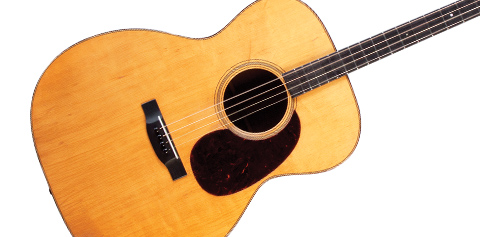

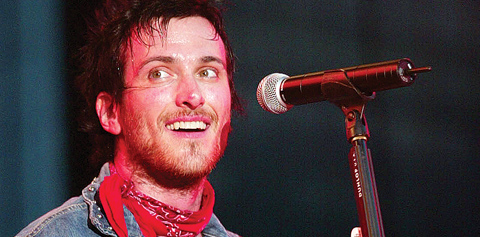


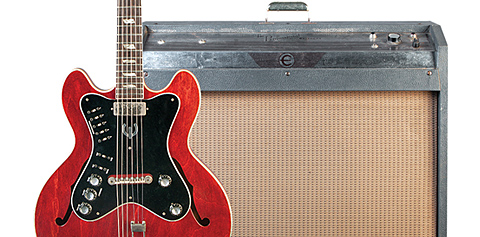



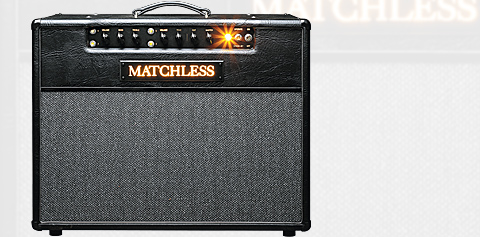


 He’s a straight-ahead jazz guitarist who wrote a smash-hit pop song that’s still yielding handsome royalties. In addition, he has recorded and toured the globe with artists such as Tony Bennett, Barbra Streisand, Burt Bacharach, Natalie Cole, Peggy Lee (for whom he conducted the Dallas Symphony Orchestra), Diana Krall, Sergio Mendes, Manhattan Transfer, and many others.


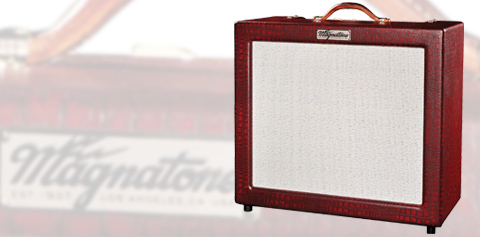

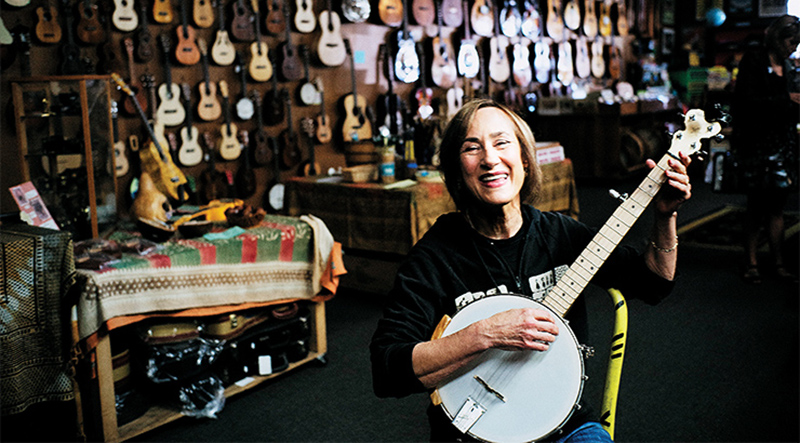

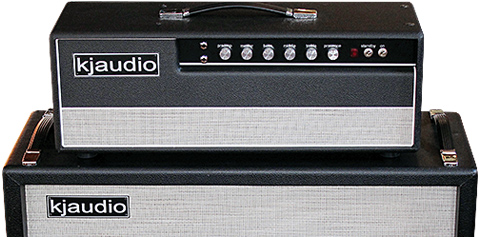

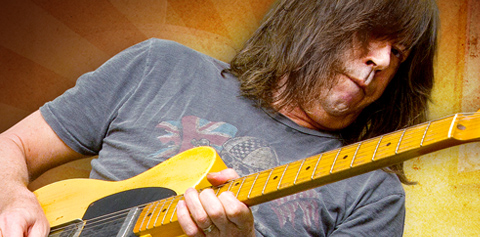

 And you saw Hendrix play live, right?
 Which amps were you using at the time?
