
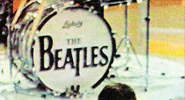

Sunday, February 9, 1964, was the day that forever changed music and pop culture. “The Ed Sullivan Show” was one of the most popular television programs in the United States and at 8 p.m. Eastern Standard Time, The Beatles made their live debut on American national television before an estimated 73 million people. This single television appearance mesmerized an entire generation. How many future musicians’ dreams began that day? How many kids were inspired to form bands and be like The Beatles?
Virtually every famous American rock musician would say later, “When I saw The Beatles on Ed Sullivan, it changed my life.”
It was on that Sunday night that the Beatles conquered America and Beatlemania had taken hold of the nation. Their music, mop-top hairstyles, matching suits, and “Beatle” boots all helped create an indelible image, but their instruments also made a huge impression on everyone watching.
Paul McCartney’s Höfner 500/1 bass, John Lennon’s Rickenbacker 325, George Harrison’s Gretsch Country Gentleman, and Ringo’s Ludwig drum set all became extensions of their individual personalities.
This instrumental lineup contributed significantly to America’s first impression of The Beatles – an image permanently etched on the minds of U.S. youth. The instruments used that night instantly became known as “Beatles instruments” and provided a shopping list for every aspiring group, thousands of which sprang up in the days and weeks following the Sullivan broadcast. Gretsch, Höfner, Rickenbacker, and Ludwig could not have asked for a better advertising campaign, nor could they have imagined what the future held. Music stores throughout the U.S. were soon clamoring for these instruments and demand far exceeded supply. It was every manufacturers’ dream.
Prior to the group’s arrival in the U.S., Capitol Records had orchestrated a large press campaign and media blitz to prime America for their coming. One shrewd businessman who saw an opportunity in the Beatles invasion was Francis Hall, then owner and president of the Rickenbacker guitar company. During the Beatles’ stay in New York, Hall arranged a meeting with the group and presented a 12-string guitar to Harrison. While it is widely believed Lennon also received a guitar at the meeting, company archives show that Lennon’s new 325, intended to replace his original, was not yet present.
After the TV success in New York, the group traveled by train to Washington, D.C. for its first U.S. concert, February 11 at the Washington Coliseum, where they played in the round. It seems laughable now, but at several points between songs, Starr and some stage hands would spin the pedestal on which his drums were set in order to give everyone in the audience an equal view of The Beatles.

The concert also provided the nation’s introduction to Vox amplifiers; to fans, the group was a phenomenon – and they brought these never-before-seen amps, made in Britain. At the time, Gibson and Fender dominated the American markets for professional guitars and amps. But here were The Beatles, presenting an excitingly different range of equipment, and because of them, America’s hopeful teen musicians would want Rickenbacker, Gretsch, and Höfner guitars, Ludwig drums, and Vox amps. All would become as much a part of Beatles identity as the group’s hair.
The following day, the group returned to New York City for two shows at the prestigious Carnegie Hall. Tickets were oversold and some of the audience sat onstage, behind the group. The equipment was the same as in Washington, though photographs from this performance reveal that McCartney’s original bass, the ’61 Höfner, was present as a spare.
After the two Carnegie Hall shows, they flew to Miami Beach, where they stayed at the Deauville Hotel. It was from this location they would make their second live appearance on Sullivan.
On February 14 and 15, the group spent time relaxing, enjoying the weather in Miami, and rehearsing for their upcoming TV show. Photographs taken during the first day of the rehearsals in a meeting hall at the hotel reveal Harrison using his new Rickenbacker 360/12, McCartney his ’63 Höfner, and Starr the Ludwig set. Lennon plays the original ’58 Rick 325, though he took delivery of the new Rick. According to the original receipt (in the Rickenbacker archive), the new 325 was shipped on February 13, directly to Lennon at the hotel from the Rickenbacker factory in California. The following day’s rehearsals on the show’s set marked the first time Lennon played the new 325 with the group.
So it was that on February 16 the group made its second live appearance on American TV. Across the nation, an estimated 70 million viewers tuned in. The Beatles performed “She Loves You,” “This Boy,” “All My Loving,” “I Saw Her Standing There,” “From Me To You,” and their hit “I Want To Hold Your Hand.” Starr performed on his now famous black-pearl Ludwig drum set and the guitars used were the ’63 Hofner 500/1, the new ’64 Rickenbacker 325, and the second Gretsch Country Gentleman (Harrison had two Gents, the first with screw-down mutes, the second with flip-up mutes; he later gave one away and the other fell off the back of a car and was run over by a truck!). The Vox amplifiers were again set to the sides of the stage.
Many a music retailer and manufacturer had Ed and the boys from Liverpool to thank for a very good season as crowds of teenagers rushed to buy Gretsch and Rickenbacker guitars, Höfner “Beatle” basses and Ludwig drum sets. Gretsch, Ludwig, and Rickenbacker greatly expanded operations, trying to increase production to meet an overnight surge in demand, while in Germany, Höfner worked to establish U.S. distribution. In England, calls and telegrams started to pour in to Jennings Musical Industries, requesting Vox “Beatles” amplifiers. It was the dawn of a golden age for garage bands.
Andy Babiuk is the author of the books Beatles Gear, The Story of Paul Bigsby, and the freshly published Rolling Stones Gear. He is a staff consultant to the Rock and Roll Hall Of Fame and owner of the boutique guitar shop Andy Babiuk’s Fab Gear. He can be reached at andy@andybabiuksfabgear.com.
This article originally appeared in VG March 2014 issue. All copyrights are by the author and Vintage Guitar magazine. Unauthorized replication or use is strictly prohibited.
 The Seymour Duncan 805 Overdrive uses the same chip found in the legendary 808 as a starting point, but ends with an MC33178. It has an active three-band EQ, glass-diode/back-to-back stack distortion circuit, and a gain-control range of 8dB to 36dB. Wired true-bypass and for AC/DC operation, it is assembled at the Seymour Duncan Factory in California. Visit
  Roland has expanded its Cube-GX line of amplifiers with the Cube-10GX. It offers 10 watts output and uses a custom-designed 8″ speaker. Its tones can be customized using the Cube Kit app, which offers 10 COSM amps, including amps for bass and acoustic/electric guitar. Out of the box, the Cube-10GX includes three amp types from the app – Clean, Crunch, and Lead – along with controls for Bass, Middle, and Treble. Its three effects – chorus, delay, and reverb – can be dialed up with a single knob, and the reverb section offers plate and retro spring variations. A rear-panel Aux jack allows connection to a music player or smart phone for playing music through the amp. For more, go to www.rolandus.com.
 Eastman Guitars’ T486-RB Ray Benson signature model is a double-cutaway guitar with laminate top, back, and sides. Its maple neck has an ebony fingerboard with pearl block inlays, 24¾” scale, 1¾”-wide bone nut, nickel Gotoh TOM-style bridge, Gotoh tuners, Lollar pickups, single controls for Volume and Tone, and a three-way pickup selector. The guitar is finished in transparent red satin with a “RB” logo branded near the tailpiece. For more, visit
  D&A Rock Solid Stands and Hangers’ Starfish and Starfish+ instrument stands are built with TPE plastic and archival-grade fabric to cover all points of contact between the stand and a guitar. They have five legs, which the company says keeps them stable at a full 30 degrees of tilt, and use the Grip Neck System with gravity-activated Headlock gates. Read more at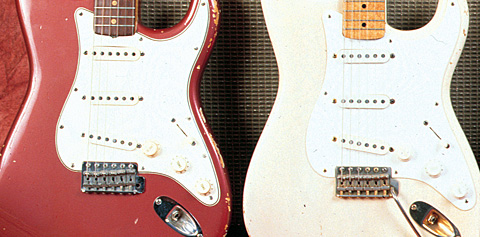




 The Memphis Music Hall of Fame today announced nine inductees. The list includes Lil Hardin Armstrong, Al Bell, Big Star, John Fry, Walter “Furry” Lewis, Chips Moman, Ann Peebles, Carl Perkins, and Jesse Winchester. Inductees will be honored this fall at the Hall’s annual ceremony.