

Year: 2014

  • Brad Whitford

    Brad Whitford

    Brad Whitford: Ross Halfin.
    Brad Whitford: Ross Halfin.

    Aerosmith’s 2011 Back On the Road tour was a two-month jaunt that consisted of 18 shows and took the band to places it had never been in Latin America before concluding in Japan. Normally, such a tour doesn’t create much hoopla, but this was different. The band hadn’t played there in seven years, but more pertinent was the fact the country was just six months removed from its greatest natural disaster – the Tohoku earthquake. Centered 43 miles off the northeast coast, the U.S. Geological Survey said it was the most powerful earthquake to hit Japan, and the fifth most powerful in the world since modern record-keeping began in 1900. Its devastation carried beyond mere earth shaking, as it triggered tsunami waves that reached more than 130 feet in height and traveled some six miles inland, killing thousands and damaging several nuclear power plants that forced hundreds of thousands to evacuate their homes. By the time of Aerosmith’s arrival in November, its people were primed for musical distraction.

    A new DVD, Rock for the Rising Sun, documents that tour’s eight shows in Japan. Assembled by music-video director/documentarian Casey Patrick Tebo, who has worked with the band for a decade, the film reveals that nation’s love for the band, which has a unique depth and passion expressed by Nobu Tanaka, an Aerosmith fan who has seen more than 150 shows in various places around the world. Asked about the connection he and so many of his countrymen feel, Tanaka cites the cohesion that comes with having been together for decades, and how they “…play from the heart.” We spoke about the tour with guitarist Brad Whitford, the man who crafted some of the band’s grittiest, tastiest, licks – “Last Child,” “Nobody’s Fault,” “Round and Round,” to name a few – as well as the lead breaks on “Sick as a Dog,” “Back In the Saddle” and the band’s early ballads “You See Me Crying” and “Home Tonight.” He was also key in the late-’80s Permanent Vacation comeback (he co-wrote the title track) and the band’s ’90s rebirth. More recently, he has worked as a music producer, played a few stops on the 2010 Experience Hendrix tour, and was even made a playable character in a Guitar Hero game

    Was the tour documented on the DVD scheduled before the tsunami, or put together afterward?

    After; we have so many friends and fans there, and we were shocked and saddened with that horrific set of circumstances – all those things at once. When the opportunity came up, we really felt we had to go and give the people a couple of hours of not having to think about the incredible set of circumstances they were living with. We felt we owed it to them.

    The setlist on the DVD includes some great old material. Do you think the band’s current fans – most of whom were born well after those songs and albums were popular – appreciate the old songs?

    Sure. There’s a lot of people – myself included – who really love all that very early stuff. When you’re in the springtime of your musical career, it’s very fruitful, you know? You have that energy and enthusiasm that’s almost uncontainable. It was a great time for us, and those songs bring it back. I do get a lot of, “When you gonna play this or that?” Usually, I can only tell them, “Uhhh, maybe!”

    On that tour, did the setlist change much from night to night?

    It didn’t change a lot. We usually have a basic list to start, and typically change one or two songs. We have so many songs, but of course we can’t fit them all into a two-and-a-half-hour window. Changing it up a little from night to night makes it more interesting.

    For the band and the fans we see on the DVD who rode the bullet train from show to show…

    Oh yeah, …and they always have requests. But yeah, one of our fans (Tanaka) was with us in Singapore and Australia – the guy travels the world to see us.

    As we see on the DVD, you stick to playing a Tele, a Strat, and a Les Paul. Do you try to stay true to the original sound of each song?

    Sometimes it’s about trying to be true to the original track, but I’m not terribly strict about that. It’s a combination of things; sometimes it depends on what Joe’s playing and I want to make sure the tones are complementary and not getting muddy. My guitars are straight out of the rock-and-roll tool box – a Les Paul, a Strat, and a Tele. You can get an awful lot done with those three instruments. A lot of times, I need to make it work in a specific environment; I use a lot more Stratocaster these days, just for the clarity, and I know it’s not going to get lost. They cut through better, they just do.

    How would you describe Aerosmith’s relationship with its fans?

    I’d say it has evolved into something special. Our shows reflect a great appreciation for what the band and the audience each bring to the table, and we’re playing at the top of our game right now; it’s probably the most fun we’ve ever had. It’s pretty rare to keep this kind of thing rolling with the same guys for so long… That’s not easy to do.

    Do you think fans in Japan, especially, appreciate that the lineup has been so stable for so long?

    Well, I think they’re more adoring. When we first started going to Japan, before we’d start a song, the crowd would go dead silent because they didn’t want to miss a note of it. So we didn’t hear that typical auditorium “buzz.” It was a little hard to get used to, at first. You play almost anywhere else in the world, the arena is full of conversation, this and that. But, in Japan, they’d sit, just waiting. They might sing along, but they’d wait until the very end of the song to applaud and whatever, then go silent again. They have a special kinship with music.

    Aerosmith’s new DVD, Rock for the Rising Sun, documents eight concerts in Japan following the Tohoku earthquake.
    Aerosmith’s new DVD, Rock for the Rising Sun, documents eight concerts in Japan following the Tohoku earthquake.

    Obviously, very respectful…

    Yeah, a deep appreciation. And it makes you want to deliver for them, you know? Also, a higher percentage of them travel to every show, usually on the bullet train. We rode the train to every stop with some of them, and stayed in the same hotels. But they’re never pushy or anything. They just want to be there.

    Which amps are you playing through these days?

    Live, I’ve been using a combination of Paul Reed Smith and 3 Monkeys amps. I have a very close relationship with Paul Smith and Doug Sewell, who builds the amps for Paul. Simply put, they’re great old Marshalls (laughs), but they don’t blow up! I love them. The 3 Monkeys was built for me, and it’s 100-watt based on a Marshall. Joe is using actual Marshalls. Yesterday, I heard some stuff from our first album, and I was floored at the sound of the guitars. It was recorded on 16-track – no monkey business, right to tape. Boy, that’s the sound!

    How do you compare and contrast your style and sound to Joe’s?

    That’s a tough question… I think the best way to describe it would be that he plays more from his gut while I try to play from my gut but maybe intellectualize it a little more; I want to play it like he plays it! When he’s on, he’s incomparable. And, he’s more of a showman than I am, for sure. I’m happy to just be up there playing (laughs), but he rides the wave more, and on the past couple of tours he has gone to new levels, which makes it that much more fun for me.

    In what ways is Aerosmith today better than ever?

    There’s an appreciation for what we’ve done, and the level of musicianship has gone up. And, I think, we’ve gone back to just playing from the heart, wanting to recapture that initial energy, where we didn’t think about it, but just went for it. That’s really where it needs to come from, what makes it special and unique. It’s all about the performance; I wish we could take it to that level in the studio, we haven’t got back there yet. I keep pushing it, I keep trying to stop the ProTools people at the door, because I just don’t like that stuff anymore. And, I’m seeing all these young bands go into the studio with no click track – just a 24-track machine, no computers anywhere in sight, getting records pressed on vinyl. You listen to them and you go, “Oh my god! You can still do it. We should go in and do it like that!” It sounds so great.


    This article originally appeared in VG October 2013 issue. All copyrights are by the author and Vintage Guitar magazine. Unauthorized replication or use is strictly prohibited.


  • Grinder Blues

    Grinder Blues

    Grinder Blues

    King’s X bassist Dug Pinnick continues his creative roll by joining forces with Scot “Little” Bihlman on drums and guitarist Jabo Bihlman. The genre is blues, and Pinnick lends his soulful vocalizations and subterranean bass to a project he describes as a “low-fi Chicago blues record with the traditional aspects of the Chicago blues that existed in the ’50s, but with a twist.”

    The album completely misses the mark if you’re expecting the urban atmospherics of ’50s era Chicago. It excels as an inspired hodgepodge of gritty blues and rock influences pulled from Texas, the Delta, ZZ Top, and Pinnick’s own gospel soul-rock extrapolations. Jabo rumbles and rocks with a gritty virtuosity as he shifts from sweaty single-note lines, crashing chord work, wah, and badass slide guitar.

    There’s powerful blues-rock guitar action from top to bottom, coupled with plenty of swampy detuned mayhem to boot. His low-down duet with Pinnick on “Worried Mind” is the real deal, while “It Ain’t Easy” is pure southern blues-rock with a smidgeon of the Black Crowes.

    This is a highly enjoyable blues-rock record with a plethora of grooves, down-and-dirty feel, filthy guitar, and soul-stirring vocals.


    This article originally appeared in VG‘s November ’14 issue. All copyrights are by the author and Vintage Guitar magazine. Unauthorized replication or use is strictly prohibited.


  • Mark Knopfler

    Mark Knopfler

    Knopfler with a Pensa Custom. Mark Knopfler: Fabio Lovino.
    Knopfler with a Pensa Custom.
    Mark Knopfler: Fabio Lovino.

    Very early in life, Mark Knopfler had a connection with music. His mother cared for the family while BBC programs like “Listen with Mother” played on the radio with its child-oriented stories, songs, and nursery rhymes. But it was an uncle named Kingsley who had the biggest impact on young Mark’s informal music education when he entertained the family by playing piano, harmonica, and banjo. Though the boy very much wanted to jam along on a fancy red Fender Strat like the one played by Hank Marvin, like every other kid in England at the time, he had to settle for something like the Höfner Super Solid bought by his parents.

    At 16, Knopfler formed a vocal duo with a school friend and the two played folk clubs in their hometown of Newcastle upon Tyne. Several years later, while studying journalism in college and working as a cub reporter for the Yorkshire Evening Post, he interviewed a local musician named Steve Phillips, who not only introduced him to the music of many more folk and blues performers, but turned him on to the resonator guitar. By his late 20s, Knopfler was firmly focused on making music, writing songs, and performing. In early 1977, he and his guitarist brother, David, formed a band with bassist John Illsley and drummer Pick Withers. Within a few months, they had recorded a five-song demo that included a song called “Sultans of Swing” that was getting airplay on BBC Radio London. The exposure led to being signed by the Phonogram label, recording their first album, a tour opening for Talking Heads, and in turn a U.S. record deal with Warner Brothers.

    With their self-titled debut album as springboard, Dire Straits spent the next several years rising to stardom. The disc reached the top 20 in the U.S., and in some parts of the world shared Top 5 sales spots with the band’s own follow-up, Communique. By the end of 1980, they’d released a third album, Making Movies, and were the recipients of growing acclaim that already included Grammy nominations for Best New Artist and Best Rock Vocal Performance by a Duo or Group (both garnered thanks to the international success of “Sultans of Swing”).

    In May of 1985, the band released its fifth studio album, Brothers in Arms, which included the song “Money For Nothing.” Though it contained a controversial lyric line, its wit, irony, intro (with vocals by Sting, borrowing the melody from “Don’t Stand So Close To Me” while singing “I want my MTV!”), huge ZZ-Top-inspired guitar riff rendered on a Gibson Les Paul Standard, and super-hooky chorus made it an instant – and huge – international hit. The album has sold 25 million copies worldwide and in the U.K. was the biggest-selling album of the ’80s. It was also the first album to ship a million copies on compact disc, all but cementing it as the preeminent format for music distribution at the time.

    In the nearly 30 years since, Knopfler has written music for several films, played and recorded with Bob Dylan, Van Morrison, the late Chet Atkins and many others, been invested by the Prince of Wales with England’s OBE designation, had a dinosaur named after him, and become known for his charity work and passion for the land and people of northeast England.
    His most recent recording, Privateering, is his eighth solo album and first double disc. Delivered with the help of fellow guitarist Richard Bennett and bassist Glenn Worf, both of whom have accompanied him since the mid ’90s, it has the bare-bones sound and approach that has largely defined Knopfler’s style and holds strong to the tradition of the singer/songwriter, emanating from myriad musical experiences and personal emotions.

    “I have always thought in terms of the transatlantic nature of music,” he says of the album. “My idea of heaven is somewhere where the Mississippi Delta meets the Tyne. What I wanted, from the very first album with Dire Straits and songs like ‘Sultans of Swing,’ was to write my own geography into the American music that shaped me, to identify the English, Irish, and Scottish landmarks on Chuck Berry’s road. I think what I’m doing now is both synthesizing those influences and separating them. The band I have is so talented and so flexible they give me a kind of palette to go anywhere I want. I can jump from a hill farm in the north of England and go straight to the streets of New York city or down to the delta for a straight-ahead blues.”

    We recently spoke with Knopfler to discuss Privateering and get a feel for his sentiments regarding his life and music.

    (LEFT TO RIGHT) Knopfler’s personal Fender Stratocaster signature model. Knopfler makes frequent use of this 1935 Martin D-18. “There’s just something about it,” he says. “It has a lot of character.” Knopfler used this ’63 Danelectro DC to record “Miss You Blue” and “Corned Beef City” on Privateering.
    (LEFT TO RIGHT) Knopfler’s personal Fender Stratocaster signature model. Knopfler makes frequent use of this 1935 Martin D-18. “There’s just something about it,” he says. “It has a lot of character.” Knopfler used this ’63 Danelectro DC to record “Miss You Blue” and “Corned Beef City” on Privateering.

    What do you remember most about your early exposure to blues music and other American styles?
    I remember clearly; I didn’t actually know that it was blues, per se, because I was six years old, maybe even younger. But I was listening to my uncle, Kingsley, playing boogie-woogie piano, and it hit me like a ton of bricks. I thought, “This is for me.” And of course, later, when I got deep in the blues, it made complete sense. At the age of 15, I was getting into electric blues, which music fans were starting to get switched onto – the B.B. Kings and the Buddy Guys, Paul Butterfield, and others playing at the time.

    About three years after that, I started hearing a bit of Big Bill Broonzy and Josh White, and then, when I was 19 or 20, started to get much more into country blues, as well. So, I sort of worked backward with the blues, and I’m still loving all of it, of course.

    When I got to know Steve Phillips, we got to do a lot of playing together. Steve had a record collection with a lot of good blues, so it was like “University of the Blues” for me; I was deeply immersed in that stuff for a lot of the time and wanted to play a lot of blues. It was good, because in my younger days, I couldn’t afford an amplifier, so I borrowed a friend’s acoustic guitar and played in folk joints, getting exposed to folk music, as well; I’ve always had an interest in folk music and the blues, acoustic music and electric music – always a wide front. And learning to do a basic fingerpick at an early age is a good thing for any guitar player because it opens their world. I was doing a lot of straight pick playing, then slowly but surely, the fingers started to win. I started breaking the rules a bit and developed what you’d call my “style.” Really, it’s just from sitting and falling asleep while playing (laughs)!

    What influenced you most as the songs came together for Privateering?
    I’d been writing a lot, and I’ve always written different kinds of blues as well as the other stuff. I’m that way about folk music, too; I want it to be its own thing and don’t really believe in any “kind” in particular. Certainly, where folk music is concerned, I don’t believe in any orthodoxy at all. I like the idea of putting in whatever I like.

    We cut the blues songs with Kim Wilson, who was great on the sessions, and what you hear is pretty much exactly what we did. I didn’t want them to have a heavily mixed feel, so they were cut to the bone on the floor and they’re very much the way we did them – they don’t have overdubs except for a small bit of guitar on “Miss You Blues,” where I played the picked part with Tim O’Brien playing mandolin and Kim [on harmonica]. Those sessions were great – so much fun. And when we “mixed” them, I wanted it to sound like it did when we cut the songs. So, I guess some of the songs are very orthodox in a sense that they are very much period blues, in their way – they don’t have synths (laughs); it’s mostly straight piano as far as the keyboards are concerned, with some Hammond on “Blood and Water.”

    You cite your band often. What makes it so special?
    Well, we’ve been playing around each other for a long time, and everybody trusts everybody else, basically. We’re used to working with each other, but some of these guys I’ve been with since ’95, so I know what they can do, and they know what they can do, so nobody chases other people around their parts. There’s a lot of confidence. If somebody feels a part isn’t right for them, he’s happy to lay out – nobody feels they have to be in on anything. Certainly, I don’t get in their way… I try not to, anyway.

    (LEFT) When a song or part calls for Knopfler to use a pick, he often grabs this ’54 Fender Stratocaster and plays it with the vibrato bar in his hand while he strums/picks. It was used to record “The Fish and the Bird” on Kill To Get Crimson, “The Car Was The One,” from Get Lucky, and ”I Used to Could” on Privateering. (RIGHT) This ’58 Gibson Les Paul Standard is Knopfler’s go-to guitar when he needs that sort of sound. He used it to record “5:15 a.m.” and “Back to Tupelo” on his 2004 album, Shangri-La, as well as “So Far From The Clyde” on 09’s Get Lucky.
    (LEFT) When a song or part calls for Knopfler to use a pick, he often grabs this ’54 Fender Stratocaster and plays it with the vibrato bar in his hand while he strums/picks. It was used to record “The Fish and the Bird” on Kill To Get Crimson,
    “The Car Was The One,” from Get Lucky, and ”I Used to Could” on Privateering. (RIGHT) This ’58 Gibson Les Paul Standard is Knopfler’s go-to guitar when he needs that sort of sound. He used it to record “5:15 a.m.” and “Back to Tupelo” on his 2004 album, Shangri-La, as well as “So Far From The Clyde” on 09’s Get Lucky.

    The album is a showcase for anyone who appreciates guitar music; there’s electric, slide, resonator, acoustic, and you have guests like Tim O’Brien on mandolin. Does the choice of instrument guide the music, or is it the other way around?
    It’s vice-versa, I think. In terms of the songwriting, what I’m holding certainly tended to dictate. I’ve usually got an acoustic guitar when I’m fooling around at home, so most of the writing would be around that. And, if I’m taking a look at the songs, it will usually be with an acoustic in my hand.

    The guitar I’ve been playing more than any other over the past few years is a D-18 Martin from 1935. It was a present from a friend and there’s just something about it; it has a lot of character – very slatey, kind of dry, but a beautiful sound.

    Another acoustic that gets itself onto records is the Gibson Advanced Jumbo from 1938, which has the Brazilian (back and side) tone. It’s a different thing. They’re both interesting in that they’re jumbo-shaped flat-tops, but you can fingerpick on them. If I want to use a pick and strum a part, usually I’ll use my ’53 Gibson Southern Jumbo, which has a nice, even strum thing going on with itself.

    Another guitar that finds its way into a lot of songs is a mini Martin they did a run of a few years back. They did about 100 of them, and I really love it. It’s a six-string, but tuned up a third of an octave, so it’s just great for little parts. And of course the National tends to find its way onto records all the time – I don’t know why! It’s a Style O from the early ’30s.

    I’ve also been enjoying a Danelectro 59 DC, which I used for the slide part on “Miss You Blues.” Onstage, I started using a white ’65 Strat for slide. I used that guitar on Sailing to Philadelphia and brought it back out to the stage. It’s a beautiful-sounding thing for slide. I usually play my signature Strat or, if I’m doing a pick-and-whammy-bar thing, my ’54, which is another present from the same friend. I put heavy strings on it, with a wound third. It’s usually a toss-up between the ’54 and the Gretsch 6120 from ’57. I like those for just playing notes with a pick and holding the whammy bar in my hand and get the vibrato from my picking motion. Believe it or not, those early Gretsch pickups have a very similar sound. But every now and again, I’ll press my Telecaster into action, which is a ’54. And sometimes I use a ’66 Tele Custom I’ve had since the early Dire Straits.

    Your sound through the years has mostly been associated with a clean, slinky, Strat tone, but on your biggest hit song, “Money For Nothing,” you played a vintage Les Paul Standard. Which Les Pauls do you play now?
    My ’58 [Standard]. Every now and again the ’59 will come into it, and I really like playing an ES-330 that Tony Joe White gave me a long time ago; it’s a great guitar.

    Are there any non-vintage instruments that have caught your favor?
    I really like the Grosh ElectroJet – it’s a great guitar. And the 12-string Burns Double 6 – a more-recent hand-made one, really precision-made and beautiful. It works really well.

    Which guitars did Richard Bennett use on the album?
    He used a lot of guitars, because we were over [in England]; he’d usually pick an old Kraftsman, a Harmony Meteor, or a J-45 I had. He played my Advanced, and I have a ’37 D’Angelico he loves.

    KNOPFLER_07_Privateering

    Did Glenn stay fairly traditional in his choice of basses?
    Glenn played various basses, but usually an early Precision I have. He’s always very happy to play that when we’re in England.

    Which amps do we hear most on the record?
    The usual suspects; there are four or five I go to all the time. On the blues stuff, I’ve been playing my ’59 Fender Bassman. For a lot of the other stuff I used a Reinhardt Talyn, which is a fantastic amp, I love it. There’s a Reinhardt Storm that’s great, too. I also have an older Komet that’s a great amp, as well – very powerful if ever I need it. In fact, it has so much power that sometimes I have to keep it back onstage – put an Airbrake on it. Ken Fischer built it himself and it’s just great. I talked to Ken about it quite a bit; it’s called Linda.

    I also have an old Marshall and I use an old 4×12 cabinet with it; I like a lot of the big amps, like the Komet and the Reinhardts, but for the smaller stuff I’m very often just playing my old Tone King Imperial, which sounds great again – like the old ones. If you buy a Tone King now, you’re getting a really great amplifier. It seems they’re getting closer to the original sound.

    For really pure tone, I need a real Fender Vibrolux – the old brown-tolex one. Just bashing around on the road, just done three lump tours – two with Bob Dylan and one on my own around Europe, and I took a couple Tone Kings – one for playing with Bob’s band. If ever there was a contest for that kind of sound, I’d put up the Vibrolux and the Tone King and see which is right for the song. Though I must say, the Reinhardts can often beat those two – they’re phenomenal.

    Most of the sounds on the album where you hear a straight, clear tone, very often it’s the Tone King on the rhythm channel.

    From its inception, Dire Straits didn’t fit any musical mold, and surely didn’t fit into the scene of the late ’70s, where punk rock was the flavor of the day. Still, the band had immediate and lasting impact. As a performer today, Knopfler remains beyond classification. And while rock stars mostly “survive” trips to the top by simply living to tell, with Knopfler it was more about tolerating overwhelming mass-media attention that flew in the face of his personal sensibilities. But he sallied on, and today continues to make music of the highest caliber.


    This article originally appeared in VG Febuary 2014 issue. All copyrights are by the author and Vintage Guitar magazine. Unauthorized replication or use is strictly prohibited.


  • Fender Intros Vintage Modified ’68 Custom Vibrolux Reverb

    Fender 68 Custom Vibrolux Reverb AmpFender’s Vintage Modified Series ’68 Custom Vibrolux Reverb pays tribute to the classic look of Fender’s late-’60s silverface amps. Both channels have reverb and tremolo, and the “custom” channel has a modified Bassman tone stack. The amp also has quicker gain onset and reduced negative feedback, dual 10″ Celestion Ten 30 speakers, and two 6L6 tubes to help produce 35 watts output. For more, go to www.fender.com.

  • Gretsch Releases G6112TCB-J Center Block

    Gretsch G6112 TCB Jr Center BlockGretsch’s Professional Collection G6112TCB-JR Center-Block LTD 2-Tone is a Nashville Junior model with a thinline body, chambered-spruce center block, and two-tone finish with a Jaguar Tan top and Copper Metallic back and sides. It has a 1¾”-deep single-cut three-ply maple body with a 14″ lower bout, arched top and back, two-ply black-and-white binding, a bound three-piece maple neck with a U profile and bound headstock, 12″-radius ebony fingerboard with 22 medium frets and pearloid Neo-Classic “thumbnail” inlays, bone nut, dual High Sensitive Filter’Tron pickups with three-position toggle switching and G-Arrow Volume controls for each pickup, upper-bout Tone switch, and Master Volume. Go to www.gretschguitars.com.

  • EarthQuaker Devices Organizing Benefit Auction

    Auction for AndyEffects builder EarthQuaker Devices is organizing the “Auction for Andy” to raise money for the wife and three-year-old son of Andrew Richardson, who died September 1. Richardson was the sales manager/operations at the Minneapolis-based Z Vex Effects, and a respected musician on the city’s music scene for his work in several bands, most notably the Crush, which was signed to Billie Joe Armstrong’s Adeline Records and in 2002 opened a string of dates for Green Day at London’s Wembley Stadium.

    EarthQuaker Devices’ Julie Robbins is appealing to fellow M.I. manufacturers, dealers, and artists to donate items to the auction, which will raise money for a memorial fund.

    “If you can find a way to donate a pedal or pedals, an amp, guitar, or accessory, etc., it would be deeply appreciated,” she said. “We can even accommodate non-gear donations – perhaps a skype guitar lesson from a famous player, or autographed records or posters from bands who want to donate but don’t have gear to spare.”

    The auction is being hosted by Reverb.com and will run from October 6 through October 12; deadline for submissions is September 19. Anyone wishing to submit an item can contact Robbins at julie@earthquakerdevices.com with a 800 x 800-pixel photo of the product and the following info:

    Company:
    Contact person:
    Email address:
    Name of item(s):
    Description of item/Copy:
    Retail Value:

  • Siegmund Introduces Sound King 300B

    Siegmund Sound King 300BSiegmund Guitars & Amplifiers’ Sound King 300B is a Class A guitar amp with 25 watts output using 300B output tubes and 6SL7/6SN7 preamp tubes. Its circuit has true-bypass reverb, EQ bypass, Mercury Magnetics transformers, low-impedance effects loop, Spraque TVA filters, Vitamin Q paper/oil tone caps, Allen Bradley carbon-comp resistors, and cloth wiring. Each is hand-made to order with a variety of tolex and grill combinations or with oil-varnished wood. All have an illuminated/laser-engraved control panel. Visit siegmundguitars.com.

  • Scott Walker Guitars Offers The Electro

    Scott Walker ElectroScott Walker Guitars’ The Electro is hand-built in California using an alder body, maple neck, and Walker’s signature “Nodal” neck joint, which extends the tenon to the bridge cavity, allowing the neck to be bolted on at a nodal point. It also uses a machined, top-loading aluminum bridge that is bolted through the back, and offers a choice of single-coil pickups, traditional solid colors, and a tortoiseshell pickguard. See more at www.scottwalkerguitars.com.

  • ZZ Top, Jeff Beck Set New Dates for Postponed Shows

    ZZ TopZZ Top has announced that it will resume touring early next year after a delay to allow bassist Dusty Hill to recuperate from a hip injury. The band has also rescheduled several dates with Jeff Beck in Florida, Texas, and Oklahoma that were affected by Hill’s injury and will now happen in May. For details, visit www.zztop.com and www.jeffbeckofficial.com.
  • Wally Stocker

    Wally Stocker

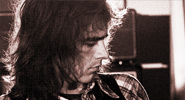
    Wally Stocker with a Les Paul goldtop in 2013. Photo: Alex Solca.
    Wally Stocker with a Les Paul goldtop in 2013.
    Photo: Alex Solca.

    After decades away from the music scene, guitarist Wally Stocker is back on his feet again and back where he belongs, playing lead guitar with a new lineup in The Babys. From 1977 to ’80, the group amassed a string of radio-friendly hits including “Isn’t It Time,” “Every Time I Think of You,” “Head First,” “Back on My Feet Again,” and “Midnight Rendezvous.”

    As lead guitarist, Stocker provided the six-string muscle that powered those hits up the charts.

    Born March 27, 1953, in London, Stocker took up guitar at age nine. A passionate devotee of Free guitarist Paul Kossoff, he honed his chops in short-lived bands Joy and Pegasus. His break came in 1975, when he joined the fledgling The Babys, which included lead vocalist/bassist John Waite, keyboardist/guitarist Michael Corby, and drummer Tony Brock. Signed to Chrysalis on the basis of a four-song video, the band released five albums – The Babys, Broken Heart, Head First, Union Jacks, and On the Edge – and toured with the likes of Alice Cooper, Cheap Trick, Journey, AC/DC, and Rush.

    The Babys disbanded in December, 1980, and Stocker went to tour and record with Rod Stewart, Air Supply, and Humble Pie. In 2013, The Babys reunited with Stocker and Brock alongside new recruits lead singer/bassist John Bisaha and guitarist J.P. Cervoni. Last July, the band performed its first gig in almost 33 years.

    At age 60, Stocker’s playing is remarkably rust-free – his trademark smoky slow-hand vibrato and chunky rhythm guitar colors proudly intact.

    What was your first guitar?
    On top of a wardrobe in my parents’ bedroom was an old flamenco guitar that sat there for years. I used to ask my dad, “What are you gonna do with that? Can I mess around with it?” Finally, he said “Alright.” So, I bought a beginner’s book and practiced all the time. When I started, I couldn’t get the fingering right, so I put it into an open tuning where I could play the chords with one finger. I quickly realized I wasn’t going to go anywhere playing that way, so I tuned it and learned to play properly.

    Who were your earliest influences?
    A guy named Lonnie Donegan, who performed skiffle music. Also, Bert Weedon, who played a big semi-acoustic on TV. Another big early influence was Hank Marvin of The Shadows. I liked the way he’d play these great melodies on the guitar.

    When did you get your first electric guitar?
    Not until I was 16. I left school at 15 and got a job working in a factory. I used to cycle to work past this pawn shop and I’d look at this red guitar in the window and say, “One day I’m gonna have that!” And eventually, I did. It was a no-name electric – very cheap, looked like a Strat. My dad had an amplifier he rigged as a baby monitor for my brother when he was born. That was my first setup!

    Paul Kossoff was a big influence on you as a player…
    I used to go see Free all the time. I was inspired by the sparseness in Koss’ playing and his soulful, bluesy lines. He’d work off of Paul Rodgers’ vocals and know when to sit out, just leave space for everybody. I applied that approach later with The Babys. I realized that sometimes less is more.

    You can hear the impact of Kossoff’s vibrato on your work.
    It was just so unique, bending in and out of notes; a lot of guys were relying on the vibrato arm to get that sound, but he had it down. He was playing guitar like a violinist would do vibrato on a violin. Koss had this lovely richness to the vibrato, and everything Koss played was tasty and soulful; and that straightforward sound of a Les Paul through a Marshall was very influential on me, as well.

    Though I listened to other players like Peter Green and Leslie West, I always came back to Kossoff. Rhythm wise, I also liked Keith Richards, Chuck Berry, and Eric Clapton, especially his work in Cream. I also really liked Steve Marriott’s solid rhythm playing and great riffs in Humble Pie.

    How would you define your approach to playing guitar in The Babys?
    I go for a less-is-more approach. The Babys were very blues-based. We liked the same kind of bands. Sometimes, I look at other guitarists and go, “Wow, I couldn’t do that in a million years,” but I get more enjoyment in the way I play than being able to go up and down the fretboard all night.

    How did a Gibson Les Paul become your go-to guitar?
    After I got my first Les Paul, I was hooked. I fell in love with the unique sound, the way it feels and the way it plays; I love the tone and the sustain. It’s great for blues and lead playing and it’s great for big, fat chords. It’s the kind of guitar you can plug into any amp and get that tone. I’ve never found anything that surpasses a Les Paul, and that’s why I’ve stuck with them all this time.

    What was your main guitar in the Babys?
    A ’68 Les Paul sunburst custom. I bought it new and made payments every week. I used that guitar on all five Babys albums and it was my main guitar as far as live work, too.

    Other Les Pauls were part of your arsenal…
    That’s right. I had a Les Paul Anniversary model with a flame-maple top and double binding on the body, neck, and headstock, and gold tuners with chrome-plated keystone buttons; the silver represented 25 years of the Les Paul and the gold represented 50 years of Gibson; even the tuners were half and half. I got that from the Gibson factory in 1978. I also had a black Les Paul Deluxe from the mid ’70s with cream P-90s, and I had a Les Paul Standard from the early ’70s. For a short time in ’78, I was also playing a Cherry Red Les Paul Junior I got from a roadie friend. I don’t think I played it live; I used it in the video for “And If You Can See Me Fly.” As far as live shows I’ve played nothing but Gibsons throughout my career.

    Do you still have those guitars?
    No, sadly they’re all gone. They’re the tools of my trade. But because I’ve been out of the circle for a while, sometimes you’re forced to sell something you really don’t want to part with. I’ve had some beautiful instruments through the years. My guitars were an investment and if I could have them all back, it would make for a wonderful collection.

    Now that you’re in the market for new guitars, what has caught your eye?
    Gibson is putting out a limited edition replica of Paul Kossoff’s main guitar which he used in Free with the finish missing and scratches and dents. They’re also putting out a new model based on Koss’ ’58 Les Paul. That looks like a wonderful guitar and I’ve got my eye on that one. It would come full circle if I was able to play something like that.

    (LEFT) Stocker and Babys bassist/vocalist John Waite onstage in 1976; Stocker is playing his Les Paul Custom, Waite a Zemaitis bass. (RIGHT) Stocker in ’76. Photo: Brian Cooke, courtesy of Mark V. Perkins.
    (LEFT) Stocker and Babys bassist/vocalist John Waite onstage in 1976; Stocker is playing his Les Paul Custom, Waite a Zemaitis bass. (RIGHT) Stocker in ’76.
    Photo: Brian Cooke, courtesy of Mark V. Perkins.

    The Babys’ musical template mixed muscular rock like “Head First” with orchestral, soul-tinged pop a la “Isn’t It Time.” What were the challenges you faced working within those two styles?
    I welcomed the challenge. It made recording even more interesting and enjoyable. When the guitar isn’t the main feature in songs like “Isn’t It Time,” you’ve got to invent a part that will fit in but maintain the style you wove into a heavier track.

    Do you employ a different approach, playing guitar in the studio versus a live show?
    Yeah, you start with your basic sound, but you have the freedom to experiment a little more with other tones to embellish the track you’re working on. Recording is like painting by numbers; you layer a track like putting a jigsaw together. I liked the way Jimmy Page would orchestrate guitars and incorporate sounds, and that had an influence on me.

    On Head First and Union Jacks, especially, your guitar sound was huge. How was that accomplished?
    I refused to use an electric doubler. I’d go back in and play off the first guitar and strengthen the part that way; maybe I’d change the tone. I’d want to make sure the guitars were rubbing a little bit and not be completely in sync, which gives it a much bigger and fatter sound.

    Which Babys song do you think best showcases you as a player?
    “Dying Man,” from our first album. There was all kinds of room in that song for me to stretch out, and I remember John (Waite) and I going into the studio together. As he was laying down a vocal, I was next to him doing a guitar track, and we were just playing off of each other. Another one I like is “Laura” from the first album. Our producers, Bob Ezrin and Brian Christian, said, “Why don’t you go off and work out a solo as opposed to playing something off the top of your head? We need something different on this song.” I went off with the track and sculpted a solo, and it worked really well.

    Characterize your approach to crafting guitar solos in The Babys.
    The producer would say, “We’ve got six empty tracks. Lay down six solos, come back and listen, and we can take what’s best.” My solos were all kind of short and sweet and to the point – they had to say something, but it didn’t have to be very long. It just had to build and be melodic. The solo in “Love Don’t Prove I’m Right” is short and sweet. I’ve always liked the solo in “Run to Mexico” and “True Love, True Confessions”; which weren’t overplayed. They were just enough, and that’s the way I like it.

    (LEFT) Stocker with a natural-finish Les Paul. (RIGHT) Stocker in ’79 with the Les Paul Anniversary model he acquired directly from Gibson in ’78 with a flame-maple top. Photo: Vernon Marks, courtesy of Mark V. Perkins.
    (LEFT) Stocker with a natural-finish Les Paul. (RIGHT) Stocker in ’79 with the Les Paul Anniversary model he acquired directly from Gibson in ’78 with a flame-maple top.
    Photo: Vernon Marks, courtesy of Mark V. Perkins.

    What were you using for amps, strings, picks, and pedals?
    For me, it’s Marshall amps all the way. I used a Marshall 100-watt Super Bass head on all the albums, then later bought a Marshall Super Lead, and finally a Marshall with Master Volume. As for strings, I had a deal with Dean Markley. I had custom gauges – .010, .011, .014, .026, .036 and .042. Picks? I used medium plastic Herco picks.

    The pedals I used live were my trusty Roland CE-1 chorus – I liked the warmth of that pedal, plus I could run it in stereo. Instead of plugging straight into the amp, it would round off my sound and give it a nice tone with that slow chorus, close to a Leslie effect. It had a lot more high-end and less growl.

    Now, I use a Boss Chorus along with a Boss Delay.

    How did the Babys reunion come together?
    Tony (Brock) approached me last year about reuniting. We’d gone back and forth through the years and this time it finally felt right. John Waite decided he didn’t want to do it and wanted to focus on his solo career, and we respected that. We found John Bisaha, who plays bass and is a great lead singer, and we also have a second guitar player, J.P. Cervoni.

    Back in the Babys first go-round, Michael Corby and, later, Jonathan Cain, played keyboards and guitar. So, if Michael or Jonathan was playing keyboards, there wouldn’t be second guitar, so that limited me to playing more rhythm during shows. But, a second guitar player frees me to play some of the licks on the original records. It’s exciting to have a second guitar in the band, along with keyboards.

    The band recently played its first gig in nearly 33 years. What was that like for you?
    It was very emotional, exciting – and stressful (laughs)! As soon as we walked on, I felt I’d gone back in time and I could feel the tension fall away as we started the set. It felt like, “This is where I belong, playing the old songs again.” It was something I never really thought was going to come around.

    What’s the most useful piece of advice you could offer budding guitar players?
    All the people who influenced me were players you could pick out of the crowd by their style and sound – as soon as you heard them playing, you knew it was Eric Clapton or Jeff Beck or Jimmy Page. That’s what I always tried to achieve. I developed my own style and tone. I’d suggest they don’t get caught up in multi-effects and hammer-ons, because you don’t want to sound like two dozen other players. Concentrate on being unique, as opposed to one of the crowd.


    This article originally appeared in VG Febuary 2014 issue. All copyrights are by the author and Vintage Guitar magazine. Unauthorized replication or use is strictly prohibited.