Month: December 2011

  • Buddy Guy

    Buddy Guy

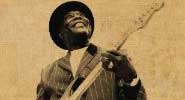
    As he did on Guy’s Skin Deep, drummer/producer Tom Hambridge co-wrote all but one song, with Guy or Gary Nicholson; he penned the title track by himself. But whereas the 2008 effort called in a relatively small cast of session players, here the ensemble is pared down to almost a single rhythm section – David Grissom on rhythm guitar, Double Trouble’s Reese Wynans on keys, and Michael Rhodes alternating with Tommy McDonald on bass, with Hambridge again on drums.

    The result has a cohesive band feel, freeing up Guy to do what he does best – go crazy. A minute and a half into the loping opener, “74 Years Young,” Guy explodes with a sonic burst in which specific notes and licks aren’t near as important as the effect of all that in-your-face aggression – nearly as perfectly sick as his work 40 years ago (for example, This Is Buddy Guy) and twice as loud.

    Conversely, Buddy begins economically on “Thank Me Someday” (another reworking of the standard “Hoochie Coochie” groove), before building to a flurry that would do Link Wray proud.

    The grooves range from the funky “On The Road” (with Grissom employing wah-wah) to the eight-bar shuffle of the title tune, from the stately gospel sweep of “Everybody’s Got To Go” to an Excello/T-Birdsesque “Too Soon” – with Guy using his signature Martin acoustic, a ’57 Strat, a ’74 Telecaster Deluxe, and a 335. The two cameos are both ballads – a yearning “Stay Around A Little Longer,” featuring B.B. King, and a haunting “Where The Blues Begins,” with a beautiful, big-toned solo by Carlos Santana.

    An artist often justifiably criticized for inconsistency, Guy seems to be on a roll of late – lest anyone forget just what an amazing guitarist and singer he can be when he puts his mind to it.

    This article originally appeared in VG‘s Mar. ’11 issue. All copyrights are by the author and Vintage Guitar magazine. Unauthorized replication or use is strictly prohibited.


  • Schaller Offers New Da Vinci Tuning Machines

    Shaller Da Vinci tuning machine

    Schaller’s new Da Vinci tuning machines use a redesigned worm gear the company says offers the precision normally associated with enclosed/greased machine heads, and has a “window” made of scratch-proof UV-resistant polycarbonate. They’re available in a variety of finishes, including 24K Fold, Nickel, Ruthenium, Chrome, SatinPearl, BlackChrome, SatinChrome, and VintageCopper. See more at schaller-electronic.com.


  • Hot Club of Hulaville

    Hot Club of Hulaville

    When they hand out the Grammys for CD packaging, the Hot Club of Hulaville should have their acceptance speech ready. The deluxe edition comes in an air-mail-styled folder with separate replica Django Reinhardt passport, fan-letter reproduction, and an “issue” of the Waikiki Beach Gazette heralding the band. Great stuff.

    Oh, and there’s also the CD itself, packed with 14 tracks of Django-inspired minstrelry that’s pure fun and never takes itself too seriously despite fine musicianship throughout. Hawaii must do something to your soul! The Hulaville Hot Club includes violinist Duane Padilla, guitarmen Sonny Silva and Emmett Mahoney, bassist David Chiorini, and singer Ginai. They’re joined here by guests Paul Mehling of the venerable Hot Club of San Francisco and Gonzalo Bergara of his own namesake quartet on guitar and bandoneon.

    The band’s cover of “Some Enchanted Evening” sums up the band’s mood. The vocals are light and airy, perfectly suited to the song – and a moonlit Hawaiian night. Even on their cover of Astor Piazzolla’s Nuevo tango masterpiece “Libertango,” the group injects a joyous swing to the music. Throughout, on tracks from “Besame Mucho” to “Mambo Italiano” to Django’s “Minor Swing” with guest Rockford Holmes on sensuous clarinet, this is an enchanting album.

    This article originally appeared in VG‘s Mar. ’11 issue. All copyrights are by the author and Vintage Guitar magazine. Unauthorized replication or use is strictly prohibited.

  • Lace Intros Matt Pike Signature Pickups

    Lace Sensor Matt Pike signature pickupsLace Music’s Matt Pike Model signature pickup set is designed to Pike’s specs. They can be split for single-coil tones and measure 15.8k in the neck position and 19k in the bridge. Learn more at lacemusic.com.

  • Ernie Hawkins

    Ernie Hawkins

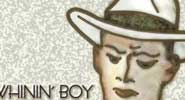
    Ernie Hawkins is a genius of the acoustic guitar who has mastered the country-blues stylings in the vein of Reverend Gary Davis.
    On Whinin’ Boy, he finds himself in a band setting more than on past records. His guitar is the foundation for fine playing by Paul Consentino on clarinet and Joe Dallas on Trombone. Still, there’s plenty of guitar; songs like the title cut (a Jelly Roll Morton classic) give ample evidence of his strong playing and his skill in negotiating blues and jazz changes. Other cuts, like “Susie (Of The Islands),” and the chamber-esque “I’m Coming, Virginia” showcase how his skill at supporting other players.

    Hawkins jumps to the forefront on Little Brother Montgomery’s “Vicksburg Blues,” a showcase for what he does as well as any contemporaries. His “The Southbound Sneak” shows fine chordal work in a tip of the cap to Blind Blake. The fun of Big Bill Broonzy’s “Shuffle Rag” turns it into an almost-acoustic-rock tune with fine interplay between Hawkins and Marc Reisman on harmonica. Hawkins vocals are executed nicely. His singing doesn’t stand out, but delivers the tunes the way they should be delivered.

    Records like this show a form of music heard by babyboomers while they grew up. There’s still a lot of it out there, and as long as artists like Hawkins continue to inform listeners on the original masters, it’ll be around forever.

    This article originally appeared in VG‘s Mar. ’11 issue. All copyrights are by the author and Vintage Guitar magazine. Unauthorized replication or use is strictly prohibited.

  • Ron Dziubla

    Ron Dziubla

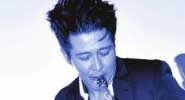
    Lately, Dziubla (pronounced JOObluh) has become the saxophonist of choice for everyone from Ricky Martin to Duane Eddy – with sessions with Deke Dickerson, Elmore James, Jr. and the soundtrack to Burlesque along the way.

    If this were Vintage Saxophone magazine, it would only be a matter of time until he graced the cover. Instead, his 11-instrumental CD deserves special attention, not because he also plays guitar (although he does, along with piano), but because he invited seven killer guitarists to the party.

    Dzuibla has mastered that big Steve Douglas/Jim Horn honk (no wonder Eddy loves him), not to mention that of their predecessors, like Joe Houston, Clifford Scott, and Chuck Higgins. On the aptly titled “PCH Hit And Run,” sounding like a race winding down the Pacific Coast Highway (at night), he enlists Martin’s musical director, David Cabrera, whose fleet-fingered guitar perfectly complements Ron’s tenor/ baritone harmonized sustain. Also from Martin’s band, R.J. Ronquillo shows an obvious debt to Peter Green on “Shakedown Sunset Boulevard,” a stroll sort of like “Rumble” on its side.

    L.A.’s blues guitar contingent is represented about as well as possible – with three tone kings; Rick Holmstrom (on the shuffle “Sucker”), Junior Watson (mixing chicken-pickin’ with Hawaiian impersonations on “Bump Bump”), and Kid Ramos (adding Albert Collins attack to the Mancini-esque “Supervixen”). Deke Dickerson adds gnarly snarl to “The Girl-E Grind,” while Alice Cooper alumnus (and leader of Sextus, featuring Dziubla) Eric Dover adds wide slide to “Tiki Torch Song.”

    A great self-produced collection of vintage/timeless rock and roll and, yes, some strangely appealing blues.

    This article originally appeared in VG‘s Mar. ’11 issue. All copyrights are by the author and Vintage Guitar magazine. Unauthorized replication or use is strictly prohibited.

  • John McCutcheon

    John McCutcheon

    John McCutcheon is one of a small minority – an unabashed folk singer. On Passage, he performs 14 new original tunes that demonstrate his mastery of the idiom known as “folk music.”

    McCutcheon’s subject matter touches the usual folky bases – love, social injustice, the sea, family, travelin’, death, and food. But what makes this album special is how each song is perfectly arranged and beautifully performed. John Jennings, who produced most of Mary Chapin Carpenter’s early albums, plays guitar and piano on three cuts. Other players include Tim O’Brien (mandolin, fiddle, and fourstring banjo), Stuart Duncan (fiddle), Bryn Davies (bass) and a slew of guest vocalists.

    As is required to get a full-fledged folk-singer badge, McCutcheon can fingerpick as easy as he can breathe. On the song “Friendly Competition” he keeps up with Stuart Duncan’s swinging fiddle licks. McCutcheon’s fingerpicked arpeggios on the opening of “Iowa” are so delicate and so rhythmically right-on they seem to melt in the air. He definitely has that magic touch.

    If you’re ready for real folk music, Passage will fill the bill.

    This article originally appeared in VG‘s Mar. ’11 issue. All copyrights are by the author and Vintage Guitar magazine. Unauthorized replication or use is strictly prohibited.

  • Johhny A Victimized in Burglary, Guitars Stolen

    Johnny A. Stolen gear
    The Gibson EB2-D stolen from the home of Johnny A.

    Boston-based musician Johnny A told VG that upon his return November 12 from a tour overseas, he discovered that three guitars had been stolen from his home in Salem, New Hampshire. The thieves broke a window then escaped through a door as the house alarm sounded.

    The instruments included a ’68 Gibson EB-2D in Burgundy Red Metallic finish. It has a repaired headstock, visible on the back  (photos can be seen at www.facebook.com/media/set/?set=a.10150456486835351.418237.658280350&type=1). Also stolen was a 2009 Gibson Custom Advanced Jumbo, serial number 01689062, with a sunburst finish, a slimmer design (3/4″), and a three-piece back, and a reissue Höfner Beatle Bass with sunburst finish.

    Anyone with information is asked to contact Detective Steve Woidyla at the Salem Police Department, (603) 890-2314, or Johnny directly at aglaosounds@aol.com.

  • Various Artists

    Various Artists

    Richard Weize and his Bear Family Records are based in Germany, but few have done more to preserve American roots and other world music. Weize is dedicated to seeking out and reissuing the great, the lost, and the unknown.

    He has dug through record-label archives, discovered unknown alternate takes, unearthed the rumored closet skeletons, and brought them all back to life. Along the way, he has issued albums of vintage country, classic rockabilly, great old time rock-and roll, gospel, R&B, world roots music, and more. Furthermore, he has made it a point of honor to pay royalties to the artists whenever and wherever he can. The three CDs here include new tracks by roots performers from Deke Dickerson to Kim Lenz and many more.

    This box set includes a 208-page large-format hardcover book that serves as both label history and catalog of releases. Talk about creating an instant wish list…

    This article originally appeared in VG‘s Mar. ’11 issue. All copyrights are by the author and Vintage Guitar magazine. Unauthorized replication or use is strictly prohibited.

  • National Guitar Museum Exhibits Eight-Necked “Rock Ock”

    The Rock Ock

    The National Guitar Museum recently unveiled what it is calling “the world’s largest fully playable multi-necked stringed instrument” as part of its permanent collection.

    Called the Rock Ock (a nod to the “Spider-Man” villain with eight arms), it weighs 40 pounds, has 154 frets, 51 strings, and 51 tuning pegs. Comprised of a mandolin, ukulele, six-string, fretless bass, standard bass, 12-string, baritone guitar, and a seven-string, it was designed by artist Gerard Huerta and built by Dan Neafsey of DGN Custom Guitars on commission by the N.G.M.

    “There are dozens of ‘art guitars’ with multiple necks that can’t be played. They’re really just sculptures,” said H.P. Newquist, executive director of the N.G.M. “So, we decided to go one better and create a guitar with eight necks — more than any other in the world — that can actually be played. Our thinking was that if you’re going to create something like this, it should be real. And this one is.”

    The Rock Ock will be on display through the end of the year as part of an exhibit entitled “Guitar: The Instrument That Rocked The World” at the Orlando Science Center, in Florida. Learn more at nationalguitarmuseum.com.