
Month: July 2011

  • Joseph Reinhardt

    Joseph Reinhardt

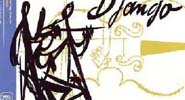
    Joseph ReinhardtThe brilliance of Joseph Reinhardt’s compositions and guitarwork was eclipsed by the star power of his brother, Django. It was only after Django’s death in 1953 that Joseph stepped into the spotlight. With his brother’s passing, Joseph put away his guitar in mourning until a group of French jazz fans arranged the recording session re-released on this CD. The original 1959 10” LP Joseph Reinhardt Joue Django is one of the great rarities of Gypsy jazz.

    Joseph’s guitar is backed by French violinist Pierre Ramonet, bassist Pierre Sim, and Gypsy guitarists Jean Maille and Paul Mayer, as well as Joseph and Django’s brother-in-law, Savé Englebert-Racine Schumacher, on one track. Styled like the original Quintette, the band’s acoustic sound was a throwback to the ’30s. Yet Joseph proved on these eight tracks what a soloist the world had been missing in the shadows of Django. He was not a virtuoso like his brother, yet had a signature all his own. He unreels jazzy lines, often with a more Romany air to them, hot jazz at times joyous, at others with a deep Gypsy melancholy. Joseph also showed his hand as composer in the tracks “Bric-à-brac” and “Triste Mélodie.” He had earlier penned the song “Mélodie au crépuscule,” a nighttime reverie long attributed to Django himself. These new tracks continued in that vein, with minor-key moodiness and surprising melodic lines, all capped by Joseph and Pierre Ramonet’s stylish solos.

    This collection adds the two-song EP soundtrack to the film Mon Pôte le Gitan with Joseph’s jam, “Manouche,” as well as vocalist Jacques Verières’ tribute to Django in the title song. Finally, there’s a near-lost cut from Joseph’s 1947 collaboration with Grappelli.

    This CD goes a long way toward reviving the renown of Joseph Reinhardt – and establishing his name in his own right, out from behind the shadow of his brother.


    This article originally appeared in VG’s Nov. ’10 issue. All copyrights are by the author and Vintage Guitar magazine. Unauthorized replication or use is strictly prohibited.


  • Eagle Mountain Intros Lock-It Strap

    The Eagle Mountain Lock-It strap uses a patented lock mechanism called Lock-It built into each end piece and holds the strap on the guitar’s strap buttons. Learn more at  jhs.co.uk/eagle.html.EM Lock-It strap

  • Cowtown Guitars Under New Ownership

    Jesse and Roxie Amoroso, Cowtown Guitars
    Jesse and Roxie Amoroso

    Cowtown Guitars proprietor Mark Chatfield recently sold the store, located in Las Vegas, to longtime employees Jesse and Roxie Amoroso. Chatfield opened the shop in 1990.

  • Poerava Intros Wing Tip Strap

    The Poerava Wing Tip guitar strap is made from Italian glove leather (on both sides) with suede between. The tip and tail pieces are made fromgrain leather that is hand-cut, punched, and painted. It is available in a 3″ width and has an adjustable length from 45″ to 56″. Poerava straps are handcrafted in California. For more, go to www.poerava.net.
  • Tony Joe White

    Tony Joe White

    Tony Joe White
    Tony Joe White

    When Tony Joe White’s “Polk Salad Annie” came out in ’69, it was about the greasiest thing to hit the Top 40 since Slim Harpo’s “Scratch My Back.” But over the course of 40 years and about 20 albums, White’s funky bent was often mixed with (sometimes buried by) sweetening by producers – trying to turn the deep-voiced singer into, in his words, “Barry Joe White.”

    The self-described “Swamp Fox” got his groove back in the ’90s and on the cameo-filled Heroines and Uncovered (from ’04 and ’06), then took a step backward on ’08’s Deep Cuts, with tape loops courtesy producer/son Jody White.

    But his live shows invariably deliver the real deal, whether accompanied by a full band, a lone drummer, or just his guitar (with fuzz and wah), harmonica, and foot. A true original as writer and performer, White successfully shifts from uptempo, often humorous numbers to tender ballads like “Rainy Night In Georgia” (a smash for Brook Benton) without breaking continuity.

    In 1971, White toured Europe as Creedence Clearwater’s opening act. A live album from those dates was released long after the fact, then quickly disappeared. Culled from that same tour, this features an all-star Southern funk backup band – drummer Sammy Creason, keyboardist Michael Utley, and bass legend Duck Dunn – and was engineered by CCR’s longtime knobster, Russ Gary (miscredited in the notes as “Russ Geary”).

    A cover of “Stormy Monday” finds White flirting with the single-string style of its composer, T-Bone Walker, in lieu of his usual Lightnin’ Hopkins/ John Lee Hooker roots, highlighted on a 10-minute treatment of “Polk Salad.”

    Though his recorded version of “Willie And Laura Mae Jones” was orchestrated, he introduces the night’s solo acoustic highlight with, “I think this is the way to do it – just a guitar and me and y’all.”


    This article originally appeared in VG‘s Dec. ’10 issue. All copyrights are by the author and Vintage Guitar magazine. Unauthorized replication or use is strictly prohibited.


  • 3rd Power Amplification Launches Switchback Extension Cab

    3rd Power Switchback 1x12

    3rd Power Amplification has introduced the Switchback 1×12 speaker cabinet, which uses the company’s triangular speaker chamber in a rectangular housing, as used on their Dream and Switchback combo amps. It also employs the company’s patent-pending triangular port behind the speaker to give closed- or open-back sound. The cab is available in 1×12, 2×12, and 3×12 configurations. Learn more at 3rdpower.com.


  • Bag End Introduces IPD12E

    Bag End IPD12E-IThe Bag End Loudspeaker Systems IPD12E is a self-processed/self-powered double 12″ extended low-frequency bass system with two 12″ drivers coupled to internal 1,000-watt Minima-One amplifier with onboard Infra processing.
    The internal Minima-One amplifier incorporates a high-efficiency/low-power consumption  design with digital switching to accept any line voltage from 88 to 270 volts.  The Minima One operates on any voltage and any waveform. Sensing contacts are provided for installations to remotely turn the amplifier on and off. Learn more at bagend.com.

  • Xotic Intros Timmons Signature Model BB Preamp

    Xotic Effects has released an Andy Timmons signature version of its BB Preamp. The BB  is capable of a 30dB clean boost with an adjustable two-band active EQ. It utilizes a pre-gain stage which allows the pedal to go from pristine clean to a smooth, compressed, overdriven sound. It uses true-bypass switching. The Timmons model uses a different color scheme and packaging.  Learn more at xotic.us.

  • Hank Williams

    Hank Williams

    Hank Williams
    Hank Williams

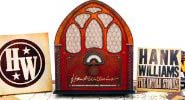
    This 15-CD, one-DVD collection features 143 Hank Williams sides that had never appeared together in an official release, and were once thought lost.
    This elaborate limited-edit ion package includes a healthy amount of biographical information on Williams, his family, and his band, the Drifting Cowboys, along with detailed notes, anecdotes and great pictures.
    The CDs contain 72 expertly restored and remastered episodes of Hank’s “Mother’s Best Flour” radio show, recorded for broadcast on Nashville’s WSM when Williams was on the road and couldn’t appear live. By 1951, when the show started, he was at the peak of his popularity with no problem attracting great players. The group was expert at getting things right the first time and the shows were done as though they were live, complete with Hank doing commercials and VD-prevention PSAs. Loose, funny, and relaxed moments alternated with near-perfect performances.
    Since he was surrounded by great soloists like fiddler Jerry Rivers and steel guitarist Don Helms, Williams’ rhythm guitar has usually gone unnoticed. These recordings shed new light on his contribution to the instrumental side of his music. They’ll also inspire or reawaken an appreciation for Helms, a brilliantly innovative player whose influence can still be heard a halfcentury later in the work of later players like Cindy Cashdollar and others and whose steel guitar was as important as Williams’ voice was to defining the Hank Williams sound which became one of the most influential elements in the shaping of early country music.
    On the DVD, titled The Untold Stories, Helms, good friend and opening act Big Bill Lister, and WSM engineer Glenn Snoddy (who worked on the original recordings) reminisce about Hank with his daughter, Jett. The stories are funny and touching, but it would have been nice if some performance footage of Hank or an interview with Hank Williams, Jr. had been included. But you can’t have everything, even though 18 or so hours of Hank Williams music comes pretty close.


    This article originally appeared in VG‘s Dec. ’10 issue. All copyrights are by the author and Vintage Guitar magazine. Unauthorized replication or use is strictly prohibited.