Month: January 2010

  • Bixonic Expandora 2000R

    Bixonic Expandora 2000R

    Bixonic Expandora 2000R.

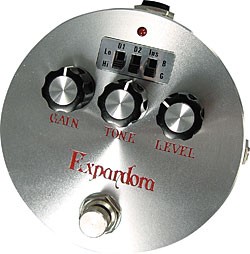
    Bixonic introduced the Expandora distortion/fuzz pedal in 1995, and it quickly became popular among guitarists the likes of Billy Gibbons, Joe Satriani, Megadeth, and Bootsy Collins. The original Expandora was loved, but had its drawbacks, such as having its DIP switches inside. It was also a little thin-sounding. In ’01 we saw the Expandora II, with more tone control and better low-end response. And at this January’s NAMM show, Bixonic introduced the Expandora 2000R, which combines the best of both previous versions and offers a few subtle improvements, like DIP switches on the outside making them of course more accessible, sturdier bypass switch, and a DIP switch to toggle between the old version and newer version with more bass.

    The Expandora’s well-built metal casing resembles a tuna can, giving it a cool, unique look. All parts are heavy-duty, adding to its potential durability. A Phillips screw removes the plate for easy battery access. A look inside reveals its extremely clean electronics work.

    The unit can be powered by a battery or recommended 9-volt power supply. A red LED works in conjunction with the bypass switch.

    The Expandora’s Input Gain allows the user to adjust distortion gain, while the Tone knob controls high-frequency cut. The third control, Output Level, allows you to balance volume between the distorted and bypassed signals.

    The first two DIP switches toggle between two levels of distortion. The third switch toggles between the old pedal sound and the version with more low-end. The positions are marked “B” (bass) and “G” (guitar) and the Expandora can be used with bass guitars.

    To sample the Expandora, we used two of our favorite machines – a ’70s Ibanez Artist with Wolftone Greywolf pickups, and a stock ’72 Fender Strat. Our amp was an all-tube Peavey Butcher head with 2×12″ cab. We plugged in the Artist, set the amp to clean, set the Expandora’s gain switches to low, and set input gain at 10 o’clock. Tone was at 9 o’clock.

    With the Instrument switch set to B, we got a very transparent, slightly overdriven blues sound that was really natural. We experienced no loss of low-end whatsoever or note separation. We increased the gain and got more distortion, but it remained clear and natural; we were surprised by the gain the Expandora offered even with the DIP set in the low position.

    Switching the Instrument DIP to G, the tone thinned out noticeably, to the point of becoming nasaly (like older distortion units). Switching back to B, and D1 to high, we got more really fat gain.

    Then we entered what Expandora users call the “forbidden zone,” with D2 in the high position. This made for a fat, over-the-edge fuzz that just about buried us! Switching to G, the fuzz thinned out, but was still plenty heavy. This pedal is capable of extremely fat or thin fuzz. We also noticed that when using D1 and D2 by themselves, D2 adds more gain. Tons of gain structures can be had just by dialing and switching.

    In the higher-gain settings (excluding the “forbidden” mode), the signal cleaned up very nicely as we rolled off our guitar’s volume control. All pickup positions sounded great, leaving no great distortion rock unturned.

    Next, we plugged in the Strat and got very much the same tonal results, except it fattened the sound of the Strat slightly at lower gain settings. We noticed, however, that at higher gain settings, the Strat seemed to fuzz out a little more than the Artist. At higher levels, the Expandora simply likes humbuckers better.

    The Bixonic Expandora 2000R does a fantastic job of giving you any distortion tone, from fat, slightly overdriven blues to tons of natural, great-sounding distortion, to over-the-edge fuzz. A player could hook many of these together with various preset gain structures and probably never need any other distortion or fuzz pedal. Money well-spent!


    Bixonic Expandora 2000R
    Features Two-position distortion DIP switches, two-position Ins switch, heavy-duty bypass switch with LED indicator, 9-volt battery or regulated power supply.
    Price $200.
    Contact Godlyke Distributing, 46 Marlboro Road, Clifton, NJ 07012; phone (866) 246-3595; www.godlyke.com.


    This article originally appeared in VG‘s July 2007 issue. All copyrights are by the author and Vintage Guitar magazine. Unauthorized replication or use is strictly prohibited.

  • Jake Armerding – Walking on the World

    Jake Armerding’s third solo release has a wider musical scope than his earlier releases, but his songwriting is more focused, articulate, and poignant.

    Like many talented young songwriters, the traditional genres of folk, bluegrass, and blues can’t be used to pigeonhole Armerding’s music. The sources include traditional folk, Celtic, bluegrass, and ’50s country.

    The three strongest songs on the disc have the letter F featured prominently; “Falling In” tells a tale of an evening spent in a Liverpool pub. The verse’s melody draws from Celtic modalities before cascading into ’60s pop confectionary chorus. “Flirting” begins with a bluesy a capella vocal line soon joined by funky jazz bass, as Armatrading swings through a first-hand account of the beginning adrenalin-filled steps in the courting ritual. “The Fleece” has a killer opening hook by Dan Dugmore, and the chorus – “Help me now, Lord, for I never, never need the one I want. Teach me now, ’cause I never, never want the one I need” – rides on an addictive melody that must sung when heard.


    This article originally appeared in VG‘s Aug ’07 issue. All copyrights are by the author and Vintage Guitar magazine. Unauthorized replication or use is strictly prohibited.

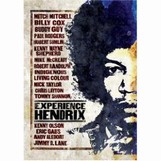
  • Experience Hendrix

    Had fate and negligence not interfered, Jimi Hendrix would have turned 65 in 2008 – only five years older than Bruce Springsteen, four older than Carlos Santana, two older than John Fogerty, and 18 years younger than B.B. King, all of whom are still going strong.

    Though we can only assume Jimi would still have the fire, creativity, and skill that made him shine so bright, it’s stupefying to imagine hearing him jam with his musical fathers (King, Guy), brothers (Santana, Clapton, Jeff Beck), and “sons,” some of whom deliver blazing versions of his songs here.

    Mixed by Eddie Kramer, this DVD combines selections from San Diego and Seattle stops on the ’07 Experience Hendrix tribute tour. Though the dream version of this gig would climax with Jimi and the late Stevie Ray Vaughan in a jam, there to pick up the slack are Longtime Howlin’ Wolf guitarist Hubert Sumlin, Buddy Guy, Mick Taylor, and Paul Rodgers with Vaughan’s Double Trouble bandmates Tommy Shannon and Chris Layton and the Experience’s Mitch Mitchell and Billy Cox. Rodgers sings his butt off, cementing his position as one of rock and roll’s great vocalists. And Cox, Jimi’s bassist of choice, reveals his underexposed vocal talent on “Freedom.”

    Sumlin and Guy – who is unabashedly respectful and deferential to Sumlin onstage – carry themselves like the pros they are. Guy – 71 at the time of filming – teases, tantalizes, and satisfies on “Hootchie Coochee Man” and “Five Long Years” with his spot-on imitations of Muddy Waters’ gestures and style. His voice, reminiscent of Joe Tex, along with his still-dazzling chops, and Sumlin – then 75 – is confidently humble, playing with flashes of what made him such an influential part of blues guitar history.

    Younger players also have spectacular moments. Kenny Wayne Shepherd is all swagger on drop-dead versions of “Come On (Let The good Times Roll),” “Voodoo Chile” and “I Don’t Live Today.” Kid Rock’s Keith Olsen brings more than a little Detroit sting to “Stone Free” with Mitchell, Cox, and Andy Aledort. If Olsen is a hair behind some of the other players in smooth virtuosity, he makes up for it the enthusiastic joy of a guy with something to (successfully) prove. Less cocky but equally impressive is Indigenous and its take on “Hear My Train A Comin’.” Guitarist Mato Nanje gives Taylor a run for his money on “Red House.” Indigenous, with Guy, Shepherd, and Eric Gales, provide the brightest highlights on a stone blast of a disc that’s loaded with them.


    This article originally appeared in VG‘s Dec. ’08 issue. All copyrights are by the author and Vintage Guitar magazine. Unauthorized replication or use is strictly prohibited.

  • Shedding Light on the Genius…

    Mick Taylor

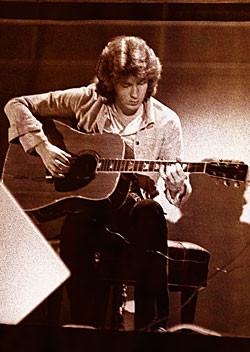
    Taylor strums a flat-top with The Rolling Stones in early 1973. Photo copyright Marty Temme.

    The mid/late 1960s were a fertile and progressive time for rock guitar, with “Swinging London” serving as the birthplace and incubator for the blues-rock idiom, in particular, as budding English musicians began discovering the sounds of everyone from Chicago blues artists such as Howlin’ Wolf and Muddy Waters to the country blues of Robert Johnson and Skip James.

    The mid/late 1960s were a fertile and progressive time for rock guitar, with “Swinging London” serving as the birthplace and incubator for the blues-rock idiom, in particular, as budding English musicians began discovering the sounds of everyone from Chicago blues artists such as Howlin’ Wolf and Muddy Waters to the country blues of Robert Johnson and Skip James.

    Striving to be heard in the 1930s, ’40s, and ’50s, African-American blues pioneers were virtually ignored in their own country. But in a dismal post-WWII England where food was being rationed, these sounds became the stuff of dreams and escapism for kids who began picking up American blues records. In the U.S., the music was more for collectors and hip bohemians, but across the pond, Muddy, Wolf, et al, sparked a renaissance.

    In early-’60s London that renaissance gave way to a cultural revolution that would be transferred back to the U.S., where the music became the template for a wellspring of creative guitar styles. It’s widely believed that the two earliest proponents of American blues in England (and responsible for striking up the British Blues boom) were Alexis Korner and Cyril Davies. Korner (a guitarist) and the harmonica-playing Davies served as historians of American blues and jazz, and became mentors to England’s emerging talent. The buzz began when the co-op group of Korner and Davies known as Blues Incorporated (formed circa 1961) began hosting a jam session at London’s Marquee Club. The sessions introduced figures who would later make major contributions, including bassist Jack Bruce and drummers Ginger Baker and Charlie Watts.

    Through these sessions, Watts would be introduced to guitarist Keith Richards and vocalist Mick Jagger, and together would meet a young guitarist called Elmo Lewis, who perfectly emulated the slide guitar style of Elmore James. Lewis’ real name? Brian Jones.

    In 1962, Cyril Davies departed Blues Incorporated to start the Cyril Davies All-Stars, whose ranks included (at various times) guitarist Jeff Beck and pianist Nicky Hopkins, who would go on to play sessions with the Beatles, Rolling Stones, Jefferson Airplane, and others. Via jam sessions, Korner became the spiritual catalyst for the formation of the Stones. He was also pivotal in the formation of the Blues Breakers, encouraging John Mayall’s decision to move to London and become a professional musician.

    These bands began to make waves, their ranks containing guitarists with names like Eric Clapton, Jeff Beck, Peter Green, and Jimmy Page – players who used American blues as a point of departure but developed their own distinct voices. However, when discussing British guitar legends, one name tends to be left out…

    Although only a few years younger than the aforementioned “deities,” Mick Taylor doesn’t receive nearly the accolades. Known mostly for being the guy who replaced Brian Jones in the Rolling Stones, as a teenager Taylor was reinventing modern blues guitar and how it could sound – and in the process developing one of the most stylistically unique guitar voices to come out of England. And today, his playing is as vital, lyrical, and emotive as it was 40 years ago.

    Michael Kevin Taylor was born on January 17, 1949 and raised in Hertfordshire, north of London. He became interested in music at a very early age and after attending a Bill Haley and the Comets gig as a nine-year-old he began playing guitar. He began playing professionally a few years later and his first recording session came in August of 1964 while playing with a group called The Juniors. The Juniors cut just one single, “There’s A Pretty Girl,” but it was with local outfit called the Gods that Taylor began to become recognized (various incarnations of the Gods included future Ozzy Osbourne drummer Lee Kerslake and bassist/guitarist Greg Lake; the band would evolve into Uriah Heep).

    The opportunity to play with a truly prestigious and well-known outfit would come for Taylor in ’67, when the 18-year-old answered an ad placed seeking a guitarist. The band was John Mayall’s Blues Breakers, who were looking for a replacement for Peter Green. Taylor had made an impression on Mayall when he stood in for Eric Clapton at a gig in April ’66. He spent two years in the Blues Breakers, appearing on the albums Crusade, Bare Wires, and Blues From Laurel Canyon. His playing in this period was marked with exuberance and virility; his lines demand attention with their intelligence, sophistication, and emotional power.

    On Crusade tracks such as Albert King’s “Oh Pretty Woman” and Freddie King’s “Driving Sideways,” it’s apparent that Taylor’s style, even in its formative stages, is quite different than those of Clapton and Green. He displays an affinity for the styles of Albert and B.B. King, in particular, but there’s also a very linear, lyrically melodic approach that gives Taylor’s musical personality a distinct identity.

    During the recording, Taylor (like Clapton and Green before him) used a late-’50s Gibson Les Paul Standard plugged into a 50-watt Marshall half-stack. His economical single-line approach, melodic invention, and gifted bottleneck style brought a dimension that had been lacking in the band’s style – and Mayall was happy to make use of it. The Mayall/Taylor penned “Snowy Wood” is an instrumental-guitar showcase – and the perfect place to hear Taylor’s style in its formative stages.

    Mayall’s concept for his group’s sound began to expand from the strict Chicago style he favored. Though there are horns on Blues Breakers with Eric Clapton, now Mayall was using their voices to incorporate a jazzier feel and sound – and Taylor’s style proved the perfect voice to implement and execute this new sound.

    In late ’67, Mayall recorded gigs in Holland and Ireland, as well as Newcastle and Southampton. Released in two volumes, Diary of a Band shows how rapidly Taylor was developing. The Blues Breakers had begun to make longer, extended improvisations a cornerstone of their live performances, and hearing Taylor stretch out on tracks like “The Train” shows his melodic sense truly starting to flourish. The masterpiece, however, is the 10:52 opus “Crying Shame,” where we hear other Taylorisms emerge, like his use of hammer-ons; Taylor thought outside the pentatonic-blues box.

    The next Mayall release would be an even greater departure. Inspired by suites performed by American jazz groups, Mayall appropriated the compositional framework on Bare Wires, taking advantage of extended song structures to express feelings about his then-recent divorce. His desire to meld blues and jazz gave the Blues Breakers a more varied musical palette; horns and violin contributed to the tonal spectrum. Arguably, Bare Wires is Mayall’s strongest recording, compositionally speaking. Taylor comes out screaming with an outburst of feedback in the portion of the suite called “Start Walking,” an upbeat shuffling swinger. Taylor’s style has taken even more identity. His expansive vocabulary and far-reaching ideas help his bluesy improvisations fit very nicely alongside the jazzier contributions of the horns and violin. As on Crusade, Taylor is ebullient on “Hartley Quits,” a buoyant blues with Taylor wailing along, aided by the floating, rhythmic horn thrusts. There are few moments so joyous in the Blues Breakers oeuvre. “Killing Time” follows, with Taylor alternating bottleneck and single-line soloing,.

    Taylor underwent a flurry of activity in the guitar-acquisition department between February ’67 and November of ’68. After having his Les Paul stolen, he bought one from Keith Richards. The guitar had a sunburst finish and had been fitted with a Bigsby. Taylor used the guitar in the latter stages of his stay with Mayall. He also used a Selmer Hawaiian guitar in the studio. In early ’68, during a U.S. tour, he acquired a white Fender Stratocaster with a rosewood fretboard, which he ran through a Vox wah pedal on “No Reply” (from Bare Wires).

    Taylor played a session with Sunny Land Slim while recording Slim’s Got Nothing Goin’ On in Los Angeles. During his second U.S. tour with the Blues Breakers, in the autumn of ’68, Taylor added to his collection an early-’60s Gibson SG/Les Paul.

    In November of ’68, Taylor made his final recording as a Blues Breaker. Blues From Laurel Canyon was another concept LP, influenced by Mayall’s travels to California, which he thereafter adopted as his home. The album opens with the rousing “Vacation,” which Taylor displaying trademarks heavy vibrato and hammer-ons, wrapped in a firestorm of feedback. “Walking On Sunset” is a good-time blues extolling the sights and sounds of the Sunset Strip.

    By this time, Taylor’s reputation as a lead guitarist was spreading, presenting him with more recognition – and opportunities. In November of ’69, Clapton told Melody Maker, “I saw John Mayall in America, and we jammed… Mick Taylor is very good – frightening.” Further session work came in the form of accompanying pianist Champion Jack Dupree on a few tracks for Scooby Dooby Doo, as well as a single recorded by the Irish singer/songwriter Jonathan Kelly. “Make A Stranger Your Friend” featured Taylor along with a cast of thousands, most notably Beatles’ associate Klaus Voorman on bass and guitarist Albert Hammond.

    In his notes to Blues From Laurel Canyon, Mayall writes that Taylor, “…really shows his brilliance… He has worked with me longer than any other guitarist I’ve had and I hope that we’ll continue as a team for a long time to come.” However, Mayall’s wish would not come to pass. In late May of ’69, Taylor handed in his resignation. In England’s Melody Maker, Taylor said, “John wasn’t an easy person to work with because he’s got such a strong musical personality, but it was very enjoyable… until the last six months when I began to get fed up. Then I’d get up onstage and just go through the motions.”

    In the 1969 Mayall documentary The Turning Point, a fresh post-Blues Breakers Taylor sheds light on his leaving the band; “Playing the sort of music that John plays, it gives you a lot of opportunity to develop your own ideas; it gives you a lot of freedom within the blues framework, anyway. So it did do me a lot of good being with John… He was only difficult to work with when I started to veer off towards other things. I’d be getting interested in other things – I didn’t really want to play his music… He’s not a difficult person to get on with really, though a lot of people seem to think so.”

    Taylor’s departure wasn’t a blow to Mayall and in fact, he had begun to grow weary of the guitar/bass/drum core that had typified the Blues Breakers instrumentation.

    During Mayall’s reevaluation, major changes were taking place within the Rolling Stones, which had a difficult period thanks to drug busts that led to a period of inactivity, which in turn detracted from the band’s music. Their Satanic Majesties Request, released in December, 1967, is considered the Stones’ answer to the Beatles’ Sergeant Pepper, and though it has its moments, Majesties comes off merely as a half-baked, out-of-place attempt at psychedelia. The Stones realized that a return to blues-rock was in order, and they snapped to it with their next single, the hard driving punky blues of “Jumping Jack Flash.” Released in early summer ’68, it left no doubt that the big, bad Rolling Stones were back.

    The band had not played in America since ’67, but beyond that they had a problem with Brian Jones, who due to substance abuse had become unreliable while making Beggar’s Banquet – and when he did show was in no condition to contribute. By ’69 the band had ascended a creative crest as it worked on Let It Bleed. With a U.S. tour in the works, Jagger and Richards knew Jones was unable to carry on. Urban legend has it they wanted Eric Clapton to fill the slot, but the stars were not in alignment. So Jagger turned to Mayall for advice, and Mayall suggested Taylor, whose first session with the Stones took place May 31, 1969. Taylor described the circumstances that precipitated his transition from Blues Breaker to Rolling Stone in the Martin Weitz BBC documentary, Godfather Of British Blues. “It had been merely four years and then [Mayall] certainly felt like it was, not only a time for a change for him musically, but time for a change of personnel and also it was time for him to move to America… John called and told me the Stones were interested in trying me out as a guitar player. I thought for some session work, but apparently it turned out to be a bit more than that.”

    The fruits of Taylor’s first session with the Stones are born in various places. He plays driving rhythm guitar on “Live With Me” and contributes tasty acoustic slide fills to “Country Honk,” both from Let It Bleed. “Jiving Sister Fannie” and a cover of Stevie Wonder’s “I Don’t Know Why (I Love You)” were on the controversial Metamorphosis LP released in ’75. “Fannie” contains great lead work by Taylor, and “I Don’t Know Why” is given a chill by his stinging slide. Various outtakes and unreleased tracks from Taylor’s initial Stones session have been circulated as bootlegs.

    On July 3, 1969, the Stones received news that Jones had drowned in his swimming pool. They were scheduled to play a free concert two days later at Hyde Park and were going to cancel until drummer Charlie Watts said they should play as a tribute. The concert, filmed by Granada television, was broadcast as “The Stones In The Park” and serves as an interesting document of the “new” Stones, lurching (as opposed to majestically rising) phoenix-like from the ashes. Jagger asks the crowd to “be cool for a minute” so he can eulogize Brian via a reading of poet Percy Shelley’s “Adonais,” after which several hundred butterflies are released from stage. Taylor uses the SG/Les Paul for most of the concert, but is also shown using the Richards Les Paul to play slide on the gloriously raucous blues “I’m Yours and I’m Hers.” HiWatt amplifiers can be seen on the stage behind Taylor and Richards.

    With Jones laid to rest and Taylor in place, the Stones started their U.S. tour November 7 in Fort Collins, Colorado. Aboard were filmmakers Albert and David Maysles, to capture the band onstage and backstage, in hotel rooms, and even in the famed Muscle Shoals studios. The plan was to play across the U.S. and finish the tour with a free concert December 6 in San Francisco. The setlist showcased numbers from the new album, some from Beggar’s Banquet, a couple of oldies but goodies, and a couple of Chuck Berry covers for good measure. The live Get Yer Ya-Ya’s Out, recorded at New York’s Madison Square Garden November 27 and 28, is a nice memento of the live Stones circa ’69, but doesn’t capture the excitement or sheer ferocity of the band’s live sound on that tour.

    For that, one need only view the subsequent film Gimme Shelter or listen to the myriad of bootlegs that cropped up in the tour’s wake. For all intents and purposes, Taylor made use of the SG/Les Paul for the tour, though photos also show him with a Gibson ES-345 (interestingly, in the film Richards can be seen playing a Les Paul that belonged to Taylor). Ampeg was the amp brand of choice for that tour and the 1972 tour (immortalized in the film Ladies and Gentlemen, The Rolling Stones).

    To hear the Stones live in 1969 is to bear witness to a musical awakening. What the Jones-era Stones offered was a raw alternative of darkness and angst to the Beatles’ more meticulously produced message of unconditional love. The band had a palpable edginess, even for the mid ’60s. And though the Stones had long been a solid musical unit, there had never been any virtuosos in its ranks. Taylor changed all that and influenced the way the other Stones played, lending a new level of sophistication to its compositions. For the first time, the Stones had a true musical heavyweight in their midst.

    Taylor spent five years with the Rolling Stones, playing on Sticky Fingers, Exile on Main Street, Goats Head Soup, and It’s Only Rock and Roll. His instrumental and compositional contributions make those albums unlike any other in the Stones discography, and many believe Taylor’s years with the band are its musical and artistic apex, as his playing imbued the music with power, beauty, and a sense of humanness.

    Taylor’s final gig with the Stones happened at the end of the band’s European tour in October, 1973. They would record It’s Only Rock and Roll, and by late ’74 Taylor decided to leave the band. Various reasons have been cited, but one that Taylor has corroborated is the band’s inactivity at that point, along with his growing desire to do something different; he simply felt a need to move on. Regardless of downtime among Jagger and Richards, Taylor had participated in more sessions outside of the Stones, most notably on Reggae by jazz flutist Herbie Mann and I’ve Got My Own Album To Do by Faces guitarist Ron Wood, who would soon become Taylor’s replacement in the Rolling Stones. Also released in August ’74 was Billy Preston’s Live European Tour, recorded while Preston was opening for the Stones, when Taylor would go onstage with Preston’s band.

    After playing blues-based rock for years, Taylor was eager for a challenge that would stimulate his vast musical vocabulary, vision, and technique. So when he got the offer to join a new band being formed by bassist Jack Bruce, he jumped at the chance. Although the group (with forward-thinking jazz keyboardist Carla Bley and appropriately dubbed The Jack Bruce Band) should have reached amazing musical heights, it never quite got off the ground. In ’75 they embarked on a European tour, then played the U.K. and on June 6 appeared on the BBC’s “The Old Grey Whistle Test.” Apart from bootleg recordings and a CD release of “Whistle Test,” the band broke up before they got around to making a proper studio recording. But its music was truly a departure, and indeed a challenge for Taylor; jazz-rock compositions containing sophisticated chord changes and exotic time signatures. The project have not have brought Bruce and Taylor the commercial success of their previous bands, but no one was going to say that either was resting on their laurels.

    In early 1976, Taylor did a session for Nick Roeg, director of the film The Man Who Fell to Earth (starring David Bowie), who had commissioned “Papa” John Phillips to compose music for the film’s soundtrack. In his book Papa John: An Autobiography, Phillips writes, “To me, Mick didn’t just play guitar, he performed 12-bar ballet on guitar.” He goes on to say that Keith Richards showed up one night and after an icy greeting, the guitars came out. “Guitarists become different people with a Gibson or Fender in their hands,” Phillips said. Soon after the soundtrack was finished, Phillips began hanging out with Jagger, and upon hearing some of Phillips’ songs, Jagger encouraged him to record a solo album, which through Jagger’s mediating would be financed by Atlantic Records guru Ahmet Ertegun and released on the Stones’ label. The resulting sessions would feature Taylor, Richards, Jagger, and even Ron Wood contributing bass, among others. Unfortunately, all of the excitement and good intention poured into the recording proved for naught and, due to various circumstances, the album would remain unreleased until 2001, a few months after Phillips’ death. Pay Pack And Follow stands as a lost but very interesting document in the annals of Rolling Stones/Mick Taylor history.

    In 1978, Taylor began recording his first solo album, playing piano and writing songs. He wanted to make a mostly instrumental record to showcase his playing in a variety of musical contexts. Released in May of ’79, Mick Taylor does that and more. He plays most of the instruments, including bass, piano, and synthesizer.

    The record also features Taylor in a role he had not previously filled – that of lead vocalist. Although the vocals are pushed back in the mix, Taylor can carry a tune. “Broken Hands” is a rocker in a definite Stones mold, reminiscent of “Soul Survivor” from Exile, rhythmically speaking. But the two outstanding tracks are instrumentals. “Slow Blues” contains a bluesy chord change showing off Taylor’s jazzy side. And “Spanish/A Minor” has more jazz-guitar inflections with “modern” guitarisms at play, subtle use of the vibrato that might bring to mind Jeff Beck. Unfortunately, changing tastes in the industry made the LP a hard sell, and Taylor found himself in his recurring role as “guitar god for hire.”

    An interesting reunion took place in 1982, however, as Mayall decided to tour with senior Blues Breakers from various incarnations, pairing the excellent Taylor-period drummer Colin Allen with the Clapton/Green-era bassist John McVie. The tour made its way to New Jersey on June 18, turning the Capitol Theater in Passaic into a veritable blues shrine as the Blues Breakers were joined by guests including Buddy Guy and Junior Wells, Etta James, and Albert King. The concert was filmed and exists on DVD as John Mayall and the Blues Breakers: Jammin’ With The Blues Greats (Hybrid).

    In ’83, Taylor would receive a call to record with Bob Dylan for what would comprise arguably the greatest of all Dylan’s 1980s recordings, Infidels. Sharing the guitar duties with Dire Straits’ Mark Knopfler, Taylor’s earthy guitar lines override the slick production and enhance the bluesy core inherent in Dylan’s songs. In ’84, after another U.S. tour with the Blues Breakers, Taylor went on the road with Dylan in a band comprised of Blues Breaker pal Colin Allen (drums), ex-Faces keyboardist Ian McLagan, and bassist Gregg Sutton, later of Lone Justice.

    The official album, Real Live, captured during the European tour, is a good indicator of what this band sounded like, but there are also various bootleg recordings and videos where Taylor can be seen playing either his trusty Les Paul Standard or a Fender Stratocaster through a Marshall half-stack. As Sutton wrote in his cheeky memoir Here’s Your Hat… What’s Your Hurry?, “At our best, we sounded like the Stones playing the best of Bob.”

    Sutton, who had seen Taylor as both a Blues Breaker and later as a Stone, elaborated on his unique style, “In some ways, his playing has not changed that much at all… of course it has changed and grown over the years, but there’s also a sort of purity. That voice is still there.”

    Sutton also offers insight on Taylor’s personality. “One night, at the Road House Saloon, in New York, there was this real Vegasy-looking guy running the jam session. He didn’t know who Mick was, but he knew Mick was a ‘name.’ So he says, ‘Let’s do “Red House,” I’ll take the first lead and what’s your name – Mike, Mick?, then you.’ And I know this is going to be interesting, because Mick is gentle as a lamb, but he’s also a competitive musician… competitive but good-natured. But this wasn’t good-natured. So this guy takes his solo in ‘Red House’ and says ‘Mick, you take it.’ So Mick takes a couple of verses and he plays this long note as if he was ending his solo, and as the guy steps back up to the mic, Mick starts ripping another beautiful lead. And he kept doing this; every time it was time for another verse, Mick would wait for him to step to the mic so he could go into another solo.”

    Around this time – the mid 1980s – Taylor developed a musical association with fellow guitar virtuoso Arlen Roth (see page 46 of this issue). This friendship resulted in Taylor taping a lesson in blues and slide guitar playing for Roth’s “Hot Licks” instructional series. The video is an interesting analytical study of Taylor’s complete style, wherein he explains elements of his phrasing and technique. Later, he is joined by Roth to jam and discuss style and influences.

    Rolling through the ’90s, Taylor continued doing session work and playing with a variety of people, including guitarist/singer/songwriter Carla Olson, who met Taylor after she stood in for him in Dylan’s video for the Infidels track “Sweetheart Like You.”

    “[Taylor, Dylan, et al] were in L.A. rehearsing for their European tour and Mick and Gregg Sutton came out to one of my band’s gigs and saw us play,” she said. “Mick got in touch with my manager and said, ‘If you guys are recording, I’d like to play on something.’”

    The plan was to do a record with Gene Clark from the Byrds, but when he became unavailable, she and Taylor decided to do a live recording at the Roxy in Los Angeles. Recorded in March, 1990, and released on CD as Too Hot For Snakes, the record boasts a nice selection of Taylor soloing over Olson originals and revisiting old Rolling Stones songs, and even Taylor’s Mayall evergreen, “Hartley Quits.” Taylor recorded more solo albums, including 1990’s live Stranger In This Town and Stone’s Throw, recorded in England in 2000.

    In recent years, Taylor has spent more time in Europe, recording and playing at festivals with his own group and as a guest with others. He has established a musical relationship with Irish guitarist/songwriter Barry McCabe.

    “They say you should never meet your heroes, so I’m always prepared [for the worst],” said McCabe. “But Mick was very warm and very friendly, very approachable. We had a great time rehearsing our set, and he sat around and talked about Mayall. Obviously, he has a lot of respect for him. He also talked about seeing Rory Gallagher in ’67 or so. The conversation just flowed.”

    In spite of all of Mick Taylor’s accomplishments and the praise he still receives from a varied musical circle, the specter of the Rolling Stones still seems a dark spot for him. “I deliberately avoided [talking about his time with them] and I think he appreciated that,” McCabe notes. “At one stage he said something about it himself; basically that that period of life casts a long shadow. And I left it at that. If he wanted to talk about it, I’d let him. He shouldn’t disown it, because he is part of the legacy. But I can understand that he has done other things and is happy to talk about those things, as well as things like jazz and guitars.”

    Taylor’s importance does not start or end with his time in the Rolling Stones. It’s just one building block in a career that has spanned 40 years, and his dedication and commitment to music, his art, and the craft of guitar playing are models every musician should look to and uphold.


    Special thanks to Christopher Hjort for allowing me to include equipment info from Strange Brew: Eric Clapton & The British Blues Boom 1965-1970 (Jawbone Press). Also, thanks to Carla Olson, Barry McCabe and Gregg Sutton. Fore more, visit micktaylor.net.


    This article originally appeared in VG‘s April 2008 issue. All copyrights are by the author and Vintage Guitar magazine. Unauthorized replication or use is strictly prohibited.
  • Murph Squire 11-T

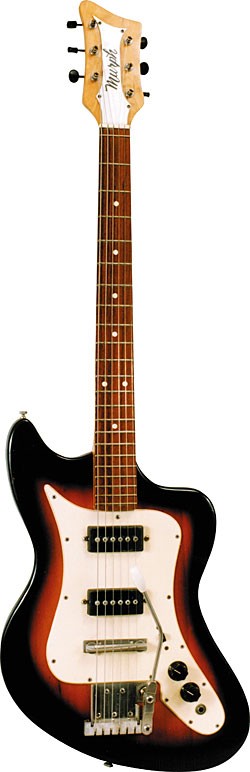
    1965 Murph Squire 11-T

    1965 Murph Squire 11-T

    We live in a golden age, with an incredible selection of guitars available in virtually any price range.

    But if there ever was another golden age, the 1960s are in line for the nomination. While the across-the-board quality may not have been as good as it is now, the variety of brands and designs had never been exceeded until today. To demonstrate, witness one of the more obscure guitars of the Swinging ’60s – this circa 1965 Murph Squire 11-T.

    The causes of the ’60s guitar boom are pretty well-known. Following World War II, hundreds of thousands of young American GIs returned home with one thing on their minds. The result was the fabled post-war Baby Boom. Fast forward to the 1960s, and the first wave of Boomers is hitting its teenage years – a huge wave of children, the first raised in the glow of modern mass media. These kids liked music – first folk, and then, especially after the Beatles, rock and roll. And both required guitars. Lots and lots of guitars.

    By ’65, it seemed that there was no end to the potential of the guitar market. Mass manufacturers like Harmony and Kay could sell every guitar they made. A feeding frenzy of corporate takeovers ensued. In 1965, CBS took over Fender. And along the periphery, many smaller guitar hopefuls sprang up, from Alamo to Kapa to La Baye to Micro-Frets to Wurlitzer. To Murph.

    Murph guitars were the brainchild of one of those GIs returning from war in the Pacific, a Navy pilot named Patrick Murphy. Born in Springfield, Illinois, in 1920 and brought up in Detroit, Murphy settled in California after the war and set about raising a family. He was not a musician, but his children were and they started one of those family singing groups that were so popular in the ’60s, in addition to acting in the Los Angeles area. Murphy’s two oldest boys, Mike and Terry, began taking guitar lessons, and their guitar teacher Jim Gurley (who later became Murph’s salesman) came up with the idea that Murphy should build guitars for them to perform with (and thereby promote). From this notion did the guitar shown here spring!

    Murphy began designing guitars (with help from his wife, Mary Jane) and enlisted the help of engineer Rick Geiger who knew something about building guitars. In February, 1965, they opened Murphy Music Industries in a small factory located at 1817 First Street in San Fernando. Murphy and Geiger obtained mostly used machinery to set up shop. Murphy’s first choice for a brand name was York, but that name was already taken by a Michigan horn manufacturer, so he settled on Murph. Geiger left the company before production could commence, so Murphy carried on with the help of family members. At its peak, Murph had 22 employees.

    Murph guitars were built of three-piece poplar with three-piece Eastern hardrock maple necks. Rosewood for fingerboards, bridges, and vibratos were imported from A.C. Gotz in West Germany. Pickups were single-coils wound by Murph with plastic covers provided by a local supplier. Finished surfaces received 10 coats of nitrocellulose lacquer. They were outfitted with Kluson Deluxe tuners and came in cases built by L.A.’s Victoria Luggage Company.

    The principal design employed by Murph was this quasi-Jazzmaster shape used on the Squire, the name given to Murph’s solidbody. Two models were offered, the 1-T with a single bridge pickup, and the 11-T shown here, with a pair of units. One other solid was the Westerner, basically an 11-T covered in blue, red, or aqua metalflake naughahyde, reminiscent of the vinyl-covered Höfners and Hagstroms of the time. A Squire 12-String and Squire Bass were also available. Lefty versions could be custom-ordered. In addition, there was a Continental IV hollowbody that employed a single-cutaway, Gibsonish design. This had one neck pickup and a simple wire trapeze tailpiece. A double-cutaway Gemini model was made briefly in 6- and 12-string versions, but it doesn’t appear in catalogs and may never have gone into production. These look remarkably like similar Standel models… standard Murph finishes were Candy Apple Red, White, Blue, or Sunburst.

    The electronics on the Squire 11-T shown here are typical of most early Murphs. They had one master volume and master tone control. The bridge pickup was always on; the sliding switch activated the neck pickup! Sometime in mid ’66, Murph changed this arrangement to four knobs, volume and tone for each pickup, with a three-way select on the lower horn. A rough dating clue.

    Perhaps the most famous Murph was a “heart-shaped” hollowbody called the Satellite in 6- and 12-string versions. These were conceived by the salesman Gurley in late 1966 and featured a three-way pickup selector. The one “catseye” soundhole looks suspiciously Kawai, and it wouldn’t come as a surprise to learn that these bodies were indeed Japanese-made. In late ’66 or early ’67, Murph introduced some prototype 3/4-scale Baby Murph variants of the Satellite, but they never entered production.

    A number of other curious instruments were made by Murph in small quantities. In ’66, Sears contracted for some Silvertones, but only purchased 25, so somewhere out there may be several of those. Murph also produced another 25 guitars for the record-player manufacturer Rheem Califone bearing the Califone brand. These had slightly different features, including a large spatula headstock shape and angled pickups. In January of ’67, at least one prototype amp-in-case Murph was built. The only known professional act to play Murphs was The Good Time Singers.

    Murphy took his Murph guitars to the ’66 NAMM show, but didn’t cop many orders. When he got back, he was threatened by a lawsuit from another, unidentified guitar manufacturer for patent infringement. Between the high cost of running the company and the threat of protracted legal wrangling, Murph guitars went under in March or April of ’67.

    Murph guitars were well-made and fare nicely when compared to many other brands in the mid-quality range between Gibson and Harmony. Estimates are that only about 1,200 Murph guitars were produced between 1965 and early ’67. Around 950 or so of those were Squires, making the remaining models especially rare.


    Learn more at murphguitars.com, which lovingly preserves the Murph heritage.

    This article originally appeared in VG‘s October 2007 issue. All copyrights are by the author and Vintage Guitar magazine. Unauthorized replication or use is strictly prohibited.
  • Gibson Roy Smeck Electric Tenor Banjo

    Roy Smeck

    Photo by Julie Woods.

    At the dawn of electrical amplification, no one knew where the new technology would take stringed instruments (or keyboard instruments, for that matter). As the electric Hawaiian guitar caught on and changed the sound of Hawaiian music, instrument makers realized that the future of electric instruments was wide open and unpredictable, and they covered their bets by developing electric versions of every instrument – guitars, mandolins, violins, basses and banjos.

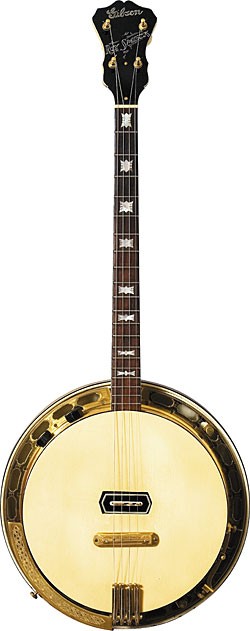
    The instrument shown here, which dates from 1937, was Gibson’s first electric banjo, and Gibson enhanced its chances for success by enlisting the endorsement of one of the biggest instrumental stars of the era – Roy Smeck.

    Smeck, known to millions of Americans in the 1920s and ’30s as The Wizard of the Strings, has been shortchanged in guitar history for several reasons. Although he was a virtuoso on ukulele, guitar, tenor banjo, and Hawaiian guitar, he came up in vaudeville as a novelty act. He didn’t sing, so he highlighted his performance with musical gags, such as tapping on his ukulele to re-create the sound of one of Bill “Bojangles” Robinson’s dance routines, as well as visual gags, such as tossing his uke around and playing it upside down. He was probably the most successful endorser of musical instruments prior to Les Paul, but his best-known models were the novelty Vita-ukes of the 1930s, a budget-line Recording King lap steel from Montgomery Ward (made by Gibson) and cheap Harmony electric Hawaiians of the ’50s. He did have a pair of Gibson signature models in the mid ’30s, but both were acoustic Hawaiians, introduced at a time when most Hawaiian-style players – including Smeck himself – were going electric. If his name is familiar to music fans, it’s probably from “That Old Beat-up Guitar,” a 1970s Jerry Jeff Walker song that immortalizes a Gibson Roy Smeck Stage Deluxe.

    By all rights, Smeck should be better-known than he is today. For starters, he was the first music video star. He filmed “Stringed Harmony” for DeForest Phonofilm in 1923, using DeForest’s groundbreaking but poor quality sound-on-film technology. Three years later he made a film called “His Pastimes” for Vitaphone using the sound-on-disc system (which synchronized a disk with a film projector). He played Hawaiian guitar, banjo, ukulele and harmonica, and the seven-minute performance made him a star. His most impressive video came in 1933, when he appeared in a Paramount short with split screens featuring Smeck playing four instruments together, thereby laying the foundation for sound-on-sound and multi-track recording.

    The Smeck electric banjo has the familiar “Charlie Christian” pickup of early Gibson electric guitars, but it has a U-shaped magnet rather than the double-bar configuration of the early models. According to research by historian Lynn Wheelwright, this banjo predates the appearance of this type of pickup in Gibson’s electric Hawaiian models by four or five months. (The horseshoe magnet was never used in mandolins, electric Spanish guitars or in subsequent electric banjos.) The pickup is also height-adjustable by way of a lever system – a feature not found on any Gibson electric before or since. The white/blond finish may have been specified by Smeck, whose later special-order lap steels had a similar light finish.

    Although Gibson would later ship lap steels directly to Smeck, presumably for his students, this banjo was not sent to him. Instead, it went to Gibson salesman Lanky Neal on November 16, 1937, and was noted in the ledger book as “Elect. T.B. white Roy Smeck engraved.” There is no record of what Lanky did with it, but the banjo was apparently well-enough received for Gibson to put a model into production. However the ETB-150 (and EPB-150 plectrum and ERB-150 five-string) differed significantly from the Smeck prototype. First of all, there was no endorsement. Smeck was still in Gibson’s good graces, so the reason is unknown. But there’s a memo from 1936 telling Gibson reps to avoid referring to the new, as-yet-unnamed banjos (the top-tension models) as the Harry Reser model; perhaps a Smeck model would have adversely effected Gibson’s relationship with Reser, who was as prominent a banjo player as Smeck. Or perhaps Smeck simply decided he wasn’t interested in playing an electric banjo.

    In construction, the ETB-150 was designed on the same general concept as the Smeck, with a wood top rather than the skin head of an acoustic banjo. The production model did not have the flange and resonator of the Smeck, but those two parts were purely ornamental on the Smeck. The production version had a screwed-on back, just as the EH-150 Hawaiian models of the same era did.

    Gibson’s top-tension banjos – with head-tension adjustment accessible from the top of the banjo – debuted in ’37, and not surprisingly, the Smeck shares some of the new features introduced with those models. The peghead is the same shape. The slotted-bowtie fingerboard inlay is the same as the TB-7 top-tension model. And the fancy, engraved, gold-plated armrest is the same as that of TB-18. The peghead shape and fingerboard inlay would carry over to the production electric banjos.

    Like the electric guitar – Spanish or Hawaiian – Gibson’s electric banjo sounded fundamentally different from its acoustic counterpart. The Smeck, with its wooden top, has as much or more sustain than any electric archtop guitar, which is a great deal more sustain than any acoustic banjo, and it sounds and plays more like an ES-150 (Gibson’s electric Spanish model) than like an amplified banjo. But where Hawaiian players immediately adapted their music to the amplified version of their instrument, and Spanish players developed new styles of music for the electric guitar, tenor banjo players for the most part had no use for an electric instrument. With the tenor banjo going out of style, a tenor banjoist who did want to go electric could get the same functionality, along with a more modern image, with an electric tenor guitar. As it turned out, it didn’t really matter, as tenor guitarists, too, rejected electric instruments. Gibson sold a respectable 43 electric tenor banjos in 1938, which would be more than half of the total production of 85 ETBs from 1938 to ’41 (electric five-strings and plectrum banjos accounted for an additional 22 units). Gibson’s electric tenor guitar, the EST-150 or ETG-150, was introduced a year earlier, and through 1941, the company sold a total of 96 units.

    The Smeck was intended to create a grand entrance for a new kind of tenor banjo. But as it turned out, it marked the beginning of a quiet exit for Gibson’s tenor guitars, as well as tenor banjos.


    For a glimpse of the Roy Smeck in action, check out his Vitaphone and Paramount videos on you tube.com.


    This article originally appeared in VG‘s December 2007 issue. All copyrights are by the author and Vintage Guitar magazine. Unauthorized replication or use is strictly prohibited.
  • Gary Moore

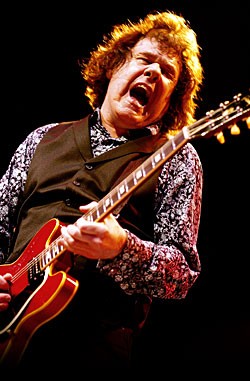
    Moore with his mid-'60s Gibson ES-335 in early 2006.

    Moore with his mid-’60s Gibson ES-335 in early 2006. Photo: Harry Herd/Redferns.

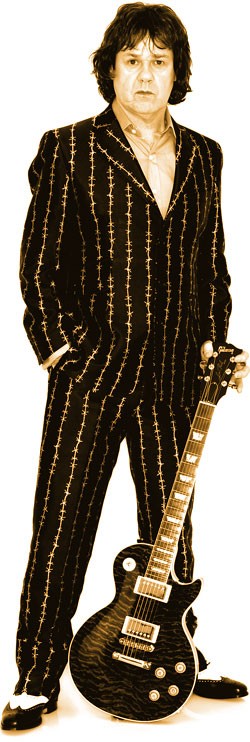
    Whether playing rock or blues, Gary Moore has always possessed a distinct and identifiable style.

    While he is well-known for his contributions as a member of Thin Lizzy, Moore maintained a successful solo career which began before he was enlisted to play with the group, and continued doing so between his stints with Lizzy.

    Additionally, he worked as a session musician who recorded with an assortment of top artists, as well as having been a member of the prog rock/fusion outfit Colosseum II, with which he recorded three albums in 1976 and ’77. His solo career intensified in the ’80s, scoring hits with songs like “Nuclear Attack,” “Run To You Mama,” “Victims Of The Future,” “Murder In The Skies,” “Back On The Streets,” “Empty Rooms,” and “Parisienne Walkways.”

    Moore eventually grew tired of competing in the commercial rock scene, and by 1990 he realized that his true calling was to play blues. He decided to change directions by returning to the music that initially inspired him and released Still Got The Blues, which included collaborations with Albert Collins, Albert King, and B.B. King. The decision proved fruitful when the album became the most acclaimed of his career. On his latest release, appropriately titled Close As You Get, Moore has achieved many of his artistic goals as a musician, and went about doing things in the manner he had long hoped for in creating a blues album. As it turned out, this was the first time he really got to do things his way in both the execution of his actual performance and the methods used for recording.

    Moore spoke with Vintage Guitar from his home in Brighton, England, and unraveled the process he went through in making this album, talked about the creation of his original songs (and why he selected the cover tunes on the disc), detailed the gear used, explained how he captured performances in an old-school way, and also discussed some advice he received from a blues master – and why it had a tremendous effect on his own growth as a bluesman.

    On Close As You Get, Moore has not just come close, but demonstrates that he truly is one of the greats himself.

    In what ways have your influences changed in recent years, if at all?
    Well, they kind of have, and they haven’t. I started playing guitar in the ’60s, when I was 10 years old and there really weren’t many guitarists around. The people who were popular at that time were Hank Marvin and the Shadows, and the big change came with the Beatles. I was really into George Harrison. I loved his melodic style and his inventiveness. The real big turning point came when the British blues boom hit with people like Eric Clapton, John Mayall, Peter Green, and then Jimi Hendrix came along. Then I started listening to all the blues guys, like B.B. King and Albert King. It still goes back to those guys, and I think my playing is a combination of all of those elements, but at some point it came together and became my own style.

    What do you listen to these days for inspiration?
    I still listen to blues. I was doing a blues program called “Planet Rock” for a radio station in London; I did a six-part series, two-hour shows every week. So I was digging back into all the really old blues stuff, like Son House. In fact, I found a lot of the material for the new album through that radio show. I was listening to Leadbelly, [harmonica player] Sonny Terry and [his partner, guitarist] Brownie McGhee, and all the acoustic stuff that I never got into when I was a kid. So I’ve rediscovered a lot of that recently, and I ended up including some of the songs on this album, particularly the Son House song called “Sundown,” which is my first-ever acoustic blues track on record.

    Was “Sundown” played on a resonator?
    Yes. It’s an Ozark – a cheap copy of a National with a skinny body, very comfortable to play and has a really good sound. I used open-G tuning, like Son House.

    What type of slide did you use?
    I used a brass slide on my third finger.

    On the opening track, “If The Devil Made Whiskey,” you played electric slide. Which guitar and slide did you use?
    That was a 1968 Telecaster tuned to open E and then dropped down a whole step to D. I used a glass bottleneck for the different vibe and I played through a ’60s Vox AC30.

    Which other guitars, amps, and effects were used to create the tonal textures on the recording?
    The main guitar is a 1959 Les Paul Standard – the same guitar I used on Still Got The Blues. I’ve had it since 1989 and I use it live a lot. It’s not pristine by any means, but it’s a really great guitar and I’ve used it on lots of albums since Still Got The Blues. In fact, “Still Got The Blues” was the first track it was used on. That’s the first song we did that day, and I thought it was a good indicator of what the guitar could do. I’ve used it ever since. On “Have You Heard,” I used an ES-335; I think it’s a ’64. It has PAF pickups in it and sounds a bit like a Les Paul. I also used the ’68 Telecaster. For amps, I used that Vox on a couple of tracks – “Thirty Days,” the Chuck Berry song, and “If The Devil Made Whiskey,” and then I used an 18-year-old Fender Vibroverb reissue with two 10s and the reverb. I used that on a couple of the slower ones like “Trouble At Home” and “I Had A Dream.” I used the Marshall DSL100 that I’ve been using for 10 years on “Have You Heard” and “Checkin’ Up On My Baby” – the heavier-sounding stuff. And I also used an Orange Tiny Terror, which looks like a toy amplifier, with a little hand-wired Marshall 2×12 angle cabinet. That was it for amps.

    The only effects were tremolo and vibrato from the amps. But there’s one place where I did use a pedal. I originally recorded the rhythm track on “Nowhere Fast” with the Vibroverb, using the vibrato in the amplifier, but it was breaking up. I think the tube was going. So I just plugged into the desk and used a Boss tremolo pedal. The other effects, like reverb, are mainly the spring reverbs on the Vibroverb and Marshall. When we wanted to use studio reverb, we used an Alesis Midiverb II, which I’ve been using since the late ’80s for all my guitar sounds. I have my favorite programs, but you can’t even store anything in it – you can press buttons and it goes to 30 or whatever, and you just put in whatever numbers you like in your favorite programs, then tweak it until it sounds good. But we didn’t use the Lexicon or any sort of really expensive reverbs. For guitar, I think cheap stuff is always best. For vocals, it’s a bit different. But for guitar, for me, it works really well.

    The album sounds very much like a live performance. Were the songs recorded that way?
    Yes. I had two things in mind before I went in; one was to play live with the band and do as many solos live as possible. There was only one overdubbed solo, and the rest of it was all on the backing track. I left the door open where my guitar was to go so that I would have to get it right, because I knew I wouldn’t be able to get rid of the spill [from the other instruments]. So the one solo I did overdub was “Have You Heard,” and that was because I was playing too many Clapton licks from the original version. It was kind of ingrained. I had to change guitars and I did it after the band left, so you can hear a little bit of the spill from the original track in there. I had to do it very carefully. But that was the only overdubbed solo.

    So the album sounds live because it is, pretty much, and that’s the way I wanted to do it. I often said I wanted to record like that, but it didn’t end up working out because the band wasn’t getting the songs down quickly enough. We’d be working out songs, then I’d peak with my playing, and you know how that goes when you play guitar. You do a couple of solos and you’ve already peaked, but the band still hasn’t got the song right. It’s frustrating. So this time we kind of learned them together. We didn’t rehearse anything before we went in, and I was happy because on the other records where we’ve tried to do it like that, it was a complete disaster. I ended up not really getting what I wanted, but had to make do. Power Of The Blues was like that, and the production was a bit of a nightmare. But this record didn’t even feel like we’d made a record because it was so easy.

    There’s a fairly distinct downward vibrato bar sound at the very end of “Hard Times.” Was a second guitar overdubbed for texture on that track?
    Yes. That’s a Burns Artist guitar from the ’60s with a tiny body. A friend was selling it. She didn’t play anymore and I thought it was really neat. It was great for playing the James Bond stuff. It’s got the original Burns pickups and was in really good condition. It had some cards, like the Ace of Spades, that someone had stuck on it. It looked like a really cool kid’s guitar. So that was the whammy bar on that track in a couple of places. You can hear the noise of the springs kind of catching at the end. It’s got a personality. It’s important, sometimes, to have that. It just gives the song a little bit of character.

    Otherwise, did you usually use just one guitar on each song?
    It was generally one, yes. You can hear on the first track, “If The Devil Made Whiskey,” that it’s just one guitar all the way through. Then I did the vocal again because I wrote the song that morning when I was sitting in bed. I couldn’t sleep, and I kind of had the words, but I didn’t know what I was going to do with it. I thought I’d give it a really dirty slide and would do it like that. So I just tuned to open E dropped to D, got the bass player and drummer, and we did it in about three takes. Then I stuck the vocal on, and that was it. On the track after that, “Trouble At Home,” the vocal and everything on that is live – you can hear the way the guitar plays off the vocal.

    The guitar and vocals sound live and connected on that track. With the blues, the guitar and vocal parts often play off of each other in a call-and-response style.
    Yes, absolutely. That’s one of the really good things about playing blues. When I used to play rock in the ’80s, especially live, it was really hard to keep the rhythm tight and keep the vocals right all the time. You were just never off because you had to play a lot more rhythm behind the vocal. The good thing with the blues is that you don’t have to play all the time when you’re singing. You can actually just answer the vocal – call and response – which leaves a lot more space in the music, and I think it makes the vocal sound stronger.

    Were you able to record your guitar and vocal parts at the same time on many of the songs?
    Yes, sometimes I did – amazingly!

    Were most of your solos improvised and off-the-cuff, or were they worked out beforehand?
    They’re mostly improvised.

    The album also has a very organic tonal quality.
    Well, everything was recorded on tape. That was very important to the way I wanted to do this album. I don’t really like Pro Tools all that much. I know the sound is one thing, but even the young assistant engineers in the studio discovered there’s a difference after we had tried doing a mix with Pro Tools. My engineer suddenly decided he was going to do that, and it sounded different after he transferred everything into Pro Tools. Even the assistant engineer started to hear it, as well. So I freaked them all out. I said, “Look, I can hear the difference, men.” And even the young guy agreed. He said, “Yeah, you’re right. There is a difference.” So I said, “Can we not do this in Pro Tools?” I really wanted to keep it all on tape because otherwise you’re kind of mixing by committee. You’ve got the guy operating the Pro Tools, and you’ve got your guy passing instructions on from you to a third guy. I think it just ends up taking a long time, people get carried away with all the options, and they don’t want to commit to anything. I like the old-fashioned 24-track one reel of tape. You know what you’ve got, and you know what you have to do. It works for me. So that’s how we did it.

    Let’s get specific about your preferences for the way your guitars sound and feel. How are they set up?
    I don’t like really low action because it starts to get a bit “chinky” sounding. I used to use heavier strings, but a couple of years ago I injured my hand and I had to go down a gauge. I use .009-.048 now and I was using .010-.052 before. But I’m actually working my way back up again. I started with .009-.046 and I’m trying to work my way back up to .050 again. I think the tone is more noticeable in the bottom strings.

    GARY moore

    Do your guitars have stock pickups and hardware?
    Oh, yeah. My ’59 Les Paul has the original pickups on it, my ES-335 has the original pickups, and my Telecaster has the original pickups. I think there’s something about the pickups from that era. I don’t know why, but there’s just something really good about them.

    That’s probably why so many manufacturers try to copy pickups from that era.
    Absolutely. There are some really, really good pickups around today by people like Lindy Fralin and Tom Holmes. I use Tom Holmes pickups sometimes. On one of my signature Les Paul models, I’ve played around with different ones. Some new pickups are really good. I mean, if you can’t get a good sound today, I think there’s something really wrong with you! There were two “good” guitars when I started, and I couldn’t afford either of them. It was kind of like you just had to make do with whatever you could afford. But for the kids starting today, it’s so easy to get a guitar and amp with a good sound. It’s so cheap now, and you can just walk in and buy a Gibson Melody Maker for about $300, and get an amazing little amp at a very low price. Or you can go much cheaper with an Epiphone guitar or another one of those various copies, and they still sound really good when you put them through a decent amp. There’s a big difference in the quality of what you can get today for a beginner or just an affordable guitar for someone who doesn’t have lots of money to spend.

    What type of picks do you prefer?
    I use Gibson extra heavy picks. A really heavy pick just suits my style better. I used to use those gray Hercos for years, even in Thin Lizzy. Everyone in Thin Lizzy used those picks, even Phil Lynott.

    Describe your writing process and what inspires you when writing a song.
    It works better for me if I’ve got the lyrics first because there’s nothing I hate more than going in the studio, putting down a backing track, and then I haven’t got any words for it. Even if I’ve got a melody, everyone’s sitting around waiting for me to write the words. It’s just a nightmare. So this time, I wrote all the words first, and that really helped me, because all I had to do was put the music to it, and that was really easy for me. But to do it the other way around, I always find that much harder. I think a lot of guitarists would say that it’s harder to write the lyrics because we’re all so used to putting music together, and we’re all adept at doing arrangements and getting everything in place. But if you haven’t got anything to say and you’ve just got a backing track, it’s meaningless. I like to try and write songs that are personal to me. A lot of the time, they’re pretty autobiographical, and when they’re not, it’s about something that maybe I’ve seen on the news, or a political thing. But they’re usually written about something that’s meaningful to me.

    Do you have a favorite track or a favorite solo on this album?
    I like a lot of tracks on it, but I especially like the solo on the second track, “Trouble At Home,” because it’s the first time I’ve ever been able to nail what I do live and leave those big spaces in the phrasing, and with a really nice tone. I think it comes across as really expressive. As a guitarist, I’ve had to learn to leave some spaces. Guitarists have this thing where they’re afraid to leave a hole because they think they’ll fall down in it. Where actually, the bigger holes you leave, the better. Albert King said something to me when I did “Oh, Pretty Woman” with him years ago on the Still Got The Blues album. He was leaving the studio on the last day and he said, “Gary, play every other lick.” That’s such a profound thing – play every other lick. Those four little words meant the world to me. It took me a long time to really take it in. But he was absolutely right. If you leave that space, if you’ve got a good tone and you play expressively, and you can make people feel from your guitar, they won’t be able to wait for the next note. It creates that tension if you’ve got a great sound and great feel. I grew up listening to Peter Green, and he was amazing when he would leave that space. You would just go, “Come on and play the next note, man!” It just sounds so amazing just when you play one note with great tone and feel. So that’s one of my favorite solos. And one of my favorite tracks is “I Had A Dream.” I like the solo at the end of that one as well, which has a Telecaster, and it’s almost like country blues, in a way.

    What will you be using onstage?
    The same stuff – my ’59 Les Paul as my main guitar, through a Marshall DSL100. I also use a Telecaster and sometimes a 335. I actually have four Les Pauls that I use live. There’s the ’59, my signature model which I use for “Parisienne Walkways” and a few other tunes, then there’s one from the Custom Shop which has the out-of-phase sound, and one I stole from the Gibson Artists Department about a year ago, which is a sunburst and has a skinny neck that I don’t really like so much, but it sounds really good.

    I just got some new pedals by T-Rex, which is a company from Denmark. One is a Moller overdrive; a double pedal with a clean boost on one side and a distortion on the other. I’ll use that on “Oh Pretty Woman,” and sometimes when I’ll bend one string up to the other to give it a Hendrixy sound. I’ve also got their Room-Mate tube reverb, Replica delay pedal, and Mudhoney overdrive.

    Many guitarists, especially vintage enthusiasts, are curious about the Peter Green Les Paul and how difficult the decision was to part with it. Why did you let it go?
    It’s a long story. The instrument itself was a very special instrument, obviously. But it got to the point where I couldn’t take it anywhere.

    I didn’t want to sell it – I had to sell it for various reasons, but mainly because I injured my hand a few years ago and the insurance didn’t pay up. I canceled shows and had to cover tour costs with my own money, and didn’t get paid for any of the shows. I ended up with debt. So it was a financial thing, and that was the quickest way to do anything about it. I mean, why would I want to sell it? That guitar was played by Jimi Hendrix and Jeff Beck. Rory Gallagher played it, I played it… It was a very special instrument.

    Les Pauls are all so different, and that one is a big old battle axe. Peter Green never really liked the guitar because he thought the neck was too big, and he bitched about it quite a bit for years. He wanted me to have it because he said he wanted it to go to a good home.

    You mentioned the advice you received from a legendary bluesman. What advice would you offer to other guitarists?
    I think that space thing is very important. Because I’ve toured more within the blues context, I couldn’t offer rock guitar advice to anybody since it is so far removed from me now. Within the blues, you’ve got to learn what Albert King said – to play every other lick. Don’t feel the need to fill every space and be like a really boring guest at a dinner party, where you’re just going to talk over everybody and think that what you’ve got to say is more important than anybody else. You’ve got to learn to leave that space. And I think if guitarists listen to this new record, they’ll find that it’s something I’ve really worked on a lot. I was doing it live, but this is the first time in the studio that I’ve done it with that sort of control.

    On the subject of collaborating with legendary musicians, in 1994, you recorded Around The Next Dream with Jack Bruce and Ginger Baker. Of course, you weren’t attempting to be the new Cream, although some people may have perceived it that way. What was the experience like to be playing guitar and writing music with Bruce and Baker, and why didn’t you tour together?
    I think we kind of sounded more like Cream than they did on the reunion tour. I saw Cream at the Royal Albert Hall on the reunion tour, and to be honest, it actually wasn’t like what it was in the ’60s. Jack Bruce’s voice was amazing, but Ginger Baker was playing a different way and Eric was kind of doing his usual thing. But they’d all kind of moved on, so it wasn’t the same three guys being put back together. It was three different guys who were older, and they were all so different from what they were like in those days.

    There are a couple of good songs on that album [with Baker and Bruce], but we had so much going on around us. I mean, can you imagine trying to go on the road with the people involved in that? We had so much pressure from the media over here. They all thought that it was just a big hype, but it wasn’t at all. It kind of fell together naturally. There was no hype whatsoever. It was actually a Gary Moore album and they ended up playing on it. But it didn’t seem right to just call it another Gary Moore album, so we had to call it a band name.

    We had one of those meetings to think of a name, but everybody was just laughing and joking around, and the names got worse and worse. Ginger wanted to call the band “Beyond Repair.” That was one of those really funny nights. We ended up just using our initials and being really boring. But we didn’t last too long. Then again, Cream wasn’t around very long either!

    Are there any new bands you enjoy listening to?
    There’s a band from the U.K. called Muse that I like. I went to see them at Wembley Arena a few months ago. They’re a very powerful band. The kind of chords that they use and stuff they do is kind of classically-influenced and they have a very European sort of sound. It’s a dark sound, but it’s pretty powerful. They put on a really good show, as well. It’s great musically and visually. I recently saw Kings Of Leon, and I really like them, as well. I like their guitar style and what they have going on. They’re really good and I like their new album. It’s their third, but it’s very different from the first two. This one is pretty dark, and I think it’s much more creative. The other ones are much more poppy.

    Will you be playing many shows this year?
    Yes. We’ve already been doing some, including a big U.K. tour that started in May. We’ve got a lot of European shows scheduled through the summer, and that’s it for now up until about September.

    Do you plan to return to the U.S.? It’s been a while since we’ve had the opportunity to see you play in the States.
    I know it has been a long time since I’ve played there – the early ’90s. If somebody offers us something where I don’t have to mortgage my mother, I’d love to play in the States again.


    This article originally appeared in VG‘s September 2007 issue. All copyrights are by the author and Vintage Guitar magazine. Unauthorized replication or use is strictly prohibited.


    Gary Moore – Still Got The Blues (Live)

  • Asleep At The Wheel – Reinventing The Wheel

    Since their inception 37 years ago, Ray Benson and the Wheel have been the torchbearers of western swing. But in its first decade, the band was equal parts Bob Wills and Commander Cody – a freewheeling, expanding and contracting aggregation spotlighting singers and players who, like the Wills and Cody outfits, were as colorful as they were talented. And, depending on where the dance floor was located, they were the best dance band in the country – western swing’s equivalent of Clifton Chenier’s Red Hot Louisiana Band.

    But over time, members inevitably went on to other pursuits – bassist Tony Garnier joining Robert Gordon and then Bob Dylan; pianist Floyd Domino finding work on Broadway, in Nashville studios, and on Waylon Jennings’ tour bus; singer/guitarist Leroy Preston becoming a successful songwriter; steel guitarist Lucky Oceans moving to Australia; and singer extraordinaire Chris O’Connell retiring. The band became more homogenized – partly as a result of the personnel changes, partly as a conscious business decision to focus on the group’s leader and only constant: the towering guitarist with the cowboy hat and smooth baritone.

    Commercially, it worked, as the Wheel continued to rack up Grammy awards – in recent years for its cameo-filled tributes to Wills. But gone was that gonzo spirit – the Cody element that had made the band what it was.

    Times are different, and that may never return, but on the aptly titled Reinventing The Wheel the group reclaims its multi-pronged, three-vocalist approach, with Elizabeth McQueen and fiddle prodigy Jason Roberts getting almost as much face time as Benson. And the repertoire opens up to include Mose Allison’s “Your Mind Is On Vacation” and Marshall Tucker’s tropical-flavored “This Old Cowboy,” with the Blind Boys Of Alabama supplying backing vocals on “The Devil Ain’t Lazy” while Benson trades solos with Eddie Rivers’ steel guitar.

    Not every choice hits its mark. McQueen’s reading of “I’m An Old Cowhand” is no match for Maryann Price’s hip rendition with Dan Hicks (and the Wheel, during her stint with the band), but her campy take on “I Don’t Care If The Sun Don’t Shine” (most associated with Elvis Presley’s Sun era) works well.

    But Bob Wills fans need not despair; Roberts delivers a heartfelt take on Wills’ somber but beautiful “Misery.” This Wheel is still rolling strong.


    This article originally appeared in VG’s Jan. ’07 issue. All copyrights are by the author and Vintage Guitar magazine. Unauthorized replication or use is strictly prohibited.

  • Gibson Les Paul Special 3/4

    Gibson Les Paul Special 3/4

    1959 Les Paul Special 3/4. Photo: Kelsey Vaughn.

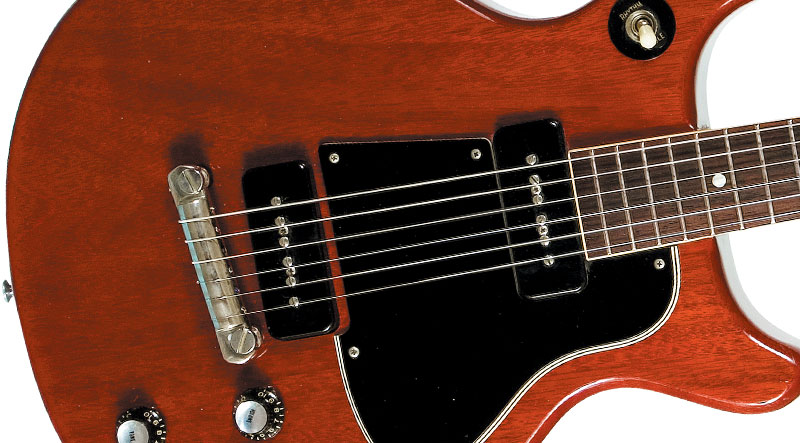
    Gibson’s double-cutaway Les Paul Special 3/4 from 1959 is one of the rarest Les Pauls from the “golden era.” It’s also one of the more unusual in that it may well be the worst-designed classic.

    Gibson introduced the full-scale Les Paul Special in 1955, in the wake of the success of the Les Paul Junior. With the Junior, Gibson created an entry-level solidbody with the same quality as the Les Paul model (a.k.a. “goldtop” and later Standard) and Custom, but without the contoured top cap and just one pickup. The Special offered the same economical “slab-body” design as the Junior, but with two pickups – the same two soapbar P-90 pickups that were on the higher-priced Standard (until the advent of humbuckers in mid ’57).

    Gibson extended the entry-level concept in ’56 with a three-quarter Junior; its scale length was 223/4″ – two inches shorter than Gibson’s standard 243/4″. For beginners or players with smaller hands, those two inches made it much easier to handle. The nomenclature came from the violin world, where a “3/4” violin or upright bass typically measured just more than 9/10 of a full-size instrument. That carried over to Gibson, where the “3/4-scale” was actually over 9/10 of the full scale.

    Unlike 3/4-size violins and basses, the Junior 3/4 had the same body as the regular model, same bridge, pickup, and knob location. To accomplish that, the fingerboard had to be shortened to only 19 frets, rather than 22. As on the full-scale model, the single-cuty body provided access to all frets.

    All of Gibson’s Les Pauls started with a single-cut body, but in mid ’58, with sales beginning to fall off, Gibson modernized the Junior and Special with a double-cut body. Now, all 22 frets were clear of the body, providing even greater accessibility than the single-cutaway had offered. To guitarists of ’58, it was an improvement (although players today consider the neck on the single-cut to be sturdier), and sales of Juniors and Specials almost doubled from ’58 to ’59.

    It would seem a no-brainer to make the same change to the 3/4 Junior and even to introduce a 3/4-size double-cut Special. That’s exactly what Gibson did in ’59, but somehow the message was garbled in transmission; instead of simply installing a shorter neck (still with all frets clear of the body) on the double-cut, Gibson made the neck even shorter. The neck joined at the 15th fret, leaving a four-fret length of fretboard extending over the body. Why they did this is anyone’s guess. There was no apparent problem with the neck joint; if there had been, Gibson would have abandoned the all-clear neck design of the full-scale Junior and Special. By putting four frets over the body, Gibson made them virtually inaccessible and useless.

    That was not the only problem with the double-cut 3/4 models. They bring to mind Hall of Fame baseball pitcher Dizzy Dean, who was hit on the toe by a batted ball in the ’37 All-Star game. The pain in his toe caused him to favor that foot, which caused him to alter his pitching motion, which caused him to develop a sore arm, which effectively ended his career and sent him to an early retirement.

    The neck design of the Les Paul 3/4-size Juniors and Specials was like Dizzy Dean’s broken toe. To compensate for the shorter neck, Gibson had to move the bridge back toward the end of the body. Then, to maintain the position of the pickups relative to the bridge (which is to say, to maintain the basic sound and performance quality of the model) the pickups had to be moved, too.

    And it didn’t end there. Although the scale length and the location of the bridge and pickups were now the same relative to each other, they were out of kilter with the overall body design. Now, when a player put a double 3/4-size Junior or Special on his knee and played it normally, his right hand hit the strings several inches farther toward the neck than he was accustomed to, and the sound was mushier. To get the same sound he had been accustomed to getting from a full-scale double-cutaway model, he would have to cock his right arm back in a more awkward playing position. A guitarist may not have risked developing a sore arm that would end his playing career, as Dizzy Dean had done, but compared to the full-scale models, 3/4-size double-cutaways were simply not right.

    For the worst Les Paul design, some might argue that the original 1952-’53 goldtop, with its shallow neckset angle and the “strings-under” trapeze tailpiece, would rival the 3/4-scale double-cutaways. But the early goldtop can be forgiven as a prototype design, while the double-cutaway design had already been done right on the full-scale models. There was no excuse for screwing it up on the 3/4-scale versions. Gibson soon saw its error and corrected the design with the changeover to SG bodies in 1961. Although the 3/4-scale SGs did not last past ’61, they did have all frets clear of the body, just like the full-scale SGs.

    Of course, if Clapton, Page, or Hendrix had played a Les Paul Junior 3/4 or Special 3/4, we might be touting the “back bridge location” as the perfect configuration for getting the classic rock and roll sound. But few players at all – and no future guitar gods – embraced the 3/4 models. By the time the double-cutaway versions appeared, the initial splash made by the full-scale double-cutaway Junior and Special had begun to dissipate. According to Gibson shipping totals, only 12 Special 3/4 models went out in 1959, followed by 39 in 1960, for a grand total of 51. If not one of the most desirable of Les Pauls, the Les Paul Special 3/4 is nevertheless one of the rarest models from Gibson’s golden era.


    This article originally appeared in VG‘s September 2008 issue. All copyrights are by the author and Vintage Guitar magazine. Unauthorized replication or use is strictly prohibited.

  • Jimmy Bruno – Maplewood Avenue

    Jimmy Bruno is one of the best traditional jazz-guitar players around, constantly proving he intimately understands the instrument and idiom. Maplewood Avenue is the latest testament to his greatness.

    Bruno sets it up as a get-together at his house, with Tony Miceli on vibes and Jeff Pedraz on bass. Just them, sittin’ and playin’, with no overdubs, and bass slapping and extraneous sounds adding to the intimacy.

    Bruno’s playing is beyond reproach. Want solo? Check out “Jimmy’s House,” a lightning-fast swinger with Bruno obliterating the song (in a good way) with notes – not scale runs, but great, imaginative playing. Miceli adds fireworks of his own. That holds true on every track, where the two trade solos that are not only swinging, but imaginative, daring, and full of feel. They back each other with the skill of sharpshooters covering a best friend. Bruno’s comping lays the groundwork for Miceli on many a solo and offers textbook playing. When the two play in unison, their sound borders on pure nirvana. If guitar and vibes a la Tal Farlow and Red Norvo are your thing, you’ll dig this.


    This article originally appeared in VG‘s June. ’08 issue. All copyrights are by the author and Vintage Guitar magazine. Unauthorized replication or use is strictly prohibited.