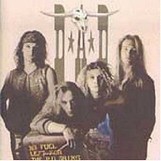
On their first major label release, the band formerly known as Disneyland After Dark (changed after a threatened lawsuit by the Disney Co.) was poised for a breakthrough in the U.S. with backing from Warner Brothers, and video in heavy rotation on MTV, and a melodic approach to metal that featured big guitars and no keyboards. Alas, it didn’t happen.
Perceived as a “hair band,” their debut was blunted by the rapid change of musical tastes and embrace of grunge. That’s too bad because this record, originally released in 1989, is as compelling as any from the era. Every song is well-crafted with melodic hooks, catchy choruses, and surprises like a groovy lead played on a Gretsch in several songs. Though No Fuel, backed by the Warner machine, was not a bad seller, the followup stiffed and D.A.D retreated to Europe where they gained and maintained a big following.
This reissue has been remastered, but the original was so well-recorded it’s difficult to hear any sonic changes. Still, it serves as a reminder of how much great music falls through the cracks when there aren’t enough ears to hear.
This article originally appeared in VG‘s Oct. ’08 issue. All copyrights are by the author and Vintage Guitar magazine. Unauthorized replication or use is strictly prohibited.
One iconic artifact of the late-’70s rock scene was the ubiquitous “double live album,” a marketing ploy usually timed for the Christmas rush, but one that also yielded much good music.
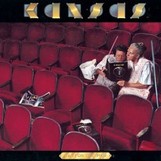
Following the platinum successes of such hits as “Carry On Wayward Son” and “Dust in the Wind,” prog icons Kansas followed the vinyl formula, offering Two for the Show in late ’78. Sure, it was full of glossy concert photos, but otherwise it diverged from other double live LPs of the era in one distinct area – no overdubs. Back then it was common for a band to record new studio parts over the basic live tracks, fixing any bum notes and increasing fidelity – and no one was ever the wiser. Kansas instead presented their concert album largely devoid of studio tweaking – though to my ears, some of the audience cheers rise and fall in suspicious places. Still, for all intents and purposes, this is as real as it gets.
As for the music, Two for the Show is a solid live document of Kansas, then at the top of their game and still featuring the original lineup with lead vocalist Steve Walsh and co-guitarists Kerry Livgren and Rich Williams (Livgren left the band in the early ’80s and now leads the band Proto-Kaw). The 30th Anniversary Edition ups the ante by including nearly a full CD of unreleased live material from the 1977-’78 tours, as well as a color booklet of classic photos and fresh liner notes. Aside from just about all of their FM hits, this set features “Closet Chronicles” and a cover of J.J. Cale’s “Bring it Back.”
As guitar pickers, Livgren and Williams were from the Cream/Jeff Beck Group/Led Zep school. Each employed that roaring Gibson-through-Marshall tone with fat, neck-pickup solos and crunchy rhythm parts. Neither was an innovator, but you really can’t find two more quintessential hard-rock players from the era. Listen to “Portrait (He Knew)” or “Icarus (Borne of Wings of Steel)” for some of their muscular riffery. “Dust in the Wind,” conversely, showcases the band’s lighter side and includes a fingerstyle acoustic solo sporting impressive Travis-style picking. And for melodic lead work, nothing really tops the stately solos in “The Wall,” one of the best FM “power ballads” ever written. All in all, this excellent set is the perfect music for your blacklight-equipped basement, customized Chevy van, or maybe just a hard-rockin’ flashback to that era long ago. The only thing missing is your 8-track player.
This article originally appeared in VG‘s Sept. ’08 issue. All copyrights are by the author and Vintage Guitar magazine. Unauthorized replication or use is strictly prohibited.
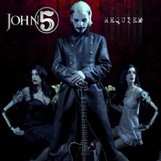
His resume includes names like Marilyn Manson and Rob Zombie, but John 5 is not your typical shock-metal guitarist. In fact, much of his new DVD shows him running down country licks… in full goth-god makeup and regalia. But there’s no arguing his mastery of banjo rolls, behind-the-nut bends, pedal-steel bends, and chicken pickin’.
Included in the DVD repertoire are run-downs of several songs from his previous album of the same title. And while those cuts are definitely metal, they’re also full of an odd mix of country licks, and John 5 does a fine job of tutoring, and slowing down the notes that have made him a regular on lists of “fastest guitar players.” His chops are amazing.
While the DVD is instructional, before you rush out to buy your aspring pre-teen (or teen!) guitarist a copy, know there’s a lurid side that includes bare-breasted women and strong S&M imagery. There is a parental advisory, and to J5’s credit, his rendition of “Sugarfoot Rag” should keep (or get) kids focused on what he’s doing.
J5’s latest CD, Requiem, again offers the odd mix of metal and country. The songs have great melodies, even at their loudest and most metal, and his command of the instrument is amazing. The track “Cleansing the Soul” may just create a musical genre. Think metal with a hoedown feel. Regardless, it’s a guitar tour de force. Now, ’bout the whole “musical persona” thing, there, Mr. Lowery… – JH
This article originally appeared in VG‘s Sept. ’08 issue. All copyrights are by the author and Vintage Guitar magazine. Unauthorized replication or use is strictly prohibited.
A lot can transpire with Pat Metheny in 10 years, but it’s nice to be able to look back at this 1998 concert, filmed with multiple cameras and excellent sound at the gorgeous Mountain Winery in Saratoga, California.
Though the bulk of the material comes from the Metheny Group’s ’97 album, Imaginary Day, the band doesn’t perform every song, nor in sequence, and three songs from other albums are also included.
Metheny begins the set solo, with “Into The Dream,” playing one of luthier Linda Manzer’s amazing multi-string acoustics – a combination baritone, harp-guitar, koto, which only Metheny (or an octopus) could do justice to. By song’s end, the band has also taken the stage to punctuate the dramatic ending.
The guitarist switches to his Roland GR-303, and the band lays down the groove of “Follow Me,” with the group’s longtime nucleus (keyboardist Lyle Mays, bassist Steve Rodby, and drummer Paul Wertico) augmented by Jeff Haynes’ percussion and the dual acoustic rhythms and vocal harmonies of Mark Ledford and Philip Hamilton. Metheny employs a standard guitar tone to state the melody, but kicks in a synth sound somewhere between trumpet and organ for the solo.
Strapping on the Ibanez hollowbody that replaced his tour-worn Gibson ES-175 for “A Story Within The Story,” Pat achieves the familiar tone of his earlier records, and spotlights his pure-jazz chops (revealing influences Wes Montgomery and Jim Hall) in the extended solo.
Which brings up the inevitable question, “Is it jazz?”
Metheny & Co. have indeed carved out a niche not previously occupied in jazz, in terms of their music and popularity. In one configuration or another, Metheny has won 17 Grammys, including 1998’s Best Contemporary Jazz Performance for Imaginary Day. Along the way, there have been flirtations with new-age music, with notable differences being that Metheny comes from deep jazz roots and the fact that most new-agers couldn’t begin to play music this complex, not to mention this energetic.
Along with the Imaginary Day material, Metheny offers “Message To A Friend” (the only song not co-written by Mays) on solo gut-string. Mays and Metheny then duet on the extended “September Fifteenth” before all concerned wind things up with a blowing “Minuano.”
Metheny concerts are anything but stingy in terms of quality or quantity, and this DVD, clocking in just over 90 minutes with an interview with the bandleader, is no exception.
This article originally appeared in VG‘s July. ’08 issue. All copyrights are by the author and Vintage Guitar magazine. Unauthorized replication or use is strictly prohibited.
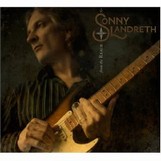
Sonny Landreth records are typically gems, and this one is no exception. This time out, he has written songs for folks he admires, then invited them to play them with him; Eric Clapton, Robben Ford, Vince Gill, Dr. John, Eric Johnson, Mark Knopfler, and Jimmy Buffett all contribute. The results are interesting, and at the high level you’d expect. The cuts with guitarists find the guest and the host sharing time. “Blue Tarp Blues,” a minor-key lament about the aftermath of Hurricane Katrina, features fine playing by Landreth and Knopfler. As we expect from Landreth, the slide guitar is soulful and blistering. Clapton appears on the pop-rocker “When I Still Had You,” which has interesting changes and intertwining guitars that in a different era would have been an instant radio hit. The two also trade licks on the droning minor blues of “Storm of Worry.”
Landreth not only plays with, but tips his musical cap to Eric Johnson on the instrumental “The Milky Way Home.” It’s the kind of song Johnson might write, and both are fabulous on the cut. Ford pops up on two cuts, “Way Past Long” and “Blue Angel.” The former is a shuffle with a great lyric. Landreth’s slide solo is nasty, with great tone, while Ford darts in and out with his typical jazz/blues eloquence. The country tune “The Goin’ On” lets Vince Gill, who’s often not given enough credit for his playing, cut loose with a big solo that’s full of grit and harmony.
“All-star” albums like this often fail miserably. But Landreth’s fine songwriting, combined with great playing by all concerned, turn this effort into a true experience.
This article originally appeared in VG‘s Sept. ’08 issue. All copyrights are by the author and Vintage Guitar magazine. Unauthorized replication or use is strictly prohibited.
When a founding member of a band departs, the other members face a difficult choice. Do they find someone who merely “fits in,” or do they add personnel who might change the ensemble’s fundamental sound?
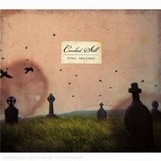
When cello virtuoso Rashad Eggleston left after five years, Crooked Still founding members Aoife O’Donovan, Greg Liszt, and Corey DiMario were in that situation. They added Tristan Clarridge on cello so they could retain their energy while expanding their musical horizons with Brittany Haas on five-string fiddle.
The new members have enlarged the bands textural and dynamic palette. Their signature pulsating rhythms now have an extra level of complexity and contrapuntal dash. Aoife O’Donovan’s arresting vocals soar over the instrumental backing like a flying fish over the ocean’s wind-driven chop. Whether it’s a 400-year-old tune such as “Captain, Captain,” or a brand new song like “Did You Sleep Well,” Crooked Still pushes the beat, staying true to tradition while bringing a song into the 21st century.
To capture the band’s new synergistic sound they decided to record the album “live.” The band played together in a large room instead of in a regular studio laying down individual tracks. The effect is not unlike a good concert recording except the sound has better depth and definition than most live albums. After three days of rehearsal, the entire album was recorded in one day.
Still Crooked captures the spark of discovery that occurs when great players explore new possibilities. Fans of the original band will soon discover this new group preserves Crooked Still’s pioneering spirit by further expanding their musical horizons. – Steven Stone
This article originally appeared in VG‘s Aug. ’08 issue. All copyrights are by the author and Vintage Guitar magazine. Unauthorized replication or use is strictly prohibited.
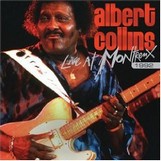
The justifiably nicknamed “Master Of The Telecaster” was one of the great blues guitarists of all time. By the time of his death in 1994, at age 61, he had exerted a major influence on players such as Jimi Hendrix, Robben Ford, Savoy Brown’s Kim Simmonds, Stevie Ray Vaughan, David Grissom, and Robert Cray. And his legacy continues via younger devotees like Jonny Lang.
In the late 1950s and early ’60s, Collins cut singles on small Texas labels (mostly instrumentals) that would later comprise his debut LP, The Cool Sound Of Albert Collins – exhibiting the biting tone he got from picking with his bare fingers and capoing far up the neck of his minor-tuned Tele. Although he reached his widest audience thanks to his association with Alligator Records, beginning in the late ’70s, there was a samey-ness to the albums – none of which rivaled the Cool Sound blueprint let alone his incendiary live shows.
Collins wasn’t the greatest singer and his originals often relied on blues-funk grooves, as evidenced by the first two songs of this collection, which feature almost identical backgrounds. The live collection is available on CD (entirely recorded in 1992) and DVD (featuring four bonus cuts from an earlier Montreux appearance, in ’79). Do yourself a favor and opt for the DVD. The ’92 set is solid, and the camera work offers a close-up glimpse at his unorthodox technique, but the ’79 show is gutsier, more fierce.
Both years close strong with his classic “Frosty.” On the ’79 version, Collins is joined by Gatemouth Brown. It’s far from a super-jam, with things bogging down while Brown tries to get plugged in and tuned up as the band vamps. Ultimately the mentor’s thin tone is no match for disciple Collins’ sonic blasts – but, then, few could go toe-to-toe with Collins and come out ahead.
This article originally appeared in VG‘s Jun. ’08 issue. All copyrights are by the author and Vintage Guitar magazine. Unauthorized replication or use is strictly prohibited.
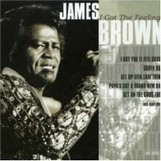
While a generation may remember James Brown as a soul star who fell on hard times, or as a man whose death has led to a tabloid-ready story of a fight for his estate, this three-disc set brings back the man who was a legend not only for his talent, but for his work in the black community.
The set consists of three DVDs. The first is the documentary The Night James Brown Saved Boston. It tells the tale of April 5, 1968, the day after the assassination of Martin Luther King, Jr. Brown’s scheduled concert in Boston was almost canceled, but it was eventually agreed to show the concert live on television, the hope being folks would stay indoors that night and Boston wouldn’t burn, like most other big cities in the U.S. The plan worked, and the documentary talks with most of the political and business principals. We also hear from members of the band. Full of great news footage from rioting, speeches from the likes of president Lyndon Johnson, and the concert, which was shown on the local PBS station, the film is fascinating as it sets up the complexities of Brown and tells what other folks were thinking. Extras include extended interviews.
Disc two is the concert as it was broadcast. Simply put, it is amazing. We see a master at work as he reveals why performers ranging from Prince to Michael Jackson to John Mellencamp to Chris Brown copped moves from J.B. Vocally, his unearthly screams are astounding. Brown’s vocals are often distorted because the producers simply weren’t savvy enough to know how to handle his style, but that never detracts from what your eyes behold. Brown’s control of the band is a sheer delight; they’re as tight an ensemble as was ever assembled. Guitarists will love watching Jimmy Nolen on “Get It Together,” where he shows how he helped create the basis for most of the funk guitar work that has followed since. Brown tells Nolen, “Give me a little Wes Montgomery,” and Nolen delivers. It’s an amazing segment.
The hands-down high point of the show happens when the crowd starts to get antsy. Brown handles the situation with amazing aplomb, as a potential powder keg is quickly diffused as the concert wraps up. There is some overlap between discs one and two, but it’s great to see the whole show.
Disc three is a concert from the Apollo in ’68. Unlike the Boston show, it was shot in color, but it’s hampered by the overuse of psychedelic effects that apparently were used because this show was a television special. The set list is different, highlighted by a stunning “It’s a Man’s, Man’s, Man’s World.” Extras include J.B.’s classic performance at 1964’s “T.A.M.I. Show” and two Paris performances from ’67 and ’68.
This is more than simply a piece of musical history. It’s American history, and it’s as important as any cultural event of the last 50 years.
This article originally appeared in VG‘s Oct. ’08 issue. All copyrights are by the author and Vintage Guitar magazine. Unauthorized replication or use is strictly prohibited.
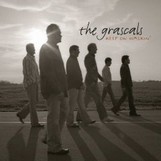
From the kick-off of the opening song, “Feeling Blue,” the Grascals demonstrate that traditional bluegrass doesn’t have to sound old-fashioned. Even on moderate-tempo songs they maintain a driving rhythm that would make any hard-rocker envious. Their spot-on three-part harmonies have a sufficiently gruff edge to keep them from being too mainstream-country slick. The band treads a very thin line between a modern acoustic and the traditional old-style sound, accomplished by combining energy with restraint, and they do this so impeccably, whether it’s a solo, harmony, or backing rhythm part, that you can’t help but be impressed.
With only two co-written original songs, Keep On Walkin’ relies on shrewd song choices to showcase the Grascals’ unique contemporary style. Covers such as Ivy Bryant’s “The Only Daddy that Will Walk the Line” and Merle Haggard’s “Today I Started Loving You Again” have a more organic feel than the originals, but still sound modern. Recently penned songs such as the title cut, “Keep on Walkin’,” retain the feeling of classic bluegrass, but with a contemporary twist.
Without a doubt, the Grascals personify what a great bluegrass band should be – precise, multi-part vocals combined with virtuosic instrumentals. Keep On Walkin’ is so solid it’s positively golden.
This article originally appeared in VG‘s Oct. ’08 issue. All copyrights are by the author and Vintage Guitar magazine. Unauthorized replication or use is strictly prohibited.
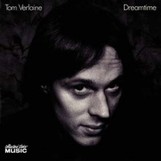
In some circles, Tom Verlaine is a legendary musician. As a member of Television in the late ’70s, he and Richard Lloyd cut a swath of influence far and wide. Collector’s Choice is now releasing his two solo records that followed the breakup of that band. While 1982’s Words From the Front is a strong album, 1981’s Dreamtime features some of Verlaine’s best songs and playing.
Chock full of great players from bands like Television, the Patti Smith Group, the Pretenders, the Dictators, and the Church, the album is nonetheless more about Verlaine’s guitars. He always puts the right note in the right place. If you’re more into fabulous chops, this might not be for you. But if you like nuance, taste, and players who know what a song needs, Verlaine is your guy.
Still, don’t doubt the chops. “The Blue Rube” is a guitar masterpiece with playing as nervous as a steer in a slaughterhouse. And Verlaine’s vocals share the mood – think David Byrne, but quirkier. It’s not for everyone, but it’s rewarding once you delve in. While Verlaine never had the big “hit record,” Dreamtime shows how far and wide his influence was felt. – JH
This article originally appeared in VG‘s Dec. ’08 issue. All copyrights are by the author and Vintage Guitar magazine. Unauthorized replication or use is strictly prohibited.