Month: July 2007

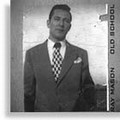
  • Ray Mason – Old School

    Ray Mason - Old School

    Ray Mason – Old School

    Ray Mason’s music, while being full of wonderful chord changes, quiet vocals, and lyrics with discreet meaning, is also quirky and hard to define. On this disc, the title cut is a light pop tune (in the best way) that displays that quirkiness with lines like, “Now it’s 30 years and three hours later…” The track “Question to Answer” further defines his style; it starts with light, off-beat guitar chords against funky drums. I’d describe the mood as “nervous.” In fact, much of Ray’s music could be described in that way. And that’s not a bad thing. The guitar solo has to be heard to be believed. It is, for lack of a better word, very “free,” but very fun and interesting, not annoying. “The Lure” is a country stomper with great off-the-wall changes. “Pretty Bye-Bye” mixes chimey guitars with nice drums and piano to create an exquisite sound. “Coat Check” is the kind of pop at which Ray really excels. It’s got an amazing hook, crunchy rhythm guitars, and fine slide throughout.
    Mason has been making music for a long time, mostly for the fun of it, I think. His records show it. Check him out if you love classic rock and pop that takes a left turn here and there.

    This article originally appeared in VG‘s Apr. ’06 issue. All copyrights are by the author and Vintage Guitar magazine. Unauthorized replication or use is strictly prohibited.

  • Speedster 25 Watt Deluxe and Class A 40 amps

    Flat-Out in Two Gears

    It’s one of the great comeback stories in the history of boutique amps – short as that history may be.

    In 2003, manufacturing engineer/entrepreneur/guitar buff Joe Valosay contacted the founders of the then-defunked Speedster Amplifiers. After hearing of the company’s demise, Valosay wanted to help resurrect the brand.

    So, in late ’03, Speedster Amplifiers, LLC was born. With the help of former owner Cory Wilds, the new company refined the design of its flagship 25 Watt Deluxe, and refined its manufacturing process. A new production facility was built specifically to manufacture the amp.

    Even more recently, Speedster hired up-and-coming amp designer Eric Collins, a man who lives for British tone, to design its new Class A 40 amp.

    We recently got our hands on both. And what we found were two amps with similarities like top-shelf construction and components, but different aesthetics and purpose.

    The 25 Watt Deluxe is a head-and-cab unit covered in black tolex with figured-maple fronts. It’s a striking look. Each has metal corners and the head’s back panel employs a metal grate to protect the well-ventilated components. Controls include high and low inputs, volume, tube bias, treble, midrange, bass, and reverb. There’s also an indicator lamp and switches for on/off and standby. The rear panel has a fuse holder, speaker jacks, and a tube bias adjuster.

    The 25 Watt uses four 12AX7 tubes in the preamp and two 6V6 output tubes. Its semi-open-back cab contains a custom-voiced Eminence 12″ speaker and plexiglas back panels. The bias control (and meter) allows the user to set the amount of current sent to the output tubes; the more current the tubes see, the fuller the sound and higher the headroom. The meter also serves as a tube checker/tester.

    The Class A 40 is designed for fans of classic British tone, and uses four EL84 output and two 12AX7 preamp tubes. The head’s front panel features low and high inputs, dual-voice preamp switch, active bass and treble controls, pilot lamp indicator, switches for standby and power, and a true-bypass master volume. The rear panel contains a fuse holder, 40-/20-watt output power selector, speaker outputs, and impedance selector. The cab’s backside uses plexiglas panels in a ported/semi-closed configuration housing two 12″ Eminence Redcoat speakers.

    To check the tone offered by both amps, we used a 1972 Fender Stratocaster and a ’70s Ibanez Artist with humbuckers. We started with the 25 Watt’s sample Soft and Clean setting (from the “Quick Start” section of its owners’ manual) through the Ibanez. Immediately noticeable was how this amp hurls its 25 watts; low-end is full and solid, with sparkley sweet highs, and all with tremendous touch sensitivity! Notes leap from the amp regardless of pickup position, and break up ever so slightly if you dig in. With the Strat, we got a pure, sparkley tone – very warm and full. The bridge pickup produced one of the most responsive, pure clean tones we’ve heard in a long time.

    Dialing in a snappier tone setting, our Ibanez sounded almost Strat-like, but with more of the midrange fullness you’d expect from humbuckers. Rolling off the treble produced a full, bluesy tone, especially with the neck and middle pickups. And the brightness never waned. Again, the amp was extremely responsive. We turned up, and as the volume increased, so did gain. Though not the heavy metal variety, it gave a nice rock sound, especially in the bridge position. With the Strat, we again backed off the treble and found a very nice example of British tone.

    The 25 Watt’s sample settings produce some great tones, but a little time spent tweaking knobs also revealed some even better sweet spots.

    To test the Class A 40, we started with its sample Ringing Chime setting, which is EQ’d for single-coil pickups. In the 20-watt mode, the tone was pure and balanced, again with great touch sensitivity. Backing off the treble, we got a nice bit of breakup, especially in the neck and middle positions. In the Crisp ‘N Clean setting, our Strat proffered a very smooth, almost compressed sound, with a little less snap.

    Using the Ibanez, we set the amp to Vintage Crunch (EQ’d for humbuckers) and were greeted with nice, crunchy British tone. Dialing in more bass, we got a very mid-punchy tone that cut like a knife. In the Smooth Overdrive setting, we got much more body, gain, and volume.

    Again, the 25 Watt Deluxe and Class A 40 are two very different amps. The 25 Watt is the more sophisticated of the two, boasting a full, balanced tone that’s punchy and sparkley, with touch-sensitivity and purity of tone. The Class A 40, on the other hand, is more simple and straightforward – the very model of pure, classic British class A.

    Contact Speedster Amplifiiers, 915 26th Ave. NW #C4, Gig Harbor WA 98335; phone (253) 858-4826; www.speedsteramps.com.

    This article originally appeared in VG‘s Mar. ’05 issue. All copyrights are by the author and Vintage Guitar magazine. Unauthorized replication or use is strictly prohibited.

  • Al Kooper – Black Coffee

    Al Kooper - Black Coffee

    Al Kooper – Black Coffee

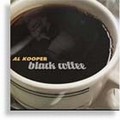
    A passing glance at the resume Al Kooper has amassed over nearly a half-century is enough to make anyone ask, “What do you have to do to get inducted into the Rock & Roll Hall of Fame?”
    Playing organ on “Like A Rolling Stone” would be a good place to start – coming up with that memorable B-3 hook on the spot, having never played organ on a session before. Add to that being a founding member of Blues Project and original leader of Blood, Sweat & Tears; writing classics like “This Diamond Ring” (for Gary Lewis) and “Flute Thing” (for Blues Project, later sampled by the Beastie Boys) and having other songs covered by everyone from Carmen McRae to Ten Years After; collaborating with Mike Bloomfield, Shuggie Otis, and Stephen Stills; playing keyboards, guitar, and French horn on sessions for the Stones, Jimi Hendrix, George Harrison, Ringo Starr, Taj Mahal, the Who, Moby Grape, the Byrds, Simon & Garfunkel, B.B. King, Roy Orbison, Trisha Yearwood, Johnnie Johnson, Tom Petty, and the Butterfield Blues Band; producing acts as far-flung as Tom Rush, Nils Lofgren, the Tubes and Lynyrd Skynyrd (including “Sweet Home Alabama” and “Freebird”).
    Along the way, Kooper also released half a dozen solo albums, but despite compilations, group projects and a live retrospective, Black Coffee is his first solo outing in 30 years. In the interim, yet another hat Kooper wore was teacher – at Berklee College of Music. There, he formed a band of instructors, which he dubbed the Funky Faculty, and they comprise the very non-academic-sounding group here.
    Bob Doezema handles most of the guitar solos, cutting loose on a burning live rendition of “Green Onions,” with an ascending passage that’ll make you either want to go back to school or hang up your guitar. One of the tastiest guitar solos, though, is Kooper’s harmonic-sprinkled break on “Keep It To Yourself,” one of several cuts where he serves as overdubbed one-man band.
    The material ranges from the soul ballad “How My Ever Gonna Get Over You” to the country-tinged “Going, Going, Gone” (co-written with Dan Penn), from a locomotive arrangement of the Temptations’ “Get Ready” to a lowdown country blues called “Am I Wrong.” Kooper, again supplying all instruments on the latter, plays mandolin and what appears to be some vicious electric bottleneck guitar, but with Al you can never tell; he’s been known to play the steel guitar classic “Sleepwalk” on synthesizer.
    The first thing you want to do after listening to this CD is listen to it again – which is about the strongest endorsement an album can get. Al Kooper’s voice has been sorely missed all these years, even while his imprint has been ever-present. He says he chose these 14 songs from 150 he was considering. If this is what he calls Black Coffee, I can’t wait to hear the cream.

    This article originally appeared in VG‘s Sept. ’05 issue. All copyrights are by the author and Vintage Guitar magazine. Unauthorized replication or use is strictly prohibited.

  • Vox AC30 Brian May Custom Limited Edition

    Tone Like Brian's? Yes, You May!

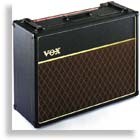
    Save for its singular single-knob control panel in bright red finish, a quick glance at the new Vox AC30 Brian May Custom Limited Edition amplifier reveals little if anything that separates it from the typical AC30. With its familiar brown-diamond grillecloth, black tolex, white and gold piping, trio of carrying handles, and full-radius plastic corners, it does indeed look like plenty of other Vox amps.

    But look closer (then plug it in) and you’ll see there are many things that help the AC30BM Custom stand out…

    An amp set for limited production (500 units, 200 bound for the U.S.), the AC30BM control panel plays host to May’s autograph in white silkscreen, a Power switch, Standby switch, Volume control, and… well that’s it. There are no for controls for tone, presence, or gain, no jacks… just volume. It seems that for this amp, Vox and Brian May did all the tweaking for us, and while the implied lack of control may throw some players into shock, it can also be liberating to simply plug in, flip a switch, and start playing without having to “find your sound” by noodling with knobs.

    In reality, there are ways to adjust the AC30BM. The back panel has a micro slide switch for boosting gain in the preamp. This circuit compensates for differences in pickup output and approximates the effect of a custom-made treble/mid-boost pedal May traditionally used in his signal chain. There’s another switch for adjusting the amp’s output mode to 15 or 30 watts, and a Treble Boost switch that engages the renowned Vox treble/top-boost sound.

    Vox’s approach to the 15-/30-watt circuit is a bit different than most others in that it not only takes two EL84 power tubes out of the circuit and changes the value of the output-cathode resistors that bias the output tubes, but it also changes the impedance of the output transformer (which then gives true half-power with full-power performance). Pretty trick.

    The cabinet is made of Baltic birch plywood with a steel/aluminum chassis and a combination of point-to-point wiring with printed circuit boards (for the boost circuit only). Our test amp used a pair of 12″ Celestion Alnico Blue speakers.

    To have a listen to the AC30BM, we plugged in a G&L Will Ray ASAT, a Gibson Les Paul Studio with stock humbuckers, and a Hamer Daytona with single-coils. With the amp’s boost switch off, the single-coils in the Hamer and the Z-coils in the ASAT produced a full, fat tone with plenty of chime to the highs and big, round 2×12″ low-end. The more we pushed the amp’s Volume control, the more bark and drive it delivered. Not over the top, but teetering on the edge of distortion. And it cleaned right up when we rolled off the guitar’s volume control, never surrendering any of what makes the tone from this amp so cool.

    Kicking in the boost circuit opened a whole new world of tone, with huge mids, tighter low-end response, and plenty of that sweet Vox overdrive that makes single notes and chords alike pop. Midrange response was very present, even a bit in-your-face, but not nasally, while the treble boost made the highs sizzle with a crisp, singing quality. Backing down the guitar’s Volume again cleaned up the sound for a less-aggressive rhythm tone that stayed crunchy.

    The humbuckers in the Les Paul proved a little dark with the treble boost off, but very at home with it engaged, producing a full, thick overdrive with the Gain switch on the low setting and an aggressive, raunchy distortion that was still clear and dynamic on the higher gain setting.

    When you consider that this amp has just one knob, with the help of the three backside slide switches and the controls on the guitar, it produces an amazing variety of good, usable sounds, each with their own character. And yes, its bold, clear treble boost nails Brian May’s tone so convincingly it could only be more authentic if May himself showed up with his homemade Red Special. Plus, the amp’s dynamic range and half-power capability (which works without sacrificing one iota of tone) give it huge potential, even for smaller-venue gigs or studio work.

    So, though it (eh hem) may lack a bunch of knobs, the AC30BM certainly does not lack tone. A good axe and setting a couple switches will instantly help any player make killer British tones.

    Vox AC30 Brian May Custom Limited Edition
    Price $3,000 (retail).
    Contact Korg U.S.A.,316 South Service Road, Melville, NY 11747; www.korgusa.com.

    This article originally appeared in VG‘s JulY ’06 issue. All copyrights are by the author and Vintage Guitar magazine. Unauthorized replication or use is strictly prohibited.

  • Elliot Easton

    Driving The New Cars

    In the late 1970s, The Cars rolled out of Boston to become the preeminent American band to carry the “new wave” flag. Its sound was fittingly sleek, while sporting obvious garage-rock roots. And in a formula that propelled its album sales to platinum status, The Cars trademark songs were decidedly pop, with a distinct album-rock feel.

    Driving the band’s sound was in large measure the playing and tones of guitarist Elliot Easton, who has also long been regarded as a knowledgeable guitar collector.

    Vintage Guitar first spoke with Easton in 1996, as he was settling in with Creedence Clearwater Revisited, which consisted of the original Creedence Clearwater Revival rhythm section and other musicians. The affiliation lasted several years, but Easton recently felt compelled to move on.

    “I’m still friends with those guys,” he told VG. “I had a great time for all those years, but for me, it had run its course. It had nothing to do them. And when talk started about doing the Cars again, there was no turning back, and it made it very hard to play someone else’s music at that point.”

    Easton is proud of his work on Creedence Clearwater Revisited’s live double album. “I thought it was great, and it’s done really well,” he said. “I think that in many ways, that band was a better band than the original Creedence – we didn’t originate the sound, of course, and nothing will take that away – but we didn’t try to play things exactly like the records. We added a new energy to the songs, and I got to stretch out a lot. I got to do stuff I didn’t get to do at all in the Cars.”

    A decade ago, Easton said his guitar collection was “like an amoeba; always changing shape,” and that’s still the case. He has acquired more left-handed versions of classic instruments and turned some instruments, as well.

    He has a nice ’65 Gibson ES-335 with a Bigsby vibrato, and noted in ’96 he was looking for “a clean (Gibson) ES-330,” but as it turns out, he’s delighted with the two Epiphone ’65 John Lennon Casino reissue guitars he acquired.

    “Those are some of the closest re-issues to vintage; they’re amazing,” he enthused. “The shape, the finish, the weight, the pickups.”

    He had also been seeking a ca. ’64 Gibson SG Standard, but now has a Gibson signature model that’s based on an early ’60s SG/Les Paul. That guitar is one of four different signature models he’s had over the course of his career, and he detailed the entire quartet.

    The mid-’80s saw the advent of a Kramer Elliot Easton model, which had a large, ’50s pickguard a la a ’50s Fender Precision Bass, but he got the idea from a Jackson guitar played by Jeff Beck in a video of “Ambitious.”

    “That Kramer was a good guitar,” he said, “It probably had the most vintage vibe of any Kramer that’s ever been built. Tom Anderson and I worked on it together, and it didn’t have a pointed headstock. One of them ended up being played by Mick Jagger; that was the Pro 2, which had sort of a Tele pickup setup, but with a five-way switch, and it was a hardtail. I think it may have been the only guitar they made that didn’t have a Floyd Rose (vibrato)!” The Pro 1 had a Floyd Rose, though, and a humbucking/single/single pickup setup, with three mini-toggles.”

    As for his Gretsch signature model, Easton detailed, “Ten years later, I’d learned more about guitars, and I had an idea for a guitar. I called Fred Gretsch and he liked it. So he said ‘Let’s go with it.’ I wanted to make a Gretsch guitar that was bulletproof; that a working guy could take on the road. Other than rockabilly players, you usually saw guys wearing Gretsch in videos on MTV, not really using them, with the exception of guys like Billy Duffy and Brian Setzer.

    “Duo-Jets had a shorter scale than Gibson; 241?2″ to 243?4″. To get any kind of tension on those guitars you’d have to use pretty big strings. So my idea was to lengthen the scale. I would’ve gone to a full Fender-like 251?2″, but the longer the neck, the further down the body the bridge has to go, and it would have put the bridge right on top of the Bigsby, and at too much of an angle. I compromised to 25″ even, and that had the effect of tightening up the low end and making the guitar ‘twang’ better.”

    Other features on the Gretsch included locking Sperzel tuners, a modern composite nut, an ABR-1-style bridge on studs that mounted into the body, and a special Bigsby with rollers, which improves the down-pressure, Easton noted. The pickup selection and tone switches on the upper bout were reversed, compared to the classic Gretsch layout. Pickups were Alnico Filter’Trons, and Easton said that “a lot of guys would get TV Jones upgrades. The feedback from guitar players was great. They got sounds out that guitar they’d never gotten out of a Gretsch.”

    The newest signature model electric for Easton comes from Gibson, and the guitarist enthused “I’m just thrilled to death with that guitar. Like a lot of guys my age, I’ve re-discovered a love of SGs. If you watch Woodstock, almost everybody is playing an SG. And I loved Jerry Garcia in the Live Dead period; George Harrison, Eric Clapton. For me, Disraeli Gears is one of the benchmarks of great SG sounds. I still listen to it all the time.”

    “I’ve had, and still have, single-cutaway Les Pauls, but the weight of a lot of them gets to you when you’ve been on your feet onstage for a couple of hours. I always thought the white triple-pickup SG Custom, which started out as an SG/Les Paul, was one of the most beautiful guitars Gibson or anybody else ever designed, but like most players, I never got into three-pickup Gibsons. You don’t get the sound of the bridge and neck pickups together, which is one of the sweetest tones on a Gibson. So before we started talking about a signature model, I had the Custom Shop make me a couple of two-pickup SG Customs – white with gold hardware and a Vibrola. They were great, and that setup seemed to make sense for a signature model.

    “One other thing I wanted was that rare finish you saw in the ’60s called Pelham Blue,” he continued. “It may have had something to do with Ray Dietrich, an automotive industry guy who designed the reverse Firebird. You’d see Pelham Blue on some SG-shaped Melody Makers, but there were a couple of Pelham Blue SGs and 335s around back then. It’s a classic Gibson color, so my guitar is being offered in Pelham Blue with nickel hardware, or the traditional white with gold hardware, but the Pelham Blue version still has an ebony fretboard and all of the Custom-type appointments.”

    Also in the works is an Easton signature model Martin acoustic.

    “My favorite acoustics were always (Martin) D-18s and (Gibson) Hummingbirds,” he said. “I love mahogany; I always thought Martin made its mahogany guitars sort of plain Jane, so I came up with a dreadnought with mahogany back and sides that has more or less vintage D-28 appointments – white ivoroid binding and herringbone. It’s got an Adirondack spruce top, scalloped braces, and gold open-back Waverly tuners – all the good stuff.

    “What I tried to do – and what I’ve always tried to do – is keep the vintage vibe,” he said, summing up the design experience. “I don’t want to lose the charm of what we love about classic guitars; I just add some tweaks that make it a better player.”

    Easton is still a fan of Fender Telecasters, and his ’58 model is “…the oldest I’ve ever had.” He still has the Tele he played at Live Aid in 1984, although the body has been refinished and has a Jazzmaster pickup in the neck position. Easton plans on taking the instrument out with the New Cars.

    Other classic Fenders in his collection include a ’65 Stratocaster and a ’66 Jazzmaster, and he also has a too-cool ’64 Fender Bassman piggyback amplifier in blond Tolex.

    The rarest production-model guitar is a ’62 Gibson Barney Kessel Custom. “How many lefty players ordered a Gibson Barney Kessel Custom back then? Especially when you consider how many guitar players there were in ’62. I’d bet one guy ordered a lefty Kessel that first year. It’s got factory Grovers on it, a laminated spruce top, P.A.F. pickups, plus a brown case with pink lining. I was cutting a kind of a Wes (Montgomery) track once, and I tried my single-pickup L-5, but when I tried the Kessel, it had that tone, in spades. I wouldn’t be surprised if it’s a one of a kind.”

    He has also kept the first decent flat-top guitar he ever owned – a 1970 Favilla F-5 he acquired at age 16 after saving his money while working at a bagel bakery.

    There’s also a circa 1980 Greco copy of a Stratocaster, with a Roland synthesizer. “That was given to me in Japan in 1980, when the Cars first toured there,” he explained. “This was before Fender began its reissue series in ’82. The Grecos, as well as the Tokai clones of classic American guitars, were astonishing in their quality and attention to detail. This Greco was the perfect candidate for the Roland synth pickup and control panel installation, as I sure as hell wasn’t going to make any holes in a real Fender!”

    Of the new incarnation of his band, Easton said, “The New Cars is the official, unofficial, and only name of the band. And yes, we did try to get the four original members together, but it became apparent that Ric (Ocasek) and David (Robinson) didn’t want to tour. Even in the old days, Rick never liked touring. But Greg and I loved that music, and wanted to play it, so we said, ‘Who can we get that will not only do justice to the music, but will be a talented front man, songwriter, and singer who we can move forward with?’ Todd Rundgren’s name came up, and it seemed like such a perfect choice; the guy’s brilliant and has so much to offer. I called him, and to my great delight, he was interested. We got together in L.A., and as soon as we started playing, you could tell it was gonna work.”

    Rundgren’s former Utopia bandmate Kasim Sulton was recruited on bass, and Easton noted, “That was an obvious connection; Todd gave Kasim his start in show business some 30 years ago, and Kasim has that beautiful, sweet voice. Live, he does a bang-up job with ‘Drive’.”

    Drummer Prairie Prince, best known for his work with the Tubes, fills out the lineup. “This is a player’s band, and the rhythm section rocks really hard. I don’t want to compare it to the old band, and one of the main reasons we have the new name is we wanted to avoid the possibility of having anybody into think they’d be seeing Rick or David. Of course, we want to start where we left off with old fans, but we want to gain new fans, too. We’re all writing, and the possibilities of recording studio material are great. If all we’d wanted to do was cash in, it would have been much easier to get a couple of ringers – some soundalikes for Rick and Ben – and hit the trail. But the whole point of having guys like Todd and Kasim is that this is a band that’s going to develop its own identity. Once we get on the road for a couple of months, it’ll really gel as a unit.”

    The band started rehearsing in early February, and came together enough to record a live album within a few weeks.

    “We did that on a soundstage here in L.A., in front of a small, invited audience,” said Easton. “It came out great.”

    Of the tour, he added that it’s no small-scale effort.

    “It’s a world tour that lasts a year,” he said. “We’re going to Europe, Australia, and Japan, then do another swing around the U.S. Hopefully, if it all goes well, we’ll take a break then do a studio album.”

    Asked whether he’s currently on the hunt for any specific southpaw instruments, Easton noted that while he has a ’60s Fender Malibu acoustic, he’s still seeking a lefty Kingman, “…because that was the dreadnought model in that series. Or maybe a Wildwood. I’d also like a nice (Epiphone) Riviera, 12- or six-string. I love the same stuff I’ve always loved, and about the only things I’m not interested in are Strats at 50 grand or Les Pauls for half a million bucks.”

    So, is his collection still amoeba-like?

    “Well, I don’t hoard guitars, other than things like the ’58 Tele, the Kessel, or my Strat, which I’d never sell.” he said. “But with a newer guitar, if I don’t have a use for it, I’ll let it go to someone who can use it.”
    And Easton is looking forward to once again making the music that he has always loved, in a fresh band. “I gotta tell ya…” he chuckled. “To be in your 50s and to be still making music? That is cool. I can hold my head up high!”

    To learn more, go to thenewcars.com.


    Photo: Neil Zlozower

    This article originally appeared in VG‘s July’ 06 issue. All copyrights are by the author and Vintage Guitar magazine. Unauthorized replication or use is strictly prohibited.

  • Richard Leo Johnson – The Legend Of Vernon McAllister

    Richard Leo Johnson - The Legend Of Vernon McAllister

    Richard Leo Johnson – The Legend Of Vernon McAllister

    A fascinating, unexpected concept album of acoustic steel-string instrumentals.
    Johnson has been compared to Michael Hedges, and, like that late innovator, his music is a bit too intense to fit the “new age” tag, even if no one knows where else to pigeonhole him. He lists Leo Kottke, John McLaughlin, and Pete Townshend as influences, and has also been compared to Ralph Towner, John Fahey, Derek Bailey and others.
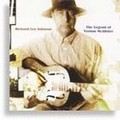
    Instead of the double-neck acoustic he usually plays, the entire CD was performed on a 1930s National steel-bodied Duolian, but that’s not the only departure for Johnson. After his friend Steve Carpenter loaned him the guitar, he discovered “bells, horns, voices, and other mysterious qualities” waiting to emanate from the resophonic. When he noticed the name “Vernon McAllister,” assumedly a long-forgotten owner of the instrument, primitively etched into the body, he sought to find out who he was. When no information resulted, he began imagining where Vernon came from, what he looked like, what type of music he played on the guitar.
    The myth that emerged may have little or nothing to do with the real Vernon McAllister, but set Johnson off on an engrossing collection of vignettes that he taped in his attic studio in Savannah, Georgia. An EBow and primitive tape effects were employed, but every sound on the CD came from the National – though many take on an other-worldly quality, while the music itself sounds like some heretofore unearthed style that might have existed before blues or hillbilly music were solidified into conventions.
    Johnson refers to the 20-track set as a musical narrative, and recommends listening to it as a whole, “for the fullest experience.” To do so is to get lost in your own images and storylines, triggered by but not necessarily paralleling Johnson’s – wondering along with him just who Vernon McAllister was.

    This article originally appeared in VG‘s Aug. ’06 issue. All copyrights are by the author and Vintage Guitar magazine. Unauthorized replication or use is strictly prohibited.

  • John Fogerty – The Long Road Home

    Since Creedence Clearwater Revival disbanded 33 years ago, its catalog has been anthologized in every conceivable way, culminating with a six-disc boxed set of every track the band ever laid down, including its pre-CCR incarnations. What makes this 25-cut, single-disc set unique is that it’s the first time Creedence hits and bandleader John Fogerty’s solo recordings have been presented together. That fact, as much as the timelessness of the music, is the reason for this collection’s existence – to serve as an announcement of something the music industry never imagined: Fogerty has come back to “The House That Creedence Built,” Fantasy Records.
    The much-publicized acrimony between the guitarist/singer/songwriter and the label (culminating with Fantasy unsuccessfully suing Fogerty for copyright infringement of his own catalog, which through various contractual twists and turns the label ended up owning – claiming that “Old Man Down The Road” was nothing more than a retread of “Run Through The Jungle”) ended only when Fantasy was recently acquired by Concord Records. So now you have a set that for years Fogerty refused to even perform live – ignoring the most important chapter of his legacy so as not to, as he viewed it, help Fantasy profit from his blood, sweat, and tears.
    Fogerty eventually came around onstage, and his shows preceding 1998’s live Premonition were every CCR/Fogerty’s fan dream come true.
    The unsaid component of this compilation is that these are only Fogerty originals – which, granted, were Creedence’s most enduring statements, but explains the absence of early hits and classics like CCR’s covers of “I Put A Spell On You” and “Suzie Q.” One could quibble about the omission of this Fogerty original or that, but at 77 minutes, it’d be hard to choose what to leave off.
    In the early days, Fogerty’s guitar playing was workmanlike and respectable, but a far cry from the virtuosity of contemporaries like Clapton and Beck. He constructed leads like the composer he was, not given to jaw-dropping, extended improvisations. But woodshedding during the nine years between 1986’s Eye Of The Zombie and 1997’s Blue Moon Swamp, John came out blazing like never before – still economical in his lead work, but able to achieve things he probably wished he’d been able to on earlier recordings.
    The icing on the bread pudding here is the quartet of never-released 2005 live versions of “Bootleg,” “Hey Tonight,” “Fortunate Son” (along with the original studio version), and “Keep On Chooglin’,” complete with some two-hand tapping pyrotechnics. These incendiary cuts, and the fact that you can now stick into your dashboard what would have previously been a mix tape, are reason enough to buy this.

    This article originally appeared in VG‘s Dec. ’03 issue. All copyrights are by the author and Vintage Guitar magazine. Unauthorized replication or use is strictly prohibited.

  • Stevie Ray Vaughan and Double Trouble – Live At Montreux 1982 & 1985

    By now, every guitar fan worth his salt knows the story behind these two concerts by Stevie Ray Vaughan and Double Trouble at the legendary Montreux Jazz Festival. Appearing in 1982, the boys were actually booed, but ended up winning over more important folks in the process. In 1985, they returned triumphantly as conquering heroes.
    Let’s start with the 1982 show. A young SRV is clearly in command, and determined to do his thing regardless of crowd reaction. And that reaction is definitely mixed. The folks doing the booing were apparently upset because the day had been dominated by acoustic acts. They expected more of that. So imagine their surprise when the boys came out blazing with two loud, boisterous instrumentals, “Hideaway” and “Rude Mood,” followed by a version of “Pride and Joy” that about tears the front of your head off.
    Yes, there were lots of boos. But there were also lots of cheers. In fact, by the time Stevie winds his way to a version of “Texas Flood” that is subtle and in your face at different points, there are plenty of folks hooting and hollering. My guess is the last part of the solo and the last verse being played behind his back didn’t endear the unknown guitarist to those who wanted things a little more laid back. They let him know it by the end, but so did those who liked it. The oddest part of this one for me was seeing Stevie pulling out a slide for a version of “Give Me Back My Wig.”
    Of course, among those hanging out in Montreaux in ’82 were David Bowie and Jackson Browne. Bowie used Stevie on Let’s Dance, and the rest is history. After meeting the band there, Browne invited them to use his studio, free, to record the first record. So, like the documentary here says, it was a “success in disguise.”
    That documentary, by the way, features very nice insights from Browne and John Mayer. Don’t laugh. The young hitmaker is a fine guitarist and SRV disciple who actually has done work with Double Trouble. Remembrances by Chris Layton and Tommy Shannon are excellent, too, especially a very funny story about the legendary bassist Larry Graham.
    The disc of the ’85 concert is what you’d expect; excellent playing by the trio, plus newly recruited keyboardist Reece Winans. “Say When” and “Mary Had a Little Lamb” are highlights. So are three terrific cuts with bluesman Johnny Copeland joining the proceedings. Great stuff.
    But I do have one complaint. Apparently all the cameras except the long shot in back, wrapped it up before the encore. So we hear and see long shots of nice versions of “Life Without You,” “Gone Home,” and “Couldn’t Stand the Weather.”
    Still, this is a must-have for fans of SRV. The sound is nice, the camera work is, for the most part, excellent. And it supplies nice insight into a part of rock and roll history. Put in its context, considering the music that was dominating the charts in the ’80s, it’s amazing this stuff was able to find a niche in a very narrow music field and make Stevie a guitar hero.

    This article originally appeared in VG‘s Jan. ’05 issue. All copyrights are by the author and Vintage Guitar magazine. Unauthorized replication or use is strictly prohibited.

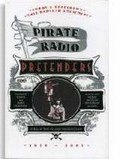
  • Pretenders – Pirate Radio (1979-2005)

    Pretenders - Pirate Radio (1979-2005)

    Pretenders – Pirate Radio (1979-2005)

    Chrissie Hynde and the Pretenders made an astonishingly large number of good records, and it’s sometimes easy to forget how good they were. That’s why boxed sets like this are so handy; it’s hard not to smile or reminisce when you hear “Stop Your Sobbing,” “Talk of the Town,” and “Message of Love.” It’s also hard not to marvel at the talents of guitarist James Honeyman Scott. His death in the early ’80s was a blow not just to the guitar world, but to the world of music. I was also a big fan of the guy who replaced him, Robbie McIntosh, and stuff like “Middle of the Road” and “My City Was Gone” are great slices of rock. This set also brings great later stuff like “Night in My Veins,” “Don’t Get Me Wrong,” “Sense of Purpose,” and more, along with strong unreleased cuts like the marvelous “Tequila” and a cover of Warren Zevon’s “Reconsider Me.”
    Disc 5 is a wonderful collection of videos and performances by various versions of the band. And all rock. And one must tip their cap to the woman who makes it work – Hynde is one of the most gifted writers in rock, and she delivers vocals with the smartass attitude every rocker should possess. And unlike many of today’s rockers, you know she means it.
    Rhino has done its usual fine job in packaging. A great booklet gives you all the info you’ll need, and completes an absolute must-have for fans of real rock and roll.

    This article originally appeared in VG‘s Jul. ’06 issue. All copyrights are by the author and Vintage Guitar magazine. Unauthorized replication or use is strictly prohibited.

  • July 2007

    FEATURES

    TELE OF TWO LEGENDS
    The Amazing Story of One Unique Fender
    One day in the mid 1950s, up-and-coming thoroughbred jockey Bill Shoemaker was playing host to his friend, bandleader Hank Penny, who had come calling with a special gift in a brown case. By Ward Meeker

    DAVID BROMBERG
    Bandleader Turned Shopkeeper Tries One More Time
    After sessions with Bob Dylan, Jerry Jeff Walker, Willie Nelson, Bonnie Raitt and others, he disbanded one of the tightest, most eclectic bands ever – to study violin making. Plus, a look at his collection of instruments. By Dan Forte

    AMP-O-RAMA
    The Danelectro Twin Twelve
    Sometimes, a funky old amp wanders along that makes you wish you’d paid more attention as a kid to what was lurking in garage sales. This one from the mid 1950s is one of them. By Dave Hunter

    THE GIBSON K-5 MANDOCELLO
    Prior to Lloyd Loar, the mandocello was simply a mandolin tuned to the same pitch as a cello. But as part of Loar’s Style 5 Master Model Series, it helped set a design standard that endures today. By George Gruhn and Walter Carter

    NATIONAL RESO-PHONIC BAJO SEXTO
    “J.J.” Barrera is an in-demand triple-threat sideman who has played electric bass, bajo sexto, and upright. His bajo of choice is this unique instrument made by the modern-day National company. By Dan Forte

    FRANK MARINO
    Tools of the Trade
    For players, a collection of classic guitars is something to be admired. But most earn a living using “road” axes; maybe vintage, often modified for the sake of sound. Such is the case for Frank Marino. By Willie G. Moseley

    STELLA CONCERT
    Had Leadbelly not played a Stella 12-string, the brand might only have been remembered as the name on cheap acoustics from Harmony. Instead, it holds an esteemed place in guitar history. By Michael Wright

    BASS SPACE
    The St. Blues Blues King
    Springing from a music store where employees fixed and modded instruments, their conversions of certain models proved popular among notable rockers in the 1970s. By Willie G. Moseley

    DEPARTMENTS

    Vintage Guitar Price Guide

    Builder Profile
    Headstrong Amplifiers & KSM Guitars

    Upcoming Events

    Vintage Guitar Classified Ads

    Dealer Directory

    Readers Gallery

    FIRST FRET

    Reader Mail

    News and Notes
    Gibson battles imported counterfeits, Les Paul museum, new Foghat live disc, “Last of the Breed” tour, In Memoriam, more!

    Dale Watson
    Brotherly Love (Or Not)
    By John Heidt

    Marc Ford
    Tone King Flies Solo
    By John Heidt

    Bob Welch
    Still in the (Future) Game
    By Willie G. Moseley

    Jimmy McIntosh
    Hail, Hail, the Gang’s All Here
    By John Heidt

    Ask Zac
    By Zac Childs

    Lee Ritenour
    40 Years of Keeping Busy
    By John Heidt

    Mark Chatfield
    Struttin’ With Seeger
    By Steven Douglas Losey

    Elektra Records
    From Judy Collins to Iggy Pop
    By Dan Forte

    COLUMNS

    The (Way) Back Beat
    Sell, Sell, Sell
    By Peter S. Kohman

    Q&A With George Gruhn

    Acousticville
    Requiem for a Collector
    By Steven Stone

    “401K” Guitars
    Supply and Demand
    By Gil Hembree

    Fretprints
    Bo Diddley
    By Wolf Marshall

    TECH

    Guitar Shop
    Set to “Max Rock”
    By Tony Nobles

    Dan’s Guitar Rx
    Fixing a Hybrid
    By Dan Erlewine

    Talkin’ Amps With…
    Billy Yates: Vintage Amps Under $1,000, Part Four: Airline
    By David Jung

    REVIEWS

    The VG Hit List
    Los Lobos, Frank Vignola, Warren Haynes, Fountains of Wayne, Gibson Guitars: Ted McCarty’s Golden Era, 1948-1966, more!

    Check This Action
    Musical Sanctuaries
    By Dan Forte

    Vintage Guitar Gear Reviews
    Red Iron amplifiers, Fender ’57 Twin Amp/’57 Deluxe, Line 6 POD XT Live.

    Gearin’ Up!
    The latest cool new stuff!