
Month: June 2007

  • Elvin Bishop

    Gettin' his groove back

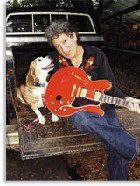
    Most blues fans are aware of the good-time party side of Elvin Bishop. And there’s plenty of that on his latest record, Gettin’ My Groove Back (Blind Pig). But on it you’ll also hear things that might surprise you.

    “Come On Blues” is a startling solo track where guitar and vocal release torrents of pain. “What the Hell Is Goin’ On” is a musical question for a world that at times seems to be spinning out of control. Bishop says those songs are therapy, plain and simple.

    “I guess I just took the approach of the old blues guys and wrote about what’s in my life,” he said. In the years since his last studio effort, Elvin’s daughter and ex-wife were murdered in a twisted extortion plot. He pours all of his grief into “Come On Blues.”

    “I kind of surprised myself on that one,” he said. “I just did it the once, and that’s all I’m ever gonna do it. I thought, well, I guess I could sing this better, but then I thought, ‘It’s reality. Just leave it.’” It’s a tribute to Bishop that he was able to pull that much emotion out of his voice, his ’59 Gibson ES-345 and Fender Vibrolux with the vibrato turned up. It’s a truly transcendent performance that will send a chill down your spine.

    If you’re a fan of the party stuff, don’t worry – there’s plenty of that here, too. In fact, this may be the best blend of the two styles ever achieved on a Bishop record during his long and storied career. But was it planned?

    “I think the one time when the media knew what to do with me or had a pigeonhole for me was in the ’70s with the Southern rock thing,” he said. “Aside from that, I’m just a different dude, and they never quite know what to make of me. So I said, ‘Hell, that’s the way it is. I’m just gonna let the songs come out the way they want to.’ And, that’s how all my records, including this one, come out.”
    Bishop says that long career has made him feel blessed when it comes to the music world. “Man, I’m the only guy in the world who’s played with Lightnin’ [Hopkins], John Lee Hooker, Muddy [Waters], Little Walter, Jimi Hendrix, Duane Allman, Albert Collins, Albert King, B.B. King, Bloomfield… I’ve just been so lucky with the people I’ve had a chance to play with.”

    As most fans know, Bishop headed to Chicago from Tulsa and sat, literally, and learned at the foot of many of the traditional bluesmen. “Tulsa had hardcore segregation when I was there. But when I got to Chicago, all the blues guys were really nice to me. Like Otis Rush; he sat me down and gave me pointers. Smoky Smothers would have me over to his house.”

    Those memories highlight his ’60s days, and Bishop feels an affection for his ’70s “Southern rock” days, too. “I got to jam with some great musicians. Duane, Dickey Betts, Charlie Daniels, Toy Caldwell. All those guys. I loved Toy’s sound. He was never a household name, but he should have been.”

    In addition to recording, Bishop still hits the road. “I don’t road dog it like I used to. I like to hang out with my wife and daughter. I raise a big garden… I’m close to a big fishin’ lake. It’s kinda like the old blues guys. You’d talk to them and they farmed or drove a tractor during the week, and then played some juke joint on the weekend. So I basically fly out and play every weekend. That keeps it fresh. It’s like a party for me and the audience.” His band is a bit unique, too. “I’m the only guy in the world who’ll do three-part harmonies with trombone, accordion, and slide. And, it works! And it doesn’t sound a bit like polka!”

    He still takes out his ’59 345 on the road. “I’ve been wanting to retire it and keep it at home, but I just have never found anything else that sounded anywhere close to as good. I’ve used it for 15 years on the road, and I figure that’s borrowed time, because the average life expectancy, as far as I can see is about five years before either the airlines or the thieves get it.” There is hope, though, for getting it off the road. “I happened to meet Henry Juskiewicz, the boss man at Gibson, at a party with the Grammys. He told me to Fed Ex the thing to their Custom Shop, and they took all the measurements and analyzed it, figured out what parts were used originally. So they’re making me one. If it comes out half-way decent, I’ll take that on the road instead.”

    When he started in the ’60s, Bishop played a Fender Telecaster, but didn’t like its tone or feel – plus, it kept popping strings. So he traded it to blues guitarist Louis Myers. “He said, ‘The problem is you’re just as square as a pool table and twice as green! You don’t know what you’re doin’. If I had that guitar, I wouldn’t be breakin’ strings.’

    “He had a [Gibson] ES-335, and I guess we both probably had a few drinks. I told him we should trade. So we did. The next week, he comes back and says, ‘Every time I hit this damn thing, I break a string. I want my 335 back.’ I said, ‘Nah. Too late.’ Bishop has been been a Gibson guy ever since. As for amps, his Vibrolux stays in the studio, while a Fender Stage 1×12” combo hits the road. He prefers to not take tube amps out on the road because “They’re just too much trouble.”

    Asked if he had ever talked to Charlie Daniels about the “He ain’t good lookin’ but he sure can play” line from his 1975 single “The South’s Gonna Do it Again,” Bishop laughs.

    “Charlie’s too big to fool with. I kind of just let him say what he wants to.” – John Heidt


    Photo: Courtesy Blind Pig Records

    This article originally appeared in VG‘s Jan. ’06 issue. All copyrights are by the author and Vintage Guitar magazine. Unauthorized replication or use is strictly prohibited.
  • Bill Frisell – East/West

    East/West

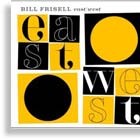
    It’s almost ridiculous to review Bill Frisell’s stuff. It’s undeniable that he has one of the most unique takes on music today. While he’s called jazz, he encompasses pretty much any kind of American music you can think of. Even when he makes a record I don’t particularly enjoy, it’s always interesting. This double-CD is live, and catches Frisell in trio settings in New York and California. And it’s not only interesting, but infinitely listenable.
    The West Coast disc opens with an unexpected funk treat, “I Heard It Through the Grapevine.” Things stay close to the original, with Frisell playing bluesy and soulful. “Blues for Los Angeles” is one of those noisefests that he somehow makes interesting. There’s nasty sounds and backward guitar that bracket interesting solo after interesting solo. “Shendandoah” showcases his beautiful harmony work with an intro that’s sublime and beautiful. By the time he gets into the tune, the twang is expressive and fun. “Pipe Down” is a funky dissonant piece with some fine soloing. Check out the funk about seven minutes in; you get the feeling he’d be right at home with Parliament.
    West Coast wraps with a beautiful version of Bob Dylan’s “A Hard Rain’s A-Gonna Fall,” a tune not normally associated with a “jazz” guitarist.
    The East Coast disc has a few more standards. There’s a moody, quiet take on the Gershwin “My Man’s Gone Now.” “The Days of Wine and Roses” actually gets a light swinging feel. Frisell’s “Ron Carter” dips and darts from fine chordal solo work to a positively rock and roll section, complete with Chuck Berry double-stops. Chimey guitars take it out, and the tune becomes beautifully dissonant.
    We’re also treated here to great takes on “Goodnight Irene,” “People,” “Crazy,” and “Tennessee Flat Top Box.” And, as you might expect, they don’t always match the originals. But they are all excellent.

    This article originally appeared in VG‘s Dec. ’05 issue. All copyrights are by the author and Vintage Guitar magazine. Unauthorized replication or use is strictly prohibited.
  • The Gourds – Blood of the Ram

    Blood of the Ram

    The Gourds may be the most dangerous band in America. They aren’t hazardous to your bodily health, but they can certainly cause pain and consternation to your cerebral cortex, especially if you have a limited ability to absorb new ideas. Their melodies aren’t subversive, but their lyrics certainly are. Unless you believe in the true healing power of sex, drugs, and rock and roll, you may find yourself at odds with much of the Gourds textural message. The Gourds are true bacchanalian messiahs.
    From the opening bars of “Lower 48,” the Gourds envelope you in a warped American gothic world of multicultural street theater. Imagine The Band on an extended, multi-intoxicant bender…
    Formed in ’94, The Gourds are Kev Russell on guitars, mandolin, and vocals, Jimmy Smith on bass, guitars, and vocals, Claude Bernard on accordion, guitars, keyboards, and vocals, Keith Langford on drums, percussion and harmonica, and Max Johnston on fiddle, banjo, lap steel, guitars, mandolin, and vocals. The Gourds don’t need no stinkin’ guest artists.
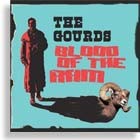
    Sometimes the influences are obvious, such as the homage to Al Green, “Escalade,” while other times they ooze from dark places. “Illegal Oyster” squirms from one of these musical tidal pools. “Wired Ol’ Gal” steals the drum pattern from Tom Petty’s “American Girl” to create an eerily warped take on American femininity. “Arapahoe” couples Garth Hudson-like vocal inflection with uniquely quirky quasi-religious lyrics, “Seven African powers, sawed off double-barrel shotgun, old fashioned crucifixion, the kind my grand pappy done.” The most poetic song on the album has to be the title cut; the combination of Waylon Jennings-like vocals and guitar stylings with graphic images of a humongous ram being slaughtered, inundating a town in a tsunami of blood, will likely never get airtime on PBS. Still, it ranks with Paul Bunyan’s ox, Blue, as one of the most majestic creatures in the annals of American livestock fables.
    The sound on Blood of the Ram has as much eclecticism as the music itself. Sometimes the mixes are lush multi-layered sonic confections, while other times the sound is so raw you wonder if they used anything more sophisticated than a Dixie cup and a string. I seriously doubt mixing engineer Mark Hallman and mastering engineer Jim Wilson will ever have a more challenging project. The final result covers the entire realm of sonic possibilities available through modern recording technology. Think Sgt. Pepper for the first decade of the 21st century.
    Music has powerful medicinal properties. Any time I begin to slip into a depression over the inexorable homogenization of contemporary music, I just slap Blood of The Ram on my player. It gives me hope that our musical future may be something other than a large beige blotch on the cultural landscape. Get Blood of the Ram, or be ethnocentrically doomed!

    This article originally appeared in VG‘s Feb. ’05 issue. All copyrights are by the author and Vintage Guitar magazine. Unauthorized replication or use is strictly prohibited.
  • Walter Trout – Deep Trout

    Deep Trout

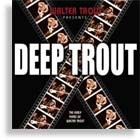
    Walter Trout has had not one, but two, successful recording careers. There are the 10 discs he has released in the U.S., but like many American musical artists including Luther Allison, he is even more popular in Europe. Deep Trout is a compilation primarily from three CDs on the Continental label – Prisoner of a Dream (1990), Transition (1992), and Breaking the Rules (1995).
    Trout is arguably the most prominent purveyor of what might be called “shred blues.” There are a lot of guitarists who can play a lot of notes, but Trout plays with emotion and intellect, paying homage to the past while avoiding mimicry. He’s also never been big on filler material to pad out an album. Constantly touring for more than three decades, nearly all of his songs are the end product of the process of coming up with a musical idea, then tweaking it during dozens of live performances until the communication between the artist and the audience is precise and complete. If Trout can’t get the audience rocking in unison with a song, it simply doesn’t make the album. Deep Trout is the best of the best from the early years of his career, going from an insanely high level of metal blues (“Put It Right Back”) to acoustic-backed balladry (“The Love That We Once Knew”) to a resonator teaser intro to a hard rocker (“How Much Do You Want”) – and that’s just in the first three cuts!
    Three previously unreleased bonus tracks include an acoustic version of one of Trout’s most popular numbers, “Life in the Jungle,” as well as “Big Chain,” and the Junior Wells classic “So Sad To Be Lonely.”
    Musicians include longtime co-conspirator James Trapp on bass, Daniel “Mongo” Abrams on Hammond B3 alternating with Martin Gerschwitz on keyboards, and Bernard Pershey on drums. If you like your blues hard, fast, and to the point, you can’t do better than Deep Trout.

    This article originally appeared in VG‘s Aug. ’05 issue. All copyrights are by the author and Vintage Guitar magazine. Unauthorized replication or use is strictly prohibited.
  • The Elvin Bishop Group – Party Till The Cows Come Home

    Party Till The Cows Come Home

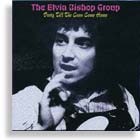
    More than a decade before he became a staple of Southern rock with “Fooled Around And Fell In Love,” guitarist Elvin Bishop established his blues credentials as an original member of Chicago’s Paul Butterfield Blues Band. Originally a quartet, keyboardist Mark Naftalin and lead guitarist Mike Bloomfield were added to the ensemble for its debut album in 1965. Like fellow bluesmen Bloomfield, Charlie Musselwhite, Steve Miller, and Harvey Mandel, Bishop soon left the Windy City for the peace and love mecca, San Francisco.
    Mention San Francisco’s Fillmore Auditorium and the first thing that comes to mind is psychedelic music, or acid rock. But the blues of these transplanted Midwesterners and their heroes was an integral component of the Fillmore scene, as were the funkified sounds of Bay Area bands like the Loading Zone, Sons Of Champlin, and Tower Of Power. Leading his newly formed group, Bishop became such a strong presence at the rock shrine (and every other venue with a dance floor in Northern California), he was the first act signed when Epic Records gave Fillmore its own imprint.
    This double-CD compiles the Bishop band’s first three albums – The Elvin Bishop Group, and Feel It!, on Fillmore Records, and Rock My Soul, on Epic, after the Fillmore label had run its course. Rounding the set out are two live tracks from the Fillmore West’s closing and the single “Stealin’ Watermelons.”
    After a great version of Guitar Slim’s “Things That I Used To Do,” Bishop’s 1969 debut kicks into high gear with the instrumental “Tulsa Shuffle” (later renamed “Raisin’ Hell”), coaxing whispers and screams from his Gibson ES-335. “Sweet Potato” is vintage Bishop – its novelty lyrics delivered from the good ol’ boy, “Pigboy Crabshaw” persona, interspersed with aggressive jabs from his guitar.
    With the addition of lead singer Jo Baker (one of San Francisco’s premier R&B vocalists, Bishop’s girlfriend at the time, and later a member of Stoneground), Feel It! has a more soulful slant, while Rock My Soul reveals Elvin’s strong songwriting throughout – particularly on the gospel-flavored title track and the muscular “Rock Bottom,” the album’s only co-write (with Baker).
    This is indeed party music, which remains Bishop’s stock-in-trade. But what elevates Bishop above any number of novelty acts is that he knows when it’s time to get down to business, and has the chops to deliver the goods. No joke.

    This article originally appeared in VG‘s Aug. ’05 issue. All copyrights are by the author and Vintage Guitar magazine. Unauthorized replication or use is strictly prohibited.
  • Sean Costello – Sean Costello

    Sean Costello - Sean Costello

    Sean Costello – Sean Costello

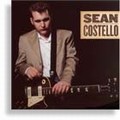
    This is Sean’s first work for Tone Cool/Artemis, and while his past work was very good, he has matured to become one of the major young talents in R&B.
    Sean’s past work also hinted at expanding beyond blues. And here we’ve got slices of soul that rank with the best of that genre’s history. Fans expecting large blasts of blues guitar and shuffles may be disappointed, but if you like to see how an artist can grow, step up.
    Sean wrote a great number of the tunes, and his writing, playing, and vocals are at the top of his game. Check out the opener, “No Half-steppin’.” It’s got a hook big enough to drive a truck through. The Leslied guitar doubles a great horn line, and his solo is just right. Vocally, there’s great stuff on pretty much every cut; you’ll be amazed at the soul and sounds he manages to invest in each of these songs. Sean has always been a fine singer, but here he has taken it up a notch.
    “I Get A Feeling” is the type of soul ballad that’s rarely heard anymore. Between the incredible solo and the vocal, it leaves you speechless. There’s an exquisite version of Bob Dylan’s “Simple Twist of Fate” with beautiful slide and a great feel. “She Changed My Mind” is the kind of soul heaven that would be on the radio if radio still had any sense. Sean’s perfect two-note guitar figure propels the song. The middle features a very nice stop-time segment with soulful bends. Top it off with the vocal, and you’re set.

    This article originally appeared in VG‘s June ’05 issue. All copyrights are by the author and Vintage Guitar magazine. Unauthorized replication or use is strictly prohibited.
  • Kenny Burrell – The Best Of Kenny Burrell

    Kenny Burrell - The Best Of Kenny Burrell

    Kenny Burrell – The Best Of Kenny Burrell

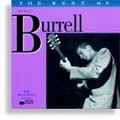
    The good thing about compiling a Kenny Burrell “best of” is, since his 1956 solo debut, it’s hard to find any clinkers; the hard part is knowing where to begin and when to stop. The fact is, several retrospectives could be compiled, and indeed have been. But even if you subdivided his career by labels (Blue Note, Verve, Prestige, Chess, Fantasy, Contemporary, Concord, Muse, and others), decades, or repertoire (he’s one of the foremost interpreters of Ellington and enjoyed a long association with the late Jimmy Smith), there’d still be gaps and overlap.
    You’d be hard-pressed to find a jazz guitarist with a more consistent level of high quality, but at 74, Burrell almost seems taken for granted; if he’d been a drug casualty (and had a much more uneven output as a result) like, say, Grant Green, he’d probably have more hip cachet. But from the opening track, 1957’s “I’ll Close My Eyes,” it’s clear that you’re in the presence of a master bop improviser with an innate sense of swing.
    The following track, “Montong Blues,” shows the other, equally indelible side of Burrell’s personality, his mix of blues and funk, with a guest solo by tenor sax titan Coleman Hawkins. Few jazz guitarists can get as lowdown as Burrell; lest we forget, this is the composer of “Chitlins Con Carne,” and a hero to Stevie Ray Vaughan. But in the next breath, on Cole Porter’s “All Of You,” Kenny shows a degree of sensitivity with a ballad few can attain.
    An added treat is the presence of jazz luminaries in the role of sideman – something that was commonplace in the ’50s and ’60s. So pianist Tommy Flanagan, organist Jack McDuff, drummers Elvin Jones, Art Taylor, and Jimmy Cobb, and even sax icon John Coltrane pop up on different tracks – just as Burrell did so often. This is one of 19 CDs in Fantasy Records’ “Best Of” series, with different artists’ work on the various labels under Fantasy’s umbrella, spotlighting everyone from icons like Miles Davis and Wes Montgomery to overlooked greats like Bobby Timmons. Burrell shows up on the Hawkins and Chet Baker volumes. The packaging, annotation, and sound are typically first-rate, and, at $11.98 list, each is a steal. Start with Baker and Burrell, who are conveniently at the front, alphabetically, and buy them all. Hopefully, more are on the way.

    This article originally appeared in VG‘s June ’05 issue. All copyrights are by the author and Vintage Guitar magazine. Unauthorized replication or use is strictly prohibited.
  • Graham Parker – Songs of No Consequence

    Graham Parker - Songs of No Consequence

    Graham Parker – Songs of No Consequence

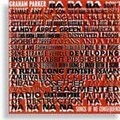
    Man, it’s good to hear Graham Parker, and to know that age hasn’t dulled his pen – his lyrics challenge anything and everything that bothers him. That can be personal, or it can be public. And he’s by turns extraordinarily funny and downright mean.
    His latest release also gets a kick in the rear from his backup band, The Figgs. They last recorded with Parker on the live LP, The Last Rock and Roll Tour. Their bar-room rock and roll fits these songs perfectly, and guitarist Mike Gent darts wonderfully in and out of the biting lyrics. Want a killer hook? Look no further than “Bad Chardonnay.” It’s probably obvious why “There’s Nothing On the Radio” doesn’t show up on the radio. Talk about biting the hand that should feed you. That one, by the way, contains one of my favorite lyrics of the year so far: “Has rock and roll died, or does it just smell bad?” “Suck ‘n’ Blow” has a hook big enough to drive a truck through, and is backed by some very Stonesy rock and roll. How can that one lose? “Did Everybody Just Get Old” should get a nod of recognition from all of us babyboomers. A hysterical lyric backed by fine rock.
    Parker’s catalog is one of the most pleasing in rock and roll. It’s hard to play one of his records and not like it a lot, and this makes a fine addition.

    This article originally appeared in VG‘s Sept. ’05 issue. All copyrights are by the author and Vintage Guitar magazine. Unauthorized replication or use is strictly prohibited.
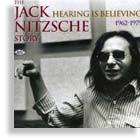
  • Jack Nitzsche – Hearing Is Believing

    Hearing Is Believing

    It may have only reached number 39 on Billboard‘s Pop Singles chart in 1963, but “The Lonely Surfer” is as perfect as any 21/2 minutes in rock history.
    Bill Pittman’s Danelectro six-string bass enters, playing the Duane Eddy-esque melody over a medium-gallop drumbeat, supported by unwavering rhythm guitars, with a triangle marking the 3, and claves or castanets accenting every “and.” At 0:25, strings begin to swell for the repeat of the A section, holding the tonic for 21 seconds before overtaking Pittman for a variation on the third statement of the melody. At 1:05 the simple melody is repeated a fourth time, with French horns stepping in front of the strings, and tympani rolls pushing each turnaround back to the top. At 1:27 the strings regain center stage for the bridge, with sustained tremolo guitar chords and cymbal crashes punctuating each measure’s downbeat. At the release, at 1:48 into the instrumental, the six-string bass moves out front again, modulating the melody up a fourth, with strings and brass underlining it. For the last verse, French horns blare like conch shells signaling the arrival of Viking ships. Even though the song fades at 2:33, its mood is still building, as the orchestra begins the mantra-like head yet again.
    This is no mere rock and roll ditty; this is a work of orchestral genius. And the genius who co-wrote it, conducted it, and, most important, arranged it was Jack Nitzsche. Phil Spector’s former right-hand man didn’t play an instrument on “The Lonely Surfer” or many of the songs he was associated with. He didn’t have to. His stamp was already all over them.
    This 26-track compilation, subtitled The Jack Nitzsche Story, 1962-1979, represents just a fraction of one of the most impressive resumes in rock history. Either because of licensing obstacles or artistic decisions, this is not a “greatest hits,” in that many of Nitzsche’s best-known collaborations (arranging Ike & Tina’s “River Deep, Mountain High” and the Crystals’ “Be My Baby,” playing piano with Crazy Horse and on various Stones cuts) aren’t included. Instead, however, are forgotten and lesser-known (but equally worthy) gems like the ever-versatile Frankie Laine’s “Don’t Make My Baby Blue,” Jackie DeShannon’s original version of “Needles And Pins” (co-written by Nitzsche and Sonny Bono), Lesley Gore’s hard-edged “No Matter What You Do” (produced by Quincy Jones – no slouch as an arranger himself – but arranged by Jack), and Terry Melcher producing his mom, Doris Day, on the surprisingly hip “Move Over Darling.” Later tracks include Mink DeVille, Gram Parker and Nitzsche’s Oscar-nominated score for One Flew Over The Cuckoo’s Nest.
    Personnel listings, which would take up a couple of booklets, are unfortunately not included, although the liner notes mention Ry Cooder playing guitar on “Sister Morphine” by Marianne Faithful. Elsewhere, it’s a safe bet Los Angeles’ usual studio suspects (Tommy Tedesco, Glenn Campbell, et. al.) are supplying guitar parts. But, for once, the spotlight is on the arranger – in this case, the best in rock history.

    This article originally appeared in VG‘s Oct. ’05 issue. All copyrights are by the author and Vintage Guitar magazine. Unauthorized replication or use is strictly prohibited.

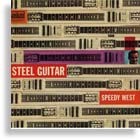
  • Speedy West – Steel Guitar

    Steel Guitar

    At the opposite end of the spectrum from Sundazed’s Burton-Mooney collaboration, which balances restraint with fire, is this collection of singles by steel trickster Speedy West, which Capitol originally released in 1960. This, too, is a collaboration in that this collection of singles recorded between 1950 and ’55 features West’s longtime partner in speed, guitarist Jimmy Bryant, on all but one of the 11 tracks.
    If Speedy’s brand of stunt steel sometimes resembles a Spike Jones record, it’s not surprising; he recorded with Spike – along with Tennessee Ernie Ford, Moon Mullican, Merle Travis, Merrill Moore, Frankie Laine, and countless others. Like Bryant, his personality invariably showed through, particularly his sense of humor. In conjunction, the pair could sound like it was goofing off while playing some of the most original, difficult guitar duals in history, often at a breakneck pace. The title of one instrumental, “Caffeine Patrol,” says it all. In just the intro to the opening track, “Speedin’ West,” Speedy displays practically his entire bag of tricks – his stuttering climbs up the neck, his trademark “bar crashing,” and wild wah effects (using his tone knob).
    West could play pretty, too, as on the Hawaiian ballad “Our Paradise” and the mystical “West Of Samoa.” But what made Speedy and Jimmy great is that if they never sacrificed their personality on other artists’ sessions, they damn sure were going to cut loose on their own records, either as a team or backing each other. Listen to them trade choruses on “Flippin’ The Lid,” then pick your chin up off the floor.
    Like the Burton/Mooney reissue, this clocks in under 30 minutes, but is priced to please, at $9.98. Skip a couple of lattes and pick it up.

    This article originally appeared in VG‘s Aug. ’06 issue. All copyrights are by the author and Vintage Guitar magazine. Unauthorized replication or use is strictly prohibited.