
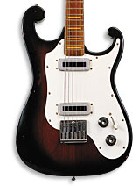
Month: April 2007

  • G.L. Stiles Solidbody

    Every once in awhile, a guitar comes out of left field. In the case of this solidbody electric labeled “Lee Stiles,” the throw came from West Virginia by way of Miami!

    It was in many ways primitive, but at the same time it was also clearly “manufactured.” As it turns out, this was one of the earliest guitars produced by the late luthier who was one of the driving forces behind the arts renaissance called the Augusta Heritage Program, which still thrives in Elkins, West Virginia, Gilbert Lee Stiles. After considerable detective work and with a lot of good luck, Stiles’ story was salvaged from possible obscurity.

    Lee Stiles, as he was known in the early days, was born in Independence, West Virginia, in 1914. By the age of nine he’d begun working with wood while growing up in a neighborhood of back-porch pickers, so it was natural that he developed an interest in guitars. In a 1994 interview, Stiles confessed it was his boyhood dream to make guitars, though it wouldn’t be realized until relatively late in his life.

    Stiles spent a good chunk of his working life in trades associated with timber, ranging from logging to turning millwork. By the late 1950s he’d relocated to Miami. Then one day in 1960, he decided to make good on his childhood fantasy. He went out to his garage workshop, locked the door, and built his first solidbody guitar. And there was no Stewart MacDonald in those days, so he had to make all the parts himself. How he made the pickups without specialized gear suggests a bit of exaggeration in the single-day theory, plus paint takes time to dry, etc. Anyway, Stiles showed his new creation – which essentially looked just like this one – to a friend, who then started bugging him to sell it. Stiles subsequently opened his own workshop in Miami and his guitarmaking career was launched.

    In the beginning, Stiles concentrated on Strat-style solidbodies. He continued to fabricate most of his own parts, including a lot of the hardware. He wound his own pickups, modeling them after DeArmonds. The scrolled headstock and horns were an early Stiles trademark, and his early necks were reinforced with non-adjustable rolled steel – pretty hefty, with their V “boat-hull” profile because, as Stiles recalled, the only strings he could get at the time were heavy-gauge Black Diamonds.

    Partially because he was familiar with woods, and partially because he made a lot of his own parts, early Stiles guitars often feature unusual components. This guitar, which Stiles reckoned was one of his early ones dating back to the beginnings in 1960 or so, has a pickguard made out of what looks like Masonite. Although this might seem like improvising (and it may have been), it’s worth noting that in 1960, Masonite was a fairly high-tech material and was being used on guitars made by companies such as Kay.

    Clearly, the pickups and adjustable bridge/tailpiece unit were handmade, while things like the tuners were not made by Stiles (here ’60s Klusons replace the lost originals). The body and neck are made of mahogany. The unusual fingerboard design is walnut with maple highlight strips. The block inlays are maple, not pearl! And the guitar has a decal logo, a metal sticker that says “Lee Stiles, Inc. Miami/Florida,” and it’s stamped with a serial number #A0-1002? (last number illegible).

    Depending on how you feel about thick V necks, this Stiles is lightweight and its pickups kick butt, with a lot of warmth from the mahogany. This is a great little surf guitar, except for having no vibrato.

    There is a bit of an “American primitive” feel to the workmanship of early Stiles guitars, but his skills improved quickly and the workmanship rapidly improved. Circa 1963, Stiles relocated to Hialeah, Florida, and began making flat-top acoustic six- and 12-strings, as well as some very fine carved archtops, harp guitars, doubleneck pedal steels, electric basses, banjos and mandolins. When demand required, he’d employ helpers.

    Stiles’ designs continued to proliferate, sometimes with scrolls, often with unique scalloped headstocks or other design features. Later solidbodies featured advanced appointments such as German carves and fancy pearl inlays. While this has a mahogany neck, most Stiles guitars sport maple handles. Early on, Stiles created a number of “student” guitars similar to this design, but with a 21″ scale. He even built an 18-string guitar for one customer.

    Stiles’ flat-tops were particularly interesting, as he got his sound by increasing the tension on the top by arching the backs to the breaking point. He favored Brazilian rosewood bodies and spruce tops. Often, the extra-tense backs required additional bracing.

    Basically, Stiles operated a custom shop, so almost anything was possible in terms of design or construction; he made copies of Gibson Flying Vs and wide-cutaway archtops like no others. Guitars from his later years took advantage of the availability of components manufactured by specialists, so he no longer had to make everything from scratch!

    Nobody seems to know for sure how long Lee Stiles produced stringed instruments, but in later years he slowed down, and by the early 1990s was mainly doing repair work. About that same time, Stiles was invited by his home state to participate in the nascent Augusta Heritage Program that was being run through Davis and Elkins College, in West Virginia. There, he taught lutherie to young people.

    No accurate count of Stiles guitars is available, but by his own estimates he made nearly 1,000 solidbodies and at least 500 acoustics.

    Gilbert Lee Stiles was hardly a major influence on American guitarmaking, but he deserves to be recorded, as he did create some really good guitars, and later passed the legacy on through his teaching in West Virginia. And his guitars are a good lesson in paying attention when the next odd axe ricochets your direction from left – or any other – field.


    Ca. 1960 Gilbert Lee Stiles. Photo: Michael Wright.

    This article originally appeared in VG‘s Sept. ’06 issue. All copyrights are by the author and Vintage Guitar magazine. Unauthorized replication or use is strictly prohibited.
  • Koch Twintone

    Bantam Tough-Guy

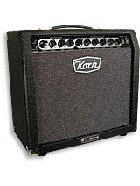
    The Twintone is the Netherlands-based Koch Guitar Electronics company’s mid-sized guitar amp, a 1×12″ combo that, like the entire Koch line, uses top-quality components including cold-lacquered transformers, fiberglas-reinforced PC boards, and heavy duty potentiometers.

    The Twintone’s all-tube circuit features a matched pair of Ruby EL34s housed in a punched-steel cage (to protect against breakage from loose footswitches or other items that may end up floating around in the back of the amp). The preamp section uses four 12AX7s protected with steel retainer strips. Its 11-ply birch plywood cabinet is covered in thick, black tolex and features cabinet-grade plywood bracing and back panels.

    The Twintone’s 12″ speaker is a custom-designed ceramic-magnet Jensen VG12-90 rear-mounted on a presswood baffle. The brushed-aluminum control panel features large, black silkscreen with large knobs that complement the black/silver grillecloth and are easy to read on a dark stage. The overall quality look and vibe of the amp is traditional but still unique enough that you could pick it out of a crowd easily. Front panel controls include volume, bass, mid, and treble for the clean channel; and gain, volume, presence, bass, mid, and treble for the overdrive channel, as well as the power/standby switches and normal/bright clean-input jacks. The second input jack is voiced for guitars with humbucking pickups; it removes some mids and pads the signal slightly. The rear-panel controls consist of a channel switch for going from clean to overdrive channels (if you’re not using the footswitch), a reverb-level knob, series effects loop jacks, record out jack, headphone jack, and rhythm/solo level control. The rhythm/solo control can be pre-set and accessed via the two button footswitch, giving you, in essence, four presets – two for the clean channel and two for the overdrive channel.

    To check out the Twintone’s twin tones (clean and overdrive) we used a Fender Custom Shop Robert Cray Stratocaster, a dual-humbucker Fender Flame, and a Gretsch 6120 Brian Setzer with FilterTrons.

    First up was the Cray Strat through the clean channel, which produced a pristine, full, clean tone with tight low-end – the type you might expect from a 2×12″, not necessarily a 1×12″. The amp allowed the Strat’s crisp, bell-like tone and punchy low-end to go on full display, without getting thin or farting out.

    Next, we dialed in a bit of reverb from the somewhat inconveniently-placed rear-mounted knob (without leaning over the amp, it’s difficult to tell where the control is set). But the result is more than worth the inconvenience; the Twintone’s reverb is outstanding, with a lush, smooth, swell and ultra-wet tone. Even dialed in heavy, it never gets in the way or loses definition. This is killer surf tone! The large Accutronics reverb tank and well-voiced reverb circuit make the reverb a standout feature, not just the usual add-on.

    The other “tone” of the Twintone – the overdrive channel – also sounded very good with the Strat, much more versatile than the Koch Classictone we tested in the January ’04 issue. We easily dialed in a thick-but-moderate bluesy overdrive like the Classictone, but we also found a thicker, high-gain, crunchy, rock distortion with ample amounts of overdrive and no buzzy high-end. With the Fender Flame’s bridge pickup in the overdrive channel, and the gain and volume pushed fairly hard, we got a solid tone that stayed together without washing away the low-end or mushing up high-end, and all at a gig-capable volume.

    The Twintone can be cut to 25 watts of output using its built-in power soak (or the recording-out with speaker simulation.) without sacrificing tone. With humbuckers or FilterTrons through the second bright/clean input, the amp’s clean tone was bright, but stayed smooth without the honky midrange and floppy low-end you can get from humbuckers in this mode. This allowed us to switch guitars without having to mess with the tone controls in the clean channel. The filter on the bright/clean input is bypassed in the overdrive channel, so you don’t have to switch back to the other input for optimum overdrive tone.

    The tone controls on both channels are subtle, but very useful, and allow the user to adjust the tone of the amp for each guitar without losing the natural characteristics of the guitar’s tone.

    At 193/4″ x 181/2″ x 101/2″, the Koch Twintone may be small, physically. But it is huge in terms of features and tone. An amp that truly has both a solid clean and overdrive sound, and outstanding reverb.


    Koch TwinTone 50
    Features All-tube circuits, matched Ruby EL34 power tubes, built-in power soak, Accutronics reverb tank, 11-ply birch plywood cabinet, two-button footswitch, independent clean and overdrive channels, independently voiced inputs for single-coil and humbucker pickups, rhythm/solo boost circuit.
    Price $2,150
    Contact Audionova Inc. , Dorval, Quebec, H9P 1H3, Canada; phone (514) 631-5787 ext. 22; audionova.ca


    This article originally appeared in VG‘s April ’05 issue. All copyrights are by the author and Vintage Guitar magazine. Unauthorized replication or use is strictly prohibited.
  • Tim Bogert

    Then and Now with Vanilla Fudge
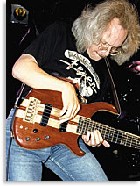
    Bogert in the ’90s playing a Michael Tobias Design six-string.

    Innovative bassist Tim Bogert first graced the pages of Vintage Guitar in June, 1993. At the time, the veteran of Vanilla Fudge, Cactus, and Beck, Bogert & Appice (amongst other aggregations) had settled in as an instructor at a Los Angeles music school and was gigging with a power trio to keep his chops honed.

    Well, things change, and today Bogert is back with a version of Vanilla Fudge consisting of himself, original drummer Carmine Appice, keyboardist Bill Pascali, and guitarist Teddy Rondinelli, who replaced original guitarist Vince Martell.

    We recently spoke once again with Bogert, and got into the current state of affairs of the Fudge, his other efforts, his gear, and we also fine-tuned some of the band’s history.

    Shortly after Bogert’s first interview, he made an appearance at a guitar show in Southern California. While signing autographs, an attendee told him, “I used to listen to your stuff when I was in ‘Nam!” Bogert flashed a thumbs-up said, “Well, I’m glad you made it back!” and later said the exchange wasn’t the first of its kind.

    “A lot of guys who came back have thanked me for the music over the years,” he noted. “I’m glad to know it helped.

    Members of other bands, such as Yes and Uriah Heep, have cited Vanilla Fudge as influential. The quartet, which broke out with a cover of the Supremes’ “You Keep Me Hangin’ On” in 1967, was known for its innovative reworkings of hit singles by other artists. Songs by English bands, Motown groups, R&B artists, and tunes from other genres all underwent considerable modification by the Fudge during the band’s heyday, getting bombastic arrangements that sometimes included classical material. In the late ’60s, Vanilla Fudge, like other rock bands, didn’t produce music that was danceable; their efforts simply demanded a listener’s attention.

    Bogert’s bass playing was an important part of the Vanilla Fudge sound. Refusing to conform to the normal rhythm section role of a bass player, Bogert’s efforts included oddball notes played high on the neck, expressive slides and note bends, and fuzzed-up tones!

    The band broke up in 1970 following the release of its fifth album, Rock & Roll, and in the ensuing years, there had been other reunion attempts, including a 1984 album called Mystery that featured Martell on one track, and an appearance at the Atlantic Records’ 40th anniversary show in 1988 that saw Lanny Cordola in the guitarist’s slot.

    “The Fudge got back together in ’98, and that has kept me busy,” he noted. “Carmine has really hustled; he and our manager have done a nice job getting us around the world, literally.

    So, how did the reformation come about?

    “Vinnie called me up and said, Tim, I have a gig for the Fudge in Tokyo; would you like to go?’” Bogert said. “I’d retired from the music school in ’97, so I was just hanging around, and I thought it’d be fun. I hadn’t played out on the road in a long time. We called Mark Stein, and he wasn’t interested. We called Carmine, and he was very interested. Vinnie had been working in New York with Bill Pascali, who sounds very much like Mark, vocally; if he does Mark’s phrasing and you close your eyes, it’s pretty close.

    “We had a really good time in Japan, so we said, ‘Let’s keep this going.’ And we did. It was profitable and fun – two things a man my age needs to hear!”

    The late-’90s edition of Vanilla Fudge created an album titled The Return, which featured new recordings of Fudge covers such as “You Keep Me Hangin’ On” and “Shotgun,” as well as a cover of Marvin Gaye’s “Ain’t That Peculiar” sung by Martell. Bogert says the Gaye song was “one of our old ‘club tunes.’ We had three or four sets of material back in the club days.”

    The band also covered Rod Stewart’s “Do Ya Think I’m Sexy” (Appice co-wrote and drummed on the original), and even gave the Fudge treatment to two songs by modern boy bands – ‘N Sync’s “Tearing Up My Heart” and the Backstreet Boys’ “I Want It That Way.” However, Martell ultimately had to depart due to problems with his hands.

    “It hurt him to play,” said Bogert. “He sat out six or eight months, then Teddy Rondinelli came in.”

    Rondinelli is the brother of drummer Bobby Rondinelli, percussionist on the three most recent albums by the Blue Oyster Cult (Heaven Forbid, Curse of the Hidden Mirror, and the live A Long Day’s Night). Teddy was located through a friend of Bobby’s. Vanilla Fudge and Blue Oyster Cult haven’t gigged together, but Bogert thinks “..it would be a good combo.”

    With Rondinelli onboard, Vanilla Fudge tweaked the original song list of The Return, eliminating “Ain’t That Peculiar” and plugging in “Eleanor Rigby” and an alternate version of the Fudge original “Need Love” featuring Rondinelli and the San Fernando Valley Symphony Orchestra. The album was retitled Then and Now, and was released on the Fuel 2000 label.

    Another project for Bogert and Appice was the 2001 album, D.B.A., with guitarist Rick Derringer. “Carmine and Rick had worked together before,” Bogert noted. “And they were about to do something else. Carmine and I had just done a Japanese thing with a fellow named Char that went real well. He’s had 20 number one records there in the last 20 years. His style is very Beck-ish, so when we went over to play with him, we did a bunch of B.B.A. material, which was a lot of fun for Carmine and me, of course. We played at the Budokan; I’ve got video of that performance, and they put out a CD, as well.

    “As for the deal with Rick, I didn’t know if it was supposed to be ongoing, because it was really Carmine’s thing. We did the album, but I had no idea whether we were going to tour to back it up; as it came to pass, we did not.

    “Rick’s now doing his Christian thing, and of course, and Carmine’s got 117 projects going on at any given moment!” Bogert said with a laugh. “He’s the most workaholic man I’ve ever known. He has 4,000 minutes a month on his cell plan, and always goes over! He’s workin’ 18 hours a day, 365 days a year. That’s the way he likes it.”

    All five original Vanilla Fudge albums are available on CD, some with extra material. For example, the current version of the third album, Renaissance, features a cover of the Burt Bacharach/Hal David-penned “The Look of Love,” as did an earlier CD version of the fourth album, Near the Beginning.

    “We won the Venice Pop Festival in 1968 with that tune. There’s a picture of me holding a golden gondola,” Bogert chuckled.

    Near the Beginning has alternate archival material on a subsequently released version of the CD, but it also has Bogert’s remarkable bass solo on the side-long “Break Song,” which still holds up 36 years after it was recorded live at the Shrine Auditorium in L.A. The bassist performs riffs on bent strings (dropping each note down to its intended pitch), plunks raucous chords, and produces rapid-fire muted notes reminiscent of the second portion of the theme from “The Twilight Zone,” an effect accomplished by “muffling with the back of the palm, which gives a bass drum-ish sort of sound.”

    The showcase concludes with a shrieking fuzz bass tour-de-force that utilizes a Mosrite fuzz tone.

    Some years ago, a BBA boxed set was marketed that included previously unreleased material. Bogert thought that effort turned out well. Does that mean there could be an original Vanilla Fudge boxed set in the offing?

    “That’s a question you’d need to ask Atco or Rhino,” said Bogert. “I believe Rhino bought the masters. I know they bought Cactus (tapes), and they’ve just put out two beautiful boxed sets of Cactus material, a two-CD live set that features a concert in Memphis where we were on-form; it was a real good night! And there’s a two-CD set of everything we ever recorded. Those came out really well; I’d sent ’em a bunch of pictures.”

    Gear-wise, Bogert has relied on an SWR rig for most of the last decade. The setup consists of a 4×10″ cab, a 1×18″ cab, and a 400-watt head.

    “Recently, with the Fudge, I got two 2×12″ Epifani cabinets,” he said. “They’re a small company in Brooklyn, and they make some kick-ass speakers! I’ve been using an SWR 750 head to push the two of them at four ohms. They kick hard, without being overpowering.”

    As for instruments, Bogert still uses Michael Tobias Design six-string basses, and recently got two five-string and two six-string basses from ESP. “I really like that ESP five-string,” he said. “I also have a maple Fodera six-string that almost looks like my old Fender, with a blond neck. It has that real low-end punch the Fender had.”

    He still tunes his six-string basses in a not-quite-contrabass manner, going from low B to high B, instead of high C, explaining, “I can play a mean rhythm guitar on the top four strings, while keeping a root going, which I did for many years in my trio.”

    What’s more, he now feels a strong connection to five- and six-string basses.

    “I like the low string, big-time! I can pop on a five better than I can pop on a six. But on a six, you can do a two-octave spread, vertically; you never have to move your arm left or right, and as a singer, that’s wonderful, and it feels very comfortable. I could go back to a four with no problem, but it would be so much less to work with, and I am so used to playing more vertically instead of horizontally… except when I do those flash bits, when your arm goes flying up and down the neck. My basses usually stay pretty vertical, particularly when I’m singing. But when I’m jamming or doing a solo, anything goes.”

    Bogert also jokingly referred to the aforementioned solo on “Break Song” as “horizontal playing.”

    In the glory days of the original Vanilla Fudge, Bogert was known to favor Fender Precision Basses with Telecaster Bass necks, as well as Fender amplifiers. But we asked about an old photo of the band that shows him playing what appears to be a Fender Jazz Bass with a Tele Bass neck.

    “That was the first bass of mine that was stolen at a gig, right off the stage,” he recalled. “I took my bass off, and a roadie put it on a stand in front of the amp while I did an interview. All of a sudden, I heard all this commotion, and people went running out the door behind the stage. Some guy had picked up my bass, ran through the parking lot, hopped into a car, and was gone. We never did catch him.

    “But I had made two or three instruments like that before I was given one by Fender, as an endorser. I played with configurations back then like I play with motorcycles now.”

    The modern version of Vanilla Fudge will tour domestically and internationally in 2005. He’s not sure what their schedule will be like, but said in ’04 they did their share of flying.

    “Looking at our schedule from last June kind of sums it up,” he said. “It was frenetic. We started in L.A., then went to New York for three days. Then we went to Ireland for four days, came back to New York for two more days, went to L.A. and stayed overnight to get on a plane to Hawaii; we worked there for five days, flying to each island, then came back to L.A. and stayed overnight to get on a plane to Paris. Played Paris and Lyons for four days, then flew back to L.A. That was June.”

    Asked about the acknowledgement by other veteran musicians of Vanilla Fudge as an influence, Tim summed up his status by noting, “It’s very nice, as one gets older, to know that you made a dent. I like that, because as an older player, you don’t get to work a whole lot, so you take the accolades any place you can find them!”


    This article originally appeared in VG‘s May. ’05 issue. All copyrights are by the author and Vintage Guitar magazine. Unauthorized replication or use is strictly prohibited.
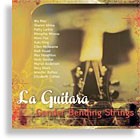
  • La Guitara – Gender Bending Strings Anthology of Women Guitaris

    Gender Bending Strings Anthology of Women Guitaris

    When I was young and someone said “You play like a chick guitar player,” they’d be either smiling or ducking. After hearing this anthology, it could only be construed as a compliment.

    Produced by Patty Larkin and Bette Warner, La Guitara brings together the work of 14 exceptional guitar players, all women. Musical styles include classical, folk, acoustic blues, electric blues, rock, Latin, and even near-Eastern. The artist list covers a wide swath with old pros, up-and-comers, and historical icons including Sharon Isbin, Memphis Minnie, Mimi Fox, Kaki King, Ellen Mcllwaine, Badi Assad, Alex Houghton, Vicki Genfan, Muriel Anderson, Rory Block, Jennifer Batten, and Elizabeth Cotton joining producer Patty Larkin. Given such a variety of styles, this anthology could have all the continuity of a public radio broadcast, but Larkin manages to give the anthology an overall musical shape and form. It begins with a contemplative mood and gradually weaves its way into more upbeat and experimental material before climaxing with Cotton’s triumphant “Wilson Rag.”

    Choosing the most outstanding selections on La Guitara is as much a function of taste as it is an analysis of the music. To my ears, Memphis Minnie’s “Let’s Go To Town” ties with Vickie Genfan’s “Joy” and Alex Houghton’s “The Bear” as the cuts most likely to have you pushing the “repeat” button on your CD player. All three guitarists combine superhuman physical technique with a novel rhythmic and melodic musical structure to create arresting music. Producer Patty Larkin’s specially recorded contribution combines old-fashioned guitar sounds with modern sonic treatments to create a novel composition that’s unlike most of her previous work.

    All but a few of the selections have been previously released on each artist’s own CDs. Still, this anthology, some of whose proceeds go to the non-profit “Guitars in the Classroom,” manages to be more than the sum of its parts. Even though the variety of sources does make for a range in sound quality – you can’t expect a ’30s recording to sound as good as an ’03 recording; the overall sonic quality is more than acceptable and never gets in the way of the music.

    With the advent of the IPod, much of the impetus behind purchasing anthologies has been lost. After all, anyone can program ITunes or their CD changer to create instant anthologies of their own collections. Still, there’s a unique appeal to arranging music around some sort of theme guided by an overriding intelligence. La Guitara successfully delivers the wide spectrum of great female players on a well-crafted silver platter.


    This article originally appeared in VG‘s Feb. ’06 issue. All copyrights are by the author and Vintage Guitar magazine. Unauthorized replication or use is strictly prohibited.
  • Darol Anger/Mike Marshall – The Duo

    The Duo

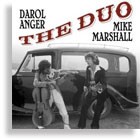
    Darol Anger and Mike Marshall’s 1983 The Duo marks another acoustic-music first – a violin-mandolin duet. Joined by Rob Wasserman on acoustic bass for one cut, The Duo is just that – two guys playing for the pure joy of it. Their version of “Golden Slippers” happily bounces along while they veer into complex contrapuntal cross-picking. Marshall’s “Wall of Mando Madness” ventures into variations in rhythm and instrumental texture never heard before and rarely attempted since. The final cut on the disc, a seven-minute version of Marshall’s “Gator’s Dream” demonstrates just how far outside two players can get without losing sight of the tune’s musical core.

    Both CDs sound much better than you might expect from 20-year-old recordings. Much of the credit should go to the original recording engineers on the projects. Even back in the early ’80s, some people knew how to record acoustic instruments so they sounded natural. The two cuts on The Duo that were mixed live to two-track tape by engineer Howard Johnson sound especially fine with just the right combination of presence coupled with natural reverberation.

    Most reviewers are guilty of assigning too many albums “must-have” status. But at the risk of crying wolf one too many times, if you have more than a passing interest in bluegrass, jazz, or new acoustic music, you need to own a copy of this essential CD.


    This article originally appeared in VG‘s Feb. ’06 issue. All copyrights are by the author and Vintage Guitar magazine. Unauthorized replication or use is strictly prohibited.
  • The Steepwater Band – Revelation Sunday

    Revelation Sunday

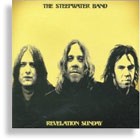
    The Steepwater Band’s 2004 release, Dharmakaya, was a very strong effort, and this is an equally strong followup. The band is a modern version of the classic rock trio many grew up loving. The boys also grew up on those bands, and their own music conveys lots of hard blues and country. They put it into a fine mix that, while sounding familiar, creates its own musical space.

    Guitarist/vocalist Jeff Massey powers these tracks with his big sound; the stomping “Mercy” has enough big, aggressive guitars to fill auditoriums for weeks. Throw in some wah and a little duet solo between Massey and drummer Joseph Winters, and you’ve got rock heaven. “Collision” offers up some of the variety that most trios never approach. It’s a pop-rocker with big-sounding slide and a subdued midsection with dreamy guitar that recalls 1971. “Steel Sky” is quintessential trio rock with a great lyric and slide that sounds bigger than the Grand Canyon. “Halo” is a ballad with a country feel and terrific bass from Tod Bowers. Massey gets to go solo on “Slow Train Drag,” where he unplugs and plays the country blues like he grew up on the Delta. The tune leads into “Indiana Line,” which opens with electric and acoustic guitar before yet another big slide solo. Massey adds a little more variety, with big double- and-triple-string bends and booming bass notes on the solo out.

    The Steepwater Band is one of the simple joys of music – just straightforward rock and roll, done with precision, passion, and soul.


    This article originally appeared in VG‘s Jan. ’07 issue. All copyrights are by the author and Vintage Guitar magazine. Unauthorized replication or use is strictly prohibited.
  • Jim Hall – Magic Meeting

    Magic Meeting

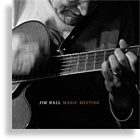
    This CD finds the legendary Hall in a live trio setting recorded at the Village Vanguard in ’04. The trio is Hall, Scott Colley on bass, and Lewis Nash on drums, and there are two things you notice right away: one is how good all the players are, the other thing is how well they interact. Hall, as always, is brilliant.

    The opener, “Bent Blues” is a perfect example. A beautiful chordal and single-line intro leads to a fine, funky feel. And I don’t mean funky in the same way James Brown does. It’s bluesy, and builds through several changes, with each player coming along for the trip. There are a couple of warhorses that get wonderful treatment from the musicians. “Skylark” lets Hall show his superb skills as a soloist. “Canto Neruda” is an amazing piece that almost sounds experimental is some respects – very dramatic, with Hall interacting with Nash as he pounds away in various ways, as Colley lays a melody over the top. The version of “Body and Soul” here is a perfect example of why Hall is a legend among jazzers. It’d be easy to play this in a pretty standard way, but his solo is fresh and unique. About 10 minutes in (and yes, it does hold your attention for the entire time) he sets up shop alone, and the result is nothing short of fabulous!

    If you have any interest in Hall or jazz guitar, this is for you. Age has not diminished his skills, and in fact he seems as adventurous as ever, and probably far more adventurous than most players half his age.


    This article originally appeared in VG‘s Aug. ’05 issue. All copyrights are by the author and Vintage Guitar magazine. Unauthorized replication or use is strictly prohibited.

  • Jefferson Airplane – The Essential Jefferson Airplane

    The Essential Jefferson Airplane

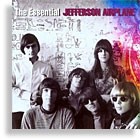
    Jefferson Airplane released eight studio albums between 1966 and ’72, then culled a live curtain call from its final tour before morphing into Jefferson Starship. Since then, there have been at least twice that many anthologies and compilations of the original band’s work. While not perfect, RCA/Legacy’s The Essential Jefferson Airplane provides a decent introduction to the band at an affordable price.

    The main problem with the two-disc set is the same as with so many other so-called “greatest hits” and “best of” collections. Instead of picking the best, most important material, labels invariably offer what are, in actuality, career overviews (which are not the same thing) – spreading the tracks across the entirety of an artist’s or group’s catalog. But even if that were the aim, short-changing the band’s debut, Jefferson Airplane Takes Off (which gets three tracks to five each from Surrealistic Pillow and Volunteers), is not only questionable, it’s unnecessary. Disc one clocks in at less than 50 minutes, while more than 78 minutes are packed onto disc two. A half-hour could have been added to the first disc!

    Takes Off may not have shot to #1, but it was a landmark album, and at the time the Airplane was easily the focal point of San Francisco’s Fillmore/Avalon scene – considerably bigger than the Dead or Quicksilver or Country Joe & The Fish. The 1966 album is represented here by “Blues From An Airplane,” “It’s No Secret,” and “Come Up the Years.” I can’t argue with any of those inclusions, but would add Paul Kantner’s rocking “Let Me In,” original female vocalist Signey Anderson’s solo vehicle, “Chauffeur Blues,” and the group’s recording of “Let’s Get Together,” which predated the Youngbloods’ hit version. There was a certain folkie charm to that maiden flight, and Jack Casady’s bass playing was nothing short of revolutionary.

    By the time Surrealistic Pillow was released a year later, rhythm guitarist Kantner and leader/vocalist Marty Balin remained, along with the adventurous bass/guitar tandem of Casady and Jorma Kaukonen, but Anderson left to start a family and guitarist-turned-drummer Skip Spence returned to his original instrument and formed Moby Grape. They were replaced by Grace Slick and Spencer Dryden, respectively. Justifiably, the sophomore effort, which produced two hit singles, merits five songs here; I’d actually add three more. “Somebody To Love” and “White Rabbit” (both Slick vehicles) are givens, as are Balin’s poetic ballad, “Comin’ Back To Me,” Kaukonen’s acoustic tour de force, “Embryonic Journey,” and “She Has Funny Cars.” But “Today” is another example of Balin’s pop melodicism, and while “Plastic Fantastic Lover” and “3/5 Of A Mile In 10 Seconds” show up in live incarnations on disc two, comparisons with their original studio versions would be illuminating.

    While the more psychedelic After Bathing At Baxter’s (released only 10 months after Pillow) reflected the changes that had occurred over the Summer Of Love, Balin’s pop sensibility was missing, as most of the songs were penned by Kantner or Slick – one exception being Jorma’s “Last Wall Of The Castle,” featuring his distinctive hummingbird vibrato and some flame-thrower fuzz.

    The group’s sound continued to get heavier, and while Kaukonen and Casady continued to shine, the songs weren’t as strong. Eventually, Jorma and Jack left to concentrate on what was originally a side project, Hot Tuna. For a mini time capsule, this is a good place to start. But I highly recommend the remastered versions of the first two albums.


    This article originally appeared in VG‘s Aug. ’05 issue. All copyrights are by the author and Vintage Guitar magazine. Unauthorized replication or use is strictly prohibited.

  • Supro Resophonic FolkStar

    Fiberglass. In 1961, it was a space-age material; lightweight, easy to mold, and super strong, it could be used for just about anything.

    Back then, neighborhood kids who liked guitars would hang out and listen to The Ventures’ Another Smash!!! while someone’s dad built a boat made of fiberglass. He’d lay the sheets of glass fiber in a mold and carefully brush on the resin to set it up. Little did they know that in Chicago, the folks at Valco were getting ready to do the same thing, but with guitars!

    Valco Guitars, Inc. traces its roots to Southern California in the 1920s, when it was known as National and introduced the first resonator guitars, designed by John Dopyera and Jim Beauchamp. When Beauchamp came up with an electric guitar design, National wasn’t interested, so he left to start Ro-Pat-In (with Adolph Rickenbacker) and produced the first commercially viable electric guitars in 1931. Ro-Pat-In soon became Rickenbacker. Electric guitars caught on, and National reluctantly got onboard in about ’35, after its merger with its own spin-off, Dobro, which in 1933 had introduced its All-Electric guitar. The Dobro All-Electric morphed into National-Dobro’s line of electric guitars and amps, which it called Supro. In ’36, National-Dobro began to relocate to Chicago, then the center of American guitarmaking. As the ’30s wound down, National-Dobro began to phase out resonator guitars in favor of more traditional acoustics and electrics. In ’42, the company changed its name to Valco Manufacturing Company, using the first initials of its three principals, Victor Smith, Al Frost, and Louis Dopyera. In ’62, the year of fiberglass, the name was changed again to Valco Guitars.

    The idea of making guitars out of fiberglass was Valco’s own, and the notion yielded some of the most colorful and interesting American guitars of the ’60s. Because of the way it is fabricated, fiberglass resin can be colored before being applied for setting, eliminating the need for painting after the guitar is molded. Valco called its fiberglass (or “fiberglas”) Res-O-Glas, described as being “Space Age Polyester Glass.” This new material was used initially on Valco’s Supro line.

    While these guitars appeared to be solidbodies, they were, of necessity, made of two pieces. As part of the styling, Valco also introduced another popular feature at this time – the wide “Gumby” headstock. While the necks remained magnesium-reinforced wood Kord-Kings, the headstock facing was, appropriately, often plastic. Many featured fancy Kluson Butterfly tuners with large plastic buttons.

    The first Supro guitars to be made of Res-O-Glas were shaped like Valco’s single-cutaway Ozark, with a cutout on the upper shoulder that set it apart from the Les Paul of its inspiration. New in ’62 was the Arctic White Martinique, with a bevel around the edges of the body, two regular single-coil pickups and a transducer under the bridge. Under the jet-black Martinique was the Coronado II, the same but without the under-bridge pickup. Next in line was the cherry red Bermuda, minus the body bevels. Finally, there was the sand-buff-colored Kingston, slab with one pickup. In ’63, the Bermuda acquired a nifty electronic vibrato and another model became Res-O-Glas, the cherry red single-cut Belmont. By ’64, the conversion to Res-O-Glas reached its zenith, with the stalwart Dual-Tone changing to Ermine White fiberglass, the metallic Wedgewood Blue Tremo-Lectric (replacing the Bermuda) and one-pickup Sahara 70, and Dawn-white White Holiday. Valco liked the idea so much it even converted many of its flagship “map-shaped” National electrics to Res-O-Glas, from the basic Newport to the Glenwood 99.

    All the Supro/National Res-O-Glas models were cool and unusual, but perhaps the oddest was a retro nod to the company’s past with the bright red 1964 S444 Folk Star, Valco’s first acoustic resonator guitar since before the War. “Featuring… Hootenanny’s Newest Star. Now in a modern Fiberglas body, Supro offers the famous grandpappy of Hill Country guitar music!” said the catalog. “The most powerful non-electric guitar of them all! The original self-amplified guitar. A beloved friend of the early folk/country artists.”

    The Folk Star had two halves joined in the center of the side with a white vinyl gasket. The top had a German-carve beveled relief around the edge, like the semi-solids. The Kord-King neck had the white-plastic-faced wide Gumby head, and Kluson Butterfly tuners. Under the chrome plate was a single resonator cone with a biscuit bridge. As on many other Supro models, the trapeze tailpiece was aluminum.

    The Supro Folk Star came only in red. Valco did make an Airline version for Montgomery Ward in black. As far as is known, no other colors were used.

    The Folk Star may have been a grandpappy of country music, but it sure as heck wasn’t the most powerful of all acoustic guitars! Alas, while fiberglass is relatively easy to manufacture, looks spiffy, and may sound okay as an electric, it sucks on an acoustic guitar, at least as Valco formulated it. The fiberglass on this example, at least, serves to deaden the sound of the resonator and kill sustain. It might make you look tres cool onstage with your cowboy hat, but don’t expect to make great music on it!

    The Folk Star actually lasted quite awhile, although whether or not it’s plentiful is unknown. In 1966, it was renamed the Vagabond, but that didn’t help. These lasted mainly because they had a bunch of unsold stock! By ’67, all of Valco’s Res-O-Glas guitars were history, replaced by a growing list of more traditional wood-bodied guitars. But by that point, it was pretty much academic. Valco had been sold to its accountant, Robert Engelhardt, in ’64, the year the Folk Star debuted. In ’67 (the year it exited) Engelhardt bought the mighty Kay company from Seeburg, the juke-box company, who’d purchased Kay the year before. This was probably to get Kay’s new state-of-the-art factory. Unfortunately, the market had gone soft, and in ’68, Valco/Kay closed its doors for good, leaving these space-age fiberglass guitars as part of its legacy!


    1964 Supro Resophonic FolkStar. Photo: Michael Wright.

    This article originally appeared in VG‘s Feb. ’06 issue. All copyrights are by the author and Vintage Guitar magazine. Unauthorized replication or use is strictly prohibited.

  • Danelectro 56 Pro

    More Solid Vibe

    Just a couple of years ago, music stores were having a hard time selling a new Danelectro guitar – the Dano reissue craze had run its course and dealers were selling them at cost. Then, Danelectro quit making guitars, opting to run with its line of effects pedals. Perhaps as a result, the once lowly-regarded guitars, especially the doublenecks, baritones, 12-strings and triple-pickup models, are fetching respectable money on the used market.

    Those prices, along with the fact that genuine vintage Danelectros typically cost well over a grand, may indicate that the Dano craze isn’t over just yet, or has been rekindled as more players realize that the instruments have a unique sound and vibe that so much other retro gear just doesn’t deliver.

    Amongst those who see the potential are the new owners of Danelectro/Evets, and at this winter’s NAMM show, they brought a solitary new model, the 56 Pro. Planned for production in limited numbers available through a limited number of dealers, the Korean-made instruments are a significant step up in terms of quality compared to the previous reissues.

    The new 56 Pro has features similar to the first reissues and true vintage Danos, such as a single-cutaway semi-hollow masonite top/back with a plywood center body, “lipstick tube” single-coil pickups, a clear pickguard, three-way pickup selector, bolt-on maple neck with rosewood fretboard, cast bridge with adjustments for height and intonation (seen on some of the later reissues but not the originals), and an aluminum nut. And the color pallet has remained very retro, with its Gold, Red, Black, Cr