Month: February 2007

  • Jeff Babicz Acute model

    Earful of Engineering

    Writing about new gear is a problematic situation when you’re called Vintage Guitar magazine. Fortunately, most of the gear we review is based on long-accepted concepts. Even the advanced technology of a modeling guitar or amp falls in line; the gear is designed to faithfully reproduce favorite sounds produced by instruments and amps of the past.

    However, every now and again, new thinking shakes things up. At least, that’s how I felt when I first saw a photo of a Jeff Babicz guitar.

    Babicz, whose experience includes engineering work in the semiconductor industry and nearly 10 years with Steinberger Sound, is no stranger to the introduction of new concepts in guitar design. Remember, Steinbergers are paddle-shaped, with no headstock, and feature a bridge/tailpiece/tuning system down where the paddle would hit the water when you’re paddling your pirogue with the thing.

    It’s just that kind of sarcastic response to change that Babicz faced when, after helping redefine solidbody electrics, he and partner Jeff Carano set out to give acoustic players something new to consider.

    The Babicz guitars (also available in the handcrafted Signature Series made with master-grade timbers by Babicz in New York) are not for the hardcore traditionalist, even though they feature commonly used tonewoods and recognizable body shapes. Babicz – guitarist, craftsman and engineer – has developed three radical patent-pending features that can be found on his handmade and production lines.

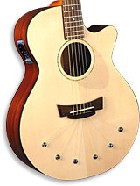
    Our review guitar is an Identity Series Acute manufactured in Indonesia. The Babicz models all have a smooth-operating mechanism at the neck joint that allows the “continually adjustable neck” to move up and down.

    The first time I checked out a Babicz guitar, Jeff actually raised the action by moving the neck down as I continued playing, with no perceptible change in intonation or string tension. Detuning to open D and lowering the 14-fret neck for a higher/slide action was simple and quick with the easily accessible adjustment wrench, mounted on the back of the headstock.

    A two-way truss rod makes the rest of the necessary neck adjustments easy. I noticed that the neck on the Acute was slightly out of longitudinal alignment, but it’s possible this could be reduced with a sideways adjustment of the next innovative feature.

    Babicz Guitars also feature a “torque-reducing split bridge.” The rosewood bridge is attached with a proprietary screw system that, when loosened, allows it to be moved incrementally to facilitate intonation adjustment. A string retainer is similarly attached, providing necessary down pressure. There are no bridge pins to lose, and the compensated saddle never has to be tinkered with for setup purposes, which are performed with simple neck and bridge adjustments.

    Most noticeably, the Acute utilizes an entirely new design in anchoring the strings, resulting in a uniquely different load distribution on the top. Each string is anchored with a lightweight piece of hardware near the rim, positioned so the strings fan out from the retainer. The design allows for an extremely light bracing pattern that features two longitudinal tone braces, cross-grained hardwood braces under the string anchors, and beefed-up braces around the moving neck joint. This guitar, with its “lateral compression soundboard,” displays much less top distortion due to string-related stress than more commonly accepted bridge designs, despite its delicate interior structure.

    The sonic result of Babicz’s design is a profound resonance and sense of air movement that is immediately apparent when the instruments are strummed or fingerpicked. The guitar seems to open up and blossom when the strings are struck. Chords fretted up the neck have an open-string dimension, and the hang time on a strummed chord in any position is long enough to do a little songwriting while waiting for the end of the note decay. Response across the frequency spectrum is even with an impressive volume. Although the Acute is not as penetrating when played up the neck in a single-note style as some acoustics, soloists will enjoy the flexibility afforded by the extra string length. Standard strings fit all Babicz models.

    The onboard LR Baggs iMix system offers an excellent range of sounds. Both the iBeam pickup and the under-saddle Element sounded good individually and blended, and the phase switch allows for great sonic variation. Only a fine microphone might better capture the airiness of the Acute. Too-tight string spacing was the only detraction from the pleasure of playing the Acute live: I couldn’t play a first position C or A-minor chord without my forefinger hitting either the open G or high E string. There is plenty of room on the 13/4″ plastic nut to widen the string spacing.

    Sitka spruce and Javanese rosewood, very similar in appearance to Brazilian, are joined together to form the mildly tapered Acute body, 191?4″ long, 151/16″ wide and 37/8″ deep at the tailblock with multi-layer purfling on the top and black binding on the neck and body.

    The mahogany neck of the Acute has a spliced-on heel and headstock with rosewood overlay, 251?2″ scale length, and a pleasing rounded shape. A few inadequately filled wood pores on the neck and back are visible, but that is also a sign that the urethane finish is nice and thin.

    The Babicz Identity Series Acute is outstanding in the categories of design, materials and workmanship and is a fine value for any musician brave enough to buy a guitar that stands outside the parameters of traditional design.


    Jeff Babicz Acute
    Features Continually adjustable mahogany neck, torque-reducing ebony bridge, lateral compression top of solid spruce, solid Javanese rosewood back and sides, optional LR Baggs electronics, Grover tuners.
    Price $1,395.
    Contact Jeff Babicz Guitars, PO Box 1007, Poughkeepsie, NY 12602; phone (845)542-0400; jeffbabiczguitars.com.


    This article originally appeared in VG‘s June ’05 issue. All copyrights are by the author and Vintage Guitar magazine. Unauthorized replication or use is strictly prohibited.

  • Rick Nielsen

    Rockford State of Mind

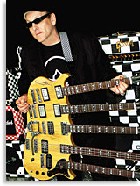
    One of the godfathers of the vintage guitar phenomenon, Cheap Trick guitarist Rick Nielsen was in an ebullient mood when he contacted VG… and not just because he’d acquired yet another five-neck guitar and a Guild he had been seeking for three decades.

    The release of the quartet’s new album, Rockford (Cheap Trick Unlimited/Big 3 Records), was imminent, and the axe slinger was upbeat.

    The album is titled in honor of the Illinois city where the band formed in the early 1970s. “I think that was (CT frontman Robin Zander’s) idea,” Nielsen said of the name. “And we immediately said, ‘Yeah, that’s good!’ Usually, there are months of negotiations about what’s right or what’s wrong with an idea. And you also try to find a title track; something cohesive like Dream Police. But our roots are here, this is where we honed our skills and our songwriting, and things have turned out pretty good.”

    Nielsen conceded that the album takes a back-to-the-basics approach, saying “…it’s the four of us, and we really produced the whole thing. But we did have other people working with us. It’s good to have somebody tell you ‘no’ or ‘yes’, but it was pretty much the four of us sitting in a room, bangin’ ’em out. We didn’t bring in the Mormon Tabernacle Choir; it’s just us.”

    The disc, he said, is a strong display of the songwriting skills of the band, which includes Tom Petersson (bass), Zander, and Bun E. Carlos (drums). “It’s diverse, like all of our records. It’s pop songs; some are kind of nutty, the others are kind of normal.”

    Contributors to Rockford‘s production included Linda Perry, Steve Albini, and Jack Douglas.
    “I think they’re kind of fans of ours, and we’re fans of them,” said Nielsen. “It’s fun to work with different people.”

    Rockford consists of 12 hook-laden tracks that contain all of the classic facets that have made Cheap Trick an enduring entity. Tight arrangements, roaring power chords, and soaring vocals are all over it. The first single, “Perfect Stranger” (produced by Perry and co-written by her and the band) is a prime example.

    “We did it at her studio. She’s a great engineer/producer/songwriter/singer…she didn’t even need us!” Nielsen chuckled. “We did a couple of things with her, and this one made the most sense. It wasn’t something we would probably have written ourselves, and I don’t think she would have written it that way, for her, either.”

    And while the album has the expected riffs or end-of-chorus guitar fills typical of Cheap Trick material, there aren’t a lot of stereotypical lead breaks.

    “I’ve always thought if a song needs a solo or a break, I’m never opposed,” Nielsen detailed. “But a solo for the sake of a solo is dumb, to me. That’s been the case with all of our albums, and I’m not a guitar god. But sometimes when we’re playing some of the new stuff live, I’m doing some things that I wish I’d done on the tracks. But that’s typical hindsight.”

    “O Claire,” which has a Beatlesque vibe, is the album’s closest thing to a power ballad.

    “We’re guitar/bass/drums/lead vocalist,” Nielsen explained. “If Robin also does all of the background singing, it sounds too perfect. If I did all the singing, it’d sound horrible! So it’s a mixture. That’s me singing the beginning of ‘O Claire’. I did the demo of that a long time ago, and the chorus was always too linear, but it now has some dynamics. The chorus Robin sings is the chorus I always wanted. As for being ‘Beatlesque,’ those are just the harmonies we do. We’re still a garage band, and always were, and I think it shows in a lot of the songs.”

    Among the acoustics Nielsen used on Rockford was a custom-made Martin. “Tom and I went to the Martin factory, and had some stuff custom-built,” he recalled. “I got a D-42 and a black-and-white prototype I liked.

    “I also used some Taylors, and a Gibson Hummingbird.”

    The album’s final track, “Decaf” starts and ends in unique fashion, and if you listen closely, you’ll hear the chord progression – D, E, C, A, F.

    Rockford is a strong effort from a band that has accumulated a third of a century of experience. Our conversation wrapped up with Nielsen’s take on a recent performance by Cheap Trick on “Late Night with Conan O’Brien” in May, when the program was broadcast from the Chicago Theatre. The band tore through a rip roaring version of “Surrender,” with Nielsen playing a 1959 Gibson Les Paul Standard while Petersson provided the band’s foundation with his trademark 12-string bass.

    “Conan asked us to do ‘Surrender’” Nielsen recalled. “He’s a guitar lover – a Gretsch guy. And I asked if he’d ever played with a band, and he said, ‘Just Bruce Springsteen.’ I told him, ‘He’s too serious. Come on with us!’”

    At the end of the song, O’Brien charged onstage with a black Gretsch, did a looping somersault, crashing to the stage. While it was difficult to determine whether the guitar was damaged, thousands of guitar aficionados across the country likely shrieked in unison.

    Undaunted, Nielsen then strapped on one of his Hamer five-neck monstrosities (four necks with six strings, plus a 12-string) onto O’Brien. Was he worried O’Brien might attempt more gymnastics? “Whatever. It’s insured!” Nielsen said. “And I got a third five-neck last year that Hamer made out of korina. It’s got a mandocello neck, so it has 38 strings, as opposed to 36!”


    Rick Nielsen photo: Mike Graham.

    This article originally appeared in VG‘s Sep. ’06 issue. All copyrights are by the author and Vintage Guitar magazine. Unauthorized replication or use is strictly prohibited.
  • The Domino Kings – Some Kind of Sign

    Some Kind of Sign

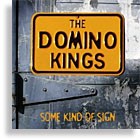
    Despite personnel changes, The Domino Kings continue to offer some of the finest traditional country music you’ll hear. Stevie Newman, Les Gallier, and Richie Rebuth all play guitars here, while David Sowers handles bass. Like the CD, the guitar parts are short and to the point – a lesson players (and writers) in many genres would do well to heed these days.

    “Some Kind of Sign” kicks things off just like you’d want them to be kicked off – punchy, tremeloed chords and breakneck solos push it along. Check out the chromatic lick toward the end. Whew! There’s plenty of honky-tonk twangers here that sound great, too. “Walk Away if You Want To” and “It’s All Over But the Crying” are two-step heaven. The big, fat solo sound on the latter is an unexpected treat. “Pain In My Past” is a fun samba, the kind the Mavericks sort of made their own. Here the guitar work features double- and triple-stops guaranteed to bring a smile to your face. “A Million Miles From Here” is an acoustic country tune with twangy double-stops and fine stringbending.

    Lyrically, things generally deal with relationships, except for the finale, “Bridges I’ve Burned.” It’s the extremely heavy tale of a killer, bound for the electric chair, recounting the sorrow he has caused. The big guitar solo fits the somber mood of the tune.

    Fans of country music will love this. Guitaraholics, too. Great care is taken to make sure all the string work fits the tunes, and sounds great.


    This article originally appeared in VG‘s Dec. ’05 issue. All copyrights are by the author and Vintage Guitar magazine. Unauthorized replication or use is strictly prohibited.
  • The Gibson Brothers – Red Letter Day

    Red Letter Day

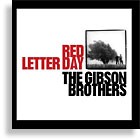
    Not a lot of bluegrass musicians hail from New York; there’s Dr. Banjo (Peter Wernick) and Mr. Mandolin (David Grisman), but after them the list gets short. The Gibson Brothers are New York natives – upper New York State, to be precise – and together they create their own hotbed of bluegrass.

    Red Letter Day marks the Gibson Brothers’ third Sugarhill release, and it includes two original tunes by Eric Gibson and three by Leigh Gibson, joined by other songwriters including Don Gibson, Kieran Kane, Bruce Robison, Chris Knight, Mark Howard, Ray Charles, and Bobby Womack.

    Converting R&B and rock and roll songs to bluegrass is nothing new. But the Gibson Brothers’ explorations of other genres, such as Ray Charles’ “I’ve Got a Woman,” have the same level of authenticity as the brothers’ originals.

    At the time Red Letter Day was made, the brothers’ band was going through personnel changes. Fiddle player Clayton Campbell and mandolinist Rick Hayes joined just after the recording session dates. For the session itself, the Gibsons brought in Ronnie McCoury on mandolin and Jason Carter on fiddle, both from the Del McCoury band, along with percussionist Sam Zucchini, steel guitarist Russ Pahl, Josh Williams and Marc MacGlashan on other mando parts, and Andrea Zonn on vocals. Long-time bass player Mike Barber served double duty on bass and as co-producer.

    On Red Letter Day, Eric Gibson plays all banjo parts, as well as some guitar, while Leigh plays strictly guitar. Their vocal styles draw on the dual-lead vocal traditions pioneered by the Delmore Brothers, but with a unique twist. Born within a year of each other near the Canadian border, their voices have distinct Canadian inflections reminiscent of the great vocalist Ian Tyson of the pioneering folk duo Ian and Sylvia. What is a Canadian singing style? Listen to this, and you’ll here it – straight, unadorned, and with a precise vocal attack. Perhaps it comes from playing hockey at too early an age? But if you want to hear what great Northeastern bluegrass sounds like, Red Letter Day is the place to start.


    This article originally appeared in VG‘s Nov. ’05 issue. All copyrights are by the author and Vintage Guitar magazine. Unauthorized replication or use is strictly prohibited.
  • Geezer Butler

    Sab Aside

    Known for holding down the low-end for Black Sabbath, Terence “Geezer” Butler is usually busy with his band GZR whenever the Sabs go into stasis. A quartet with a sound more modern than Sabbath, GZR recently released Ohmwork (Sanctuary). Butler is originally from Birmingham, England, and like many bassists, he started as a rhythm guitarist.

    “I had my first guitar when I was 11, and it took me two years to figure out how to put my finger on the string to change the notes,” he said with a laugh. “After I discovered that, there was no looking back! I started out on a Rosetti, and progressed to a Höfner. The very first bass I had was a thing called a Top Twenty, which no one had ever heard of – and I haven’t seen one since. I exchanged that for my first Fender Precision. All of the paint had been taken off of it. In those days, if you had an old bass, you either looked like you couldn’t afford a better one, or you weren’t serious. So I traded it in on a brand new Fender.”

    The liner notes of 1972’s Black Sabbath Vol. 4 show Butler playing a short-scale Ampeg Dan Armstrong plexiglas bass, the acquisition of which happened by accident. “We were on tour in America, and had flown from Detroit to Toronto on a Sunday. When my bass came through customs, we found that someone had opened the case and smashed it with a hammer. I was panicky, because at the time there were no music shops open on Sunday. The promoter knew a guy who owned a shop, so he met me there, and the only reasonable thing he had was the Dan Armstrong. So I bought that and played it for a while.”

    He also began a relationship with Birmingham builder John Birch, and his first acquisition was a solidbody, single-cutaway bass with crucifixes as fret inlay. Butler recalls that instrument as being an eight-string, and he had several other Birch-made instruments. He also used B.C. Rich basses.

    The largest crowd Black Sabbath ever played for was the first California Jam, in 1974. Butler described the view from stage as “…like lookin’ at the sea. But once you get onstage, it’s really all the same whether it’s 10 people or 10 million.”

    At that time, the band tuned to D. “You could only tune down so low before (the bass string) would start flopping all over the place,” Butler observed. “And it would depend on what bass I’d choose. That’s why I hardly ever use my vintage Fender these days.”

    GZR’s first album was 1995’s Plastic Planet, followed by Black Science in ’97. As for the sound of the new album, Geezer tends to eschew a description of Ohmwork as “modern metal.”

    “I wasn’t trying make it like some of the new metal or some of the extreme stuff,” he explained. “I just wanted more the album to have more of a hard rock feel than a metal feel. But it sounds modern in some ways.”

    Some listeners, as should be expected, will be comparing GZR material to Black Sabbath, and the introductory riff to “Misfit” as well as the dirge-like “Alone” are fodder for such comparisons.

    “That’s just my natural way of writing,” Butler said. “I’m not really conscious of doin’ it, and everybody who was in a band always gets compared later to the whole band, like McCartney always getting compared to the Beatles.”
    One of Geezer’s favorite tracks is “I Believe,” which includes vocals by his son, Biff.

    These days, Butler relies on a Lakland bass as his primary instrument, but the purchase of a vintage bass first called his attention to the new American brand.

    “I was in London,” he recounted. “And I went down to the Bass Centre, because they had an all-original ’64 (Fender) Jazz Bass. As I was buying it, I noticed a Lakland; it looked well-made. I picked it up and plugged it in, and I loved the sound of it. I thought it sounded like an old Fender and had a really good tonal range, but it didn’t have the problems some old Fenders can have – parts, stayin’ in tune… I’d never heard of it, and the guy in the store said it was made in Chicago. When I got home, I called ’em up. I think this was just before the Ozzfest 2000 tour, and they asked me if I could come to the factory; if not, they could bring one to me. They brought one to our gig in Chicago. I was playing Vigier basses at the time, which were great live, but I couldn’t use them in the studio because they were active, and so powerful. I was trying to get away from the active thing, and my Lakland’s passive. It has a pure sound, what I’d call a nice old growl.”

    Ohmwork was recorded in a St. Louis studio near St. Louis Music, the wholesale distributor that owns several gear lines, including Ampeg. Butler acquired new Ampeg bass combos, and used a Line 6 Pod on a handful of settings. The album was being mixed as the lineup for this summer’s Ozzfest was finalized, and it included Black Sabbath. Accordingly, plans are being made for GZR to tour later this year and into early next year. Beyond that, Butler has plans for other songs written for Ohmwork to be used on future albums or posted on the band’s website.

    Whether with GZR or Black Sabbath, Butler provides a distinct, always powerful low-end style.


    This article originally appeared in VG‘s Aug. ’05 issue. All copyrights are by the author and Vintage Guitar magazine. Unauthorized replication or use is strictly prohibited.
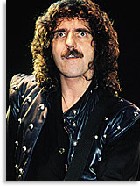
  • Davie Allan & the Arrows – Apache ’65, Blues Theme, & Cycle-Delic Sounds

    Arriving just after instrumental surf music was dealt a knockout punch by the British Invasion, Davie Allan survived against all odds, providing numerous soundtracks to biker and teen exploitation movies and hitting the charts with a remake of the Shadows’ “Apache” and his fuzzfest “Blues Theme.”

    Allan has remained active throughout the decades, but has seen a renewed visibility in recent years, with Sundazed issuing a two-CD retrospective and a new collection, Restless In L.A., and Miami Steve Van Zandt signing him to his label (a Christmas collection is expected this year).

    Sundazed has just released three of his Mike Curb-produced albums on CD, each with two or three unreleased bonus tracks. Apache ’65, from 1965, is the most traditional, with blistering originals like Curb’s “Tee Pee” juxtaposed against easy-listening fare like a tremoloed take on “Red Roses For A Blue Lady.” Ex-Belair Paul Johnson’s distinctive rhythm playing can be heard on “Commanche,” Allan breaks out the fuzz only once – on Travis Wammack’s “Scratchy.”

    By the time of 1967’s Blues Theme, the King Of Fuzz had arrived – on the blistering title cut, from the B-movie Wild Angels, as well as “Fuzz Theme,” “King Fuzz,” and the wild, whammied “Action On The Street.” Also included are a clever take on the William Tell Overture, an electric 12-string version of “Ghost Riders In The Sky,” and a previously unreleased (and possibly the goofiest) version of “Theme From A Summer Place.”

    But 1968 saw Allan’s most ambitious work. As its title implies, Cycle-Delic Sounds merged the Arrows’ biker fuzz with psychedelic, with the six-and-a-half-minute title freakout kicking things off. Wah-wah was added to the arsenal, and Davey explored more dissonant territory and more advanced sound effects and production techniques.

    Sure, some of this sounds a bit dated, but hey, so does, “My yellow in this case is not so mellow.” Because it’s all instrumental, Allan’s workouts actually stand the test of time better than many of his vocal contemporaries of the period.


    This article originally appeared in VG‘s Nov. ’05 issue. All copyrights are by the author and Vintage Guitar magazine. Unauthorized replication or use is strictly prohibited.
  • Robert Cray – Twenty

    Once every couple of years, Cray puts out a well-crafted record with fine writing, guitar solos that ooze soul, and vocals that rank with the best. No change here. Twenty should make plenty of “best of the year” lists.


    This article originally appeared in VG‘s Nov. ’05 issue. All copyrights are by the author and Vintage Guitar magazine. Unauthorized replication or use is strictly prohibited.
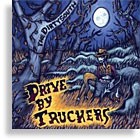
  • Drive By Truckers – The Dirty South

    The Dirty South

    I confess, these good ol’ boys have become one of my favorite rock and roll bands. There double-disc opus, Southern Rock Opera , was one of my favorite records from the past couple of years. It’s a tribute, in effect, to Lynyrd Skynyrd, and parts of the South. With the band’s latest, the South rises again. But they aren’t a bunch of simple, beer-swilling, boogie rockers. Instead, the songs are thoughtful and, for the most part, loud, ruminations on that part of the country and what it means to them.

    There are several subjects that their records have always liked to deal with. Weather is strong influence. “Tornadoes” is a slow rocker with dreamy, ethereal guitars that fit the story. “The Day John Henry Died” is a unique take on the Industrial Revolution set to a rollicking country-rock feel. “Puttin’ People on the Moon” makes a social statement, but makes it very personal. Wild guitars bring the point home. Cars make an appearance, metaphorically and physically. “Carl Perkins’ Cadillac” has rambling 12-string and uses the car as a metaphor for the early music business. “Daddy’s Cup” is gearhead heaven (car, not guitar) about a kid who inherits his father’s love of racing cars. Sheriff Buford Pusser also makes a couple of appearances. Just one thing, though. If you think of him as a hero, you’ll have a bit of an argument from the Truckers. It would have been nice if participants in this year’s Presidential race had acted like the family members in the marvelous “The Sands of Iwo Jima.” Truth meets hyperbole.

    Sound-wise, the band is sometimes loud, sometimes subtle, but always interesting. Flying Vs meet acoustic guitars, and both come out winners. Vocally, the singers are unique, and squeeze every ounce out of brilliant lyrics.


    This article originally appeared in VG‘s Feb. ’05 issue. All copyrights are by the author and Vintage Guitar magazine. Unauthorized replication or use is strictly prohibited.
  • Chicago Blues Box Kingston 18

    Goin' Back to Chicago...

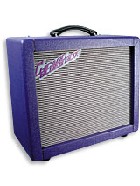
    The latest creation from Dan Butler, of the Chicago-based Butler Custom Sound, is the Kingston. Available in 18- and 30-watt configurations, the Kingston is 1x 12 combo that features a Tone Tubby Brown Soun 12″ speaker, long-tank spring reverb, and has the ability to use a variety of output power tubes. The Kingston has inherited heavy duty construction and top-quality components from the Roadhouse, but in a smaller (20″ x 17″ x 9″), lighter (36 pounds) package. The pine cabinet features fingerjointed construction with a top-mounted stainless steel chassis with a hand-wired circuit employing Forbon eyelet boards, heavy-duty transformers, custom-made 1-watt resistors, and silver-plated wire. The Kingston’s all-tube circuit includes a 5AR4 rectifier, three 12AX7s in the preamp (one driving the reverb circuit), and two TAD 6L6 power tubes. The amp can also use a pair of 6V6s, 5881s, or EL34s (with proper re-biasing), and they don’t have to be a matched pair, since the amp incorporates dual bias controls (one for each power tube). In fact, you can mix and match power tubes (i.e. put a 6L6 in the first socket and an EL34 in the second socket), as long as the bias is set for each tube.

    Controls on the Kingston include High- and Low-gain 1/4″ inputs, Volume, Bass and Treble controls, a Bright switch, and a switch for Harmonic Boost, Reverb, as well as the standard power and standby switches. Other notable features include an 18′ heavy duty power cord, extra large rubber feet, a 4-ohm external speaker output jack and a slave 1/4″ output jack with a padded speaker signal for running into another amp or processor.

    Besides sharing the Roadhouse’s bullet-proof build, the Kingston has the same cool hot rod aesthetics and vibe. The combination of purple tolex, black piping and handle, salt-and-pepper grillecloth, purple mother of pearl inlay Q-part knobs, and purple jewel light, give it a distinct, well-conceived appearance that commands the popular response, “What a cool looking amp!”

    But do those good looks equate to good tone? With our Fender Relic 1960 Strat and PRS McCarty in hand, I set out to see. With the Strat plugged into the high-gain input and the Tone and Volume controls set at straight up 12 o’clock, I discovered a clean, full tone with punchy midrange with just a hint of overdrive if I picked aggressively. Flipping the Bright switch added sizzle to the highs that brought out the Strat’s famous bell-like single-coil tones, while the Harmonic Boost switch not only added gain, but a bit of vigor to the amp’s entire audio spectrum – highs, mids and lows. The Treble control acted more like a midrange the further I turned it up, adding upper mids, while the Bright switch handled the highs. Like the Roadhouse, the Kingston responds exceedingly well to pick attack and a guitar’s volume and tone controls. There was no need to keep going to the amp to tailor my sound – I could do it all at the guitar.

    Playing through the PRS humbuckers required dialing bass down a touch, to keep the speaker from bottoming out when driving the amp hard. The absence of a master volume means the Kingston has to be pushed hard to get its max overdrive tones; its 18 watts of output do get loud, but not uncontrollable or unfriendly onstage. Even cranked, with the Harmonic Boost switch on, and attacking pretty hard with my pick, the amp didn’t get overly distorted, which means it’ll serve up good blues overdrive with focused overtones.

    To add more serious sustain and push, we dropped a Home Brew Electronics Power Screamer overdrive pedal into our signal chain. The combination of the PRS, the Power Screamer, and the Kingston produced an outstanding, very musical distortion that maintained note separation and clarity while spewing all the sustain and controllable feedback we wanted. Again, as with the Strat, I could clean up the PRS and soften the tone with just the volume and tone controls on the McCarty, so the lack of a master volume or channel switching isn’t a major concern with the Kingston. The tube-driven reverb has a snappy, shimmering sound, though it’s equipped with a slightly touchy depth control that could perhaps benefit from a potentiometer with a different taper. Still, the reverb is mere icing on the cake for the Kingston’s excellent tone.

    The Kingston sounds as good as it looks, and with its straightforward design and rock-solid tone, it’s no wonder it and its CBB stablemates are being played by the likes of Ric Hall and his boss, Buddy Guy, as well as Omar Dykes, and Henry Garza of the Los Lonely Boys.


    Chicago Blues Box Kingston
    Features Hand-wired all-tube circuit with 6L6/6V6/5881/EL34 capability, 18 watts output, spring reverb, Tone Tubby Brown Sound 12″ speaker.
    Price $2,400 (retail).
    Contact Butler Custom Sound, 770 N. Church Rd, #I, Elmhurst, IL 60126; phone (630) 832-1983; chicagobluesbox.com.


    This article originally appeared in VG‘s Oct. ’05 issue. All copyrights are by the author and Vintage Guitar magazine. Unauthorized replication or use is strictly prohibited.

  • David Lindley

    String Theory

    If David Lindley played just one of the stringed instruments in his arsenal, and concentrated on just one of the styles he has mastered and/or mutated, he would doubtless be considered one of the best and most original practitioners of that one thing.

    Instead, over the past five decades he has studied, investigated, incorporated, and become an original, prominent voice in styles spanning the globe, on so many instruments he lost count long ago. In the process, he has expanded the parameters of popular music, stylistically and instrumentally, to a degree that few, if any, can claim.

    In hindsight, Kaleidoscope, the band the ex-banjo champion formed in the mid 1960s, was possibly the first “world music” band, decades before the term was coined. But then as now, Lindley & Co. deftly walked the fine line between traditional and iconoclastic. It would not be unusual for an evening with Kaleidoscope’s five multi-instrumentalists to include extended Middle Eastern ragas, bluegrass, ultra-distorted blues guitar, what sounded like an electric guitar being played with a violin bow (because that’s exactly what Lindley was doing), Celtic ballads, Tin Pan Alley, and a bit of flamenco for good measure, complete with a troupe of dancers. It’s no wonder Jimmy Page has been quoted as regarding Kaleidoscope as “my favorite band of all time.”

    As the ’60s came to an end, so did the band, after four albums. Lindley soon became an in-demand sideman, first for singer/songwriters Terry Reid and Jackson Browne, and then for – well, everybody. Acts like Linda Ronstadt, James Taylor, and Crosby & Nash would literally plan tours around when Lindley would have breaks between dates with Browne, whose sound is indelibly stamped by Lindley’s sensibilities (and especially his fat-toned lap-steel slide) to this day.

    All that activity kept Lindley on the road 300-plus days a year, yet he somehow managed to fit in session work with a lengthy and varied list of legends – Rod Stewart, Warren Zevon, Dolly Parton, Bob Dylan, Maria Muldaur, the Youngbloods, Danny O’Keefe, Lonnie Mack, Little Feat, Joe Walsh, Jennifer Warnes, Duane Eddy, Aaron Neville, Taj Mahal, Patti Austin, Carlene Carter, David Bromberg, Holly Cole, John Sebastian, Ziggy Marley, the Blind Boys Of Alabama, Ben Harper, Marshall Crenshaw, the Bangles, and a Go-Go or two, to name a few, to date.

    The beginning of the ’80s marked another shift, when he left Browne, who produced Lindley’s first solo album, El Rayo-X. The title became the name of the backup band he formed to take on the road – perfectly suited to his eclectic but rocking repertoire, the pinnacle of which was undoubtedly his pedal-to-metal version of “Mercury Blues,” which later became a countrified hit for Alan Jackson.

    By this time known as the King Of Polyester, for his garish outfits and cheapo electric guitars, Lindley pared the instrumentation down to strings (playing guitar, bouzouki, saz, mandolin, fiddle, banjo, Weissenborn Hawaiian steel, and, more recently, oud) and percussion (first Hani Naser, then Wally Ingram – the latter helping earn the pair the nickname “The Beavis & Butthead of World Music”). He also traveled to Madagascar with avant guitarist Henry Kaiser, to record three CDs with local musicians.

    Lindley’s songwriting also flourished, often proving that a serious musician needn’t take himself too seriously, with such classics as “Catfood Sandwiches,” “Sport Utility Suck,” and “When A Guy Gets Boobs” sitting comfortably alongside moving renditions of Little Village’s “Do You Want My Job” and Warren Zevon’s “Play It All Night Long” – all sung in a “high lonesome” voice owing to Mr. Dave’s bluegrass roots.

    Lindley decided to steer clear of record labels and market his own CDs, which he’s been extremely successful at, on his website and at gigs. His latest release is a two-disc set of the Cooder/Lindley Family Band (with his longtime partner, Ry Cooder, sharing string chores; Ry’s son, Joachim, on percussion; and David’s daughter, Rosanne, on vocals), recorded live in Europe a decade ago.

    And these days he has distilled his live shows down to the very essence: one man and one instrument (at a time). Just pure David Lindley – no additives necessary, with all the oomph and nuance intact.

    Vintage Guitar: For most rock musicians around now, even a lot of the middle-aged ones, rock and roll was always there; it was something that had already happened by the time they had much musical awareness.
    David Lindley: I’m 62. So I remember the advent. I remember Bill Haley & the Comets, and my parents becoming very upset. And the Everly Brothers, who were my favorites. But I’d bring Little Richard records home, and my parents would say, “I don’t know about this music. These hoodlums with their haircuts!” But I had all those 45s, and I’d say, “Hear that band? The way that sounds? I don’t know what that’s called, but I love that.” That’s rock and roll and all that stuff, but it’s some other thing that I just ate up.

    Before that, what did you listen to?
    There was cowboy music. I loved western music, like Sons Of The Pioneers. Not bluegrass, not hillbilly music; it was Gene Autry, Doye O’Dell, Iron Eyes Cody and Tim McCoy. I loved it. Because all kids, when you’re seven or eight, want to be a cowboy. Then I can remember going up to KXLA, at Cliffie Stone’s “Hometown Jamboree.” I’d go up there and see Speedy West play. His steel guitar just mystified me. And Joe Maphis! He was a killer tenor plectrum banjo player. I played with him on a couple of banjo albums.

    Do you remember at what age you either realized that you had an aptitude for music or someone pointed it out to you?
    Oh, I felt it when I was three and four. I felt it, and I could hear it. My hands were very little, so I played violin for a while like a cello, when I was small. And like all kids, I banged things out on piano. At one point in fifth grade, I remember they wanted someone to play upright bass; I looked at the instrument, and I knew I could play it. All of a sudden, you’ve got a lot of room in your head. That’s the best way to describe it.

    My first-grade teacher played guitar, and I looked at that and said, “It looks like my dad’s ukulele. I can play that, too. The strings are just bigger.”

    Sometimes you watch somebody do something, and you know you can do it. I could run hurdles the first time – I knew what I was doing. So they put me in the 120 low hurdles.

    It’s hard enough to be able to play a bunch of different instruments, and even to cross-pollinate techniques – and then to cover such a range of styles. But it’s something else to have that all come out as a recognizable voice.
    Yeah. I don’t know how that happened. I guess it’s the limitations that make that. I liked different instruments and messed around with them. But I got to watch that when I was starting to play. It was Mike Seeger. He played all different kinds of instruments. With the New Lost City Ramblers was one thing, but when he did a solo show he played all these different kinds of things. Then there was Sandy Bull and before him a guy named Mike McClellaen. He played the Ash Grove and won a lot of banjo contests. Banjo, 12-string, Dobro, Hawaiian guitar, mandolin, autoharp – he was scary. I got to watch this guy play at Cat’s Pajamas in Arcadia. I played in bluegrass bands off and on with Mike, and I learned a lot. I took a couple of banjo lessons from him. He was a huge influence on the stuff that I did and the multi-instrumental aspect of it.

    He used to hang out at Charles Chase’s Folk Music Center in Claremont. Charles and Dorothy Chase’s daughter, Ellen, married Leonard Harper, and they’re Ben Harper’s parents. I went to school with Leonard Harper, and Ben went to school with Rosanne.

    Taj Mahal used to come out there, too; he’s another multi-instrumentalist. That was part of that whole traditional music scene in Los Angeles. We got to sit down with Mississippi John Hurt, with Doc Watson, Bill Monroe, and his band! Or going to the Renaissance Fair with Mance Lipscomb. I did that! We were sitting up on a hill; I was dressed as a monk; he was blown away. I remember it clear as a bell – him sitting there with his teeth out, having a big cup of wine, saying, “You know, it’s sure nice to see all the young people having such a good time.” I’ll never forget that as long as I live [laughs]; it was really amazing. Back then in L.A. you could hang out with these people.

    You came out of a folk scene, which led to Kaleidoscope, which may have been the first “world music” band. Did you have to seek that stuff out, or was it readily available?
    Actually, it was. There was a folk dance movement, with music from Bulgaria on the Nonesuch label. That was hugely popular. It was so wonderful, in and of itself, with weird stuff in time signatures like 7 and 9. “Well, there must be more of this.” So it leads you to Turkish stuff and Yugoslavian – or, “Oh, Italian bagpipes! Holy crap, they have two chanters and play in harmony!” The minute the gun goes off, and you get out of the box – that’s the way it worked for me. I was constantly exposed to all kinds of music through my dad’s record collection.

    And my first-grade teacher played guitar and sang songs. Then the Kingston Trio came along. Then my brother bought some banjo records. And once you get into the banjo, you’re lost. Eventually, I was playing fiddle and banjo and guitar – and on the edge of flamenco guitar. The first banjo the Kingston Trio played was an S.S. Stewart; that’s what got me going. I got a plectrum banjo and had a Pete Seeger neck put on it.

    What’s different about a Seeger neck?
    It’s longer, with an extra two frets. He designed it so he could play in different keys, and then use a capo on it. Then Vega started making them – the Vega Tubaphone. I liked that, but I like resonators, and I like bluegrass – like the Gibson Mastertone. It’s one of those things where you want to hear a certain sound – that search. You get obsessed.

    People always make fun of the “Folk Boom” and refer to it as the “Folk Scare” –
    A Mighty Wind. I love that.

    But [filmmaker] Christopher Guest knows that idiom and was part of it. It was a loving satire, but it was accurate.
    Very accurate. It was “ethnic folk music,” and then there was “commercial folk music.” Those were the terms used. Ethnic folk music included bluegrass, blues, all non-electric stuff. Electric blues was not tolerated, unless it was Lightnin’ Hopkins with a pickup on it. Then there was the Kingston Trio, Peter, Paul & Mary, the Limeliters, Bud & Travis. And the New Christy Minstrels, who were very commercial.

    That’s almost a pop version. But the other stuff that was commercial because it became popular, like the Kingston Trio –
    They were doing all kinds of stuff. And then you had Harry Belafonte, and Theodore Bickel was real important. It was everywhere, if you looked. Another guy who was real important was Josh White – played a Martin. There were so many different facets and camps. People like John Jacob Niles, Jean Ritchie, and the real Appalachian stuff; then you get down to Roscoe Holcomb and Snuffy Jenkins. There are a couple of albums I still have, on Folkways, by Roscoe Holcomb and J.E. Manier’s Mountaineers – and Fiddlin’ John Carson and Gid Tanner & The Skillet Lickers. It’s like O Brother, Where Art Thou?

    All through that period I listened to everything. I also listened to Sabicas and Muhammad al-Bakhar, who had these strange ouds and made these belly-dance records. I got to see him play at a club called the Fez, in Hollywood, and that really got to me. And I’d play oud-like stuff on the banjo and the classical guitar. When I met Solomon [Feldthouse, a Kaleidoscope bandmate] and he was playing the oud, I thought, “Uh-oh, that’s all I’ll do.” Same with pedal steel. “This will possess my brain.” I wanted to do a lot of other stuff. Then I started playing with Kaleidoscope first, then Terry Reid and Jackson and El Rayo-X, and all that stuff, and the slide came in. All the way back to Kaleidoscope, when I saw [blues lap steel player] Freddie Roulette with Charlie Musselwhite; I said, “That’s it! I want to do that.”

    Then I got into the saz, big-time, and saz-like instruments. A tambur saz has a shorter neck. I’ve got one with nine strings, made by David Dart. This one has three sets of three: Fff/Ccc/Ggg. Each set has a low octave string, and on the outside are the melody strings. It sounds like an entire band. The tuning was Ergun Tamer’s idea. It’s got a koa-wood bowl and sitka spruce top. Koa is an acacia tree, and the Ark of the Covenant was made out of acacia, so it is quite appropriate that Middle Eastern instruments be made out of koa.

    In Kaleidoscope, Solomon played saz sometimes.
    Yeah, I hadn’t played it, and he let me play his sometimes. The one that he had was like a master’s instrument. Incredible. A monster instrument. Solomon had a DeArmond contact mic held onto it with a rubber band. That’s what we all did back then, before we got into Barcus-Berry. I knew Les Barcus really well. I have the first stick-on Barcus-Berry guitar pickup, #1. That changed everything. And then Dan Armstrong had the Earthquake Sensor, which I still have a bunch of. It was a little brass disc you got at Radio Shack, with a piezo element in the center. We used to put those in bouzoukis. I have one on my divan saz.

    There are different sizes of saz: divan, cura, baglama, tambur, and medan, which is the big one. Then there are different kinds of sazes that are big body and short neck, instead of the other way around. Four-course, eight-string sazes are kind of rare. For a while, the bouzouki and the saz were the same instrument.

    Are the tuners on your sazes geared?
    No, the ones I play now are friction pegs, like violin pegs.

    Doesn’t that cause problems?
    Yes [laughs]! The two sazes I have that are killers both have violin pegs.

    And a saz has irregular fret spacing.
    Right, the scale. In Middle Eastern music, there are more tones than in western music, so they’re set up for that, and the frets are moveable. Some sazes I’ve seen with longer necks have everything you need, and all the variations. The spaces are almost nothing. It’s like a forest; you can get lost. In fact, one of the greatest players, who’s the head of Ethnomusicology at U.C.L.A., is Jihad Racy – and he had more frets on that thing than anything I’d seen in my life. He had them color-coded. They’re nylon; he’d get them at the fishing shop. What I use is serving material for a bow string.

    You mean as in bow and arrow?
    Yeah. And that stuff is black nylon monofilament – the same as all the sazes I’ve seen from Turkey, where archery is huge. I’ve put more frets on, used tied frets on the bouzouki, metal frets – just to get those tones. I got to where the Western scale, the guitar scale, was alien to me for a while.

    David Hidalgo said you gave him an oud.
    Yeah, a Turkish oud – great-sounding. He’d probably be the best oud player in the world. I saw him do a thing, playing the cuatro, cross-picking with the bent wrist. I said, “There’s the greatest oud player in the world. Doesn’t play oud. He should have one – a Turkish oud.” It’s a shorter scale, and the body is smaller – as opposed to the Egyptian or Syrian or Iraqi.

    How is an oud tuned?
    The Turkish oud is tuned, from the lowest, E-A-B-E-A-D. And then there’s another version of that that’s a whole-step down. You have a major second between the fifth course and the fourth course, so it’s [sings ascending] I-IV-V. It’s like courses on a lute. And then you have fourths on the top.

    There’s another tuning that’s fourths all the way across. That’s called conservatory tuning – a Turkish tuning. It’s great; it’s symmetrical. Allan Holdsworth had a guitar tuned that way, as well as Stanley Jordan. A lot of people have played in all fourths. Munir Bashir, one of the greatest oud players who ever lived, would put a bass string on the first course. “What is that?

    Who made your solidbody oud?
    Viken Najarian. Hani Naser told me about him after seeing him at a NAMM show. The original Najarian was a frame, like a practice violin, with a centerpiece with the neck attached to that, and then the outline of the shape. Beautifully designed, made out of mahogany. It has a bridge that’s a cross between a traditional oud and a classical guitar – so you can put a Barcus-Berry on it. I put that through a little loco-distorto amp, like a blackface Bassman top and a Dumble bottom; it was the nastiest sound I ever heard in my life. I brought it to a thing I was doing with Ry. “Oh, there ya just do go! I’ve got to borrow that.” He did a bunch of stuff for a soundtrack; I had to almost call in the SWAT team to go over and get it back from him.

    We all talk like Ry now. I don’t know what it is, or where that comes from, but it’s really infectious. He’s on this search for the unknown amp, and all he knows about it is, “It’s Robert Johnson’s amp, there’s six knobs on the top, and it looks like marshmallows, doncha know.” You can say less, be more. “Get the job done, then go back to the box. Doncha know, doncha know.” The best one he ever came up with is, “Play, now stop!” A way to produce one note. I forget who it was, playing bass – maybe Tim Drummond on Bop Till You Drop. “Play, now stop!” I totally lost it. Keltner is convinced that somebody in their right mind should follow him around with a tape recorder. He’s left messages on my answering machine that are literary masterpieces. Very, very short, but as good as anything anybody’s ever written or anything that’s come from any stage. Combinations of words that you wouldn’t hear all the time.

    When you perform one of the songs you recorded with El Rayo-X or another artist, whether it’s solo or just you and percussion, it doesn’t sound like anything’s missing, regardless of what the original ensemble consisted of. Richard Thompson is also like that.
    I thought the same thing; his stuff holds up, and you really get to hear his guitar playing. And his songs are so good. Same with Jackson, when he does his solo shows. I’ve always told him, “You should go out and do that, just by yourself.” It’s another way to look at the same stuff.

    It’s scary when you play stuff by yourself. You either take no chances or you just go crazy and go for it and crash and burn or it all works.

    With very few exceptions, most rock guitar playing is an extension of electric blues playing. But some of the people who deviated from that seem to be the electrified folkies, like Jerry Garcia, Barry Melton of Country Joe & The Fish.
    Bluegrass people. The roots show up. A lot of the English electric guitar players said that the guys in San Francisco “didn’t listen to the proper records.”

    That’s what Clapton said.
    I know. It’s just that Garcia came from a bluegrass background – which was kind of alien to England. There were skiffle bands and that stuff, but there wasn’t that bluegrass thing, or Bakersfield. In Berkeley and San Francisco that was intense. Everybody wanted to play in a bluegrass band. Huge scene up there, and then in San Diego, with Chris Hillman and Herb Pedersen. And then there was the L.A. scene, with Richard Greene and me and Mike McClellaen, Mayne Smith, Sandy Moseley, and John Lyon, a mandolin player. Al Merian was the first person I saw play clawhammer guitar. Also, Dick Rosmini and Mark Spoelstra at the Ash Grove. But it was mainly Mike McClellaen who was the biggest influence on me.

    And then folk-rock; I remember the moment it shifted from acoustic into electric. This group called The Men, who played the Troubadour. They were supposedly the first electrified folk/folk-rock. And I know that McGuinn and Crosby were hanging around at that time, and Harvey Gerst, who did Acoustic amps, and Ted Diltz, the brother of (photographer) Henry Diltz. And when we heard the Beatles – [sings] “I want to hold your hand.” Bluegrass! “It’s bluegrass played electric; it’s okay to do it.” That was a gun going off – and all these guys started running.

    Just speaking in terms of your electric lead guitar playing, is the reason your style isn’t the typical pentatonic-based stuff because of influences you already had acoustically?
    Yeah. Persian tar music, saz music; I’d heard too much by then. I’d heard Ravi Shankar way back, because of records my dad had by him, and 78s by Uday Shankar, his brother. But it was called Hindu music in our house. I thought, “What is that?” And he had records by Andres Segovia, Carlos Montoya, and Sabicas. I was studying them when I was 14 years old.

    Was it through your dad that you heard Django records?
    No. I was introduced to Django by Al Merian. He said, “Oh, you haven’t heard Django Reinhardt? Here.” And I couldn’t believe it. Then he said, “And he only had two fingers.” “Nah!” It was one of those things where, once you hear that, it’s over.

    The one area where you do play in a more blues-based style is when you play lap steel.
    Well, it works well on that. It’s the perfect instrument for that stuff. The oud is perfect for that, too.

    But when you’re playing those kinds of bluesy licks on lap steel, are you thinking of –
    Junior Walker.

    That’s what I was wondering. It’s not blues guitar players.
    No, usually horn players. And then, always in the back of my mind, Freddie Roulette. And also all the people that everyone heard. Clapton was a big influence, and Albert King and B.B. King. I heard B.B. King a long time ago, when I was growing up; it was on the radio.

    But that influence is mixed in with Junior Walker.
    And Hamza el Din, Ravi Shankar, and all that stuff – and Clarence White and Jesse Ed Davis, who scared me to death, he was so good. And James Burton. The moment I heard Ricky Nelson on TV and heard James Burton, I said, “Why does he sound better than everyone? How do you get that sound?”

    I once did a session for [TV cowboy] Randy Boone, and the guitar players were James Burton and Glen Campbell, with me on five-string banjo. James played a Harmony wooden-top Dobro, and he was dressed like he was in the Beatles – sharpest suit I ever saw. I was going, “Oh, God. That’s the guy from Ricky Nelson!” I was really afraid. It was like meeting Hopalong Cassidy.

    When you sort of added the lap steel to the vocabulary of rock and roll, other players started gravitating towards that. But, even though people are astounded by the sound you get on saz or oud or bouzouki, you don’t see a lot of bands adding those instruments. Is it because they’re so accustomed to the Western scale?
    In Europe you do, and Canada. But, yeah, I just buried myself in that. It’s one of those things I have no explanation for. It’s like, do you like to eat kimchi or tomato sauce? I like to eat those instruments [laughs]. They’re very close to the same thing. Playing something without any mistakes and having it flow from one thing to another on the divan saz is about as close to a warm Krispy Kreme glazed donut as you can get. And I’ve eaten a dozen of those at one sitting, with milk, watching “Star Trek” [laughs].

    Another thing people have a hard time getting their head around is the concept of playing instruments that seem completely unrelated. A violinist playing mandolin makes sense. But to go from one instrument to another that has a different scale, a different playing technique, is in a completely different family… how much does the focus of your discipline have to change?
    The focus of your discipline? It’s the same discipline. The same approach to each instrument. You want to hear what it sounds like when you play it. You want to make those sounds. You can talk to David Hidalgo, and he’s interested in all kinds of things, just to hear what it sounds like, to play it, to see what it’s all about. You can see it; you can hear it in his playing. Hidalgo doesn’t miss anything. He listens to everything. He’s the same driven kind of thing.

    There’s the cross-pollination you get, from oud techniques on the guitar or David’s cuatro playing. He learned the traditional way to play that, and then he’ll play guitar and you go, “Okay, that’s got to be from those techniques.”

    But that’s exactly true of you, too.
    Yeah, it is. I want to hear what it sounds like; I want to get my hands on it; I want to hear what it sounds like when I play it. I want to play like Sabicas, and then I want to play like Roscoe Holcomb. Those are my heroes; they’re who I looked up to. I want to listen to this record and play exactly like that. Remember when you heard something and wanted to play that? You can’t explain it. It’s very hard to find a parallel to that. It’s like going insane. You have to do it. There’s no choice; things get put off to the side, because you have to do it. I’m always obsessed with that, 24 hours a day, with the saz and the oud.

    Do you hole up with it for a few months?
    Yeah, you do that, and play it as much as you possibly can. You take it on the road; listen to a lot of records of it and go, “How the hell did they do that?” Then trial and error – “Oh, is that the way it is?” Then, “No, let me do it my way. I’ll do the best that I can.” And that’s your style. It comes out you.

    I’d love to play oud exactly like John Bilezekjian, and I can’t. I started too late. And he told me, “There’s a lot of people who play like me. And I studied all the great players like Udi Hrant” – who was the greatest Turkish oud player; he was blind. He said that I should keep playing in my own style, and that it was unusual. “You don’t want to be another one of those. What you want to do is hear the stuff the way you hear it and play the stuff the way you play it. That’s your way of playing. Develop that.” I thought, “Wow, that was a great piece of advice.”

    Do you go through a stage where you’re having to think mechanics, think technique, and then do you get past that, where it’s a direct stream from idea to execution regardless of the instrument?
    It’s different for different instruments. If you know the instrument well enough, yes.

    What was the hardest?
    Fiddle. To play it the way I wanted to, that took the longest, to get to where I didn’t make mistakes. I was horrible on it. That and classical guitar – that’s another monster to get it to sound the right way and play it right. Which is probably one of the reasons I stopped playing and didn’t think I could take it any further.

    Playing the fiddle with Jackson, it was pretty easy; I could play stuff that wasn’t beyond my reach. Sometimes I would step out, but I always under-played. And when I went into those songs, my way of singing was with the fiddle – playing vocally.

    I also looked at is as a horn. You know, playing like a saxophone – they’re not in tune. I heard Jean-Luc Ponty play a saxophone solo on the fiddle, and he played the notes that were out of tune, and it sounded just like a sax. Really genius. He played the stuff out of tune that was supposed to be out of tune. It’s also where you do your vibrato – below the note and above the note. You can go way below and a little above, or come up to the note – all those variations.

    Ry analyzed a lot of that stuff when he was learning. I never looked at it that way; I just did what I could. When you go for Blind Willie Johnson, you have to play like he did. You have to parrot that – play exactly like he would. Sometimes he’d play a little flat; sometimes he’d play so spot-on it’d make your teeth ache.

    But if you do that, like Ry, you’ve succeeded in playing like Blind Willie Johnson. And even though you draw on different inspirations and influences, your goal always seems to be to play like David Lindley.
    [pauses] Not consciously. Not to “play like David Lindley;” to play what I want to.

    I’m not talking about “playing the way you always play.” I’m talking about having an identity, and doing the unexpected. You always seem to be coming from some fresh angle and direction that’s not necessarily what you did before, not what anybody would expect.
    Yeah, yeah. You can’t form that thought in your brain when you play. It’s a subconscious thing. When you play a solo, you don’t really play it; you kind of watch what’s going on. It’s a split second – it makes itself known. Like peripheral vision. You kind of see it or smell it or whatever it is when you’re playing. It’s kind of the same thing in archery. You can’t think about all the mechanical things and compound bows and the aim – you can’t think about it. You don’t think; the bow goes off, and the arrow goes in the X-ring – if you’ve done it right.

    So you play until it’s second-nature. You practice your form until the form is automatic. Like the Korean Olympic team: a thousand arrows a day. It’s proven that any kind of thing, if you do it a lot, and you do it the right way, then you get really good. Thousand arrows a day. It goes right in there, at 90 meters, the size of a grapefruit. Pretty amazing. Practice it until it’s second-nature to you – and then you play.

    But it has to be an automatic thing, because you really screw up if you think, “Now I’ll do this, now I’ll do that.” You can’t think that hard. The automatic part of it you have first – the technique and all – and then you put the emotion and other stuff in there.

    Not everybody can do that kind of thing and pull if off. I fail a lot. When that happens, that’s when you have to fall back on all the mechanical stuff and technique.
    I have people ask, “How did you get that sound?” “It’s the sound it makes.” I get a stack of e-mails all the time saying, “I can’t seem to get the same sound on my Weissenborn that you get on yours.” Well? Mine’s just an ordinary old Weissenborn with a Sunrise pickup. They go kind of mad sometimes, trying to get that sound. And it doesn’t come out right, because, “Well, you’re not hitting the tape hard enough, and it’s not a digital recording to begin with, it’s analog, and an old API board…” all these things.

    A lot of it is just 35 years of doing it. And being obsessed with that – going, “Stop! Go back. Turn the knob to 11:30, where it was. Get your hands off that. Take that reverb out of there. Step away from the board!” That’s the way you do it; that’s the way anybody does it. Stop when it sounds good.

    “Play, now stop!”
    [laughs] Exactly the same thing.


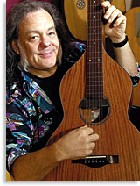
    David Lindley: Rick Gould

    This article originally appeared in VG‘s Oct. ’06 issue. All copyrights are by the author and Vintage Guitar magazine. Unauthorized replication or use is strictly prohibited.