Month: February 2006

  • Fuchs Overdrive Supreme

    Amazing craftsmanship and aesthetic appeal, top-no

    Andy Fuchs, a tube audio product builder from Bloomfield, New Jersey, recently sent us one of his Overdrive Supreme amp heads.

    Cased in a finger-jointed pine cabinet with tolex covering, the Overdrive Supreme definitely looks cool. The question is, “Does it live up to its name?”

    But before we get into how it sounded, let’s roll through the particulars.

    The all-tube 100-watt OD Supreme features four Sovtek 6L6s and four Sovtek 12 AX7s with Mercury Magnetics custom transformers and a combination of point-to-point wiring and printed circuit (PC) boards. Controls on the front panel include gain, deep and brite switches, a rock/jazz switch, high, mid and low passive tone controls, overdrive input and output knobs, master volume, accent (presence) and a reverb knob.

    The back panel has effects loop jacks with send and return controls, a side chain switch, speaker output jacks and power/standby switches. And finally, the amp has a twin foot switch to remotely switch the overdrive circuit and the reverb on and off.

    We plugged the Fuchs into a Marshall 1960A cab, then grabbed a Fender ’62 Reissue Strat and a Hamer Studio.

    With the Strat plugged in and the amp’s overdrive circuit turned off, the first thing we noticed was a great clean sound, which was somewhat surprising for a 4×12 cab and a head. It delivered all the fat, lively tone you’d expect from a combo amp. The push/pull mid boost was perfectly voiced for the guitar’s single-coil pickups, and the brite and deep switches added just the right amount of punch and sparkle, while the jazz/rock switch gave the amp some added drive and attitude in the rock position.

    With the gain turned up and the master volume turned down, we got a warm blues overdrive; but once we turned on the overdrive circuit, we were swimming in tons of very “British” distortion. A cool Richie Blackmore/Deep Purple tone – very fat, with smooth sustain and tight low end.

    Switching to the Duncan humbucker-loaded Hamer went quite smoothly because, to our delight, we didn’t have to fuss with the settings to get the same great tone; we simply turned off the mid boost and made a slight adjustment to the accent control to clean up the high-end. The push/pull gain boost did thin out the low-end a bit, but with all the available gain, we didn’t really need it. And the reverb circuit was clean and lush-sounding and didn’t wash out the overall tone in the least.

    Whether played clean or punched into overdrive, and regardless of whether you’re a single-coil lover or humbucker devotee, the Fuchs Audio Overdrive Supreme sounds great, with well-voiced controls and kick-ass smooth distortion.


    Fuchs Audio Technology Overdrive Supreme
    Type of Amp: All-tube 100-watt head.
    Features: All-tube circuitry, high-quality components, well-voiced controls for EQ, boost, brite, deep, etc., British-style overdriven tones.
    Price:$2,895.
    Contact: Fuchs Audio Tech-nology, 73 Collins Ave., Bloomfield, NJ 07003, www.fuchsaudiotechnology.com.


    This article originally appeared in VG‘s Feb ’03 issue. All copyrights are by the author and Vintage Guitar magazine. Unauthorized replication or use is strictly prohibited.

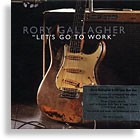
  • Rory Gallagher – Let’s Go To Work

    Let's Go To Work

    Rory Gallagher’s mention brings a certain vision: denim jeans and a flannel shirt. An old Strat with very little finish left. High-spirited yet authentic blues and rock. Consummate musicianship. A CD box set also brings a certain vision: packaging the music parts into a greater whole.

    Both are represented clearly in this new offering. Gallagher, the Irish troubadour-turned-working-class guitar hero, is fully represented on four live CDs. Three are previously released, the fourth only in bootleg form. And that’s where the packaging comes in.

    The box (and unlike some box sets there really is a box) is filled with unpublished photos and an excellent booklet with extensive and complete notes about Gallagher and crew. They document a guitar-playing songwriter who charted his own path until a his death at age 46. Gallagher also assumed complete creative control of his music, produced all his recordings, and generally set the tone and direction for his career. He fronted one of the first power trios, Taste, in the 1960s, broke out as a solo artist in ’71 and got radio airplay on album-friendly stations, then became a big draw on college campuses across the U.S. His following in Europe was even larger, and he recorded and toured regularly until the late ’80s, when health problems forced a cutback.

    Firmly grounded in the blues, but also informed by a jazz sensibility, Gallagher performed mainly his own compositions, which took the form of revved-up rockers mixed with slower 12-bar fare. Even so, Gallagher was proficient in acoustic, electric, and bottleneck guitar as well as mandolin, harmonica, and even saxophone. It’s a shame he left us before the “unplugged” trend, as he would have been a true force as a solo acoustic performer.

    Indeed, Gallagher became known for the one electric guitar he was to use for his entire career, a late-’50s Fender Stratocaster with a rosewood fingerboard. The guitar lost nearly all of its finish over the decades of studio and road work, as Gallagher used it for nearly every live performance and recording session. No switching guitars in concert – he simply re-tuned the Strat to an open key and took off.

    While he was occasionally spotted with a Telecaster, it was the prized Strat, that was the main axe. His amp selection was just as simple – a tube amp by Fender, Vox, or occasionally Marshall, and nothing but a cord between guitar and amp.

    The music in this set captures Gallagher at his best and can be broken into four distinct periods. First is the original Rory Gallagher Live from ’73, which has Gallagher in his trio format. Another great packaging trick is employed in the form of previously unreleased bonus tracks, two on this CD. Several covers spice up the works, but it’s the encore number “Bullfrog Blues” that best defines the Gallagher sound and fury and also features brief bass and drum solos. Gallagher uses the Strat, mandolin, and Dobro to full effect on this CD, and shows that a trio can be as much of a band as one could need. But when a second live album was recorded only a couple of years later, a keyboard player had been added to the mix. Whether the electric piano improved the overall sound is debatable, but the energy on Irish Tour ’74 is compelling, either because Gallagher had returned home or because it was one of those special nights, the tracks here burn.

    Irish Tour ’74 captured Rory doing what he does best, with a bevy of original numbers, the standout being a power ballad, “A Million Miles Away.” It’s a tour de force number about sitting in a bar but dreaming of being somewhere else, and features Gallagher’s patented volume swells, squawking lead-position Strat solos, and pinched harmonics.

    The third CD is Gallagher’s original 1980 release, Stage Struck . Overall, this is a more straightforward rock record than the previous live offerings, which tended to mix tempo and instruments. CD number four is the new and aptly titled Meeting with the G-Man which was recorded in 1993 and, while bootlegged with dubious quality, is previously unreleased. The performance is surprisingly strong, coming as it did two years before Gallagher’s death, and song selection is more varied and with more covers. Gallagher’s production dropped off sharply in the ’80s, so there were few new originals. He even covers “La Bamba” and the Beatles’ “Revolution.” Sound quality is excellent, and the performance is energetic.
    Again, packaging is a key in re-releases. In this case the original album covers are used for each CD and each mini-album has a slip case featuring one of Rory’s well-used amps. With Live in Europe it’s an old Vox AC-30, Irish Tour has a tweed Twin, Stage Struck features old Marshall combo, and G-Man shows the battle-scarred Strat. There are also two photo cards of Gallagher.

    Another mark of the box set is sound quality, and this set delivers with a three original discs fully remastered and the final disc with excellent sound. At present, this box set is only available by import. This may have as much to do with Gallagher’s overseas following as its comparative lack in the U.S.

    The live Gallagher was certainly a force, but his studio work is much more diverse and deserves equal scrutiny. One can hope that a complete retrospective is in the works. He didn’t have hits, he wasn’t the most popular, and lots of people never really heard his music, but Gallagher was a musician and performer of the highest caliber and he may yet get his day in the sun as more about his life and music is presented to a new generation.


    This article originally appeared in VG‘s March ’03 issue. All copyrights are by the author and Vintage Guitar magazine. Unauthorized replication or use is strictly prohibited.
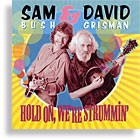
  • Sam Bush and David Grisman – Hold On, We’re Strummin’

    Hold On, We're Strummin'

    When asked to name the two most influential mandolin players of the last twenty years most mandolin aficionados will say Sam Bush and David Grisman. Although they have shared the same stage and often jammed together, they’ve never released any joint studio recordings playing together. Hold On, We’re Strummin’ rectifies this serious oversight.

    Recorded at Grisman’s Dawg Studios during April 2001, except for four tunes, Hold On, We’re Strummin’ consists entirely of new material composed especially for this release. Titles like “Crusher and Hoss,” named after their two primary signature mandolins, and “Hartford’s Reel,” dedicated to the memory of their friend, the late John Hartford, indicate the personal and intimate nature of the music on Hold On, We’re Strummin’. Besides their regular vintage Gibson F-5 mandolins Grisman and Bush play mandocello, octave mandolin, National steel-bodied mandolin, fiddle, octave mandola, banjo-mandolin, and even (sigh) banjo. Jack Lawrence and Dave Nunally on guitar, Jim Kerwin and Sam Bush on bass, and Hal Blaine on drums join the party.

    Extensive liner notes by the fine jazz mandolin player Don Stiernberg and spirited Stax-Volt inspired graphics make a package that successfully foreshadows the eclectic yet erudite music within. As usual with Acoustic Disc CDs the sonics are first-rate throughout. Engineers Larry Cumings and Dave Dennison bring out the best from all the acoustic instruments used here, even the difficult ones to record like a National mandolin. I applaud their decision not to add artificial reverberation to enhance the warmth or space of the recording venue. The real sound of acoustic instruments recorded in natural way rules.

    Several years ago David and Sam played together during a memorial service for Charles Sawtelle at the Boulder Theater. During their dual solos I couldn’t help but think “I sure would love to hear a whole CD of these two playing together.” Now my wish is a reality. As Charles Sawtelle would have said, “You need this CD.” Yup, you do.


    This article originally appeared in VG‘s Dec. ’03 issue. All copyrights are by the author and Vintage Guitar magazine. Unauthorized replication or use is strictly prohibited.
  • Chet Atkins: Me and My Guitars – Chet Atkins and Russ Cochran

    Chet Atkins and Russ Cochran

    Chet Atkins has a deserved reputation as a great guitar player and all-around nice guy. So it’s a pleasure to see a book that is part biography and part history of his personal guitars.

    Atkins was no guitar collector. He owned a number of nice instruments over the years, but they were his tools of the trade. They weren’t babied, but rather used – some for decades – and their scars come not from abuse but from the touring trail and the studio log. So his D’Angelico Excel was modified over the years with pickups, switches, even a vibrola tailpiece!

    There’s an assortment of archtops featured, many of them Gibsons, and a variety of flat-tops from the ornate to the sublime. Many of the guitars were used for album covers and these are included where appropriate. One would guess after reading the book that Atkins had about 50 guitars. And the point isn’t how many because the book isn’t about just guitars but about Chet and his guitars.

    The narrative, recorded before his death, is told by Atkins in the first person. He recalls how he came to own the guitars, where they were used on recordings and at live shows, and he reminisces about other players and cohorts. Atkins has many stories, and they come alive in this book. The reader learns about Atkins’ involvement with Gretsch in the ’50s, which resulted in a line of guitars bearing his name, and again in the ’80s with Gibson to produce an electric archtop. It turns out that Chet prefers to set up his own guitars and likes to tinker with them and customize them to his taste.

    One of the most telling photos in the book is one of Chet’s workbench. Here, one finds the true “tools” of the master: strobe tuner, files, saws, sanders, boxes of amp tubes, soldering iron, drill bits, screws and hardware… and a quart of Quaker State motor oil! At last, the secret to that smooth Atkins picking style is finally revealed! No wonder there are never any squeaks on his fretboard!

    This book was previously available only as a limited (and expensive) edition. Here’s a version that everyone can afford.


    Hal Leonard 2003, Softbound 183 pages, ISBN 0-634-05565-8, $29.95

    This article originally appeared in VG‘s dec. ’03 issue. All copyrights are by the author and Vintage Guitar magazine. Unauthorized replication or use is strictly prohibited.

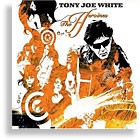
  • Tony Joe White – The Heroines

    The Heroines

    For his latest album, the “Swamp Fox” came up with a cool concept: half solo vocals, half duets with five of his favorite female singers, on a collection of new originals and collaborations, book-ended by a pair of instrumentals.

    After the opening gut-string instrumental, “Gabriella,” the first voice heard is Shelby Lynne’s on “Can’t Go Back Home,” which she co-wrote with White – her southern mix of country and soul a perfect match for his style. Emmylou Harris is featured on “Wild Wolf Calling Me,” and Jessi Colter and White sound like they’ve been singing together for years on “Fireflies In The Storm.” The latter two were co-written by Tony Joe and his wife, Leann.

    Lucinda Williams’ slurred vocals are right at home on the CD’s funkiest track, “Closing In On The Fire,” which features Tony Joe’s Strat at its squawkiest – employing his Colorsound fuzz and Boomerang wah simultaneously. And amid the female stars, Tony Joe’s daughter, Michelle White, holds her own, on the tropical-tinged “Playa Del Carmen Nights.”

    The solo material is equally solid – from the Jimmy Reed groove of “Back Porch Therapy” to the somber, Hookeresque “Rich Woman Blues.” Tony Joe White’s instantly recognizable singing, guitar playing, and songwriting are always cause for celebration, and for the past 10 years, White has taken control of production and simplified things, making the purest, best records of his career. And this is one of them.


    This article originally appeared in VG‘s Dec. ’04 issue. All copyrights are by the author and Vintage Guitar magazine. Unauthorized replication or use is strictly prohibited.

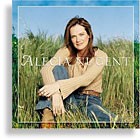
  • Alecia Nugent – Alecia Nugent

    Alecia Nugent

    Don’t let the spelling of her first name lead you to believe Alecia Nugent is one of those overly affected country divas the labels trot out with lugubrious regularity. Instead, her debut album harkens to the days when bluegrass was new and unadorned voices with a country twang were the norm.

    Populated by refreshing neo-traditional arrangements, this self-titled release presents a strong case for Alecia Nugent’s imminent stardom.

    Producer Carl Jackson assembled a stellar group of pickers for Alecia’s first release. He handles guitar and banjo duties, while Ben Isaacs plays bass, Aubrey Haney fiddle, Ronnie McCoury mandolin, and Randy Kohrs dobro. Harmony vocalists include Jackson, Rhonda Vincent, Jimmy Nugent, Rebecca Lynn Howard, Larry Cordle, Jerry Salley, and Sonya Isaacs.

    Material here ranges from standards such as Lester Flatt’s “I’ll Stay Around” to contemporary tunes by Jackson and Larry Cordle. Regardless of the author, every song feels as if it was written for Nugent.

    Jackson’s arrangements highlight Nugent’s voice the way a fine haircut frames a face. Each player delivers wonderful musical moments, and in every case, their contributions add to the songs’ power, rather than draw attention away from the tunes. The cover of Carter Stanley’s “Think of What You’ve Done” typifies the album’s approach. The pace is slowed so Alecia’s voice can soar. The solos swing, rather than race, through their moments in front, echoing Alecia’s bluesy phrasing.

    Engineer/mixer Luke Wooten delivers a sonic package with bows on it. The sound is clear, warm, and inviting. Alecia’s voice is always front-and-center, but never too out front. Instead, her supporting superpickers surround her so they sound like a band, not a solo act.

    I hope this is a rousing success, not for altruistic reasons, but selfish personal ones – I want to hear another release from her.


    This article originally appeared in VG‘s Aug. ’04 issue. All copyrights are by the author and Vintage Guitar magazine. Unauthorized replication or use is strictly prohibited.

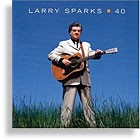
  • Larry Sparks – 40

    40

    After doing one thing for 40 years, you either get really good or you die. Larry Sparks refers to himself as “The youngest of the old-timers,” and on his latest, he delivers bluegrass that even Bill Monroe would call “powerful good.”

    Here, Sparks is joined by a galaxy of bluegrass luminaries, including Vince Gill, Ricky Skaggs, Ralph Stanley, Alison Krauss, Dan Tyminski, Rhonda Vincent, Carl Jackson, Larry Cordle, Rebecca Lynn Howard, Kenny Smith, Tim Stafford, Jim Hurst, Chris Jones, and Ronnie Bowman. Core band members on many of the tunes include Larry D. Sparks on bass, Stuart Duncan on fiddle, Randy Kohrs on dobro, and David Harvey on mandolin. Producer Don Rigsby joins in for an occasional harmony vocal and contributes insightful album notes.

    Tunes on 40 cover the gambit from hell-raisers such as a rousing version of “Blues Stay Away From Me” to gospel tunes such as “I Need Jesus.” In between there are Larry Sparks classics such as “Tennessee 1949,” John Deere Tractor,” and “City Folks Call Us Poor.” My favorite cut, “The New Highway,” has Sparks singing lead, tenor, and baritone parts, as well as playing guitar. David Harvey’s mandolin and Larry D. Sparks’ bass complete the roster for the final song on this stunning CD.

    40 ranks as a essential bluegrass. If you consider yourself a fan, you’ve got to have a copy.


    This article originally appeared in VG‘s May. ’05 issue. All copyrights are by the author and Vintage Guitar magazine. Unauthorized replication or use is strictly prohibited.

  • Radial Engineering Tonebone Classic, Hot British, and Switchbone

    Tonebone Pedals

    Radial Engineering’s Tonebone distortion pedals have been making serious “noise” in the few short months since their introduction. Whether online or in print, the good word has spread quickly, and followers have come in droves.

    Radial, creators of the trio of Tonebones – the Classic, Hot British, and Switchbone – was founded in 1978, when Denis Rozon met Peter Janis. As a sideline, the two founded Forest Electronics, and started building tube pedals and a three-channel amp. In the ’80s, Janis left and briefly worked for Fender, then started a distribution company. There, he developed the Radial Engineering Product Group. Meanwhile, Rozon continued working with musicians, focusing on product development for Forest. In 2001, the men were reunited when Rozon was hired as chief engineer at Radial. Tonebone pedals became part of the line in ’02 and quickly started gaining a rep for their great sound.

    But, being hardcore gear skeptics, the only ears we believe are our own. We reserved judgment on the Tonebones until we got our grimy hands on a set.

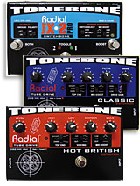
    Out of the box, the pedals immediately impress. They’re housed in well-built 14-gauge steel chassis, painted black and silkscreened with individual color schemes. The Classic and Hot British distortion boxes use a 12AX7 tube to drive the circuit, and both use true-bypass on/off stomp switches. The Classic features potentiometer controls for Level, High, Low, Filter (used to balance the high-frequency ratio between the pedal and the amp), and Drive. And it has three-position switches for Top End, Mid Boost, and Drive Gain. Standard 1/4″ input/output jacks and an on/off stompswitch with LED indicator are also employed.

    The Hot British features pots for Level, High, Low, Contour (adjusts the balance of low and high frequencies in the notch and fat voicing mode), and Drive. It also has a three-position Top End switch, Voicing, and Mid Boost switches, as well as the 1/4″ input/output jacks and on/off stompswitch with LED.

    The Switchbone features a stomp switch for running both amps simultaneously, a toggle switch (with indicators) that allows one or the other amp to be on (and allows a choice of which amp it defaults to when the “Both” switch is turned off), and a “Boost” switch that engages a boost circuit (also with indicator light). Output two has switches for ground lift and polarity. The “Power Booster” section has two slider switches; one selects gain or mid-only boost (or mute), the other is a mid-boost switch that can be turned off or set to 5 db or 10 db. They combine to allow solos to be boosted in various ways. Jacks include input, two outputs, and tuner out. Sharing space along the top edge are controls for “Gain” and “Drag” (which the company describes as “load correction for the pickup”).

    Our test setup consisted of an early-’80s Tom Holmes solidbody with Holmes pickups, an early-’70s Fender Stratocaster with stock pickups, and our trusty mid-’60s Vox Berkely Super Reverb 2×10″ combo.

    First up was the Classic, starting through the Holmes pickups. For a blues tone, we set the Level to 2:00, High to 12:00, Low to 2:30, Filter to 10:00 and Drive at 9:00. Top end was set to Bright, Mid Boost out, and Drive Gain low. We were greeted with fat, natural-sounding tone in all pickup positions, with no loss of low-end and minimal coloration, and the distortion cleaned up well with the help of the guitar’s volume pot.
    As we pushed the Drive control and adjusted Drive Gain settings, we experienced unbelievable gain, as much than anyone would want, and then some. Pushed to the extreme, the gain did start growing fuzz, but it’s unlikley the Classic would be intentionally used to get that tone. By taking off some Top End and pushing the Mid Boost, we got a great Santana tone. Even at higher-gain settings, this pedal is pretty quiet.

    Next we plugged in the Strat, used the same tone settings, and were met by a very natural Strat blues tone – very fat. With the Drive boosted, it almost sounded like a humbucker! With the Top End switch on Flat or Dark, we experienced even more of this phenomenon. And sustain? Forever! The tonal variations this pedal produces is unbelievable. From very slight gain to all-out saturation, this pedal won’t hold back.
    Next up, the Hot British.

    We were skeptical after hearing the Classic, wondering if this pedal could sound all that much different. But our skepticism soon vanished.

    This is British, and it is different. Using the Holmes guitar, we set the Level at 2:00, High at 11:00,Low at 2:00, Contour at 12:30, High End to flat, voicing notched, and Mid Boost out. Wow! Talk about British tone! We easily dialed in the famous Cream-era Clapton sounds, to a tee. Varying the drive gave us great heavy metal Marshall-like tone, with as much gain as anyone could want. This pedal isn’t for producing mildly overdriven tones, but it does clean up somewhat if you back off the guitar’s volume. But this one’s for going all-out. Still, it handles the nuances and subtleties with aplomb. Even at high-gain settings, it doen’t get fuzzy. And the low-end stays strong.

    Plugging in the Strat, we tweaked it and smiled as we found our favorite Blackmore tone; our “Smoke On The Water” lick never sounded more authentic! Then we played with the contour and switched the top end to bright, and were rewarded with yet another famously familiar tone; Hendrix’s Strat-through-a-Marshall blues!

    If you want to capture that famous “British tone,” you’ll not find a better pedal!

    Finally, we ran the spankin’ new Switchbone into the Vox and a Marshall ValveState. We were able to switch between amps with no ground loops or hum. We also tweaked the Drag control, and were pleased to hear it deliver as promised. After switching from amp to amp and deciding this could well be the best A/B pedal on the market, we started playing with the variable boost section.

    With the switch set to Gain, the Mid Boost turned off, and the amp set to clean, we got a substantial boost in volume, with just a hint of gain added – very transparent indeed. With the amp distorted, we noticed a dramatic gain boost that added sustain while staying transparent.

    If you want to color your tone for soloing, you can add just a mid boost (without gain boost) or do both. You can also use the Boost switch as a mute.

    The Power Booster section essentially makes this two pedals in one; this is the most versatile A/B/Y-style amp switch on the market.

    Overall, the features, versatility, and tones make it easy to recommend all three Tonebone pedals. The Classic and Hot British units capture the sounds they set out to capture, and with the options offered by each, they’ll capture any distorted tone you desire. And the Switchbone does its jump marvelously, with no tone degradation, and an extra, transparent (or not so transparent) boost if you need it.

    Tonebone pedals are not inexpensivee. But they may well be the best and most versatile pedals in their class.


    Tonebone Classic
    Type of Effect Distortion.
    Features 14-gauge steel chassis, 12AX7 preamp tube; controls for level, high, low, filter, and drive, switches for top end, mid boost, and drive gain; true bypass on/off switch with LED indicator.
    Price $299 (retail).

    Tonebone Hot British
    Type of Effect Distortion.
    Features 14-gauge steel chassis, 12AX7 preamp tube; controls for level, high, low, contour, and drive; switches for top end, voicing, and mid boost; true bypass on/off switch with LED indicator.
    Price $299 (retail).

    Tonebone Switchbone
    Type of Pedal A/B/Y amp switch with boost.
    Features 14-gauge steel chassis, isolated to eliminate ground loops, output to ground and polarity switches, tuner output.
    Price $299 (retail).
    Contact Radial Engineering/Tonebone, 1638 Kebet Way, Port Coquitlam, British Columbia, Canada V3C 5W9, phone (604) 942-1001, www.tonebone.com.


    This article originally appeared in VG‘s April ’04 issue. All copyrights are by the author and Vintage Guitar magazine. Unauthorized replication or use is strictly prohibited.

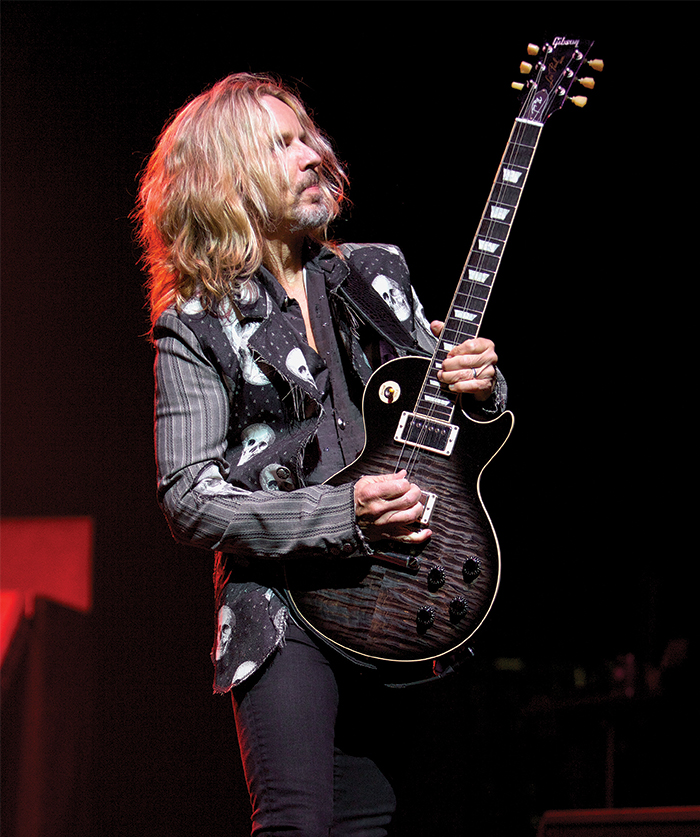
  • Tommy Shaw

    Tommy Shaw

    Styx Strikes Back!

    “About 10 years ago, we stopped being a rock band,” Tommy Shaw opined from the stage. After a pregnant pause, the Styx guitarist/vocalist announced, “We’re a classic rock band!” To which the audience responded in noisy agreement.

    The event was the January concert that premiered material from Styx’s new album, Cyclorama (Sanctuary). The day before that show, VG sat down over breakfast with Shaw, who we first interviewed in May/June ’99, to let the veteran rocker bring us up to date.

    Vintage Guitar: Were you satisfied with the reception to your last solo album, 7 Deadly Zens?
    Tommy Shaw: I don’t really look at sales, and making Styx albums is how I pay my insurance and other bills (chuckles)! I’ve got the best day job in the world, but when you do a solo album, you don’t have to ask anybody what they think, so it’s really a self-indulgent thing, like writing a lot of personal letters.

    The fan response and the critical response was probably the best I’ve ever gotten on a solo record, so I couldn’t have been happier. And I’d love to do another one.

    The same question could apply to how you felt about 1999’s Brave New World, the last Styx album recorded with Dennis DeYoung as a member.
    Well, we were going through the worst struggles as a band we’d ever had. There was so much energy wasted on arguing, fighting, delaying, and manipulating that the music took a back seat. It got off to a great start, and we did the best we could, but it was done under a lot of duress and distraction.

    I kind of look at that album like my What If album, except I was on drugs when I did What If, and we did Brave New World stone cold sober, and full of stupidity. It’s part of our history, and in that respect, it’s a valid record. But maybe it’s just as well it didn’t get much promotion; the record company was going through a change at that time. Then the band changed, and we got new members, and were able to go out and quietly start rebuilding the band in smaller markets.

    When you look back, everything worked out the way it was supposed to – the record came out without much fanfare, and we ended up playing places we hadn’t played in years.

    How many gigs did the band do with DeYoung to support Brave New World?
    None. We did an appearance on the Children’s Miracle Network in June of ’99 before the record came out, and that was it. We had parted ways while we were still making the album.

    What about the Damn Yankees?
    We never broke up. We went back to our days jobs – Ted [Nugent] is president of Ted Nugent, Inc., Jack [Blades] is with Night Ranger, and Michael Cartellone now plays drums with Skynyrd, and those are all full-time jobs. What made Damn Yankees possible was that none of us had anything on the calendar. Making an album and doing a tour takes at least a year, and if you have any success, then you tour for another year. It would be hard for us to find the kind of time we would all need to do Damn Yankees, because we would all need to be there to interact.

    How did Styx end up with Canadian singer Lawrence Gowan as the new keyboardist/vocalist?
    He had a French album with just him on the piano, and had a hit up there called “A Criminal Mind.” He opened for us in Montreal in ’96, and brought the house down. I’d heard of him before, and I went on the internet to check out his music.

    Then in ’99, I didn’t know where to begin replacing Dennis DeYoung. Those were big shoes to fill. I called (Journey keyboardist) Jonathan Cain, and asked him how to go about doing it, and he said “You have to do something now.” We started talking to people and listening; we found a couple of singers who sounded exactly like Dennis, and that was strange; J.Y. (James Young) and I didn’t think it was right to have someone who sounded like he was imitating Dennis.

    Then, Kim Ouelette, who runs my website, suggested Gowan. I thought it was a great idea because his music came from the same place our early music came from. It could have been on Crystal Ball or Pieces of Eight.

    One thing led to another, and he auditioned at my house in front of band members and our manager. He probably felt like he was walking into a lion’s den, but he played “A Criminal Mind” on the piano in my studio, and it was brilliant. I don’t even remember what other songs he did, and it didn’t matter (chuckles). That was the beginning of an amazing relationship.

    He’s a Scot, and has that melancholy Scottish storytelling thing where he mixes these beautiful melodies with dark lyrics. It wasn’t romantic – and the romantic thing had been pretty much of a DeYoung thing with us.

    [Gowan] does his own interpretations of our songs, and within the context of the band it’s easy to be comfortable hearing him. He’s got the same vocal range (as DeYoung), but he has his own style.

    And the band toured with Gowan to support Brave New World, even though he’s not on it. How many gigs have you done with him in the band?
    I think tomorrow night will make 436. We wanted to slowly introduce people to the new lineup and let them get comfortable with how we sound, [which is] more like Styx from the ’70s – Equinox, Crystal Ball, The Grand Illusion, Pieces of Eight. It was on Paradise Theater and Cornerstone where we started to make a turn, and when that happened I think we sort of lost the heart and soul of the band. So we kind of did an edit back to the earlier times.

    But if you’re in a band and you play a lot of shows, you’d better be getting better, otherwise you’re dead in the water. Right now, we’re changing a lot of the arrangements of the classic songs; we just put a new ending on “Too Much Time.”

    You had great tone on that tour, but there weren’t any amps visible…
    Mesa-Boogie is the beef, and I just got one of their new power amps, a 2:One Hundred. The old one was good, but this one is better. I run through some vintage Marshall cabs. I just recently added a Leslie – Peter Frampton turned us on to the specs. So I’m using the same setup, but it’s updated.

    You opened the show with a white Gibson ES-335, and subsequently used a Tele, Les Pauls, a PRS, and even a big orange Gretsch.
    I’m like a little kid about it; I want to play a different guitar on every song! I just got this ’62 Les Paul Custom with an ebony fretboard, three pickups, and the sideways vibrato. And I’m dyin’ to play it! I was playing 17 guitars on our last tour, and because of the way we’re going to do our new set, we’ve got this nine-minute medley in the middle. I’ve added new guitars, but now we’ve got less songs for me to change guitars (laughs)!

    Talk about the benefit shows you’ve done with other veteran performers since 9/11. There were the “Volunteers for America” shows in 2001, then a couple of others in October of 2002. Reportedly you were one of the progenitors of the efforts.
    I made the first phone calls; I called (REO Speedwagon singer) Kevin Cronin, and he said, “I’m in.” So with Styx and REO, there was a show already. I started calling everybody else, and everybody I called put their own people to work on it, so it mushroomed, which was great. That’s the kind of friends we have.

    We put the first shows together quickly and didn’t have enough time to research the name. It turned out there was another charity called Volunteers for America, and they were kind enough to let us slide. It was to raise money for the New York Port Authority Police Department Survivors’ Fund. They lost 37 people and didn’t get a lot of publicity. It hit home when I met some of the officers, and one of them gave me his card, where he’d scratched off the phone numbers of the offices in World Trade Center.

    The 2002 shows were called “Rock to the Rescue,” and so far we’ve raised about $800,000 for them.

    There’s no title track on Cyclorama, but a cyclorama is a circular painting where the picture was continuous…
    It was the virtual reality of the 19th century. But there’s no literal meaning to the title or the cover. It’s more metaphoric, and meant to be thought-provoking. We attach a lot of meanings to it ourselves, but we didn’t want to just put it out and say “Well, here’s Cyclorama.” We wanted it open to interpretation.

    Could it allude to the fact you’ve got four singers, and everyone in the band is a songwriter?
    It does now (laughs)! That’s what I love, because people are already telling us what it’s about! We’re splitting the songwriting credits; each song went through the Styx gauntlet and got hammered, kicked, and twisted, reexamined and reassembled. The idea was to make each song a Styx song. “One With Everything,” for example, had five fathers.

    There’s an emphasis on harmony vocals throughout the album.
    (grins) Yeah. We know who we are, so we just said, “Let’s try to be awesome at who we are.” No apologies. We did do some overblown arrangements because we have progressive roots, but we also went way out there and pushed the envelope with songs like “Kiss Your Ass Goodbye.” Then we went back and pushed it the other direction with an acoustic song like “Yes, I Can.”

    “Do Things My Way” is a flat-out rocker that opens the album.
    It was meant to be an opening song…

    Is that some kind of news broadcast as it fades out?
    That’s a Tibetan chant used for meditation. We used it in a very twisted way. To me, it’s kind of maniacal, and my wife says that’s what the inside of my head sounds like (laughs)! But it is part and parcel to the song.

    Is that a Leslie or a Uni-Vibe at the end of “Fields of the Brave”?
    It’s a Leslie.

    What kind of effect is used on the intro to “One With Everything”?
    I’ve got a little Vox ValveTronics amp, kind of like of like an AC-30. It’s my favorite toy in the studio right now, and I dialed in some flange.

    “Yes, I Can” is an acoustic song, and there’s a mandolin on it. Your idea?
    Yeah, that’s my 1915 Gibson, and it sounded so sweet. Glen (Burtnik) wrote that part; he’s a lefty, and the way the part is written, the fingering on the mandolin drove me nuts. Glen played some really sweet guitar parts on the album himself, like the cascading 12-string part on “Together.”

    What about the wah guitar that opens that song?
    A straight, old-fashioned Dunlop Cry Baby. I wrote that song out of my own insecurity. I wrote the riff on acoustic, then used a wah to try to make it work. To me, a wah is a great little “cheat” thing. It can turn something simple into something with a groove. That’s how a lot of my stuff progresses – out of my own self-doubt. I add things to riffs to where I can get enough confidence, then if I step back and it sounds good, I keep going.

    “Captain America” is a hard rock number with a guitar that has a high-tech vibrato.
    That’s J.Y. He was Hendrix and I was Clapton on that (laughs)! I played the Les Paul through the wah, and J.Y. did the Hendrixy Strat.

    “Genke De Ska” contains a review of other tracks and dialogue by people who want to be on the album.
    The title is Japanese for “Are you healthy?” It’s part of a greeting, or a formal way of asking, “How are you doing?” We opened the album with a mantra, and we closed with a mantra-esque track.

    Is Japan still a strong market for the band?
    I think so. We’ve only been there once since we started back up in ’99, but Japan has a dear place in our hearts. We’re supposed to go back. We do have the history of “Mr. Roboto” too; there’s something about the Japanese language that works well in a rock track.

    The cover art was created by Storm Thorgeson, who’s also done covers for Pink Floyd, the Alan Parsons Project, and Wishbone Ash, among others.
    He also did the Pieces of Eight album cover, one of my favorite Styx covers of all time. The cover, like the title, is thought-provoking and the topic of a lot of discussion. And I love that. To me, we win if someone takes the time to ask “What does it mean?” We’ve made you stop for a second and contemplate.

    What do you see in the future for your next solo album?
    I’d like to do a little more diverse record, with some more traditional things and some covers, but still experimental. Dwight Yoakam and I sat down in Billy Bob Thornton’s studio a couple of weeks ago, which is a great musical place – it’s Slash’s old studio – and people like Robbie Robertson and Richard Perry came by, but nothing really came out of it.

    Then there was just Dwight and me, and we started jamming. In about three hours, we did everything from Andy Williams songs to rock songs to country to church altar-call songs. He and I did “Wake Up, Little Susie” and it was so ****in’ great! I’ve already started building a track for that on Pro Tools. I haven’t asked Dwight to do it yet, but I’m gonna bug his ass. And I’ve already got a track built for Billy and me to do “Will The Circle Be Unbroken” that sounds killer.

    It’ll probably be a very confusing album when it comes out! I love almost anything that’s roots-style, that comes from a great place but still has a pulse and emotion, so this next album will probably also sound rootsy.

    You’ll turn 50 in September. Do you have any reason to think about slowing down?
    I slowed down at one time, and aged tremendously during that period. The good thing about it was I was with my daughter when she was born, so I don’t regret that. But musically, it was very unfulfilling. I’m part of the short-attention-span generation; I’m happiest, and concentrate best, when I’m busy. I like that kind of insanity. Even my wife says that if I have time to think about something, I don’t do very well (chuckles). I like to keep my life at a hectic pace.


    Photo: Neil Zlozower.

    This article originally appeared in VG‘s July ’03 issue. All copyrights are by the author and Vintage Guitar magazine. Unauthorized replication or use is strictly prohibited.

  • “Big” Al Anderson

    Nashville by way of Connecticut

    Ask people what they know about “Big Al” Anderson and you’ll probably hear very different responses. Rockers will say that for 22 years he was the Tele-driving force behind New Rhythm and Blues Quartet (less formally and more popularly known as NRBQ), writing and singing their best-known songs. Fans of underground and classic rock will remember him for his 1960s cult band The Wildweeds, whose hit single “No Good To Cry” was covered by the Allman Brothers (when they were called Hourglass), and country music fans view him as Nashville royalty, cranking out an ever-growing catalog of hit songs.

    Recently recognized by BMI as Country Songwriter of the Year, Anderson has written for a who’s who of country music’s elite, including Hank Williams, Jr., Carlene Carter, Alabama, Sammy Kershaw, Trisha Yearwood, The Mavericks, Charlie Daniels, Asleep at the Wheel, and his recent efforts with Vince Gill are included on Gill’s Grammy-winning Next Big Thing. And the list goes on…

    VG recently caught up with Anderson as he was preparing to release his most recent solo CD, After Hours.

    Vintage Guitar: Congratulations on the new CD, which is quite a departure from your 2001’s rockabilly tinged Pay Before You Pump. What made you decide to go in this more jazzy direction?
    Big Al Anderson: Some of the songs were new, others I had laying around, “Love Make a Fool of Me” was the thing that started it all, though, then I started looking back at other songs I wrote in that style, like “A Better Word for Love.”

    You’ve also been working with Vince Gill, who just won a Grammy for Best Male Performance. How did you enjoy that?
    Writing with Vince Gill and having a single with him is one of the greatest things that has ever happened! He’s amazing – a great guy, a great musician, a great singer, and a great player. He plays everything but the extension cord, that guy!

    Going back to the early days as a kid growing up in Connecticut, what got you into playing and songwriting in the first place?
    When I was a little kid, my brother-in-law had a guitar, and I was attracted to the guitar right there. My mom and dad were musicians, and mom worked at a local radio station WTHT and used to bring home kids’ records and sometimes there were some country records in there.

    A lot of people think of you as one of the masters of the Telecaster, but that wasn’t your first decent guitar, was it? Do you remember the first good guitar and amp setup you had?
    My first guitar was a kid’s guitar with a cowboy on it. I got it when I was nine. The cheaper the guitar, the harder it was to play. I never thought about shaving the neck down, and I couldn’t get past the first fret. But then around 1960, this friend of our family, a guy named Curtis Wright, would lend me guitars, including a Danelectro doubleneck, which probably was my first good guitar. His dad took the photo we used on the Little Al record (which features Anderson as a 10-year-old). Then I moved up to a Gretsch Anniversary, because I wanted a 6120, but we couldn’t afford it, so mom bought the Anniversary for me. From there, I got a Guild X-175, which I cut my first record with, and I still have it today. In fact, I used it a lot on After Hours.

    As far as amps, my first was an early-’60s Ampeg with reverb. Not a Reverborocket, though.

    People first became aware of you regionally in the Wildweeds, then your years with NRBQ brought you international acclaim. How did you make the transition to concentrating on songwriting?
    Well, I was writing from the beginning. When I was 12 or so, I was playing in a Hammond organ trio with Ray Zeiner (keyboardist for The Wildweeds), and we would play these black clubs in Hartford, like the Red Ash, The Rockabye, and The Subway Lounge. This is really where I cut my teeth, and the most fun I ever had. That turned into my high school band, the Six-Packs, which eventually became the Wildweeds. We were doing a lot of shows for Dick Robinson (DJ and now broadcasting school owner), and he sent us to Synchron Sound to cut a track. We cut “No Good to Cry” down there, and it just sat there for a long time. Then a former dentist named Doc Cavalier started working there, and in the summer of ’67 he got the track to Chess Records. I played with them until I joined NRBQ in ’71, and the rest as they say, is history.

    I was with “the Q” for 22 years, and always wrote, but during my last year with them, I got a songwriting deal in Nashville when I hooked up with Blue Water Publishing, and the first hit I had for them was “Every Little Thing” which I co-wrote with Carlene Carter. This ended up being Top 5 all over the world. And when I got that first check, I realized all I could do by just sitting on the couch (laughs), instead of traveling and playing toilets all over the world. And that’s right around the time I got clean and sober, too. So that life was becoming more and more unappealing to me.

    How do you typically write? Do you get the idea for a lyric first, music, hook…?
    Yes! All of the above. You never know what’s gonna happen. If you’re co-writing, the other guy might have a title, you might have a musical piece. Very rarely, someone is looking for a song, and you try to write them one.

    When you sit to write, do you favor one particular instrument as an old friend, and do you use different tunings?
    I use a new Martin D-15, it’s a great guitar. Sometimes I use an E down to D tuning, but mostly standard. And then I have this little guitar that I love, and what a friend it has been. I’ll just bring it out and play it from time to time – it’s a little Regal I bought at San Francisco’s Real Guitars, and it didn’t have a bridge on it. So I took a shot. I think it was an Oahu parlor guitar. It has a spruce top, some flowers on it, and a mother-of-plastic neck, and it sounds great. I just resurrected it.

    Over the years, you’ve played with a lot of the greats. What do you consider the highlights of your career?
    Right off the bat, I’d say playing on the Highwaymen album (The Road Goes On Forever, 1995). Also, the whole NRBQ thing, just the whole package. I learned a lot… no, everything I know about music during that time.

    Do you typically prefer vintage instruments to new ones?
    They are making a lot of good new instruments these days. I have a ’91 (Gibson) Ren Ferguson J-45. That guy makes a great guitar. It was made for Randy Travis and was sitting around the Gibson Showcase in Nashville. Ren really puts his soul into a guitar. (Songwriter) Paul Kennerly has an SJ-200 that Ren made, and it may be the best thing I ever heard. And (producer) Paul Worley has got another Ren-made all-maple J-45 that’s probably the best acoustic I ever played. And I just got a graphite B-15 for my place in Santa Fe, because if you bring a wood guitar out here, in two weeks the strings are sitting on the neck.

    Do you consider yourself a collector of guitars and amps, and what are some of your more unique instruments?
    Not really a collector… The J-45 is one of my favorites, as is my Sadowsky Telecaster with three Joe Bardens. I have a ’58 Gibson J-185, in really good shape, but it ain’t meltin’ my butter, so I’m still looking for a great old J-45 if you know of any (laughs)! I had a ’53 Tele and it had a Strat-like contoured body. I thought someone had shaved it down, but apparently it was stock, as Fender made a run of these. But then Danny Gatton did a fret job on it, and they all popped out the next day, so I kind of lost interest in the guitar (laughs). I had a ’58 Les Paul that I sold, that I kind of regret. I have a ’56 Esquire that I had Joe Glaser make into a Tele without sacrificing anything, but I don’t play that much these days. Also, I have an orange ’59 6120 that I found in a consignment shop.

    For amps, I still have my old Fender Super with the dark brown grillecloth, and I found another with lighter grillecloth in brand new condition from San Francisco’s Real Guitars – I love that place! I also have an old brown Fender Deluxe. As far as studio setups, I’ve been using the Sadowsky through the brown Deluxe, but sometimes we use another speaker. I also have a TV Les Paul and matching amp from the ’50s in great shape.

    Any plans to tour behind the new album?
    Not unless it takes off beyond the internet.


    Photo by Rusty Russell

    This article originally appeared in VG‘s Oct. ’04 issue. All copyrights are by the author and Vintage Guitar magazine. Unauthorized replication or use is strictly prohibited.