
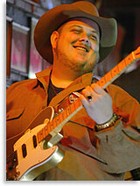
Month: August 2005

  • Johnny Hiland

    Nashville Schoolin'

    In the wee hours of a July morning in 1996, Johnny Hiland made a crucial decision.

    He deleted the 52-page term paper he’d been working on, left college and his home state of Maine, and made the pilgrimage to Nashville. He was
    just 21.

    A bold move, indeed, for yet another guy with a Telecaster and big dreams. But unlike most, Hiland brought the goods and made the connections that made a difference. He has been turning Music City on its ear since his arrival. And he recently started doing the same on a worldwide scale.
    Today, Hiland is a solo recording artist, session player, and teacher. Legally blind since birth, he has defied the odds and become an inspiration to his students, a source of pride for his mentors and family, a force to be reckoned with among his peers, and a rare find for a growing number of fans.

    Vintage Guitar: You’re recording your first solo record, your chicken pickin’ and bluegrass Hot Licks videos were recently released, you’ve released an audio teaching series, you’re playing shows all over the country, and you’re teaching master classes at music schools. How do you keep up the pace?
    Johnny Hiland: For one thing, I have a great manager in Mac Wilson. Mac and I are friends, first. Of course, we’re both jumping on this career in a monster way, but we maintain the friendship first, and that’s what so great about what we do. We just have so much fun when we’re on the road.

    I’m getting to see different parts of the world, and that has always been a goal for me. I’ve always wanted to say, “I’ve been to Texas. I’ve been to Japan. I’ve taught at GIT and AIM.” To say I’ve done all these things is just a joy. I’m doing what I love to do, and that’s pick and grin!

    Countless aspiring stars – particularly guitar players – flock to Nashville hoping to realize their dreams. Most go home with their tail between their legs. How did you get on the fast track?
    Well, I had a strong determination, for one thing. When I moved to town, I played Lower Broadway a lot. It’s a fun place to play and it keeps your chops up and allows for a lot of visibility. For awhile I got kind of burned out because it was the same songs every night and I wasn’t feeling productive as far as my guitar style goes. I didn’t feel like I was in the woodshed anymore.

    But we were also doing Kentucky Headhunter stuff, so I could use more distortion and have some fun, but stay true to the roots of country. And that brought about my licks without a B-Bender and brought out my style more than anything else.

    I was trying to figure out how I was going to move people with my solos while playing a Ray Price shuffle. So it made me hone my style very quickly, right there on stage. And you have to do it right because you never know who’s going to be in there.

    But I give Mac credit for taking my career out of the reach of my own imagination. It’s been a monster jet ride!

    Your tone is distinct. How long did it take you to find your own sound, and who or what helped along with way?
    I ran into tone by accident. I was trying to acquire tones I heard on records, but with the gear that I had I was unable to do so. So I got as close as I could come. But in the state of Maine, the music stores aren’t nearly as big as they are here in Nashville. They’ve expanded their stores now, but when I was a kid, I even had to UPS my strings!

    So I didn’t find out about tone until I heard Redd Volkaert play. His tone was so fat and so full. He played a Tele with three little Boss pedals – a CS-3 Compression Sustainer, a Blues Driver, and an Analog Delay. He had a little Music Man 1×12, 130-watt amp, and his tone was just fabulous!

    Well, the Peavey ended up dying on me. I also had a DigiTech RP10 foot processor. But then I found out that this wasn’t the way tone was really devised; when you hear Jimmy Bryant, you hear a straight Fender amp and a Tele.

    So I called Redd and asked if he had an amp for sale. He had another Music Man just like the one he was using, so I bought it from him. I also bought a Tele for 300 bucks that really didn’t play worth anything, but I plugged it in and immediately said, “Oh man, there’s that fat sound!” Adding a little compressor really fattened it up, like Volkaert’s tone.

    As for my rock music, I’ve just been experimenting with a bunch of distortion pedals. Bob Weil’s Visual Sound pedals are it for me right now.

    You’ve had some very high-profile appearances in the past few years; you headlined CMT’s “Most Wanted Live,” you played the grand opening of the Fender Museum in Corona, California, and you’ve played the Grand Ole Opry twice. You’ve dreamed of playing the Opry since you were a kid.
    It was unbelievable, and I was just as nervous as all get-out! I didn’t know I could shake that bad. Matter of fact, towards the beginning of the song, the piano player was takin’ his ride, his solo, and I looked down and saw that my hand was goin’ on the strings… my right arm was strummin’… but I wasn’t movin’ it! I was like, “Oh man, I’ve got a solo comin’ up next and I’d better get this hand calmed down!”

    I was scared to death. But after the first minute or so, I was fine. It was just that initial shock of going out there that was the big thing. And knowing that Little Jimmy Dickens, Wilma Lee Cooper, Porter Waggoner, and all these huge Opry stars are standin’ off to the side clappin’ their hands and watchin’ you play, welcoming you to the Opry… It was a dream come true.

    Last July, you headlined All-Star Guitar Night to a packed house at the Ryman Auditorium. Is it harder or more nerve-wracking to play in front of your peers – the best in the business – as opposed to, say, a Nashville club filled with tourists?
    Yes. Even during sound check, I’m doin’ “That’s Alright Mama,” and I’m trying to burn it up, and what got me the most is that Brent Mason was walking around, setting up. Usually, I don’t see him [at gigs], so I don’t get nerved up. But the fact that he was standing right there… I was thinking, “I better just spank it really hard here. I have to impress one of my guitar heroes.”

    So I really came on to it, and when I finished, Brent let a big beller out and said, “Boy, you’re gonna kill ’em tonight! That was smokin’!” Coming from Brent, I was just like, “Man!”

    What can we expect to hear on your debut CD?
    I want to make a guitar record that fully shows who I am as a person, emotionally, and how much I love the instrument. It’s not a matter of saying, “Well, you have far more chicken pickin’ fans than you do rock fans.” That’s okay, and we’re certainly going to give them an earful of chicken pickin’; but in my rock music, I’m trying to bring the Telecaster back into style and say, “Hey, you know what? You don’t have to play only Marty Stuart stuff on a Tele.”

    One of my goals is to stand on a stage with Joe Satriani and Steve Vai and come out playin’ my Tele – but playing their style of music. That’s what I’m really looking to do – to bring the Tele around to these rock cats and say, “Hey, this guitar is real versatile.” And on my record I’m going to incorporate the chicken pickin’ sound into my rock music.

    Are you getting a lot of calls for session work, and how much of a role do you see session work playing in your overall career?
    I love the studio. There are two places I love to be on this Earth – the studio and the stage. I love the studio as much as the live show, so I definitely see that becoming a huge part of my life. I’d like to have my own studio in my house one day. However, playing on other people’s records is a joy because it makes you expand as a player. Since I’m legally blind, I can’t read their charts, so it kind of fine-tunes my ears better. I hear the demo, then try to rehash it and make it better.

    It also makes me play in different styles. When I’m playing my own music, I’m pretty much going after one thing. But when you’re on other people’s records, producers get sounds you don’t normally get. It’s fun to be in a studio under those conditions.

    You’re fully endorsed by Fender and you have a beautiful gold-sparkle signature Tele. Can you run down the specifics on it?
    It was built in Nashville by Jim DeCola – he also built the Eddie Van Halen Wolfgang for Peavey. The biggest thrill of my life was being allowed to go in there with a video camera and film parts of my guitar being built. They showed me how they dropped the pearl inlay in the neck and walked me right though the entire guitar. I got to film them spraying it in the spray booth. I was blown away by that.

    Most people will order a custom shop guitar, then wait a year to receive it. So to actually take part in the building of mine was just an awesome thrill, and I think the guitar means a lot more to me because of it. Anyway, I wanted to make a cross between Don Rich’s Tele and Danny Gatton’s Tele. I’m a huge Danny Gatton fan, and I wanted three Joe Barden pickups.

    Are your pickups stock, or custom-wound?
    They’re stock. Fender still had some Barden’s left from the Gatton model. They called Joe to get the middle pickup. I wanted three instead of two to get more of a Strat sound with the middle pickup, to make the guitar a little more versatile for sessions. Plus, three pickups really look cool on a Tele.

    They asked if I wanted an ash or an alder body… I just wanted whatever would sound good and still acquire a sparkle with that many coats of paint. As far as the rest of the guitar goes, it has an antiqued white binding with a parchment guard, a birdseye maple neck, two [Vintique] knobs, an American standard bridge, and a slide clip.

    Another cool thing about it is that Jim came across a ’60s Fender logo in gold sparkle. It was just the cherry on top of everything! It’s really cool.

    Why did you choose a C-shaped neck?
    It’s just the most comfortable for my hand. I wasn’t that fussy about it, really. It has a nice feel; a cross between the C neck – which is like the old ’52 reissues – and the soft V, which of course came out on the ’50s models as well as the years went on.

    Gatton, of course, liked a thick neck. He called his “Half of a Louisville Slugger” (laughs). I definitely wanted something thinner than that because my fingers are like steak fries. They’re pretty short, but I have a big palm. So I wanted something that was somewhat meaty, but yet thin enough to really grab onto and attack the guitar well.

    Is your guitar available – or might it be someday – through the custom shop?
    I hope so. One of my biggest dreams is to see a Johnny Hiland model come to fruition. I do have a lot of people who have said, “Hey man, when they put that guitar out, I want one.” That’s really nice to hear. I hope to one day sell enough records so that Fender will put one out.

    And why a Fender Twin?
    I have a ’65 reissue, and to be honest, it’s just the most traditional country amp. I plugged it in and said, “This is it.” And I have a new G12 Century Celestion in it now. They’re really hot speakers.

    What pedals are you using?
    A Boss TU-2 tuner, because it’s big and lights up like a Christmas tree, so I can see it real well. I’m using Bob Weil’s Visual Sound pedals. The Route 66 has a compressor and distortion, so you can compress your distortion sound and really fatten it up, or use just the compressor, or just the distortion. The cool thing about that pedal is that you can add a bass boost to the distorted side.

    I also use the Visual Sound H2O pedal – it has delay and chorus. I set the chorus full blast and it gives me Gatton’s Leslie sound. I’m also using some new X-Series pedals by DigiTech: the Metal Master is a heavy metal pedal, and I have a HyperPhase. I’ve also got their guitar synth pedal, and I’ve got that kind of set to a talk box sound, which is really cool.

    Lastly, I have a Digital Delay, which I set for a rock delay kind of thing.

    You also play a pretty mean set of drums. Do you play other instruments as well?
    I play 21 or 22 instruments.

    How have you found time to learn all of them?
    I played every instrument in the high school band. My dad thought it would really benefit me because he thought that with my visual impairment, one of the things I might want to do eventually is to teach music. He’d say, “I don’t care what the band director says. Tell him you want a trombone next!” (laughs). My mom was always wondering what I was going to bring off the school bus. I also play fiddle, banjo, mandolin, and bass.

    You have a country gospel recording in the works. What inspired you to do that?
    It’s a way to say thanks to God for the gift of music. In my occupation, I get to have fun all the time! It has been a blessing to me. God gave me the courage to leave college against my parents’ wishes and get on the plane to Nashville. And it’s a way for me to give back. Besides, I don’t know of a person in the world who doesn’t like “The Old Rugged Cross” and “Peace in the Valley.”

    We have four Hall of Fame players on that record; Doug Jernigan on steel, who is probably the best C6 player in the world, as well as John Hughey, who plays with Vince Gill. On fiddle we have the great Vassar Clements, and also Ricky Skaggs’ fiddle player, Bobby Hicks.

    You’ve got an enormous amount of CDs, but if you had to pick just a handful – your “desert island” list – what would they be?
    My favorite is definitely the Danny Gatton/Joey DeFrancesco disc, Relentless. I also really like Gatton’s 88 Elmira Street, Joe Satriani’s Live in San Francisco, and Steve Vai’s new record The Elusive Light and Sound, Volume 1 – especially the stuff from the movie Crossroads. Jimmy Bryant’s Stratosphere Boogie is on my list for sure. And Brian Setzer’s Ignition is great.

    Lastly, you had a great song on the 2000 Nashville Guitars album called “Cudge Boogie.” Who – or what – is a cudge?
    That’s the first instrumental I ever wrote. Cudge is a 70-year-old man in my hometown who inspired me to no end, and I love that man like a granddad. He plays a 1958 Martin D-28. He’s one of those old guys that loves to tell dirty jokes and keep you in stitches. But when it comes to singing a great old country song, he’ll slam ’em down your throat for hours.

    When it came time for me to make the decision to leave college and move to Nashville, he was the guy saying, “I don’t care what anyone says. If that’s what you want to do, that’s what you do.” He said, “You make of your life what you see it to be.”


    Photo: John Partipilo.

    This article originally appeared in VG‘s April ’03 issue. All copyrights are by the author and Vintage Guitar magazine. Unauthorized replication or use is strictly prohibited.
  • Siegmund Micro Tube Overdrive

    The Nuance of OD

    Chris Siegmund is an up-and-coming guitar/amp wizard from Vienna, Austria. A unique type of craftsman, Siegmund is a musician born to a family of architects and furniture makers. He began working with fine woods, and applying the elaborate carving skills of his family’s heritage to building instruments.

    In addition to creating beautiful instruments, Siegmund learned to pay careful attention to the tone his designs produced. And his work as a luthier spawned an interest in the electronic side of things, so he recently starting building amplifiers and experimenting with auxiliary items, like preamp pedals.

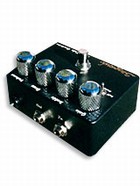
    One of the efforts, the Siegmund Micro Tube Overdrive, is a dual-gain stage, Class A preamp that can be used for a variety of purposes. Housed in an average-size stompbox, the Micro Tube was designed for use with electric or acoustic guitar, electric or acoustic bass, keyboard, or microphone. It can be used with practically any instrument that can be amplified. A true tube preamp, the pedal utilizes a genuine preamp tube – smaller than a 12AX7 – to create its warm tone. Being a small-bottle tube, it produces less gain, so the Micro Tube is a lower-gain unit.

    The unit is furnished with four rotary controls for Gain, Treble, Bass, and Volume. Each control is topped with a knurled chrome knob with no markings to indicate positions. However, there is a center detent on the Treble, and the Bass has 10 detents to mark increments. A three-way switch allows selection between Full, Bright, and Normal operation modes. The pedal is AC powered and includes a true bypass on/off switch as well as a light that indicates whether the effect is off (green) or on (red).

    The controls are easy to operate and fairly self-explanatory. It takes only a bit of experimentation to find the best settings for each instrument and situation. Unlike some effects boxes, the Micro Tube creates a transparent effect, allowing the guitar’s tone to remain prominent. Subtle differences come through the amp, depending on how the pedal is set, but the instrument’s inherent characteristics shined through, and listeners can distinguish differences between guitars, rather than to have the box make them all sound the same (as many overdrives do).

    Depending on settings, the Micro Tube can be used for overdrive, as a simple volume booster (up to 50 dB), or to fatten and warm up the ambience. We found the box very useful in balancing a guitar’s tone. The three-way switch can work like a master presence and tone control. Setting it on the center position is like setting the master control flat. Moved to “Full,” the pedal produces the fattest tones, while “Bright” brings out more sparkle without making the sound thin.

    The rotary controls are used to do all the fine-tuning. Gain adds the desired grease and balances the level and boost using the Volume control. When adjusting the Treble and Bass, we started at the mid point and increased or reduced the level to reach the desired sound.

    We used a variety of instruments to test the pedal, including a ’78 Les Paul Custom with Seymour Duncan pickups, a stock ’65 Strat, and a ’72 Martin D12-28 with a Barcus Berry bridge pickup. We played them through a mid-’70s 50-watt Marshall head and 4×12 cabinet, as well as through a solidstate Marshall 1×12 combo. We set the tone controls of both flat (at 5).

    With the tube Marshall head and 4×12, Normal and Bright worked best with the Les Paul, and any of the three settings worked well for the Strat for creating typical rock sounds. The Full position is more distinguishable with cleaner settings and adds subtle beef to the sound. It’s almost more of a feel than it is a direct tone. When playing the same guitars through the solidstate Marshall, we preferred the sound with the Full setting for all the electric guitars because of the extra warmth and fullness the box added to the straight amp sound. Normal seemed to work best for very clean playing with the electrics. Bright sounded better when we added more mids and bass to the amp’s EQ. For more gain, we tried turning up the amps’ preamps and using a Tube Screamer in line, placed after the Micro Tube. With both amps, these combinations worked out rather well. The Siegmund provided a way to balance and boost the guitar’s signal before anything else.

    As for our the Martin, we realize that a standard Marshall half-stack or combo is not the best setup for use with an acoustic guitar. But it is possible to play acoustic through an electric guitar amp with clean settings. When testing the Martin with the Micro Tube, the Normal setting seemed best and helped to bring out the guitar’s natural tone through either the tube or solidstate Marshall. It helped open up the guitar’s amplified sound.

    For further experimentation, we tested the Micro Tube by placing it between the guitars and a simple eight-track recording setup – with no amplifier. For acoustic guitar and clean electric guitar, the results were excellent and it really allowed us to manipulate the guitar’s sound for recording. Depending on what kind of sound you’re looking for when playing electric, you may prefer to use an additional overdrive pedal for more dirt and grease.

    We have some suggestions for making the Micro Tube more user friendly. Markings on the control knobs would help note preferred settings (a grease pencil or Sharpee marker does the trick, but…). We’d also suggest reversing the positions of the In and Out jacks, to conform with most other effects, so it would be easier to plug in line when using other pedals.

    If you aren’t accustomed to working with stompboxes that don’t drastically alter the sound, you’ll need time to fiddle with the Micro Tube to achieve the best results. Although we did not try the box with instruments other than guitars, the manufacturer says it can be used with a microphone or keyboard. We think it would work equally as well accompanying almost any instrument that could be amplified or mic’ed.

    For more info, check out Siegmund’s website, www.SiegmundGuitars.com, to see the span of his guitars and amp designs.


    Siegmund Micro Tube Overdrive
    Type Of Effect Overdrive Pedal
    Features Gain, Treble, Bass, Volume controls, Full/Bright/Normal switch, true bypass on/off stomp switch, operates on AC power only
    Price $249
    Contact Siegmund Guitars & Amplifiers, 888-633-6654, (818) 353-0218, (818) 353-5558, Chris@SiegmundGuitars.com, www.Siegmund Guitars.com


    This article originally appeared in VG‘s Feb. ’01 issue. All copyrights are by the author and Vintage Guitar magazine. Unauthorized replication or use is strictly prohibited.
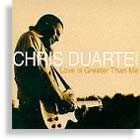
  • Chris Duarte – Love Is Greater Than Me

    Love Is Greater Than Me

    Chris Duarte is a great guitarist.

    Of the current crop of players aspiring to the permanently vacated Texas chair, Chris’ stuff rises closest to the top. In concert, his chops are endless and eloquent, crafted far beyond the constraints of the Lone Star School. On this most recent effort Duarte takes the steps necessary to lock in on the musical future he has made such sacrifice to attain.

    How do you establish an identity seperate of, yet still paying respects to, the man from South Dallas who singlehandedly unified so many modern schools? We’re finding out there is no next…well, there’s no need to mention the name, what the younger Vaughan would be the proudest of legacy-wise would be what is slowly taking place. Individual identities that retain his influence.

    Love Is Greater Than Me casts a number of styles, and at times takes on the feel of a demo. There is nothing demeaning in that statement. It’s just indicative of Duarte’s breaking out of the mold. Assuredly, he will be keeping track of the cuts that get the greatest response, and he’ll build his “second” career from the direction his faithful listeners (and there are many, this writer included) offer in response.

    Chris Duarte is the midst of a renaissance that listeners will ultimately benefit from.

    Zoe Records, One Camp Street, Cambridge, MA 02140.

    This review originally appeared in VG‘s Feb. ’01 issue.

  • The Country Gentlemen – The Complete Vanguard Recordings

    The Complete Vanguard Recordings

    If you listen to vintage Bill Monroe recordings, then to current bluegrass from the likes of Allison Krauss, it’s hard to see how we got from there to here. But once you listen to the Country Gentlemen you can see how the musical dots connect. The Country Gentlemen were one of the first bands to combine the drive of Bill Monroe with modern pop finesse. On The Complete Vanguard Recordings we have an opportunity to discover their influential style while reveling in the freshness of their music.

    Fronted by Charlie Waller on guitar and lead vocals, the Country Gentlemen’s lineup included a number of musicians who’ve gone on to important careers of their own. Mandolinist Doyle Lawson founded the band Quicksilver, which continues the Country Gentlemen’s style of tight harmonic bluegrass. After Country Gentleman Ricky Skaggs joined Emmylou Harris’ Hot Band, his own career catapulted him to the top of the country charts. Jerry Douglas had his first steady gig with the Country Gentleman before he evolved into the most in-demand dobro player in the world. Even at the beginnings of their careers, these players were superlative pickers. Here’s the proof.

    The Complete Vanguard Recordings includes all the material from The Country Gentlemen (1973) and Remembrances (1974). Their song selection was eclectic and urbane. Tunes by bluegrass traditionalists Bill Monroe and John Duffy joined “contemporary” material by Paul Simon, Kris Kistofferson, John Prine, Steve Goodman, and John Loudermilk. Tight sophisticated vocal harmonies were a fundamental element in their style. They nailed their three-part harmonies on the chorus of “One Morning in May.” In the Country Gentlemen’s hands, even pop material such as “The Leaves that Are Green” by Paul Simon sounds like a bluegrass standard.

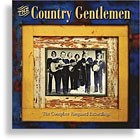
    David Glasser at Airshow Mastering transferred the original analog recordings into 24 bit 88.2 KHz digital format, where they were tweaked with Sonic Solutions software. The result is a clean, yet warm, sound. Producer Fred Jasper included the original album notes from the ’73 release along with his own introduction. While the packaging isn’t fancy, it is complete. I especially like the cover shot of the band wearing denim pantsuits.


    This article originally appeared in VG‘s June ’02 issue. All copyrights are by the author and Vintage Guitar magazine. Unauthorized replication or use is strictly prohibited.

  • August 2005

    FEATURES

    TONY IOMMI
    The Godfather of Metal Gets Fused
    Hailed as one of the most influential rock guitarists of all time, he conjured up dark and heavy riffs that inspired players for generations. On his new solo outing, he explores a broader, more melodic side. By Lisa Sharken

    IN DETAIL
    The Rickenbacker 325
    Introduced in 1958 with a distinct deep-double-cutaway design, it arrived just in time to launch the Rickebacker brand to superstar status in the electric guitar realm. But it had a bit of help from a Beatle. By R.J. Klimpert

    ROGER MAYER
    Straight-Shooting Effects Builder to the Stars
    In the early ’60s, a young engineer filled his spare time hanging out with a collection of up-and-comers on the London music scene, building effects pedals before most guitarists knew there was such a thing. By Dave Hunter

    1953 MACCAFERRI G40
    One of the greatest early achievements of the modern plastics industry, the G-40 is a living tribute to the memory of the classical guitar virtuoso (regarded second only to Segovia) who designed and built it after being inspired by clothespins! By Michael Wright

    OSCAR ALEMÁN
    In the 1930s and ’40s, Paris was the capital of jazz guitar, and Django was the big star in the City of Light. But the gypsy pioneer was not alone; an Argentine creole (and former street orphan) named Oscar Marcelo Alemán was also making Paris jump. By Michael Dregni

    BASS SPACE
    The Ernie Ball Earthwood
    Way before “unplugged” was cool, Ernie Ball bought a guitarron and gave it frets. Unable to interest manufacturers in an acoustic bass in the early 1970s, he created one himself. By Willie G. Moseley

    ’85 GUILD NIGHTBIRD PROTOTYPE
    While it looks like a conservative solidbody, it is in fact radically different from anything that preceded it, with a hollow body, carved spruce top, and an outline inspired by a flat-top acoustic. Judged in terms of bang for the buck, it’s a true sleeper. By George Gruhn

    THE DIFFERENT STRUMMER
    Retro Guitars, Part 2
    Toward the end of the ’90s, smaller guitar companies were able to order smaller quantities of guitars from Korea’s big factories. This made it much easier to create models with potentially limited appeal. By Michael Wright

    DEPARTMENTS

    Vintage Guitar Price Guide

    Builder Profile
    Briggs Guitars

    Upcoming Events

    Vintage Guitar Classified Ads

    Index of Advertisers

    The Great VG Giveaway
    Win a board loaded with Radial pedals valued at more than $2,000!

    Readers Gallery

    FIRST FRET

    Reader Mail

    News and Notes
    Marty Stuart gets a label, Les Paul, Gov’t Mule, L.A. Amp Show, Strat Pack, In Memoriam, more!

    Paul Johnson
    Guitars For the Messiah
    By Willie G. Moseley

    Geezer Butler
    Sab Aside
    By Willie G. Moseley

    Classic Concerts
    The Faces
    By Eric C . Shoaf

    Ask Zac
    By Zac Childs

    Grant Geissman
    By Riley Wilson

    Jesse Ed Davis
    Guitar Hero’s Guitar Hero
    By Dan Forte

    Four Nights
    Cream Returns to Royal Albert
    By Frank Moriarity

    Billy Sheehan
    Cosmic Troubadour
    By Lisa Sharken

    COLUMNS

    Q&A With George Gruhn

    Acousticville
    The Markley
    By Steven Stone

    FretPrints
    Michael Bloomfield
    By Wolf Marshall

    Gigmeister
    A Look at the “F” Word
    By Riley Wilson

    TECH

    Dan’s Guitar Rx
    Tuning-Key Mechanics
    By Dan Erlewine

    Guitar Shop
    Necessary Evil: Vintage PlasticBy Tony Nobles

    Amps
    Cap Jobs Done Right, Part II
    By Gerald Weber

    Ask Gerald
    By Gerald Weber

    REVIEWS

    The VG Hit List
    Music, Book and Video Reviews: Jefferson Airplane, James Burton/Ralph Mooney, Speedy West, Elvin Bishop, Walter Trout, Ibanez: The Untold Story, more!

    Check This Action
    The Complete Kaleidoscope
    Dan Forte

    Vintage Guitar Gear Reviews
    First Look! Roger Mayer Purple Haze Rocket Octavia! Plus, Carvin Belair 212, Headstrong BL310, Radial pedals, Fender FM52E, First Act Delia.

    Gearin’ Up!
    The latest cool new stuff!