
Month: April 2005

  • Univox Hi Flyer

    The Ventures had a powerful impact on both the worlds of rock music and guitars, as reflected in this ca. 1973 Univox Hi Flyer (a.k.a Hi Flier).

    In the early 1960s, the Ventures set the bar for instrumental rock with hits such as their rendition of Johnny Smith’s “Walk Don’t Run.” At the height of their popularity, they helped create one of the decade’s more memorable guitars – the Mosrite Ventures model designed by Semie Moseley.

    Legend has it that when the Ventures approached Moseley about a special model, they wanted something like a Strat, so Semie flipped over a Fender and traced a reverse body. Of course he added other notable touches, including the German carve edge relief he’d learned about when working for Roger Rossmeisl at Rickenbacker, the trademark angled fingerboard end with the slanted-back neck pickup and the ultra-sensitive Vibramute vibrato.

    Alas, during the ’60s, the popularity of the Ventures – and the guitar so associated with them – went into a decline everywhere… except in Japan, where both the Ventures and their guitar found a bountiful home. Constant touring and recording for a loyal Japanese audience kept the band going through many of its lean years and they still have a large following to this day. Not surprisingly, their signature guitar was successfully transplanted, as well. When Japanese guitarmakers increasingly began to emulate competing guitars, the Mosrite Ventures was among the earliest American designs to be imitated.

    Circa 1968, the first Ventures-style guitars and basses began to appear, made by various manufacturers primarily for domestic consumption. At about the same time, two companies – Aria and Univox – began marketing Mosrite inspirations in the U.S. Whether both were made by Aria or (more likely) simply sourced from the same factory – quite possibly Matsumoku – is unclear, but they were identical. Both the Aria 1702T and Univox Hi Flyer had an overall Mosrite appearance, with a similar pickup arrangement featuring black-covered pickups, large dot inlays (unlike the mini-dots on a true Mosrite), and typical Japanese hardware, including Lincoln-hat knobs and a Jazzmaster-style vibrato.

    As the copy era of the 1970s unfolded the Univox line expanded to include a range of other mostly bolt-neck copy guitars and basses. In 1973 or ’74, Univox took the unusual step of putting its own style of pickups on solidbodies – humbuckers with white bobbins visibly exposed under a sort of pinkish beige plastic cover set in a chrome housing, as seen here. These were remarkably “hot” for the time and gave Univox guitars a distinctive voice. Most Hi Flyers were produced in a high gloss, three-tone polyurethane sunburst; this natty Bowiesque all-white version seems to have been fairly rare.

    The Univox guitar line, including the (by then) rather retro Hi Flyer, survived at least through the end of the copy era in 1977, when it was replaced by the Westbury brand.

    Of all the Univox guitars, the Hi Flyer, with its slim neck, easy access and just plain cool looks, has remained the most popular, frequently showing up in the hands of “alternative” players who, whether they know it or not, are paying tribute to the long legacy of the Ventures.


    ca. 1973 Univox Hi Flyer.

    This article originally appeared in VG‘s Sep. ’03 issue. All copyrights are by the author and Vintage Guitar magazine. Unauthorized replication or use is strictly prohibited.
  • Carr Mecrury

    Tone of the Gods?

    Depending on where your affinities lie, the word “Mercury” can call to mind either the mythological messenger to the Roman gods, or upscale Ford cars. Amp builder Steve Carr’s latest combo shares the moniker, and many of the high-flying, upscale attributes that come with it.

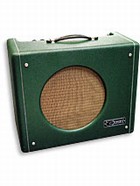
    Like the Carr Slant 6V we tested in the November ’01 issue, the Mercury uses nothing but the best components; aerospace-grade polypropylene filter caps, an aluminum chassis, George L’s cables, custom paper bobbin interleaved transformers, hospital-grade power cord, ’50s-style carbon resistors, a Kingpin 60 speaker, and Mallory filter caps. Construction is also of the highest quality, including the dovetailed solid pine cabinet with a floating baffleboard, point-to-point wiring, and an understated Hunter Green tolex with silver piping and tan grillecloth.

    The Mercury’s power comes not from winged shoes or a V-8, but from a KT-66 tube. The preamp uses two 12AX7 tubes and a single 12AT7 for the spring reverb. The Carr also runs on a 6L6, KT-88, 6550, or a EL-34, with a simple bias adjustment using a multimeter and screwdriver. The white, top-mounted control panel features knobs/switches for power, standby, volume, treble, bass, and reverb, but also offers a couple of new things to flip and twist, like a tone boost/defeat switch, a high-cut switch, and the most innovative new thing – a built-in power attenuator, which lets the user switch between a lively eight watts down to two watts, then 1/2-watt, and finally an apartment-friendly 1/10-watt.

    To test the little green monster, we used a late-’70s Ibanez Artist with stock Super 70 pickups and a Fender ’62 reissue Strat with stock single-coils.

    First up was the Strat. And given the Mercury’s inspired design, we weren’t surprised to hear the amp deliver sweet, Vox-like high-end shimmer and round low-end, much like a silverface Fender Deluxe. With the attenuator in the 8- or 2-watt positions and the boost switch in the number one position, chords rang out clear, defined, and very full. Boost switch positions two and three noticeably affected gain and the midrange, while adding just the right amount of edge and drive for blues and crunchy rhythms. And the high-cut switch softened any harsh notes or buzz the single-coils might produce.

    With the humbucker-equipped Ibanez, we ratcheted up our test a bit. First, we turned the volume up and jumped the boost switch to 3. This made for more pleasing sounds, where the mids blended well without hurting note clarity – even with a fistful of overdrive.

    Next, it was attenuator play time. Having familiarized ourselves with the 8-watt and 2-watt positions, we dropped ‘er into the 1/10-watt position, where the amp maintained a lively tone at a very low volume. None of the amp’s characteristics appeared to suffer; notes stayed defined and the desired crunch stayed crisp. The 1/2-watt position rendered the in-between volume you’d expect, with no recognizable change in tone.

    With both guitars, the amp’s reverb was outstanding with a clean, lush sound that added nice ambience without washing out the highs. The Mercury has no footswitchable channels or gain boost, but by manipulating the guitar’ volume controls, we could clean up the sound for rhythm work, and crank it for soloing.

    The Mercury’s overall superb quality, in both sound and build, along with the cool built-in attenuator, make it a great studio/small gig amp.


    Carr Mercury
    Type of amp All-tube Class A 1×12 combo with reverb.
    Features Single-ended fixed bias KT-66 output stage, three-position boost switch, treble cut switch, built-in attenuator.
    Price $2,095.
    Contact Carr Amplifiers, 23 Rectory St., Suite D, Pittsboro, NC 27312, phone (919)545-0747, www.carramplifiers.com.


    This article originally appeared in VG‘s June ’03 issue. All copyrights are by the author and Vintage Guitar magazine. Unauthorized replication or use is strictly prohibited.
  • Tab Benoit – The Sea Saint Sessions

    The Sea Saint Sessions

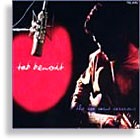
    Tab Benoit is one of those guys whose recordings get into my head, and I can’t get them out. It started in the early ’90s with a wonderful song called “Nice and Warm.” He has a unique feel and sound for a bluesman in this day and age. Maybe it’s because he grew up in Louisiana, but the feel of his records mix a little of everything together to form a roots-music gumbo that feels great(alright, it’s a cliché, but one I had to use given the circumstances).

    His latest, The Sea Saint Sessions is a fine piece of work. Nothing fancy. In fact, one of the things I’ve always liked about him is the rawness in his music. His vocals are gruff and soulful, and that same description could match his guitar playing. He’s a Fender guy, usually seen with a Tele, and he draws great sounds. Check him out trading solos with Brian Stoltz on “Hustlin’ Down in New Orleans.” It’s a perfect primer to his playing. Same with “Baby Blue,” which is one of those blues tunes that has a hook big enough to drive a truck through. “Solid Simple Thing” is the kind of New Orleans boogie you’d expect from a Cajun boy. “What I Have To Do” is a rollicking soul tune with killer lead and rhythm guitar. “Making the Bend” is pure-gold rocker with a crisp solo from Tab and nice bass work from former Meter George Porter.

    In all, this one’s a keeper. There are a million blues guitarists out there today, but Tab’s unique.


    This article originally appeared in VG‘s Oct. ’03 issue. All copyrights are by the author and Vintage Guitar magazine. Unauthorized replication or use is strictly prohibited.
  • Riptones – Slant 6

    Slant 6

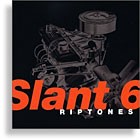
    You know, deep down, this is what it’s all about. The Riptones are, according to their press material, guys who, like most of us approaching middle age, still just love to get up and play music. And if this record is any indication of the shows they put on, a good time is guaranteed for all.

    The music is a really nifty mix of surf, country, and early rock. There are two guitarists, Jeb Bonansinga and Michael Krasovech, and I’m not sure who plays lead on what, but there’s some fabulous playing. “Go Be Do” is a country-rocker with killer bends, banjo rolls (on which somebody here is quite adept throughout the album), and some deep, deep twangin’. All of the cuts have real nice chordal work mixed with the single lines. It also helps that the songs themselves are all interesting compositionally. Not sure if it means he plays most of the solos, but Bonansinga wrote the lion’s share of material. “Maid Rites” is a fun R&B-meets-the-surfer tune that has intertwined guitars that mesh perfectly. And, it’s topped off by a rowdy solo that blows the roof off the building.

    That’s kind of how the whole record goes. It’s fun, interesting, and features some excellent guitar work. In the liner notes, Bonansinga thanks two bands whose influence shows up here – the Ventures and Booker T. and the MGs. I can’t think of a better way to wrap up how this band sounds.


    This article originally appeared in VG‘s Sep. ’03 issue. All copyrights are by the author and Vintage Guitar magazine. Unauthorized replication or use is strictly prohibited.
  • Jeffrey P. Ross – My Pleasure

    My Pleasure

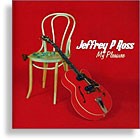
    You gotta love this kind of record. Ross has been around awhile, and probably isn’t real well-known to most folks. And it’s a blues album (for the most part anyway) from a guy who one wouldn’t associate with the blues. Ross might best be known for his work with Rank and File, and other projects. Here, he dishes up the blues in all kinds of flavors and sounds.

    “Muddy Waters,” as you might expect, is a Chicago blues with some nice snaky fills and killer harp and vocals from Ross’ Austin pal Guy Forsyth. “Pay Attention Blues” is an uptown blues with a killer sound. “Left Eye Jump” is an instrumental that features a tone to die for, a killer solo, and more than a tip of the cap to T-Bone Walker. Same for “Blue Mood.” “Flim Flam” is a nice, lazy shuffle with various cool solos including a rowdy, gorgeously distorted one. And Earl Hooker’s “Wah-Wah Blues” gets the deluxe treatment. The nice thing about all the blues on this album is the variation. Ross is no one-trick pony. He’s equally adept at a West Coast-style jump blues as he is on a dirty Chicago blues. The blues cover most of the meal here, but there are some other items on the plate. Check out “Blues Chair.” Ross does the Django tune justice. The clubby jazz of “Jr. Blues” gives Jeff a chance to show both his nasty and clean sides.

    Ross has a lot of help here too. He sings a couple of cuts and does a fine job. He has help from folks like Forsyth, Mark Goodwin, and Major Lee Burkes on vocals. And each cut has a cracker-jack rhythm section that helps propel Ross’ very-fine guitar playing. Call it a blues album if you want, but it’s a lot more than that.


    This article originally appeared in VG‘s April ’03 issue. All copyrights are by the author and Vintage Guitar magazine. Unauthorized replication or use is strictly prohibited.

  • Fender California Stratocaster

    Have you priced ’57 or ’62 reissue Strats recently? The pride of the Fender line ran about $750 when it was introduced in 1982, but today you’d be hard-pressed to find a used one for that price.

    However, you can find an assembled-in-America Strat that feels just like a ’62 reissue for less than $475. That guitar is the Fender California Strat, and it’s one excellent value.

    We’ve covered various Stratocasters here, and for good reason – the Strat works. After gigging for almost 30 years, I’ve come to the conclusion that a Strat is probably the single most versatile electric guitar you can own. I’ve played rock, country, blues, funk, jazz and more on a Strat, and it sounds great on all styles. If you’ve never tried jazz on a Strat, use the front pickup, dial the tone knob on the guitar back to three or four, and pick lightly. You’re in for a treat!

    In my opinion, the best Strats made were the early-’60s models with rosewood fretboards and three-ply pickguards. The louder volumes favored by ’60s Strat players resulted in a metal shield being installed on many guitars that helped diminish electrical interference, thus reducing noise.

    The California Strat is identical to the ’62 reissue in most respects. The C-shaped neck (my personal favorite) is mated to a thick rosewood slab board for ultimate stability. The three-ply pickguard is there, as are the traditional single-coil pickups, joined to that desirable five-way switch. Little details, like Kluson-style slotted tuners and mouth-watering colors like Candy Apple Red, Lake Placid Blue, and Black, make this guitar all but impossible to differentiate from a regular ’62 reissue.

    The story goes that the California series guitars were instruments that came to life stateside, were shipped to Mexico for painting, then returned to the U.S. for final assembly. In fact, unofficial word is that this guitar was so good it was taking away sales from the regular American Standard series as well as the ’57 and ’62 reissues. Whatever Fender’s rationale, the California series guitars are no longer available. Too bad, because this is an excellent Strat.

    I borrowed one from a friend for a recent trio gig, where I ran it into my Digitech RP-200, then straight to the P.A. The Strat sounded great – clean and punchy, like any good Strat should. I don’t know how the pickups are different, but they seemed to have a bit more high-end than the Mexican Strat I used to play. I installed a set of Super Bullet .010s, and it sounded and played in tune all night long.

    I enjoyed the rounder neck profile; when playing barre chords up the neck, a V profile can, if played long enough, cramp one’s thumb. This is critical for guitarists who keep their fret-hand thumb in the correct position – three-fourths of the way up the back of the neck behind the second finger.

    Re-stringing the guitar is pure pleasure with the old-school slotted Kluson tuners; just bring the neck string through the bridge, cut it off about 1″ to 11/2″ past the tuner, and push the cut end into the center of the tuner slot. Bend it down, and start winding. While a bit unwieldy at first, this is part of the reason so many veterans love old Fenders. That and the tone, of course!

    There are some things about any Strat that can become frustrating. It takes time and careful adjustments to make the whammy bar flexible enough to stay in tune under heavy use. The three single-coils are quite noisy by themselves, especially in high gain/high volume settings. This means many players end up using positions two and four to eliminate the hum. The trem arm on the guitar I borrowed sat higher than I was accustomed to, sometimes making it a challenge to play.

    If you need a vintage Strat at a reasonable price, you should seriously consider the California Strat. I’ve long wondered why guitars like Teles, Strats, Les Pauls, and 335s are the most popular instruments for gigging guitarists. When I mentioned this to my friend recently, he provided stunning rationale: “When an instrument becomes the pinnacle of the art, it ceases to evolve.”

    A perfect explanation why most of us love the classics!


    This article originally appeared in VG‘s March 2003 issue. All copyrights are by the author and Vintage Guitar magazine. Unauthorized replication or use is strictly prohibited.
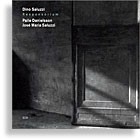
  • Dino Saluzzi – Responsorium

    Responsorium

    Argentine Dino Saluzzi is at the forefront of a new generation of bandonéonistas arriving on the scene since the overpowering force of Astor Piazzolla. Yet while many have remain trapped in the strands Piazzolla’s Nuevo Tango web, Saluzzi has broken free and created his own voice.

    Saluzzi has recorded a long string of albums, from traditional tango and folklorico pieces to exploratory improvisational jazz, highlighted by his masterpieces, 1995’s Rios (Intuition) and 2000’s Cité de la Musique (ECM Records). He also contributed to the beautiful album From the Green Hill (ECM Records) by trumpeter Tomasz Stanko. Yet while Responsorium may not reach the distinctive heights of Saluzzi’s best, it does signal the arrival of guitarist José Maria Saluzzi.

    The son of Dino, José Maria has played on several of his father’s past albums, but on this new CD, his playing has coalesced into a voice of his own. Originally a drummer, he switched to guitar at the age of eighteen, studying with Argentine jazz master Walter Malosetti.

    José Maria winds obbligatos through Dino’s bandonéon melodies and improvisations, then creates his own solos that are subtly beautiful in their simplicity. He plays a counterpoint to the bandonéon with a fascinating sense of harmony, experimenting with eccentric intervals and colorful chromaticism.

    Together, father and son have created an album of meditative music that is magical and hypnotic in sound and texture.


    This article originally appeared in VG‘s Aug. ’03 issue. All copyrights are by the author and Vintage Guitar magazine. Unauthorized replication or use is strictly prohibited.

  • Cream – BBC Sessions

    BBC Sessions

    These cuts were recorded over a 15-month period from late 1966 to early ’68. They were cut for the British Broadcasting Corporation. Because of strict regulations on the number of phonograph records that broadcasters could play in Great Britain, BBC engineers would record the bands of the day in their studios. The popular groups would appear and do three to five songs each time they were on the show. And, what’s unique here is the length. Cream became known for their long jams. Here, the longest cut clocks in just over four minutes, with a lot of the songs sitting between two and three minutes. For instance, there’s a really nice version of their classic take on “Crossroads.” It’s 1:53. Yes, 1:53. And, yes, Clapton does manage to fit in a magnificent solo.

    This really is a nice way to listen to the band. The hits sparkle, as you’d expect. So do lesser-known cuts like “Cat’s Squirrel”(with another brilliant Clapton solo), “Rollin’ and Tumblin’,” and the instrumental “Steppin’ Out.” The songs are concise and on the money. There’s no denying this band’s talent at the time and the enormous influence they were having.

    There are some nice short interview segments with Mr. Clapton from the BBC broadcasts. It’s fun to hear him explain why they would record a song like “Wrapping Paper.” Okay, great explanation, but the song? Well, let’s just say it’s never been a favorite of mine. It’s also kind of fun to hear disc jockey Brian Matthew. It’s a time capsule that let’s you hear him say things like “… and now, for some more groovy music from the Cream.” And speaking of groovy, you’ve gotta love the packaging. Even the “but it was the times” excuse cannot explain the large Afro Clapton sports on a couple of the pictures. What was he thinking? Oh well, like a friend of mine says, “If you don’t like Clapton’s hair-do, wait a couple of months, it’ll change.” And, as you can see from all the pictures, it did. Fortunately, his playing over this period was brimming with R&B confidence and he and Cream were riding a wave of creativity that was as strong as it was smart. If you are a fan, you’ve got to have this.


    This article originally appeared in VG‘s Sep. ’03 issue. All copyrights are by the author and Vintage Guitar magazine. Unauthorized replication or use is strictly prohibited.

  • Tony Joe White – Snakey

    Snakey

    The title track that opens the Swamp Fox’s latest offering sounds almost like a variation on his bluesy “As A Crow Flies,” from 1972’s The Train I’m On. Hallelujah!

    At this point in his career, White’s songwriting has earned him a comfortable enough living to allow him the luxury of doing what he damn well pleases, free from labels and producers trying to knead him into the latest trend. As a result, Tony Joe has released a string of the kind of albums his loyal fans have yearned for since the days of “Polk Salad Annie” and “Rainy Night in Georgia.”

    With spare but solid backing of drums, bass, and keyboards (the latter played by either Carson Whitsett or White himself), this is pure Tony Joe – backing his soulful baritone with harmonica and a variety of guitar tones (from gnarly Slim Harpo squall to Mexican-tinged gut-string). The set of 10 originals covers a range of themes and grooves that only White could pull off – from love realized and love lost (“Nothing I Would Not Do” and “All Those Tomorrows,” respectively) to novelty (“The Organic Shuffle”) to social commentary (“Rico (14) Field Worker”) to eery tales of the swamp (“Bayou Bleus”).

    I don’t know if that’s his “whomper stomper” or “swamp box” he’s plugged into on the infectious riff of “Living Off The Land,” but the result is one of the coolest wah/fuzz tones committed to disc in years – with a good old-fashioned wah-wah solo to boot. And there’s another helping of screaming, sustainy fuzz on “Taste Like Chicken” – another mini classic from the pen of this one-of-a-kind stylist.


    This article originally appeared in VG‘s Aug. ’03 issue. All copyrights are by the author and Vintage Guitar magazine. Unauthorized replication or use is strictly prohibited.

  • Bill Frisell – Blues Dream

    Blues Dream

    In some ways, Blues Dream is a bit of an odd title for this new release by guitar soundpainter Bill Frisell. Like several of his recent releases, the music is definitely dreamlike, with melodies riding atop underlying currents of sound. But the blues are here more in an atmosphere that permeates this album rather than in song form or the style of Frisell’s guitar playing.

    This new album continues Frisell’s voyage that began with his other Nonesuch albums, specifically Ghost Town, Nashville, and Quartet. The music for Blues Dream was commissioned by Minneapolis’ Walker Art Center, where it was first performed, on November 15, 1999.

    Frisell’s electric and acoustic guitars are joined here by Greg Leisz, who plays everything from pedal steel to lapsteel and mandolin to resonator guitar. The two guitarists blend their strings with a horn trio of Ron Miles’ trumpet, Billy Drewes’ alto sax, and Curtis Fowlkes’ trombone. Bassist David Piltch and drummer Kenny Wollesen round out the band.

    The album opens with the title song, which creates a melancholic blues from the sound of a National resonator and the moans of several horns; it evokes a mood like the electricity in the air before a thunderstorm hits.

    Frisell moves between his earlier experiments with sonic sculptures to integrating and improvising off classic American folk melodies that brings to mind the classical music of Aaron Copland. From the fog created by the guitars of Frisell and Leisz come the haunting nostalgia of sweet tunes you swear you’ve heard many times before, mixing minor-key moodiness with a rich pastoral sound. It’s a stunning combination.

    If you love guitar – or good music in general – you owe it to yourself to check out Blues Dream.


    This article originally appeared in VG‘s Aug. ’01 issue. All copyrights are by the author and Vintage Guitar magazine. Unauthorized replication or use is strictly prohibited.