Month: February 2005

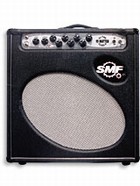
  • Sonic Machine Factory 15 Watter

    amplifier

    With tube amp gurus like Mark Sampson and Rick Hamel piloting the crew, we had a sneakin’ hunch that the Sonic Machine Factory’s 15 Watter we received for review was going to sound kick-ass.
    We weren’t disappointed.

    Sampson, fresh off a designing stint with the attitude-laden Bad Cat amp (VG, August ’02), and Hamel, who’s been tinkering with guitar gear since the ’80s and developed a line of tube effects pedals called SIB, have struck at the very heart of what guitar players want.

    The 15 Watter is the first in a planned line of “Watter” amps (read the funky company literature, then sit back and let it sink in for a bit…), and offers all we’ve come to expect from (yep, here comes that damn word…) “boutique” amp makers; hand wiring, class A circuitry, super-sturdy 11-ply Birch cab, all-steel chassis, professional-grade hardware, and military-spec components. So all the obligatory boxes on the checklist are marked off…

    The 15’s two-channel 12AX7 preamp section features a “Cruise” knob (okay, it’s a volume knob, and it’s one of just two controls with cutesy names), a “Hi Gain” knob, master volume, active treble/mid/bass/bright tone knobs, and a Reverb Control with it’s own tone knob!

    Another innovation is the 15’s EL-84 output section, which features what SMF calls a “Tube Wall,” which isolates the amp’s circuit boards, pots, and various electronic components away from the heat and electrical fields generated by the tubes. It also isolates the transformer, thus minimizing noise.

    Innovation #3 (okay, they’re not the first to use it, but more amps should) is the “Sonic Hatch,” a 7.5″ x 20.5″ swing-open door on the amp’s back panel. It’s purpose is no great mystery; instant cab tuning. “Cab tuning?” Basically it works like this: if you like your sound tight, with less free ring, shorter note decay, and more low-end, then close it up. If you’re more into your high-frequencies and prefer a faster, edgier attack with long note decay, plop that baby wide open!

    Plug In
    To give the amp a proper go, we snagged a couple of Fender Strats, a Gibson SG, and a Fender Esquire. With the amp on the “Cruise” (a.ka. “clean”) channel, the treble, mid, and bright controls set at about 11 o’ clock, and the bass at about 2 o’ clock, the Strats and the Esquire had a very large, very fat, full tone with sparkle on top and decided low-end punch. The only time we got anything close to a displeasing sound in this mode was if we cranked the volume all the way – and even then, simply closing the “Sonic Hatch” minimized the unpleasantry.

    Players sometimes refer to their overdriven tone as something they “…kick into high gear.” Well, with the 15 Watter, it’s more than just a euphemism; the high-gain channel is literally called “Hi Gear.” And with it switched on (via footswitch or the knob itself) and the gain control at 10 o’ clock, the single-coils yielded a super-fat blues tone, especially in the neck position on the Strats. The active tone controls were voiced very musically and even though they overlapped, there wasn’t any noticeable out-of-phase sound. With the gain set to max and the hatch closed, the SMF’s overdrive had a very British/Blackmore-ish sound with tight lows and well-defined mids.

    The SG’s humbuckers did a fantastic job, as well, with more of the expected fat British overdrive, with good note separation and no fuzzy overtones.

    The reverb was icing on the cake. The separate tone control on the reverb lets the user dial in anything from a very clean, soaking-wet tone to a deep, lush, ambient sound. Even though the SMF is only a 15-watter, it was plenty loud and would work well at most any gig, or in the studio.

    Sounds Good, Looks Cool
    Contributing to the 15’s unique aesthetic is a prevailing “oval” theme (oval speaker opening, oval silkscreening, oval logo) as well as chicken-head knobs, a choice of silver or dark grey grillecloth, and five tolex color options for the cab-front. Regardless of the combination, they add up to an amp with definite contemporary flare.

    And in the “Sheer Eye Candy” department is the backlit logo panel, with its circular red LEDs that spin at a speed determined by you, the user!

    Conclusion
    From a player’s point of view, there’s little if anything to find fault with here. The SMF looks cool, throws some curveballs into the mix, grants tremendous user flexibility, and sounds fantastic. The amp we tested suffered only from a lack of easy access to the tubes, but Sampson told us a design change was in the works. And that’s cool, because this baby will run so much that every so often it’ll need a new pair of shoes.


    SMF 15-Watter
    Type of Amp: All-tube Class A 1×12 combo.
    Features: Hand-wired construction, 11-ply cab, all-steel chassis, mil-spec components, innovative “Sonic Hatch” and “Tube Wall,” footswitch included, top-quality tone.
    Price: $2199 (retail).
    Contact: SMF/Sonic Machine Factory, www.smfamps.com.


    This article originally appeared in VG‘s April ’03 issue. All copyrights are by the author and Vintage Guitar magazine. Unauthorized replication or use is strictly prohibited.

  • Eric Clapton

    A Return To The Crossroads

    In many ways, 2004 marks a return to the crossroads for Eric Clapton. With his latest disc, Me And Mr. Johnson, the guitarist pays homage to one of his principal influences – the incomparable Robert Johnson. For Clapton, Johnson is the true master of blues guitar, and completing this album was a mammoth achievement. Although Clapton recorded several of Johnson’s tunes while with John Mayall’s Bluesbreakers, Cream, as well as during his solo career, this time he dedicated an entire album to the musician.

    The disc began as a diversion from the recording of another album containing only original material. When needing a break from his own reserve, he turned to his roots for inspiration, enjoyment, and a separate creative outlet – bringing his band along for the ride. But soon enough, what was a side project became the stronger venture. Clapton was reluctant at first, but then took it on as a personal challenge, practically daring himself to accurately learn 14 of the original 29 songs Johnson recorded during his brief career in the 1930s. For listeners, the resulting album is a conjoining of the greats – two of the most prestigious artists meet and put forward their very best. Johnson provides the material and inspiration for Clapton to deliver some of his finest work as a player.

    VG was invited to a one-on-one meeting with Mr. Clapton in New York City, where he spoke enthusiastically about his experience creating Me And Mr. Johnson, as well as the variety of events coming in the months to follow. As we learned, Clapton will kick off his next tour with a weekend extravaganza dubbed the Crossroads Guitar Festival. Scheduled for June 4-6, the festival will include a selection of workshops and manufacturers’ displays, capped by a star-studded concert at Dallas’ Cotton Bowl. Although the list of participants is still being finalized, artists such as B.B. King, Brian May, Eric Johnson, Steve Vai, Jimmie Vaughan, Joe Walsh, Sonny Landreth, and ZZ Top have already confirmed.

    Following the festival will be a second charity auction of more than 50 of Clapton’s personal instruments, June 24 at Christie’s in New York City. The instruments will be displayed first during the festival in Dallas, then exhibited in Los Angeles June 8-12, and finally brought to NYC for the sale, with gallery viewings June 19-24. While the June, 1999, auction of many of Clapton’s guitars drew a great deal of attention, this one seems poised to surpass it by including some of Clapton’s most prized axes, such as his beloved ’50s parts Strat, “Blackie,” and the legendary Gibson ES-335 he has had since his days with the Yardbirds. Additionally, several other artists, including Pete Townshend and Steve Vai, have donated personal instruments, adding to the excitement. Proceeds from the auction will benefit the Crossroads Centre that Clapton founded in Antigua in 1997.

    So without further ado, for the first time ever, VG proudly presents an exclusive talk with the one and only Slowhand.

    Vintage Guitar: What was the inspiration for recording an entire album of Robert Johnson’s music?
    Eric Clapton: It’s something I had probably been intending to do all my life, but I don’t think I ever considered that I was in a position to do it until I reached this age.

    I think it has something to do with maturity, self-confidence, and all kinds of things that I was fairly intimidated by – him as a performer, a writer, a player, and a singer. But I had always been influenced by him, and at the back of my list of influences, he’s kind of the core man.

    When I play lead, it doesn’t really relate directly, but the essence of what I do really hinges on what I originally felt about Robert Johnson, and heard. So I kind of looked back at my career and thought, “I’ve done so many songs of his over the years, but there’s still so many left that I haven’t done. So why not take this opportunity to kind of round them all up. Round up what’s left, and even do some that have been done, like ‘Love In Vain,’ that the Stones did, and ‘Stop Breakin’ Down,’ and just dedicate an album to that.” It has always been in the back of my mind, but I never seriously considered it until now.

    How did you go about selecting material?
    A lot of the songs I chose came off of the first album that was released before the other stuff was discovered. So, most of my initial choices were made on the basis that they were the songs in my head from my earliest exposure to him. Things like “Kind Hearted Woman,” “Stop Breaking Down,” and “When You Got A Good Friend” were on that first album. So I went through the ones that were the obvious choices. And then when we got about five down, I started wondering if we would benefit by even thinking about trying to do something like “Hellhound On My Trail.” Because to me, some of those songs are incredibly difficult – or just appear to be undoable. And that was the chief one that I thought, well, I’ll never ever… And we actually had to work on that one. We had to listen to his version over and over again, and figure out, well… there are a couple of things here where he adds an extra bar, and we’ve got to change that. And there’s an odd note there… And we learned it as a band. We actually learned his piece as a band, and dissected it, and put it back together again.

    I was really pleased in the end because when we could, we did everything live, and there are only a couple of songs where I overdubbed the vocal. I was amazed that we pulled it off.

    But to begin with, the first ones we chose were “Kind Hearted Woman” and “Traveling Riverside Blues.” Then we worked our way down to the ones that I would not think about because they were too difficult. So I’d kind of put them to one side as not being possible.

    So you worked your way up to those more difficult songs?
    Exactly. I had to. By the time we’d done three or four, I could see it was possible. Because when we started the thing, I wasn’t sure we’d ever finish it! We did the obvious ones because they seemed to be easy and they were accessible. Now when we got to the more difficult stuff like “32-20” or “Hellhound On My Trail,” I thought that maybe it would show me that I really can’t do this, and we’ll just have to put this project on the back burner or shelve it and think about it later. But then each time we’d finish a song, I’d think, “Well, God! I didn’t think we’d be able to do this!” I got a great sense of achievement out of it.

    Had you spent considerable time referring to the original Robert Johnson recordings?
    Each time. You see, the real story of the album was that I was actually in the middle of another project. I had started an album of original compositions with my partner, Simon Climie, and we’d half-written a lot of the stuff. I said to him, “Let’s try a little experiment. We’ve got the band here. When it gets difficult with our own stuff, let’s kind of have a break, and go and do a version of a Robert Johnson song – just so we could clear our heads and come back to our stuff from that perspective.”

    And that’s the way it started. It was really just going to be an escape clause, and it actually became the powerful venture, and the one that had the most feeling. So that means we’ve still got an album to wrap up.

    Did you record any tracks that didn’t make it onto the album?
    We did two versions of “Come On In My Kitchen,” and that was it. When we stopped, we had 12, and then we had 13, but I didn’t want 13 tracks, just because I’m superstitious. So we did one more.

    Really, I don’t think there’s anything left that I would add. There are a couple of things that are in the same kind of mode. For instance, we did “Milkcow’s Calf Blues” and “Traveling Riverside Blues” and those represent a certain category of the things that he did. “Milkcow” is very much like “Crossroads,” and it’s also very much like “Terraplane Blues” in that it has the same motif. So I wouldn’t have considered it a good idea to do all three of those because they would probably sound just the same as one another.

    So there are a lot of songs still left in his repertoire that I could do, but I chose the best representatives of each category of his, in my opinion.

    And did you also choose the ones which were best suited to you as a player?
    Yes.

    You recorded a lot of the tracks live. Was the band playing together in the same room?
    Yes. The only thing was we would sometimes have the drums baffled a little bit. And if there were electrics and acoustics playing at the same time – like if Andy Fairweather-Low would be playing acoustic, or if I would be playing acoustic, then we’d be baffled, too, but we’d still be in the room. The only kind of exception to that was a harmonica, where that was going to be straight into the microphone, so we’d have him in a separate room. But it actually wasn’t overdubbed, and was performed live. We could all see each other and hear each other while we were playing. Eye contact is important.

    Describe the gear used for the recording of Me And Mr. Johnson. Did you incorporate a variety of setups for different sounds?
    Yes. It was basically either the two Fender Twin amps that I use. One is an original ’50s blond tweed model that’s rewired and restored. That gets used a lot. Then there’s the copy that Fender made for me. They made a copy that has all the same materials, basically. It’s a lot more robust and I can use that on the road, too. And then it was really just like a variation of guitars.

    Most of it was done either on a Strat or vintage Gibsons, like a Byrdland and an L-5 with the Alnico pickups. Those are ’50s guitars. Then there were also a couple of Martins. There’s an OM-45 that I have – a pretty old one – and I used the Martin signature guitars a lot – the 000-42ECB and 000-28ECB. So that’s about it, really. There wasn’t a lot of equipment involved.

    Were the Strats you played newer or older instruments?
    They were new ones. There was the one I play pretty much all the time, which is the one that Crash painted. It’s a multicolored graffiti guitar. It’s just abstract. Crash is a graffiti artist from New York. He’s from the Bronx and he used to paint the trains. There were a few guys – Crash, Futura, Lee, Daze, and Haze. These guys used to paint subways, until it was outlawed and the city found a way to make the new trains with a chemical treatment so that the paint won’t stay on it. Crash is in his mid 40s and he was obviously a train painter when he was like 14. Now he’s legit and he paints on canvas, but still uses spray paint. I met him in the early ’90s and we became friends, and I asked him to paint a couple of Strats for me. I have a collection of new Strats and each one has been painted by one of these famous graffiti artists. But that’s the one I use most of the time.

    Other than the Crash guitar, have you played any of the other custom-painted guitars onstage?
    No, I don’t. That’s the only one.

    How do you use different instruments to achieve particular tones and emotions? And how do they bring out different attributes in your playing?
    It depends on what I’m trying to evoke. If I’m trying to evoke something from the ’50s, I’ll use an old Gibson. They’re quite tricky to play because I use fairly thick strings on them, so they’re louder and fatter. But it means that when I go to bend a note, I’m not going to be able to do exactly what I want. It’s pretty resistant. So I end up playing – or attempting to play – a little like T-Bone Walker would play, with that kind of sound. So it’s more of an implied bend than a full bend. I don’t really get to the note I’m trying to bend to. I kind of half get there, and then the string is too stiff. I love those Alnicos, but I have to dicker a lot with pickups so the bottom-end isn’t overwhelming, because they’re really rich bass pickups. I kind of have to let down the bottom-end, and then raise up some of the pegs in the pickup to get up to the E string and the B string.

    And then I play with my fingers, too, which adds a whole other dimension to the way it’s going to sound. And in fact, on most of that album, even with the Strat, I didn’t use a pick at all. When you play live, I think there’s something about using your fingers that gives it more intimacy. It’s all an intuitive thing. If I play with a pick, it’s a stage approach. I’m going for maximum attack and volume. And I don’t really follow that thinking when I’m in the studio and when we’re playing as an ensemble. I want to get inside the mix and so I’ll use my fingers. When I’m using my fingers, I’ve got much more control about how subtle it could be.

    Do you fingerpick with all five fingers on your right hand?
    I use the thumb and first two.

    On how many tracks did you use a pick?
    A couple.

    Have you ever experimented with different picks?
    No, I always use the same standard heavy pick.

    What are the gauges on your Strats?
    They have the stage strings on them, but I’m not sure what that is. Maybe an .011 or .010…

    How is the action on your guitars set? Do you prefer different types of setups on particular instruments?
    It’s funny, because when I start a project or if I haven’t played for a while and I go into rehearsals, I need them quite high at the bridge end. It’s almost like I need to get my finger on the side of the string to be able to push it over, because so much about what I do with an electric guitar is about bending. On an acoustic guitar, it’s the opposite thing. I want them low to begin with, so there’s not too much effort in holding them down in a chord.

    So it’s two different principles coming to play. But as I get more and more accomplished in my playing, like during the third week of rehearsal or even in the beginning of the tour, I’ll ask Lee (Dickson, Clapton’s guitar tech) to lower the strings on the electric and maybe even raise the acoustic. On the electrics, I probably want them to get lower as the tour goes on because the strength in my fingers has increased and I can push them easier.

    Do you have a designated warm-up guitar that isn’t one you play onstage?
    No. Normally, Lee will leave me an acoustic that I’m going to use, and the electric that I’m going to use. They’ll be in the dressing room in case I want to warm up. But I often don’t do any warm up at all. And I like doing it that way. There’s something innocent about that. I don’t want to dilute any of the performance before I actually play a show. I want that fresh impact to be in reserve for the stage.

    Is that so you can give 100 percent onstage?
    Exactly.

    How have your choices in gear evolved over the years? What are the most essential characteristics you need to hear when you’re selecting an instrument?
    Well, I think everything has got to have a very healthy midrange. I’m very suspicious of too much top or too much bottom. I mean, I respect and love all of the brands, but I always found it most difficult to, for instance, get on with Gretsch because I’m not quite sure what they sound like. I could never really get them quite right. And it’s important that any of the guitars I play have healthy attack. What I’ve gotten used to – and I suppose I’ve become spoiled by – is those Lace Sensor pickups that Fender kind of evolved. And the problem is, of course, that they’re really loud, and once you get used to that, it’s difficult to go back to the old single-coil. My old Strats are beautiful things, but when I plug them up, I think, where is it? I’m so used to the power of the Lace Sensor, especially the noiseless ones. They’re great pickups. So I’m kind of spoiled by that now. But I still like to go back to the Gibson Alnicos or the humbuckers to get that richness.

    Do you prefer newer guitars?
    I think that Fender is doing pretty well with their contemporary stuff. They’re the ones I would turn to for a contemporary guitar. But for a vintage guitar, I think Gibsons are unmatched, especially L-5s and Byrdlands.

    Do you feel there may have been more consistency in the older Gibsons than in the older Fenders?
    Probably, because it seemed like they were being handmade. Whether they were or not, I don’t know, but there was a certain amount of human supervision involved. But in a sense, I think the early Fenders were more like hotrods. There wasn’t a great deal of finish required. It was a different kind of animal. It was a solid guitar, and it was kind of rejecting a lot of the old guitarmaking principles.

    So there were two very different choices. The vintage Gibson was more like a Stradivarius, in a sense. It had a history and there were traditions involved in its making that Fender kind of walked away from. Fender invented its own tradition.

    Let’s discuss the upcoming Crossroads Guitar Auction. You already sold off a large portion of your collection in the first auction at Christie’s, and this second sale is going to include more than 50 of your personal instruments. What are some of the highlight instruments being offered?
    Well, the ones I didn’t want to sell the first time around! The “A” team. There’s a selection of really good Martins – 1930s Martins and a 1927 00-45, and there are a couple things like the Unplugged guitar – the 000-42. Actually, there are two 000-42s. They’re seriously good guitars. There’s Blackie, and the red ES-335 that I’ve had ever since I was in the Yardbirds. I think that’s probably the star of the show because it’s got so much provenance. It’s been around in all aspects of my career. I’ve used that on nearly every album I’ve ever made.

    Are there any instruments you would absolutely never consider selling?
    I think the Crash guitar I’ve used over the last five years will be mine forever. It’s the multicolored Strat that’s probably the one that’s most recognized now. That was like the first of its kind. Crash has done another one especially for this guitar festival. I’m going to play it for the first part of the tour and then I’ll put that into the auction. He’s painted that guitar to be the spearhead guitar for the whole campaign. But I’d never part with the original.

    What about amplifiers? Are there any amps you’d never part with?
    My tweed Twin. I love that thing, but every time I use it, it blows up! When it’s sounding really good, that’s the time to watch out!

    What will you be playing on the upcoming tour?
    The new Crash guitar, and I think I’ll probably be using the Fender Twin – the copy Twin.

    Will you have any pedals or effects?
    I’ve kind of mucked around with that AdrenaLinn – the Roger Linn piece. I think that’s a fabulous piece of equipment. It’s basically a sequencer, but it’s got some great sounds. In the end, I’ll probably fool with it in rehearsal, then just shelf it.

    The only thing I still use from time to time is a wah pedal. I have the original Crybaby – an old ’60s Crybaby. Otherwise, I kind of go without. My friend Doyle Bramhall is going to be playing in the band, and he loves all of that. He’s got so much of that stuff. It’ll be interesting to see how much of that he’s going to bring along. I just get confused if there are too many options. The simpler it is, the better it is, for me.

    What advice would you give to musicians on developing their own style and sound?
    Listen. Really learn to listen. The most important thing is to listen, and enjoy listening, too. But it’s not as easy as it sounds to listen without other stuff going on in your head. You know, just shut down the agendas and listen to what you hear. Listen to music all the time and enjoy it.

    What do you listen to for enjoyment?
    Anything. Anything. I love to listen to the blues, but I love to listen to jazz, too. I like ’60s jazz a lot. It’s where I go to relax. We’re talking Clifford Brown and people like that, like Thelonious Monk. I listen to that a lot because it is refreshing and it feeds the other kinds of music that I play in a very indirect way.

    Are you more inspired by listening to musicians who aren’t guitar players?
    Yes, very much. The people that I tried to emulate were actually players like King Curtis and Little Walter, who played with the same kind of attitude towards music, but their instruments were different – tenor sax and harmonica. And I was also inspired by Junior Walker. To play guitar like Junior Walker played saxophone is good fun.

    Many guitarists with distinct styles learned by listening to and emulating musicians who play other types of instruments.
    Yes, when they take it from another area they can pick up something that’s different. It’s not as interesting and not as illuminating when they’ve only learned from listening to other guitar players.

    Talk about the Crossroads festival. How did you go about choosing the other performers?
    The main body of the festival will be on the Sunday, June 6, when we’ll play at the Cotton Bowl. Friday will be the opening day, then Saturday will be workshops and there will be bands playing in the fairgrounds around the Cotton Bowl.

    I just put together a wish list of everybody I wanted to see play, and to play with. I’ve asked them to come, and hopefully, they’ll all turn up. The only thing is that now I’ve got to figure out how I fit into it, and how to design it. We’ve got to sit down at some stage and design the program of who’s going to play where, and how long, and who goes on when. That’s a mammoth task!

    Booker T & The MGs is scheduled as a house band, like at the Bob Dylan tribute concert you were part of in 1992.
    Yes. Well, that’s what inspired a lot of this, actually, because so many people showed up for that, and there was such good will and so much fun. I want to see people play, and I don’t necessarily want it to be where everyone comes on and does two or three songs. I mean, some people need to play an hour.

    Is there a theme for the musicians to follow in selecting the songs they will perform at the festival? Will the artists be playing material from your catalog, like they did at the Dylan tribute show?
    No, I’ve got no guidelines on that. I want them to do what they want to do. If they want to do my songs, that’s great. But I wouldn’t take it on myself to tell anyone what to do.

    I’m inviting them to be there under any auspice they choose. And it’s all to promote the Crossroads treatment center. So the idea came up to do the festival, but I hadn’t even thought about how we’re going to make money to cover the expenses, because there will be a lot of overhead. Some people will be able to come, but if they bring their musicians, you’ve got to pay them, and then there’s hotel and travel expenses, and all of that.

    But I think we’ll do well, financially, with the auction, which will follow on after the festival.

    It’s possible that this next auction may surpass the first in both sales and excitement.
    I think so, unless everyone’s got bored with that! You never know. When I was thinking about this, I was wondering if sometimes these kind of events go and kind of hit a zenith, and people say they’re tired of this memorabilia stuff. But I thought, “Well, I’m going to do it no matter what happens because it needs to be done, and it’s something I want to do. And I actually have got to get rid of these guitars!” I do! Because I feel bad just keeping them in storage. And what would happen if I lost them when I had the fire years ago? So it’s better that they go into the hands of either other collectors or players.


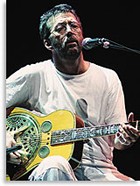
    Clapton “Unplugged” in ’94 and at the Teenage Cancer Trust benefit concert at the Royal Albert Hall, 2003. Photo: Ken Settle.

    This article originally appeared in VG‘s June ’04 issue. All copyrights are by the author and Vintage Guitar magazine. Unauthorized replication or use is strictly prohibited.
  • Rick Derringer

    Different Directions

    For all of his decades of experience as a guitarist, producer, and singer, Rick Derringer recently took his avocation in yet other musical directions.

    Among the classic instruments Derringer played throughout his career was a late-’50s Gibson Explorer. And nowadays, Derringer garners acclaim and chart action for his new recordings in the “smooth jazz” genre.

    “I grew up listening to a huge variety of music,” he noted. “My folks had a lot of country music, but they had a lot of jazz, too, like the Les Paul Trio. I grew up loving Wes Montgomery, John Coltrane, Barney Kessel… lots of people. I always looked at myself as a musician first and foremost, and as a singer/songwriter second.

    “And I always loved jazz. But when you’re a kid, you end up playing what your friends like, which for me was rock and roll.”

    The decision to pursue a smooth jazz direction was done at the urging of his wife.

    “A few years ago, Brenda told me ‘There’s nothing making you do (rock and roll) anymore; you can do whatever you want,’” the guitarist recalled. “She encouraged me to do a demo, which was ‘Jazzy Koo’, a jazz version of ‘Rock and Roll Hoochie Koo’. The first company that heard it told me they wanted me to do an entire record like that.”

    The resulting Free Ride (Big 3 Records) also includes covers of “Frankenstein” and the title cut. Derringer produced the Edgar Winter Group’s first album, They Only Come Out At Night, on which those two hits appeared, and joined as the guitarist on that band’s second album. Other tracks include covers of songs from Derringer’s solo career and new material, as well as two vocal tunes. “Jazzy Koo” was the first single, and the followup was “Hot & Cool” (which was number 18 on a jazz chart when VG talked with Derringer).

    The guitarist drew the line with three covers of hits, proclaiming that “… if I’d done one more version of a hit, the album would have come off like a novelty record.”

    Derringer has an admitted penchant for red guitars, and we asked about a modern single-pickup D’Angelico pictured in the album’s liner notes.

    “That was one that was made by Jim Triggs, a great guitarmaker,” said Derringer. “I used it on the whole album, but it’s hard to play it live. I can’t turn it up because it squeals like crazy. So I have one of the current D’Angelicos they sell out of New Jersey; it’s one of the most beautiful instruments I’ve ever had. I use it for some of the quieter [live] things, and for other songs, I might pick up my PRS hollowbody; it’s on the album cover.”

    The guitarist acknowledges and appreciates the effort of erstwhile Testament guitarist Alex Skolnick (page 18) and his trio (consisting of hollowbody electric guitar, drums, and upright bass) on Skolnick’s Goodbye to Romance album, noting, “I’ve got that album, and it’s great! He’s doing more pure jazz, and I’m doing smooth jazz.”

    Derringer also has a trio, but for his efforts in classic rock rather than jazz. For the latter, his aggregation is a sextet. One of the first live concerts the ensemble did was on a Las Vegas TV show.

    Yet another new direction for Derringer is both musical and spiritual. He had a born-again experience in the late ’90s, crediting his wife for facilitating his lifestyle change. He’s done some Christian recordings, including an album with his family titled Aiming for Heaven, and anticipates creating more Christian music in the near future. He looks forward to ongoing success in the smooth jazz genre as well.


    This article originally appeared in VG‘s Oct. ’03 issue. All copyrights are by the author and Vintage Guitar magazine. Unauthorized replication or use is strictly prohibited.
  • The Bangles

    Yesterdays... and Today

    The Bangles are back! After a 10-year separation, the band that rose to prominence in the 1980s with such hits as “Manic Monday” and “Walk Like an Egyptian” reunited in ’99 to record “Get the Girl” for the second Austin Powers film The Spy Who Shagged Me. A club tour followed in 2000 to test the waters – not as another “cash in on our past” act, but to give rise to a rebirth. This fresh start incorporated new material as well as radical rearrangements of their more familiar songs. The response was overwhelmingly positive, ultimately resulting in an album of new material(2003’s Doll Revolution) and the new Essential Bangles greatest hits compilation.

    We recently spoke with Vicki Peterson (lead guitar) and Susanna Hoffs (rhythm guitar), asking them to reflect on the Bangle way of life as guitar-toting musicians.

    Vicki Peterson
    Vicki Peterson’s life in music began with a plastic guitar from Sears. She “got serious” when, at the tender age of nine, she became the proud owner of an Electro ES-17 guitar and an 8-watt Rickenbacker amp.

    Vintage Guitar: Which guitarists inspired you?
    Vicki Peterson: I’d have to say George Harrison, and a little later, Paul Simon. In high school, I discovered Bonnie Raitt. Because of her, there was no obstacle in my mind, because of my gender, that I couldn’t be playing electric guitar. It was so great to see a woman doing it so effortlessly. I was really influenced and impressed by that.

    Was your next guitar the double-cutaway Univox Ripper?
    Yeah, it was a really clunky guitar. I’d sold the Electro for some odd reason and was playing mostly acoustic. The Univox was stolen, which was a gift in disguise, because that’s when I bought my ’72 Les Paul.

    And you wound up with two Les Paul Customs…
    Yes. The original was dubbed “the love thing” because it played like a dream. It was accidentally dropped by a member of our road crew. He was so wracked with guilt that he actually gave me the (second) Les Paul!

    How did your amplification progress to the Fender silverface Super Reverb?
    I used to play a Twin that I never really warmed up to. I’m a reluctant gearhead; if I get a piece of gear, unless something terrible happens to it or I’m really unhappy with it, I’ll hold on to it for a long time. Probably part of my Catholic upbringing, you know – assuming it’s my fault (chuckles).

    But I realized that the Twin was way overpowered. I could never get the natural distortion I like. That’s when I switched to a blackface Deluxe. Also, in ’83 or so I bought a Marshall combo. We started playing theaters and needed something with a little more “umph.” That’s when I got the Super.

    What equipment is on the “Getting Out of Hand” single, on The Bangles EP from 1982?
    I had my ’67 Strat by then. We also borrowed a 12-string from the guys in The Last and played that on the single. For the EP, I had my Les Paul and I was probably playing through the Deluxe and the Super.

    Did you keep the same equipment for the All Over the Place sessions in ’84?
    Yeah, everything stayed the same. I think I stuck with the Marshall combo for that run.
    In 1986, you began using Carvin guitars. What attracted you to them?
    They were free (laughs)! Actually, their guitars, despite being incredibly ’80s on certain levels, were really good warhorse guitars. I was tired of seeing my guitars getting so banged up on the road. Carvin’s were really dependable and adaptable to the different sounds that I would try and replicate from the albums.

    You also began using more powerful amplifiers.
    We were using the Carvin cabinets because they sounded great. I used Marshall heads because we were playing larger places and I needed to rooock! But, it was always a dilemma. The Marshalls – though they had the power and could give a really fun, square-wave kind of distortion, I missed the Fender tubes.

    Did the intrusion of technology begin with the Different Light sessions?
    Well, that’s where it started. We would go in as a band, all four of us in a room, and lay down the song. Then, in classic ’80s style, with the guidance and decisions of David Kahne, our producer at the time, we would systematically replace everything we’d just done (laughs)! Every guitar line was replaced with various schmutz. Even Susanna’s rhythm tracks.

    When it got time to translate them live, that’s when I’d sit there and say, ‘Okay, for the first four bars of the intro I need this sound; then it kicks into this sound; for the solo, it’s got to go to this sound.’ By ’89 I had a MIDI-Gator trigger pedal instead of my stompboxes, and was triggering a rack full of delays, compressors, different distortion units… It blew my mind! By the time I left the Bangles, I wanted a guitar, a cord, and an amp. And a pick. Maybe a capo.

    Afterward, you linked up with Susan Cowsill, then joined the Continental Drifters. What was that like?
    It was the absolute antithesis of what I’d just left in the Bangles. This was people sitting around having a barbeque, playing music in a living room with acoustic guitars, playing mandolin… It’s when I started realizing that I really liked traditional country music – I liked Gram Parsons and Emmylou Harris. It was a complete salvation for me in so many ways.

    Was this when you began using your pink Fender Telecaster Thinline?
    Yeah. My fiancé passed away in 1991 and he had a closet full of wonderful guitars. He had this beautiful, pink Thinline. I’d always steered away from Teles. To me, it’s a guitar you really need to be able to play well to play – ‘cuz I’m a hack! But then I started playing it, partially because it was special to me. Now I just love it – I figured it out (laughs)!

    Why did it take so long for you to discover the “Great Gretsch Sound?”
    I think it’s because I wasn’t trying to emulate George Harrison. Peter Holsapple, in the early days of the Drifters said, “You need to play a Gretsch. That would sound really great.” At the time, the idea of even buying a guitar at that point was, you know – I can’t afford it (laughs)!

    I was kicking myself a little bit because Peter had been so right – I should’ve played the Gretsch for years. I love the Tennessee Rose – just a beautiful guitar. It’s got that Gretsch body sound I do wish I’d discovered earlier. But I wasn’t paying attention!

    I also got a Country Classic Junior. It acts a little bit more like a standard rock guitar. I love them both.

    For Doll Revolution, you brought “The Rain Song” and “Mixed Messages” over from the Continental Drifters. Both are a bit more uptempo with the Bangles. Were you going for a different type of production?
    Well, I did want to try something different. “The Rain Song” I decided to put up a step and sing in E instead of D. That automatically gives it a lift. Critics and other people had mentioned that “Mixed Messages” sounded like it could’ve been a Bangles song. So I thought, “Well, what would that sound like?” Actually, I almost took it off the record. We came up with those harmonies and were just killing ourselves laughing, because we thought it sounded exactly like the Carpenters!

    When you use the Marshall combo now, do you use the preamp much?
    Definitely. I do dirty it up a little bit even for my clean sound, but not excessively, because I have a Tube Screamer that I put through for the gnarly stuff.
    You recently added a burgundy Les Paul Custom to your collection…
    On the last tour, [my Les Paul] got lost on its way to Norway. I was in a panic because it was my main guitar. So we borrowed one from a music store in Oslo. They say every time he loans out that guitar, people want to buy it. He never sells it. So it was like, “Oh, my god! The angels were singing,” because it played amazingly and had incredible sustain. After the show, Micki (bassist Michael Steele) went, “That’s an amazing guitar! You have to buy it!” And I thought, “I don’t think I could afford this guitar. And besides, the guy won’t sell it!”

    About 15 minutes later (the promoter) said, “The guy’s wife just called, and he’ll sell the guitar.” So I got it (laughs)!


    Susanna Hoffs
    Susanna Hoffs began her musical odyssey in elementary school, with a nylon-string guitar and a handful of chords taught to her by her uncle. Once she became “fluent in being able to move from one chord to another,” she learned to play more songs “in the folk tradition of friends teaching each other.”

    Vintage Guitar: When did you begin to play electric?
    Susanna Hoffs: It wasn’t until the summer before college that I started to get into playing electric guitar. The first electric I got, through the Recycler (a weekly classified ad newspaper in L.A.), was a Gibson SG. The ad said something along the lines of it had been owned by one of the Byrds. So that kind of did it for me. But I never knew who in the Byrds (owned it).

    Then I got interested in Rickenbackers because of the Beatles and the Byrds. I liked that really jangly, bright sound. It was during the years that I went to UC Berkeley I started going to guitar stores and looking at equipment – being interested in vintage stuff, because I was interested in vintage music (chuckles)! I found the ’60s Rickenbacker with the black and white checked binding I had for awhile. Pretty sure I bought it in San Francisco.

    Was that guitar used for recording the first Bangles single and EP?
    Yes. That was my main guitar in the early Bangles’ days. It had a very shiny, very smooth finish on the fingerboard, like glass, practically. It was really fun to play, but the action was a little bit low and buzzy. Somebody suggested I get the frets worked on, and that turned out to be a disaster, because when I got the guitar back, they had gotten rid of all that finish. It just never felt the same. I’ve never had a guitar worked on (since) without knowing beforehand exactly what was going to happen to it. It was very traumatic.

    I ended up selling that guitar, but I remember wanting a Rickenbacker that felt like that one had before.

    What was your first amp?
    My Fender Deluxe, which I also got through the Recycler. It’s my favorite amp, and I play it to this day. So there you go (laughs)! If you get a good piece of gear, hang on to it!

    How did the Ric 325 come into your possession?
    Again, probably through the Recycler. I got my little John Lennon-styled Rickenbacker, and it ended up being more of a video guitar. I did use it on some of the early Bangle records. We didn’t keep using it as much because it was harder to tune and it was a true 3/4-size guitar. The neck is very small. It’s actually a little bit less comfortable to play. But that one is a really prized possession, with the original case and everything!

    Didn’t you also play a Fender Telecaster?
    Yeah. I never actually owned one. A guy who worked on our crew for awhile lent me one for a considerable length of time. That’s the blond guitar I played.

    What was your first electric 12-string?
    It’s a ’66 Guild Starfire, and it has this incredible bright-but-warm sound. The pickups are so loud – it has this warm overdrive. This guitar is so magical that I stopped taking it out on the road. Every guitar player I ever worked with actually went out and tried to find one like it.

    On Doll Revolution, there are so many parts I did on that guitar. Every time you hear a bell-like 12-string, it’s that guitar. It just takes you right back to the ’60s, in a way. It’s a vintage sound, but it’s modern, too. I’d say it’s up there as one of my most treasured guitars. I don’t know what I would do without it.

    Your Rickenbacker and Guild appear on All Over the Place, the Bangles’ first album with Columbia. Yet in 1984-’85 you toured with a Fender Stratocaster…
    It wasn’t a long period of time that I was a “Strat girl.” I don’t think it was an old one.

    During the Different Light sessions in late ’85, you acquired Ric 350s in Fireglo and Jetglo, and two 620/12s.
    Definitely. I was kind of coming to the conclusion that the Rickenbacker really was my guitar. Not to say that I haven’t enjoyed the sound of other guitars, but it became the signature sound… a sound I felt at home with.

    How did the Susanna Hoffs Limited Edition 350SH come about?
    I think Rickenbacker knew I was playing the guitars and asked me if I wanted to do it. I said “Yeah!” It didn’t take me a long time to figure out what I wanted the guitar to look like. I wanted to go back to the look that I’d fallen in love with in the first place – black with the checked binding. The model I sort of designed and had Rickenbacker make turned out to be the perfect size and shape for me, which was the 3/4-sized body with the full-scale neck.

    Why did you place HB1 pickups in all three positions on both of your 350SH models?
    During that time (1988-’89) we were playing really, really big places. It was an attempt to beef up the sound a little bit. Everyone thinks of the Rickenbacker as a sort of trebly, jangly guitar – which it is. I wanted the Rickenbacker to serve all those different needs, so that was the idea.

    At that time, you also played the Fritz Brothers’ Roy Buchanan Bluesmaster guitar. How did that come about?
    They contacted me and said Roy wanted me to have the guitar. He made the number one model for George Harrison. Mine came with a number two on it, and my name on the little engraved tag on the back. I was really honored. I have no idea how he knew about me or anything. But apparently he requested that I have that guitar. It’s an orange one. Vicki got a blue 12-string shortly after I got mine.

    During your solo years, how did you discover the Taylor K22?
    I was working with a management company called Gold Mountain, who had a lot of clients who played Taylors. I get a call and they said, “Come down to the office. We have something to show you.”

    I went down and there was this incredible koa acoustic guitar. I picked it up and it was like heaven, this beautiful, dark koa wood with mother-of-pearl – it was really exotic looking! And it’s small – I think it’s a concert size. I thought, “I finally have an acoustic guitar!” And I’ve been playing it for years.

    I can’t say enough about Taylor guitars. You can leave them in the case for months and (when) you want to pick up and play, it’s in tune! They’re just so well-made. It’s like the Rickenbacker – there’s something about your connection to the instrument. It becomes like a friend, and you feel real comfortable with it.

    What was the impetus for the Susanna Hoffs Signature Series guitar?
    A friend mentioned my name to T.J. Baden (at Taylor Guitars) and said, “Did you know Susanna Hoffs plays a koa Taylor?” T.J. had been getting artists to do the signature models.

    So I got a call and was asked [if I wanted] to do it? “Absolutely!” I said, “But it’s gotta be koa!” I know that because I never would have thought to buy a koa guitar before.

    Why were no 12-string guitars used during any of the Bangle performances since the reunion?
    I can’t afford to take that Guild out with me. It’s just too precious and too fragile. I’ve actually been on the hunt for a roadworthy 12-string. I really miss having one on the road. I’d use it on tons of stuff. It’s really the only thing I need.


    Rickenbacker 350SH
    Based on the company’s semi-hollow 350, the Susanna Hoffs 350SH, introduced in 1988 and limited to 250 units, had a combination of one HB1 humbucking pickup and two vintage-style “chrome bar” single-coils. It also boasted a 24-fret rosewood fingerboard which, like the body, had checkered binding. Other features included a neck made from solid maple. List price was $1,279.


    Vicki Peterson in the ’80s with a Yamaha double-cut and in 2003. Photo: Gene Ambo/Star File.

    This article originally appeared in VG‘s Sep. ’04 issue. All copyrights are by the author and Vintage Guitar magazine. Unauthorized replication or use is strictly prohibited.

  • Parsons-White String Bender

    On September 20, 1983, Jimmy Page re-emerged into the public eye after the death of John Bonham and the breakup of Led Zeppelin with a thundering ovation at the Royal Albert Hall in London. Instead of a sunburst Les Paul, the model synonymous with his onstage persona with Zep, Page chose as his primary instrument an austere-looking, brown Telecaster with what looked like an additional chrome volume knob behind the bridge.

    Of course, it was not a volume knob; Page’s Tele was equipped with a Parsons/White StringBender, which Page had previously used to great effect on the beautiful, melodic, bent-note runs on Led Zeppelin’s classic ballad, “All My Love,” and live on “Ten Years Gone.”

    Page had begun to use the StringBender on Zeppelin’s 1977 tour. Prior to that, he frequently bent notes behind the nut of his instruments with his fingers, as can be heard on the unaccompanied “Heartbreaker” solo on Led Zeppelin II and seen on the same number in the DVD of The Song Remains The Same.

    Curiously, this was how the StringBender was invented by Gene Parsons (above) and the late, great Clarence White in 1967, some 10 years prior to Page incorporating the device. Parsons recalls, “I was doing some sessions with Clarence White, and he was one of the very first ones to chime a string – the B string, or high E string – and pull it over the nut of a Telecaster” (Ed. Note: strike a harmonic and reach behind the nut to press down on the string and raise the pitch). The sessions Parsons and White were recording were, to the best of Gene’s recollection, for a never-released Rex and Vern Gosdin album.

    White, one of the most important figures in country music, was the rare example of a guitarist who was already hailed as a true pioneer, then reinvented himself and became equally staggering as a pioneer in a different style on a different instrument. First, he was a flatpicking bluegrass prodigy, known for both his phenomenal solo and rhythm work while still in his teens. He and his brothers, Eric and Roland, formed the Country Boys, later renamed the Kentucky Colonels, whose 1964 album Appalachian Swing still sounds groundbreaking 40 years later. After making the switch to electric guitar, White became an in-demand session player in Los Angeles, appearing on Byrds LPs as far back as Younger Than Yesterday (recorded in 1966) and helping forge country-rock on their pivotal Sweetheart Of The Rodeo album in 1968, before becoming a full-time member.

    But before joining the Byrds (and prior to Sweetheart), White was playing Telecaster in a country-rock band called Nashville West at a club also called Nashville West, in El Monte, California. The group’s drummer was Gene Parsons, and by the time of Dr. Byrds & Mr. Hyde, recorded in the fall of 1968, the pair comprised one-half of the Byrds, along with bassist John York and sole original member Roger McGuinn on lead vocals with his trademark Rickenbacker electric 12-string.

    “I Need a Third Hand!”
    While Parsons doesn’t recall the specific song from the Gosdin Brothers session, he does remember that White began to record a simple lead part. “He wanted to chime the string and pull it over the nut, and then he wanted to do it at the second position and the third position. He said, ‘Gee, I wish I could do that, but I’d need a third hand!’” Parsons volunteered to be that “third hand,” pushing the strings behind the nut in time with White’s playing.

    Afterward, the two wondered, “How can we do this?” Parsons, who later joined the Flying Burrito Brothers and recorded with the likes of Randy Newman and Arlo Guthrie, is a multi-instrumentalist in addition to being a master machinist. (Ed. Note: Gene is not to be confused with, and is not related to, the late Gram Parsons, even though both were members of the Byrds and Burritos at different times.) He remembers that his first reaction was, “Well, I can rig up a bridge on the back of your guitar, and attach cables and foot pedals.”

    “If I wanted to play pedal steel, I’d play pedal steel,” White replied tersely. This helped shape the StringBender’s development with some important parameters: Its mechanism should be entirely self-contained and not very obvious or visible; and it shouldn’t, in White’s words, “take my hands out of their normal stance or alter the way that I play the guitar, except that I’m able to bend strings, or pull strings, somehow.”

    That was a tall order, but Parsons had prior experience modifying banjos with Scruggs tuners and at one point had even tried to build a cross between a banjo and pedal steel.

    Choosing Which String
    Parsons eventually came up with the idea of using the shoulder strap as the primary method of bending the note. Parsons procured some pedal steel parts from steel ace “Sneaky Pete” Kleinow. Then the question was which string would be pulled. Gene recounts, “Clarence said, ‘I bend the G string a lot with my fingers, but the B and E strings are harder to bend, and the B lends itself to more combinations with other strings.’”

    To cover his bets, though, Parsons first devised a mechanism capable of both raising and lowering each of the top four strings of the guitar, using parts from a Fender 800 pedal steel. But in fairly short order, he and White knew their hunch about the B string was correct, and the multiple-string Bender was jettisoned in favor of a mechanism that would allow the player to raise the B string’s pitch a whole tone. Pushing down on the guitar’s neck would, in essence, pull up on the strap button, which was connected to a hub behind the bridge, where the B string was secured.

    “People started calling it the ‘B-bender’ or ‘pull-string,’ which are sort of generic terms that players gave it,” Parsons explains; however, the correct name was originally Parsons/White StringBender. “I’ve done ‘E-benders,’” Gene points out, “but Clarence found that the B was the one that lent itself to the most combinations of pleasing bends used in concert with bending the G string with your fingers.”

    The StringBender allowed White to perfect a unique and enduring playing style, as it’s a much different device than the traditional vibrato arm (like a Bigsby) on electric guitars – or “tremolo” arm, as Fender literature incorrectly refers their whammy bars. It was the ability to play a bent note in combination with a stationary note, or having more than one string moving – essentially aping what a pedal steel does – that attracted Clarence and became the foundation of a whole new approach to the guitar. “The StringBender allows for a totally tunable, bendable note,” says Meridian Green, a singer/songwriter and daughter of the late folk singer Bob Gibson. Green joined StringBender, Inc. in 1988 and became the company’s CEO.

    “It’s much more ‘pedal-steely’ because you get to hear this one note moving really smoothly from the starting position to a full-step up,” she explains. “And when people get really good, they can do half-step bends and stuff like that.”

    But as early recordings of Nashville West (not released until 1976) reveal, White was achieving multiple-bend pedal steel-type licks with his fingers prior to the StringBender’s arrival; so he and Parsons essentially invented a device to fit a style that Clarence was already playing. Of course, White wasn’t the only player, then or now, to emulate steel licks on a standard electric guitar; Amos Garrett, Gerry McGee, Roy Buchanan, Jerry Donahue, Thumbs Carllile, and others incorporated steel-like bends into their playing decades ago.

    Parsons had suggested routing out White’s Telecaster for the mechanism, but per White’s request, the initial Bender mechanism was largely mounted on top of the guitar’s back, and covered with a piece of wood shaped like the Tele’s back. This made the guitar look like an extra-thick Telecaster, which was fine with White, who was used to playing Martin D-18 acoustics. Parsons says, “He’d only been playing electric for a couple of years, so he said, ‘That’ll actually help me if you build the body out.’ He also put Scruggs [banjo] tuners on the high E and the A.”

    The original patent – for a “shoulder strap control for string instruments” – was filed under the names of Gene Parsons, who invented and built it; Clarence White, who, as Gene says, “invented the need for it and the way to play it” and refined the concept; and Ed Tickner, then-manager of the Byrds, who financed it and arranged for it to be licensed to Fender.

    Visiting Fender, Episode I
    In 1968, Parsons and White took their design to Leo Fender, who was still a consultant with the company that bore his name after its sale to CBS. Parsons says that Leo, an inveterate tinkerer himself, was intrigued by the idea, and created a prototype for a mass-produced version. “Leo and George Fullerton liked it a lot,” Parsons says, “and the company gave Leo the okay to do a prototype. And Leo built a very nice, easily mass-produced prototype, which was a combination of a couple of ideas – one being the StringBender, the other being a guitar that was pretty much bullet-proof. Leo made Clarence jump up and down on the thing, and it just bent like a spring, but was still reasonably in good tune.”

    Unfortunately, though, still in the wake of the CBS takeover, there was a lot of hiring and firing going on, and, in Gene’s words, “We had to re-educate a whole new crew, and they were all kind of looking over their shoulder, realizing that the bunch before them all got fired. So they weren’t wanting to stick their necks out with much new product, and it got stalled.”

    At that point, Parsons licensed it to Dave Evans, who built “a sort of sandwich type of Tele” and made some modifications to the Bender. It was an Evans version that Albert Lee acquired, and played some of his most famous solos with; he still uses it to this day, along with a Parsons model. “There are different schools of thought,” Gene allows. “Some people like a short, jerky stroke, which is the way the Evans and the Glaser are. In other words, you don’t move very much, and the string moves a whole tone. I didn’t remember how far the travel of the strap pin moved on Clarence’s original model until I later measured it. In order to raise that B string one full tone, that lever is traveling an inch and one-eighth. That’s much longer than my standard version, which is a half-inch to five-eighths. But a lot of people listen to what Clarence did on those old records and say, ‘How did he get such a sweet bend?’ Part of it is Clarence’s technique, but the other part is that he had this machine that made it easy to do a really slow, linear, sweet bend. So for close to 10 years, I’ve had a long-stroke option available for the ones I produce here. The way I explain it is, it’s not so much the destination when you’re bending, it’s the trip that gives it the intrigue.”

    Parsons, now 59, eventually began making and installing StringBenders himself, but sadly, Clarence White died in 1973. He was loading his guitar into his car after a jam session when he was hit by a drunk driver.

  • Crowsong – Western

    Western

    Crowsong’s first album was very atmospheric, with all sorts of guitar sounds flying about. This one has a more definite band feel, with songs that feel a little more familiar. That said, I thought both albums were quite good.

    Randy Clark plays the guitars, does some vocals, and appears to be the leader of Crowsong. His playing covers lots of ground. There’s nice acoustic folk-rock work on “Two Manhattens.” His slide and chordal work on “My Girl” sets the feel for the song. In fact, his very atmospheric sound helps define a lot of the cuts here. “Separate Ways” has a late-’60s sound. “Drive” features an intro that lasts almost two minutes and is dark and loud. That breaks right into stately, ringing guitars. By the time you get to the end of the tune, you’d swear it was Neil Young playing the solo out. It’s right on the edge, threatening to spill over, but never does. Really beautiful work.

    “Red Is the Color of Blood” has very nifty guitar work that brought the tune “Telstar” to mind. A little reverb and some nice twangy notes. Of course, as you learn to expect from Clark, that doesn’t last long. He’s soon playing fast, rowdy fusion-style solos.

    Vocally, the sound is unique. It may be an acquired taste, but it fits the tunes and adds a bit to the overall feel of the album. Lyrically, things do on occasion get a bit heavy.
    If you want something a bit off the beaten path, Clark is a player to be reckoned with.


    This article originally appeared in VG‘s Aug. ’03 issue. All copyrights are by the author and Vintage Guitar magazine. Unauthorized replication or use is strictly prohibited.
  • Anson Funderburgh and The Rockets – Which Way Is Texas?

    Which Way Is Texas?

    Anson Funderburgh is one of the few – if not only – blues guitarists I’ve ever seen get an ovation for a chorus solo. Such applause might be common for jazz shows, but rare in a seedy blues club, where folks are more focused on dancing. The venue was the old Blues Saloon in St. Paul, Minnesota – a former polka hall fallen on even harder times – and in the midst of a song, Funderburgh played a simple solo that made most everyone in the room turn their heads.

    For a moment after his improvisation was finished, you could almost have heard a pin drop – in time to the rhythm section, of course. Then the crowd erupted in spontaneous applause.

    Funderburgh belongs to the Less Is More school of blues guitar. Along with fellow Texan Jimmie Vaughan, his playing is economical, precise, and imbued with deep-down, soul-stirring beauty. As Stevie Ray Vaughan (who was certainly not of this same school) once remarked, it must be something in the water down there in Texas.

    Funderburgh hails from Plano, where he got his first guitar while in third grade. As a 15-year-old he was playing Dallas clubs and went on to form an early version of The Rockets in 1978. Over the past 25 years, his band has grown into one of the most impeccably tight ensembles anywhere.

    It wasn’t until Funderburgh joined Mississippi Delta singer and harmonica player Sam Myers in 1984 that the Rockets truly took fire, however. Myers’ first recordings were cut alongside the late great slide guitar hero Elmore James for the Fire and Fury labels. He sings with a down-and-dirty baritone voice, gravelly as a Mississippi backroads, and plays his harmonica with a jukejoint-rousing siren’s song. Together, Funderburgh and Myers have created a pairing fertile in rolling out deep blues.

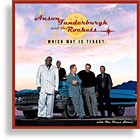
    Which Way Is Texas? is the band’s first album in four years. Produced by Funderburgh and recorded at Wired studio in Austin, it’s hard-hitting, smooth-grooved music, equal parts Mississippi and Texas. The Rockets are joined by the Texas Horns, packing a soulful wallop on seven originals along with covers like Sonny Boy Williamson’s “Tryin’ To Get Back On My Feet,” B.B. King’s “Jungle,” Tabby Thomas’ “Hoodoo Party,” and Homesick James’ “Crutch And Cane.”


    This article originally appeared in VG‘s Oct. ’03 issue. All copyrights are by the author and Vintage Guitar magazine. Unauthorized replication or use is strictly prohibited.
  • Norman Blake – Old Ties, The Singer Songwriter Collection

    Old Ties, The Singer Songwriter Collection

    Rounder’s Heritage series specializes in new anthologies of previously released work – the musical equivalent of old wine in new bottles.

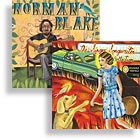
    Norman Blake’s Old Ties features selections that span from 1971 to 1990. Musical collaborators include his wife Nancy, dobro pioneer Tut Taylor, guitar virtuoso Tony Rice, fiddler James Bryan, and a few others. Most of the songs feature small ensembles of two or three players, rather than full bands. Norman Blake’s renditions of songs tend to be introspective miniatures rather than big-scale productions. He likes to simplify songs down to their bare essences, which accounts for why most his performances are such classic and elemental versions. One listen to his treatment of “Ginsing Sullivan” or “Gonna Lay Down My Old Guitar” shows how once he covers a tune it becomes his own.

    Nineteen songs drawn from 12 different albums supply a broad cross-section of work from throughout Blake’s career. From the beginning, he had a unique style. Except for differences in sonic fidelity between his earliest and latest selections, it’s next to impossible to tell from the performance themselves when they were done. Even 30 years ago, Blake’s style was mature and fully developed. If you’ve never experienced the mastery of Norman Blake, Old Ties is a fine introduction.

    Looking to rapidly expand your musical horizons? The Singer Songwriter Collection is a great way to meet 17 singular artists, each with their own special voice.

    Looking through the list of performers, one is struck by their diversity and musical excellence. Cheryl Wheeler, Ellis Paul, Mary McCaslin, Bill Morrissey, Christine Lavin, Carrie Newcomer, Utah Phillips, Tanya Savory, Patty Larkin, Vance Gilbert, Ray Wylie Hubbard, Nanci Griffith, Jim Ringer, Kimberly McCarver, Bill Stains, Lynn Miles, and David Olney represent an astoundingly varied swath of musical styles, artistic temperaments, and topical concerns.

    You’ll find everything from a tune about man’s (and woman’s) best friend to one about mankind’s most evil creation, both done with wit, style, and a plethora of catchy hooks and bridges. Despite a divergent field of artistic sensibilities, compiler Steve Netsky manages to make this whole disc flow smoothly from one song to the next just like a master disk jockey from the golden days of free-form radio. Also Netsky accomplishes the nearly impossible task of capturing the essence of each performer’s special qualities with one representative selection. Talk about having to herd cats…

    Even if you are familiar with half the artists on The Singer Songwriter Collection, it’s worth acquiring just to meet the others.


    This article originally appeared in VG‘s Oct. ’02 issue. All copyrights are by the author and Vintage Guitar magazine. Unauthorized replication or use is strictly prohibited.
  • Mark Selby – More Storms Comin’

    More Storms Comin'

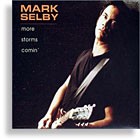
    Mark Selby is best known as a songwriter. He’s written songs covered by the likes of the Dixie Chicks and Kenny Wayne Shepherd. But, here, on his Vanguard debut, he rocks out as his own man. It’s nice to hear someone so comfortable with the roots rock/blues sounds.

    Cuts like “Don’t You Throw That Mojo On Me” are straight-ahead bar-room rockers with nasty slide guitar leading the way. “She’s Like Mercury” might bring the Stones to mind with crunchy guitar riffs and rough, but soaring, vocal harmonies. If big-ole’fat funky guitar is more your style, there’s “You’re Gonna Miss My Love.” “Smoked” is roots-rock heaven. And, the solo is perfect. Short and economical and nasty as hell. Just the way it should be. Rounding things out is the title cut. It’s an acoustic blues that is forebonding to the point of giving you goosebumps.

    I can’t recommend this enough. It’s one of those albums that grows on you. By the fourth or fifth listen you marvel at its simplicity. But, that’s not to take it lightly. There’s a real art in writing songs this good and making them sound this way.


    This article originally appeared in VG‘s March ’01 issue. All copyrights are by the author and Vintage Guitar magazine. Unauthorized replication or use is strictly prohibited.
  • Gerald Weber – Advanced Tube Guitar Amplifier

    Advanced Tube Guitar Amplifier

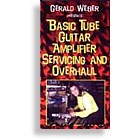
    Gerald Weber is back with his third video on the inner workings of tube amps. It should be noted at the outset that this video is geared to advanced technicians (Weber has other videos for beginners).

    In this one, he covers advanced servicing and overhauling techniques; different types of silverface amps and how to convert them to blackface; idiosyncrasies of Valco-manufactured amps (Supro, National, Gretsch, among others); how to check output transformers in Marshall and Fender amps; how to analyze any “mystery” transformer using only a multimeter; advanced tips on overhauling the Ampeg SVT amplifier.

    Weber takes his usual loquacious approach to diagnosing, inspecting, troubleshooting, servicing, repairing and even playing the amp, which makes it both easy to understand and well-paced. Certainly, his years of experience come through clearly and the format is in many ways better than a book. Useful and excellent.


    This article originally appeared in VG‘s Nov. ’02 issue. All copyrights are by the author and Vintage Guitar magazine. Unauthorized replication or use is strictly prohibited.
    VHS 75 minutes, Kempner TX: Kendrick Amplifiers, 2002, $32.95
    Eric C Shoaf

    Gerald Weber is back with his third video on the inner workings of tube amps. It should be noted at the outset that this video is geared to advanced technicians (Weber has other videos for beginners).

    In this one, he covers advanced servicing and overhauling techniques; different types of silverface amps and how to convert them to blackface; idiosyncrasies of Valco-manufactured amps (Supro, National, Gretsch, among others); how to check output transformers in Marshall and Fender amps; how to analyze any “mystery” transformer using only a multimeter; advanced tips on overhauling the Ampeg SVT amplifier.

    Weber takes his usual loquacious approach to diagnosing, inspecting, troubleshooting, servicing, repairing and even playing the amp, which makes it both easy to understand and well-paced. Certainly, his years of experience come through clearly and the format is in many ways better than a book. Useful and excellent.


    VHS 75 minutes, Kempner TX: Kendrick Amplifiers, 2002, $32.95

    This article originally appeared in VG‘s Nov. ’02 issue. All copyrights are by the author and Vintage Guitar magazine. Unauthorized replication or use is strictly prohibited.