Month: June 2004

  • Effects Pedals

    ...For All Occasions!

    Effects pedals, stompboxes… call them what you will. But pretty much since the dawn of the electric guitar’s time, they’ve been there, adding to the guitarist’s pallette of tonal spice, and always ranging from mild to wild. We recently got our hands on a crop of some of the latest.
    Our first foray was a revisiting of efforts of one Michael Fuller, of Fulltone. Known for its upscale construction and top-notch quality, Fulltone effects offer a meat-and-potatoes approach (no unnecessary blinking lights or fancy switching), with fantastic tonal versatility that puts them on the shelf above mass-production units. Two of his more recent creations are the Fat-Boost and Choralflange.

    Fulltone Fat-Boost
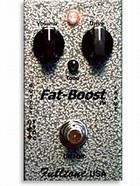
    Enclosed in a small gray metal box about the size of an MXR distortion or phase pedal, the Fat-Boost is a preamp designed to work with any amplifier, and with any type of guitar pickup, including bass or acoustic instruments. A fundamental design, the unit’s name is a good descriptor of its mission.

    The pedal has three controls and a standard on/off stomp switch. It’s powered by a single 9-volt battery or AC adapter. There are volume and tone controls which are fairly self-explanatory, and a tiny Input Gain knob positioned between the volume and tone controls. The Input Gain is used to boost the input signal level to achieve the desired effect – whether it be sparkling clean or slightly hotter. Fuller says the unit has a Class A FET-driven circuit that delivers over 20 dB of clean boost without changing the EQ.

    Compared to a distortion or overdrive box, the effect is subtle and fairly transparent in terms of the way it affects the original signal. The Fat-Boost can be used to create a clean boost that will increase the volume and amount of sustain, as well as to add more harmonic overtones to the mix, but it does not drastically alter the tone or add extra noise. Often, a player may need to boost their volume level for a particular phrase or lead break, but will want to maintain the same characteristic tone. In that case, you can easily match the instrument’s original tone, then adjust the Fat-Boost for desired boost and sustain. In addition, you can increase the Tone to add more girth and fullness to the lower mids, or increase the input gain level to add a bit more dirt.

    We first tested the Fat-Boost through our beloved 100-watt Marshall plexi stack. For guitars, we used our stock ’65 Strat and a ’78 Les Paul Custom with Duncan JB and ’59 humbuckers. We then put the pedal in line with a Boss SD-1 Super Overdrive, the Fulltone Choralflange, and a Boss DD-3 Digital Delay, placing it first in the signal chain. Even when used with other effects, the Fat-Boost did not change the amp’s characteristic tone when used only as a boost. If anything, it emphasized the beefy qualities and fullness, while adding more sustain. Additionally, switching is very quiet. For more sizzle, we cranked up the levels of the Input Gain and Tone, then set the pedal’s volume to create a fitting tone to match particular riffs and desired effects. We employed the Fat-Boost for hours of jamming on Zeppelin, AC/DC, and SRV riffs, as well as others.

    The Fat-Boost will complement virtually any setup. A bit of experimentation is required to find the settings that work best with a particular rig. Players looking for a simple boost will definitely want to check this one out.

    Fulltone CF-1 Choralflange
    Housed in a metal case constructed of brushed aluminum and green enamel-coated hammered aluminum, the Choralflange offers rich chorus and flange effects with total control over the parameters. The unit can be used in mono and stereo setups by plugging the appropriate cables into the single input and two output jacks. As the instructions note, this unit is not recommended for use with super high-gain pickups, as they could overload the input level.

    Unlike the Fat-Boost, the on/off switch inside the Choralflange can be set for true bypass (for mono operation only) or buffered out (for mono or stereo, and recommended when using very long cables). These settings can be adjusted by using the tiny DIP switch inside the box (easily accessible by removing the backplate). A diagram inside indicates the settings for each mode. It’s also important that these settings should not be altered while the unit is plugged in, to avoid potential damage to the electronics. Also noteworthy is the stomp switch, which is surrounded by a thick rubber ring that cushions the impact.

    The Choralflange has an array of switches and knobs that provide many ways to regulate the sounds. There are far more controls than on a typical chorus or flanger, so reading the manual is highly recommended. Two small switches select between chorus and flange modes, as well as narrow (one octave) or wide (two octaves) range of effect. Rotary knobs adjust the Mix (wet/dry signal), Delay Time (frequency of the effect), Depth (saturation of the effect) and Rate (speed of modulation, indicated by flashing LED). A mini volume adjust knob helps balance the signal’s volume level when the effect is engaged.

    To test the Choralflange, we used mono and stereo setups. We played through the same setup, then added a second 100-watt Marshall head, and split the cabinets to create a pair of close-matching half-stacks for a stereo rig.

    The instruction manual provides a selection of sample settings to give the user a good starting point to develop their own sounds. The effects themselves are smooth and silky, as you’d expect from analog circuitry, but do not produce the tinny, unwanted sound in the higher ranges of modulation, which similar effects tend to throw in. The Choralflange also avoided adding unwanted noise to the signal chain, and switching on and off or between modes was silent. From subtle, barely-there tones to deeper and more intense effects, the Choralflange demonstrates them excellently in both mono and stereo modes. Aside from the standard chorus effects, the controls can also be set to create excellent Leslie-type effects that are more realistic than the average stompbox.

    In terms of features and tone, the Choralflange wins high ratings. Compared to faithful and familiar pedals like the Boss Chorus and MXR Flanger, the Choralflange is superior in sound and variety of controls.

    Carl Martin Pedals
    We also grabbed three Danish-made Carl Martin pedals for a test drive, just to see what was going on across the Atlantic.

    Carl Martin shares many of the qualities of the Fulltone pedals in terms of quality of construction (aluminum cases) and high-quality stomp switches, but also sport some differences, like built-in regulated power supplies (no batteries or wallwarts), and chassis-mounted pots and jacks.

    Hot Drive’n Boost/Hot Drive’n Boost Mk II
    These overdrive pedals are set up very similarly, with gain, wave (tone), level, and boost level controls, along with drive and boost bypass switches and LEDs. The company says the original HDB is “…designed to imitate the sound of a good, old-fashioned distorting amp…” The Mk II, on the other hand, is designed to “…imitate the sound of a hot, overdriven tube amp.”

    To help see what they could do, we grabbed a new Gibson Les Paul and a Fender Strat and plugged them into the house Peavey Delta Blues combo.

    Very quickly, we discovered that by manipulating the Wave control, we were able to get a smooth, tight, tube overdrive with both guitars.

    The Mk II’s overall lower tone was more suited for the Strat’s single-coil pickups. The boost level and footswitch worked great to boost solos and fatten up the tone for better note separation.

    Regardless of the guitar, both pedals reacted like tube preamps when we used the instruments’ volume and tone controls to clean up the sound or soften the tone.

    Contour & Boost
    The Contour & Boost is a hybrid EQ pedal with two filters, a high pass, and a low pass crossed over at 440 hz. The company says it is specifically designed to change the sound of your instrument. Given its excellent filter characteristics, it makes a good tool for fixing many types of EQ problems.

    Each filter has a sweepable frequency control 65 hz. to 440 hz/440 hz to 8 khz), and a gain control with 12 dB of gain. Unlike most graphic EQ pedals that have inherent phasing problems when boosting or cutting severely (and a generally sterile sound), the Contour & Boost’s filters are smooth and very musical.

    This pedal has a long list of possible uses, from adding EQ to an amp with limited tone controls, as an acoustic guitar preamp, as a solo boost to add gain and note definition, to possibly even an active crossover/EQ in a bass rig.
    Electro-Harmonix Big Muff reissue
    This Big Muff is a reissue of the late-’70s/early-’80s pedal with we happen to have an original to compare it to. The first thing we noticed was the cool, handy plywood box it arrived in (which the originals didn’t).

    Overall, the reissue is very true to the original – the heavy-duty steel case is the same, as are the controls and jacks, silkscreening, and vintage-style stomp switch. Some of the differences (most of them welcome additions) are a 9-volt battery door on the bottom, an LED indicator, and the emotion of the tone bypass switch.

    Both pedals deliver a wide range of sounds from a gritty, compressed overdrive to a out-of-control ’70s fuzz. The original had a slightly warmer, more natural sound, but for the most part they were identical.

    Frantone “The Sweet” Fuzz
    Frantone Electronics is a New York City company that has been hand-making a variety of effects pedals since 1994, and recently launched it’s germanium-transistor powered The Sweet, which the company says offers “…full bottom and crisp highs… and endless sustain…”

    Though simple in design, the Frantone units are very sturdy and include some nice touches like an enamel finish, bakelite knobs (a lil’ vintage element), and a bevel on the LED indicator that really helps when stage lights make it hard to determine whether certain things in your signal chain are engaged.

    The Sweet features volume, sustain, and tone controls with an LED indicator in an aluminum MXR-style case. We plugged it into a Les Paul, hit the footswitch, and were able to create a retro fuzz tone with a sweeter, warmer tone than most of other fuzz pedals we’ve tested. The high-quality filters in the tone and sustain controls gave it a very rounded, musical sound.


    Fulltone Fat-Boost
    Type Of Effect: Signal booster and tone control.
    Features: Controls for Volume, Tone and Input Gain; true bypass on/off stomp switch; LED indicator; operates on 9-volt battery or AC adapter; five-year warranty.
    Price: $179.
    Contact: Fulltone Musical Products Inc, 12906 1/2 Venice Blvd., Los Angeles, CA 90066, (310) 397-3456, fax (310) 397-6917, fulltone.com.

    Fulltone CF-1 Choralflange
    Type Of Effect: Analog chorus and flanger unit.
    Features: Switches for Chorus/Flange and Narrow/Wide bandwidth; Controls for Mix, Delay Time, Depth, Rate and Volume Adj.; mono or stereo operation; selectable true bypass or buffered out operation; LED indicator shows modulation speed; operates on 9-volt battery or AC adapter; five year warranty.
    Price: $349.
    Contact: Fulltone Musical Products Inc, 12906 1/2 Venice Blvd., Los Angeles, CA 90066, (310) 397-3456, fax (310) 397-6917, fulltone.com.

    Carl Martin Hot Drive’n Boost (and Mk II)
    Type Of Effect: Signal booster and tone control.
    Features: Built-in power supply, tube-like overdrive, separate “boost” circuit.
    Price: $189.
    Contact: East Sound Research, Raadmandsvej 24, DK-8500, Denmark, ph. 45-86-32-51-00, carlmartin.com.

    Carl Martin Contour & Boost
    Type Of Effect: EQ/signal contour pedal.
    Features: Dual-filter, sweepable frequency control (65hz to 440hz/440hz to 8khz), and gain control with 12 dB of gain.
    Price: $189.
    Contact: East Sound Research, Raadmandsvej 24, DK-8500, Denmark, ph. 45-86-32-51-00, carlmartin.com.

    Electro-Harmonix Big Muff Pi
    Type Of Effect: Distortion/sustainer.
    Features: Heavy-duty steel case, vintage-style stomp switch, controls for volume, sustain, and tone, 9-volt battery doo, LED indicator.
    Price: $116.
    Contact: Electro-Harmonix, phone (212) 529-0466, e-mail sales@ ehx.com.

    Frantone The Sweet
    Type Of Effect: Fuzztone.
    Features: Cast aluminum housing, epoxy enamel finish, true bypass switching, signal bypass and status LED w/steel bezel, Switchcraft jacks, bakelite knobs, hard-mounted PCB, external power jack, teflon hookup wire.
    Price: $179.
    Contact: Frantone Electronics, www.frantone.com


    This article originally appeared in VG‘s Oct. ’02 issue. All copyrights are by the author and Vintage Guitar magazine. Unauthorized replication or use is strictly prohibited.
  • Vinnie Moore

    Between Then and Now

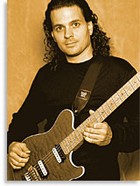
    Vinnie Moore emerged in the 1980s as one of the decade’s premier rock guitarists, earning recognition for his extraordinary technique and melodic style.

    Following the release of his debut album, Mind’s Eye, Moore was instantly ensconsed among the elite shredders. Subsequent releases reinforced that status, and proved he was a true virtuoso. In addition to his career as a recording artist, Moore built a reputation as a teacher and clinician, releasing instructional videos through Hot Licks.

    In the early ’90s, he accompanied Alice Cooper on his Operation Rock ‘N Roll tour, and played on Cooper’s Hey Stoopid. His guitar work has also appeared on other Shrapnel releases, including Vicious Rumors’ Soldiers Of The Night (1985) and Deep Purple Tribute (1994), as well as a Sega video game track called “Burning Rangers.”

    Over the years, Moore has expanded his interests as both a player and listener, incorporating a variety of styles in his music, which he demonstrates on his latest album, Defying Gravity. With accompaniment by bassist Dave LaRue, drummer Steve Smith, and keyboardist David Rosenthal, this collection of finely-crafted rockers, ballads, and Latin-flavored acoustic tunes showcase Moore’s guitar work and songwriting talents.

    Moore recently filled us in on his early background as a player, and brought us up to date on his recent endeavors, including how he developed the material and recorded the tracks for his most recent record, Defying Gravity. There’s more to Moore than just lightning chops!

    Vintage Guitar: Who were your initial influences?
    Vinnie Moore: The first guys I was really into were Ritchie Blackmore, Jimmy Page, and Brian May, because I was into all of their bands – Deep Purple, Led Zeppelin, and Queen. And also Jeff Beck.

    What inspired you to play instrumental music?
    After I had been playing for about six months, I heard an ad on the radio for Jeff Beck’s Wired album, and I went out and got it. That record ended up being a huge inspiration, as did his playing, in general. So it’s probably his fault that I’m playing instrumental stuff nowadays.

    Hearing Beck so early on in my guitar career, and also hearing Larry Carlton and Al DiMeola, who were also big influences on my playing, led to the instrumentals. Later, I was listening to guys like Joe Pass and Pat Martino, so I was exposed to a lot of instrumental guitar music.

    Which artists influenced you most as a writer?
    Probably everybody and every rock band I listened to, as well as the classical stuff I listened to. I was also into jazz players, so a little sense of swing and bebop came from that stuff. I took lessons from an instructor who was studying with Pat Martino, so he was turning me onto a lot of jazz players and giving me a little of that influence. But I was young, and listening to a lot of rock stuff. Later, I started to get into fusion guys like DiMeola and Carlton, then more hardcore jazz guys like Pat Martino and Joe Pass.

    So I have a lot of influences as a player. But as a composer and songwriter, I couldn’t really deem any one, or even a few, as influences. Everything I grew up listening to had an influence on my writing in some way.

    After I had been playing guitar for a year and a half, I started learning scales and how to improvise using them. Every day, I’d make up chord progressions in different tempos and lay them down on tape, then practice improvising over them.

    That really wasn’t songwriting – it was just making up chord progressions. But some of the ideas were two or three parts, so it was a starting point to build and hone my skills. I didn’t really start writing actual songs until I had been playing for five or six years. Then I got a four-track recorder and I started laying down ideas every day, and really working on writing songs.

    In what ways has your writing style evolved?
    I think the stuff I write now is definitely a lot less busy than what I did early in my career. The earlier stuff is more “notey,” because I was younger and there was more technique to my playing. It has matured… I’ve been showing more of my different influences in the stuff I’ve written recently. I think my earlier albums were more one-dimensional, stylistically, and now I’m mixing it up more and showing more of the Latin influences, some of the classical stuff, the heavy progressive stuff, and some of the ballady stuff. It’s just more varied now.

    How have your style and technique changed, as well as your approach to playing guitar?
    My technique is probably not as good as it was when I made those first records, because I don’t practice the way I used to. Now I pretty much pick up the guitar, have fun with it, and I write songs.

    I think more in terms of writing songs and melodies, as opposed to writing technically oriented things. Melodies were always important to me. Even on the first record, there are lots of songs with catchy and simple little melodies, but there was a tendency to be busier back then. I was still trying to develop my skills as a player, so I was practicing a lot more.

    Now, I don’t practice as much, but I’m more song-oriented than ever. I’d rather write a song than sit in a room and practice all day. If you practice all day, you’ll have killer chops, but you’ve got nothing to show for it at the end of the day. If you sit around and you work on a song every day, by the end of the week, there’s something recorded that’s a song and it lasts longer than the great chops you had that week. There’s something more tangible in writing a song.

    Do you feel that songwriting is a more important skill to master than having killer guitar technique?
    I think so. It’s essential to be able to write a good song, play a good melody, and more importantly, express something emotionally – something you’re feeling. That’s the whole point of being a musician – to express the way you feel through music. If you’re not doing that, it’s pretty much nothing but a bunch of notes.

    There’s a lot of stuff where a great guitar player is shredding over chord changes with maybe one or two parts. That may be good playing, but to me the song and the ability to express something are more important. I don’t even care anymore if someone thinks I’m a good player or not. I’d rather have them think my songs are good.

    How has your interpretation of great guitar tone evolved over time? Is tone important to you?
    It is important, and it’s so much easier now because I’m recording at home – the guitar parts, anyway. In the early days, I’d go in the studio and I’d have no time to really work on tone. On the first record, I did all of the guitar parts in like four days. That was all the rhythm, doubling the rhythm, melodies throughout the whole song, harmonies, and then the solos.

    Now, I could never do a whole record in four days. It’s ridiculous! Doing it that way, you don’t have any time to experiment with different guitars and amps. You just plug in, get a decent sound, press “Record,” and do the whole thing.

    Now, because I’m doing it at home, I can really focus and experiment with different sounds. I have a lot of different amps and guitars, so I can try to give each song and each part within a song a different treatment.

    Do you ever find that what sounds good live doesn’t translate well to tape, or what works in the studio doesn’t work onstage?
    Yes! It’s kind of ironic, but it does happen. I’ve had things work in the studio when you throw a mic in front of the cabinet and it sounds really good. But then you try that same rig live and it just doesn’t work. And vice versa.

    How have changes in technology affected your choices in gear?
    The choice of pickup configurations in my guitars has definitely changed. I used to use two humbuckers, now I use a humbucker in the bridge and two single-coil size DiMarzio Hot Rails (model DP181) in the neck and the middle. They’re humbuckers, but they have more of a single-coil sound.

    Another thing is that I used to use a distortion pedal, but now I’m getting the distortion/overdrive from the preamp of the head because it sounds more natural.

    On the recording side, back in the early days, there weren’t as many resources. You couldn’t do a record at home because the technology wasn’t evolved enough. When I was 20 and doing my first album, I didn’t have a collection of guitar gear or recording gear either. Over the years, I’ve acquired some and built a home studio, so now I can just sit in my workshop and write things, trying different heads and different guitars.

    Tell us about your collection of guitar gear, and which pieces were used on the tracks for Defying Gravity.
    My main guitar is a purple Music Man Silhouette Special, which I’ve been using for about six years. I use it 90 to 95 percent of the time, and I have one or two backups that are exactly the same.

    Another guitar I use a lot is a Music Man Axis. I have a Music Man Albert Lee model I used on one of the tunes on the new record called “Emotion Overload.”

    I also have a 1960 Reissue Les Paul that was used for some of the tracking. I have three Strats, late-’80s models, an early-’90s Tele and an old Danelectro that I used a little bit on the new record and on the Maze record. I don’t know what year it was made, but it’s pretty old. A friend found it at a garage sale and paid $5 for it, then gave it to me. It’s one of the ones like Page used to play. It’s got a unique sound and I used it for some rhythm parts on different tracks.

    For acoustic work, I have a 24-fret Washburn Stephens extended cutaway, which has a special cutaway that allows you to get all the way up on the neck. It was made by Stephen Davies and Washburn came out with it in the ’80s. It has a pickup in it, but I always mic it when I record because I think it sounds better.

    Amp-wise, I used a Marshall JCM 800 50-watt head for a lot of the tracks. It’s one of the two-channel models with reverb (model 2205). That’s an amp that sounds great when you record, but if you crank it up, it sounds too bright and trebly. I also have a Boogie Dual Rectifier and a Carvin Legacy that I used on some of the tracks.

    The amps all have their own unique tonal characteristics, so they were selected on a part-by-part basis, depending on what was right for the part. As far as effects, I’m using a Roland 1680 Digital Studio Work Station and that has built-in effects. So when I’m recording, I pretty much use the delays and reverb and everything I need right from the Roland itself.

    I have some outboard gear, and one thing that’s really important is a Daking 52270 mic pre-amp. It’s a new design modeled after the old Trident and Neve models, so it’s got a real vintage sound. I run everything through that before I go to my digital recorder. I also have an ART Pro VLA tube compressor, which for acoustic guitars is pretty much a necessity.

    I still have some stompboxes, like a Dunlop Crybaby wah, a Boss OC-2 octave pedal, a Boss DD-3 digital delay, a T.C. Electronic chorus and flanger.

    Another thing I used on the record was a Digitech 2101 preamp/processor. When I was doing my demos, I’d use it to put down fake keyboard patch sounds. But I ended up keeping a lot of those tracks on the record that you might think are keyboards, like on the song “Out And Beyond.” There are no keyboards on that song at all – it’s all guitar. There’s also a lot of guitar/fake keyboards on “If I Could.”

    If you were to do a live gig tonight, what would you take?
    I’d have to evaluate the set list to see what each tune called for. For instance, there’s a tune on the Maze record where I use the octave pedal in one of the parts, so I’d definitely need to bring that. And I’d definitely bring the wah pedal, because I use that on a lot of the tunes. I use the Boss DD-3 a lot when I do clinics or a one-off gig. But when I do a tour, I tend to use a rackmount delay rather than the pedal. On the last tour, I used the Carvin Legacy head.

    My sound is pretty straightforward. It doesn’t have a lot of effects other than just a bit of delay most of the time, and overdrive.

    How are your guitars set up?
    I use Ernie Ball .010-.046-gauge strings. I don’t like the action set real low, because you don’t get sustain and the strings don’t ring out as well. But I don’t like it to be high because then you have to muscle it around all night. I like it set somewhere in the middle. I have a Floyd Rose bridge on my main guitars. I used to have it floating, but my palm would rest on the bridge and it would make certain notes go sharp. Now I have it locked down so it can’t go sharp. It’s resting – not floating – so I can only drop it to make the notes go flat. My pickups are set a little bit lower than you might expect.

    What kind of picks do you use, and do you use the same ones for electric and acoustic?
    I do use the same for electric and acoustic – a standard-shape medium made by Ernie Ball. For many years, I used an extra heavy for electric, then went to a heavy. On the last tour I did, I was using a medium for the acoustic songs and a heavy for the electric stuff. Then I just started using the medium on the electric, too. It just started to feel better because it had more snap. So I’ve been using mediums for everything ever since.

    How were the amps mic’d for this recording?
    I have a Marshall 4×12 cabinet from the ’70s and it has 25-watt Celestion greenbacks. I use that for almost everything. I just mic it up with a Shure SM57. I have a couple of different spots where I place the mics, and they’re all marked on the grillecloth. One of them is right off the center with the mic pointed straight on. Another is with the mic angled into the side of the speaker. I do a lot of switching to see what works for the part.

    A lot of it is how you’re feeling on a particular day, and how you’re hearing things. Sometimes I’ll just plug in and not even look at where the mic is. If it’s not working, I’ll go in and start moving it around a little bit. But I have a tendency to go back to these two spots I have marked. From the mic, I run right into the Daking.

    What was the actual recording format used for the album? Did you record onto tape or hard disk?
    I recorded onto a hard disk using the Roland 1680 16-track.

    Did you engineer the tracks yourself?
    Yes. I have a little room that’s isolated, where I keep my cabinet. All my heads are set up in the control room, and that’s where I work – in the control room.

    How have recent advances in technology changed your approach to writing and recording music?
    The one major change is that it has essentially enabled my demo to become the final product. I used to write a song, then spend endless time making the demo because I’d be fanatical about the performance. Then I’d go into the studio and try to re-create it note-for-note and capture all the feel of the demo. Sometimes it was pretty frustrating because you just can’t capture the feel of a moment, even if you play a part note for note. That was always frustrating.

    But with the new record, I did the demos at home with a drum machine. I played the bass and the keyboard patches myself, and spent a lot of time working on guitar tones and getting the right performances. Then the drummer played to a final mix of guitar tracks, and so did the bass player and keyboardist. I never re-did any of my parts. It was kind of like working backwards because usually the guitarist is last, but this time it was done first and everyone played to my parts.

    Describe the songwriting process for the material on Defying Gravity.
    It just starts with me playing guitar and not making a conscious attempt to write a song. But as soon as that one moment happens, where I come up with something inspirational that kind of captures my attention, I have a little Sony Walkman close by, and I start recording. If I come up with an idea that strikes me, I’ll keep working on it and start to build on it with a second and third part.

    When I have enough, I’ll go into the studio and lay down a drum groove with a machine, then lay down the parts I’ve come up with, and start to build from there.

    I can’t really write an inspired song if I sit down and try to write. The more magical, inspirational, and creative things happen when you’re not really trying to do it – when you’re just having fun, going with the flow and then all of a sudden, out pops an idea. To me, that’s the better way to do it.

    Has this always been the way you’ve worked?
    There were different periods when some of the stuff I was writing was more cerebral. Around the Time Odyssey record, a lot of that stuff was more experimental, where I would sit around and work on a tune and think about where I could go in the song. I’d try one part and then wonder what would happen if I did something different, so I’d try all these different things, then choose which direction I was going to go in.

    Now, I don’t look at as many options. I just kind of write the song and let it write itself. Usually, the part just comes to me and if I like it, it’s done. There’s not as much exploration of whether something else would work better. I go with the flow and just trust my instincts.

    Is it harder to write instrumental music than songs with vocals?
    I think it’s easier because I don’t really have to rely on anyone else. If I was working with a band and a vocalist, I’d be considering his vocal range, and I couldn’t really finish a tune until the vocals were recorded. So there would be more limitations.

    It’s something different, and it’s certainly something I want to do. But when I’m writing an instrumental record, I can just sit down with a guitar and I have no limitations. I can just do what I want and not have to work around somebody else.

    What do you listen to for enjoyment?
    Believe it or not, I get in the car and I put on the oldies station! They play a lot of old Motown and stuff like that. That’s so different from what I do, but it’s what I grew up listening to, like the Beatles and Motown. No one would ever expect that. If I’m listening to a CD, it could be anything – U2, Jeff Beck, or John Coltrane. I don’t play music as much as I used to because I’m writing songs all day, and the last thing I really want to do at the end of the day is to throw on a CD. So I’ll listen to music in the car or on weekends, when I’m not working.

    How frequently do you practice, and what do you work on?
    In the early days, I had a routine of exercises and scales, picking techniques, and left-hand exercises. But now I just pick up the guitar, start improvising, and try to come up with some new ideas.

    Once I start writing a song, I’m not really practicing at all – I’m just working on a tune. So things are way more informal now with no exercises or things like that. Most of the time, I don’t even plug in the guitar. I’ll just play acoustically, and go for it.

    What tips can you offer for improving one’s dexterity?
    First, get a teacher who’s a really good teacher and player, because that can help you learn quicker. You’ll learn better technique and you’ll become better faster than if you work on your own – even though there are a lot more resources available. Now you can learn things on the internet, watch videos, and of course you can still listen to records and learn from other players. But a teacher will show you all of the exercises to help get your hands stronger and develop picking technique.

    What advice would you give other musicians writing instrumental guitar music?
    The more time you spend doing it, the better you get. Listening to different styles of music is definitely a good thing and will help open a lot of doors. You can also study composition and theory, which can help to make you more aware of things musically and theoretically.

    But the most important thing is to have fun with it and just try to just express your life through your songs. That’s going to be the most magical stuff. Even if you have limited ability, if you’re speaking from the heart and really expressing yourself, that’s going to be your best stuff.


    Photo courtesy of Ernie Ball.

    This article originally appeared in VG‘s July ’02 issue. All copyrights are by the author and Vintage Guitar magazine. Unauthorized replication or use is strictly prohibited.
  • The George Benson Quartet – It’s Uptown and The George Benson Cookbook

    It's Uptown and The George Benson Cookbook

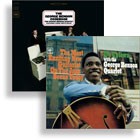
    George Benson was another of A&R legend John Hammond’s famous discoveries, alongside the likes of Count Basie, Charlie Christian, Bob Dylan, Aretha Franklin, and Bruce Springsteen. This put Benson in a tough position when he was signed to Columbia in ’65, and he set out to prove himself with his first album for Hammond, ’66’s It’s Uptown, followed the next year by The George Benson Cookbook. Hammond’s hunch proved correct: these two albums cemented Benson’s reputation and became the cornerstone for his later best-sellers. Columbia has now re-released both albums with extensive liner booklets and a handful of previously unreleased bonus tracks.

    These early albums offer a fascinating look back at Benson’s talents “in utero,” as it were. All of his strengths were there from day one; beautiful post-bop jazz guitar playing ripe with melodic licks that were less hard-core jazz and more radio-friendly; and R&B-tinged vocals that were penthouse cool and ready for Top 40.

    While Benson has gone on to produce bigger and better albums, these are classics. Looking back, they may well have formed the beginning of smooth jazz.


    This article originally appeared in VG‘s Sep. ’01 issue. All copyrights are by the author and Vintage Guitar magazine. Unauthorized replication or use is strictly prohibited.
  • Robben Ford – Blue Moon

    Blue Moon

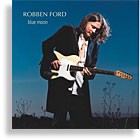
    Robben Ford reached legendary status, at
    least in some circles, when he first hit the
    blues scene – with Charlie Musselwhite,
    Jimmy Witherspoon, and his family group (the Charles Ford Band) – some 30 years ago. At 50, he boasts one of the most oddly varied resumés in pop music –

  • Fabulous Thunderbirds – Live

    Live

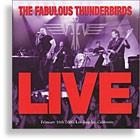
    Greasy vocals and harp, on-the-money blues guitar, great tunes, and an audience just waiting to be entertained. That’s what this CD is. Put it in the player and try not to move around. I dare you.

    I’ve heard people question Kim Wilson and the T-Birds “authenticity,” but that’s just plain stupid. And one listen to this will prove it. “Wait On time” kicks things off with its nice shuffle feel and the sting of Kid Ramos’ guitar. The nice thing about playing with the T-Birds, is that Ramos gets to show off a nasty rock and roll side that we don’t always get to see on his bluesier solo efforts. Yes, it’s definitely blues-influenced, but it rocks a little more. In fact, the band in general rocks a lot for a “blues” band.

    There’s a ton of great songs here. From killer covers of “The Things I Used To Do,” “The Hustle Is On,” and “Early Every Morning” to T-Bird hits like “Tuff Enuff” and “Wrap It Up,” the boys really sparkle. Ramos is as good as it gets for this kind of thing. A dash of T-Bone, a pinch of early Clapton, and his own soul-drenched playing add up to the perfect guy for this band. And Kim Wilson’s swagger, singing, and harp, along with a killer rhythm section, make this as much fun as you can find on a disc.


    This article originally appeared in VG‘s April ’02 issue. All copyrights are by the author and Vintage Guitar magazine. Unauthorized replication or use is strictly prohibited.
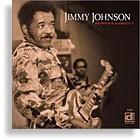
  • Jimmy Johnson – Pepper’s Hangout

    Pepper's Hangout

    Let’s word it this way: few if any blues artists can pump life into a overwrought classic like Tommy Tucker’s 1964 hit “High Heeled Sneakers.” Jimmy Johnson can, and does. Granted, this set is from the mid ’70s, but his stamp of style is current, timeless, and pretty much without peer among the second-generation Chicago blues guitarists.

    Pepper’s Hangout, culled from a set of 1977 performances recorded by legendary producer Ralph Bass, and recognizing (although with an incorrect name) the famous Southside club, showcases the then 48-year-old in top form.

    Jimmy has always languished outside the mainstream blues limelight, despite wonderful albums recorded throughout the past three decades. Case in point, the 23 expired years it took this one to be released!

    His age, 72, is not even a consideration. Jimmy is in control of tactile instrumental fingers that are the perfect foil his somewhat thin but impacting and immediately identifiable voice. And don’t be dismayed by the mostly cover tunes, because regardless of familiarity, they bear his unmistakable signature.

    His guitar work will always be compared to Otis Rush. And with good reason; they’ve both mastered a style that brings a near human quality to the instrument. But it is we, the listener, who will benefit from Johnson’s late success. At the rate this CD was released, we’ll be able to enjoy his efforts until perhaps the next millennium.

    Delmark Records 4121 N. Rockwell, Chicago, Il 60619.


    This article originally appeared in VG‘s Feb. ’01 issue. All copyrights are by the author and Vintage Guitar magazine. Unauthorized replication or use is strictly prohibited.

  • Ricky Skaggs with Kentucky Thunder – History of the Future

    History of the Future

    From the opening accapella vocal lines of “Shady Grove,” Ricky Skaggs’ History of the Future roars out of your speakers with full-throttle devil-be-damned, fire-breathing bluegrass. Clay Hess’ first guitar solo is so jaw-droppingly fast, clean, and musical that all a less skilled guitarist can do is smile and shake their head. Skaggs is correct in calling his band Kentucky Thunder, the Blue Angels of Bluegrass. These guys make premier fighter pilots look like slackers. Everyone is the band is that phenomenal.

    Fast, too. The band is Andy Lefich on fiddle and mandolin, Bobby Hicks on fiddle, Paul Brewster on tenor vocals and rhythm guitar, Hess on lead guitar, Mark Fain on bass, Jim Mills on banjo, and Darrin Vincent on baritone vocals and rhythm guitar. Stuart Duncan’s fiddle and Jerry Douglas’ dobro add solos to a few cuts…as if the core band doesn’t have enough firepower.

    Not only is the musicianship on History of the Future first-class, the song selection is equally inspired. Joe Maphis’ “Dim Lights, Thick Smoke, and Loud Music,” Carter Stanley’s “The Old Home,” Bill Monroe’s “Mother’s Only Sleeping,” and the traditional bluegrass staple “Rollin’ in My Sweet Baby’s Arms” join Skaggs originals “The Road to Spenser” and “One Way Track” to make a CD that covers all the bluegrass bases.

    History of the Future is a much slicker-sounding release than your average bluegrass CD. It’s perhaps a tad too clean in its digital perfection, and similar to many modern Nashville releases, lacks the down-home natural warmth of the best acoustic releases.

    Despite its presumptuous title and clinically clean sound, History of the Future lives up to its moniker. It’s an instant classic bluegrass album that undoubtedly will be on everyone’s short list for a 2001 Grammy. See skaggsfamilyrecords.com.


    This article originally appeared in VG‘s Sep. ’01 issue. All copyrights are by the author and Vintage Guitar magazine. Unauthorized replication or use is strictly prohibited.

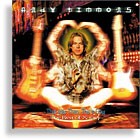
  • Andy Timmons – That Was Then, This Is Now

    That Was Then, This Is Now

    Andy’s been around awhile, even though his isn’t exactly a household name. He was the guitarist in the pop/metal band Danger Danger a few years back, and he’s done sessions with numerous musicians. He’s also toured with Steve Vai (founder of Favored Nations) and Joe Satriani on the G3 tours.

    Here, on a mixture of stuff previously released in Japan, and new stuff, he gets ample room to show off his chops. Of the 16 cuts here, 15 are instrumentals. If I had to describe the music, I’d call it melodic metal (although I’m not sure such a style exists). All of the cuts have very memorable, hummable melodies. Check out “Super ’70s.” It’s a pop thing with some nasty solos and a fresh sound. Dynamically, it switches around nicely, too, going from the pop to a nice, slow, melodic middle, to a hell-bent-for-leather rockin’ finish.

    You could say the same for most of these cuts. A couple are tributes; “Electric Gypsy” showcases a soulful nod to Hendrix. “I Remember Stevie” pays homage to SRV without becoming a retread. Mostly though, Andy stays with his own style. He has insane chops. Dive bombs, wailing harmonics, and metallic shredding runs never get in the way of the song. While that sounds like an easy trick, try listening to any number of metal players who can’t do it, and continually put their virtuosity in the way of the tunes. That’s never a problem for Timmons.

    From funk to pop to blues to country, it’s all covered here, and Timmons’ style and personality always shine through.


    This article originally appeared in VG‘s Sep. ’01 issue. All copyrights are by the author and Vintage Guitar magazine. Unauthorized replication or use is strictly prohibited.

  • Martin F-9 Archtop

    F-9 Archtop

    While the Martin Guitar Company is today best known for its flat-top steel-string guitars, from 1931 through 1942 the company produced a significant number of archtop guitars designed to appeal to players of the orchestral style of music popular at the time. Some of the ornamental features now associated with Martin flat-tops were in fact originally designed for its archtop instruments.

    The vertical CF Martin-inlayed peghead logo first appeared in 1931 on the style C-2 archtop roundhole guitar. The first such logos were inlayed “Martin,” with the “CF” added slightly later. The hexagon fingerboard inlays first appeared on the model F-9 and F-7 archtops, both of which featured vertical stripes on the fingerboard in addition to the hexagons. While the necks on these guitars clearly are quite similar to that associated with the model D-45, it should be noted the D-45 did not feature hexagon inlays until 1939. In addition, the F-9 features a tortoiseshell-grained peghead veneer and gold-plated Grover tuners with ornamental “CFM” engraving on the buttons. Tuners of this style were used on the C-3, F-9, and on some D-45s.

    The F-9 guitar was introduced in 1935. At a list price of $250, it was the most expensive item in the Martin catalog. D-45s listed at only $200 until late 1941, at which time they were raised to $250, and the F-9 was raised to $275.

    The F-9 is one of Martin’s rarest models. From its introduction in ’35 until it was discontinued in ’42, a total of 72 were produced. By contrast, from ’33 through ’42, when the model was discontinued, 91 D-45s were manufactured. The F-9 features extremely fine craftsmanship, but the design on this and other Martin carved-top guitars is quite different from that of “traditional” carved-top by Gibson, Epiphone, D’Angelico, and Stromberg.

    Whereas a standard archtop guitar features a carved back, carved top, and fingerboard raised off the top, Martin archtops feature what is essentially the same structure as a typical Martin flat-top, with the addition of a carved top and adjustable archtop-style bridge and tailpiece. As a consequence of the height of the top and the bridge, the neckset angle is so acute that when the instruments are laid on a flat surface they rest on the tip of peghead and the end of the body.

    In addition, conventional archtop guitars typically feature maple back and sides, whereas Martin utilized the same woods as on its flat-top guitars. The budget-priced models featured mahogany neck. The R-size Martins were similar in size to the 00 size flat-top guitars, whereas the C series was 15″ wide (as on an OM or 000 flat-top) and the F series was 16″ wide. Interestingly enough, prior to Word War II this 16″ body width (with shape similar to the 000 series) was not used on any flat-top guitars. It was not until much later that this size and shape was finally used on the style M guitars now designated as 0000 size. The same shape with D depth is also used today on the Jumbo J-sized Martin. Martin introduced the Ms after many years of requests from players and after observing many people were having F-sized archtops converted to flat-tops.

    While Martin’s carved-top guitars feature fine workmanship and sound quite good, they are distinctly different in sound from the traditional-design orchestral rhythm guitars. As a result, they did not achieve widespread popularity among professional players and production ceased with the start of WWII. It should be noted however, that during production, sales of Martin archtops were strong enough to contribute a significant portion of Martin’s sales. During the Depression, the company needed every sale it could get. Archtop guitars were, without a doubt, important in contributing to the company’s survival during this period.

    The F-9 is an historically significant instrument worthy of attention from the most discriminating collector. It is beautifully crafted, fine-sounding, and a very rare instrument.


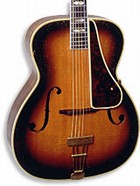
    Martin F-9 guitar from 1939, serial number 72188. Photo: Robert Parks , courtesy of George Gruhn.

    This article originally appeared in VG‘s Sep. ’98 issue. All copyrights are by the author and Vintage Guitar magazine. Unauthorized replication or use is strictly prohibited.

  • El Dorado Vintage, Plain and “Gator” Straps

    Secure, sturdy, and stylish

    We’ve checked out (and recommended) El Dorado straps before, but that was many years (and new readers) ago, so the time has come again, especially since the company recently released two new lines.

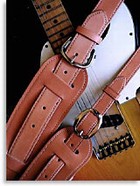
    Those who were around in ’98 might remember that we gave El Dorado’s git-tar straps a big thumbs up for their quality, appointments, and overall aesthetic appeal. The new lines, aptly dubbed “Vintage” and “Plain” offer more of the same, but with different esoteric qualities.

    Before delving into details, we should reiterate that El Dorado’s top-grade, vegetable-tanned saddle leather is very nice, very thick, and very sturdy. Chances are you will wear out before this strap will.

    And given the vibe carried by the company’s “Original” line, it would follow that the “Vintage” line isn’t far removed. In fact, the only differences between them are the widths of the strap and shoulder pad; the vintage strap is 1″ wide where the original is 1 1/2″, and the shoulder pad is 3″ wide where the original is 3 1/2″.

    Otherwise, the line offers the same three color options (russet, black, and brown) and two tooling choices (acorn and oak leaf or flower and leaf). The shoulder pad is tooled in traditional basketweave pattern and backed in genuine sheepskin shearling. The contrasting touch is offered in the hand-engraved, solid nickel-silver buckle, which is finished in sterling silver.

    If you like your straps smooth to the touch (and eye), take a look at the “Plain” line, which use the same saddle-grade leather, size specifications, and technical merits as the “Vintage” and “Original” lines, but without tooling. The line’s buckles are made of chrome-plated brass or solid stainless steel, and lack the engraving of the other two lines.

    Apart from the drop-dead appeal of the El Dorado straps, though, is a major factor overlooked by many makers of cool straps – sheer comfort. The shoulder pads are thick and – and this is important – stay in place quite well.

    Also, the tooling is exquisite – deep, and defined. And El Dorado says they’re individually hand-tooled in the U.S. Custom sizing and lettering is an option.

    Are there nits to pick? Not really. But, like any strap with sizeable buckles, you’ll want to take care that said hardware doesn’t inflict any damage to your guitar’s finish. The extra care is worthwhile, though, because the buckles add much in terms of aesthetics.

    And if you’re looking for a dramatic departure, you might consider El Dorado’s “Gator” straps. Not quite what it appears, the strap’s “gator skin” is, in fact, beautifully embossed cowhide backed with full-grain, vegetable-tanned leather. It a realistic pattern variations, the company says, create unique differences from one strap to the next.

    So, if you’d like to share of the mojo being enjoyed by players with names like Santana, Dylan, Vivino, Vaughan, Ramos, Easton, Nash, Yoakam, Anderson, and Ray, grab yourself an El Dorado strap.


    El Dorado Vintage and Plain Guitar Straps
    Type of Strap: Vegetable-tanned saddle leather.
    Features: Hand-tooled leather, hand-engraved buckles. Various widths and lengths, choices of colors and tooling/engraving styles, sheep-skin-shearling strap pad.
    Price: $89 to $139.

    El Dorado “Gator” Strap
    Type of Strap: Embossed cowhide with vegetable-tanned full-grain leather backing.
    Features: Realistic “gator-skin” embossing, vegetable-tanned, full-gran leather backing, quality construction.
    Price: $79.
    Contact: El Dorado Guitar Accessories, PO Box 92894, Pasadena, CA 91109, www. eldoradostraps.com.


    This article originally appeared in VG‘s Oct. ’02 issue. All copyrights are by the author and Vintage Guitar magazine. Unauthorized replication or use is strictly prohibited.