Month: May 2004

  • Gibson Electric Uke

    By Request of Arthur Godfrey

    Ted McCarty, Gibson’s president from 1948 to ’66, was responsible for some of Gibson’s greatest designs. While McCarty cites the Les Paul Model as his most important design, his other credits include the ES-335, the Flying V, the McCarty pickup, and McCarty bridge.

    But one design that never appears on McCarty’s list of accomplishments is his electric ukulele. In his time at Gibson, it was not unusual for a recording star to ask the factory to make a special instrument.

    “People would call or visit us at the factory, and they’d say, ‘I’d like you to make me a special guitar, how much would it cost?’ We had a department that did nothing but make specials,” he said.

    One person who contacted McCarty was radio and television icon Arthur Godfrey. As a sailor, Godfrey learned how to play the uke, and he brought that talent to his popular ’50s television show. But his uke couldn’t be heard with a band, some members of which were “plugged in,” and he wanted an electric that would match up with the electric guitar. So Godfrey went to McCarty.

    “He wanted an electric ukulele, but he didn’t want electric strings,” he said. “He didn’t know if you could do that or not, so he finally asked me, and I said I’d try. I tried and I tried and finally got it, and it was good.”

    Making an electric uke with nylon strings presented a real problem.

    “I told my engineers what I wanted, and they built it. I had the problem of the strings, and that’s where I got involved. I designed what I wanted in the way of the strings. You can’t use regular nylon strings with an electromagnetic pickup, and Godfrey wouldn’t have anything to do with metal strings. He didn’t know any better, but that’s what he wanted. He was one of those guys who wants what he wants, and you better get it for him.

    “So I talked with a couple of guys and nobody could come up with any ideas. They said, ‘You can’t do it, Ted!’ I said, ‘The hell you can’t.’”

    So McCarty designed the strings himself.

    “You have to get some iron in the strings somehow, and we couldn’t get a string inside a string and not get it too thick. So the only thing you could do was melt the nylon into a liquid, then run another string through a goo with iron powder. All you needed was some metal in the strings. The way I did it was to get some plastic string material so I could melt it and get it into a liquid. I put in fine iron-powdered metal and mixed it all up really well. I ran the strings through that, and after they dried we milled them down to size. I made the strings, but didn’t want to fool around with (mass-producing) them. It was time-consuming and expensive.”

    The process took time, and Godfrey was impatient.

    “He wanted to know where his ukulele was, and I said, ‘Well, we’re working on it.’ So I got it finished and we sent it to the hotel where he stayed in New York. And he called me and said, ‘Where is it?’ I said, ‘I sent it!’

    “Well, he got on the air and said, ‘Ted McCarty – that used-to-be friend of mine – he promised to give me an electric ukulele, and we never got it!’

    “I finally got so tired of him talking about me on the air that I called him and said, ‘It must be in the hotel because we sent it, and we have the credit for having shipped it.’ So he went and talked to them, and sure enough it was there, they just put it away.

    “I heard he was overjoyed with it. And every time he was on the air, he used to do the cigarette ads (playing live music with his electric uke and the studio musicians), and Mr. Berlin (McCarty’s boss at CMI, Gibson’s parent company) and I would sit together in Mr. Berlin’s office and listen to Godfrey’s program. And Godfrey would say, ‘My friend, Ted McCarty from Gibson, and so forth and so forth,’ everyday. And Mr. Berlin used to laugh and say, ‘You and I made more air time for free than the cigarette company was getting.’”

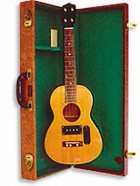
    Another interesting fact is that McCarty actually made two electric ukes. The second was set up with guitar strings and a P-90 pickup. He still has it, and it’s in mint condition.

    “You can’t just make one of something, it’s very difficult. But after we designed it, we never produced them. At the retail price, nobody would have bought it.”
    The only standard-sized uke listed in the 1957 Gibson Price List was the Uke-1, at $30.


    The Gibson electric uke McCarty kept for himself has an early P-90 variant and two control knobs. Photo: Gil Hembree.

    This article originally appeared in VG‘s April ’00 issue. All copyrights are by the author and Vintage Guitar magazine. Unauthorized replication or use is strictly prohibited.

  • Stephen Bruton

    In the Spirt of the Ft. Worth Tradition

    You’ve likely heard Stephen Bruton without knowing who he is. He has backed up luminaries like Kris Kristofferson and Bonnie Raitt, and appeared in numerous movies.

    While Bruton was raised in Fort Worth, Texas, his experiences in his fledgling years weren’t ensconced in one musical genre, which paid off with his association with various other singers and players, as not only a guitarist, but also as a producer. When VG hooked up with Bruton, his fourth solo album had just been released and was garnering very positive reviews.

    Vintage Guitar: It’s been reported that your “guitar epiphany” wasn’t seeing the Beatles on “The Ed Sullivan Show,” but a similar experience at a concert.
    Stephen Bruton: Actually, I think there were two epiphanies. I went to a concert where my father was the drummer in one of the jazz groups. My mother asked if there was anything onstage that interested me, and I said, “Yeah,” and pointed to the guitar. It was something like a (Gibson) ES-175 being played by a guy named Charlie Pearson.

    It looked cool, but one Saturday morning I went to my dad’s record store – I was about 10 at the time – and there were some kids there a few years older who were rehearsing for a talent show, playing folk music – Kingston Trio, Brothers Four stuff. It was the first time I heard someone singing and playing an acoustic guitar, and it just kind of shot through me. I thought it was like carrying a little piano around; you could play all kinds of music with it – jazz, folk. Suddenly, it all made sense.

    And living in a record store, I could listen to all kinds of incredible play-ers – Segovia, Montoya, Tal Farlow, Howard Roberts, Joe Pass, a lot of rock and roll guys. The guitar was everywhere!

    How long was it before you got a guitar?
    After a year of being good (chuckles), I got a Gibson LG-0 for Christ-mas. My dad got it for me because although it was the cheapest gui-tar Gibson made, it was still a quality instrument. If things hadn’t worked out, he still could’ve gotten his money back.

    I took lessons for six months from Charlie Pearson. When he got drafted, my father told me, “You’ve got six months of lessons under your belt; you’re either serious about this or you’re not.” That’s when I started to play by ear. I started looking at chords and figuring out folks songs. And I started paying attention to players like Chuck Berry.

    What was the Fort Worth musical environment like?
    It was one of the most un-hip places in the world (chuckles). T-Bone Burnett and I talk about how it wasn’t a big musical center, but it was actually was! The reason so many great players came out of there was because it wasn’t a focal point. Milton Brown and the Brownies, the guys who started Western swing, came from Fort Worth. Bob Wills was playing in Milton’s band back then; the Light Crust Doughboys were around. Ornette Coleman, one of the greatest jazz sax players of all time, came out of that town, as did James Clay and “Fathead” Newman. T-Bone Walker came from around here, as did Cornell Dupree and Delbert McClinton. A lot of the original Texas Play-boys were from Fort Worth. Dean Parks, one of the A-list L.A. session players, went to school with T-Bone Burnett. All types of music – jazz, Broadway, blues, country, Western swing – were represented.

    As a result, by the time I was playing with T-Bone or Delbert or my own band, the level of musicianship was very high, across the board. By junior high, I could tell a good blues player from a good country player, and I could tell a good fiddle player, drummer, or bass player. A lot of that had to do with listening to so much music in my dad’s record store and hanging out with mu-sicians.

    And I really need to credit my brother, Sumter. He was an enormous influ-ence on me. When we were growing up, I got off into country and blue-grass, but he was a blues freak. He was four years older than me, and got me into Howling Wolf, Muddy Waters, and B.B. King. Between my dad and my brother, I got a lot of direction. My brother still lives in Fort Worth; he’s a fine guitar player and he runs my family’s record store there.

    With all of those types of music to influence you, it must have been difficult to settle on a particular type of electric guitar.
    My first electric was a hollowbody non-cutaway Gibson archtop with a single pickup, and I ran it through my dad’s hi-fi. I played Gibsons for a long time; my favorite players played Gibsons, and there was the perception that if you could afford a Gibson, you were hot stuff (chuck-les).

    When I was in Woodstock, my roommate was Lindsay Holland, and he was working for the Band as an equipment manager and road manager. He bought a Telecaster in a pawn shop, and wasn’t getting any use out of it, so he gave it to me around the time I was going to work for Kristofferson. I loved it! Its neck pickup had that nice, round, warm Gibson sound, but I’m not a fan of that super-high-end treble pickup, but at the time, they were cheap.

    That guitar was stolen, and Ronnie Hawkins gave me another Telecaster, when I was playing with him in Toronto; I’d played there with Kris, then I hung around and played with Ronnie.

    Then I kind of took the attitude of “Jeez, I wonder what else is out there?” and I played everything from an Alembic to Les Pauls to Strato-casters to ES-350s to ES-5s. Then I finally ended up with another Tele-caster, and I said, “Wow, that was a big circle!”

    But I noticed that the high-end sound I didn’t like was actually giving me some tinnitus. I started playing in a trio, and I liked a humbucking sound in that format. I’d picked up a couple of PRS guitars; Bonnie Lloyd was instrumental in making sure PRS guitars got played by real players. I like the way the wang bar was more flush, and I liked the push/pull pots so you can get a single-coil sound.

    Then in ’93 I bought a ’60 (Gibson) ES-335, and about six years ago I bought a ’58 dot-neck 335 in sunburst, and it’s my favorite. Line ’em all up, and that’s the one I’ll pick.

    Your association with Kristofferson was off-and-on for about 17 years, and you wrote songs together.
    We started writing songs the first week I was with him; we wrote a song called “Border Lord,” which was the title track for his third album. I was with him for three years, then I left to go with Delbert McClinton and Glenn Clark, and I wound up spending a few years on the road with Geoff and Maria Muldaur, separately. I did her “Midnight At The Oasis” tour, then I did a bunch of dates with Geoff. He’s one of my favorite musicians; we’ve worked with each other for some 25 to 30 years, when-ever he needs me.

    When I re-joined Kris, I did A Star is Born with him and Barbra Streisand. I worked on Lowell George’s first solo album, Steve Goodman’s album, and with Gene Clark. I was very fortunate to have been around all of those players and so many different styles. I did a fair amount of sessions and tried to learn from each.

    What about your experiences with Bonnie Raitt?
    Bonnie and I have known each other since my first year with Kris, when she opened a show for him; it was just her and (bass player) Freebo. She remembers the day; she was 20, I was 21. We were like two kids who had joined the circus. In ’93, I heard from her; she really liked the band I had with Glenn Clark, and asked us to be her primary guitar player and keyboard player. I did three world tours with her, and at the same time, I had the opportunity to make my first solo album.

    By then, you’d also had some opportunities as a producer.
    I produced Hal Ketchum, Jimmy Dale Gilmore, Sue Foley, Johnny Nicholas, Storyville, quite a few. People seemed to be interested in my studio sensibility; it was kind of a logical step to go from one side of the glass to the other. The payoff, for me, was not that I’d been an experi-enced sideman and studio player, but that I grew up in a record store, and I knew all kinds of music. I could quote from different things I’d heard in the ’50s, ’60s, and ’70s. If they wanted something along the lines of a mid-’60s Dave Dudley sound, I knew what that was, and if they wanted something like Creed Taylor’s arrangements for Wes Montgomery, I knew about that, too!

    Did you quit the road specifically to concentrate on your solo career?
    Well, after I did my first record, I did a tour behind it, including some dates in Europe. The album was on a small label, and it was what I’d call “economy with dignity.”

    I’d never thought of myself as a solo artist, because I was always in a band dynamic. But the band I’d been in had kind of broken up, so I decided to make a go of a solo career. With favorable reviews and some touring, I was able to make some more records… and I never thought I -would be talking with an interviewer to promote my fourth album (laughs)! It’s not been planned; it’s always along the lines of “what happens next.” I’ve been involved in other projects all along, but it has all dovetailed nicely.

    The third album, Nothin’ But the Truth, only had one lead guitar break…
    Not much take-off guitar (chuckles)! I just did what the song called for, at a very minimalistic level. But when New West Records asked me to make another record, they told me I had to play more guitar. So I did.

    You’re based in Austin, but you recorded the new album, Spirit World, at a home studio in L.A.
    We had a budget, and I started looking at the time constraints, and I realized that I’d get more bang for the buck if I went to one place and stayed there. And I could stay in Mark Goldenberg’s home studio a lot longer than if I went to a regular recording studio. Al-so, I could stay focused.

    And that’s what happened. Instead of making a three-week album, we made a six-week album, and it sounds like there was more time and thought put into it; it doesn’t have a hurried quality to it.

    I’ve always wanted to work with Mark, anyway. He’s a great, unique guitar player; he’d been in the Cretones – a band that did an album with Linda Ronstadt back in the ’70s. He doesn’t play any musical cliches, and he and I both occasionally take lessons from Ted Greene, in L.A. Ted is a melodic, chordal, theoretical genius. Mark is much more into music theory than I am, and it doesn’t look like we’d be on the same musical wavelength, but we are in a lot of ways. He has worked with Don Was, and he produced Natalie Imbruglia’s Left of the Middle album. What was gratifying for me was that on my new album, he didn’t try to change what I was trying to do; he would maximize the chances of it happening that way.

    A lot of the tracks are relatively long; only one is less than 41/2 minutes. The lead-off song, “Yo Yo,” is seven minutes long, and while it has a whimsical title, it’s fairly serious, lyrically.
    Well, it’s an acronym for “You’re on your own.” When the musicians on a Kristofferson tour would go their separate ways at the conclusion, we’d say “Yo Yo” to each other. I always thought it was a good idea for a song, because life is that way at times; you’re on your own a lot, and things can go up and down. I used one of Rick Turner’s Renaissance guitars on that song, and on a lot of the album.

    What about the slide on songs like “Book of Dreams?”
    Open G tuning. A guy named Larry Pogreba, in Montana, made a guitar I call “The Ugly Stick.” It has a Teisco pickup, and a mys-tery pickup.

    I used all Dumble amps on the album, I really think they’re far ahead of any-thing else I’ve tried. On “Book of Dreams,” I plugged into a low-watt Dumble with four 10s, and the marriage between guitar and amp was great. All I had to do was find the sweet spot, which, for me, is very easy on a Dumble. That was done in about 11/2 takes; I think I re-did a portion of it.

    How autobiographical is “Acre of Snakes?”
    It’s about a time in a couple of bands when I was known as “the freak magnet” (chuckles). There were several people who thought I was subliminally communicating to them through my songs. Some were writing songs in answer to my songs. One person shook my hand at a gig and wouldn’t let go, claiming that a friend’s spirit was flying around me onstage while I was playing. I thought, “Check, please!”

    I think that may happen to a lot of musicians, and it doesn’t have to happen on any kind of major level; you encounter people who are… in a parallel dimension (laughs).

    Other instruments you played on the new album?
    The ’58 335, a Paul Reed Smith, and a ’54 Telecaster that Mark has, which sounded incredible. Acoustic guitars were an early ’40s (Martin) mahogany 00-17, and an early ’40s Gibson banner J-45.

    The cover photo looks like some sort of Native American ceremony.
    That was taken in an interior town in Mexico; those natives have traced their lineage to a tribe or race that inhabited the city discovered beneath Mexico City when they were excavating for a new subway system. The photographer was a screenplay writer named Bill Wittliff; he did movies like The Perfect Storm, as well as the “Lonesome Dove” TV mini-series. But he also has a premier collection of Central and South American photographs; one of the largest in the world.

    The dedication on the back to deceased individuals includes George Harrison.
    I was driving to play a gig when I heard he’d passed away. He rep-resented more than himself, of course, but he was a genius guitar play-er because what he played for solos were as important as the lyrics. You find yourself singing the solos just like the words, because he did countermelodies; it wasn’t just a bunch of blues riffs or “lickster” stuff. It served the song.

    What appealed to you about Grady Martin’s playing?
    He was one of the best guitar players I ever heard, anywhere, anytime, and in any style. But he was primarily a jazz player. He was playing with Willie Nelson for awhile when I was with Kris, and we did a lot of shows together. I took him to see ZZ Top one time in Salt Lake City, and for him, it was one of the high-lights of the entire tour; he thought it was one of the coolest things he’d ever seen and heard.

    And although somebody else got credit, Grady primarily produced Hank Garland’s Jazz Winds from a New Direction album; he and Hank were roommates at the time. Can you imagine back then, in Nashville’s heyday, when you called up for a session, the three guitar players you got were Grady Martin, Hank Garland, and Chet Atkins. And they’d pro-bably say things like, “Who wants to play rhythm, and who wants to play take-off?” (chuckles)!

    John “Mambo” Treanor was a drummer from Austin.
    He played with Robben Ford on the first tour Robben did under his own name. John was a remarkable drummer, and a colorful character. He loved straight-ahead jazz, and had huge chops in that style, but at the same time, he loved playing things like washboards. He played whatever served the song best.

    And the same thing could be said for Champ Hood, who was a great fiddle player who wouldn’t call attention to himself. Champ was also a great guitar player.

    Vernon White was Kristofferson’s manager, and was one of my very best friends… so in addition to 9/11, last year wasn’t a good year for me.

    Some may hear a strong Dire Straits vibe at more than one juncture on Spirit World. Fair statement?
    Well, I’m not real well-versed on that band; I think I’ve got a couple of those records, but Mark Knopfler is certainly a singular–sounding artist. He’s great. I think he and I both sort of “talk sing” the lyrics, and also, we both have little regard for four-minute songs that will fit onto the radio (chuckles). We just let the song unfold. With that in mind, I’m certainly honored to be considered in that type of peer group. He and I are probably about the same age.

    What’s the pink Strat-like guitar in one of your publicity pictures?
    It’s a parts guitar; the neck is a Warmoth that feels like a ’54 V-neck, and it’s been beat up enough to where it feels perfect. The pickups are a Teisco and an early ’60s Rickenbacker; the string-through–the-magnet type. I have some Rick Turner pickups that are made the same way, and I really like those, but this original Ricky sounds a little darker, which is what I wanted.

    And as we’re recording this, you’ve been back in front of a camera recently, but it wasn’t for a video, as I understand it.
    I was working with a friend of mine who’s a documentary filmmaker, and he’s making his first foray into commercial film. But I’ve been in a lot of movies, especially when I was with Kris. We always got included because he liked to have his band around. I had a good part in Song-writer; I got caught with Rip Torn’s wife (laughs). I still get small parts on occasion; I was a bartender in Miss Congeniality, and I was sing-ing a song in Michael. But my own music has priority these days.

    Stephen Bruton’s songwriting and guitar abilities have made for a very listenable fourth album. Spirit World doesn’t overwhelm a listener in any way, but its clever licks and lyrics snag the ear of anyone interested in finely-crafted contemporary music.


    Photo: MKB Photography, courtesy of New West records.

    This article originally appeared in VG‘s Sept. ’02 issue. All copyrights are by the author and Vintage Guitar magazine. Unauthorized replication or use is strictly prohibited.

  • Montrose – The Very Best of Montrose

    The Very Best of Montrose

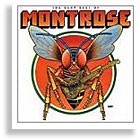
    Ronnie Montrose is known less for his guitar capabilities than for fronting a mid-’70s hard rock band that featured an unknown lead singer named Sammy Hagar. Still, Montrose released a quartet of heavy albums before heading into solo-artist obscurity. This new collection from Rhino features 18 tracks selected by Montrose, who also provides commentary in the liner notes. Running chronologically, the set begins with the self-titled Montrose album from ’73.

    Ably produced by Ted Templeman, Montrose burns from start to finish. Every song is a heavy rocker, and production values are excellent. As with many sophomore efforts, Montrose’s second was more stylistically diverse, a fact reflected in this package, as well. Unfortunately, the songs weren’t as strong, but they show a band maturing, stylistically.

    Hagar had departed by the release of Warner Bros. Presents Montrose in ’75 and the band seemed particularly lifeless. Produced by Ronnie Montrose, the record was poorly mixed and featured mostly mid-tempo songs. The best cut on the album, the ethereal “Sailor,” isn’t included here. Shame!

    Montrose got back on his rockin’ shoes for Jump on It , in ’76, produced by Jack Douglas of Aerosmith fame. The three uptempo songs here show the band had improved greatly, but fans had apparently given up.

    Rounding out this compilation are three cuts from Montrose’s recent solo effort, Mean , which capture to good effect his ability to create spacey melodic music. Sound on this remastered best-of is uniformly excellent, and the liner notes are complete and include shots of a number of Ronnie’s custom guitars. Some of Montrose’s best guitar playing came with his ’80s band, Gamma, and while none of those cuts are included here, a Gamma retrospective is close to completion.


    This article originally appeared in VG‘s May ’01 issue. All copyrights are by the author and Vintage Guitar magazine. Unauthorized replication or use is strictly prohibited.

  • Tim O’Brien – Two Journeys

    Two Journeys

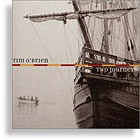
    In his recent VG interview, Tim O’Brien mentioned that his next release would be more of a “songwriter” CD. Instead, his latest, Two Journeys, is an extension of his album, The Crossing, which drank deep from his Irish background for its musical inspiration. Two Journeys also shows the strong influence of Mother Ireland not only in its songs, but personnel as well.

    Maura O’Connell, Laoise Kelly, Karan Casey, Paddy Keenan, Kevin Burke, and John Williams are all Irish roots musicians, or musicians with Irish roots who participate on Two Journeys.

    To discover what constitutes an Irish musical influence, you have merely to listen to Tim’s rendition of Paul McCartney’s “Norwegian Wood.” Beginning with the Paddy Keenen’s pipes introduction, followed by Tim’s loping mandolin work, the tune is infused with a rich Celtic aroma that settles on you like the glow of a good single-malt whisky. Six of the 14 cuts on Two Journeys are O’Brien originals, while five are his arrangements of traditional material. His treatment of “Demon Lover” and “What Does the Deep Sea Say” are especially successful. Both possess a paradoxical combination of the diametrically opposed influences of tradition and innovation. They are familiar, yet alien, encased in O’Brien’s Celtic arrangements, like vintage wine in brand new “olde style” bottles.

    Although it was principally recorded at Nashville’ Groundstar studios, some tracks were done at The Mill in Naas, County Kildare. The overall sonic effect is intimate and warm, like an old wool blanket. No matter how dense the mix, all the instruments can be heard, and they retain their original natural harmonic timbre.

    O’Brien has made a science of creating concept albums where the music is still superior to the unifying principle. His Dylan tribute, Red on Blonde, is among the best recordings of Dylan material not done by ol’ Bob himself. Two Journeys is similar in that it is a superlative album of Celtic music produced by a guy who is still principally a bluegrass musician. Perhaps Tim O’Brien really is Irish… Check out howdyskies.com.


    This article originally appeared in VG‘s Nov. ’01 issue. All copyrights are by the author and Vintage Guitar magazine. Unauthorized replication or use is strictly prohibited.

  • The Yardbirds – Ultimate

    The Yardbirds: Ultimate

    Two fallacies that invariably arise in discussions of the Yardbirds: 1) declaring them the fathers of psychedelic music and/or heavy metal; 2) focusing on their colossal lead guitar lineage at the expense of their collective person
    ality and talent as a band. Because the important aspect to remember about the former is that, while the Yardbirds did indeed presage these and other movements, they were impossible to peg precisely because they refused categorization – putting pedal to the metal on a Bo Diddley romp one minute, incorporating Gregorian chants the next. And while it’s easy to be blinded by the fact that a single band could boast Eric Clapton, Jeff Beck, and Jimmy Page in succession, each band member (bassist Paul Samwell-Smith, drummer Jim McCarty, rhythm guitarist Chris Dreja, and singer-harpist Keith Relf) was essential to the band’s sound and direction. And, man, could they play.

    The element that these pioneers really brought to the fore of rock and roll was improvisation. Not that they invented the concept, but at the height of the British Invasion you had George Harrison’s Atkins-ish break in “All My Loving” (or Keith Richards’ Chuck Berry derivations on “It’s All Over Now”) one moment, and then Jeff Beck saying, “Stand back and let me rip your head off” the next. The guitarist as gunslinger, as hero, as icon – as God – was a direct result of the Yardbirds’ in-your-face attitude.

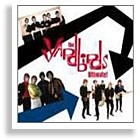
    Rhino’s two-disc compendium is the closest-to-definitive collection of a band that’s been woefully under-represented on CD. Among its 52 tracks there are highlights aplenty and very few clinkers. My main frustration is that the package isn’t maybe one disc larger (Rhino recently devoted four discs to Buffalo Springfield), but producer Gary Stewart was trying to home in on the “essence” of the band, not serve up a “complete recordings,” and most of his choices are on the money. An added bonus are the extensive, insightful liner notes by the late, great Cub Koda, with various “Yardbirds Fun Facts” (of Beck’s solo on “I’m Not Talking,” the Cubmaster writes, “There are guitar players who will tell you that you can’t bend strings this far; they would be wrong.”).

    In their original incarnation as blues interpreters, the Yardbirds had the rare ability to not only give a song its own stamp but often transcend and/or surpass the original source. Ignoring their worst-of-all-versions “Boom Boom” demo, which unfortunately opens this anthology, the group shows this uncanny knack on their first single, cut in March 1964. As cool as Billy Boy Arnold’s hypnotic recording of “I Wish You Would” is, the Yardbirds’ energetic cover – soaked in reverb with a mini jam session, all in 2:17 – is at least its equal.

    Likewise, “I Ain’t Got You” was a so-so track in the Jimmy Reed catalog prior to it becoming the vehicle for some of Clapton’s most hair-raising early work. The then 19-year-old’s 25 seconds of aggression definitely raised the blues and rock guitar stakes.

    As Koda points out, “Good Morning Little Schoolgirl” is not the Sonny Boy Williamson blues – an additional Fun Fact (#13): its source was apparently a 1961 Argo track by “Don and Bob,” whoever they were.

    Here, Clapton’s fat, high-volume tone and sustain are unlike anything that had gone before – bending a single note 30 times in a row before releasing into a melodic tag, and getting out in 21 seconds flat. The effect is like he’s gliding over the locomotive groove the band is laying down underneath him. The instrumental shuffle “Got To Hurry” was Clapton’s homage to Freddie King and resulted in a call from John Mayall after Eric split the band.

    Sadly, only four of the 10 songs from Five Live Yardbirds, the band’s onstage debut LP, are included. On “Smokestack Lightnin’” they again transform a blues classic (this time by Howlin’ Wolf) into something wholly their own, and introduce the “rave-up,” where they completely deviate from the song for an extensive jam. This is probably the definitive track from the group’s early period.

    When Jeff Beck was enlisted in early ’65, he wasted no time in staking his claim. Clapton’s influences (B.B. and Freddie King, Chuck Berry) were clear; he just took them to the next level (and cranked his Vox AC-30 to a much higher volume). But Beck rarely resembled anyone; he was absolutely his own man, a true original. His influences (including Buddy Guy, Les Paul, and Gene Vincent sideman Cliff Gallup) were about as discernible as T-Bone Walker’s influence was in Albert King’s resultant style.

    For their follow-up to “For Your Love,” the band went to the same composer, Graham Gouldman (later of 10cc), for “Heart Full of Soul.” Fun Fact #14: the band first attempted to have a sitar player they’d found in an Indian restaurant play the now-famous riff, but 4/4 time was totally foreign to him, so Beck (with the aid of his new fuzztone stompbox) simulated a sitar-like feel on guitar. The Beck period, which lasted a year and a half and comprises roughly half of Ultimate’s repertoire, was the group’s most creative. As before, the band outstripped the source (rockabilly Johnny Burnette’s Rock ‘N’ Roll Trio) with “Train Kept A-Rollin’,” featuring Jeff’s in-the-groove blues licks (and is there a more classic riff in all of rock?). The bridge to “Evil Hearted You” is one of the few times Beck sneaks in a reference to his idols – a speedy little Cliff Gallup pull-off. “Shapes of Things” serves as a worthy canvas for more Beck psychedelia. But on the group’s tour de force, Bo Diddley’s “I’m A Man,” Beck pulled out all stops, beginning with some fuzzy, sustained bends before resorting to scratching, scraping, and chicken noises – pure sound effects; again, unheard of in 1965 (and check McCarty’s kick drum work after he double-clutches the shuffle into double-time). A bonus for Yardofiles: the unedited stereo mix of “You’re a Better Man Than I” includes an additional 45 seconds.

    The band’s first sessions recorded as an album, and featuring all originals, netted their high-water mark, titled Over Under Sideways Down in the States, Roger The Engineer in England. In the midst of moody, chant-based numbers like “Turn Into Earth” (with Beck’s lead sounding like it’s coming from a couple blocks away) and the splendidly surreal “Hot House of Omagararshid,” Beck inserted a couple of traditional reworkings, “The Nazz Are Blue” and “Jeff’s Boogie.” In the former, a revamp of “Dust My Broom,” he sustains a note for 10 seconds (try that at home); for the latter, based on Chuck Berry’s “Guitar Boogie,” he tips his trick-filled hat to Les Paul.

    Jimmy Page, hired on bass when Samwell-Smith quit to concentrate on producing, moved to guitar (with Dreja inheriting the bass chair) when Beck had to miss some gigs in ’66. The subsequent dual-guitar Page-Beck period lasted long enough for only three songs – the psychedelic barrage “Happenings Ten Years Time Ago,” its flipside “Psycho Daisies” (sung by Beck), and a rewrite of “Train Kept A-Rollin’” for the film Blow-Up, “Stroll On.” Then Beck departed, and things changed considerably. The quintet was now a quartet, and instead of a bandmate (Paul) producing, hitmaker Mickie Most was brought onboard. While this arrangement’s one resulting album, Little Games, showed the band’s adventurous nature – from a “Rollin’ and Tumblin’” clone with Page on slide to Pagey’s violin-bow theatrics on “Tinker, Tailor, Soldier, Sailor” – it was less organic, more contrived, and perhaps a bit self-indulgent. Page’s showcase, which he cut solo without the band’s knowledge, was the acoustic “White Summer,” a DADGAD, Indian-tinged nod to British fingerstylists such as Bert Jansch, John Renbourn, and Davy Graham. Not included is the futuristic, tape-loopy “Glimpses” and “Smile on Me,” which features some of Page’s most over-the-top blues playing.

    But quibbles aside, I haven’t been able to extract this set from the CD player since its arrival. Ultimate? Not quite. Recommended? Absolutely. Thanks to Greg Russo, author of Yardbirds: The Ultimate Rave-Up (recommended reading) for his help in preparing this review.


    This article originally appeared in VG‘s Nov. ’01 issue. All copyrights are by the author and Vintage Guitar magazine. Unauthorized replication or use is strictly prohibited.

  • Kim Wilson – Smokin’ Joint

    Smokin' Joint

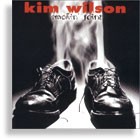
    This CD, recorded over a two-year period, spotlights the world class work of the legendary T-Birds frontman, but of interest to the readers of this publication would be the four – count ’em, four – great guitarists lending support.

    You kind of get the feeling that this level of musicianship is hiding around every corner in your local blues hood. That’s definitely the case in at least the Phoenix and Los Angeles areas.

    Rusty Zinn should be familiar to the devotees of the current indigo renaissance. Well-established as a leader in his own right, his Al Casey/Bill Jennings-inspired lead work on this album is some of his strongest to date. Zinn’s articulation of the early-’50s styles rivals any player, new or established.

    Space limitations preclude writing much about the other three but, suffice it to say, Wilson has no weak musical links. Messers Billy Flynn, with Zinn on the Phoenix set, and Kirk Fletcher, and Tray Gonyea on the California date cover the blues basses with style and aplomb. Whether the song is inspired by the work of a young Riley King or the late Luther Tucker, these guitarists are deeply versed in all the blues idioms, in these instances the majority of the influences would be post-war.

    Wilson is doing what he should at this stage of his career. He has nothing left to prove and is as always at the top of his game, but is now surrounding himself with extraordinary young players who obviously inspire him. He is responding to their respectful challenges by giving them plenty of space to stretch, and that they do with stylistic respect to a leader who has been responsible for leaving the litter of many smoking joints along the blue highway.


    This article originally appeared in VG‘s Nov. ’01 issue. All copyrights are by the author and Vintage Guitar magazine. Unauthorized replication or use is strictly prohibited.

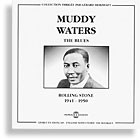
  • Muddy Waters – The Blues: Rolling Stone 1941-1950

    The Blues: Rolling Stone 1941-1950

    This new collection chronicles the rise of Muddy Waters from tractor driver to the king of the blues. It presents 36 of his formative first recordings on two CDs covering his debut years from 1941 to ’50.

    Included here are a sample of Muddy’s premiere recordings, captured by folklore collector Alan Lomax for the Library of Congress in 1941 and known as the famous “Stovall Plantation” sides. They show Muddy at his best: rollicking blues with a sensitive edge, hot guitar rhythms, and vocals that send a chill down your spine.

    Inspired by hearing himself on record, Muddy moved from Mississippi to Chicago and soon recorded a series of hits for the visionary Aristocrat/Chess label. These early songs are all here, from “I Can’t Be Satisfied” to “Rolling Stone.”

    These songs have been collected in other places, of course. But this set has better sound than some and includes a nice liner book with an overview of Muddy’s career.


    This article originally appeared in VG‘s Dec. ’01 issue. All copyrights are by the author and Vintage Guitar magazine. Unauthorized replication or use is strictly prohibited.

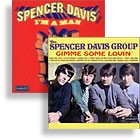
  • The Spencer Davis Group – I’m A Man & Gimme Some Lovin’

    I'm A Man & Gimme Some Lovin'

    In its original incarnation, the Spencer Davis Group was one of the best R&B or pop bands of the British Invasion. Unfortunately, that incarnation only stayed together long enough to record two albums. Fortunately, Sundazed has reissued both on CD, each with eight bonus tracks.

    The reason the lineup was so short-lived was, of course, because it was inevitable that the youngest but most talented member of the band, Steve Winwood, would take the reigns of his own group, Traffic, and an eventual solo career. But while with Davis, this triple-threat phenom (singer/songwriter/instrumentalist) recorded some truly astounding music, including the hits “Gimme Some Lovin’” and “I’m a Man” – which only becomes more astonishing when you consider that he was in his mid teens at the time.

    Ironically, Winwood’s formidable vocal and keyboard strengths overshadow his guitar playing in discussions of the British blues revival, but a listen to “Stevie’s Blues,” cut when he was 17, clearly shows he earns a spot alongside Clapton, Peter Green, and Mick Taylor. A warm, distorted tone, perfectly intonated bends, and a visceral intensity belie his age or nationality.

    “On the Green Light,” its title obviously a nod to Booker T & The MGs, gives Winwood a chance to trade solos with himself, on Hammond organ and lead guitar – atop a swinging groove provided by drummer Peter York and brother Muff Winwood, the bassist pumping away on the aforementioned hits and “Keep On Running.” The latter displays the Jamaican influence of songwriter Jackie Edwards, whom the band also tapped for “I Can’t Stand It” and “When I Come Home” – both co-written by Steve.

    As for Davis himself, he supplies the folk element of the group, as on his solo piece “Midnight Special” (the American folk song, mysteriously credited to him) and “The Hammer Song,” with his acoustic 12-string backing another fine Winwood vocal.

    The band is first-rate, but lest there be any doubt who makes it so special, check out the quartet’s cover of the Righteous Brothers’ “My Babe.” The verses are sung by the group, with Stevie transforming the ditty as he blasts in on the choruses. Imagine the Kingsmen backing Ray Charles.


    This article originally appeared in VG‘s Dec. ’01 issue. All copyrights are by the author and Vintage Guitar magazine. Unauthorized replication or use is strictly prohibited.

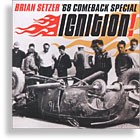
  • Brian Setzer ’68 Comeback Special – Ignition

    Ignition

    Okay, I confess. Somehow this one slid in under the radar. Released in late summer, it features Setzer back in a trio setting, basically just cutting loose, guitar-wise and vocally. And let’s face it, any album that has him playing this much guitar should be brought to the attention of players everywhere.

    The band (named after Elvis’ television special) has the same setup that catapulted Setzer to stardom in the ’80s; guitar, bass, and drums. You’d assume that mean rockabilly, and you’d be right. Cuts like “Blue Café,” “Hot Rod Girl,” and “(The Legend of) Johnny Kool (Part 2)” give Setzer ample room to show off his chops. In fact, the chord workout in “Hot Rod Girl” is a jaw-dropper.

    And there’s lots more here. A streak of country runs through some cuts. “5 Years, 4 Months, 3 Days” is basically a re-write of the Dave Dudley classic “Six Days On the Road.” Setzer’s baritone guitar solo and cutting fills propel this one. “8-Track” is a monster of a truckers song that features an unbelievable chord solo, a killer single-line solo, and… yodeling. No, really. And, it cooks. “59” harkens back to his Knife Feels Like Justice days with a rockin’ beat and imaginative solo. The ballad “Dreamsville” lets Brian show off some chops and sounds that are… well, dreamy. Wrapping up the album is a take on “Malaguena.” About all I can say is, “Yikes!” It’s a tour de force.

    I’ve always thought Setzer was one of the truly great guitar players of his generation. And after hearing this one, I don’t doubt that a bit. Grow those sideburns, grab your leathers, and pick up this one. Excellent album, brilliant player.


    This article originally appeared in VG‘s March ’02 issue. All copyrights are by the author and Vintage Guitar magazine. Unauthorized replication or use is strictly prohibited.

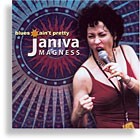
  • Janiva Magness – Blues Ain’t Pretty

    Blues Ain't Pretty

    Well, I do agree, the blues ain’t pretty. But svelte torch singer Janiva Magness sure is a sight for sore eyes.
    In addition to belting out the blues and fronting her own band in Southern California, she plays that wacky percussion corset known in Zydeco circles as a “Da Rubboard,” or da Madonna (you get the picture, a form-fitting corset of steel with large – ummmm – protuberances in front, and a rippled texture, with which she strokes her fingerpicks on a Cajun beat)!

    This is not her first recording, but certainly her most self-assured, and Janiva has a flock of distinguished guest artists to sweeten the mix, including red hot guitarist David “Kid” Ramos, husband and talented bassist/saxman/guitarist Jeff Turmes, and “Brother Red” Young on Hammond B3. This album rocks, from the can’t-stop-tappin’-yer-feet rockabilly of “Blues Ain’t Pretty,” title tune written by Turmes, to the irresistible minor blues “Nobody Loves You Like Me,” featuring hot licks by Ramos on guitar and a lusty vocal reminiscent of Bonnie Raitt at her nittiest and grittiest.

    The performances of all ensemble members are top-notch, making this a blues album to cherish and play over and over again. –


    This article originally appeared in VG‘s March ’02 issue. All copyrights are by the author and Vintage Guitar magazine. Unauthorized replication or use is strictly prohibited.