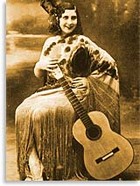
Month: January 2004

  • Kenny Burrell

    Kenny Burrell

    Kenny Burrell is a legend in the annals of jazz guitar history. Emerging from Detroit in the 1950’s with a background in organ trios, he has done just about everything imaginable in music.

    Through it all, his artistry and integrity have never been questioned. A master soloist, the perfect complement to a vocalist or soloist, he’s always been able to do it all. And, now, he not only plays, but is a teacher too. As the head of Jazz Studies at UCLA, he assures jazz’s legacy with a whole new generation of players and listeners. Burrell’s latest record, Lucky So and So, features all of his trademark playing, along with something that might at first throw listeners expecting a guitarfest – he sings four cuts – and does the expected terrific job.

    Burrell sat with us on a lunch break at UCLA to talk about the album, the state of jazz, and other things.

    Vintage Guitar: Okay… let’s get the vocal thing out of the way right away. Why four vocal tracks at this point?
    Kenny Burrell: Actually, I’ve sung a bit on my last two albums for Concord – I did one vocal track on each. The reason I decided to do four on Lucky So and So was because I felt really comfortable working with Concord and John Burke, in the sense that they encouraged me to do what I felt.

    I did a complete vocal album back in the ’60s, and I had, at that time, some problems with the A&R people at the label, who had, more or less, designs for the vocals to go in a pop direction. When they had asked me to do it, I thought they just wanted me to be myself. But that wasn’t quite what they had in mind. So, that didn’t turn out to their satisfaction, and it didn’t turn out to my satisfaction. I made a vow then that if I ever did it again I’d do it like I wanted to do it, with people who really wanted me to be myself and do what I felt. Therefore, the vocals on the new album.

    And even though you’ve heard and played with hundreds of great singers, you have your own style.
    Thanks. I appreciate that.

    So, who do you really love as a singer?
    The list is too long. As you pointed out, I’ve recorded with so many. I’ve worked with Sinatra, Tony Bennett, Nat King Cole, Joe Williams, even James Brown. I did a thing with B.B. King at one point. On the female side, there’s Ella [Fitzgerald], Lena Horne, Dinah Washington, Sarah Vaughan, Billie Holiday, Aretha Franklin, Nina Simone. Ray Charles is another.

    A nice, eclectic group. Along those lines, did you do a lot of session work in the ’60s?
    Yeah, I was a very busy studio musician in the ’60s. That’s how those pop names became part of my history. I also had the chance to record with some of the great jazz singers, as well. And of course there’s a long list of great instrumentalists, as well.

    That kind of leads to my next question. You’ve been in the business a long time now, and played with a lot of great musicians. You’ve reached a point where you’d have to be considered a “legend” as a jazz guitarist. Any thoughts on that? Do you ever think in that direction?
    Well, when I hear that, it makes me feel a little odd, and very fortunate that I’ve had the opportunity to have been able to do things that people like, over a very long period of time. That’s how you get the reputation – by being consistent. I’ve worked hard.

    One thing I’ve always tried to do is maintain a certain level of artistry. I think all musicians do that, they want to sound good. Simple as that – as I tell my students and tell myself – you’ve got to be consistent. You just can’t be good today and then maybe tomorrow. And if you are consistent, you’ll get a good reputation, and you’ll find good work as a musician.

    Back to Lucky So and So, I’m curious about how you go about picking tunes. You obviously have a pretty big catalog to choose from. How do you set up a new record?
    In recent years, I’ve done things that have a certain mood, a certain feeling to them. Once that starts to happen, when two or three songs fall into a certain mood, I say “Well, this is kind of a nice feeling. Maybe we should go down this road.” Then I start to think about other tunes that might fit that, and that’s where we go.

    What happened on this album, this group was working in New York at the Blue Note, and we had worked about a week. I was thinking about recording, so part of it was the things that seemed to feel right, and there were comments from the audience, so we could get an indication of what they liked. There were certain songs that stood out, for no particular reason, and I guess that it was just falling into a kind of certain mood.

    The album is a little on the laid-back side. It just kind of fell into that relaxed kind of groove, and I’m not one to fight that if that’s the way it’s going.

    Would it be safe to say you’ve always used this sort of idea, because some of your Concord stuff from the ’70s, like Tin Tin Deo, had a similar overall feel.
    I guess that’s one of my methods or philosophies in terms of producing music on an album, to take the listener on a kind of trip. When the trip’s over, hopefully you’ve enjoyed it. It can be an exciting trip, a laid-back trip, or whatever.

    Can you give us an overview about what you do at UCLA?
    Well, I’m the director of the jazz studies program. I started the program five years ago, and it has been a really rewarding thing for me. From the comments by other instructors and students, it has been for them, as well. We have quite an outstanding roster of instructors and feel we’ll be producing some outstanding students. Like I said, we’re in our fifth year now, so the first students are just finishing.

    Obviously, you do this to keep jazz going…
    Well, one of the reasons I do this is certainly to keep jazz alive, keep the continuity going, and because I think it’s a very important art form that should be taught along with other important art forms. I feel lucky to be in a position to make that happen.

    The other part is I really enjoy sharing information with students, and so do the rest of the instructors. They are able to bring into the classroom, just like I am, practical experience, because these are people who are names, who are musicians out there in the real world who are active and creating and contributing, and they bring all that experience back to the students. So they bring not only inspiration, but information about the music business, which is extremely important.

    In academia, these people are “primary sources.” That is, direct information, not secondhand, because these are the people who are doing it. The great Herbie Hancock, who was in residence here a couple years back, said, “UCLA has the best jazz faculty in the country.”

    I feel very strongly about that, and I hope the fruits of our labor – the students – are going to prove that.

    You mentioned keeping jazz alive… it seems there are always naysayers who say it’s dying or becoming too diluted. Any thoughts on the state of jazz?
    It’s bigger than ever. There’s all kinds of jazz being played today. The venues are opening up, too; venues that were always closed to jazz, like subscription series and concert halls at colleges. A lot of that programming was closed to jazz, and strictly used for classical or folk music. Jazz is now a part of folk festivals, and blues festivals, too.

    The nightclubs, to some extent, are drying up. Not in places like New York, but nightlife in general has kind of dried up across the board. People don’t go out as much as they used to because they have so much they can do at home in terms of entertainment. But that doesn’t affect the real growth, like the festivals and the huge variety of things that are happening, like the rebirth of Dixieland, fusion, smooth jazz… all of that is leading to a larger jazz audience, which I feel leads ultimately to a true history of the music. That Ken Burns thing on PBS didn’t hurt, either.

    Do you still do a lot of touring?
    I do some. Since I’ve been teaching, my traveling is done in the summer months. I do places like the Blue Note in New York, and Yoshi’s in Oakland.

    Are there young players out there who put a twinkle in your eye or really catch your attention?
    There are so many. Let me just say that I’m impressed by a lot of the young guitarists I’m hearing. Not only from the standpoint of their technical ability, but they are interested in looking at the history of jazz, as well as the future. I can hear that in their playing, and that’s only going to make them better musicians.

    One question about another jazz guitar legend… I know you played with Wes Montgomery, who has become kind of the patron saint of jazz guitar. What are your impressions of Wes.
    Well, for me he was one of the most beautiful people, because I was his friend, as well. Thoroughly dedicated to the music and he was what I would call a natural. He had such flowing ideas that it just seemed to come so natural for him. I always admired him, and still admire him. Same kind of thing with Jimi Hendrix. The music just kept flowing out of him.

    How about guitars? What’s your main instrument for stage and studio?
    I play several guitars, depending on what’s happening. My latest is a Benedetto, made by Bob Benedetto. I’m very, very happy with that. I also own Super 400s and L-5s. I have some Yamaha acoustic steel-strings that I use, and I have a few nylon-strings. One of my favorites is an old Gibson, and another an old Guild nylon-string classical. I have a Ramirez, which I also love.

    What about amps?
    I still have the old Fender Twin that I use a lot…

    One you’ve had for awhile?
    I have several that I’ve had for a while. I also, on occasion, play the Roland Jazz Chorus. Those are the two I use mostly.

    As gracious as he is talented, Kenny Burrell is sharing what he knows to help jazz continue to grow. It’s not hard to see (or hear) why he was Duke Ellington’s favorite player, or why when questioned what he wanted to sound like, Jimi Hendrix said, “Kenny Burrell.”


    Select Discography
    Monday Stroll (with Frank Wess), Savoy Jazz, 1957
    A very nice, light swinging session that features not only Kenny, but the great Freddie Green on rhythm guitar.

    Kenny Burrell and John Coltrane, OJC, 1958
    Along with the brilliant rhythm section of Tommy Flanagan on piano, Paul Chambers on bass, and Jimmy Cobb on drums, Kenny and Coltrane show why some people consider late-’50s jazz the era of the hottest soloists.

    Blue Lights, Volumes I and II, Blue Note Records, 1958
    Plain old-fashioned jamming lets Kenny show his chops. Killer solos all around.

    Guitar Forms (arranged and conducted by Gil Evans), Verve, 1965
    An acknowledged classic, this is somewhat off the beaten path. It showcases Kenny in a variety of musical forms, and he excels at all of them.

    Tin Tin Deo, Concord Jazz, 1977, When Lights are Low, Concord Jazz, 1979
    Two beautiful trio albums that let Kenny show his single-line abilities and beautiful chordal work.


    This article originally appeared in VG‘s June ’02 issue. All copyrights are by the author and Vintage Guitar magazine. Unauthorized replication or use is strictly prohibited.

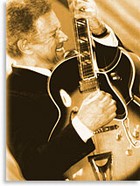
  • Jeff Beck – Truth and Beck-ola

    Truth and Beck-ola

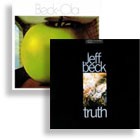
    Okay, reviewing these is a no-brainer. Any guitarist of my generation knows these well. The 1968 and ’69 releases helped establish Beck, and essentially paved the way for Led Zeppelin. Beck is a hero to a generation of players, and cuts like “I Ain’t Superstitious,” “Beck’s Bolero,” and the acoustic “Greensleeves” from Truth, and the funky rock of “All Shook Up” and the boogie of “Rice Pudding” from Beck-ola helped cement his rep. The vocalist for these albums was Rod Stewart, who sings incredibly well throughout. And the production, marked by a really cool “flat” sound you don’t hear much anymore, contributes to the heavy feel of this music.

    These new digitally-remastered CDs help bring back the feel of hearing these albums. It’s not hard to see why they were such a strong influence on everyone from blues/rockers to metalheads.


    This article originally appeared in VG‘s Jan. ’01 issue. All copyrights are by the author and Vintage Guitar magazine. Unauthorized replication or use is strictly prohibited.
  • Hank Williams – Alone with His Guitar

    Alone with His Guitar

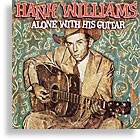
    Ever since Hank Williams died on December 31, 1952, his fans have had to make do with commercial recordings, which have been almost continuously re-mixed, re-mastered, and repackaged by MGM and Mercury. But occasionally, once in a blue moon, William’s aficionados have been surprised by “newly discovered” recorded material. Most has been from radio shows or song demos. Alone With His Guitar is made up of just such “new” material.

    Nine of the 18 cuts on this disc weren’t available on a CD before Mercury’s epic Grammy-winning 10-disc box set, The Complete Hank Williams. For folks who don’t want to shell out big bucks for the humongus box, Alone is a much less expensive way to possess these intimate and important recordings.

    Not only is the music special, but the packaging and booklet are of equally high quality. Liner notes by William Gay (recent recipient of the William Michner Memorial prize) are entertaining and insightful. Additional notes by co-producer Colin Escott supply all the details needed to understand these recordings within their historical context.

    Sound quality is certainly not up to current squeaky-clean Nashville digital standards, but it is good enough so that on a decent sound system you will hear all the nuances of Hank’s vocal delivery and simple guitar work. It is my journalistic duty to warn you that even if you buy this CD, your appetite for Hank Williams will probably not be sated. As a matter of fact, Alone may actually increase your desire to have his complete recordings.

    Perhaps you should save yourself the mental anguish and just break down and buy The Complete Hank Williams at the git-go. That’s what I did.


    This article originally appeared in VG‘s Dec. ’00 issue. All copyrights are by the author and Vintage Guitar magazine. Unauthorized replication or use is strictly prohibited.
  • Jack Westheimer

    Pioneer of Global Guitarmaking

    Ca. ’63 Teisco Model SD-4L.

    Today we pretty much take it for granted that if you want an inexpensive guitar, you’re going to buy one made in Korea, Taiwan, Mexico, Indonesia, China, maybe even India. And you have to admit that, for the price, what we get is pretty darned good. In fact, these days, where a product is made is almost irrelevant to the consumer. We’re in a global economy; McLuhan’s global village instantaneously connected with e-mail.

    Now, youngsters, take note. This wasn’t always the case. Indeed, from the middle of the 19th Century until the 1960s, inexpensive guitars were the province of American mass manufacturers with names such as Haynes, Lyon & Healy, Regal, Stewart, Oscar Schmidt, Harmony, Stromberg-Voisinet, Kay, Valco, and the United Guitar Company. How did we arrive at our current state of affairs, and who is responsible?

    “How” is a long, interesting discussion that covers most of the last century or two and that we’ll have some other time. “Who” is a little easier. While there may have been a handful of intrepid pioneers who began developing international guitar manufacturing, it’s no exaggeration to say that no one has had a bigger impact on the globalization of guitars than Mr. Jack Westheimer – one of the pioneers of global guitarmaking. Among the brands associated with his activities are Kingston, Teisco, Teisco Del Rey, Silvertone, Emperador, Cortez, and Cort, not to mention a host of other monikers that have graced guitars coming from the Cort factory. Even if you haven’t played one of these guitars, there’s a good chance that if you’ve ever played a decent-quality beginner import, you’ve played a guitar associated with Westheimer.

    In fact, Westheimer was one of the earliest (and most influential) importers to cultivate Japanese manufacturing in the years surrounding 1960. And it was Westheimer who, along with folks like Jerry Freed and Tommy Moore, brought Korea to the point where today more than half of all guitars made in the world come from that Asian peninsula.

    VG recently had the pleasure of a number of long conversations with Westheimer, and we’d like to share some of what we learned, and use the opportunity to document the brand he’s currently most associated with – Cort. Some of what you are about to read will correct previous misinformation that has been perpetuated here and by other sources.

    Lucky Accident
    Westheimer didn’t set out to get into the music business. It was kind of an accident. He went to college in the early 1950s and upon graduation went to work for World Wide Sporting Goods, Chicago, a company involved in the import/export trade. Shortly thereafter, Uncle Sam came knocking, and Westheimer was drafted into the Navy, where he served from 1955 to ’57. Following his hitch, he returned to the gig at World Wide. However, this career path was not to be. In 1958 the firm was sold to Lionel, the electric train outfit, and Jack was given his walking papers.

    About a month and a half later, his old boss, Bill Barnet, was also given the boot, and he contacted Jack about going into business. That sounded fine to Jack, and they became partners in what would soon become Westheimer Sales Company. The only problem was they hadn’t really figured out what business to go into. It was about that time that Harry Belafonte and Caribbean music were coming on strong, so in a way you can say that Belafonte was indirectly responsible for the avalanche of Japanese guitars that was about to begin… Belafonte, whose most memorable tune was probably “Day-O,” was tangentially associated with the burgeoning folk revival gaining an audience in the late ’50s. The popularity of Belafonte, coupled, no doubt, with the somewhat related “beatnik” craze (poetry, dark sunglasses, coffee houses, and guitars), caused a surge in demand for bongo drums. Jack and his former boss decided to start a business importing hand-tunable bongos made by Pearl in Japan.

    Into Guitars
    The budding bongo boom quickly expanded into importing drum kits made by Pearl. This, of course, put Jack in the right place at the right time. It became immediately apparent that a guitar boom was looming, and he had excellent connections in Japan. The problem was that Japanese guitars were fairly primitive at the time (remember Aria?). Recall that Shiro Arai brought over some higher-quality Japanese acoustics in the early ’60s, only to have them explode when subjected to winter heating systems due to inadequate seasoning of the timbers.

    In any case, around 1959 Westheimer began to see enough improvement in Japanese guitar quality he thought the time right to begin importing. To assure quality, he took an approach that would later be used successfully by some other importers. He offered the guitarmakers more money if they’d improve the quality. Westheimer imposed what’s known as the 80/80 quality test, a litmus test based on Sears-Roebuck quality standards. This meant that guitars had to survive 80 percent humidity at 80o Farenheit for three to four days. Westheimer introduced the concept of a truss rod to Japanese guitarmakers. And ca. 1959, Westheimer Sales began importing Kingston acoustic guitars (made by the Terada Trading Company) from Japan.

    Westheimer was not the first to import guitars from Japan, but was certainly the first significant player in this new enterprise. Westheimer recalls that some of the earliest Japanese guitars were imported by a Mr. Rose, who specialized in selling to pawn shops. Also, the St. George brand had begun before his Kingston brand. Marco Polo is another brand that got going at about this same time, certainly importing Japanese-made guitars by 1960, if not earlier. Buegeleisen and Jacobson, the big New York distributor had opened its Kent subsidiary in early 1960, but at first its focus was on microphones and guitar accessories, coming to guitars a year or so later.

    Most early Kingston acoustics were humble beginner guitars, which was their intent. Few reference materials are currently available regarding these early Kingstons, so no detailed accounting is possible at this time. Westheimer recalls that they were very similar to Harmony’s Stella line, with which, of course, they were competing.

    A sneak peek is provided by an undated (probably ’64) Imperial catalog. Imperial was a Chicago-area accordion manufacturer that got into guitars in ca. ’63, first selling Italian-made guitars, but quickly adding Japanese models to its rather eclectic line. Shown in this catalog (along with a Galanti Grand Prix, an Italian guitar imported by Frank Galanti, another Chicago accordion manufacturer) was a Teisco SD-4L (Imperial SW4), obtained from Westheimer, plus a guitar, mandolin, and two ukes with the Kingston brand. The guitar was the 3/4-sized Model S503 Student Guitar, clearly inspired by a Stella. This had a mahogany-shaded finish with fake flame “graining,” white pickguard, simple adjustable bridge, and stamped trapeze tailipiece. The mandolin was a flat-backed pear shape. The Model No. 16 Ukulele was made of hardwood, stained brown (with the fake flame), and a plastic fingerboard. The Model B6 Baritone Uke actually bore the Exotica brand name, but was also a Kingston and was similar to the No. 16.

    One innovation Westheimer introduced to his Japanese makers was the use of a steel T-bar for reinforcing necks. In the past there was a lingering perception that many Japanese acoustics from the ’60s had bolt-on necks. In reality, most had glued-in necks. It was, as far as we know, the American Kay company that began employing bolt-on necks for some of its acoustic models in the early 1960s (so did Valco, but they were never a major factor in acoustics). In any case, the Kingstons were successful from the beginning, fuelling the growing demand for acoustic guitars as the folk revival gained steam amongst maturing babyboomers.

    Westheimer and the SG
    One of the more amusing anecdotes Westheimer relates is his connection to the Gibson SG. As he tells the story, there was a Gibson employee named Walter DeMarr who retired in around 1960, at age 70 or so, and moved from Kalamazoo to Chicago. Westheimer met DeMarr and hired him to do some consulting work. Westheimer was looking for a new shape for electric guitars. DeMarr, as it turns out, was in possession of a prototype for a new Gibson guitar with double cutaways, pointed horns, and a bolt-on neck. Gibson, never a bolt-neck kind of company, didn’t know how to produce the guitar. DeMarr used the basic shape of the prototype to sketch out a new design for Westheimer with more rounded horns. Jack took this design to Kawai whose Hanshu plant proceeded to produce the Kingston A2 or S2 (two pickups) and A1 or S1 (one pickup) guitars and the AB1 shortscale bass which were introduced in 1960. These were produced in both a three-and-three or a six-in-line headstock versions. They had mahogany bodies and a metal pickguard that held the pickups under the strings. Pickups were the chunky chrome-covered single-coil kind with angled corners. There was an adjustable bridge (not compensated) and a covered stop-tailpiece. The Kingston S1 was featured in the previously mentioned Imperial catalog, as was a three-pickup version of same.

    In very late 1960, Gibson’s first SG-shaped Les Pauls were introduced, glued neck versions of the DeMarr prototype. So in a funny kind of way, the SG was more or less simultaneously launched in both Gibson and Kingston versions!

    Teisco Electrics
    In late ’59 or early ’60, Westheimer also began to import Teisco electric guitars made by Teisco in Japan. These earliest Teiscos were plain Teisco-brand (not Teisco del Rey). Teisco was founded in ’46 by Hawaiian and Spanish guitarist Atswo Kaneko and electrical engineer Doryu Matsuda. Teisco was the brand name put on domestic instruments and the company was called Aoi Onpa Kenkyujo (roughly translated: Hollyhock Soundwave or Electricity Laboratories). Early Teiscos included Spanish guitars, lapsteels, and amps, the guitars frequently reflecting the influence of Gibson. In ’56, the company changed its name to Nippon Onpa Kogyo Co., Ltd., although instruments continued to be called Teisco.

    By the end of the ’50s Teisco had clearly become interested in exporting guitars to the U.S. They apparently sold some to the aforementioned Mr. Rose. In any case, through his connections with Pearl and the Japanese music industry Westheimer hooked up with them and began to bring in Teiscos. By this time Teisco had begun to make the transition from its Gibson influences to a more Fender-esque styling, approaching the Jazzmaster shape. Westheimer’s Teisco imports also met with success, and were soon outstripping acoustics in sales.

    Westheimer Sales invested a lot of engineering expertise into the development of Teisco guitars and by the mid ’60s their quality had grown by leaps and bounds. A number of key events converged in ’64. For one thing, the company that made Teiscos changed its name again to Teisco Co., Ltd. Also, Westheimer changed the name of the Teisco guitars he was importing to Teisco del Rey, the brand most commonly seen. And finally, the Beatles arrived and the mad rush from acoustic guitars to solidbody electrics got underway. Thus began the golden age of Teisco de Rey guitars. But not necessarily for Jack Westheimer…

    Weiss Musical Instruments (W.M.I.)
    The primary area of confusion surrounding the Teisco story and Jack Westheimer comes at this point and involves the complication of W.M.I., best known as the importer of Teisco del Rey guitars. The confusion is easy to understand because you have guitars coming from the Teisco factory carrying both the Teisco and Teisco de Rey brand names, and because the two importing companies involved are Westheimer Sales and W.M.I., which many of us have assumed stood for “Westheimer Musical Instruments.” Not so. Let’s sort this thing out, once and for all.

    As we’ve discussed, Westheimer Sales did, indeed, pioneer the importing of Teisco guitars made by the Teisco factory in Japan. And Westheimer did, indeed, coin the Teisco del Rey name ca. ’64. However, in ’65 events transpired that separated Westheimer from the Teisco connection.

    First of all, the success of Beatlemania and the British Invasion, plus the American folk rock response, collided with the first babyboomers pouring into their teen years to create a huge demand for guitars. All sorts of companies saw gold in them thar’ hills, and started snarfing up guitar-related companies. CBS bought Fender. Baldwin bought Burns, then Gretsch. Seeburg bought Kay, then Valco bought Kay. Norlin bought Gibson. Even Westheimer’s new competitor, Strum & Drum, was begun by the Sackheim family, which had cashed out of a nuts-and-bolts business and went into guitars.

    In fact, even Westheimer Sales was caught in the acquisition web. Barnet, Westheimer’s partner, was interested in leaving the Chicago area for his hometown down near St. Louis and an opportunity arose for him to purchase a Volkswagen agency. As Westheimer recalls, Volkswagen franchises were goldmines in those days, requiring a minimal sales force because people were putting down deposits and waiting for their cars to arrive. Westheimer Sales had caught the eye of one of the big trading stamp companies, King Korn. This was that long-lost era when you got trading stamps at the grocery store or when you bought gas, you pasted them into little books, and when the books were full you could redeem them for stupid merchandise (S&H Green Stamps was probably best-known). Anyhow, King Korn purchased Westheimer Sales, with Westheimer installed as president and Barnet off to southern Illinois to sell VW bugs.

    Another pair of fellows who also set their sights on selling guitars at this time were Sil Weindling and Barry Hornstein. Both had been involved with Hornstein Photo, a large Chicago-area multi-location wholesale and retail photography business owned by Hornstein’s father, Al. In any case, Hornstein Photo was purchased by another company and Weindling and Barry Hornstein found themselves flush with cash and looking for a new business venture. Weindling and Hornstein hooked up with an employee of Jack Westheimer’s named Sid Weiss. Weiss’ specialty was importing cellos from Germany, but he convinced Weindling and Hornstein that he had the Japanese connections to mount a guitar-importing operation. He was recruited as the front man, and in ’65, Weiss Musical Instruments (W.M.I.) was born.

    Immediately thereafter, W.M.I. began importing Teisco del Rey guitars purchased from Teisco. Westheimer could have objected to the use of his brand name, but the advent of W.M.I. coincided with increasing supply problems with Teisco; i.e., Teisco was unable to supply sufficient quantities for Westheimer’s needs. Westheimer basically let the Teisco del Rey brand name go, allowing W.M.I. to market them.

    According to Westheimer in an interview conducted with Dan Forte (a.k.a. Teisco Del Rey, just to keep you on your toes) in Guitar Player magazine, Westheimer and company’s concern were working on improving the quality of the instruments. The forte of W.M.I. was flash design and marketing. The fancier Teiscos with the striped metal pickguards and colorful finishes generally date from the later 1960s and were done in conjunction with W.M.I., not Westheimer.

    Back at W.M.I. it quickly became apparent to Weindling and Hornstein that Weiss’ expertise was, alas, in German cellos, not Japanese electric guitars, and he was in over his head. Not long after W.M.I. was formed, Weiss left the company, leaving Weindling and Hornstein in control of the business until they sold it in 1980.

    Weindling and Hornstein continued to import and market Teisco del Rey guitars until around ’72. But in ’68 the guitar boom came crashing down, and demand was finally satisfied. A number of Japanese companies went out of business. In the U.S., Valco-Kay went belly up, marking the end of America’s dominance of budget guitar manufacturing. In August ’69, the Valco/Kay assets were auctioned off and W.M.I. purchased the rights to the Kay brand name. W.M.I. began to slowly transition Teisco del Rey guitars to the Kay brand name, which gave them greater credibility with dealers. This change was completed by around ’73 and the Teisco del Rey name then disappeared. This explains why you will occasionally see a Teisco guitar with a Kay logo.

    Be that as it may, this should now clear up the confusion that has hitherto surrounded Westheimer Sales Corporation, W.M.I., and the Teisco and Teisco del Rey brand names.

    Several years ago Westheimer regained the rights to the Teisco del Rey name, though it is currently not in use.

    Kingston
    After the handoff of the Teisco del Rey brand to W.M.I., Westheimer refocused his energies on the Kingston brand name, which he began to apply to acoustics and electrics in ’65. Again, few reference materials are available, so any detailed accounting of Kingston guitars is impossible, but the majority of the electric Kingstons were probably sourced from Kawai, a piano company that began making guitars around ’56, getting into solidbody electrics in the early ’60s, like everyone else.

    By ’65, when Westheimer began working with them and not Teisco, Kawai was using distinctive, fairly large, chunky single-coil pickups on its electrics. Some early units were chrome-covered with angled corners. Others had chrome sides, a black plastic insert, and round, flat polepieces. The Kingston logo came in a number of forms, including as stenciled block letters, a small oval decal parallel to the nut, in a molded plastic piece of script, and sometimes molded plastic script superimposed over a kind of crown-and-shield design. Not enough is known to draw any dating conclusions from these logos.

    It’s not known how much of the Kawai electric line came here as Kingstons, but both small-bodied Jazzmaster-style and inwardly pointing Burns-style double-cutaway solidbodies have been sighted. All were Kawais.

    The small Fender-style guitars had an extended upper horn with the lower cutaway sloping backward, sort of like a Fender Jazzmaster. This was probably a version of the Kawai S-160. All we sighted had the sort of truncated Strat-style headstock featured on Kawais (and Kingstons) at the time. The fingerboards were bound with dot inlays. Several Kawai configurations exist, including versions with chrome control housings above and below the strings and with a matte-finished aluminum pickguard, both with a pair the chrome pickups with angled corners. One Kingston version, probably from around ’65, had on/off rocker switches and a covered stop-tailpiece. Another has been seen with sliding on/off switches on the treble side and a typical Japanese Jazzmaster-style vibrato. Kawai also made three and four-pickup models; you may find Kingston versions of these, as well.

    Other Burns-style Kingston models have been seen, also with direct Kawai analogs. These were basically Kawai’s SD series, with inward-turning pointed offset double cutaways, bolt-on necks, bound fingerboards, plastic mini-block (really elongated oval) inlays, and covered vibratos. One Kingston model was a version of a ’65 Kawai SD-4W with four of the chrome-with-angles pickups mounted on a matte aluminum pickguard. On/off switches were paired rockers above the strings. The headstock was a deeply hooked Fender-style with a little scalloped piece of metal under the tuner collars. A little chrome plate sat under the strings. Controls were four volumes and a master tone. Two other models have been seen, these probably from slightly later, with the truncated headstock design, tortoise pickguards and sliding on/off switches (versus rockers). One model had three pickups, evenly spaced, like a Kawai SD-3W, while another featured one at the bridge and two side-by-side up near the neck. Many of these were in a black-to-red two-tone sunburst, but others have been seen in white, and other colors were undoubtedly employed.

    Kingston thinline hollowbodies from the ’60s have also been sighted, also clearly the same as sold by Kawai, with the same chunky chrome-and-black single-coils. Westheimer does not recall that hollowbodies were actually made by Kawai, although they had a small factory that may have produced hollowbodies; otherwise they were probably sourced from the same Japanese factory that supplied Kawai. One model had equal pointed double cutaways, two f-holes, elevated pickguard, adjustable bridge, and trapeze vibrato tailpiece. Controls were on a triangular metal plate on the lower bout, typical of both Kawai and Teisco guitars of the late ’60s.

    Ca. ’68, Kingston offered a violin-shaped hollowbody that was almost identical to a guitar marketed by Kawai as their model VS-180, a design borrowed from the successful Italian EKO company. The model in hand was finished in white, with a three-and-three head with an extended point on the bass side, bound rosewood fingerboard, little plastic mini-block inlays, two of the chunky Kawai pickups, three-way select, f-holes, a pickguard that followed the edge contours of the waist, and a trapeze vibrato, all features typical of other Kawai models of the time, reinforcing the notion that Kawai was the main source for Kingston electrics.

    At least one Kingston violin bass model was available by ’68, again a Kawai. This was pretty much the companion to the guitar, with the same bass-side peak to the head. Except for having a three-tone sunburst finish, a covered stop bridge/tailpiece assembly, and controls mounted on a squiggly tortoise plate on the lower bout, this was virtually the same as the guitar.

    Another Kingston violin bass has also been sighted, sticking a little closer to the Höfner original, with two Höfner-style “staple” pickups. This had a brown sunburst finish, with a bolt-on mahogany neck, a French curve on the head, and a 22-fret rosewood fingerboard with dots. This bass did not have f-holes. Controls were mounted on a rectangular plate on the lower bout, with volume, tone, and three sliding switches, function unsure. This could be a Kawai product (Kawai was one of the few major Japanese makers to use the little sliding switches, versus either rockers or three-ways), but it also smacks of Aria. Aria was using the “staple” pickups by the late ’60s, though most Arias employed three-way toggles. So who knows?

    There were also Kingston amplifiers, all typical of late-’60s Japanese solidstate amps; small and lightweight, with top-mounted controls. Some, at least, were covered in black tolex with black-and-silver grillcloths, metal Kingston logo and vinyl strap handle. These were built specifically for Westheimer by a small electronics factory in Japan.

    By the late ’60s/early ’70s, Kingston acoustics had come a long way from the smallbodied guitars of a decade earlier. Again, few reference materials are available, however, as can be seen by the example shown here, there were now dreadnoughts inspired by Gibson, at least. This particular guitar (called a V-4 in later versions) has a solid spruce top, glued-in neck, kind of a Gibson headstock (decal logo and design), tuners with fancy plastic buttons, gold hardware, and actually a complete finetune bridge set into a massive mustache bridge, similar to late-’60s Harmony Sovereigns. The pickguard has a groovy mockingbird design, suggesting a Dove. The rosewood fingerboard (rounded end, typical of Japanese guitars before ’73) is bound with double arrowhead inlays. However, the coolest feature of this particular instrument is the body, which is a laminate of flamed maple, finished in that ugly red/orange that only came on Japanese guitars of this era. Clearly, this guitar reflects considerable, if eccentric, progress.

    Another model is a 12-string with a thick dreadnought shape, mini-block plastic inlays, trapeze tail and leopard plastic pickguard. The plastic Kingston logo was superimposed over a shield. More traditional Martin-style dreadnoughts are seen, often with the Gibson-style adjustable metal-and-plastic saddle in the pin bridge. Presumably there was a range of acoustics in all sizes and appointments. Whether these, too, were made by Kawai is likely but unknown.

    By the late ’60s, Westheimer had become one of the four largest importers of guitars from Japan, in company with other Chicago-area outfits W.M.I. and Strum & Drum (owned by Norman and Ron Sackheim, selling Norma guitars).

    The irony mentioned earlier? The irony of Westheimer’s Kingstons coming from Kawai, while W.M.I. assumed control of Teisco del Reys, is that in January of ’67 Kawai purchased Teisco, so even though Westheimer parted ways with Teisco in ’65, he ended up doing business with the company that would consume Teisco.

    1974 Kingstons, Plus?
    A glimpse of Kingston products can be seen in a 1974 Harris-Teller catalog. Curiously enough, these guitars surrounded a tipped-in Terada catalog. Terada, you’ll recall, was the original source of the original Kingstons 15 years earlier. During this period Terada guitars were distributed by Westheimer. No logos are seen on many of the instruments, however, some clearly bear the Kingston logo. Definite Kingstons include the No. U17 Standard Uke (mahogany, plastic fingerboard), No. B7 Professional Baritone Ukulele (mahogany, wooden fingerboard), No. T402 Steel String Acoustic (spruce, mahogany, decal rose, dots) and No. N3 Concert Size Classic (spruce, mahogany, dots). Several other acoustics, including a hummingbird dreadnought and a pear-shaped mandolin, bear no logos but are probably also Kingstons. Several other instruments might also be Kingstons, a couple of banjos, a couple thinlines (EA 300T, EA 500T), and several short-scale Fender-style guitars and basses (A-100, A-200, EB 200, EB 400).

    As we shall discuss shortly, manufacturing in Japan became increasingly expensive as the 1970s dawned and Westheimer expanded his operations to include Korea as a source for his guitars. Beginning in around 1975 the economy Kingston models came from Korea, whereas the better models continued to be made in Japan.

    1977 Korean Kingstons
    A snapshot of the Korean Kingston line is provided in an undated catalog produced ca. ’77. Shown are nine solidbody electrics, six solidbody basses, 12 acoustic steel-strings, and three classicals. Interestingly, the guitars don’t have logos. Also, some model designations will be recalled when we get to documenting Cort.

    Reflecting the “copy era,” which was still going full-steam at the time, all but two of the ’77 Kingston solidbodies were budget copies of American guitars. All had bolt-on necks and all but one came in plywood bodies with sunburst finishes. Most came with individucal covered tuners. The LP-2YS, as you might guess, was the top of the line, a Les Paul Custom copy with an arched cherry sunburst top, open-book head, bound rosewood fingerboard, plastic blocks, and a pair of chrome-covered humbuckers. The LP-2C was a downscale brother with a slab body, no binding, dots, wrap-around bridge/tailpiece, and controls mounted on a moon-shaped piece of plastic on the lower bout. There were two Strat copies, the Stat 2 (a name that would reappear on Cort guitars) and the Stat22N. The Stat 2 came with a maple fretboard and covered vibrato. The Stat22N was the sole solid wood guitar with a maple body finished in clearcoat. The S-250 was an SG copy, again with an open-book head, no binding, dots, adjustable bridge (no saddles), and faux-Bigsby. Pickups were controlled by two sliding switches. The S-200 was similar but with a “standard” tremolo, probably a simple Japanese-style unit. The S-100 had only one pickup and a stop-tail.

    The B-200T was the only “unique” design, with two rounded, slightly offset double cutaways, similar to many other Korean-made guitars of the ’70s (Teisco, Kay, Hondo, etc.). The head was an adaptation of a Strat-style on a short-scale neck. The two pickups were, indeed, similar to the DeArmond-style used on Teiscos, sitting on a laminated tortoise guard. This had the adjustable bridge and standard vibrato. The B-100 was similar but with a single pickup and stoptail.

    Similarly, all but two of the ’77 Kingston basses were modeled on the Fender design, again all plywood with sunburst finishes save two. Fender-style basses included the JB-2, a Jazz Bass with two pickups, rosewood board and plastic block inlays. This came in a blond version with a solid maple body called the JB-21N. The PB-1 was a Precision Bass with one pickup, rosewood board, and dots. The PB-2N was the same, but again in solid maple and blond. The MB-2 and MB-1 were basically bass versions of the B-200T and B-100 guitars, with a Gibson-style two-and-two open book head, and two or one pickups, respectively.

    ’77 Korean Kingston acoustics consisted of a couple folk guitars and a series of dreadnoughts based on Gibson and/or Martin models. All had Martin-style headstocks. The folk models were the F-75, a grand concert with a maple top and body, hardwood fingerboard, dots, pin bridge with adjustable saddle, and a Martin-style pickguard. The binding was painted on. The V-1 was similar except for having a laminated spruce top, nato body, celluloid body binding, and rosewood fingerboard and bridge. There were five “mini jumbo” guitars, slightly downsized dreadnoughts. Three models came in all-maple plywood, with rosewood fingerboards and bridges (adjustable saddles), dots and painted trim (except for a celluloid rose). The #745 had bookmatched brown engraved gaudy hummingbird pickguards. The #770 had a Martin-style pickguard. The #745S had twin fancy red painted hummingbird ‘guards. The V-3 mini jumbo was spruce and nato in a red-to-yellow sunburst with celluloid top binding and only one of the fancy red hummingbird pickguards. The #86 was similar to the V-3 except for having a natural finish, Martin-style guard, and triple celluloid top binding.

    Full-sized dreadnoughts included the V-4, identical to the V-3 except for having plastic block inlays, the V-2, big brother to the #86, and the V-2-12, a 12-string version of the V-2 (trapeze tail added for stability). The top of the ’77 Korean Kingston line were the W-10 and W-11 dreadnoughts. The W-10 had a spruce top and curly maple plywood body, bound maple fingerboard, black dots, bound body, Martin-style guard, and blond finish. The W-11 was similar except for having a laminated rosewood body, with a three-piece rosewood/maple/rosewood back, and a rosewood fingerboard with plastic block inlays.

    Three classicals finished the line. These all had steel-reinforced necks, by the way. The C-60 was spruce and maple plywood, with painted trim but an inlaid mosaic rose. The C-70 added a nato body, a mosaic strip on the head, and gold tuners. The C-120 added rosewood to the C-70.

    The Kingston name would continue to be used on a variety of guitars made either in Japan or Korea until around ’83. It would resurface again in the very late ’80s or early ’90s on generic low-end Fender-style guitars of unknown Asian manufacture. One model was a slightly offset double-cutaway bass with pointed horns and an elongated four-in-line headstock, 20-fret rosewood fingerboard with dots, with one split-coil pickup, one volume and tone control, and bridge/tailpiece assembly. By ’94, the Kingston was appearing on “high volume, low end, acoustic guitars,” probably of Indonesian origin. These included the D40 (OM shape in natural, black, blue, or tobacco sunburst), AG10 dreadnought, and four decreasingly sized slothead folk guitars (number reflecting the length), the DT38N/S (nylon or steel strings), DT36N/S, DT34N/S and DT30N/S.

    This is a highly imperfect accounting of Kingstons, but since they do continue to come up at online auctions with considerable frequency, at least now you have a start for understanding their context.
    Cort(ez)
    Teisco del Rey and Kingston were not the only brand names associated with Jack Westheimer. Another, which would have added significance today, was Cortez. Cortez would be important because it’s from that moniker that today’s Cort brand derived, in abbreviated form.

    The Cortez brand name dates bact to around ’60, and the beginning of our tale. The Cortez brand was given (by Westheimer) to a line of good-quality Martin-style dreadnoughts manufactured in Japan by the Hiyashi (or Yashi?) factory. Westheimer dispatched some of his staff to visit the factory and work with them to develop the product, resulting in Cortez acoustic guitars. Remember, guitars were still called Spanish guitars in those days, an appellation that has fallen by the wayside; hence, the “Spanish” names like Cortez and del Rey. According to Westheimer, Hiyashi was one of the top Japanese acoustic factories, and it was responsible for many Cortez and Emperador acoustics. Hiyashi was bought out by Pearl sometime in the early ’70s and that marked the end of its glory days.

    Again, no reference materials are available to document Cortez guitars in detail.

    Westheimer recalls one acoustic/electric model made by Hiyashi carrying his Emperador brand that was actually played by the Everly Brothers. Fewer than 180 of those guitars were imported because they just didn’t catch on. One day, the Everly Brothers’ manager called Westheimer to see if any more could be obtained because the Everly’s guitars had run into repair problems. Westheimer was able to locate several examples in various warehouses and got them to the crooners. He still gets requests for that guitar.

    Most Cortez guitars have fallen into a “copy” vein – Strats and Les Pauls. The latter came in both bolt-neck and set-neck versions, many made by Matsumoku, the factory responsible for many of the better Aria guitars, as well as the Electra, Westone, Univox, and Westbury brands. Matsumoku also made sewing machines, and was purchased by Singer in 1987, after which the guitarmaking operation was closed.

    There are also some Cortez copies of the Gibson ES-175 that appear to be similar to Japanese-made Venturas of the time.

    Cortez guitars were always made in Japan, never in Korea. The Cortez brand remained active at least until ’86, although it may have lingered another year or two.

    Korea
    As the ’70s got underway, Westheimer recalls the winds of change. The writing on the wall was writ by President Nixon in ’72, when he decided to stop tying conversion of the dollar to gold. This allowed currencies to float in a free market, and the value of the Yen, which had been steadily increasing, jumped way up against the dollar. This had devastating effects on beginner-grade guitars. Basically, they were becoming increasingly expensive to import and still be sold at the price-point customers expected.

    Another change that occured involved the King Korn Stamp Company. The stamp redeeming business suffered a downturn and the company fell on hard times. Ca. ’73 Jack Westheimer and several other executives purchased Westheimer Sales back from King Korn, and the Westheimer Corporation was born.

    Then, in ’73, Jack Westheimer crossed the Gulf of Tonkin and expanded his operations from Japan into the Korean market. He founded a company called Yoo-Ah (roughly translated “you-and-I”) with a partner named Yung H. Park and they built a Korean factory to build inexpensive electric guitars. Initial output included many guitars, branded and unbranded, for a variety of wholesalers, adding, as mentioned, the Kingston brand in ’75. Indeed, most people are surprised to learn that by ’76, according to figures published in The Music Trades magazine, Korean imports actually surpassed those from Japan! Quality slowly but steadily continued to improve.

    Over the years, the main output of the Cort factory has been devoted to producing entry-level lines for established brand-name manufacturers, so you may see many Cort-made guitars which are not identified as such. Some early ’80s D’Agostinos were Cort Products. A lot of the early Cort-built guitars can be spotted by their fairly narrow bound rosewood fingerboards with rounded ends and brass position markers. Many also featured humbuckers with cream bobbins and surrounds that have a distinctive coloration. By ’85-’86 Cort was producing lines for Kramer (the Striker series) and B.C. Rich (the Platinum series). For reasons hard to understand, larger manufacturers frequently do not like to identify the factories where their budget lines are made.

    Except for the higher-end Kingstons and the Cortez brand made in Japan, the Westheimer story pretty much shifts to Korea and beyond from this point on. Jack estimates that his legacy from the ’60s was bringing in as many as 200,000 guitars from Japan, “…many of which ended up under Christmas trees tied in a bow.” While many went straight to the closet, many more were the first guitars babyboomers cut their teeth on before graduating to more expensive instruments.

    Cort
    In many ways, Westheimer’s work in pioneering global guitarmaking with the Teisco, Kingston, and Cortez brands was the prelude of what would become his greatest achievement – Cort guitars. Again, the Cort name derived as an abbreviation of the Cortez, primarily used on electrics because it was felt that a Spanish-sounding name was appropriate on an acoustic, but not on an electric. Some Japanese-made electrics may have appeared bearing the Cort logo in the ’60s, but the name would not really get wide circulation until the end of the ’70s. We’ll begin to chronicle Cort guitars in detail beginning with our next installment.


    Brand names
    Here’s a short summary of the brands with which Jack Westheimer has been involved, either as an importer/distributor or manufacturer:
    Ca. 1959-’64, Teisco (electrics)
    1964-’65, Teisco del Rey (electrics)*
    Ca. 1959-’65, Kingston (acoustics)
    1965-’83, Kingston (acoustics and electrics)
    Ca. 1990

  • Ernie Hawkins – Bluesified

    Bluesified

    Ernie Hawkins hails from Pittsburgh. Not exactly a hotbed of acoustic blues, but Hawkins is one of the best. I’ve not run across any of his other work, although his bio says he’s been recording since 1980. He spent much of his youth studying with the Rev. Gary Davis, so it’s not hard to see why he’s so adept.

    His very elaborate and soulful country blues finger-picking style comes across from cut one, a cover of Merle Travis’ “I Am a Pilgrim.” He also shows a nice, relaxed voice that fits the feel of these songs perfectly.

    There are various styles on display here. He tears up the Rev. Gary Davis’ rag: “Slow Drag.” “Root Hog or Die” is an almost vaudevillian dirge with a great clarinet solo and cool lyric. By the way, there’s a couple of nice clarinet solos on here by Lou Screiber. Blind Willie McTell’s “Broken-Down Engine” gets some very nice playing. Another highlight is “I Belong to the Band,” which features Maria Muldaur on lead vocals (the track is also featured on her latest album, reviewed here last month). It’s a great performance by all concerned. Ernie closes the CD with a very nice “Amazing Grace/Tribute to blind Willie McTell.” It’s a song that, as Ernie writes in his liner notes, sums everything up.

    This is the kind of playing a lot of us aspired to when we were young.


    This article originally appeared in VG‘s Sept. ’01 issue. All copyrights are by the author and Vintage Guitar magazine. Unauthorized replication or use is strictly prohibited.
  • 1000 Years of the Guitar Part 2

    1000 Years of the Guitar Part 2

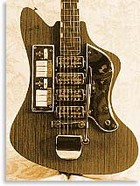
    A hand-colored postcard photo of a woman in a Spanish costume, ca. 1910.

    Well, we’re on the cusp of the new Millennium. Excited? Last month we began our look at the context in which guitars thrived during that fruitful period, looking at everything from 19th century American music, including banjos, mandolins and minstrelsy, to the unintended effects of agricultural politics. Let’s pick up the narrative just before World War I, with the completion of the Panama Canal and one of our sub-themes, world’s fairs…
    The Panama Canal
    Just as it’s impossible to ignore the unintended consequences of angry farmers on the world of guitars, it’s also hard to ignore the effect of the Panama Canal, which made a curious collision with Hawaiian music and had a direct impact on the development of the electric guitar. And that brings us back again to the sub-theme of world’s fairs! The Panama Canal was completed in 1914. This was an enormously significant event, a symbol of America’s emerging industrial and engineering might. The canal, whatever its political consequences, eliminated the need for ships to navigate around South America and provided a major trade link between the East Coast and both the West Coast and Asia.

    Jubilant, people in California wished to celebrate the promise of prosperity and decided to throw a world’s fair, and the Panama Pacific International Exposition (PPIE) was conceived. This was a political hot potato, but our interest in it is more pointed. After much wrangling, the spectacular PPIE was mounted in San Francisco. More than 13 million people attended, an astounding number when you consider the remoteness of San Francisco to the rest of the nation and that this was only nine years after the destruction of the great earthquake.

    World’s fairs date to 1851 and the Crystal Palace in London. They were the primary vehicle for introducing new technologies, and as we’ve already suggested, are associated with much cultural fertilization and crosspollination. Very quickly, these expositions became the rage and were held everywhere. The Eifel Tower was built for a world’s fair in Paris. We’ve already mentioned the importance of the 1885 New Orleans cotton exposition for introducing jazz, and the 1892 Chicago Columbian Exposition for introducing ragtime (as well as the phonograph and Ferris Wheel).

    The Call of The Isles
    The PPIE was a beaut – an art nouveau/arts and crafts extravaganza, complete with “palaces” for everything from the fine arts to manufacture. At the center was the Tower of Jewels, a jewel encrusted edifice. Every evening the Tower of Jewels was the centerpiece of a colored light show, the first time large outdoor spotlights were used. One of the big attractions was daily air shows by aviators in biplanes. And of course there was a huge amusement or midway area appended to the fair called “the Zone.” It was in the Zone that we want to focus our interest. Just as jazz and ragtime emerged from the fringes of the show, so did one of the big hits of the fair – Hawaiian music.

    Alas, we have to make another diversion to discover how Hawaiian music captivated America at the PPIE in 1915. It’s impossible to understate the importance of Hawaiian music on the evolution of mainstream American music. As mentioned, guitars are reported to have arrived in Hawaii in the hands of Portuguese South American cowboys, imported to the island, followed by Mexican cowboys brought in by King Kamehameha III. We also know that two Portuguese luthiers, Manuel Nunes and Augusto Diaz, set up shop in 1879, possibly to serve the cowboy trade. In any case, native Hawaiians quickly took to the guitar and adapted it to their own melodies, developing various “scordatura” (alternative tunings) known today as “slack key,” because they involved various detunings. The ukulele was developed during this period. Accounts of its origin differ. Was it a hybrid version of a native instrument fused with European influence, or simply an adaptation of a Portuguese instrument? It doesn’t matter. By the end of the century the ukulele was firmly established as a Hawaiian instrument and available on the mainland by the 1890s.

    Hawaii is also generally considered the place where slide guitar developed. Again, accounts vary. Some attribute its discovery to the great Joseph Kekuku, who is reputed to have been walking along railroad tracks with his guitar one day, picked up a piece of metal, and ran it along the strings. Hawaiians Gabriel Davion and James Hoa are also credited with the discovery of the technique. It has also been suggested the technique was introduced to the islands by a young Indian slave boy brought to Hawaii by Portuguese sailors. He arrived playing a guitar on his lap with a slide. However the technique was introduced, it appears to have been in use by the 1890s.

    Whether or not he invented the technique, Kekuku was one of Hawaii’s great virtuosos on slide guitar. He toured the mainland either in 1900 or 1902, staying for a number of years and spreading the gospel of what’s generally known as “Hawaiian guitar” through concerts and teaching many students. Hawaiian guitar was played on one of two instruments, and generally involved steel strings, another subject we’ll return to shortly. Most folks play Hawaiian guitar on a standard Spanish guitar with the nut raised to increase the action. However, the Hawaiians had apparently devised their own variation, a guitar with sloped shoulders and a square, hollow neck for increased slide resonance. These were often made of koa. This chronology presents an interesting conundrum because, as George Noe and Daniel Most reveal in their recent book, Chris J. Knutsen, two separate patents for similar hollow-necked lapsteel guitars were granted to Albert G. Duck of Waynesburg, Ohio, and Walter Burke of Providence, Rhode Island, both in 1894. Had both men visited Hawaii? Had there been Hawaiian musicians here earlier than Kekuku? Was there something in the air?

    In any case, Kekuku appears to have centered his activity on the West Coast, playing and teaching up and down the seaboard, with major activity in Los Angeles, which is interesting when you consider the later developments of not only Beauchamp and the Dopyera brothers (and Rickenbacker and Fender), but also of the Dickersons, and later, Magnatone. Hawaiian music took hold, and indeed, the first instruction book was published by Kekuku’s student, Myrtle Stumpf, in 1915, though this event was probably not entirely related to the PPIE.
    Lewis and Clark and the Yukon
    The popularity of Hawaiian music was given further boosts by two more West Coast events – world’s fairs! The first was the Lewis & Clark Exposition in Portland, Oregon, in 1905. The music that stole the show was performed by Hawaiians. This was followed four years later by the much bigger and more significant Alaska Yukon Pacific Exposition (AYP) in Seattle, Washington. Again, Hawaiian music was all the rage at the Seattle fair, which was visited by more the 31/2 million people, quite impressive for a town even more remote than San Francisco. The musical director of the AYP was the Hawaiian musician Ernest K. Kaai, and there were even several Hawaiian Music Days during the fair during which the Hawaiian music was played at many locations all day long.

    One of the buildings at the AYP was set up to promote the products of Hawaii, particularly koa wood, which was being encouraged for use in furniture. Many of the Hawaiian’s who played guitar there played instruments made by the local luthier Chris Knutsen (born in Norway, most famous for his harp guitars), who had emigrated from Minnesota in the 1890s. Knutsen may have begun making Hawaiian guitars, modeled after the Hawaiian designs, before 1909, but certainly he obtained koa from the AYP and made Hawaiian guitars thereafter. Knutsen would later migrate down to Los Angeles to be closer to the Hawaiian action, making his famous Kona guitars. It was there that Knutsen would meet and influence another significant early luthier, Hermann Weissenborn, whose Koa Hawaiian guitars definitely borrowed from Knutsen. The guitar designs of these two little-studied makers (until now) reached their apogee in the work of the Dopyra brothers, whose metal-bodied National resonator guitars featured the same sloped shoulders and hollow neck construction. But we get ahead of ourselves.

    On the Zone
    Clearly, Hawaiian music was building momentum as the Panama Pacific Exposition came together. And indeed, the house band for the PPIE was Keoki E. Awai’s Royal Hawaiian Quartette. In fact, one of the Quartette was Ben Zablan, who sometimes played a Knutsen eight-string mandolin. The Royal Hawaiians played at the Hawaiian Village located on the Zone, which also featured Hawaiian pig roasts, hula dancers, and other cultural events and entertainments.

    The PPIE and its Royal Hawaiian Quartette would be just another footnote in history were it not for two major results. The visitors to the PPIE left with a rabid taste for Hawaiian music and acquired a concomitant desire to play ukuleles.
    Sears and Harmony
    The desire for ukuleles following the PPIE resulted in a significantly increased interest in guitars on the part of our old friend, Sears. Seeing the demand following the exposition, Sears looked about for a supplier. Martin produced high-end ukes, but only Harmony (already Sears’ primary guitar supplier) was tooled up to mass-produce them cheaply. In 1916, Sears purchased Harmony, which would be operated as a subsidiary until 1940, when it was divested (ending the Supertone brand). In 1917, the Sears catalog introduced a full line of koa Hawaiian instruments. These would be offered through most of the ’20s and would fan the flames of America’s love affair with Hawaiian music. Ukes would continue in the mass manufacturers’ catalogs at least through the ’60s, by which time Hawaii had become passé. The Sears/Harmony connection would produce yet more interesting phases of guitardom.

    Sears’ interest in Hawaii was just part of a larger gestalt. Tin Pan Alley seized upon the rage and after 1915 cranked out endless real and manufactured pieces of Hawaiian sheet music for middle class consumption. Guitar and ukulele methods began to spring up everywhere, particularly in Los Angeles and New York, though many regional centers would eventually spring up, especially in the Midwest. William Smith’s Kamiki Method was one of the more influential, though there were many. The fascination with Hawaiian music gave music teachers a great boost, and schools developed in larger urban markets, filled in for everyone else by mailorder programs.
    The Electric Guitar
    The taste for Hawaiian music meant a surge in employment for Hawaiian guitarists, both native Hawaiians and mainlanders. Pale K. Lua and David K. Kaili recorded what was probably the first Hawaiian guitar duet in 1914, before the PPIE, but a host of artists followed, including the great Sol Hoopi and Frank Ferera (“The Portuguese Cowboy”) and many others. Suddenly, the ubiquitous vaudeville circuits were open to steel guitarists.

    One of the more talented was a man named George Beauchamp, who was having trouble being heard, his acoustic guitar being a bit too quiet for large crowds. This led him to seek a like-minded guitar repairman in L.A., a Czech immigrant name John Dopyera. Together they collaborated on ways to make Hawaiian guitars louder and the result was the metal-bodied, tricone National Resonator guitars developed in ’26 and introduced in ’27. Sol Hoopi, in fact, was the first to record with a prototype in ’26. Until World War II, these National (and subsequent wood-bodied Dobro) guitars would be the last word in loud for acoustic Hawaiian guitarists. Recall that Sears and Ward’s sold them from ’29 to ’39.

    However, even the resonator guitar would not have rescued the reputation of the PPIE. More importantly, Beauchamp was still not satisfied with the volume and continued to research the notion of amplifying a guitar with electricity. Working with National employees Paul Barth and Henry Watson, in ’31 Beauchamp came up with a wooden “frying pan” shaped lapsteel amplified with an electronic pickup. While not the first commercially produced electric guitar (Stromberg-Voisinet (Kay) introduced an unsuccessful transducer-based system in ’28), this electromagnetic field design would prove to be the start of the modern electric guitar. National was not interested, so Beauchamp (with Barth) took his design to his aluminum resonator supplier, Adolf Rickenbacker, and together they formed the Ro-Pat-In company and began marketing aluminum versions of the frying pan under the Electro brand name. Spanish guitars with pickups quickly followed. Beauchamp applied for a patent on his “frying pan” on June 8, 1923, and again on June 2, 1934, eventually receiving the patent on August 10, 1937. Thus, we can trace the Hawaiian music at the PPIE directly to the development of the modern electric guitar!

    Steel Strings
    The Hawaiian guitars progressing from Knutsen’s acoustics (based on Hawaiian designs) to the Electro frying pans sported wire strings, usually of steel. Gibson’s early carved archtops were also made for steel strings. It’s easy from this metalized vantage point to think that steel strings have always been with us, but as we’ve already discussed, most guitars through the 19th century were made for gut strings. Don’t forget, Albert Augustine didn’t introduce nylon strings until 1947. Some instruments, such as the English guitar or cittern, had wire strings, but these were outliers. Mandolins did have metal strings, and the desire for metal strings may date to the Spanish Students tour in 1880, although it could be even earlier.

    In any case, by 1894 both Ward’s and Sears were warning buyers that their guitars were not made for wire strings and were not warranted if the guitars exploded. This does not mean guitars were not being made for steel strings. Martin’s X-bracing and other guitars, such as those by Bohmann, were sturdier and could handle wire strings, but most were still constructed for gut. Gut strings, generally imported from Europe, would be the main modality until World War I would choke off the supplies. As late as 1913 Sears guitars were still advertised as using “imported gut” strings. However, by 1910 Sears offered a nickel-plated stamped trapeze tailpiece as an accessory, no doubt to handle steel strings. In 1912, Ward’s was selling low-end guitars with the new trapeze attached, ready for steel strings. By the Spring/Summer 1914 Sears catalog, a new bridge was touted thus: “This bridge is made of metal in imitation ebony and is fastened to the body (read screwed on) so that it cannot possibly pull off, thus doing away with the old-style tailpiece when using steel strings. Also adjustable, enabling player to raise or lower strings to suitable height.”

    This switch to steel strings was primarily driven by player demand for louder guitars beginning in the 1890s, the same motivation that drove the Hawaiian players to resonators and electricity, however, the coup de grace was delivered by WWI, when the supply of imported gut strings was disrupted. In 1915, Sears changed model names and all guitars featured steel strings. Gut strings continued to be offered until the introduction of nylon strings after WWII, but increasingly this was isolated to “classical” guitars.

    Hawaiian music was incredibly important in the development of American popular music, but of course, few don grass skirts these days, so obviously much more was going on. There was a major shift in attitude following World War I. The U.S. had been staunchly isolationist through most of the 19th and early 20th centuries. However, the success of her doughboys in WWI and the concomitant flexing of her industrial muscle yielded a change in perceived self-image. The cultural inferiority complex over things European began to crack, and artists began to discover and celebrate things American, in painting, literature and music. In art music, the quintessential example of this trend was Gershwin’s “Rhapsody in Blue,” written for Paul Whiteman’s jazz orchestra in 1924. For popular music, this would be a rapid emergence of interest in indiginous music and musicians. This would be reflected in the balladeering of performers such as Richard Dyer-Bennet, who cultivated an interest in the “folk” music that had come to America and been transformed in the New World. Dyer-Bennet often performed with a harp guitar, and eventually went on to market his own line of Dyer harp guitars made by the Larson Brothers, initially under patent license from L.A.’s Chris Knutsen.

    Records
    The development of guitars in American popular music is closely intertwined with the development of three vital interrelated modalities – records, radio, and the movies.

    The recording industry, as we discussed, really got going in the 1890s and grew steadily as the early 20th century moved forward. Because the recording process was an acoustic technology, guitar had little presence in early recordings, its quiet voice being mostly inadequate to move the record cutter. Nevertheless, guitars continued slowly but surely to gain in popularity, something clearly documented in the pages of the Sears and Ward’s “wish books.” Recording technology also continued to improve, although until the mid ’20s it remained essentially the same acoustic process. We’ve already mentioned Loyd Wolf’s 1905 guitar recording, and the appearance of Hawaiian guitar music at least by 1914. The breakthrough came in the mid ’20s with the introduction of the electronic microphone, which greatly increased the sensitivity of the recording process. In ’24, Western Electric invented an electronic recording process that was adopted in ’25 and almost immediately obtained universal acceptance. From this point on, guitars began to be heard in abundance in recorded music.
    Records were extremely successful and by the ’20s the market had become fairly saturated with Victrolas. They were sold everywhere – in hardware stores, mass merchandising catalogs, and at all price points. Most households had one. However, demand for the fairly conservative fare put out by the major record labels, Columbia, Brunswick, and Victor (Edison was no longer a major player), began to drop.

    The Rise of Radio
    But saturation with banality was not the only reason for stagnant record sales. A challenge had been mounted by a new technology, radio. Radio was invented by the Italian Marconi in the late 1800s (although Nikola Tesla is also credited), but was really perfected as an audio medium by pioneers like Lee DeForest, who is credited with invention of the vacuum tube. DeForest was broadcasting music from the Eifel Tower as early as 1908, and in the decade prior to World War I, a huge number of mostly amateur enthusiasts got bitten by the radio bug and would assemble battery-operated crystal sets. These enthusiasts would sit by their hommade sets trying to pick up someone else broadcasting (radio signals traveled hundreds of miles in that uncluttered era). When they would hear someone, they’d get back to them, confirming receipt of the broadcast. Not as exciting as Nintendo or fantasy football, but those were slower times. Perhaps radio’s biggest publicity came in 1912 with the sinking of the Titanic. By that time Marconi, who’d established a radio broadcasting company first in London, had operations in New York. One of his young announcers was a Russian immigrant named David Sarnof, who was on duty when the new of the Titanic came in. Sarnof stayed on the air broadcasting news of the tragedy for 72 hours straight, earning the nickname “Wonder Boy of the Radio” and an eventual place in American media history when he ran the NBC radio and TV networks.

    As usual, major impetus for development of the technology occurred with World War I, with increased need for communications. The government shut down the amateurs and took over any broadcast stations. Following the War the amateurs returned and the medium was on its way. A number of candidates exist for being the first regularly scheduled broadcast radio station at the end of 1920, including WHA in Madison, Wisconsin, and WWJ in Detroit. However, popular attribution goes to KDKA in Pittsburgh, which proved to be more important because in the neighborhood was Westinghouse, which began to manufacture radio sets and distribute them to local stores, where they were snarfed up immediately. A new consumer market was born overnight. Radio stations began to multiply.

    The first commercial broadcast occurred in New York in ’22, a program in which a co-op developer promoted a housing development in Queens. In ’24 RCA introduced the superheterodyne receiver, which simplified tuning and further improved sound quality, especially when compared to scratchy 78 rpm records. After a brief attempt to establish large superstations (radio signals traveled hundreds of miles in those early virgin airwave days), RCA, sensing gold in them thar hills, decided to switch to a national network concept and introduced NBC in late ’26. CBS followed suit in ’27. Soon, radio programs originating in New York, Philadelphia, Cincinnati, Chicago, and other cities were being beamed across the nation, creating the beginnings of American Superculture. But that’s yet another story. In 1926-’27 American underwent the electricity revolution and radios switched to using AC house current rather than batteries. By the end of the decade, more houses had radios than record players, and record-player manufacturers were forced to add wall-powered radios to their sets.

    Early Programming
    Understand that programming for these early days of radio was not 24-hour, as we know it today. In fact, if you’re 40 or older, you probably remember when radio stations went off the air at sundown. Much of the programming that appeared on early radio consisted of talking and a few records, occasionally a live performance. In 1922, not possessing a crystal ball and fearing a loss of income, both the American Society of Composers and Publishers (ASCAP) and the Music Publishers’ Protective Association (MPPA), got records kicked off the air, and a golden age of live-broadcast radio began. Much of the programming transferred from vaudeville. By 1930, variety shows and comedy, some of it racist echoes of minstrelsy (“Amos & Andy”), some vaudevillian ethnicity (“The Rise of the Goldbergs”), plus popular music including Rudy Vallee and the Connecticut Yankee Orchestra, Guy Lombardo, and the great white popularizer of black jazz, Paul Whiteman.

    The rise of radio forced the record companies to re-evaluate their own programming. Indeed some early hints appeared on regional radio stations, with local performers appearing, such as those by the Reverend Andrew Jenkins Family, Jenkins on guitar, on Atlanta’s WSB in ’22.

    Ralph Peer and New Markets
    The pioneering change in record programming can be attributed to OKeh Records and Ralph Peer in 1920. It was record men such as Peer who suddenly realized there were large, untapped markets out there. World War I had offered blacks unprecedented opportunities to leave the farm and get employment in northern cities. These African-Americans made their own types of music and had money to spend. In ’20, Peer recorded blues singer Mamie Smith for OKeh and had a hit on his hands. A new market was discovered and “race” records were born. Most people think the term “race” records was derogatory, and it certainly has acquired that cachet. However, there was a strong black pride movement going on at the time, with advocates calling African-Americans “the race,” and the term was actually originally intended as a form of respect.

    From this point on, record companies would begin to stage field trips in which black musicians were recorded for the race markets, yielding among other things the ’26 field trip that captured Robert Johnson, perhaps the greatest bluesman of them all. Johnson and many of the other black musicians captured during this period were guitar players.

    With the race market proving profitable, it didn’t take long for record companies to set their sights on the southern white market. The south had hardly progressed out of rural backwardness since the Civil War. Still, there were a lot of folks living there, and the northern middle class programming of the recording industry was hardly targeted there. The success with black music proved you could exploit other segments. The southern exposure was suggested by the initiative of two old-time country fiddlers, Eck Robertson and Henry Gilliland. Playing for a reunion of Civil War vets, they got the idea to travel to New York and make a record. They showed up at Peer’s office and were recorded. The record was released, sold reasonably well, but was ignored by record execs. This was probably the first “hillbilly” record, as the genre would become known (some record companies identified early hillbilly records as “old-time”).

    Hillbilly
    In Atlanta, furniture store magnate Polk Brockman built a tidy business selling race records by ’21. He felt he could sell hillbilly music, and in ’23 talked OKeh’s Ralph Peer into coming down to record local SWB artist Fiddlin’ John Carson. Carson’s “The Little Old Cabin Down the Lane” opened the floodgates for country music. For us, what’s important is that these hillbilly performers played guitar, five-string banjo (unlike their jazz contemporaries), fiddles, and sometimes mandolins, autoharps, and Hawaiian slide guitars. By ’24, hillbilly string bands were being recorded, including the Virginia Reelers, the Virginia Breakdowners, the Fiddling Powers Family, and the first Texas string band, Ernest “Pop” Stoneman and the Dixie Mountaineers. Many of these ’20s hillbilly stars, including Uncle Dave Mason and Charlie Poole had experience in vaudeville and medicine shows.

    One of the early presences in guitar music was an unlikely hero, a Texan who had been trained to sing opera, Marion Try Slaughter. Sensing his name might be a liability, Slaughter looked at a map and chose the names of two Texas towns, Vernon and Dalhart. Dalhart moved to New York, but was not particularly successful on the Big Apple stage. As early as 1915 his excellent tenor voice was heard on recorded race songs, but the big break occurred in ’24, when he recorded an unexpected hit, “The Prisoner’s Song.” This was quickly followed up in ’25 with a mega-hit for the times, his version of “The Wreck of the Old 97.” Dalhart performed accompanying himself on the guitar, and would be a considerable influence on crooners in a variety of musical idioms.

    By ’27 hillbilly music had become huge. In that year two highly significant guitar acts debuted, Jimmie Rodgers, the Singing Brakeman (and guitar player, recorded by Peer), and the Carter Family, with Maybelle Carter’s “Wildwood Flower” creating one of the most influential fingerstyle genres and a de rigeur classic in one fell swoop. Rodgers was from Merridian, Mississippi, and was an inspiration to Hartley Peavey.
    Talking Pictures
    While the conflict between records and radio was giving a new voice to indigenous (or perhaps derivative, since many roots were in Europe) American music, and bringing guitars to the fore, another medium was creeping up from behind: movies. When Edison (yes, Edison, second only to Ben Franklin in creating America and the modern world) invented moving pictures, they were “talkies.” In the mid 1880s, Edison, inspired by George Eastman’s Kodak cameras, thought his talking technology could be applied to pictures, and assigned lab assistant William Dickson to work on it. In 1888, Edison filed a patent for the Kinetescope (“moving views”). Edison, however, lost interest, but Dickson kept working. In 1891 Dickson showed his progress to Edison. This was a moving picture with a synchronized cylinder disc recording with his vocal message accompanying the film, the first talkie, from the beginning. This technology would be rediscovered 30-some years later.

    The movie business would continue to grow, without the full benefit of Edison’s invention. In the intervening years a whole musical industry would develop supplying live music for silent films. At its peak, theaters would feature 100-member orchestras in the pit. As often happens, economic pressures sought a way to fuse the sound with the film and cut out the expense of live musicians. Several technologies were explored, including synchronizing sounds from a recorded disk with film in the old Edison way, which yielded 1927’s The Jazz Singer with Al Jolson. However, our old radio friend, Lee DeForest, was interested in exploring one of several sound-on-film approaches, and eventually this technology won out.

    The triumph of film would have two distinct areas of interest for guitar fans. One was the incitement to develop large-scale amplification for theaters (public address systems). Movie companies, in particular Pennsylvania’s Warner Brothers, invested a fortune wiring theaters to take the new technology, and by ’28 a majority of films had some sort of sound attached. The technical developments that accompanied these advances in amplification, loudspeakers, improved tubes, meant a dramatic increase in volume and fidelity.

    First Production Electrics
    This had an almost immediate, direct impact on guitars with introduction of the first commercially produced electrics, the Stromberg Electros of ’28. Gibson’s Lloyd Loar is reported to have been working on electronic experiments as early as ’24, though no one has seen any of his work, and his possibilities for success would have been pretty limited in a time before there was even electronic recording. The Stromberg Electros were the brainchild of Henry “Hank” K. Kuhrmeyer, who’d recently become head of the Stromberg-Voisinet company, Chicago. Voisinet, as the company was known locally to differentiate it from Boston’s Stromberg, would later become known for its KayCraft guitars and become the Kay Musical Instrument Company. The Stromberg Electro line consisted of a guitar, banjo, and mandolin outfitted with an early transducer that amplified the vibrations of the soundboard through a largish rectangular amplifier. These were fairly enthusiastically taken up by Chicago hillbilly performers and were featured on radio broadcasts. For better or worse, only a few hundred of these first electric guitars were produced, and the line was dead by the onset of the Depression. To date, no examples of these pioneering electrics have yet shown up.

    Of course, as we’ve already discussed, the Hawaiian guitar ace George Beauchamp also took advantage of these advances and gave us the modern electric guitar concept with his Electro (coincidence?!) frying pan in 1931.

    A New Image
    The second effect of the talkies was giving music, including guitars, an increasing visibility amongst the movie-going population, especially in the endless musicals cranked out by Hollywood to assuage the population enduring the trials of the Great Depression, which descended on the nation following the stock market crash in October ’29. Bing Crosby crooning along with his guitarist, jazz legend Eddie Lang (and fiddler Joe Venuti), in 1930’s King of Jazz, featuring the Paul Whiteman orchestra. The emerging Big Band swing orchestras. And the rage for Latin music that began in the early ’30s following the Cuban Juan Azpiazu’s surprise smash hit, “The Peanut Vendor.” Who could forget those wonderful scenes of Argentinian bombshell Carmen Miranda and her dynamite guitar band, Bando da Lua, in the late ’30s. But most of all, the talkies eventually gave us the singing cowboys. We’ll return to this point shortly.

    Resonator and electric guitars weren’t the only advances in guitardom going on during this technologically fertile period. In 1916 Oliver Ditson, the power behind Lyon & Healy in the 19th century, ordered a line of louder, large-bodied instruments from the C.F. Martin company to be sold at its New York retail store, the Charles H. Ditson Company. Ditson’s house brand at the time featured narrow shoulders and a wide waist. The largest model was a full-figured guitar that would become known as the dreadnought, perhaps Martin’s most lasting contribution to guitar evolution, virtually remaking the nature of acoustic guitar music. These were apparently not too popular for Ditson, which went out of business in the late ’20s. However, Martin, in an act of prescience, kept the dreadnought in its line carrying the Martin label beginning in ’31. Martin continued to perfect its new guitar and it would go on boost the image of the coming trend, the singing cowboy, most notably one Gene Autry. Today, Martin “herringbone” dreadnoughts made before World War II are among the most highly prized guitars in existence.

    Back to Banjos
    All of this activity, emerging music, and technology was going on during the Roaring ’20s, the era of Prohibition (1917-’33), also known as the Jazz Age. Jazz, as we saw earlier, began in the mid 1880s in New Orleans, and consisted of extended, enthusiastic improvisation. We have no examples, even though recording was available fairly soon after it became known. The problem, of course, was that early records had dynamic level limitations, and could only hold two minutes of material, hardly enough time for a raucous jazz band to get warmed up. What recorded examples of early jazz do exist are tame and highly arranged to fit the two-minute format, almost by definition not jazz. In any case, a mainstay of the jazz rhythm section was the banjo. This continued to be the case into the 20th century, when the banjo, too, partook of the technological advances that made the instrument louder. For jazz, as we have seen, under the influence of the popularity of the mandolin, the banjo became the four-string plectrum or, following the Castle’s introduction of the tango in 1913, a tenor.

    In the ’20s, a large number of four-string banjo virtuosi were popular, including Eddie Peabody, Ikey Edwards, and one of the most amazing multi-instrumentalists, the Wizard of the Strings, Roy Smeck. Smeck produced incredible sides on banjo, uke, and slide guitar, and beginning in the ’30s would be an active endorser of instrument lines, including Harmony’s pear-shaped Vita guitars, ukes, and mandos, and following World War II, a number of other Harmony instruments.

    However, as we’ve been documenting, the banjo was facing an increasing challenge from the guitar, in the hands of Hawaiian players, “folk singers,” bluesmen and hillbilly artists. And in the hands of jazzmen themselves. Some of this can be attributed to the forces we’ve been describing. Even more can be attributed to Loar and his invention (for Gibson) of the L-5 carved-top jazz guitar.

    Eddie Lang and the Archtop
    Loar joined Gibson’s development team in 1919 and set to work developing an archtop that would offer players more volume and “cutting power.” He installed his Virzi Tone-Producer, a second sounding board suspended from the top, on a 16″ carved top archtop in Gibson’s L line and the L-5 was born in 1922. The L-5 did what it was supposed to (though many players removed the Virzi Tone, much like they would Mario Maccaferri’s resonators in his guitars for Selmer). The increase in volume and cutting power was dramatic, and suddenly the six-string guitar player could compete with the banjo in the orchestra, and did.

    Perhaps the most famous jazz guitarist of the Jazz Age, and one of the most influential players of all time, was Salvator Massaro (born either 1902 or ’04), a young guitarist from South Philadelphia who chose the stage name Eddie Lang, purportedly in honor of his favorite basketball player. Lang hooked up with a fiddler from the neighborhood name Joe Venuti and together they put together a hot jazz act. By ’24 Lang and Venuti were playing Atlantic City, when Lang, using his Gibson L-5, recorded a side called “Arkansas Blue” with the Mound City Blue Blowers. It became a hit.

    In ’26 Lang and Venuti began recording, and Lang got wide exposure playing with Red Nichols and His Five Pennies. Lang subsequently recorded with Bix Beiderbecke, Bessie Smith, and in some of the best jazz duos ever, with black guitarist Lonnie Johnson. Curiously enough, Lang also laid down some blues sides with Lonnie, under the nom de plume Blind Willie Dunn! In ’29, Lang and Venuti joined Paul Whiteman’s orchestra, Lang replacing another jazz pioneer, guitarist Carl Kress. Lang was prominently featured in the 1930 Whiteman film King of Jazz, onscreen and in the soundtrack. When Bing Crosby left Whiteman in ’31, he took Eddie Lang with him. In ’32, Lang laid down more hot jazz duos with Kress. At Bing’s urging, Lang had a tonsillectomy in ’33, and never recovered from the operation.

    During his brief career, Lang’s fluid single-line melodies and arpeggiated chords almost single-handedly precipitated the switch from banjo to guitar among jazz orchestra players, many of whom adopted the four-string plectrum guitar, which, like the plectrum banjo 30 years earlier, emulated the tuning they were used to playing. Other jazz pioneers who helped the conversion included Kress, Lonnie Johnson, Eddie Condon, Eddie Durham (first to record an amplified guitar solo), Dick McDonough, and Teddy Bunn. Other jazz guitarists who Gibson used to endorse its L-5 guitar included Perry Bechtel of Atlanta, Emma Murr of White Plains, New York, Nelson Hall of Gus Arnheim’s Orchestra, Julian Davidson of Ben Bernie’s Orchestra, radio artist Arthur Jarrett, Ted Powell of Abe Lyman’s Band, Russell Smith of Pittsburgh, the duo Dayton and Heuer of Davenport, Iowa, Jerry Foy of Pittsburgh’s Jack & Jerry Team, and Eddie Quinn of Shreveport, LA.

    Golden Age of Archtops
    The electric guitar invented by Beauchamp and company in ’31 quickly translated into the Spanish guitar, though the primary adoption of electricity was by Hawaiian and hillbilly performers playing lapsteels. The electric lapsteel was especially successful with the Western Swing bands that fused swing and country traditions in the early ’30s. For these players (and some Hawaiian artists) the lap steel kept accruing strings, sort of like the Renaissance lute. Six strings changed to eight. Hawaiian ace Eddie Alkire developed the 10-string Alkire E-harp. Double and triple necks developed, followed by the development of the pedal steel guitar by people like the Harlin brothers in Indianapolis, and later perfected by folks like Paul Bigsby.

    The Gibson L-5, on the other hand, inspired the golden age of the acoustic archtop, with jazz guitarists opting to pursue the acoustic properties of the Gibson Super 400 and guitars by other hallowed American makers such as Epiphone, Gretsch, Stromberg, Vega, and D’Angelico, among others. During the ’30s even mass manufacturers such as Kay, Harmony, and Regal got into the middle and low-end archtop market.

    The acoustic jazz tradition established by Lang and the others in the ’20s continued in the swing and Depression-era ’30s, as witnessed by the success of the Belgian gypsy Django Reinhardt. Taking a page from Lang’s book, Reinhardt hooked up with violinist Stephane Grapelli and in ’34 they formed the Quintette of the Hot Club of France, one of the most influential European jazz combos of the times, achieving international recognition by ’35. Reinhardt was famous for playing a Selmer guitar designed by classical guitarist and luthier Mario Maccaferri in the early ’30s, but even more because his left hand had been injured in a fire and he essentially played using only his first two fingers. Django remained staunchly an acoustic player until the ’50s, when he plugged in, although he never really fully understood the new medium and his later work never achieved the brilliance of the ’30s.

    Charlie Christian and Electric Jazz
    While Hawaiian electric guitars caught on very quickly among players, the electric Spanish guitar was slower to take off. Part of this was no doubt an issue of working out the technology. After all, even when they are hollow, Hawaiian guitars act more like a solidbody. Plunking a pickup on a big hollowbody Spanish guitar brings with it problems of volume and feedback, etc. The Electro Spanish, companion to the frying pan, was introduced in ’32. National’s Electric Spanish debuted in ’35. Epiphone adopted pickups in ’36 or ’37. Kay, the electric pioneer, was offering an electrified guitar by ’36. However, the electric guitar that really made an impact was the Gibson ES-150 in ’36. In the hands of a young black artist from Oklahoma named Charilie Christian, it would redraw the guitar map.

    Christian was born in 1916 or ’19 in Dallas, and grew up in Oklahoma City, where he established himself as a local talent, playing with the Anna Mae Orchestra in ’37, the Al Trent Sextet in ’38, and the Leslie Sheffield Band in ’39. Christian was familiar with the early electric efforts of Eddie Durham and Floyd Smith, and took up the electric guitar. It’s not known when Christian got his ES-150 (probably upon joining Goodman), but that would be the guitar he would take to fame. In ’39 the great producer and talent scout John Hammond learned of Christian and persuaded Benny Goodman to hear him. Goodman was reluctant, and some accounts have Christian being popped on the band leader as a surprise. In any case, Goodman signed Christian on the spot and in so doing became certainly the most visible big band leader to integrate his orchestra, a no-no during these pre-Civil Rights years. Christian was put into the big band, but really made his mark as part of the Sextette combo Goodman spun off from his band to play music a little more outside. Christian apparently worked with the Goodman orchestra and then would wander over to Mintons’ in Harlem, where he would jam with some of the biggest names in jazz until the wee hours of the morning. Christian’s run at fame lasted only three years. Christian had a relapse of his lifelong tuberculosis in early 1942 and was committed to Bellevue Hospital, passing away in March. Nevertheless, what Eddie Lang had done for acoustic jazz Christian did for electric jazz, creating a whole new vocabulary to which all subsequent players would be indebted…and establishing the electric guitar as a force to be reckoned with. By the end of the 1930s, the guitar had clearly trumped all competitors as a popular instrument except for pianos and horns. They would be next.

    The King of Jazz
    In King of Jazz, a host of popular entertainment trends are gathered. Echoes of minstrelsy and ethnic-humored vaudeville sit next to celebrations of jazz and American music, not to mention Busby Berkley-style dance routines and mixing animation with live action. In one amazing extended sequence, the film does a sort of United Nations tribute to music from different cultures, from Germans with accordions to Russian tambouritza groups. Looking forward to the Latin craze that was soon to come, there are Spanish dancers (with singing guitarist) and a Mexican typica orchestra (full of guitars).

    Also curious was a song routine full of chaps-clad cowboys in a barn, reflecting another coming rage, singing cowboys and western music. The singing cowboy phenomenon is of particular interest, not only because it inspired a host of guitars and garnered an even wider audience for the instrument, but also because it represented early efforts at cross-media marketing.

    Cowboy Serenaders
    Fascination with cowboys as romantic American figures began almost the moment the Old West was tamed in the late 1800s. By the 1880s, books about desperados were all the rage back east. Wild Bill Hickock’s Wild West shows even employed many colorful characters from the frontier, including many American Indians, and was extremely popular in the U.S. and Europe, helping to shape the myth.

    Tin Pan Alley discovered cowboy songs prior to 1910, no doubt inspired by an as yet unidentified event, possibly a successful Broadway play. We do know that the Zone at the Panama Pacific International Exposition in 1915 had a popular attraction called the 101 Ranch, a kind of rodeo show.

    The singing cowboy came about with the advent of radio and the rise of hillbilly music in the ’20s. Singing cowboys, in fact, are sort of the genesis of the “western” half of “country western” music, which is a later evolution of hillbilly or country music. Hillbilly was primarily a southeastern phenomenon, and as such had strong ties to antecedents in Britain. “Western” music was not only music from out west, primarily the southwest (with strong Mexican and German influences), but it also meant “performed in a cowboy outfit.” When Bob Wills and his Texas Playboys codified the western swing form, it wasn’t just that they played music from the west with a swing beat, it was that they played that way wearing cowboy clothes.

    Jules Verne Allen and Carl T. Sprague have claimed to be the first popular singing cowboys. Allen became a southwestern regional radio personality in the ’20s, recording a few sides for RCA Victor in 1928 and ’29. Sprague recorded four sides from ’25 to ’29, inspired by the success of Dalhart, but he never achieved wide fame. However, of more interest to guitar fans are Bradley Kincaid and Carson Robison, both of whom exploited their images and took the singing concept beyond simply radio and records.

    Bradley Kincaid, “The Kentucky Mountain Boy,” had learned to sing and play the guitar as a boy. While attending George Washington College in Chicago in ’26, he was brought to the attention of the manager of WLS. WLS had been started a few years earlier, but by ’26 the station was owned by the mighty Sears, Roebuck and Company, and the call letters stood for “World’s Largest Store.” Recall that one of the early actions in radio was the elimination of records in ’22. This opened the airwaves for all sorts of non-Tin Pan Alley acts, and quickly, hillbilly variety shows (called “barndances”) multiplied, particularly outside the northeast. In ’24, WLS initiated the National Barn Dance, one of the biggest and most influential barndance programs that regularly featured hillbilly artists. Kincaid was added to the roster in the fall of ’26, where he stayed until ’30. His best-known songs were renditions of “Barbara Allen,” “Fatal Derby Day,” and “The Legend of Robin Red Breast.”

    World’s Largest Store
    What makes the Kincaid chapter so interesting is that when he began broadcasting on WLS, he became a cog in a large wheel of vertical marketing. Sears had control of multiple related media. The Sears catalog had sold Victrolas for decades, and had long since began supplying Silvertone records – often sides cut by artists working for the major labels; exclusive recording contracts were not common practice in the ’20s. As radio caught on, Sears added radios to its catalog offerings – first kits, then assembled sets. Sears became interested in radio because of its agricultural product lines, and wanted to promote itself to heartland farmers. In early ’24, Sears began broadcasting a small station using the call letters WES for “World’s Economy Store,” but a few days later switched to the WLS name. Needing a bigger outlet, Sears purchased WJR, changed the name to WLS, and a radio giant was born. While the original intent was to promote farm products, it quickly became clear Sears could also create synergy for other products. Now, it could put its artists on the radio to be heard in homes on Silvertone radio sets, thus creating the demand for Silvertone records, which would be played on Sears record players!

    While this marriage was not unique to Kincaid, what was unique to his story was that someone remembered that Sears also owned a guitar company, Harmony. Bradley Kincaid played a guitar. In ’29, Harmony introduced the first cowboy guitar, the Bradley Kincaid Houn’ Dog, a standard-sized flat-top of mahogany and spruce with a large mountain hunting scene. If Sears had interests in Hollywood, the great retailer probably would have made a movie, too.

    Carson Robison
    Carson J. Robison, born in either Oswego or Chetapa, Kansas, in 1890, was cut from similar cloth. Robison was one of the early crooners to adopt full cowboy regalia as part of his act, the 10-gallon hat, fancy shirt, and fancy boots. In the early ’20s Robison began performing on WDAF in Kansas City, and in ’24 moved to New York to become a whistling act for Victor. He also recorded a few duets with Dalhart. Among Robison’s better-known compositions is the song “Carry Me Back to the Lone Prairie.” In ’27, Robison relocated to Chicago and began performing on WLS.

    Robison became enormously popular, but didn’t get his own guitar model until after he’d left WLS for Sears’ greatest competitor, Montgomery Ward, in ’35. Indeed, the Recording King Carson Robison model was made for Ward’s by none other than Gibson, clearly needing business during the Great Depression. This was basically a spruce and mahogany flat-top similar to Gibson’s other downscale guitars marketed as the Kalamazoo KG-11 and the Cromwell G-1. In ’37, the guitar was renamed the Recording King Model K, and was available in a 12-fret Hawaiian version. In ’39, the body was enlarged to 16″, but by ’40 the Gibson Carson Robison had bit the dust, though a Kay version was offered from ’41 until ’42.

    Singing Cowboys
    While neither Sears nor Ward’s was into movies, people in Hollywood certainly became interested in the phenomenon of singing cowboys, and it would be another Sears/WLS artist who would take the six-gun and six-string to the silver screen. Orvon “Gene” Autry was born in Tioga, Texas, in 1907 and by the late ’20s was performing with his guitar on KVOO radio in Tulsa, where he was first billed as “Oklahoma’s Singing Cowboy.” Autry recorded sides for OKeh records and caught the attention of WLS, which brought him to Chicago to do the “Gene Autry Program” and to perform on the National Barn Dance. Autry, true to form, joined Sears’ stable of recording artists and his records were available through the catalog. With WLS as a platform, Autry became a huge musical star.

    Following the Kincaid pattern, Sears introduced its first Gene Autry guitar, the Roundup, in ’32, building on Autry’s WLS success. Basically, this was a Harmony-made Supertone similar to the Bradley Kincaid, except for a cowboy scene and Autry’s signature on the belly. The Roundup remained in the Sears catalog, gradually getting bigger and more upscale along with Autry’s career, until ’41.

    In ’34, Autry hooked up with Nat Levine of Mascot Pictures in Hollywood and made his first B-grade western, In Old Santa Fe. This essentially created the genre which would become known as “singing cowboy” movies and began a phenomenal streak of successful films that continued unabated through ’53, by which time Autry had transferred his success to television.

    Sears, seizing on Autry’s new film success, immediately produced another Gene Autry guitar, introducing the spruce and maple archtop Old Santa Fe guitar in ’35. When Autry made Melody Ranch in ’40, Sears followed with the standard-sized Harmony-made Melody Ranch flattop in ’41, with a spruce top and maple body with another cowboy scene on the belly.

    The singing cowboy movies pioneered by Autry proved right for the times. The stock market crash of ’29 sent the country spinning into the Great Depression and people needed cheap thrills to distract them. Melodramatic westerns with handsome heroes astride clever horses, bashing bandits and pausing for musical interludes strumming guitars, were just the ticket. For the next decade and a half, a host of Autry clones rode across the silver screen, including Roy Rogers, Tex Ritter, Rex Allen, Eddie Dean, Jimmie Wakeley, and many others.

    Not all of these cinema cowpokes got guitars, but they did inspire a genre of mass-market instruments. And that’s the important point. Singing cowboys gave the guitar enormous visibility and appeal. And when America turned to television following World War II, millions of little babyboomers were treated to cowboy programming that came right out of the pre-war B-movies with their singing cowboys. When they wanted guitars, the cheap stenciled cowboy guitars available in the catalogs were there to satisfy the demand.


    A hand-colored postcard photo of a woman in a Spanish costume, ca. 1910.

    This article originally appeared in VG‘s Feb. ’00 issue. All copyrights are by the author and Vintage Guitar magazine. Unauthorized replication or use is strictly prohibited.
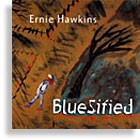
  • January 2004

    FEATURES

    PAT MARTINO
    The jazz legend is a national treasure and inspiration to musicians and music lovers of all stripes. His career spans four decades, and his tale of trial and tribulation is one of the most powerful success stories in music. By Wolf Marshall

    PETE ANDERSON
    His 20-year association with Dwight Yoakam was one of the most fruitful in country music history; with Anderson playing and producing, they scored six Top 10s and two #1 singles. Now an in-demand producer/label head, he‘s keeping an eye open for the next Dwight. By Dan Forte

    R.L. BURNSIDE
    North Mississippi Blues Legend
    In the hill country of North Mississippi, they play a different style of blues – pulsating, hip-thrusting, single-chord, groove blues. And R.L. Burnside is the master of the form. By John Puckett

    GIBSON RD ARTIST
    Toward the end of the ’70s, Gibson addressed the challenge of changing tastes with its RD Series guitars, boasting active electronics and a unique design. Top of the line was the luxurious RD Artist, introduced in ’78. By Michael Wright

    THE BASS SPACE
    1938 Gibson Upright
    It didn’t necessarily herald the advent of electric bass as a viable instrument, but it was Gibson’s first attempt at a stringed bass that could be amplified with a pickup. By Willie G. Moseley

    THE DIFFERENT STRUMMER
    Harmony Thinline Electrics
    If you’re over a certain age, your first electric guitar was likely a Harmony Rocket thinline. Though one of Harmony’s most popular electrics, it was by no means its only (or best) model. By Michael Wright

    DEPARTMENTS

    Reader Mail

    First Fret: News and Notes
    Jack Bruce, Bruce Kulick, Todd Sharp, Zevon, Dawson remembered, In Memoriam: Paul Burlison, more.

    Vintage Guitar Price Guide

    Dealer News
    Fraud Phobia

    Builder Profile
    Dingwall Designer Guitars

    Upcoming Events

    Vintage Guitar Classified Ads

    The GreatVG Giveaway 2003
    Win a Maven Peal Zeta 0.5>50!

    Readers Gallery

    Dealer Directory

    COLUMNS

    B>Executive Rock
    A Decade of Decay
    By Willie G. Moseley

    Q&A With George Gruhn

    Acousticville
    The Custom-Made Crapshoot
    By Steven Stone

    FretPrints
    Pat Martino
    By Wolf Marshall

    Guitars With Guts
    Guitar Myths
    By R.E. Bruné

    Gigmeister
    The Porch Board
    By Riley Wilson

    TECH

    Amps
    Versed in the Vernacular, Part III
    By Gerald Weber

    Ask Gerald
    By Gerald Weber

    REVIEWS

    The VG Hit List
    Music, Video, and Book Reviews: Robben Ford, The Fleshtones, Derek Trucks Band, Carl Verheyen, Big Bill Morganfield, Robin Trower, The Tube Amp Book, more!!

    Check This Action
    Priority Females
    By Dan Forte

    Vintage Guitar Gear Reviews
    Koch Classictone 410, Brown’s Guitar Factory Fretted/less, Crate V Series amps, Marshall DSL401/JMP-1 Tube preamp!

    Gearin’ Up!
    The latest cool new stuff!