Month: July 2003

  • July 2003

    FEATURES

    TOMMY SHAW
    Styx strikes back!
    An update as the veteran group (FYI, they’re a classic rock band!) heads into a summer tour in support of its latest album, Cyclorama. We also touch on Shaw’s latest solo offering. By Willie G. Moseley

    Jorma Kaukonen & Jack Casady
    Carry the Torch
    From The Triumphs through Jefferson Airplane, Hot Tuna, and other musical endeavors, Jorma Kaukonen and Jack Casady have been partners for over 40 years. By Dan Forte, Ward Meeker, and Frank Falduto

    Duke Robillard
    Doing things his way
    Mix one part blues, one part jazz, and one part swing, stir in some rock and bring to a simmer, and you have Duke Robillard a la mode. Plus, a look at Duke‘s guitar “toolbox.” By Eric C. Shoaf

    THE BASS SPACE
    Glen Burtnick’s Lefty P-Bass
    The Styx bassist’s primary instrument is a motley gathering of parts from instruments of various eras. It’s worn and it’s ugly – and Burtnick wouldn’t have it any other way! By Willie G. Moseley

    1968 Teisco May Queen
    While many Japanese electrics of the late ’60s borrowed heavily from American and European designs, it doesn’t take much to see the essential Japanese character evident in this perennial classic from 1968.
    By Michael Wright

    THE DIFFERENT STRUMMER
    Harmony Solidbody Electrics
    Harmony’s 84-year history of producing guitars in America should be chock full of solidbody electrics. But it was primarily an acoustic guitar builder; solidbodies made up a small part of its output. By Michael Wright

    DEPARTMENTS

    Reader Mail

    First Fret: News and Notes
    New Column – “Dealer News,” plus Garrison on Discovery, PRS Forum Event, Stolen Gear, In Memoriam, more!

    Vintage Guitar Price Guide

    Builder Profile
    Conklin Guitars and Basses

    Upcoming Events

    Vintage Guitar Classified Ads

    Readers Gallery

    Dealer Directory

    COLUMNS

    Executive Rock
    Of Carrots and Styx
    By Willie G. Moseley

    Classic Concerts
    The Jefferson Airplane, Clarkson College, 1968
    By Glen Anderson

    Q&A With George Gruhn

    Acousticville
    Four “Gotta Have” Gadgets
    By Steven Stone

    FretPrints
    Otis Rush
    By Wolf Marshall

    Gigmeister
    An Answer to Transcription Woes
    By Riley Wilson

    Little Things
    10 Easy Ways to Get Inspired
    By Lisa Sharken

    TECH

    Guitar Shop
    Staying in Tune
    By Tony Nobles

    Amps
    The Rap on Caps
    By Gerald Weber

    Ask Gerald
    By Gerald Weber

    REVIEWS

    The VG Hit List
    Music, Video, and Book Reviews: Greg Koch, Robillard/Ellis, John Pizzarelli,Lee Rocker, SRV Signature Licks DVD, and more!

    Check This Action
    Dylan, Waylon Jennings, and Ramones tributes
    By Dan Forte

    Vintage Guitar Gear Reviews
    Mojave Coyote amp, E-H Black Finger, Moonrock, Line 6 Duoverb

    Gearin’ Up!
    The latest cool new stuff!
  • ToneWorks AX1500G

    New Tool from ToneWorks

    Ahhh, there are never enough toys for us guitarists, are there?
    Just when we think our rigs are complete, along comes some cool box to turn our heads and make us gaze in wonder.
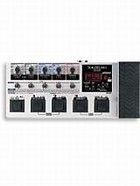
    One of the latest is the ToneWorks AX1500G multi-effects processor. A digital unit that offers an outrageous number of features for the contemporary picker to drool over.

    The ToneWorks AX1500G is another feature-packed box teeming with sonic goodies.

    Twenty years ago, guitarists were thrilled to own a separate flanger, fuzzbox, and delay. Now pickers have boxes like this that contain everything but the kitchen sink. Among this device’s many attributes are 56 effects (eight simultaneous), 96 programs (48 preset, 48 user), an expression pedal (allowing real-time control of 11 effects), a bright LED readout, and good ol’ “chickenhead” knobs for real-time control of effects and parameters.

    Among the array of effects in here are distortion, delay, chorus, and flanger. There are also simulations of spring reverb, tape echo, acoustic-electric guitar, and various amp and cabinet types (which are created using Korg’s proprietary REMS technology). And while there’s no kitchen sink, there is a slick Ring Modulator effect. Cool! Another neat feature is that within each of the 96 programs are two channels, allowing you to flip back and forth between lead and rhythm settings, such as from clean to crunch or a rhythm power-chord sound to a blistering lead tone.

    The AX1500G further contains some cool digital-recording features. One of them is a unique “sample and play” function that allows users to record up to eight seconds of audio to create a loop to jam with, be it a chord progression or interesting riff. You can also reverse the loop the audio for producing special effects.

    There’s also the Phrase Trainer, which lets the user record up to 16 seconds of external audio (such as CD, cassette or guitar playing), and reduce its speed up to 75 percent without changing the pitch. This is great when you want to learn complex passages or riffs at a slower speed.

    Groovy features, but how does it sound? Pretty ripping, actually; you can plug it into a guitar amp, but I plugged our test unit directly into a PA using the stereo outputs (since the AX1500G also functions as preamp). Inside are tons of great tones, from clean to rock to metal and onward. There are a whole range of kickin’ Metal and Distortion settings, but I especially liked “Beckola,” a good ol’ fuzzface kind of squawk. And the aforementioned Ring Modulator setting allows you to use the expression pedal to fade in as much weirdness as you want. There’s even a neat “Acoustic” simulator that re-EQs your electric’s tone to give it more acoustic-like qualities, which is handy for stage work (this works best on your guitar’s neck pickup). Again, there are too many tones in here to describe individually, but for an affordable multi-effects processor, I liked what I heard.

    The A/B channel switch also works effortlessly and is a great idea whose time has come. The same holds true for the Phrase Trainer and sample functions (face it – looping is here to stay). I’d recommend a test-run the AX1500G at your local guitar store. It’s a box with lots to offer.


    ToneWorks AX1500G
    Type of Processor: Digital multi-effect.
    Features: 56 effects, 96 preset effects, amp and cab simulators, riff sampling/looping, “phrase trainer,” acoustic simulator, more.
    Price: $350.
    Contact: ToneWorks/Korg,316 South Service Road, Melville, NY 11747, (516) 333-9100, www.korgusa.com..


    This article originally appeared in VG‘s June ’02 issue. All copyrights are by the author and Vintage Guitar magazine. Unauthorized replication or use is strictly prohibited.

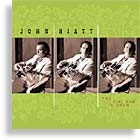
  • John Hiatt – The Tiki Bar Is Open

    The Tiki Bar Is Open

    In 1987, first-time producer John Chelew had the brilliant idea of teaming John Hiatt, a songwriter of some note with a handful of less than successful albums to his credit, with slide guru Ry Cooder, Rockpile bassist Nick Lowe, and studio drumming dean Jim Keltner. The resultant album, Bring The Family, took Hiatt from cult obscurity to worldwide acclaim.

    But, since the studio band’s individual commitments precluded touring, Hiatt rounded up a versatile trio of musicians unknown outside their home state of Louisiana – drummer Kenneth Blevins, bassist David Ranson, and a slide guitar wiz named Sonny Landreth. Hiatt dubbed them The Goners, and the foursome hit the road.

    After demolishing club audiences from coast to coast, the unit backed Hiatt on his impressive followup, 1988’s Slow Turning. With still more touring, the band was hitting its peak when Hiatt inexplicably cut the group loose after only one album.

    Thirteen years and a half-dozen albums later, Hiatt has finally re-enlisted The Goners. Following the all-acoustic Crossing Muddy Waters, The Tiki Bar Is Open bolts out of the blocks with “Everybody Went Low,” with Landreth showing he can jump from straight guitar to slide in the blink of an eye. The album features some of Hiatt’s best songs in recent memory, such as “All The Lilacs In Ohio” and “My Old Friend,” and the band members do the job of showcasing the songs rather than themselves admirably.

    But when it’s time for a little stepping out, Jay Joyce’s busy production undermines some great soloing from Landreth – and in doing so, cheats the songs, as well. It’s more low-fi noise than high-tech gloss – Sonny’s guitar signal seems to be coming through a telephone on “I Know A Place,” the type of lowdown blues he can obviously sink his teeth into; but it’s extraneous noise, all the same. While the guitarist gets some space to show his stuff on the title track, his sensitive slide work on the ballad “I’ll Never Got Over You” is awash in echo, nearly buried under obtrusive keyboard and tambourine overdubs.

    A more straight-ahead production would have spotlighted Hiatt, his songs, and one of the country’s best bands much better.


    This article originally appeared in VG‘s Nov. ’01 issue. All copyrights are by the author and Vintage Guitar magazine. Unauthorized replication or use is strictly prohibited.

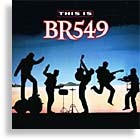
  • BR549 – This Is BR549

    This Is BR549

    On their sixth disc, the boys in BR549 have a bit of a change cooked up for you. One, their name has dropped the dash. Two, they’ve switched labels to Sony’s new Lucky Dog. And three, they play it a little straighter than usual.

    That’s not to say the CD is no good. It is. Yes, there’s still a lot of wackiness, but you’ll hear a lot of straightforward country, like “Let’s See How Far You Get,” and “While You Were Gone.” If honky tonk is your thing, there’s “Psychic Lady” and “Look Me Up.” Country swing makes an appearance on “Different Drum,” with its nice rhythm and lead showing the way. There’s even a cover of “A Little Good News.” You might remember that as a hit for Anne Murray in the ’80s. I thought it an odd choice for the boys, but I’ll be darned if they don’t make it work.

    What this album really does is show the boys can be a straight country band and more than cut the mustard. There’s great playing, great vocals, excellent covers, and first-rate songwriting by members of the band. Some of the band’s fans might not think it’s wacky enough, but if they give it a chance, it might grow on ’em.


    This article originally appeared in VG‘s Oct. ’01 issue. All copyrights are by the author and Vintage Guitar magazine. Unauthorized replication or use is strictly prohibited.