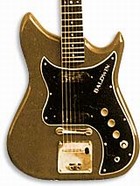
Month: July 2003

  • Tommy Castro

    'Guilty' of Paying His dues

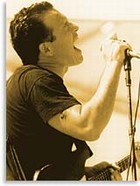
    Tommy Castro is a charismatic singing gunslinger who has developed a sound featuring stinging blues leads floating atop hard-charging, old-school R&B. And he is one of a handful of artists whose live performances are sonic clones of his recorded music.

    Castro’s style, charm, and professionalism on and off the stage are second to none, and when the uninitiated ask for a one-line description, fans will often say, “James Brown meets Stevie Ray.” He and his band are currently into their second year of a tour with B. B. King and Buddy Guy.

    Vintage Guitar: When did you first become interested in music?
    Tommy Castro: My older brother, Ray, started to play way before I did. He was six years older, and nobody in our neighborhood was playing music at all. He was in a rock and roll band in the early ’60s, when the Beatles and the Stones were hot. He was the first guy to pick up a guitar around there, and he inspired a bunch of other kids to start becoming interested in music. He did that for a number of years.

    How did he get started?
    He just decided he wanted a guitar, and I remember my mom surprised him on his birthday – or maybe it was when he got out of junior high school, or some event where he deserved a cool present, you know. Anyway, my mom and my aunt bought this guitar. Man, you should have seen this thing! It was a Gretsch Princess or some friggin’ thing. It was baby blue with a little white Gretsch amplifier – not the kind of thing a guy would’ve picked, you know. Nevertheless, it was an electric guitar, and he got that for his birthday, or what have you. And he just grabbed that thing and started listening to records and figuring stuff out. He had an incredible ear for learning things! He still plays a little around the house.

    So, did you sneak his gear?
    Early on, I did. I used to sit when they’d practice in our basement. I was just a little kid, maybe eight years old. I’d go sit on the stairs and watch, ’cause they didn’t want me hanging around them. But I could stay right by the basement door by the stairs, and just be quiet so as not to embarrass him with his cool friends. And they were all very cool! They liked me, but it was just that little brother/big brother thing.

    Was he still playing the Gretsch at this time?
    No. By then he had a Rickenbacher 12-string, which he took half the strings off. At the time, his favorite band was the Beatles, and he had the Vox Super Beatle amp with the chrome stand. As soon as they got them in the music stores, he had one.

    He and I shared a bedroom and that big amp was there with the Rickenbacher, and when he was gone, I’d pick that damn thing up and start playing it. Finally, he started catching me all the time. He said, “Look, if you’re gonna do this, let me show you how,” because I’d just be going wham, wham, wham. I had no idea what to do with it, so he showed me some chords. And I’d have to go out and wash his car. Then he’d show me something else on the guitar and say, “Well, my boots need shining.” Beatle boots, of course. And I’d shine them damn things up, and then he’d show me a couple of chords, and he’d show me songs like “House of the Rising Sun,” “Wipe Out,” and real basic, simple tunes like “Hey Joe” and “Gloria.” It was a good way to get to learn how to play the chords to a song. This is the chord, this is the next chord, and blah, blah, blah, and that’s how I learned how to play in the beginning.

    Where did this take place?
    It was in San Jose, California. After awhile, it was my turn to get a guitar, and I didn’t even get anything as cool as a Gretsch. We were never very well-off, and I was bugging my mom all the time. I wound up getting one of these pawn shop kind of things in a cardboard box. It was a $35 no-name cheapo guitar, and man that thing was hard to play! I think it had three really cool-looking chrome pickups and a whammy bar that would break the strings. Anyway, it was mine, and it came with these really nasty/fat strings – you couldn’t make nothin’ happen! I worked and worked on it, and that was my guitar for a while.

    Did you have your own amp?
    Oh, no! It took a while to get the amp – maybe a year later! And that was a funny thing. It was like a Gibson, some kind of big gray box amp. I don’t know what the hell you would have called it, but it had these big radio knobs. Maybe it was an Epiphone? Anyway, it was cheap, and I’d get together with other kids in my neighborhood closer to my age, and we’d just start jamming. We didn’t really know any songs – we’d just jam on chords, with one guy beating the drums. It was a lot of fun. But eventually I learned how to play, and I got with some other kids who learned how to play. We did the garage band thing for a long time, and that’s how this whole thing got started. I finally got going on my own and playing. And that’s when I realized I could start picking my own music to play! At the time, I remember there were guys like The Doors and Cream putting out records. I didn’t like the Doors at all, but I liked Cream, and now I know why – it was blues.

    Did you have Wheels Of Fire?
    Yes, of course! And they were playing basically blues songs – just loud, ya know? My favorites were the straight-ahead blues tunes, like the Stones stuff. I remember one of my favorite Rolling Stones songs was “Little Red Rooster.” I had no idea that was Howling Wolf, man. But early Stones, that’s some cool stuff!

    What other guitars did you use before the Stratocaster?
    I went from that cheap guitar to a 335 copy that I had for a long time. It sounded great, though. Then I traded that for a Gibson Melody Maker – which looked really cool, but sounded terrible. It just didn’t have the balls the other guitar had, but I bought it because it looked cool. I played it anyway, but it didn’t have the sustain or the tone that I wanted. You would have had to have a great amp to make this thing sound good, and I didn’t. I think by then I had a Bandmaster Reverb with a closed-back cabinet. I don’t like closed-cabs at all, in any amp. It just doesn’t sound right to me. I only like open-back cabinets in combos and stuff like that. I eventually got a Fender Duo-Sonic. Those are great little guitars, man. I played that for a long time.

    What music were you playing before your blues calling?
    I joined a band – my early 20s, I guess – that was doing Top 40, rock and roll, disco, and funk – whatever was on the radio, just so I could play. There was no blues action at all at that time. This was mid-’70s San Jose, and that’s what I did for fun. I didn’t do so much sports and stuff – wasn’t real interested. I’d come home after school and listen to records, taking the needle and putting it back on over and over again to learn licks. I’d do that for three or four hours. Then a couple of evenings a week, or on weekends, we’d get together in somebody’s garage.

    As a kid, I was a knucklehead guitar player! I wanted to play guitar solos all day long, and wanted to sound just like Alvin Lee or Eric Clapton, or somebody.

    Alvin Lee was the guy after the Woodstock album came out…
    Exactly. That was my claim to fame in the neighborhood – I learned to play “Going Home” off the Woodstock album, note for note! It took me six months to learn, but that was my big claim to fame.

    When I was in my 20s, I was again hooking up with friends, and a real good friend of mine, Richard Palmer, a keyboard player I worked with for years, started feeding me tapes of cool stuff, just cool music in general. He’d give me a Ray Charles tape, a Little Richard tape, you know, something like that – 90-minute tapes full of these cats! Whole tapes of Sam and Dave, Otis Redding, Wilson Pickett, and James Brown all mixed together!

    Then I started seeking out the stuff myself. I had this day job where I would drive around in a van delivering stuff all day long, and I’d listen to these tapes, and sing along. And that’s basically how I learned how to sing.

    And you’ve got a very soulful voice…
    When I listen to those guys sing, I’m completely in awe of that sound, and I couldn’t help but sing along and try to imitate them. Eventually, you have your own sound. And I imitated Ray Charles, James Brown, Wilson Pickett, Little Richard, and Otis Redding! So now, whatever comes out kind of sounds like me singing, but it’s from years of listening to those guys, and guys like B.B. King and T-Bone Walker.

    You’re out there 24/7, using vintage gear. Let’s start with your amplifier.
    I seem to only be interested in this one sound. I don’t know why. But I’ve been able to take that ’65 Super Reverb and just keep it in real good shape.

    Has that amp been modified?
    No. I take it to Hal Petcher at Guitronics, in San Francisco. He does real good work for me and a lot of the main blues guys in San Francisco, ’cause he really is an expert at not only blackface Fenders, but all Fenders. And he fixes all kinds of amps. But I go to him because every now and then you know it’s just gonna need tubes. I run it up about 9 on the volume, the treble on 8, the midrange on 8, the bass on 4, and the reverb on just past 3, and that’s it. That’s the way I always like the sound. There aren’t too many variables.

    I don’t like changing around much for this song or that song; it’s always set like that, and I do the rest on the guitar. And I almost only like that one Strat of mine.

    That’s a ’66 Strat, right?
    Yes. And yeah, it has been repainted. I bought it from San Francisco legend Johnny Nitro for $600 on the condition that I can’t sell it to anybody else; I can only keep it or sell it back to him. And that’s fine with me.

    It’s a perfect deal – as your star rises, his investment appreciates!
    Yeah, and the story with that guitar is that it has the original neck, body, the tuning pegs, the pickguard, the first pickup, and the third pickup. The middle pickup is like a ’50s pickup because it blew out, and he just put another one in there. He had just all kinds of parts, and he puts together Strats and Teles all day long. But this one was all stock except for that one pickup in the middle. I also put graphite bridge pieces on it because I break strings a lot.

    Do you like the graphite saddles?
    Only because I don’t break so many strings… I think the tone is a little different, but not enough for me to really tell. I don’t give a **** what kind of bridge is on there! It really doesn’t matter how pretty the bridge is, you know?

    It seems like there’s more paint wear on the armrest…
    If you look on the back, certain parts have some wear, too. It was originally a very rare gold finish for that year, and some chucklehead took a paint brush and just painted it, which I’ m really glad that he did, because otherwise it would have been hard for Nitro to let me have it for $600; harder than it already was. But it just sounds great, you know?

    Later on, my wife bought me another guitar from Johnny – a ’59 Strat I carry as a second. I’m not as comfortable on it, but I don’t pretend to know all the differences from guitar to guitar. I just know Nitro sold me a very good guitar, and I just got lucky that it makes the sounds I like, and I’ve made all my records with that guitar.

    The exception – speaking of ’59s – was the Exception to the Rule record I did on a ’59 Strat owned by my friend, Herbie Herbert, sometimes known as Sy Klopps. Herbie was a big-time manager, managed bands like Journey, Steve Miller, and a lot of the Bay Area bands, early Santana. Anyway, he helped me out and let me do our first record in his studio. And he has all these guitars laying around – an incredible collection.

    Did you have the black ’66 when Exception… was recorded?
    Yes, I did. But I was in awe of Herbie’s ’59. It’s one of the best guitars I’ve ever played, and it has a great sound. If you listen to the record, it sounds cool. I used my amp – and that guitar – and I’m pretty sure that has a lot to do with the sound of my amp and the way I play. But I was just in love with that guitar. I plugged it in and turned it up all the way, and I just kept playing it.

    Randy McDonald is a tremendous bass player. Was he in The Dynatones with you, as well?
    Yeah. Randy did a million miles with that band! And I did a couple of years with them, so that’s another reason we got a good education in soul music. Randy grew up in La Jolla, California, and was hired to play in the Dynatones because of his hair! He basically learned how to play soul music and blues in the 10-year period he worked with them. He got real good at it.

    What was it like working with Dr. John on your Right As Rain album?
    Dr. John is an amazing musician, and just to sit and talk with him was a huge, unforgettable thing! To just sit there at the piano while he showed me songs he did back in the old days… years before anybody knew his name, he was playing with the heaviest people in the business.

    He listened to “I Got To Love Somebody’s Baby” one time, then just sat there and smiled like he liked it. I was like, whew, thank God for that! Then he said, “Well, let’s give it a try.” So he goes in and one time through he just kind of feels his way around. The next time, it was cut!

    Every song on each of your albums is a great tune!
    I just won’t put anything on as record that I wouldn’t buy, myself. I don’t like listening to records where I think, “That first song is good, but the rest suck.” I hate when I buy a record and there’s one or two good cuts.

    I try to make records like that, and I wait until I have the material to do it.

    You’ve also worked with the legendary Jim Gaines?
    Jim Gaines is the legendary producer who engineered sessions with everyone from Otis Redding to Stevie Ray Vaughan – about 1,000 great rock and roll records in between. He’s probably done 100 classic records, everyone from Grateful Dead, Tower of Power, Journey, Huey Lewis and the News, Santana, and Stevie Ray’s In Step. Right now, Jim produces Coco Montoya, Jimmy Thackery, Bernard Allison, Walter Trout…

    …some of my favorite players!
    Oh, Thackery is a piece of work, man. I love that guy! Coco, too. Those are some of my favorite guys on the scene right now, and we run into each other a lot. Jimmy’s got quite a collection of nice guitars. He likes to take the pickups out and put other ones in, though, which drives me nuts.

    What was it like headlining at The Fillmore West and recording a live show there?
    It’s a special room, you know. It’s not just a big place that was sold out – it’s the Fillmore! My brother remembers going to a lot of shows there in the ’60s. So it was really cool for me to headline there. He was in the crowd, and he was just very proud. San Francisco is the band’s hometown, too! I don’t think it gets any better than the Fillmore!

    You’ve just become an official Fender Endorsee.
    It’s really nice to be sponsored by Fender, especially after using their guitars and amps for so many years. I have a new ’65 reissue Super Reverb amp on the road, and it’s very nice. We also get great support from Eminence Speakers and GHS Strings. Randy is a Fender Bass endorsee now, as well.

    We should mention that you’re on a new label, and you’ve got a new record featuring a guest vocal by the late legend John Lee Hooker!
    Getting to work and record with John Lee was one of the most rewarding things I’ve ever done. He’s featured on the title track, “Guilty Of Love.” We recorded his part in the studio at his home, and I believe it’s the last known studio recording he made. I’m truly grateful for the opportunity to work with him, and for the gift he left with me!

    The new label is 33rd Street Records, and we’re very excited by the enthusiasm and professionalism they’ve extended. Everybody in the band put their best effort and energy into this album, and it definitely shows.

    Being on tour with B.B. King and Buddy Guy – any shows stand out?
    Buddy Guy has always been one of my biggest blues influences, and of course so has B.B. King. I’ve been extremely blessed to have been chosen to be on this tour. It’s just amazing, night after night, to be playing alongside my heroes!

    At a recent show in Concord, California, B.B. was just finishing his set when he called me to join him onstage. Carlos Santana also came from backstage, and so there I was, with Santana and B.B. King! Two of the most innovative guitarists in the history of the instrument, and here I am, jamming with them!


    Photo courtesy of Tommy Castro.

    This article originally appeared in VG‘s Dec. ’01 issue. All copyrights are by the author and Vintage Guitar magazine. Unauthorized replication or use is strictly prohibited.

  • The Joanna Connor Band

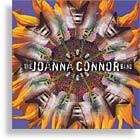
    The Joanna Connor Band

    After listening to this album several times, I’m still left with a feeling of not being able to pinpoint where this accomplished slide guitarist is coming from. Her past efforts have vacillated from hardcore Chicago-style blues to heavily distorted blues rock.

    With this release, she touches on so many styles the listener is confronted with influences ranging from Klezmer to Eastern Eureopean dervish-flavored music. It’s all good, but stylistically, it’s all over the board. That might place a bit of a burden on the listener, but she certainly is putting plenty of feelers out there.

    If you’re expecting straightforward blues, this ain’t it. The mark of a true artist is growth and experimentation, and it’s obvious she’s pushing the envelope – several, in fact. The themes are as diverse as the tunes.

    There are cuts that would work well in the ever-expanding AAA format, to an instrumental directly influenced by the Allmans’ “Elizabeth Reed” to a laudable cover of War’s “Slippin into Darkness.”

    She has a great ensemble; second guitarist Anthony Palmer shines when let loose, and it’d be interesting to hear more of Ted Reynolds’ harmonica work.

    There’s no reason the blues can’t incompass the myriad of influences presented here. Joanna Connor is certainly giving it a valid effort.


    This article originally appeared in VG‘s July ’02 issue. All copyrights are by the author and Vintage Guitar magazine. Unauthorized replication or use is strictly prohibited.
  • Ray Wylie Hubbard – Eternal and Lowdown

    Eternal and Lowdown

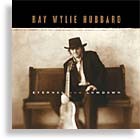
    Like most folks, I knew Ray Wylie as the guy who wrote and sang the theme from Austin City Limits, and the guy who wrote “Up Against the Wall Redneck Mother.” From now on, I also know him as a carrier of the country/rock/blues torch. This is, plain and simple, a great album. Hubbard writes and sings with the world-weary attitude of someone who’s seen it all, done it all, but still is looking for that one last spark to keep him going.

    The songs here are inspired. Lyrically, you won’t find too many better batches of songs throughout the entire year. They cover a lot of ground, from gambling, to living with the blues, to being a lover of the night, to trying to figure out how to redeem your life. Hubbard’s singing is not technically brilliant. On occasion he’ll bring to mind Bob Dylan, or one of country music’s outlaws like Waylon Jennings. But that voice sounds like it’s lived each and every part of these songs. And it’s a relaxed singing. He’s not in a hurry to get where he’s going, but it always pays off. It’s a perfect fit.

    Playing-wise, producer/guitarist Gurf Morlix plays some excellent stuff. Biting electric and dobro (“Three Days Straight”), nice slide (“The Sleep of The Just”), killer bluegrass flatpicking (“Black Dog”), and out-and-out twangin’ country-rock (“Weevils”). He shines on all of it. This is a great singer/songwriter style album with excellent playing.


    This article originally appeared in VG‘s Nov. ’01 issue. All copyrights are by the author and Vintage Guitar magazine. Unauthorized replication or use is strictly prohibited.
  • Jeff Golub – Do It Again

    Do It Again

    I can hear the naysayers already. They’ll call this album a boring, derivative, smooth jazz standerbearer. That’s fine. Listen closely, though, and you’ll hear a soulful guitarist doing heartfelt covers of some of his favorite tunes.

    Golub’s been around awhile. In the late ’70s and ’80s, he did the rock scene with Rod Stewart and Billy Squier. The past seven or eight years have found him dominating the smooth jazz field under the name Avenue Blue, and his own name. Those records were mostly killer, funky originals, mixed with a couple covers per album, and some guest vocals here and there.

    On this one Golub (as the title suggests) records some of his favorite things, and gives them his own spin. Chris Rea’s “On the Beach,” AWB’s “Cut the Cake,” Stevie Wonder’s “Jesus Children of America,” James Brown’s “Cold Sweat,” Van Morrison’s “Crazy Love,” and several others get the treatment here. Golub’s playing usually spends time feeling out each song’s melody, and then adding his own soulful twist to the proceedings. His perfect bluesy bends, nice volume swells, well-placed octaves, and great tone make this one a textbook on soulful jazz. The arrangements are meticulous. Maybe it’s the fact that I love all the songs makes me love this. He also plays exactly like I would if I could cover these tunes. It’s a very weird thing, isn’t it, when you hear someone play a solo, and you go, “yeah, that’s how I would do it, if I had the skill and the opportunity?” Anyway, I like Golub’s playing about as much as anyone on the scene. Tasteful, soulful, and full of heart. – JH


    This article originally appeared in VG‘s June ’02 issue. All copyrights are by the author and Vintage Guitar magazine. Unauthorized replication or use is strictly prohibited.

  • Danelectro Guitars

    The Return of Danelectro

    0ne of the more recent buzzes in the guitar community has centered around the phenomenal success of products bearing the Danelectro brand name. The introduction of effects pedals at the January ’97 NAMM show was the start of an impressive resurgence in interest in the brand name and its quality, utilitarian products. Just as Danelectro guitars and amps were a staple of the entry-level market in the ’50s and ’60s (although the term didn’t exist then), new Danelectro products are also quite affordable. But this time the company’s offerings have been turning the heads of many a pro player, as well.

    The Evets corporation, headed by president Steve Ridinger, acquired the Danelectro trademark from New Jersey’s Anthony Marc in the mid ’90s. While the Evets company had been associated with other musical products, the retro vibe associated with the Danelectro name offered a unique opportunity for Ridinger and his associates.

    Vintage Guitar recently spoke with Danelectro’s Michael Campion, who noted the company’s reasoning for introducing stompboxes first.

    “Our thinking was it would be enough of a shock to the market when Danelectro returns; it would put everybody into cardiac arrest if we not only returned to the market, but started to make the guitars right away, too.”

    But while the effects introduced in January ’97 were quite popular, “…hundreds of dealers and players asked us to bring back the guitars,” Campion said. And a year after their introduction, Danelectro effects pedals had been voted effect pedal of the year in surveys by Music & Sound Retailer and Musical Merchandise Review.

    And as its pedals steamrolled to sales success that year, the company was indeed pressing ahead with plans to introduce fretted instruments. One of the individuals they brought aboard to insure development of a quality instrument was guitar authority Steve “The Surfin’ Librarian” Soest.

    Soest’s expertise regarding creation of a true reissue (with better components) proved invaluable. He has repaired and modified many original Danelectro guitars, and once converted the four-string bass portion of a Dano doubleneck into a six-string bass for the late Stevie Ray Vaughan.

    “Research actually started in the Spring of ’97,” Soest said. “After some discussion, we decided the ’56 U-2 was the ultimate of the original U models. That was the peak year as far as features, so they ran ads in VG and purchased guitars from collectors and private parties. I started specing them out to come up with the most desirable features, which we wanted to apply to one model.”

    Between instruments in Soest’s own collection and others borrowed by Soest and purchased by Evets, the guitar tech had about a dozen instruments to examine.

    One rumor concerning the new guitars was they were going to be made in China, which was untrue, though likely originated because Danelectro pedals are made there. But from the outset, production was planned for Korea.

    “I kept worksheets on all of the originals, and the samples started coming in from Korea around Thanksgiving,” Soest said.

    Soest didn’t go to Korea himself. But he stayed busy with his repair shop in Orange and playing guitar in the retro-surf band The Torquays, which recently released its first album. The overseas monitoring was the responsibility of Albert Garcia, who had experience in offshore guitar manufacturing.

    The final 56-U2 reissue differs from the original version in two important facets; the neck features an adjustable truss rod, and the tuning keys are an enclosed-type for better stability. But it retains the plain, flat, three-screw bridge of its ancestor. According to Soest, the bridge was critical to Danelectro instruments’ unique sound (see Steve Patt’s review, VG, September ’98).

    The new 56-U2 made its debut at the January ’98 NAMM show in Los Angeles. Campion recounted how the Danelectro sales force “…prayed together in the booth and waited for the doors to open. Literally the minute the doors opened, we were mobbed with dealers and players, and the pace never let up. Several of the guys never left the booth for a bite to eat or even to visit the restroom. It was nine guys writing orders and talking to dealers and players all day.”

    Among the notable visitors Campion cited were Skunk Baxter, Dick Dale, John Sebastian, and Tom Wheeler.

    At the same show, Danelectro introduced two more pedals- an echo device and a chromatic tuner. As for the 56-U2, Campion confidently stated, “Judging from the reaction of players and dealers at NAMM, we hit the mark.”

    The reaction was so overwhelming the company was backordered for some time. The instrument was offered in 11 colors (more than the original) and more than one retailer has cited Limo Black as being quite popular, possibly due to an association with legendary British guitarist Jimmy Page (who actually uses a later double-cutaway model).

    Following the huge success of the 56-U2, Campion said, “More Dano goodies are in the works, but as usual, the boys are being tight-lipped about what and when.”

    Well, word was put out in a big way during the first week of October ’98, when the company announced four new instruments, including some classic silhouettes that should pique the interest of any lover of budget guitar models.

    The 59-DC is a reissue of the double-cutaway “shorthorn” guitar that was a favorite of Page. It features concentric knobs, a “seal” pickguard, and comes in seven colors, including two new finishes (Peachy Keen and Retro Purple), and lists for $299.

    Two new models are based on the older, single-cutaway U series. The 56-Ul (available in six colors) is a single-pickup version of the 56-U2, as the model name implies. The 56-Ul has a single concentric knob and lists for $199. And the new 56-U2 Lefty is exactly what its name implies; it also comes in six colors and lists for $349.

    And while the 56-U2 Lefty gives southpaw guitarists a chance to participate in the craze, bass players will be delighted to learn the fourth model introduced in October is the 58 Longhorn, a four-string reissue of the unusual-looking shortscale bass unique in the annals of bass lore. It, too, has concentric knobs and is available in nine colors. List on the 58 Longhorn is $349.

    Considering the reception afforded the first guitar proffered by the new Danelectro, the new introductions have a lot to live up to, sales-wise. But the quartet introduced in the Fall of ’98 also has a lot to offer in retro sound and looks, and it should be interesting to monitor the results of these new models.

    It should also be interesting to monitor what happens to future models. The company knows the value of the retro-vibe facet of the guitar market, and is exploiting it well.


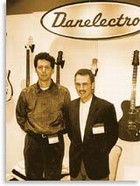
    Danelectro’s Michael Campion (left) and Steve Ridinger offer their wares at the Summer ’98 NAMM Show in Nashville.

    This article originally appeared in VG‘s Jan. ’99 issue. All copyrights are by the author and Vintage Guitar magazine. Unauthorized replication or use is strictly prohibited.
  • Joe Dan Petty

    It’s been “full circle more than once” for bassist/”guitar tech” Joe Dan Petty, of Macon, Georgia. I put “guitar tech” in quotes because during his first stint as a member of the road crew for the Allman Brothers Band (he’s on the back cover of the Fillmore East album), his job description was the less refined “roadie” (we discussed the differences in the terms).

    But, contrary to popular belief, Petty was a bassist before and between his associations with the standard bearers of southern rock. In a recent conversation, Petty discussed his years of playing and road work in a cordial conversation with Vintage Guitar.

    Joe Dan Petty is originally from Bradenton, Florida, where he played in a self-described “kid band.”

    “We played high school proms and skating rinks,” he said.

    One of his peers in those days was Dickey Betts, and Petty advised that Betts’ father played fiddle at barn dances attended by Petty’s mother.

    “The first real professional band I played in was called the Jokers,” says Petty. “Which wasn’t the same Jokers that Dickey played in when he was in Indiana; he formed this band after he moved to Florida. I could only play marginally when I started hanging out with Dickey, but he taught me a lot.”

    Another “pre-Allmans” venture for Petty was called the Thunderbeats, which included lead guitarist Larry Rhinehart, who went on to subsequent fame with bands such as Iron Butterfly. Later, Petty and the Thunderbeats’ other guitarist, Mac Doss, went to the Jacksonville area, recruited a drummer, and began playing nightclubs, using the same moniker. Another Jacksonville musical aggregation for Petty was known as the Gold Rush, a blues-based combo.

    Yet another Jacksonville-area band of Petty’s was playing regularly at a St. Augustine club when the venue shut down for two weeks for remodeling. “The Brothers came through town during that time,” Petty relates, “and asked me if I wanted to go to Miami with them; they were doing some recording. I went along and never went back to my band.”

    Petty’s earlier basses included his first instrument, a ’50s Gibson EB-1.

    “You could mount a stand on the bottom of the body and play it like an upright, and it was a dream to play, but I didn’t like its sound. It was too ‘muddy,’ and I never could get it to sound like I wanted. I bought a Jazz Bass, but the neck on it was so screwed up that it wouldn’t play in tune. There was a hot bass player around Jacksonville, named Chuck Parrish, who I really admired; he played a Precision, and I loved the tone of that instrument. The guitar player in his band sold me a Precision, but the pickup didn’t work, so we installed one of the pickups from my Jazz, and it sounded great!”

    The switch from a short-scale EB-1 to a full-scale P-bass initially proved daunting.

    “I’d take it to a club date, and could only play it one or two songs before it was killing me,” he said. “The neck was longer and wider, and it took awhile to get used to it, but once I got to where I could play it all night, I retired the Gibson.

    Eventually, Joe Dan got another Precision, which he kept until it was stolen while he was playing in Grinderswitch (more about that band later). That particular P-Bass was a totally stock model in a sunburst finish.

    As for his “roadie” days with the Allman Brothers Band, the erstwhile bassist averred that he was at some of that band’s earliest rehearsals in Jacksonville, and he recalled the Second Coming, a band in which Dickey Betts and Berry Oakley played just prior to the formation of the Allmans. Petty noted that in those days, the term “tech” didn’t exist.

    “When I started, people who worked on the crew were called ‘roadies,’ but just prior to that, ‘roadie’ was what a band’s road manager was called. That was when bands didn’t have people handling their equipment. As ‘equipment managers’ we ended up being called ‘roadies.’ I think the term went through some changes.

    “When I went back to work for the Brothers in ’89, I was called a ‘guitar tech,’” he said with a chuckle. “I haven’t been a ‘roadie’ in quite some time.”

    Joe Dan Petty’s original assignment within the original Allman Brothers Band was to set up Butch Trucks’ drums, but he noted that among the roadies, “…everybody did a lot of everything.

    “The ‘amp line’ roadie was Kim Payne, Red Dog set up Jaimoe’s drums, and Mike Callahan did sound, but we all helped each other out. The band took care of their own instruments. If they wanted something, like the pickups changed out, they didn’t hand the instrument to us, but in some cases we’d help if something needed to be modified.

    “Berry Oakley was really into his rig,” Petty continued. “And he was always modifying things, trying to get a better sound. He had some older, vintage basses that he didn’t mess with, but when he’d been in the Second Coming he’d had a blond Guild hollowbody bass with a big black pickup, and he had somebody put that Guild pickup onto a fairly new Jazz Bass he owned. That bass is still around; his son has it and still plays it.” Ed. Note: Berry Oakley, Jr. is the bassist for a band of second-generation musicians called Bloodlines.

    Duane Allman and Dickey Betts, Petty noted, pretty much stuck with Les Pauls.

    “Duane had a Goldtop he traded for a Sunburst,” he said. “But he liked the pickups in the Goldtop better, so he and Kim Payne switched the pickups in a motel room in Daytona. Dickey was playing an SG, then he got a Les Paul in Detroit, but he never did warm to it, and got another Les Paul. Dickey gave Duane his SG, and Duane set it up for slide.”

    Petty also offered his input on the “Big House” in Macon, noting that both Gregg and Duane lived there “at times.”

    “Mike Callahan and I lived there off and on, and Kim Payne lived there most of the time,” he said.

    The permanent residents were Berry Oakley, his wife and his sister, according to Petty, and the house wasn’t the proverbial “crash pad.”

    “Sometimes, somebody might end up sleeping on a sofa,” he said. “But there weren’t a lot of mattresses all over the floor.”

    The largest performance for the Allmans was at the Watkins Glen pop festival, and Joe Dan Petty was there.

    “I thought it was pretty well organized,” he said. “You have to remember that it was really only one day of performances, but we’d arrived a couple of days before. There were over 700,000 people there, and I think about 90 percent paid admission; usually such big concerts ended up becoming free festivals. It was amazing to stand onstage and look out at the audience.

    “After about the first 10,000 people, the rest looked like wallpaper,” he chuckled. “I know they had at least two delay towers, and they may have had more than that. The day of the concert, the only way for us to get there was by helicopter.”

    The circumstances that led to Joe Dan Petty’s departure as an Allman Brothers Band road crew member germinated while the band was taking some time off.
    “I was hanging around Macon, and I thought I might like to get a band together,” he said. The combo that became known as Grinderswitch ended up recording some demos, and ultimately Capricorn Records offered them a record deal. Petty had some decision making to do, and when he told the band he wanted to try his luck at being a player once again, they patted him on the back and wished him the best.

    “The last show I did as an Allman Brothers roadie was on a New Year’s Eve at the Cow Palace in San Francisco,” he said. “When the Brothers went back out on the road the next March, Grinderswitch went out as their opening act.”

    Petty notes that Grinderswitch still did its share of stereotypical “Southern boogie” material, but the band was, in his opinion, a bit more country-oriented in its overall sound and songwriting. Some of Grinderswitch’s albums have been re-released on compact disc, including a live-in-the-studio FM simulcast performance.

    After Grinderswitch played itself out in the early ’80s, Joe Dan formed a group called the Lifters, which he says did a lot of covers and a lot of what he termed “corporate” events.

    It was quite lucrative, he said, but in the late ’80s, he got a call from Dickey Betts.

    “I’d told Dickey years ago that if they ever got back together, I wouldn’t mind going back out with them. He remembered that, and called me when the Brothers were going out to support the Dreams boxed set Polydor was releasing,” he said.

    “That’s all they were going to do. At that time, Dickey had a record contract, and so did Gregg, but the Allman Brothers Band didn’t. Things went so well, they decided to keep the band going on again. I left a couple of times to finish up some commitments I had with the Lifters, but I’m back with the band permanently. And like I said earlier, these days I’m known as a ‘guitar tech’.”

    Petty’s main duties these days involve the guitars of Dickey Betts and Gregg Allman. He averred that Betts was still using his ’57 Goldtop, which went by the name of “Goldie,” at the inception of the band’s reunion, but that instrument has since been retired. Betts favored Paul Reed Smith instruments for awhile, but he is now playing a Gibson ES-335. Gregg Allman’s instruments are primarily acoustic, such as the Gibson J-200 he plays on “Midnight Rider,” and Petty stated that Allman “…also has some Taylors and Washburns he likes.”

    So, Joe Dan Petty is back on the road with the preeminent purveyors of the Southern sound. His decades of experience, both onstage as a performer and backstage as a road crew member, have served him well, and he’s probably had more unique experiences than most people can imagine. And it sounds like he’s still enjoying the ride, especially the current incarnation of the Allman Brothers Band, which is putting out some incredibly potent music in concert.


    This article originally appeared in VG‘s Nov. ’96 issue. All copyrights are by the author and Vintage Guitar magazine. Unauthorized replication or use is strictly prohibited.

  • Various Artists – Philadelphia Folk Festival – 40th Anniversary

    Philadelphia Folk Festival - 40th Anniversary

    As you might suspect, after 40 years, the Philadelphia Folk Festival has some fine performances in its archives. For those not fortunate enough to attend over the years, this is a musically rich four-CD box set. These discs span the period from 1962 to ’00, but instead of putting the music in chronological order, the cuts are arranged so the CDs are musically cohesive rather than historically sequenced.

    Almost every major folk performer from the last 40 years is represented by at least one cut in this box, with only Bob Dylan (who never played on stage) absent; here you’ll find Dave Van Ronk, Doc and Merle Watson, Rev. Gary Davis, Bonnie Raitt, Ramblin Jack Elliot, Tom Paxton, Mississippi Jon Hurt, Pete Seeger, Tom Rush, Steve Goodman, David Bromberg, John Hartford, Odetta, Janis Ian, John Prine, John Gorka, Beausoleil, Taj Mahal, Nickel Creek, Ricky Skaggs, Judy Collins, Arlo Guthrie, Phil Ochs, Steve Forbert, and Richard Thompson. A majority of the cuts are from the late ’90s, as opposed to the ’60s, ’70s, or ’80s, but recent improvements in live recording equipment make this bias understandable.

    A 58-page booklet features essays by Jonathan Takiff, music critic for the Philadelphia Daily News, Michael Coony, performer and master of ceremonies for the festival, and Mark Moss, editor of Sing Out. The booklet also has detailed liner notes about each performance, which include a most welcome listing of accompanists (a feature often missing from live box sets). Sound quality, even on the early selections, is quite good. With seven different live recording engineers over the years, producer Gene Shay, executive producer Carl Apter, and associate producer Chris Thomas should be commended for the sonic consistency of this set. While the sound is not as stellar as some live recordings, like Telluride – Alive at 25, it’s still more than acceptable.

    Big box sets like Philadelphia Folk Festival – 40th Anniversary make ideal gifts, so start hinting to those near and dear that this is just the thing you want to find yourself unwrapping sometime in the very near future.


    This article originally appeared in VG‘s Dec. ’01 issue. All copyrights are by the author and Vintage Guitar magazine. Unauthorized replication or use is strictly prohibited.
  • Rick Holmstrom – Hydraulic Groove

    Hydraulic Groove

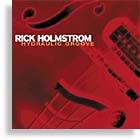
    I really like it when artists take left turns. You know, shake things up a little bit. Well, Rick Holmstrom takes a sharp left here. You might know him as a groove-oriented, traditional blues player. Well, his playing doesn’t change here, but the background does. It’s raw. I know, a lot of good blues is, but this is raw in a very different way. It’s full of chopped up beats and samples. So while Rick’s playing is still a soulful throwback, the music has a (for lack of a better word) “modern” sound. That may sound like it shouldn’t work, but it works great. In fact, some of the cuts, like “Back It Up,” have everything but the kitchen sink in them – horns, samples of all sorts, soulful guitar. And it creates a totally unique sound.

    I won’t try to describe the feel. It’s an amazing thing you have to hear. Like much of the album, everything is just a little off-kilter, in a wonderful way.

    Like I said, Rick’s playing is always bluesy and soulful. And if you just can’t get by without straight-ahead stuff, there’s a couple of hidden tracks that would fit that bill for you. But it’s the adventurous stuff that does it for me here. For a little different taste, check this one out. You won’t be disappointed.


    This article originally appeared in VG‘s Oct. ’02 issue. All copyrights are by the author and Vintage Guitar magazine. Unauthorized replication or use is strictly prohibited.
  • The Band – The Last Waltz DVD and CD Boxed Set

    The Last Waltz DVD and CD Boxed Set

    If there were ever a group of musicians for whom the term “the whole is greater than the sum of its parts” fit like a glove, it was The Band. Perhaps even more so than The Beatles, this quintet of multi-vocalist/multi-instrumentalists shifted roles in such chameleon-like and, more important, egoless fashion as to be utterly interdependent and simultaneously supportive.

    Which is why I’ve always had problems with The Last Waltz, the film (and album) of the group’s star-studded farewell concert on Thanksgiving 1976. Because in the hands of guitarist-turned-movie producer Robbie Robertson and director Martin Scorsese, bassist Rick Danko, drummer Levon Helm, pianist Richard Manuel and organist/saxophonist Garth Hudson were no longer equal members of one of the great rock groups of the ’60s and ’70s; they were sidemen to Robertson, the spokesman for the group, the face of The Band, the star of the show. What Let It Be was to Paul McCartney, The Last Waltz was to Robbie Robertson. But whereas McCartney was trying to keep The Beatles together, Robertson was closing the book on The Band (over the wishes of some of its members). The film – in which Robbie’s 20 percent of the pie expands to at least 80 percent of concert footage and interview segments – begins to suspiciously resemble a coming-out party for one-fifth of The Band: Robbie Robertson. And, indeed, he went on to produce and act in the movie Carny and supply music for several Scorsese movies.

    When the film was released in 1978, Newsweek lauded it as “the finest of all rock movies!” – which is simply not true. However, The New Yorker‘s observation that it was “the most beautiful rock film ever made” is hard to rebut – thanks to cinematographers Michael Chapman, Laszlo Kovacs and others, production designer Boris Leven, and the fact that it was shot on 35mm. In typically overblown fashion, Rolling Stone declared it “one of the most important cultural events of the last two decades.” (Hmm… there was the Vietnam War, the birth control pill, the Kennedy assassinations, the March On Washington, the Watts and Detroit riots, the moon landing, women’s lib, Medicare, the gay rights movement, the first heart transplant, Watergate. And in rock and roll, in the 20 years preceding The Band’s dissolution, Elvis scored his first #1 hit, the Beatles took over the airwaves, and there was Woodstock. Just to add a little perspective.)

    Twenty-five years after the event, a digitally remastered DVD of the two-hour movie is available (with the usual obligatory special features), as well as a four-CD boxed set that clocks in at four hours (24 of its 54 tracks unreleased on the original triple-LP configuration). The movie is really a concert film pretending to be a documentary – with interview segments (added after the fact) inserted between the live material, much of which was later overdubbed, according to Band producer John Simon. None of the planning and preparation (lining up guests like Bob Dylan, Eric Clapton, and Muddy Waters on short notice, spiffing up San Francisco’s rundown Winterland) or rehearsals are shown, and there is no historical Band footage. Also, the show is edited out of sequence; Greil Marcus’ Rolling Stone review of the concert reveals that The Band played their entire solo set before bringing out any guests.

    To Scorsese’s credit, though, each song that’s included is shown in its entirety (with the exception of Hudson’s showpiece “Genetic Method/Chest Fever”), and there are no gratuitous audience shots. Also, the cameras are placed in such a way as to be invisible; you don’t see cable pullers crawling around the stage. But the director’s presence is obtrusive in another way – as a fish-out-of-water interviewer, coming off as extremely unhip, not to mention unnecessary. As he admits in the DVD’s commentary feature, “I don’t really know how to talk to musicians and composers.” A perfect “right tool for the right job” opportunity (so hire somebody who does, Marty) missed.

    Some cameos (The Band’s former leader, Ronnie Hawkins, on “Who Do You Love;” Dr. John’s “Such A Night;” Dylan’s mini set) are fitting, while others have little relationship with the group’s music (Neil Young, Joni Mitchell, and Neil Diamond, looking like the world’s worst undercover cop – and not sounding much better). The most electrifying moment is harpist Paul Butterfield dueting with Helm (who is pounding twin drums with Manuel) on “Mystery Train” – under a lone spotlight, because of a temporarily blown fuse.

    Clapton’s blues shuffle, “Further On Up the Road,” illustrates both his strengths and Robertson’s weaknesses. It’s far from E.C.’s most dazzling fretwork, but he plays in a relaxed, soulful groove – giving each phrase its appropriate weight and muscle. Robbie, on the other hand, seems aimless – busily getting ahead of the beat and never really saying anything. And up to that night, Robertson would have seemed the ultimate Guitar Anti-Hero in an age of Guitar Heroes, a model of taste in a sea of excess. Sadly, for The Band’s swan song, he flushed all that down the commode and wanked to his heart’s content, as if to prove that he, too, could run with the big dogs. In fact, what he proved was that a little of his side-of-the-pick, false-harmonic, trademark squeal went a long way; a little more, and it got annoying in a hurry.

    And, again, the film is shot in such a way as to make Robertson look like a god, not to mention the most versatile musician on the planet – neglecting the fact that four other musicians are laying down the grooves, providing the vocals, running the stylistic gamut from A to Z with as much or more authority. “But,” folks will say, “it was Robbie who wrote those songs. He was the true genius of The Band.” Well, that’s debatable, according to Levon, who disputes Robertson getting sole songwriting credit on so much of the material – read Helm’s autobiography, This Wheel’s On Fire. And Levon says Garth was the group’s “soul and presiding genius,” while Clapton says Richard Manuel was “the true light of The Band.”

    Which is not to minimize Robertson’s role. He was one-fifth of one of the greatest rock bands in history. The Last Waltz DVD is worth renting, but if you want to know what that quintet was all about, buy Music From Big Pink and The Band and skip this boxed set.

    So what was the finest of all rock movies? A Hard Day’s Night. The best rock documentary? Woodstock. And the greatest blurring of the line between the two? This Is Spinal Tap.


    This article originally appeared in VG‘s Aug. ’02 issue. All copyrights are by the author and Vintage Guitar magazine. Unauthorized replication or use is strictly prohibited.

  • Baldwin Guitars and Amplifiers

    Quest For Guitar Fortunes

    Back in the Swinging ’60s, one of the coolest things hip companies could do was own a guitar company. After all, guitar-driven pop music was red hot, especially after the success of the Beatles in ’64. The baby boom showed no signs of letting up and “Boomers” were hitting high adolescence – prime guitar playing years. Thus, guitars were blessed with the Midas touch, veritable gold mines guaranteed to swell the bottom line as large corporations sought to diversify. The resulting gold rush yielded a number of strange bedfellows, with many guitar companies owned by conglomerates that may or may not have a clue about making and marketing guitars. Most came down on the latter side: CBS (TV) bought Fender, Seeburg (jukeboxes) bought Kay, Norlin (beer, etc.) bought Gibson, Avnet (hotels?) bought Guild, Gulf and Western (oil) bought Merson/Unicord (Univox), King Korn Stamp Company (trading stamps) bought Westheimer Sales (Teisco, Kingston). Even new guitar importing companies were fueled by money from elsewhere: Strum & Drum (Norma) came from nuts and bolts; W.M.I. (Teisco del Rey) came from photographic supplies.

    It was amid this corporate feeding frenzy that Baldwin guitars were born, the result of a collision between the quest for guitars and the fortunes of Burns guitars of London. At least Baldwin made musical instruments, although, as it would turn out, that didn’t make much difference in the final outcome.

    James Ormston Burns was born in England in 1925 and following World War II became involved in making guitars. In the late ’50s he was part of Burns-Weill, making some of the earliest production guitars in England. In ’60 he founded his own company, Ormston Burns Ltd., which began selling guitars branded “Burns London.” Among his most endearing guitar designs were the pointy, horned Bison and a guitar made for Hank Marvin, England’s answer to the Ventures. Burns guitars were generally well designed and produced, with feather-touch vibratos, a unique “gear-box” truss rod adjuster (which ended up on many Baldwin-era Gretsches), and nifty electronic features like the “Wild Dog” setting on the Jazz Split Sound (basically an early out-of-phase tone).

    Since most of Burns’ guitars ended up in the Baldwin line, there’s no need to go into them at length. The most detailed source for information on Burns guitars is The Burns Book (The Bold Strummer, 1990) by Paul Day. If you want to know about a Burns-built guitar, you need this book.

    Jim Burns was an affable (if eccentric) personality whose forté was guitar design and technology. Alas, his strengths did not extend to business and financial management, and by ’65 his company was deeply in debt to suppliers and creditors. Despite the good times for guitar sellers, Burns London was in desperate need of a rescue. This is where the Baldwin Piano and Organ Company of Cincinnati enters the picture.

    The Baldwin story goes back a bit further, to Cincinnati in 1862, when a reed organ and violin teacher named Dwight Hamilton Baldwin opened a music store and eventually became one of the largest piano retailers in the Midwest. Joining him as a bookkeeper in 1866 was Lucien Wulsin, of Alexandria, Kentucky. Wulsin proved industrious and ca. 1873 became a partner in the Baldwin store. In 1890, Baldwin decided to go into piano manufacturing and began building upright pianos. He passed away in 1899 and Wulsin took over the operation.

    Several generations of the Wulsin family continued to run the company. The piano building thrived and Baldwin became the first American piano company to win the Grand Prix Award at the International Exhibition in Paris in 1900. Baldwin also raked in top honors at the St. Louis Exposition in 1904 and London’s Anglo-American Exposition in 1914. As early as 1935, Baldwin pioneered electronic organs and developed the electronic church organ. Over the years, Baldwin endorsers have been as diverse as President Harry Truman, composer Aaron Copeland, and Liberace.

    In ’61, Lucien Wulsin III took over the reigns of the Baldwin empire, and by ’65 they were ready to jump on the guitar bandwagon. Coincidentally, Leo Fender was having health problems and decided to put Fender Musical Instruments on the block. At the time, Baldwin became aware that Burns of London was also in search of a savior. Baldwin made an attempt to purchase Fender, but was outbid by CBS, the huge broadcasting and entertainment company looking to get into “leisure time” markets.

    Spurned by Fender, Baldwin dispatched treasurer Richard Harrison to England to negotiate with Jim Burns about purchasing his floundering company. Harrison recalls that Burns was pleasant enough, but that he spent most of the next several weeks in talks with Burns’ attorney trying to sort out the terrible state of affairs at the guitarmaker. Reportedly the purchase price was in the neighborhood of $380,000 – a pittance compared to the $13 million CBS plopped down for Fender, although, of course, there could be no comparison between equity values. In any case, the amount didn’t matter much because, as Harrison recalls, very little cash was involved in the deal. Most of the purchase price went to pay off notes. In September ’65, Baldwin Piano and Organ took over the assets of Ormston Burns Ltd., a.k.a. Burns London.

    Jim Burns remained on with his old company for about a year in a consulting capacity, fairly typical in this sort of deal. However, new product development ground to a halt as Baldwin adjusted to the shock of inheriting a product line targeted at an entirely new market. Upon leaving Burns/Baldwin in ’66, Jim Burns continued to make guitars carrying the Ormston brand name. In the early ’70s he became involved with the Hayman brand, and later in the decade (when the Baldwin fiasco was long over), resuscitated the Burns name on some interesting new designs, including the Flyte and the Scorpion. Burns passed away in ’98, revered as one of England’s great guitarmakers.

    The plan was that Burns would continue to manufacture guitars in London and ship them to the U.S., branded as Baldwin guitars. Reportedly there were a few early models from ’65 that had both names on them, and those that did likely had already been produced at the time of the sale. Following these were some in-production models on which the Burns name was actually excised, and the Baldwin name inserted. Since the name was usually on the pickguard, this meant cutting out the Burns name and gluing a piece of pickguard material engraved with the Baldwin name over it. Once the existing Burns parts were used up, the Baldwin logo was incorporated into the parts, as normal. If you have a Burns/Baldwin double logo or one of the glued-over Baldwin brand guitars, you know you have one from this transitional period.

    Other than the new name, the ’65 Burns line initially continued intact as the Baldwin line. Guitar models included the Nu-Sonic, G.B.65, G.B.66, G.B.66 Deluxe, Bison, Baby Bison, Hank Marvin, Jazz Split Sound, Vibraslim, Double Six (12-string) and Virginian. Basses included the Nu-Sonic, GB66, Jazz Split Sound, Bison Bass, Shadows, Baby Bison, and Vibraslim basses. Depending on the model, headstocks on most of these early Baldwin guitars were in-line, on-a-side or the trademark large scroll. Burns guitars tended to have a variously shaped clear plastic emblem stenciled with the model name situated on the headstock, with no Burns logo (which was engraved on the pickguard). All Burns/Baldwin guitars had bolt-on necks (until the later classical). Necks were adjustable, with access underneath the neckplate into a geared mechanism usually called a “gearbox.” Fingerboards were typically unbound rosewood with pearl dot inlays; the octave had a regular-sized dot in the center with a smaller dot on each flank. Like many European designs, Burns guitars usually featured a zero fret. Pickguards were typically black/white laminated (tortoise on better models, in order to allow the engraving of the logo). Knobs were generally black plastic “Pilgrim hat” or “bell knob” types with a chrome insert on the top.

    Nu-Sonic and the G.B.s
    The Nu-Sonic was kind of a frumpy little budget guitar with slightly offset double cutaways and a considerably thicker upper horn, much like a “reverse shark fin,” introduced the previous year in ’64. The waist was relatively thick and the lower bout was flat at the endpin. The head was six-in-line with the model name on a little piece of clear plastic at the throat. The guitar featured two Nu-Sonic single-coil pickups, a metal compensated adjustable bridge, and a simple in-body vibrato. Controls were a three-way with one volume and two tones. Finishes were black or cherry. The Nu-Sonic Bass was essentially the same except for having a covered bridge/tailpiece assembly.

    The G.B.65 was new in ’65 and was Burns’ first acoustic-electric. While supposedly a “jazz guitar,” this looked more like a single cutaway dreadnought than what we usually associate with jazz. The body was hollow mahogany, whereas the flat top featured a flamed sycamore veneer and two asymmetrical two-piece diamond-shaped soundholes. The G.B.65 had a three-and-three head that flared out right at the top, which culminated in three angles sort of like a stretched out Gibson. Two Rez-o-Matik pickups with bar magnets sat on laminated surrounds. There was an elevated pickguard and controls (three-way, volume, tone) were mounted on more pickguard material on the lower bout. The bridge was a simple bar type, with a simple trapeze tail with a “B”-stenciled diamond insert.

    The G.B.66 was another new model in ’65 from just before the takeover. It came in two versions, a “standard” and the DeLuxe. This model was an offset double cutaway with rather squarish cuts and a bit of a hook on the upper horn. This also had a mahogany body and a flat flamed sycamore veneer top, but with two regular bound f-holes and elevated guard. The head was three-and-three. Unlike the G.B.65, this guitar was semi-hollow, with two Ultra-Sonic pickups, also surround-mounted, with a three-way on the shoulder and volume and tone top-mounted on the lower bout. A metal compensated adjustable bridge and trapeze similar to the G.B.65 completed the picture. The finish was red sunburst. The DeLuxe model was similar except for having two new Bar-o-Matik pickups and a third “density” control on the treble horn. This came in a golden sunburst finish. Some DeLuxes had bound fingerboards. The G.B.66 Bass was a bass equivalent, with the covered bridge/tailpiece.

    The Nu-Sonic guitar and bass, G.B.65 guitar, and G.B.66 guitar and bass did not last long in the Baldwin lineup and were eliminated in mid ’66, so these are among the rarer of both the Burns and the Baldwin lines. The G.B.66 DeLuxe may have been made a bit longer, but it was gone by the time the ’67 catalog was produced.

    Bisons
    The Baldwin Bison was the final version from the Burns era introduced in ’64. This had the dramatically inward-pointed horns of the original, but incorporated many features from the more popular Burns Marvin. The horns were roughly equal and looked a bit like a buffalo. The Baldwin Bison had a full scroll Burns headstock, large three-piece “split” laminate tortoise pickguard, three Rez-o-Matik single-coil pickups (the name is stenciled on the pickup cover), and a Rezo-tube vibrato. Earlier Burns vibratos had worked kind of like a hybrid Bigsby/Jazzmaster unit. Set in a rectangular, top-mounted housing, strings wrapped around a bar to which the handle was attached. Tension was provided by a spring attached underneath. The more recent Rezo-tube design borrowed more from the Stratocaster-style vibrato. The tube idea was to sink individual tubes perpendicular from the top through which each string loaded. The idea was to isolate harmonic interaction, though the net effect was not all that different from the vibrato block in a Strat. This attachment assembly then connected to three tension springs functioning pretty much like on a Strat. Early Rezo-tube vibratos used during the transitional period from Burns to Baldwin were noticeably longer (approximately 6″) than later versions. Usually a plastic gasket surrounded the back end of these units. An odd twin-bar assembly was mounted diagonally over the Rezo-tube back, function unknown (perhaps to eliminate accidental touching of the vibrato while adjusting control knobs?). The Bison offered considerable tonal flexibility with one volume and two tone controls, like on a Strat, but with two separate three-way selectors to provide different pickup combinations. The Bison came in black or white finishes, and remains one of Burns’ most interesting designs.

    The Baldwin Bison Bass was essentially the same in a bass version. There was, of course, no vibrato, but the bridge/tailpiece assembly still employed the Rezo-tube technology. In place of the guitar’s diagonally bars over the vibrato, the bass had three diagonal bars over the middle pickup to serve as an arm rest. Unlike the guitar, the Bison Bass had only one three-way selector.

    Baby Bisons
    In ’65, just before the Baldwin takeover, Burns introduced a downscale version of the Bison called the Baby Bison which was intended for the export trade only, not to be distributed in the U.K. The Baby Bison had a simpler body that recalled its bigger brother, but the equal pointed horns did not point inward. The headstocks on these transitional Baby Bisons were long, flat three-and-threes with a center V-notch cut out of the top, yielding twin peaks or a sort of winged effect, with the model name on a V-shaped clear plastic emblem fitted just under the notch. The pickguard was simplified into two pieces, one with the logo on the upper horn, the other down on the lower bout with the controls (three-way, volume, two tones). These had two oval “Bar-Type” single-coil pickups mounted on laminated rings, and one of the long Rezo-tube vibrato units. Again, the Baby Bison Bass was a four-string bass version, with the Rezo-tube bridge/tailpiece assembly.

    Split Sound
    Also coming into the line from Burns’ glory days was the Split Sound, sometimes also called the Jazz Split Sound, originally introduced in ’62 and one of Burns’ most popular models. The Split Sound featured offset double cutaways and was essentially Burns’ version of a Strat. The horns were a little more pointy, and the upper horn curved in similar to a Bison. These transitional models featured a six-in-line headstock with kind of a gently rounded center “throat ” and a rounded Strat-style end. This had a single large black laminated pickguard carrying three Split-Sound pickups perpendicular to the strings (no slanting as on a Strat). The Split-Sound pickups had oval metal covers and six exposed pole pieces offset three-and-three between bass and treble sides. Most distinctive were the controls, which included a volume and tone plus a four-way rotary pickup select which included stops for Split-sound, Jazz, Treble, Wild Dog, the latter being a kind of wimpy out-of-phase effect, one of the early guitars to feature such wiring. The Split Sound featured a Series 2 vibrato, basically the hybrid Bigsby/Jazzmaster unit described previously. Atypical of Burns guitars, the Split Sounds had metal knobs.

    The Jazz Split Sound Bass was the bass version, differing in that the four-in-line head had two throats, the pickups (without offset pole pieces) were slanted slightly toward the bridge treble side, all parallel, and the bridge/tailpiece assembly was a simple covered affair. These both came in a red sunburst.

    Hank Marvin
    The Hank Marvin guitar was introduced in ’64 as a tribute to the great English picker who fronted the Shadows, Britain’s answer to the Ventures. Its offset double-cutaway shape was similar to the Split Sound, with the hooked upper horn. Offered in white only, this had the deep scroll headstock. Like the Bison, it had a “split” three-piece pickguard assembly of laminated tortoise, the logo now down on the treble horn. The Marvin had three Rez-o-Matik single-coil pickups mounted at an angle, like the Split Sound Bass. These had the long Rezo-tube vibrato system and simplified electronics, with a three-way select, one volume, and two tones.

    Double Six
    The Double Six was basically a 12-string version of the Hank Marvin, also introduced in ’64. The headstock was a long, flat version of the flared types found on the G.B. models. The laminated black pickguard was split, like the Marvin, with three slanted pickups, now Tri-Sonics, with three-way, volume, and two tones. The bridge was a simple adjustable bar-type with a covered stop tailpiece. The Double Six came in natty green or red sunbursts.

    Shadows Bass
    Named for Marvin’s backup band, the Shadows Bass was basically the bass version of the Hank Marvin guitar, again in white only. Again, with a laminated tortoise “split” three-piece guard, it had three slanted bass versions of the Rez-o-Matik pickups. A Rezo-tube stop bridge/tailpiece assembly fixed the strings, and the slanted bars sat over the pickups as a handrest.

    Vibraslim
    The Vibraslim was a Burns double-cutaway semi-hollowbody introduced in ’64. Unlike, say, an ES-335, this had a slightly extended upper cutaway and there was a slight taper to the bass bout, giving it a little more dynamic feel. A solid wood core extended down the center of the guitar, with hollow wings on the side and a pair of f-holes. These early Baldwin semi-hollow Vibraslims had a bit of a point on the treble horn; later hollowbodies had a more rounded horn. The head was the flared three-and-three as found on the G.B. guitars. Two ring-mounted Ultra-Sonic pickups were controlled by one volume, two tone, and a presence control, all mounted as thumbwheels along the bottom edge of the elevated pickguard. A three-way select was also mounted in the pickguard. The Vibraslim had an adjustable metal compensated bridge and a top-mounted Mk. 9 vibrato, looking somewhat like a Hagstrom, but operating with a bar and handle assembly attached to a spring under a humped housing behind the bar. These came in a red sunburst finish.

    The Virginian
    Another new model introduced in ’65 just before the Baldwin takeover, the Virginian was in the mode of the G.B.65 guitar, a single-cutaway flat-top dreadnought shape with a mahogany body and veneered flamed sycamore top. The Virginian, however, had the deep scroll headstock and a pair of new Bar-o-Matik pickups on either side of a round soundhole (double-ring rosette), sitting on oval surround with center points pointing inward toward the soundhole. However, the soundhole was an illusion because it was another semi-hollowbody, with a slab of wood down the center. The pickups had a white oval line stenciled around the polepieces and sat on goofy oval laminated rings that had a point on one side pointing into the soundhole. The three-way select sat on the upper shoulder, while the volume, tone, and density controls were top-mounted on the lower bout. A laminated black pickguard was glued under the soundhole. A rectangular adjustable bridge/tailpiece assembly was mounted on top of a large, clunky wooden mustache bridge reminiscent of other bizarre bridge ideas of the times. This was another highly popular Burns model. Transitional Baldwin Virginians from ’65 continued to use the Bar-o-Matik pickups, however, by ’67, if not before, pickups were changed to the slightly larger “…bar-type Rez-o-Maks,” which were slightly larger and the white oval stencils had angular notches on the ends. These were slightly larger than the earlier pickups and sat on larger surrounds.

    Arkansas Travelers
    All these early Burns/Baldwin guitars were shipped directly to Baldwin’s Fayetteville, Arkansas, electronic organ factory (along with their other plants) managed by Stan Krueger. Krueger had attended the University of Cincinnati following the war and when he graduated in 1950, he got a job with Baldwin’s research department. After a five-year stint, he was put in charge of manufacturing in Cincinnati.
    Ca. ’58, two things converged that caused Baldwin to relocate its manufacturing operations. One was the city’s desire to put in a new highway that would have meant the loss of Baldwin’s lumber yard. The other was an intractable conflict with a union. Just as Epiphone had a problem in ’52 when it left New York for Philadelphia to escape labor disagreements, Baldwin moved manufacturing to Arkansas. Eventually it would operate plants in Fayetteville, Booneville (which would handle Gretsch), and DeQueen (which would handle Ode banjos). In ’62, Krueger was put in charge of managing all the Arkansas facilities.
    From the start, Baldwin encountered problems with the Burns guitars being shipped in from the U.K. “The problem was that Burns was using a polyester finish,” recalls Krueger. “Not polyurethane – polyester. That worked fine for England, but when it got here it couldn’t handle the climate change.” Or, as Duke Kramer, who joined Baldwin later as part of the Gretsch acquisition, tells it more graphically, “The polyester finishes exploded!” Baldwin eventually hired a fellow whose job was just to refinish damaged guitars, but there were so many he never caught up!

    Guitars, Not Pianos
    Poly finishes weren’t the only problem. Baldwin guitars didn’t sell very well, either. And not because of poor finishes. As Kramer points out, Baldwin had assumed that since they knew how to sell pianos, they would know how to sell guitars. As it turned out, its sales force didn’t know how.

    “I told them, ‘You can’t sell guitars and drums in the same place you sell pianos.’ But they wouldn’t listen,” he said.

    As in many a merger before and since, the parent company thought it knew best. Without established guitar dealerships and the expertise to sell guitars, the Baldwin line quickly began to languish. However, the units kept coming in. Before they knew it, Baldwin was having to rent more and more warehouse space to house the unsold guitars.

    “One of the reasons Baldwin wanted to buy Gretsch was they wanted the Gretsch sales force to move the Baldwin guitar products out,” muses Kramer.

    Another problem Baldwin discovered involved import tariffs. They quickly learned that the tariffs were much higher on completed guitars than on containers of components. Ca. ’66 Baldwin began having the Burns factory bring the guitars to a state of semi-finish, but not final assembled. Thus, they would pack one container with bodies, another with necks, etc. Apparently the state of completion would vary, but these were then shipped to Fayetteville, where the parts were assembled. So it was really only the earliest Baldwins which were fully “built” in England. By ’66, Baldwin guitars began to be assembled in Arkansas.

    Flat Scroll Neck
    In mid-to-late ’66, Baldwin took further steps to reduce costs and, it hoped, boost sales. Some of this may have been due to finally clearing out the backlog of Burns parts. In any case, the main change was a redesign of the Baldwin neck. First, from this point on, all Baldwin guitars had the same neck, rather than different headstocks based on the model. Second, the new necks featured a flatter version of the scroll headstock. This was easier to manufacture than the previous design, which had a real, carved scroll. The new design had a thick, pseudo scroll blob that didn’t require elaborate shaping. Finally, fingerboards were bound and the triple-dot octave had three dots of the same size.

    In addition, in ’66 several models underwent minor changes, while the Vibraslim got a major makeover, losing its name to become simply the prosaic Model 548. Although it looked the same (except for the new neck and the previously mentioned more rounded treble cutaway horn), the Vibraslim lost the internal wood and became a hollowbody, and the old Ultra-Sonic pickups were replaced by new Bar Magnet units. Instead of mounting the controls with thumbwheels along the edge of the pickguard, they were now mounted on the top of the guitar. On some models, the laminated pickguard was replaced with a see-through plastic one. And the old Mk. 9 vibrato was replaced by the shorter Rezo-tube. Similar changes were made to the Vibraslim bass.

    Other minor model changes included new all-metal knobs on the Jazz Split Sound guitar and bass. The Shadows Bass was renamed the Shadow Signature. The Bison Bass, Shadow Signature Bass, Jazz Split Sound Bass, Baby Bison Bass, and Marvin and Baby Bison guitars all got new Bar Magnet pickups. Basses changed to a Rezo-tube bridge/tailpiece unit. The Jazz Split Sound Bass got a shorter scale. All got renewed expectations.

    In addition to the new specs, the entire line received new numerical model designations; Model 525 Double Six, Model 503 Split Sound, Model 519 Split Sound Bass, Model 511 Bison, Model 516 Bison Bass, Model 524 Hank Marvin Signature, Model 528 Shadow Signature Bass, Model 560 Baby Bison, Model 561 Baby Bison Bass, Model 548 (formerly Vibraslim), Model 549 Bass (formerly Vibraslim), and Model 550 The Virginian. Except for the Vibraslim, the old Burns names remained, but clearly de-emphasized.

    Baldwin poured a lot of money into marketing the new line, something Kramer immediately recognized when his highly frugal organization was drawn into the fold. Lots of space advertising, an expensive catalog. Baldwin tried. Guitarist Chuck Thompson was hired as a demo man, a la Gretsch’s Jimmy Webster, and toured the country in a Baldwin van. It didn’t help enough, and the warehouses continued to bulge.

    Catalog Descriptions
    Since most of you will not own a Baldwin catalog, it’s amusing (especially knowing the problems) and instructive to reproduce the intro copy, “Baldwin Fundamental Features,” from the ca. ’67 catalog defining the Baldwin difference.
    “As you flip through these pages, there are a few things we’d like you to keep in mind. Things that are true of all our guitars.

    “First, every neck we put on them, regardless of price range, is hand-carved. That means they’re inspected every second of their development. We’ve bound all the edges of the neck, too. If you don’t already know how important that might be to you, you will after you’ve played a machine-made, unbound neck for an hour or two.

    “We put rosewood on all of our fingerboards. And the back of our neck is covered with polyester and buffed to keep it smooth year after year. We did that to the bodies, too. Sure, it is harder to do, but we think you’ll agree it’s worth it.

    All of our guitars have individually machined tuning pegs. In fact, every working metal part on a Baldwin guitar is either milled or cast.

    “Nowhere on any of our guitars will you find any stamped parts with the single exception of the tailpiece cover which, of course, is not a working part.
    “You won’t find any rivets, either. Every part is firmly screwed into place so that you’ll be able to clean or replace any part you may want to. And it means you can do it easily without special tools.

    “Another Baldwin Fundamental Feature is our patented geared truss rod. It’s in the neck. And if the neck comes out of alignment, it can quickly and easily be corrected with this rod. Corrected with precision, too. For while most truss rods can be adjusted, they are on a 1 to 1 ratio. Ours is 16 to 1. You can see that an adjustment with that high a ratio will allow finer, more precise adjustment.

    “The quality of the electronic components in a Baldwin guitar is excellent, even if we say so ourselves. We’ve devoted a lot of time and money to design, precision, and sensitivity.

    “Take our pickups for just one example. To get sound from a metal guitar string, all you have to do is wind wire around a magnetic core and place it near that string. But if you want something more than sound, if you want sensitivity, if you want to hear all the subtle shadings of a given sound, then you have to design a pickup. We determined the exact number of windings needed to get sensitivity without sacrificing amplification. Each of our pickups is wound to that exact specification, not a fraction of a turn more or less. Nitpicking? You bet. But it’s the way to build a better guitar.

    “Another example of the quality we build into Baldwin is our tone control. Our engineers designed two controls. We had our choice. Either could have been used. We chose the first because it sounded better to us. It is many times more expensive that the other. Chances are you never would have known the difference. But we would.

    “Those are the things we call our Fundamental Features because they’re true of every guitar we make. That’s where you start when you buy a Baldwin.”

    700 Series
    In ’67 Baldwin decided to add a less expensive budget line, the 700 Series. The 700s featured conventional ES-335-style equal double-cutaway hollowbodies made in Italy and imported into the Fayetteville plant for assembly with Burns necks and other components, including some Italian-made hardware and probably pickups. There were four guitars and one bass included in the 700 Series. 700 Series instruments came in cherry red or sunburst finishes.

    The Model 706V was a two-pickup thinline with the new Baldwin neck, an adjustable fine-tune bridge, and a Bigsby-style vibrato with string rollers and a stylized “B” on the backplate. The last two pieces look distinctly Italian. The pickups, mounted on metal rings, were a new “Bar Type” that appear to be humbuckers, and sure look Italian. These had metal covers with six adjustable screw poles on either side of a stenciled oval with the Baldwin name included.

    The Model 706 was the same guitar except for a trapeze tailpiece with a large “B” medallion. These are definitely different from the old Burns trapezes, and are also probably of Italian origin.

    The Model 712 was a 706 with a 12-string neck. It appears the saddles on the bridge were simply double-notched, because the unit is otherwise identical to that on the 706. In other words, fine-tuning of string intonation was never considered! The Model 712T was the same 12-String but with a thinner neck.

    The Model 704 was a bass version of the 706, pretty much identical except for two rows of four poles on the pickups and an attractive staggered tuner arrangement.

    Clyde Edwards
    At about this time a slightly mysterious chapter to the Baldwin guitar history occurs. Apparently Baldwin hooked up with a luthier by the name of Clyde Edwards, reportedly from San Francisco, and hired him to design a line of U.S.-made Baldwin guitars at the Booneville plant. Very little is known of Mr. Edwards except he would go on to play a minor role in the history of guitar design. Because of his subsequent activities, it’s pretty certain that Edwards relocated to Arkansas. Given the timing of Edwards’ arrival and his later design activities, it’s entirely possible he was responsible for the modified headstock design, but this is speculation. Certainly, the new heads show up on his Baldwin guitars.

    We do know that sometime in late ’66, a few guitars were designed by Clyde Edwards. These have no known model designation (there undoubtedly was one), and they never appeared in Baldwin catalogs or advertising. Basically, the Clyde Edwards was a single-cutaway hollowbody with a pair of f-holes and one of those upper shoulder profiles where the upper bout made an S-curve through the neck into the pointed Florentine cutaway. These were fitted with the new flattened, modified Baldwin scroll head necks and Burns pickups. Given the rarity of Clyde Edwards models (only three or so have been sighted), these probably never made it into full-scale production.

    In addition to the regular Clyde Edwards model, there was at least one all-acoustic model made with a serial number that suggests it was made in November ’66. This had the trademark Edwards shape, but was (as far as we can tell) a one-off prototype.

    Despite the fact the Clyde Edwards Baldwin models never entered serious production, the company was apparently pleased with Edwards because he went on to work for the Gretsch division as their “master string-instrument designer.” In fact, the S-curve shoulders showed up again in Edwards’ first major designs for Gretsch, ’72’s Super Chet and Deluxe Chet guitars. The Super Chet also had roller knob controls set along the lower edge of the pickguard, an idea that Baldwin replaced on Burns guitars about the time Edwards arrived.

    Edwards’ S-curve designs didn’t go away, and reappeared in ’76 on the dice-inlaid Gretsch Hi Roller, which evolved into ’77’s Atkins Axe and Chet Atkins Super Axe, with the pointed Florentine cutaway restored. Edwards received a patent on that shape. Then again, one more time with Gretsch’s final fling, the BST or “Beast” series was introduced in ’79. Both the bolt-neck BST-1000 and neck-through BST-5000 had the trademark Edwards’ S-curve shoulders. So, in a way, Baldwin’s Clyde Edwards guitars were the mother of the Beast…

    Gretsch
    In spite of the new guitars and production of a huge, colorful, and very expensive new catalog, Baldwin’s warehouses continued to burst at the seams. It was at this time that the Gretsch guitar company came up for sale. Gretsch was certainly a more attractive property than Burns; not only did it have a long-established history in the U.S. market, giving it more brand equity, it also had a network of established guitar dealers and a force of experienced salesmen. And Fred Gretsch, Jr. wanted to sell. However, as Kramer recalls, Baldwin was interested in Gretsch as much as a vehicle for clearing out its backlog of Burns/Baldwin guitars as it was for Gretsch itself. “Our job was to dump Baldwin guitars on the market so we could then concentrate on Gretsch,” explains Kramer.

    There’s little point in discussing Baldwin and Gretsch here. It was not a marriage made in heaven, with the newly acquired Gretsch folks feeling they got the shorter end of the stick. The Baldwin-era Gretsches were chronicled in Guitar Stories, Volume 1 (VG Books) and more detail is provided by Tony Bacon and Paul Day in The Gretsch Book.

    Hardcore collectors mark the decline of the Gretsch brand from the purchase by Baldwin, though that evaluation may not be entirely fair, and some very nice guitars continued to be produced, mostly at the new plant in Booneville, Arkansas, following the Gretsch factory fire of ’73. They may not be classic Brooklyn Gretsches, but taken on their own merits, they’re really not all bad.

    American Production?
    According to Krueger, in late ’67/early ’68, some Baldwin production began to shift from England to Arkansas. Some of this was no doubt the assembly of the new Italian models, but apparently some components were actually fabricated in Fayetteville using Baldwin tooling. In particular, some neck production may have taken place, capitalizing on the expertise gained from the Ode banjo operation (Ode was purchased not long after the Burns acquisition). Krueger’s memory of the details is fuzzy, but it’s possible to encounter a late-era Baldwin guitar with American-made components…but how could you tell?

    In any case, while the Gretsch sales organization proceeded to dump Baldwin guitars, the guitar business itself stumbled into trouble. 1968 was a miserable year and electric guitar sales plummeted. Valco, which had purchased Kay from Seeburg in ’67, hit the shoals and went belly-up in ’68, ending two of the world’s largest mass guitar manufacturing traditions. Harmony staggered, but managed to limp along until ’76, never again matching its previous glory. Many lessor Japanese guitarmakers also took a hit.

    Also around this time, many European factories began to see wages escalate and trade with the U.S. became more difficult. The net result was the playing field was totally rearranged, with American companies pretty much abandoning mass manufacturing. European manufacturers were squeezed out and those Japanese companies that survived the bust quickly emerged in charge of the lower end of the guitar marketplace. This coincided with the development of the so-called “copy era,” which we’ve discussed at length at other times.

    Model 801CP Electric Classical Guitar
    Baldwin also didn’t fare well in the ’68 downturn. In ’68 Baldwin’s last guitar was introduced – the innovative Model 801CP Electric Classical Guitar. Paul Day also alludes to a Model 801C Contemporary Classical, but offers no details, and it does not appear in any sources available to us. In any case, the 801CP featured a new under-saddle pickup system called the Prismatone pickup in which each string had its own ceramic pickup sensor. While Jim Burns had developed his own system for amplifying a classical guitar as early as ’65, this new technique appears to have come from Baldwin engineers.

    The 801CP was a grand concert-sized classical with a pumpkin-colored spruce top and mahogany body. It’s almost certain the guitar was not made by Baldwin. Indeed, if you ask me the guitar has all the earmarks of a Harmony guitar, though it could also have been imported. If so, we’d vote for Japan as the country of origin. The overall shape is a little squarish and the head very plain, which suggests Harmony, but some late-’60s imports also fit that description. The 801CP connected via a jack on the lower bout rim to a converter box with a volume control.

    Baldwin’s acoustic/electric classical was perhaps not the first transducer-based amplification method for acoustics (Stromberg-Voisinet, a.k.a., Kay, had introduced a system back in ’28), but it was certainly at the front of the pack. Shiro Arai of Aria guitars in Japan also developed a system at about the same time. This was sold here carrying the Conn brand name. And Burns himself had devised something a few years earlier, though that never made it to market. So if you find one, you’ll have a significant piece of guitar history.

    Al Fine
    Baldwin continued to import components from the Burns factory until ’70, when it finally threw in the towel and shut down the Burns operation. Leftover Baldwin guitars continued to be sold, but by that time the company’s guitar efforts had been refocused on Gretsch, which would continue production until early ’81 (though some leftover stock was still being sold as late as ’83). Baldwin continued being active with amplifiers, purchasing the Sunn amp company, and in ’79 Kustom, briefly merging the Gretsch and Kustom operations. However, by the early ’80s Baldwin finally tired of these guitar-oriented excursions, which never did make them money, and returned to their core business of keyboards, which they continue to this day. And thus ends the story of Baldwin and guitars.

    Steve Krueger can be contacted at Baldwinguitarman@hotmail.com.

    Dating Baldwin guitars
    Unfortunately, Baldwin guitars do not have a serial number scheme to allow convenient dating. There’s no decipherable pattern to Burns-made guitars with serial numbers; they really only served a warranty purpose. Given the fact the majority of Baldwins came to the U.S. in parts and were assembled in Arkansas, a date would have been meaningless, anyway! So you kind of have to go by the evidence:
    September ’65 to ’66: dual-logo and glued-on Baldwin-logo.
    Ca. early ’66 to mid/late ’66: transitional models with old Burns-style heads and engraved Baldwin logos.
    Late ’66 to ’70: new flattened, “modified” scroll headstock and new features.
    ’67 to ’70 (probably really ’68): 700 Series with Italian ES-335-style bodies.
    ’68 to ’70 ( as late as ’74): model 801CP Electric Classical Guitar.


    Baldwin amplifiers
    Just as Baldwin was casting around for a guitar company to buy in ’65, the company began manufacturing Baldwin amplifiers, which were produced at the Fayetteville organ plant supervised by Stan Krueger.

    The only thorough documentation of Baldwin amps is the ca. ’67 catalog, so it’s impossible to tell just when various models joined the line or how long they were manufactured. For example, the humongous Exterminator was built in response to the Vox Super Beatle, and therefore did not come online in ’65; ’67 is a more likely date. Still, it’s useful to list the models and their specs so you know what you’re looking at when you find it.

    All Baldwin amps were solidstate, had baby blue side panels, brushed aluminum control panels, and colored push-button controls. The styling was always more keyboard than guitar, but most who’ve played them say they kick butt!

    The Supersound circuitry on the better amps, by the way, was basically preset EQ for Treble, Mid 1, Mid 2, bass, and a “Mix,” which probably let you combine two settings. The Supersound circuit was controlled by a three-way select that let you go from normal output to Supersound or both. That way you could create “a happening!”

    The Exterminator – 28″ x 14″ x 481/2″, 100 watts RMS (250 peak), two 15″, two 12″, two 7″ speakers, two channels; reverb (depth), tremolo (speed, intensity), volume, treble, bass, three-way Supersound switch, five-slide Supersound control.
    Model C1 Custom Amplifier with Supersound – 281/16″ x 10″ x 18″, 45 watts RMS (125 peak), 2×12″, two channels; reverb (depth), tremolo (speed, intensity); volume, treble, bass; three-way Supersound switch, five-slide Supersound control.
    Model D1 Deluxe Amplifier with Supersound – 221/16″ x 10″ x 18″, 30 watts RMS (70 peak), 12″ speaker, two channels; reverb (depth), tremolo (speed, intensity), volume, treble, bass, three-way Supersound switch, five-slide Supersound control.
    Model B1 Bass Amplifier – 34″ x 125/8″ x 213/4″, 45 watts RMS (125 peak); one 15″ and one 12″ speaker, two channels; volume, treble, bass, timbre.
    Model S1 The Slave – 34″ x 125/8″ x 213/4″, 40 watts RMS (100 peak), one 15″ and one 12″ speaker, one channel; volume.
    Model C2 Amplifier – 281/16″ x 10″ x 18″, 40 watts RMS (100 peak), two 12″ speakers, two channels; reverb (depth), tremolo (speed, intensity), volume, treble, bass.
    Model B2 Bass Amplifier – 34″ x 125/8″ x 213/4″, 35 watts RMS (90 peak), one 15″ speaker, two channels; volume, treble, bass.


    Ca. ’65 Baldwin NuSonic, not featured in the catalog. Photo: Steve Krueger.

    This article originally appeared in VG‘s Feb. ’01 issue. All copyrights are by the author and Vintage Guitar magazine. Unauthorized replication or use is strictly prohibited.