
Month: June 2003

  • Gibson Post-WWII

    Amps

    Introduction
    In its first 40 years of corporate rule, Orville Gibson’s lutherie developed into a manufacturing giant, expanding to meet the needs of mandolin orchestras popular before World War I, creating banjo and ukulele lines during the 1920s, enlarging the flat-top and archtop offerings following the depths of the depression, joining the fast-growing electric instrument market in the late ’30s and finally, embracing the violin maker’s family in the early ’40s. The acoustic line was made up of eight carved-top, six flat-top, two tenor, two Hawaiian and two gut-string guitars, five mandolins, one mandola, one mandocello, two sizes of ukuleles, 14 banjos, eight violins, two violas, two cellos and six bass viols. These joined by the electrics; two mandolins, three banjos, one tenor and three Spanish guitars, three Hawaiian lap steels, one doubleneck console and one pedal steel, plus three AC and two AC/DC amplifiers. If you include the Kalamazoo and Mastertone lines, there were close to 100 major items being built in the Michigan factory just prior to WWII.

    During the war, the factory was transformed to produce military goods, employing more Kalamazoans and using most of the backup supplies, not to mention destroying or misplacing a great deal of important tooling. No wonder the owners sold out to Chicago Musical Instruments before they had to switch back to producing musical instruments. CMI, however, was confident in their purchase, funding an addition to the factory before being released from government work, and resuming instrument-making.

    For all the promise Gibson represented to CMI, the new owners were extremely conservative in the breadth of the post-war line. Of the mandolin family (Gibson’s pride for years), only one A model survived, with no F styles, mandolas, or mandocellos available. Also excluded were banjos, ukuleles and the previously ballyhooed violin-family instruments. Guitars made up the rest of the acoustic line, with three good-sized, long-established archtops and three flat-tops (two dreadnaught-shaped and one Little Guitar) having to suffice; no Super Jumbo, tenor, gut-string or Hawaiian guitars for CMI.

    The electric line wasn’t much bigger, although it was apparent CMI was in tune with the heightened demand for these. They produced a new catalog, two revamped Spanish guitars with laminated bodies and P-90 pickups, plus three new Hawaiian lap steel/amplifier sets, as well as the BR-6, BR-4, and BR-1/Ultratone. That was it for Gibson in 1946; nearly 85 percent of the instruments gone, the remaining acoustics basically unchanged, and the electric line receiving major changes.

    Gone from the amps was pre-WWII builder Lyon & Healey models, and the long-standard tweed, replaced by stylish new coverings, grillcloths, handles and cabinets (rumored to have been designed by Barnes Reineke, who was responsible for the stylish new lap steels).

    The initial post-war circuits are credited to bar pickup (a.k.a. Charlie Christian pickup) designer Walter Fuller, licensing basic circuits from Western Electric. Without getting too technical, let’s look at the late-’40s amplifiers from the mighty Gibson.

    All the amps discussed here had rear-facing control panels on the backside of the cabinet, with all but one having the chassis mounted at the bottom. This is a world of field coil speakers, output transformers mounted to speakerframes, cathode-biased outputs and an interesting selection of metal tubes (don’t let this scare you away, Gibson used 6V6 and 6L6 power tubes, 5T4, 5U4, 5V4 and 5Y3 rectifiers, plus 6SC7 (high-mu twin triode), 6SJ7 (sharp cutoff pentode), 6SL7 (hi-mu twin triode), 6SN7 (medium-mu twin triode), 6SQ7 (twin diode, hi-mu triode) and 6J5 (medium-mutriode) tubes to perform preamp, phase inverter and tremolo oscillator functions).

    Part One – Initial Series, ca. 1946

    BR-1
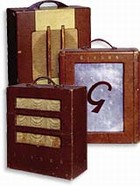
    At the top of Gibson’s post-war amplifier line was the short-lived BR-1, which featured a perforated aluminum grille with the prominent, new CMI “G” stencil. The brown leatherette cabinet was taller than it was wide and housed the chassis at the top – still a relatively novel concept in the world of guitar amps. Instead of the kitchen cabinet handles of the smaller amps, the BR-1 came with a heavy-duty leather handle similar to those Fender would eventually use on their tweed amps. A monstrous 12″ field coil speaker by Jensen mounted to both the front baffle board and to a wooden brace at the magnet structure. It’s difficult to tell whether this back brace was to help support the weight of the speaker or to stop acoustic vibrations. The back was sealed, with a large port at the bottom.

    Getting to the tubes required removal of both the back panel and the chassis, a major design flaw. The steel chassis itself was covered in a three-dimensional, brown, textured paint and provided minimal air circulation through a small (approximately 11/2″ tall running across the back of the cabinet, another major design flaw) ventilation strip near the top. Only the controls section was exposed, and it was tipped up at a 45-degree angle for ease of viewing. A cream-colored aluminum panel contrasted nicely with the three large, brown knobs, each with a small, clear plastic/red lined pointer underneath (and seen only on this amp). Individual volume controls (for Microphone and Instruments) were followed by a master treble roll-off Tone. A vertical row of 1/4″ inputs to the left allowed for the use of a single mic and two instruments, while the vertically aligned pilot light, fuse cap and on/off switch to the right added symmetry to the layout.

    Rated at 15 to 18 watts, the BR-1 was the successor to the Pre-WWII top of the line EH-185. Twin 6L6 power tubes were driven by a 6SN7 phase inverter, preceded by a 6SC7 preamp. One side of this twin triode preamp tube took care of the Instrument channel, while the other side was employed by the Mic channel, preceded by a 6SJ7. Power was supplied by a 5U4 rectifier.

    At $190 (later dropped to $175), the BR-1 was considerably more expensive than Gibson’s second-in-line BR-4, not to mention top-of-the-line offerings from National ($125 for the No. 500), Rickenbacker ($115, M-12) and upstart Fender ($159.50, Professional). Only Epiphone’s Dreadnaught was comparably priced.

    For collectors, this amp is a must to go with a single P-90 ES-300 or 350, a post-WWII L-5P with Charlie Christian pickup, or the fabulous Ultratone Hawaiian guitar, in the same way an EH-185 amp complements the ES-250 and pre-WWII ES-300, or the GA-50T goes with the two-pickup ES-350 and early ES-5, L-5CES and Super 400CES.

    BR-4
    While the BR-1 surpassed the best of the pre-WWII amps, the $125 BR-4 could easily pass for a late-’30s model. The two-tone brown/cream leatherette covering and swirly pattern cloth grille call up images of console radios, as do the twin wooden accent/protective strips over the speaker opening.

    The catalog model was fitted with a kitchen cabinet handle, although some used the standard leather fare. Other pre-WWII characteristics include the thinly constructed upright cabinet, a field coil speaker (12″ Utah) and the bottom placement of the chassis.

    Control panel layout was similar to the BR-1, with three 1/4″ inputs in a vertical line to the left of the mic volume, instrument volume and tone control knobs (black pointers). The pilot light, fuse and on/off switch added symmetry to the right. These electrical components were mounted directly to the smooth, black-lacquered chassis, without the use of an extra control panel plate. Twin 6V6 power tubes fed by a 5Y3 rectifier put out 12 to 14 watts, otherwise the circuit design was almost the same as the BR-1, save for a 6SL7 in place of the 6SC7 for the preamp tube.

    BR-6
    At the bottom of the Gibson amp line sat the BR-6, which, like the BR-4, harkened back to the floor radios of the ’30s. Three speaker openings on the front of the cabinet exposed the lovely pre-WWII-style grillcloth, contrasted by the smooth brown covering with decorative piping inserts. On the backside, a small panel at the top added structural integrity, as the BR-6 lacked the protective panels of the BR-1 and 4. This left the bottom-mounted chassis and tubes exposed to the dangers lurking in transporting an amp without a cover or case. The 10″ field coil speaker was also exposed and, along with the speakerframe-mounted output transformer, provided a total of seven wires with soldered connections outside the safety of the chassis.

    A single volume control acted on the two instrument inputs to its left and right were the fuse and on/off switch. Missing from the larger amps were the pilot light and the separate mic input. This saved a tube in the preamp section, which used a twin triode 6SL7 (but could have gotten by with a single triode, since the input signal was split to feed each of the two grids, then combined following the two plates). The rest of the circuit was almost identical to the BR-4, using a 6SN7 phase inverter, twin 6V6s for power, and a 5Y3 rectifier. Output was specified at 8 to 10 watts, putting it out of the student model class and into the lower end of the professional market. Price was $77.50.

    Part Two – First Series Additions, ca. 1947

    GA-25
    An all new amp was released in late 1947, to replace the mid-priced BR-4. At $132.50, the GA-25 was in the same price range for the short time both were available, but it exuded a definite post-WWII design. The cabinet was noticeably wider than it was tall, and completely lacked ornamentation, other than the new company logo. This isn’t to say the amp was unsightly. Rather, it projected a sleek, mid-century modern image, with uninterrupted surfaces and two speaker openings, of different sizes. Nothin’ but a box covered in “…rich brown Keratol” with a handle on top and two holes for the sound to get out… simplicity in industrial design. On the backside, the panels covering the top third and bottom third exaggerated the stretched out lines of the new cabinet, offering protection to (but without impeding ventilation for) the tubes, which stood straight up from the bottom-mounted chassis. Even the input jacks, control knobs, pilot light, fuse and on/off switch were in a single, horizontal plane.

    Using two Jensen speakers of different sizes (12″ and 8″) was a novel approach, offering a little better high-end than a single 12″, without sacrificing much in the bass frequencies. These new speakers were permanent-magnet Jensens instead of the field coils used on all previous Gibson amps. One lost benefit of the field coil was the smoothing action on the DC plate current (ahead of the filter caps), which was conveniently used to charge the electromagnet. Without running the pulsating DC through the windings of the field coil, the addition of a choke (inductor) to supplement the filter caps was neccesitated (the choke is the little transformer-like device protruding from the bottom of most amp chassis and is basically one side of a transformer).

    Just about everything else in the new circuit was different, too, starting with the inputs. Three instrument jacks were run into the 6SJ7 preamp tube formerly reserved for the mic input. A small difference in the value of the input resistors was now all that differentiated the mic input from the instrument inputs. Missing was the 6SL7 preamp tube that had added a second stage to the mic channel and made feasible a separate mic volume control. A single volume and a tone were now the only controls.

    In the phase inverter section, the BR-4’s 6SN7 twin triode tube was replaced with a pair of 6J5 tubes, possibly so they wouldn’t have to call the GA-25 a five-tube model. The number of tubes used was often equated with quality, as seen in the BR-4’s original catalog description “6 tubes, two of which are dual purpose, providing the equivalent of 8 tube performance.” The GA-25 offered six-tube performance from six tubes, including the unchanged 5Y3. The twin 6V6 power tubes, however, yielded a “…full 15 watts” according to company literature and coupled to twin speakers, should have provided a louder amp.

    BR-9
    By 1948, CMI was expanding the Gibson line both up and down, with the new BR-9 lap steel and amp aimed at the huge student market for Hawaiian music.

    The portable amp, originally available only with the instrument at $99.50 for the set, was a throwback to the pre-WWII circuits, having a field coil speaker (8″) and a transformer for the phase inverter. Twin inputs allowed for student/teacher sessions, with a single volume control the only variable. An on/off switch and fuse completed the rear-facing control panel layout.

    Tubes included a 5Y3 rectifier, with a 6SN7 providing two gain stages, feeding twin 6V6s for a screaming little amp when compared to most single 6V6 student amps. The cabinet was covered in “…washable ivory leatherette accented by a brown plastic trim” and had a trapezoidal shape from both the front and side views.

    The BR-9 amp stayed in the Gibson line until about 1955, when it was replaced by the slightly larger GA-9.

    Part Three – Second Series, ca. 1948

    BR-6 Style 2
    By the end of 1948, the initial line of Gibson amplifiers was history. The mid-priced BR-6 stayed on in name and price only, with a new cabinet being the most obvious change. Like the GA-25, the new BR-6 had a stretched out shape, horizontally, almost as if they had chopped off the old box at the top speaker cutout, then stretched the bottom part out. Gone was the decorative piping and the anachronistic grille of patterned cloth, replaced by plain, monochromatic tan. New was a “G” monogram on a gold medallion.

    A 10″ “dynamic” speaker replaced the old field coil and the twin-triode 6SL7 preamp tube (that had both sides run in parallel) was replaced by a single-circuit 6SJ7. Otherwise, not much was new. Although two inputs were specified, most of these amps seem to have three, all for instruments and electrically identical. In about 1955, the BR-6 was replaced by the larger GA-6.

    GA-50
    Replacing the BR-1 at the top of Gibson’s amp line, the GA-50 has become one of the most sought-after non-Fender vintage amps around, particularly in the jazz community. There were actually two models, the $175 GA-50 and the $195 GA-50T, among the first amps with tremolo.

    Both versions used 6SJ7s for preamp functions, one for the mic channel and a second for the three instrument inputs. Twin 6L6 power tubes produced approximately 25 watts with juice coming from a 5V4 rectifier. A third 6SJ7 and a twin triode 6SL7 were used for the tremolo oscillator and related circuitry, which worked only on the instrument inputs. While the GA-50 used seven tubes to operate, the 50T needed eight, and to get by with only one extra tube required the change from twin 6J5s for the phase inverter on the 50, to a twin-triode 6SN7 on the 50T.

    Like the GA-25, the 50 and 50T were equipped with two permanent-magnet Jensen speakers, a 12″ and an 8″, housed in a brown leatherette-covered cabinet. Whereas the speaker openings on the 25 were circular, with nothing but the grillcloth to protect the cones, the face of the 50 had five vertical slats for the 12″ and three for the 8″. A removable back panel gave the amp a Samsonite suitcase-like appearance. Removal of the back panel helped cool the tubes (which protrude up from the bottom-mounted chassis) during operation and offered protection when installed.

    For the first time since the early EH-185 amps of the late ’30s, Gibson used separate bass and treble controls. A Gibson first (and possibly a first in the musical instrument amplifier field) was the inclusion of a grounded power cord, using a clip for ground connections instead of the three-prong plug (and outlet) that came into popularity in the ’60s and ’70s. Shock-mounted tube sockets were another Hi-Fi-influenced feature. Starting with the release of the GA-CB in about 1949, a series of other high-end Gibson amps kept the GA-50 dethroned from its original prestigious position until its retirement, circa 1954. All the other amps, however, were short-lived and expensive, making the GA-50 a good, long-running seller, generally obtainable today with a little searching. The catalog description calling the 50 the “ultimate in amplifiers” may have been a bit exaggerated, but the phrase “…produced to meet exacting demands for tone, power, portability and beauty” stand true to this day.

    GA-30

    Gibson’s midline amp was changed for the third time in three years, as the short-lived GA-25 (which replaced the short-lived BR-4) was superseded by the identically priced GA-30. Cosmetically, the porthole speaker openings were replaced with a large, rectangular picture frame-style with a Gibson logo across the middle.

    The 1949 Electric Guitars catalog showed the GA-30 with a two-knobbed control panel, as on the 25 (this was a new photo, not a reprint of the 25 from the ’47-’48 catalog), although most GA-30s had separate volume controls for the mic and three instrument inputs. An extra 6SJ7 preamp tube was assigned to the mic input to accommodate the extra volume control, in turn requiring the twin 6J5 phase inverter of the 25 to be replaced with a single 6SC7 to maintain a six-tube chassis. The two 6V6 power tubes and 5Y3 rectifier were basically unchanged.

    A bass “Tone Expander” switch inserted/bypassed a low-frequency blocking capacitor in the negative feedback loop of the Instrument channel circuit; on the two-knob version, the switch was located on the control panel between the volume and tone controls, on the three-knob version, the mic input was moved into the row of instrument inputs and the Tone Expander was installed directly below, in its place.

    The deeply textured “dark brown leatherette” covering of the 25 and early GA-30s was short-lived, replaced after about a year by a smooth, light brown material. This model would run until the change to the more powerful top-mounted chassis two-tone model in 1954.

    GA-CB
    No, Gibson didn’t offer a citizen’s band radio. The CB stood for Custom Built, and at $395 (more than double the price of the GA-50T), it was out of the price range of all but the most professional of professionals (as in those making very good money). Only the L-5C and Super 400 carved top guitars cost more. Described by Gibson as having “…tremendous volume and tone qualities found only in the finest public address broadcasting systems,” the CB was obviously meant to be more than just a guitar amp.

    A coaxial 15″ Jensen speaker offered a 50 to 15,000 Hz frequency range from the built-in tweeter and crossover network. A recessed four-position “Frequency Selector” switch was mounted to the back panel of the amp’s cabinet, offering roll-off points at 5,000, 7,500, 10,000 and 15,000Hz (the author assumes it was a roll-off and not a crossover point, as this range is too high for crossing over a cone speaker; unfortunately, the “dividing network” is only shown as a black box in the schematic).

    Having the selector circuitry installed outside the chassis implies there was no interaction with the tone controls, although a working example could not be found to try out this feature; know anybody with one of these?

    Compared to the full-range 10″, 12″ and 15″ speakers most travelling bands sang through (even into the late ’60s), the 1949 GA-CB was light years ahead of its time for portable PA. Oddly enough, the designers equipped the full frequency range combo with only one microphone input to go with the three instrument inputs. Gibson claimed “30 to 40 watts – Class A” power from two 6L6s, a possibly exaggerated figure, but a spec that showed a serious HiFi ethic from the engineers. The bottom-mounted chassis housed eight more tubes, a 5T4 rectifier, two 6J5s for the phase inverter, two 6SJ7s for the preamps (one each for the Mic and Instrument channels) and three tubes for the Instrument channel tremolo, two 6SQ7s and a 6SJ7. A foot switch activated the tremolo, which was adjustable for intensity and frequency. Separate controls over the Bass and Treble ranges effected both channels.

    Mottled brown leatherette, as seen on the GA-50, covered the cabinet, and like the GA-50, the GA-CB had a detachable rear cover. The six cutouts for the speaker opening were also styled after the GA-50, with similar luggage qualities. The Gibson Custom Built Amplifier was offered on pricelists until 1953, although it was only pictured in the ’49 catalog.

    The circa 1951 Electric Guitars catalog offered a brief mention of its availability and the circa ’53 and ’54-’55 catalogs made no mention at all of the most expensive and low production GA-CB.

    It’s doubtful the “…years of electronic and acoustical research by Gibson engineers” that resulted in the GA-CB paid off directly, but the acquired technology would be put to use in the early ’50s on the more reasonably priced (but still expensive) GA-75, 77 and 90 amps. Gibson’s prestige over Epiphone, National, Rickenbacker, Vega and the up-and-coming Fender remained intact with an amp that provided “…discriminating professional artists truly superlative electronic sound reproduction.”


    Gibson’s mid-1940s amplifier line, the BR-4, BR-1, and BR-6. Photo: Bob Fagan.

    This article originally appeared in VG‘s Dec. ’97 issue. All copyrights are by the author and Vintage Guitar magazine. Unauthorized replication or use is strictly prohibited.
  • Preston Shannon – All In Time

    All In time

    I admit I’m a fool for soul music. Why? Because there is no such thing as a mediocre soul singer. They get weeded out immediately.

    There is lots of “half-steppin” in the blues idiom, but with the soul genre you either can do, employing the (at least) minimal prerequisite gospel inflection, or you don’t do.

    Preston Shannon, of course, does and does well. His is the kind of music that will always be timeless and bring to mind the wonderful “soul merchants” of the mid ’60s. Halcyon days for great vocalists like Roscoe Shelton, Earl Gaines, Robert Ward, and O.V. Wright.

    Shannon embodies influences of all the above, whether he’s aware of them all or not, simply because of the tradition of expertise that bonds this style of music.

    The guitar in this instance is, of course, used in as embellishment, and Shannon is an okay player. But it’s the whole package-presentation, lyrics, and instrumentation

  • Tal Farlow – The Legendary Guitar of Tal Farlow Video

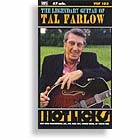
    The Legendary Guitar of Tal Farlow video

    Tal Farlow is a legend to any Jazz fan. He was the guitar player in the Fifties before Wes became king. He’s still the favorite player of lots of Jazz guitarists. If you don’t believe that, just check out the interview with George Benson on this video. This production basically has a very relaxed Tal showing you some of his favorite licks and techniques. It’s a wonderful way to add some licks to your playing, whether or not you’re a Jazzer. The accompanying book highlights all of what he shows on his 1962 Gibson Tal Farlow guitar. Above all else, it’s a sheer joy to watch Tal play guitar. He’s a master, and even if you learn nothing from the video (highly unlikely), you’ll be fascinated by his playing.

    There’s a nice montage of photos of Tal during the Fifties along with music by him and Red Norvo and Charles Mingus in the Red Norvo Trio. He also spends a good deal of time explaining his influences and style. He is self-taught and tells us that’s why he sometimes uses his thumb to play on strings five and six. He covers how to play Blues, the use of tritones, chromatic movement, and in a really nifty demonstration, how to play an entire solo in harmonics.

    There is also a clip of the late guitarist Lenny Breau visiting Tal at home during the Seventies. That’s quickly followed by the two playing at a local club. Fascinating stuff, both from a historic and musical standpoint. Guitar collectors will want to see the last ten minutes. Especially where Tal shows us his “little baby”. All in all, a great video. You can write to Hot Licks at P.O. Box 337, Pound Ridge, New York 10576.


    This article originally appeared in VG‘s Jan. ’96 issue. All copyrights are by the author and Vintage Guitar magazine. Unauthorized replication or use is strictly prohibited.
  • Family Feud

    The Les Paul Jr. Tone Showdown

    What’s All This Excitement About Les Paul Juniors?

    First it was PAF-equipped Les Pauls, then dot-neck 335s. You know, all the really expensive, elitist “vehicles of tone.” I couldn’t be bothered with something as pedestrian as the single-pickup, student-targeted Les Paul Junior. Besides, P-90s were noisy and not particularly studio-friendly. My bias went so far as to allow me to purchase P-90-equipped Les Paul Specials by virtue of their two-pickup status, but a Junior’s single-pickup design limited both their versatility and my interest.

    Boy, was I wrong!

    With time, I realized the simplicity inherent in the overall design of the Les Paul Junior contributes to the superior tonal characteristics of this instrument and its effectiveness as a rock and blues guitar. What could be simpler than the surface-mounting of one dog-ear P-90 pickup on a slab mahogany body? Perhaps by accident, or maybe by design, it is this simplicity that contributes to the guitar’s ability to so consistently produce great tone. In fact, my experience indicates that it is really difficult to find a Junior that qualifies as an outright dog. Some may be heavier than you like and others may not have the perfect neck shape, but a very strong majority just sound great from the first riff.

    A Little History
    The marketing concept behind the Junior was quite ingenious and truly instrumental in the guitar’s rapid acceptance among the guitar buyers of the 1950s. Gibson’s strategy was to provide a single-pickup guitar without frills, constructed with the traditional high level of quality and attention to detail that characterized the company’s professional models, but at a very competitive price. This initiative was designed to bring younger players into the Gibson fold and build brand loyalty, which would pay the company back when these players matured and purchased higher-margin, professional-level Gibson instruments.

    While Gibson’s margin of profit was very thin on these guitars, the Junior’s strong value credentials fueled substantial unit sales and overall profit. By offering the Junior at a popular price that enabled beginners to access characteristic Gibson tone quality, the company quickly realized a healthy share of the nascent solidbody electric guitar market.

    But the Junior was also purchased by professional players who recognized the instrument’s high quality of construction for the money and the unique tone the instrument produced. Today, these are the same purchase criteria that contribute to the Junior’s substantial appeal among vintage guitar enthusiasts.

    Simplicity – What A Concept!
    The Juniors single pickup was purposely placed very near the bridge/tailpiece in an effort to produce a brighter tone. This design element has, in great part, helped define the aggressive voice of the guitar. My money says the folks at Gibson originally placed the pickup closer to the bridge in an effort to balance the darker tendencies of the solid-slab mahogany body dictated by the “economy status” of the Junior.

    The surface mounting of a dog-ear P-90 on the body of the Les Paul Junior is another key design feature that differentiates the tone of the guitar from other P-90-equipped Gibson solidbodies. The surface mounting of the Junior’s dog-ear pickup decreases the distance between the strings and the pickup magnets, and increases pickup output, which may well explain the dog-ear pickup’s more aggressive tone compared to soap bar P-90 pickups.

    The genius inherent in the design of the Junior was not fully realized until the guitar players of the late ’60s and early ’70s recognized the incredible rock and blues tone that a Junior’s dog-ear P-90 could produce when driven through stacks of high gain amplifiers. When played at high volumes, Juniors produce a heavily distorted sound with a distinct treble emphasis and crunch that has defined the unique voice of the instrument.

    The Critical Elements Of Great Junior Tone
    Over the years, there have been many theories regarding the elements critical to great Junior tone. You know; weight, resonance, neck mass, pickup resistance, capacitor type/value and string height over the pickup, plus other assorted minutiae. The showdown presented an opportunity to assemble a number of prime examples and the possibility of gaining a better understanding of what the key factors are behind great Junior tone.

    Tone hounds will agree that great tone is the result of a combination of factors and it is pointless to try to determine the relative importance of each. An analysis of the characteristics of the four Juniors thought to have the best tone at the showdown proved this, by revealing significant inconsistencies across the factors believed critical to tone.

    All four guitars sounded ridiculously strong and large, but some were heavy, others light. Some had very strong pickups, others were weak, and some had a significant distance between the strings and pickup, while others’ strings lowered right over the top of the pickup. In fact, except for the presence of bumblebee capacitors in all of the guitars under consideration, the only characteristic that was consistently found among the best sounding models at the showdown was a very high degree of resonance in both the body and neck.

    The importance of resonance to great Junior tone is supported by the very impressive acoustic quality of the double-cut TV model. However, the lack of consistency in the characteristics of the guitars suggests the factors that contribute to great Junior tone are, in part, intangible, and the only way to predictably find great Junior tone is to plug the guitar in and turn it up. But then, this has always been the best evidence of the genius inherent in this guitar’s design.

    The Showdown
    Having gotten this far, it is probably evident that in my day, I have encountered a few truly dedicated Junior enthusiasts, and it was not difficult to drum up interest in an event built around finding the ultimate Les Paul Junior tone. I asked each willing participant to whittle his considerable pile of Juniors down to their three best sounding examples. Effectively, the rules for entry limited each contestant to two mahogany-bodied guitars, but allowed a third maple-body instrument, if available. The contestants were also instructed to enter only 100 percent original instruments, with the exception of refretted examples.

    On a quiet Sunday afternoon, the group gathered at Montana Studios in Manhattan, where a total of 14 Les Paul Juniors were entered in the showdown. The guitars are owned by Freddie Fry, Terry Punia, Ronnie Kushner, Eliot Jacobs, John Santoro, Jim Donahue and yours truly.

    The axes were selected from a total of 40 instruments owned by the contestants, which was a large enough sample to ensure that the guitars submitted for consideration would all be very worthy competitors. Preliminary discussions between the enthusiasts revealed that a strong majority shared the opinion that single-cutaway Juniors have better tone. Accordingly, nine of the 14 guitars entered in the contest were single-cutaway models.

    Amp Of Choice
    Ken Fischer’s Trainwreck amplifiers were chosen because of strong industry recognition of their superior ability to accurately reproduce guitar tone, without obscuring the voice of the instrument.

    Fischer helped arrange an impressive array of Trainwrecks; one Express, one Trem-Rocket, two Liverpools and a special-voicing Liverpool amp were gladly submitted for consideration by Jeff Crumando, Adam Apostolos, Peter Min and Eliot Jacobs.

    The first order of business was to select an amplifier that all of the guitars would be played through, in an attempt to provide an unbiased means of evaluation. Accordingly, the group randomly selected a ’58 single cutaway and auditioned each of the amps through the same 4 x 12 25 watt pre-Rola cabinet. After all amps had been reviewed, the group went back over several models for a second round of A-B comparisons, before selecting the regular-voicing Liverpool head as the best amp for producing Junior tone.

    Selecting the best Trainwreck was definitely an enjoyable task. It was also a good way of warming up everyone’s critical listening skills prior to moving onto the main event. As testimony to the remarkable performance across the entire Trainwreck line, there was a considerably greater degree of comparison testing required to reach group consensus regarding the selection of the best amp versus the best Junior.

    The Guitars Speak
    After each of the 14 Juniors were numbered for purposes of identification, the party began. Jacobs, Crumando, Apostolos and Fry all took turns working out the bad boys of tone. While some inconsistencies in amplifier volume and tone settings were noted, due diligence in maintaining commensurate volume and tone settings was applied to a very strong majority of the guitars auditioned. After each guitar had been cranked for a couple of minutes, the nine voting participants (four amp sponsors and the five Junior owners) were asked to rate the tone of the instrument on a scale of 1 to 10.

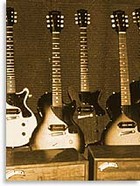
    When each guitar had been given its due, the group was asked to review their notes and select the four instruments that had the best overall tone. The results of the group’s selections were surprising to say the least; one ’57 single-cut, one ’58 double-cut, and two ’59 double-cut TV models advanced to the final round.

    Given the group’s strong disposition towards single-cut, prior to the showdown, it was particularly enlightening that three of the four instruments selected to advance to the finals were double-cutaway models. The strength of the double-cutaway’s performance was underscored by the fact they only accounted for five of the initial 14 entries. The strong performance of double-cutaway TV Juniors was also surprising. Only three of the 14 initial entries were TV models, however they were all double-cutaways, and two advanced to the finals. It should also be noted that the two double-cutaway TV models that advanced to the finals were a mere 13 serial numbers apart.

    The King Of the Hill
    Alright, but which guitar was king of the hill? We deferred the selection of the “Junior with the best overall tone” to Leslie West, who was kind enough to overlook our obsessive trappings. To be honest, when he first walked into the studio, Leslie did ask if we had a club. And several times that evening, he did look at the pile of Juniors, conveying some disbelief.

    Leslie spent approximately five minutes playing each of the four guitars that had qualified for the finals through the same regular-voicing Liverpool amp and 25-watt pre-Rola cabinet combination. Leslie’s diligent testing of each guitar’s rhythm and lead capabilities brought smiles to the faces of all of the Junior enthusiasts. In between guitars, Leslie indicated his preference for single-cutaways and suggested we should really have two independent contests to select the best single-cutaway and double-cutaway model, because they are different animals.

    After auditioning the top four contestants, Leslie expressed disagreement with our selection of the Liverpool amp, which he believed had too clean of a sound. In deference, we hooked up the Express amp through a 30-watt pre-Rola cabinet and asked Leslie to go through the top four one more time. Based on Leslie’s range of expressions while playing, the Express seemed to fit the bill.

    He gave the finalists an even more thorough second audition before selecting the 1959 double cutaway TV model bearing the serial number 9 9014 as the Junior with the best overall tone. Leslie candidly admitted his difficulty in selecting a double-cutaway model as his favorite overall guitar, because if he was going to play one on stage, it would be a single cutaway.

    He indicated that the winning double-cut TV’s lead tone wasn’t too overdriven, while also maintaining sufficient clarity to compliment chord work. When queried further as to why this particular Junior was his favorite, Leslie opined that there was a generous distance between the strings and the pickup, which many of the others lacked, and which allowed the pickup to breath and contribute to the guitar’s tone. Finally, Leslie also praised the winning Junior’s significant resonance and acoustical qualities.

    The consensus of the showdown was that the double-cutaways sounded larger, with better overall tone. It was gratifying that the consensus extended to include the group’s selection of three double-cutaway guitars among the four finalists, and Leslie’s selection of a double-cutaway guitar as the winner of the showdown.

    I think the double-cutaways sounded larger because they have a more pronounced low/midrange emphasis compared to the single-cutaways, which more effectively relay the instrument’s natural tendency toward strong treble response.

    Last-Minute Perspective
    The contest was initially envisioned as a means of catering to the league of Junior gentlemen’s favorite obsession, and having some fun. However, one week after the showdown, I found myself taking the results too close to heart. Driven by the rabid acquisition of double-cutaway TV models, a sweeping reorganization of my Junior collection ensued, which of course, was justified by my promise to sell several of my prized single-cutaway examples in a classic borrow-from-Peter-to-pay-Paul scenario.

    While coordinating this activity, I did not play any of the single-cutaways in my collection. Another week went by, and after an extensive workout on my ’59 double-cut TV that had all but coasted to the finals of the showdown, I found myself wondering if I had made the right decision to significantly bias my collection to the double-cuts.

    So, I picked up my former favorite, a ’58 single-cut that had been knocked out of the showdown early on. After the first bar, it was clear that through the ’58 Super, the ’58 single cutaway’s tone was beyond that of my ’59 double cut TV.

    Typical? Well yes, but more importantly, this last-minute perspective serves to effectively underscore the important contributing role the amplifier plays in generating great Junior tone.

    This final perspective does not seek to contradict the results of the “tone showdown.” The dominance exercised by the double-cutaways was very real. However, it is critical to note that while the Trainwreck circuit’s unique approach to amplification may well provide the most accurate means of judging a guitar’s tone, it is significantly different than the approach of the myriad of amplifiers that guitarists’ more typically plug a Junior into.

    This may well explain the double-cutaway model’s surprisingly strong performance versus the single-cutaways at the showdown, while suggesting that a tone contest which employed a different amplifier standard would likely produce significantly different results from those reported here.

    Finally, given the strong incidence of amazing-sounding Juniors, and the significant number of killer tube amplifiers available today, there are probably a multitude of Junior models and tube amplifier combinations capable of producing truly great Junior tone. Here’s hoping that you’ll have as much fun as we did finding your own ultimate expression of Les Paul Junior tone.


    Leslie West On the Junior
    More than any other guitar player, Leslie West’s seminal guitar work in Mountain, and later in West, Bruce and Laing, defined what a Les Paul Junior could do. From the screaming leads of “Mississippi Queen” to the melodic runs of “Theme From An Imaginary Western,” the intensity and range of expression apparent in West’s guitar work inspired many players to pick up a Les Paul Junior to see what was behind this legendary guitarist’s selection of a “budget” instrument. In the midst of the tone showdown, West was very forthcoming with his opinions regarding the guitar.

    Vintage Guitar: How many Juniors do you have?
    Leslie West: Actually, now only two. I used to have more. I gave one to Pete Townsend and I traded about four. I had one of those double-cutaways, which I never liked.

    Why do you like the single-cutaways better?
    The single-cut guitars were always easier for me to play. I kept buying the double cuts anyway. Every time I bought a double-cut and it didn’t work out, it became a slide guitar.

    What was it about the double-cutaway Juniors?
    You know why these double-cut guitars are not my favorite? (Strums a chord and bends the neck out of tune).

    What made you start playing a Junior?
    You know why? To me, it was like a piece of wood and a microphone.

    Have you found that some Juniors are better suited to specific types of playing?
    I used to use guitars that were good on the first three frets in the studio and then I used ones that I just played solos on. I never had one, except the one Junior I used on stage, that I could use for everything. And it was right down the middle, you know? You see, some have a better tone on the top strings and others have better tone on the bottom strings, some are better on chords.

    You never found one Junior that did it all? Lead, chords, woman tone, everything?
    The Junior I played on stage, the one I gave to Pete Townsend. The best one I ever had is going to the Rock and Roll Hall Of Fame from November to April, as part of a Hard Rock thing with Felix’s bass.

    How do you like to have a Junior set up?
    When I play a guitar, I like the action at an angle so the top strings are set higher up so I can get under them. A lot of people set the action too low on these guitars. If you leave the strings away from the pickups, you get the air in between, and better sustain. I like the E, B and the G strings to be away from the pickup, so you can get under the strings. Otherwise, it slips right back and it dies. See, the action on this guitar (he holds a ’54 Jr.) is the way I like it. It’s very high and it doesn’t hit the frets. Also, it’s easier to play with the action away from the pickup. You’ve got to have air between the strings and that pickup.

    Were there any modifications that you made to your Juniors?
    We had to change the gears. That was the first thing I remember at rehearsal. Felix said “…you’d better go buy some Grover gears or this thing will never stay in tune.” Dan Armstrong used to take the tone control totally out. Actually, he took the capacitor out.

    What about the theory that says the really great Juniors are the ones that have been really played. That people left the bad ones in the cases.
    You’ve got to realize that most of the Juniors that I got, I bought from pawn shops that some old guy played and beat the living **** out of. You couldn’t put new frets on the guitar or it would fall apart.

    Did you ever use some of the Epiphones with P-90s?
    Never used them.

    There is a picture in the Mountain book…
    A double-cutaway?

    Yes.
    For that same reason. You can pull on the neck. I pull on that neck and the intonation goes in and out. You can’t pull the single-cutaways out of tune.

    So, you’re saying that you like the Juniors with fat necks?
    Yeah!

    Special thanks to Richie Friedman, Leslie West, and Ken Fischer.

    This article originally appeared in VG‘s March ’00 issue. All copyrights are by the author and Vintage Guitar magazine. Unauthorized replication or use is strictly prohibited.
  • Breedlove C25 and Custom XII

    Beauty, brains, and brawn

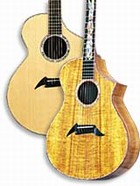
    Breedlove Guitar Company is a small, independent gui-tar and mandolin builder in Oregon’s high desert region east of the Cascade Mountains.

    Started in 1990 by Steve Henderson and Larry Breedlove, the company boasts of being “…pioneers in melding the best aspects of traditional guitar making with new ideas, appropriate technology and master luthier skills to create instruments with unsurpassed tone, feel and striking visual appeal.”

    Big shoes to fill!

    Anyway, Henderson is the company’s chief designer and innovator, while Breedlove’s older brother, Kim, is a master luthier and artist. Every Breedlove instrument is handcrafted and offers many options. The company strives to make its pieces exceptionally playable, and it succeeds – necks are slender and hand-rubbed, woods are naturally aged, and Breedlove is dedicated to using alternatives to endangered woods, so it offers a selection of nontraditional wood types.

    Our test pieces were a C25 six-string, and a 10th anniversary Classic XII.

    Construction
    The C25 is a six-string deep grand concert acoustic with a soft cutaway, highly flamed myrtlewood back and sides, western red cedar top, maple neck, and ebony board. The flamed myrtlewood resembles maple, but with a yellowish tint and darker streaks that add nice depth. Everything on the guitar is framed in black and white multi-ply binding, and the soundhole has a beautiful abalone rosette. The fingerboard’s unique inlay portrays the company’s 10th anniversary logo – a hand holding the number 10 – spanning frets 11, 12, and 13.

    The Classic XII ($3,999 with TKL hard case) is a deep 12-string jumbo with sharp cutaway, Sitka spruce top, striped ebony back and sides, mahogany neck, and ebony board. The striped ebony alternates between dark brown and black in a zebra-stripe pattern. Inlays include an abalone rosette and small pearl dots on the bass side of the fingerboard. The body, neck, and headstock are bound with multi-ply black and creme binding.

    Tone and Playability
    After a slight adjustment of the neck (the weather was very cold when we received it) the C25’s action proved almost perfect. Its flat, wide contour was extremely comfortable and easy to play, String spacing was conducive to fingerstyle playing.

    The C25’s tone was huge in the bass register, with slightly less midrange, and mellow highs typical of a deep body and cedar top. A guitar this size typically does not have this much bass! For electronics, it has a Fishman Matrix Natural One pickup (with no controls). Plugged in to Trace-Elliot acoustic amp, the sound was very natural. Overall, the sound of the C25 matches its aesthetic beauty.

    The Classic XII is flat-out one of the best 12-string acoustics we’ve ever heard and played. While it was in our possession, we had a number of discriminating players and collectors give it whirl. Every one was totally blown away! The chime of the treble strings was not sacrificed by the awesome bass, so the tone was very balanced. We’ve seen, heard, and played many other jumbos, but none had the clear low-end of the Classic XII.

    Being a 12-string, you’d expect a huge neck, but we found the Classic XII’s very comfortable, not much wider than a six-string. And the action was almost perfect, with no adjustment necessary.
    Both guitars’ bridge saddles were tall enough to exert plenty of pressure on the tops, allowing them to properly vibrate.

    Overall, the Breedloves feature meticulous craftsmanship, attention to detail, incredible sound, and good looks. They’re not cheap…but what good acoustic is?


    Breedlove C25 and Classic XII
    Type of Guitar: Six-string deep grand concert, 12-string jumbo.
    Features: C25 – flamed myrtlewood back and sides, western red cedar top, maple neck, and ebony board. Bound body, headstock, and neck, sound hole rosette. Classic XII – Sitka spruce top, striped ebony back and sides, mahogany neck, and ebony board. Abalone soundhole rosette. Bound body, headstock, and neck.
    Price: C25, $3,600 with hard case. Classic XII, $3,999 with hard case.
    Contact: Breedlove Guitar Company, (541) 385-8339, breedloveguitars.com.


    This article originally appeared in VG‘s Aug. ’01 issue. All copyrights are by the author and Vintage Guitar magazine. Unauthorized replication or use is strictly prohibited.

  • Compiled by Ben Valkoff – Eyewitness: The Illustrated Jimi Hendrix Concerts

    Compiled by Ben Valkoff

    The second volume reviewing Hendrix concerts, this one covering the tumultuous period of ’68, when Hendrix worked through a relentless schedule of touring and recording. As noted in our review of the first volume (VG, February ’98), this self-published work is a major historical documentation of Hendrix concerts as recalled through the eyes and ears of attendees. There are reviews of both good and mediocre shows, with a focus on factual honesty that is refreshing in an age where history is often revised to sugarcoat the truth after enough time has passed. This book is quite a feast for the Hendrix enthusiast, as it features many unpublished concert photos, newspaper and magazine reviews, advertisements, posters, even ticket stubs!

    Besides playing a number of different Stratocasters, Hendrix is also photographed with an SG copy, Flying V, and Jazzmaster. His Marshall stacks appear tattered and torn, no doubt from loading at venues, not to mention the abuse heap-ed on them by Hendrix the showman. Perhaps the best part of the book comes in a description of Hendrix’s show on July 31, 1968 in Shreveport, Lousiana.

    “Uh, yeah dig,” Hendrix is quoted as saying. “Right now, Mitch and Noel are gonna do somethin’, a jam kind of thing, for a few minutes; I gotta go to the bathroom!”

    The book is every bit as honest as Hendrix was. The author plans to continue the Eyewitness series with a book on the 1967 concerts. Copies are only available from Syncoop Productions Slot, Assumburgpad 54, 3123 RR Schiedam, The Netherlands. For more information, see http://home.kabelfoon.nl/~ben/Pages/eyewitness.html.


    Nijmegen, The Netherlands: Up From the Skies Unlimited 2000, hardbound 144 pages, ISBN 90-73235-78-2, $40.


    This article originally appeared in VG‘s Oct. ’00 issue. All copyrights are by the author and Vintage Guitar magazine. Unauthorized replication or use is strictly prohibited.
  • Corey Christiansen – Essential Jazz Lines: The Style of Charlie Parker

    Corey Christiansen

    Looking for a key to unlock your jazz solos or comping? Essential Jazz Lines: The Style of Charlie Parker offers fine entries to the playing of a great jazzer.

    Essential Jazz Lines: The Style of Charlie Parker translates Bird’s famous sax stylings into guitar lines and explores his bebop scales. Both books include lessons in musical notation and tab, as well as a CD packed with tracks of lessons, exercises, and backing music for you to jam over.

    For the price of one half-hour guitar lesson, this book provides hours of music to study.


    This article originally appeared in VG‘s July ’01 issue. All copyrights are by the author and Vintage Guitar magazine. Unauthorized replication or use is strictly prohibited.

  • June 2003

    FEATURES

    CHIP TAYLOR
    From the Troggs to Texas As a songwriter, his greatest success story is “Wild Thing,” one of the most covered songs of all time. But his most recent effort is a col-lection of duos that calls up all sorts of influences. By Willie G. Mosely

    FINISHING THE BUSINESS
    Danny Gatton’s legacy gets a second look The author of a new biography takes a look at the guitarist’s flirtations with fame, and the pending surge in newly released and reissued Gatton recordings. By Ralph Heibutzki

    EXCERPTS FROM THE FORTHCOMING BOOK
    Danny Gatton: Unfinished Business

    MEANWHILE, BACK IN EUROPE…
    Six steel-string luthiers from the “old country” Today’s European luthiers have merged new techniques with age-old traditions to achieve noteworthy standards of refinement. By John Engel

    THE PEOPLES’ GUITAR
    Gibson’s Depression-Era Exports Gibson house-brand instruments lend interesting insight to the depression years, providing an affordable musical outlet for the average person. By L.B. Fred

    THE BASS SPACE
    Peavey’s T-45 Peavey’s T-series guitars and basses had immediate market impact, and forever changed the guitar-manufacturing landscape. By Willie G. Moseley

    1968 KAWAI CONCERT
    The success of the Ventures and Mosrite guitars led to some of the most curious guitars produced in Japan. No one was wilder than Kawai, as represented by this model. By Michael Wright

    THE DIFFERENT STRUMMER
    The Classic Yamaha SG Of all the guitars built by Yamaha, none has achieved the status of the SG-2000, played at the time by Carlos Santana. Most cite 1976 as the debut date of this model. But, as usual, there’s more to the story. By Michael Wright

    DEPARTMENTS

    Reader Mail

    First Fret: News and Notes
    – Warren Haynes Jams for Homes
    – Amazing miniature guitars
    – Scott Henderson
    – In Memoriam

    Vintage Guitar Price Guide

    Builder Profile
    Schaefer Guitars

    Upcoming Events

    Vintage Guitar Classified Ads

    Readers Gallery

    Dealer Directory

    COLUMNS

    Viewpoints
    Fun With Ebay Descriptions

    Executive Rock
    The Pushmi-Pullyu Syndrome
    By Willie G. Moseley

    Q&A With George Gruhn

    Acousticville
    The Arlington Wonder Box
    By Steven Stone

    FretPrints
    David Gilmour
    By Wolf Marshall

    Gigmeister
    Good Hands, Part II
    By Riley Wilson

    Studio Aces
    Dan Sawyer
    By Jim LaDiana

    TECH

    Guitar Shop
    Repairing a Gibson Truss Rod
    By Tony Nobles

    Amps
    Tube Amps of Our Times: Vintage vs. Modern vs. Boutique
    By Gerald Weber

    Ask Gerald
    By Gerald Weber

    REVIEWS

    The VG Hit List
    Record, Video, and Book Reviews

    Check This Action
    By Dan Forte

    Vintage Guitar Gear Reviews
    Carr Mercury amp, The Force, Frantone Creampuff and Mickelson Fossil Ivory bridge pins

    Gearin’ Up!
    The latest cool new stuff!