Month: December 2002

  • Yamaha DG Stomp

    Plug 'n' Play Preamp for Recording

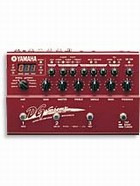
    It’s always been a struggle for home recordists to capture a good guitar tone on tape or hard disk. Yamaha, however, wants to cure that often aggravating dilemma. To that end, its new DG Stomp guitar preamplier is intended to be the “magical box” that can do it all – just plug in your guitar, run another line out to your mixer or soundcard, and press “Record.” Does Yamaha succeed with its grand mission? Let’s find out.

    Based on the preamp section of Yamaha’s DG line of digital guitar amplifiers, the DG Stomp packs a tremendous number of features and effects into its road-ready metal housing. With both factory presets and user-editable programs, guitarists can find an array of tones to play with, from distortions galore to a broad spectrum of clean and special-effects sounds. Among the effects are distortion (created using Yamaha’s Electronic Circuit Modeling, or ECM, circuit), compressor, chorus, flanger, phaser, rotary speaker, tremolo, digital delay, tape echo, spring reverb, hall reverb, plate reverb, tap-tempo delay, and 16 types of speaker simulation. There are 180 patches in all, plus a built-in tuner, and you can set the DG Stomp to activate eight effects as once. You can even plug in an expression pedal for real-time control of various effects, such as volume, wah-wah, and more (there are also MIDI In/Out jacks, if you’re into saving your edited patches on a computer, etc.).

    As far as getting started, it’s fairly intuitive. There are heavy-duty “Up” and “Down” switches to change presets or activate the tuner. The DG Stomp also has vintage chickenhead knobs to manually adjust volume, gain, treble, midrange, and bass, and presence – just like a conventional guitar amp. We began by flying through a number of presets, finding lots of good, usable sounds along the way; solid distortions, echo/delay, and nice modulation effects (chorus, phaser, flanger, etc.). Try plugging it into a PA or acoustic-guitar amp, too. Remember, the DG Stomp is a preamp, so with the amp simulations, it sounds great through a full-range speaker configuration, even the crunch tones. If you’re in a pinch, you could even go to a gig with just this box and have the soundman plug it straight into the mixer. That’s not a problem for the DG Stomp.

    With all these programs at your disposal, you can edit and save them, using the knobs to set the EQ to just the right “sweet spot,” or adding effects to spice things up. One cool feature is that the effect LEDs double as on/off buttons, making it quite easy to adjust your effects on the fly. And don’t forget the amp simulations. You get a knob on the far left that gives you options for lead, drive, crunch, and clean amps to choose from (these settings basically give you everything from metal crunch to clean tones, and varying overdrive colors in between).

    For our road test, we plugged the box in between Fender and Ibanez solidbodies, and a variety of amps and a PA. But our acid test was cutting some tracks to our Dell PC’s hard drive. Could the DG Stomp introduce believable guitar tones into the cold world of digital recording? Actually, the resulting tracks were fairly impressive, especially those that ladled on the heavy crunch – yes, this box screams. In particular, we found a fat, crunchy sound that sounded remarkably like Eric Johnson’s fabled tone, even through our small computer speakers (it even had Eric’s patented echo). That alone seemed worth the price of admission.

    As with most digital boxes, however, capturing the soft overdrive of a good Fender-style tube amp remains elusive. It’s okay here, but it ain’t no Bassman, so don’t sell that vintage amp just yet. The box’s clean tones were passable, though perhaps a little on the thin side (this, however, is not unusual for digital amps). Clean or dirty, we advise tweaking the factory presets to find meatier tones. But overall, We were pleased with the DG Stomp, especially since the user has the flexibility to adjust tones and effects at a moment’s notice.

    In all, the DG Stomp offers an enormous amount of flexibility for a box with a list price of $299. While nothing yet beats a good amp and some well-placed mics, few of us have the room to create this kind of studio setup. In that light, a good direct box/preamp can be a lifesaver, and the DG Stomp fills that role nicely. If you want tone and digital effects control in a “one box” environment, give this unit a test drive. There are lots of goodies here for the home recordist to experiment with.


    Yamaha DG Stomp
    Type Of Pedal: Guitar preamp/recorder.
    Features: Electronic Circuit Modeling, eight amp types, 16 Speaker cabinet models, compressor, chorus, flanger, phaser, tremolo, rotary, tape echo, three reverbs, tap tempo delay, tuner, stereo and headphone output
    four built-in footswitches.
    Price: $299
    Contact: Yamaha, (714) 522-9011, www.yamahaguitars.com.


    This article originally appeared in VG‘s July. ’01 issue. All copyrights are by the author and Vintage Guitar magazine. Unauthorized replication or use is strictly prohibited.

  • Dick Dale – Better Shred than Dead: The Dick Dale Anthology

    Better Shred than Dead: The Dick Dale Anthology

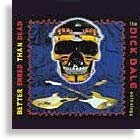
    Well, what needs to be said about this? The King of the Surf Guitar at his finest. This covers 1959 to 1996 and hits all the high points. All the tunes are here, even some rare stuff. And, as usual, Rhino’s packaging is exquisite. Great liner notes, plus track-by-track notes. If you are a fan of surf guitar, you must have this. Dick never disappoints. And it seems Rhino never does, either.


    This article originally appeared in VG‘s Sep. ’97 issue. All copyrights are by the author and Vintage Guitar magazine. Unauthorized replication or use is strictly prohibited.

  • Paul Stanley and Ace Frehley

    Flying Vs, Les Pauls, Laneys and Marshalls

    Paul Stanley
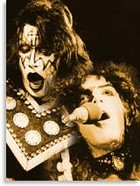
    Paul Stanley shakes his groomed mane, peering into the sea of smiling facing as he rises from the smoke and shadows to strike an A chord. The arena shakes. This is the Paul Stanley we’ve come to know. Rock and roll’s glittering Adonis a monument to the fading tradition of larger-than-life musicians. Offstage, Stanley is a softspoken, articulate New Yorker whose love affair with the electric guitar has never cooled. Recently, Stanley gave Vintage Guitar a rare and candid history behind his arsenal of equipment that rocked the nighttime world in the 1970s. Here’s what went down.

    Vintage Guitar: You’ve used several interesting stage guitars. Since your association with the Ibanez PS-10 is well-documented, let’s discuss some of the other guitars, starting with your rhinestone-covered Flying V that you used most notably on the 1977 Japanese tour.
    Paul Stanley: It was one of my stock Vs from the tour. I imagine it was around a ’73. I would take off the [stock] pickguard and change it to a single-pickup, one volume, one tone, usually. It was usually one of Larry [DiMarzio’s] pickups. What happened was I got bored, and every night after the show I would glue rhinestones on this guitar. I just thought it would be cool to have a rhinestone guitar! That rhinestone guitar was me and a bunch of Dukko’s cement!

    You also used a Flying V with a white pickguard, correct?
    That was a custom guitar that somebody in New Jersey made. I wanted a black V guitar at that point and couldn’t find one, so I took the V.

    Tell me about the genesis of your relationship with Hamer and some of the guitars they made for you.
    Paul Hamer was trying to revive either the quality or the spirit of the Gibson stuff at a time when Gibson was not exactly at their peak. I met him in Chicago, and he wanted to make something for me. He made me a couple guitars, one of them being a doubleneck, and a couple of Explorer-types.

    You also had a relationship with B.C. Rich, which seemed odd concerning you’re not a wirehead! After all, you practically needed a pilot’s license to operate those suckers!
    Yeah, at one point B.C. Rich was making guitars with, like, 50 switches on them! I remember sitting down with those guys and going, ‘What the hell is this crap?! Your guitar looks like a coffee table and it’s got too many switches!’ A good guitar needs a volume and a tone and if you can’t get what you’re looking for out of that, you need a new guitar.

    Ace mentioned that Larry DiMarzio hand-wound pickups for him before the first Kiss album. Was he hotrodding PAFs for you, as well?
    Interestingly enough, Gene went to school with Larry. I met Larry because he was in college with Gene. The first time I met him, he was working in the back room of a guitar store around the corner from Manny’s. Gene brought me over to see this guy who wound pickups. I couldn’t think of a sillier way to be spending your time! Why would anybody be winding pickups? But Larry had really made a science of this. I had never seen it approached like that, you know, the idea that this kind of wire or this amount of windings gives you this, that or the other thing.

    Is it a good bet that your guitar tone in the studio was shaped by a DiMarzio pickup, even Kiss’ first album?
    I would almost bet that the first pickups in my Guitar Lab guitar, which Charlie LoBoue made, were DiMarzio pickups.

    When did you switch your allegiance to EMG pickups?
    That happened late in the game. I was always willing to try anything. I’ve never been one of those guys who says, ‘Give me free gear and I’ll endorse you.’ My attitude’s always been, ‘I don’t need your free gear, you need me.’ So, let’s not have the cart leading the horse!

    When I tried some EMGs out, they really sounded good in the guitars I was using at that point, so I switched. I think the time I started using EMGs were in some Hamer guitars I had made, I’d say in the early ’80s.

    There’s a lot of mixed feelings about active electronics. What did you like about the EMG actives?
    Well, the technical end means nothing to me! Initially, the idea of a pickup with a 9-volt battery attached to it was something I had an aversion to, but it sounded good!

    Were you that interested in personally searching for the ‘holy grail of tone’ by learning the technical aspects of sound?
    I’ve never been a ‘wirehead,’ somebody who’s into all sorts of gadgetry. Usually, I’d let my guitar tech put something in that he thought might be good and I would either comment that it was good or not good.

    Your stage tone has a lot of top end. Did that change when you were in the studio?
    In the beginning, the greatest challenge was to try and capture the live sound on record. We didn’t have a lot of success with it. It was like we had a dual personality, we had the recorded sound and the sound, live. I’ve always been partial to jangly-sounding guitars, like Rickenbackers. I’ve always thought Townsend’s sound had a nice top end to it.

    Tell me about the guitars you’ve used in the studio, starting with the first Kiss album.
    On the first album, I was using a custom-made guitar by Charlie LoBue, who at one point worked for Dan Armstrong in New York. Then, he started his own place called Guitar Lab. He made my first custom guitar. It was really based on Gibson principals. It was kind of like a double-cutaway with binding on the front and two humbucker pickups. That was stolen before we went on tour after the first album was done. At that point, he made me a short-wing Flying V. I really liked the V Albert King used, the one with the binding on it. I told Charlie to make the upper wing shorter than the bottom one. We took the template of the body and I drew where I wanted the wing to be and he made it.

    Was that your main guitar for awhile?
    Yeah, that was my mainstay until Hotter Than Hell. During the recording of Hotter Than Hell in L.A., somebody walked into the studio and walked out with my guitar. I guess we were still in the Summer Of Love or something in L A., because it just took somebody going into the recording studio and going, ‘I’m here to pick up Kiss’ guitars.’ And they let ’em in!

    So, what guitar did you switch to at this point?
    A couple of different guitars, but primarily, I was using Gibson Vs.

    Then what guitar were you using for Dressed To Kill?
    I really don’t remember, but Gibson was giving me a whole lot of guitars at that point. Actually, I think I was probably using one of those Gibson Midnight Specials, which looked like a bolt-on version of those small L5Ss.

    Your endorsement of the Gibson Marauder seemed a little farfetched. After all, the tone on those guitars is not, uh, legendary…
    Truly, the Marauder was the guitar that I broke on stage every night, I never played one live! They were horrible. I don’t know what they were thinking, but everyone has their moment of folly!

    When was your faith restored in Gibson?
    I went through a period in the late ’80s and early ’90s of playing Gibsons again. I started playing Les Pauls onstage. They are amazing guitars, out of the custom shop. It was as though they revived the craftsmanship and suddenly remembered what it meant to be Gibson. They gave me a V that I’ll also use on this tour. It’s black, mirror pickguard, one pickup and a volume. It’s a replica of my old V.

    The guitars you used in the studio during the ’70s were often precious vintage models, correct?
    At that point, I amassed quite a collection of vintage guitars. In the studio, I cut loose with the guitars I wouldn’t take on tour.

    What guitars were you using by Destroyer?
    By Destroyer, I had a really great collection of vintage guitars. At that point, I had a ’58 V, a couple of sunburst Les Paul Standards, a couple of Goldtops and a fabulous ’67 Sunburst doubleneck which I used a lot on Destroyer. I used that guitar on “Detroit Rock City” and “King Of The Nighttime World,” for example. Particularly, on “King Of The Nighttime World,” I left the 12-string neck turned on, so part of what you may be hearing sonically, is overtones.

    You have a Hamer doubleneck as well, correct?
    I had Hamer make me a doubleneck, which I really like. I played it in the early ’80s. There’s EMGs in there. The body is much smaller and the necks are about five inches apart. It has two 6-string necks, one I used for open tunings and one I used for regular tunings. Most of the time, the open tuning I used was open G. “Heaven’s On Fire” is in Open G.

    You never seem to be an avid outboard fan, correct?
    No. I’d like to think of myself as a guitar-and-Marshall man! There’s been times I’ve gone through a rack-mounted Rockman in addition to the Marshall, and they may have blended it.

    So Marshall has always been your main amp?
    The soul of my sound is Marshall. It always has been. Other companies have given me loads of amplifiers, and the first thing most of them will tell you is how much it sounds like a Marshall. Well, if it sounds so much like a Marshall, why shouldn’t I keep playing a Marshall? Marshall is the all-around workhorse that gives you that classic sound.

    So, were you using Marshalls without the master volume?
    Yes. The more dials they added to the Marshalls, the less I liked it. In the beginning, it was a simpler amp, and now you have your preamp and your gain and all that stuff. In the early days, we purchased the Marshalls we used in the studio in ’73. We might use a Fender or two, but for the most part it was Marshalls.

    The other album you get a real unique guitar from is the studio side of Alive II.
    We recorded that onstage at the Capitol Theater in New Jersey. We were seeking the holy grail, we kept striving to be able to replicate in the studio what we did live and this was an attempt at doing that. Even if we all didn’t play at the same time, there was all kinds of weird ambience just jumping around the room.

    Did you use the E-bow on your solo album as an effect or a writing tool?
    I was a huge fan of the E-bow. I would write parts with it. “On Move On” and “Tonight You Belong To Me,” there’s E-bows. In fact, we used E-bows on the Love Gun demos.

    Certainly, on your solo album, you really get into rhythm textures a lot more.
    I had the luxury of having a band of me. I could do as many parts as I wanted. Texture has always been a big thing for me, I like the textures you can create with multiple guitars. I got a chance to play a lot of parts and counter parts and basically squash them together, so you might get something really cool without having the sense that there’s five guitars on it.

    In Kiss’ heyday, if you wanted to put a relatively polished idea down on tape, you had to go into a recording studio. It wasn’t like now, where you stick something on your Porta machine.
    The truth of the matter is, I used to book Electric Lady studios to do my demos. Some of them became part of my solo album, I just used them as they were. I was very comfortable at Electric Lady and I would book myself in there and record multitrack demos. From that, I went to a Porta Studio. My problem with doing 16 or 24-track demos was that invariably, it was very hard to beat them when you re-recorded them. Anybody who’s gotten into that vicious circle knows you wind up chasing your tail! What you’re trying to do the second time when you re-record is replicate spontaneity, which is a contradiction in itself! I started doing 4-track demos in my house.

    What gear are you using on the current tour?
    PS10s and Marshalls. That’s basically it.

    Ace mentioned using Marshall JMP-1s. Will you use them?
    Our sound guy likes the Marshall JMP 1s a lot for getting a direct sound. As far as I’m concerned, what’s more important than what’s going on at the board is what’s going on onstage. If the amp is rattling my nuts and my teeth, then we’ve got a problem! I don’t see me using it. We’ve had sound guys who’ve said, ‘If you play quieter on stage, we can get a more fidelic monitor mix.’ Screw the monitor mix! If we don’t have a great sound on stage, we’re not going to have anything happening in the house.

    Was it tough to remember some of the parts for the tour?
    I remembered all the parts. I can sit down with anybody and say ‘…you play this and you play this,’ and you’ll basically get the impression of what was on the album. Even now, when we’re rehearsing, if Ace would forget, for example, I’d say ‘No, No, here’s that part.’ So, we’ve managed to get the essence of everything we did.


    ACE FREHLEY
    In the 1970s, when Kiss’ original lead guitarist sauntered across the concert stage in his silver space suit, wielding those famous triple-pickup Gibson Les Pauls, he was the Harbinger Of Cool, and thousands of kids started playing guitar as a result. When Frehley left the group in 1983 to pursue a humbling solo career, the entire guitar-playing community lost its most effective recruiter since Jimi Hendrix. Thanks to the astronomical success of Kiss’ current reunion tour, Frehley’s regained the muscle necessary to expose a new generation of kids to the world’s coolest musical instrument.

    Space Ace was kind enough to share some insight regarding his career with Vintage Guitar readers. Here’s what went down.

    Vintage Guitar:Which guitars did you most commonly use in the studio with Kiss and on your 1978 solo album?
    Ace Frehley:The first album, I had a Les Paul tobacco sunburst and I probably put a DiMarzio PAF or Super Distortion in it. Then, I started using my three-pickup, cherry sunburst ’74 Les Paul around ’76. When I did my solo album, I cut every track with the ’59 Les Paul Standard flametop. It was stock. I never put a DiMarzio Super Distortion (Frehley’s typical pickup of choice) in an old Les Paul, I always left in the PAFs. I’d never **** with an old Les Paul. I just put DiMarzio’s in my newer Les Pauls.

    I prefer the tone of the Dimarzios. The only thing you’ve got to worry about with the Dimarzios is when you’re too close to the amp, they have a tendency to feed back a little. But if you’re playing a big place like Madison Square Garden, you’re never that close to the amp, so that’s not a problem.

    Does your three-pickup, cherry sunburst Les Paul still have the wang bar you installed in the ’80s?
    That’s when I was affiliated with Washburn, and Washburn was also handling Laney at the time. Everybody was using a wang bar, so I felt there was a couple of effects that I wanted to get. From my fan mail, a lot of kids got pissed off that I bastardized a Les Paul to put that wang bar on. To be honest with you, I actually didn’t have to bastardize it. They make a plate that goes around the bar that holds the strings. You screw the wang onto the plate, so you really don’t have to do any reaming of the wood. The only thing I had to do was put four screws at the top of the neck because there’s a locking system. Those are easy enough to fill in with wood filler.

    You had a righteous guitar collection at one time. What happened?
    When Eddie Van Halen became real hot, a friend of mine who deals in vintage guitars told me that the market was rapidly dropping. He goes, ‘I would dump your collection now before the market drops anymore.’ Almost like a stock broker! I invested so much money into it. In retrospect, I wouldn’t have done it. Things go full circle, though. Now, people are playing Les Pauls probably more than anything.

    I know you’re a pawnshop hound, any cool guitars you’ve picked up recently?
    I picked up an old Alembic guitar in a pawnshop for $250. The serial number is like 250! It was one of the first Alembic guitars made, it’s all wood with a one-piece neck-through. It’s got all the brass hardware and everything. I played it, and it sounded like no other guitar I own. You can get a really clean sound, but it doesn’t sound like a Fender clean. You can get a distorted sound, but it doesn’t sound like a Les Paul. I’m looking forward to using that in the studio. I found a ’50 Esquire, which I had refretted with monster frets. The pickup is great, but I found a lap steel somewhere down south, and I put that pickup in the Esquire and it sounded amazing! That pickup was probably older than the one in the Esquire.

    Do you still have any guitar synthesizers?
    I used an Arbor Avatar on my ’78 solo record. It was the first guitar synthesizer. The ****in’ company went bankrupt because of all the money they put into the Avatar, and it flopped. I don’t even know where mine is, but I know I still have the pickup for it.

    Are you still using Laney amplifiers?
    I’ve been using Laneys for a long time. I like the sound. They’re slightly different from Marshalls. They’re a little more versatile than a Marshall, but in the same token, they’re harder to get a sound. You’ve got to tweak with them more, whereas with a Marshall, if you just turn everything on 10 and plug a Les Paul into it, you know you got the sound right then and there. The preamps on the Laneys are a lot more delicate, as far as how much you move the knobs. If you can tweak ’em right, you can get a real good, biting, lead guitar sound that really cuts through. The new GR-100 is a real hot amp. I tried one out when I was down in Tampa, Florida at Thoroughbred Music. They gave me a lifetime achievement award. The minute I heard it, I said, ‘I gotta get a couple of these!’ I was using the older Laneys.

    What kind of outboard gear are you using?
    Very little. Right now, I’m using some DDL for the smoking guitar effect in the guitar solo. I used to use a Mutron Octave Divider, but now I find I like the Zoom better. It has reverb, compression, phasing you name it, it does it! I got it in a pawnshop. It’s one of the floor models, but I think I’m going to get the rackmount version for the tour so my roadie can control it. To me, the less effects I can get away with the better. I don’t understand why guitar players have a rack with 20 different things in it. Just plug a Les Paul into a Marshall, put everything on 10 and go for it!

    Do you like to have effects running when you’re initially tracking guitar parts?
    Most of my effects on Kiss albums were added in the mix. I usually liked a pretty flat sound going into my cans. I don’t need reverb to get off. If the tone is right, that’s what gets me off.

    Was it tough to re-learn any of your guitar solos for Kiss’ current reunion tour?
    A couple of them were, which was surprising. I’d forgotten how crazy some of those solos really were. On 100,000 Years, I was saying, ‘God, I’d never write a solo like that today!’ It’s got all sorts of weird stuff. I must’ve been in a haze when I did that! It’s fun to play. That solo was probably the craziest and most intricate.

    Tell me about your approach to recording solos during Kiss’ recording sessions.
    I play my best when I don’t think. I have an idea of what key I’m in, but basically, I go ‘Hit the tape’ and I close my eyes and let my fingers do the talkin’. ‘Firehouse’ was a one-take solo. In the early days, I used to sit home and try to plan solos, but what would happen is I’d get into the studio after working maybe two or three hours on the solo that I thought everybody would fall in love with and they’d say ‘You can do better than that!’ Nine tunes out of 10, I’d just end up throwing out the solo I wrote, and come up with a variation of it, or just go in a completely different direction. Planning solos doesn’t work for me. I’d rather just come in with a couple of licks to throw in and work around them. I have no idea why I do what I do!

    Do you still have your home studio in Connecticut, where you recorded your ’78 solo album?
    Nah, I got rid of that in the late ’80s. It was too far removed. I picked that area because it was very secluded, but when I realized my daughter really didn’t have any friends and stuff, I said, ‘I think it’s time for her to get in touch with people, with real life.’ Plus, the overhead on the place was ridiculous. When I wasn’t with Kiss, I wasn’t makin’ the same kind of money, so it was time to cut back. It had gates and a moat around it, and fans still used to come there. It wasn’t a complete moat. It was like a creek running through, but you had to cross a bridge to get on my property. There were gates, video cameras and alarms and ****.

    Did fans try to get onto your property?
    The funny thing is, I remember prom night one year. This kid somehow climbed over the gate and was trying to come up my driveway. Little did he know I had attack dogs outside! All of the sudden, I get woken up at three o’clock in the morning by my dogs barkin’ and barkin’. I go, ‘Somethin’s up.’ So, I grabbed my .357 and my sawed-off shotgun and I go walkin’ out there fearlessly, with a flashlight. All of the sudden, I see my dog barkin’ at a tree. I go, ‘What the **** is wrong with this animal?’

    I look up in the tree with the flashlight, and there’s this guy dressed in his prom outfit. He goes, ‘Don’t shoot! I’m sorry! I’m on acid!’ I grabbed my dog by the leash and calmed him down. I said, ‘Look, come on down, I’m not going to shoot.’ The kid was cryin’. He was only 18 years old! I said, ‘Listen, I’m going to let you go, but you’ve got to give me a solemn promise you’ll never come on this property again.’ He goes, ‘Oh, I never will Mr. Frehley.’ I said, ‘O.K., there’s the driveway. Keep walkin’ and I’ll open the gate. Don’t stop walkin.’

    You had to be there!’


    This article originally appeared in VG‘s March ’97 issue. All copyrights are by the author and Vintage Guitar magazine. Unauthorized replication or use is strictly prohibited.

  • Creedence Clearwater Revival – Boxed Set

    Boxed Set

    This arrived just in time for me to program “Graveyard Train” to play over and over on Halloween, scaring (or at least bewildering) unsuspecting trick-or-treaters, wondering, “What’s with that old coot handing out the Twix bars?” Which illustrates one of the beauties of Creedence Clearwater Revival. Sure, everyone’s familiar with (and probably tired of) bouncy hits like “Proud Mary” and “Down on the Corner,” but few rock groups before or since could sound as spooky as CCR.

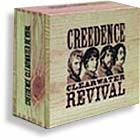
    Fantasy Records has finally played all the cards in their Creedence deck and released what fans have been clamoring for: a six-CD box of every cut on every album the band released during its five-year reign, as well as a disc chronicling the quartet’s evolution from a hard-working but derivative cover band to a truly original force to be reckoned with.

    It’s the 24 pre-Creedence tracks that are of most interest to diehard fans, since everything else is, no doubt, committed to memory. Beginning their recording life as Tommy Fogerty & The Blue Velvets – older brother Tom fronting John Fogerty’s instrumental trio – the band sounds already dated in 1961. With Doug Clifford on drums and Stu Cook on piano, John serves up a straight-forward double-stop teen-lead solo in the manner of Johnny & The Hurricanes’ Dave Yorko on “Come On Baby.” This and the group’s follow-up single – John’s Ricky Nelson/Buddy Holly-esque “Have You Ever Been Lonely” and the brothers Fogerty’s Ritchie Valens-mode “Bonita”

  • Alamo Guitars and Amps: Remember the Alamo

    Part II

    This month we wrap up our saga of the Alamo by picking up with the new guitar line offered in 1965.

    Alamo, as you recall, was originally set up by Southland Music and Charles Eilenberg after World War II (ca. 1947), making record players and battery-powered radios. Music instrument cases followed, and about 1949 or ?0, Alamo began making amplifiers and lap steels. In about 1960, Alamo branched out into solidbody electric Spanish guitars, with the Texan.

    This began a long period of name and design shuffling, including the introduction of the hollow-core Titan, in 1963. Throughout the history of Alamo, the hollow-core and solidbodies would weave in and out of the story. Early Alamo guitars sported a variety of three-and-three/two-and-two headstocks, which brings us up to 1965…

    Maximum Guitars
    The real news for ?5 was an expanded line of electric Spanish guitars. Again, we can? be sure that some didn? appear earlier, but given the radical ?ow?designs and the hyperbole in the catalog copy, I suspect these were mostly a complete overhaul in ?5. The sort of frumpy shape of the Fiesta gave way to variation on a groovy hybrid between a Strat and a Jazzmaster, with double cutaway horns, sort of squashed outwards.

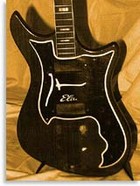
    The center-humped headstock gave way to 4-in-line/6-in-line headstocks with a sort of squared-off Strat styling. Now standard fare was the more-or-less Strat-shaped pickguard, with slightly more refined squiggles than on the previous fetal pickguard. In the middle of these guards was a mysterious design consisting of a long slash on the bass side and under it a crooked, stylized lowercase ?.? This looks like it could be an Oriental character. However, on later models, the name of the guitar was also engraved on the guard and clearly, this was meant to be read straight on with the guitar standing upright. Also, it appears on other models, so it doesn? stand for Titan. The design thus became a stylized ?,?for Alamo.

    In ?5, Alamo basically divided its guitars and basses into three groups; the Professional Line, the Artist Line and the Fiestas.

    The ?5 Professionals included the Titan bass, the Eldorado bass and the Eldorado guitar. The Titan bass ($159.50) continued to have a hollow-core construction. The body was the squashed Strat with a lower horn slightly thicker than the Eldorados. The 20-fret fingerboard was rosewood with dots. A white pickguard had the stylized Oriental ??cutout, a single middle pickup and volume and tone controls. The bridge/tailpiece assembly was covered in chrome. The Titan bass that year came in three finishes: Model 2593 in sunburst, Model 2594 in blond, and Model 2597 in cherry.

    The Eldorado guitar and bass were both solidbodies, with Honduran mahogany bodies. These looked very similar to the Titan, except the lower horn was thinner. On the Eldorado bass ($199.50), the pickguard was slightly larger and more squiggly than the Titan, black/white with an engraved Oriental ?? The 20-fret rosewood fingerboard was bound. This came in only one version, the Model 2600 in red cherry.
    The Eldorado guitar was very similar to the bass, except it had two pickups, 3-way toggle, two volumes and two tones, and a bound rosewood fingerboard with block inlays! The Model 2598 ($159.50) was a stoptail in red cherry. The Model 2598T ($219.50) came outfitted with an original Bigsby vibrato.

    The ?5 Artist Line included our old friends, the Titan Mark I and Mark II. These were now hollow-core guitars with the squashed Strat shape of the Titan bass, with a slightly thicker, squarish lower horn and smaller, less squiggly, Oriental ??pickguard in white or black, depending on the guitar color.

    The Titan Mark I had a single pickup, which was finally moved back to the bridge position from the previous middle spot. The 20-fret Rosewood boards weren? bound, but they did have block inlays. The Mark I had volume and tone and the old rhythm/lead switch just in front of the volume knob. The Model 2589 was a stoptail in sunburst ($99.95), available as the Model 2589T with Bigsby ($159.95). The Model 2590 was blond, the Model 2590T had a Bigsby. The Model 2595 came in cherry, with the Model 2595T sporting a Bigsby. The Bigsby guitars all had adjustable metal compensated bridges, probably provided by Bigsby. The Titan Mark II added a neck pickup and a 3-way select by the lower horn (no rhythm/lead toggle). The Model 2591 ($119.95) came in sunburst, with the Model 2591T Bigsby option ($179.95). The Model 2592 came in blond (Model 2592T with Bigsby). The Model 2596 came in cherry (Model 2592T with Bigsby).

    Finally, the ?5 line offered three Fiestas, with hollow-core bodies and an even more radically squashed Strat/Jazzmaster body. Sort of Strat road kill. These each had slightly different pickguard shapes depending on how many pickups, each without the Oriental ?? but with a cutout Fiesta just below the strings. The 19-fret Rosewood fingerboards were dot-inlaid. The six-in-line heads had small Alamo truss rod covers. These had uncovered Acra-Tune bridge/tailpiece assemblies, with no Bigsby option. The one-pickup Fiesta had the pickup near the bridge, with volume and tone. The Model 2584R ($64.95) came in red, the Model 2584W in white, the Model 2584S in sunburst, and Model 2584C in cherry sunburst. The 2-pickup Fiesta had volume and tone with a 3-way toggle near the lower horn. The Model 2586R ($84.95) came in red, the Model 2586W in white, the Model 2586S in sunburst, and the Model 2586C in cherry sunburst. The three-pickup Fiesta featured the pickups in parallel, with one volume and two tones, and three small plastic sliding on/off switches near the lower horn. The Model 2587R ($109.95) came in red, the Model 2587W in white, the Model 2587S in sunburst, and the Model 2587C in cherry sunburst.

    Curiously enough, in the same Bruno catalog that featured the Alamo catalog, the old double-cutaway Alamo Titan Electric bass was also still offered. This was the older version with a hollow-core body, Strat-style pickguard, and the old curved-top 2-and-2 headstock. This was still available as the No. 2593 in sunburst, No. 2594 in blond, and No. 2597 in cherry, at $159.50. These, and the recycled Paragon amps for accordions and bass fiddles, were probably leftover, slightly older designs.

    Summer O?Love
    No picture is available of Alamos in 1966, but by 1967 the line had again undergone a fairly radical transformation, here with a catalog graciously provided by Scott Freilich of Top Shelf Music, Buffalo.

    Alamo amplifiers in ?7 received yet another facelift, although not too drastic, when compared to the amps of two years earlier. They are still basically rectangular cabinets covered in black vinyl, but now with a darker black and silver grillcloth. Controls are now all face-mounted and the knobs sit on brushed aluminum plates. They are, however, tube amps, despite the very ?tandel?look. Gone is the little logo plate, in favor of a white plastic script Alamo lightning bolt perched at an angle on the upper left hand corner of the grill. Alamo divided its amps into four lines, the PA Series, Professional Series, Artist Series and Studio Series. For an extra $20, you could get optional castors.

    The PA Series included four amps. Three were old friends, the piggybacks. The Model 2578 was the Super Band Piggy-Back (eight tubes, two channels, tremolo, two 12″ speakers, 35 watts/70 watts peak, $394.50), available, as before, in a Lansing option as the Model 2578JL12 ($694.50). The Model 2576 was the Band Piggy-Back (eight tubes, two channels, tremolo, 15″ speaker, 35 watts/70 watts peak, $354.50), Lansing option Model 2576JL15 ($504.50). The Model 2571 was the Galaxie, mistakenly identified in the text as a Piggy-Back, but clearly still a combo (seven tubes, two channels, tremolo, two 12″ speakers, 22 watts/44 watts peak, $249.50), Lansing option Model 2571JL12 ($384.50). New in ?7 was the Alamo Pro Reverb Piggy-Back amplifier Model 2579. This had eight tubes, two channels, tremolo, reverb, two 12″ speakers, 35 watts (70 watts peak), and cost $414.50 (no Lansing option).

    The ?7 Alamo Professional Series consisted of three old friends and one new face. Still around was the Model 2575 Piggy-Back Bass amp (six tubes, two channels, 15″ speaker, 35 watts/70 watts peak, $334.50), Lansing option Model 2575JL15 ($484.50). Also still pumping was the Model 2569 Paragon Bass combo (six tubes, two channels, 15″ speaker, 35 watts/70 watts peak, $284.50), Lansing option Model 2569JL15 ($434.50).

    Also remaining was the Model 2567 Futura with Reverb and Tremolo (eight tubes, two channels, 12″ speaker, 15 watts/30 watts peak, $199.50). New was the Model 2566 Fury Bass combo amp, with five tubes, three inputs, volume and two tones, 15″ Jensen speaker, 20 watts output (40 watts peak), and a $179.50 price tag.

    The ?7 Alamo Artist Series was basically familiar amps with the new look. Included were the Model 2570 Electra Twin Ten, Model 2564 Jet, Model 2565 Montclair, and Model 2572 Titan, all with the same specs and pretty much the same prices. Also included ?with the new look ?was the Model 2574 Alamo Reverb Unit.

    Finally, the ?7 Studio Series consisted mainly of a repackaging of other Alamo standbys, including the Model 2563 Embassy Tremolo, Model 2562 Challenger, and Model 2560 Capri, again the same except for the new cosmetics. One new amp joined the line, the Model 2573 Dart Tremolo, with four tubes, three inputs, tremolo with speed control, volume, tone, 10″ speaker, 3 watts/6 watts peak power, and a cost of $47.50.

    Fiesta Siesta
    Gone by ?7 was the time-honored Fiesta amplifier (and, for the time being, anyway, Fiesta guitars).

    Curiously enough, Alamo also offered the No. 2599 Q-T Practice Aid, a solidstate little box which served as a practice amp with a set of headphones ($46.50).

    All amps had an optional cover. At least six different extension speaker cabinets were also available for various models. Aloha.

    Still hanging on in the ?7 line was the Model 2493 Embassy Hawaiian guitar, with the tapered triangular body, finished in Alpine White, with the black and red aluminum fingerboard.

    Guitar Redux
    Again in ?7, the Alamo guitar line was redefined, although it still reflected the ?5 look. Basically there were two groupings, the Professional Series and Fury guitars.

    The ?7 Professional Series consisted of one guitar and one bass. The guitar was the Model 2598 Toronado solidbody. This was a slightly more conservative interpretation of the offset double cutaway Strat, with more pointed horns. The pickguard was still the squiggly Strat-style with the engraved Oriental ?? The head was a slightly truncated Strat-style 6-in-line, with more rounded features than its more angular predecessors. The elongated truss rod cover remained. This had a Honduran Mahogany body finished in red cherry. The bolt-on neck had a 20-fret Rosewood fingerboard with dots. It had two pickups, two volumes, two tones, and 3-way toggle near the lower horn. The Model 2598 cost $145 with the covered Acra-Tune bridge assembly. The Model 2598T came equipped with a Bigsby and adjustable compensated bridge for $199.50.

    The bass was our old friend, the Model 2593 Titan. This remained a hollow core beast, but now with a goofy, more angular offset double-cutaway body profile, with the upper horn a large hump with an angle. It had one pickup and the Oriental ??pickguard. The head was the more rounded version like the Toronado. It came in sunburst and cost $145.

    The Fury series ?not wanting to make things too easy for us ?included both hollow-core and solidbody guitars, all called Fury, which were engraved in script down under the strings! These all had the shorter, more rounded Strat-style heads, with the by now typical elongated truss rod cover. Fingerboards were all Rosewood with dots. The pickguards were identical to the previous, now defunct, Fiesta guitars. These were, for Alamo, fairly normal looking, aping fairly closely a Fender Jazzmaster shape.

    The hollow-core Furies were called ??Hole Guitars because, as you might guess, they included, for the first time, a single f-hole on the lower bass bout. The Fury Standard was a stoptail axe with the Acra-Tune bridge assembly. This came with either one bridge pickup (Model 2583, $59.50) or with two pickups (Model 2585, with four controls and 3-way near the lower horn, $77.50). These could be had in sunburst or cherry sunburst.

    The hollow Fury Tremolo was the same, except for the addition of a vibrato. This appeared to be a Japanese-made affair with a Bigsby-style spring. However, it doesn? look like most Japanese units, so it may indeed have been made for Alamo. The Model 2583T-SB (one pickup, sunburst) and Model 2583T-C (cherry sunburst) cost $74.50. The Model 2585T-SB (two pickups, sunburst) and Model 2585T-C (cherry sunburst) cost $92.50.

    The solidbody Furies basically followed an identical pattern, except, of course, with no f-holes, but as Standards and Tremolos, with single or double pickups and sunburst or cherry sunburst finishes. The Model 2584 Fury Standard (one pickup) cost $59.50, while the Model 2586 Fury Standard (two pickups) cost $77.50. The Model 2584T Fury Tremolo (one pickup) cost $74.50, whereas the Model 2586T Fury Tremolo (two pickups) cost $92.50.

    It should be noted that while the Fiesta guitar officially dropped from sight by the 1965 catalog, as can be seen in the example here, at least some Fiestas continued to be made in this later, more conservative style. Either the model was revived or, more likely, just continued to be made and not promoted. It is possible the Fiesta came back to life after the ?7 catalog, or, for that matter, just before this same guitar became the Fury. Until more catalogs materialize, this will probably just have to remain a mystery. Let us know if you have any catalogs you can loan to clarify this point.

    Finally, in what seems to be the most quixotic moment in the Alamo story, Alamo offered a guitar kit in 1967, so you could build your own! The was the Custom Electric Guitar Kit #0010 and Kit #0010-D, with either one or two pickups, respectively. These were basically the new hollow Fury Tremolo, with the main difference being that pickups were slanted at an angle from bass to treble, neck to bridge. These were available from Spanish Guitars Ltd. in San Antonio, and came with all the parts and instructions for building your very own Alamo!

    In any case, that just about does it for Alamo guitars. No reference materials are available after ?7, but everything we?e described so far pretty much covers the Alamos I?e seen (and since I?e seen Clark McAvoy? huge collection, I?e seen quite a few!). Don? be surprised (and be sure to let us know) if we?e missed something. It? not terribly likely that Alamo continued to put the energy into electric guitars much beyond this ?7 line. As we?e noted in the past, the market for beginner guitars pretty much went bust in 1968. Many Japanese companies went bankrupt, and our own venerable Valco, which had just purchased the Kay company, bit the dust, too. According to Mr. Eilenberg, Alamo guitars probably lasted until 1970 before going the way of all flesh. Or wood.

    Valco/Kay
    One final note, however. Eilenberg recalls traveling to Chicago for the Valco/Kay auction in 1969, a year after the company went bankrupt. He returned with several carloads of parts, including machine heads and fingerboards, which eventually went onto later Alamo guitars. Thus, if you find a late-era Alamo with Kay or Valco parts on it, it just may be kosher.

    Southland Music also purchased a number of completed Kay guitars left over from the Valco hegemony, and these were ?lown out?at bargain basement prices in ?9.

    Happy Days
    Alamo guitars were hardly ever contenders in the big-time guitar stakes, although as the picture of the rhythm and blues outfit illustrates, Alamo did have its advocates! Perhaps the crowning achievement, however, was the appearance of an Alamo guitar in the hands of Richie on the television sitcom ?appy Days.?
    Amps Away
    However, the Alamo story did not end with its guitars. Amps continued to be made in San Antonio into the 1980s! As we?e seen, Alamo switched over to black vinyl coverings in the late ?0s, one of the early companies to adopt what would become almost universal practice.

    Black Vinyl (late ?0s)
    We can see the further evolution in the black vinyl-covered Alamo amplifier line illustrated in an undated brochure that appears to by very late ?0s or early ?0s. These were still all-tube amps at this time, very similar to those seen in ?7.

    Alamo amps consisted of three ?ineups:?the Pro Line-Up, the Standard Line-Up, and the One-Niters. These were all basically rectangular cabinets with black mar-resistant vinyl covering and black and silver grillcloths, and white beading around the grill. Control panels, now in black were located on front. Logos were white script Alamos at an angle in the upper left corner of the grill. Many of the names should be familiar by now, though the details have again changed.

    The Alamo Pro Line-Up consisted of two guitar amps ?or the lead player,?two bass amps, and a PA system. Guitar amps were led by the 2567 Futura Tremolo Reverb. This had two 12″ speakers, two channels, tremolo speed and intensity controls, reverb, and 45 watts RMS output. The 2571 Galaxie Twin-Ten Tremolo Reverb had one channel with volume, bass and treble controls, tremolo speed and intensity, reverb and 25 watts RMS output.

    Bass-wise, the 2575CW Paragon Bass was a piggyback. The head offered two channels, four inputs, volume, bass, treble and 40 watts RMS output. The cabinet carried a 15″ speaker and an acoustically-lined speaker enclosure. The 2566 Fury Bass amp was a one-channel combo unit with volume, bass, treble, 15″ speaker and 30 watts RMS output.

    The PA 200 system was driven by the PA200 Centurion, with four channels, eight inputs, with volume, bass, treble and reverb controls on each channel plus a master set. This pumped out 100 watts RMS, mixing the sound into two speaker cabinets, each with twin 12″ speakers.

    The Alamo Standard Amplifier Line-Up featured six combo amps. Top of the line was the 2570 Twin-Ten with two channels, four inputs, volume and tone controls on each channel, tremolo with speed and intensity controls, two 10″ speakers and 20 watts RMS output. The 2563 Embassy had a single channel, volume, tone, tremolo with speed and intensity, a 10″ speaker and 10 watts RMS output. The 2562 Challenger had two inputs, volume, tone, no tremolo, 10″ speaker and 10 watts RMS output. The 2573 Dart had two inputs, volume, tone, tremolo with speed and intensity, an 8″ speaker and 5.5 watts RMS output. The 2560 Capri had two inputs, volume, tone, 8″ speaker and 5.5 watts RMS output. Rounding out the line was the 2525 Special, with two inputs, volume, tone, 6″ speaker and 4 watts RMS output.

    Finally, the Alamo One-Niters included three more combos. The 2565 Montclair Tremolo Reverb had one channel with two inputs, volume, bass, treble, reverb, tremolo, 12″ speaker and 25 watts RMS output. The 2564 Jet-Tremolo Reverb had two inputs, volume, tone, reverb, tremolo, 10″ speaker and 10 watts RMS output. The 2566 Fury Bass had two inputs, volume, bass, treble, 15″ speaker and 30 watts RMS output.

    Tube/Solidstate Hybrids (1973)
    By 1973, at least, Alamo had changed its all-tube design to one with a solidstate front end and tube output. This change was made, in part, because RCA sold its tube manufacturing business to a Japanese company, leaving only Sylvania and GE as sources for tubes here.

    According to a June 1973 Alamo catalog and price list from a David Wexler jobbers book, Alamo offered no fewer than 16 amplifier models that year, many, if not all, carrying familiar model names from the past. These were now divided into four ?ineups:?the Pro Line-Up, Standard Amplifier Line-Up, Tremolo Line-Up and One-Niters series. These still had squarish plywood cabinets covered in black tolex with a black and silver grillcloth. These mostly had white script Alamo logos on a little black blob of plastic glued on the upper right corner of the grill. If you thought these were Japanese imports, given their appearance, you wouldn? be the first, but you? be wrong.

    The Alamo Pro Line-Up included four variants for the lead player and three for bass. Lead amps included the Model 2567 Futura Tremolo Reverb ($409.95), a combo with two heavy duty 12″ speakers, two channels, four inputs, volume, treble, bass, treble boost, reverb, tremolo, and 135 watts peak (45 watts RMS). The three remaining amps were known as the Paragon Super Reverb, each with a Model 7+79 Reverb/Tremolo Piggy Back Powerpak head. The Model 7+79 head had 210 watts peak (70 watts RMS) and basically the same controls as the Futura. The Model 7+700 Paragon Super Reverb ($585.95) added a cabinet with two heavy duty 12″ speakers. The Model 7+701 Paragon Super Reverb ($609.95) had a cabinet with one 15″ and one 12″ speaker. The Model 7+702 Paragon Super Reverb ($654.95) had a cabinet with two 15″ speakers.

    Alamo Pro Line-Up bass amps included the Model 2569 Paragon Bass ($339.95), a huge combo with 120 watts peak (40 watts RMS), two channels, four inputs, volume, bass and treble controls and a single 15″ speaker. The Model 2565CW Paragon Bass Piggy Back ($399.95) ?also called the Paragon Country Western Bass ?consisted of a head version of the Paragon Bass and a single 15″ speaker cabinet. The Model 7+75 Paragon Bass Piggy Back ($559.95) ?also called the Paragon Super Bass ?had the Paragon head and a twin-15″ speaker cabinet.

    The ?3 Alamo Standard Amplifier Line-Up included three combos. The Model 2562 Challenger ($91.95) had 36 watts peak (12 watts RMS), one 10″ speaker, three inputs and volume and tone control. The Model 2560 Capri ($69.95) was similar with 12 watts peak (4 watts RMS). The Model 2525 Special ($54.95) offered 9 watts peak (3 watts RMS), a 5″ speaker, two inputs and a volume control.

    The ?3 Alamo Tremolo Line-Up also included three combos. The Model 2570 Twin-Ten ($189.95) ?also called the Electra Tremolo ?offered 60 watts peak (20 watts RMS), two channels, four inputs, volume, tone, tremolo, and two 10″ speakers. The Model 2563 Embassy ($115.95) had 36 watts peak (12 watts RMS), 10″ speaker, three inputs, volume, tone and a tremolo with rate and depth controls. The Model 2573 Dart Tremolo ($79.95) had 12 watts peak (4 watts RMS) with 10″ speaker, three inputs, volume, tone and tremolo.

    Finally, there were three Alamo One-Niters combos in ?3. The Model 2565 Montclair Tremolo Reverb ($249.95) had 75 watts peak (25 watts RMS), one 12″ speaker, one channel, two inputs, volume, treble, bass, treble boost, vibrato and reverb. The Model 2564 Jet Tremolo Reverb ($179.95) offered 36 watts peak (12 watts RMS), one 12″ speaker, volume, tone, reverb and tremolo. The Model 2566 Fury Bass ($225.95) was an all-tube unit with 105 watts peak (35 watts RMS), one 15″ speaker, volume, bass and treble controls.

    By ?3, Alamo was also offering the Model 2574 Reverb Unit with a patented reverb system, and three controls for mixer, contour and intensity.

    Solidstate (ca. 1980)
    By around 1980, Alamo amps had finally become all solidstate. No information is available on these, but expect them to be similar to the previous lineups.

    Alamo amps continued to be made until around 1982 or so, when Alamo combined with a company called Southwest Technical Products, and the Alamo legend again became the province of politics and warriors.

    It? hard to tell exactly how many Alamo guitars and amps were made. At peak production, Alamo employed around 100 people, and each year produced between 36,000 and 40,000 amps, quite a hefty number. Guitar production was much smaller, running around 1,000 annually. Assuming approximately a 10-year run, that would be about 10,000 guitars, more or less.

    Dating Alamos
    Dating Alamo guitars and amps will be pretty hard, except by the broad-brush historical outlines presented here. Both guitars and amps had serial numbers recorded for warranty purposes, but the whereabouts of any records, if they even remain, is unknown. Where possible, pot codes should be helpful.

    The End
    And that concludes our remembrance of the Alamo, and fills in yet another piece in the wonderful mosaic that makes up American guitar history. Alamo amplifiers are probably among the most underrated American instruments, and the older tube amps, while never powerhouses, are especially worth seeking out if you like that classic, warm sound. Alamo guitars, on the other hand, were at the very bottom of the American guitarmaking pecking order in terms of quality and performance. Still, they are fairly rare birds and reflect the heady days of the ?0s and the Guitar Boom, when you could sell anything with strings on it.

    It? unlikely you? want to have to rely on one of these for a steady gig, but then, if you?e reading this narrative, that? probably a pretty remote consideration anyway. Any good collection of American guitars from the ?0s should have at least one example so you can properly ?emember the Alamo.?
    HR NOSHADE SIZE=”1″>
    Alamo Amplifiers, Hawaiian Lap Steels and Electric Spanish Guitars
    What follows is an approximate listing of Alamo amps, laps and guitars, based on the reference materials at hand. Please note that there are many holes and this should be taken as a rough guideline only. Also, since cosmetic changes occurred frequently and constitute one of the few guides for dating Alamo instruments, I?e chosen to re-list various models when a design change is known. It ain? perfect, I admit, but then, how much did you know about Alamo amps and guitars before this? I? amazed we got this far!

    Amplifiers
    birch A cabinets
    1949/50-62 AMP-3/No. 2463 Embassy
    1950s-59 AMP-4/No. 2461 Jet
    1950s AMP-2/No. 2462 Challenger
    1950s AMP-5
    by 1960-62 No. 2465 Montclair

    grey leatherette, beading stripes
    by 1960-61 No. 2561 Jet
    by 1960-63 No. 2563 Embassy
    by 1960-63 No. 2562 Challenger
    by 1960-63 No. 2565 Montclair
    by 1960-63 No. 2567 Paragon
    by 1960-63 No. 2569 Paragon Special
    by 1960-63 No. 2560 Capri
    1962-63 No. 2570 Electra Twin Ten with Tremolo
    1962-63 No. 2566 Century Twin Ten
    1962-63 No. 2564 Futuramic Twin Eight

    grey and blue leatherette
    1962-63 No. 2561 Jet

    colors
    1962-63 No. 2460 Fiesta
    1962-64 No. 2577 Altrol Electronic Tremolo and Foot Switch

    grey & silver leatherette, no beading, rectangular logo plate
    1963-64 No. 2560 Capri
    1963-64 No. 2561 Jet
    1963-64 No. 2562 Challenger
    1963-64 No. 2563 Embassy
    1963-64 No. 2564 Futuramic Twin Eight
    1963-64 No. 2565 Montclair
    1963-64 No. 2570 Electra Twin Ten with Tremolo
    1963-64 No. 2567 Paragon
    1963-64 No. 2569 Paragon Special
    1963-64 No. 2571 Galaxie Twin Twelve

    dark vinyl, metal corner protectors, black rectangular logo plate in upper left corner, vinyl strap handle
    1965-66 Model 2560 Capri
    1065-66 Model 2573 Fiesta Tremolo
    1965-66 Model 2562 Challenger
    1965-66 Model 2563 Embassy Tremolo
    1965-66 Model 2565 Montclair
    1965-66 Model 2570 Electra Twin Ten
    1965-66 Model 2569 Paragon Bass
    1965-66 No. 2568 Paragon Band
    1965-66 No. 2568JL15 Paragon Band [Lansing speaker]
    1965-66 No. 2567 Futura with Reverb and Tremolo
    1965-66 Model 2572 Titan
    1965-66 No. 2574 Alamo Reverb Unit [Hammond]
    1965-66 Model 2571 Galaxie Twin Twelve Piggy Back
    1965-66 Model 2571JL12 Galaxie Twin Twelve Piggy Back [Lansing speaker]
    1965-66 No. 2578 Piggy-Back Super Band
    1965-66 No. 2578JL12 Piggy-Back Super Band [Lansing speakers]
    1965-66 No. 2576 Piggy-Back Band
    1965-66 No. 2576JL15 Piggy-Back Band [Lansing speaker]
    1965-66 No. 2575 Piggy-Back Bass
    1965-66 No. 2575JL15 Piggy-Back Bass [Lansing speaker]

    rectangular cabinets, black vinyl, black and silver grillcloth, white plastic script Alamo logo upper left corner
    1967-70 Model 2578 Super Band Piggy-Back
    1967-70 Model 2578JL12 Super Band Piggy-Back [Lansing speakers]
    1967-70 Model 2576 Band Piggy-Back
    1967-70 Model 2576JL15 Band Piggy-Back [Lansing speakers]
    1967-70 Model 2571 Galaxie
    1967-70 Model 2571JL12 Galaxie [Lansing speakers]
    1967-70 Model 2579 Alamo Pro Reverb Piggy-Back
    1967-70 Model 2575 Piggy-Back Bass
    1967-70 Model 2575JL15 Piggy-Back Bass [Lansing speakers]
    1967-70 Model 2569 Paragon Bass
    1967-70 Model 2569JL15 Paragon Bass [Lansing speakers]
    1967-70 Model 2567 Futura with Reverb and Tremolo
    1967-70 Model 2566 Fury Bass
    1967-70 Model 2570 Electra Twin Ten
    1967-70 Model 2564 Jet
    1967-70 Model 2565 Montclair
    1967-70 Model 2572 Titan
    1967-70 Model 2574 Alamo Reverb Unit
    1967-70 Model 2563 Embassy Tremolo
    1967-70 Model 2562 Challenger
    1967-70 Model 2560 Capri
    1967-70 Model 2573 Dart Tremolo
    1967 No. 2599 Q-T Practice Aid
    1970-72 2567 Futura Tremolo Reverb
    1970-72 2571 Galaxie Twin-Ten Tremolo Reverb
    1970-72 2575CW Paragon Bass [piggy back]
    1970-72 2566 Fury Bass
    1970-72 PA 200 system/PA200 Centurion
    1970-72 2570 Twin-Ten
    1970-72 2563 Embassy
    1970-72 2562 Challenger
    1970-72 2573 Dart
    1970-72 2560 Capri
    1970-72 2525 Special
    1970-72 2565 Montclair Tremolo Reverb
    1970-72 2564 Jet-Tremolo Reverb
    1970-72 2566 Fury Bass

    white script Alamo logo on black blob, solidstate preamps, tube output
    1973-79? Model 2567 Futura Tremolo Reverb
    1973-79 Model 7+79 Paragon Super Reverb with Model 7+79 Reverb/Tremolo Piggy Back Powerpak head
    1973-79? Model 7+700 Paragon Super Reverb with 2×12 cabinet
    1973-79? Model 7+701 Paragon Super Reverb with 15+12 cabinet
    1973-79? Model 7+702 Paragon Super Reverb with 2×15 cabinet
    1973-79? Model 2569 Paragon Bass
    1973-79? Model 2565CW Paragon Bass Piggy Back (Paragon Country Western Bass)
    1973-79? Model 7+75 Paragon Bass Piggy Back (Paragon Super Bass)
    1973-79? Model 2562 Challenger
    1973-79? Model 2560 Capri
    1973-79? Model 2525 Special
    1973-79? Model 2570 Twin-Ten
    1973-79? Model 2563 Embassy
    1973-79? Model 2573 Dart Tremolo
    1973-79? Model 2565 Montclair Tremolo Reverb
    1973-79? Model 2564 Jet Tremolo Reverb
    1973-79? Model 2566 Fury Bass
    1973-79? Model 2574 Reverb Unit

    all solid-state
    ca.1980-82 no information available

    Hawaiian Lap Steels
    1949/50-64 No. 2493 Embassy [pear-shape]
    1949/50-64 No. 2490 Jet [triangular]
    1950s Challenger
    1950s-61 No. 2499 Futuramic Dual Eight
    by 1960-61 No. 2497 Futuramic Eight
    by 1960-61 No. 2495 Futuramic Six
    1962-63 No. 2499 Alamo Dual Eight String Professional Model (Futuramic)
    1965-67? Model 2493 Embassy [triangular Jet]

    Electric Spanish Guitars
    1960-61 No. 2590 Texan [solid]
    1962-63 No. 2587 Futuramic [solid]
    1962-63 No. 2588 Fiesta Spanish [Tele solid]
    1963 No. 2589/2590 Titan Mark I [hollow, French curve head]
    1963 No. 2591/2592 Mark II [hollow, French curve head]
    1963-65 No. 2593/2594/2597 Titan Bass [hollow, 2-cut]
    1964 Titan Mark I [hollow, center humped head]
    1964 Titan Mark II [hollow, center humped head]
    1963-64? Fiesta [solid, 2-cut, center humped head]
    1964 Fiesta [hollow, center humped head, one or two pickups]
    1965-66 Model 2593/

  • Elliot Easton

    Lefty Goes to the Left Coast Part 1

    Last month, former Cars guitarist Elliot Easton conversed with Vintage Guitar about his experiences prior to the formation of the platinum-selling quintet that cruised out of Boston in the mid-Seventies, as well as his sojourn with that now-defunct band. This month, Easton brings us up-to-date on what he’s been up to since the Cars called it quits following the Door to Door album. He hasn’t been inactive, to say the least, and the guitarist also talked about his “southpaw perspective” (a term noted last month) on guitars.

    Vintage Guitar: I’ve seen solo albums from members of the Cars, some of which were out before the band officially broke up. What about you?
    Elliot Easton: I did one around ’85, before the band split; it was called Change No Change, and it was on Elektra Records. Rhino is seriously considering releasing it on CD. I co-wrote the songs with Jules Shear; he’s been a fine songwriter for other artists, as well. We’d written this huge batch of songs, just as friends, and they weren’t necessarily designed for me to sing, but I was in a position where I could do a record, so I did. It did okay; there was a single called “Wearin’ Down Like A Wheel,” and the video got medium rotation on MTV. I put together a band and toured, but Jules didn’t go out with me.

    I saw your name associated with an album called The Guitars That Conquered the World.
    That was something Guitar World magazine put together. It had one track each by twelve or thirteen guitar players. I contributed an acoustic guitar piece; a Bert Jansch kind of thing. It was in kind of an English folk style. I figured some of the others would take their track and blow their brains out, playing all their hot licks. No pun intended, but I thought I’d take a left turn and contribute an acoustic piece. Dickie Betts and Warren Haynes had a nice track on that album.

    What prompted your move to the Los Angeles area?
    Nothing really earth-shaking

  • David Grisman and Doc Watson – Doc and Dawg

    Doc and Dawg

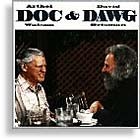
    Let’s face it. If David Grisman’s name is attached, and it’s put out by his label, it’s going to be a great listen. This one’s no exception. Grisman, along with the legendary guitarist Watson, and guests including Jack Lawrence on guitar, breeze through cuts you know, like “Summertime,” “Sweet Georgia Brown,” “Kentucky Waltz,” and lots more in a fashion that highlights the beauty of the songs and their playing. And, of course, there’s Doc’s singing. Check out his read on “Frankie and Johnny.” Wonderful. Needless to say, this and all of the recent discs from this label are highly recommended.


    This article originally appeared in VG‘s Dec. ’97 issue. All copyrights are by the author and Vintage Guitar magazine. Unauthorized replication or use is strictly prohibited.

  • Dr. Harmonica and Rocket 88 – Swingin’ Easy Live

    Swingin' Easy Live

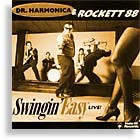
    Yow! Dr. Harmonica (Mark Kenneally) and the boys swing, jump, shuffle, and do everything in between on this wonderful live effort. You’ll know some of the tunes – there are nice remakes of “Turn On Your Lovelight,” and “Help Me.” There are also some very cool originals, like “Bad Habits.”

    The band plays blues, and plays ’em funky. Sometimes it feels like Muddy Waters mixed with James Brown. A remake of The Meters’ “Hey Pocky A-Way” might even bring Little Feat to mind. Throughout it all, the good doctor blows some fabulous harmonica and sings in a gruff blues manner that calls to mind giants of the genre. The rest of the band is wonderful. Saxophonist Alan Yandziak turns in some killer solos, as does guitarist Roger Girke. His soloing on “Whip It On Me” and “Get Out of My Life Woman” set the pace for each song. His rhythm work is even more fun. He’s definitely gone well past “Funk 101.” Check out “Big Chief,” or the aforementioned Meters tune, “Killer Stuff.”

    I’d love to tell you how to get a copy of this, but there isn’t an address listed on the CD. If I get a number or address I’ll list it in a later issue. Recommended.


    This article originally appeared in VG‘s March ’99 issue. All copyrights are by the author and Vintage Guitar magazine. Unauthorized replication or use is strictly prohibited.

  • Frank Frost with Sam Carr and Frank Frost – Keep Yourself Together and Jelly Roll Blues

    Keep Yourself Together and Jelly Roll Blues

    X Frank Frost’s two recent CDs are time machines, transporting you to a hot, sweaty night in a Mississippi Delta juke joint. Frost is a true Mississippi Delta bluesman. Throughout his career playing with the Jelly Roll Kings, and later on his own, he has largely stayed in the Delta and his music is true to its roots.

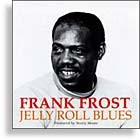
    Jelly Roll Blues, on Paula, is a re-release of a classic session produced by Scotty Moore in the late 1960s or ’70s (the liner notes are woefully uninformative). These are straight, old-time, electrified blues sparkling with Frost’s soulful singing and harp playing.

    Keep Yourself Together, on Evidence, is all new material regrouping two-thirds of the Jelly Roll Kings trio, with Sam Carr, on drums, and adding Fred James, on guitar. The sound is excellent – a big, live tone – and Frost has not been slowed by the years.
    If you want to hear today’s Delta blues, Frank Frost is the place to begin.


    This article originally appeared in VG‘s Sep. ’96 issue. All copyrights are by the author and Vintage Guitar magazine. Unauthorized replication or use is strictly prohibited.

  • Jim Marshall

    Father of the Mighty Marshall Stack

    When it comes to guitar amplifiers, two names stand tall beyond the others: Leo Fender and Jim Marshall. Even “civilians” recognize these names. Two names, from two different countries, with two very individual sounds. Although Marshall’s original amplifier designs were largely influenced by Fender’s original Bassman, the resulting amplifier later took on a whole new character when it was paired with Marshall’s unique new 4×12 cabinet.

    But what many people still don’t know is that Jim Marshall is a drummer – and he does not play guitar. As a drummer, Marshall rose through the ranks in England, taking lessons from drum star Max Abrams, and sought to emulate the style of his hero, Gene Krupa. By 1949, Marshall was a confident, well-seasoned player, and began giving drum lessons to many local musicians. He quickly built an impressive group of students, including Mitch Mitchell, who played with Jimi Hendrix, and Nicky Underwood, who played with Ritchie Blackmore.

    With the income he saved from teaching, he was able to open his own business. In 1960, Marshall began building bass and PA cabinets in his garage because of the lack of equipment available in the U.K, especially for bass guitar. Later that year, Marshall opened his own retail shop, where he gave lessons and sold gear. At the advice of the musicians he knew, Marshall stocked his store with the most popular Fender and Gibson products – Stratocasters, Telecasters, Tremolux and Bassman amplifiers, Les Pauls and ES-335s.

    Many of the guitarists who regularly visited Marshall’s store expressed interest in finding a guitar amp with a sound that was dirtier than the cleaner tones produced by the Fender amps available at the time. As a result of these requests, the very first Marshall amplifiers were born in the fall of 1962, created by Ken Bran, the service engineer at Marshall’s shop, with the assistance of his apprentice, Dudley Craven. There were many orders placed for these first prototypes, and Marshall gradually expanded his manufacturing facilities and production to accommodate demand. The Marshall sound was definitely catching on (for more information on the history of Marshall, there are few better sources than Mike Doyle’s book, The History of Marshall/Hal Leonard Publishing).

    One of Jim Marshall’s very first customers was Pete Townshend, a lad he’d known since he strummed his very first chord.

    “I’ve known Pete since he was a baby, because I played with his father in the big bands. His father was a very good alto clarinetist,” Marshall recalls. “When Pete started beating up his equipment, his father and I thought this kid had gone stark raving mad. He was trying this new kind of showmanship that we couldn’t appreciate.”

    Little did he know that artists like the young Townshend, with this showmanship, using Marshall’s massive backline, would catapult this amplifier into the mainstream, making it perhaps the most popular amplifier in the history of rock music.

    What is the key to the sound of the Marshall amplifier that makes it so unique?
    It became obvious to us that it was the overdriving of the valve with a special transformer, which, fortunately enough, no one has copied exactly. We’ve become the backdrop to all the groups ever since.

    Which guitars were used in shaping the sound of the amp?
    I knew very little about amplifiers, but I knew a lot about drums. I taught so many of the top drummers and their groups bought guitars and amps in my retail shop that was part of the drum school. They insisted I stock all the top American gear like the Gibson Les Paul and Fender Stratocaster. Those were the two guitars that we actually used when we were developing the sound of the amp. Still, my favorite is the Les Paul through the Marshall amplifier. That’s just what my ear prefers.

    How did the 4×12 cabinet evolve?
    We started off with 2x12s, but in those days speakers weren’t all that good, so we used two 25-watt speakers and a 45-watt amplifier that peaked at around 75 watts, and we blew every speaker. That’s when I designed the 4×12. It was purely because we were blowing speakers. I thought about the smallest cabinet I could make to hold four 12″ speakers, and there was nothing clever about designing the size, or anything like that. It was purely so that it would go into the transport of those days. We couldn’t make a more powerful 2×12 cabinet because there were not speakers available that could take the abuse of the amplifier. So I made a small cabinet, put in four 12″ speakers, and it worked. Then I put the amplifier into a cabinet, which was a square-ish one, then I had the idea of putting the angle on the 4×12 to make it look better. I think the angled cabinet is the best one to use if you’re only using one cabinet.

    That cabinet design that’s been copied by so many manufacturers since.
    If I’d have registered the design in the first place, I’d be earning a lot of royalties.

    When did the first Marshall stack appear?
    I think that came about in ’65, when Townshend said he needed 100-watt heads. We made the first three 100-watt heads for him. I asked him what sort of cabinet he wanted, and he said he wanted eight 12s in one cabinet. I said that a big square cabinet with a little amplifier on top would look ridiculous, so I told him to let me design something. I built what turned out to be an 8×12 stack. Pete tried to carry it out of the workshop and it was so heavy. I told him his roadies were going to kill him, but he said, “They get paid.” Two weeks later he came back and told me I was right, and he asked if I could cut it in half. I told him to leave it to me, and that I would redesign something that would do the job. I went back to the straight 100 4×12, which is now the bottom cabinet, and put the angled one on top, and the amplifier on top of that. The stack was born.

    So would you say that it was Pete Townshend’s request for an 8×12 cabinet that inspired the design of the Marshall stack?
    Yes, he’s the one who inspired it. But actually, some lads have even gone so far to say that Pete was responsible for the design.

    Other than Pete Townshend, which other artists influenced specific Marshall amp designs?
    The Marshall Major was a 200-watt head made for Ritchie Blackmore, and he’s still got the same one. The amp, being 200 watts, overheated a lot because in those days the tubes didn’t last very long. The original Majors used EL34s. Then we changed the tubes in Ritchie’s amp to KT66s. Customers had a choice to order the amp with either EL34s or KT66s. We made very few of them.

    How did you meet Jimi Hendrix?
    I used to teach Mitch Mitchell, and he brought Jimi in to see me. So here was this lanky American saying,