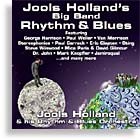
If the term “big band,” especially tied to a pop star, conjures the dreaded image of one of those zoot-suited groups with the word “Daddy” in its name, fear not. Ex-Squeeze keyboardist Holland’s 16-piece outfit (give or take) churns out an eclectic mishmash that rarely resorts to nostalgia, and in fact shows that the roots of rock and roll could well be its future.
With Holland’s two-fisted piano playing and impressive songwriting range matched by saxophonist Phil Veacock’s stellar arranging, that would be enough to ensure a solid album. But Holland is more bandleader and emcee (still hosting his own music show on BBC) than frontman or singer, so he enlisted a couple dozen friends to take center stage on the 22 tracks here – friends like Eric Clapton, Dr. John, Taj Mahal, Mark Knopfler, Van Morrison, David Gilmour, Jamiroquai, and George Harrison, in his last recorded session.
That “Horse To Water,” co-written by Harrison and his son, Dhani, was cut less than two months before George’s death is astonishing, given the ex-Beatle’s spot-on delivery. It, in fact, ranks among the best items in his all-too-sparse catalog of the past 20 years.
Guitar chores on that and most of the CD are handled by the versatile Mark Flanagan, and while much of the focus is on Holland’s piano and the horn arrangements, he shines when he gets the spotlight – on the infectious Paul Carrack turn “It’s So Blue;” on Paul Weller’s superb take on Billy Preston’s “Will It Go Round In Circles;” and the tasteful fills behind Eric Bibb’s beautiful vocal on “All That You Are.” For balance, some of the CD’s highest highs have no guitar to speak of – Dr. John and Holland’s boogie duo, “The Hand That Changed Its Mind;” “Town and Country Rhythm and Blues,” featuring ex-Squeeze mate Chris Difford; and Knopfler’s rockabilly romp, “Mademoiselle Will Decide.” Yes, rockabilly, not to mention Chicago blues, ska, soundtracky pop – all get the big band treatment; it’s not just for swing anymore.
Histrionic vocalist Mica Paris does her best to destroy “I Put a Spell On You,” but David Gilmour’s stinging solo redeems it, as does a great string/horn arrangement. Some covers seem a bit uninspired; certainly Taj Mahal’s talents could be put to better use than yet another version of “Outskirts of Town,” and it’s too bad Mick “Simply Red” Hucknall had to settle for “T-Bone Shuffle.” One would have assumed the same of “I’m Ready,” the Willie Dixon chestnut, but Steve Winwood sounds great here (but when doesn’t he?).
Others better forgotten are a too-loungy ska attempt at “I’m In the Mood For Love” by Jamiroquai; Stereophonics’ nothing-special rendition of the Beatles’ “Revolution;” and John Cale’s hackneyed stab at Johnny Mercer’s “I Wanna Be Around” – the only time, thankfully, the CD resorts to kitsch. Another Willie Dixon retread that needn’t have been mounted is “Seventh Son,” featuring – as if you didn’t expect him – Sting. Can we all just agree to a two-year moratorium on guest appearances by Sting? (Do I hear three?)
The album’s closer, Ray Charles’ “What Would I Do Without You,” features Eric Clapton on guitar and vocals, sounding considerably more inspired than he does on his own records. Which may be Holland’s real role here. After being rocketed from style to style, singer to singer – perusing a CD booklet filled with pictures of Jools with this legend and that (as if having them on his CD wasn’t proof enough that he knows them) – one may well ask, “What’s the unifying thread?” Well, Jools Holland is – the guy whose name is on the CD. He brings all this talent together and, usually, brings out the best in it. And it may be a stylistic crazy quilt, but it’s his crazy quilt.
This article originally appeared in VG‘s April ’02 issue. All copyrights are by the author and Vintage Guitar magazine. Unauthorized replication or use is strictly prohibited.
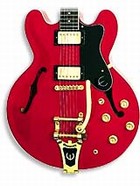
Epiphone’s Jorma Kaukonen signature model Riviera is a straight-up pleasure to look at. For starters, there’s the beautiful maple top and striking gold hardware appointing the cherry-finished semi-hollow body. But the joys of the instrument go far beyond aesthetics.
Indeed, right out of the case the Jorma is a dream to play, even unplugged. The action on our review instrument was very low, yet strings were easy to bend, even with the stock wound .019 G (the guitar was strung .011-.052). The guitar stayed in tune perfectly, even with heavy pushing and bending. The headstock, equipped with Grover tuners, has Kaukonen’s signature under the Epiphone logo. The fretboard, top, and back are all bound.
Electronically, the Jorma employs Epiphone’s wonderful ’57 Classic Alnico V pickups, manipulated via the standard two volume/two tone setup with three-way toggle. Plug the Jorma into an all-tube amp with a little added grit and reverb, flick to the bridge pickup, and roll the tone off a bit, and behold! The sound of Hot Tuna’s “Keep Them Lamps Trimmed And Burnin’.” With the amp dirtied up, the pickup screams with a creamy distortion, funky and cutting-edge.
With the amp cleaned up a bit, we dialed in a close rendition of The Rolling Stones’ “19th Nervous Breakdown” and Jefferson Airplane’s Volunteers!
Changing to the neck pickup and tossing in a little delay and preamped overdrive produces tone reminiscent of Eric Johnson’s “Ah Via Musicom.”
Adjusting the tone control of the neck pickup creates a soulful, jazz-like presence that gives the Jorma an earthy character. Utilizing the pickups together, and with a clean amp sound, can lead to inspired solo instrumental playing. And with the Vibrotone tailpiece, one can accent (a la Chet) every now and again. The vibrato is similar to the old big-spring Bigsbys, with the strings going over the bridge then wrapping under the tailpiece.
With the Vibrotone, subtle bends will keep the Jorma in tune. Bending down (loosening the strings) works best. The Vibratone will bend up, but that’s not its forté. And it is not a divebomber unit! The tri-layered pickguard keeps the finish safe from aggressive strummers.
Epiphone Jorma Kaukonen Riviera Deluxe Type of Guitar: Semi-hollowbody thinline electric. Features: Maple top, bound body and neck, gold hardware, ’57 Classic Alnico pickups, Vibrotone vibrato. Price: $1,159. Contact: Epiphone Guitar Company, 645 Massman Dr., Nashville, TN 37210, epiphone.com.
This article originally appeared in VG‘s March ’02 issue. All copyrights are by the author and Vintage Guitar magazine. Unauthorized replication or use is strictly prohibited.
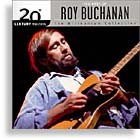
I don’t suppose there’s a whole lot more that can be said about Mr. Buchanan. And some might argue that we really didn’t need another collection. While it’s true the Sweet Dreams: Anthology set released a few years back covers some of the same ground, this is a really nice package for folks who just want his essential early work. And, it does feature a couple of tunes not on that one.
It’s pretty much impossible to ignore Roy’s impact on guitarists. His monster tone, incredible volume manipulations, nasty honks and squeaks, and plain-old licks helped a generation of players that includes Jeff Beck to expand their playing vocabulary. His instrumental take on “Sweet Dreams” is a perfect illustration. Gorgeous fade-ins, followed by a ton of fantastic bends, and some brutally cutting runs, make it a perfect showcase for his talents.
And that could be said for pretty much all of the 12 cuts here. “The Messiah Will Come Again” lets Roy do some soulful soloing mixed with nasty open-string hammer-ons that end somewhere in the stratosphere. The volume swells here truly do have a soulful, “crying” quality.
This CD, as you’d expect, is best when Roy’s playing guitar. His vocals, spoken or otherwise, were always just a short bridge to get to the next solo. And even on cuts that feature a different singer, things are pretty boring until the guitar cranks it up.
MCA’s done a fine job with their millennium series. And this is a perfect addition to the catalog. If you’re not familiar with Buchanan, latch on to this. It’ll lead you to lots of other stuff
This article originally appeared in VG‘s July ’02 issue. All copyrights are by the author and Vintage Guitar magazine. Unauthorized replication or use is strictly prohibited.
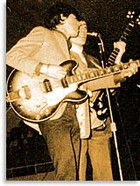
The Rolling Stones were the ultimate bad boys of rock – with leather jackets and arrests for peeing on a service station in England, these guys were anti-establishment. Most kids liked the Beatles, but hip kids tended to like the Stones and all they stood for. Three years before Altamont, the Stones in ’66 were the image of pure, raw excitement.
The show on June 28, 1966, was like being given an audience with the Pope! Early that summer, we were listening to Bob Dylan’s “Like A Rolling Stone” with the great Al Kooper organ parts. “Monday, Monday” by the Mamas and the Papas was released that spring and getting heavy airplay. The Stones were on a tear, releasing “19th Nervous Breakdown” in March and “Paint It Black” two weeks before the concert. A hot new band from Long Island, the Young Rascals, had a hit with the infectious “Good Lovin.” But Aftermath, the latest Stones album, was on everyone’s turntable.
We pulled into Buffalo in early afternoon and the radio station was blaring, “Nothing but the Stones, all day, all night!” On the bill was an all-star lineup featuring The Standells, The McCoys, The Ike & Tina Turner Revue, and the Stones. Our seats were great – Section 15, Row A, Seats 4 thru 10 – and cost $5!
The auditorium was like an airplane hanger. Our seats were at the side of the runway that extended from the main stage, and we could see three sets of equipment lined up for the show. The runway was very wide, about 20 feet, and I remember the opening act was able to put most of its gear right on the ramp. There was a large black curtain draped across the back of the stage, behind the amps.
At 8 p.m., a DJ came out and thanked everyone for supporting the local radio station. After a brief introduction, he shouted, “Let’s get the show going!” and out ran The Standells. They opened with their hit, “Dirty Water” and sounded good, considering the cavern they were trying to fill. They were dressed in black and sang only a handful of songs, but were well received.
As the stage was cleared and set or the McCoys, the drums and amps were pulled further onto the runway. “Hang on Sloopy” was still a very real, infectious riff that had been a huge hit earlier that year. As Rick Derringer led the band, you only noticed how short he seemed – he had to adjust the mic stand down about a foot. And, their drummer stood up to play. They made a point of announcing the drummer was only 16. Even at this early point of his career, Derringer was an excellent guitarist and the obvious focus of the group. At about 9:15, they thanked the cheering crowd and left the stage.
In a blast of sound from an open G chord, the grinding rhythm and blues machine that was The Ike & Tina Turner Revue appeared, Tina and the Ikettes in full throttle! The Ikettes had all the moves, and white-suited Ike was in complete control of the band. He strolled back and forth between the drums and the bass player, watching everything very carefully. Meanwhile, out front, Tina was singing “Shake a Tail Feather” with the Ikettes leaning over while she howled, “Bend over let me see you shake a tail feather!” They were pure sexual excitement, and we had never seen anything like it!
The perfect formula moved everyone. People who had never heard of The Ike & Tina Turner Revue before went out the next day to find a record. When Tina sang, “I’ve been loving you a little too long” and tilted her head back so her hair cascaded down her back, you knew this was real gospel! After 50 minutes, they left the stage, every one of them dripping sweat as they headed down the sidesteps.
The room was then buzzing in anticipation and the final stage was set. We watched nearly breathless as the tarps came off the Fender Dual Showman amps. Mick Jagger had an EV664 microphone in the middle of the platform. On the far right stood a mic for Brian Jones, while Bill Wyman and Keith Richards shared one on our side. Charlie Watts was on a small riser only about a foot off the stage. The crew left and the house lights went down.
“Ladies and Gentlemen, it’s all about to happen – The Rolling Stones!”
As Watts rolled into “Get Off of My Cloud,” he threw two drumsticks into the audience, and it was pandemonium from the start! Split far to the right was Jones, with a sweater, jeans, and leather boots, and his white Vox Teardrop six-string. He stood 15 feet from the band, and had perfect blond hair – an obvious favorite with all the girls on his side of the stage. Jagger wore his trademark jacket that peeled off as soon as tension hit the breaking point. Wyman played his vertical Framus almost straight up and stood close to Richard, who was playing his Epiphone Casino. The fuzz line for “Satisfaction” was next, and all of a sudden the crowd on either side of the runway exploded! Jagger was off down the ramp, prancing while the line repeated. Next came the new hit, “Paint It Black,” which the week before had introduced America to the sitar.
Jagger turned “Spider and the Fly” into a theatrical piece. It was a big hit live: “Then she said hi,” he hissed. “Just like a spider to a fly, come right into my web!” Then Keith took over again with the riff for “The Last Time.”
“19th Nervous Breakdown” had the guitars trading the opening lines – Jones picking out the tremolo parts underneath Richard’s fuzz lines behind “You better stop, here it comes, here it comes…” And those dramatic, almost frantic opening chords. The song also featured Wyman’s great sliding bass parts behind the chorus.
The final song was “Under My Thumb,” which has a terrific guitar/bass line for live performance, and was repeated at the end into the big finale, with Watts rolling around the set and then – boom! They were up, waved to the crowd, and were gone!
There was no encore. As suddenly as they had appeared, the Stones were gone and the house lights went up to a rousing ovation. We wondered if there wasn’t some sort of union time limit because it had ended so quickly. Legend has it certain bandmembers turn ed up at a downtown bar and drank with the second shift plant workers into the wee hours…
Our car pulled into the night, headed across town. We were exhilarated! Awestruck! We’d just seen The Rolling Stones and had a glimpse of the future of rock and roll, years before Springsteen was hailed on the New Jersey shore.
Two years later, Jones would be dead and the first phase of the Stones’ career would abruptly end. Brian Taylor would fill the void for Exile on Main Street, and later, Ronnie Wood would complete the lineup. But this night, all the players had been perfectly in place and the show was Magic. We had witnessed a truly unforgettable rock and roll event.
Rolling Stones photos: Dennis and Sherri Buhrmann.
This article originally appeared in VG‘s Jan. ’00 issue. All copyrights are by the author and Vintage Guitar magazine. Unauthorized replication or use is strictly prohibited.
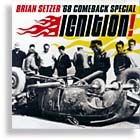
Okay, I confess. Somehow this one slid in under the radar. Released in late summer, it features Setzer back in a trio setting, basically just cutting loose, guitar-wise and vocally. And let’s face it, any album that has him playing this much guitar should be brought to the attention of players everywhere.
The band (named after Elvis’ television special) has the same setup that catapulted Setzer to stardom in the ’80s; guitar, bass, and drums. You’d assume that mean rockabilly, and you’d be right. Cuts like “Blue Café,” “Hot Rod Girl,” and “(The Legend of) Johnny Kool (Part 2)” give Setzer ample room to show off his chops. In fact, the chord workout in “Hot Rod Girl” is a jaw-dropper.
And there’s lots more here. A streak of country runs through some cuts. “5 Years, 4 Months, 3 Days” is basically a re-write of the Dave Dudley classic “Six Days On the Road.” Setzer’s baritone guitar solo and cutting fills propel this one. “8-Track” is a monster of a truckers song that features an unbelievable chord solo, a killer single-line solo, and… yodeling. No, really. And, it cooks. “59” harkens back to his Knife Feels Like Justice days with a rockin’ beat and imaginative solo. The ballad “Dreamsville” lets Brian show off some chops and sounds that are… well, dreamy. Wrapping up the album is a take on “Malaguena.” About all I can say is, “Yikes!” It’s a tour de force.
I’ve always thought Setzer was one of the truly great guitar players of his generation. And after hearing this one, I don’t doubt that a bit. Grow those sideburns, grab your leathers, and pick up this one. Excellent album, brilliant player.
This article originally appeared in VG‘s March ’02 issue. All copyrights are by the author and Vintage Guitar magazine. Unauthorized replication or use is strictly prohibited.
Surely, as guitar collectors/dealers/enthusiasts, VG readers have heard folkloric stories of early-1960’s teenagers who, after buying cool guitars to jam with their friends in the basement or garage, were called to service by Uncle Sam.
Far too many times, the pimply-faced budding musician never returned, and mom and dad “inherited” a guitar they just didn’t think was worth keeping around. So they sold it in a garage sale or simply give it away. And of course, you weren’t there to pick it up.
Here’s a true version of the vintage guitar world’s folk tale.
It’s the early ’60s, and a 16-year-old Milwaukean has just spent a good chunk of his savings to buy his first “real” guitar from a young woman who has rearranged her priorities, putting family above the guitar playing/singing duo she performed with her husband. The 16-year-old is Scott Thiry.
Thiry is, in many ways, a typical kid with an interest in music. He’s inspired by the rock and roll and soul performers of the day – Buddy Holly, The Stones, Percy Sledge, etc. But he’s also a curious and resourceful guy – he built his own amp using the cabinet and some parts from a Wurlitzer juke box. He band, Soul Incorporated, works hard enough to warrant printing business cards, complete with pearlescent swirls. They even get some gigs.
But in October, 1966, uncle Sam calls and Thiry is sent to Ft. Hood, Texas. After being there for about 10 months, he asks his mother to send the Strat to him. But perhaps he got wind that he was about to leave for the war, and soon after, he tells her to keep the guitar at home. In September, 1967, he is “shipped out” to Vietnam, where he is stationed at Bon Gsong and spends about five weeks in-country before a fateful Halloween Day.
That day, in the midst of an enemy attack, he is hit by shrapnel. Taken to a base hospital, he is cleared by a medic to return because he wants to look for a lost buddy. Thiry finds him, but the search costs Thiry his life – he is hit by a mortar and killed instantly.
Back in the States, the Strat spends most of the next 30 years under a bed in his parents’ house. At one point, an antique company nearly takes it. Several times, Thiry’s mother, Louise, considers giving the guitar to some other aspiring guitarist.
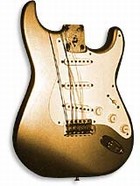
1996. Louise Thiry spends a lot of time listening to the radio, including the overnight jocks on WGN, a Chicago-based station. One night, they discuss old guitars. One of them says some old Fenders are selling for $50,000 on the vintage market. She thinks Scott’s guitar is probably one of them. She contacts a friend who knows a local store owner, and word spreads through the “vintage community” there is an elderly woman with a ’57 Shoreline Gold Strat for sale.
But she knows enough that this baby won’t sell for a song, well maybe, how’s that go, “…the best things in life are free but you can’t keep ’em – she wants money.”
Word reaches Hazardware’s (St. Louis) Dave Hinson via Joe Camarata, a St. Louis nightclub owner, and Duke Tomato, a regional guitarist. Hinson does the necessary leg work and after months of negotiation through a third party, the guitar is purchased by a wealthy collector in Texas for over $40,000. Hinson brokered the sale, and both parties came away “…very happy.”
Inspected at the time of purchase, Hinson discovered the guitar was, in fact, assembled in 1956 (neck date XA 7-56). He said the condition of the instrument is “…about 9.5 out of 10.” Some of the hardware is worn, but there is very little fingerboard wear and minimal belt buckle markings. Not surprisingly, the strings are not original. The case and strap were in near-mint condition. Scott Thiry’s Mel Bay Book One was still in the case with more swirly-print business cards from several bands. No, the phone numbers are no longer valid, except for the parents of a guy who was a singer. Darn the luck.
Louise Thiry, meanwhile, can thank her son for a unique “gift,” a little financial piece of mind she might not have, were it not for her musical son and his intuition.
Photo: Dave Hinson.
This article originally appeared in VG‘s Feb. ’97 issue. All copyrights are by the author and Vintage Guitar magazine. Unauthorized replication or use is strictly prohibited.
A CD of personal or autobiographical songs can be tricky. The music can wind up meaning far more to its creator than it does to its audience. That’s bad.
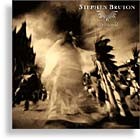
Luckily for everyone, Stephen Bruton’s Spirit World avoids this pitfall. His third release of original material combines pithy lyrics with an ample supply of infectious hooks and bridges.
Stephen Bruton spent much of his musical career as a guitarslinger in other folks’ bands. He’s been Kris Kristofferson’s lead guitarist for over 17 years, and has been doing time with Bonnie Raitt and Bob Dylan. In ’93, Bruton released his first solo album, What It Is, followed by Right On Time, and in ’99, Nothing But The Truth.
Spirit World differs in its production. It’s more effect-laden, but by and large the effects work quite nicely. On “Just a Dream,” Bruton’s voice is processed to sound like it’s coming off of an old 78 disc for the first verse. On subsequent verses, we get his full, gritty baritone.
Another difference between this and past efforts is the greater R&B influence. Several cuts, including the title cut, have a groove that’d make Joe Tex or Solomon Burke feel right at home.
Bruton is a great guitarist, but his playing is not about licks, but rather melody and texture. Even his lead on “Acre of Snakes,” the hardest rocking cut on the album, is exuberant while coming at you sideways like a rattler in the shadows. If you want to hear a well-recorded acoustic, listen to the pre-war Martin 0-17 on the opening of “Hate to Love.”
While you probably won’t hear any material from Spirit World on your local classic rock megastation, that shouldn’t stop you from searching for this album in your local CD emporium. Modern music that’s conscious of its roots is a rare thing in our painfully ersatz world.
This article originally appeared in VG‘s April ’02 issue. All copyrights are by the author and Vintage Guitar magazine. Unauthorized replication or use is strictly prohibited.
Class acts: they still exist. Take Gov’t Mule. This trio has always gone about business with the utmost class, treating both fans and the music with endless respect. Now comes The Deep End Vol. 1, the hard rockin’ blues-rock group’s first release since the death of bassist Allen Woody in 2000.
The Deep End Vol. 1 features a different guest bassist on each track, and comes off as both the ultimate classy tribute to the late bassist, and the Mule’s most musically accomplished work yet.
Lyrical references to Woody arise (the title track in particular), adding to the emotional impact. A healthy addition of keyboards and horns, meanwhile, give the Mule’s signature gritty sound a new dimension. Highlights are many, including “Life on the Outside,” a workout featuring funk legend Larry Graham on bass and a Haynes solo shootout with Audley Freed of the Black Crowes, and a cover of Grand Funk Railroad’s “Sin’s A Good Man’s Brother” with Woody on bass.
The variety of guest talent here is outstanding. Sure, ya got your expected longtime friends (Phish’s Mike Gordon, Dave Matthews Band’s Stefan Lessard), but guitarist/vocalist Warren Haynes and drummer Matt Abts team with an interesting mix of cool legends (Graham, Bootsy Collins, Jack Bruce, Deep Purple’s Roger Glover, the Who’s John Entwhistle) and exciting left-fielders (Flea of the Red Hot Chili Peppers, underground legend Mike Watt, jazz guitarist John Scofield). It proves they have plenty of friends, as well as loads of peer respect.
A film documenting The Deep End Vol. 1 recording sessions is set for a winter release. The Deep End Vol. 2 album, slated to include performances by, among others, bassists Phil Lesh, Meshell N’degeocello and Les Claypool (Primus), is planned for spring ’02.
This article originally appeared in VG‘s Mar ’02 issue. All copyrights are by the author and Vintage Guitar magazine. Unauthorized replication or use is strictly prohibited.
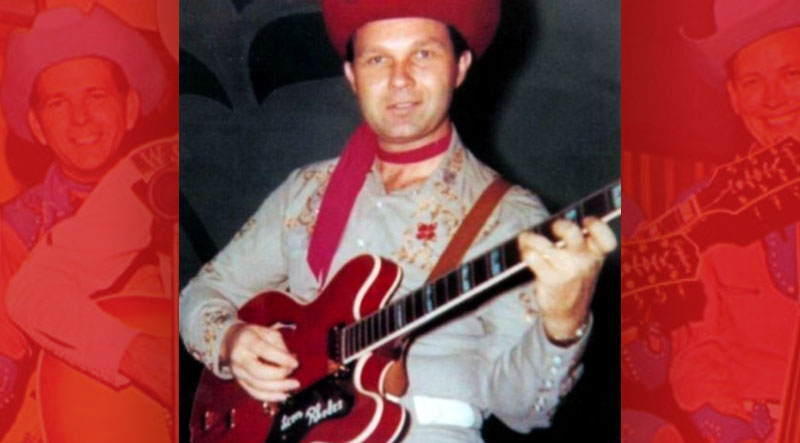
Leon in full Texas Troubadours stage attire with his cherry red Epiphone Sheraton, circa 1965. Photo courtesy of Leon Rhodes.
Leon Rhodes 1932-2017
We are saddened to hear of the passing of guitar legend Leon Rhodes, one of the most-beloved players from the golden age of country music. Leon emerged in the early ’60s with Ernest Tubb’s Texas Troubadours, his jazzy style usually played on a semi- or hollowbody thinline that helped create a distinctive sound heard on many Tubb hits. He also performed onstage the Grand Ole Opry, in the band on television’s “Hee-Haw,” and was a sought-after studio player who backed Roy Orbison, Willie Nelson, Waylon Jennings, George Strait, Roy Clark, John Denver, Ricky Skaggs, and many others. In 1998, Leon sat for an extensive interview with VG. Enjoy…
Leon Rhodes has worn a lot of hats during his long and successful career in the music business. He’s played drums, mandolin, bass, guitar, been a bus driver, an “accountant,” a singer, a songwriter and undoubtedly he’s held a few other occupations. From his early days on the Big D Jamboree to his nearly seven-year stint with Country Music Hall of Fame member Ernest Tubb, to his 20-year gig on “Hee Haw” to his continuing affiliation with the Grand Ole Opry, Rhodes has seen and done just about everything the country music business can offer.
A Texas native (from Dallas), Rhodes spent most of the 1960s with The Texas Troubadours as Ernest Tubb’s lead guitarist. Much of his playing with Tubbs was in a straight country and classic honky tonk style. But Rhodes loved swing and jazz music, and when The Troubadours played their own sets at Tubbs’ gigs, they created a tremendously exciting blend of country and jazz. The Troubadours lineup that featured Rhodes on lead guitar, Buddy Charleton on steel, Jack Drake on bass, Cal Smith on rhythm guitar and Jack Greene on drums, is arguably one of the finest backup bands in the history of country music.
In addition to being a superb picker, Rhodes has been involved in the manufacturing and repair/tech side of the guitar business for nearly 30 years. He was a quality control inspector/final assembler for Grammer Guitars in the late 1960s and went on to do similar work with Gower Guitars (manufacturer of a Leon Rhodes Model flat-top acoustic) in the 1970s. And he still does an occasional setup for close friends and fellow pickers.
Rhodes is a man of sincere faith whose most important role is that of devoted father and family man. He and wife, Judi, have been married for 33 years. Judi’s a Nebraska native and they met while Rhodes was on tour with Tubbs. Together they’ve raised four great kids: Tag, Tara, Tami and Tandy, and Rhodes became a grandfather for the first time in late 1996.
These days, Rhodes stays very busy as one of the staff guitarists for The Grand Ole Opry, where he regularly plays with two of Nashville’s all-time great pickers – “Spider” Wilson and Jimmy Capps. And when he’s not on the Opry, he’s in the studio, backing a variety of artists. He also happens to be one of the nicest, most down-to-earth folks in all of country music.
Vintage Guitar: Let’s dive right in. You’re from Dallas, right? Leon Rhodes: Yes. I was born and raised in Dallas. My first professional job playing was with the Big D Jamboree out of Dallas. I started there when I was 16 years old. I had to audition to get on it. They needed a guitar player for the Big D Jamboree and they held the auditions down at Jim Beck’s recording studio on Ross Avenue. This was the same place Lefty Frizzell did his first recordings, and Ray Price recorded early in his career there, and so did several other artists who would go on to become big stars.
I went down, and I was pretty naive about the music business, but I thought I could play a pretty good boogie-woogie on the guitar. Well, it came my turn to play and I stepped up and when I got through, I thought I’d just played the fire out of it. One of the judges looked at me – I think they could tell I was a bit shy – and said “Leon, that was some very good guitar playing.” I ducked my head and said “Well thank you, sir.” The judge said “I’ve got one question – have you ever played for any dances?” I think he was putting me on, and I said “Yes sir, I sure have.” And he said “Well, whereabouts?” And I said “In church.”
And I was serious. I was raised in the Pentecostal Church, where they dance in the spirit. He said “Well my boy, I think we’re going to hire you.” And that’s how I got my first real professional job, working the Big D Jamboree at the Sportatorium in Dallas.
When did you pick up the guitar?
I was about 14 years old when my dad bought me a guitar. I have two brothers – one is four years older than I am and the oldest is 12 years older than me. Ray [the eldest brother] always had a little “plunky-plunk” type of guitar around the house and sometimes I’d go and get it and try and pick out a tune or so. And he showed me a couple a chords. Actually, my whole family was musical. My mother played piano, my dad played guitar and french harp.
I really had a desire for the guitar. I ended up playing day and night. What I know about the guitar I’m sure was God-given. God gave me that talent because I’ve never had any real problems learning the instrument and progressing right along. And in my early years, I never really had any players I looked up to. Back then, I didn’t know anybody that played, except for my family. Basically, I sat out on the back porch and learned how to play. Nowadays you’ve got television, audio and videocassettes you can buy that show you how to do things.
The church was an important influence?
Oh yes. My mother and dad were very religious, and I’ve often said I went to church nine months before I was even born.
When were you born?
In 1932. March 10 to be exact.
Well, you’re a very young-looking 65.
Well that’s a really nice compliment. Speaking of Junior – I did a thing with Junior not too long ago. It was a television show called “Evening Of The Greats.” And Pam Tillis was on the show, as well. Junior did a couple of Ernest Tubb songs, then he and Pam did a couple of songs, one of which was also an Ernest Tubb song.
Junior’s got that one called “My Baby Don’t Dance To Nothing But Ernest Tubb,” and he’s got E.T.’s voice down. The first time I heard that song I thought that it had to be somebody related to Ernest.
He really does. He sounds more like Ernest than anybody I’ve ever heard.
Kind of scary, isn’t it?
Yeah, really. Junior is a great musician.
I love his stuff. He’s really eclectic. He’ll be playing those great Leon Rhodes and Buddy Charleton-type licks and fills, and then he’ll go and do Jimi Hendrix.
Absolutely.
On the Big D Jamboree, you must have backed up a lot of performers.
Shortly after I got on the Big D Jamboree, Lefty Frizzell came on the scene. His first recording sessions were at Jim Beck’s studio and I was lucky enough to have been the guitar player on those sessions.
Was this before Lefty signed with Columbia?
I can’t remember for sure, but I don’t think he was with Columbia then.
Jim’s studio was widely used wasn’t, it?
It was. Then I worked three or four years for Jack Ruby. Do you know who Jack was?
That’s not Texas Ruby’s father, is it?
No. Jack was the man who shot Lee Harvey Oswald.
Oh, that Jack Ruby! That would have been my second guess.
I worked for Jack. He had a club called the Silver Spur. Jack also owned Bob Wills Ranch House, it was out on Industrial Boulevard in Dallas. Jack owned the place after Bob had owned it, and I moved down there to play. That club, which Dewey Groom eventually bought and named The Longhorn Ballroom, was so big it didn’t work very well for Jack or for us, so we went back to the Silver Spur.
So you were in the house band?
Yeah. Actually, at this time I was doing several things to make a little money. I even played professional fast-pitch softball.
No kidding!
As a matter of fact, I was playing pro ball when I went to work with Ernest. I was also doing club work at The Longhorn Ballroom. There were three of us who would work from 2 to about 4:30 p.m. and at night the regular 10 or 12-piece band would play. On Sundays, I would play guitar and sing, and with a piano and drums it was just a bit bigger sound than the small early morning band I played in. And actually, I was playing drums in the small band, not guitar.
You’re a drummer, too!
Yeah, I did play ’em. I worked one time with a group at a pretty rough joint. We lost our drummer, so I filled in. Luckily, our steel guitarist was also a guitar player. He played steel standing up and slung the six-string guitar around behind his back when he wasn’t playing it. Having him take over the melodic duties allowed me to concentrate on drums and I ended up on them for five nights a week or so for a while. I got so I could hold my own.
You just mentioned Ernest. How did you get hooked up with him?
The first time I was aware Ernest Tubb and The Troubadours played at The Longhorn Ballroom was on a Sunday night. I’d played in the afternoon and I didn’t know The Troubadours had arrived and the bus was parked out back. I was on the bandstand playing (with the Sunday night early evening band) and I noticed this guy dressed in a t-shirt and a pair of blue jeans and some boots with his pants stuck down in them and that he’d been standing there watching us for quite a while.
Finally, in between songs, he walked up to the rail at the edge of the bandstand and motioned to me. I bent down to talk to him. He said “Hey can you guys play an Ernest Tubb song and can you pick it on guitar like Butterball [Paige] would do it?” I told him “Yeah, we’ll play one in a little bit.”
We started in on another song and I noticed that this guy was really watching me now – big time. Then he motioned for me again and asked “When are you gonna play that Ernest Tubb song?” So I went over to the band leader and said “Hey, this guy down here really wants us to do an Ernest Tubb song.” The leader said “Man, I can’t do that. Ernest is playing here tonight.” And I told him “Well, this guy isn’t going to leave until we do one.” So we did one – just a verse and a chorus and I did a turnaround and we ended it after another chorus. And I picked it out like what I thought Butterball or Billy Byrd would do.
Well the guy in the t-shirt turns around and takes off running across the dance floor. After a few minutes he comes back and he’s got another guy with him. The band and I took an intermission about that time and he motioned to me and asked me if they could buy me a drink. I told him “Well, I don’t drink but I’ll sit and have a cola or something with you.” He said “Fine. We really want to talk with you.”
So we go and sit, and during our conversation they asked me if I’d like to move to Nashville and go to work with Ernest Tubb.
(chuckling) For real?
(laughing) Yeah. So I said “Doing what?” And the second guy says “Playing guitar.” I said “I’m really not the guitar player here. I’m the drummer.” Then the guy in the t-shirt says “No man – you’re a guitar player. In fact, you not just a guitar player you’re the guitar player.” Anyway the guy in the t-shirt was Buddy Emmons and the other guy was Jack Drake.
Ernest’s bass player?
Right. And I told them “I don’t think so. I’m playing professional ball and drums with the band in the afternoon and I don’t see how it would work.”
Well, Buddy wouldn’t have it that way. He said “No, you’re the guitar player.” They ended up calling me about four times, and the fourth time they said they wanted me to go out on a 13-day tour. At that point, I felt like I might be ready for a little vacation, and I said “Okay, send me a ticket and I’ll be there.” The long and short of it is I flew to Nashville for a 13-day tour and I never went back to Texas.
No kiddin’? When did all of this happen?
It was in 1960.
That has to be one of the more unusual auditions I’ve heard of. You didn’t even know you were auditioning.
No, I didn’t (laughing). In fact, unless Ernest was hiding in the club that Sunday, he didn’t even hear me play until right before the tour. Actually, he depended on guys like Buddy and Jack to tell him if a particular player should be a part of the band.
How long were you with The Troubadours?
Just about seven years. I left just before 1967, not too long after we recorded the Ernest Tubb’s Fabulous Texas Troubadours LP.
E.T. was renowned for his generosity and willingness to help others in the business. And I know he was particularly impressed with the 1960s Texas Troubadours lineup, which happens to be my favorite country backup band of all time. When did the Jack Greene, Cal Smith, Jack Drake, Buddy Charleton and Leon Rhodes lineup come together?
Buddy Emmons left the band in about 1962. Then Buddy Charleton came on board. Of course, Jack Drake had already been with Ernest for quite a while. Jack Greene replaced Jan Kurtis, I think it was a bit after Charleton joined. Cal Smith replaced Johnny Johnson on rhythm guitar and as front man, and this was after Jack Greene joined, sometime in 1963, I think.
Jan’s from the Pacific northwest, and I think he lives up here now.
Yeah. Jan played on the very first Troubadours album, which we recorded at Cains Ballroom (for the album On Tour). Jan was a wonderful drummer. He could play jazz – anything! The ’60s Troubadours were really lucky to get such great talent. I thought getting a replacement for Buddy Emmons would have been impossible, but Buddy Charleton was terrific! And then we got Jack Greene to replace Jan Kurtis.
I love the drumming on the Troubadours’ solo albums. Like “Honey Fingers,” for example. That’s just terrific, tight drumming.
It sure is. Jack Greene used to say “Leon plays so fast that he’s always just a little bit ahead of me. When I try to rush and catch him he’ll go faster. You just can’t catch him.”
You guys ended up with your own recording contract on Decca Records starting in about 1964 or so. Those are just fantastic records. The instrumentals knock me out! You were on three of the LPs, right?
Actually, I might have been on four. I was on the Cains Ballroom project, and next was Ernest Tubb Presents The Texas Troubadours.
Then Country Dance Time.
That’s right. And then there was Hittin’ The Road and Ernest Tubb’s Fabulous Texas Troubadours, so I guess that makes five albums.
And you were also on the Midnight Jamboree album.
That’s right, but that was before Jack Greene and Buddy Charleton were in the band.
I’m completely in awe of the playing on those records, as well as the songwriting. And the recording quality is top-notch, too. Do you have any favorite tunes on those projects?
They were good records. When we recorded them, we didn’t overdub anything. What we played in the studio is exactly what you hear on those records. Nothing has been “fixed.”
A number of tunes, like “Red Top” and “C-Jam Blues” are real jazz tunes, and others, like Buddy’s “Almost To Tulsa” and of course, “Honey Fingers,” definitely have some jazz sound and feel to them. How did you guys get into writing/playing such jazz-flavored material?
They do have a jazz feel to them, but actually I’ve never really considered myself a jazz player. And I never concentrated on playing jazz tunes. All of my background is in country playing of one kind or another. But I loved (and still love) jazz. I tried to play my guitar where my notes sounded a bit different – where the other country guitar players wouldn’t know exactly what I was doing. That way I could get a bit “outside” of the melody and “outside” of other players’ ways of thinking. And more than once I had players ask me “What are you doing?” and “What are you thinking about?”
That must have been interesting, given the constraints of backing Ernest.
Ernest really preferred you to just stick to the melody. And he liked you to stick to his style, too. It was interesting because a lot of folks thought what I played with Ernest was all I could play. But the players that did know me told a lot of folks “No, what you hear Leon play when he’s with Ernest is not all he can play.”
Do you have any favorite songs from those albums?
One of my favorites is “Steel Guitar Rag” (from On Tour). Our version came off so beautiful. I’d had that arrangement since I was a kid in Dallas, but I’d never played it with a steel player like Buddy Charleton. Wow! I think it was one of our best instrumental tunes. And of course, “Honey Fingers.” I still get royalty money for that one. And “Rhodes-Bud Boogie,” too.
Well you should. Those are killer tunes!
Those three songs are probably my favorites, and the ones the band really loved to play. We could play our jazz licks on them and we could play as fast as we wanted too.
I’m also quite fond of the real swing/jazz tunes “C-Jam Blues” and “Red Top.”
They are real swing/jazz tunes.
And another one I love is the “Texas Troubadour Stomp.” Through the years I’ve impressed a number of folks when I cue that one up. Generally, it doesn’t take long before they’re slapping their foreheads in wonderment. And when I tell them it’s Ernest Tubb’s backup band, many times I have to show them the album before they believe me. You’ve got some signature licks and short note patterns that show up in some form in a number of those tunes.
(laughing) Yeah. Those are things I’ve put together through the years and have really liked. My feeling was “I’ve got something good here.” So every once in a while I’ll play it.
A friend of mine recently put out a terrific CD called Travis County Pickin‘ and when they held the release party/performance, one of the few cover tunes they played was “Honey Fingers.”
Really?
Midnight Jamboree LP – 1960. Leon is in the back row (second from the right) just above steel guitarist Buddy Emmons.
Every player I’ve talked to that is really into the country/jazz style guitar all know that song and they all know about your incredible solos on it.
I really appreciate those comments. It really makes me feel good.
When you left the Troubadours, did you already have the gig with “Hee Haw” lined up?
No, I didn’t. Once you come to Nashville and play for a while and the record producers and publishing companies get to know who you are and what you can do, you can get in demand to do recording sessions. I quit working the road with Ernest to do recording sessions, and to get in on more opportunities for work than I could being out on the road.
And you wouldn’t have to travel.
Definitely.
You and The Troubs worked a huge number of dates each year.
We were driving over 200,000 miles each year. That’s a long way.!
250 to 275 dates a year?
That’s probably not far off.
I’m sure you got tired of roadhouses.
Oh, man!
So you ended up jumping into the studio?
I did, and I was doing real well, earning a good living doing sessions. And then some television work came along. And actually, the week after I left Ernest I went to work at the Opry. At that time, there was only one guitar player, and I walked in and was welcomed with open arms. Nearly all of the artists knew me because we’d either travelled together or been on tour or package shows. And they were delighted to have me back them on the Opry.
Who was the other guitarist at that time?
Spider Wilson. Jerry Whitehurst was the piano player, Junior Huskey was on bass and Ed Hyde was on fiddle.
This was in ’67?
That’s right.
Another important part of your career was the “Hee Haw” period. When did you join the “Hee Haw” band?
I started in 1971 and was with the show until ’91.
20 years. That’s a long time. “Hee Haw” got a little too corny for me at times, but I used to enjoy the guest artist spots where I’d get a chance to see you and the band do some pickin’. In fact, TNN has those shows in reruns still.
My favorite segments on that show were when the band got to work with Roy Clark. Before Roy brought his own band in, we would back him. He’d do a number of songs each season and we’d back him. And he did some real swinging numbers!
He’s a great player!
Oh yeah! He’s a very talented man, a real showman and a great guitar player. I’m proud to call him my friend.
There’s a whole generation that only knows Roy from the corny characters he portrayed on “Hee Haw,” and that’s too bad.
Well, Roy is a showman’s showman. A real entertainer.
So, 20 years on “Hee Haw” and you’ve been affiliated with the Opry since ’67. What about now, with the “Marty Party” show?
Marty is a serious fan of pickers. I’ve known him since he was a little kid. And he definitely respects the same folks he looked up to when he was a young boy. He hasn’t forgotten the great players before him. And as far as talent, Marty has loads of talent.
I’m definitely a fan. He’s my favorite modern country performer, but I’m puzzled that he hasn’t quite made it into the superstar realm yet.
Yeah, I really like him. He’s a fine young man. I was on the one “Marty Party” show with him.
I remember that one! I loved hearing “Honey Fingers” when the show came back from a commercial break.
That “Honey Fingers” thing was Marty’s idea. He said “Leon is going to play something on my show.” And he asked me what I wanted to play and I said “How about ‘Honey Fingers’?” And we did it. Marty also uses me on rhythm guitar when he appears on the Opry. I think he respects me and just wants me there with him. And I really appreciate that.
Through the years, you’ve played a lot of guitars and used a lot of amps. I know The Texas Troubadours got into that Epiphone thing.
I’m definitely an Epiphone man. The Sheraton is my particular favorite model. I was introduced to it when I joined Ernest. When I first arrived in Nashville, I was playing a Fender Jazzmaster and prior to that I played the Telecaster and the Stratocaster. Gibson sponsored Ernest and they told me they would like me to play a Gibson. We went through Kalamazoo and I looked over the guitars at the factory and I picked the Epiphone Sheraton. I really like the neck and I think it is a quality instrument. And that’s what I’ve played pretty much exclusively until a few years ago when I went back to the Telecaster. I use the Tele on the Opry and quite a bit on sessions. To quote Grady Martin, the Tele has “…that shrill sound that kills Johnson grass when you pick it.” The kind they love in the studio.
(laughing) The tone isn’t exactly big and full-sounding, is it?
No, it isn’t.
What are you using for an amplifier these days? I know you used to use Standel.
When I was with Ernest, that’s what I had. I had a Standel model with no reverb. And I liked it better than any amp I’ve ever had. Nowadays, I think the older Fender amps are probably my favorites to record with. I also have a Peavey Nashville 400. And on the Opry we have Peavey equipment.
In terms of the current scene, do you have any favorite pickers or musicians in general?
There’s a lot of great players around, but I’m real fond of the younger guy who played with Merle Haggard – Clint Strong. Clint is a very good friend of mine and he’s a serious jazz player – a real “water moccasin” on guitar. He can handle anything thrown at him. And of course there’s Grady Martin, who’ll always be my hero.
Grady’s awesome! Have you ever played with Brent Mason or Brent Rowan?
Yeah. I just did a Ricky Skaggs session that Brent Mason was on. He’s a fine player.
It sounds like the session work has been pretty good for you through the years. Who else have you recorded with?
B.J. Thomas, Connie Smith, The Gatlin Brothers, Sammy Davis, Jr., Paul Anka, George Strait, George Jones, Roy Clark, Julie Andrews, Crystal Gayle, Loretta Lynn, Sammi Smith, Gene Watson, The Osborne Brothers, Jean Shepard, Dottie West, George Morgan, John Denver, Moe Bandy, Roy Orbison, Marie Osmond, Jimmy Dickens, Ricky Skaggs and Buddy Emmons, to name a few. And actually, I did a fair amount of work with Jimmy Bryant when he moved to Nashville.
Really?
Yeah. I never knew Jimmy before that. I met him when he moved here and we just kind of fell in love with each other, hit it off real well. We had always admired each other’s playing but had never met. I was working at a little place called The Roadway Venture Inn on Sunday and Monday nights. Jimmy would wander in all the time and sit in the front row, make up paper wads and throw ’em at me every time I’d take a real hot chorus (laughs).
I told him “Okay, you get up here now and play a little bit and I’m gonna throw things at you.”
What did you and Jimmy work on?
Jimmy got involved in producing albums and sessions. Every time he was the leader on a session, he would call me. One time, I arrived at a session he had called me on and he wanted to play a three-part guitar harmony section. Me and Jimmy on guitars, and Buddy Emmons – he always called Buddy, too – on steel guitar. Before the session, Buddy set up right up between Jimmy and me. Emmons was tuning and then he started playing some real hot licks. All of a sudden, he stopped, dropped his bar and looked over at Jimmy and then over at me. He pushed his chair back, got up and said “No, no. No, no.” And then he walked out!
Now that’s a good story! Did you and Jimmy ever record any instrumental stuff?
Unfortunately, we didn’t. We never got into that. It seemed like we were always busy with other people’s projects and time just flew right by.
As big a fan as I am of instrumental music, since the Beatles there hasn’t been a very strong mainstream market for it. There’s always been a strong-but-small niche market and actually, instrumental music has been making a bit of a comeback in recent years, but it’s definitely not like the ’50s and ’60s, when Speedy and Jimmy and you and The Troubs were putting out such great stuff. And folks would go to dances and anticipate getting up to “cut a rug” to tunes like “Rhodes-Bud Boogie.”
You’re right. I’ve often thought that as popular as Ernest was, The Troubadours had a lot of fans, too. We used to kid E.T. and tell him “E.T., we had as many fans here tonight as you.” Not true, of course, but we did have a lot of them.
How was E.T. to work for? Was he as good as they say?
E.T. was one of the finest men I’ve ever known and a great guy to work for. Here’s one story that’ll show what kind of man Ernest was.
We played Madison Square Garden and we only did 10 minutes – it was a big package tour thing. One of my jobs, including doing most of the arranging and sometimes driving the bus, was to settle up with the promoters, get Ernest’s money and keep it until the next day. Our fee that night was $2,000. I went in to the promoter and he told me “Leon, I hate to tell you this but we didn’t crack the nut tonight. We didn’t make enough money to pay all of you. What I’m doing is giving everybody half of their due in cash and then I’m post-dating a check to make up the difference. Is that all right with you?” I told him “No sir. I can only do it if you’ll date the check today. I’ll be glad to hold it for as long as you want.” He said “No, I want to post-date it.” I told him “How about you don’t give me any money or any check and when you get the full $2,000, just send it to the office in Nashville.” He said “Are you serious? You’d do that for me?” I said “Sure. I trust you.”
We shook hands and I left. Well, the next morning I had to face Ernest, and I was beginning to think maybe I’d done the wrong thing. I went down and he was sitting on a little stool eating Post Toasties and milk. I sat beside him and said “Good morning, Ernest. Me and you gotta talk.” He said “What is it, son?” I said “I didn’t get you any money last night.” He said “Is that right?” And I told him exactly what happened. He took a couple of chews on his cereal and he looked at me and said “Son, you did right.” And that’s all he ever said about it. He was an honest and trustworthy man.
You did end up coming out okay on it, right?
Oh yeah.
Honey Fingers A Selected Leon Rhodes Discography
Leon Rhodes, who spent much of the 1960s in Ernest Tubb’s great backup band, The Texas Troubadours, is a terrific guitar player. Ernest was so impressed with Leon and the rest of this group of Troubadours that he helped them get their own recording contract. As part of this exceptionally fine Troubadour band (Buddy Charleton on steel, Jack Drake on bass, Jack Greene on drums and Cal Smith on rhythm guitar) Leon recorded three albums (beginning in late 1964) that included some very fine instrumental tunes and vocals. He became adept at a variety of styles (straight country, western, and western swing) including my personal favorite musical hybrid: country-jazz. And much of the instrumental material he recorded with The Troubadours features exceptionally fine examples of country-jazz guitar. Here are a few of my favorite examples of Leon’s superb playing:
Ernest Tubb Presents The Texas Troubadours (released in early 1965). The debut Troubadours LP includes several terrific instrumentals, including the “Pan Handle Rag” (one of my favorite versions of this classic steel guitar tune), “Rhodes-Bud Boogie” and the ultra cool “Texas Troubadour Stomp,” which features some great close harmony work from Leon and Buddy, and two fine solos from Leon.
Country Dance Time (released in late 1965). Stellar cuts include “Red Top” (the Lionel Hampton tune) and Duke Ellington’s “C-Jam Blues.” Both “Red Top” and “C-Jam Blues” feature wonderful country-jazz arrangements/playing. “Twilight Over Texas” shows Leon’s tasty western/ballad capabilities. And I can’t say enough about the engineering/stereo mix on this record. Superb!
Ernest Tubb’s Fabulous Texas Troubadours (released in late 1966). “Honey Fingers” is a standout track on this great LP. Leon takes two solos and they feature some jaw dropping/forehead slapping country-jazz guitar work. Other notable tracks include “E.T. Blues” (very catchy), “Cool It”, and “Take That.” All feature Leon’s tasty fills and solos.
Here’s some specific details on Leon’s recorded work with The Texas Troubadours:
33 1/3 RPM STEREO ALBUMS
Decca DL 74045 Midnight Jamboree
Decca DL 74321 On Tour
Decca DL 74459 Ernest Tubb Presents The Texas Troubadours
Decca DL 74644 Country Dance Time
Decca DL 74681 Hittin’ The Road
Decca DL 74745 Ernest Tubb’s Fabulous Texas Troubadours
COMPACT DISC
Rhino CD R2 70902 Ernest Tubb Live, 1965
Rhino CD R2 70718 Legends of Guitar – Country, Vol. 1 (1 track – “Honey Fingers”)
VOCALS
For more information on Leon, Buddy Charleton, and the rest of The Troubadours, see the September, 1994, “SPOTLIGHT” column, which profiles the Troubadours debut LP Ernest Tubb Presents The Texas Troubadours.
** A special ‘tip-of-the-Stetson’ to my pal and VG colleague Dave Kyle for his important role in getting this project going. Many thanks, Dave! **
This article originally appeared in VG‘s Jan. ’98 issue. All copyrights are by the author and Vintage Guitar magazine. Unauthorized replication or use is strictly prohibited.