Month: April 2002

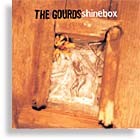
  • The Gourds – Shinebox

    Shinebox

    I have a new favorite band. They’re called the Gourds. Imagine a countrified fire-breathing mandolin-driven version of Los Lobos and you have a vague inkling of what The Gourds are like. Shinebox has a somewhat convoluted origins. It was formerly a seven-song EP of live material called Gogitershinebox and produced for an Amsterdam radio show. Five more songs were added for re-release in the U.S. Three original songs join covers from such diverse sources as Townes VanZandt, Billy Joe Shaver, David Bowie, Grin, and Snoop Doggy Dog. Yes, the Snoop Doggy Dog. This number, occupying the lead-off position of the album, is transformed from a rap tune to a redneck anthem.

    The Gourds version also connects the dots from Robert Johnson to Roosevelt Sykes to Muddy Waters to Chuck Berry to… Snoop Doggy Dog. The Snoop just presents a graphic X-rated version of Johnson’s devil’s bargain. The Gourds version of David Bowie’s “Ziggy Stardust” is equally revelatory. Instead of glitter, Ziggy is covered in cow droppings; it doesn’t get any more organic than that. Be forewarned that several songs, both originals and covers, have crude and graphic lyrics. Tipper Gore’s parental guidance stickers would be appropriate for Shinebox.

    Unlike many “groups” the Gourds are very much a band, not “just” a lead guy with some sidemen. Everyone in the band sings, and they all play at least two instruments. Kevin Russell plays mandolin and guitar, Jimmy Smith handles electric and acoustic bass, guitar, and percussive embellishments (don’t ask), Claude Bernard contributes accordion, guitar, and B-3, Keith Langford delivers drums, maracas, tambo, and various other percolations, and Max Johnston nails down fiddle, banjo, and resophonic guitar.

    Produced by the Gourds along with Mike Stewart, the sound varies from damn-near perfect to just this side of abysmal. On the live cuts, like “Omaha” or “I’m Troubled” the sonics are superb, so close to real live sound that you’d swear some drunk with beer breath is about to sit in your lap. Other selections, like “Jones, Oh Jones,” sound like it was done in a primitive home studio. Yuck.

    Ever since I got this CD I’ve been trying to wear it out. I’m so jaded that usually a CD is lucky to last a week in heavy rotation before it gets alphabetically filed. Shinebox is a rare exception.

    This CD is so much fun, so thoroughly cool, so musically essential, that it has been living on my CD player. I even got more than one copy so I don’t have to hunt around for it. I dare you to listen to it just once.


    This review originally appeared in VG‘s Feb. ’00 issue.
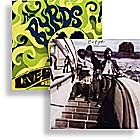
  • The Byrds – Live at the Fillmore February 1969, (untitled)

    Live at the Fillmore February 1969, (untitled) / (

    It’s unfortunate that Roger McGuin insisted on retaining The Byrds name even after the other founding members had left the group. The “new” Byrds never gained the recognition they deserved, primarily because it appeared they were merely masquerading as poor substitutes for the original band. But they deserved better, being one of the first great “hired gun” bands of the late ’60s.

    Those not lucky enough to see the “new” Byrds live during their heyday now have the opportunity to appreciate just how special this amalgamation was.

    Thanks to Columbia Legacy’s release of Live at the Filmore – February 1969, we can now hear the Byrds at the height of their creative powers. Recorded February 7-8 at the Fillmore West, it was purely chance that it was recorded at all. The Byrds were the opening act for The Jam, which featured Mike Bloomfield, Nick Gravanites, and Mark Naftalin. Tape rolled just to make sure all the equipment was working!

    Clarence White’s reputation has grown to near-mythical proportions in the 27 years since his untimely death. Live at the Fillmore demonstrates this veneration is certainly justified. On “Buckarro” you can hear how he took the honkytonk Telecaster sound of Buck Owens’ guitarist Don Rich and (thanks to the White-Parsons B-bender), goosed it up. It’s the Bakersfield sound augmented by a mescaline suppository.

    This live album adds more fuel to rock and roll revisionists (like myself) who feel the “new” Byrds were just as important to the history of rock as the original group. Without White’s pioneering guitar work there might never have been a Roy Buchanan or Junior Brown. Also, could Lou Reed have sold record execs on resurrecting his career through the Rock and Roll Animal tour if Roger McGuinn hadn’t been so successful propping up his own work with the “new” Byrds?

    This live CD is not without warts. Every time McGuinn launches into a solo, it’s a graphic example of why some should just play rhythm and leave the solos to professionals. Despite McGuinn’s noodlings, songs like “So You Want To Be A Rock and Roll Star” still have a special drive and vitality you can only get from a live performance.

    The sound on this CD is surprisingly good, considering it was a test tape. Producer Bob Irwin, remix engineers Jen Wyler and Joe Lizzi, and mastering engineer Darcy Poper, did a superb job of making a CD that feels fresh and vibrant even after 30 years in the vault.

    Another must-have is the reissue of Untitled, which includes everything from the original release, plus a bonus CD called Unissued. The original was a combination of studio cuts and live selections from a 1970 Madison Square Garden Felt Forum concert. To my ears the live stuff blows away the studio recordings. Here’s additional evidence that the “new” Byrds were a truly outstanding live band.

    The second disc includes some gems, along with material that will do little to enhance the Byrds’ reputation. On the negative side of the ledger we have an embarrassingly mediocre version of Lowell George’s “Willin,” along with some other studio floor sweepings like “Lover of the Bayou.” Only the spontaneous studio jam, “White Lightning” has any reason to exist. Once again, the live material, especially “Jesus is Just Alright” and “This Wheel’s on Fire,” elevate this disc from the slag pile to a place reserved for special historical recordings.

    The Byrds Live at the Fillmore February 1969 is a superb CD that will give the heart of any fan of rock and roll a reason to fly.

    Several other later recordings have also been re-released by Columbia Legacy. ByrdManiax and Further Along are now available on re-mastered CDs. But unless you are some kind of Byrdmanaic, don’t bother.


    This review originally appeared in VG‘s June ’00 issue.

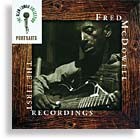
  • Fred McDowell – The First Recordings, Steakbone Slide Guitar, Leve

    The First Recordings, Steakbone Slide Guitar, Leve

    These three CDs of Mississippi Fred McDowell all show different sides of the great Delta bluesman.

    Rounder’s The First Recordings were recorded by famed musicologist Alan Lomax in 1959, yet among the 14 cuts, this CD version includes four recordings that were never released. The original field recordings have been remastered to 20-bit digital, and the sound is superb.

    McDowell’s playing is also superb: eerie, rollicking, and sad all at the same time. Many of his trademark songs are here: “Shake ‘Em On Down” and “Good Morning Little Schoolgirl,” as well as some of McDowell’s hymns sung with his wife, Annie Mae.

    Tradition’s Steakbone Slide Guitar is pure electricity. This is a reissue of McDowell’s first solo electric album, and he plays slide and fretted electric guitar as if the world was coming to an end. His sound is unique – part Delta blues, part John Lee Hooker-style boogie, part rock and roll.

    Tastament’s Levee Camp Blues showcases the full spectrum of a Delta bluesman’s repertoire. These recordings were made in 1966 and 1968, and feature McDowell’s versions of classic Delta blues, such as “Pea Vine Special,” his own originals, and the moody, powerful Delta spirituals and hymns. All are highly recommended.


    This review originally appeared in VG‘s June ’98 issue.