Month: February 2002

  • R.L. Burnside – Mr. Wizard & Acoustic Stories

    Mr. Wizard & Acoustic Stories

    R.L. Burnside plays guitar like the world is coming to an end. His electric sounds follow in the boogie-drone style of John Lee Hooker and Fred McDowell, but take the blues over the edge with overdriven and feedback-laced, open-tuned guitar work.

    Mr. Wizard is a fine showing of Burnside’s electric blues culled from a variety of sessions, including several tracks recorded live at Mississippi juke joints. He is at times sloppy, at times drunk, but amazingly, Burnside’s songs exude a down-and-dirty sweaty atmosphere no matter where you listen to them.

    Acoustic Stories is another side of Burnside. Originally recorded in 1988, these all-acoustic cuts have R.L. playing stinging slide on a National metalbody, and boogie rhythms that don’t end. Listening to these cuts carries you back to a 1930s Delta juke joint. This is the real thing – Mississippi Delta Blues, circa the ’90s. Recommended.


    This review originally appeared in VG‘s Dec. ’97 issue.

  • Carvin AE-185

    Carvin AE-185

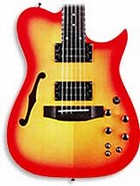
    Our movable feast of musical gear begins this month with an offering from the folks as California’s Carvin Musical Instruments: the semi-hollow, acoustic-electric, 6-string guitar designated AE-185. These are the guitars that I keep seeing onstage from Will Ray’s chicken pluckin’ to Danny “Elfman of Oingo Boingo, but had not (as yet) been able to personally play. It was well worth the wait. The options loaded onto our test axe included a flamed maple top (the wood quality was terrific), multi-layered tortoise body binding, and open-type, cream humbucking pickups.

    Now standard on this model is a mahogany neck-through body construction a 25-inch scale ebony neck, locking Sperzels, and the combination of a standard Les Paul-type pickup and switching system (standard 3-way switch) and the added flexibility of a belly-bridge housing a high-quality transducer yielding a realistic and very sweet acoustic guitar sound. The mix and variety available through the blend knob provide more possible sounds than most people can get out of three guitars.

    Starting with workmanship and materials, Carvin has surpassed itself again in bringing this guitar to the marketplace. The AE-185 has the feel of a well-worn Les Paul Junior, with a perfect fretting job, no raw edges, and an ebony board that is resonant and a pleasure to play. The intonation was right on, assisted by a carved saddle, and before ever plugging this baby in, we had a feeling it was a winner. Adding to the pleasure of playing the 185 was its extremely manageable weight (a bit less than six pounds) and the intuitive feel of the controls – very familiar to anyone who loves a Les Paul.

    When amplified, using the Carvin was easy as pie. We set up the electric signal through an old Vibrolux Reverb and placed the acoustic signal into Yamaha nearfield monitors powered by a Peavey power amp (the side of the guitar has two, rather than the usual single, mono inch outputs, one for each use). As for controls, there’s a group of four knobs at the lower bout (a rather snazzy single f-hole occupies the space north of the strings), and houses a single volume control, a treble cut/boost knob with a neutral detent in the middle, and a bass knob that does the same for the lower frequencies. Ours stayed pretty much in the neutral position, the tones ranged from biting and aggressive in the bridge pickup-only setting, to warm and ES-175ish on the neck setting.

    The 3-way switch in the middle setting yielded a usable and vibrant combined sound. Number four knob was the secret weapon against the dulls: a blend knob that ranged from all-electric at one extreme to all-acoustic at the other. Nearest the mid-setting (with a detent, naturally), a mix of the two sources yielded tones that were nifty in the extreme: percussive attack, long sustain, rich harmonics. Very cool. Onstage at our New York dives, there was a discernible need for more attack, and I ended up using the EQ to good effect, cutting right through the mix. Note that Carvin uses their own pickups and hardware in general, which is all to the good. The pickups have an offset pole pattern that produces a great classic humbucking sound and at the same time surrounds the string with magnetic field that is evenly distributed; hence, no dropout on wild string bends.

    Tom is already a pretty big Carvin fan, using their amps (“The vintage tube series caught my eye and ear one night on stage, and I bought my Nomad combo the next day,” Cosgrove relates) in Europe and here in the States.

    “This guitar is really well-made, and that’s pretty high praise from a vintage lover like me,” marveled Tom, on first handling the AE-185. “I like the idea of only a single f-hole… the appearance is really striking. The neck is extremely playable, not too fat in the back, and fits my hand perfectly. The tone is really smooth, too, and it’s cool being able to blend the different acoustic and electric tones. The front pickup sounds great; in fact, it’s a warm sounding guitar, but it can still scream. I’ve gotten away from that standard Strat sound, and I like this. When Clapton was going through that period where he used the in-between setting for practically every lead… I got sick of that pretty quickly. This is quite versatile from the acoustic style bridge to the master volume.”

    As most of our readers know, Carvin is available only by direct sales through their own showrooms throughout California, or contact the folks at Carvin by calling (800) 854-2235, and get their neat catalog.


    This review originally appeared in VG‘s July ’96 issue.

  • Joe Beck and Ali Ryerson – Alto

    Alto

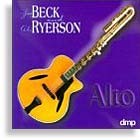
    We start this month with a very cool album. It features Joe Beck on alto guitar (three pairs of strings in three separate registers), Ali Ryerson on alto flute, and Steve Davis on very tasteful and unobtrusive percussion.

    The tunes are mostly standards, but they are given new life by the very nice sound these instruments make together. It’s quiet, but it’s fiery. There’s a definite gentleness, but it’s never boring. Old warhorses like “Willow Weep For Me,” “Billie’s Bounce,” “Joy Spring,” and even “Ode to Billy Joe” and a beautiful medley of “Scarborough Fair”/”Norwegian Wood” sound wonderful.

    Beck’s been around awhile. His experience runs the gamut. I own some fusion-style albums from the ’70s. I’ve heard some brilliant studio work he’s done (you really have to hear his blues solo on a version of “Kansas City” by Libby Titus in the ’70s – just incredible!). He’s also noted for being the first guitarist to work with Miles Davis. Ryerson’s throaty alto is just gorgeous. Whether beautifully stating melodies or adding a bit to the original flavor, she never falters.

    I can’t recommend this enough. It’s one of those albums that prove simple is best. And by that I don’t mean simple playing. I mean three people in a room doing a terrific job on some great tunes.


    This review originally appeared in VG‘s March ’98 issue.

  • Coco Schumann – 50 Years in Jazz

    50 Years in Jazz

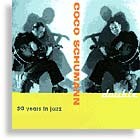
    German jazz guitarist Coco Schumann came of age in the generation following the breakthrough jazz recordings of Django Reinhardt and much of his own guitar work is deeply influenced by the legendary Gypsy. This 37-cut, two-disc retrospective captures many of the phases of Schumann’s work to date.

    He served as guitarist for violinist Helmut Zacharias, creating a classic pairing in the style of Django and Stephane Grappelli. Their recordings from the 1940s through the ’70s comprise some of the best swing cuts here. Schumann’s own quartet, featuring accordion, piano, and vibes, released a fine swing session in 1952 that is also well represented.

    Schumann’s later recordings in this set are classic more as kitsch, however. Lounge-style electric guitar work and smooth jazz arrangements mark these as tracks to skip.

    Still, the quality of the early swing tunes outweigh the modern pieces, making this a showcase of European swing at its peak. The CD set is available from Trikont (Kistlerstrasse 1, Postfach 901055, D-81510 Munich, Germany) or on the web from Germany’s CyberCD (www.cybercd.de).


    This review originally appeared in VG‘s Nov. ’99 issue.

  • Scotty Moore/D.J. Fontana – and Various Others

    and Various Others

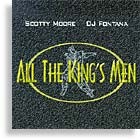
    Here’s a CD featuring a couple of members of Elvis’ original band – the legendary Scotty Moore on guitar and drummer D.J. Fontana – along with guests like Levon Helm, the Mavericks, the BoDeans, Joe Ely, Cheap Trick, Ronnie McDowell, Steve Earle, Joe Louis Walker, Keith Richards, Ronnie Wood, and more. And it works wonderfully. The atmosphere is extremely relaxed and the performances reflect that in a good way. Scotty and D.J. are featured on each track, complemented by some great players.

    My favorite tracks? The opener, “Deuce and a Quarter,” featuring wonderful vocals by Helm and Richards and members of the Band; “I Told You So,” by the Mavericks, where lead singer Raul Malo again proves he belongs in today’s upper echelon of singer/songwriters; the BoDeans track, “Locked Up in the State of Illinois,” is great, too. I could go on, but suffice it to say there’s not a bad track on the CD. Joe Ely and Steve Earle contribute wonderful songs and performances. Cheap Trick even comes through with a fun rocker.

    I spent my early years stealing Scotty’s licks off Elvis’ Sun recordings, and it’s indeed a treat to hear this, and see him back in the swing, with a guitar strapped on. Highly recommended. For more info on these sessions, and Scotty in general, check out Kevin Woods’ wonderful interview with Scotty in the August ’97 issue of Vintage Guitar.

    If you can’t find this release in your CD shop, write to Sweetfish Records, 920 Edie Road. Argyle, NY 12809.


    This review originally appeared in VG‘s Sep. ’97 issue.

  • Dave Amato

    Speedwagon Six-Stringer

    Joining an established rock act like REO Speedwagon might be the dream of many a Vintage Guitar reader, but such was exactly what occurred for guitarist Dave Amato in 1989. Amato has had experience with other major acts as well, and his love of guitars has taken him to Texas and California guitar shows. He currently resides in the L.A. area.

    When Vintage Guitar talked with the personable player, REO Speedwagon was in the process of recording a new album. “We’ve got five songs down”, Amato enthused, “and we’re now putting background vocals on them.” It was apparent that Amato relished the opportunity to talk about his love of fretted instruments:

    I might be putting the cart before the horse, but it’s my perception that you show up at a guitar show every chance you get.

    Always! (chuckles) I know a lot of dealers, and it’s great to see them all in one place. I love old Strats and Les Pauls, and the “atmosphere” at shows makes them a lot of fun. I really look forward to them; I try to go to Dallas in the Spring and Arlington in the Fall; I’ve been to California shows as well.

    What kind of a collection do you have?

    I have a ’55 Strat, two ’58s, a couple of ’63s that are refins, a ’59 Esquire, a ’59 triple-pickup Les Paul Custom, a ’57 TV model Les Paul, and a ’52 all-gold with a trapeze tailpiece, and a bunch of others. I’m pretty much of a Gibson and Fender guy; I’ve also got some old Marshall and Vox amps.

    Are you originally from California? What about your “pre-REO” bands?

    I’m originally from Boston; I’ve been out here for fifteen years, but people still ask me where I’m from, so I must have a kind of “East Coast twang”. (laughs)

    I was playing in local bands; I would open for bands like Aerosmith; they’re great guys. I wasn’t really getting anywhere, so I moved to L.A. in 1980. I played with Black Oak Arkansas for a while; it didn’t last very long. The wife of Jonathan Cain from Journey had a band up in San Francisco; they were on RCA. Jim Pierce and I were the guitar players; he’s a great player and does a lot of session work. Then I did sessions with LaToya Jackson; I did background vocals for David Lee Roth, Rick Springfield and Motley Crue. I joined Ted Nugent in 1985 as his lead singer and guitarist; I was with him for about three years. I did Little Miss Dangerous, and If You Can’t Lick ‘Em, Lick ‘Em.

    What about the evolution of your instruments over the years?

    The first guitar I had was a Harmony hollowbody. Early on, I lucked out and found a couple of Fifties Les Paul TV models, but I didn’t know what I had back then, and I sold them to get a brand new Stratocaster. I vowed that I’d get another TV model one day, and I picked up that ’57 one a couple of years ago. I loaned it to Brad Whitford, who was in town for a photo session; it’s on the inside sleeve of [Aerosmith’s] Get A Grip. It seems like I’ve gone back and forth between Les Pauls and Stratocasters; now I have both; probably about a dozen of each.

    Did you do anything between Nugent and REO?

    I commuted to Australia and played on a lot of Jimmy Barnes records. I was doing that while Ted was off on one of his hunting trips in the winter; he wasn’t supposed to tour until spring, and I wanted to keep working. I had a contract with Jimmy to do several dates, and Nugent unexpectedly got a call to open for KISS. I couldn’t get out of my Australia commitment, so Ted went back to using Derek St. Holmes, who’d been with him before. After that I played live gigs with Cher for about two years; I didn’t do any records with her.

    Were you in her video that was filmed on that battleship?

    No, I joined right after that. Those weren’t really musicians; they were actors, except for her son. Then I joined REO Speedwagon in ’89.

    How did that come about?

    A friend of mine told me about the auditions; I wasn’t really a fan but I thought I’d give it a shot. We got together and played some songs at Kevin Cronin’s house, then we played some basketball for a while (chuckles), then we played some more music. After about four or five hours they asked me to join the band. They didn’t really want to put out a “cattle call” for auditions; it was word-of-mouth that put us together.

    Did anybody else even audition?

    I don’t think so.

    You replaced Gary Richrath, who’d been in the band about eighteen years. Is the lineup of the band still the same as it had been for such a long time?

    Brian Hitt came in as the drummer at the same time I joined. Neal Doughty is still on keyboards, there’s Bruce Hall on bass, and Kevin. 1996 will make twenty-five years for the band.

    What was the reaction of long time REO fans who might’ve been used to Richrath and his sunburst Les Pauls?

    Well, they asked “where’s Gary” for a while, but that was only for the first couple of years. I’ve never met Gary, and would really like to meet him. I respect the stuff he did; he wrote great songs.

    The obvious follow-up question would be to ask how you play on “classic” REO songs.

    On songs like “Keep On Lovin’ You” there’s a solo that I play basically note-for-note, because that’s what the audience expects. It would be stupid of me not to play it like the record; I’d be cutting my own throat. People know such songs so well, they know the solos in them too, so I try not to change things very much.

    There are songs like Bruce Hall’s “Back on the Road,” however, which are classic REO Speedwagon songs, but the solos aren’t that memorable. I can do my own thing on songs like those and “spruce them up”.

    I’ll say this about Gary’s use of a Les Paul: When I joined the band I was using Les Pauls and Strats. Some of those songs where there’s a lot of bending didn’t work at all on a Strat; it was pretty interesting to learn that I couldn’t force a Strat on some of the “Les Paul songs”. (chuckles)

    I Have you done any off-shoot projects since joining REO?

    Richie Sambora from Bon Jovi did a solo project in 1991, and I played in his band. He’s a great player and a good friend.

    A profile of you appeared in Fender Frontline.

    I’m a Fender endorser; they’re treating me great.

    The band is still touring quite a bit, right?

    We’ve toured about six or seven months each year since I’ve been in the band. It’s pretty much been domestic tours, but we want to get this album out so we can go to Europe and Australia to support it.

    What’s the concept, or perhaps I should say “style”, of the upcoming album?

    We want to keep the old REO “feel”, but we’re also going for an up-to-date, Nineties sound with some classic REO ballads in the mix. We’re touring an awful lot this year; hopefully we’ll finish it by the end of the year. The goal is to have it done by Christmas.

    Any instruments you’re still seeking?

    I’d still like to have some Fifties Strats; I love their V-necks and their sound.

    Some might opine that Dave Amato had some big shoes to fill as the lead guitarist for REO Speedwagon, but the amiable musician is looking ahead, not back. His enthusiasm for his band’s music and his stereotypical vintage guitar mania are the marks of a respectable player.


    Photo by Pat Amato.

    This article originally appeared in VG‘s Dec. ’95 issue.

  • Jellyroll – Hep Cats Holiday

    Hep Cats Holiday

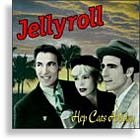
    Jump blues are like licorice: if you like it, you can’t get enough. Jellyroll satisfies the craving with a cool selection of 12 classic tunes, from “Is You Is Or Is You Ain’t My Baby” to “Flat Foot Floogie.”

    But Jellyroll is not just your typical revival band. This is hot stuff. The band is tight with a capital T. The band is made up of vocalist Belinda Blair, drummer Steve Dekrone, and Django-style guitarist Paul Mehling on holiday from his Hot Club of San Francisco.

    The band expertly layers exacting vocal harmonies and classy interplay between the soloists to create a sound that is all cool. Few people on the scene today do classic jump blues this good


    This review originally appeared in VG‘s May ’98 issue.

  • John Abercrombie – Open Land

    Open Land

    Guitarist John Abercrombie is one of the creators of the ECM Sound, and his new album is quintessential Abercrombie/ECM.

    If you arrived late, ECM Records was sparked by Manfred Eichner in Germany and has become famous for its wide open free jazz recordings. The ECM Sound blends acoustic and electric instruments combining classic and contemporary jazz as well as traditional “folk” influences. The label also boasts a strong credo supporting improvisation and extemporaneous composition.

    On his past releases for ECM and other labels, Abercrombie has proven one of the most skillful of modern jazz guitarists in embracing rock and roll techniques. He has not been afraid to augment his signal with phase shifters, pedals, guitar-synth, and an array of other effects. He is not just another jazz guitarist seeking the “polite” sound of the past.

    Open Land is an apt title for this new CD, as the music is pure sonic landscape. Abercrombie is joined by an eclectic mix of musicians; Mark Feldman on violin, Kenny Wheeler on trumpet and flugelhorn, Joe Lovano on tenor sax, Dan Wall on organ, and Adam Nussbaum on drums. Together they create jazz that is adventurous, wandering between classic song heads and inspired improvisation.


    This review originally appeared in VG‘s Aug. ’00 issue.

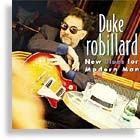
  • Duke Robillard – New Blues for Modern Man

    New Blues for Modern Man

    There have always been Big Sticks in Louisville, Kentucky. In the world of vintage guitars, there’s Jimmy Brown’s Guitar Emporium. Guitarist Jimmy Raney and his son, Doug, have kept the jazz world on its ear for decades. The Louisville Slugger (both the bat manufacturer and Muhammed Ali) could both lay claim to the original “Big Stick” title. For the millennium, the mantle most definitely falls on the shoulders of guitarist-in-residence Duke Robillard.

    With this release, his first for the Shanachie label and his lucky 13th overall, the Duke of Louisville continues to let the many facets of his emerging style shine.

    From the lone cover, Charlie Patton’s “Pony Blues,” to the Ben E. King-inspired “You’re The Only One,” Robillard continually stretches the genre. As always, he makes it work. It’s only a matter of time until you see his name on the credits of a Hollywood soundtrack.

    With the majority of the disc recorded live and overdubs kept to a minimum, the CD has a tremendous presence. “Jumps right out of the grooves,” as they used to say. And there are more than enough grooves to keep it jumpin! Shanachie 9017 www. shanachie.com


    This review originally appeared in VG‘s June ’99 issue.

  • Dan Armstrong Design

    The Pinnacle of Modern Design

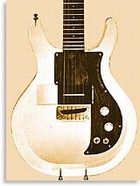
    This installment will focus on the famous Dan Armstrong line of guitars and basses.

    These instruments were introduced to the market in 1960 as the “Dan Armstrong See Through” Guitar and Bass. This line of instruments was distributed through the Ampeg Company, located in Linden, New Jersey. Production lasted only into 1971. As we have seen in past history, this was not the first company to produce a see-thru Lucite solidbody instrument. The famous Lucite Fifties Fender Stratocaster made a big splash at product shows for years, but never made the actual instrument line-up offered to the public. The Dan Armstrong Lucite, however, was in mass production and the entire line of guitars and basses was based on this unique feature. Some of the instruments made were a black colored Lucite material instead of the usual clear variant. Please let me know of any of these floating around, as I am getting a strong Jones to add one of them to my collection. Actually, any Lucite is a nice addition to any collection. It sure is an attention getter, and the prices on these are still very modest.

    There were many professional users of this product in the Seventies. Some of the most noteworthy were Keith Richards using one of the guitars with the Stones, and Geezer Butler playing one of the basses with Black Sabbath. As you see before you, the Madison Avenue marketing strategy went a little awry with what appears to be some writer’s freedom when they translated their notes from the manufacturer onto this original product brochure. This is yet another savory piece of vintage new-product literature from the archives of the Bass Maniac. The text you see before you has been satirized for your enjoyment.

    The cover shows us a great shot of one of the guitars in use, with a caption reading “Keith Richard of Rolling Stones”. Glad to see they got to know the British Bad Boy during this endorsement photo. Umm, Mr. Richard,